However many big-budget war films come and go, real footage of frontline combat is still shocking. How much more powerful would such images have been 95 years ago, when The Battle of the Somme (1916) was released, and watched by 50% of the British population? JB MacDowell and Geoffrey Malins’s documentary was intended to boost morale, but its scenes of wounded and dead soldiers, not to mention the contentious “over-the-top” sequence, make it a more complicated, thought-provoking and mournful piece of work. One of the “over-the-top” scenes was staged, but so much else is horribly real here – and the film was inscribed on UNESCO’s Memory of the World Register in 2005.
The Battle of the Somme‘s footage may be familiar to you as it has been mined for many a first world war documentary, but it is an entirely different experience to watch it all, in one sitting. This upcoming short UK tour offers a very special opportunity to do just that. Composer Laura Rossi’s orchestral score for the film will be performed at four special screenings of The Battle of the Somme in 2011 and 2012, by four different ensembles:
10 March 2012: Ealing Symphony Orchestra, Venue TBC, Ealing, London
For more details, and to listen to clips of the score, visit Laura Rossi’s website. To find out more about the film, read this post from The Bioscope. Also, the Times reviewed the premiere of the score, when it was performed in the Queen Elizabeth Hall with the film in 2006. The Battle of the Somme is also available on a DVD produced by the Imperial War Museum, with two scores, both Rossi’s and a recreation of a likely contemporary soundtrack, by Stephen Horne, based on cue sheets.
Miles Mander and Madeleine Carroll in The First Born (1928)
When you’re watching a silent film and the whole audience gasps in horror and surprise at the same time, you know it’s not a museum piece you’re looking at. The First Born was released in 1928, just as Britain was first being seduced by those new-fangled “talkies”, but it has more than enough tricks up its sleeve to tempt moviegoers in any decade.
Chosen as this year’s Archive Gala for the London Film Festival, The First Born is a disarmingly frank story of sex and love among the aristo set, shot with precocious flair. Actor Miles Mander directs, and also plays the lead: a scoundrel of a baronet named Hugo Boycott, whose marriage is inevitably in crisis. Hugo and Maddie’s relationship runs hot and cold. One day they’re falling into each other’s arms, the next they’re having one of their rows – and real shoe-flinging, bag-packing, door-slamming humdingers they are too. Maddie (Madeleine Carroll) blames the arguments on her own jealousy, which is to say her pain at Hugo’s philandering. But there is another reason for the couple’s unhappiness: their childlessness. Whether this is anything more than the baronet’s old-fashioned desire for an heir is open to question, but Maddie certainly believes a baby will solve her marital woes. Hugo’s behaviour is fairly abominable at every turn, but his wife’s decision to deceive him in order to save their marriage provides the drama’s fatal twist.
And this is a complex story, with the truth about the Boycotts’ marriage and the outward appearance of it constantly at odds – a conflict that comes to the fore horribly when Hugo runs for parliament and a distraught Maddie is forced to stump for him at a public meeting. We can’t hear what Maddie is saying, and there are no intertitles to help us, just her pained expression, and superimposed cheers of encouragement from the crowd: “Good old missus!” They think she’s a sweetheart, Hugo thinks she’s a monster. Fans of The Graduate (1967) will note the speed with which their faces fall in the cab journey home. It’s delicately done, but it’s a heartbreaking moment.
The First Born is a wonderfully well directed film, in fact, eliciting a tremendous, anguished central performance from Carroll, and a sizzling one from her irresistibly dashing “noble admirer”, David (John Loder). Both actors, like Mander himself, went on to further success – Carroll most notably in The 39 Steps (1935) and The Secret Agent (1936), and Loder in another Hitchcock film, Sabotage (1936). Mander’s only venal directorial sin is vanity: he gives himself far too many lip-curling closeups, and risks turning Boycott into a pantomime villain. Mander’s performance is enjoyable, but it is not a tenth as sophisticated as his co-star’s. His virtue on the other hand, is his audacious use of camera movement, dissolves and overhead angles to disorient and excite the narrative. There’s one prowling handheld tracking shot that plunges the audience straight into the psyche of a suspicious husband, running his hands over ruffled bedsheets. Elsewhere, a sequence of dissolving closeups of Carroll and her manicurist Phoebe shows the transferral of one idea between two minds: a folie à deux in the making. We’re in the latter stages of the silent era here – Mander had made short sound films before but this was his debut feature – and The First Born is the work of a confident director on top of his material and with creativity to spare.
That’s not to say that he was not ably assisted. The screenplay for The First Born was co-written by Alma Reville, a woman with many years’ experience in the film business, but yes, better known to us now as the wife of Alfred Hitchcock. It’s tempting to credit her with some of the film’s sophisticated touches – from its elegant structure, to its sparse use of intertitles and the sensitive portrayal of Maddie as far more than just a wronged wife. The First Born is never afraid of emotional complexity, from the ambiguities of Maddie’s friendship with David, and her betrayal by a close friend, to a brisk montage of painfully contradictory telegrams.
The quality of the film should stand for itself, and those who have seen it at festivals over the years have long championed The First Born as a lost British classic. Critics at the time of its release thought it was a bit “sordid”, but they said pretty much the same thing about Pandora’s Box (1929), so there’s no reason that a film this accomplished, and entertaining, shouldn’t be embraced by a wider audience in the 21st century. And that is why the BFI has showered so much love on it. We see it now in a more complete state than before – frames from a 16mm print found in the George Eastman House in New York have been spliced in where there were gaps in the BFI’s 35mm copy, reinstating an expression here, an exit there, to make the film a more smoothly satisfying experience. Cue marks, scratches and holes have been erased and the original, delicate tints restored. The film also now benefits from a fresh score – composed by Stephen Horne and performed live at the gala screening. It’s melodic, and elegant, but fantastically adept at ramping up the tension in the crucial moments. There’s a haunting theme, played on the oboe and underscored by percussion and piano, that seems to appear when Hugo’s own jealousy gets out of control; there’s a humorous use of the accordion when Maddie’s friend Nina raises a sardonic eyebrow; and a thunderous combination of piano keys and strings during an unexpected violent catastrophe.
The exquisite new score is the finishing touch in the rebirth of The First Born – a fascinating film, ripe for rediscovery.
This review is a guest post for Silent London by Ewan Munro of the Pubology blog.
Among the many wonderful restorations in the Treasures from the Archives strand at the London Film Festival this year was a programme of silent short films, nine- to 12-minute long travelogues from a series made in the early 1920s by film producer Harry B Parkinson, and entitled Wonderful London. The BFI National Archive chose six of these films to restore and present at what turned out to be a packed-out screening (attributed by silent film curator Bryony Dixon to a resurgence of interest in historic London).
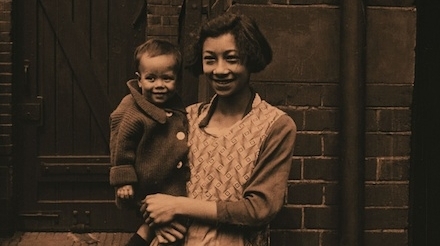
The subject of these quirky little screen-fillers is, of course, London. And while there are certainly occasional shots of the tourist London we’re all familiar with, perhaps more interesting is the time spent looking around the corners, into the back streets and out into the suburbs of the working-class city. Street markets and grimy housing, docks, shops, scenes of daily life, and even a few pubs all show up in these films. The East, the North, the West End and the City all show up, though the South is represented by only a few shots of streets around the site of the Globe.
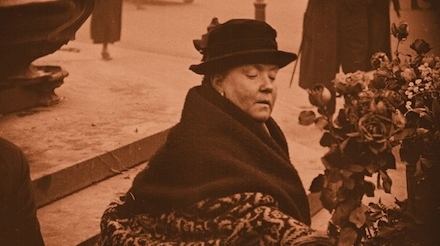
There’s Petticoat Lane market (still bustling today) and Club Row market (no longer), where live animals of all kinds are traded under the still-familiar railway arches down by Sclater Street (arches which now hold the lines leading to Shoreditch High Street station). There are grand West End theatres alongside street performers and Punch & Judy shows. There’s Ye Olde Cheshire Cheese pub, just off Fleet Street, one of the few views that hasn’t changed at all, even as we briefly spot the drays of long-defunct brewers such as Truman Hanbury Buxton and Mann Crossman’s. There are the flower sellers usually at work underneath Eros on Piccadilly Circus, but moved from this attractive spot due to London Underground construction works (little change there, though back then it was for the station’s grand booking hall). There are the canals around Mile End, Islington and Hackney (with a brief cutaway to show Broadway Market), mules working along their towpaths to pull the barges. This is just one example of perhaps the greatest change since these films were made: the extent to which the London shown is a city of industry and manufacturing, where the canals are still busy with freight and the docklands still bustling with ships.
Flowers of London (1924)
This “unofficial” view of London is matched by the narration, with the intertitles frequently offering humorous asides and boundless sarcasm, especially in the Barging Through London film (any given intertitle card makes reference to dizzying speeds, as the film cuts to, say, a barge moving languorously under a bridge alongside Regent’s Park, while befrocked and behatted tourists on the way to London Zoo stop to watch). A personal favourite is the introduction of Southwark Bridge, newly constructed at a cost of £3 million and “sometimes it gets VERY busy”, cutting to show a few hackney carriages trundling across while a handful of people walk along the outside.
The titles remain fairly light-hearted, but this only exposes some of the period’s unpleasant attitudes, communicated with an at times disarming frankness, especially in the Cosmopolitan London short. In what must be a staged scene, the film’s “white trash” are swiftly kicked out of a “negro club” on Whitcomb Street, while the film is unsparing in its negative judgment on the poverty and unfriendliness of the Chinese population of Limehouse. When the film returns pointedly to scenes on Horse Guards Parade, it expresses greater relief at their comforting Englishness than perhaps the modern audience can muster. Nevertheless, the scenes of Limehouse provide interest when compared to similar ones staged for the roughly contemporaneous Piccadilly (1929).
Through it all, piano accompaniment is sensitively provided by Neil Brand, an accomplished master of the art. The tone is largely jaunty as befits the films, though he sensibly opts for a quieter register at key points towards the end of the Cosmopolitan London short, and a briefly uncomfortable silence within the auditorium at one point further brings into focus the discomfort engendered by the film itself (not to mention highlighting the very rarity of silence at screenings of silent films).
The restoration has been handled magnificently, and Scott Starck from the restoration team speaks before the film, rattling off a quick account of the process, along with dizzying statistics on the number of frames that needed repair. Colour tinting has been retained as per the original films, and this is used to good effect to depict the passing of the day in London’s Sunday, or the colours of the flowers in Flowers of London. One can only hope that the success of this screening leads to further such archival restorations and that the Wonderful London series may one day be available in its entirety.
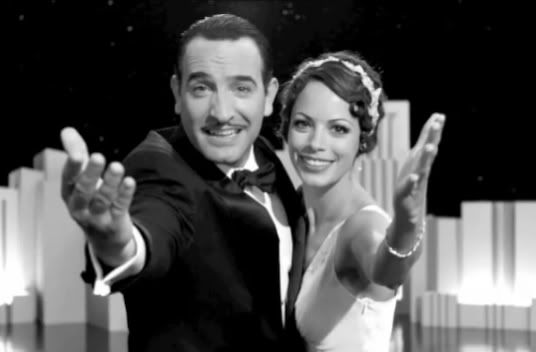
Could a silent, black-and-white film really become a box-office hit in 2011? At festival after festival around the world, critics have been raving about The Artist (2011), Michel Hazanavicius’s homage to late-1920s Hollywood. Leading man Jean Dujardin has picked up the Best Actor award at Cannes, and thanks in part to Harvey Weinstein’s support, the Oscar speculation has already begun. Surely this is madness, though – even the director himself says, “nobody watches silent movies any more”.
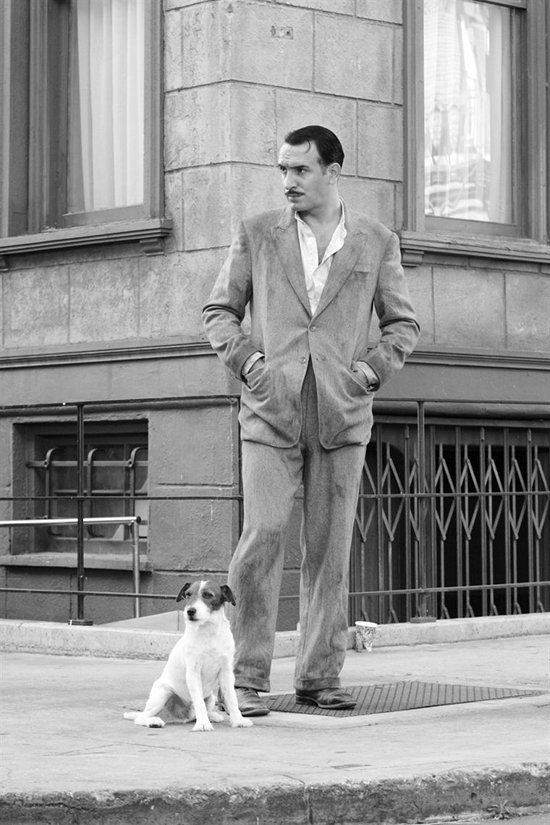
But The Artist is gorgeous enough to make anyone lose their reason: it’s lushly photographed in silvery monochrome, romantic and funny, too. Dujardin’s sparkling performance as silent star George Valentin comes across like a new Douglas Fairbanks – but incredibly, he’s more suave – and when he bumps into Bérénice Bejo’s flirtatious flapper Peppy Miller, the chemistry is irresistible. The Artist tells the story of their troubled love affair, and the way their career paths diverge when the “talkies” arrive. The scene is almost always stolen, however, by Uggy, Valentin’s dog, whose adorable tricks will charm the most silent-sceptical of audiences.
So far, so sugary, but here’s another layer to The Artist. This is a film all about cinema: about the highest achievements, and the follies, of the silent era and all the films that have come since. The silent-film references come thick and fast: from Clara Bow to Erich von Stroheim, from the Fantômas serials to Spione (1928) to The Last Command (1928). There are even a few frames from The Mark of Zorro (1920) in the mix. The talkies get a look-in too, of course. Valentin’s blonde co-star recalls Lina Lamont from Singin’ in the Rain (1952); his scenes with his wife riff on Citizen Kane (1941) and the score borrows liberally from Vertigo (1958). We’re so often watching a film within a film, or spotting a sly cinematic reference, that The Artist is almost a silent movie by stealth. Hazanavicius, like Dujardin, nearly always has one eyebrow raised about his own nostalgic project, sometimes to the detriment of the film. There’s a dramatic moment towards the end of The Artist that is almost entirely ruined by an intertitle gag, for example. It gets a laugh, but it’s a cheap one.
The Artist (2011)
These knowing moments are dangerous, because they threaten to break The Artist‘s enchanting spell and pull the audience out of what is for the most part a dreamily seductive experience. At its best, The Artist is a triumphantly modern silent film, which shows the influence of Fritz Lang, Josef von Sternberg and Frank Borzage but never looks like a relic. I loved the early sequences when Valentin and Miller first fall for each other: their backstage tapdance, and their repeated takes of the same scene (from cool, to sexy, to loving and finally collapsing into giggles) are pure silent cinema magic. When Miller is alone in Valentin’s dressing room, she snuggles up to his suit jacket, slips one arm into the sleeve and begins to canoodle with herself. It’s a wonderful piece of visual film-making, and says far more, with more charm, than dialogue ever could. Silent cinema fans will recognise the move from a scene in Borzage’s Seventh Heaven (1927), when Janet Gaynor shrugs her lover’s jacket on to her shoulders and wraps the sleeves around her. It has to be said, though, that The Artist‘s version is a lot sexier – it’s not 1927 any more.
The Artist isn’t always so cuddly. The lively, if anachronistic, score is not quite continuous; it’s brave enough to drop away for a moment’s pause, leaving the cinema in dead, unaccustomed, silence. That’s a bold move, and a self-conscious one, too. And as Valentin’s confidence takes a knock, expressionist shadows, spinning headlines, trick photography and one audacious nightmare sequence are all piled on to make us feel his pain. Sadly, it’s here that the film veers between homage and pastiche, and suffers just a little in the process. Does Hazanavicius want us to love silent cinema, or to laugh at it? Ultimately, The Artist doesn’t want to answer that question, it just wants to entertain, which it does, brilliantly.
I entered the cinema worrying about whether this film will be able to charm mass audiences or just film buffs and furrowing my brow over whether its potential success could spearhead a silent film revival. As the credits rolled I really didn’t care any more. The Artist is a joy and it doesn’t deserve to be weighed down with such responsibilities. If you’re watching it at the London Film Festival this week, you’re in for a treat.
For the rest of us, Launchingfilms.com currently lists the UK release date as 30 December 2011.
This review is a guest post for Silent London by Philip Concannon of the Phil on Film blog.
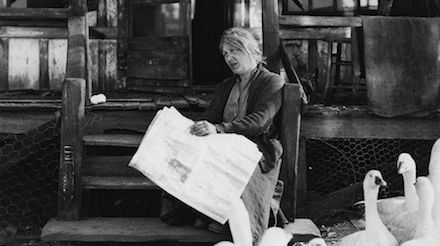
During his interesting (if incredibly long) introduction to The Goose Woman at its London Film Festival screening, Robert Gitt suggested that Louise Dresser would have won an Academy Award if the ceremony had existed in 1925. Having watched the film, few will disagree with his assessment. Dresser plays Mary Holmes – the eponymous goose woman – an alcoholic, embittered old crone living on a remote farm. Twenty years earlier, she was Marie de Nardi, a beautiful singer on the cusp of fame, but she gave up her career to have her son Gerald (Jack Pickford) and now she has nothing but her memories, her geese and a pile of broken booze bottles outside her window. Dresser’s performance as this unsympathetic protagonist is remarkable, expressing sadness, regret and bitterness through her subtle but forceful acting.
Clarence Brown’s film is adapted from a story by Rex Beach, which was itself based on the real-life “Pig Woman” case (heavily publicised by William Randolph Hearst’s press at the time). It’s the tale of a murder that Mary claims to have witnessed, milking the subsequent publicity and press attention for all it’s worth, and propelling herself back into the spotlight, but her fabricated account of what happened that night inadvertently frames her own son for the murder. This narrative is given an extra charge by the tensions that are already simmering between Mary and Gerald, with Mary blaming her son for her ruined career, and their relationship reaches its nadir when she hits him with a revelation about his parentage that’s so shocking the film can’t even articulate it. The Goose Woman is so coy about the nature of this secret that for some time I wasn’t sure what it was; all we see is Mary spitefully mouthing the truth as her son recoils in horror, and then he tearfully runs to his fiancée Hazel (Constance Bennett) who reacts with similar dismay.
Aside from that confusing plot niggle, The Goose Woman‘s story is handled with great skill and sophistication by Brown, who keeps the action down-to-earth and rooted in character, sustaining an impressive level of suspense (with welcome burst of humour) until the final scenes. He has a great eye for detail and there are some lovely, telling moments scattered throughout the movie, like the running gag involving Mary’s attempts to hide her whisky bottle, or her habit of judging every man she meets by rubbing his business card (if you don’t have embossed lettering, you’re not worth a damn, clearly). His visual style is simple but effective, and he puts together a terrific sequence during Gerald’s interrogation, cutting away to a dripping tap, nuts being cracked and coins jangling, as the suspect’s anxiety grows. This latter scene is also the kind of interlude that allows accompanist Stephen Horne to get creative on his piano and flute; as ever, his playing at this screening caught the tone and mood of the picture perfectly.
In the years following this film, Brown went on to direct a number of stars to some of their most celebrated performances (including Greta Garbo, who called him her favourite director) and it’s clear from The Goose Woman that he was very much an actors’ director. All of the performances here are a pleasure to watch, particularly the scene-stealing James O Barrows and Gustav von Seyffertitz as a detective and district attorney who have a competitive relationship in the movie’s background, and it’s nice to see Jack Pickford – so often in his sister’s shadow – given a rare chance to shine. However, The Goose Woman ultimately belongs to Louise Dresser, whose outstanding lead performance, like the film itself, deserves to be rediscovered and celebrated.
This review is a guest post for Silent London by Philip Concannon of the Phil on Film blog.
Even if you’ve never seen Georges Méliès’s film A Trip to the Moon (1902) you’ll be familiar with its most enduring image, that of the Man in the Moon grimacing as a rocket lands in his right eye. However, you probably recall that shot in black-and-white, as that’s how the film has been presented for so many years, but Méliès also made A Trip to the Moon in colour. Following the rediscovery of a severely damaged colour print in Barcelona in 1993 – and a painstaking, frame-by-frame restoration – we finally have the opportunity to enjoy the director’s original vision, which surely hasn’t looked as good as this since it premiered in 1902.
Méliès was cinema’s first magician, and he blesses his characters with the same gift for wizardry. In the opening scene, a group of bearded astronomers gather in a great hall, clutching telescopes that they quickly transform into stools so they can sit and listen to their leader’s lunar exploration plans. You might expect editing tricks such as this to appear rudimentary to the modern viewer, but there’s something delightful about the casual ease with which Méliès pulls them off, and the whole film contains moments to thrill and enchant. The lavish sets create a remarkable sense of depth and scale as the intrepid explorers stroll around on the moon’s surface, and there are some wondrously inventive touches, such as the stars coming to life and observing the explorers while they sleep, or the alien creatures who suddenly ambush them, prompting a frantic escape. Our heroes only have their umbrellas to defend themselves with (never visit the moon without one) but it proves to be enough, as one strike from that deadly weapon turns each alien into a puff of smoke, an effect that looks even better now that the smoke is green.
The restored version of A Trip to the Moon that screened this week at the London Film Festival is a beauty. The tinting respects Méliès’s original intentions and helps us pick out details in the background of his often busy compositions, with the celebratory scenes of the explorers’ departure and return being particularly well-served by this new presentation. Visually, A Trip to the Moon is a constant delight, but I have doubts about the score, which has been composed for the film by the French duo Air. One audience member amusingly cried “Oh no!” as the band’s credit was revealed, and while the score doesn’t quite deserve such a despairing reaction, it does feel like an odd fit for the movie. In some scenes, notably the preparations for launch, the music possesses a sense of rhythm that perfectly matches the action, but in other sequences their electric guitars and animal noises (!) jar discordantly with Méliès’s images.
That caveat aside, A Trip to the Moon is essential viewing. It is 14 minutes of pure imagination and it remains as surprising and charming as ever – 109 years on, Méliès the magician still knows how to cast his spell over an audience.
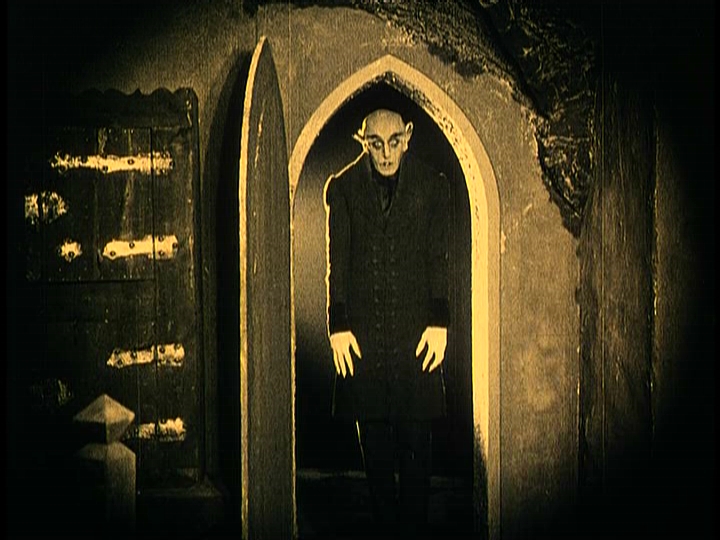
Murnau’s acclaimed Dracula adaptation, Nosferatu (1922) is still one of the most chilling horror movies ever made – and probably the most influential. So if you’re looking for a cool halloween night out, you can’t beat watching Max Schreck’s shadow creeping up those stairs with Minima’s heavy rock soundtrack. Luckily, then, there will be a few chances for you to catch the Nosferatu-Minima show this witching season. They’re playing two gigs in London, at Stoke Newington International Airport on 29 October 2011 and at the Prince Charles Cinema on 24 November. Check out the venues’ website for times and ticket prices, and if you live outside London, have a look at Minima’s website for performances of Nosferatu in Devon, Hertfordshire and Somerset.
And if you prefer a more traditional silent film accompaniment, Nosferatu is also playing at the Brentford Musical Museum, with a live organ score by Donald Mackenzie on 19 November 2011. Tickets cost £10. For more information and to book, visit the museum website.
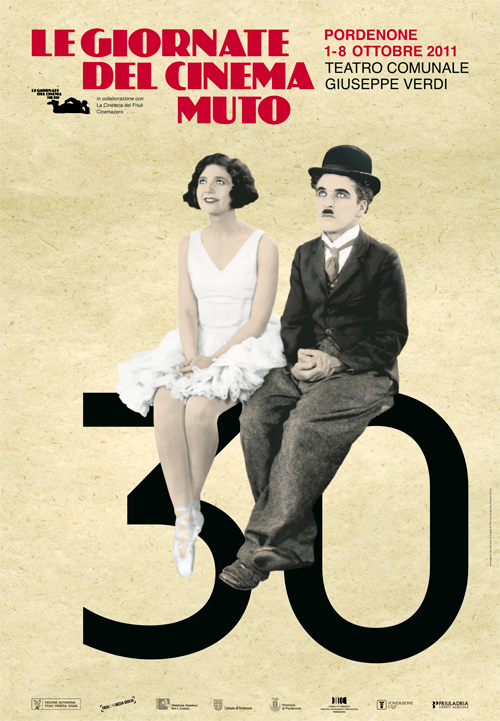
A postcard from this year’s Giornate del Cinema Muto in Pordenone – by guest blogger Ellie Groom.
Hello Silent London readers! I’m Ellie from the Kine Artefacts blog. Last week I travelled to Pordenone for the 30th Giornate del Cinema Muto, and have been asked to provide a few highlights. More than 150 silent films were screened across eight days, so picking favourites was no easy feat, but here goes …
2011 was a year full of significant rediscoveries and restorations of seemingly lost classics. Serge Bromberg and Eric Lange of Lobster Films presented the digitally restored version of the hand-painted print of Méliès’s LeVoyage dans la Lune (1902). Famously, the restoration was over a decade in the making, and came complete with a controversial modern score by Air, which caused one disgruntled festivalgoer to exclaim, “It’s a disgrace!” Opinion is split on whether Lobster Films should have presented a more traditional soundtrack (and the film was screened again later in the week with Donald Sosin at the piano), but nothing could have detracted from the bold and beautiful colours of Méliès’s sci-fi wonderland.
The three surviving reels of Graham Cutts’s The White Shadow (1923) had film fans queuing all the way across the piazza, desperate to see the work of a young assistant director called Alfred Hitchcock. The shadow of Hitchcock loomed large over the screening, though the real star of the piece had to be American actress Betty Compson, who deftly hopped between the dual roles of twin sisters, one virtuous and the other flighty, in love with a man unaware that he has two paramours. Watching the film was a frustrating experience as it cut out at the most dramatic point. Someone, please, find those last three reels!
As is well known, next year silent film fans in the US will be able to see Abel Gance’s Napoléon (1927) in all its glory. However, Kevin Brownlow was on hand in Pordenone to give a stirring history of his plight to restore the epic biopic. Brownlow’s lecture was part of the Collegium: an education initiative whereby a dozen young film researchers are invited to Pordenone to partake in dialogues with eminent film historians and archivists. If, like me, you are interested in becoming a Pordenone Collegian then keep an eye on their website – applications will open in the new year. No formal experience is required, just enthusiasm for silent cinema.
While names such Hitchcock and Méliès will always draw a crowd, it should be noted that several other finds made their way to Italy, which may have been more obscure but were no less astonishing. RW Paul’s The Soldier’s Courtship is a delightful and invaluable rediscovery from 1896 – arguably making it one of the earliest instances of fiction on film. It was thrilling to see so many festival goers enraptured by less than a minute and a half of film depicting a simple story of a couple’s attempt to grab some privacy.
There was a strong emphasis on restoring the colours of silent film. As most Silent London readers will be aware, while silent films were shot on black and white film stock, large amounts of them were tinted, toned, stencilled and hand-painted. The festival screened several examples of digital restoration and the Desmet process of turning hand-coloured films into colour prints, as well as rare examples of prints that have been tinted using dye, just as the original distributors would have done. One particularly fascinating example was a tinted fragment from Der Rätsel von Bangalor (1918), which although just five minutes long was screened seven times, each time from a print restored using a different method – including one that had been submerged in food dye!
Lastly, the festival drew to a close in style, with Victor Sjöström’s The Wind (1928), accompanied by Carl Davis conducting his own score with the FVG Mitteleuropa Orchestra. This silent classic starring Lillian Gish was screened with Davis’s score in Pordenone in 1986, and so its triumphant return was a fitting finale for the festival’s 30th anniversary.
So, there you have it: a whistlestop tour of Pordenone 2011. I didn’t have time to highlight the other wonderful screenings such as New Babylon (1929) with Dmitri Shostakovich’s original score, the film of Ernest Shackleton’s Antarctic expedition, South (1919), accompanied by a commentary from the explorer’s diaries, read by Paul McGann, or Walt Disney’s Laugh-o-Grams (quick plug: I’ll be discussing those next week on my blog). Never mind … there’s always next year.
Call it a spooky coincidence, but there are three screenings of The Phantom of the Opera (1925) coming up in the London area this month. Could it be that Halloween is approaching?
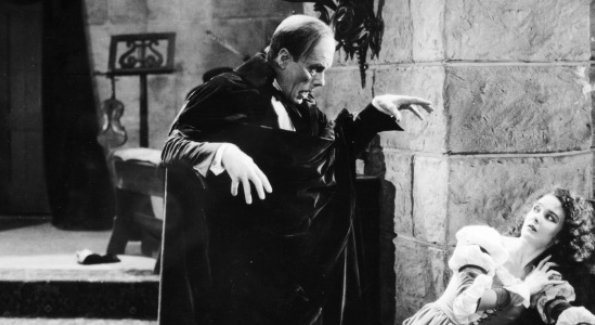
From the novel by Gaston Leroux, Lon Chaney creates one of his most grotesque performances as the crazed man without a face, who lives in the catacombs beneath the Paris Opera, and falls in love with the voice of a young opera singer. Infatuated, he kidnaps her, dragging her to the depths below where she will sing only for him.
The Phantom of the Opera is a spectacularly grand horror film – from its Paris Opera House setting, to lead actor Lon Chaney’s gruesome makeup, and the early use of Technicolor in the Bal masqué sequence. You really can’t beat seeing this on the big screen – and with live musical accompaniment, of course. And this month, you have two chances to do.
On 19 October 2011, you can watch The Phantom of the Opera in a very unusual location: the medieval Croydon Minster in Surrey. The screening will be accompanied by David Griggs, who will improvise a score on the church organ. Tickets cost £10 and are available by emailing enquiries@croydonminster.org or calling 020 8688 8104. For more details, visit the Croydon Minster website.
The Phantom of the Opera is haunting the West End too. On 27 October 2011, the Prince Charles Cinema will be screening the film with piano accompaniment by Costas Fotopoulos. The PCC’s silent screenings always have a great atmosphere, so this should be a suitably spine-tingling way to kick off the the Halloween weekend. Tickets cost £11 or £7 for concessions and are available from the PCC website.
And the Phantom can also be found at London’s newest cinema. The box-fresh Hackney Picturehouse hosts a screening of the film, with a live soundtrack by Wirral band the Laze.
This Halloween they bring Picturehouse their bespoke score for the classic silent horror Phantom of the Opera (1925). Influenced by a history of horror soundtracks, from Bernard Hermann & Angelo Badalamenti to Goblin & John Carpenter, The Laze implement elements of Progressive Rock, Classical, Jazz, Doom and Electronica in their auteur musical accompaniment.
The band are also performing their score at cinemas in Liverpool, Newcastle and Aberystwyth. Find out more on their Facebook page and click here to book tickets for the Hackney show.
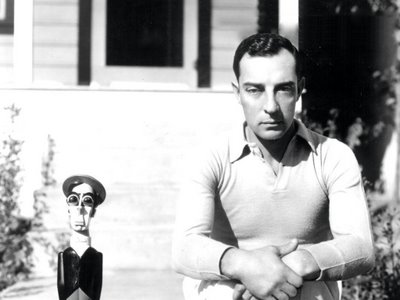
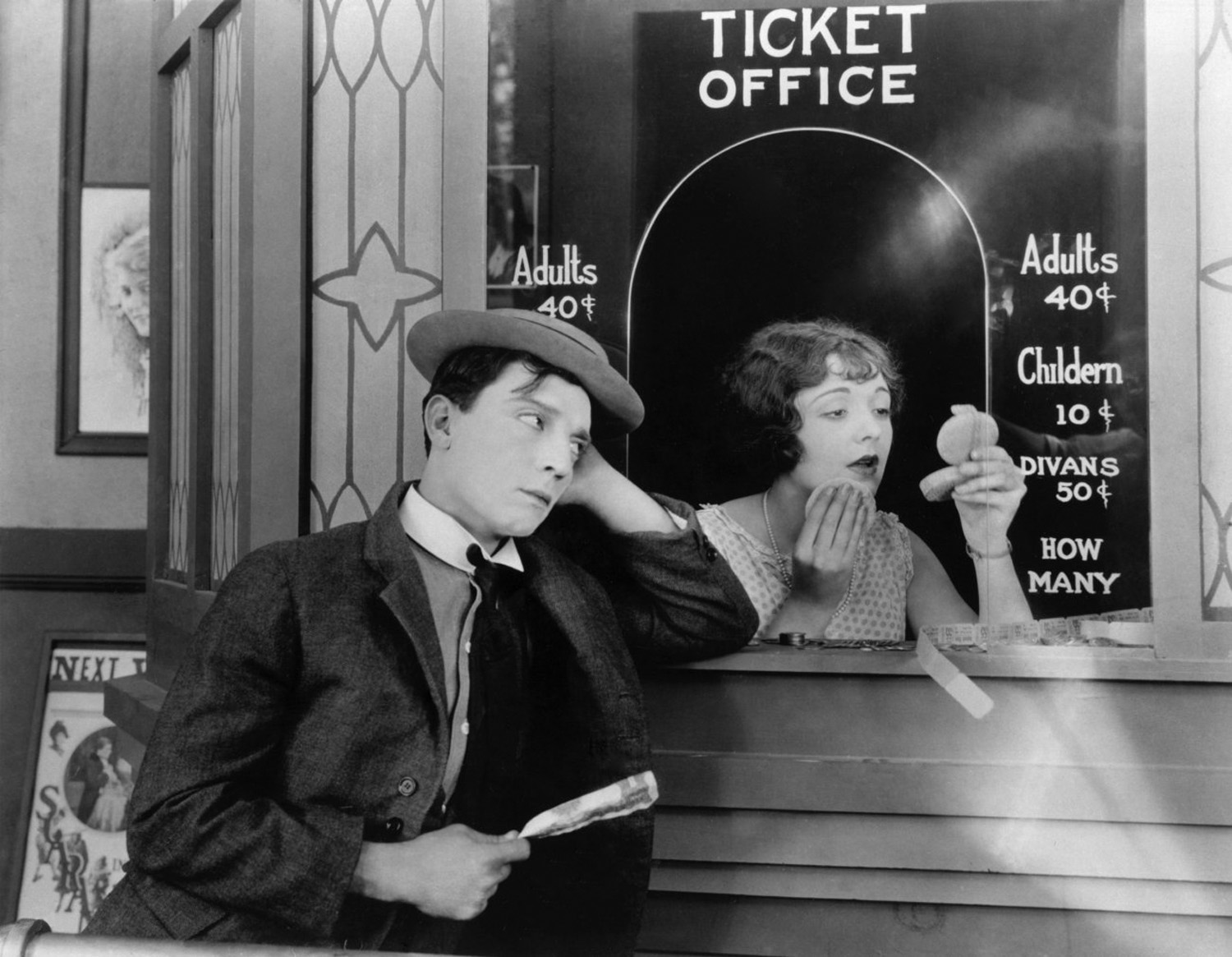
Everyone loves Buster Keaton, but the readers of Silent London love him more than most. So today, on 4 October 2011, which would have been Buster Keaton’s 116th birthday, let’s pause to celebrate the Great Stone Face. After all, if it wasn’t for Buster Keaton, this blog wouldn’t exist. My first silent film and live music experience was a double-bill of Sherlock Jr and Steamboat Bill Jr accompanied by the Harmonie Band. What a treat. I was already smitten with early film before I went, but that evening turned me into an evangelist for the ‘live cinema’ experience.
I have Buster Keaton news to share, also. In the US, movie channel TCM is celebrating by showing Keaton’s films every Sunday throughout October. Sadly, that pleasure is not available on these shores, but Scottish film blogger Jon Melville isn’t going to let that stop him. He will be rewatching the same films on DVD, and writing them up for his Holyrood or Bust(er) project. Follow his progress on his blog here.
Over in LA, The Kitty Packard Pictorial blog is hosting a month-long Buster Keaton party – and everyone is invited:
Project Keaton will be a month long open forum in which writers, artists, everyday Joes and everyday Janes (like me) from all over the world are being invited to tip their pork pie to Buster. The goal is to foster a month of creative exchange, with Buster as muse, and to celebrate one of cinema’s few, true geniuses. There are no rules as to content: essays, reviews, art, critiques, tributes, prose, poetry, all are welcome. And, since this is a month long project, there are no pressing deadlines: participants may contribute as little or as much as they wish any time at all during the course of October.
Find out more, including how to contribute to Project Keaton, here.
If all this has reawakened your love of Buster Keaton, then you may want to join the Blinking Buzzards – the UK Buster Keaton society, who produce quarterly newsletters and hold regular meetings. They are even working on a clothing range and talking about a festival, too. There is not much information on their website at present, but their next meeting will be held at the Cinema Museum on 22 October. You can follow them on Twitter or Facebook, where they are far more talkative and a regular source of Buster Keaton clips and news.
Buster Keaton in The General (1926)
The final titbit I’ve been keeping stashed under my pork-pie hat is a date for your diary. You may already know that The Slapstick Festival, an annual orgy of silent comedy in Bristol, will take place from 26-29 January next year. This festival is organised by the fabulous people at Bristol Silents and is always enormous fun, with an enchanting mix of silent film geekery and out-and-out hilarity. Although it’s too early for the full lineup to be revealed, the four galas, the flagship events of the weekend, have been announced.
May I draw your event to the event taking place on Friday 27 January? Comedian Griff Rhys Jones will introduce a screening of Buster Keaton’s masterpiece The General (1926), with a new score written by Günter Buchwald and performed by members of the European Silent Screen Virtuosi and Bristol Ensemble. There will also be a chance to see Laurel and Hardy in The Finishing Touch (1928) and Charlie Chaplin in The Adventurer (1916), as well as a performance by the Matinee Idles, featuring actor Paul McGann. The Gala takes place at Colston Hall in central Bristol, and tickets are available here.
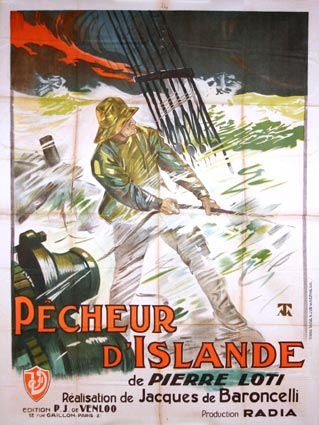
Pierre Loti’s novel Pêcheur d’Islande combines realism and impressionism as it explores the hard life of Breton fishermen who risk their lives to catch cod in Icelandic waters. The tragic air extends as far as the novel’s love story, a romance between a sailor, Yann and a young girl, Gaud, who meet at a party. Gaud is in love with Yann, but he is also in love with the sea …
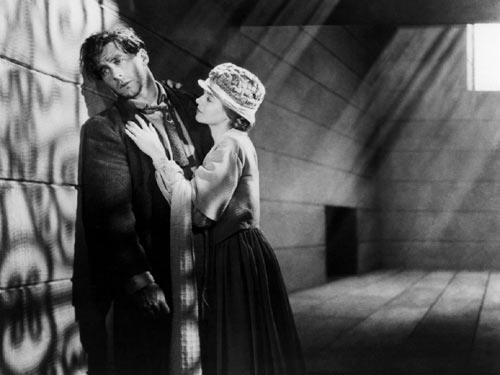
In 1927 the novel was adapted for the screen and directed by the Jacques de Baroncelli, a Frenchman who had made many films in the silent era. Pêcheur d’Islande was shot on location in Brittany, and the landscapes both on land and at sea are magnificent. It’s a rarely seen film, and so you’ll be very happy to know that its forthcoming London screening will be introduced by – Kevin Brownlow. Not only that, but Neil Brand will provide piano accompaniment.
Pêcheur d’Islande screens at the Ciné Lumière at the Institut Français on Tuesday 11 October at 6.30pm. Tickets cost £10 or less for concessions and are available on the Institut Français website here.
One of the many things that Silent London loves about the Barbican’s Silent Film and Live Music strand is the way it crosses over other with film festivals taking place at the venue. There are silent screenings coming up that are part of the Portuguese and Czech Film Festivals, for example. The Portuguese silent, The Wolves (1923), looks particularly interesting – but more of that in a future post.
The film festival we’re concerned with today is the Bicycle Film Festival, now in its 11th year and packed full of cool documentaries about urban bikers and BMX stunts. The Wheels of Chance (1922) is rather more genteel, though: an adaptation of an HG Wells novel by American director Harold Shaw. The hero of this caper is an awkward draper’s assistant, who falls for a cycling beauty while on holiday in the home counties. We’re told that the story is a “metaphor for the revolutionary effect of the bicycle on Edwardian society”, but it also sounds like a good deal of fun. This is how the Bioscope reported a screening of the film at Pordenone two years ago:
Filmed, as is seemingly usual with Shaw, largely on location with strong emphasis on pictorialism. Wheels of Chance is a comedy with a plot borrowed from a melodrama, with George K. Arthur, back from Shaw’s Kipps, as a draper’s assistant on a cycling tour foiling the machinations of a foreign-named cad – Bechamel – trying to elope, also by bicycle, with a naive suburban girl thereby trapping her into compromising situations in Home Counties pub/hotels, while her mother and her entourage set off in pursuit. Charming but never cloying, the happy ending here is not the unlikely riding off into the sunset – socially impossible in those times – but a recognition by all parties of the lessons learned; she is less naive, and she and her elders have learned respect for their ‘social inferior’; he gains self-respect, and has had his horizons broadened just a little bit … it’s a well-made film, with its heart in the right place, and those evocative shots of 1920s Surrey and Hampshire …
Music for the screening will be provided by Robin Harris on piano and the feature will be accompanied by two early shorts: Thomas Edison’s Bicycle Tricks (1899) and the hypnotic Ladies on Bicycles (1899), shown above.
The Wheels of Chance screens at the Barbican Cinema at 4pm on 9 October 2011. For more information and to book tickets, visit the Barbican website.
Walthamstow wants a cinema. In fact, Walthamstow has a cinema, but it is in a terrible state of disrepair at the moment, and its owners want to use it as a church. So the campaign fights on, but meanwhile the cinephiles of E17 are starved for local entertainment. Which is where Screen 17, a local ‘microplex’ cinema comes in.
Based in a Regency villa in the heart of Walthamstow Village, Screen 17 is a new, but very welcome, addition to the local arts scene. They’ve been showing children’s films on Saturday mornings and movies for grownups on Thursday evenings for a few weeks now, but they wanted to offer something a little different – to give people a chance to try another flavour of cinema. So Screen 17 is showing a silent movie with live music in October, and the film they have chosen is the beautiful Sunrise: A Song of Two Humans (1927).
I’m not exaggerating when I say that Sunrise, directed by FW Murnau, is one of the greatest films of all time, and a masterpiece of late silent cinema. The story concerns a pair of newlyweds from the country, and a vamp from the city who tries to come between them. It’s beautifully photographed, with stunning fluid camerawork, and touching lead performances from Janet Gaynor and George O’Brien. It’s by turns comic, romantic and as in this scene, thrillingly melodramatic:
I’m really excited about this. If you hadn’t guessed, I’m a proud Walthamstow resident, and it’s wonderful to see a silent film shown in my local area. The guys who run Screen 17 are also behind the popular Vintage Cabaraoke evening, so they know how to put on a great night’s entertainment too. There will be a live improvised piano accompaniment for the film, just like in the good old days, and DJ Roxy ‘Moonshine’ Robinson will be spinning some 78s as well. If you want to dress up in your best 20s gear for the occasion – go ahead!
Sunrise: A Song of Two Humans screens at Screen 17 on 20 October 2011. Doors open at 7.30pm and the film begins at 8.30pm. There will be a licensed bar, hotdogs and popcorn. Over 18s only. Tickets cost £8 and are available on the door or on We Got Tickets. For more details, visit the Screen 17 website.
This is a silent film screening, a concert, an experiment and lunch, all rolled into one. Not So Silent Movies will happen on the first Sunday of every month at the Kings Place arts centre in Kings Cross. It’s the brainchild of composer and cellist Philip Sheppard and puts a range of leading musicians to the ultimate test of their improvisational skills – accompanying silent films. The films will be a complete surprise to the musicians, who will have had no opportunity to watch the movies in advance, or heaven forfend, rehearse. This is what Sheppard says about the project:
‘I love throwing caution to the wind and creating a spontaneous composition, and I have absolute confidence that these musicians can pull it off. There’ll be as much slap-stick on stage as on screen; we get such a buzz from taking the risk with no safety net – it’s the adrenalin that makes it work, and when it’s over you can’t repeat it – it’s a one off!’
The choice of films will be a surprise for the audience too, of course. But a little bird tells me we can expect plenty of Buster Keaton (from the shorts to the features), some Harold Lloyd, maybe even some Chaplins in the future. Sheppard is huge fan of silent comedy and keen to show a broad range of films. He has something very special planned for Christmas, too, hopefully involving a special guest. But he’s keen to hear suggestions from Silent London readers. So if you want to nominate some silent comedies that you would like to see with a spontaneous score, comment below.
The roster of musicians involved is very impressive, and changes from month to month. Here are the line-ups for the first three Sundays.
Sunday 2 October:
Special guests Guy Pratt bass (Pink Floyd & Roxy Music) Geoff Dugmore drums
House band Philip Sheppard cello Elspeth Hanson violin (Bond) Pip Eastop horn (London Sinfonietta) Mark Neary pedal steel guitar
Sunday 6 November: Special guest Dame Evelyn Glennie OBE percussion
Sunday 4 December: Roger Eno piano
Robin Millar CBE guitarist/star producer Steve Mackey bass player, Pulp
Not So Silent Movies takes place on the first Sunday of every month in Hall Two of Kings Place. Tickets cost £9.50-£12.50, or £29.50 with Sunday lunch and a bloody mary at the Rotunda restaurant included. Find out more here.
Which silent comedies would you like to see shown at Not So Silent Movies? Please leave your comments below.
There are few things more joyous than watching a Buster Keaton classic with live music, but this event might be one of them. It’s a fundraiser for the Sing for Joy Bloomsbury choir, incorporating a concert by the group themselves and a screening of Sherlock Jr, with piano accompaniment by the marvellous John Sweeney.
Sing for Joy is made up of singers who have Parkinson’s disease or other neurological conditions, and their friends and carers. Singing as a group isn’t just fun, it boosts confidence and helps with the speaking and breathing exercises that people with Parkinson’s do to keep tremors under control. You can find out more about the choir, and their director Carol Grimes, here.
If you’re not familiar with Sherlock Jr, it’s one of Keaton’s most inventive and charming films. Keaton plays a projectionist who fantasises about being a detective hero in a movie. When he falls asleep in the projectionist’s booth one night, he dreams that he walks through the cinema screen and into the heart of the action. You may have seen some clips of it if you watched The Story of Film on Saturday night.
The Sing for Joy Sherlock Jr event will take place in the hall of The Church of Our Most Holy Redeemer (full disabled access) 24 Exmouth Market, EC1R 4QE (nearest tube Farringdon) on 13 October 2011. Tickets cost £18, which includes a buffet dinner. They are availale from Mike Blackstaffe on 07584 471 104 or tickets@blackstaffe.demon.co.uk. Doors open at 7pm, which is when dinner will be served. The programme begins at 7.45pm and there will be a licensed bar.
As previously reported with breathless excitement on this very site, composer and Scissor Sister John Garden has written an electronic score for The Lost World (1925). This is marvellously enjoyable silent film pioneered the use of stop-motion special effects, and brought us the unforgettable images of a brontosaurus running riot around the streets of London.
Now, Garden is taking The Lost World on tour. He’s going to Brighton, Manchester, Southampton, Exeter and performing two dates in London: one at the Barbican Centre, and one, among the real-life dinosaur (skeletons) at the Natural History Museum.
Here are the dates in full – check with the venues for exact times and ticket prices:
If you want a sample of the film, and Garden’s score, check this out:
The Lost World tour is brought to us by the excellent people at Bristol Silents. If you haven’t done so already, bookmark their shiny new blog right now.
Wurlitzer organs were once a familiar sight in British cinemas but that was a very long time ago. Happily, there are some places, such as the Musical Museum in Brentford, which maintain these fantastic instruments and put on concerts and film screenings to show them to their best advantage.
The next event on the Musical Museum’s “silent” schedule is a Sunday afternoon compilation of Laurel and Hardy films. There will be two silent shorts before the interval: Flying Elephants (1928) and Putting Pants on Philip (1927). Donald Mackenzie will accompany both films on the museum’s Regal Wurlitzer, and after the break he will give a short performance before a screening of the sound film The Music Box (1932).
The Laurel and Hardy screening takes place on Sunday 25 September at 3pm, at the Brentford Musical Museum, near Kew Bridge Station. Tickets cost £10 and you can find out more details on the museum’s website here.
Stand by for 15 days of non-stop film-film-film in the capital – the London Film Festival approaches. High-profile events such as this are renowned for attracting the best new films, but increasingly they offer a space for freshly restored classics as well. Happily, this year, silent films fall into both of those categories.
The headline news is that Michel Hazanavicius’s hotly-tipped The Artist (2011) is coming to London. This modern silent, a love letter to 1920s Hollywood, has consistently charmed critics since it was first shown at Cannes and the Weinsteins are opening it in America at Thanksgiving, leading inevitably to what the magazines call “Oscar buzz”. There is still no news of the UK release date, so these two London gala screenings, while pricey, are certainly precious. I can’t wait to see it, myself.
Miles Mander and Madeleine Carroll in The First Born (1928)
The next big thing, as it were, is the London Film Festival Archive Gala, which this year will be the BFI’s brand-new restoration of Miles Mander’s The First Born (1928), as I revealed on Wednesday. This stunning film will be accompanied by the premiere of a new score written by the incomparable Stephen Horne when it screens at the Queen Elizabeth Hall on the Southbank. Do not miss.
The Goose Woman (1925)
Stephen Horne will also provide musical accompaniment for two of the other silent film screenings at the festival – in the Treasures from the Archives strand. First up is The Goose Woman (1925), a Hollywood film directed by Clarence Brown (Flesh and the Devil, Anna Christie). This film is a recent rediscovery, which been restored by Kevin Brownlow and Robert Gitt, who will introduce the screening. The Goose Woman stars Louise Dresser as a former opera singer who tries to regain some of her fame by claiming to have witnessed a murder. Unfortunately, her false testimony frames her son, played by Jack Pickford. This movie was a great success at this year’s San Francisco Silent Film Festival, so it’s very exciting to finally be able to see it in the UK. The screening at BFI Southbank will be prefaced by a couple of early Vitaphone shorts – yes, sound films.
Shoes (1916)
Next, a double-bill of restorations from foreign archives – The Nail in the Boot (1931), from the Gosfilmofun in Moscow, is a piece of Soviet silent propaganda, that was nonetheless attacked at the time for prioritising form over content. When a soldier fails in an assignment because of an injury caused by a broken shoe, a military inquiry is held to find out whether he is a traitor to the cause. The film is partnered an American film, Shoes (1916), directed by Lois Weber. This movie, which was been restored from separate prints by the EYE institute in the Netherlands, focuses on inner-city poverty – as experienced by a young shopworker who wants some new shoes, which of course she can’t afford. This programme screens at NFT1 in BFI Southbank.
Le Voyage Dans la Lune (1902)
A late addition to the programme, the restoration of Méliès’s hand-tinted, full-colour Voyage Dans La Lune (1902) will screen twice at the festival, accompanying Roberto Rossellini’s The Machine That Kills Bad People (1952), “a satirical fantasy … about a photographer who discovers that his camera has magic powers: as he develops snapshots in his studio, their subjects expire in another part of the town, inspiring the cameraman to devise a scheme to kill the wicked, the greedy and the corrupt.” Click here for more information and tickets to the screenings, which will be held at BFI Southbank.
Cosmopolitan London (1924)
The final silent Treasure from the Archive is a collection of tinted and toned documentary travelogues, showing London in the 1920s. Wonderful London incorporates footage from all across the city, and the screening will be introduced by Bryony Dixon, with piano accompaniment by Neil Brand. Talk about silent London … you can watch these six films in two screenings at BFI Southbank.
I must add a special mention also, to a short film playing as part of a collection called Just Because You’re Paranoid, It Doesn’t Mean They’re Not After You at BFI Southbank. Henry Miller’s A Short Film About Shopping (2011) is described as “a silent study” in which a “a dentist’s mundane routine is radically altered by a trip to the shops. You can watch the trailer here.
The 55th London Film Festival runs from 12-27 October 2011. Everything you need to know about booking tickets for the London Film Festival is explained here.
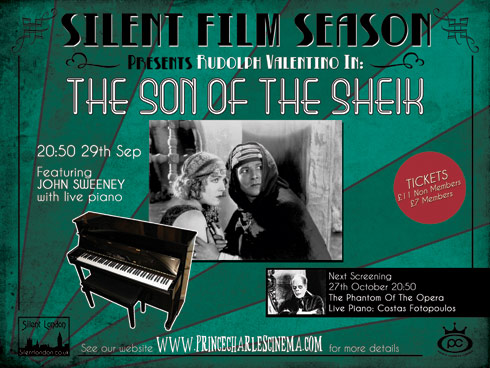
There are film stars and then there is Rudolph Valentino. Nicknamed the “Latin Lover”, few screen actors have ever inspired so much devotion – and lust – in their audience. When he died, aged just 31, there was a national outcry from his distraught female fans. Now here’s your chance to see what all the fuss is about.
The Son of the Sheik (1926) is an unashamed star vehicle for Valentino, more or less a remake of his earlier film The Sheik, but with more comedy and action scenes. Ostensibly a sequel, The Son of the Sheik stars Valentino as Ahmed, the adult son of the first film’s hero. As before, Ahmed falls for a beautiful dancing girl, Yasmin (Vilma Bánky), but is convinced by a love rival that she has been unfaithful to him. What happens next is rather difficult to explain, and certainly controversial. If you don’t mind a few spoilers, and want to read all about it, I recommend this very thorough and lively review on the Silent Volume blog.
The Son of the Sheik screens at the Prince Charles Cinema in the West End on 29 September at 8.50pm. Live piano accompaniment will be provided by John Sweeney. Click here for tickets.
Miles Mander and Madeleine Carroll in The First Born (1928)
The full lineup for the 55th London Film Festival has now been announced and I am pleased to say that this year’s Archive Gala film will be Miles Mander’s The First Born (1928) with a new score by Stephen Horne. The film will be screened with its new score at the Queen Elizabeth Hall in the Southbank Centre on 20 October 2011.
I’ll be writing more about the film in coming weeks, but for now I can tell you that The First Born is a sophisticated drama, adapted by Mander from his own novel and play, about a philandering politician and his wife. Mander plays the politician, Sir Hugh Boycott, and Madeleine Carroll is his unhappy wife. The couple are unable to have a child, which puts a further strain on their marriage and so Boycott’s wife attempts to dupe him into believing that someone else’s baby is his own…
The First Born … deals with difficult subjects – the double standards of the upper classes, jealousy and secrecy, miscegenation, and the tension between conformity and a more modern morality. Sewn into the plot are also references to the world of politics, of which Mander had much experience, as the younger brother of Sir Geoffrey Mander, the eminent Liberal radical … The treatment is unusually ‘adult’ and made with skill and a degree of invention. The most striking example is a point of view shot with handheld camera as Boycott stalks through the marital bedroom to tease and torment his wife as she is in the bath. The film is masterly in its construction and continuity.
Dixon goes on to speculate whether the influence of Alma Reville, who co-wrote the film, might be due credit for some of the film’s Hitchcockian flourishes. In October, we will be able to judge for ourselves.
And of course, the other big news for silent film fans is that Michel Hazanavicius’s modern silent The Artist will be screening at the festival as well. Wonderful news.







 Silent London