Tag Archives: British cinema

The Life Story of David Lloyd George (1918) – the great lost British film

The Life Story of David Lloyd George (1918)

This is a guest post for Silent London by Neil Brand.

In late 1918 a film was in preparation that was to rewrite the history books – a British picture, running almost as long as Griffith’s The Birth of a Nation, bringing to life the political career of the country’s prime minister, the full ferocity of the war and the experience of ordinary people caught up in these momentous events. It was called The Life Story of David Lloyd George. Nothing as ambitious had been tried before and it was ready for launch immediately after Armistice Day. There was even a deal in place with Carl Laemmle to splash it across the American continent.

Then late one afternoon in January 1919, a lawyer arrived at the offices of Ideal Film Company, the film’s producers, handed over £20,000 in £1,000 notes and drove away with the only negative and positive copies of the film. It was never seen again by its makers, its writer, the respected historian Sir Sidney Low, or its director Maurice Elvey. No audience saw it at the time and the film became a lost treasure.

But you can see it at the Barbican on 17 February, 2013.
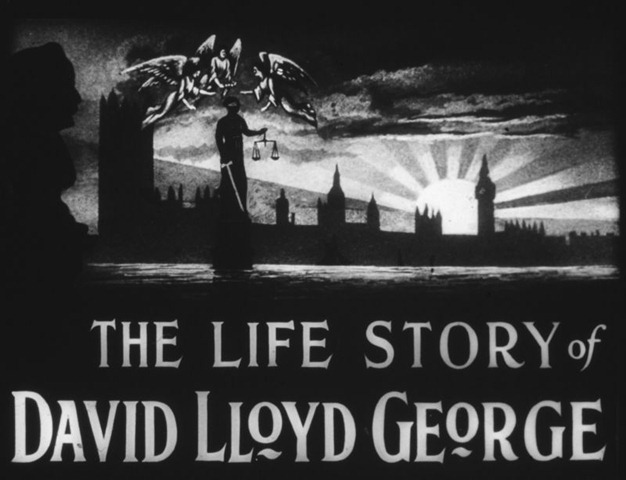
The Life Story of David Lloyd George (1918)

The story behind these extraordinary events is still murky, but what we do know is this. Towards the end of 1918, as the film was nearing completion, the owners of Ideal Film, the Rowson brothers, issued a writ for libel  against John Bull magazine, edited by the virulent xenophobe Horatio Bottomley, which had accused them of being German sympathisers (largely on account of their original name, Rosenbaum). At the same time, word came down from Lloyd George himself that he was unhappy with the film going ahead, this despite the fact that the producers had secured his involvement before shooting began. These two events are almost certainly linked, but the outcome is still shocking to this day.
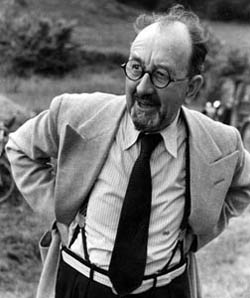
Maurice Elvey
Maurice Elvey

The £20,000 paid to Ideal represented the out-of-pocket costs of the film not appearing – the greater costs, to Elvey, to lead actor Norman Page, whose Lloyd George is a phenomenal performance of nuance and understatement, even to the future of the British film industry, are incalculable. As Kevin Brownlow wrote on seeing the film in 1996, “… had the Life Story of David Lloyd George been released, Elvey might even have been hailed ‘The Griffith of Britain’ … certainly the film would have been placed beside the best work from America and the continent and it would not have been entirely overshadowed.”

So how did Brownlow come to see it? In 1994 the Welsh Film Archive in Aberystwyth took delivery of 16 cans of film found on the farm of Lord Tenby, grandson of Lloyd George. These turned out to contain 137 unedited rolls of nitrate film, which, after two years of painstaking restoration and reconstruction work, finally hit a screen before an audience in North Wales in April 1996 – I was the pianist on that occasion, unable to believe my luck.

For Lloyd George is a phenomenal film, a history that plays out like a biopic, a time-capsule that, at its best, still holds  a modern audience with extraordinary power. Like the best biopics it hops nimbly between the big picture and the small, creating a fascinating portrait of Lloyd George within an entirely convincing political and domestic world. It has massive scenes, including a riot at Birmingham Town Hall with nearly a thousand extras; and quiet, contemplative scenes informed by Page’s charismatic dignity. Best of all, it still has the power to move, as much as it would have done with those audiences of 1919 who were destined never to see it. I urge you to see this “lost” masterpiece on its only London showing, and be prepared to have your preconceptions about British cinema, the first world war and silent cinema acting overturned.
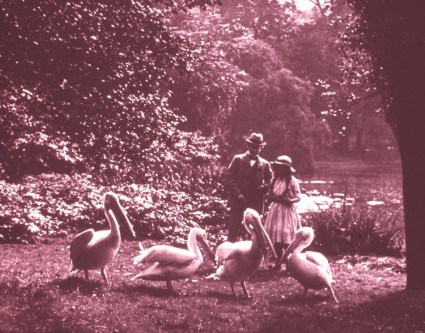
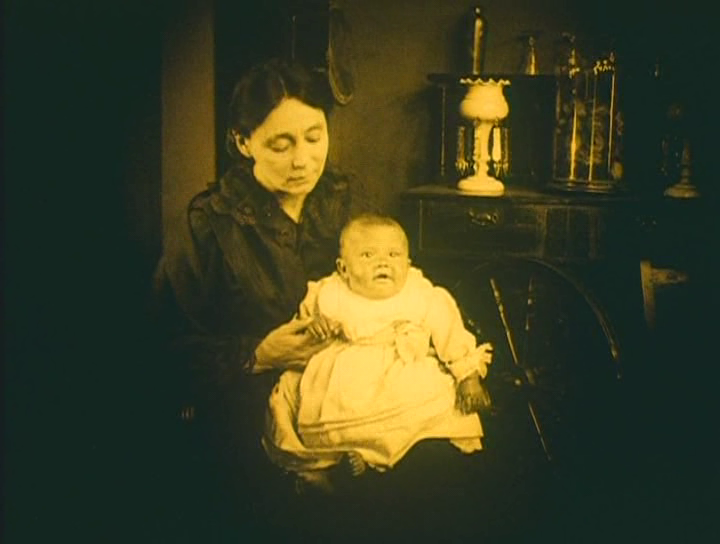
The Life Story of David Lloyd George (1918)
Norman Page and Alma Reville in The Life Story of David Lloyd George (1918)

The National Library of Wales holds more information on this extraordinary film and its story, if not the solution to the mystery of the film’s disappearance. Here’s my take on it – the film turned up among Lloyd George’s own possessions and, as was common knowledge at the time, £20,000 was about the going rate for a baronetcy …

Neil Brand

The Life Story of David Lloyd George screens at the Barbican on 17 February 2013 at 4pm with an introduction by Ian Christie and live accompaniment by Neil Brand. You can book tickets online here. If you can’t make the London screening, the film is also available on DVD with Neil Brand’s score. You can read more, and watch some clips from the film here. To read even more, you can buy the excellent book edited by David Berry and Simon Horrocks: David Lloyd George: the Movie Mystery.
Hindle Wakes (1927): an unconventional love story

Hindle Wakes (1927)
Hindle Wakes (1927)

This is a guest post for Silent London by Lucie Dutton. Lucie is currently researching a PhD thesis on Maurice Elvey’s early career. This post contains plot spoilers.

Lights! Fairyland! Romance!

This intertitle from Maurice Elvey’s 1927 version of Hindle Wakes might lead an audience to think that the film is just enjoyable froth; a pleasant way of spending a couple of hours but not much more. In truth, Hindle Wakes is far better summarised by another of its intertitles:  “Romance is all very well … but marriage would be a failure.”

Hindle Wakes, from the play by Stanley Houghton, is one of the finest works to come out of the British film industry of the late 1920s. It explores the social and moral pressures faced by a young woman who decides to assert her own sexual and feminist identity. During Wakes Week, mill worker Fanny Hawthorne takes a trip to Blackpool and embarks on an affair with Allan Jeffcote, the son of the mill owner. Fanny and Allan start off being slightly awkward when left alone together at the Pleasure Beach, but develop an ever-increasing ease with one another, until they kiss at the Tower Ballroom. The way the film is constructed leads the audience into thinking it is a conventional love story ­– but appearances are deceptive.

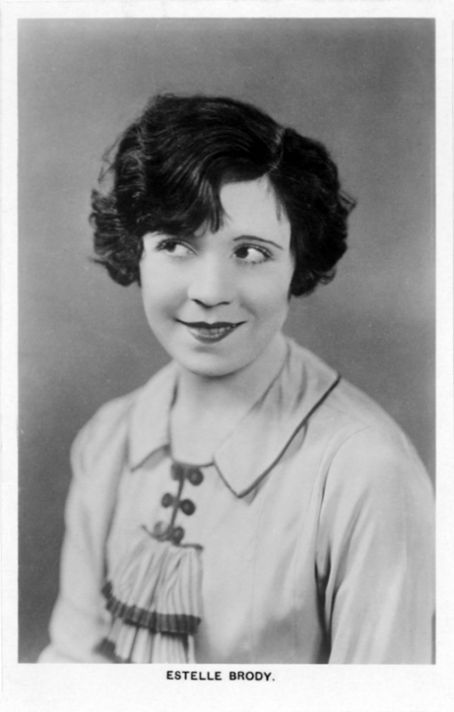
Estelle Brody
Estelle Brody

The affair is discovered and Fanny’s and Allan’s parents put pressure on the pair to marry. Fanny, however has other ideas – much to Allan’s consternation. She tells Allan: “I’m a woman, and I was your little fancy – you’re a man and you were my little fancy. Don’t you understand?” She determines to make her own way – without apology – rather than being “given away with a pound of tea, like.”

Fanny’s attitude is so appalling to her mother (Marie Ault at her most disapproving) that Fanny has to leave the family home. Watched by a street full of neighbours and her heartbroken father (Elvey regular Humberstone Wright) Fanny refuses to be shamed by her “little fancy” but retains her dignity: “I’m a Lancashire lass and so long as there are spinning mills in Lancashire I can earn enough to keep myself respectable.” And she does – the film ends with her working in the mill and agreeing that her loyal friend and admirer Alf may take her to the pictures that evening. This is a celebration of practical working-class feminism. It is Fanny’s freedom as a worker – her freedom to seek work anywhere and her confidence that she will find it – that enables her to maintain her own integrity.

Director Maurice Elvey admired Stanley Houghton’s original play greatly. He told Denis Gifford that he thought it was “the finest English play ever written … a really great play; it is really about something.” (The Denis Gifford collection of taped interviews with leading figures from the British film industry is held by the BFI.) He filmed it twice – once in 1917, with Colette O’Niel and Hayford Hobbs (who recently wowed Pordenone audiences as Walter Gay in Elvey’s Dombey and Son); and again in 1927 working closely with his colleague Victor Saville, starring Estelle Brody and John Stuart. Sadly, the 1917 version no longer exists – if it did, it would provide us with great scope for analysing Elvey’s development as a director. We would also be able to compare the performances of the great Norman McKinnel, who played mill owner Nat Jeffcote in both versions.

While Hindle Wakes boasts many fine performances, it is Estelle Brody who dominates the screen. Her examination of her face in the mirror to see whether it has changed following an off-screen sexual encounter with Allan is one of the best examples of acting in British silent cinema.

Hindle Wakes (1927)
Hindle Wakes (1927)

Brody was an American actor who worked with Elvey in the UK between 1926-28. Such was the resentment of the dominance of the American film industry at that time, publicists said that she was Canadian. Her obituary (by Kevin Brownlow) describes Brody and other residents of her retirement home watching Hindle Wakes:

“She was glued to the screen throughout. Apart from one or two who didn’t stay the course, all were transfixed. Afterwards, she was mobbed by the others congratulating her. Throughout the screening, the viewers, including some nuns, were constantly comparing the frail old lady in her wheelchair to the image on the screen with fascination and admiration.”

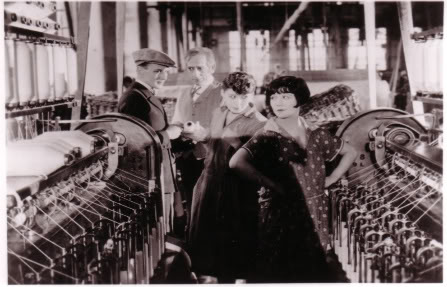
As well as strong performances, the film has some fine locations. Elvey was an early expert in location shooting, starting with his 1913 film, Maria Marten. For Hindle Wakes, he filmed in the Monton Mill in Manchester, in Eccles, at various Blackpool locations, and overlooking the sea at Llandudno. To ensure that the visiting actors appeared authentic in the mill scenes, the foreman advised them how to handle cotton bobbins and machinery.

Elvey, who had a reputation for working quickly and efficiently, shot 51 scenes at the Pleasure Beach and Tower Ballroom at Blackpool in 10 hours over the course of one day. The Blackpool scenes are one of the highlights of the film – with shots taken up Blackpool Tower, and on the Pleasure Beach Helter Skelter and Big Dipper. In the Tower Ballroom, Elvey filmed an ambitious dance sequence, which led to the film being advertised In Blackpool as “starring Estelle Brody and 5,000 local artistes”.

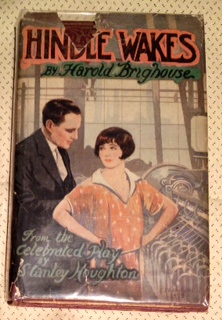
Hindle Wakes novelisation released to accompany the film

The film was well received on its release – Caroline Lejeune, writing in The Guardian (5 February, 1927) called it “the best advocate we have yet seen for the promulgation of British films” and said that Elvey had “made time and space and madness whirl before us on the screen … Elvey has successfully borrowed from the Germans what is apt to his own needs, shaped it to his hand, and made it for the time being his own.” She went on to name it one of her seven best films of the year (31 December, 1927). For Kinematograph Weekly (10 February, 1927), Lionel Collier said that Elvey, with his colleague Victor Saville, had “produced the best picture he has ever made, and an outstanding British triumph.” Even Variety – not known for its praise of British cinema – felt that it was a film that “did more to establish the birth of the British industry than any other” (13 October 1931).

We are privileged that in 2012 we are still able to see Hindle Wakes, 85 years after Elvey, Estelle Brody and John Stuart took their trip to Blackpool. It remains an important part of our cinematic and cultural history and comes highly recommended.

Lucie Dutton

Hindle Wakes screens at the West London Trade Union Club on Saturday 20 October. Read more here.

A Woman Redeemed at the Cinema Museum, 14 June 2012

A Woman Redeemed (1927)

On 14 June, the Cinema Museum is showing a programme of little-seen British silent films, including a new print of the racy spy thriller A Woman Redeemed (Sinclair Hill, 1927), starring Brian Aherne and Joan Lockton, with musical accompaniment from Stephen Horne.  I’ve seen A Woman Redeemed, and it’s a stylish, well-paced film from the latter end of the silent era that deserves a far more exciting title – and a wider audience. Here, to introduce the film more fully, is a guest post from Amy Sargeant, author of British Cinema: a Critical History (BFI, 2005).

'Hollywood taste' – A Woman Redeemed (1927)

Stoll’s 1927 release, A Woman Redeemed, was adapted by Mary Murillo from Frederick Britten Austin’s Strand magazine short story, ‘The Fining Pot is for Silver’. Both scenarios exploit a contemporary appetite for spy fiction – possibly best exemplified by John Buchan’s The Thirty-Nine Steps, Huntingtower and Greenmantle – and the audience for wartime memoirs published by former Secret Service personnel. Basil Thomson, appointed head of the Criminal Investigation Department in 1913, was twice charged with interviewing the alleged spy, Mata Hari. Self-servingly, he concluded:

No drama, no film story yet written has been so enthralling as our daily repertory on the dimly lighted stage set in a corner of the granite building in Westminster. In a century after we … are dead and gone, the Great War will be a quarry for tales of adventure, of high endeavour, and of splendid achievement: when that time comes even some of the humbler actors who play their part in these pages may be seen through a haze of romance.

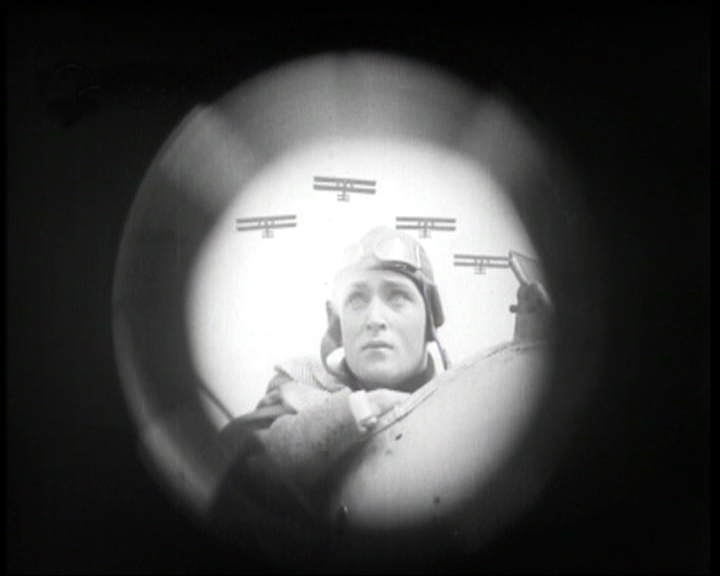
Both Britten Austin’s story and Sinclair Hill’s film feature an organisation of foreign agents, intent upon power and destruction. Geoffrey Wayneflete (Brian Aherne), an irreproachable young pilot distinguished for his service in the Great War, has designed a wireless controlled, pilotless aeroplane ‘that shall make Britain strong enough to keep peace in the world’. The agents conspire to steal his plans, pressing into service Felice Annaway (Joan Lockton), ordering her to use her ‘charm and beauty’ to seduce Geoffrey. Stella Arbenina, meanwhile, plays the darkly enigmatic and heartless Marta, threatening to expose Felice should she fail to comply with the instructions of a dastardly ‘Twisted Genius’. The Criminal Investigation Department is not to be outwitted and pursues the agents to France; a chase ensues, from Paris to London, the centre of a ‘Proud Empire’.

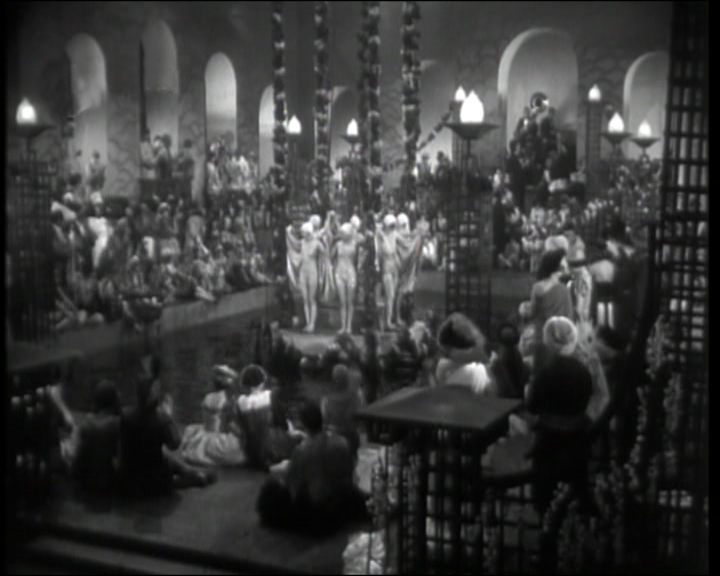
A foreign agent, 'intent upon power and destruction' – A Woman Redeemed (1927)

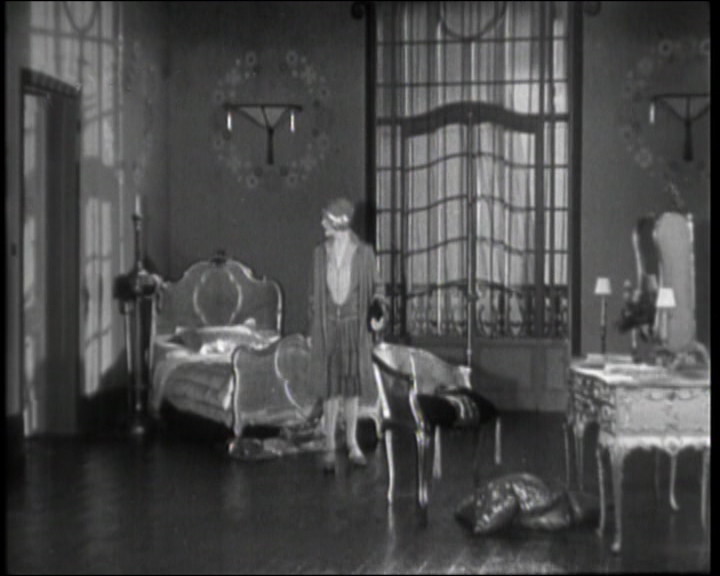
A masked ball afforded Walter Murton, Hill’s designer, the opportunity to produce the most spectacular set witnessed to date in British Cinema: spangled bathing belles dive into a pool from tiered platforms. A 1927 Bioscope reviewer commented wryly on the decors provided for Felice’s Paris hotel suite:

The bedrooms with gold and silver draperies seem rather to suggest Hollywood taste, but for anything we know that may be the taste that appeals to ladies in the pay of alien governments.

One guest at the ball has drawn inspiration from Douglas Fairbanks; Geoffrey comes dressed as Harlequin.

'Spangled bathing belles' – A Woman Redeemed (1927)

As an author, Britten Austin was something of a pasticheur, with a range spanning from popular farce to a modish fascination with the occult: Buried Treasure, combining parapsychology, adventure and costume drama, was filmed by Cosmopolitan in 1921 from a Britten Austin short story, as a vehicle for Marion Davies. However, as a prediction of future aerial warfare, A Woman Redeemed bears comparison with Maurice Elvey’s 1929 High Treason, likewise featuring a gang of alien, deracinated mercenaries and idealists.

A Woman Redeemed uses multinational aliases to designate suspect characters. It gestures towards a return to nationalism in Europe in the late 1920s and early 1930s as a guarantor of inner security and the potential incubator of external conflict.

A Woman Redeemed screens at the Cinema Museum in south London on 14 June 2012 at 6.30pm, with musical accompaniment by Stephen Horne. Tickets cost £8.50 or £6.50 for concessions and are available online here.

Images courtesy of the National Film and Television Archive.

15th British Silent Film Festival – programme announcement and booking details

Miles Mander and Madeleine Carroll in The First Born (1928)

I’m very pleased to say that more details of the programme for next month’s British Silent Film Festival have just been released. The festival takes place in Cambridge this year, from 19-22 April. Delegate passes for the weekend are now available to buy here, and the full schedule is available to browse here. Screenings will include Graham Cutts’s Cocaine, to accompany the ‘What the Silent Censor Saw’ programme, The First Born, with Stephen Horne’s ensemble score, Norwegian drama Fante-Anne (Gipsy Anne) with a new score by Halldor Krogh, Soviet documentary Turksib with accompaniment from Bronnt Industries, folk films from the ‘Here’s a Health to the Barley Mow’ collection and new restorations from the Imperial War Museum. There will be some British silent cinema highlights from 15-year history of the festival, a Grand Guignol strand of macabre movies and Ian Christie will deliver the Rachael Low lecture.

All this plus the Dodge Brothers will be scoring The Ghost That Never Returns live, there’ll be an outdoor screening on the Sunday night, golfing tales from PG Wodehouse, some classic Cambridge comedies and a couple of WW Jacobs adaptations in the form of The Boatswain’s Mate and A Will and a Way. The full announcement is pasted below.

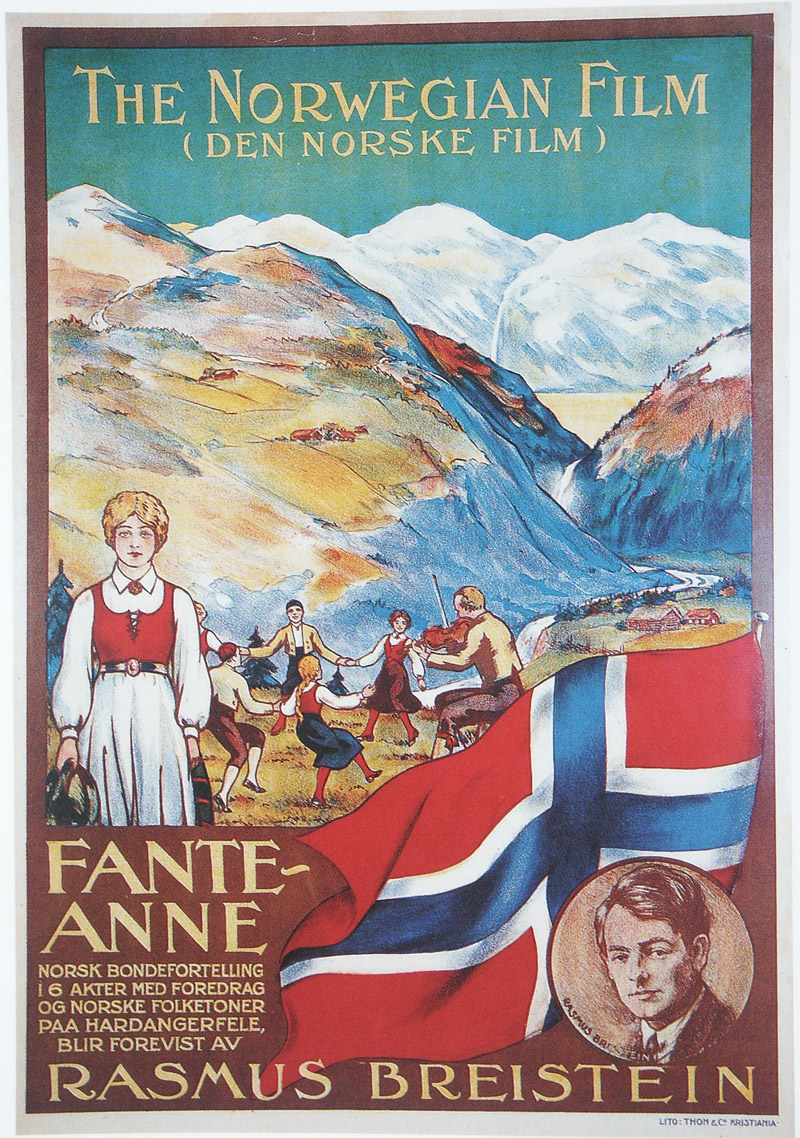
Fante-Anne (1920)
Fante-Anne (1920)

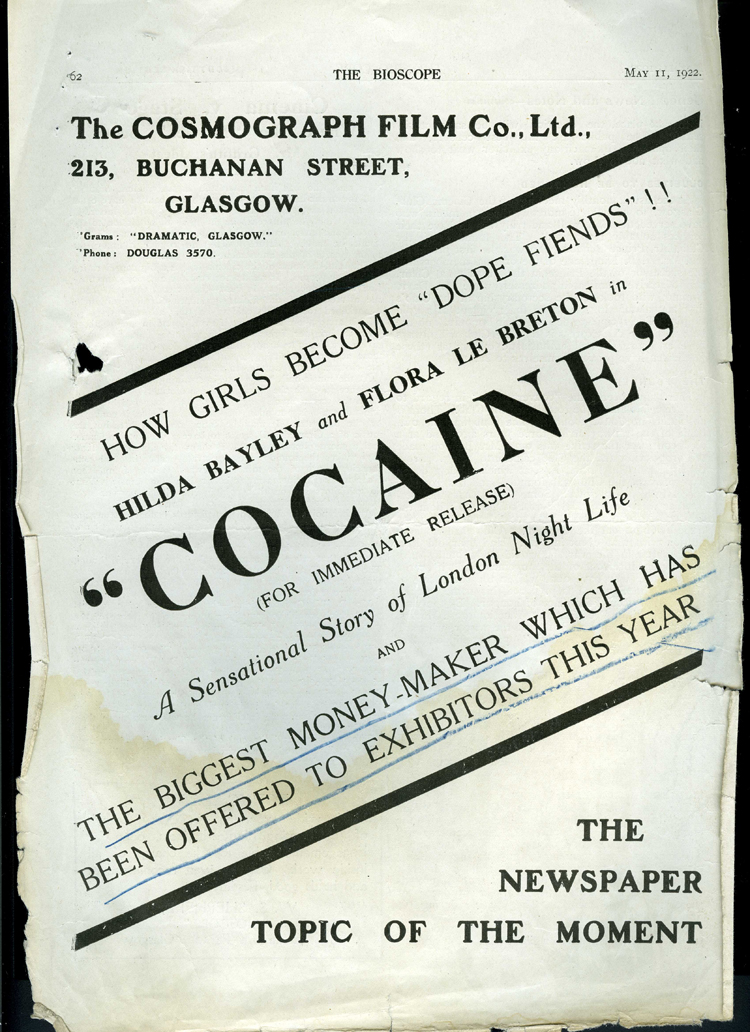
The British Silent Film Festival will be celebrating its 15th Anniversary in Cambridge at the Arts Picture House. The four-day programme will be packed with rarely-seen films from the BFI and other international archives featuring a wide range of fascinating subjects such as: P.G. Wodehouse’s golfing tales including The Long Holeand The Clicking of Cuthbert; rarities based on the charming coastal stories  of W.W. Jacobs including The Boatswain’s Mate and A Will and a Way; a celebration of the centenary of the British Board of Film Classification with a look at ‘What the Silent Censor Saw’ with the rarely screened and risqué film Cocaine.  We’ll be tracing the origins of Cambridge’s brand of ‘university humour’ before the Footlights with a selection of burlesque films from the 1920s and featuring  A Couple of Down and Outs, the ‘silent Warhorse’ made in 1923 which tells the tale of a WWI soldier who goes on the run with his warhorse to save it from the ‘knacker’s yard’. We are also delighted to  be screening the 1920 classic Fante-Anne (Gipsy Anne), directed by the great Norwegian director Rasmus Breistein; accompanied by a new musical score by composer and music producer Halldor Krogh.

Trade ad for the scandalous Cocaine (Graham Cutts, 1922)

We’ll also be featuring some 15th anniversary highlights including the legendary Grand Guignol programme of macabre stories with a twist in the tale and we’ll be including a selection of the best of British silent feature films screened over the past fourteen years. The Imperial War Museum will be presenting their latest silent restorations from their fabulous collection and we are very pleased to announce that Ian Christie will deliver the Annual Rachael Low Lecture.

This year’s ‘hot tickets’ will be the wildly popular Dodge Brothers performing their distinctive brand of Americana to The Ghost That Never Returns at the West Road Concert Hall; Here’s a Health to the Barley Mow with live folk accompaniment to silent films of English folk traditions and the Bronnt Industries playing to the stunning Soviet film Turksib. Regular Festival collaborator Stephen Horne will be performing his fabulous new ensemble music score to The First Born, a dizzying tale of sex, death and British politics.

Screenings will take place at the Arts Picturehouse, Emmanuel College and the West Road Concert Hall. The Festival will draw to a close with an outdoor highlights screening on Magdalene Street in the evening of Sunday 22 April.

This post was updated on 22 March 2012.

From the Archives: Made in Barnet at the Phoenix Cinema, 18 September 2011

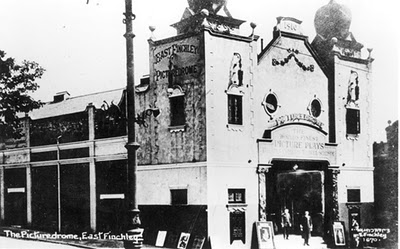
The Phoenix Cinema
The Phoenix as it used to look

It’s always a pleasure to visit one of Britain’s oldest and most beautiful cinemas – and what a treat also to see some early films on the big screen. As part of the Phoenix Cinema’s ongoing Century of Cinema celebrations, film historian Gerry Turvey will present a selection of films from the BFI’s archives celebrating Barnet’s pioneering film-makers. There will be work from Birt Acres and RW Paul among others – and what’s more, it’s all free.


From the Archives: Made in Barnet screens at the Phoenix Cinema, East Finchley at 2pm on 18 September 2011. Tickets are free but booking is essential, so call the box office on 020 8444 6789. For more information, visit the website.

British silent film screenings, autumn 2011

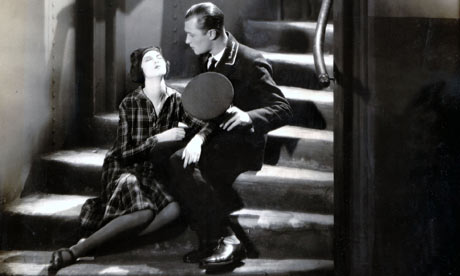
Underground (1928)
Underground (1928)

There is far more to British silent cinema than Hitchcock, whatever recent news reports might have you believe. From Yorkshireman Louis Le Prince’s claim to have invented motion-picture technology, through Cecil Hepworth’s pioneering days in Walton-on-Thames, to the directors who gathered at the London Film Society in the 1920s, our early cinema industry has much to offer. And it’s not just directors that we can praise, but actors, writers, producers and more besides.

That’s why I am so happy to report that, before Hitchcock’s work takes centre-stage next year, there are several screenings of silent films by other British film-makers coming up in London soon. This is a great opportunity to learn more about what we can loftily, but quite rightly, call our cinematic heritage – and to enjoy some rather good films. Continue reading British silent film screenings, autumn 2011

The White Shadow – when a Hitchcock film isn’t a Hitchcock film

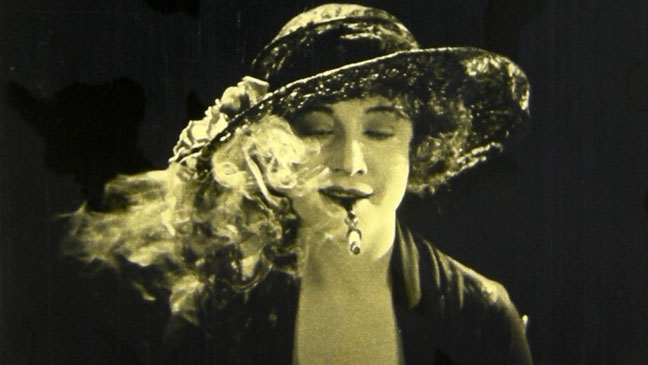
The White Shadow (1924)

Celebrity sells, and newspapers, news websites and trade journals alike all know that the likelihood of a story being read increases if a big name is attached to it. Woe betide you if you want to write about the silent era without mentioning Chaplin, Hitchcock or DW Griffith – preferably in the first paragraph.

So reports of the discovery of “Alfred Hitchcock’s Earliest Surviving Film” need to be taken with a pinch of salt. To recap, a few reels of The White Shadow (1923) have been discovered in a film archive in New Zealand. And this is how the BBC opens its online news story:

Footage from Alfred Hitchcock’s first film has been uncovered in New Zealand.

The British director was 24 when he made the 1923 silent film, The White Shadow.

The piece goes on to mention the film’s stars Clive Brook (Shanghai Express) and Betty Compson (The Docks of New York) – but there is no word of the film’s director. Because yes, Hitchcock worked on The White Shadow, as assistant director, art director, editor and writer, but the film was directed by someone else – Graham Cutts. While we’re always interested in early work by Hitchcock, whatever his job title, particularly with the forthcoming 2012 silent Hitchcock extravaganza on the horizon, we should also be happy to find out more about Cutts.

In the 1920s, Graham Cutts was ticket-office gold. He was called “a sure-fire maker of box-office attractions” by Kinematograph Weekly, and his Rat trilogy, starring Ivor Novello as an absurdly attractive Parisian jewel thief, is still celebrated and enjoyed today. Cutts’s films are sophisticated, sexual and employ any number of tracking shots, dramatic lighting and off-kilter camera angles to ramp up the tension – and the cinematic pleasure. Yes he worked with Hitchcock as a young man, but also Novello, Noël Coward and Basil Dean. He even made a successful transition to sound – with a career behind the camera that ran into the 40s.

The White Shadow looks like a fascinating find, with Compson playing twin sisters, one good and one evil, and plenty of opportunity for Cutt’s dynamic style to come into play. But please don’t take the credit away from a name that has almost been forgotten and give it to someone who doesn’t deserve it.

And if you have a copy of The Mountain Eagle in your loft at home, that really is a lost Hitchcock silent – so please call the British Film Institute right away, and tell them I sent you.