Category Archives: Book

Silent reading: Summer 2025 book reviews

Let Me Dream Again: Essays on the Moving Image, by Luke McKernan

Sticking Place Books, September 2025,

In case there could be anyone reading this site who doesn’t know, Luke McKernan is a media historian, formerly Lead Curator, News and Moving Image at the British Library. Also a formidably erudite and trailblazing blogger on moving image culture, especially silent cinema, but not exclusively. This collection of essays from across his many sites, gives a rich flavour of his expertise in analysis, archival curation and nostalgia.

In this book, Luke McKernan comments on the moving image in all its multiple forms. Let Me Dream Again – beautiful title – is crammed with insights into history, technology, and humanity. Because these essays, on a staggering variety of topics, began their lives as blogposts, they have the freshness of a live response to a moment in time – whether McKernan is reading 21st-century online comments on a silent film from 1903, or channel-hopping during the 2016 Olympics. He proves an excellent guide to the many ways that the storytelling impulse survives, and adapts to each new medium, from magic lantern slides to Artificial Intelligence.

Continue reading Silent reading: Summer 2025 book reviews

C.A. Lejeune and British film criticism: book and lecture news

You may or may not know this, but when I started Silent London I was working at the Guardian newspaper. So, it was at this time, when I was reading and writing about the silent era, and sitting in the Guardian office (rarely at the same time, I hasten to add) that I first became just a little obsessed with C.A. Lejeune.

Caroline Alice Lejeune, pioneering press film critic, media celebrity, Manchester icon and one half of the Sunday Ladies, with the Sunday Times’s Dilys Powell, is a pet subject of mine. I find her writing to be witty and wise and gentle, and her story, of falling in and out of love with the cinema, to be absorbing and not a little moving. It is also fascinating to me how she first got her job as the first real film critic on the Manchester Guardian, and moved to the Observer for another three decades. So I have been doing a little research. Well a lot in fact.

Continue reading C.A. Lejeune and British film criticism: book and lecture news

Silent reading: Spring 2025 book reviews

This is a long overdue post, but perhaps I was simply enjoying the research too much. Picking up an occasional series on this site, here are some short reviews of new books on silent film that have passed across my desk recently. Yes, I am a lucky duck.

Silent to Sound: British Cinema in Transition, by Geoff Brown

John Libbey, 2024, $45.00

If a story is worth telling, and this one certainly is, then it is worth telling with style. In this case, Geoff Brown relates the story of the arrival of sound in the British film business with an eye for the eccentricities and absurdities that make it not just a pivotal moment in the medium, but a good yarn, and one that is revelatory about the national industry. Geoff Brown, journalist and researcher, has been studying the arrival of sound in Britain for years now as part of an AHRC-funded project and the result is this deeply enjoyable and admirably detailed book about a long and strange process, which when told with Brown’s light touch and quick humour is as diverting as it is informative. The serious point is that Brown’s emphasis, where he has access, is always on the films themselves. And that, along with the quotations from the critical discourse that I particularly cherish, is what really gives this book its colour.

Continue reading Silent reading: Spring 2025 book reviews

Velvet Curtains and Gilded Frames: a refreshing take on the history of film, theatre and art

Velvet Curtains and Gilded Frames: The Art of Early European Cinema, Vito Adriaensens, Edniburgh University Press 2023

This is a guest post by Alex Barrett for Silent London. Alex Barrett is an award-winning independent filmmaker based in London.

All too often over the years, the term “theatrical” has been thrown at films as an insult, as if showing an influence from the stage is something to be deplored. Such a notion stems, perhaps, from the idea that if cinema is to be considered a true art form, it must distinguish itself through uniqueness, shedding any influence from the other arts.

The notion of medium-specificity is discussed early on in Vito Adriaensens’ refreshing take on film history, which argues for a different tack: in this engaging study of early European film, Adriaensens seeks to show how heavily the roots of Euro cinema were, in fact, entangled in other art forms and how, by associating itself with the established arts, the fledgling medium sought to legitimise itself in the eyes of its audience.

Continue reading Velvet Curtains and Gilded Frames: a refreshing take on the history of film, theatre and art

Danish and German Silent Cinema review: the rich entanglements of transnational filmmaking

Danish and German Silent Cinema: Towards a Common Film Culture, Edited by: Lars-Martin Sørensen and Casper Tybjerg, Edinburgh University Press, 2023

This is a guest post by Alex Barrett for Silent London. Alex Barrett is an award-winning independent filmmaker based in London.

At its simplest, the history of silent film in Denmark and Germany can be seen as a story of two halves, divided by World War I: first, there was the rise of the Danish Nordisk Film Company, a major player in production and distribution throughout Europe whose success was ultimately stymied by the war; and then there was Germany’s UFA, a government-funded consolidation of private film companies ready to capitalise on the creative boom born from the county’s post-war malaise.

Continue reading Danish and German Silent Cinema review: the rich entanglements of transnational filmmaking

The Story of Victorian Film by Bryony Dixon: experiments that changed the world

A quick note to tell you about a book you will want to read. The Story of Victorian Film by Bryony Dixon is published by BFI Bloomsbury on 7 September and it is available to pre-order now. I was lucky enough to read an advance copy earlier this year, and I can tell you that it this book is an absolute delight. It’s an excellent introduction to the concept of 19th-century British cinema, but there is plenty here to intrigue people who are already familiar with the topic.

Continue reading The Story of Victorian Film by Bryony Dixon: experiments that changed the world

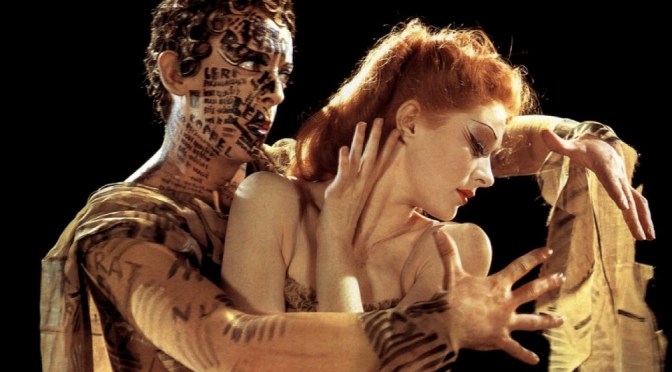
Book news: The Red Shoes

“My memory goes back to the very first films. My ambition goes far ahead of today.”

Michael Powell, on the ballet sequence of The Red Shoes

Let me just tap this microphone a couple of times. Cough once. Thumbs up. We’re good to go? I have a little announcement to make and it is a wee bit off-topic.

You may remember that a few years back I wrote a book about Pandora’s Box (GW Pabst, 1929), in the BFI Film Classics series. That was fun. So much so that I wrote another one last year. But this one, full disclosure, is on a talkie.

Continue reading Book news: The Red Shoes

Discovering lost films in fin-de-siècle flipbooks: Léon Beaulieu and Georges Méliès

TL;DR: book news, see below.

True confession: in 2019, I fell in love with some flipbooks. It was at the Castro Theatre in San Francisco, where so many good things happen, and the flipbooks in question were animated and projected on the big screen. I saw them many hundreds of times their real size, but perhaps that reflected their significance.

Here’s what I wrote for Criterion on the plane home:

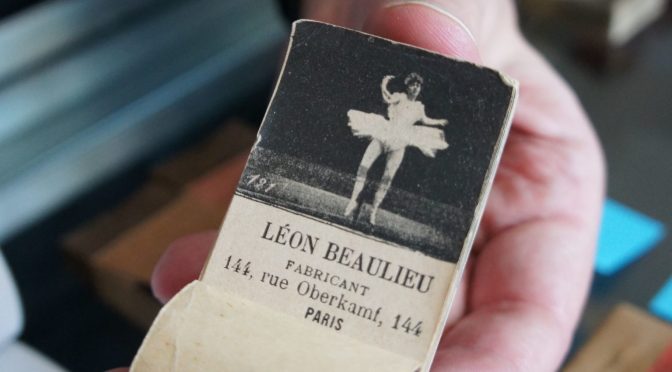
“My favorite restoration of the festival didn’t involve film at all, but some miniature ephemera, which were perhaps imperfect as moving images, but seductively tactile, and fragile, as artifacts. Festival president and film restorer Robert Byrne and French scholar Thierry Lecointe have been studying a collection of paper-and-card flip books from the late 1890s, produced by a man named Léon Beaulieu. Containing just a few brief seconds from a film, these are the unforeseen missing link between early cinema and modern GIFs. It seems that Parisian Beaulieu had a checkered life, finding himself frequently in trouble with the law, and these flip books may well be bootlegs of sorts, reproducing scenes from early films from the Gaumont and Edison companies, and some by Georges Méliès. Some of the films captured here in a few brief images are lost in any other form, and the process of identifying them all involved meticulous study of background décor and objects.”

The digitised, animated flipbooks I was watching were one outcome of an international film-history detective story. I 2013 Paris-based film scholar Thierry Lecointe began investigating a flipbook attributed to one Léon Beaulieu that might, just possibly, have been made from a few frames of a long-thought-lost Georges Méliès film…

Continue reading Discovering lost films in fin-de-siècle flipbooks: Léon Beaulieu and Georges Méliès