The West London Trade Union Club on Acton high street may be a small venue, but it has won a commendation from Camra for its real ale and it has a dedicated film club too, recently hosting seasons devoted to Joseph Losey and Paul Robeson. What more could you want? Well, the W3 cineastes who meet once a month to watch movies on a 6ft screen and discuss them over a ale or two have now chosen to put together a silent film season.
The club has selected four great silent films, which will be shown at 4pm on Saturday afternoons and followed by a group discussion. I will be around too, to stir the conversation, stick up for my favourite era of cinema history and sample the beer. The four films, and dates are:
17 September: Strike (Eisenstein, 1925)
8 October: Faust (Murnau, 1926)
12 November: Piccadilly (Dupont, 1929)
10 December: Storm Over Asia (Pudovkin, 1928)
So there’s plenty to get stuck into there. A British favourite set in our own fair city, a couple of Soviet classics and even something scary for an early Halloween.
You don’t have to be a member of the club, or even of a trade union, to turn up and receive a warm welcome – and you will find the venue at 33 Acton High Street, London W3 6ND. It’s about five minutes walk from Acton Central train station, and on plenty of bus routes.
Mania: History of a Cigarette Factory Worker (1918)
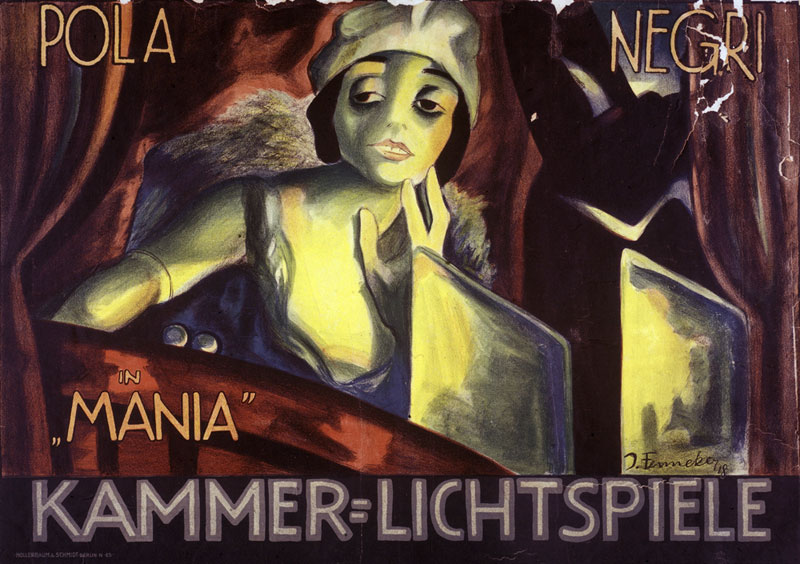
Pola Negri was the first European star to be brought over to Hollywood, and her native Poland is understandably very proud of her. So much so that, to celebrate Poland’s presidency of the EU, the Polish Film Archive will be screening a new restoration of one of her “lost” films, with a specially commissioned orchestral score, at venues across Europe this year.
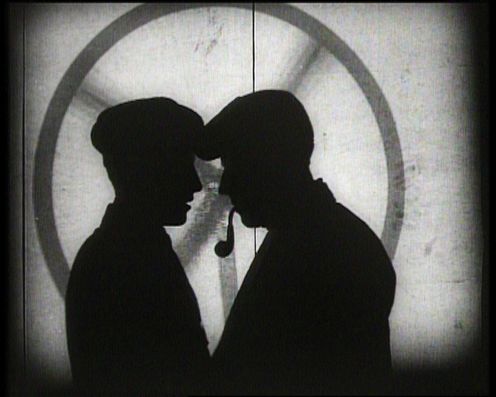
Mania: the History of a Cigarette Factory Worker is a “movie-poem” about a young woman caught between two suitors and with a terrible decision to make. The film was shot at Ufa in Berlin in 1918, and directed by Eugene Illés with sets designed by the master of Expressionism, Paul Leni. It comes to London on 13 October 2011, with a performance at the Barbican Arts Centre at 7pm. You can buy tickets here. And you can find out more about the film and its restoration here.
Meanwhile, I’ll be attending the “re-premiere” of Mania in Warsaw on Sunday – and reporting back with all the details soon. Watch this space.
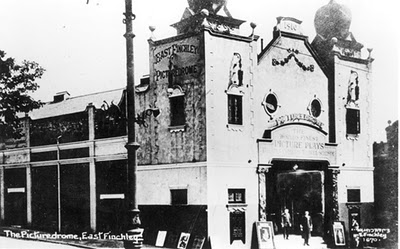
It’s always a pleasure to visit one of Britain’s oldest and most beautiful cinemas – and what a treat also to see some early films on the big screen. As part of the Phoenix Cinema’s ongoing Century of Cinema celebrations, film historian Gerry Turvey will present a selection of films from the BFI’s archives celebrating Barnet’s pioneering film-makers. There will be work from Birt Acres and RW Paul among others – and what’s more, it’s all free.
From the Archives: Made in Barnet screens at the Phoenix Cinema, East Finchley at 2pm on 18 September 2011. Tickets are free but booking is essential, so call the box office on 020 8444 6789. For more information, visit the website.
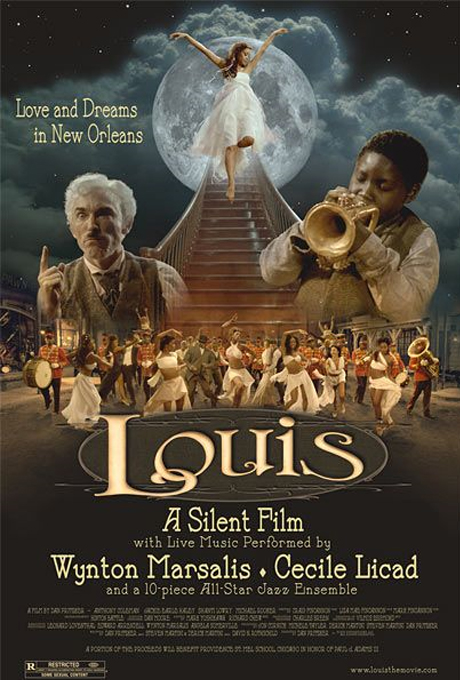
Louis (2010) is definitely helping to put modern silents on the map, but you won’t be seeing it in your local Odeon any time soon, because it is only to be shown with its live musical accompaniment, a score composed by Wynton Marsalis and performed by a hand-picked band of musicians. This is a film all about jazz in fact, set in New Orleans in 1907 – it’s a fictionalised account of the early years of Louis Armstrong, with a few nods to the cinema of the time.
Louis is a companion piece to a sound film, Bolden, which is coming out next year, about the ‘Cornet King’ Buddy Bolden. Both films have been directed and co-written by Dan Pritzker, a billionaire musician turned film-maker, who has certainly hired some big names to help realise his vision – not just Marsalis, but an Oscar-winning director of photography too.
Shot by Academy Award-winning cinematographer Vilmos Zsigmond as a modern re-imagining of early silent film, “Louis” is an homage to Louis Armstrong, Charlie Chaplin, beautiful women and the birth of American music. The grand Storyville bordellos, alleys and cemeteries of 1907 New Orleans provide a backdrop of lust, blood and magic for 6 year old Louis (Anthony Coleman) as he navigates the colourful intricacies of life in the city. Young Louis’s dreams of playing the trumpet are interrupted by a chance meeting with a beautiful and vulnerable girl named Grace (Lowry) and her baby, Jasmine. Haley, in a performance reminiscent of the great comic stars of the silent screen, plays the evil Judge Perry who is determined not to let Jasmine’s true heritage derail his candidacy for governor.
When Roger Ebert saw a preview of Louis in Chicago, he praised its “energy and wit,” saying: “It’s not a social documentary, and its recreation of New Orleans is certainly on the upbeat side, but then Louis Armstrong was on the upbeat side … What he’d especially approve of might be Marsalis – who took his performances as an inspiration – and the jazz band.”
I have taken a peek at the trailer, and at first glance Louis’s moody colour palette doesn’t look quite like any silent film I’ve seen before – but the Chaplinalike villain, speeded-up chase sequences and some neat physical comedy all recall the silent era. Some of the slick superimpositions and swooping camera movements feel comfortable, too, despite their 21st-century sheen. That said, the raunchy dancing in some scenes is more reminiscent of a Christina Aguilera video than anything I’ve seen in a silent film.
We will be able to judge properly soon, though, as Louis comes to London as part of the London Jazz Festival, with two screenings at the Barbican Arts Centre. This is an exciting opportunity to see a new silent film on the big screen and hear some leading jazz musicians play. Whether the music or the film will shine the brightest remains to be seen.
Louis screens at the Barbican on 13 November 2011 at 3pm and 8pm. Tickets cost between £10 and £25 and are available here. It’s worth pointing out that this film is not suitable for children – it was rated R in the US for sexual content and nudity.
The American trailer for The Artist, Michel Hazanavicius’s love letter to silent cinema, is here. It’s beautiful, and almost note for note the same as the French trailer we saw in the spring. The only differences are that the US version doesn’t name any of the actors until the final card, and I swear they have beefed up the sound of tap shoes clicking across the floor in the dancing sequences. It’s not synched sound, and there’s definitely some of it in the French version, but there’s more now. It’s still utterly gorgeous though – I’m not sure what delights me more, Jean Dujardin’s Hollywood smile, Uggy the performing dog or Bérénice Bejo’s wardrobe.
The Artist is released in France on 12 October 2011 and in the US on 23 November 2011. No word on a UK release date yet.
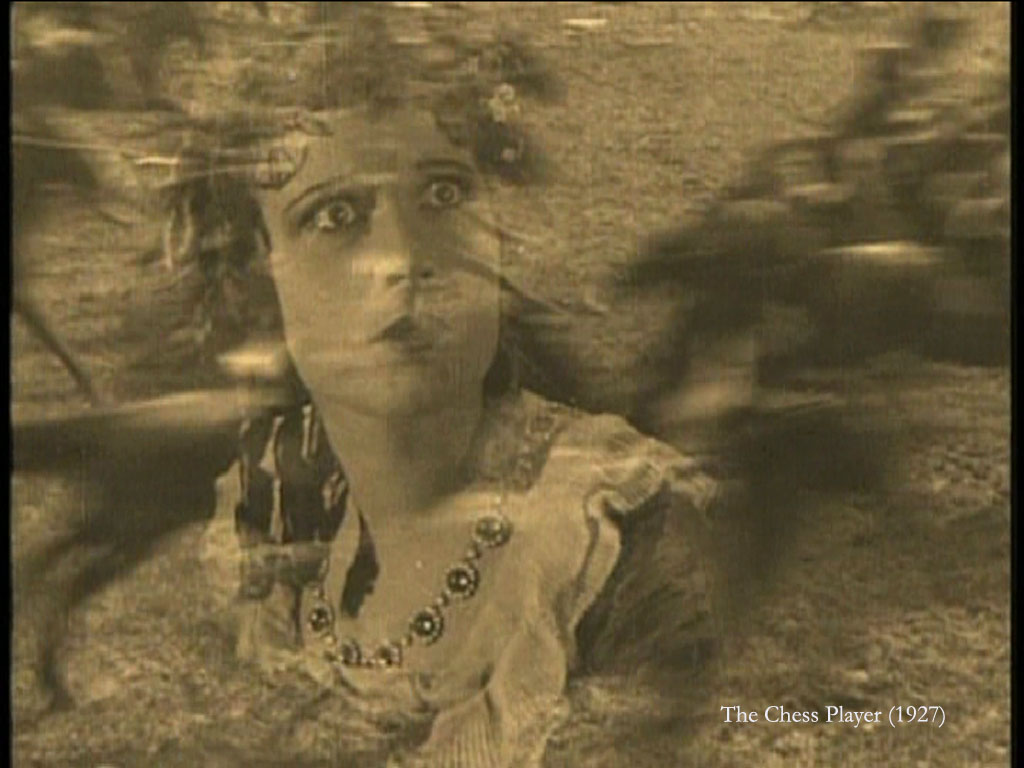
There has been a lot of talk about Napoléon (1927) recently – Abel Gance’s extravagant film, painstakingly restored by Kevin Brownlow, scored by Carl Davis and scheduled for some long-overdue screenings in San Francisco next year. But Napoléon is not the only lavish French epic to have benefited from a Photoplay restoration. Raymond Bernard’s The Chess Player (1927) is a wildly ambitious film, and if you are interested in the far reaches, excesses and extraordinary achievements of late-period silent cinema, you won’t want to miss it.
The Chess Player is based on a novel that takes the true story of the Turk, a seemingly ingenious 18th-century chess computer, subsequently revealed to be a devastatingly simple hoax, and introduces it to Catherine the Great’s Russian empire. The inventor of the device is an eccentric man who lives in Polish Lithuania and is friendly with some leading local revolutionaries. After a peasant uprising is violently quashed (the film is celebrated for these battle scenes, and associated fantasy sequences), he attempts to smuggle one of his friends across Europe using the device as a cover…
The Chess Player is screening at the Cinema Museum on Sunday 18 September at 2pm as part of the first in a series of lectures on French cinema by Jon Davies. This lecture deals with the silent era, specifically “Méliès, Lumière, Gance and their contemporaries”. Tickets are £10 or £7 for concessions and they are available from WeGotTickets here. There is no mention of musical accompaniment for this screening, but the Milestone DVD of The Chess Player includes a performance of the original orchestral score by Henri Rabaud. Find out more here on the Cinema Museum website.
No festival worth its salt is without a silent film screening these days – which is a great way to introduce people to this world. Rock festivals increasingly offer cinema tents and film festivals are often involved in commissioning new scores for films, or simply offering musicians an opportunity to perform their soundtracks in front of a large audience. It’s well worth keeping an eye on what’s going at festivals, even if you’re not planning to attend: what debuts at a festival one year, may turn up in your city the next. Here’s a selection of interesting festival events coming up in the next month or so alone.
At the Green Man Festival in the Brecon Beacons (19-21 August), the rock band Minima are performing an improvised set to a selection of early science films in the Einstein Tent. Over in the Cinema Tent, Blue Roses will perform her piano score to Dr Jekyll and Mr Hyde (1920). You may remember that this score first appeared as part of the Birds Eye View Festival’s Sound & Silents strand back in March. Watch out for news of a forthcoming UK Sound & Silents tour on their website.
The following week, at the Edinburgh Fringe, Minima will perform their score to The Cabinet of Dr Caligari six nights in a row – kicking off at midnight.
Also in Edinburgh and courtesy of the Birds Eye View Film Festival Sounds & Silents strand, there will be a screening of Lotte Reiniger’s Hansel & Gretel with a live score by Micachu – that’s at the Edinburgh Art Festival.
The Cambridge Film Festival runs from 15-25 September and although it hasn’t announced its full lineup yet, I am pretty certain we’ll see some silent movies in the lineup. And before the festival even begins they are hosting a special screening of Douglas Fairbanks’s Robin Hood in Rendlesham Forest with a new score by Neil Brand – that’s on 29 August, bank holiday Monday.
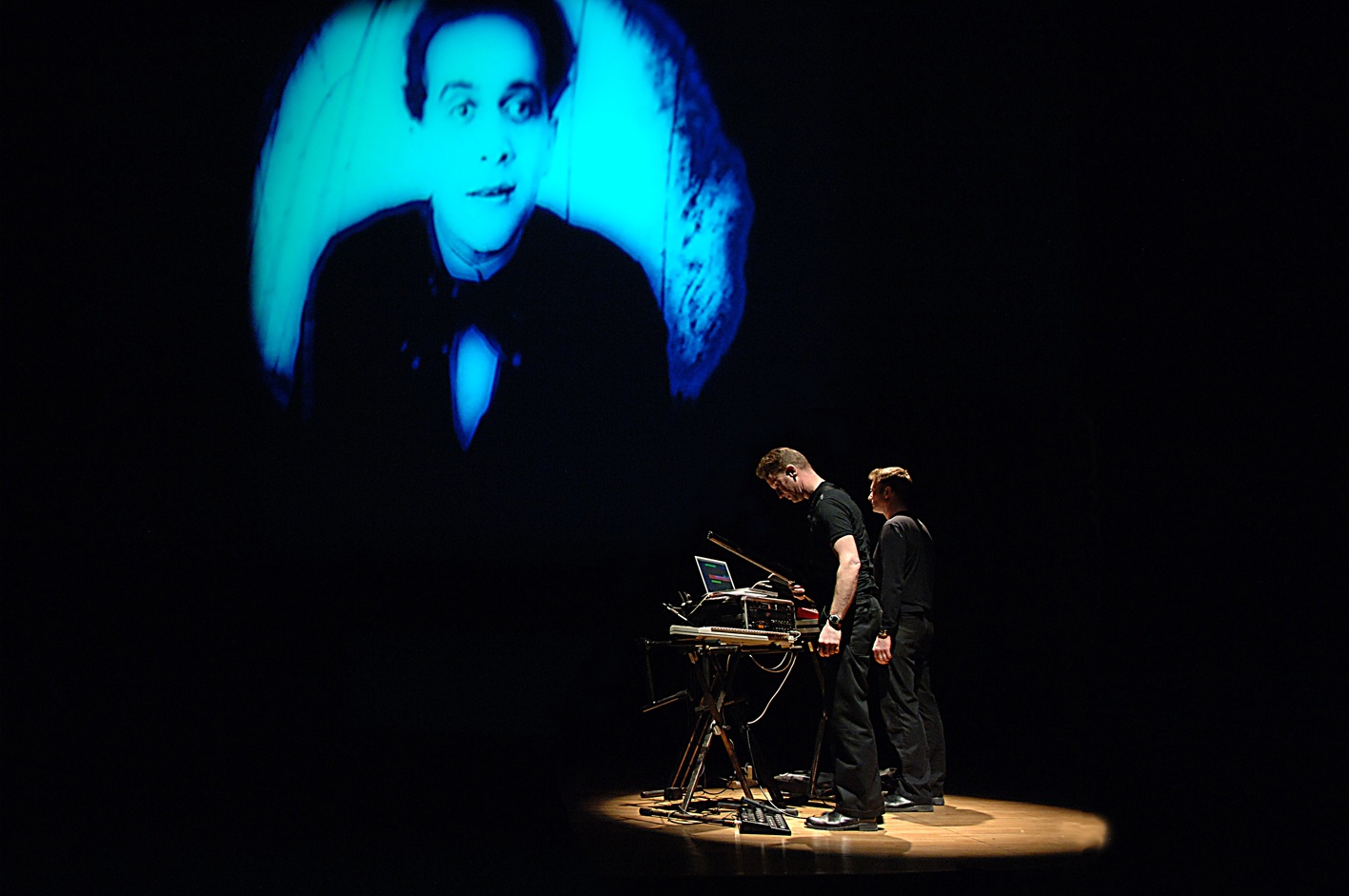
In the Nursery perform their soundtrack to The Cabinet of Dr Caligari
Also on the bank holiday Monday, Bath Film Festival is hosting a screening of Buster Keaton’s Steamboat Bill Jr and the short film One Week, with live music from James Harpham.
At the beginning of September, the Little White Lies cinedrome at the End of the Road festival in Dorset will be showing all kinds of good things, including The Great White Silence.
Back in London, on 17 September, gothic electronic duo In the Nursery will soundtrack The Cabinet of Dr Caligari in a pop-up cinema as part of the Portobello Film Festival. And as reported elsewhere, the Peckham Free Film Festival is screening Safety Last and Battleship Potemkin, on 16 and 18 September respectively. And entrance to all of those screenings can be had for the very reasonable price of zero pence exactly.
The New Forest Film Festival has a very exciting event planned for 18 September. The Dodge Brothers (featuring Mark Kermode) and Neil Brand are teaming up to score another movie. The Ghost That Never Returns is a Soviet film directed by Abram Room (Bed and Sofa) about a fugitive from jail being chased by an assassin in South America. What makes the screening even more exciting is that the cinema will be powered by bicycle – it’s a movie, a gig and a workout, all in one. The Dodge Brothers’ performances have been a highlight of recent British Silent Film Festivals, so let’s hope we see this one in London soon.
The Branchage Film Festival in Jersey commissions and hosts all sorts of fascination film/music combinations, and holds events in London throughout the year too. Its festival closer this year is a very beautiful thing. On Sunday 25 September, Simon Fisher Turner and the Elysian Quartet will play their intensely emotional score for The Great White Silence live at Jersey Opera House. Not to be missed.
In October, of course, it will be time for the 55th London Film Festival. Watch this space to find out silent film events await us there.
There is far more to British silent cinema than Hitchcock, whatever recent news reports might have you believe. From Yorkshireman Louis Le Prince’s claim to have invented motion-picture technology, through Cecil Hepworth’s pioneering days in Walton-on-Thames, to the directors who gathered at the London Film Society in the 1920s, our early cinema industry has much to offer. And it’s not just directors that we can praise, but actors, writers, producers and more besides.
That’s why I am so happy to report that, before Hitchcock’s work takes centre-stage next year, there are several screenings of silent films by other British film-makers coming up in London soon. This is a great opportunity to learn more about what we can loftily, but quite rightly, call our cinematic heritage – and to enjoy some rather good films. Continue reading British silent film screenings, autumn 2011→
The special effects genius Willis O’Brien, who sent King Kong to the top of the Empire State Building in 1933, was something of a dinosaur specialist. In the silent era, he worked on a handful of short films on a prehistoric theme, and one Hollywood feature – the Arthur Conan-Doyle adventure The Lost World (1925), directed by Harry Hoyt.
Wallace Beery plays Professor Challenger, who leads an expedition (including Bessie Love) into Venezuela to prove his pet theory that even in the 20th century, dinosaurs still walk the earth. Lo and behold, he’s right, and in a remote plateau the travellers encounter several dinosaurs, whose violent antics are brought to life by O’Brien’s pioneering stop-motion effects. One of the film’s most famous sequences is a based a little closer to home, however, as a brontosaurus shipped home to England by Challenger escapes, and rampages around the streets of London.
Composer John Garden, whom you might have seen performing with the Scissor Sisters, has written a new electronic score for The Lost World, and following several successful shows around south-west England, he will be accompanying the film at the Barbican in London. you can listen to samples of the score here on Soundcloud, but for a taster, here’s a sequence from the film with Garden’s score:
The Lost World with live score by John Garden screens at the Barbican on 25 September at 4pm. Tickets cost £10.50 full price but less if bought online or for members. Visit the Barbican website for full details and to book. This event is hosted in partnership with the marvellous people from Bristol Silents. To find out more and for details of where else in the country Garden is performing his score, check out the Facebook page.
• Update: Sorry, guys, I’ve just been told that these events have been cancelled. Don’t know why as yet, but hope to find out more soon – including whether they will be rescheduled for later in the year.
Have you ever been to a Silent Disco? It’s great fun. You dance around in a huge group of people but the music isn’t played out loud, it’s piped into your headphones. Hilarious for onlookers, but there’s a great sense of community on the dancefloor – like you’re sharing a secret with everyone in the crowd. The Silent Cinema in Deptford, south London, works on the same principle, but with films. The wireless headphones deliver the film’s soundtrack, but filter out the popcorn munching and chatter from your fellow audience members.
Although the name has obviously caught my attention before, I never thought they would show silent films there. But I was wrong. Silent Cinema is devoting a weekend in August to … silent cinema. They’re calling the programme the “Black & White Classics Weekend”, and why not? Here’s the lineup:
Whether Paul Merton’s recent Birth of Hollywood documentaries piqued your interest in silent cinema, or you are already a fan of the era’s exquisitely hilarious comedians, this is a date for your diary. Merton, and silent film pianist Neil Brand, are reprising their Silent Clowns show, which toured throughout 2009, at the Cinema Museum this September.
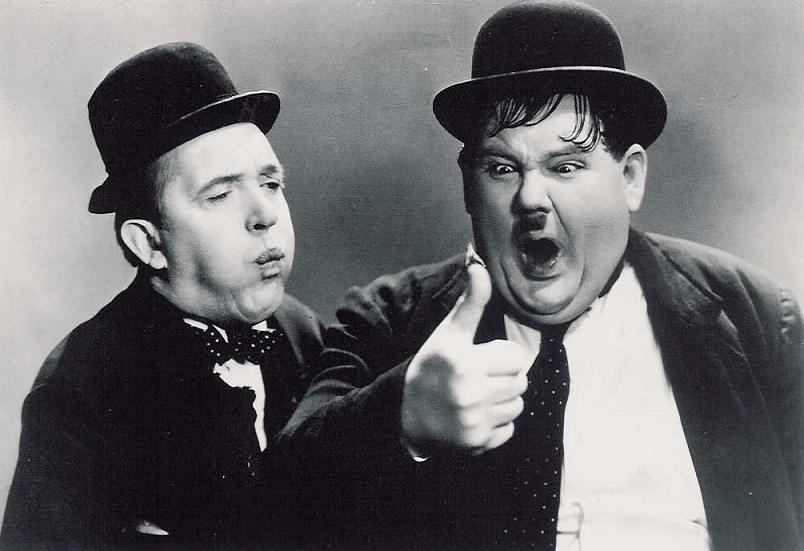
According to my sources, we can expect some classic moments from Buster Keaton, Charlie Chaplin and Harold Lloyd as well as a complete Laurel and Hardy short, We Faw Down, their first film to be directed by Leo McCarey, which is sometimes known under the simpler title We Slip Up. Paul Merton will introduce the clips, and Neil Brand will provide musical accompaniment. You really can’t go wrong. Anyone who has read Merton’s Silent Comedy book or watched his recent TV programmes, will know that he is passionate about this subject, and if you only know him from the radio, you’ll know that he is exceedingly funny himself.
Silent Clowns is at the Cinema Museum in Kennington onSaturday 3 September at 7.30pm, but doors will open an hour earlier for you to look around the collections. Refreshments will be available too, and there should be some time for you to mingle and have a high old time. Tickets cost £6.50 or less for concessions. For more information, visit the Cinema Museum website, or to buy tickets, visit WeGotTickets.
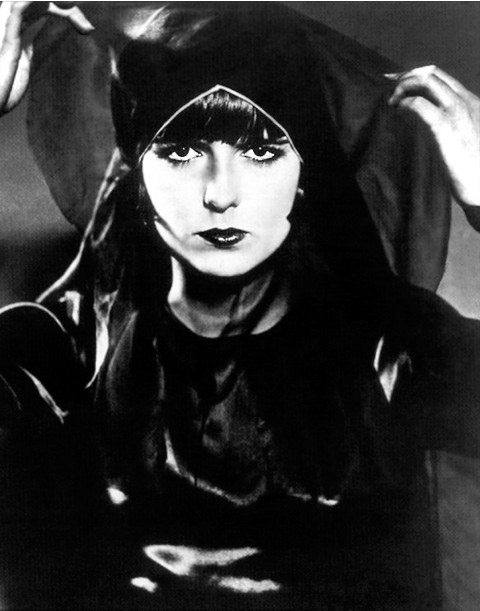
The Passport to Cinema strand returns to BFI Southbank in September and October, under the banner of Making the Modern. And the strand begins with a timeless silent cinema favourite, Pandora’s Box, starring Louise Brooks.
So, Pandora’s Box is the oldest film in the season, but its nonchalant treatment of sexuality, violent plot and chic Berlin architecture make it about as modern as modern can get. Perhaps that is why the film’s popularity has grown over the decades, from a disappointing start at the box office, to universal acclaim as a cool classic.
Judging by the running time given in the BFI programme, this might not be the new restoration of the film shown at the London Film Festival, but sex appeal like this really deserves to be seen on the big screen, nonetheless. So get your dancing shoes on, folks.
Pandora’s Box screens in NFT1 on Sunday 4 September at 3.20pm and in NFT2 on Monday 5 September at 6.10pm, with an introduction by Dr Nathalie Morris of the BFI and the Women and Silent British Cinema project. There will be live piano accompaniment at both screenings (by John Sweeney on the Sunday and Stephen Horne on the Monday), and tickets will be on sale in August.
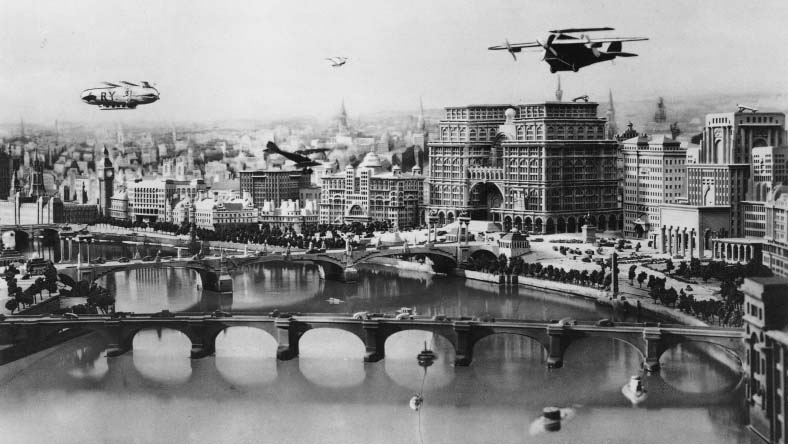
The British Metropolis? Not quite. But Maurice Elvey’s High Treason was heavily influenced by Fritz Lang’s film – in its slick futurist designs and its pacifist theme too. Based on a play written by unpleasant MP Noel Pemberton Billing, High Treason is set in the far-off future that is 1950 AD, when a war between the America and Europe seems inevitable. The leader of the Peace League is determined to avoid the conflict, leaving his daughter Evelyn torn between him and her boyfriend, a commander in the Air Force.
You can see an extract from High Treason here. It’s worth noting that in this bleak, dystopian vision of the future, Prohibition is still in force in America.
High Treason screens at the BFI Southbank with a short film from 1924, The Fugitive Futurist: a Qu-riosity by “Q”, in which an “inventor” attempts to hawk a device that can see the future, treating the audience to glimpses of London landmarks as they might appear in time, including Trafalgar Square submerged by water, and a blimp anchored to the Palace of Westminster.
High Treason screens at NFT1 on Wednesday 5 October at 6pm. The screening will be introduced by BFI curator Simon McCallum and is part of the BFI’s Capital Tales season. There will be live piano accompaniment. Tickets are available from the BFI website.
“If you’ve never watched a silent movie before, this is the time to do it,” says the Stratford Picturehouse. That’s the spirit. The east London cinema is having a day of cinematic interactive fun on Sunday – including screenings of Buster Keaton’s Sherlock Jr and One Week. After watching the first film, the audience will be encouraged to play along to the short, One Week, so if you’ve ever wondered what it would be like to accompany a silent film, this is your big chance. Although the setup might be a little more raucous that your average screening at the BFI – audience members are asked to bring their own instruments, whether “real” or homemade.
The day of events is free and as well as the two Keatons, there will be “film karaoke”, plus screenings of The Gruffalo, krumping documentary Rize with a street-dance workshop and, as a finale, Singalonga Grease. Everything kicks off at 12 noon – for more details, click here.
This is a lovely thing to report: openair screenings of two silent film classics, with a local twist. And best of all, they are free.
In September, the Peckham Free Film Festival will be showing Harold Lloyd’s Safety Last on a giant inflatable screen on Peckham Rye near the cafe. The film will be accompanied by Neil Brand on the piano and by a package of local archive footage including newsreels, too. You’ll be able to buy refreshments from the cafe, which focuses on “free range, fair trade, organic, locally sourced, healthy” food, but I can’t be held responsible for the consequences of laughing with your mouth full.
Safety Last screens at Peckham Rye on Friday 16 September at 8pm. Entrance is free.
The festival will close in rousing style with another free silent film screening, on the roof of Peckham multi-storey car par. Eisenstein’s Battleship Potemkin will be screened near Franks Cafe and Campari Bar, also located on the roof, so you can grab a drink and something to eat while you watch. Live music will be provided by Super Best Friends club, who describe themselves this way:
Super Best Friends Club are a friendly beast from London. We wonder if it’s possible to transform this cutthroat universe to a loving frequency. And we wonder if its possible to do this through nudity and frantic dancing. I think its worth trying.
Battleship Potemkin screens on 18 September at 8pm. Entrance is free. For more information on the Peckham Free Film Festival, click here.
First it was The Invention of Hugo Cabret, a charming children’s book by Brian Selznick. Then Martin Scorsese got hold of it and now it’s Hugo (2011), a 3D movie starring Ben Kingsley, Sacha Baron Cohen, Jude Law, and Asa Butterfield in the title role. Now the trailer has arrived, we can really see what it’s going to look like – and how it pays tribute to a hero of early cinema.
It looks very much like the film is going to stick very closely to the book’s story, which is simple, but rather sweet. Hugo is a Parisian urchin who lives in a railway station, and befriends a grumpy toymaker – who just happens to be George Méliès. Hugo starts to learn more about silent cinema and the magical films made by his new friend, and tries to persuade him out of retirement. There’s a blossoming friendship between the boy and Méliès’s grand-daughter and a magical element in the form of an exquisite clockwork automaton that appears to be passing messages to Hugo from his dead father. Perhaps, judging by the trailer, Scorsese has built up Baron Cohen’s role as the station policeman a little – adding some broad slapstick that will probably appeal more to the kiddies than to the silent film buffs who will make up a minority of the audience.
George Méliès in Brian Selznick's The Invention of Hugo Cabret
The beautiful regency town of Cheltenham is home to a very impressive film festival and this year’s lineup is particularly exciting for lovers of silent cinema. Across the festival weekend in November there are no fewer than six silent events – all with live music, and incorporating fiction and non-fiction films. Some of these special events have already been seen in London – but by no means all of them. Let’s go straight into a list:
Hopefully the BFI members among you have entered the ballot for Light of Asia tickets – fingers crossed you get them, too. But there is also a chance to catch director Franz Osten’s two other collaborations with screenwriter Niranjan Pal in the mini-season curated by the South Asian Cinema Foundation. The Watermans Arts Centre in Brentford, Middlesex will be showing Shiraz (1928) and A Throw of Dice (1929) at the end of the month, no ballot necessary.
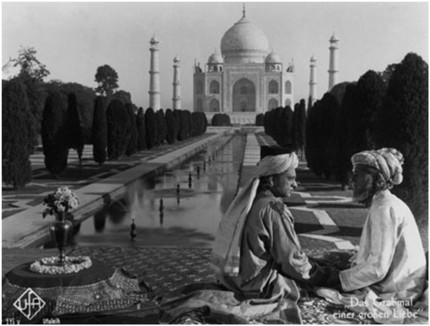
I’m very fond of the Watermans, so I’m happy to say that they have told me they will be screening 35mm prints of both films, but I’m still waiting to hear about any potential musical accompaniment. I’ll update this post when I know more. But either way, these are classics of Indian cinema, forming a trilogy with Light of Asia. Shiraz tells the love story behind the construction of the Taj Mahal and A Throw of Dice is another romance, taken from an episode in the Mahabarata in which two kings gamble to win the love of a young woman. You may remember a few years back that the composer Nitin Sawhney wrote a new soundtrack for a restoration of A Throw of Dice, which was released theatrically.
Shiraz screens at the Watermans Arts Centre at 4.30pm on Saturday 23 July and A Throw of Dice is on Sunday 24 July at 7.15pm. Tickets cost £10 or less for concessions or members, and are available here.
Stop press! This is a bit late-notice, but a screening of an Australian silent film is still a bit of a rarity, and this sounds like a very interesting evening. Group 9.5 is a society for 9.5mm film enthusiasts, and on Saturday they are showing The Far Paradise (Australia, 1928), with piano accompaniment from Cyrus Gabrysch. The film will be shown with some silent shorts (screened on 16mm) and there will be some special guests in attendance too:
Attending the screening will be the 3 children of the star Isabel McDonagh (Charles, Alan and Sandra Stewart) and also Trader Faulkner, son of another star of the film, John Faulkner. Regrettably, the 16mm print supplied by the Stewarts is severely affected by vinegar syndrome and is not project-able. However, the National Film and Sound Archive of Australia has very kindly sent us a DVD of the film which will be run instead. I hope this will not disappoint our audience too much as we always endeavour to run film whenever possible.
The Far Paradise was directed by Paulette McDonagh and stars her sister Isabel, under her stage name of Marie Lorraine. It’s a melodrama about forbidden love and a very highly regarded Australian silent film. Here’s a little more information from the Australian government’s website:
Self-taught filmmakers Paulette, Phyllis and Isobel McDonagh were also pioneers in Australian cinema. The three sisters collaborated to produce both feature-length dramas and short documentaries. Paulette McDonagh assumed principal directing and writing duties, Phyllis served as producer and art director and Isobel acted under the name Marie Lorraine.
The McDonagh sisters debut film, Those Who Love (1926), premiered publicly in Newcastle, New South Wales, on 26 November 1926. The film was successful enough to finance their next picture, The Far Paradise (1928). Other McDonagh productions were The Cheaters (1930) and Two Minutes Silence (1933).
The McDonagh productions were filmed almost entirely at the McDonagh’s residence, historic Drummoyne House. The films were set in an urban background, a contrast to the bush setting common to Australian films of the time. Another distinctive feature of the productions was the portrayal of the heroines, played by McDonagh sister Isobel (Marie Lorraine). These characters were more active than their contemporaries and the films ‘ showed her breaking and entering and cracking safes, as well as in a lover’s arms’.
The McDonagh sisters’ work was all but forgotten until the re-screening in the early 1970s of The Far Paradise and The Cheaters (the prints are now held in the National Film and Sound Archive). Shortly before her death, Phyllis McDonagh received the Australian Film Institute’s 1978 Raymond Longford Award. It was presented to Phyllis in recognition of the three sisters’ contribution to Australian filmmaking. Today the McDonagh sisters are remembered as ‘the most talented of the late silent era film-makers in Australia’.
The Far Paradise screens at St Gabriel’s Parish House, Churchill Gardens, Pimlico London SW1 on Saturday 9th July 2011 at 8pm.
With thanks to Brent Reid for letting me know about this screening.
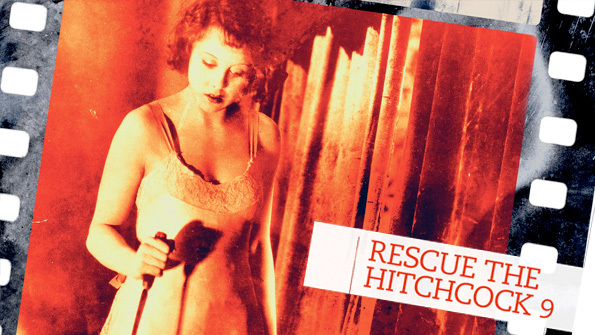
I think the time is ripe for a quick update on the BFI’s Hitchcock 9 project, and a reminder that you can still donate to the restoration work. The BFI put out a statement this week saying that the restored Hitchcock silents will be screened in London next year as part of the London 2012 Festival, which is the culmination of the Cultural Olympiad. From what we’ve heard before, we can expect a variety of screenings around town, from large-scale outdoor events to more intimate screenings in smaller venues. Just the sort of thing to get Silent London all hot and bothered. This will be followed in the autumn by a full Hitchcock retrsopective at BFI Southbank, which is cause for celebration in itself.
The BFI has also, excitingly, announced three of the composers who will be scoring the films. Avant-garde composer Tansy Davies is on board but has not selected a film yet. Recent graduate Daniel Cohen will be working on The Pleasure Garden and his score will be performed by Academy Manson Ensemble from the Royal Academy of Music. The songwriter, producer and composer Nitin Sawhney will be writing music for the London Symphony Orchestra to play alongside The Lodger, possibly the best known film in the group.




 Silent London