Safety Last and Battleship Potemkin at the Peckham Free Film Festival, September 2011

Harold Lloyd in Safety Last (1923)

• This post was edited on 10 August 2011

This is a lovely thing to report: openair screenings of two silent film classics, with a local twist. And best of all, they are free.

In September, the Peckham Free Film Festival will be showing Harold Lloyd’s Safety Last on a giant inflatable screen on Peckham Rye near the cafe. The film will be accompanied by Neil Brand on the piano and by a package of local archive footage including newsreels, too. You’ll be able to buy refreshments from the cafe, which focuses on “free range, fair trade, organic, locally sourced, healthy” food, but I can’t be held responsible for the consequences of laughing with your mouth full.

Safety Last screens at Peckham Rye on Friday 16 September at 8pm. Entrance is free. 

The festival will close in rousing style with another free silent film screening, on the roof of Peckham multi-storey car par. Eisenstein’s Battleship Potemkin will be screened near Franks Cafe and Campari Bar, also located on the roof, so you can grab a drink and something to eat while you watch. Live music will be provided by Super Best Friends club, who describe themselves this way:

Super Best Friends Club are a friendly beast from London. We wonder if it’s possible to transform this cutthroat universe to a loving frequency. And we wonder if its possible to do this through nudity and frantic dancing. I think its worth trying.

Battleship Potemkin screens on 18 September at 8pm. Entrance is free. For more information on the Peckham Free Film Festival, click here.

100 Silent Films: A Silent London special offer

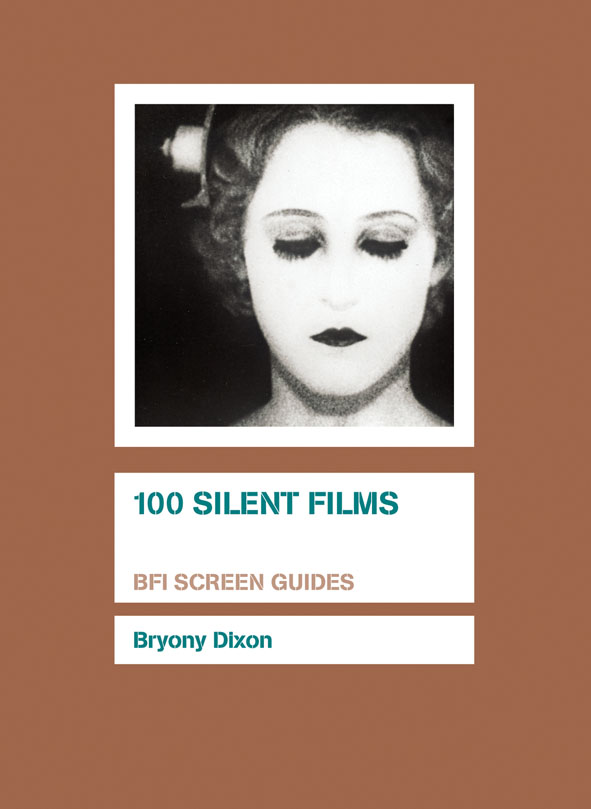
100 Silent Films by Bryony Dixon

A fortnight ago, I reviewed Bryony Dixon’s 100 Silent Films here on Silent London and I was very taken with it. It may have a simple format, but the choice of films is often surprising, so it’s as much a pleasure to read in one sitting as it is useful as a reference work. For those of you who want to buy a copy, perhaps to start ticking off films as you watch them, as some people have suggested to me on Twitter, the publishers are offering a discount to readers of this blog.

This illuminating guide provides a selection of one hundred key films of the silent period (1895-1930), featuring films from a variety of countries, genres and directors. You can order a copy of BFI Publishing’s 100 Silent Films by Bryony Dixon (RRP £12.99) for £8.50 on the Palgrave website here. Just quote the discount code WSILENT11.

The Lost World of Mitchell and Kenyon on BBC4

A quick mention for a chance to see some early films on TV. BBC4 is repeating the three-part series The Lost World of Mitchell and Kenyon and it is a very welcome return. The Mitchell and Kenyon hoard was discovered in the cellar of a disused shop in Blackburn in 1994 and contains many beautiful films of Northern England in the Edwardian era. When the programmes were first shown in 2005, Guardian TV critic Nancy Banks-Smith called them “Lowry come to life”.

The films were advertised to the public at the time as an chance to “see yourselves as others see you”, but now they are a precious opportunity to see ourselves as we once were. The collection has recently been added to the Unesco World Heritage list and is even being used by scientists at Imperial College London to study “handedness” – the researchers are scanning the films by computer to measure how many of the people waving at the camera in the films are using their left or right hands. For the rest of us, they offer a nostalgic, often bittersweet, glimpse at a time gone by.

If you want to learn more, visit the BFI Mitchell and Kenyon page or read this essay by Ian Jack.

The Lost World of Mitchell and Kenyon screens on BBC4 at 10pm and begins on Tuesday 19th July.

With thanks to Peter Walsh.

Martin Scorsese’s Hugo (2011) – coming soon

http://www.youtube.com/watch?v=2cgS3UhA-OE

First it was The Invention of Hugo Cabret, a charming children’s book by Brian Selznick. Then Martin Scorsese got hold of it and now it’s Hugo (2011), a 3D movie starring Ben Kingsley, Sacha Baron Cohen,  Jude Law, and Asa Butterfield in the title role. Now the trailer has arrived, we can really see what it’s going to look like – and how it pays tribute to a hero of early cinema.

It looks very much like  the film is going to stick very closely to the book’s story, which is simple, but rather sweet. Hugo is a Parisian urchin who lives in a railway station, and befriends a grumpy toymaker – who just happens to be George Méliès. Hugo starts to learn more about silent cinema and the magical films made by his new friend, and tries to persuade him out of retirement. There’s a blossoming friendship between the boy and Méliès’s grand-daughter and a magical element in the form of an exquisite clockwork automaton that appears to be passing messages to Hugo from his dead father. Perhaps, judging by the trailer, Scorsese has built up Baron Cohen’s role as the station policeman a little – adding some broad slapstick that will probably appeal more to the kiddies than to the silent film buffs who will make up a minority of the audience.

George Méliès in Brian Selznick's The Invention of Hugo Cabret

Continue reading Martin Scorsese’s Hugo (2011) – coming soon

Silent films at the Cheltenham Film Festival, 4-6 November 2011

Piccadilly (1929)
Piccadilly (1929)

The beautiful regency town of Cheltenham is home to a very impressive film festival and this year’s lineup is particularly exciting for lovers of silent cinema. Across the festival weekend in November there are no fewer than six silent events – all with live music, and incorporating fiction and non-fiction films. Some of these special events have already been seen in London – but by no means all of them. Let’s go straight into a list:

Continue reading Silent films at the Cheltenham Film Festival, 4-6 November 2011

Shiraz and A Throw of Dice, Watermans Arts Centre, 23 & 24 July 2011

Shiraz (1928)
Shiraz (1928)

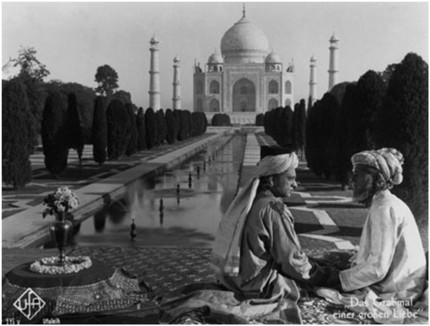
Hopefully the BFI members among you have entered the ballot for Light of Asia tickets – fingers crossed you get them, too. But there is also a chance to catch director Franz Osten’s two other collaborations with screenwriter Niranjan Pal in the mini-season curated by the South Asian Cinema Foundation. The Watermans Arts Centre in Brentford, Middlesex will be showing Shiraz (1928) and A Throw of Dice (1929) at the end of the month, no ballot necessary.

I’m very fond of the Watermans, so I’m happy to say that they have told me they will be screening 35mm prints of both films, but I’m still waiting to hear about any potential musical accompaniment. I’ll update this post when I know more. But either way, these are classics of Indian cinema, forming a trilogy with Light of Asia. Shiraz tells the love story behind the construction of the Taj Mahal and A Throw of Dice is another romance, taken from an episode in the Mahabarata in which two kings gamble to win the love of a young woman. You may remember a few years back that the composer Nitin Sawhney wrote a new soundtrack for a restoration of A Throw of Dice, which was released theatrically.

Shiraz screens at the Watermans Arts Centre at 4.30pm on Saturday 23 July and A Throw of Dice is on Sunday 24 July at 7.15pm. Tickets cost £10 or less for concessions or members, and are available here.

The Far Paradise in Pimlico, 9 July 2011

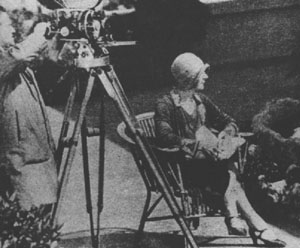
Paulette McDonagh directing

Stop press! This is a bit late-notice, but a screening of an Australian silent film is still a bit of a rarity, and this sounds like a very interesting evening. Group 9.5 is a society for 9.5mm film enthusiasts, and on Saturday they are showing The Far Paradise (Australia, 1928), with piano accompaniment from Cyrus Gabrysch. The film will be shown with some silent shorts (screened on 16mm) and there will be some special guests in attendance too:

Attending the screening will be the 3 children of the star Isabel McDonagh (Charles, Alan and Sandra Stewart) and also Trader Faulkner, son of another star of the film, John Faulkner. Regrettably, the 16mm print supplied by the Stewarts is severely affected by vinegar syndrome and is not project-able. However, the National Film and Sound Archive of Australia has very kindly sent us a DVD of the film which will be run instead. I hope this will not disappoint our audience too much as we always endeavour to run film whenever possible.

The Far Paradise was directed by Paulette McDonagh and stars her sister Isabel, under her stage name of Marie Lorraine. It’s a melodrama about forbidden love and a very highly regarded Australian silent film. Here’s a little more information from the Australian government’s website:

Self-taught filmmakers Paulette, Phyllis and Isobel McDonagh were also pioneers in Australian cinema. The three sisters collaborated to produce both feature-length dramas and short documentaries. Paulette McDonagh assumed principal directing and writing duties, Phyllis served as producer and art director and Isobel acted under the name Marie Lorraine.

The McDonagh sisters debut film, Those Who Love (1926), premiered publicly in Newcastle, New South Wales, on 26 November 1926. The film was successful enough to finance their next picture, The Far Paradise (1928). Other McDonagh productions were The Cheaters (1930) and Two Minutes Silence (1933).

The McDonagh productions were filmed almost entirely at the McDonagh’s residence, historic Drummoyne House. The films were set in an urban background, a contrast to the bush setting common to Australian films of the time. Another distinctive feature of the productions was the portrayal of the heroines, played by McDonagh sister Isobel (Marie Lorraine). These characters were more active than their contemporaries and the films ‘ showed her breaking and entering and cracking safes, as well as in a lover’s arms’.

The McDonagh sisters’ work was all but forgotten until the re-screening in the early 1970s of The Far Paradise and The Cheaters (the prints are now held in the National Film and Sound Archive). Shortly before her death, Phyllis McDonagh received the Australian Film Institute’s 1978 Raymond Longford Award. It was presented to Phyllis in recognition of the three sisters’ contribution to Australian filmmaking. Today the McDonagh sisters are remembered as ‘the most talented of the late silent era film-makers in Australia’.

The Far Paradise screens at St Gabriel’s Parish House, Churchill Gardens, Pimlico London SW1 on Saturday 9th July 2011 at 8pm. 

With thanks to Brent Reid for letting me know about this screening.

Hitchcock 9 update

Rescue the Hitchcock 9

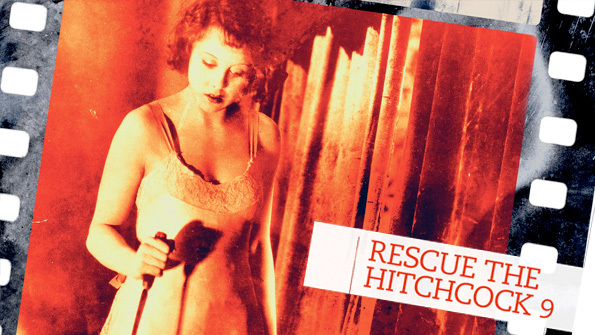
I think the time is ripe for a quick update on the BFI’s Hitchcock 9 project, and a reminder that you can still donate to the restoration work. The BFI put out a statement this week saying that the restored Hitchcock silents will be screened in London next year as part of the London 2012 Festival, which is the culmination of the Cultural Olympiad. From what we’ve heard before, we can expect a variety of screenings around town, from large-scale outdoor events to more intimate screenings in smaller venues. Just the sort of thing to get Silent London all hot and bothered.  This will be followed in the autumn by a full Hitchcock retrsopective at BFI Southbank, which is cause for celebration in itself.

The BFI has also, excitingly, announced three of the composers who will be scoring the films. Avant-garde composer Tansy Davies is on board but has not selected a film yet. Recent graduate Daniel Cohen will be working on The Pleasure Garden and his score will be performed by Academy Manson Ensemble from the Royal Academy of Music. The songwriter, producer and composer Nitin Sawhney will be writing music for the London Symphony Orchestra to play alongside The Lodger, possibly the best known film in the group.

Continue reading Hitchcock 9 update

100 Silent Films by Bryony Dixon

100 Silent Films, by Bryony Dixon

Have you ever read a movie list you agreed with 100%? Of course not. And that’s the fun of them. A cinema buff’s spluttering outrage over the omission of a favourite title, just like his or her tutting dismay over the running order, fools no one. We love other people’s lists, because they give us the opportunity to write our own. And no doubt our first move is to increase the number of silent films in the countdown.

Well I’m happy to say that Bryony Dixon’s 100 Silent Films offers a very different kind of pleasure. For one, all these films are silent, and its alphabetical presentation means that we are not faced with the problem of comparing, and placing in order, such disparate films as The Big Swallow (1901), Napoleon (1927) and The Battle of the Somme (1916). (You’re thinking about it now, though, aren’t you?)

Dixon, the curator of silent film at the British Film Institute and co-founder of the British Silent Film Festival, has written an engaging guide to the world of silent cinema – ostensibly for novices, but with plenty to please those longer in the tooth. 100 Silent Films is part of a series of Screen Guides that includes 100 Westerns, 100 Shakespeare Films, and so on – but as the author points out, silent cinema is not as easily digestible a topic. “Silent cinema is not a genre; it’s the first thirty-five years of film history … a complex negotiation between art and commerce, and a union of creativity and technology.” So Dixon makes no bones about the fact her project is a vast one, and many of her chosen films have very little in common. Refreshingly, she doesn’t try to fit the awkward square pegs into round holes, but presents each film on its own terms. She’s wary of misplacing “isms” (expressionism, surrealism, feminism) and hesitates to put the titles into anachronistic categories such as film noir.

Continue reading 100 Silent Films by Bryony Dixon

Turn your cinema memories into art

The EMD Cinema Memories project

We all have powerful memories of visits to the cinema – your first trip, as a child; the first time you saw your favourite film; your first cinema date; maybe even your first silent film. And if Alfred Hitchcock were here to share his memories with us, they would surely involve a few educational afternoons at the EMD cinema in Walthamstow, north-east London, where he watched silent films as a boy. We can’t all claim to have come away from the cinema as inspired as Hitchcock, but we all know what it’s like to stumble out of the foyer with images reeling around our heads, thinking: “I’ve got to see that again.”

Well, the EMD Cinema has fallen sadly out of use and into disrepair, but there is a thriving, celebrity endorsed campaign to get it up and running again. And the Save Our Cinema group wants to collect your cinema memories, not just of the EMD, but of other “characterful” independent picture palaces, all in the name of art. The stories will be collated and turned into an exhibition at the E17 Art Trail in September.

There are two strands to our special storytelling project – as well as written or recorded voxpops of YOUR OPINIONS, we’re looking for PERSONAL ANECDOTES about going to the pictures in a cinema with character. We hope to make sound and video clips of people telling their own stories, along with written pieces, photos, music and drawings. Whatever way you’d like to tell your story about why a distinctive cinema matters to you, we’re interested. If you have special memories of childhood matinees, first dates, first kiss!, wild nights at concerts or just a warm feeling about the place, we want to hear about it. If you missed the chance to visit the EMD before it was closed but you have first-hand stories of a cherished cinema somewhere else, please share them with us.

So if you have a cinematic story to tell, do get involved – you might even help to save Hitchcock’s cinema. If you want inspiration, here’s Ryan Gilbey, film critic of the New Statesman, showing us how it’s done. More details about the history of EMD Cinema can be found here, and details of the Storytelling project can be found on Facebook here. Maybe this is why they call it “awesomestow”.

To get involved, or to send your anecdotes, images, videos or audio clips, contact storytelling@savewalthamstowcinema.org, tweet @saveourcinema or send post to Save Walthamstow Cinema, 39-41 High St, London E17 7AD

Robin Hood in Rendlesham Forest, Suffolk, 29 August 2011

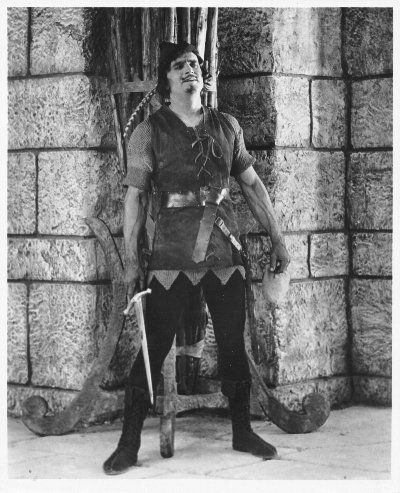
Douglas Fairbanks in Robin Hood (1922)

• Update 19 September 2011: Cambridge Film Festival is screening Robin Hood again, tonight, with live music by Neil Brand in the grand surroundings of Trinity College. Sounds wonderful. Click here for details.

It’s going to be a good summer for outdoor screenings of silent films, both across London and at festivals around the country. And I expect this one will be one of the most atmospheric. Cambridge Film Festival On Location is presenting a special screening of Robin Hood (1922), the swashbuckling classic starring Douglas Fairbanks, along with the world premiere of a new score by Neil Brand.

This is an epic, but charming Robin Hood, shot on some of Hollywood’s largest and most lavish sets, with fantastic action sequences and a mischievous streak of humour. Fairbanks leaps tall turrets in a single bound as a spectacularly gymnastic Robin Hood, while Wallace Beery gives us an imposing King Richard. Allan Dwan directs with flair, making the most of the gigantic sets – getting a lot of mileage out of the drawbridge, in particular.

Robin Hood dazzled audiences back in the 1920s. Photoplay magazine (quoted on Kevin Brownlow’s The Parade’s Gone by) raved about it, while considering it the apotheosis of Hollywood excess:

More than anything else, Robin Hood is a show. It seems to be stretching the word photoplay to classify it under that name. In fact, it’s the last thing in spectacles. We doubt if the silversheet will go much further along this expensive road.

If only Ridley Scott had taken the hint. I love the word “silversheet”, too. Perhaps we should try to bring that one back.

Robin Hood screens at the theatre in Rendlesham Forest in Suffolk on Monday 29 August. Neil Brand’s merry band will include violinist Günter Buchwald and percussionist Jeff Davenport. For more details, click here.

The Cabinet of Dr Caligari with Minima at the Edinburgh Fringe Festival, August 2011

The Cabinet of Dr Caligari (1920)

The much-heralded return of the midnight movie is not confined to London. Oh no. Spooky silent film soundtrackers Minima are bringing the concept to the Edinburgh Fringe Festival this year with witching-hour screenings of The Cabinet of Dr Caligari six nights in a row. Every night from 22-28 August, the band will be accompanying the landmark Expressionist horror film in Assembly George Square Gardens and the screenings start at one minute to midnight. Here’s a taster of what you can expect to see and hear:

http://www.youtube.com/watch?v=CUt084iy-Nw

Tickets cost £10 or £12 depending on the date. For more details and to book tickets, click here.

Light of Asia and Turksib with live scores at BFI Southbank, August 2011

Light of Asia (1925)

You live in London and you love silent film, so you’re probably a member of the BFI. Well, I hope so, because there are two silent film screenings coming up in August – one that is members-only and another that almost is.

First, on 4 August, is Turksib (1929), a Soviet documentary about efforts to build a railway through Central Asia. The name Turksib stands for the Turkestan-Siberian railway, which starts near Tashkent in Uzbekistan, and joins the Trans-Siberian railway in Novosibirsk, Russia. If you enjoyed Salt for Svanetia during the BFI’s recent Soviet silents season, this screening has your name all over it. The August screening will feature a live musical score by Guy Bartell of the electronica band Bronnt Industries Kapital, which previously soundtracked the silent witchcraft documentary Häxan. Their most recent album was described by a German magazine this way: “As if Joy Division, Can and The Human League were locked in a room together.” I think that means we can expect something pretty dark and moody but with a disco beat. Works for me.

Here’s a video clip of Turksib, showing how the railways changes the landscape, as a taster.

Turksib is a BFI Members Exclusive event. So, if you’re a member, log on the BFI Members page and you can enter a ballot for tickets. If you’re successful, your first ticket is free and the second is member guest price, ie £8. The ballot is open now, and closes at 8.30pm on 8 July. Turksib screens at 6.30pm on Thursday 4 August at NFT1, but please note that there will be reduced seating due to to refurbishment work.

A few days later, the new, improved NFT1 will host a screening of Franz Osten’s Light of Asia (1925). This event is in partnership with the South Asian Cinema Foundation and is part of a celebration of the film’s screenwriter Niranjan Pal. Screenings of the other two films he made with Osten, Shiraz and A Throw of Dice, as well as A Gentleman of Paris, will be held at the Watermans Arts Centre in July. Light of Asia is the first of the trilogy, and tells the story of the life of the Buddha and how he renounced his worldly wealth in favour of enlightenment. It’s an epic film, shot on location in Rajasthan with hordes of extras. Live musical accompaniment come in the form of “an original score composed by Pandit Vishwa Prakash and performed by tabla maestro Sri Sanju Sahai, sitarist/vocalist Debipriya Sircar, flautist Jonathan Lawrence and many others.” The SACF will provide an illustrated introduction before the film.

This short video explains more about the South Asian Cinema Foundation’s Niranjan Pal project, and the film itself:

Light of Asia is a BFI Members Ballot event. So, if you’re a member, log on the BFI Members page and you can enter a ballot for tickets. Each member can enter the ballot for two full-price tickets. The ballot is open now, and closes at 8.30pm on 8 July. Any remaining tickets will then go on general sale. Light of Asia screens at 2pm on Saturday 6 August at NFT1.

Free silent films at the National Portrait Gallery Glamour of the Gods Exhibition, 17 and 31 July 2011

Pandora's Box (1929)

There’s very little that Silent London enjoys more than a touch of Hollywood glamour, and evidently the National Portrait Gallery agrees. Their new exhibition, which opens on Thursday 7 July, is entitled Glamour of the Gods: Hollywood Portraits and features photographs taken from The John Kobal Collection. To accompany the show, which includes stunning pictures of Greta Garbo, Jean Harlow, Clark Gable and other beautiful megastars, the Gallery has programmed a series of events, including free film screenings on Sunday afternoons.

Fittingly, two of the films come from Hollywood’s most glamorous decade, the 1920s. First, Buster Keaton’s cattle-herding adventure Go  West (1925) will be screened on 17 July. You may have seen this film featured on Paul Merton’s Birth of Hollywood documentary recently. This is the film that apparently offers a glimpse of Roscoe Arbuckle in drag, long after he was officially exiled from the movies.

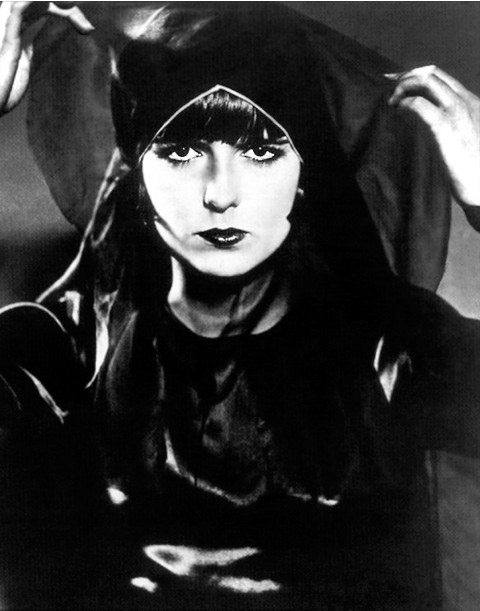
Second, one of the silent era’s slinkiest actresses, Louise Brooks, stars in the notoriously decadent Pandora’s Box (1929) on 31 July. Brooks’s effortless sex appeal in this film really set the template for Hollywood glamour for decades to come, so you can’t afford to miss it.

Go West screens in the Ondaatje Wing Theatre of the National Portrait Gallery at 3pm on 17 July 2011. Pandora’s Box screens in the Ondaatje Wing Theatre of the National Portrait Gallery at 3pm on 31 July 2011. Entrance to both films is free. Entrance to the Glamour of the Gods Exhibition is £6, less for concessions or free for members. You can book tickets online here. Glamour of the Gods runs from 7 July to 23 October 2011.

Hat-tip to @soshanau on Twitter for telling me about this one.

Silent film night at Sutton House, 10 July 2011

Buster Keaton's One Week (1920)

It’s not too often you get to watch silent films in a Tudor mansion in Hackney, so grab this chance while you can. The Sutton House Music Society is staging a night of classic silent comedy with accompaniment from jazz pianist Dave Morecroft on Sunday 10 July. The National Trust describes Sutton House this way:

Built in 1535 by prominent courtier of Henry VIII, Sir Ralph Sadleir, Sutton House retains much of the atmosphere of a Tudor home despite some alterations by later occupants, including a succession of merchants, Huguenot silkweavers and squatters. With oak-panelled rooms, original carved fireplaces and a charming courtyard.

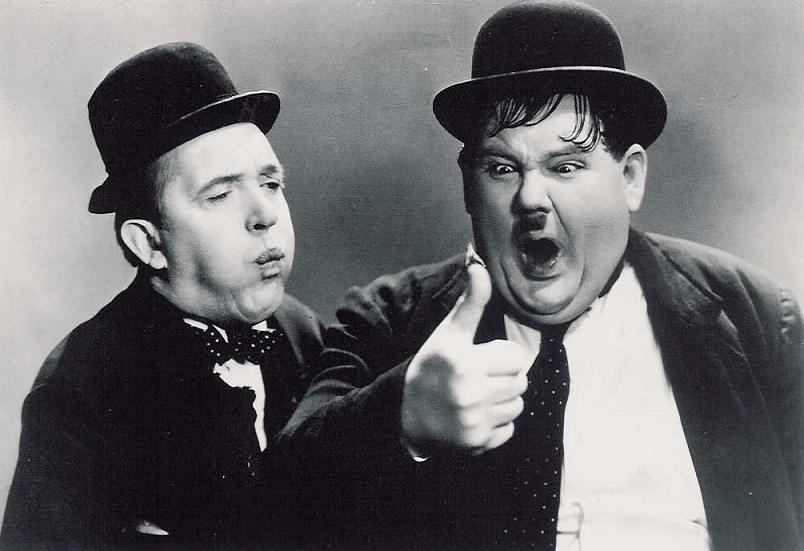
Not your run-of-the-mill cinema then. They will be showing four films: Earl McCarthy stars as Hairbreadth Harry in Sign Them Papers; Ben Turpin chases a pancake in Why Babies Leave Home; Harold Lloyd is a piano player in a wild west saloon in Two-Gun Gussie; and Buster Keaton dabbles in DIY in the sublime One Week.

What’s more, there will be cocktails and popcorn – and guests are encouraged to dress “film star fabulous”. I think they’re suggesting you channel Bebe Daniels rather than Snub Pollard, but heck, it’s up to you.

Doors open for the Silent Film Night at 6pm, and the movies will begin at 7pm, on 10 July 2011. Tickets cost £10 or £8 for concessions and include £1 membership of the Sutton House Music Society Film Club. Sutton House is at 2&4 Homerton High Street, London E9 6JQ.

Win tickets for The Seashell and the Clergyman and silent shorts at the Prince Charles Cinema

Symphonie Diagonale (1924)

If your tastes run to the outer fringes of silent cinema – to the surreal, the avant-garde and the experimental – no doubt you already have your eyes on the Prince Charles Cinema’s next silent film screening. The west end cinema has collaborated with the band Minima to put on a night of short films, The Seashell and the Clergyman, Symphonie Diagonale and H2O, on Thursday 30 June. Full details here. Here’s a little taster of what you can expect:

http://www.youtube.com/watch?v=Iv-RWOx3cnw

The really, really good news is that I have a pair of tickets for this show to give away to one of the readers of this blog. Just take a look at this simple question:

  • Who directed The Seashell and the Clergyman?

Email your answer to silentlondontickets@gmail.com by Tuesday 28 June. The winner will be picked at random from the correct entries and emailed with the good news. Best of luck!

Culture Critic Guest Guide to Silent Cinema

Sunrise (1927)
Sunrise (1927)

The best thing about writing Silent London is not the international prestige or the six-figure salary*, it’s the opportunity to evangelise for silent cinema, to spread the word about the films that I love and the experience of watching them with live music. So many people have seen a few scratchy clips of Chaplin films, a glimpse of Nosferatu or a Paul Merton documentary and they’re intrigued to find out more about these films that seem both like and utterly unlike the movies they’re familiar with. So when the Culture Critic website asked me to provide a very short introduction to silent cinema I jumped at the chance.

You may well disagree with some of the things that I say, and I’ll admit that choosing five “essential” silent films was a near-impossible task, but it’s online for all to see now. There’s a brief intro to my blog, with a list of five first films for newbies and a short interview too. Click here for the Guest Guide, and here for the interview.

*I always forget that irony doesn’t work on the internet

Metropolis and Metropolis Refound, Open City London, 17 June 2011

Metropolis
Metropolis (1927)

This is no ordinary screening of Metropolis.

The Open City London documentary festival is hosting a very special event on Friday night – it’s a double-bill, with live music, in a very unusual cinema. First on the agenda is Metropolis Refound, a documentary about the history of the film and the discovery of the missing reels that went into the new, complete version of the film. This is followed by a screening of the film itself, with a live orchestral score by Serum Electronique, composed by Paul Hines. You need only pay £1 to get in, but the website does suggest that you bring a bike. Why? Because the temporary cinema in Bloomsbury really is powered by bicycles. It seems to me that it would take quite a lot of leg work to get through both these movies, but it’s sure to be worth it, and you can fortify yourself at the attached cafe and barbecue before it gets too strenuous. Talk about blurring the distinction between men and machines, though!

Metropolis and Metropolis Refound screens at Open City London on Friday 17 June at 7.30pm. For more details and to buy a ticket, click here.

The Adventures of Prince Achmed and A Trip to the Moon, Folly for a Flyover, 25 June and 9 July 2011

A Trip to the Moon (1902)

It is shaping up to be a great summer for outdoor cinema screenings in London – and that includes silent films as well. For starters, Buster Keaton and Harold Lloyd are camping out in Canary Wharf with Neil Brand and the Create London festival is putting on these two gems in an unusual location in Hackney. The Folly for a Flyover is a temporary arts space in Hackney Wick, situated right under the A12. It opens later this month and is hosting five weeks of events. You can read more about this exciting project here on their website.

First up, Sawchestra are back with another interactive silent film show. The group make beautiful music from musical saws, children’s toys and other outlandish instruments and you can join them in playing along to Lotte Reiniger’s classic animation The Adventures of Prince Achmed on 25 June. That same night you will also have the chance to watch a selection of short films from Itsnicethat.com. The show starts at 8.30pm on Saturday 25 June and tickets cost £4. More details here.

July brings more delights, as the Folly hosts a screening of George Méliès’s A Trip to the Moon and other early animations, with a live score from the musicians at the Guildhall Electronic Music Studios. This event might sound a little familiar – that’s because it’s a repeat of the Barbican show on 26 June, which I wrote about in more detail here.  This looks great, and I hope the atmospheric location adds to the strangeness of it all – in a good way, I mean! The show starts at 8.30pm on Saturday 9 July and tickets cost £4. More details here.

These screenings are of the Create London festival, a series of cultural events in London’s Olympic host boroughs. For more information on these and the other events in the festival, check out the website.


And thanks to @susan_carey on Twitter for the tip.

The Navigator and The General at the Prince Charles Cinema, July and August 2011

The Navigator at the Prince Charles Cinema

The Navigator

Buster Keaton’s popularity is booming, and rightly so. The stone-faced comic is seen as cooler, more elegant and less sentimental than Chaplin – but just as funny. And that’s why the Prince Charles Cinema in the West End has got two Keaton classics lined up for summer, to continue its silent season. Something really magical happens when you watch silent comedy with live music, and most importantly, a big crowd. You’ll laugh until your sides ache, just see if you don’t.

The Navigator, playing in July, sees Keaton play a toff stranded on a massive boat drifting across the ocean. He’s not alone though, his sweetheart (Kathryn McGuire) has stowed along as well. The visual gags are as inventive as ever – watch out for the underwater diving sequence, in particular. And the scene in which the lovers attempt to make breakfast. And the chase around the empty boat. And…

The Navigator screens on 28 July at 8.30pm, with piano accompaniment by John Sweeney. Tickets cost £11 or £7 for members and they’re available here. Check out the Facebook page here.

The General (1926)
The General (1926)

The General

Keaton’s The General is one of those notorious cinematic beasts – a film that was panned on its initial release and now sits securely in the top ranks of those Greatest Films of All Time lists. Set in the American Civil War, The General is crammed with stunts that are equal parts hilarious and precarious, as Keaton races across the US in pursuit of his beloved locomotive, his girlfriend and some dastardly Union spies. But you don’t have to take my word for it: here’s New York Times critic AO Scott, and some choice clips from the film.

The General screens on 25 August at 8.30pm, with piano accompaniment by Costas Fotopoulos. Tickets cost £11 or £7 for members and they’re available here. Check out the Facebook page here.

A place for people who love silent film