The Royal Borough of Kensington and Chelsea is contributing to Olympic mania by staging what it describes as “London’s most sophisticated street party”. It’s a festival really, featuring games, dance, science, debates, music, writers’ commissions and visual art installations, with a little nod to the Great Exhibition that took over Hyde Park in 1851. The Exhibition Road Show will take place on the street they’re calling “London‟s cultural and intellectual heartland”, just a short hop from the Olympic beach volleyball venue in Earl’s Court.
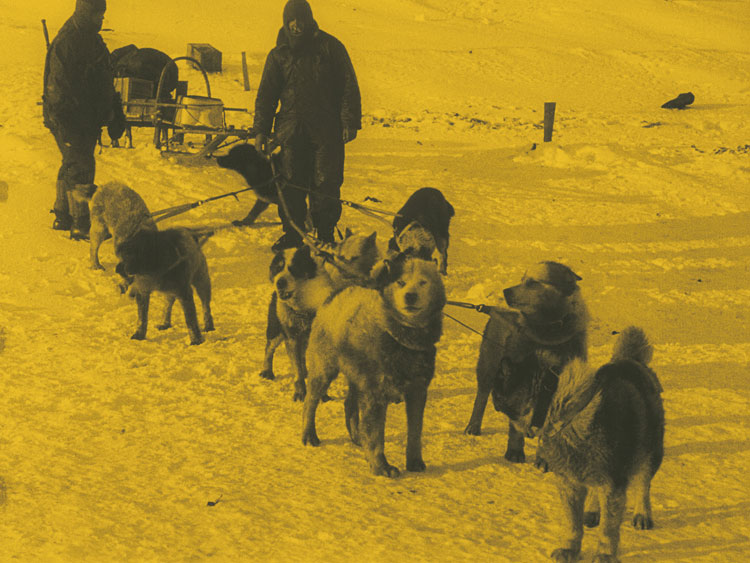
The Show runs from 28 July to 5 August, and on its opening night you can pop along to a free outdoor screening of Herbert Ponting’s elegant, unflinching Scott of the Antarctic documentary The Great White Silence – with its acclaimed live score by Simon Fisher Turner and his musicians.
Fisher Turner’s score for The Great White Silence premiered at the London Film Festival in 2010, and was described by The Guardian as “”skillfully judged, and the blend of real sounds – such as the gramophones that would have played on the ship, the Terra Nova, as well as a recording of the ship’s bell – and sparse musical scoring seemed to respect the idea of silence while making sound”.
UPDATE: This event has been rescheduled for 5 November 2012.
In November, the BFI will release a dual-format DVD/Blu-Ray edition of an intriguing double-bill: Sergei Eisenstein’s Battleship Potemkin (1925) and John Grierson’s Drifters (1929). It’s the second instalment of the BFI’s The Soviet Influence series, which has the stated aim of revealing the impact of 1920s Russian films on later British film-makers.
Drifters premiered at the Film Society on November 10, 1929, on the same bill as Battleship Potemkin, which was receiving its British premiere. Grierson had previously produced an English language version of Eisenstein’s film for its American screening and the influence of Eisenstein is clearly revealed in Drifters.
To tide us over until the home video release, we have a screening of Drifters, a film about herring fishing, and fishermen, directed by the father of the British documentary movement, John Grierson:
Like Potemkin, Drifters employs montage in an expressive manner, creating dramatic tension in the absence of any psychological characterisation. Both films also use ‘types’ (non-professional actors) instead of actors in order to create a more ‘authentic’ reality, and both films make use of extensive location shooting. Grierson, nevertheless, always stressed that he was keen to make a film with distinctively ‘British’ characteristics, which he saw as moderation and a sense of human importance. Drifters is, therefore, slower paced than Potemkin, and focuses on more mundane, less inherently dramatic events. (BFI Screenonline)
I am resisting making a “red herring” gag, but you should feel free to do so. This NFT1 screening of Drifters will be accompanied by a live score from Jason Singh, a recording of which will also be presented with the film on the disc. Singh is a “beatboxer, vocal sculptor and sound artist”, and his score combines both live and prerecorded vocals with all manner of processing and sampling. You can read more here, and watch a snippet of Singh in action below. I think you’ll agree it’s very atmospheric.
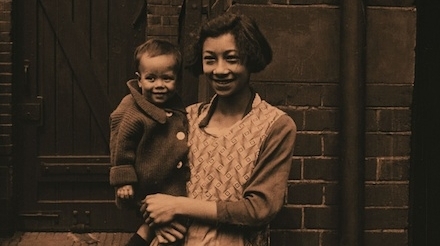
More than 100 years ago, film-makers Mitchell and Kenyon advertised their services to the public with the line: “See yourselves as others see you.” A new film, shot last summer in London, offers us the opportunity to see ourselves, now, as Mitchell and Kenyon might have seen us. Londoners is a 21st-century “actuality”, comprising film shot on the streets of the capital, outside Arsenal’s Emirates Stadium, in Hyde Park and at the Notting Hill Carnival. The twist is that the footage was filmed on a 1915 vintage camera, an old-school hand-cranked machine.
Director Joseph Ernst discovered the camera in a warehouse filled with old film-making equipment, and taking the Mitchell and Kenyon films as his inspiration, set out to record London circa 2011, but at 18 frames per second. As he told Wired.com, the people he photographed with the vintage camera were just as happy to be filmed as the customers of his Edwardian predecessors, and just as astonished by the technology. “Modern society finds no comfort in the digital camera. We shy away from them. We complain if someone points it in our direction. But if you bring out some spectacular relic from the past, people forget all that. They’re surprised that such a thing still exists and that it actually still works.”
And you can see that amazement in the film, which I was lucky enough to be granted a preview of. Londoners who might well be expected to be unmoved by the sight of a cameraphone, camcorder or iPad pointing in their direction, smile, point and nudge their neighbours when they see Ernst’s vintage machine. A Hell’s Angel dances an old-timey jig, a football fan guffaws and a wag at Speaker’s Corner mimics the cameraman’s movements – the the hand-cranking motion we all recognise from games of Charades. A group of photographers on Millennium Bridge snap the camera from all angles with their hi-tech DSLRs. The dancers at Carnival put on a display too, one that would probably have made the Edwardians blush.
But perhaps the Edwardians weren’t as stuffy as we think. There’s a uncanny, out-of-time quality to Londoners, with its faded, flickery footage of people who dress, stand and gesture just like us, but walk, thanks to the lower frame rate, with a hint of the jerky stiffness we associate with people from days gone by. It’s a reminder, if we needed one, that people don’t change very much at all over the years. Yes, the people in Londoners are more casually dressed, less formal, and overwhelmingly more racially mixed than in those Mitchell and Kenyon films, but they’re just as likely to hurry past or pose for a close-up, to smile or leer at the camera. The faces are the same. In a scene of commuters hurrying down the steps to a tube station, we’re drawn to a man who’s taking the descent a little slower, clutching on to the handrail, struggling to contain the tremors that are running through his body. It seems as if only the film-maker notices, as the crowd streams past him unaware, that the rush-hour journey is not the same for everyone.
In fact, even when the film is joyous, as when primary school children are bouncing in front of the lens, Londoners strikes a mournful tone. The music, which is taken from a gorgeous Bat For Lashes track, sets the mood. But there’s more to this movie. At a time when we’re losing our grip on real film, and apps from Hisptamatic to Silent Film Director offer us to the chance to remodel our snaps and home videos as relics from another time, Londoners’ deliberately archaic, lo-fi construction offers a more powerful blast of nostalgia. In another hundred years, the technology this documentary uses will seem irredeemably quaint, but so too will its subjects’ clothes, their junk food and even their risqué dance moves. But a project such as this compresses the years and shrinks the distance between us and our forebears. Mitchell and Kenyon would feel right at home, and I hope we see something just like it in 2112.
You can find out more about Londoners, and see out-takes from the film, on the Facebook page at facebook.com/LondonersDoc
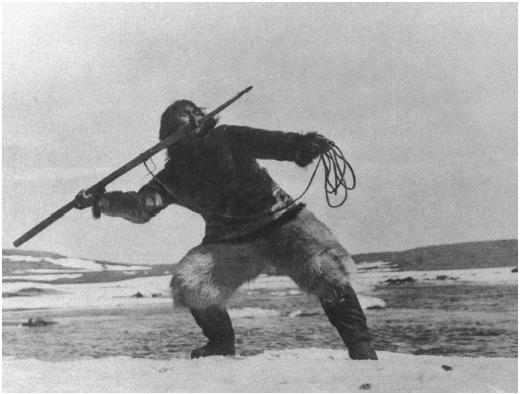
It’s always a pleasure to learn about a new film society in London, especially one that chooses its films with as much care and originality as the Screen Shadows group, whose inaugural season includes some notable silents. The F is for Fake season features, on 18 November, Robert J Flaherty’s hit documentary Nanook of the North (1922) in a special double-bill.
We have decided to pair Nanook of the North with The Girl Chewing Gum, a 1976 experimental work by John Smith. Although from different genres and eras, both films work very well together to say something about our current theme: fakery in film. As part of our commitment to encouraging new ways of thinking about film, as much as the screening of overlooked films or the screening of films in areas underserved by the usual channels of film exhibition, the session will be introduced by a guest speaker, AL Rees from the Royal College of Art.
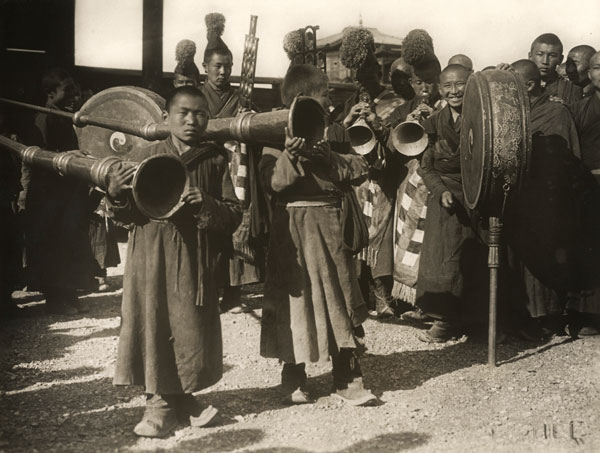
Storm Over Asia (1928)
And on 2 December, as part of the same season, Screen Shadows will show Pudovkin’s monumental Storm Over Asia (1928), another film that raises interesting questions about authenticity:
The literally translated Russian title “The Heir to Genghis Khan” indicates the incitement to atavistic struggle that drives Pudovkin’s measured and resolute move beyond the film-mythologies of the Bolshevik revolution, in this historically charged epic based on a story of two unconnected thefts and one mistaken identity. How does a young Mongol fur-trader rebel and come to political consciousness? And just what does an Imperial British army garrison and trading outpost hope to gain by exploiting the falsehood that has come to define their captive? … How might implying a direct genealogical link between a twentieth-century Mongol fur trader and the twelfth-century Golden Horde inform a critique of imperialism in the Far-East, and what does this say about the cinema’s role in promulgating the myth of a culturally sensitive, ‘benevolent’ Soviet expansionism?
Nanook of the North screens at Oxford House, Bethnal Green E2 6HG on 18 November 2011 and Storm Over Asia on 2 December 2011. Entry is £7 or £5 (concessions and Tower Hamlets residents). The nearest tube station is Bethnal Green. For more details visit the Screen Shadows website.
However many big-budget war films come and go, real footage of frontline combat is still shocking. How much more powerful would such images have been 95 years ago, when The Battle of the Somme (1916) was released, and watched by 50% of the British population? JB MacDowell and Geoffrey Malins’s documentary was intended to boost morale, but its scenes of wounded and dead soldiers, not to mention the contentious “over-the-top” sequence, make it a more complicated, thought-provoking and mournful piece of work. One of the “over-the-top” scenes was staged, but so much else is horribly real here – and the film was inscribed on UNESCO’s Memory of the World Register in 2005.
The Battle of the Somme‘s footage may be familiar to you as it has been mined for many a first world war documentary, but it is an entirely different experience to watch it all, in one sitting. This upcoming short UK tour offers a very special opportunity to do just that. Composer Laura Rossi’s orchestral score for the film will be performed at four special screenings of The Battle of the Somme in 2011 and 2012, by four different ensembles:
10 March 2012: Ealing Symphony Orchestra, Venue TBC, Ealing, London
For more details, and to listen to clips of the score, visit Laura Rossi’s website. To find out more about the film, read this post from The Bioscope. Also, the Times reviewed the premiere of the score, when it was performed in the Queen Elizabeth Hall with the film in 2006. The Battle of the Somme is also available on a DVD produced by the Imperial War Museum, with two scores, both Rossi’s and a recreation of a likely contemporary soundtrack, by Stephen Horne, based on cue sheets.
This review is a guest post for Silent London by Ewan Munro of the Pubology blog.
Among the many wonderful restorations in the Treasures from the Archives strand at the London Film Festival this year was a programme of silent short films, nine- to 12-minute long travelogues from a series made in the early 1920s by film producer Harry B Parkinson, and entitled Wonderful London. The BFI National Archive chose six of these films to restore and present at what turned out to be a packed-out screening (attributed by silent film curator Bryony Dixon to a resurgence of interest in historic London).
The subject of these quirky little screen-fillers is, of course, London. And while there are certainly occasional shots of the tourist London we’re all familiar with, perhaps more interesting is the time spent looking around the corners, into the back streets and out into the suburbs of the working-class city. Street markets and grimy housing, docks, shops, scenes of daily life, and even a few pubs all show up in these films. The East, the North, the West End and the City all show up, though the South is represented by only a few shots of streets around the site of the Globe.
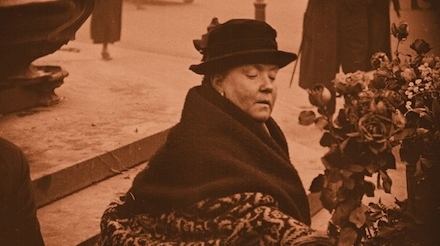
There’s Petticoat Lane market (still bustling today) and Club Row market (no longer), where live animals of all kinds are traded under the still-familiar railway arches down by Sclater Street (arches which now hold the lines leading to Shoreditch High Street station). There are grand West End theatres alongside street performers and Punch & Judy shows. There’s Ye Olde Cheshire Cheese pub, just off Fleet Street, one of the few views that hasn’t changed at all, even as we briefly spot the drays of long-defunct brewers such as Truman Hanbury Buxton and Mann Crossman’s. There are the flower sellers usually at work underneath Eros on Piccadilly Circus, but moved from this attractive spot due to London Underground construction works (little change there, though back then it was for the station’s grand booking hall). There are the canals around Mile End, Islington and Hackney (with a brief cutaway to show Broadway Market), mules working along their towpaths to pull the barges. This is just one example of perhaps the greatest change since these films were made: the extent to which the London shown is a city of industry and manufacturing, where the canals are still busy with freight and the docklands still bustling with ships.
Flowers of London (1924)
This “unofficial” view of London is matched by the narration, with the intertitles frequently offering humorous asides and boundless sarcasm, especially in the Barging Through London film (any given intertitle card makes reference to dizzying speeds, as the film cuts to, say, a barge moving languorously under a bridge alongside Regent’s Park, while befrocked and behatted tourists on the way to London Zoo stop to watch). A personal favourite is the introduction of Southwark Bridge, newly constructed at a cost of £3 million and “sometimes it gets VERY busy”, cutting to show a few hackney carriages trundling across while a handful of people walk along the outside.
The titles remain fairly light-hearted, but this only exposes some of the period’s unpleasant attitudes, communicated with an at times disarming frankness, especially in the Cosmopolitan London short. In what must be a staged scene, the film’s “white trash” are swiftly kicked out of a “negro club” on Whitcomb Street, while the film is unsparing in its negative judgment on the poverty and unfriendliness of the Chinese population of Limehouse. When the film returns pointedly to scenes on Horse Guards Parade, it expresses greater relief at their comforting Englishness than perhaps the modern audience can muster. Nevertheless, the scenes of Limehouse provide interest when compared to similar ones staged for the roughly contemporaneous Piccadilly (1929).
Through it all, piano accompaniment is sensitively provided by Neil Brand, an accomplished master of the art. The tone is largely jaunty as befits the films, though he sensibly opts for a quieter register at key points towards the end of the Cosmopolitan London short, and a briefly uncomfortable silence within the auditorium at one point further brings into focus the discomfort engendered by the film itself (not to mention highlighting the very rarity of silence at screenings of silent films).
The restoration has been handled magnificently, and Scott Starck from the restoration team speaks before the film, rattling off a quick account of the process, along with dizzying statistics on the number of frames that needed repair. Colour tinting has been retained as per the original films, and this is used to good effect to depict the passing of the day in London’s Sunday, or the colours of the flowers in Flowers of London. One can only hope that the success of this screening leads to further such archival restorations and that the Wonderful London series may one day be available in its entirety.
An eerie filmed record of Captain Scott’s tragic journey to the South Pole, The Great White Silence (Herbert Ponting, 1924) was rightly acclaimed as a highlight of last year’s London Film Festival. The print had been restored to great effect: allowing us to see the vivid tints of the original film, and the Archive Gala screening featured a performance of Simon Fisher Turner’s intriguing minimalist score, which incorporated the Elysian Quartet, “found sounds”, and a haunting vocal from Alexander L’Estrange.
His part-improvised score includes some pre-recorded elements and Simon Fisher Turner has gone to great lengths to include relevant ‘found sounds’. The first was a gift from a friend, Chris Watson, who made a recording of the ambient silence in Scott’s cabin in the Antarctic. Fisher Turner has also recorded the striking of the Terra Nova ship’s bell at the Scott Polar Research Institute in Cambridge. He has even managed to track down the expedition’s original gramophone to play some of the records which were played by members of the expedition.
If you have satellite TV, you may have recently caught the documentary on the small screen, but if you missed it, never fear, you have plenty of chances to catch it on the big screen in May and June.
First off, there will a special screening of The Great White Silence, with a recorded version of the score, at BFI Southbank on 18 May 2011, followed by a panel discussion led by Francine Stock, which will take the scoring of silent films as its subject – participants include Fisher Turner, sound recordist Chris Watson, plus Bryony Dixon and Kieron Webb from the BFI. The following weekend, there will be screenings nationwide of the film.
You want more? The Great White Silence will be released on DVD and Blu-Ray on 20 June.
The Great White Silence screens at NFT1 on 18 May at 6.20pm. The panel discussion will follow at 8.30pm. Tickets cost £13, or £9.75 for concessions and £1.50 less for members. They will be available from the BFI website.
The Great White Silence screens in the Studio at BFI Southbank several times throughout May and June 2011. The film will also screen at the Curzon Mayfair, Curzon Richmond and HMV Curzon Wimbledon, and at cinemas across the country including Broadway Nottingham, Cambridge Arts Picturehouse, Phoenix Oxford and Chapter Cardiff.
On Friday 20 May at 11am Bryony Dixon, BFI silent film curator, will give a talk entitled Films of the Heroic Age of Polar Exploration – The Restoration of The Great White Silence in NFT3. Tickets are free for over-60s, and usual matinee prices for everyone else.
At the Curzon Mayfair on Saturday 21 May at 4pm, and Curzon Richmond on Sunday 22 May at 3.30pm, Ian Haydn Smith will host an illustrated talk called The Great White Silence and Cinema’s Exploration of the World. Tickets are £12.50 or £9.50 for members at the Mayfair cinema and £11.50 or £9.50 for members at the Richmond branch. You can buy tickets here, on the Curzon website.
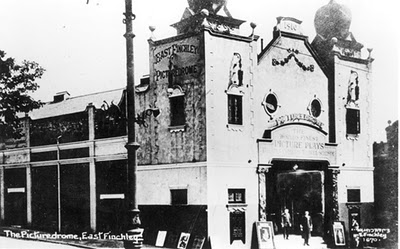
The Phoenix, when it was the East Finchley Picturedrome
I thought you might enjoy this elegant documentary about the history of The Phoenix cinema in East Finchley. It’s a charming film, tracing the cinema from its earliest days in the 1910s and through its several reincarnations, crises and successes. You might remember that the cinema celebrated its silent era origins with a programme of Paul and Acres shorts last November. What this films reminds us, ultimately, is just how crucial independent cinemas such as the Phoenix are to the cultural life of the city, and to individual film lovers. You never forget where you first saw your favourite film, after all.
The film was made by On Par Productions and features a soundtrack by The Last Dinosaur.


 Silent London