This is a guest post for Silent London by Kelly Robinson, and the first in a new series of posts bringing you very personal top 10s from silent cinema experts and enthusiasts.
From a programming point of view, it’s always good to have a few shorts up your sleeve: either to accompany a feature or to make up a shorts programme, which are always a good way to introduce new audiences to silent film. I’m trying to write short screenplays at the moment and I’m inspired by these film-makers, several of whom spent the majority of their careers working on shorts.
How to be an American Citizen (Alice Guy-Blaché, 1912)
Made in the US by Solax, film pioneer Alice Guy-Blaché’s production company, this is such a brilliant darkly anarchic comedy. View the version on the Retour de Flamme (06) disc by Lobster Films for one of the most inspired accompaniments to a silent film.
Ménilmontant (Dimitri Kirsanoff, 1926)
Breathtakingly stylish (talk about Eisenstein’s “kino fist”!) but also heartbreakingly moving, this is avant-garde cinema of the 1920s at its most profound. The scene on the bench is as poignant as anything by Chaplin or more recent master Krzysztof Kieslowski. Unforgettable.
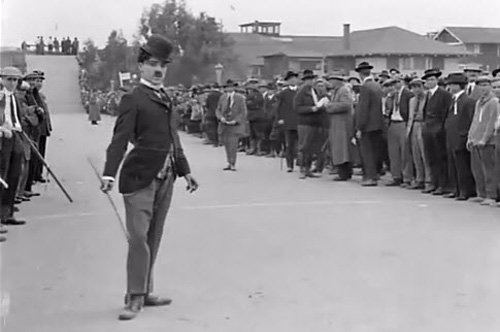
Charlie Chaplin in Kid Auto Races (1914)
Kid Auto Races (Henry Lehrman, 1914)
Chaplin’s Keystone films are sometimes written off as unsophisticated fare, preceding a more nuanced approach to style and content at later studios. However, Chaplin’s performance here is pure clown, and shows why contemporary audiences immediately wanted more, more, more of “The Little Fellow”.
Leave ’em Laughing (1928)
Leave ’em Laughing (Clyde Bruckman, 1928)
I just have to think about the final sequence of the Laurel and Hardy classic and I start chuckling madly to myself.
Daisy Doodad’s Dial (Florence Turner, 1914)
“The Vitagraph Girl” pulls a face at being one of the first screen stars.
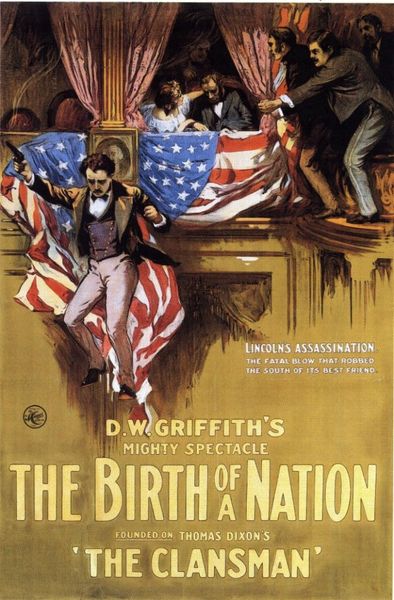
Whichever way you look at cinema history, you can’t avoid The Birth of a Nation (1915), a landmark, but one that casts a murky shadow. It is absolutely fitting and proper that the film regarded as the first American feature, which kickstarted Hollywood’s rise to global domination, and that was made by a true cinematic genius should be given the Masters of Cinema treatment – Blu-Ray transfer, archival extras, fancy booklet and all. Just don’t call The Birth of a Nation a masterpiece – while this is an important film, it is a terribly flawed one.
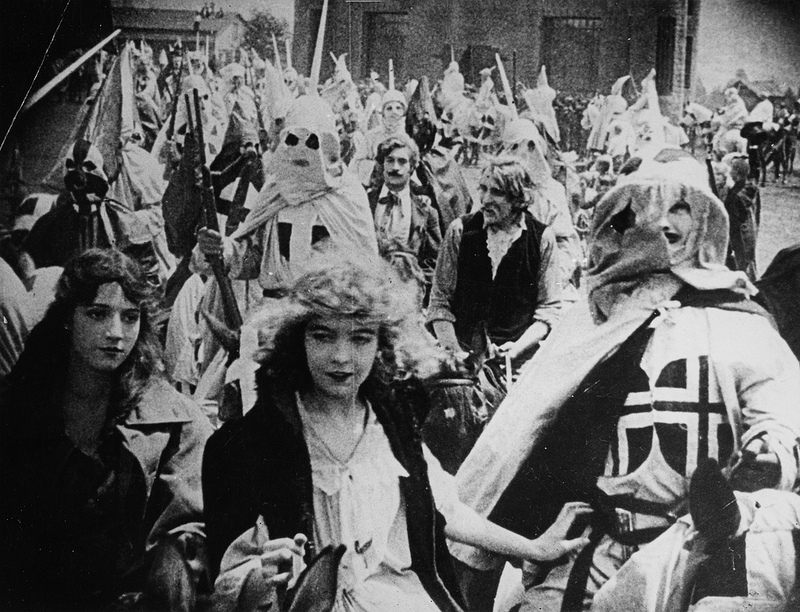
Austin Stoneman (Ralph Lewis) is an abolitionist congressman, based on Thaddeus Stevens (played by Tommy Lee Jones in Spielberg’s Lincoln), and his children are friends with the Cameron family in the South. Four of the children will fall in love with each other, but the Civil War will tear them apart. The second and most controversial part of the film details the consequences of the war and of freeing and enfranchising the slaves. Legislature is overrun by loutish black men; Cameron’s youngest daughter commits suicide when pursued by a “renegade negro”. The Ku Klux Klan exert a rough justice for this and other crimes and bully the black citizens back into their place. All ends, apparently, happily ever after, “Aryan birthright” defended, wedding bells pealing, with a vision of Christ.
The Birth of a Nation (1915)
The Birth of a Nation is an epic film, running for three hours and more, with a big subject, but a small mind. Beginning just before the American Civil War does, and hanging around to see the South recover from its heavy defeat, the movie encompasses battle, politics, romance and a family saga of sorts. Its text-heavy intertitles reveal a worthy ambition: to convey “the ravages of war to the end that war may be held in abhorrence”. Other intertitles protest against censorship, asking that the film be given the same liberty to speak as the Bible, or Shakespeare. We are frequently told that this or that scene is a “historical facsimile” drawn from library sources. But these arguments feel hollow. The Birth of a Nation, based on the novel The Clansman, is guilty of a sin of omission, and the far more serious crime of racism. This is a paean to the South, but specifically a tribute to the Ku Klux Klan, who in this narrative save the “white South” from “the heel of the black South”. It concerns itself not one jot with the “abhorrences” of slavery or slave-trading. Its black and mixed-race characters are cartoonish (“Dem free-niggers f’um d N’of am sho’ crazy”) and mostly venal – cowardly, yet sexually predatory, weak-minded, easily led. Of course, many of them are played by white actors, and needless to say, blackface is never a good look. In one horrific sequence a group of black men lynch another for supporting their rivals; in another equally nauseating scene lines of black voters cower in front of Klan members – this vote-rigging by intimidation is presented a as triumph. A cotton-field is used as a romantic setting for the white upper-class characters to coo at each other in.
The Birth of a Nation (1915)
I mention this because you may have heard that The Birth of a Nation is a great film, but a racist one. That is part of the way to the truth, which is that the film’s racism prevents it from becoming truly great. DW Griffith made many other films with old-fashioned, sentimental storylines – but his best work moves the audience, because it is based on an emotional truth. That emotional truth is missing in this film. Here, in a typically Griffithian sentimental moment, impoverished Carolina belle Mae Marsh trims her dress with “Southern ermine” that is, raw cotton daubed with fingerprints of soot. We’re expected to feel sorry for her character in her shabby frock, but not for the slave who picked that cotton for her family in the first place. That’s quite the feat of mental acrobatics. It’s hard to believe that this film was made by the same director who created A Corner in Wheat six years earlier. Even the wonderful Lillian Gish is disappointing here – her role as Stoneman’s thoughtless daughter (she never visits the library) who is disgusted by her boyfriend joining the Klan until a mixed-race men attempts to assault her, gives her little to work with. Although Miriam Cooper in a quieter role as the elder Cameron sister, is constantly compelling.
Without making excuses for the film’s failings, we should also note its monumental achievements: the deft storytelling here cuts across years and state lines from the home front to the battlefield and never feels forced or confused. It’s long, but never boring. Those war scenes are epic in scale and brutal in the vividness of their hand-on-hand combat – vistas of the battlefield spread out before the audience smothered in gunsmoke; or are sometimes vignetted to catch a vicious or poignant moment. Almost every scene looks sumptuous – this crisp, though occasionally grainy, transfer captures every detail of those “historical facsimiles” as well as the more poetic moments when Griffith indulges himself with a composition of romantic, painterly beauty: as in the love scenes, or the moment when Henry Walthall’s Colonel Cameron is inspired to form the Klan.
If you have seen, and loved, Griffith’s shorts and more rewarding films such as Broken Blossoms, then you’ll rightly want to see this film. Be warned though, you may not like it as much as you admire it, and you may admire it less than you expect to. But once you have seen it you will want to place the film in context, both historically and in terms of the debate around its content. The booklet of material provided with this release includes a tribute by Michael Powell and defences by Griffith and the author of The Clansman as well as a contemporary attack from the New York Times (“It is insulting to every man of Southern birth to assume that he is pleased by misrepresentation so colossal”) and another by Francis Hackett, which calls the film “spiritual assassination. It degrades the censors that passed it and the white race that endures it.”
The Birth of a Nation is available now on DVD and Blu-Ray from Masters of Cinema, RRP £17.99 (DVD) or £19.99 (Blu-Ray).
‘You didn’t really direct Mary. She was a very sure person in her own category’ – Howard Hawks
This is a guest post for Silent London to mark International Women’s Day by Kelly Robinson, curator of the Birds Eye View Sound and Silents programme.
Birds Eye View’s Mary Pickford Revived event is part of WOW – Women of the World Festival 2012 at the Southbank Centre. Amarilly of Clothes-Line Alley with The New York Hat and Female of the Species screen at the Southbank Centre on 9 March at 8pm (find out more). Sparrows screens at Hackney Picturehouse on 11 March at 4pm (find out more).
“My success has been due to the fact that women like the pictures in which I appear” – Mary Pickford
In any serious study of early cinema, prominent men such as the “Father of Film” DW Griffith and silent clown Charles Chaplin are always first to feature. Happily though, recent literature has sought to readdress this critical gender imbalance by also highlighting the contribution of similarly extraordinary pioneers – including Mary Pickford.
Pickford was certainly a creative force on a par with Chaplin, and the two had a lot in common. Like Chaplin, she also performed in the theatre from a young age to support her family. At 13, a precocious Pickford harangued theatre impresario David Belasco to hire her, apparently telling him: “I’m the father of my family.” Like many other theatre actors, she was initially disdainful of cinema but was drawn in by the financial rewards. She enquired at the bustling Biograph studios for work, and it was here that she met Griffith, the director of two of the beautiful shorts that feature as part of the Southbank programme.
The films in this programme span a period of just seven years but this was a time of rapid change. Indeed, in the months that separate Griffith’s The New York Hat and Female of the Species we can see striking developments in film form and style. The volume of films Biograph churned out was phenomenal and between 1909 and 1910 Pickford appeared in 80 films for Griffith.
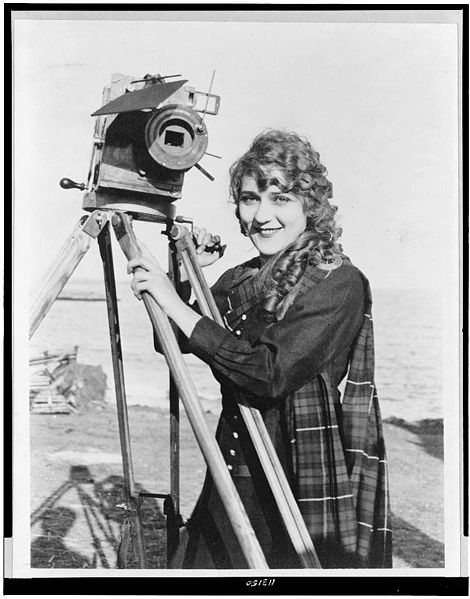
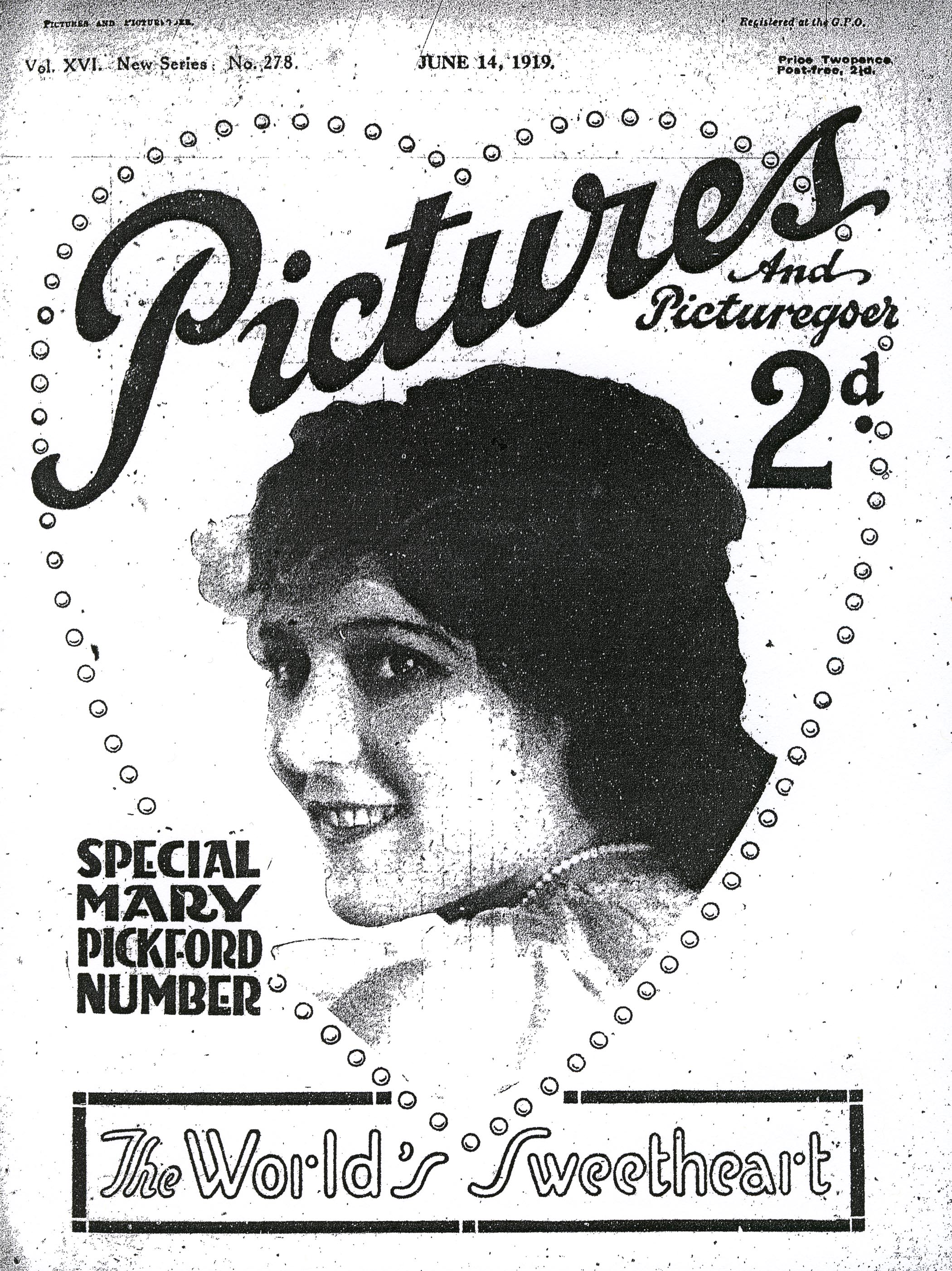
Mary Pickford, America’s Sweetheart (Courtesy Birds Eye View)
Pickford said: “I got what no one else wanted and I took anything that came my way because I decided that if I could get into as many pictures as possible I’d become known, and there would be a demand for my work.” Indeed she quickly became a favourite with audiences, although they didn’t yet know her name; she was referred to as the ‘”girl with the curls”. Once she had established the extent of her fame, she asked for a rise from Griffith and her name on the screen.
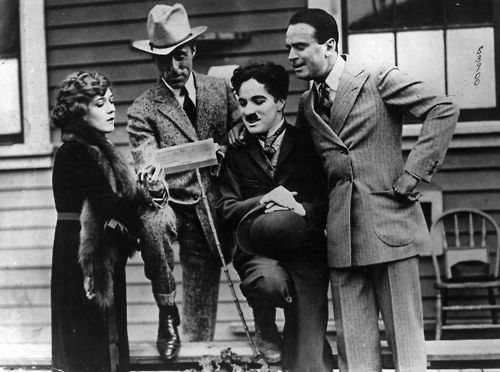
(l-r) Mary Pickford, DW Griffith, Charlie Chaplin and Douglas Fairbanks, founders of United Artists
Paul Merton is probably the most high-profile silent film fan in the country, with a book, a stage show and a series of documentaries on comedy under his belt. And now he’s back, on BBC 2 no less, with a three-part series of programmes about the early days of the American films industry – Paul Merton’s Birth of Hollywood.
The first programme will focus on DW Griffith, the beginnings of the star system and the relationship between music and silent film. There’s a very jolly introduction to the series on Paul Merton’s official website here, and some musings about making the documentaries on the BBC site here. You’ll be pleased to know that Neil Brand is involved too – he’s written the title music
Merton clearly has a great passion for the subject, and I couldn’t be more pleased to see documentaries on early cinema airing on one of the major channels. What would be great, of course, would be a screening of a silent film or two after the programme, but it looks like that is not to be. Better luck next time, chums.
Merton appeared on Danny Baker’s radio show on Saturday to promote the show and their 10-minute chat is well worth a listen on iPlayer, if only for the infectious enthusiasm the pair have for the subject. Follow the link here, and fast-forward to an hour and five minutes into the programme.
Paul Merton’s Birth of Hollywood begins on BBC 2 at 9.30pm on Friday 27 May 2011.
Due to technical difficulties, the screening of The Birth of a Nation (DW Griffith, 1915) at the BFI Southbank on 24 January has been cancelled, but it will be rescheduled for later in the year. Hopefully, the rearranged screening will also benefit from an introduction from Kevin Brownlow as originally planned. Of course, we’ll pass on the details as soon we know more.