Tag Archives: Maggie Hennefeld

The Silent London Poll of 2024: And the winners are …

Thank you for bearing wth me during a few several technical glitches related to this year’s poll. Relax, enjoy your glass of wine-flavoured carbonated beverage, and welcome to our glittering award ceremony. I have counted the votes, and I am ready to announce the winners of the Silent London Poll of 2024!

Congratulations to all the people mentioned below – as ever, these categories were bursting at the seams with excellent, worthy nominations and a great reminder of how exciting the global silent film scene is. Thank you for all your votes, and your comments, especially.

Without further ado, let me open this giant stack of golden envelopes. Here are your winners.

1. Best orchestral silent film screening of 2024

Your winner: The Winning of Barbara Worth (Henry King, 1926), with a score composed by Neil Brand, arranged by George Morton, conducted by Ben Palmer,  performed live by the Orchestra da Camera di Pordneone, at Giornate del Cinema Muto, Pordenone

I said: “t’s a big, big movie, with the youthful star trio of Ronald Colman (on $1,750 a week), Vilma Banky (on $1,000 a week) and Gary Cooper (on $50 a week!) in a desert love triangle, and a tremendously terrifying climax, as the townsfolk run for their lives when the river bursts its manmade bounds. Plus we were to enjoy the world premiere of a wondrous new score composed by Neil Brand, arranged by George Morton, conducted by Ben Palmer, and performed live tonight by the Orchestra da Camera di Pordenone. If you know the film you will know that it is celebrated for its scale, but also that this is a Frances Marion script, with a touch of melodrama (Vilma overhearing Ronald’s confession that he won’t propose to her, but not the reason why), her pet subject of adopted children, and her love of a grand theme – here the pioneers’ battle for mastery over the elements, and capitalism’s battle for mastery over the populace. You’ll also know that between the big action scenes there are several more sedate moments, discussions of policy and payroll. As, quite frankly, we have come to expect, Brand’s score was buoyant and nimble, keeping the film on its toes, teasing out the romance and flooding (yes, I went there) the auditorium with sound during those blockbuster setpieces, starting with a sandstorm in the first reel and the deluge in the last. Timed to a T, so that image and sound met in perfect harmony, and just a joy to listen to – for what it’s worth, I think it’s a winner. Geddit?”

Lillian Gish in The Wind (1928)

2. Best silent film screening with a solo musician or small ensemble of 2024

Continue reading The Silent London Poll of 2024: And the winners are …

Le Giornate del Cinema Muto 2023: Pordenone Post No 2

Pordenone eh? It’s like Christmas for silent film fans. Quite literally tonight at the breathtaking conclusion of tonight’s headline film. The title was Hell’s Heroes, and we were watching the silent version of William Wyler’s 1929 sound adaptation of the story better known as Three Godfathers.

Continue reading Le Giornate del Cinema Muto 2023: Pordenone Post No 2

Take Cinema’s First Nasty Women home this summer

Yes, I have been hiding it very well, but I am actually a big fan of the Cinema’s First Nasty Women project. Who knew?

Co-curated by Laura Horak, Maggie Hennefeld and Elif Rongen-Kaynakçi, the Nasty Women project has trawled the archives for trailblazing examples of female energy, anger, transgression, rebellions and explosive hilarity in early cinema. The films have been shown at festivals around the globe and this summer you can take them home with you, courtesy of Kino Lorber, in the form of an “irreverent” four-disc box set, available in both DVD and Blu-ray flavours. Here’s the official spiel:

Continue reading Take Cinema’s First Nasty Women home this summer

The Silent London Poll of 2018: The Winners

January is a time for looking forwards, not back, right? That’s just not the Silent London way. With immense thanks to all of you for voting and sharing in the 2018 poll, I am delighted to announce your silent film highlights of the past year.

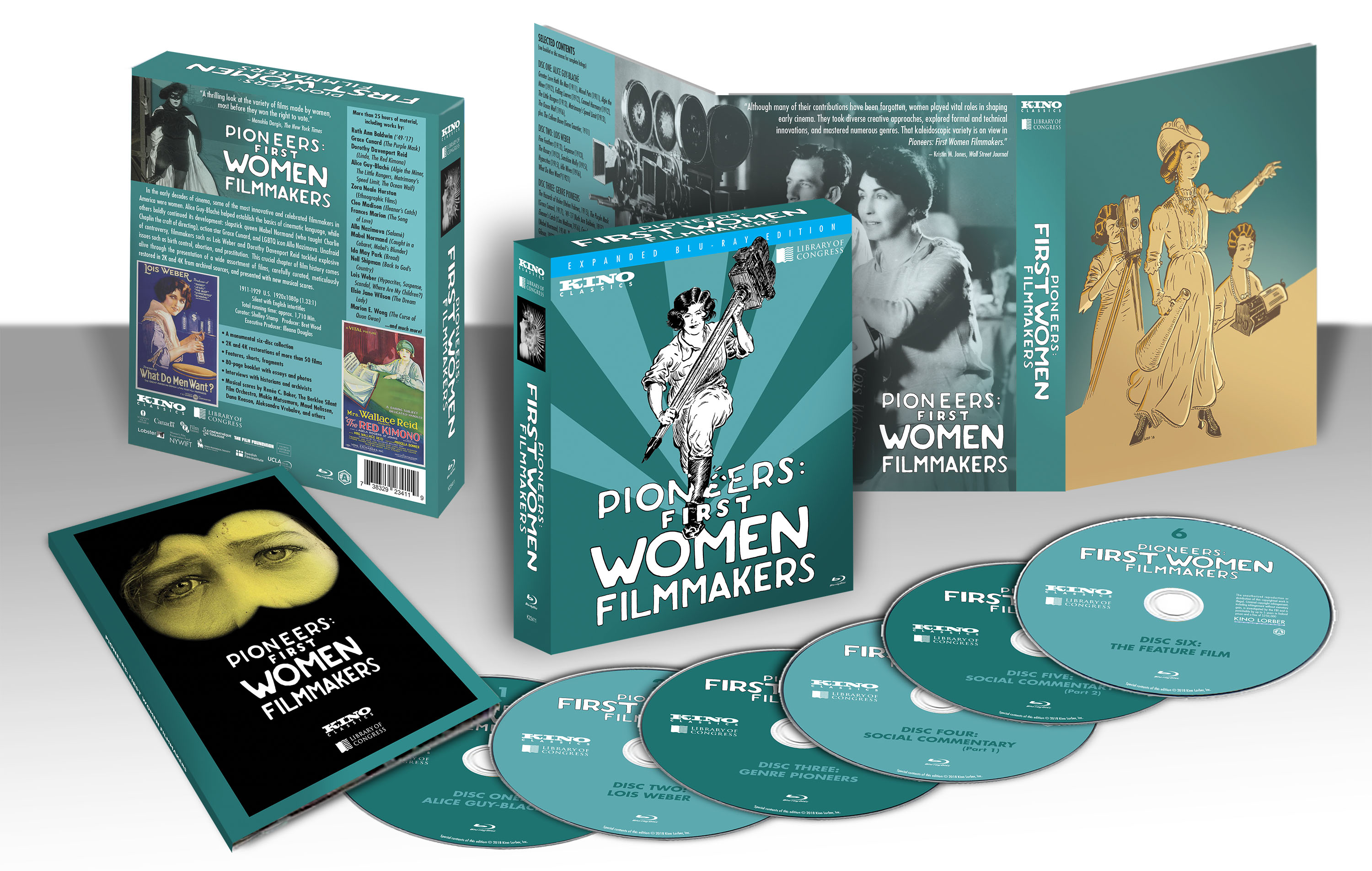
PFWF spread

  1. Best DVD/Blu-ray of 2018

It arrived late in the year, but hotly anticipated and was everything we wanted it to be. Kino Lorber’s magnificent Pioneers: First Women Filmmakers box set is your favourite release of the year. And mine too. Check out selected highlights from the set on UK Netflix now.

img_9151

  1. Best Theatrical Release of 2018

Never let it be said that there is any kind of bias in this list – but the BFI’s release of Pandora’s Box, in a gorgeous new restoration topped your choices this year. And of course I wholeheartedly agree.

  1. Best Modern Silent of 2018

Slim pickings in this category, but an overwhelming number of you got creative and chose John Krasinski’s held-breath horror A Quiet Place in this category. I see what you did there and I like the way you think.

Continue reading The Silent London Poll of 2018: The Winners

Sisters in slapstick: two books on silent comediennes

These reviews of Slapstick Divas: the women of Silent Comedy by Steve Massa and Specters of Slapstick & Silent Film Comediennes by Maggie Hennefeld first appeared in the June 2017 and July 2018 issues of Sight & Sound, respectively. I am reposting them here ahead of a slew of events celebrating silent cinema comediennes coming up soon.

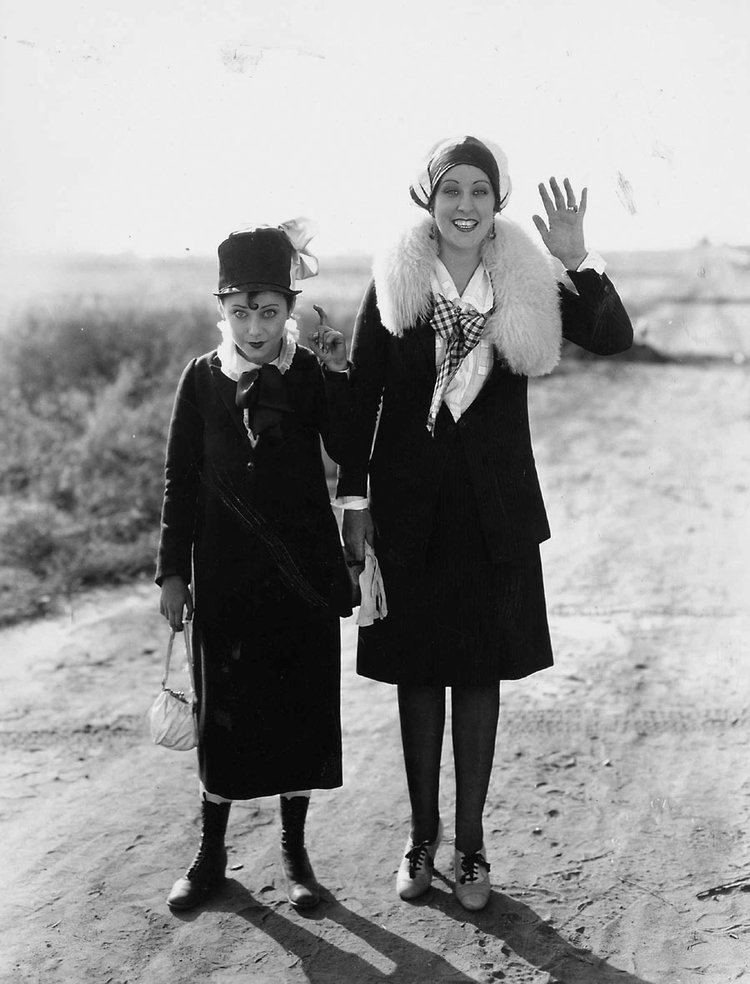
Marion Byron & Anita Garvin


Slapstick Divas: the Women of Silent Comedy by Steve Massa

In the silent era, as now, film comedy looks a lot like a boys’ club – and that disparity is more deeply entrenched in the arena of physical humour. For those who would like to see Marie Dressler and Marion Davies, let alone Flora Finch and Anita Garvin, as celebrated as their male peers, Steve Massa’s Slapstick Divas: the Women of Silent Comedy, will be a welcome resource. A followup to Massa’s survey of lesser-known male silent comedians, Lame Brains and Lunatics, Slapstick Divas tells an engrossing tale of female performers beating a path in the silent film industry.

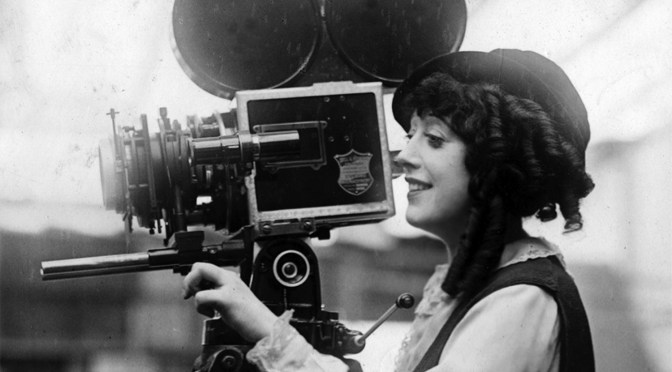
An entire chapter is devoted to the most famous slapstick comedienne of them all, Mabel Normand, who segued from modelling work to acting, first in Vitagraph comedies and then at Biograph where she played dramatic roles for D.W. Griffith, but was happier putting over gags for Mack Sennett. Normand would become a fixture at Sennett’s new Keystone studio, starring in ever more physically demanding films. The chapter is named after a Photoplay description of Normand as “the sugar on the Keystone grapefruit”, but her work was as rough-and-tumble as her peers. “I have fought with bears, fallen out of a rapidly moving automobile, jumped off a second story roof into a flower bed and risked life, limb and peace of mind in innumerable ways,” she told the Los Angeles Times in 1916. She appeared in several films with Charlie Chaplin, including the feature Tillie’s Punctured Romance (1914) and was regularly paired with Roscoe “Fatty” Arbuckle. Although she was later dismissive of her skills behind the camera, she directed several films too, including Mabel’s Strange Predicament (1914), Chaplin’s first performance as the Tramp. Sadly, an accident on set one day contributed to Normand’s slow decline. While she continued to act into the 1920s, her career faltered owing partly to a series of scandals, but mostly her increasingly erratic behaviour in the studio, and gaunt appearance on film, consequences either of her brain injury, or her drug use. She died from tuberculosis in 1930, aged 37, and although she is the star of this volume, Massa notes that “her work has rarely been screened and her talent has been taken for granted”. Continue reading Sisters in slapstick: two books on silent comediennes