Tag Archives: Ronald Colman

Le Giornate del Cinema Muto 2024: Pordenone Post No 8

A confession. I was conspiring over breakfast, and reader, this was a two-cappuccino problem. The upshot? I was a little late in getting started with the screenings today. But I certainly knew that I was going to be up late, with the gala… and the end-of-festival celebrations!

My sunny morning stroll to Cinemazero was rewarded with a simply terrific film from Uzbekistan. In Her Right (Grigorii Cherniak, 1930), a group of workers from the collective farm are sent to the factory to boost the workforce there, and to learn those valuable Soviet methods. One woman from the village defies her husband and sheds her burqa to join them. It’s a life-changing experience and not only does she gain independence through work, but she inspires others to do the same, through a filmed speech, that the workers clamour to watch, even after he enraged husband slashes the screen. Even with her “throat” cut, in a silent film, she continues to speak her truth.  So you have noted already that this is once again pro-Soviet, anti-Islam propaganda in intent, but this is also a remarkable film in style and action. Our Hollywood friends would applaud the excellent, and indeed poignant, action sequence in which our heroine runs to jump on the train to the factory, is repeatedly shoved away by male guards and then, when it seems she has finally found a helping female hand, her husband leaps – for a second we think he has dragged her form the moving train, but no, he only has her coat in his hands. Nail-biting stuff. And the scene in which they watch the film is also very strong. Günter Buchwald at the keys for this one, keeping the energy at exactly the right pace.

Continue reading Le Giornate del Cinema Muto 2024: Pordenone Post No 8
Le Giornate del Cinema Muto 2021: Pordenone Post No 1

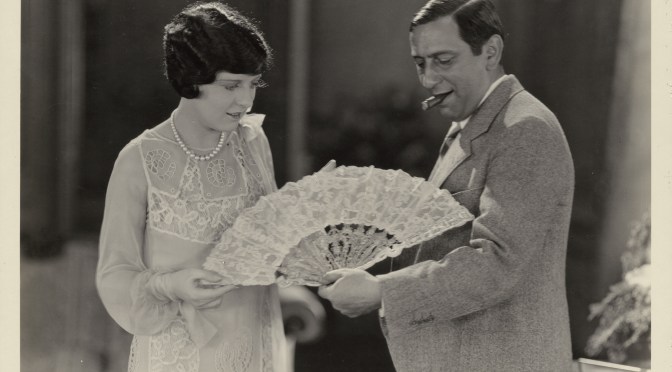
“Now more than ever, welcome home!” If Jay Weissberg’s address to the Verdi at tonight’s opening gala didn’t lodge a lump in your throat, you may be an irredeemable cynic. Or perhaps you were just marvelling at the man’s mastery of the Lubitsch Touch – the exquisite pain of terribly mixed emotions. But more on the importance of being Ernst later. Let us begin at Act One, Scene One. Enter your humble scribe, stage left.

Continue reading Le Giornate del Cinema Muto 2021: Pordenone Post No 1

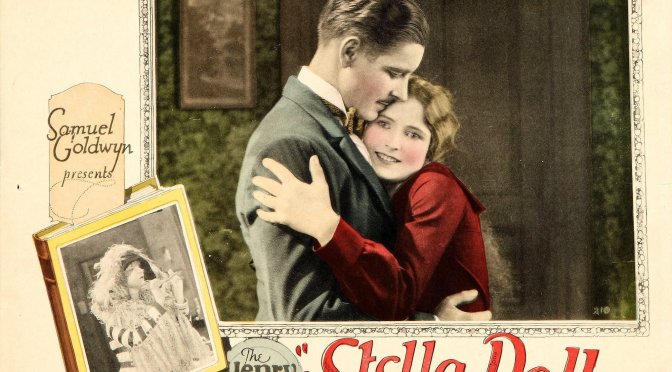
Stella Dallas (1925): a melodrama that quickens the pulse

Olive Higgins Prouty’s 1923 novel Stella Dallas was destined to become a great movie. In fact, it has been adapted for the screen three times: in 1937 with Barbara Stanwyck in the lead role and in 1990 with Bette Midler, but before both of those in 1925 starring Belle Bennett as the unforgettable Stella.

Prouty’s novel is very cine-literate. It describes exactly the pleasure of a trip to the movies, but also the way that we can look at our real life as if it were a film. Sometimes we feel like an actor who is part of the spectacle, but at other times an onlooker, observing the action but not truly involved. Teenage Laurel, who is used to “standing on the outside” understands true love in real life because she has seen it in the movies: “Laurel had seen too many close-ups of faces not to recognize that look!”

The genius of this filmed Stella Dallas (Henry King, 1925) is that it captures the poignancy of watching life from the dark of the auditorium, but its emotional reach draws us in, even from the back of the balcony. The final scene of the film, in which Stella watches her daughter’s wedding through a lit window on the dark and rain-drenched street, is the perfect visual incarnation of Laurel’s horrified realisation, voiced early in the novel, that she had “become a part of the picture on the screen, while her mother was still in the audience, out there in the dark, looking on”.

Stella Dallas (1925)

On its release, the Manchester Guardian’s film critic CA Lejeune described the “painful beauty” of Stella Dallas, saying: “We are stirred into sympathy with all these people because we cannot help identifying ourselves with them … the whole picture is full of the half-tones of which ordinary life is composed.” In the New York Times, Mordaunt Hall praised one of the romantic scenes in the strongest terms: “It is all so natural, so sweet and genuine, so true to life, so fervent and sincere, so tender.”

Stella Dallas was made by Samuel Goldwyn in 1925, and the mogul was determined that it would be his masterpiece. He would end up spending $700,000 on the film – which was twice his line of credit.

Stella Dallas (1925)

Key to the success of Stella Dallas is Frances Marion, the woman who wrote its sophisticated screenplay. Marion takes the events of the novel, which are jumbled by flashbacks to create the drama of suspense and revelation, and straightens them out into a flowing narrative that begins in a garden in spring and ends on a city street in the cold. She also takes a few discreet liberties, rearranging scenes and editing them slightly to emphasise the agonies that plague Stella and Laurel. Her screenplay for this silent adaptation became the basis for the subsequent sound film starring Stanwyck – making that film a true remake rather than a second adaptation. And the film is beautifully directed by Henry King, who tells the story visually, exploring the novel’s concern for appearances both contrived and mistaken, but who also coaxes excellent performances from his cast.

Continue reading Stella Dallas (1925): a melodrama that quickens the pulse