Happy holiday Silent Londoners! They say that if you remember 2025, then you weren’t watching enough silent movies. How much do you recall?
For myself I sure watched a lot of silent films, clocking up several festivals and individual screenings. Pordenone and Bologna, Zurich, Hippfest, Slapstick, Cinema Rediscovered, Women and the Silent Screen in Belgium, plus The Gold Rush centenary, Anna May Wong, Gosta Berlings Saga, Stella Dallas, Lillian Gish, Lois Weber, Film on Film and more at the Southbank. Did you catch Bonn, San Franciscso, the non-stop action at the Kennington Bioscope, or any of the many, many silent screenings all around the world? How about Sherlock Holmes?
Season’s greetings Silent Londoners. It has been a whirlwind of a year. How much do you remember?
Personally, I watched silent movies on three different continents this year, so I have some great cinema memories from 2024. Pordenone and Bologna, San Francisco, Istanbul, Locarno… and back home, Hippfest, Bristol, Sherlock Holmes at Alexandra Palace, Dorothy Arzner and more at the Southbank, non-stop action at the Kennington Bioscope. We celebrated some major anniversaries. Plus there was a lot of love for Anna May Wong, and Sessue Hayakawa.
Stand outside Alexandra Palace on a clear evening with a full moon, as I did last night, and you can take in the whole city. London may be as silent as it gets from this vantage point, but the landscape is loud in its own way. The glittering towers that dominate the skyline were all built in the last 50, probably 20 years. The red lights dotted in among them are all cranes, standing by to change the shape of the city once again. Scan the horizon, and you’ll be reassured perhaps to see the dome of St Paul’s – a symbol of continuity, a connection between modern times and the age of Christopher Wren, going back to 1710.
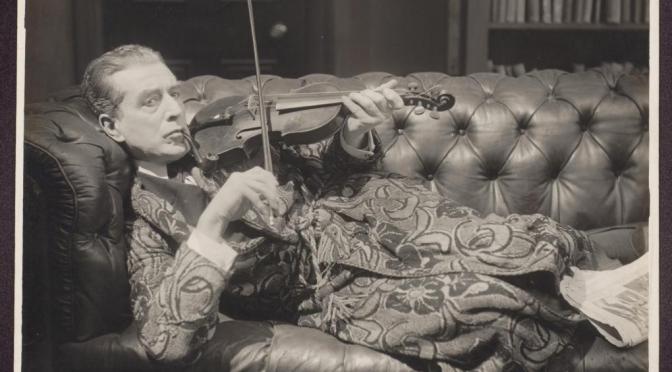
Swivel on your heel, and pivot to 1873 or thereabouts, when Ally Pally itself, the “People’s Palace” first opened. I had a date to keep at the theatre, recently restored to what the owners call a state of “arrested decay” and reopened to the public. We were there to travel back to a fuzzy combination of the 1880s and the 1920s, to revel in the BFI London Film Festival’s latest archive presentation: Silent Sherlock.
Back to school time! Here’s a roundup of the silent movie news I really want to share with you as summer turns into autumn. Just think how many of these forthcoming delights you could enjoy for less than the cost of a dynamically priced Oasis ticket.
Screenings and festivals
I missed StummFilmTage Bonn this year again – both in person and online. But Paul Joyce and Paul Cuff both kept us up to date with their fabulous blogs.
If it takes a thief to catch a thief, it will surely take a team of sleuths to catch the greatest detective of them all. So I bring you news of a new project that is not only bound to be of interest to all Silent Londoners, but also one that requires your valuable assistance.
The UCLA Film & Television Archive and Holmesians par excellence The Baker Street Irregulars (BSI) have joined forces on a new project called Searching for Sherlock: The Game’s Afoot.
Currently, according to Dr Jan-Christopher Horak, more than 100 films about Holmes are lost or in need of restoration or preservation, which sounds to me like more than a three-pipe problem.
A Study in Scarlet (1914)
There are several silent films on the wanted list. Among the lost films are: a British production of A Study in Scarlet, produced in 1914; a Danish series, produced by Nordisk films, beginning in 1908; and The Missing Rembrandt, produced in 1932, starring Arthur Wontner.
RDJ as Sherlock Holmes
So the Searching for Sherlock team has put together a starry committee to lead the hunt, including lots of names you’ll know, from Kevin Brownlow to Bryony Dixon. Robert Downey Jr, who played the detective in two recent big-screen adaptations, is the honorary project chair. And if Iron Man himself, with that kind of support behind him, can’t get the job done, who can?
Well, actually they do need your help. Searching for Sherlock is hoping to get the word out there, to scour the streets for Conan Doyle’s most famous creation. The committee will be getting in touch with film archives, Sherlock Holmes societies, film historians, collectors, and other potential sources around the world to find, restore, and eventually screen, currently lost films featuring the world’s first consulting detective. If you know someone they should talk to, or if you are someone they should talk to, make yourself known.
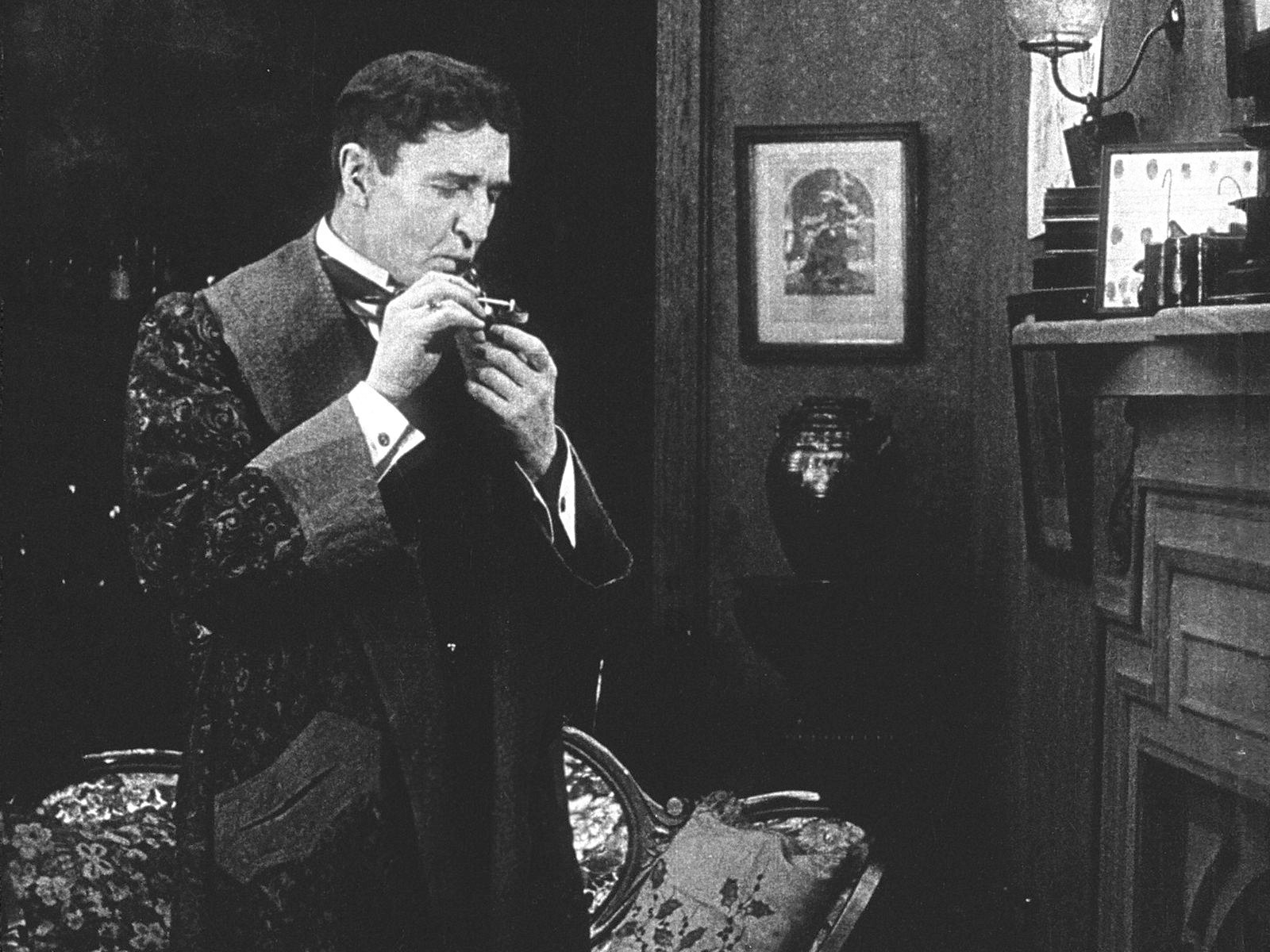
William Gillette as Sherlock Holmes in 1916
There have been a few notable Sherlock Holmes film discoveries recently, including a 1916 film, starring William Gillette, reprising his acclaimed stage interpretation of the detective. After its rediscovery, this Sherlock Holmes was restored by the San Francisco Silent Film Festival and the Cinématheque Française and released on disc by Flicker Alley.
Spearheading the search for the lost Sherlock Holmes films is Archive Board and BSI member Barbara Roisman Cooper. For further information about the project or suggestions regarding the search, contact her at peninc1@aol.com.
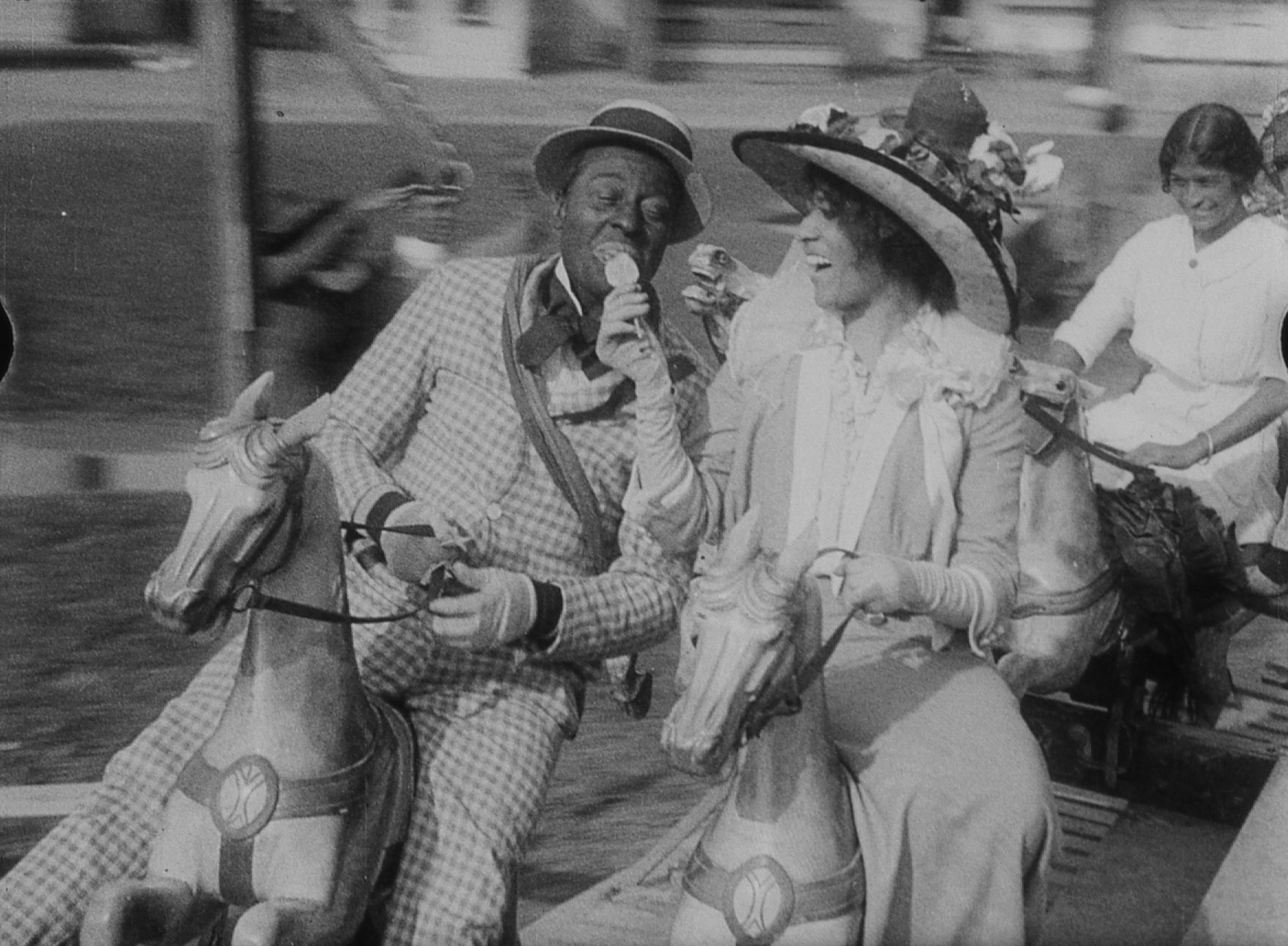
Lime Kiln Club Field Day (1913). The Museum of Modern Art, New York
This, too, is history – Victor Hugo, Les Misérables
You can blame it on too much caffé espresso, or Douglas Fairbanks withdrawal, or the collective post-Les Mis comedown. Whatever the reason, I saw two comedies today that I could only just follow, and which just occasionally made me laugh. If I tell you they were Soviet comedies, you might jump to a conclusion. But trust me, I have form in this area – I normally laughalonga-Lenin.
Tonight’s evening screening was Gosudarstvennyi Chinovnik (The State Official, 1931), a cheeky caper about a faceless state underling tempted by the chance to pilfer a suitcase of roubles for him and his missus and their young daughter. I suspect it is gentlest of comedy anyway, but with a propagandistic framing story about renovating the rolling stock on either end of it, it truly is, as I was warned, not a “comedy-comedy”.
Big Trouble (1930). Gosfilmofond of Russia, Moscow
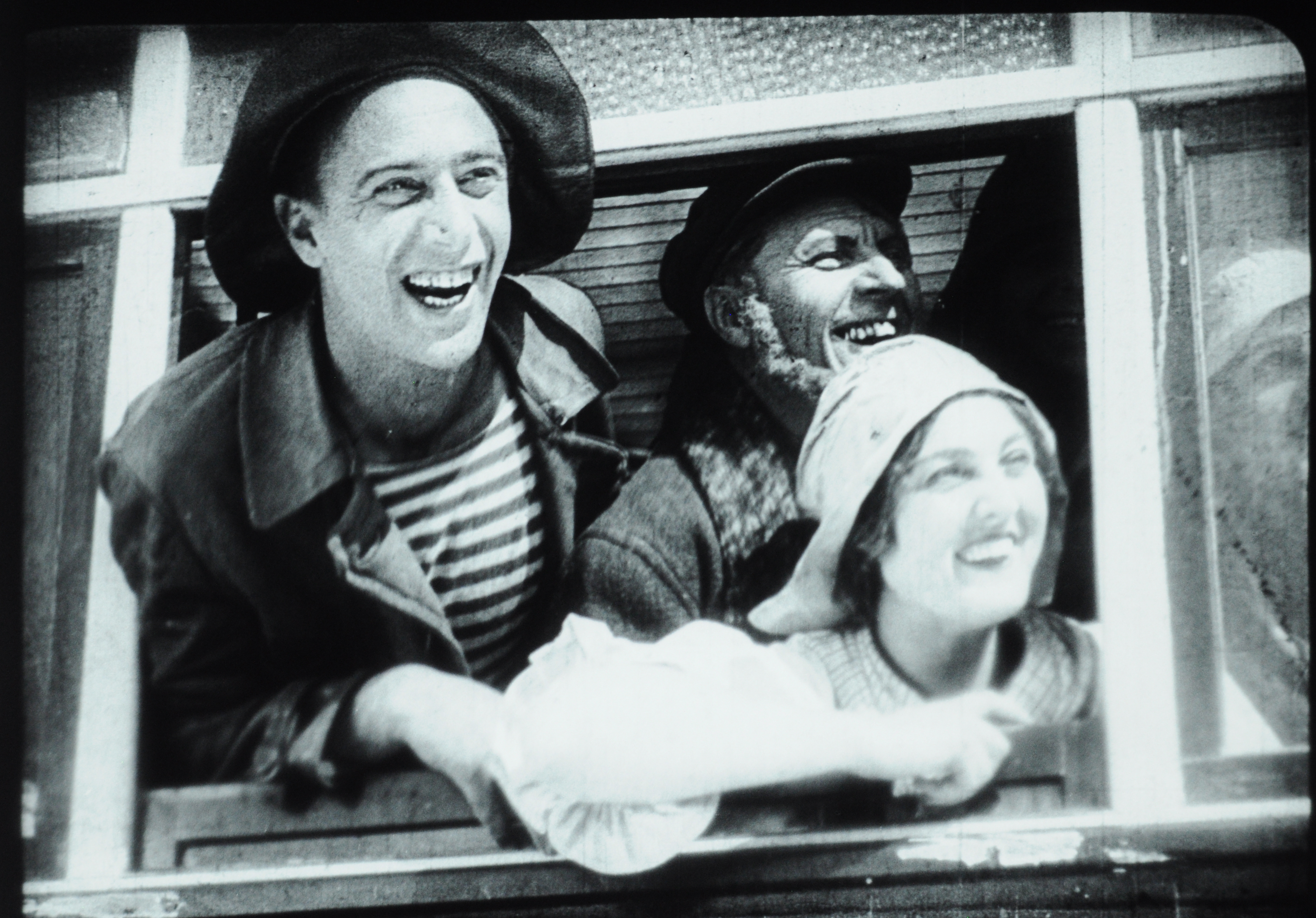
Rating higher on the laughometer but lower on comprehensibility for my poor failing brain was Krupnaia Nepriyatnost (Big Trouble, 1930), in which the culture clash between old and new in a provincial village is exemplified by, at first, the rivalry between old-style carriages and imported American cars. The scene thus laid, the real set-to involves a mixup of of speakers at local events: the director of the new arts centre rocks up to the church, and the priest appears to address the culture vultures. Horror, and then an “exchange of hostages” ensues. This was much brighter, with vivid casting, compositions that took us by surprise and a real sense of pace and energy. Plus, inventive musical accompaniment courtesy of a Stephen Horne and Donald Sosin collaboration. We were still a little flummoxed though. The same director as Dva Druga, Model I Poodrugaand a similar sense of fun, but not as successful.
Surprises can be fun, but maybe, when you’re stumping up for film festival tickets say, it’s good to get what you really wanted. The silent movies on offer at this year’s London Film Festival may not contain any unexpected treasures, but they do comprise some of the year’s most anticipated restorations, so let’s fill our boots. Our only reservation is that a few of these silent screenings do clash, so choose your tickets carefully.
Variety (1925)
Variety (1925)
Well don’t I feel a little less sick about missing this new restoration of EA Dupont’s romantic drama at Bologna? Emil Jannings, Lya De Putti, that woozy unleashed camera … you know this is going to be a treat. Variety is a highlight of Weimar cinema, and deserves to be seen at its shimmering best. It’s screening just once at the festival, in NFT1, so make sure you’re there. The word from those who have seen the new 2k resto already is: the print is gorgeous, but there is less enthusiasm for the new score, from the Tiger Lillies. No such worries for us cockney sparrows, who will have the pleasure of Stephen Horne’s assured accompaniment.
Stan and Ollie in The Battle of the Century (1927)
The Battle of the Century (1927)
You might have heard a whisper about this one. The rediscovered second reel of Laurel and Hardy’s The Battle of the Century makes the film almost entirely complete – and essential viewing for fans of Stan and Ollie. Enjoy it at the London Film Festival with three more L&H shorts for company and musical accompaniment from messrs John Sweeney or Stephen Horne, depending on which of the two screenings you attend. Bear in mind, if you’re not heading to Pordenone, that the first screening is a full 24 hours before it plays at the Giornate – could this be a world premiere of the restoration?
Benedict Cumberbatch is all very well (very well indeed if you ask me), but if any actor could lay claim to the “definitive” Holmes, it was William Gillette. And for many a long year, the film that committed his stage performance of the gentleman detective to celluloid was thought to have vanished in the night. An elementary mistake, Dr Watson – the film was rediscovered at the end of last yearand has been prepped for a Blu-ray release and a handful of festival screenings, including this one, in NFT1 on Sunday 18 October. There’s live music from Neil Brand, Günter Bichwald and Jeff Davenport and an irresistible accompanying short, A Canine Sherlock Holmes (1912).




 Silent London