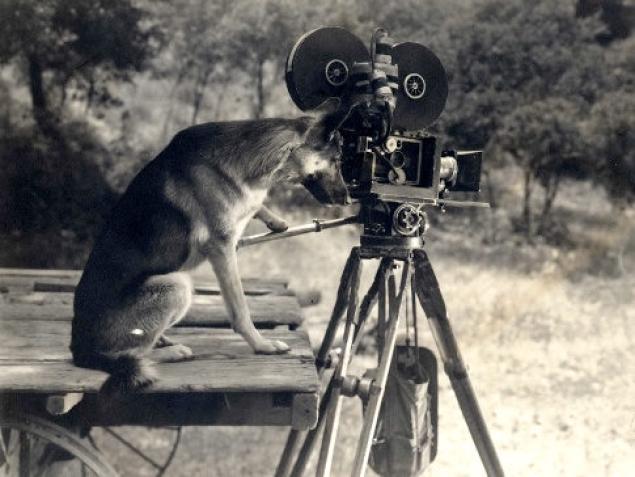
The post rate sure has slowed down around here. Blame the summer. Blame the day job. But that doesn’t mean that there are fewer silent movies being shown in London. Not at all. So this is just a gentle reminder that if you want to keep up to date with what is being shown where and when, take matters into your own hands, like Rin Tin Tin, here, and bookmark the Silent London Calendar page.
Check back regularly and you will find something new each time, we promise. Take next week: Landmark horror-doc Häxan is showing in Peckham, Neil Brand is accompanying a comedy double-bill and there is something mysterious occurring in Kennington – follow the link and all will be revealed.
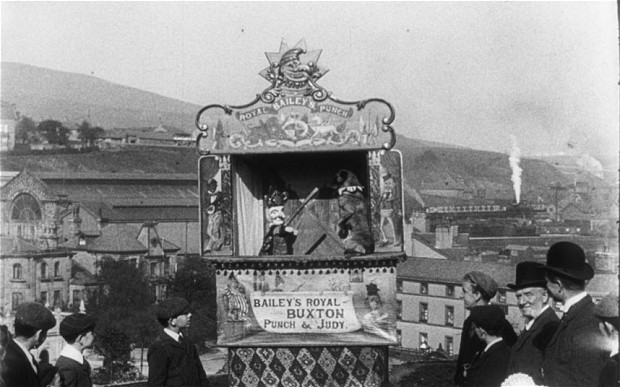
A still from Mitchell and Kenyon’s Punch & Judy Show in Halifax (1901). Copyright: BFI National Archive
So, last week, I found myself watching some early films in the BFI Southbank. Same old, same old, you might think. But these early films were being shown on massive MTV Cribs-style tellies in the BFI foyer. And while many of them were from the Mitchell and Kenyon archive we know and love, they were unseen treasures, having been gazed upon only by archivists during the past century.
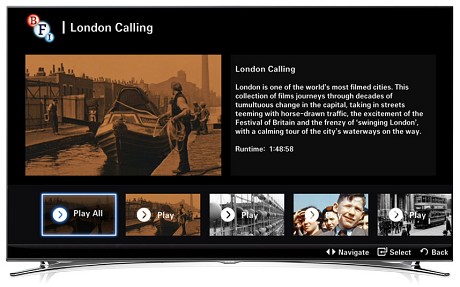
This unexpected alliance of Edwardian content and 21st-century technology has come about via the BFI’s new app, developed as part of the Film Forever project. It’s an app for Samsung Smart TV and Smart Hubs, and it allows viewers access to a treasure chest of film-related content, including a free Film of the Week (kicking off with A Zed and Two Noughts), interviews with film-makers, documentaries, and a whole heap of archival delights, including the M&K films. There will also be footage of events and interviews from the London Film Festival appearing when that all kicks off in October.
The archive goodies are separated into a variety of strands: London Calling and Cabinet of Curiosities, among them. There are silents across most of the ranges – many you’ll be familiar with, such as Daisy Doodad’s Dial or Wonderful London. It’s the Mitchell & Kenyon films that stand out though – they’re in a rather lovely collection called Edwardian Summer. There’s an hour and a half of footage here, a good hour of which is unseen. Robin Baker, the head of the BFI archive, calls these films: “Cinematic gold – you couldn’t get much more important.” What’s so vital about these short films, he explained, is that the “humanise the past”. They certainly captivated the crowd at the BFI.
You can see Blackpool in May 1904, with formally dressed holidaymakers parading on the pier or riding trams. There’s a Punch and Judy show, captured in Halifax in 1901 – your eye may be caught by the frisky puppy getting rather too close to the puppets, but don’t miss the plume of smoke that reveals a train station in the rolling hills behind the main event. A man in drag falls off a donkey (twice) in Hipperholme, West Yorkshire in 1901; Preston celebrates its Whit Fair in 1906. Delightfully, footage of the Chester Regatta delivers shots of boats gliding elegantly down the River Dee in the long hot summer of 1901. Watch a little further and you’ll discover a few courting couples doing what courting couples do in those very boats.
BFI’s Samsung Smart TV app
There’s silent London on show too – elsewhere in the package you can watch street scenes of Hoxton approximately 80 years before it became cool , for example.
I think it’s all gorgeous – I would like to sit down and watch all of the M&K treats in full, and there are some non-silent delights both sublime and ridiculous available too, including a Dufaycolor screen test featuring Audrey Hepburn and a public information film from the 70s starring Keith Chegwin. So this is wonderful news for those of you have, or are thinking of buying, a Samsung Smart TV, Hub or Blu-Ray player. It’s also good news for the rest of us. We may have to be a little patient, but as more of the BFI’s wonderful archive is digitised we can look forward to their films being made available in more ways. BFI apps for everyone please: not just on smart TVs, but on smartphones and tablets, perhaps?
Back by popular demand, Hitchcock’s silent movies take over the BFI Southbank for a second summer in a row: all of them freshly restored by the BFI experts and all either with live musical accompaniment or a range of very classy recorded scores. You can read more about each film on Silent London here. These are the first feature films Hitchcock ever made, and from the expressionist thriller The Lodger to the rustic comedy of The Farmer’s Wife they are clearly the work of an extremely talented and versatile director. In fact, they were recently inducted into the Unesco Memory of the World register.
All of which Hitchcock fandom is a preamble to saying that I have three pairs of tickets, to a silent Hitchcock screening of your choice, to give away. Hurry, because the season has already started, and I will be choosing the winner on Monday morning. Email the correct answer to this question to silentlondontickets@gmail.com with “Hitchcock” in the subject line by midnight on Sunday 11 August 2013 for your chance to win.
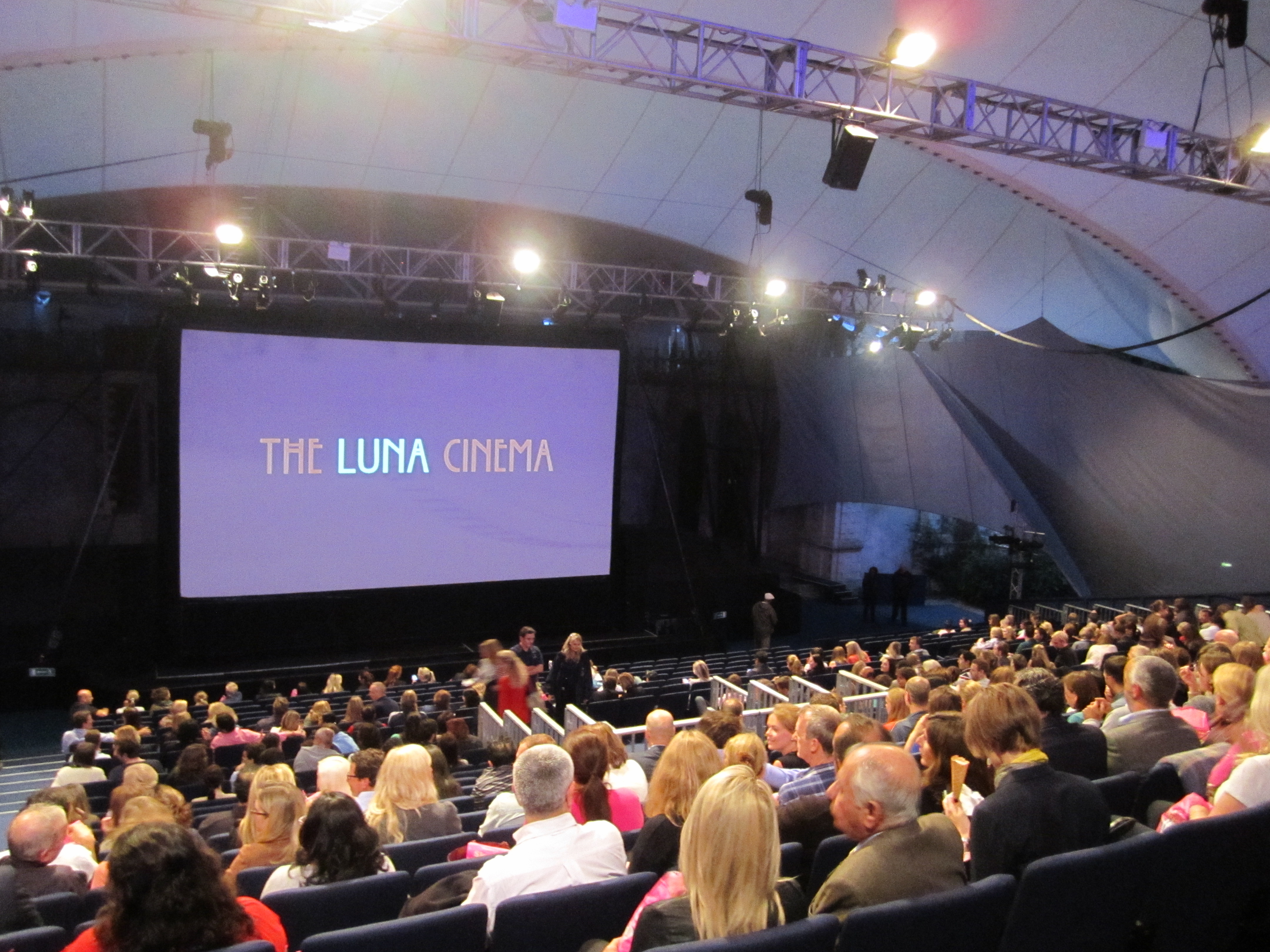
No I am not about to tell you to spend more of this glorious summer tucked away in a dark and musty cinema rather than out in the park. Holland Park’s Luna Cinema is hosting an evening of silent cinema at its open-air venue – which is what we call a win-win. It promises to be a great night, with classic films starring Charlie Chaplin and Laurel and Hardy on the big screen. You’ll be even more impressed when you hear that the musician and host for the evening is Neil Brand.
The Luna Cinema, the country’s leading producer of pop-up cinema, presents a night celebrating silent cinema to Opera Holland Park on the 11th August. The stunning summer theatre, in Holland Park, with its velvet seats, bars and beautiful canopy (in case of bad weather) will host the Luna’s giant screen for a very special night of classic silent films. We will have silent film expert Neil Brand hosting the evening and providing live musical accompaniment to an array of classic silent films including Charlie Chaplin’s most famous work, “The Immigrant” – it’s a rare opportunity to see this 1917 comedy showcasing Chaplin at his very best. Amongst other classic shorts we will also be screening “Liberty” – one of Laurel and Hardy’s most famous comedies and considered to be their greatest silent work before they moved to the “talkies”.
The Luna Cinema’s silent film night takes place at Opera Holland Park, London on Sunday 11 August. Tickets cost £9.50 – £19.50 and they are available through thelunacinema.com or by going straight to the Opera Holland Park box office (operahollandpark.com or 0300 999 1000).
This week, I was lucky enough to attend the launch of Sound of Cinema, a new cross-channel season from the BBC exploring film music in all its variety. The centrepiece of the season, arriving in September, is a three-part documentary on BBC4 by silent film composer Neil Brand called The Big Score. I’ve had a sneak preview of the series and it’s seriously fascinating stuff, with Brand tracing the development of film music from the silent era onwards, explaining exactly how classic scores work their magic on the viewing public and interviewing movie composers and big-name directors. Vangelis discusses the creation of his classic score for the most famous slow-motion sequence of them all in Chariots of Fire; Martin Scorsese talks us through his use of Jumpin’ Jack Flash in Mean Streets. In the first episode, Brand talks to silent film accompanist Bernie Anderson at Loew’s Theatre in Jersey City – and has a go on the magnificent in-house organ there.
Other elements in the season include stars discussing their favourite film music moments on BBC Radio 6; a documentary about the relationship between hip-hop and cinema on BBC Radio 1; Bobby Friction exploring Bollywood music on the BBC Asian Network; and a BBC Radio 2 documentary made by Mark Kermode called Soundtrack of my Life, which promises to be very entertaining. There’s absolutely masses planned on BBC Radio 3, including Sound of Cinema downloads by Brand and a a week of programmes hosted by Matthew Sweet. You can read more here (PDF). Radio1 film critic Rhianna Dhillon talked to me about the intriguing possibility of getting some pop acts to have a stab at scoring a film – perhaps they will get a taste for it and we’ll find some new names added to the list of regular silent film composers!
Because, yes, this all sounds a bit “talkie” for Silent London, but I’m sharing this with you because this series promises “a deep understanding of what music does for film”. It’s a subject that silent cinema fans discuss animatedly after every screening – we’re in the now unusual position of watching the same film again and again with different scores, which can make a huge difference to the experience. Perhaps, after dipping into this season. we’ll have an insight into the influences, theories and ideas rushing through the film accompanist’s mind at the next screening we attend.
Whichever way you look at cinema history, you can’t avoid The Birth of a Nation (1915), a landmark, but one that casts a murky shadow. It is absolutely fitting and proper that the film regarded as the first American feature, which kickstarted Hollywood’s rise to global domination, and that was made by a true cinematic genius should be given the Masters of Cinema treatment – Blu-Ray transfer, archival extras, fancy booklet and all. Just don’t call The Birth of a Nation a masterpiece – while this is an important film, it is a terribly flawed one.
Austin Stoneman (Ralph Lewis) is an abolitionist congressman, based on Thaddeus Stevens (played by Tommy Lee Jones in Spielberg’s Lincoln), and his children are friends with the Cameron family in the South. Four of the children will fall in love with each other, but the Civil War will tear them apart. The second and most controversial part of the film details the consequences of the war and of freeing and enfranchising the slaves. Legislature is overrun by loutish black men; Cameron’s youngest daughter commits suicide when pursued by a “renegade negro”. The Ku Klux Klan exert a rough justice for this and other crimes and bully the black citizens back into their place. All ends, apparently, happily ever after, “Aryan birthright” defended, wedding bells pealing, with a vision of Christ.
The Birth of a Nation (1915)
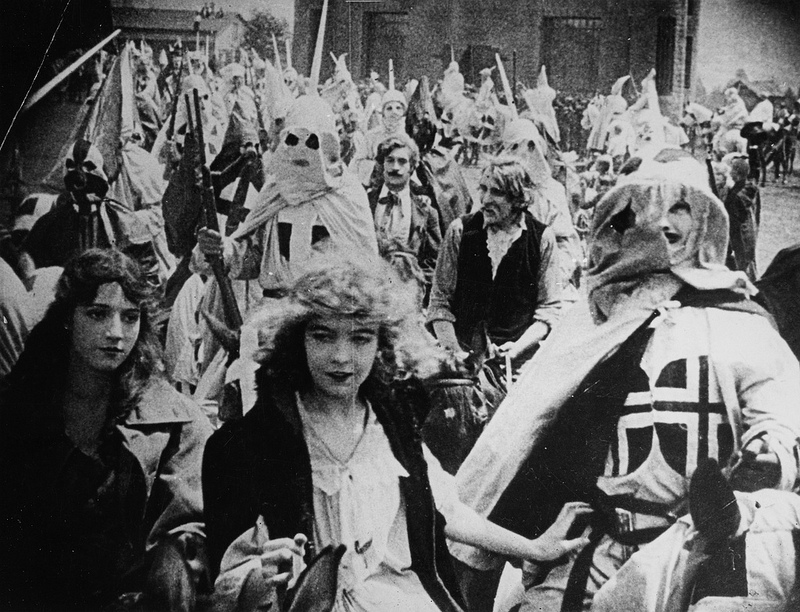
The Birth of a Nation is an epic film, running for three hours and more, with a big subject, but a small mind. Beginning just before the American Civil War does, and hanging around to see the South recover from its heavy defeat, the movie encompasses battle, politics, romance and a family saga of sorts. Its text-heavy intertitles reveal a worthy ambition: to convey “the ravages of war to the end that war may be held in abhorrence”. Other intertitles protest against censorship, asking that the film be given the same liberty to speak as the Bible, or Shakespeare. We are frequently told that this or that scene is a “historical facsimile” drawn from library sources. But these arguments feel hollow. The Birth of a Nation, based on the novel The Clansman, is guilty of a sin of omission, and the far more serious crime of racism. This is a paean to the South, but specifically a tribute to the Ku Klux Klan, who in this narrative save the “white South” from “the heel of the black South”. It concerns itself not one jot with the “abhorrences” of slavery or slave-trading. Its black and mixed-race characters are cartoonish (“Dem free-niggers f’um d N’of am sho’ crazy”) and mostly venal – cowardly, yet sexually predatory, weak-minded, easily led. Of course, many of them are played by white actors, and needless to say, blackface is never a good look. In one horrific sequence a group of black men lynch another for supporting their rivals; in another equally nauseating scene lines of black voters cower in front of Klan members – this vote-rigging by intimidation is presented a as triumph. A cotton-field is used as a romantic setting for the white upper-class characters to coo at each other in.
The Birth of a Nation (1915)
I mention this because you may have heard that The Birth of a Nation is a great film, but a racist one. That is part of the way to the truth, which is that the film’s racism prevents it from becoming truly great. DW Griffith made many other films with old-fashioned, sentimental storylines – but his best work moves the audience, because it is based on an emotional truth. That emotional truth is missing in this film. Here, in a typically Griffithian sentimental moment, impoverished Carolina belle Mae Marsh trims her dress with “Southern ermine” that is, raw cotton daubed with fingerprints of soot. We’re expected to feel sorry for her character in her shabby frock, but not for the slave who picked that cotton for her family in the first place. That’s quite the feat of mental acrobatics. It’s hard to believe that this film was made by the same director who created A Corner in Wheat six years earlier. Even the wonderful Lillian Gish is disappointing here – her role as Stoneman’s thoughtless daughter (she never visits the library) who is disgusted by her boyfriend joining the Klan until a mixed-race men attempts to assault her, gives her little to work with. Although Miriam Cooper in a quieter role as the elder Cameron sister, is constantly compelling.
Without making excuses for the film’s failings, we should also note its monumental achievements: the deft storytelling here cuts across years and state lines from the home front to the battlefield and never feels forced or confused. It’s long, but never boring. Those war scenes are epic in scale and brutal in the vividness of their hand-on-hand combat – vistas of the battlefield spread out before the audience smothered in gunsmoke; or are sometimes vignetted to catch a vicious or poignant moment. Almost every scene looks sumptuous – this crisp, though occasionally grainy, transfer captures every detail of those “historical facsimiles” as well as the more poetic moments when Griffith indulges himself with a composition of romantic, painterly beauty: as in the love scenes, or the moment when Henry Walthall’s Colonel Cameron is inspired to form the Klan.
If you have seen, and loved, Griffith’s shorts and more rewarding films such as Broken Blossoms, then you’ll rightly want to see this film. Be warned though, you may not like it as much as you admire it, and you may admire it less than you expect to. But once you have seen it you will want to place the film in context, both historically and in terms of the debate around its content. The booklet of material provided with this release includes a tribute by Michael Powell and defences by Griffith and the author of The Clansman as well as a contemporary attack from the New York Times (“It is insulting to every man of Southern birth to assume that he is pleased by misrepresentation so colossal”) and another by Francis Hackett, which calls the film “spiritual assassination. It degrades the censors that passed it and the white race that endures it.”
The Birth of a Nation is available now on DVD and Blu-Ray from Masters of Cinema, RRP £17.99 (DVD) or £19.99 (Blu-Ray).
A silent movie at a massive west end venue? You can’t miss this. The Odeon Leicester Square is celebrating its 75th anniversary next month with silent comedy and live music courtesy of Donald Mackenzie, who will be playing the cinema’s wonderful Compton organ.
The film playing will be Harold Lloyd’s brilliant, recently restored, film Safety Last, the story of a small-town boy who comes to the big city determined to reach the top. As kids get free admission to the screening, this would be a fantastic way to introduce your children to silent movies – especially if they have seen and enjoyed Hugo, which riffed on the famous “clock face” scene.
To set the scene for the morning, a jazz band – The Hendo Washboard Kings – will be playing the audience into their seats and at the Compton is Donald MacKenzie, the Odeon’s organist for the past 21 years.The Compton organ was custom built for the cinema in 1937 by the London firm of John Compton. The organ has 5 keyboards and its pipework is housed in two large rooms underneath the stage. These days its appearances are rare and this is an ideal opportunity to see it in action.
Safety Last screens at 10.30am on Saturday 3 August 2013. Admission is £10 at the door (tickets are not available in advance) and accompanied children under 16 will be admitted free of charge. Click here for venue information.
Hipster-favoured photo-sharing service Instagram introduced a video option some weeks ago. It soon became clear that the square-format clips, up to 15 seconds in length, are better suited to visual-led material than talkie stuff. It’s not a great medium for recording a monologue, less still a conversation, but it’s a wonderful way to capture the impact of moving pictures. It’s like the early days of film, all over again in 2013.
I have chosen a few Instavids that have caught my eye so far. All of these “work” as silent films, even though most have ambient sound, and occasionally speech. Some of them even tell a story. They’re all pretty gorgeous too – Instagram’s filter options make it easier to put a sheen on your clips – although a few of these are strictly #nofilter.
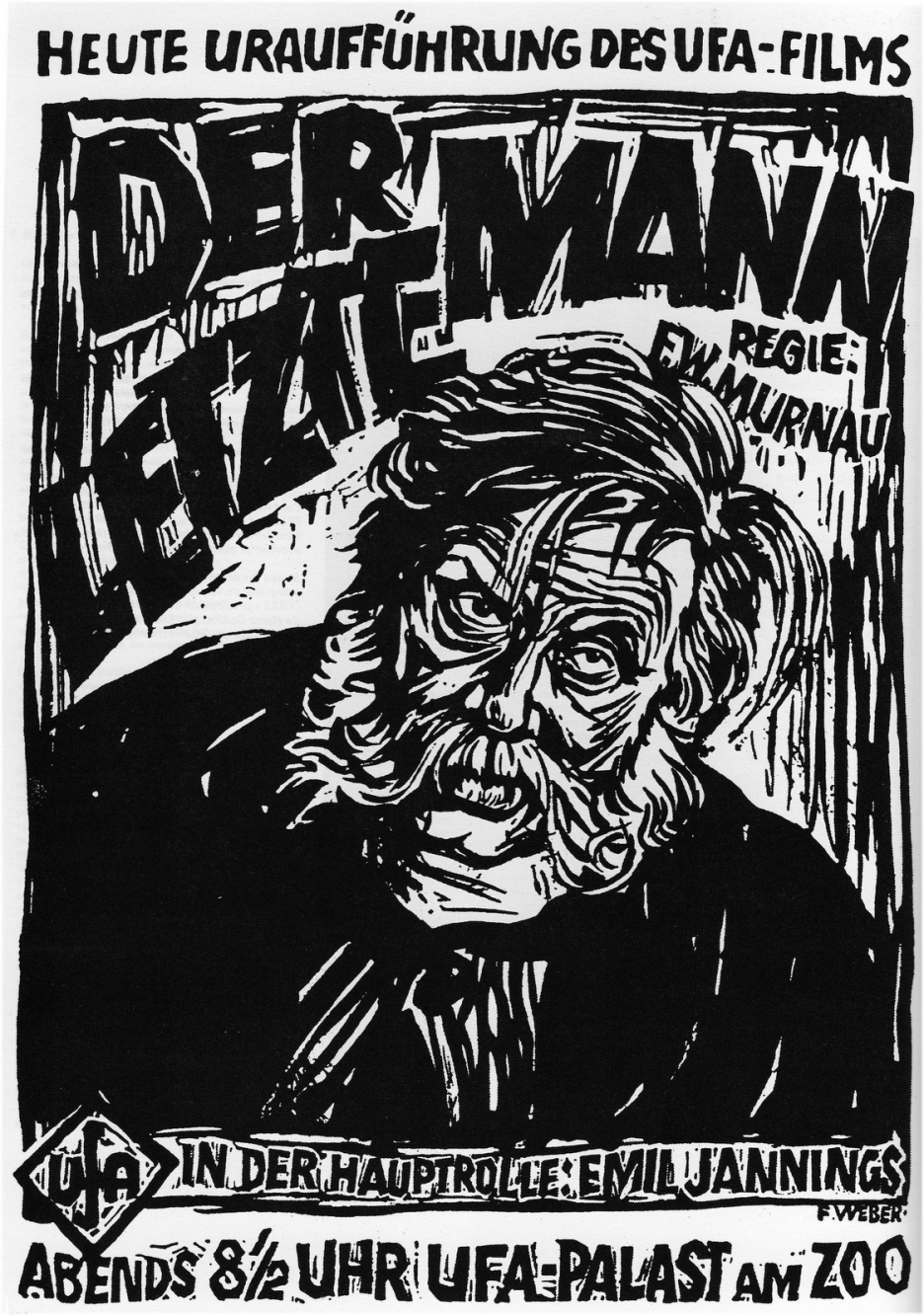
A short note to let you know that I am introducing a screening of Murnau’s heartbreakingly brilliant The Last Laugh (1924) as part of the Mimetic Festival on 16 July 2013. More to the point, the extremely talented Costas Fotopoulos will be accompanying the film live on piano – so don’t miss it.
The Mimetic Festival is a celebration of the power of mime across film, theatre, cabaret, comedy and film. This particular screening is presented by the lovely people at Around the Corner Cinema, who recently showed Sunrise in Winchmore Hill, north London. We chose this film for the festival because it doesn’t rely on intertitles to tell its story. Instead, the audience is swept along by Murnau’s floating camera movements and Emil Jannings’ fluid, physical performance in the lead role.
The Last Laugh is a mesmerising film, a work of expressionist genius, which applies the visual genius of Ufa’s greatest talents to the seemingly dour and mundane tale of a hotel doorman who loses his position, and his self-respect, when he is demoted to a toilet attendant. The result is unexpectedly breathtaking – and without giving anything away, you won’t have seen an ending like this before.
CA Lejeune, the legendary film critic of the Observer newspaper, had this to say about it:
Probably the least sensational and certainly the most important of Murnau’s films. It gave the camera a new dominion, a new freedom…It influenced the future of motion picture photography…all over the world, and without suggesting any revolution in method, without storming critical opinion as Caligari had done, it turned technical attention towards experiment, and stimulated…a new kind of camera-thinking with a definite narrative end.
The Last Laugh and The Projectionist screen at Enfield Grammar School Hall, EN2 on Tuesday 16 July, 2013. Doors open at 6.45pm and the film will begin at 7.30pm. There will be a licensed bar. Snacks, including Sardinian artisan antipasti boxes, will be on sale too. Tickets cost £6.50 or £5.50 for concessions. To read more, and to book tickets, click here.
Waiting for a festival screening to begin at Cinema Arlecchino in Bologna.
Completists, please avert your gaze. During the three days I spent at Il Cinema Ritrovato in Bologna I missed far more than I saw. With four screens, plus lectures, workshops, exhibitions, open-air screenings, and programmes for children all running at once, there is too much here for any one person to take in. It’s a festival that requires endurance, decisiveness and a philosophical approach to the ones that got away. But if you think you’re tough enough, start clearing your diary for summer 2014. And welcome to classic cinema bootcamp.
Ritrovato is all about rediscovery – the films on show here have all been found, restored or reclaimed. They are the work of film-makers whose work deserves a second look, or whose weighty reputation means that their films merit a little extra care and attention. To this end, the festival is woven from many strands – and even if one were to stay for the entire festival, it would require a certain single-mindedness to see one of them through from start to finish. On my flying visit, I didn’t have a hope. This is my way of excusing my scattergun approach to the festival – a programme of early shorts here, a classic Chaplin two-reeler projected in the Piazza Maggiore there, a lush new print of a silent Hitchcock here, a rustic Soviet melodrama there. And sound films too. Lots of them, actually, I cannot tell a lie.
According to my notes, the first film I saw at the festival was a four-minute snippet from 1913 called Hungarian Folklore, which detailed wedding traditions in the country. Good intentions and all that. This was followed by Baby Riazanskie, a chewy melodrama directed by Olga Preobrazenskaja and Ivan Pravov. I never saw another of their films – because I was distracted by other delights, and because I was slightly underwhelmed by this one. Another regret.
Zaza (1923)
My highlights included the Allan Dwan silents, especially Zaza and Manhandled starring the fantastic, feisty Gloria Swanson, and the action-packed East Side, West Side. I enjoyed many of his sound films too: witty sweet-hearted comedies from the 40s and 50s.
I was captivated by the beautiful if overlong city symphony Etudes Sur Paris – catch it for the underground canal sequences alone. I was moved by Victor Sjostrom’s social drama Ingeborg Holm (a 100-year-old Swedish Cathy Come Home) and tickled pink by Chaplin’s The Cure.
The Cure: Charlie Chaplin and Eric Campbell on the big screen in Piazza Maggiore, Bologna
Another highlight was a recently discovered collection of sweet colour films from 1906 screened using carbon light projector in the Piazzetta Pasolini late at night. I didn’t want that to end. The Farmer’s Wife, all gussied up by the BFI as part of the Hitchock 9 project, looked beautiful and its peculiarly English humour translated well to the Bologna audience.
When it comes to talkies, I was emotionally shredded and enthralled by Anna Magnani in Rossellini’s L’Amore – and again in Roma Citta Aperta. Plein Soleil, La Belle et La Bete, Chimes at Midnight … I don’t feel the least bit guilty about watching those.
The main thing I missed during my trip was Bologna itself. I strolled around the Piazza Maggiore one morning, and glimpsed the two tipsy towers, but I was far too distracted by the flickers to do any real sightseeing, or sunbathing in the 30-degree heat. Arrivederci, Bologna.
And if you’re thinking of visiting Il Cinema Ritrovato next year, here are my top five tips for festival newbies. If you’ve been to Ritrovato before, please share your tips below:
Get yourself a map of Bologna. And mark the festival venues on it. Do this before you arrive so you’re not wandering the streets panic-stricken, in search of a Gloria Swanson film, like a certain blogger of our mutual acquaintance.
Patience is a virtue. The screenings run late. And almost every film is prefaced with a long introduction, in at least two languages. Luckily the movies are worth the wait.
Health and safety. Strappy wedge sandals, cobbled streets and ten-minute gaps between screenings led me dangerously close to a few unscripted slapstick moments. There is a shuttle bus in operation between the cinemas, for those who really need assistance. For the rest of us – these strolls are the only exercise you are going to get all week. And drink lots of liquid: caffeine will get you through the schedule, but it’s hot out there, so drink plenty of water too.
See one film you’ve never heard of every day. The best festival experiences are the surprises – and the programme at Ritrovato has plenty of surprises up its sleeve.
Don’t be discouraged by the catalogue. The descriptions of films in the official catalogue are useful, and very detailed, but often a little cool. Trust your instincts – and the festival programmers.
This blog has been championing the new BFI restoration of Anthony Asquith’s dark and dangerous Undergroundfor quite some time. The recent theatrical release packed out cinemas and the DVDs and Blu-Rays have been flying off the shelves too we hear. Quite right too, as it’s a stunning film: the twisted tale of love triangle that turns violent, with excellent use of London locations and Asquith’s artsy, expressionist lighting and jazzy editing.
But if you are sad that you missed the chance to see Underground on the big screen, turn that frown upside-down this minute. Hackney Attic’s fabulous Filmphonics folk are screening Underground later this month, with live music provided by “one-man silent film orchestra” Igor Outkine. If you haven’t had a chance to see Outkine perform, here’s what Filmphonics have to say about his music:
Like a Russian Rick Wakeman of the button accordion, Igor switches from a conventional instrument to a Midi accordion (a veritable Tardis of an instrument, much more than it appears) from which he coaxes everything from guitar tones and saxophone solos to a James Brown back-up band. He has a unique way of interpreting every nuance of the film, which almost feels like actual dialogue at times.
That you have to see.
The even better news is that you can win a pair of tickets for this screening, just by answering a ridiculously easy question. Email the correct answer to this question to silentlondontickets@gmail.com with “Underground” in the subject line by noon on Friday 19 July 2013 for your chance to win.
Norah Baring plays Kate in Underground – what is the name of her character in Asquith’s A Cottage on Dartmoor?
The winner will be notified by email. Good luck!
Underground screens at Hackney Attic, Hackney Picturehouse on Sunday 21 July 2013 at 7.30pm presented by Filmphonics with live musical accompaniment by Igor Outkine. To book tickets click here.
Everyone’s favourite Oscar-winning silent film historian, the erudite and tireless Kevin Brownlow, is bringing his mega-restoration of Abel Gance’s Napoléon back to London later this year. You already have your tickets, right? Ahead of that screening there is a timely chance to see one of his finest silent film TV documentaries at BFI Southbank this July – introduced by the man himself.
All silent film fans are familiar with Brownlow and David Gill’s landmark 1980s series Hollywood, crammed with legendary interviews with silent film stars and film-makers from the US. The documentary showing at the former NFT is from the followup 1995 series focusing on the other side of the Atlantic: Cinema Europe. This episode, The Music of Light, is all about French Cinema – and in particular the genius and ambition of Napoléon director Abel Gance.
Abel Gance
The screening is paired with Barrie Gavin’s 1967 TV documentary The Movies: The World of Josef von Sternberg, which also features a contribution from Brownlow.
No pressure guys. The East End Film Festival‘s “sonic cinema” screenings have won the, ahem, coveted Silent London poll first prize not once, but twice. And this year, the festival is going off-piste with an evening called A City Without a Voice. The free screening will feature a modern silent film from Argentina, a live “gothic pop” score – and an “immersive” contemporary dance performance. If the prospect of all that doesn’t get your senses tingling, then quite frankly you may as well stay at home and watch Millionaire.
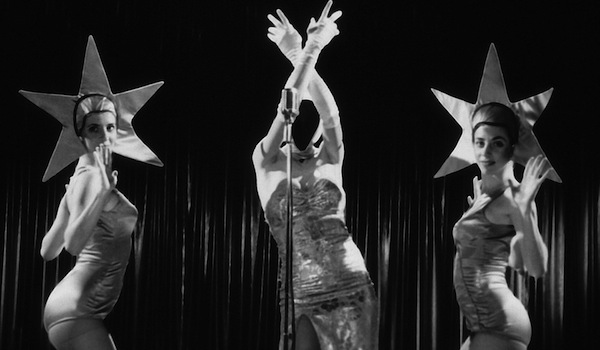
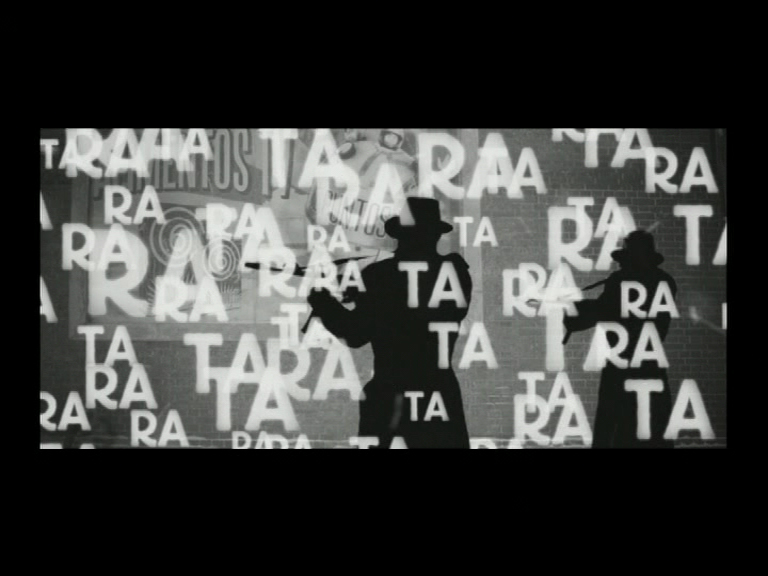
First, the film: La Antena (2007) is a visually delirious modern almost-silent film, a fantasy about a city in reduced to silence after the residents’ voices have been stolen by an evil capitalist villain. The intertitles dance across the screen, becoming almost physical objects, and the film’s imagery is explosively ineventive, combining silhouettes, surrealism and a heavy debt to the cinema of Fritz Lang. You can read more about this fantastic film in a post that the fashion and film historian Amber Jane Butchart wrote for Silent London.
La Antena
As for the music, Esben and the Witch, who will provide the score, are a three-piece from Brighton, named for a Danish fairytale. The NME described them as “gothic but not goth”, and many of the songs on their new album are inspired by literature: from Vladimir Nabokov to Robert Frost. Here’s a taster of their music:
Over to the festival themselves to set the scene for the screening:
La Antena is screening as EEFF 2013′s free outdoor screening, soundtracked by a specially commissioned score by Esben and the Witch. Setting the scene for Esben and the Witch’s atmospheric performance, the London premiere of contemporary dance piece The Intention, performed by East London dance company Neon Dance, will be led by world-renowned choreographer Adrienne Hart. Inspired by ‘The Invention of Morel’, a novel by Adolfo Bioy Casares, ‘The Intention’ explores a world of disjointed presences; where the playback of a recording of events takes on a greater reality than the continued existence of its subjects.
A City Without A Voice is set to be a festival highlight and there are limited seats available, so bring your cushion and grab a front row seat for this unmissable event.
A City Without a Voice takes place at 8.30pm on Saturday 6 July 2013 in Old Spitalfields Market as part of the East End Film Festival. Arrive early to get a good seat and wrap up warm. Read more and book tickets here.
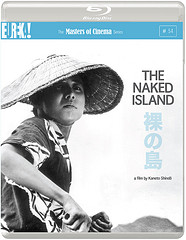
Do not adjust your set. The Naked Island is not from the silent era; in fact, it was made in 1960. However, this soul-wrenching Japanese film exemplifies the art of visual story-telling. With well-placed music, a choice smattering of ambient sound, next-to-no speech and the barest of captions, director Kaneto Shindô relies on his imagery to craft an engrossing realist drama. This is one of the most sophisticated, and powerful, of modern silent films. I found it completely engrossing – and the moment it finished, I pressed play and watched it all over again.
Shindô, best known for Onibaba and Children of Hiroshima, started out in the studio lab, before getting work as an art director and screenwriter and assisting Mizoguchi in the late 1930s. His common-law wife died of TB in 1943; the following year he was drafted into the army to do menial work as a cleaner. More than with many other cineastes, you could say that by the time he found success as a film director, Shindô had an appreciation for the struggles of working people. Many of his early films portray the degradations of poverty, and emphasise female suffering in particular. The Naked Island is no exception, described by Shindô as “a cinematic poem to try and capture the life of human beings struggling like ants against the forces of nature”.
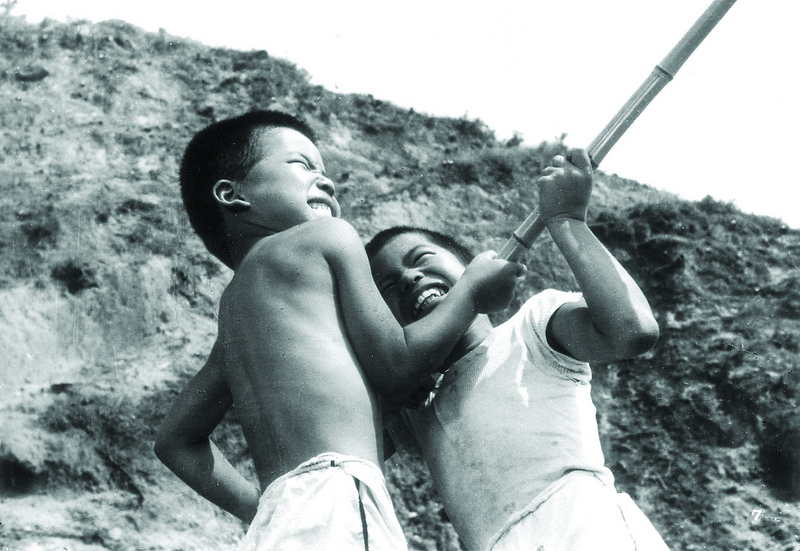
A family of four live alone on a remote, hilly island in Japan’s inland sea. The mother and father raise their crops by hand, carry fresh water from the mainland in pails slung across their shoulders on painful yokes, and live at the mercy of the elements. It’s the definition of a hand-to-mouth existence, thrown into relief when the boys catch a fish and the family take it to town to sell. There, all four experience the baffling luxuries of televisions, restaurants and leisure time before they return to their relentless routine. A third of the way through the film, a shocking act of violence reinforces the fragility of their livelihood. The tragic final act is an object lesson in how poverty crushes the human spirit.
Nobuko Otowa, Shindô’s favourite actress and his lover, plays the mother; and it’s an expert performance, for all its apparent naturalism. As she repeatedly makes her way up the hillside with her buckets of water, the tension is every bit as high as when Lila Crane creeps into the cellar of Bates family home, say, but drawn out over an agonising half-hour. With no lines other than sobs, and little opportunity to emote, Otawa portrays suffering without recourse to melodrama. Taiji Tonoyama, another Shindô regular, plays her stoical husband as a bruised soul. The two young boys, particularly Shinji Tanaka as the eldest son, are excellent too: conveying the effervescence of youth frustrated by a life of difficulty and disappointment.
Nobuko Otawa in The Naked Island (1960)
The film is elegantly, cleverly photographed too – in lush monochrome CinemaScope by Kiyoshi Kuroda. The long takes of the family’s manual labour create not a documentary effect, but in their reworking and repetition, bring foreboding, life-or-death fear and sorrow. As the central couple, picked out against the overbearing hillside or the lowering sky, bear their yokes like crosses or dredge for seaweed in the pouring rain, their story speaks for itself. It is abundantly clear that the strength of this film would be diluted by conversation or narration. Shindô himself (in conversation with composer Hikaru Hayashi on the commentary track) explains during The Naked Island‘s heartbreaking climax: “We decided at the beginning to have no dialogue and that enabled us to express this scene so boldly.” The finale is all the more horrifying for its wordlessness – a twist of fate that is inexplicably cruel.
The Naked Island is accompanied by the aforementioned audio commentary, the option to watch without English subtitles, a video intro by Alex Cox and a booklet of supporting material including an interview with Shindô.
“Who could fail to sense the greatness of this art, in which the visible is the sign of the invisible?” – Jean Grémillon
The name Jean Grémillon may be spoken in hushed tones by French cinephiles, but it is less familiar to our ears. A director many consider in the same ranks as Renoir, Carné and Feyder, Grémillon began as a documentary-maker in the silent era, but switched to fiction in the late 20s and continued to produce intensely beautiful films until the 1950s. In July, the BFI is holding a retrospective season called Symphonies of Life, including Remorques (1941), starring Jean Gabin and Madeleine Renaud, and Lumière d’été (1942), written by Jacques Prévert and Pierre Laroche.
Grémillon espoused a style of film-making that has been called enchanted realism, or poetic realism: the noirish, fatalistic lovechild of French impressionism and surrealism. Grémillon was not interested in what he termed “mechanical naturalism”, but rather: “that subtlety which the human eye does not perceive directly but which must be shown by establishing the harmonies, the unknown relations, between objects and beings; it is a vivifying, inexhaustible source of images that strike our imaginations and enchant our hearts.” Sadly, Grémillon’s artistic ambitions often clashed with demands of studios and producers. At the end of his career, he returned to documentary-making, and he died aged just 58.
Grémillon’s most famous works are those he made during the 30s and and under German occupation, but the silent features on offer in the season are very exciting. Both will be presented with live piano accompaniment and there are two opportunities to see each one. The films are also showing at the Edinburgh film festival this month. Maldone has been recently restored by the CNC in France and screens with Chartres, a silent short made by Grémillon in 1923 about the famous medieval cathedral. Here’s what the BFI has to say about the season:
Maldone (1928)
Beautifully performed and packed with resonant details, this dark drama tells of Olivier Maldone (Dullin), who left his wealthy family’s estate for a free and easy life on the canals only to return to a life of staid respectability when his brother dies. But temptation – in the form of the gypsy Zita, met during his youthful wanderings – still beckons… Even in this early feature, Grémillon had a great crew: the camerawork by Georges Périnal and Christian Matras and designs by André and Léon Barsacq contribute to a magical mood pitched expertly between realism and expressionism.
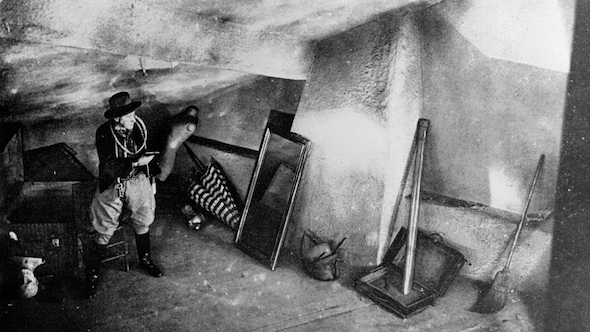
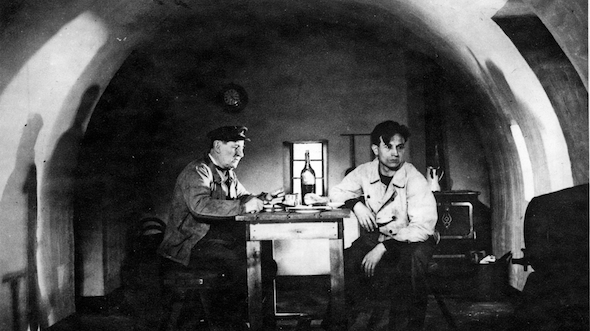
A father and son go to spend a month tending their remote lighthouse off the Brittany coast, little knowing that a dog which recently bit the latter was rabid… Grémillon’s intense drama combines expressionism and a real feeling for the traditions of the Brittany coastal communities. Not much ‘happens’ in Jacques Feyder’s script, but the skilled use of flashbacks and cutaways, the meticulous pacing and George Périnal’s striking compositions and lighting make for sustained suspense throughout.
Gardiens de Phare screens with Dainah la Métisse at BFI Southbank’s NFT 3 on 6 July and NFT2 on 10 July. Read more and book tickets here.
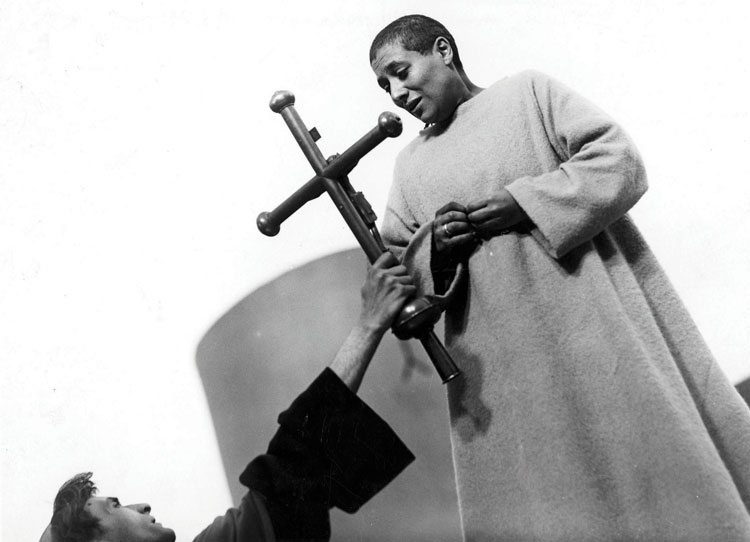
Just a quick note to tell you about a very special screening of one of our favourite silent films: Dreyer’s The Passion of Joan of Arc will be shown in the atmospheric setting of Islington’s Union Chapel in July. It’s an intense, cathartic, grotesque and beautiful film – every silent film fan should see it at least once.
Do you need me to tell you that it’s based on the transcripts of Joan of Arc’s trial, that Falconetti’s performance will break your heart and it’s one of the greatest films of all time? No, you knew all that. So book your tickets already.
While the director famously intended the film to be played in silence, musicians over the years have created some unforgettable scores for this masterpiece – and this screening will be accompanied by organ, voice and electronic instrumentation. You can watch a clip of the film with this score in the video above.
On Wednesday 17th July the organ will be at centre stage in the musical accompaniment to a landmark screening of Carl Dreyer’s 1928 silent film The Passion Of Joan Of Arc. Composer Irene Buckley has created a haunting score to accompany what is widely considered to be one of the greatest films of all time, and this London premiere performance is set to send shivers down the spines of all of those lucky enough to witness it in the atmospheric surroundings of Union Chapel’s stunning Gothic architecture. Organist James McVinnie will bo on hand, and performed at the recent Royal Wedding, plus in concert with Philip Glass and Richard Reed Parry of Arcade Fire and he also recorded with The National on their latest album. This incredible production has recently sold out in Glasgow and Cork to great critical acclaim – it’s been hailed as “a once in a lifetime experience … pure cinema genius”. The Passion of Joan of Arc comes to London for one night only and cannot be missed.
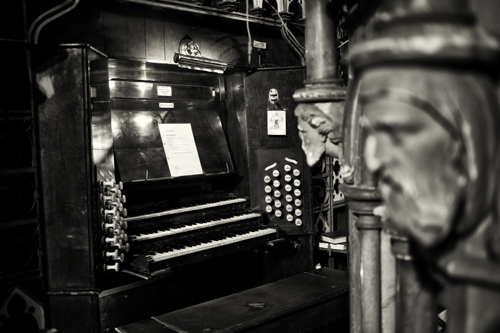
Why the organ? Why the chapel? Well, the cine-concert is the highlight of a week of events at the Union Chapel called the Organ Project, celebrating the restoration of its classic Henry Willis organ, originally built in 1877:
Restoration is complete on the Union Chapel’s 19th Century organ, which will officially be launched to the public on 14 July 2013 in a week long programme encompassing traditional recitals, stunning contemporary performances and the London premiere of Carl Dreyer’s masterpiece of silent film, The Passion Of Joan Of Arc, set to a new critically acclaimed score for soprano, church organ and electronics. In the launch week and future concerts,The Organ Project will not only honour the legacy of this amazing instrument but also discover new musical perspectives by exploring styles and genres rarely attempted on a mechanical organ. Proceeds will go towards Union Chapel’s Organ Education Outreach Fund.
The Passion of Joan of Arc screens at the Union Chapel on 17 July 2013. Doors open at 7pm and the film will screen at 8.45pm. Tickets cost £15 in advance. Read more and book tickets here.
The director of Nosferatu, Faust, The Last Laugh and Sunrise has an immaculate CV – but this, the final entry in his filmography, initially appears to be an oddity. In truth, it’s a masterpiece. FW Murnau’s cinema had been shaped in the creative hothouse of 1920s Berlin, and survived the transition to the commercially driven colossus of Hollywood beautifully, although his ego did not. Bruised by poor notices for the three films he had made in LA for Fox, Murnau took a leap into the unknown, embarking on a project unlike any other he had attempted. He sailed for Bora Bora with the documentary film-maker Robert Flaherty to shoot a colour movie, a part-talkie called Turia.
Following a script rewrite, money trouble and endless technical difficulties, Turia would become Tabu, a silent, black-and-white love story; Flaherty’s role would be downgraded to lab-bound assistant; and Murnau would plough his own money into the project until he had something he could sell to Paramount for distribution. The most shocking, and tragic, twist of all was that Murnau would not live to see its premiere. The director died in a car accident in March 1931, a week before Tabu’s first public screening.
Had Murnau lived, he would have seen his film, trimmed in often baffling ways by Paramount, fail to make back its costs at the box office, although the cinematographer Floyd Crosby would win the Oscar for this, his debut. In 1940, his mother sold the rights to Rowland and Samuel Brown, who rereleased it with further cuts and yet again failed to turn Tabu into a commercial success. It was not until the early 70s that a full nitrate print of the original film was discovered – and the process of restoration and appreciation began in earnest. Now we can watch Tabu: A Story of the South Seas, the full Tabu, and thanks to 21st-century technology, we can watch it at its sumptuous best.
Tabu (1931)
Masters of Cinema has released Tabu previously on DVD – this is a beautiful Blu-Ray revamp of that pristine transfer. The sea spray sparkles and the chiaroscuro effects of those ominous shadows that are cast across paradise are given their full weight. It’s a seductively beautiful film; almost gratuitously, exotically gorgeous. In fact, I’d say the stills you see here don’t do it justice. Solidly expressionist lighting techniques transform a sun-drenched paradise into a locus of intangible terror, at the same time as the play of light on the luminous seas, on the young lovers’ beautiful bodies, entrances the eye. The film itself is a tempter, a Mephistopheles, and you’ll find it impossible to resist. The Hugo Reisenfeld score that Murnau spent his last pennies on is here too. It’s luscious, but on another occasion I’d be intrigued to see how a modern magician would accompany this film.
The plot concerns the stranglehold of fate, set cruelly against the joy of young love. We are far from the realm of documentary here – Tabu is every bit as artful as any of Murnau’s other films. Reri and Matahi live on a remote and unspoiled south sea island, and they fall suddenly, but utterly in love. The idyll is shattered when a messenger from another island, the sinister, hollow-faced Hitu, announces that Reri is “tabu”: she has been chosen to be a vestal virgin of sorts, a totem of chastity and purity – a symbolic tithe demanded from one island by the other. Reri must be wrenched from Matahi and their budding love affair is also “tabu”. The lovers escape, and wash up at a different kind of island, one that has been colonised, but Hitu, as eerie and relentless as Count Orlok, is on their trail …
Anne Chevalier in Tabu (1931)
That story, which folds folklore into tragedy, is told with the minimum of intertitles and the maximum of grace. Murnau’s unchained camera roams across ocean and sand but falls upon a painterly, elegant composition with each frame. Those title cards, as the invaluable commentary by R Dixon Smith and Brad Stevens makes plain, provide narration, and documentation, but not dialogue. Many silent films invite the hoary adjective “balletic”, but it is apt here: the vigour of the crowd scenes, the erotic, tragic interplay of the forlorn principals and that haunting villain. This voiceless melodrama, as exotic and strange as it may seem, will slide right under your skin.
Far from an oddity, this is a Murnau film to the core – there is enough joy, tragedy and self-sacrifice here to make you believe we’re back in Berlin. There’s even a dance scene that screams Sunrise; and those themes of paradise found and lost can’t help but recall Faust. Apparently Murnau, thoroughly disillusioned with Hollywood, planned to return to the South Sea Islands to make more films after Tabu – his 1930s career could have been truly fascinating.
So it’s worth buying Tabu for the film alone, but this is a typically generous Masters of CInema package. As well as the aforementioned commentary there is a short German-language documentary Tabu: the Cinematic Legacy, a short travelogue from 1940 that uses footage from Tabu, a handful of out-takes, and a weighty booklet featuring archive material and essays.
Tabu is released on Blu-Ray (£19.99) and DVD (£17.99) by Masters of Cinema on 24 June 2013. Available to pre-order now
This a fledgling idea, but a fantastic one. Amran Vance has sent up a London-silent-film-going group on Meetup.com. The plan is that silent film enthusiasts can register to join the group and then arrange trips to see silents together. It’s sociable, and there should be some chewy post-screening discussions to savour. Over to Amran:
I hope that we can attract real enthusiasts such as those who read the Silent London and Bristol Silents websites.
The point of all this is partly to introduce a social element into silent film-going in London but primarily to encourage interest in silent film, share knowledge and to support the venues that show silent film.
Clever, huh? Outings are already plotted for Sunrise and Blancanieves, so they’re off to a good start.
Underground, surely one of the greatest “Silent London” films, has been turning our heads for some time now: at festivals, at the Barbican with the BBC Symphony Orchestra in 2011, and this year selling out screenings on its theatrical outing. This home video release is Underground’s latest, glossiest incarnation, and by rights should bring the film to the widest possible audience.
If you don’t know it (why?), the first thing you need to know about Anthony Asquith’s film is that it is an exercise in contrasts. Underground spins high drama out of a love story in a humble setting, pivoting from flirtation to daggers-drawn aggression. A hybrid romcom-thriller sounds like commercial gold, the elusive “perfect date movie”. Well, I wouldn’t necessarily argue with that assessment, but Underground is no popcorn flick: it’s passionate, arty, and unafraid to trip up the audience with a sudden, disconcerting shift in tone.
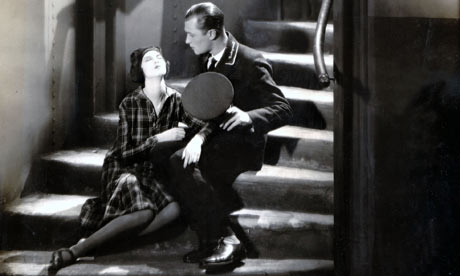
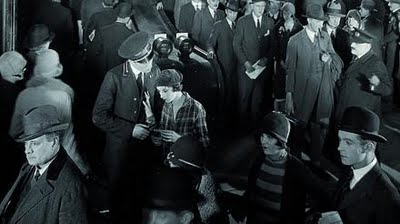
Getting down to brass tacks, this is a tale of love, jealousy, madness and missed connections. Pals Bill (Brian Aherne) and Bert (Cyril McLaglen) meet sweet Nell (Elissa Landi) on the tube one morning. Nell only has eyes for Bill, but nevertheless incurs the wrath of Kate (Norah Baring), a dangerously unhinged woman who carries a lonely torch for Bert. The narrative, and the tension, escalate as a chance meeting on the tube results in a violent confrontation at the now disused Lots Road power station. Asquith’s second film as director, the first he received a full credit for, is an astonishingly distinctive and inventive work. Everywhere there are bravura touches that mark him out as a great of British silent cinema: the shadows of tentative lovers embrace even while they pull awkwardly apart; a pub brawl is edited montage-style, a kaleidoscope of splintered violence.
So, the story of Underground may be simple, but its treatment is unexpectedly dark, stylised and violent – the good news is that this Blu-Ray does Asquith’s expressionist experiments proud. The slanting shadows of the tube tunnels and the boarding house are deep and black; the white-knuckle action of the final chase remains sharply defined.
You’ll want to turn this disc up loud too. If you haven’t heard Neil Brand’s orchestral score for Underground yet, you’ve been missing out. This full-bodied, stirring music is a masterclass in silent film music. It’s lush and classic, certainly, but unafraid to cling to the twists and jolts on the track: alert to the film’s many mood swings. Try watching any sequence in Underground with and without Brand’s score (I recommend that furtive shadow-kiss, or Kate’s mad scene) and you’ll notice how the music inhabits every corner of the film, animating it without smothering it. Should you tire of the music, there is an alternative option, one I found fascinating but initially, at least, harder to warm to. Recordist Chris Watson has created a soundtrack for Underground that uses noises rather than music. That fantasy kiss is here accompanied by the sound of trains rushing through tunnels; the birds sing when Bill and Nell picnic in the park, although the young boy’s harmonica is eerily silent. It’s finely crafted, and as artful as any musical score could hope to be. However, shoot me, but I miss the romance of the symphony orchestra in full flow.
Underground (1928)
This is a dual-format release, with plenty of room for extras (though some of them you will only find on the DVD disc). There is a brief but illuminating featurette on the restoration of the film (the short answer is that it wasn’t easy and that a French print in a Belgian archive filled in many of the gaps in the decomposing British reels) and a generous booklet featuring essays from Brand, Bryony Dixon, Christian Wolmar, Simon Murphy and Michael Brooke as well as snippets from the archive. The archive film extras are the real treat though: including glimpses of Asquith as a young boy with his notable father in tow. I was particularly taken by Under Night Streets, a 1958 documentary about the Underground network’s night workers, with its jaunty cockney narration explaining the whys and wherefores of the work done by men “hard at it, down in the hole” while the city sleeps above them.
As a souvenir of 1920s London, this is hard to beat. And it’s a damn fine treatment for a great British film. But I am greedy. This release will sit neatly on my shelf next to the BFI’s DVD of Asquith’s final silent A Cottage on Dartmoor with Stephen Horne’s brilliant score. Two out of three ain’t bad, but how about Shooting Stars to complete the set?
Underground is released on a Dual-Format DVD/Blu-Ray set by the BFI, RRP £19.99 on 17 June 2013. To pre-order, click here.
We’ve been waiting for this news as patiently as Snow White awaited her kiss of life – and here, in the shape of StudioCanal, is our Prince Charming. Pablo Berger’s utterly gorgeous, slightly twisted, Gothic fairytale Blancanieves gets a UK release on 12 July 2013. I have been intrigued by this film since we first heard about it in March 2012, and in October last year when I saw it at the London Film Festival, I became smitten. If you saw it then, or at the recent Ciné Lumière screening, you’ll know what I mean.
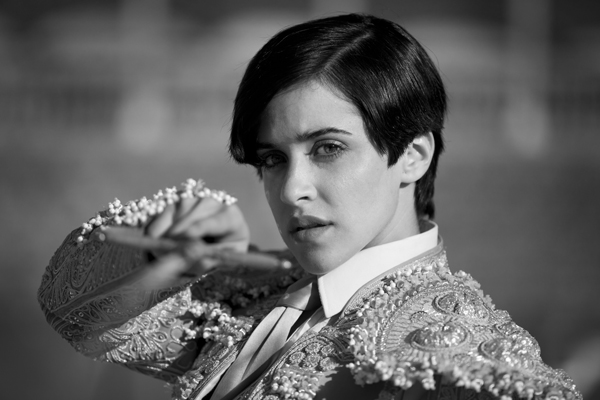
Blancanieves is a silent, black-and-white film – a loose adaptation of Snow White set in 1920s Spain. There is a poisoned apple, a wicked stepmother (brilliantly played by Maribel Verdú) and a coterie of dwarves, but also bull-fighting, flamenco and a pet cockerel called Pépé. It’s a beautifully accomplished homage to European silent cinema (at the screening I attended, the director paid tribute to everyone from Abel Gance to our own Anthony Asquith) and at the same time satisfyingly rich and quirky – this is a very hard film to categorise. The cinematography is at times exquisite, and the score, by Alfonso de Vilallonga, is fantastic. As yet, I don’t know whether we can expect a full or limited release – but if you love silent cinema, and Blancanieves is playing near you, you really should go to see it.











 Silent London