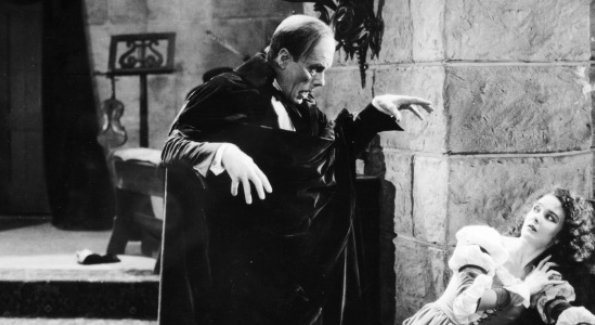
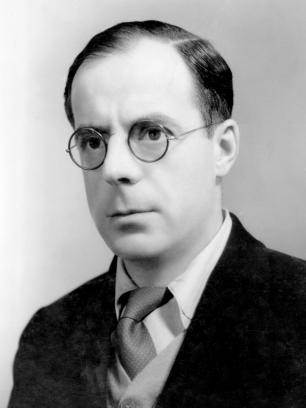
The UK Jewish film festival features screenings across the country from 1-18 November, but we’re especially lucky in London as we will be able to see Edward Sloman’s 1925 silent classic His People, with a new improvised score. The film is set in Manhattan and film historian Tom Gunning praised it, saying that: “few silent films give so thorough a picture of Jewish home life in the American ghetto”.
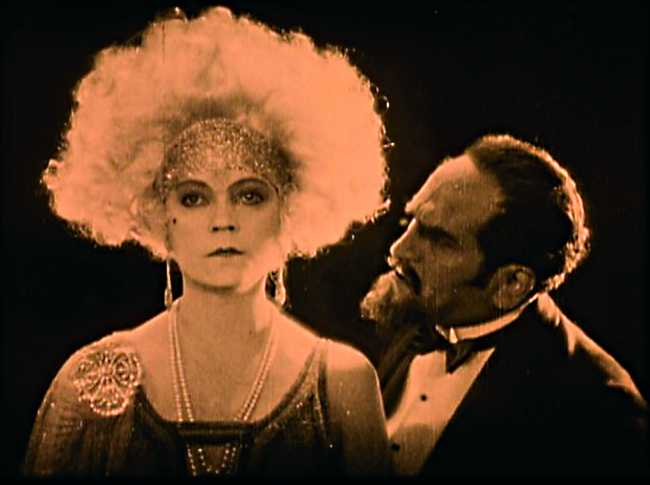
This is an exciting chance to see the work of a director whose work Kevin Bownlow described as: “remarkable … with a very American smoothness of narrative”. Unfortunately, very many of Sloman’s pictures are now lost, but His People was his biggest commercial success, taking millions at the box office on its original release. It also stars Rudolph Schildkraut, one of the director’s favourite actors: “Whatever you planned with Schildkraut always came off – sometimes even better than you’d dreamed it. Rudolph Schildkraut was one of the great actors of his era,” he told Brownlow in The Parade’s Gone By.
A rare opportunity to see one of the most evocative films of the 1920s with a new, live score. The sights and smells of New York’s bustling immigrant Jewish Lower East Side have seldom been captured better than in this sparkling tale of a generational clash of cultures. The two sons of a Jewish migrant family opt for different paths in life and love, but as the story progresses, assumptions about good and bad are soon firmly challenged.
A classic morality tale with a bold, contemporary cinematic feel, accompanied by an improvised live soundtrack from Sophie Solomon, (violinist and artistic director of the Jewish Music Institute), Quentin Collins (trumpet), Ian Watson (accordion) and Grant Windsor (piano).
To win a pair of tickets to see His People at the Barbican, just send the answer to this question to silentlondontickets@gmail.com by noon on Friday 9 November. The winner will be chosen at random from the correct entries.

His People director Edward Sloman was born in Britain – but in which city?
This is a guest post for Silent London by Lucie Dutton. Lucie is currently researching a PhD thesis on Maurice Elvey’s early career. This post contains plot spoilers.
Lights! Fairyland! Romance!
This intertitle from Maurice Elvey’s 1927 version of Hindle Wakes might lead an audience to think that the film is just enjoyable froth; a pleasant way of spending a couple of hours but not much more. In truth, Hindle Wakes is far better summarised by another of its intertitles: “Romance is all very well … but marriage would be a failure.”
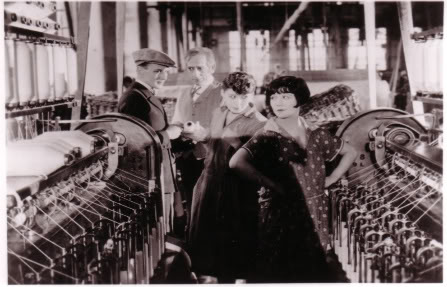
Hindle Wakes, from the play by Stanley Houghton, is one of the finest works to come out of the British film industry of the late 1920s. It explores the social and moral pressures faced by a young woman who decides to assert her own sexual and feminist identity. During Wakes Week, mill worker Fanny Hawthorne takes a trip to Blackpool and embarks on an affair with Allan Jeffcote, the son of the mill owner. Fanny and Allan start off being slightly awkward when left alone together at the Pleasure Beach, but develop an ever-increasing ease with one another, until they kiss at the Tower Ballroom. The way the film is constructed leads the audience into thinking it is a conventional love story – but appearances are deceptive.
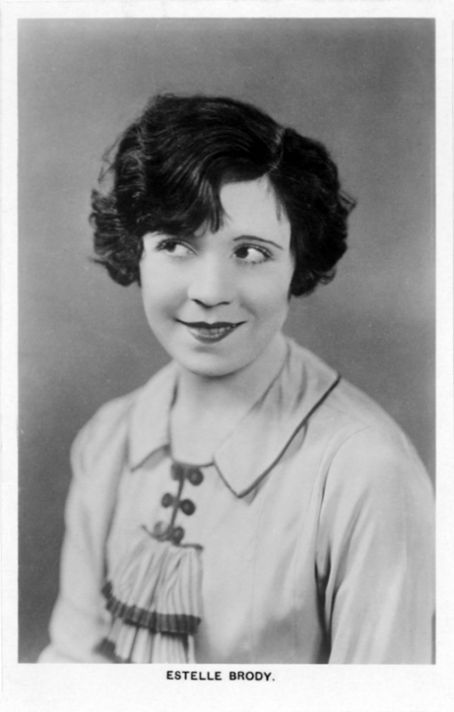
Estelle Brody
The affair is discovered and Fanny’s and Allan’s parents put pressure on the pair to marry. Fanny, however has other ideas – much to Allan’s consternation. She tells Allan: “I’m a woman, and I was your little fancy – you’re a man and you were my little fancy. Don’t you understand?” She determines to make her own way – without apology – rather than being “given away with a pound of tea, like.”
Fanny’s attitude is so appalling to her mother (Marie Ault at her most disapproving) that Fanny has to leave the family home. Watched by a street full of neighbours and her heartbroken father (Elvey regular Humberstone Wright) Fanny refuses to be shamed by her “little fancy” but retains her dignity: “I’m a Lancashire lass and so long as there are spinning mills in Lancashire I can earn enough to keep myself respectable.” And she does – the film ends with her working in the mill and agreeing that her loyal friend and admirer Alf may take her to the pictures that evening. This is a celebration of practical working-class feminism. It is Fanny’s freedom as a worker – her freedom to seek work anywhere and her confidence that she will find it – that enables her to maintain her own integrity.
Director Maurice Elvey admired Stanley Houghton’s original play greatly. He told Denis Gifford that he thought it was “the finest English play ever written … a really great play; it is really about something.” (The Denis Gifford collection of taped interviews with leading figures from the British film industry is held by the BFI.) He filmed it twice – once in 1917, with Colette O’Niel and Hayford Hobbs (who recently wowed Pordenone audiences as Walter Gay in Elvey’s Dombey and Son); and again in 1927 working closely with his colleague Victor Saville, starring Estelle Brody and John Stuart. Sadly, the 1917 version no longer exists – if it did, it would provide us with great scope for analysing Elvey’s development as a director. We would also be able to compare the performances of the great Norman McKinnel, who played mill owner Nat Jeffcote in both versions.
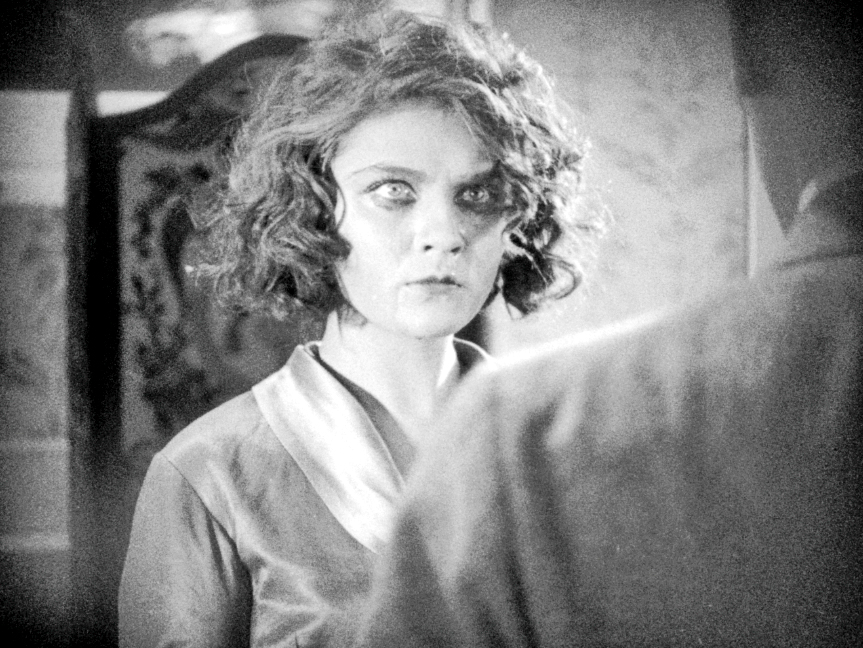
While Hindle Wakes boasts many fine performances, it is Estelle Brody who dominates the screen. Her examination of her face in the mirror to see whether it has changed following an off-screen sexual encounter with Allan is one of the best examples of acting in British silent cinema.
Hindle Wakes (1927)
Brody was an American actor who worked with Elvey in the UK between 1926-28. Such was the resentment of the dominance of the American film industry at that time, publicists said that she was Canadian. Her obituary (by Kevin Brownlow) describes Brody and other residents of her retirement home watching Hindle Wakes:
“She was glued to the screen throughout. Apart from one or two who didn’t stay the course, all were transfixed. Afterwards, she was mobbed by the others congratulating her. Throughout the screening, the viewers, including some nuns, were constantly comparing the frail old lady in her wheelchair to the image on the screen with fascination and admiration.”
As well as strong performances, the film has some fine locations. Elvey was an early expert in location shooting, starting with his 1913 film, Maria Marten. For Hindle Wakes, he filmed in the Monton Mill in Manchester, in Eccles, at various Blackpool locations, and overlooking the sea at Llandudno. To ensure that the visiting actors appeared authentic in the mill scenes, the foreman advised them how to handle cotton bobbins and machinery.
Elvey, who had a reputation for working quickly and efficiently, shot 51 scenes at the Pleasure Beach and Tower Ballroom at Blackpool in 10 hours over the course of one day. The Blackpool scenes are one of the highlights of the film – with shots taken up Blackpool Tower, and on the Pleasure Beach Helter Skelter and Big Dipper. In the Tower Ballroom, Elvey filmed an ambitious dance sequence, which led to the film being advertised In Blackpool as “starring Estelle Brody and 5,000 local artistes”.
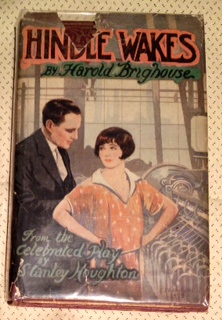
Hindle Wakes novelisation released to accompany the film
The film was well received on its release – Caroline Lejeune, writing in The Guardian (5 February, 1927) called it “the best advocate we have yet seen for the promulgation of British films” and said that Elvey had “made time and space and madness whirl before us on the screen … Elvey has successfully borrowed from the Germans what is apt to his own needs, shaped it to his hand, and made it for the time being his own.” She went on to name it one of her seven best films of the year (31 December, 1927). For Kinematograph Weekly (10 February, 1927), Lionel Collier said that Elvey, with his colleague Victor Saville, had “produced the best picture he has ever made, and an outstanding British triumph.” Even Variety – not known for its praise of British cinema – felt that it was a film that “did more to establish the birth of the British industry than any other” (13 October 1931).
We are privileged that in 2012 we are still able to see Hindle Wakes, 85 years after Elvey, Estelle Brody and John Stuart took their trip to Blackpool. It remains an important part of our cinematic and cultural history and comes highly recommended.
Lucie Dutton
Hindle Wakes screens at the West London Trade Union Club on Saturday 20 October. Read more here.
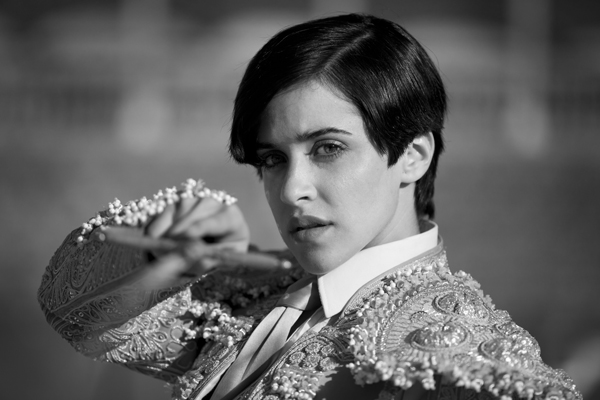
You may feel weary at the prospect of another love-letter to the silent era. You may feel fatigued by the thought of another Snow White movie. Wait, though – nothing should deter you from seeking out this intriguing, gorgeous film. Director Pablo Berger describes his Blancanieves as a “homage to European silent cinema”, but happily, it has the confidence to wear its influences lightly and transform them into something new, magical and utterly distinctive.
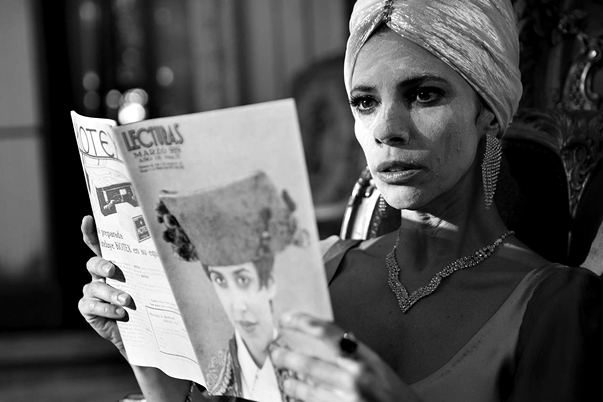
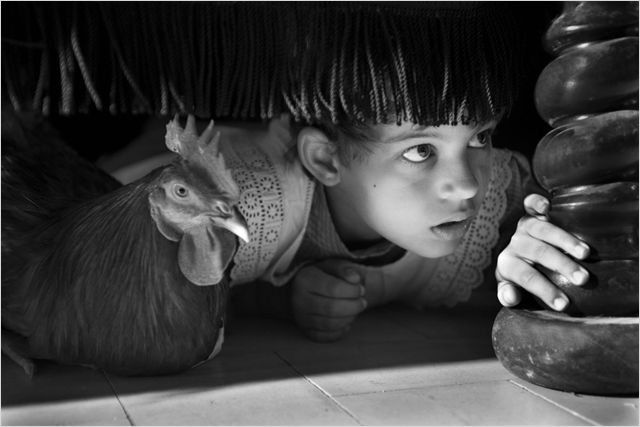
Blancanieves is a sharp, heady cocktail of fairytales, Spanish iconography and silent cinema: a black-and-white film with gorgeous musical accompaniment that tells the story of Carmen, whose matador father remarries after her flamenco dancer mother dies in childbirth. But if you’re expecting a straight 1920s-set adaptation of Snow White, you will be wrongfooted right to the bittersweet end. When we finally encounter the dwarves, we find they’re bullfighters, they’re not all sweet, and there aren’t quite seven of them. A celebrity magazine takes the place of a magic mirror, the wicked stepmother indulges in S&M with her chauffeur and the young heroine’s best friend is a neckerchief-wearing rooster called Pépé.
Maribel Verdú in Blancanieves (2012)
Carmen is no fairytale princess either, but in both her younger (Sofía Oria) and older (Macarena Garciá) incarnations, she is a serious, lonely young woman on a tragic path – both actresses share intense, dark eyes, which Berger makes the utmost of. Maribel Verdú turns in a wickedly funny pantomime performance as her scheming stepmother – although it often feels as if she is in a different, more histrionic, film to everyone else – and Daniel Giménez Cacho is heartbreaking as the destroyed father. Plaudits must also go to the rooster, or rather his handler. There may never have been a cuter cockerel in the cinema.
So why is Blancanieves a silent film? Perhaps it’s because in this version the girl’s parents are both wordless performers, in old-fashioned artforms. Her grandmother teaches her to dance, and her first encounter with bullfighting is via the flickering images of a praxinoscope. Berger also says he was inspired by a screening of Greed with Carl Davis’s orchestral score, and by silent film-makers including Sjöstrom, Herbier, Murnau and our own Anthony Asquith. Whatever the cause, it’s an artistic choice that pays dividends.
Sofía Oria in Blancanieves (2012)
This is no pastiche, although I will admit I could have lived without the Instagram-style rough edge to the Academy frame, a bafflingly naff decision considering the film’s visual achivements: sumptuous photography, and impressionistic editing. There’s so much here that recalls the silent era – a clatter of flashcuts, the rustic faces in the crowd, superimpositions, irises and a restrained number of intertitles – but it feels modern too, with lovely soft light washing over the interiors and nimble, intimate handheld camerawork. There’s nothing in Blancanieves’ exquisite cinematography that could not have been achieved in the 1920s, but its strength is that it never feels anachronistic or nostalgic. And those sumptuous images tell the story too, as when Carmen’s first-communion dress is plunged into a tub of black dye, or she sees Pépé’s face hovering on her dinner plate.
With such riches at his disposal, I almost wish Berger had made a more serious film than this twisted fairytale, which occasionally veers into camp. Blancanieves is a strange piece of work, but a precious one, however, so even if it lacks ambition, its integrity and beauty are to be treasured.
Blancanieves screens as part of the London film festival at the ICA on 18 October. You can book tickets here.
Cléo de Mérode dances Photograph: Cinémathèque française / Gaumont Pathé Archives, Paris
This is a guest post for Silent London by Neil Brand.
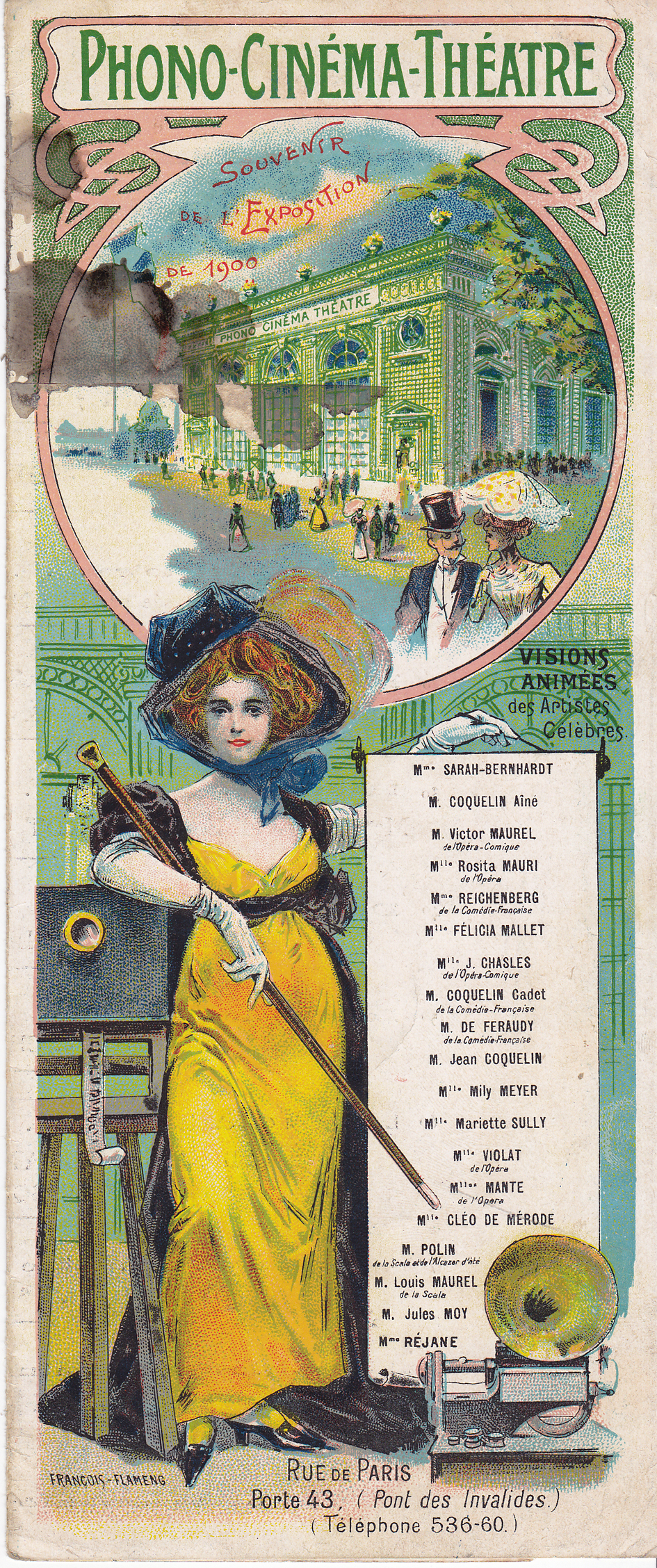
Among the gorgeously designed pavilions on the banks of the Seine at the Paris Exposition of 1900 was a small, ornate theatre called the Phono-Cinéma-Théatre, which contained a screen and a small musical ensemble. Across the screen moved the greatest actors, dancers, mimes and clowns of the day – they spoke, they sang, they moved to music provided by musicians playing live and they were often in exquisite, hand-tinted colour. Five years after the birth of cinema, film and recorded sound brought France’s finest theatrical artists to mechanical life for the lucky generation of fin-de-siècle Paris. It was ephemera among ephemera, Toulouse-Lautrec’s posters pulled aside to reveal the artists that inspired him, and, of course, not made to last – half a century of progress and war on an industrial scale would sweep away those films and the spirit of The Banquet Years, as well as millions of those lucky or wealthy enough to experience them, leaving the rest of us with just the books, the posters, a few photos … until last week.
Phono-Cinéma-Théatre poster. Photograph: David Robinson Collection
On Thursday last the Giornate del Cinema Muto in Pordenone, Italy, showed 23 surviving films of the 41 originally shot, most complete with their hand-colouring, many with their synchronised sound, almost all accompanied live by a small ensemble directed and arranged by John Sweeney. John had spent months finding as much of the original music to the dances and songs as possible, then rehearsed synchronising them to the pre-recorded singing and dancers’ steps, which were set in stone over a hundred years ago – the result was an astounding time-bridge that placed us all more viscerally in the Paris Exposition auditorium than any sound and image record could have done – the artists were now performing for us, their movements driven by John’s piano, their eyes returning our gaze and their efforts aimed at pleasing us.
It was all so relaxed – Little Tich missed a catch with his hat but just picked it up and carried on as if nothing had happened, the odd dance step was fumbled, but unlike the stiff subjects of so much still photography of the time, our performers did what they did for the camera just as they had done on stage for years (in some cases decades), blissfully uncaring of giving a “definitive” performance or of the legacy of our critical response from an unimaginable distance of posterity.
Sarah Bernhardt fought Hamlet’s duel beautifully, despite her 56 years, and with the addition of Frank Bockius’s uncannily precise sword clashes on triangle; Emilio Cossira sang Romeo’s aria from Gounod’s opera silently, his voice reproduced by Romano Todesco’s single notes on accordion, the intent of feeling vibrant in his features and his genial return for a second bow – Mariette Sully wrung genuine comedy out of singing and dancing “La Poupée” and Cléo de Mérode, La Grande Horizontale to many of the crowned heads of Europe, danced in the way that had turned those heads in the first place.
Sarah Bernhardt in Hamlet Photograph: Cinémathèque Française/Gaumont Pathé Archives, Paris
We found out what made 1900 audiences laugh, thanks to Jules Moy’s anarchic dancing master and Polin’s Troupier Pompette singing about, among other things, stroking a lady’s leg, wondering at the lack of resistance and, on raising her skirt, realising he is touching up the table leg. The entire 90-minute show was a triumph of 1900 and 2012 technology – I have worked with early film for 30 years, and never have I felt so privileged to see these wonders more clearly than any generation before, even the one for which they were intended.
Little Tich Photograph: Cinémathèque Française/Gaumont Pathé Archives, Paris
Above all, I now feel I understand turn-of-the-century Paris with a profundity that was impossible before last Thursday night – its potency, its sexuality, within which the highest arts of performance were also the most immediately sensual and arresting, its gaiety and love of sensation, the vibrancy and diversity of its entertainments. The combined efforts of the Cinémathèque Française, Gaumont, Lobster Films, Olivier Auboin-Vermorel and the historical and aesthetic energy of Pordenone director David Robinson have brought not just a corpse but a memory back to life – theatre as film as theatre, a heady concoction only available through the medium of “silent film” – in London, the equivalent would be seeing a complete night at the music hall from 1900, in full colour and with synchronised sound – for now, London must get to see this show, preferably in the perfect surroundings of Hackney Empire where the artists can emerge from the proscenium arch of a Matcham theatre – but maybe after Paris has seen its own long-lost child, this November at the Cinémathèque Française – and, of course, John Sweeney and his ensemble will be there to assist at the rebirth.
Greetings! I’m just back from spending a week at the 31st Giornate del Cinema Muto in Pordenone, Italy. Between sipping espresso and circling my favourite films in the schedule, I spoke to some of my fellow travellers about their experiences of this wonderful week of silent cinema. You’ll find full coverage of the festival on Silent London by clicking here, but in the meantime, enjoy this short podcast.
A Woman of Affairs (1928) Photograph: Photoplay productions
I couldn’t possibly imagine a more heartwarming finale to my first Pordenone trip than Saturday night’s midnight show of The Boatswain’s Mate (Horace Manning Haynes, 1924), with our own Neil Brand on the piano. This vigorously witty, quintessentially British comedy is a neat three-hander starring Florence Turner, Johnny Butt and Victor McLaglen, as a pub landlady, her buffoonish admirer and an out-of-work soldier. I loved it when it showed at the British silent film festival in Cambridge, and the Giornate crowd lapped it up too. The humour of the film comes not just from three strong comic performances, but from the pen of Lydia Hayward, who as with the other films in this strand, adapted the scenario from a WW Jacobs short story. Here though, her pithy intertitles are augmented with cute line drawings that underline – or comically undercut – the text. A 25-minute, 88-year-old gem of British cinema.
But I am getting ahead of myself. The final day of the Giornate began in the unfamiliar, but very comfortable, surroundings of Cinemazero, while Carl Davis rehearsed the FVG Mitteleuropa Orchestra in the Teatro Verdi for that evening’s gala screening. We assembled for a double-bill of late Thanhouser features, with all the tightly plotted melodrama that entails. A Modern Monte Cristo (1917), transplanted the classic tale’s theme of long-simmering revenge to California, as a shipping magnate frames his love rival for a crime and lives to regret it. Fifty-six minutes of storms, shipwrecks and Machiavellian machinations later, the assembled audience were thoroughly awake and heartily entertained. The wronged hero (played by Vincent Serrano) bore a passing resemblance to George Clooney I felt, and the heroine was played vivaciously by Gladys Dore as an adult and long-time Thanhouser actor Helen Badgley as a child.
Badgley returned, this time as a boy, alongside Jeanne Eagels in the second film of the morning, Fires of Youth (1917), which appeared to be an early pilot for the reality TV show Undercover Boss. Misunderstood foundry owner Pemberton (Frederick Warde) disguises himself in order to live and work among his staff, to regain the spirit of his long-forgotten childhood. As a bonus, he learns to appreciate his workers – and give them the payrises and safe working conditions they have long petitioned for. Or at least I think that’s what happened. Due to a mixup, the intertitles were unexpectedly in French and so no translation was available. A sweetly moralistic, but energetically played film, although this substitute print was abruptly abridged towards the end. Special mention here must go to Bruno, an “aspirant” from the Pordenone accompaniment masterclasses, who played beautifully and sensitively for both films – even more of an achievement considering the surprise switch.
Anna Sten
Stephen Horne provided the music for the next screening, one of the most hotly anticipated British films in the Giornate: Herbert Wilcox’s highly enjoyable The Only Way (1926), an adaptation of a long-running play that was itself a free-ranging take on Dickens’s A Tale of Two Cities. Theatrical giant John Martin-Harvey made a fine Sydney Carton: understated in the drunk scenes and powerfully charismatic in the courtroom. It’s a shame that he was so much older than his opposite number Charles Darnay, which rendered the crucial mistaken identity aspect of this grand story rather ludicrous.
A return to Teatro Verdi – for what? A sound film? Rest easy, this was the silent (but with recorded musical soundtrack) Italian release of Anna Sten’s German film Stürme der Leidenschaft (Storms of Passion, Robert Siodmak, 1931). Tempestuous it was indeed, with Emil Jannings as a released convict, Sten as his wandering wife and Siodmak rehearsing his noir moves in a precociously hot-headed drama. Sten sang, quite well in fact, but with her highlighted hair, slinky satin wardrobe and sultry pout, she came across best as a silent hybrid of Marlene Dietrich and Claudette Colbert. Steamy stuff: the perfect prep for watching Greta Garbo and John Gilbert circle each other lustily later that night.
A Woman of Affairs (1928) Photograph: Photoplay productions
Before the gala’s main feature came many speeches, thank yous and prize-givings, culminating in the unadulterated joy of Pierre Étaix and Jean-Claude Carriere’s 1961 short Rupture. All by itself, this virtuoso comedy proved Étaix to be, in festival director David Robinson’s words: “the last of cinema’s great silent clowns”. If you don’t;know Étaix’s work, read more here, and take any opportunity you can to see his wonderful films.
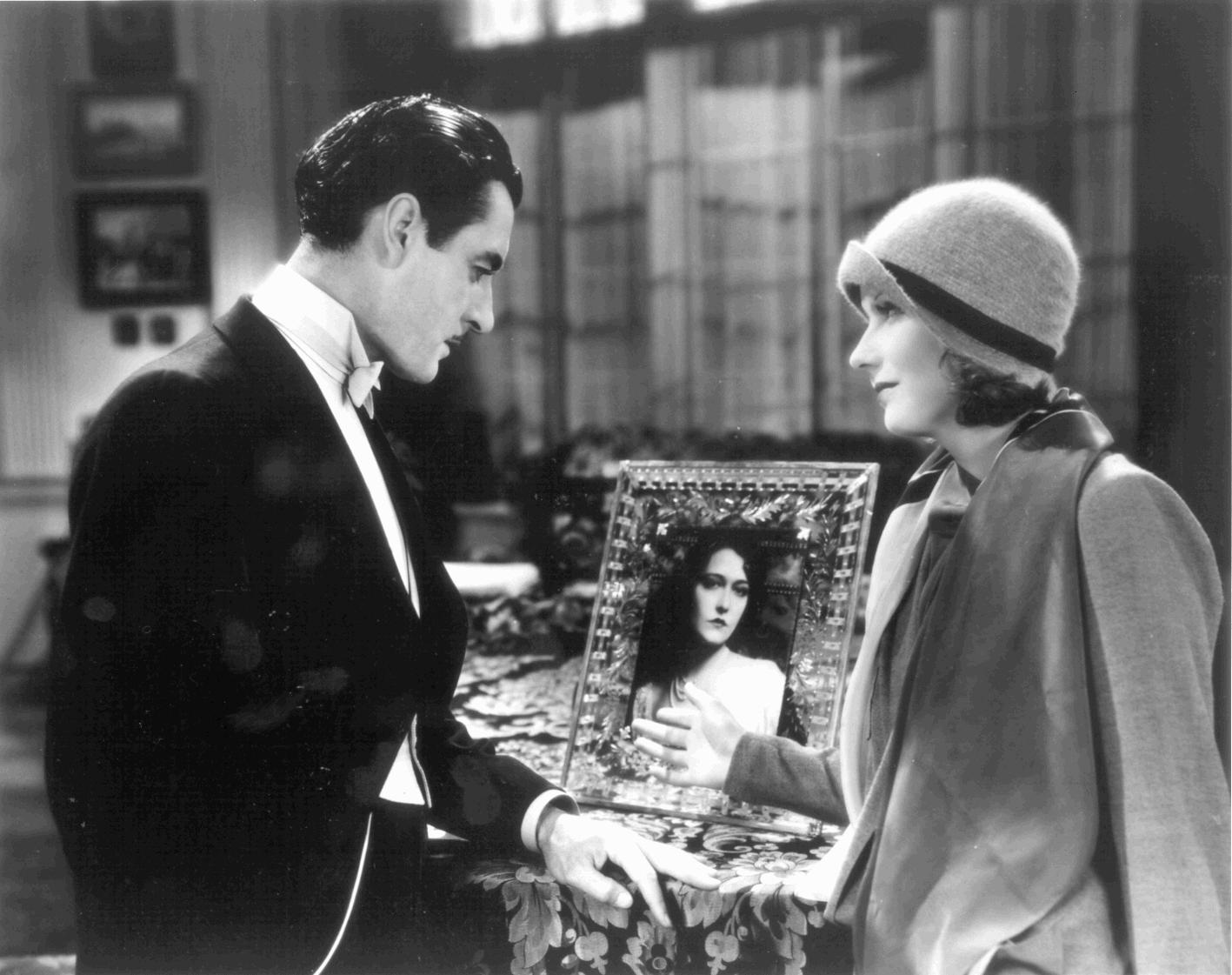
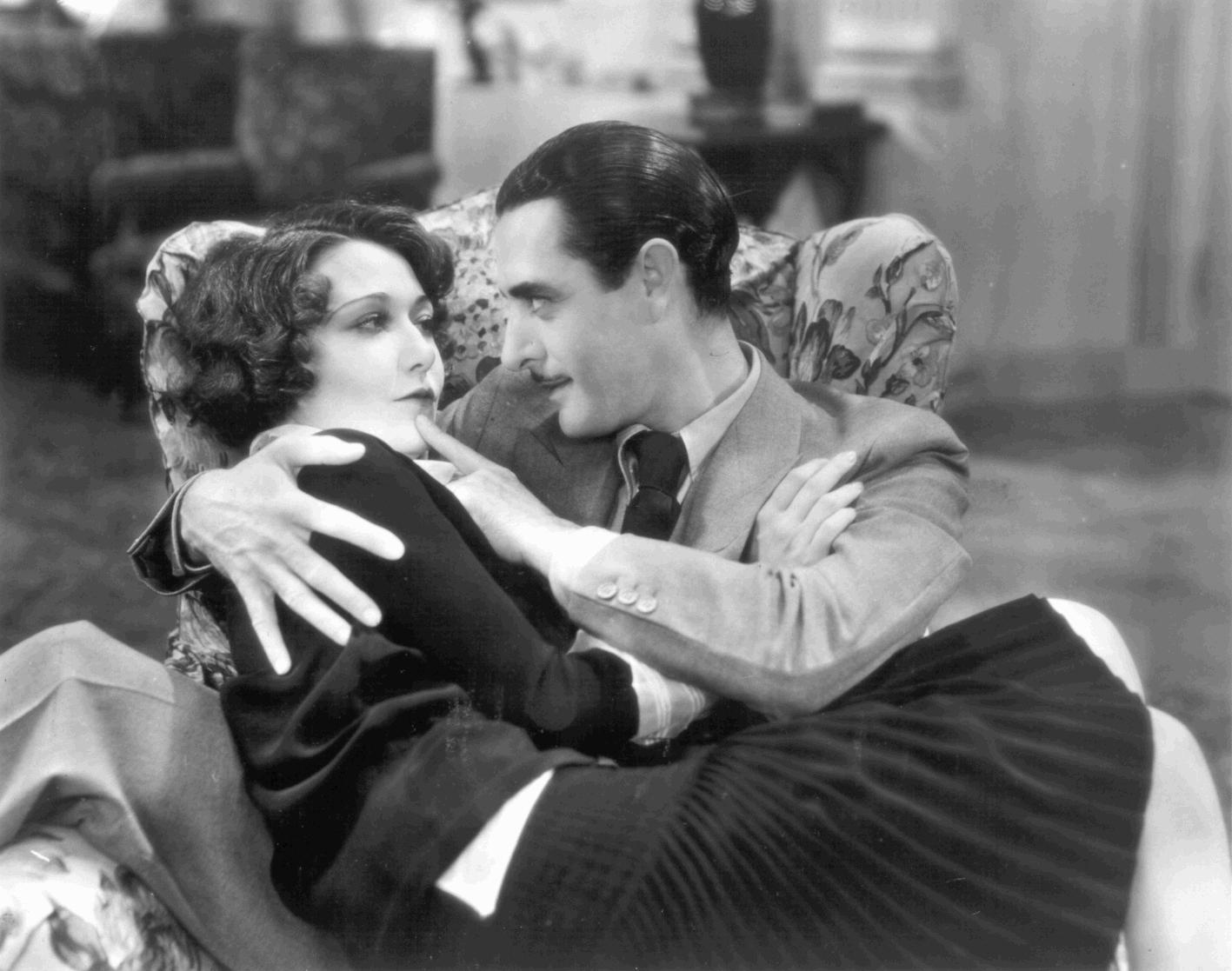
Finally, Garbo and Gilbert took to the stage, introduced in a short film clip by one of the film’s other stars, Douglas Fairbanks Jr and accompanied by Carl Davis’s hearty score. Doomed romance, barely repressed sexual passion, treachery, sublimated homosexuality, alcoholism and reckless driving: A Woman of Affairs (1928) had it all. Garbo here is elegant, seductive and a million miles away from the grubbiness (and greasy kohl) of Die Freudlose Gasse; Gilbert is dapper and heartbroken; Fairbanks Jr handsome and unhinged.
Yes, it’s a little over-the-top, and there was more than one dramatic tracking shot too many, but this was silent Hollywood at its starry, crowd-pleasing, beautiful peak. If you didn’t swoon just a little, you weren’t, I would contend, paying proper attention. Not my favourite film of the festival, but well worth the applause.
So that’s it for the 31st Giornate del Cinema Muto – it’s been utterly intoxicating, a feast of cinema and cinema appreciation. Will I return next year? Just you try to stop me.
Unsolicited advice of the day: Would you take makeup tips from Emil Jannings? Both he and John Gilbert admonished their lady-friends (Anna Sten and Dorothy Sebastian) for daubing on too much “lip rouge”. Hmmm…
Giornate stats
Eight days in Pordenone.
47 hours, 37 minutes and 12 seconds of silent cinema watched.
18 cups of caffé espresso.
Eight blog posts.
Four Aperol spritzes.
One frico.
For full details of these and all other films in the festival, the Giornate catalogue is available as a PDF by following this link.
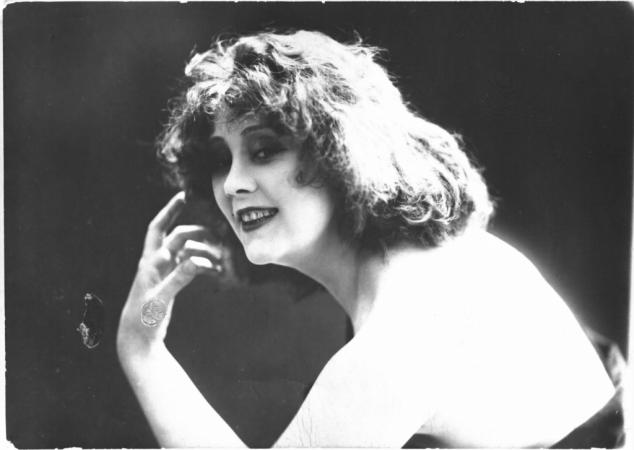
The choices we make in life define us, and this morning I got up bright and early for Viktor Turin’s Provokator (1927), but gave early Selig feature The Ne’er-do-Well (1916) a miss. Did I do right to choose Anna Sten’s anguished student and her revolutionary chums over Kathlyn Williams and the adventures of the rich and beautiful? I don’t know. Provokator, which marks Sten’s cinema debut, was occasionally stirring, but mostly on the pedestrian side, though a raid on the revolutionaries’ den was rather fine, boosted by terrific accompaniment from Gabriel Thibaudeau and Frank Bockius.
Walter Summers
Where I may have erred is in choosing such a downbeat opener on a day that was to close with GW Pabst’s heartbreaking social critique Die Freudlose Gasse (1925). However, I am getting ahead of myself. My afternoon was perked up considerably by the patriotic hubbub around Walter Summers’ lovely postwar tearjerker A Couple of Down-and-Outs (1923), introduced by the producer’s grandson Sidney Samuelson, who was seeing the film for the first time. What could be a very harrowing tale is handled with care, as Rex Davis’s Danny finds unlikely allies when he rescues his war horse from a foreign abattoir: manipulative, but charming with it.
The audience groaned in unison at the start of the next screening, as another tranche of German animated shorts kicked off with a toothpaste advert featuring the “tooth devil” cracking open a poor vulnerable gnasher with his drill. It was, as before, a diverting and diverse hour. In the name of commerce, all kinds of unlikely objects have been animated: detergent, rolling pins, matchboxes, kettles and even, in a sweet but fussy stop-motion ad for aspirin, a silent-film star and director (Im Filmatelier, 1927). Günter Buchwald at the piano followed with apparent ease the rapid changes of subject-matter, media and mood – as when a promo film for a department store dwelt proffered a new suit as a suicide-prevention measure (Der Hartnäckige Selbstmörder, 1925).
Asta Nielsen in Die Freudlose Gasse (1925)
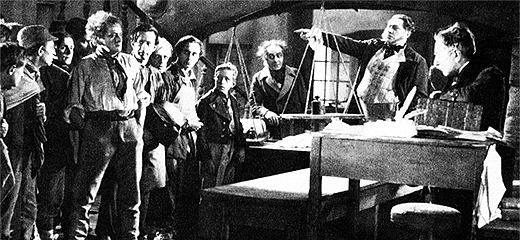
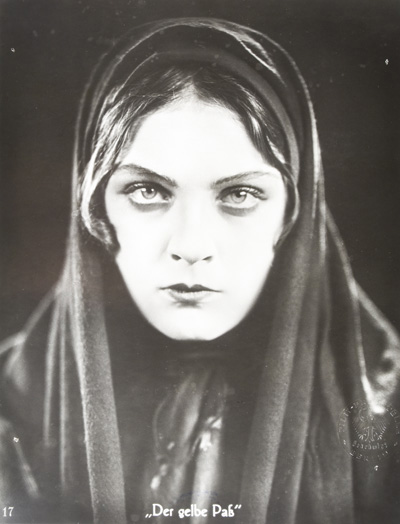
I have a date with Greta Garbo in A Woman of Affairs (1928) on Saturday, but I spent Friday night with both Garbo and Asta Nielsen in the elegant but emotionally gruelling Die Freudlose Gasse (1925), giving a beautiful face to the seedy economic exploitation of women in 1920s Vienna. Both the lead stars are fantastic, and supported by a cast of wonderful character actors including Valeska Gert as a pixie-faced madam. Pabst’s direction veers between sober restraint and wild bouts of inventive, unchained camera excitement. This new print is not quite complete, but mostly crisp, with deep tinting, most especially effective in a fire scene towards the end.
Accidentally profound statement of the day: “The joyless street is long,” exclaimed I, when I read in the catalogue that Die Freudlose Gasse clocks in at 151 minutes long in its present state. It ran for closer to three hours at the Berlin film festival, apparently, but that was based on a projection speed of 16fps, as opposed to the Giornate’s 19fps. Phew.
For full details of these and all other films in the festival, the Giornate catalogue is available as a PDF by following this link.
An exceptionally strong and varied day at the Giornate: Soviet montage, German arthouse, a British drama, Dickens in Danish, early sound films and a big, fat two-strip Technicolor feature in the evening.
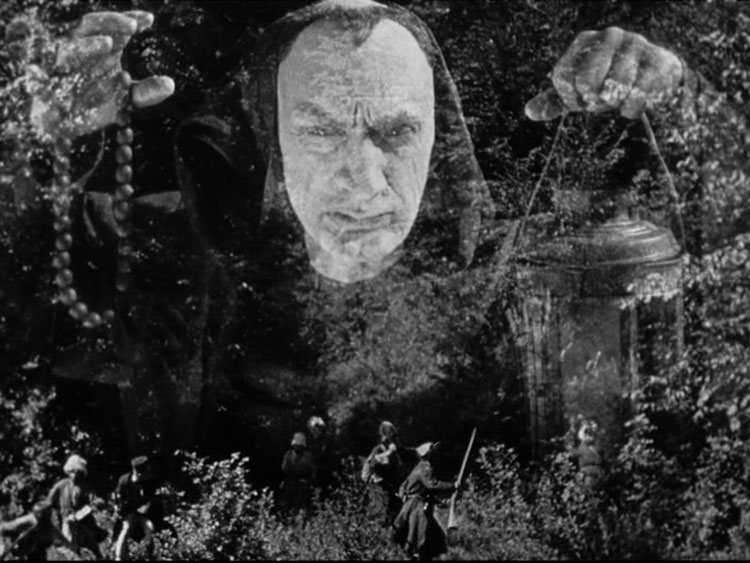
Anna Sten took centre-stage on Thursday morning in two very different films set in pre-revolutionary Russia. In The White Eagle (Yakov Protazanov, 1928) she plays a governess, working for a governor who orders soldiers to fire on a crowd of protesting workers. Sten is horrified, and while her boss has largely ineffectual pangs of remorse, she decides to take matters, and a pearl-handled revolver, into her own hands. Protazanov called the film a “low tide” but it’s actually very stirring and although it’s not Sten’s finest performance, by all accounts she had a strong working relationship with the director. It’s an engrossing film, which compares chains of command to chains of oppression and explores guilt and revenge in interesting ways. For example, the way the governor’s peers avoid him as soon as they learn he may be the target of a terrorist attack, while the Bolsheviks refuse to single out one victim for their vengeance.
The White Eagle is largely extant, but exists only in an incomplete print. We have even less of Merchants of Glory (Leonid Obolenskii, 1929), which is a shame, because it’s a strange, invigorating number, loosely based on a play by Marcel Pagnol and Pierre Nivoix. Henri Bachelet is a military hero, who died a noble death and is lionised by his family and community, so much so that his father is urged to transform his popular sympathy into political clout by running for office – and his wife marries a rich factory owner and sidesteps into a life of luxury. Only his quiet cousin (Sten) remains unchanged by Bachelet’s posthumous fame, and through her eyes we see injustices such as the way that wounded soldiers are treated by the regime they fought for. Wouldn’t the political bigwigs be surprised to learn that Bachelet was a communist sympathiser?
In the telling of this tale, Obolenskii gives us a sumptuous ball, battle scenes and even dance numbers. The finale, in which Bachelet, who has unexpectedly been found alive and well, defaces his own portrait and is attacked by his father’s friends, must have been magnificent, but is sadly almost all missing and relayed by still frames for the most part in this print.
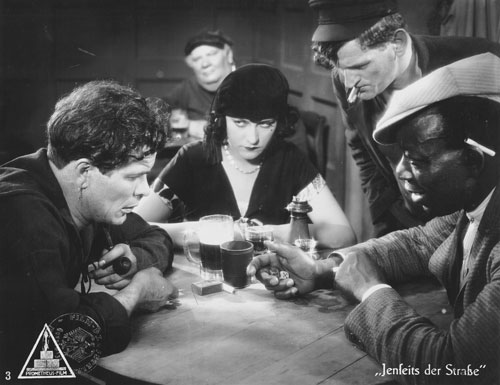
The two Stens made for a strong morning, but my highlight was a lyrical German film that came between them, called Jenseits der Strasse or Harbor Drift (Leo Mittler, 1929). A beggar nabs a pearl necklace from a puddle, and promises to share the profits on its sale with a new-found drifter pal, all the while a prostitute plans to take it, and sell it herself … Impressionistic, oddly noirish, tragic and ultimately dark-hearted, this is a real find. The film has been championed for a few years now by Stephen Horne, who accompanied it beautifully on piano, flute, accordion and zither. The recent discovery of the film’s previously missing reel makes this gem ripe for restoration, and a wider audience.
Sarah Bernhardt in Hamlet Photograph: Cinémathèque Française/Gaumont Pathé Archives, Paris
After lunch there was a chance to see The Unwanted (1924), a new find from the hand of Walter Summers. I had seen it in London, so skipped it, but was pleased that the film’s strengths (the Venetian opening, mountain scenes and burst of battle towards the end), played well on the big screen at the Teatro Verdi.
Lille Dorrit (1924), was a sumptuous Danish adaption though necessarily a simplification of Dickens’ weighty classic. A winsome Amy Dorrit (Karina Bell), a sprightly Maggy (Karen Caspersen) and an eccentric, avuncular “father of Marshalsea” (Frederik Jensen) combined with gorgeous sets – and benefited here too from a crisp, bright print. Dickens fatigue has not yet set in here and with beauties such as this one, it will be kept at bay a fair while longer.
The Viking (1928)
The evening’s fare was a story of the sublime and the ridiculous. The Phono-Cinéma–Théatre programme of aearly sound films from the 1900 Paris Exposition, recently discovered in a French archive and beautifully restored, was a hotly anticipated treat. Hand-coloured short films of famous performers from Cléo de Mérode to Little Tich to Sarah Bernhardt delighted the auditorium. In fact, Bernhardt performing the duel scene from Hamlet may well be the highlight of the festival for me – a film I have heard about for years, but never expected to see. You can read more about the night on the excellent Illuminations blog here. Special mention must go to John Sweeney for the accompaniment, taken from the original scores and working both in tandem with the wax cylinder soundtracks or instead of them. The dance shorts were a standout in this regard, including splendid Mérode’s Javanese and Slavic routines.
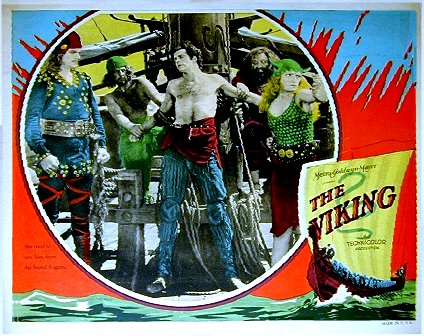
What to say about The Viking (1928)? Kitsch, unintentionally hilarious, and resplendent in the reds and greens of two-strip Technicolor, this was the very definition of a guilty pleasure. I’d like to say I was laughing with it, rather than at it, but it would be a fib.
For full details of these and all other films in the festival, the Giornate catalogue is available as a PDF by following this link.
My previous reports from the festival are here, here, here and here.
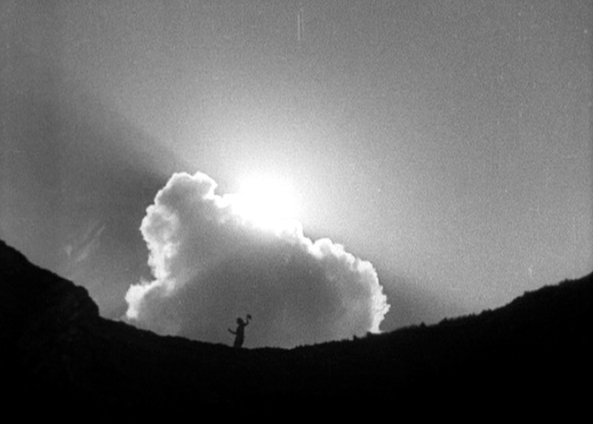
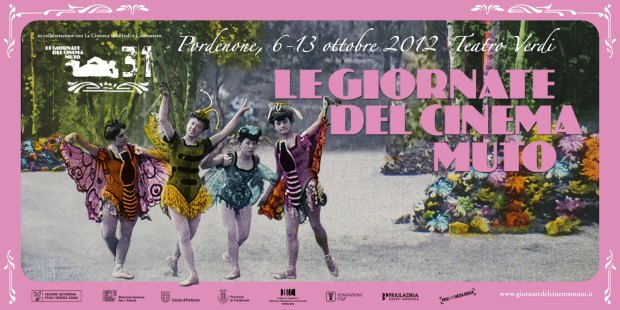
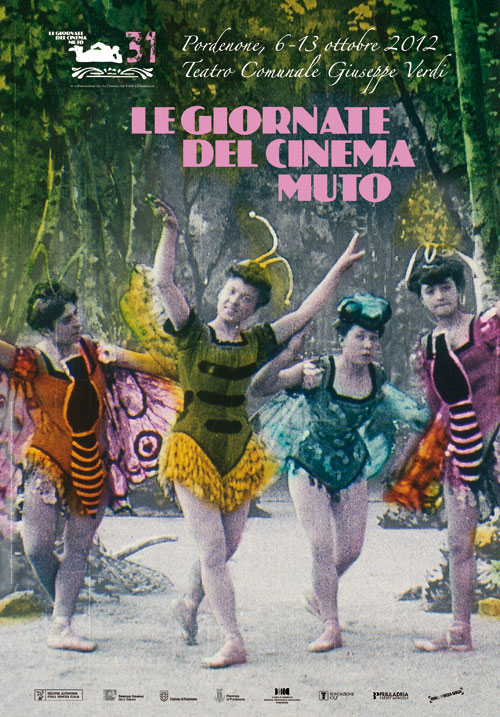
The fairies that adorn the Giornate posters are not fairies, but vengeful butterflies. In La Peine duTalion (1906), which concluded this afternoon’s gorgeous programme of early cinema, the dazzlingly costumed scamps take rather lighthearted revenge on a butterfly collector for all the times he trapped their friends and pinned them to a cork. Mystery solved!
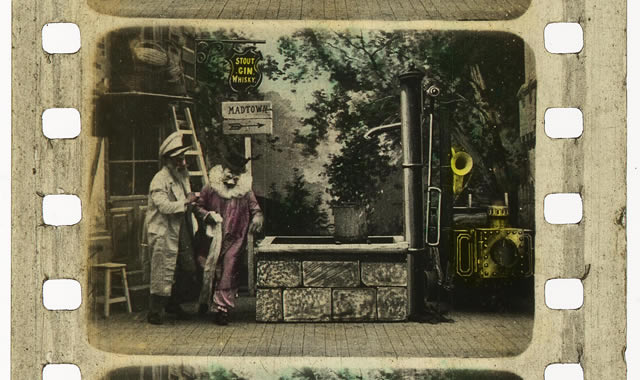
There were many more treats in that programme, including Méliès’ clown caper Automaboulisme et Autorité (1899), valiantly (I shall say no more) accompanied by Gabriel Thibaudeau and Frank Bockius, an extravagant serpentine dance (Danse de l’Eventail, 1897) and a loopily charming comedy about a girl so tall she can’t stand upright (Eugenie, Redresse-toi, 1911). The butterflies fluttered out of the Corrick Collection, along with the familiarly lurid delights of Dreams of a Rarebit Fiend (1906), a vividly coloured but sadly damaged L’Enfant Prodigue (1909), and a real crowd-pleaser: the cunning canine stars of Les Chiens Contrebandiers (1906).
Automaboulisme et Autorité (1899) Photograph: Cinématheque Française
A rare pleasure, the discovery of a precious Yevgenii Cherviakov film starring the luminous Anna Sten (in Buenos Aires) is a moment to be treasured. And although we only have a few reels of Moi Syn (My Son, 1928), transferred rather basically to DVD, it was enough to show us that the only director Dovzhenko admitted as an influence was a prodigiously talented film-maker. This is a poetic piece, with a devastating opening, as after a series of close-ups (which characterise the film), Sten turns to her husband and says, indicating the newborn in her arms: “This is not your son.” There is a fire, a lecture on childcare, and an infant funeral to follow but not in that order. Impressionistic, but frank, and subtly accompanied today by Neil Brand, Moi Syn is unforgettable even in its present state. I dearly hope the rest will be restored to us soon.
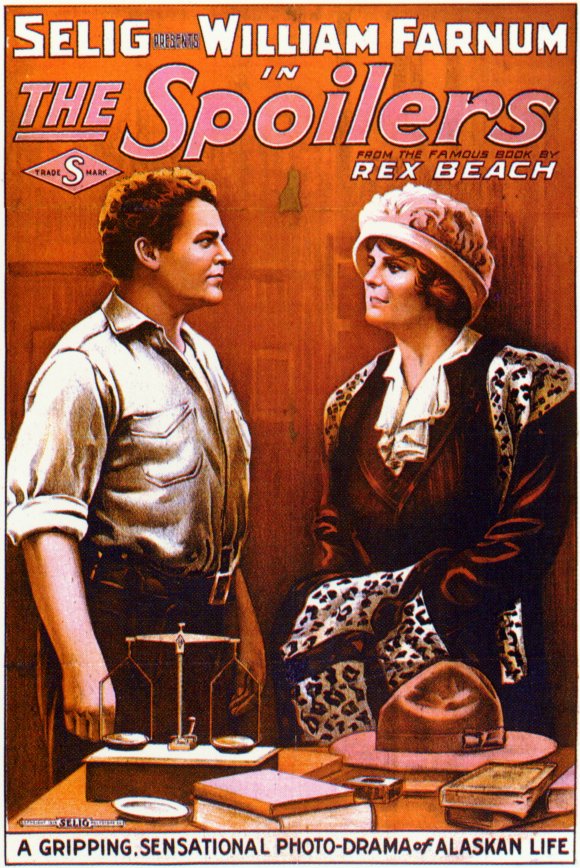
The Spoilers (1914)
Another landmark film, but of a very different kind, Selip Polyscope’s trailblazing feature The Spoilers (1914) was a diverting two hours. A gold mine, and a community, in peril; a maverick and his gal to the rescue; the Bronco Kid; corrupt politicians … there was perhaps an excess of plot, even for the running time, but who cares? Kathlyn Williams as Cherry Malotte, a good-time girl made good, stole the show, particularly in her outrageous costumes.
Less enjoyable was Familientag im Hause Prellstein (1927), an UFA Jewish comedy, directed by the notorious Hans Steinhoff. This convoluted tale of debt, divorce and double-dealing fizzled out after its opening 20 minutes or so.
Still, reports from La Passion de Jeanne d’Arc (1928), screening in the cathedral with a new score by Touve Ratovondrahety, were excellent, and the day’s action in the Teatro Verdi concluded with Manning Haynes’ lovable coastal comedy The Head of the Family (1922).
What we didn’t learn today: Helen in The Spoilers was “wrapped in a woof of secrecy”. Whatever that is. Answers on a postcard or in the comments field below, please.
You can read Nathalie Morris’s excellent report from the festival for the BFI website here.
I have also written an article for the Guardian film website about Méliès’ Les Aventures de Robinson Crusoé – it’s here.
For full details of these and all other films in the festival, the Giornate catalogue is available as a PDF by following this link.
My previous reports from the festival are here, here, here and here.
If it’s Tuesday then it must be Dovzhenko. My fourth day at the Giorante began a little later than the others, with a screening of Zvenyhora (1927), a bewildering film of great splendour, which the Ukrainian director described as his “most interesting picture”. This symbolic hymn to national pride, myth and destiny gave him the chance, he believed: “to expand the screen’s frame, get away from clichéd narrativity, and speak in the language of vast generalisations”. That either sounds like heaven or hell to you I am sure, and while I find the film impossible to summarise, I thought it was magnificently photographed, never dull and mostly incomprehensible. Like the other Dovzhenkos I have seen, I am sure it will linger in the mind. Mention must also go to John Sweeney’s thunderous, passionate accompaniment on what the festival programme so enticingly calls the “pianoforte”.
Annie Bos
“Nelly and Adolf hurry to tell all to the insurer” – does that intertitle give you a suggestion of the, erm, lack of similar grandeur and high drama in De Bertha (1913)? This was a half-hour caper about insurance fraud, shipping and the new-fangled telegraph starring sweet-faced Annie Bos, known as the “Dutch Anna Nielsen”. It was a happy recent discovery for the EYE Film Institute and while it is a smartly told tale, with pretty tinting and a likeable leading lady, it was far too soapy and unexciting for me after the previous film. Pity.
A longish lunch called, before returning to the Teatro Verdi for a trio of star voyages from 1906: the French original, Voyage Autour d’une Etoile, an abridged reshoot of the same with different actors and sets, and an Italian remake, Un Viaggio in una Stella, all by the same director, with subtle differences. There was great inventiveness on display, plus masses of good humour and dancing, and I could have happily watched variations on this theme for hours – before splicing together a supercut of the best moments from each.
Die Weber (1927)
We were back on the hard stuff with Friedrich Zelnik’s 1926 Die Weber, AKA “the German Potemkin” – though this magnificent story of textile workers kicking back against their brutish boss (Paul Wegener) was more like a German Strike, and my, was it soul-stirring. Dynamic hand-drawn intertitles, a vigorous ensemble, and wonderful direction (a poignant sequence with a hungry boy and a rocking horse, frenetic mob scenes), made this an exhilarating hour and a half. Spectacular accompaniment from Günter Buchwald and Frank Bockius, including some rousing revolutionary singing, fair took our breath away.
Pola Negri in The Spanish Dancer (1923)
Having calmed our radical fervour with a quick drink over the road, we took our places for a double-bill that promised pure joy – and delivered. First, a rerun of Saturday night’s world premiere of the restored Méliès film Les Aventures de Robinson Crusoé (1902) with Paul McGann once again delivering the commentary (more on this anon). Then, a screening I was particularly looking forward to: Herbert Brenon’s 1923 romance The Spanish Dancer, starring Pola Negri, Adolphe Menjou, Wallace Beery, Kathlyn Williams and chums. What I didn’t know was that silent film musician Donald Sosin had spent many months planning an accompaniment for the movie, which would involve a group of musicians including Günter Buchwald on guitar. Sadly, Sosin is currently unwell and unable to attend the festival, so Buchwald, Stephen Horne and a few others, put together their own music, at late notice, but based on some of the plans that Sosin had made. It was fabulous. The film is classic Hollywood at its ludicrous best, with giant, gorgeous sets, sequined costumes and massive crowd scenes. Negri is wonderful, especially as this is a role that allows her to dance, and fall desperately in love – her two specialities – as a gypsy fortune teller whose beauty and kindness plunges the Spanish court into disarray. And the richness of the accompaniment, with gypsy guitar, percussion, and romantic strings, did it true justice – I hope Sosin would have been pleased. A memorable screening for sure, and do, “I beseech you”, catch The Spanish Dancer when it screens at the London film festival next weekend.
Favourite intertitles of the day: It’s a tie, between “I’ve accidentally killed myself” in Saved by the Pony Express (1911), starring Tom Mix, and “Damn that bunch of knitters” from Die Weber.
Best argument for vegetarianism of the day: Jäger in Die Weber opines something along the lines of: “What need have we to eat meat, when we could devour the manufacturers instead? They swim in grease up to their necks already.” Quite. And who could fail to agree when they had just seen Grandpa choking as he chewed on a stew made of the family dog?
For full details of these and all other films in the festival, the Giornate catalogue is available as a PDF by following this link.
My previous reports from the festival are here, here and here.
Monday at the Giornate closed with a brace of comic features featuring forgotten stars: Raymond Griffith’s civil war caper Hands Up! (1926) was preceded by Boris Barnet’s gentler Soviet comedy The Girl With The Hatbox (1927). Both were a pleasure, of course, but for me, the east was victorious in this particular battle.
Coming before both films was a modern silent, the slight but charming Le Petit Nuage (2012), a tale of impetuous romance in Paris made by Renée George, who was the lighting best boy on a little-seen confection of nostalgia called The Artist, released late last year. Anyone remember that one? Anyway, wonderful to see the ripple-effect work its magic, as the star of George’s film also has her own silent project in progress. Soon we’ll all be at it.
Affinities (1922)
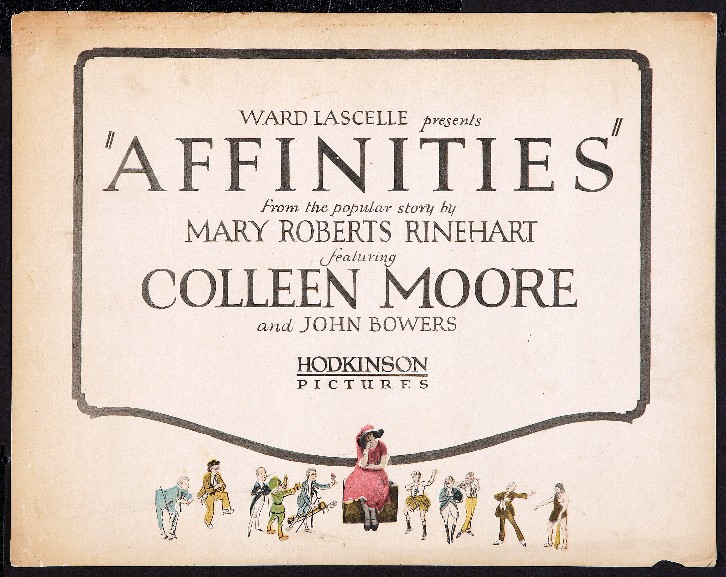
Working backwards through the schedule on a day when I will admit I was a little sidetracked, the programme of restored fragments produced by the Haghefilm/Selznick School fellowship 2012 won the hearts of the audience with its rare and strange beauty. The glimpses of Colleen Moore in 1922’s Affinities showed her at her winning best, although the film’s sexual politics seem terrifyingly retrogressive. There was two-strip Technicolor aplenty here: a documentary called Sports of Many Lands (1929) entranced with images of surfers on Waikiki’s deep blue ocean waves and race horses speeding down rich green furlongs. There were musical numbers, mysterious robots and dancing girls too. More, please.
There was a devil of a lot of Dickens on offer today, with the first session of the morning partnering a raucous but the most part feebly acted 1914 Martin Chuzzlewit, with the rare treat of our own Maurice Elvey’s slick, engaging modern dress Dombey and Son from 1917. Lucie Dutton says it best on Twitter (and there are more where these came from, Lucie is tweeting up a storm from the festival):
What to say of the diverse comedies collected in the Oh, Mother-in-Law! programme? Not nearly as offensive as it sounds, these shorts were often laugh-out-loud funny, with Louis Feuillade’s race film La Course des Belles-Mères (1907) and a wicked Italian number called Finalement Soli (1912) the standouts for me.
What we learned today: Defensive weapon, writing desk, modesty screen, rodent impersonator … the many and varied uses of a hatbox, as demonstrated by Anna Sten in The Girl With the … Hatbox.
One would only expect to see the most ardent silent cinephiles here at the Giornate, but even within the geek elite assembled in Pordenone there are distinctions to be drawn. For instance, do you love silent cinema enough to be present and correct at a 9am screening of a rarely shown “experimental” Pudovkin film? On a Sunday?
Anna Sten in Earth in Chains (1927)
Well I was there, though my fellow festival-goers may wish mention my hotel’s proximity to the Teatro Verdi as a mitigating factor. And for my euros, Prostoi Sluchai/A Simple Case (1932) was worth the early start. A moral parable, slightly more convoluted than the title suggests, it condemns disloyalty to the Socialist cause, here represented by a shell-shocked husband committing adultery. The lyrical opening, some extreme montage to represent machine-gun fire in the battle scenes and an abstract sequence of decay and regrowth all stood out. Not an easy film to take in, perhaps, but one that repays the effort.
Sunday’s second Soviet film came much later in the schedule and was one of my highlights of the day. To kick off the strand of the programme that celebrates Anna Sten, the Hollywood star who never quite was, we were treated to the emotionally gruelling Earth in Chains (Fyodor Otsep, 1927). Sten is beautiful, just radiant, in this exceptionally ugly tale of exploitation. The film’s epic themes of injustice and oppression make it seem much longer than its 80-minute running time, which was, for once, a good thing. Some heavy metaphorical inserts and a mawkish ending aside, this film consistently impressed and I am keenly anticipating more from Sten this week.
It was a more obvious pleasure to take in some Italian scenery this morning, while watching Idillio Infranto (1933), a short, poetic-realist tale of doomed romance and corruption in the Puglian hills (and more of the same in the big, bad city). The folksiness of the film was echoed by the recorded score for instruments and voices that was always highly strung and mostly excellent.
Idillio Infranto (1933)
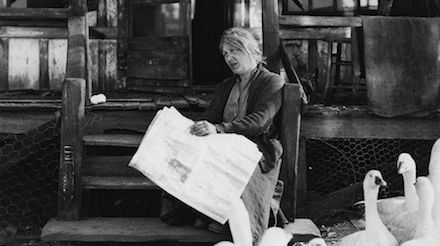
On a high from the Italian film, I returned from lunch hugely excited to see The Goose Woman (1925), which I missed at the London film festival last year. Louise Dresser plays an alcoholic former opera star who pretends to have witnessed a crime in order to get some attention from the newspapers. It’s a terribly sad story, inspired by a real murder case, and the film often awkwardly mixes comedy in the drama when perhaps it could have been played straight. It’s beautifully shot, with delicate lighting, emphasised by tints on the film. Dresser is fantastic in the lead role, though, and though this film also has a rather sugary finale, this Hollywood gem directed by Clarence Brown is a very happy rediscovery.
The most bizarre segment of the day was undoubtedly the morning’s programme of German animation. Yes there was a Lotte Reiniger film in there (Die Barcarole, 1924), and some similar cutout work from contemporary Toni Raboldt, but this was a diverse batch indeed. Many of the shorts were in actuality adverts or propaganda films, promoting goods from sausages to perfume, life insurance to war bonds. One of the strangest was a mixed-media, hand-tinted work by Walter Ruttman that employed the story of Adam and Eve to sell fresh flowers. It’s a love story, I suppose. Many of the films were funny, most intentionally so, and a few of them were wildly politically incorrect or just plain odd. A brantub of surprise packages.
Jackie Coogan as Oliver Twist
The evening entertainment was a double-shot of Oliver Twist: the pacey 1922 Hollywood version starring Jackie Coogan and Lon Chaney was accompanied, though I didn’t see it, by a shorter Hungarian version titled Twist Oliver (1919). For the night owls there was another of Manning Haynes’ precious WW Jacobs adaptations: Sam’s Boy (1922), but so far, I think I’m more of a lark
Silent cinema in-joke of the day: Yesterday it was Marion Davies mimicking her Hollywood pals, today the intertitle in Frank Lloyd’s Oliver Twist introducing a “Mr Brownlow” drew a very rowdy chuckle on the top balcony.
For full details of these and all other films in the festival, the Giornate catalogue is available as a PDF by following this link.
My report from the first day of the festival is here.
Here in Pordenone the weather is warm and the days are long, which makes the Giornate del Cinema Muto, now in its 31st year, an Indian summer of film and music.
This is your correspondent’s first trip to the grand-daddy of international silent film festivals and although I have only been in town for a few hours, I am inclined to believe the hype. This town in northern Italy has definitely been bitten by the silent cinema bug. The billboards, shop windows and even pavements are adorned with hand-tinted fairies, in eye-popping shades of cerise, blue, orange and green. The customers sipping caffe espresso in the cafes bend their heads over the 190-odd page festival catalogue, revealing the loops of pastel ribbon around their necks that hold their precious pink passes.
With eight days of silent cinema programmed, taking in everything from Louis Feuillade to GW Pabst, Laurel and Hardy to Anna Sten, starting at nine in the morning and continuing late into the night, this is a film enthusiasts’ paradise. It’s a rich diet, too, and some of the sessions will test the spectators’ endurance as much as they dazzle the eyes, but therein lies the challenge: how to see everything that you want to see, discover some unexpected gems, sleep (but not in your seat at the Teatro Verdi) and eat three squarish meals a day? It’s tricky. And if one were fool enough to try to blog from the festival too, utterly impossible.
But God loves a trier, so here goes nothing.
This is the first in a selection of posts I hope to share from my trip to the Giornate. I want to give you a flavour of the festival, and keep you up to speed with the treasures on show here. Anything more comprehensive may just be a promise I can’t keep.
My first day here was mostly spent in queues, at airports and ticket offices in London and Venice. However, I did arrive in time for a programme of early Charles Dickens adaptations, most of which were familiar to me as they may be to you, but as in the case of The Death of Poor Joe (1900/1) discovered this year in the BFI archives, some are only recent acquaintances. Thanhouser’s The Old Curiosity Shop (1911) benefits from a particularly winsome, though terribly young, Little Nell in the form of “Thanhouser Kid” Marie Eline. The same company’s boisterous, and very funny, romp through Nicholas Nickleby, made in the following year, was another highlight of the afternoon. We were also treated to four episodes from The Pickwick Papers and Biograph’s The Cricket on the Hearth (1914). Rest assured, this won’t be the last we hear from Dickens.
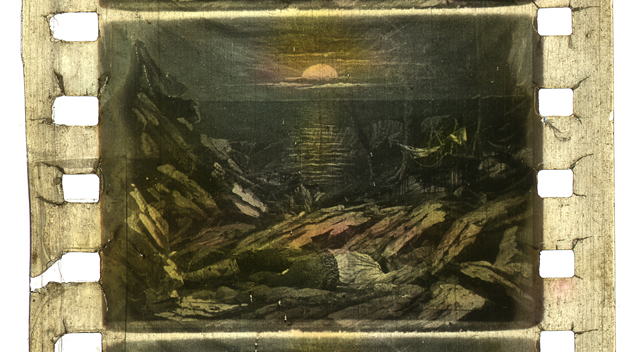
Saturday night’s opening gala was a double-bill of an old favourite and a lost-and-found treat. George Méliès is very much in vogue, and the full version of his The Adventures of Robinson Crusoe (1902) has been discovered, in all its hand-tinted splendour and restored by the Cinematheque Française. Made just a few months after The Trip to the Moon, Crusoe is, as the director and star himself said, more of a “cinematographic play” than a series of “fantastic tableaux”. Colour is used here to tell the story, rather than to dazzle, but the sets, particularly the shipwreck scene and a thunderstorm, are fantastic. The effect of seeing living actors, with their clothes and skin painted on, interacting with Méliès’ theatrical studio sets is as exhilaratingly hyper-real as anything James Cameron has thrown at us. Paul McGann delivered the director’s own commentary, which combined narrative exposition with an advertisement of the film’s strengths and special effects. Maud Nelissen’s score for a quartet added panache, pace and a smattering of sound effects
The gala centrepiece was King Vidor’s delightful The Patsy (1929) starring Marion Davies and Marie Dressler, with an orchestral score from Nelissen. The house was in fits, particularly during the famous sequence in which Davies impersonates Mae Murray, Lillian Gish and Pola Negri. An in-joke for this crowd perhaps, but it’s wonderful to see the silent stars still playing to the gallery in the 21st century.
This is the final Charlie’s London post by Ayşe Behçet for Silent London. Charlie’s London is now moving to its own site!
Welcome to the last edition of Charlie’s London on Silent London. I had been thinking for a while about what would be the best goodbye post for a site I hold so very dear. Without Silent London, Charlie’s London would not have an audience and I would not have had the platform to express my love for one of the greatest artists/comedians/directors/humanitarians the world has seen.
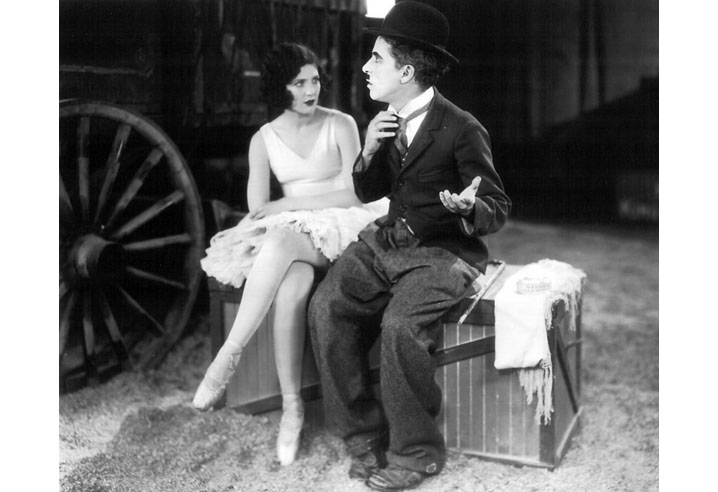
Chaplin means something different to everyone. To me he has somehow become part of my family history! From little William in that workhouse to seeing my very own godson fall in love with his films, I can honestly say Charlie never leaves me. Recently I was lucky enough to attend the Southbank showing of The Circus and as I sat in what really is Charlie’s London I felt very honoured and emotional. It was not just because it was a Chaplin film, but because my grandmother and I had watched this film many times when I was a child. I clearly remember her singing “swing little girl” to me on more than one occasion; I wish she had been able to sit in one of those deckchairs with me and enjoy it for herself.
Charlie Chaplin in The Circus (1928)
There has been so much written about Chaplin the film-maker, the genius of cinema. There has been even more on Chaplin the man. What has interested me throughout my time writing this blog is Charlie the Londoner. It is true that most of his london no longer exists, but his presence still lingers those streets, even if people do not realise it. Poverty is still a massive problem in inner-city areas around the world, and South London is no different. Chaplin saw all this. For him it was a different age, a different life, but not a different London. You can see this in every one of this films: Easy Street, The Kid, Modern Times and right up until Limelight, Chaplin never forgot his roots.
You like your silent film screenings with a touch of rock’n’roll? No problem. Filmphonics presents silent movies with live soundtracks in the quirky Hackney Attic venue at the top of the Hackney Picturehouse, and this month they’re showing an out-there Soviet sci-fi classic with a rock score.
Aelita: Queen of Mars (1924) is a futuristic fantasy, about a love affair between a Russian man and a member of Martian royalty. But there’s a twist, of course, and some outlandish headgear too. This is a unique and fascinating film, which you can read more about in this feature from The Quietus.
Aelita was an event. The novel, by Alexey Tolstoy, had been the first undisputed classic of Soviet science fiction. The release of the film was preceded by extensive ‘teaser’ campaigns in Pravda andKinogazeta (“What is the meaning of mysterious signals received by radio stations around the world? Find out on September 30!”). Alexander Exter, the film’s designer, was one of the few Russian futurists to have been on good terms with F.T. Marinetti and spent considerable time in Italy. She had taken part in the Salon des independents in Paris and socialised with Picasso and Braque. Special music had been commissioned to be performed by full orchestra in the cinema at screenings of the (silent) film. It was, perhaps, as film historian Ian Christie has argued “the key film of the New Economic Policy period.” Its release was so successful that many parents named their children ‘Aelita’ after the eponymous Martian princess. Years later, it would lend its name also to a Soviet-made analogue synth.
Minima’s score for the film is really excellent, making use of a cello as well as more traditional rock instruments to draw out the best of this wonderful film.
Aelita: Queen of Mars screens at Hackney Attic on Sunday 16 September at 7.30pm. Tickets start at £7 for members. Find out more here.
To win a pair of tickets to the Aelita: Queen of Mars screening simply email the answer to this simple question to silentlondontickets@gmail.com with Aelita in the subject header by noon on Wednesday 12 September 2012.
What is the name of the director of Aelita: Queen of Mars?
There are plenty of changes afoot at the BFI London film festival, with a new artistic director, more venues being used around the capital and a rejigged set of thematic categories across the programme. The Treasures strand has been beefed up, and that can only mean good news for silent film enthusiasts. So, without further preamble, here’s what you can look forward to this year:
The Manxman
This is the big one, the archive gala presentation. Hitchcock’s tragic coastal romance is one of his most beautiful films, and an accomplished, fascinating silent. Anny Ondra, Carl Brisson and Malcolm Keen take their places at the corners of an Isle of Man love triangle, and Hitchcock milks their doom-laden situation for every drop of suspense. This will of course be a presentation of the BFI’s new restoration of the film, and as he did last year with The First Born, Stephen Horne will be writing and performing a brand new score.
Rather dishearteningly described as ‘Tim Burton meets The Artist’, Pablo Berger’s modern silent plays three times during the festival, in the Cult strand. It’s a Gothic adaptation of Snow White, set in the world of bullfighting in 1920s Spain and it looks very intriguing. You can read more here and we’ll have a better idea what to expect when the reviews come in from its screenings at the San Sebastian and Toronto festivals later this month.
This is a guest post for Silent London by Jasper Sharp – scroll down for a chance to win tickets to these events.
Taking place at the Cinema Museum between 14-16 September, the UK’s premiere celebration of cutting-edge Japanese film, Zipangu Fest, returns for its third year, with a number of choice items of interest to silent film fans.
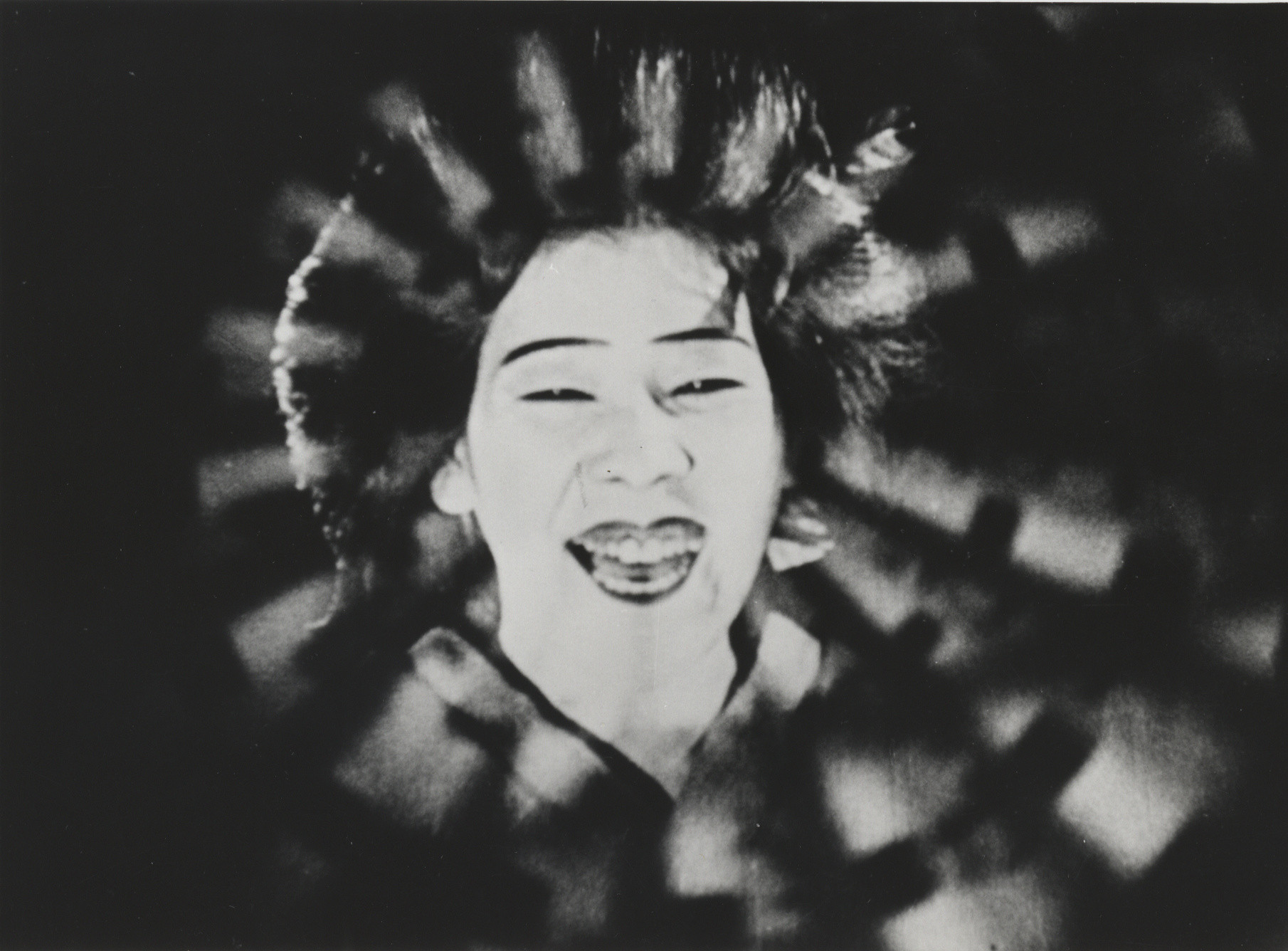
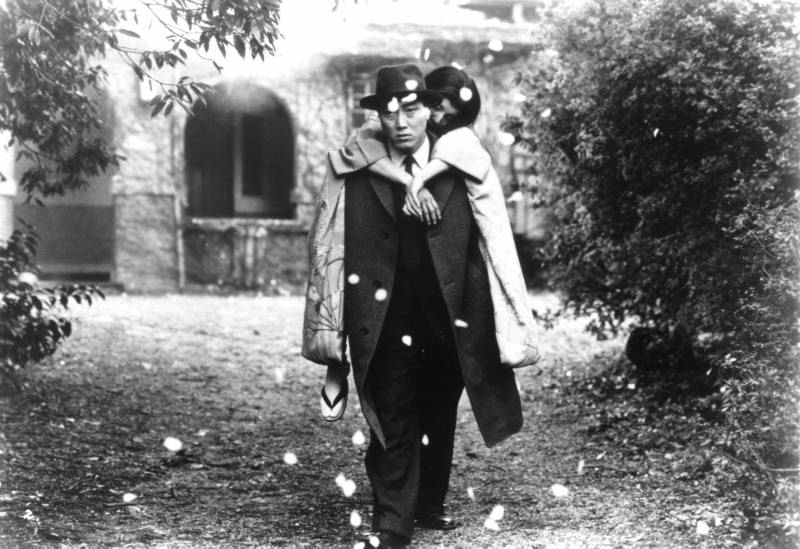
The centrepiece is the screening on Saturday evening of Kinugasa Teinosuke’s classic of the avant-garde, Crossways (Jujiro, 1928) from 35mm, with a new score performed live by Minima. One of the first Japanese films ever shown in the West, Crossways was Kinugasa’s follow up to his better-known Page of Madness (Kurutta ippeiji, 1926). Set in Tokyo’s Yoshiwara pleasure district, Crossways was described by its director as a “chambara [samurai action film] without swordfights” and was heavily influenced by German Expressionism.
This screening will be introduced by a visual presentation on the history of the film by Zipangu Fest director and author of the recent Historical Dictionary of Japan Cinema, Jasper Sharp. The evening kicks off at 7.30pm, and tickets are available from the Zipangu Fest website.
To Sleep So as to Dream (Yume miru you ni nemuritai)
Crossways will be preceded by another very rare screening for those with an interest in Japan’s early cinema, To Sleep So as to Dream (Yume miru you ni nemuritai), the 1986 debut from Kaizô Hayashi (Circus Boys, Zipang, and the ‘Yokohama Mike’ trilogy).
Two private detectives hunt for an actress trapped within a frame of an ancient ninja film in this magical double-handed homage to the movie worlds of the 1910s and 1950s. Predating Michel Hazanavicius’ recent faux-silent work The Artist by 25 years, To Sleep So as to Dream is chockfull of references to Japan’s rich cinematic heritage, featuring cameos from a host of veteran talent including the benshi (silent film narrators) Shunsui Matsui and Midori Sawato, and the baroque sets of Takeo Kimura, the Nikkatsu art designer fondly remembered for his flamboyant work with Seijun Suzuki in the 1960s. Playing for the most part without dialogue, it toys with the conventions of both the silent film and hardboiled detective genres, leading the viewer through a maze of colourful locales such as a carnival fairground and a deserted film set.
The essence of celluloid – Spirit Made Flesh
Both of these titles will be screened from film. Indeed, cinema purists might want to also note Zipangu Fest’s Sunday afternoon session, beginning at 4.30pm, Spirit Made Flesh: Works from 3 Experimental Filmmakers, featuring work by Shinkan Tamaki, Momoko Seto and Takashi Makino, all of which interrogate and explore the very essence of celluloid and analogue technologies. The screenings will be followed by a panel discussion “Is There Still a Need for Film in a Digitising World?” in what promises to be a lively and fascinating event.
Competition
Zipangu Fest is generously offering a pair of tickets to all three of these events. All you have to do is sign up to our mailing list, and tell us which of the films in our 2012 lineup interests you. On submission you will be signed up to our responsibly-managed mailing list, and three names will be selected at random for a prize. The first gets a pair of tickets to the Crossways event, the second to To Sleep so as To Dream, and the third to Spirit Made Flesh. Click here to enter.
Zipangu Fest was established in 2010 to shatter existing preconceptions about what ‘Japanese cinema’ is, and to celebrate one of the most vibrant and dynamic moving image cultures anywhere in the world. The third Zipangu Fest, hosted by the Cinema Museum in Kennington from 14-16 September, looks set to be our most ambitious and exciting yet.
This is a guest post by Ayşe Behçet for Silent London.
Today I am going to look at the importance of another figure in Charlie’s life, his brother Sydney, whom I feel should never be overlooked.
Until the groundbreaking biography by Dr Lisa K Stein (Syd Chaplin: a biography), Sydney’s story was only really told as a piece of the Charlie Chaplin jigsaw puzzle. She has completely changed this, showing Sydney as an individual who helped to create his brother’s career. Stein’s book allows us to see Sydney like never before. Her work is a testament to the extensive resources in the Chaplin archives in Bologna, as well as her own personal collection and enthusiasm for her subject. For me, it shows that the information is all very much still there for us to all see, it’s just a question of knowing where to look, having the guts to challenge what is already known, interpret it differently and give a new dimension to further Chaplin research.
Four years older than his famous brother, Sydney would look out for his younger brother for the rest of his life. Born in 16 March 1885 to the 19-year-old Hannah Hill, and originally known as Sidney John Hill, Syd become a Chaplin when he was a few months old upon the marriage between his mother and Charlie’s father. The bond these brothers or the rest of their lives was a powerful one. Their shared time in south London workhouses and poorhouses, while their mother suffered with mental illness, required great courage. These events would later shape the brothers’ outlook on their art and their lives – although in different ways. Sydney Chaplin junior, Charlie’s son by his second wife Lita Grey, would reportedly later joke that his father’s choice of name for him was very apt. Whereas Charlie lived and breathed his work until its completion, Sydney senior would adopt a much more laidback approach and enjoy the fruits of his labour. In my humble opinion, Sydney felt he worked hard so he could play hard, Charlie however felt he had to hold on to his tragedy, because it helped mould his comedy.
This is great news for silent fans in that airy-fairy way that we like to see our best-loved titles acknowledged – and these three films are undoubtedly classics. They are my favourite, Murnau’s sublime Sunrise: A Song of Two Humans, Dreyer’s unforgettably cathartic The Passion of Joan of Arc and Vertov’s exhilarating experiment Man With A Movie Camera. There is a more substantial reason to get excited though: all the films in the Sight & Sound top 10 will be shown at the BFI Southbank in September – and you’ll find these silents already on the calendar.
The news gets better. You can win a pair of tickets to any of these screenings and all you have to do is tell me how much you want to go. Complete one of these sentences in 15 words or fewer to win a pair of tickets to the screening of your choice – as well as a pair of tickets to the Call it a Classic? panel discussion at the beginning of the month. I’ll pick the best sentences with an independent judge and our decision will be final. So make your answer as wise, witty or profound as possible!
I want to see Sunrise: A Song of Two Humans because …
I want to see Man With a Movie Camera because …
I want to see The Passion of Joan of Arc because …
Email your answers to silentlondontickets@gmail.com with the name of your chosen film in the subject header by noon on Sunday 2 September 2012. For your information, the Passion and Movie Camera screenings will have live musical accompaniment. The Sunrise screening will have a musical score but not live music.
The next screening from the silent film club at central London burlesque bar Volupté Lounge is not to be missed. This is not just because the film in question, a Japanese samurai adventure from 1925, is little seen, but because the method of presentation is a rare pleasure too. Orochi will be screened with live musical accompaniment in the form of a tsugaru-shamisen (a traditional Japanese stringed instrument) played by Hibiki Khikawa – and with benshi narration.
Benshi consists of a narration, lines of dialogue and an introduction to the film, delivered at the side of the screen. The benshi for this screening at the Ciné Illuminé will be delivered by actress Kyoko Morita. While early films were regularly screened with narration all over the world, benshi is a little bit special and is more or less unique to Japanese cinema: it’s a full performance and designed into the structure of the film, to enhance as well as explain, and it derives from kabuki theatre traditions. It is in part due to the popularity of benshi narrators, some of whom became very famous, that silent cinema lasted well into the 1930s in Japan, providing space for directors such as Ozu, Naruse and Mizoguchi to make so many silent masterpieces.
Orochi (The Serpent) is a film that colours its tragedy with a political subtext and it was very controversial when it was first released. Director Buntarō Futagawa was known for his innovations, but only two of his films, this one and a short, survive to this day. Orochi is about a samurai railing against an unjust world, who is played by the silent film star Tsumasaburō Bandō. The swordfighting scenes play to the star’s natural abilities: they’re fast, frenzied and a step-change from the more sedate kabuki-influenced Japanese cinema of the time. However, it’s the message rather than the mayhem, that resonates here.
The story revolves around the protagonist, Heizaburo Kuritomi, an honorable but low-class samurai who is given an emotional depth, previously unseen in Jidaigeki films, as he battles with inner conflict and the injustices of society. This is especially evident in the closing sequence of the film where the protagnoist is dragged away by his enemies after his tremendous effort to protect his love. In the essay, “Bantsuma’s ‘New Breeze'”, Midori Sawato cites the ending of Orochi as one of the most ‘heroic and heartcrushing’ images she has seen. In the past, the heroes of the films were proud samurai of the upper classes who always triumphed over their evil opponents, upholding what was truly right in the world. However, Orochi was created in response to the national and military fanaticism that was prevailing at the time.
With its now famous opening lines:
‘Not all those who wear the name of villain, are truly evil men. Not all those who are respected as noble men, are worthy of the name. Many are those who wear a false mask of benevolence to hide their treachery and the wickedness of their true selves,’
the film evoked provocative ideologies and rebellious ideas during a time where liberal performers and writers were being repressed throughout Japan. Consequently, the film was severely censored with over 20% of its content being completely cut out and several scenes having to be re-shot. When the film was finally released, the hype around its creation resulted in crowds flocking to theaters all around the country. Bantsuma’s exhilarating new sword fighting style he displayed in the film may have attracted audiences but it cannot be denied that there were many who were also deeply touched by the profound message of the film.
Doors are at 5pm for a screening at 6.30pm. Tickets are £7 in advance or £9 on the door. You’ll find the Volupté Lounge at 9 Norwich Street, EC4A 1EJ. Call 0207 831 1622 or email reservations@volupte-lounge.com to book tickets. Don’t forget to check out the Facebook page or the Twitter feed for future screenings.