All posts by PH

Pamela Hutchinson is a freelance writer, critic, historian and curator.

Charlie’s London: Chaplin’s women – part two

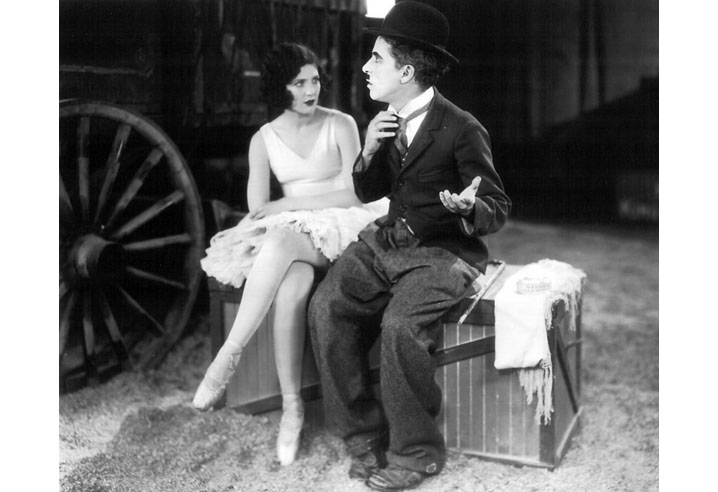
Charlie Chaplin and Edna Purviance

This is a guest post by Ayşe Behçet for Silent London.

Hi everyone. Welcome back to another edition of Charlie’s London.

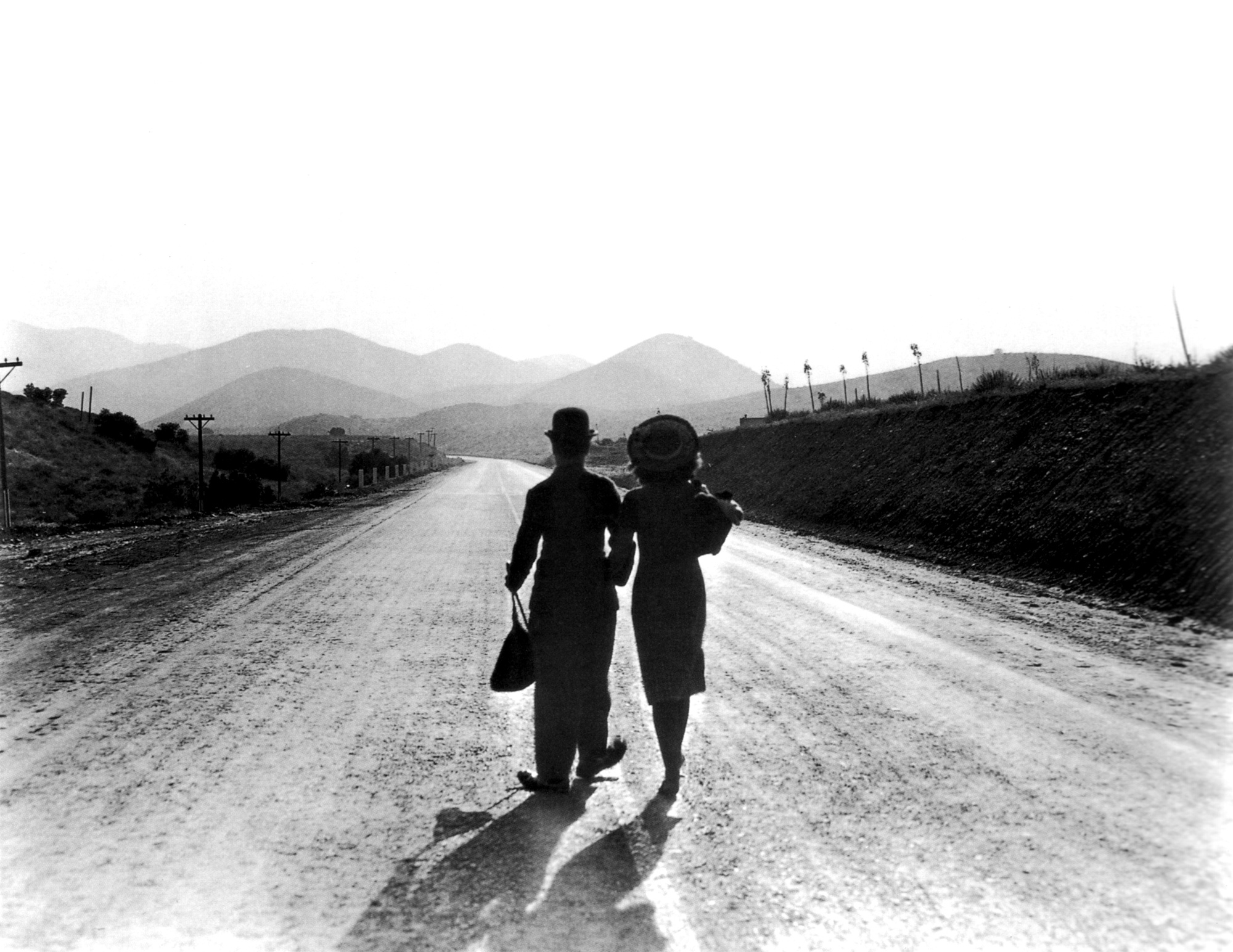
As promised I will be looking at two more women who I believe shaped his life, both on screen and off. Last time I looked at Chaplin’s mother and Mabel Normand, this week I will look at Edna Purviance and Oona O’Neill. I have to confess, Normand never used to be a favourite of mine, even though I consider her contribution to be important and often overlooked. Now, I have to say, I’m really in her corner. People have often said that Chaplin and Normand hated each other. People have also often said Chaplin and Mary Pickford hated each other too, for me, these relationships are one and the same. Their relationships were creative ones: if they clashed, let’s call it artistic differences.

Normand not only directed Chaplin but also acted as his leading lady too: a role taken most often by Edna Purviance, who appeared in 33 of his pictures including extra parts in Monsieur Verdoux and Limelight. Purviance was first cast opposite Chaplin in 1915 after a chance meeting with one of his associates in a Tate’s Cafe in San Francisco – the director was looking for a new female lead for his Essanay comedy A Night Out. Even after her final film with Chaplin, A Woman Of Paris in 1923, Purviance stayed on the company payroll right up to her death in 1958.

Chaplin and Purviance were romantically linked for many years, and unfortunately this is how some film enthusiasts and historians seem to want to remember her. I completely disagree with this. Chaplin would never have another leading lady like Purviance – Paulette Goddard comes close, but they don’t have the same bond on screen.

Continue reading Charlie’s London: Chaplin’s women – part two

Silent films at the West London Trades Union Club, 2012 season

Hindle Wakes (1927)
Hindle Wakes (1927)

The West London Trades Union Club in Acton, London W3 is a welcoming place for those who enjoy a well-kept ale and a natter, and a haven for left-leaning cinephiles too. The venue’s Saturday afternoon film club is friendly, and pleasingly broad-minded: recent seasons have taken a look at the work of film-makers ranging from Joseph Losey to Paul Robeson as well as giving club members the chance to show their own favourite titles, week by week.

Last year I spent four hugely enjoyable, chatty Saturday afternoons in west London showing silent films chosen in collaboration with members of the club. The discussions afterwards were well-informed, not to say boisterous, and one topic we often returned to was: what are you going to show next year?

So, the silent film club is back, with some much-longed for comedy, another British film, some Weimar glamour and French impressionism. Here’s what’s coming up this autumn in Acton:

Buster Keaton in The General (1926)

Comedy double-bill: The General (1926) and The Circus (1928)

Two classic films from the two titans of silent comedy: Buster Keaton’s ingenious civil-war chase film The General and Chaplin’s poignant, hilarious The Circus. These two films offer an opportunity to marvel at the best of silent comedy, but also to compare and contrast the different styles of these two great film-makers. Buster Keaton’s deadpan mechanical inventiveness versus Chaplin’s sentimental appeal and graceful physicality – you decide.
8 September 2012, 4pm

Hindle Wakes (1927)

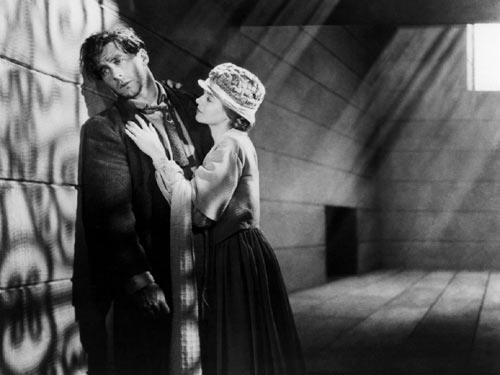
This adaptation of the much-loved northern melodrama was filmed by Maurice Elvey, a giant of British silent cinema, now sadly all but forgotten. Elvey was a trade unionist himself, and Hindle Wakes is the story of a clandestine romance between a factory worker and an industrialist’s son. It’s gorgeously filmed, with some fantastic “Wakes Week” sequences shot in Blackpool – and the heroine, played by Estelle Brody, is a refreshingly modern woman. Not to be missed.
20 October 2012, 4pm

Louise Brooks Pandora's Box (1929)
Louise Brooks in Pandora’s Box (1929)

Pandora’s Box (1929)

Another modern woman, and one of the most famous films of the silent era. Louise Brooks is truly iconic as the liberated, amoral Lulu breaking hearts in swinging Weimar Germany. Erotic, witty and ultimately tragic, Pandora’s Box is a classic that rewards repeated viewing and while coolly received at the time, has subsequently made an international star or its reckless leading lady – it now stands as the definitive portrait of a decadent society.
10 November 2012, 4pm

L’Argent (1928)

When Marcel Herbier announced his intention to adapt Zola’s L’Argent but to place it in the contemporary setting of the 1920s Paris stockmarket, many were horrified that he would take an acclaimed historical novel about ruthlessly greedy, over-reaching bankers out of its context. But Herbier’s passion, “to film at any cost, even (what a paradox) at great cost, a fierce denunciation of money”, proved as pertinent in pre-crash Europe as it does now, in the fallout of the global financial crisis. L’Argent is not just social commentary, it’s an ambitiously innovative film, a masterpiece of poetic impressionism.
15 December 2012, 4pm

Charlie Chaplin in The Circus (1928)

You don’t have to be a member of the club, or even of a trade union, to turn up and receive a warm welcome – and you will find the venue at 33 Acton High Street, London W3 6ND. It’s about five minutes walk from Acton Central train station, and on plenty of bus routes.

Win tickets to the premiere of Guy Maddin’s Keyhole at the BFI

UPDATE: Unfortunately I have just learned that Guy Maddin will no longer be able to attend the Keyhole premiere. The competition is still running, however.

No film director in the world takes more inspiration from early and silent cinema than Guy Maddin does. From his silent short The Heart of the World, to the dreamy textures of his features, such as The Saddest Music in the World and Brand Upon the Brain!, through to his hugely ambitious “lost films” project Spiritismes, Maddin has demonstrated a career-long passion for early cinema. His newest film Keyhole is also heavily influenced by classic Hollywood. AO Scott in the New York Times described it as “a dusty attic full of battered, evocative cultural references … a perfect gateway into the bizarre and fertile world of a unique film artist.”

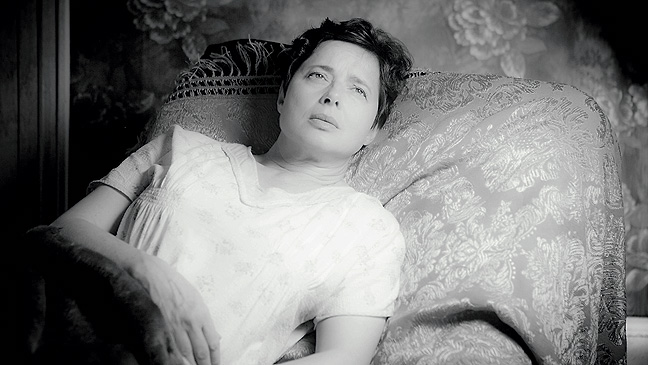
Canadian director Guy Maddin (My Winnipeg, The Saddest Music in the World) is renowned for his exploration of surreal worlds and ghosts, which most recently has manifested itself in his ongoing Spiritismes project, launched at the Pompidou this March. His latest feature Keyhole, featuring deliciously unhinged performances from Isabella Rossellini, Jason Patric and Udo Kier, is a fabulous and bizarre personal-odyssey-cum-supernatural-thriller that exposes the hidden desires of the Pick family, their phantoms and the gang of thugs who inhabit the shadows of their crumbling home.

Isabella Rossellini in Guy Maddin's Keyhole
Isabella Rossellini in Guy Maddin’s Keyhole

Keyhole will premiere at the BFI Southbank on Monday 13th August, at a special screening that will be followed by a Q&A with the director in which he will talk not just about the new film, but about his latest silent project – one that is of particular interest to readers of Silent London.

Guy Maddin’s current project Spiritismes is a unique, live production/online project that brings back to life ‘unrealised, half-finished, lost or abandoned films’ by the great masters of the cinema: Cocteau, Vigo, Murnau … BFI’s special UK Premiere Fundraiser of Keyhole is being presented, courtesy of Soda Pictures, to enable Guy Maddin to ‘channel’ Hitchcock’s lost film The Mountain Eagle. All proceeds from the screening will be donated to the production and Maddin will be in attendance to talk about Keyhole, Hitchcock and Spiritismes.

So, buy a ticket for Monday’s event and you will be helping this acclaimed and distinctive director to recreate the lost Hitchcock film The Mountain Eagle.

To win a pair of tickets to the premiere of Keyhole at BFI Southbank, simply email the answer to this simple question to silentlondontickets@gmail.com with Keyhole in the subject header by noon on Friday 10 August 2012.

  • Name Guy Maddin’s hometown in Canada, referred to in the title of one of his most famous films.

Good luck!

Sight & Sound’s Greatest Films of All Time Poll – a silent resurgence

Sunrise (1927)
Sunrise (1927)

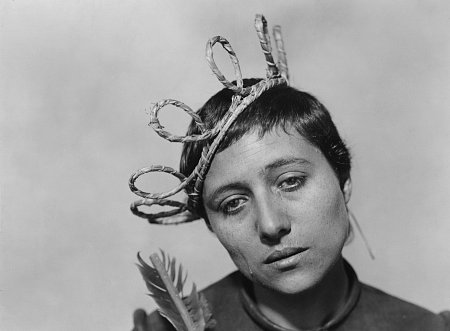
In 1952, Sight & Sound‘s critics picked seven silent films in their top 10 great Films Film of All Time selection. Today, they chose just three, but that’s one more than in 2002, 1992 and 1982. They’re much-loved films too: Sunrise: A Song of Two Humans, The Man With a Movie Camera and Dreyer’s towering The Passion of Joan of Arc. I am surprised that Battleship Potemkin fell out of the top 10, and would have expected The General or Greed, say, to nudge ahead of Movie Camera, but that’s a good, interesting spread of late silent cinema.

The Passion of Joan of Arc (1928)

When we see the top 100, I expect to see more silents overall – revivals and restorations of Metropolis, Napoléon and a general greater awareness and love for early cinema should see to that. And I would love to see some earlier films. I know I voted for one. But then, one more vote would have kept Potemkin in the top 10, and I didn’t nominate it, so perhaps I should keep quiet about my list…  The full poll details will shortly be online, so we can look forward  to lots more number-crunching. I can tell you that the top 10 silents voted for overall were: Sunrise, Man With a Movie Camera, The Passion of Joan of Arc, Battleship Potemkin, The General, Metropolis, City Lights, Sherlock Jr, Greed, Un Chien Andalou and Intolerance.

The Man with a Movie Camera (1929)

Yes, some people will tell you that the lead story here is the toppling of Citizen Kane by Hitchcock’s Vertigo – or the fact that there is nothing here more recent than Kubrick’s 2001: A Space Odyssey. That’s probably true, and you can read more about the list here, from the very wise Tim Robey. In fact, here’s the top 10 in full. What do you think?

  1. Vertigo (Hitchcock, 1958)
  2. Citizen Kane (Welles, 1941)
  3. Tokyo Story (Ozu, 1953)
  4. La Règle du jeu (Renoir, 1939)
  5. Sunrise: a Song for Two Humans (Murnau, 1927)
  6. 2001: A Space Odyssey (Kubrick, 1968)
  7. The Searchers (Ford, 1956)
  8. Man with a Movie Camera (Dziga Vertov, 1929)
  9. The Passion of Joan of Arc (Dreyer, 1927)
  10. 8 ½ (Fellini, 1963)

Win tickets to watch silent films at the BFI this summer

Don’t forget that the BFI’s Genius of Hitchcock retrospective begins in earnest this month. In fact, you can kick off the celebration with a Blackmail silent-and-sound double-bill tonight. For the other silents in the season, check the Silent London Calendar.

First off you won’t want to miss the theatrical release of The Lodger on 10 August – there’s a special screening at BFI Southbank featuring a Q&A with composer Nitin Sawhney too.

Next month, you’ll want to note some other Hitchcock dates in your diary to see the new restorations of his silent films. There’s a second chance to see The Pleasure Garden with Daniel Patrick Cohen’s marvellous score on 13 September. Downhill will screen with a live score from beatboxer Shlomo on 20 September and there’s a screening of Champagne with “boldly classical” music from Mira Calix on 27 September. There’s the restoration premiere of Easy Virtue on 28 September, too.

Plus, it has now been announced that The Manxman will be this year’s London film festival archive gala, screening at the Empire Leicester Square on 19 October with a new score from Stephen Horne. If you saw last year’s gala screening of The First Born, also with a score by Horne, you’ll know this isn’t be missed.

Back to August, the BFI is showing a fine roster of other silent films, including Greed, The Dumb Girl of Portici featuring Anna Pavlova, and Drifters, with a live score from sound artist Jason Singh. Search to find out more on the BFI website.

To win a pair of tickets to the any silent screening at the BFI this month, simply email the answer to this simple question to silentlondontickets@gmail.com with August in the subject header by noon on Friday 3 August 2012.

  • What is the name of Hitchcock’s lost silent feature film, starring Nita Naldi?

The Genius of Hitchcock season runs until October and showcases a complete retrospective of his films, from his early British silents, to his later Hollywood classics. Also included in the season is a dedicated microsite, The 39 Steps to Hitchcock, which is a step-by-step guide through one man’s genius, featuring exclusive film extracts, interviews with close collaborators (Kim Novak, Tippi Hedren and more) and a journey through his life and career through galleries curated by Hitchcock experts.

The Cabinet of Dr Caligari with Martyn Jacques: live review

Martyn Jacques and The Cabinet of Dr Caligari

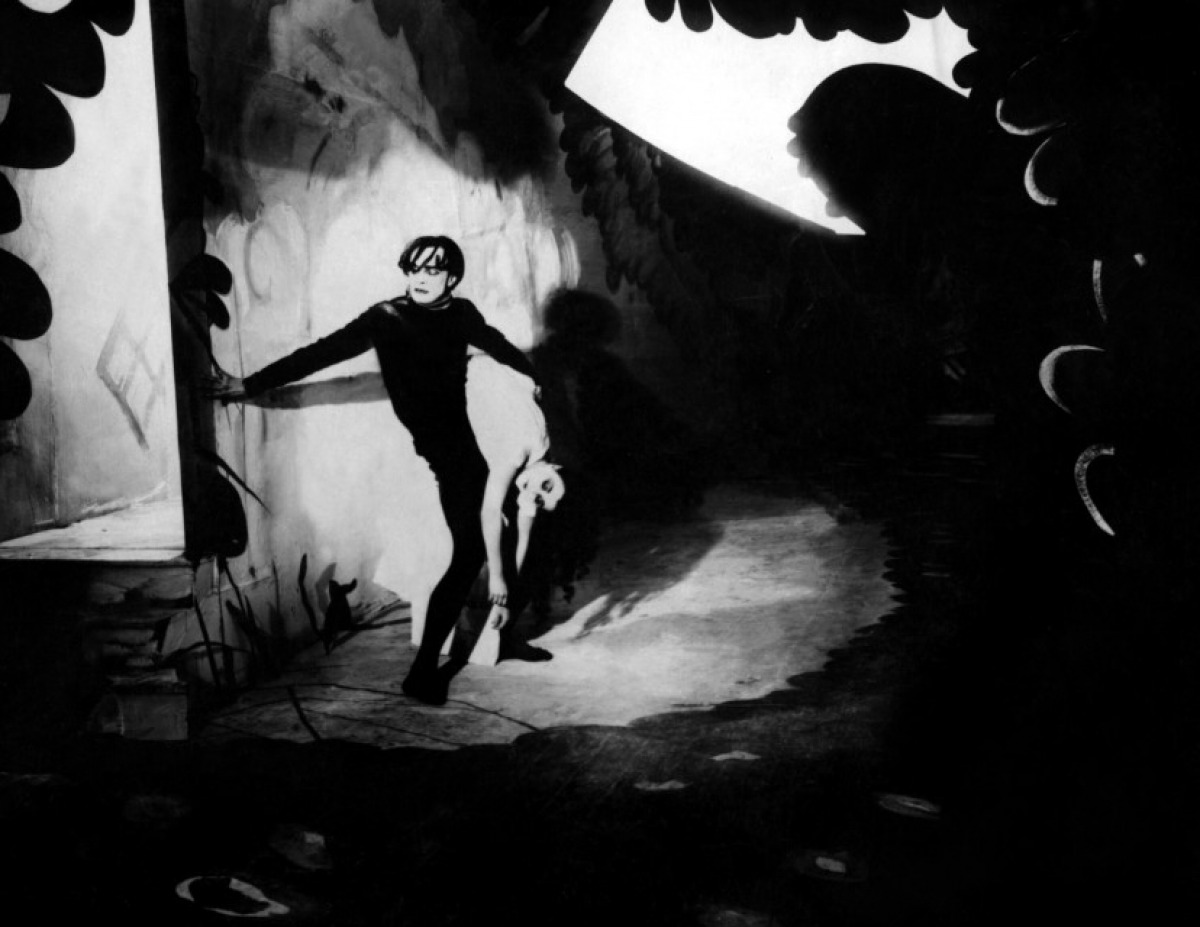
Familiarity with The Cabinet of Dr Caligari, the totem of German Expressionism, cannot dim its angular beauty, nor its power to baffle and tease. This luridly geometric film invites a wild accompaniment, one that will embrace its puzzles and schlocky plot twists, and so Caligari pops up time and again in repertory cinemas, with scores veering from rock to electronica to jazz and all points in between. Martyn Jacques of punk-cabaret adventurists The Tiger Lillies has answered the call, and his theatrical, seedy style couldn’t be more simpatico.

Jacques has set up a short residency in the West End’s Soho Theatre this summer, playing his Caligari score night after night in a basement cabaret bar that’s a few shades too salubrious for that sleazy Weimar vibe. The venue wins on atmosphere, then, but the downside of watching a film in a bar rather than a cinema becomes obvious the moment we clock that we’ll be a watching Caligari on DVD, projected a little wonkily at that.

The Cabinet of Dr Caligari (1920)

But we’re here for the Martyn Jacques show, and I’m happy to squint and imagine his folksy-sinister piano-accordion-vocal score accompanying the real deal. If Jacques’ music can shine tonight, it will worthy of a showing that will please the projection purists too. And Jacques’ music does shine. He says that he was inspired to write his score by his childhood piano teacher, who worked as a film accompanist in the silent era, and clearly he was an observant pupil. Jacques’ piano proves nicely responsive to the film, turning, pausing, and marching when the film does. His punchy accordion, too, can screech with the high-strung horror of it all, or rumble along as a creepy echo of the fairground’s barrel organ. The occasional foot stomp adds drama, and acknowledges the fact that this is a musical, hummable score – the audience are nodding their heads, tapping their toes, as we go.

What’s really distinctive about Jacques’s score, though, is his vocal, which can switch between a low grumble and a rising falsetto. It’s dramatic, percussive and at its best, when quietly threatening, a low non-verbal bass line for the piano melody. Mostly, though, Jacques is singing his own colourful lyrics: a musical narration for the film that goes out of its way to introduce the carnival’s bit-part characters and to explore the fears and motivations of the film’s leading players.

Those lyrics are the score’s fatal flaw: often what Jacques is singing differs from what’s on screen in some small but important detail. His lyrics can clash with the intertitles, making the viewing experience anything but immersive. At worst his words can pre-empt the next plot twist, which sadly dissolves the horror-movie tension. Occasionally, the lyrics and the film are in different worlds altogether. At these times, one suspects this score to be in reality a rehearsal for a project such as Jacques’s hit grotesque operetta Shockheaded Peter. I’m not sure that’s such a bad thing, a cabaret Caligari with puppets? I think it could be a another smash, in Jacques’ hands.

As I said earlier, this is Martyn Jacques’ show, and while his Chaplin-death-mask makeup and fruity lyrics may threaten to steal the limelight from the movie, his fluid score reveals a real sensitivity to the art of silent film accompaniment. Perhaps he has his eyes on other horizons, but I’d be more than happy to hear another silent score from such an exuberant talent.

The Cabinet of Dr Caligari screens at the Soho Theatre in London until 11 August 2012. To find out more and to buy tickets, visit the Soho Theatre website.

Charlie’s London: Chaplin’s women – part one

Charlie Chaplin and Paulette Goddard in Modern Times

This is a guest post by Ayşe Behçet for Silent London.

Welcome to another edition of Charlie’s  London! For this segment and the next I’m going to look at some of the women in Chaplin’s life, showing how influential, important and ultimately empowering some of these women’s roles really were.

A lot has been written about Chaplin’s private life; he was a dashing and charismatic individual whose appeal extended beyond stage and screen. Recently I was talking to a fellow Chaplin fan and friend in Bologna. We both agreed that there was something so beautiful about Charlie, it was no surprise that his private life become front-page news, whether the stories were true or not.  Putting the gossip aside, for me the women who shaped, moulded and even changed Chaplin were his mother Hannah, Mabel Normand, Edna Purviance and of course Oona O’Neill.

This subject will often be debated, with some enthusiasts and historians adding Hetty Kelly, Charlie’s first love, and even Paulette Goddard, his third wife and star of Modern Times and The Great Dictator, to that list. I hope with these two blogs I will explain why I have chosen this group. In this first instalment I will talk about Hannah Chaplin and Mabel Normand.

Hannah Chaplin
Hannah Chaplin

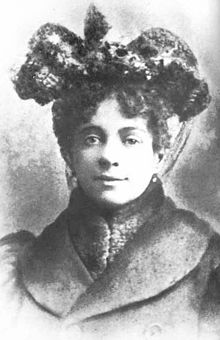
Hannah Hill, Chaplin’s mother, was arguably the most influential woman in his life. Her struggles in order to give Chaplin a decent upbringing, only to suffer such terrible mental health problems, no doubt haunted him for the rest of his days. I have spoken of Hannah before, and I am quite fond of her as a historical character, not only because she is the mother of my hero, but because I feel she is incredibly interesting. Historians have labelled Hannah as everything from a woman of ill repute to an undiscovered music hall genius whose renditions of the era’s classics would ignite her son’s thirst for the art.

The “fallen woman” analysis comes very much from psychologist Dr Stephen Weissman whose book Chaplin: A Life paints Hannah in a very unflattering light. His depiction of her affair with stage star Leo Dryden (the union that would produce Chaplin’s brother Wheeler) and his suggestion that syphilis was the cause of her madness (including references to her working as a prostitute) are seen as very controversial by other Chaplin enthusiasts and historians. David Robinson is quite rightly kinder to Hannah, noting the confirmed ancestral link to mental health dificulties within the Hill women as the roots of her tragic downfall, while also highlighting her faults such as her affair.

Continue reading Charlie’s London: Chaplin’s women – part one

The Great White Silence at the Exhibition Road Show, 28 July 2012

The Great White Silence (1924)

The Royal Borough of Kensington and Chelsea is contributing to Olympic mania by staging what it describes as “London’s most sophisticated street party”. It’s a festival really, featuring games, dance, science, debates, music, writers’ commissions and visual art installations, with a little nod to the Great Exhibition that took over Hyde Park in 1851. The Exhibition Road Show will take place on the street they’re calling “London‟s cultural and intellectual heartland”, just a short hop from the Olympic beach volleyball venue in Earl’s Court.

The Show runs from 28 July to 5 August, and on its opening night you can pop along to a free outdoor screening of Herbert Ponting’s elegant, unflinching Scott of the Antarctic documentary The Great White Silence – with its acclaimed live score by Simon Fisher Turner and his musicians.

Fisher Turner’s score for The Great White Silence premiered at the London Film Festival in 2010, and was described by The Guardian as “”skillfully judged, and the blend of real sounds – such as the gramophones that would have played on the ship, the Terra Nova, as well as a recording of the ship’s bell – and sparse musical scoring seemed to respect the idea of silence while making sound”.

The Great White Silence screens on the evening of Saturday 28 July 2012. For more details, see the Exhibition Road Show website.

Anson Dyer: Britain’s forgotten animation pioneer

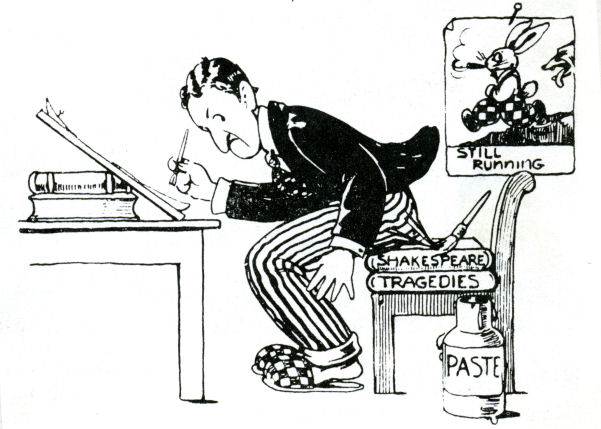
This caricature of Anson Dyer is probably a self-portrait (Source: ukanimation.blogspot.com)

This is a guest post for Silent London by Robyn Ludwig.

The animators whose films will be showcased at the British Animation Film Festival this Sunday owe a debt to Anson Dyer – though many may not even know it. 2012 marks the 50th anniversary of the death of Ernest John Anson Dyer (1876-1962), a masterful animator and pioneering director in the silent-era years of the British animation industry. Much less is known about Dyer and his early films, than of his peers in America and continental Europe. Yet film historian Geoff Brown notes: “For all the current lack of critical attention, Anson Dyer was a major figure in British animation for over 30 years, from the first world war to the aftermath of the second … [He] was promoted for a time as Britain’s equivalent of Walt Disney, with a prolific and popular output of children’s cartoons” (Brown, BFI Screenonline). Donald Crafton, in Before Mickey: The Animated Film (1898 – 1928), credits Dyer as helping British animators come “closer than anyone else in Europe to establishing a significant cartoon industry” (Crafton 252).

Dyer began his animation career in 1915, at the late age of 39, having spent 20 years as an ecclesiastical artist designing stained-glass church windows on commission. Yet most of his earliest films were secular in theme: propagandistic political satires in the “topical sketcher” tradition. When he joined Kine Komedy Kartoons in 1919, however, he began directing children’s material, including the Phillips Philm Phables series (also known as the Uncle Remus series). Later that same year, Dyer signed with Hepworth Picture Plays in Walton-on-Thames, and during this prolific period, he produced a number of Shakespearean parodies, and the family-friendly Kiddie-Graphs fairy tale series, including The Three Little Pigs (1922) and Little Red Riding Hood (1922).

Continue reading Anson Dyer: Britain’s forgotten animation pioneer

Sonic Cinema: Drifters (1929) with Jason Singh at the BFI

Drifters (1929)
Drifters (1929)

UPDATE:  This event has been rescheduled for 5 November 2012.

In November, the BFI will release a dual-format DVD/Blu-Ray edition of an intriguing double-bill: Sergei Eisenstein’s Battleship Potemkin (1925) and John Grierson’s Drifters (1929). It’s the second instalment of the BFI’s The Soviet Influence series, which has the stated aim of revealing the impact of 1920s Russian films on later British film-makers.

Drifters premiered at the Film Society on November 10, 1929, on the same bill as Battleship Potemkin, which was receiving its British premiere. Grierson had previously produced an English language version of Eisenstein’s film for its American screening and the influence of Eisenstein is clearly revealed in Drifters.

To tide us over until the home video release, we have a screening of Drifters, a film about herring fishing, and fishermen, directed by the father of the British documentary movement, John Grierson:

Like Potemkin, Drifters employs montage in an expressive manner, creating dramatic tension in the absence of any psychological characterisation. Both films also use ‘types’ (non-professional actors) instead of actors in order to create a more ‘authentic’ reality, and both films make use of extensive location shooting. Grierson, nevertheless, always stressed that he was keen to make a film with distinctively ‘British’ characteristics, which he saw as moderation and a sense of human importance. Drifters is, therefore, slower paced than Potemkin, and focuses on more mundane, less inherently dramatic events. (BFI Screenonline)

I am resisting making a “red herring” gag, but you should feel free to do so. This NFT1 screening of Drifters will be accompanied by a live score from Jason Singh, a recording of which will also be presented with the film on the disc. Singh is a “beatboxer, vocal sculptor and sound artist”, and his score combines both live and prerecorded vocals with all manner of processing and sampling. You can read more here, and watch a snippet of Singh in action below. I think you’ll agree it’s very atmospheric.


Anna Pavlova at the BFI: ballet and silent film

Dance and silent cinema have a natural affinity. Many of the earliest films were records of serpentine dances: mesmerising, rainbow-tinted swirls. And these days, when choreographer Matthew Bourne discusses his blockbuster productions with grand sets inspired by German Expressionism, he says: ”it’s almost like pure cinema. It’s like a silent film.”

It’s no surprise then that silent film-makers pointed their camera at the dance stage and the best ballerinas of the day. And the ballet world was fascinated by cinema too. This intriguing article by Henry K Miller relates the thwarted ambitions of Sergei Diaghilev, director of the Ballets Russes, to make a colour film of Tchaikovsky’s ballet The Sleeping Princess. A short season at the BFI this August celebrates one of the greatest ballerinas of all time, Anna Pavlova, who arranged for many of her dances to be filmed and appeared in a feature film too:

‘Next to seeing Pavlova in person, there is no better substitute than seeing her through the mechanism of the kinema.’ So noted a critic in The Guardian following the release of her American feature film, The Dumb Girl of Portici, in 1916. As a ballerina, Anna Pavlova (1881-1931) was as an inspiration; she was also an independent career woman and mega-star loved by the media and her audiences throughout the world. She was also the first major ballerina to truly investigate the medium of film during the 1910s and 1920s. Not only did she star in a Hollywood feature film, but also had a number of her solos filmed. At the end of her life, Pavlova travelled with two movie cameras to record her productions and travels. This season includes documentaries, recordings of dance and features indicating the range of ballets she performed and placing her screen career in context with contemporary recordings of dance.

The BFI will be showing that film, Lois Weber’s The Dumb Girl of Portici (1916), which features this beautiful sequence of Pavlova dancing with an “invisible” partner. The film will be screened with live piano accompaniment and an introduction by dance historian Jane Pritchard.

The Dumb Girl of Portici is an adaptation of the French opera of the same name. Watch out for the character Masaniello, who is played by Rupert Julian, the same man who directed The Phantom of the Opera in 1925, which opens with this gorgeous ballet scene:

You can see The Phantom of the Opera at the Volupté Lounge on 19 August with a live score by electronic duo Cipher.

In the BFI’s Pavlova season, there will also be a chance to see Evgeni Bauer’s The Dying Swan (1917), in which Vera Karalli, a Russian silent film actor and dancer with the Bolshoi ballet, performs the famous routine from Swan Lake. The film will be shown alongside an Omnibus documentary about Pavlova, and with a score by Joby Talbot.

Click here for more details of the BFI’s Anna Pavlova season.

Wonderful London: DVD review

Wonderful London
Wonderful London

This is a guest post for Silent London by Karolina Kendall-Bush

Sitting in the bowels of the BFI at Stephen Street watching the 20 or so Wonderful London travel films in silence, I often dreamed of the day when these mesmerising scenes of life in the 1920s might be restored and released on DVD with a score. Finally, ithat day has come. In autumn last year, those of us who could get tickets to a soldout performance at the BFI London film festival were lucky enough to see six of these films in all their glory, fully restored from the original coloured nitrate prints. Now the BFI has released those films, along with six “extras” (in good black-and-white prints) on DVD with music by John Sweeney and essays from Bryony Dixon, Iain Sinclair, Jude Rogers and Sukhdev Sandhu.

Wonderful London
Wonderful London

Although these films were simply shot commercial “fillers” to be shown before the main feature, they were remarkable in many ways. Most travel films of London in this period tended to flit between landmarks with a few explanatory intertiles. They were, dare I say it, ever-so-slightly dull.  Having devoted a lot of time to watching travelogues of London, I often groan as repeated shots of Buckingham Palace, Big Ben and Tower Bridge pass before my eyes. In this context, the Wonderful London films are quite treat. Paying as much attention to pet cemeteries and street performers as they do to London’s  best-known tourist destinations, they are, I think, antecedents to Norman Cohen’s The London Nobody Knows (1967) and even Patrick Keiller’s London (1994, below).

Each Wonderful London instalment goes on a thematic excursion. Barging through London charts the course of the Regent’s canal, Cosmopolitan London goes in search of the city’s diverse ethnic communities, London’s Sunday looks at what Londoners do on their day off, and so on. The conversational intertitles, which can veer between amusing and patronising, invite viewers to go on a journey through the city. In her essay, BFI silent film curator Bryony Dixon notes how these films exploited the popularity of St John Adcock’s 1922 magazine Wonderful London. In this publication, famous writers described various aspects of the capital for readers eager to discover London in all its complexity.

Continue reading Wonderful London: DVD review

Charlie’s London: from the archives to the airwaves

The Charlie Chaplin Archive, Bologna
Heaven for a Chaplin fan … the archive in Bologna

This is a guest post by Ayşe Behçet for Silent London.

Welcome back for another edition of Charlie’s London. This week I am going to be talking about my debut appearance on the Silent London Podcast, as well as my recent trip to the thoroughly mindblowing Il Cinema Ritrovato festival in Bologna, Italy

Being a Chaplin fan you are never short of on-screen comedy capers to keep you entertained, but when someone tells you you can visit the Charlie Chaplin Archive in Bologna, Italy should you be in the area, well you don’t really have to think twice. My partner Kieran and I took a 6am flight to Bologna so that I could visit the archive, but also so we could enjoy the Il Cinema Ritrovato festival too.

At the Cineteca in Bologna we registered for the archive and the festival. All around us everyone complained about the heat, but being half Turkish I didn’t really mind. No sooner had we sat down for a coffee, my phone began to ping, it was Jenny, a fellow festival-goer who had not only made the journey to Bologna but was also staying in the same hotel as us. Pretty soon we were all together, along with Mark, another friend and great supporter of Bristol Silents looking over the festival plan.

Ayse and Charlie
Ayse and Charlie

Initially I began to look over the schedule from Wednesday to Friday, because I was due to be in the archives Monday and Tuesday, but this turned out this was a pointless exercise. In the end, I was in the archive until Friday morning and in total saw only five films at the festival. The film that left the biggest impression on me was the new restoration of The Life and Death of Colonel Blimp. Mark had told me many times before that it was a film I would enjoy, not only because I have a soft spot for Technicolor but because I have spent a lot of time researching the first and second world wars. He wasn’t wrong! It was a feast of restored beauty,  history and irony.

My biggest adventure came on Monday when I finally got to visit the Chaplin archives. Everything has been digitised to make viewing incredibly easy. The staff are so helpful and friendly, even with the busy festival under way in the grounds. Before I knew it I was engrossed, flicking through pages and pages of useful and exciting documents all relevant to a massive piece of research I am undertaking. Kate Guyonvarch, Kevin Brownlow and of course David Robinson all were there to give me a helping hand: their support was priceless. Imagine, as I have done, having read someone’s work since you were 11 years old, only to find them standing behind you in an archive and clarifying a sentence in one of their books that you want to quote in your research! That what David Robinson did, and he refreshed my memory on something I had a mental block on. After many cups of lovely Italian coffee and long chats I had more than 40 pages to take back to England: the tip of the iceberg had been scratched.

Bologna is a long way from South London! Charlie’s London had very much gone continental. Here is where my biggest conundrum lay – you can’t just take a bus to these archives. I knew I had so much I wanted to look at, but I was meant to be at a film festival, what was a girl to do? Luckily enough I have a very supportive partner who smiled and told me to book more time in the archives. So, what started as two days ended up being the whole week, and it was worth it! I discovered so much more about my hero.

Continue reading Charlie’s London: from the archives to the airwaves

Giorgio Moroder presents Metropolis: DVD review

Moroder's Metropolis
Moroder’s Metropolis

The mediator between the head and hands must be the heart, and so the popular affection for the 1984 revamp of Fritz Lang’s Metropolis has finally led to a 2012 DVD release. It’s 85 years since this film was made, but 28 years since it was made over by Giorgio Moroder – so will the original film or its renovations have dated more?

On the face of it, we really don’t need Moroder’s Metropolis on DVD. This may be the version that turned a generation of film fans into silent movie buffs, turning the fledgling early-80s silent film renaissance into a mainstream movie moment, but surely we’ve moved on since then? We’re still waiting for many silent classics to appear on DVD, but among those that are available there are some absolute beauties: masterpieces of restoration, with audio commentaries, informative notes and sensitive, sometimes even historically accurate, scores. In this country, many such DVDs and Blu-Rays have appeared on the Masters of Cinema imprint, part of the Eureka Entertainment group that has released Moroder’s Metropolis.

Moroder's Metropolis
Moroder’s Metropolis

Most salient of these releases is The Complete Metropolis, the almost-full restoration of Fritz Lang’s film: a product of skill, patience and the great fortune to find the missing footage in an archive in Buenos Aires. At a stroke, the movie was rehabilitated: no longer a grand mess, a gorgeous design pocked with plotholes. Simultaneously, Moroder’s idiosyncratic restoration was rendered obsolete.

But silent film fans don’t fear obsolescence. It’s our stock-in-trade. Nor are we averse to the first faltering steps towards new technologies. We embrace part-talkies, Pathécolor, Polyvision and undercranking. Moroder’s Metropolis should be viewed in this spirit. Would we restore a film this way again? No, but what will they think of our “state-of-the-art” digital restorations in 2040? Very little, perhaps, particularly if those digital copies become obsolete themselves, incompatible with new projection technology.

Continue reading Giorgio Moroder presents Metropolis: DVD review

An introduction to silent Hitchcock: Blackmail

Anny Ondra in Blackmail (1929)

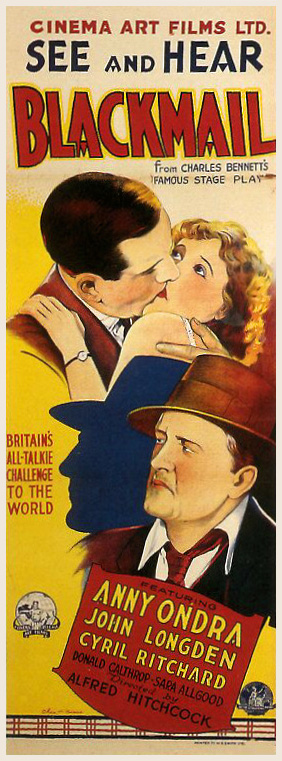
Blackmail, perhaps the greatest British silent film, was the work of a young director firing on all cylinders. As well as this masterful silent movie, Hitchcock made an acclaimed and pioneering talkie version, Britain’s first. It’s the silent Blackmail that concerns us, though, and it’s a fitting finale to Hitch’s silent years.

Blackmail (1929)
Blackmail (1929)

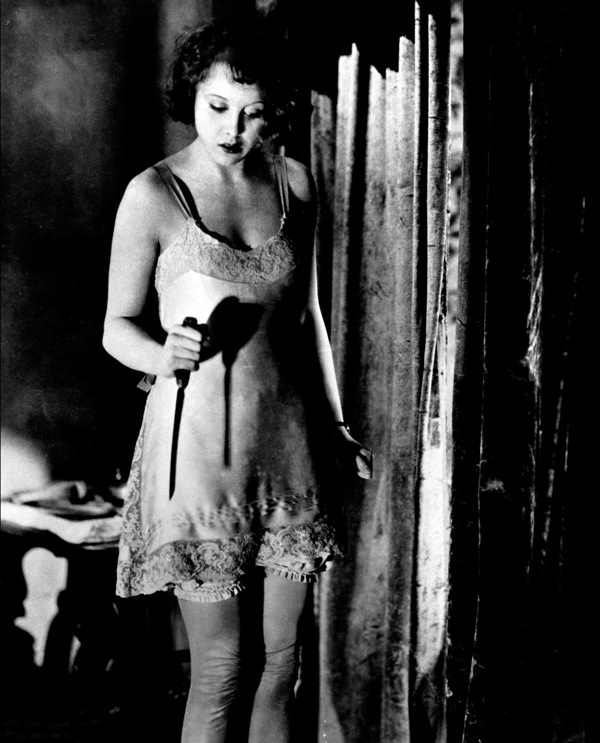
Anny Ondra is back, as Alice White, a young woman who rows with her dull policeman boyfriend in a Lyon’s Cornerhouse and wanders off with a dashing artist instead. When the dauber tries to take advantage of her in his studio, Alice defends herself, lethally, with a breadknife …

Here, as in The Lodger, Hitchcock’s London is superbly seedy. The opening scene of Blackmail shows the arrest of a shifty crim, holed up in bed in a tenement flat, and from the gossip who torments our heroine in her parents’s shop, to the blackmailer himself, everyone in the city seems to take an unnaturally keen interest in murder.

The way that Blackmail muddies a police procedural thriller with sex, moral compromise and guilt (and splashes of earthy humour) is a classic Hitchcock manoeuvre. Alfred was definitely hitting his stride here. However, one reason that Blackmail feels so much like the Hitchcock thrillers we know and love is that Charles Bennett, who wrote the play it is based on, went on to collaborate with Hitchcock on films from The 39 Steps to The Man Who Knew Too Much. Together, they created much that we think of as classic Hitchcock.

The question is, with a celebrated sound version available, why bother with the silent Blackmail? Of course, you don’t need to choose – they both have moments to recommend them. The finale at the British Museum (future shades of North by Northwest) is one of those great Hitchcock sequences that was conceived, and succeeds, visually. Sound adds nothing. Elsewhere, Hitchcock uses the freedom of a microphone-free set to set up some more experimental camera shots, where the sound film is a little more constrained. You won’t want to miss the famous “knife” sequence in the talkie Blackmail, but the silent version is unsettlingly creepy in its own way. I’d also like to champion Anny Ondra’s silent performance here – Joan Barry’s dubbed RP accent is just bizarre.

Synopsis: 

Grocer’s daughter Alice White kills a man in self-defence when he tries to sexually assault her. Her policeman boyfriend covers up for her, but she has been spotted leaving the scene by a petty criminal who tries to blackmail her.  (BFI Screenonline)

Hitchcock moment: Here’s the pivotal, and supremely Hitchcockian, murder scene. With Neil Brand’s score to boot.

Watch out for: That gruesome painting of a jester.

Links worth clicking:

Blackmail (both versions) screens this summer as part of the BFI’s Genius of Hitchcock season. More information here. There’s also a gala performance featuring Neil Brand’s live score at the British Museum on 6 July.

The Silent London podcast: comedy special

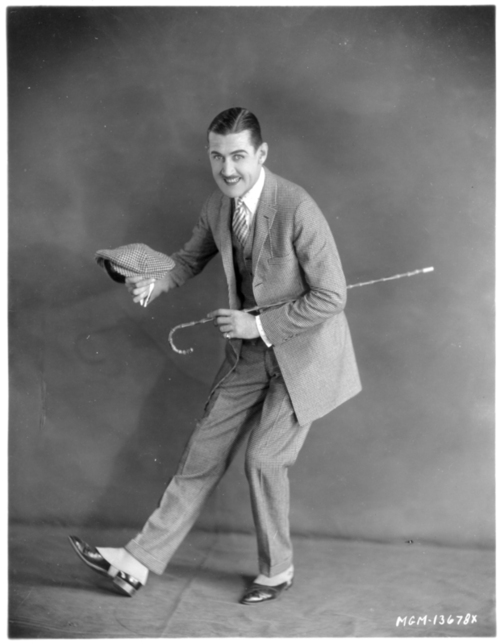
Charley Chase
Charley Chase … nice trews

Another podcast, and this time it’s all about the laughs in our comedy special. I’m joined in the studio by Phil Concannon of Philonfilm.net, Ayse Behçet, who writes the Charlie’s London series for Silent London, and podcast expert Pete Baran. Plus Chris Edwards of the wonderful Silent Volume blog also contributes a few well-chosen words on his favourite silent film: Exit Smiling, starring Beatrice Lillie.

We’ll be talking about our favourite silent comedies, and yours, and perhaps touching on a few films and film-makers you won’t expect. Plus we’ll be reviewing some recent silent film screenings, Ayse will be reporting back from the Cinema Ritrovato festival in Bologna and we’ll be taking a look at the calendar too.

There’s also a lot of business about trousers. And possibly the odd 90-year-old spoiler.

The Silent London podcast: comedy special

The Silent London Podcast is also on iTunes. Click here for more details.  The music is by kind permission of Neil Brand, and the podcast is presented in association with SOAS radio.

If you want to get in touch with us about anything you hear on the podcast, email silentlondonpodcast@gmail.com, tweet @silent_london or leave a message on the Facebook page: facebook.com/silentlondon.

An introduction to silent Hitchcock: The Manxman

The Manxman (1929)
The Manxman (1929)

Often referred to as Hitchcock’s final silent, because Blackmail was also shot as a sound film, The Manxman seems to be growing steadily in popularity, and with good reason. It’s a romance, yes, another Stannard adaptation of a hit novel by Hall Caine in fact, and I’m far fonder of it than Hitchcock professed himself to be.  “It was a very banal picture,” he told Truffaut. “It was not a Hitchcock movie.”

Well, that’s his opinion. The Manxman lays out a love triangle, with Anny Ondra (Kate), Carl Brisson (Pete) and Malcolm Keen (Philip) at each corner. Poor Brisson gets the fuzzy end of the lollipop again, when his best friend takes care of his girl while he is away at sea. The setting is a fishing village on the Isle of Man. Pete is a fisherman, but Philip, who wants to become a judge like his father and his father’s father, may have more to lose by the liaison than his friend does.

Anny Ondra in The Manxman (1929)

Anny Ondra is fantastic here: mesmerising and sensual. One moment a flirtatious femme fatale; the next a confused young woman. It’s a wonderful rehearsal for the performance she gives in Hitchcock’s next film, Blackmail. She’s gorgeous too, but perhaps not as gorgeous as the stunning coastal scenery. The landscape towers over, and frames the lovers, as if to say they’re trapped by their destiny, and by the place they come from, both. It’s not really the Isle of Man, by the way, but Cornwall.

While this isn’t Hitchcock’s final silent film, it’s worth taking a moment to enjoy, and appreciate his virtuoso work here. The Manxman remains a testament to Hitchcock’s achievements in silent film-making, and it’s no wonder that decades later he would still refer disdainfully to “photographs of people talking”.

Synopsis: 

In a small Isle of Man fishing community, two men, friends since childhood, find themselves in love with the same woman. Rejected by the girl’s father, Pete leaves to find his fortune in Africa, and Philip sees his chance with Kate.  (BFI Screenonline)

Hitchcock moment: Sometimes good news feels like bad news, especially when there’s a dark blot on the horizon.

Watch out for: Windows. And how much they can hide.

Links worth clicking:

The Manxman screens this summer as part of the BFI’s Genius of Hitchcock season. More information here.

UPDATE: The Manxman: London film festival review

The Cabinet of Dr Caligari with Martyn Jacques at the Soho Theatre, July & August 2012

Martyn Jacques and his accordion

Well I do enjoy posting news of silent film screenings, but 12 in a row takes some beating. Martyn Jacques, of punk-cabaret band The Tiger Lillies, will perform his own score to expressionist classic The Cabinet of Dr Caligari at the Soho Theatre this summer four days a week, three weeks on the trot. Jacques is known for his eccentric performances and his powerful falsetto voice – he will accompany himself and the film on piano and accordion.

It’s very lazy blogging to copy and paste Wikipedia. However, this is really all the introduction to Mr Jacques you’ll need I feel:

Martyn Jacques spent 7 years living above a brothel in Soho while training his characteristic falsetto voice. In his Tiger Lillies appearances, Jacques commonly sings about “sexual perversions, seedy underbellies, the gruesome, macabre and visceral”. Jacques has been described as enjoying when audience members walk out of his shows, noting “It’s always funny when people are offended by what I do … after all, I’m just an entertainer.”

The Cabinet of Dr Caligari (1920)

So this is clearly not going to be your common-or-garden silent film screening. However, Jacques is a devotee of silent cinema and this is a very personal project for him:

‘When I was fourteen my childhood desire to play the piano was finally satisfied. My first teacher was Florence De Jong. This was forty years ago and Florence was a very old lady. She had been a famous theatre organist accompanying silent films. She was so good she made gramophone recordings. I’ve always remembered her and this is my tribute to her and the profession. Silent films were for me the golden age of film. They had a magic and enigma you don’t get with talkies. Dr Calagari is a fine example. A freak show in the fairground…
If you’re not familiar with The Cabinet of Dr Caligari, you have a treat ahead. It’s a nightmarish, audacious and superbly stylish horror film, featuring a carnival, a sinister medic, a bloodthirsty somnambulist and a string of murders, let alone some mindbending sets and unforgettable imagery. It sounds as if Jacques’ music could be the perfect fit.
The Cabinet of Dr Caligari screens at the Soho Theatre in London from 25 July to 11 August 2012. To find out more and to buy tickets, visit the Soho Theatre website.

Moroder’s Metropolis – the people have spoken

Metropolis, circa 1984

Ach, it’s no fun being a silent cinema purist sometimes. And while I wouldn’t necessarily describe myself that way very often, I was pretty sure I was in the fun-hating minority when the UK DVD release of Moroder’s Metropolis was first announced. Just to make sure, I ran a poll here on Silent London to find out what you guys think.

If you need to refresh your memory, Giorgio Moroder’s version came out in 1984 and looks very different to the latest restoration. Working with the most complete version of the film he could find at the time, Moroder added a rock soundtrack, washed some different scenes with bright tints and made the whole thing run faster by removing the intertitles and using the text for subtitles. It’s a strange beast, and perhaps needless to say, a cult favourite.

You ruddy love it. Well, some of you do. Quite a few of you like it, and while there’s a solid 20% with me, arms crossed and tutting in the outraged camp, you have convinced me to give Moroder’s Metropolis another go. What’s the worst that can happen? I first saw it many moons ago, on a worn-out VHS borrowed from the college library. Since then, I’ve seen the beautiful new restoration of the original film, and my appreciation for Metropolis has only grown. I hope I have lightened up a little, and I have even learned to play a Pat Benatar song on Guitar Hero.

So I’ll definitely be taking a look at the DVD when it is released on 23 July this year. Apparently it’s arriving in a smart “steelbook” edition, and interestingly, you’ll be able to stream it on demand from www.metropolismovie.co.uk too.

In 1984, Oscar-winning composer Giorgio Moroder (Top GunMidnight ExpressFlashdance) reintroduced Fritz Lang’s 1927 science fiction epic METROPOLIS to a new generation of moviegoers. He colourised scenes, added new subtitles, plus a throbbing rock soundtrack to Lang’s iconic imagery. Featuring songs from some of the biggest stars of the early MTV era: Freddie Mercury, Pat Benatar, Adam Ant, Bonnie Tyler, Loverboy, Jon Anderson and others, it became a dramatic vehicle for Moroder’s visionary music and a beautiful retro-futurist timepiece. Through faithfully maintaining Lang’s intriguing and timeless storyline, today, it is this version of METROPOLIS that first comes to mind for millions around the world.

 Yeah, that last sentence does still grate a little… watch this space.

An introduction to silent Hitchcock: Champagne

Betty Balfour in Champagne (1928)

With The Farmer’s Wife Hitchcock proved that he could excel at comedy, but Champagne (1928) unhappily revealed that froth was far from safe territory for the director. The critics were hardly impressed, with Close-Up crowing about: “champagne that had been left out in the rain all night”. Looking back, Hitchcock tended to agree, saying: “That was probably the lowest ebb of my output.”

Champagne (1928)
Champagne (1928)

Hitchcock wasn’t happy at the time either, no fan of the source novel and uncertain how to proceed. What Champagne does have is a promising cast: Betty Balfour (the “British Mary Pickford”) takes the lead role and one of Hitchcock’s favourite character actors, Gordon Harker, plays her millionaire father. Balfour, who had made her name playing cockney sweetheart Squibs, does her best, but her likable screen persona fares much better in the second half of the film, when her character (The Girl) develops a touch more vulnerability and sweetness.

In the earlier stages of the film, The Girl is a spoiled, grandstanding heiress, but a combination of Balfour’s hard-to-repress charm and Hitchcock’s steely gaze means she’s very hard to hate. She invokes her father’s displeasure by commandeering a plane to catch up with her boyfriend’s cruise liner. For this, he wants to teach her a lesson. But Hitchcock gets in first, shooting Balfour triumphant in a ballgown after her dramatic entrance, but with her face covered in soot from the flight. I was rooting for her from that moment on. Further humiliations are in store, but it’s a blessed relief when she reaches the point of redemption.

That said, there are some hugely enjoyable glimpses of Hitchcock on top form here: including a cynical street robbery (shades of a similar scene in The Pleasure Garden, maybe even a nod to Graham Cutts), and some bold subjective camerawork.

Champagne is also of considerable interest as film that is utterly of its own time – a cocktail-swigging flapper, her father with his fortunes balanced precariously on Wall Street, her straitlaced fiance with his old-fashioned views – and a reflection of our own. Mira Calix, who will be scoring the film for its gala screening later this year, points out that Champagne attacks a continuing 21st-century obsesssion with celebrities who, just like The Girl, behave atrociously and are famous off the back of their parents’ success. It also, she hopes, will chime with supporters of the Occupy movement: a front-row seat to watch the 1%ers behaving badly and meeting their icky comeuppance.

A minor work, but not without its charms, Champagne maybe largely a waste of Balfour’s talents, but it’s a showcase for the director’s style and his mean streak both.

Synopsis: 

Disapproving of her love affair, a millionaire sets out to teach his irresponsible daughter a lesson by pretending to lose all his money.  (BFI Screenonline)

Hitchcock moment: Our heroine is attacked by a creep (7:25). Pure Hitchcock. But not entirely what it seems.

Watch out for: Those alarmingly close subjective shots, most notably some tricksy ones through the bottom of a champagne glass.

Links worth clicking:

Champagne screens in September with a new sccore from Mira Calix as part of the BFI’s Genius of Hitchcock season. More information here.