All posts by PH

Pamela Hutchinson is a freelance writer, critic, historian and curator.

Charles Dickens on silent film: part three, BFI Southbank, March 2012

Image

One of the great strengths, at least as far as this blog is concerned, of the BFI’s ongoing Dickens on Screen programme, is that the silent films on offer have been spread out across the season, rather than all lumped into the first month. Witness: the impressive range of silents screening in January and February.
More silents appear in March, including another programme of pre-1914 shorts and a rare sighting of a Danish film, AW Sandberg’s Our Mutual Friend (1921). The Nordisk films is one of four Dickens adaptations by Sandberg, which were all well received in Denmark at least. Our Mutual Friend, or Vor Faelles Ven, is the least seen of the quartet, and indeed the restoration work on this print has been going on for quite some time. Now, 90 years after it was released, we can see it as it should be seen.
Our Mutual Friend screens at NFT3, BFI Southbank at 6.20pm on 6 March 2012 and at 8.45pm on 9 March 2012 with live piano accompaniment. Buy tickets here.

Seymour Hicks as Ebenezer in Scrooge (1913)

The shorts programme kicks off with Thomas Bentley, who went on to direct several Dickens films, in front of the camera taking on a number of roles in Leaves from the Books of Charles Dickens (1912). American comedian John Bunny starred in three films based on The Pickwick Papers – but the two shown here are the only ones to survive. Two versions of A Christmas Carol finish the programme, with Seymour Hicks playing the miser in 1913 version and Charles Rock being visited by spectres in 1914.
Pre-1914 Short Films (Programme two) screens at 9.30pm on 9 March at NFT3, BFI Southbank (with introduction by Michael Eaton) and at 6.20pm on 23 March 2012 in NFT2, BFI Southbank. Both screenings will feature live piano accompaniment. Buy tickets here.

Decasia and The Fall of the House of Usher at BFI Southbank, March 2012

Decasia, Bill Morrison’s haunting 2002 tribute to film and its fragility, screens at the BFI Southbank in March, in an expertly matched double-bill with the terrifying, elusive The Fall of the House of Usher (Jean Epstein, 1928). Don’t miss.

The double-bill screens at 8.30pm on Sunday 4 March 2012 and at 6.10pm on Tuesday 6 March. Both screenings are in NFT2. The Fall of the House of Usher will have live piano accompaniment. The Tuesday screening will be introduced by Dominic Power, the head of screen arts at the National Film and Television School. Tickets will be available here.

Slapstick Festival 2012: reporting back

Charlie Chaplin famously said that a day without laughter is a day wasted. If that’s true, then the three days I spent at Bristol’s Slapstick Festival were the most productive of my life. Morning, noon and night we chortled at physical comedy, from the gala screening of The General (in sparkling high-definition) to Chaplin’s early shorts, via a panoply of less well-known silent comics, from Larry Semon to Charley Chase. All the screenings were introduced by fans, that is to say historians, film collectors and comedians – but fans all the same.

I filed a report for the Spectator Arts Blog, about the web of influence and collaboration that connects all these comics, but there were other themes that emerged over the weekend too. David Robinson and Sanjeev Bhaskar lamented the fall in Chaplin’s popularity in this country in recent decades. Perhaps we British aren’t inspired by his life story, ending his days as he did, comfortable and well-loved, suggested Robinson, quoting commments made by Chaplin’s widow. Perhaps we’re not so ready to connect with the “emotional journey” of his films, posited Bhaskar, pointing to Chaplin’s stellar popularity in India. Whatever the reason, there was plenty of evidence of Chaplin’s genius and sensitivity on display at the weekend. Whether you’re already a Chaplin fan, or a budding convert, you may like to know that the Roundhouse in Camden, north London is showing The Circus in April. Robinson also drew our attention to Chaplin’s concern with social issues, noting that his speech at the end of The Great Dictator is as timeless as his comedy, citing for proof this YouTube mashup:

Elsewhere, Griff Rhys Jones obligingly “pratfalled” on the stage of the Colston Hall when introducing The General and Graeme Garden gave us a thorough introduction to the charms of Charley Chase, which went down so well, surely Chase is due for a new surge in fame. David Wyatt taught us all about the silent film industry’s ability to laugh at itself with a selection of early spoofs including Will Rogers’ burlesque of Douglas Fairbanks’ Robin Hood, a film I’ve always loved but considered way beyond the reach of parody. How wrong I was.

Pierre Étaix, who directed beautiful comedy films in the 1960s, was this year’s recipient of the Aardman Slapstick Award for Excellence in Visual Comedy. He tipped his hat to Keaton, Chaplin, Lloyd and Laurel – and also to Harry Langdon and Snub Pollard (a name that sounds so much cooler with a French accent). He needn’t have bothered though: you can’t miss the influence of silent comedy on his work, which charmed the festival on Sunday night. Here’s a piece I wrote about him for the Guardian last year, and here’s one of his earliest shorts.

And the most bizarre outcome of the weekend? A fresh appreciation for Lloyd “Poor Boy” Hamilton, if only briefly, on Twitter. Enjoy:

Mary Pickford: Sound and Silents, March 2012

Mary Pickford
Mary Pickford

Mary Pickford is one of the most fascinating figures in Hollywood history. She was “America’s sweetheart” with long blonde curls and a fairytale marriage to handsome Douglas Fairbanks. But she was also the co-founder of United Artists and producer, star and director in all but name on some of her most successful pictures. More than just a pretty face indeed. Pickford knew exactly how the movies worked, and having grown up in terrible poverty as a child in Toronto, she knew what life was all about too, which you can see clearly in her finest screen performances.
Therefore, it’s a pleasure to learn that this year’s Birds Eye View Sound and Silents commissions will celebrate Mary Pickford with a triple-bill of her films at the Purcell Room in the Southbank Centre. The New York Hat (1912), The Female of the Species (1912) and Amarilly of Clothes-Line Alley (1918) will be screened, accompanied by new scores by three very different musical talents:

Bouncing off Pickford’s on-screen radiance are three contemporary female artists. Anna Meredith is an in-demand composer/performer of acoustic and electronia, Welsh-born Roshi absorbs Iranian influences in her experimental folk. And multi-instrumentalist Tanya Auclair merges British, Rwandan and Canadian roots.

The New York Hat and The Female of the Species are both short films directed by DW Griffith, featuring Pickford in wildly different roles; the first of them was written by a young Anita Loos. Another legendary Hollywood screenwriter, Frances Marion, wrote the scenario for Amarilly, which is closer to feature-length and features Pickford as a young woman from a poor family who meets an upper-class sculptor but falls foul of his snobbish and cruel aunt.

The Mary Pickford Revived event is part of the Women of the World Festival and takes place at 8pm on 9 March 2012 at the Purcell Room in the Southbank Centre. Tickets cost £15 and are available here.

Also as part of the Sound and Silents programme, the magnificently gothic and strangely comic Sparrows (1926), one of Pickford’s greatest films, will be shown at Hackney Picturehouse on 11 March, with a live score by Aristazabal Hawkes from the Guillemots. You may remember that the score was commissioned by BEV last year and was due to be performed at the BFI Southbank, but the performance was cancelled. Sounds like a must-see to me. You can buy tickets here.

To find out more about the Birds Eye View Film Festival, which returns next year, visit the website.

The Scaffold at the Student Film Festival London, 3 February 2012

[youtube:http://www.youtube.com/watch?v=aZUO1yarn7U&feature=youtu.be%5D

UPDATE: I updated this post on 2 April 2013, because The Scaffold has just been made available on YouTube. Enjoy!

What a joy to return from a weekend of visual comedy at the Slapstick Festival (more of which anon) to hear about a modern silent comedy, “inspired by and dedicated to the grand masters of slapstick”, screening in London later this week.
The Scaffold, directed by Peter Hübelbauer, is showing at the Student Film Festival on Friday 3 February 2012. It’s a knockabout, retro treat, very much in the vein of Laurel and Hardy. The three characters are painters and decorators, working on a rickety scaffold – expect planks, pratfalls and precarious pots of glue.
The Scaffold is screening in Competition Block 2: Eclectic Mix, at 12:15 on Friday 3 February 2012. The venue is the London College of Communication. Buy tickets here. The film-maker will be there, so hopefully you’ll be able to hear about his inspiration for the film, and how he recreated the noble art of slapstick movie-making in the 21st century. To find out more about the Student Film Festival, visit the website.

The General with orchestral score, Farnham, Surrey, 17 March 2012

Buster Keaton in The General (1926)

The Farnborough Symphony Orchestra begins its 90th anniversary year by performing the live accompaniment to two screenings of the 1927 comedy classic silent film The General at Farnham Maltings on Saturday 17 March.
The General, directed by and starring Buster Keaton, was recently listed in The Independent as one of the 10 best silent films, and features some of the most dangerous (and explosive) stunts with steam trains ever filmed. Carl Davis’ score includes every famous civil war song, as well as a tender folk song the composer’s grandmother used to sing him when he used to sit on her knee. The General was described by Orson Welles as “the greatest comedy ever made, the greatest Civil War film ever made, and perhaps the greatest film ever made” and this unique performance, conducted by the FSO’s charismatic musical director Mark Fitz-Gerald, will delight young and old alike.

The General screens on Saturday 17 March at at 3pm & 7.45pm. Tickets are priced at £10 for adults or £5 for children or students in full-time education and are available from the FSO Ticket Secretary on 07775 789477, Farnham Maltings Box Office on 01252 745444 or online at www.farnboroughsymphony.org.uk

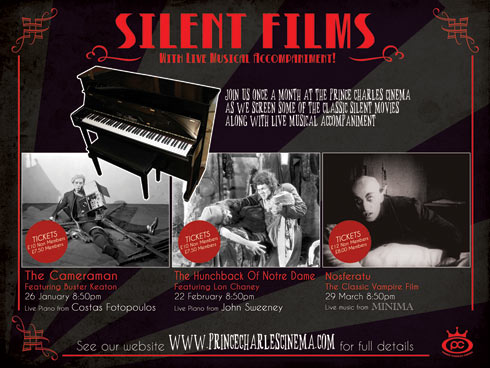
Silent films at the Prince Charles Cinema, January-March 2012

Silent films at the Prince Charles Cinema

There’s nothing like a night out at a West End cinema. The bright lights, the excitement, the hustle and bustle of the Theatreland crowds … So don’t ruin your fun by watching a talkie. Check out the silent film programme at the Prince Charles Cinema, where they’re packing in the punters for a diverse range of silent movies, month ofter month. There’s always live music and a lively atmosphere – and the films aren’t bad either.

The Cameraman, Thursday 26 January 2012, 8.50pm

Hilarious, but rarely screen Buster Keaton comedy. After becoming infatuated with a pretty office worker for MGM Newsreels, Buster trades in his tintype operation for a movie camera and sets out to impress the girl (and MGM) with his work. Piano accompaniment by Costas Fotopoulos.

Tickets for each show are £10 or £7.50 for members. Book online here.

The Hunchback of Notre Dame, Wednesday 22 February 2012, 8.50pm

Don’t miss this chance to see Lon “Man of a Thousand Faces” Chaney on the big screen. In 15th-century Paris, the brother of the archdeacon plots with the gypsy king to foment a peasant revolt. Meanwhile, a freakish hunchback falls in love with the gypsy queen. Piano accompaniment by John Sweeney.

Tickets are £10 or £7.50 for members. Book online here.

Nosferatu, Thursday 29 March 2012, 8.50pm

One of the silent era’s most influential masterpieces, Nosferatu‘s eerie, gothic feel – and a chilling performance from Max Shreck as the vampire – set the template for the horror films that followed. Hutter, a real estate agent, pays a visit to the mysterious Count Orlok, who seeks to relocate from his lair in the Carpathian Mountains and buy a residence in town. The Count becomes infatuated with Hutter’s young wife, and embarks on a journey to find her, while the town becomes infected with a strange plague.

Rock band Minima are a favourite on the silent film circuit, playing atmospheric, sophisticated guitar music to a wide repertoire of silent classics – and Nosferatu is one of their most acclaimed scores. Don’t miss this.

Tickets are £12 or £8 for members. Book online here.

Silent films at the Glasgow Film Festival, February 2012

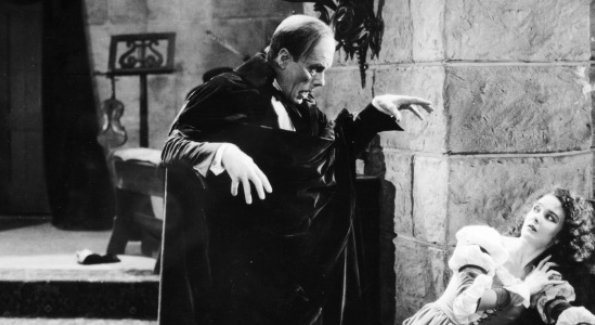
The Phantom of the Opera (1925)

Just a quick post to let you know about the silent film offering at the rather wonderful Glasgow Film Festival, which runs from 16-26 February 2012. If you include the Glasgow Youth Film Festival and the Glasgow Short Film Festival, which precede it, it all adds up to three weeks of movies – some of which are silent. Here goes:

The Loves of the Pharoah, Friday 17 February, 3.30pm, GFT 2

Ernst Lubitsch was a master of sophisticated romantic comedies but The Loves of Pharaoh reveals that he was also a filmmaker to rival the scale and ambition of DW Griffith or Peter Jackson. The Loves of Pharaoh  is notable for its spectacular production design, gorgeous costumes, beautiful chiaroscuro cinematography and crowd scenes involving thousands of extras in an age before the convenience of computer generated effects. Future Oscar-winner Emil Jannings is the Egyptian Pharaoh who rejects the beloved daughter of the king of Ethiopia in favour of his infatuation with slave girl Theonis. It is a recipe for conflict, heartbreak and epic drama. A stunning digital restoration heralds the return of a major silent production. Buy tickets.

Berlin: Symphony of a Great City, Saturday 18 February, 3pm, CCA theatre

Walter Ruttmann’s groundbreaking documentary captures the pulse of Berlin in a single day in the late 1920s. It is a moment of calm between the nightmare of the Depression and the horrors of the Nazi era. Inspired by Dziga Vertov (The Man with a Movie Camera), he compiles an impressionistic portrait of a bustling metropolis from the first light of dawn to the last gasp of the city’s neon-lit nightlife. Cameras hidden on vehicles and in suitcases capture an authentic picture of children hurrying to school, factories billowing smoke, rush-hour traffic and even the President Paul von Hindenburg. It is a wonderful time capsule made all the more poignant by the city’s virtual destruction in the Second World War. This special screening is accompanied by a live improvised performance from Scottish Jazz Trio AAB as musicians Tom and Phil Bancroft and Kevin Mckenzie rock the house with a unique fusion of bop, folk, house and indie rock. Buy tickets.  Screening in combination with the ‘live’ film Glasgow: Symphony of a Great City.

Continue reading Silent films at the Glasgow Film Festival, February 2012

The First Born on tour in 2012

Miles Mander and Madeleine Carroll in The First Born (1928)

The BFI’s sparkling restoration of Miles Mander’s The First Born, with its new, elegant score by Stephen Horne, was the clear highlight of last year’s London Film Festival. The wonderful news is that it is about to hit the road this year, and you’ll be able to see the film, in most cases with Horne’s music played live, at various lcoations across the UK. It’s a gripping, sophisticated drama and a gem of British silent cinema – so don’t miss it. Here’s what the BFI have to say about it:

A philandering politician, the double standards of the upper classes, jealousy, miscegenation and a generation torn between centuries of tradition and a more modern morality… the plot of The First Born feels not unlike a lost episode of Downton Abbey. However, the film was expertly co-scripted by Alma Reville (Mrs Alfred Hitchcock) and it’s hard not to see her influence in raising it beyond old-school melodrama to be a tour de force of late silent British cinema. Sir Hugo Boycott (Miles Mander) and his young bride (a pre-blonde Madeleine Carroll) have a passionate relationship, but it founders when she fails to produce an heir. This is a surprisingly ‘adult’ film and made with both elegance and invention.

I reviewed the film at the London Film Festival here, and spoke to BFI silent film curator Bryony Dixon and composer Stephen Horne for the Guardian too. You can see an extract from the film, below:

Here are the tour dates for The First Born, hot off the press:

25 January 2012
BFI Southbank

9 March 2012
Broadway Nottingham
(NB: solo performance by Stephen Horne)

17 March 2012
Hippodrome Bo’ness

25 April 2012
Pictureville Bradford
(NB: this screening will not feature Stephen Horne’s score)

May 2012 TBC
Filmhouse Edinburgh
DCA Dundee

An Italian Straw Hat, Barbican, 19 February 2012

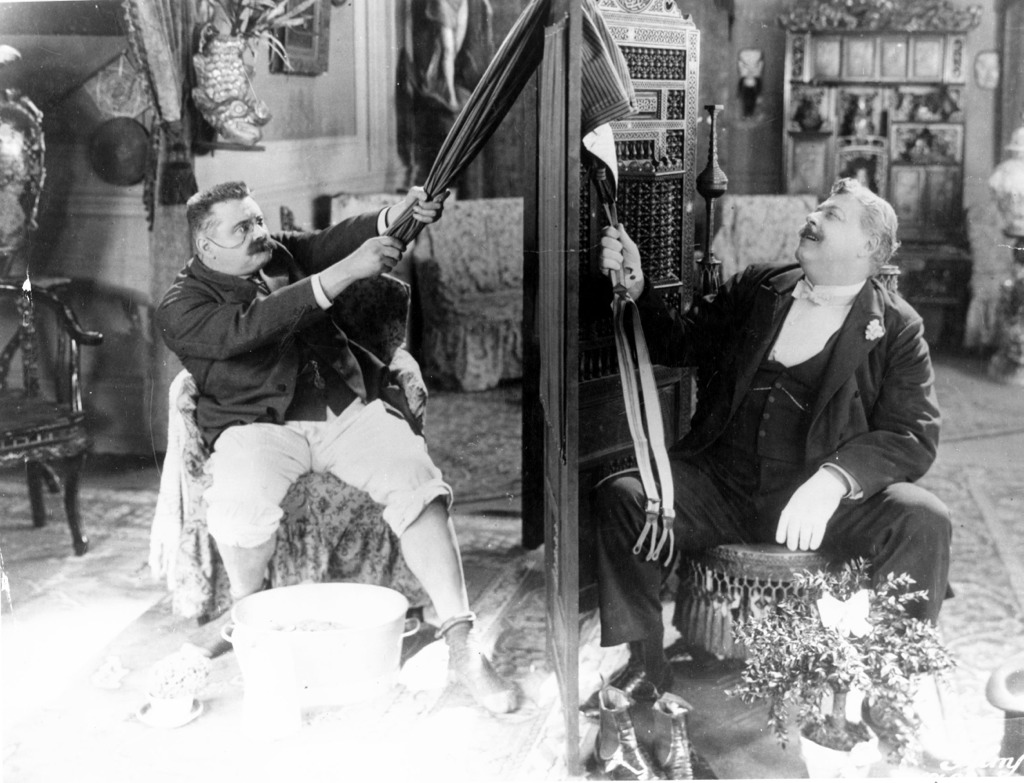
An Italian Straw Hat (1927)

The Barbican silent film and live music season continues in fine style with this sophisticated, satirical French comedy. René Clair’s film is a period piece, set in 1895, the year the Lumière brothers first unveiled their cinématographe, but was released just as the talkies were changing cinema for good – or ill. With few intertitles and plenty of visual humour, An Italian Straw Hat is classic of silent cinema, which Pauline Kael described as  “so expertly timed and so elegantly directed that farce becomes ballet”. Contemporary reviews praised its:

“Delightful social irony and hilarious situations welded into divertingly sustained comedy. Amusing characterisations which are ironic criticisms. Witty situations and deft development. “

Albert Préjean stars as a hapless bridegroom whose journey to his own wedding is interrupted when his horse chews up a woman’s hat. She demands a replacement, which is easier said than done, and the groom is soon tangled up in a series of comic misunderstandings. An Italian Straw Hat is more than farce though, it uses the absurd premise as a route into a sly attack on bourgeois narrow-mindedness. The Silents Are Golden website sums it up this way:

The plea for intelligence, for rising above petty worries like lost gloves, for refusing to be constrained by petty convention, make An Italian Straw Hat a crusader in human propaganda. The sublimely naturalistic sets, the superb uniformity of the acting, and the flawless action continuity are the measure of René Clair’s technical proficiency.

If you’ve seen René Clair’s short silents, such as Entr’acte and Paris Qui Dort, or his later work including the Sous les Toits de Paris and A Nous la Liberté your appetite will already be whetted. Stop reading this blog, and book yourself a ticket.

An Italian Straw Hat screens at the Barbican on 19 February 2012 at 4pm. Piano accompaniment will be provided by Andrew Youdell. Tickets begin at £7.50 and you can buy them here.

The British Silent Film Festival comes to Cambridge, 19-22 April 2012

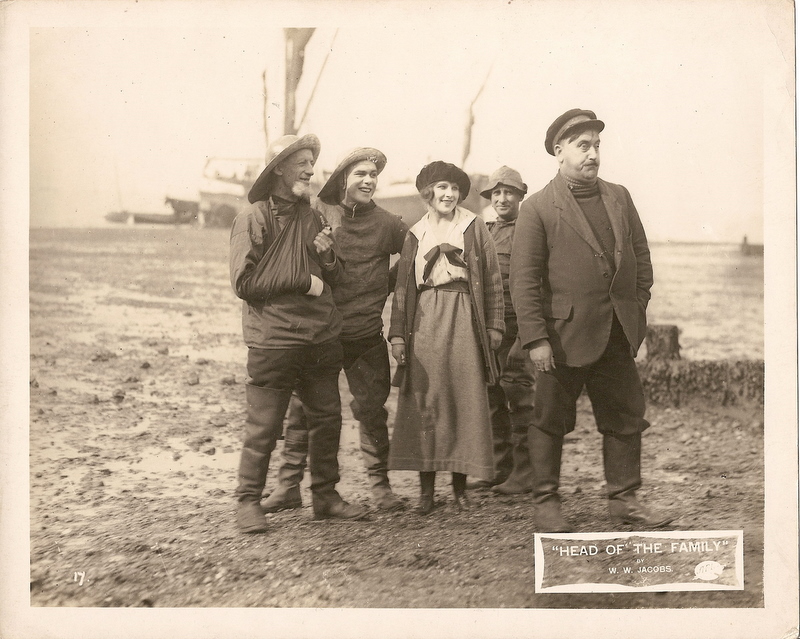
Head of the Family (1922)

Save the date: the 15th British Silent Film Festival will take place 19-22 April 2012 at a new venue, the Cambridge Arts Picturehouse. The change of location has influenced the programme too, which will feature some examples of undergraduate humour among a mix that includes adaptations of stories by WW Jacobs and PG Wodehouse as well a tribute to the BBFC. There’ll be a by-now customary performance by the Dodge Brothers too, skiffling along to Abram Room’s The Ghost That Never Returns.

 The programme will include rarely seen silent films from the BFI and other archives around the world  on a wide range of fascinating subjects such as:  P.G. Wodehouse’s golfing tales including The Clicking of Cuthbert; rarities based on the charming coastal stories  of W.W. Jacobs including The Boatswain’s MateA Will and a Way and brand new print of Head of the Family; a celebration of the centenary of the British Board of Film Classification with a look at ‘What the Silent Censor Saw’ and the origins of ‘university humour’ before the Footlights. This year’s ‘hot ticket’ will be the wildly popular Dodge Brothers performing their distinctive brand of Americana to The Ghost That Never Returns.

Tickets are not yet on sale, but watch this space for more updates, including the full schedule and how to book. Click here for a report from last year’s festival, on the Guardian film blog. Below, Dodge Brother and film writer Mark Kermode introduces The Ghost That Never Returns at last year’s New Forest Film Festival:

Salomé (1923) at the Purcell Room, 9 February 2012

Salomé (1923)
Alla Nazimova in Salomé (1923)

A rare screening of a much-gossiped-about silent film, made by one of Hollywood’s most controversial stars, presented in a unique way. Well, that tickles our fancy just fine.

Alla Nazimova was born in what is now Ukraine in 1879. She made her stage debut in Moscow as a teenager and swiftly became a big star. She then moved to New York to work on Broadway, winning plaudits with roles in plays by Chekhov and Ibsen and made her first movie, War Brides, in 1916.

Nazimova is best remembered for her colourful life in Hollywood: her several affairs with women, the rumoured wild parties at her mansion and her position of influence in the industry, helping many a young actress to get a start, including Anna May Wong, Patsy Ruth Miller, Natacha Rambova and Jean Acker. The last two were married to Rudolph Valentino, but were also romantically linked to Nazimova.

Her most famous film, Salomé, was also fodder for the rumour-mill. An adaptation of Oscar Wilde’s play, it was said that the cast comprised only gay and bisexual actors, in homage to the author. It’s impossible to say whether this was really true, but the idea has certainly stuck. Nazimova takes the title role, Charles Bryant directs and the whole thing is just over an hour of extravagant Aubrey Beardsley-inspired design, sexy costumes and decadence. Salomé slumped at the box office, bankrupting Nazimova’s production company, but continues to intrigue audiences, becoming something of an art nouveau cult sensation.

This February, Salomé will be screened at the Purcell Room in the Southbank Centre, with live music composed by Charlie Barber, which is inspired by ” the evocative sounds and intricate rhythms of traditional Arabic ensembles”. Instead of sitting in front of the screen, the musicians will perform on two towers on either side of it, which sounds like a fantastic idea.

This clip shows the famous “Dance of the seven veils” from Salomé, with a taster of Charlie Barber’s score:

Salomé screens at the Purcell Room, Southbank Centre on Thursday 9 February 2012 at 7.45pm. Tickets begin at £12 and are available here.

• We’ll see more of Nazimova when the silent Rudolph Valentino biopic Silent Life is released later this year. Nazimova is played by Galina Jovovich.

Dogged at Making Tracks, London Short Film Festival, 14 January 2012

Dogged (2011)
Dogged (2011)

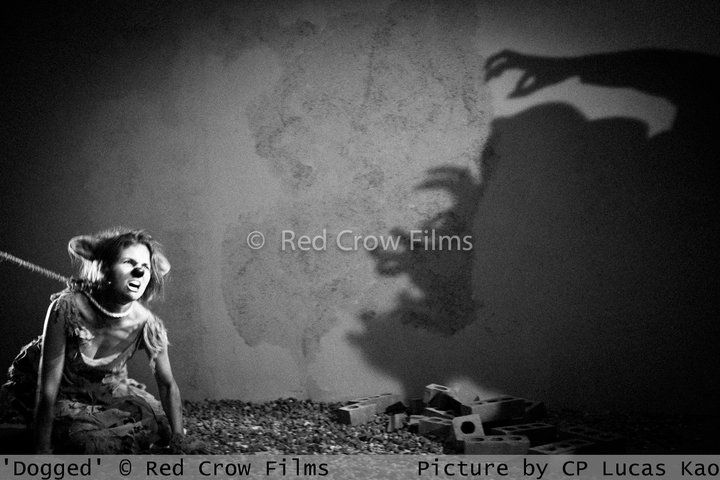
Modern silent films. They’re the hottest thing since 3D, but far more popular in this neck of the woods. One film we’ve had our eye on for a while is the fantasy short Dogged (2011), written and directed by Jo Shaw and starring Lucy Goldie in all nine roles. The sinister premise of the film is summarised thus on IMDB: “In a world where bogeymen roam freely, devouring people randomly and the only creatures they fear are dogs, old dog does her best to defend the family home.” I think this dog is a very different breed to Uggie.

Dogged was described as “intriguing and insightful” by the judges at the Aesthetica film festival in York,  who awarded it the prize for Best Experimental Film (read more here), but now, happily, you have the chance to see it in London and make your own mind up. Dogged is playing as part of the Making Tracks night programmed by Whirlygig Cinema at the London Short Film Festival. This event is especially notable because all the soundtracks for the short films being screened will be played live, by The Cabinet of Living Cinema. It’s a treatment that should particularly suit Shaw’s spooky silent film.

Want to know more about Dogged? There’s a trailer, which you can see on the IMDB page here and a regularly updated Facebook page.

Making Tracks is at Rich Mix, Bethnal Green on 14 January at 7.30pm. Tickets are £8 on the door or book them in advance for £6 at the Rich Mix website.

Charles Dickens on silent film: part two, BFI Southbank, February 2012

Jackie Coogan as Oliver Twist

Charles Dickens’s 200th birthday party continues in formidable style with the second part of the BFI’s Dickens on Screen season. Happily, the silents were not confined to the first run of screenings and February brings much to get excited about. First off is the famous 1922 adaptation of Oliver Twist. Frank Lloyd directs, while The Kid star Jackie Coogan plays the young orphan and Lon Chaney contorts his features into a suitably grotesque Fagin. With Coogan’s winsome pluck and Chaney’s gift for playing a villain, this was always going to be a classic Twist. It’s a spirited romp through the novel and a particular treat as this is one of the famous “lost” films of the silent era, which was found and restored in the 1970s, with some input from Coogan himself. To learn more, read Silent Volume’s appreciative review here or watch this clip, featuring one of the novel’s most melodramatic flourishes. Why not do both?

Oliver Twist screens at 6pm on Friday 3 February and at 8.45pm on Wednesday 8 February 2012 at NFT2, BFI Southbank. Both screenings will feature live piano accompaniment. Tickets are available from the BFI website.

The Only Way (1925)
The Only Way (1927)

The final silent Dickens film and the next screening in the season is The Only Way, a lavish and rather free adaptation of The Tale of Two Cities. This is a British production and John Martin Harvey reprises his stage role as Sydney Carton, despite his advancing years. His wife Madge Stuart plays Mimi his maid. Don’t remember Mimi from the novel? That’s cinematic licence for you. The famous director and producer Herbert Wilcox is at the helm and The Only Way was a smash hit, taking more than twice its £24,000 budget at the box office.

The Only Way screens at 3.50pm on Saturday 11 February and 8.40pm on Monday 27 February 2012 at BFI Southbank. Tickets are available from the BFI website.

• Don’t forget that there will be an exhibition to accompany the Dickens on Screen season in the Mezzanine at BFI Southbank from 12 January to 25 March. Also, during February, BFI members can watch The Pickwick Papers, an Anglo-American co-production from 1913, free online. The 15-minute fim stars the comedian John Bunny.

Faust at the Royal Festival Hall, 27 February 2012

Faust (1926)
Faust (1926)

This is wonderful news. Next year, at the Royal Festival Hall, the Philharmonia Orchestra will accompany a screening of FW Murnau’s masterpiece Faust (1926). The orchestra will be playing a brand new orchestral score, written by composer Aphrodite Raickopoulou, and unusually, there will also be live improvisation from the renowned classical pianist Gabriela Montero. The film will be introduced by the world-famous actor and scourge of the tabloids Hugh Grant.

If you’re not familiar with Faust, then allow me to introduce it to you. Murnau’s film is an adaptation of the Faust legend, in which a doctor sells his soul to Mephistopheles in return for a cure for the plague epidemic that has struck his town. The doctor is played by Gösta Ekman, and Mephistopheles by the always wonderful Emil Jannings, in an outstanding performance that is by turns charming and grotesque. As in so many of Murnau’s films, the real story is an epic struggle between love and hate, and the visuals are as epic as the themes. Faust may be shot in monochrome, but it is kaleidoscopically beautiful. Special effects sequences such as the summoning of Mephistopheles and the cloak ride are still impressive – and the clouds of black smoke that represent the plague visiting the town are as haunting as they were technically difficult to pull off. Ekman’s transformation from an old man to his younger self is fantastic as well.

But Faust is more than the sum of its technical achievements. It’s a hugely moving film, with a melodramatic finale, and as unforgettably brilliant as Murnau’s other much-loved classics, Nosferatu and Sunrise. This new score has been a real labour of love for Raickopoulou, who was moved to tears after watching the film for the first time. She told me: “Being a dreamer has its great risks but true passion and true love will always prevail.” A sentiment very much in tune with the spirit of the movie, I’m sure you’ll agree.

This project has benefited from the advice of Patrick Stanbury from Photoplay Productions – and you’ll be pleased to know that the Royal Festival Hall will be showing a 35mm print of the domestic version of the film.

Faust screens at the Royal Festival Hall on Monday, 27 February 2012 at 7.30pm. Tickets begin at £10 and you can book them here, on the Southbank Centre website.

The Silent London 2011 poll: we have a winner

Lillian Gish in The Wind (1928)

Thanks to all who nominated their favourite silent film and live music shows of the year – and to those who voted in the final poll. We had five worthy nominees on the short list, but I can reveal that the winner is … Lola Perrin’s score for the Victor Sjostrom’s The Wind, first performed this year at the BFI Southbank as part of the Birds Eye View Sound and Silents programme. Congratulations, Lola!

If you missed it (and I did, sadly), you can see Lola Perrin perform her live piano score to The Wind again at the Duke of York’s Picturehouse in Brighton in March. Visit Lola Perrin’s website to find out more.

Merry Christmas from Silent London

A festive picture of Clara Bow

Season’s greetings to all our dear readers – may your stockings be filled with treats and all your nights be silent. There’s plenty to look forward to in the new year, but until then, eat, drink, be merry – and why not enjoy a few festive movies too? I’ll see you in 2012!

Charley Chase films at the Barbican, 22 January 2012

Charley Chase
Charley Chase

You’re all over Buster Keaton, Charlie Chaplin and Harold Lloyd. Roscoe Arbuckle, Laurel and Hardy too. But there’s more to silent comedy than those big, big names, and this January, the Barbican offers a chance to get to know another fantastic funnyman from the early days of cinema, the dapper, charming Charley Chase – a comic as hilarious as his moustache is thin and elegant.

Charles Parrott started out in vaudeville, like so many silent comedians, but he went to work for Mack Sennett at Keystone in the early teens. While there, he appeared in a few films with Mr Chaplin and moved into directing as well. He directed several more films at Hal Roach’s studios, and after Harold Lloyd deaprted those premises he began starring in his own short films, under the name Charley Chase.

Chase’s silent movies were generally two-reelers, and the most famous of them were directed by Leo McCarey – three of which will be showing at the Barbican. Chase’s speciality is the comedy of embarrassment – character-driven farce as much as pure slapstick. In His Wooden Wedding, Chase is tricked, by a love rival, into believing his bride has a wooden leg. Mighty Like a Moose features a married couple who both undergo extreme makeovers courtesy of a plastic surgeon and then subsequently fail to recognise each other. Oliver Hardy takes a small role in Crazy Like a Fox, in which Chase pretends to be mad in order to avoid an arranged marriage. In each case, of course, mortifying complications ensue.

Crazy Like a Fox (1926), His Wooden Wedding (1925) and Mighty Like a Moose (1926) screen at the Barbican on 22 January at 3pm. Piano accompaniment will be provided by John Sweeney. Tickets start at £7.50 and are available from the Barbican website here.

  • There will also be a chance to see some Charley Chase classics at the Slapstick Festival in Bristol next month – so check that out too.