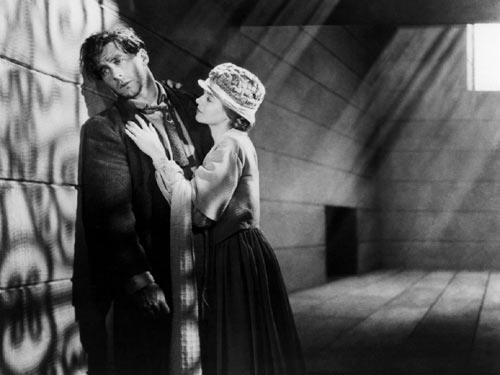
The much-heralded return of the midnight movie is not confined to London. Oh no. Spooky silent film soundtrackers Minima are bringing the concept to the Edinburgh Fringe Festival this year with witching-hour screenings of The Cabinet of Dr Caligari six nights in a row. Every night from 22-28 August, the band will be accompanying the landmark Expressionist horror film in Assembly George Square Gardens and the screenings start at one minute to midnight. Here’s a taster of what you can expect to see and hear:
Tickets cost £10 or £12 depending on the date. For more details and to book tickets, click here.
You live in London and you love silent film, so you’re probably a member of the BFI. Well, I hope so, because there are two silent film screenings coming up in August – one that is members-only and another that almost is.
First, on 4 August, is Turksib (1929), a Soviet documentary about efforts to build a railway through Central Asia. The name Turksib stands for the Turkestan-Siberian railway, which starts near Tashkent in Uzbekistan, and joins the Trans-Siberian railway in Novosibirsk, Russia. If you enjoyed Salt for Svanetia during the BFI’s recent Soviet silents season, this screening has your name all over it. The August screening will feature a live musical score by Guy Bartell of the electronica band Bronnt Industries Kapital, which previously soundtracked the silent witchcraft documentary Häxan. Their most recent album was described by a German magazine this way: “As if Joy Division, Can and The Human League were locked in a room together.” I think that means we can expect something pretty dark and moody but with a disco beat. Works for me.
Turksib is a BFI Members Exclusive event. So, if you’re a member, log on the BFI Members page and you can enter a ballot for tickets. If you’re successful, your first ticket is free and the second is member guest price, ie £8. The ballot is open now, and closes at 8.30pm on 8 July. Turksib screens at 6.30pm on Thursday 4 August at NFT1, but please note that there will be reduced seating due to to refurbishment work.
A few days later, the new, improved NFT1 will host a screening of Franz Osten’s Light of Asia (1925). This event is in partnership with the South Asian Cinema Foundation and is part of a celebration of the film’s screenwriter Niranjan Pal. Screenings of the other two films he made with Osten, Shiraz and A Throw of Dice, as well as A Gentleman of Paris, will be held at the Watermans Arts Centre in July. Light of Asia is the first of the trilogy, and tells the story of the life of the Buddha and how he renounced his worldly wealth in favour of enlightenment. It’s an epic film, shot on location in Rajasthan with hordes of extras. Live musical accompaniment come in the form of “an original score composed by Pandit Vishwa Prakash and performed by tabla maestro Sri Sanju Sahai, sitarist/vocalist Debipriya Sircar, flautist Jonathan Lawrence and many others.” The SACF will provide an illustrated introduction before the film.
This short video explains more about the South Asian Cinema Foundation’s Niranjan Pal project, and the film itself:
Light of Asia is a BFI Members Ballot event. So, if you’re a member, log on the BFI Members page and you can enter a ballot for tickets. Each member can enter the ballot for two full-price tickets. The ballot is open now, and closes at 8.30pm on 8 July. Any remaining tickets will then go on general sale. Light of Asia screens at 2pm on Saturday 6 August at NFT1.
There’s very little that Silent London enjoys more than a touch of Hollywood glamour, and evidently the National Portrait Gallery agrees. Their new exhibition, which opens on Thursday 7 July, is entitled Glamour of the Gods: Hollywood Portraits and features photographs taken from The John Kobal Collection. To accompany the show, which includes stunning pictures of Greta Garbo, Jean Harlow, Clark Gable and other beautiful megastars, the Gallery has programmed a series of events, including free film screenings on Sunday afternoons.
Fittingly, two of the films come from Hollywood’s most glamorous decade, the 1920s. First, Buster Keaton’s cattle-herding adventure Go West (1925) will be screened on 17 July. You may have seen this film featured on Paul Merton’s Birth of Hollywood documentary recently. This is the film that apparently offers a glimpse of Roscoe Arbuckle in drag, long after he was officially exiled from the movies.
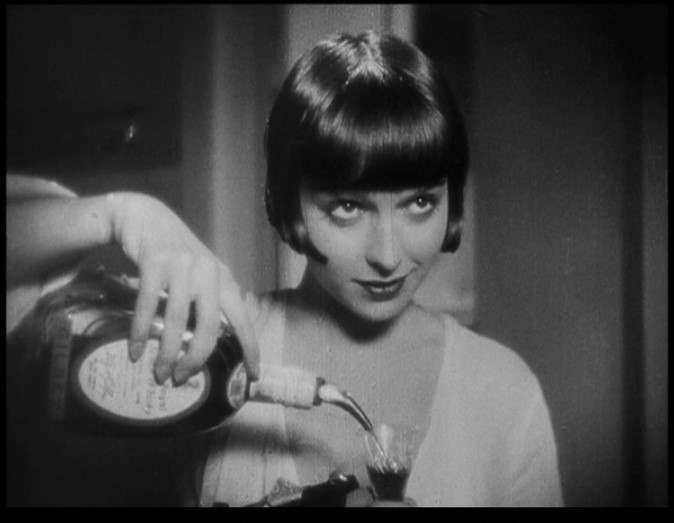
Second, one of the silent era’s slinkiest actresses, Louise Brooks, stars in the notoriously decadent Pandora’s Box (1929) on 31 July. Brooks’s effortless sex appeal in this film really set the template for Hollywood glamour for decades to come, so you can’t afford to miss it.
Go West screens in the Ondaatje Wing Theatre of the National Portrait Gallery at 3pm on 17 July 2011. Pandora’s Box screens in the Ondaatje Wing Theatre of the National Portrait Gallery at 3pm on 31 July 2011. Entrance to both films is free. Entrance to the Glamour of the Gods Exhibition is £6, less for concessions or free for members. You can book tickets online here. Glamour of the Gods runs from 7 July to 23 October 2011.
Hat-tip to @soshanau on Twitter for telling me about this one.
It’s not too often you get to watch silent films in a Tudor mansion in Hackney, so grab this chance while you can. The Sutton House Music Society is staging a night of classic silent comedy with accompaniment from jazz pianist Dave Morecroft on Sunday 10 July. The National Trust describes Sutton House this way:
Built in 1535 by prominent courtier of Henry VIII, Sir Ralph Sadleir, Sutton House retains much of the atmosphere of a Tudor home despite some alterations by later occupants, including a succession of merchants, Huguenot silkweavers and squatters. With oak-panelled rooms, original carved fireplaces and a charming courtyard.
Not your run-of-the-mill cinema then. They will be showing four films: Earl McCarthy stars as Hairbreadth Harry in Sign Them Papers; Ben Turpin chases a pancake in Why Babies Leave Home; Harold Lloyd is a piano player in a wild west saloon in Two-Gun Gussie; and Buster Keaton dabbles in DIY in the sublime One Week.
What’s more, there will be cocktails and popcorn – and guests are encouraged to dress “film star fabulous”. I think they’re suggesting you channel Bebe Daniels rather than Snub Pollard, but heck, it’s up to you.
Doors open for the Silent Film Night at 6pm, and the movies will begin at 7pm, on 10 July 2011. Tickets cost £10 or £8 for concessions and include £1 membership of the Sutton House Music Society Film Club. Sutton House is at 2&4 Homerton High Street, London E9 6JQ.
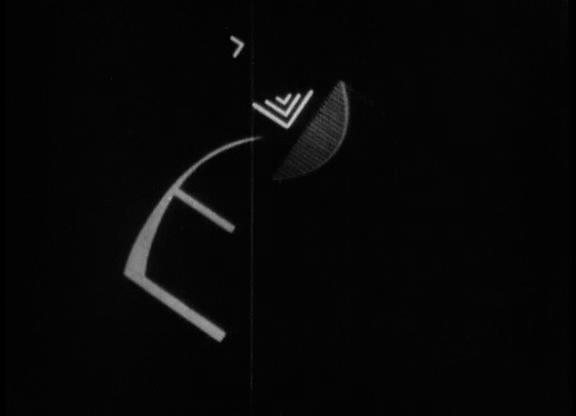
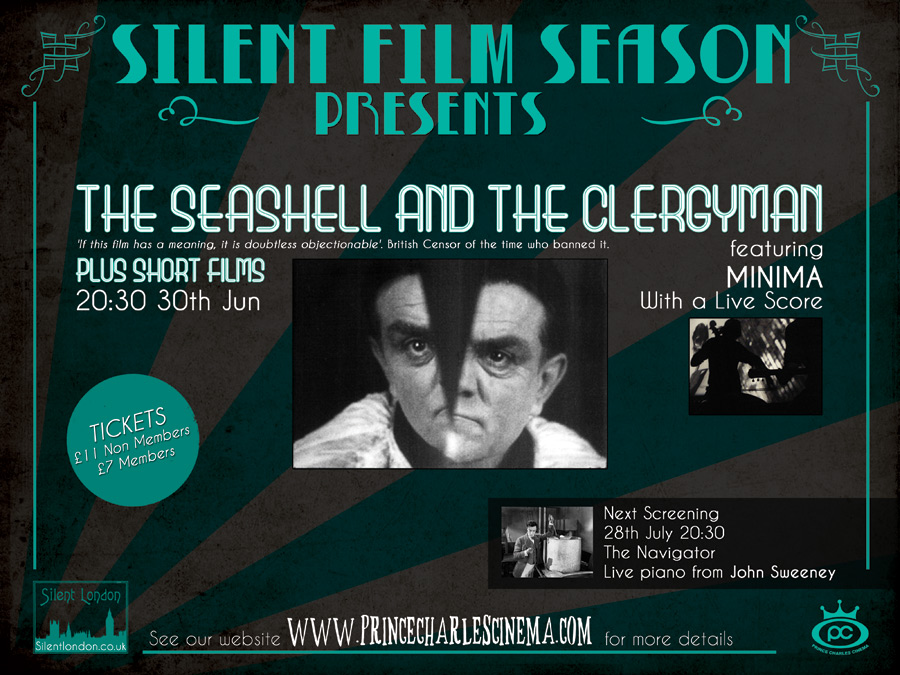
If your tastes run to the outer fringes of silent cinema – to the surreal, the avant-garde and the experimental – no doubt you already have your eyes on the Prince Charles Cinema’s next silent film screening. The west end cinema has collaborated with the band Minima to put on a night of short films, The Seashell and the Clergyman, Symphonie Diagonale and H2O, on Thursday 30 June. Full details here. Here’s a little taster of what you can expect:
The really, really good news is that I have a pair of tickets for this show to give away to one of the readers of this blog. Just take a look at this simple question:
Who directed The Seashell and the Clergyman?
Email your answer to silentlondontickets@gmail.com by Tuesday 28 June. The winner will be picked at random from the correct entries and emailed with the good news. Best of luck!
The best thing about writing Silent London is not the international prestige or the six-figure salary*, it’s the opportunity to evangelise for silent cinema, to spread the word about the films that I love and the experience of watching them with live music. So many people have seen a few scratchy clips of Chaplin films, a glimpse of Nosferatu or a Paul Merton documentary and they’re intrigued to find out more about these films that seem both like and utterly unlike the movies they’re familiar with. So when the Culture Critic website asked me to provide a very short introduction to silent cinema I jumped at the chance.
You may well disagree with some of the things that I say, and I’ll admit that choosing five “essential” silent films was a near-impossible task, but it’s online for all to see now. There’s a brief intro to my blog, with a list of five first films for newbies and a short interview too. Click here for the Guest Guide, and here for the interview.
*I always forget that irony doesn’t work on the internet
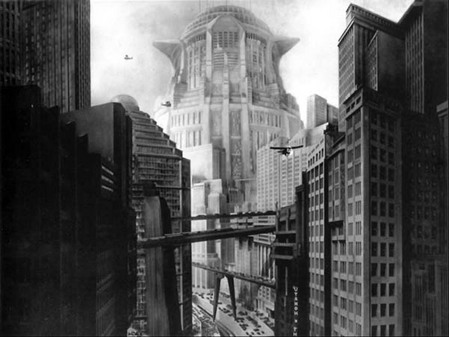
The Open City London documentary festival is hosting a very special event on Friday night – it’s a double-bill, with live music, in a very unusual cinema. First on the agenda is Metropolis Refound, a documentary about the history of the film and the discovery of the missing reels that went into the new, complete version of the film. This is followed by a screening of the film itself, with a live orchestral score by Serum Electronique, composed by Paul Hines. You need only pay £1 to get in, but the website does suggest that you bring a bike. Why? Because the temporary cinema in Bloomsbury really is powered by bicycles. It seems to me that it would take quite a lot of leg work to get through both these movies, but it’s sure to be worth it, and you can fortify yourself at the attached cafe and barbecue before it gets too strenuous. Talk about blurring the distinction between men and machines, though!
Metropolis and Metropolis Refound screens at Open City London on Friday 17 June at 7.30pm. For more details and to buy a ticket, click here.
It is shaping up to be a great summer for outdoor cinema screenings in London – and that includes silent films as well. For starters, Buster Keaton and Harold Lloyd are camping out in Canary Wharf with Neil Brand and the Create London festival is putting on these two gems in an unusual location in Hackney. The Folly for a Flyover is a temporary arts space in Hackney Wick, situated right under the A12. It opens later this month and is hosting five weeks of events. You can read more about this exciting project here on their website.
First up, Sawchestra are back with another interactive silent film show. The group make beautiful music from musical saws, children’s toys and other outlandish instruments and you can join them in playing along to Lotte Reiniger’s classic animation The Adventures of Prince Achmed on 25 June. That same night you will also have the chance to watch a selection of short films from Itsnicethat.com. The show starts at 8.30pm on Saturday 25 June and tickets cost £4. More details here.
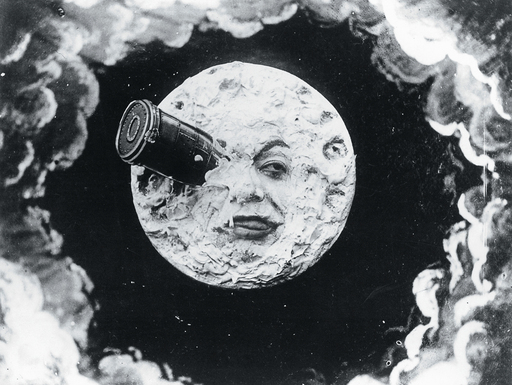
July brings more delights, as the Folly hosts a screening of George Méliès’s A Trip to the Moon and other early animations, with a live score from the musicians at the Guildhall Electronic Music Studios. This event might sound a little familiar – that’s because it’s a repeat of the Barbican show on 26 June, which I wrote about in more detail here. This looks great, and I hope the atmospheric location adds to the strangeness of it all – in a good way, I mean! The show starts at 8.30pm on Saturday 9 July and tickets cost £4. More details here.
These screenings are of the Create London festival, a series of cultural events in London’s Olympic host boroughs. For more information on these and the other events in the festival, check out the website.
And thanks to @susan_carey on Twitter for the tip.
Buster Keaton’s popularity is booming, and rightly so. The stone-faced comic is seen as cooler, more elegant and less sentimental than Chaplin – but just as funny. And that’s why the Prince Charles Cinema in the West End has got two Keaton classics lined up for summer, to continue its silent season. Something really magical happens when you watch silent comedy with live music, and most importantly, a big crowd. You’ll laugh until your sides ache, just see if you don’t.
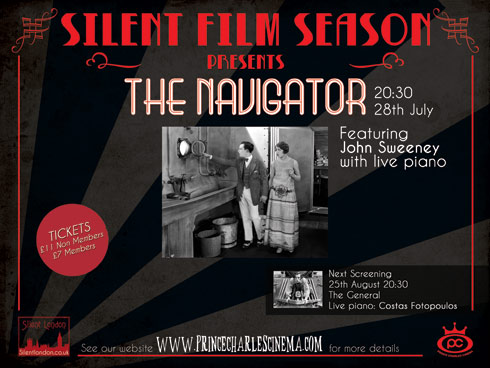
The Navigator, playing in July, sees Keaton play a toff stranded on a massive boat drifting across the ocean. He’s not alone though, his sweetheart (Kathryn McGuire) has stowed along as well. The visual gags are as inventive as ever – watch out for the underwater diving sequence, in particular. And the scene in which the lovers attempt to make breakfast. And the chase around the empty boat. And…
The Navigator screens on 28 July at 8.30pm, with piano accompaniment by John Sweeney. Tickets cost £11 or £7 for members and they’re available here. Check out the Facebook page here.
The General (1926)
The General
Keaton’s The General is one of those notorious cinematic beasts – a film that was panned on its initial release and now sits securely in the top ranks of those Greatest Films of All Time lists. Set in the American Civil War, The General is crammed with stunts that are equal parts hilarious and precarious, as Keaton races across the US in pursuit of his beloved locomotive, his girlfriend and some dastardly Union spies. But you don’t have to take my word for it: here’s New York Times critic AO Scott, and some choice clips from the film.
The General screens on 25 August at 8.30pm, with piano accompaniment by Costas Fotopoulos. Tickets cost £11 or £7 for members and they’re available here. Check out the Facebook page here.
These two events caught my eye in the JuLy BFI brochure. They’re not silent film screenings, and one of them isn’t even in London, but they are definitely worth a peek.
First up, your favourite silent film historian and mine, Kevin Brownlow, will be appearing at BFI Southbank to introduce a screening of his film Winstanley on 5 July. There’ll be time for a discussion after the film too, which is bound to include some talk of silent cinema. I’d bet my second-best cloche on it, in fact. This event is free for seniors, so if you’re over 60 this is a can’t-miss. The rest of us whippersnappers are invited too, but we’ll have to pay usual matinee ticket prices.
Winstanley screens at 2pm on Tuesday 5 July in NFT1. There are no details on the BFI website, so it might be worth ringing the box office on 020 7928 3232.
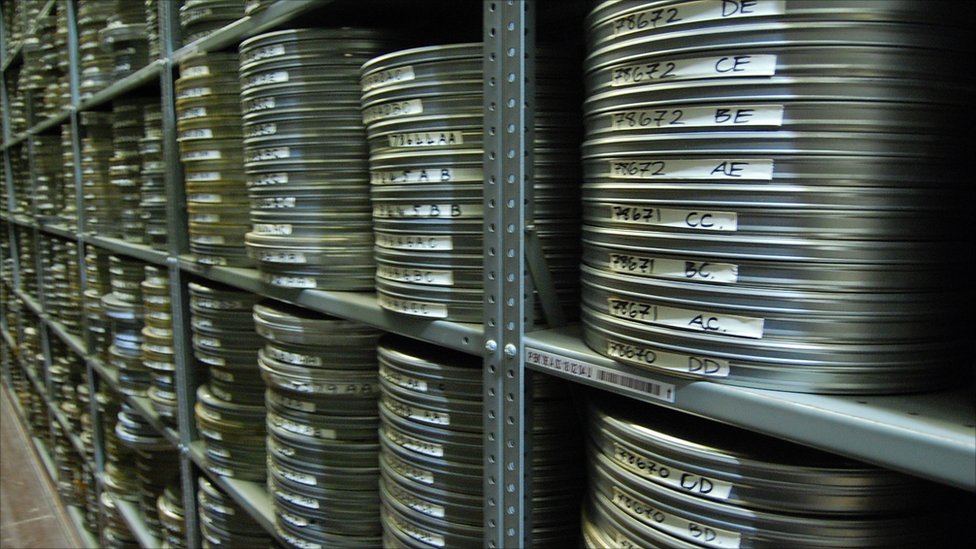
Second, there is an opportunity for BFI members to pay a visit to the National Archive in Berkhamsted. It’s a three-hour tour, including light refreshments, and you’ll have the chance to talk to some of the talented people who work there, and find out how films are restored. It seems like an apposite time to visit, with all the work currently being done on the Hitchcock 9 project, and the fact that the archive has recently been placed on the Unesco World Heritage register.
The cost of the archive visit is £25 or £20 for concessions, and the tour will take place on Tuesday 19 July. Log in to the BFI website to find out more or call 020 7928 3232 to book.
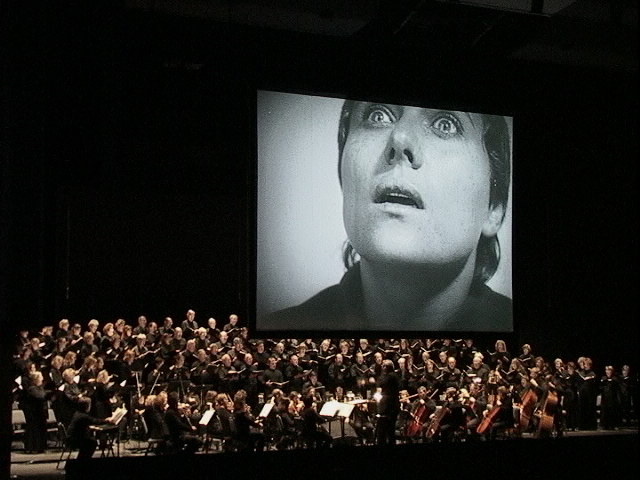
Richard Einhorn's Voices of Light, performed in Fairfax, VA in 2001
This blog has been all a-twitter about Dreyer’s masterpiece The Passion of Joan of Arc, recently, because it has been given a new rock-influenced score. By contrast, Richard Einhorn’s 1994 Voices of Light composition for orchestra and chorus seems like the established standard.
This is the magnificent soundtrack you can hear on the Criterion DVD release of the film, and though it is not without controversy (some feel that adding choral music to an anti-clerical film is rather beside the point), it has been widely, and rightly, acclaimed. It’s a real spine-tingler. You can read more about it here, and listen to it yourself online here.
Voices of Light is definitely something you want to experience live though, and luckily this November the Barbican Concert Hall is staging a performance of Voices of Light that you really, really don’t want to miss out on. The score will be performed by the London Symphony Orchestra and London Symphony Chorus, conducted by the trailblazing Marin Alsop. A film as majestic as The Passion of Joan of Arc deserves to seen this way, so this is a wonderful opportunity.
Yes, this definitely counts as advance notice, but tickets are already on sale, so ink it in your diary, people.
Einhorn Voices of Light and Carl Dreyer’s The Passion of Joan of Arc will be performed at the Barbican Concert Hall on Sunday 6 November 2011 at 7.30pm. Tickets range from £10 to £35 and are available here on the Barbican website.
And while we’re here – have you bought your tickets for Underground yet?
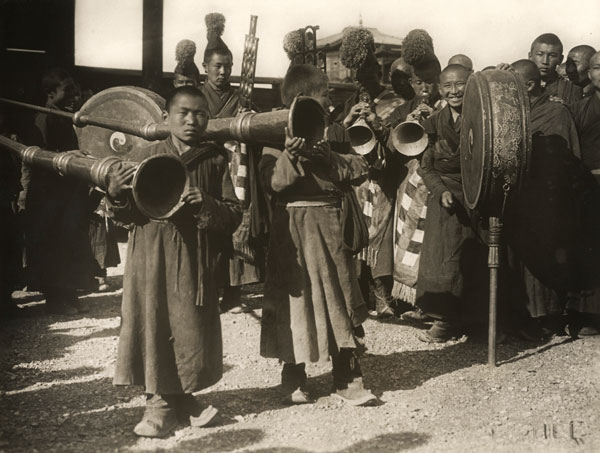
The BFI’s year-long celebration of Russian cinema is in full swing. It may be a matter of some sadness to us that the first section of the season, covering the silent years, is over, but we still have some treats to look forward to. There is still a chance that the throat-singing band Yat-Kha will overcome their visa problems and return to the BFI for a live performance of their Storm Over Asia score. Having heard the recording the other day, I’d definitely say that would be worth checking out.
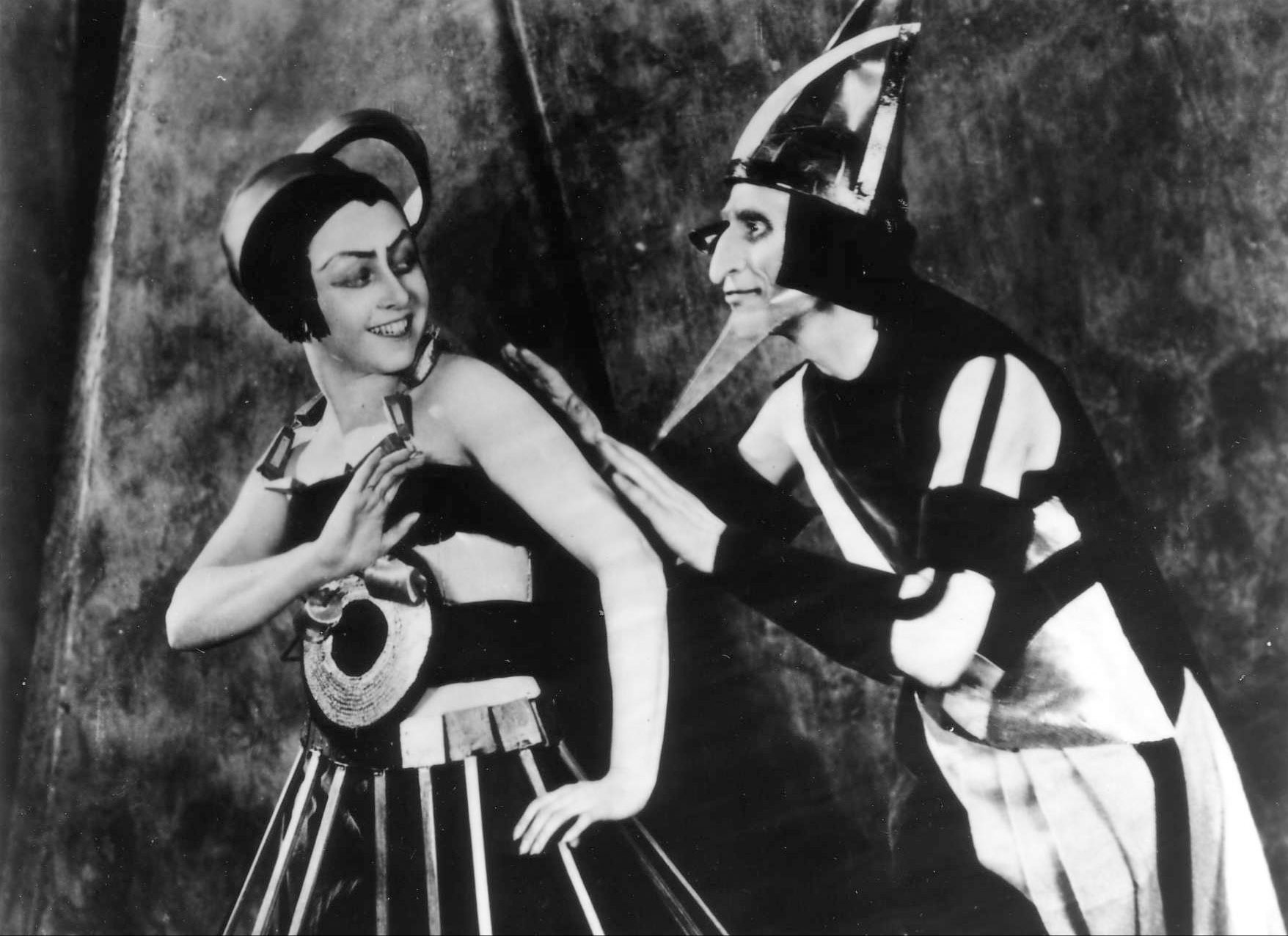
More immediately the Russian space exploration strand of the Kino season kicks off with a hugely popular silent film, the delightfully potty Aelita, Queen of Mars (1924). This Soviet space fantasy features some genuinely hilarious moments and some mind-boggling costume designs – wild constructions of wire and plastic that have to be seen to be believed. Also playing with Aelita is Interplanetary Revolution (1924), a satirical cartoon in which, much like in the main feature, a group of Soviet citizens fly off on a consciousness-raising mission to Mars. It looks like the perfect accompaniment. Check it out:
Next up in the season is a science-fiction film from 1936 called Cosmic Voyage, all about the first journey to the moon, a dangerous mission aboard the USSR 1 – Josef Stalin. Accompanying that film will be a 1912 short by animator Ladislaw Starewicz, Voyage to the Moon. Starewicz is celebrated for his charming, early “insect films”, which use stop-motion animation and beetles with wires for legs. You may know, for example, The Cameraman’s Revenge, a whimsical tale of marital infidelity among insects.
Aelita, Queen of Mars with Interplanetary Revolution screens on Sunday 10 July at 6pm in NFT1 and Monday 25 July at 8.30pm in NFT 2. Both screenings will have live piano accompaniment.
Cosmic Voyage with The Moon (1965) and Voyage to the Moon (1912) screens on Sunday 24 July at 8.20pm in NFT3 and on Tuesday 26 July at 6pm in NFT3.
Tickets are on sale as of today to BFI members and soon for everyone else. Tickets cost £9.50 or £8 for members and you can buy them here, on the BFI website.
You may also be interested in the lecture that opens the Kosmos strand, which will be given by Soviet cinema scholar Sergei Kapterev on Friday 1 July at 6.20pm in NFT2. Tickets cost £5.
What’s better than a silent film screening eh? A free silent film screening of course. The Barbican is camping out at Canary Wharf this August to stage three outdoor screenings of feature-length silent comedy classics and you won’t have to pay a penny to attend.
Neil Brand will be accompanying on the piano while the assembled crowds enjoy Monday night screenings of Buster Keaton’s The Navigator and The General and Harold Lloyd’s Safety Last. There’s nothing like watching silent comedy with a large, lively audience and Neil Brand is always on top form, so these shows should be inked in your diary already.
Monday 8 August
6.30pm – The General (U) (US 1926 Dir. Buster Keaton & Clyde Bruckman 89 min)
Set during the Civil War and based on a true incident, The General is considered to be the one of the greatest comedies of all time. Buster Keaton plays Johnnie Gray who loves his steam train The General. When Union soldiers penetrate Confederate lines and steal his locomotive, Johnnie sets off in hot pursuit – and seven of the film’s eight reels are devoted to the nail-biting chase.
Monday 15 August
6.30pm – Safety Last! (U) (US 1923 Dir. Fred Newmeyer & Sam Taylor 73 min)
In Safety Last!, Harold Lloyd’s most famous comedy, he plays a sales clerk in a department store who finds himself hanging off the hands of a collapsing clock on the side of a skyscraper high above the streets of downtown Los Angeles. Harold’s legendary building climb is breathtaking and hilariously funny at the same time. A sequence achieved without any special effects.
Monday 22 August
6.30pm – The Navigator (U) (US 1924 Dir. Donald Crisp, Buster Keaton 60 min)
Keaton’s biggest box-office success tells the story of inept millionaire Rollo Treadway and Betsy O’Brien (Kathryn McGuire), his rich, pampered girlfriend, who find themselves on a huge deserted liner adrift in the ocean. The Navigator is one of Buster Keaton’s finest films.
Hopefully some of the financiers of Canary Wharf will be tempted to leave their offices and join in the fun – it’s got to be more of a laugh than banking.
The Latitude Festival arena in 2009 (Photograph: Andi Sapey)
Latitude is a damn cool festival, bringing together music, theatre, poetry, comedy and multicoloured sheep in one beautiful package. Now they’ve have added silent film to the deal, and it’s pretty much irresistible. The wonderful people at Birds Eye View are bringing some of the highlights of this year’s festival to the Suffolk countryside, putting on a spectacular multimedia show at Latitude’s Film and Music Arena. You might have seen some of these performances at the Birds Eye View festival in March, but for those of us who missed them is a very welcome opportunity. This is what they’ve got lined up:
An a cappella choral score from Grammy award winner Imogen Heap to the first ever surrealist film ‘The Seashell and the Clergyman’ (Germaine Dulac, 1927) with the Holst Singers; Micachu and an old cassette player to Lotte Reiniger’s ‘Hansel and Gretel’ (1955); haunting vocalist and multi-instrumentalist Seaming accompanying Maya Derren’s ‘Meshes of the Afternoon’ (1943) and Tara Busch’s compelling performance alongside Lois Weber’s early thriller ‘Suspense’ (1913). In addition, hotly tipped Blue Roses is re-scoring classic ‘Dr. Jekyll and Mr. Hyde’ (1920) and fashion photographer and filmmaker Wendy Bevan is bringing a dark 1930s cabaret inspired performance with her new band Temper Temper.
If those films and artists are unfamiliar to you this review of the Sound & Silents night at the Southbank Centre by Bidisha gives a real flavour of what you can expect. She’s pretty enthusiastic about it. And rightly so: I’m a real fan of Tara Busch’s spooky, icy score for Weber’s Suspense, in particular. And you can find out more about Blue Roses, who will be scoring Dr Jekyll and Mr Hyde, here.
This year, Latitude Festival is headline by The National, Paolo Nutini and Suede. You can find out more about the festival, including how to buy tickets, here on the official website.
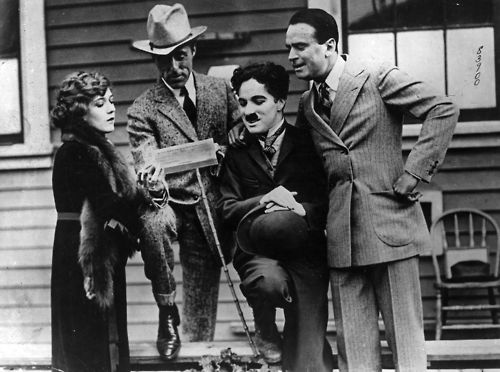
(l-r) Mary Pickford, DW Griffith, Charlie Chaplin and Douglas Fairbanks, founders of United Artists
Paul Merton is probably the most high-profile silent film fan in the country, with a book, a stage show and a series of documentaries on comedy under his belt. And now he’s back, on BBC 2 no less, with a three-part series of programmes about the early days of the American films industry – Paul Merton’s Birth of Hollywood.
The first programme will focus on DW Griffith, the beginnings of the star system and the relationship between music and silent film. There’s a very jolly introduction to the series on Paul Merton’s official website here, and some musings about making the documentaries on the BBC site here. You’ll be pleased to know that Neil Brand is involved too – he’s written the title music
Merton clearly has a great passion for the subject, and I couldn’t be more pleased to see documentaries on early cinema airing on one of the major channels. What would be great, of course, would be a screening of a silent film or two after the programme, but it looks like that is not to be. Better luck next time, chums.
Merton appeared on Danny Baker’s radio show on Saturday to promote the show and their 10-minute chat is well worth a listen on iPlayer, if only for the infectious enthusiasm the pair have for the subject. Follow the link here, and fast-forward to an hour and five minutes into the programme.
Paul Merton’s Birth of Hollywood begins on BBC 2 at 9.30pm on Friday 27 May 2011.
The Barbican is devoting the summer to animation, with a multifaceted season called Watch Me Move. There’s an exhibition in the art gallery and screenings in the cinema of everything from anime to Jan Svankmajer. And there’s this, a presentation of early animated films, accompanied by the musicians of the Guildhall Electronic Music Studios.
Top billing goes to the earliest film here: Georges Méliès’s science-fiction spectacular A Trip to the Moon (1902): possibly the most influential 14 minutes of film ever recorded. It’s fair to say that your year of Méliès mania starts here. 2011 marks the 150th anniversary of the director’s birth and there are two big releases in the pipeline to celebrate. First, the painstaking full-colour restoration of A Trip to the Moon, which premiered at Cannes and should be coming to these shores soon. Second, Martin Scorsese’s 3D movie Hugo Cabret, based on a children’s book, The Invention of Hugo Cabret, which features Méliès and his beautiful trick films. This snippet from Le Figaro suggests that we might just see both films together when the latter gets its theatrical release.
Back at the Barbican, and the other films on the bill include four of Winsor McCay’s whimsical hand-drawn animated films:
For the vintage-lovers among you, this exhibition should be a real treat. Pam Glew’s Beautiful and Damned exhibition at Blackall Studios in east London uses vintage fabrics and techniques to create poignant but gorgeous images of silent movie stars. It’s only on for a few days, so catch it while you can:
‘Beautiful and Damned’, the shows title, is of course taken from F. Scott Fitzgerald’s 1922 novel, which explores the listless lives of moneyed society during the Jazz Age. This captivating era, drenched in glamour yet tinged with tragedy is the decadent setting for this extraordinary series of work. The exquisitely beautiful movie starlets, society icons and characters on display capture the spirit of the age all who are caught in the unforgiving glare of the limelight and some sadly burn out before their time. As Pam states, “the tragedy amongst the beauty is what has inspired this show, the sharp contrast between a blessed life and one that ends in scandal, hedonism or destitution”.
Beautiful and Damned runs from 25-29 May at Blackall Studios, 73 Leonard Street, Shoreditch, London EC2A 4QS. For more information, check out Pam Glew’s website here.
Yes, you can watch silent films outside the arthouse circuit – in a West End cinema, with a packet of popcorn and a cold beer. That’s just how cool London is. And I much as I love a good retrospective, it’s a top night out. Which is why I’m excited to announce this very exciting film screening on The Prince Charles Cinema‘s silent slate.
In June, the hugely popular and accomplished rock band Minima will accompany a selection of experimental shorts at the Prince Charles Cinema – this won’t be your common-or-garden night at the flicks. Topping the bill is The Seashell and the Clergyman (1928), a pioneering surreal film directed by Germaine Dulac and written by Antonin Artaud. The writer apparently loathed the film and called the director a “cow”, when he saw it. The British censors were none-too-impressed either, saying famously: “The film is so cryptic as to be almost meaningless. If there is a meaning, it is doubtless objectionable.” You want to see it now, don’t you?
We can also expect to see Viking Eggeling’s 1924 avant-garde geometric film Symphonie Diagonale and Ralph Steiner’s H20, an experimental “tone poem” on the theme of water, from 1929. It’s great that this cinema is showing something a little out of the ordinary on its big screen – there’s far more to silent cinema than the Hollywood hits, and this is a fantastic way to celebrate that.
The Seashell and the Clergyman screens at 8.30m on 30 June 2011. Tickets cost £11 or £7 for members and they’re available here. Check out the Facebook page here. You can buy Minima’s Seashell soundtrack CD on their website, and no doubt it will be available on the night too.
Just to let you know that the throatsinging band Yat-Kha will no longer be making an appearance at the BFI screening of Storm Over Asia on Friday. This is what the BFI has to say
We regret to announce that this live performance is cancelled. Unfortunately key members of Yat-Kha have experienced problems with obtaining visas to visit the UK and are unable to reach London in time. We will screen a new high definition restoration of the film, that includes a live soundtrack performed by Yat-Kha at the National Film Theatre in 2001. Please note, the film will run 145min.
Ticketholders will also be able to enjoy a complimentary vodka cocktail (upon presentation of ticket to benugo bar staff), courtesy of season supporters Ivan The Terrible Vodka.
Tickets now at normal ticket price. Ticketholders who no longer wish to attend or ticketholders who wish to attend but would like to have the difference refunded, should contact the Box Office in person or by phone (020 7928 3232).
As far as I know, The Artist (2011) is the first silent film ever to be placed in competition for the Palme d’Or. It’s been a long time coming, and it’s fair to say that silent film fans will take a keener interest than usual in the Cannes judging this year. There has been a lot of early buzz about The Artist, not least because it was swiftly snapped up and flaunted around town by the Weinstein Company. But then again, some of the other films in the competition have earned rave reviews already: notably Lynne Ramsay’s We Need to Talk About Kevin.
Winner or not, The Artist is the most high-profile modern silent in a long, long time and we’re all keen to see it, to find out whether it lives up to the hype, and whether it’s a sensitive tribute to an era of exquisite film-making, or a heavy-handed pastiche.
To this end, I’ve pulled together as many reviews from Cannes as I can find so in the long wait for The Artist to hit UK cinemas we can amuse ourselves by forming our own opinions. We can base this a little on what the critics say, and mostly, of course, on our own preconceptions springing from the extraordinarily beautiful trailer: