
Last year, I wrote about a fascinating film that only had a short theatrical release, for my Long Take column in Sight and Sound – but now it will live for a year on iPlayer, and I think it is well worth your time. Three Minutes: A Lengthening is directed by Bianca Stigter and has a voiceover by Helena Bonham-Carter. You may recognise its subject from the book Three Minutes in Poland: Discovering a Lost World in a 1938 Family Film by Glenn Kurtz.
Continue reading Three Minutes: A Lengthening – the heartbreaking archive documentary on BBC iPlayer nowAll posts by PH
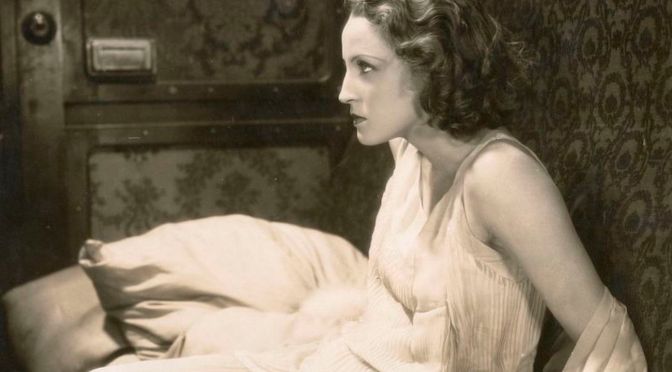
The Silent London Poll of 2022: And the winners are …
Well done everyone! The Silent London Poll of 2022 had a record-breaking number of votes, and the winners reflect a thriving, international silent film scene. Congratulations to all the people mentioned below, some of these categories were bursting with great nominations. Thank you for all your votes. And for making me blub a little when I was typing this up.
Without further ado, let me open this giant stack of golden envelopes. Here are your winners!

1. Best orchestral silent film screening of 2022
Your winner: The Manxman (Alfred Hitchcock, 1929), with a score composed by Stephen Horne, orchestrated and conducted by Ben Palmer and played by Orchestra San Marco di Pordenone, with soloists Louise Hayter and Jeff Moore, at Le Giornate del Cinema Muto, Pordenone.
I said: “Horne’s music is as deft as Hitch’s camera: always gorgeous, but sometimes delicate and other times thick with portents of doom… Needless to say, Hitch and Horne brought the Verdi to its feet once more.
Honorable mention: The Unknown (Tod Browning, 1927) with a score conducted and composed by José María Serralde Ruiz, performed by Orchestra San Marco di Pordenone, , at Le Giornate del Cinema Muto, Pordenone.

2. Best silent film screening with a solo musician or small ensemble of 2022
Continue reading The Silent London Poll of 2022: And the winners are …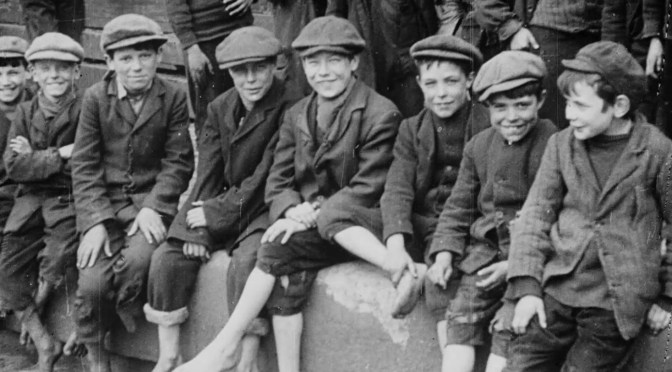
Echoes of the North: Four Chapters in Time review: a stirringly evocative tour of times past
It’s time to make a full confession. The title of this blog is a terrible deflection from the truth. I am, indeed, a northerner. Please forgive the vagueness. I am from Merseyside, but my family have lived in various places upwards from the middle of England, going back generations. So our accents may wander, but our vowels are consistently flatter than a Yorkshireman’s cap.
All of which means that Echoes of the North: Four Chapters in Time, a new archival film from the Yorkshire Silent Film Festival, is sweeter to me than a barm cake stuffed with hot chips and a mug of strong tea. The film is a stirring collage of silent film footage of northern England, bolstered with a charismatic brass-band score composed by Neil Brand (a southerner, but don’t hold it against him). The score is played expertly by the legendary Brighouse and Rastrick Band, conducted by Ben Palmer. Echoes of the North is produced by YSFF’s Jonny Best and edited by Andy Burns from more than 100 pieces of film. Best of all, it is free to watch on YouTube.
Continue reading Echoes of the North: Four Chapters in Time review: a stirringly evocative tour of times past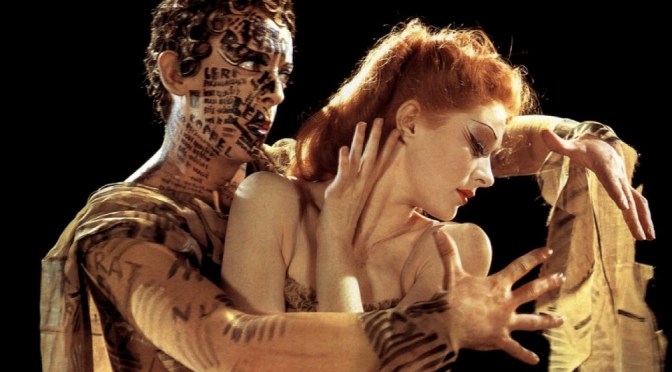
Book news: The Red Shoes
“My memory goes back to the very first films. My ambition goes far ahead of today.”
Michael Powell, on the ballet sequence of The Red Shoes
Let me just tap this microphone a couple of times. Cough once. Thumbs up. We’re good to go? I have a little announcement to make and it is a wee bit off-topic.
You may remember that a few years back I wrote a book about Pandora’s Box (GW Pabst, 1929), in the BFI Film Classics series. That was fun. So much so that I wrote another one last year. But this one, full disclosure, is on a talkie.
Continue reading Book news: The Red Shoes
Season’s Greetings, Silent Londoners!
Time to hang my stocking right next to my blogging shoes, I am signing off for the holidays now. I have annual traditions to attend to: exchanging gifts, cooking a large dinner for my family and writing a couple of essays on Weimar cinema.
This year hasn’t always been easy but the Silent London community has been full of enthusiasm and the spirit of exploration. It gladdens the heart. Thanks to everyone who interacted with these posts, either here or on social media and they many wonderful people I met at festivals. And an extra thank you to those of you who supported the Asta Nielsen season at BFI Southbank earlier this year – that meant a lot to me. All of you helped to make the year, and not just the season, bright!
Speaking of which – don’t forget to vote in the Silent London poll. Every vote really counts!

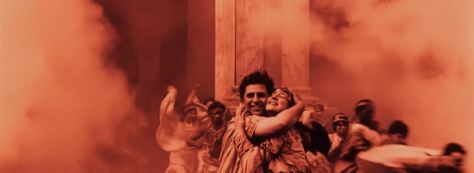
This is my Christmas card from me to you in 2022. I am wishing you a fabulous festive season and all the very best for 2023, with a little help from the wonderful Gloria Swanson!
Thanks for reading, take care, and I will see you n 2023!


- Silent London will always be free to all readers. If you enjoy checking in with the site, including reports from silent film festivals, features and reviews, please consider shouting me a coffee on my Ko-Fi page.
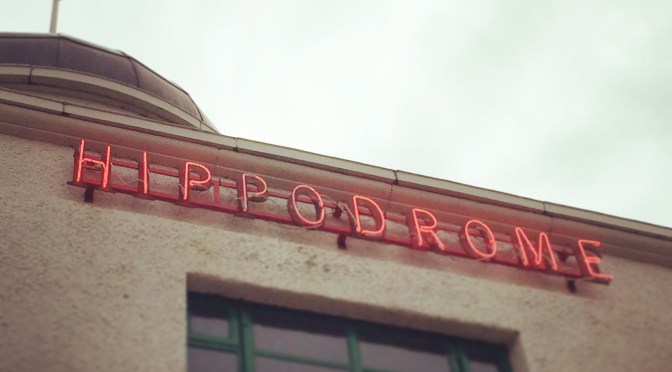
Hippfest 2023: passes, podcasts and promises
Save the date, Silent Londoners, The Scottish silent film festival with the warmest welcome in the world is back in 2023.
The Hippodrome Silent Film Festival at Scotland’s oldest purpose-built cinema, the Hippodrome in Bo’ness, will take place Wednesday 22 to Sunday 26 March 2023. The full programme and tickets will be released on Tuesday 7 February. Not too long to wait.
But there’s more news. A development many attendees have long been asking for – a festival pass!
Continue reading Hippfest 2023: passes, podcasts and promises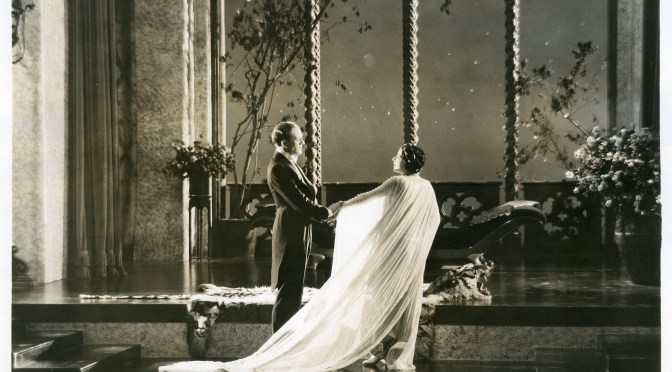
The Greatest Silent Film Poll of 2022: vote for your winners now
Season’s greetings Silent Londoners. It’s that time of year when we like to look back at the year, and especially at all the great silent movies we watched.
Who knows what normal is any more? But this year we had in-person film festivals, seasons, screenings and conferences a-plenty. We had new books and DVDs to enjoy. New websites too! And honestly, silent cinema seems to be more popular than ever.
Continue reading The Greatest Silent Film Poll of 2022: vote for your winners now
Introducing Hitch-22
This is a guest post for Silent London by Henry K. Miller. Here, Miller introduces Hitch-22, his “alternative chronology of 1922”, the first part of which is published today.
A typical day in Kevin Jackson’s Constellation of Genius, his engrossing chronology of 1922, much in the air in 2022, a year on from his untimely death, will have more than one entry, most often for events in London and Paris. The section on 4 March, however, begins in Berlin, with the first private screening of F. W. Murnau’s Nosferatu, no. 1 on the IMDb’s list of the most popular films of the year, Jackson tells us, before hopping over to London for no. 6 on the same list: Alfred Hitchcock’s Number Thirteen. The latter, not the former, makes the book’s back-cover blurb: 1922 was “the year in which James Joyce’s Ulysses and T. S. Eliot’s The Waste Land were published, Alfred Hitchcock directed his first feature, the Ottoman Empire collapsed…” Number Thirteen has dropped down to no. 15 in IMDb’s list in the decade since Constellation of Genius was published, perhaps reflecting a generational shift akin to Jeanne Dielman’s victory over Vertigo, but still the question remains: what is it doing there? There, specifically, on 4 March, but also, in a wider sense, in a book about modernism.


Video: behind the scenes with Charlie Chaplin on City Lights
The Criterion Collection has shared this very special clip with Silent London to mark the release of Chaplin’s City Lights on Blu-ray in the UK. It is presented courtesy of MK2.
In this footage we see Chaplin out of costume rehearsing one of the most graceful bits of comic business in the film, as the Tramp steps back to admire a statue in a department store window – with perilous results.
It’s a fascinating insight into the working processes of this famously perfectionist filmmaker, during what was very possibly his most painstaking, and certainly most protracted, shoot. It’s just one of the glimpses backstage offered on the new Blu-ray edition of the film.
Continue reading Video: behind the scenes with Charlie Chaplin on City Lights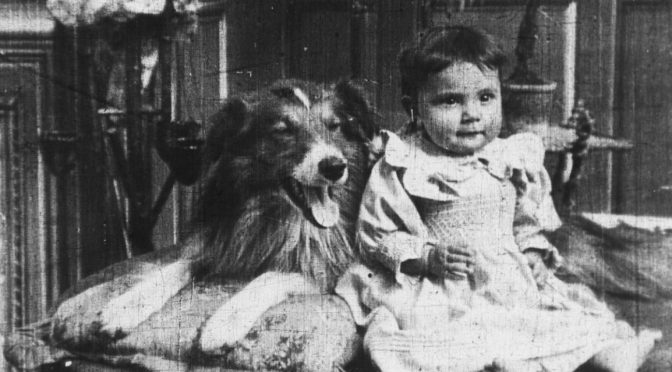
Silent shouts: books, blogs, festivals and more
A few of the fabulous things on my radar right now…
WeimarCinema.org
Edited by Tony Kaes and Cynthia Walk, this capacious website is a comprehensive source for anyone studying, or refreshing their interest in, Weimar Cinema. There are guides to where to watch films online, other useful websites, and more traditional publications. They also publish “scholarly web-based essays that benefit from moving images and links”, so get in touch if you have something you’d like to write for them. I really liked this, by Paul Flaig, on “Chaplin’s cinematic promise”. They also welcome submissions of archival material, dossiers and updates to their listings.
British Cinema: A Very Short Introduction, by Charles Barr (Oxford University Press)
An entertaining and very informative tour of British film history, starting from the silent days of course, but taking a more productive route than a simple chronological tour. Yet, Barr covers everything from Rescued By Rover to Hitchock, Quota Quckies, Powell and Pressburger, Ealing, the British New Wave and Chariots of Fire right up to titles as recent as Last Night in Soho. I particularly enjoyed the way he paired films to discuss them, eg comparing such near-simultaneous yet wildly different releases as Downton Abbey and Sorry We Missed You. When you finish reading this valuable book you are sure to immediately turn the TV on to Talking Pictures, and I don’t blame you.
Continue reading Silent shouts: books, blogs, festivals and more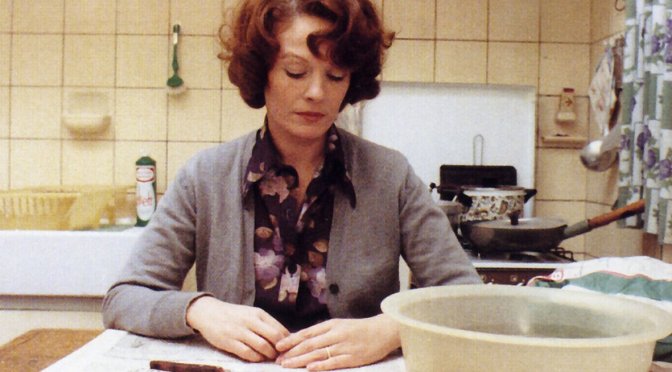
The silences of Jeanne Dielman and the greatest films of all time
Something utterly radical has happened to the Sight and Sound Greatest Films of All Time poll. This year, around 1,600 critics voted, more than ever before, and the winner of the poll was for the first time a film directed by a woman. A feminist art film from 1975 is now the greatest film of all time, according to the only poll that “most serious movie people take seriously” (Roger Ebert). That film is Chantal Akerman’s Jeanne Dielman, 23 quai du Commerce, 1080 Bruxelles.
Only three other films have won before. Bicycle Thieves in 1952, and then for the next five polls, which take place every decade, Citizen Kane held the top spot. In 2012, Hitchcock knocked Welles off his perch with Vertigo.
Continue reading The silences of Jeanne Dielman and the greatest films of all time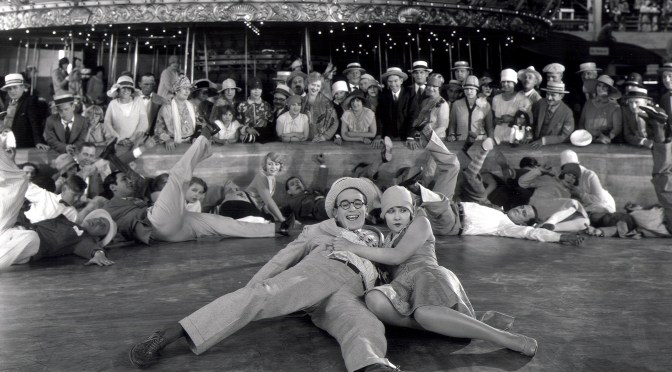
Funny Valentines: Silent comedy at Slapstick 2023
This February, comedy fans will head west to Bristol, Unesco City of Film for the annual Slapstick Festival. As usual, there is plenty for fans of silent cinema in the programme, with stars from Charley Bowers to Harold Lloyd, Charlie Chaplin to Marlene Dietrich. Presenters include Kevin Brownlow, Steve Massa and Polly Rose, as well as the marvellous Ayşe Behçet, whose Charlie’s London posts you may remember from this very site, back in the day.
The 2023 Slapstick festival runs from 14-19 February this year, and here’s what’s coming up silent in the programme.
WEDNESDAY 15 FEBRUARY
2pm: The Cigarette Girl Of Mosselprom [1924]
Hosted by Lucy Porter
Watershed £8.50/£5.00
Dir: Yuri Zhelyabuzhsky, Soviet Union, 78 mins, cert TBA
In stark contrast to most films made immediately after the Russian Revolution, this is an endearing rom-com filled with likeable characters and some self-effacing insights into the filmmaking process. At the centre of it all is cigarette seller Zina (played by the future Cannes award-winning director Yuliya Solntseva) and the love tangles that surround her when she is talent-spotted to become an actress. With an introduction from stand-up comedian and actor Lucy Porter and live piano accompaniment by John Sweeney.
Continue reading Funny Valentines: Silent comedy at Slapstick 2023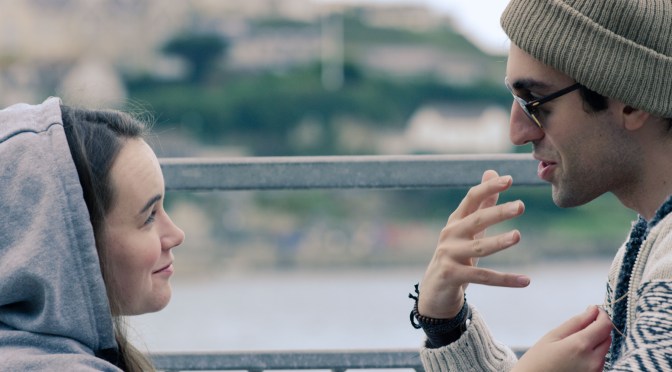
Amaryllis (2022): diary of a teenage skater girl
Amaryllis is a refreshing new modern silent film. It’s the first silent movie I have ever seen that is set in Digbeth, for one. But this female-led crime drama feels very modern and very traditional all at once. The occasionally playful take on a gritty urban milieu is entirely in spirits of say, Chaplin’s Easy Street, though this is a drama not a comedy and too streetsmart to be sentimental. On the other foot the young female heroine who glides around Birmingham on a skateboard and doodles ferociously in her journal feels very much like a character of the here and now.
Continue reading Amaryllis (2022): diary of a teenage skater girl
The Silent Muse: The Memoirs of Asta Nielsen – Special Offer
A Pordenone postscript on a subject very dear to my heart – Asta Nielsen.
While I was at the Giornate I was lucky enough to talk to scholar Julie K. Allen about her research into Asta Nielsen, including her English-language translation of the actress’s fascinating memoir, The Silent Muse, which was released by Boydell & Brewer earlier this year. It is a tremendous book. An engrossing read, which offers insights into Nielsen’s life and work and especially the world of Weimar Cinema.
Continue reading The Silent Muse: The Memoirs of Asta Nielsen – Special Offer
Le Giornate del Cinema Muto 2022: Pordenone Post No 8
So the 41st Giornate del Cinema Muto, and my personal 11th, draws to a close with two British silent films. What is that they say about saving the best for last?
I was certainly in Italy this morning, with the Italian drama Profanazione (Eugenio Pergeo, 1924-6) – a tale of adultery, corruption, suspicious, lost pets and automobile accidents. This was spirited drama, if very heavy on the intertitles, with Leda Gys as a woman who strays and yet is more sinned against than sinning. That title translates into English as “defilement”, which gives you a sense of the subject matter, I think, and why censorship delayed the film’s release for so long. Gys is every inch the star, though notably more restrained than the diva mode, and she is the heart of this film that despite its twists and turns, is very much a serious film for grownups.
Continue reading Le Giornate del Cinema Muto 2022: Pordenone Post No 8Le Giornate del Cinema Muto 2022: Pordenone Post No 7
Day Seven of the festival and the mood on campus is very much “Thank God it’s Friday”. Not because anyone is glad the Giornate is nearly over (perhaps apart from the festival team perhaps who have worked tirelessly to ensure everything has run beautifully, as usual), but because today’s lineup is especially toothsome. More Norma! A Frances Marion-directed feature! And Ivan Mosjoukine and Brigitte Helm smouldering opposite each other! That’s before we even get to tonight’s Ruritanian romp – the 1924 adaptation of the silent era touchstone that is Elinor Glyn’s Three Weeks. Hold on to your string of pearls, we are going all-in.
First, an especially timely effort from Team Talmadge. In Within the Law (Frank Lloyd, 1923), Norma plays a shop girl who fights back. Exploited under capitalism, and imprisoned for a crime she didn’t commit, young Mary finds “going straight is a tough proposition”. Instead she teams up with a pretty blonde cellmate to take revenge on the moneyed male establishment with a breach-of-promise scheme that exploits men, cashes the big and stays strictly “within the law”.
Continue reading Le Giornate del Cinema Muto 2022: Pordenone Post No 7
Le Giornate del Cinema Muto 2022: Pordenone Post No 6
This evening belonged to Marie Prevost, much-maligned silent Hollywood comedienne and high empress of flirtatiousness. She appeared twice on the Verdi screen in front of a packed hall in two fashionable comedies, one about hair and another about lingerie: first in a fragment of the multi-authored flapper farce Bobbed Hair (Alan Crosland, 1925), and then full-length in the Al Christie comedy Up in Mabel’s Room (E. Mason Hopper, 1926).
Continue reading Le Giornate del Cinema Muto 2022: Pordenone Post No 6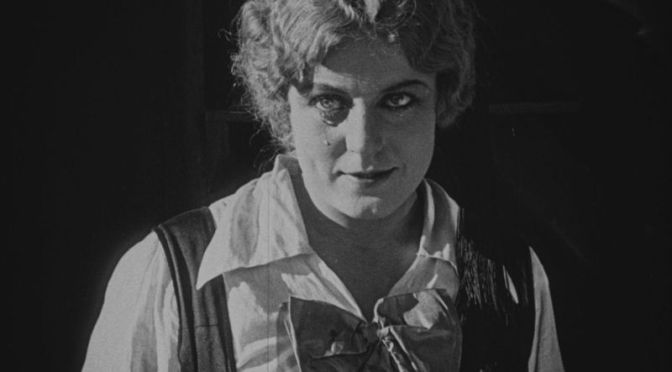
Le Giornate del Cinema Muto 2022: Pordenone Post No 5
We have already established that Norma Talmadge is fond of a dual-role, but 1920’s Yes or No? (R. William Neill) pushes the boat out by having two Talmadge sisters on the cast list. of this New York drama Natalie T plays Emma, the maid of dissatisfied society lady Margaret (Norma) and sister of dutiful tenement housewife Minnie (also Norma). The clue is in the title here, and each woman will be asked to choose between temptation and courage, extramarital adventure and (often thankless) fidelity. So it’s a similar structure to that great Norma T melodrama Secrets (1924, Frank Borzage): a character study building to a question that tests that character. However, here we have two women, two questions, two answers – and two sets of consequences.
Choose carefully, ladies. The film is judging you. Literally, if those beartrap illustrations behind certain title cards are to be believed. In fact the title cards were a real highlight of the film, elegantly and often wittily illustrated. True, they were also a little sanctimonious, regressive… but it’s 1920 what can I say? The important point is that Norma is really splendid in this one. She does well with these two sympathetic characterisations, and while she is not charismatic in the way of a Swanson or a Pickford, she is very watchable. I am very much excited for the Normas to come. And thanks are due to José Maria Serralde Ruiz, for playing such an old-fashioned dramas if it were brand new, and building the tension beautifully.
Continue reading Le Giornate del Cinema Muto 2022: Pordenone Post No 5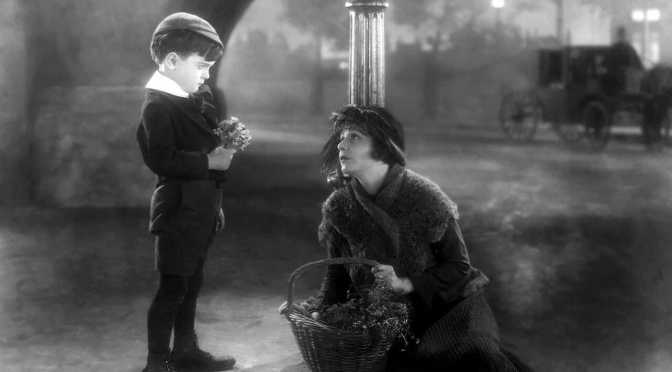
Le Giornate del Cinema Muto 2022: Pordenone Post No 4
What’s your favourite Latvian nationalist historical fantasy war epic? From the silent era, I mean. Taking a little while to decide? Cool, I’ll share mine. It’s Lāčplēsis AKA The Bear Slayer (Aleksandrs Rusteiķis, 1930), newly restored by Riga’s Studio Locomotive.
To reassure the squeamish among you – there is no bear slaying in this film. The Bear Slayer is a strongman of Latvian legend, so burly he can kill a bear with his bare (sorry) hands, but he uses his might for right. This film starts with a hell of a bang, in full-on fantasy mode as an evil “Black Knight” (Osvalds Mednis) with an alarming bullet-shaped head and a supremely sinister gaze tries to bear down on a damsel in distress (Lilita Bērziņa) in a castle. She has an enchanted brooch that will save her, but the Knight gets his ghoulish, wizardy goblin pals to reverse that charm. They begin preparing the cauldron with the usual eye of newt etc and at the last minute, as they prepare to take the blood of an innocent dove, the Bear Slayer/Lāčplēsis (Voldemārs Dimze) throws his sword into the works and foils the dastardly scheme.
Continue reading Le Giornate del Cinema Muto 2022: Pordenone Post No 4
Le Giornate del Cinema Muto 2022: Pordenone Post No 3
Holiday hats on everyone. The sun is out in Pordenone. And although it can be a struggle to choose the dark of the cinema over basking in the Italian heat, there are compensations. Even if, this afternoon, the heavens opened in the Verdi with a screening of Joris Ivens’ splashy art film Regen (1929), part of the strand celebrating 90 years of the Venice Film Festival.
Continue reading Le Giornate del Cinema Muto 2022: Pordenone Post No 3 Silent London