Category Archives: Blog

Introducing Hitch-22

This is a guest post for Silent London by Henry K. Miller. Here, Miller introduces Hitch-22, his “alternative chronology of 1922”, the first part of which is published today.

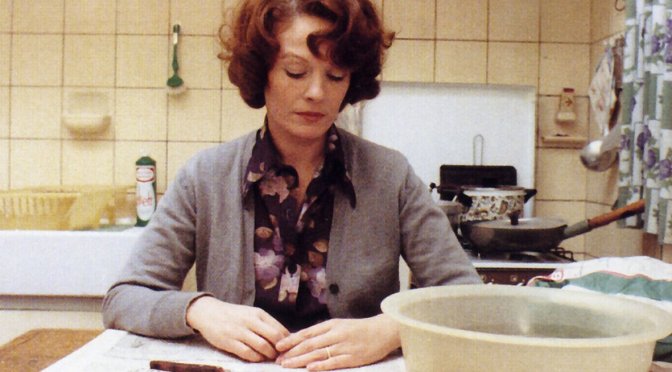
A typical day in Kevin Jackson’s Constellation of Genius, his engrossing chronology of 1922, much in the air in 2022, a year on from his untimely death, will have more than one entry, most often for events in London and Paris. The section on 4 March, however, begins in Berlin, with the first private screening of F. W. Murnau’s Nosferatu, no. 1 on the IMDb’s list of the most popular films of the year, Jackson tells us, before hopping over to London for no. 6 on the same list: Alfred Hitchcock’s Number Thirteen. The latter, not the former, makes the book’s back-cover blurb: 1922 was “the year in which James Joyce’s Ulysses and T. S. Eliot’s The Waste Land were published, Alfred Hitchcock directed his first feature, the Ottoman Empire collapsed…” Number Thirteen has dropped down to no. 15 in IMDb’s list in the decade since Constellation of Genius was published, perhaps reflecting a generational shift akin to Jeanne Dielman’s victory over Vertigo, but still the question remains: what is it doing there? There, specifically, on 4 March, but also, in a wider sense, in a book about modernism.

Continue reading Introducing Hitch-22

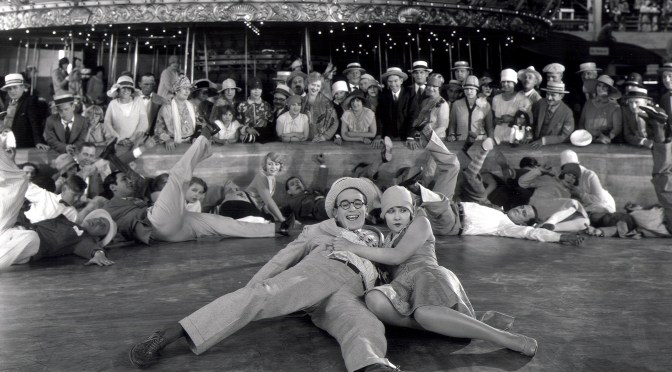
Video: behind the scenes with Charlie Chaplin on City Lights

The Criterion Collection has shared this very special clip with Silent London to mark the release of Chaplin’s City Lights on Blu-ray in the UK. It is presented courtesy of MK2.

In this footage we see Chaplin out of costume rehearsing one of the most graceful bits of comic business in the film, as the Tramp steps back to admire a statue in a department store window – with perilous results.

It’s a fascinating insight into the working processes of this famously perfectionist filmmaker, during what was very possibly his most painstaking, and certainly most protracted, shoot. It’s just one of the glimpses backstage offered on the new Blu-ray edition of the film.

Continue reading Video: behind the scenes with Charlie Chaplin on City Lights

Silent shouts: books, blogs, festivals and more

A few of the fabulous things on my radar right now…

WeimarCinema.org

Edited by Tony Kaes and Cynthia Walk, this capacious website is a comprehensive source for anyone studying, or refreshing their interest in, Weimar Cinema. There are guides to where to watch films online, other useful websites, and more traditional publications. They also publish “scholarly web-based essays that benefit from moving images and links”, so get in touch if you have something you’d like to write for them. I really liked this, by Paul Flaig, on “Chaplin’s cinematic promise”. They also welcome submissions of archival material, dossiers and updates to their listings.

British Cinema: A Very Short Introduction, by Charles Barr (Oxford University Press)

An entertaining and very informative tour of British film history, starting from the silent days of course, but taking a more productive route than a simple chronological tour. Yet, Barr covers everything from Rescued By Rover to Hitchock, Quota Quckies, Powell and Pressburger, Ealing, the British New Wave and Chariots of Fire right up to titles as recent as Last Night in Soho. I particularly enjoyed the way he paired films to discuss them, eg comparing such near-simultaneous yet wildly different releases as Downton Abbey and Sorry We Missed You. When you finish reading this valuable book you are sure to immediately turn the TV on to Talking Pictures, and I don’t blame you.

Amazon

Continue reading Silent shouts: books, blogs, festivals and more

The silences of Jeanne Dielman and the greatest films of all time

Something utterly radical has happened to the Sight and Sound Greatest Films of All Time poll. This year, around 1,600 critics voted, more than ever before, and the winner of the poll was for the first time a film directed by a woman. A feminist art film from 1975 is now the greatest film of all time, according to the only poll that “most serious movie people take seriously” (Roger Ebert). That film is Chantal Akerman’s Jeanne Dielman, 23 quai du Commerce, 1080 Bruxelles.

Only three other films have won before. Bicycle Thieves in 1952, and then for the next five polls, which take place every decade, Citizen Kane held the top spot. In 2012, Hitchcock knocked Welles off his perch with Vertigo.

Continue reading The silences of Jeanne Dielman and the greatest films of all time

Funny Valentines: Silent comedy at Slapstick 2023

This February, comedy fans will head west to Bristol, Unesco City of Film for the annual Slapstick Festival. As usual, there is plenty for fans of silent cinema in the programme, with stars from Charley Bowers to Harold Lloyd, Charlie Chaplin to Marlene Dietrich. Presenters include Kevin Brownlow, Steve Massa and Polly Rose, as well as the marvellous Ayşe Behçet, whose Charlie’s London posts you may remember from this very site, back in the day.

The 2023 Slapstick festival runs from 14-19 February this year, and here’s what’s coming up silent in the programme.

WEDNESDAY 15 FEBRUARY

2pm: The Cigarette Girl Of Mosselprom [1924]

Hosted by Lucy Porter

Watershed  £8.50/£5.00

Dir: Yuri Zhelyabuzhsky, Soviet Union, 78 mins, cert TBA

In stark contrast to most films made immediately after the Russian Revolution, this is an endearing rom-com filled with likeable characters and some self-effacing insights into the filmmaking process. At the centre of it all is cigarette seller Zina (played by the future Cannes award-winning director Yuliya Solntseva) and the love tangles that surround her when she is talent-spotted to become an actress. With an introduction from stand-up comedian and actor Lucy Porter and live piano accompaniment by John Sweeney. 

Continue reading Funny Valentines: Silent comedy at Slapstick 2023

Amaryllis (2022): diary of a teenage skater girl

Amaryllis is a refreshing new modern silent film. It’s the first silent movie I have ever seen that is set in Digbeth, for one. But this female-led crime drama feels very modern and very traditional all at once. The occasionally playful take on a gritty urban milieu is entirely in spirits of say, Chaplin’s Easy Street, though this is a drama not a comedy and too streetsmart to be sentimental. On the other foot the young female heroine who glides around Birmingham on a skateboard and doodles ferociously in her journal feels very much like a character of the here and now.

Continue reading Amaryllis (2022): diary of a teenage skater girl

The Silent Muse: The Memoirs of Asta Nielsen – Special Offer

A Pordenone postscript on a subject very dear to my heart – Asta Nielsen.

While I was at the Giornate I was lucky enough to talk to scholar Julie K. Allen about her research into Asta Nielsen, including her English-language translation of the actress’s fascinating memoir, The Silent Muse, which was released by Boydell & Brewer earlier this year. It is a tremendous book. An engrossing read, which offers insights into Nielsen’s life and work and especially the world of Weimar Cinema.

Continue reading The Silent Muse: The Memoirs of Asta Nielsen – Special Offer

Le Giornate del Cinema Muto 2022: Pordenone Post No 8

So the 41st Giornate del Cinema Muto, and my personal 11th, draws to a close with two British silent films. What is that they say about saving the best for last?

I was certainly in Italy this morning, with the Italian drama Profanazione (Eugenio Pergeo, 1924-6) – a tale of adultery, corruption, suspicious, lost pets and automobile accidents. This was spirited drama, if very heavy on the intertitles, with Leda Gys as a woman who strays and yet is more sinned against than sinning. That title translates into English as “defilement”, which gives you a sense of the subject matter, I think, and why censorship delayed the film’s release for so long. Gys is every inch the star, though notably more restrained than the diva mode, and she is the heart of this film that despite its twists and turns, is very much a serious film for grownups.

Continue reading Le Giornate del Cinema Muto 2022: Pordenone Post No 8

Le Giornate del Cinema Muto 2022: Pordenone Post No 7

Day Seven of the festival and the mood on campus is very much “Thank God it’s Friday”. Not because anyone is glad the Giornate is nearly over (perhaps apart from the festival team perhaps who have worked tirelessly to ensure everything has run beautifully, as usual), but because today’s lineup is especially toothsome. More Norma! A Frances Marion-directed feature! And Ivan Mosjoukine and Brigitte Helm smouldering opposite each other! That’s before we even get to tonight’s Ruritanian romp – the 1924 adaptation of the silent era touchstone that is Elinor Glyn’s Three Weeks. Hold on to your string of pearls, we are going all-in.

First, an especially timely effort from Team Talmadge. In Within the Law (Frank Lloyd, 1923), Norma plays a shop girl who fights back. Exploited under capitalism, and imprisoned for a crime she didn’t commit, young Mary finds “going straight is a tough proposition”. Instead she teams up with a pretty blonde cellmate to take revenge on the moneyed male establishment with a breach-of-promise scheme that exploits men, cashes the big and stays strictly “within the law”.

Continue reading Le Giornate del Cinema Muto 2022: Pordenone Post No 7

Le Giornate del Cinema Muto 2022: Pordenone Post No 6

This evening belonged to Marie Prevost, much-maligned silent Hollywood comedienne and high empress of flirtatiousness. She appeared twice on the Verdi screen in front of a packed hall in two fashionable comedies, one about hair and another about lingerie: first in a fragment of the multi-authored flapper farce Bobbed Hair (Alan Crosland, 1925), and then full-length in the Al Christie comedy Up in Mabel’s Room (E. Mason Hopper, 1926).

Continue reading Le Giornate del Cinema Muto 2022: Pordenone Post No 6

Le Giornate del Cinema Muto 2022: Pordenone Post No 5

We have already established that Norma Talmadge is fond of a dual-role, but 1920’s Yes or No? (R. William Neill) pushes the boat out by having two Talmadge sisters on the cast list. of this New York drama Natalie T plays Emma, the maid of dissatisfied society lady Margaret (Norma) and sister of dutiful tenement housewife Minnie (also Norma). The clue is in the title here, and each woman will be asked to choose between temptation and courage, extramarital adventure and (often thankless) fidelity. So it’s a similar structure to that great Norma T melodrama Secrets (1924, Frank Borzage): a character study building to a question that tests that character. However, here we have two women, two questions, two answers – and two sets of consequences.

Choose carefully, ladies. The film is judging you. Literally, if those beartrap illustrations behind certain title cards are to be believed. In fact the title cards were a real highlight of the film, elegantly and often wittily illustrated. True, they were also a little sanctimonious, regressive… but it’s 1920 what can I say? The important point is that Norma is really splendid in this one. She does well with these two sympathetic characterisations, and while she is not charismatic in the way of a Swanson or a Pickford, she is very watchable. I am very much excited for the Normas to come. And thanks are due to José Maria Serralde Ruiz, for playing such an old-fashioned dramas if it were brand new, and building the tension beautifully.

Continue reading Le Giornate del Cinema Muto 2022: Pordenone Post No 5

Le Giornate del Cinema Muto 2022: Pordenone Post No 4

What’s your favourite Latvian nationalist historical fantasy war epic? From the silent era, I mean. Taking a little while to decide? Cool, I’ll share mine. It’s Lāčplēsis AKA The Bear Slayer (Aleksandrs Rusteiķis, 1930), newly restored by Riga’s Studio Locomotive.

To reassure the squeamish among you – there is no bear slaying in this film. The Bear Slayer is a strongman of Latvian legend, so burly he can kill a bear with his bare (sorry) hands, but he uses his might for right. This film starts with a hell of a bang, in full-on fantasy mode as an evil “Black Knight” (Osvalds Mednis) with an alarming bullet-shaped head and a supremely sinister gaze tries to bear down on a damsel in distress (Lilita Bērziņa) in a castle. She has an enchanted brooch that will save her, but the Knight gets his ghoulish, wizardy goblin pals to reverse that charm. They begin preparing the cauldron with the usual eye of newt etc and at the last minute, as they prepare to take the blood of an innocent dove, the Bear Slayer/Lāčplēsis (Voldemārs Dimze) throws his sword into the works and foils the dastardly scheme.

Continue reading Le Giornate del Cinema Muto 2022: Pordenone Post No 4

Le Giornate del Cinema Muto 2022: Pordenone Post No 3

Holiday hats on everyone. The sun is out in Pordenone. And although it can be a struggle to choose the dark of the cinema over basking in the Italian heat, there are compensations. Even if, this afternoon, the heavens opened in the Verdi with a screening of Joris Ivens’ splashy art film Regen (1929), part of the strand celebrating 90 years of the Venice Film Festival.
Continue reading Le Giornate del Cinema Muto 2022: Pordenone Post No 3

Le Giornate del Cinema Muto 2022: Pordenone Post No 2

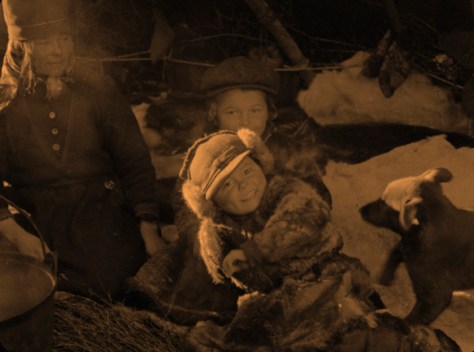
There’s something about Nanook… A century after it was first released, you might not expect a film with such a complex history to be, as Jay Weissberg said, one of the most anticipated events of the festival. But it certainly was. A quick straw poll of Pordenone attendees confirmed that yes, most of us had first seen Nanook of the North in a film studies classroom or lecture hall, and that we had been told both that it was a box-office sensation, and that it was partly a dupe. But this centenarian film is more than just a notch on the documentary cinema timeline, and it has a beguiling beauty and humanity that commands respect.

Continue reading Le Giornate del Cinema Muto 2022: Pordenone Post No 2

Le Giornate del Cinema Muto 2022: Pordenone Post No 1

Welcome home, to your home away from home, Pordenauts. It’s the 41st Giornate del Cinema Muto and the assembled crowd in the Teatro Verdi is bursting with questions. Questions like: do we know what is unknown in The Unknown? Would you like to sin with Elinor Glyn? How much Norma is Talmadge? Does a Pathé-Baby sleep through the night? How many men could a Manxman mank if a Manxman could mank men? And (I may actually have been asked this one in all seriousness) can you point to Ruritania on a map?

Time will provide answers. Meanwhile, let us savour eight days in the make-believe land of silent cinema, once upon a time and far, far away from the troubles we left behind with our morning newspapers.

Continue reading Le Giornate del Cinema Muto 2022: Pordenone Post No 1

Orochi (The Serpent, 1925): dying for the art of swordsmanship

This is an extended version of the introduction I gave to this film at  Pirmoji Banga 2022. Read my full report on the festival here.

Orochi, AKA The Serpent, is an unforgettably modern Japanese film from 1925. It combines a grim vision of a society rendered dysfunctional by feudalism, a portrait of one man’s existential crisis and yes, some fast and very furious swordfighting action.

This is a transitional film, coming between the early samurai films, which were more sedate and used the techniques of kabuki theatre, including heavy makeup and benshi narration, and the later style of samurai film, the chambara films, heavy on swordfighting action, that would become so popular in in the middle of the 20th century. The fight sequences in this film are often so frenetic that you can barely see how much is going on. And yet, this film is an action film with a rare degree of realism.

Continue reading Orochi (The Serpent, 1925): dying for the art of swordsmanship

Pirmoji Banga 2022: keeping silent cinema weird in Vilnius

Greetings from Lithuania!

It has been a bit of a quiet summer here. The reason is that I have been working on a couple of research projects, and travelling too – mostly around the country talking about Pre-code cinema (I’m in Scotland this week, and Belfast next month – links below). But also to further-flung spots such as Vilnius, home of Pirmoji Banga. And if you don’t know what that is, you have come to the right blogpost…

Pirmoji Banga means ‘first wave’ and this is a festival of early film, in the extended sense. from the very beginnings to the first talkies, everything before the second world war, more or less. The festival is substantially devoted to silent cinema, which is presented with live music from international artists. And some of this year’s screenings benefited from a benshi too, which was particularly special. The screenings are all held at a smart arthouse cinema by the river, called Skalvijos Kino Centras. A cool place. Very silent film hipster. Check out the foyer display for the festival (and two people who definitely aren’t hipsters in the mirror):

Continue reading Pirmoji Banga 2022: keeping silent cinema weird in Vilnius

He Who Gets Slapped (1924): Life is a cruel joke

This is an extended version of the catalogue essay I wrote for Pirmoji Banga 2022, currently taking place in Vilnius, Lithuania.

The famous phrase attributed to Charlie Chaplin offers a devastating summary of He Who Gets Slapped (1924): “Life is a tragedy when seen in close-up, but a comedy in long-shot.” Victor Sjöström’s film examines what happens when one man’s bitterest humiliation is replayed for laughs, again and again, like a one-reel comedy playing in a nickelodeon.

The setting is French, but the source play is Russian, an enduringly popular stage hit by Leonid Andreyev, first performed in 1915. He Who Gets Slapped is an example of Andreyev’s “pansyche” theatre, in which the inner emotional state of the characters is more important that the plot. It’s an apt choice for director Victor Sjöström, credited in his American films such as this one, as Victor Seastrom. He had previously made dark psychological dramas such as Ingeborg Holm (1913) and The Phantom Carriage (1921) back home in Sweden. He Who Gets Slapped was one of his first films in his Hollywood career, which would include such similarly anguished fare as The Scarlet Letter (1926) and The Wind (1928), both starring Lillian Gish and Swedish actor Lars Hanson.

Continue reading He Who Gets Slapped (1924): Life is a cruel joke

In memoriam: Jean-Luc Godard, 1930-2022

“At the Cinémathèque I discovered a world which nobody had spoken to me about. They’d told us about Goethe, but not Dreyer… We watched silent films in the era of talkies. We dreamed about film. We were like Christians in the catacombs.”

Jean-Luc Godard, 3 December 1930 – 13 September 2022

Sad to say, another short video tribute post on the site this week. Jean-Luc Godard, a towering figure in the Nouvelle Vague and international film culture, has died aged 91. As a writer, director, critic and cinephile, Godard’s ideas about film have shaped the cinematic imaginations of several generations. And he adored silent cinema.

Continue reading In memoriam: Jean-Luc Godard, 1930-2022

End of an era

A sad day for many readers. Buckingham Palace has announced that the Queen has died, bringing to an end the second Elizabethan era. Queen Elizabeth II was the longest-lived and longest-reigning British monarch, and much of her life was captured on screen. As she was often known to say: “I have to be seen to be believed.”

Here are some of her first appearances on film, from the silent era. This is a newsreel report of her christening in 1926:

Continue reading End of an era