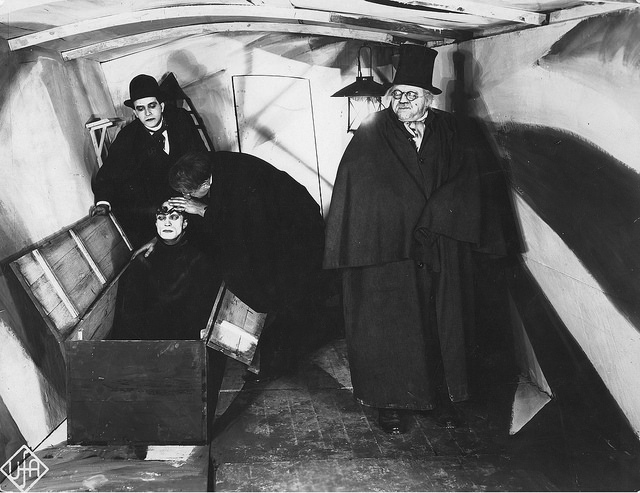
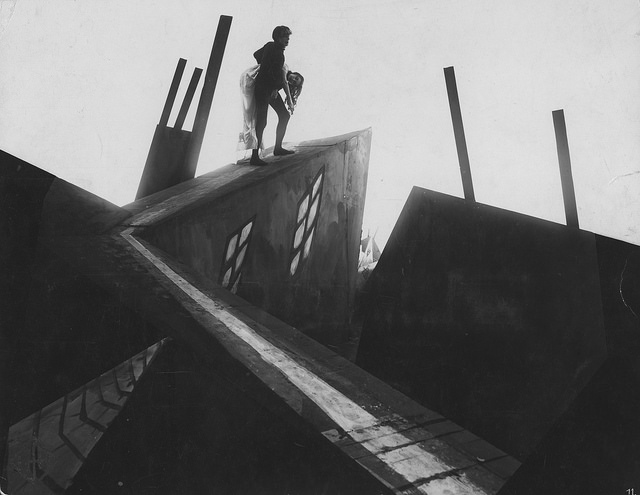
Just because a film has proved to be massively influential, it doesn’t follow that it will look modern. For evidence, I present Das Cabinet des Dr Caligari (1920) – without which, the movies that followed could look very different, but which barely cares to look like a movie at all. I’m exaggerating, which itself is very Caligari, of course, but watching the gamechanging new restoration of this cinematic titan, I am struck by how much of its power comes from the arts of set-painting and stage-blocking rather the magic of the moving pictures.
Although there are some eyeline cuts, irises, close ups and unsettlingly low-angled shots, Caligari heart belongs to its theatrical forebears. When I heard that this film had been restored, even when I saw the first YouTube clips of the work that had been done to bring crispness, brightness and vibrant, slick colour back to Caligari, I didn’t appreciate what all that labwork would reveal. This is Caligari the spectacle, a testament to design and showmanship – a world away from the current trend in horror cinema to ramp up the realism and immerse the audience in a grey and gruesome world.
Das Cabinet des Dr Caligari (1920)
Watching this Blu-ray, you can make out each brushstroke on the canvas backdrops, the clumps of white powder in the Doctor’s hair, Lil Dagover’s spidery painted-on eyelashes. Lean in, you might just be able to lick the greasepaint off the screen. The power of Caligari, of course, is that it’s no less terrifying for being artificial. In the same way that the framing story in the asylum, which was tacked on to make the film less scary, actually contains some of the film’s most disturbing scenes, Caligari‘s high-concept design strategy is so daunting as to be horrifying. There’s a lengthy, and very useful excerpt from Lotte H Eisner The Haunted Screen in the accompanying booklet and her summary of the power of Expressionism bears repeating:
Pola Negri’s Madame Dubarry has it. You know exactly what I am talking about. Dubarry is living and loving in the heat of pre-revolutionary Paris, but she’s more than enough trouble for the aristos all by herself. “The woman who will ruin France” is first introduced as a breath of fresh air, whispering saucy jokes to the other girls in the seamstresses’ workroom – a ripple of fun in the stuffy atmosphere of the atelier. When she leaves the shop, Dubarry collects admirers with every step, like Clara Bow in a crinoline. Before long, of course, she’s the mistress of Louis XV, creating disarray in the court, just as she did in the shop.
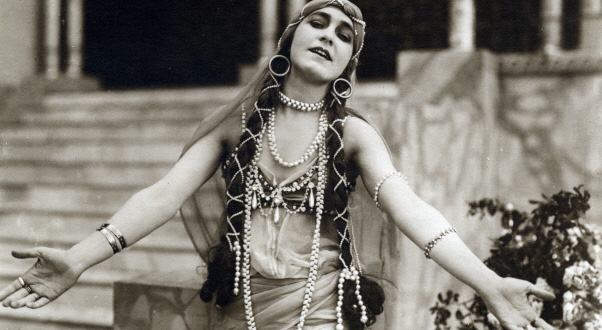
Ernst Lubitsch is brilliant at capturing this, the sizzle of sex appeal so hot that it can turn a king’s head, transform a society ball into an orgy, or raise an angry mob at the palace gates. Madame Dubarry has the angst of a drama, but the vigour of a comedy, and Negri has exactly the attitude that the part demands. Dubarry isn’t a calculating seductress, just a natural-born pleasure-seeker: a minx who decides which lover to visit by pouting as she pulls at the bows on her bodice. And Negri commits fully to the role of a beautiful woman in ugly circumstances – those enormous eyes are flirting one moment and filled with anguish the next. Some people are allergic to Negri’s grand emoting, the head flung back, the flailing arms. But there’s plenty there’s naturalistic and light here: watch her face as Jannings trims her fingernails, revelling in pleasure and pain. And yes, there’s also an opportunity for Negri to rehearse her most notorious scene – hysterically throwing herself across her lover’s coffin.
This is a guest post by Henry K Miller for Silent London. Henry K Miller is the editor of The Essential Raymond Durgnat (Palgrave Macmillan, 2014). He is a regular contributor to Sight & Sound and has taught film at the University of Cambridge.
Though it was built by the grandest American film corporation, Famous Players-Lasky, no contemporary report of the film studio on the Regent’s Canal ever confused Shoreditch with Southern California. All were in agreement over its incongruous location, noting the contrast of imported glamour and native poverty – unscrubbed children, the smell of fried fish. There was less agreement, however, on what to call it, at least in the 1920s: sometimes “the Lasky studios”, sometimes “Islington” (the local telephone exchange was Clerkenwell; Hoxton is also arguable), often “Poole Street”. “Gainsborough” seems to have stuck only later, probably because of the famous Gainsborough melodramas, made towards the end of the studio’s life in the 1940s. Uncertain nomenclature notwithstanding, Gary Chapman is right to describe his subject as “a microcosm of the evolution of the British film industry during the silent era”.
FP-L established itself in what had been a power station soon after the Great War, apparently in order to exploit European locations and West End playwrights, and sent over some of its most talented staff; but the first films to emerge from N1 were poorly received, and by the time the reviews began to improve the plug had been pulled. Most of the Americans departed by the middle of 1922. They left behind the best-equipped studio in Britain – early difficulties with the London fog having been overcome – but its survival as a rental facility was not guaranteed. The practices of “blind” and “block” booking – mastered by Famous Players-Lasky itself – made it very difficult for British filmmakers to get a look-in, even in British cinemas, and production was in the middle of a five-year slump. As Chapman shows, the producers who took on the Islington studio in 1922–3 were the bravest of a new breed.
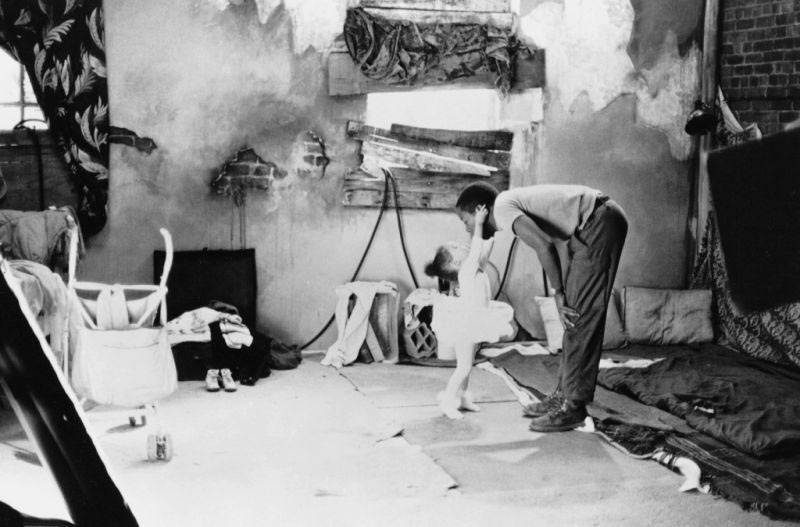
Sidewalk Stories (1989): Charles and Nicola Lane as the Artist and the Child. Photographer: Bill Dill
I barely knew a thing about Charles Lane this time last week. But since Saturday night I have been trying to find out as much as I can. Twenty five years ago, Lane directed a modern silent film of great style and bounteous charm, which was warmly received at the time, but has barely been heard from since. Like so much in the history of silent film, Sidewalk Stories (1989) is buried treasure, though from a rather more recent past. The good news is that the tail end of 2014 may finally be the time when Sidewalk Stories gets its due. The likelihood is that you will get a chance to see it soon, and I definitely recommend you take the opportunity when it arises.
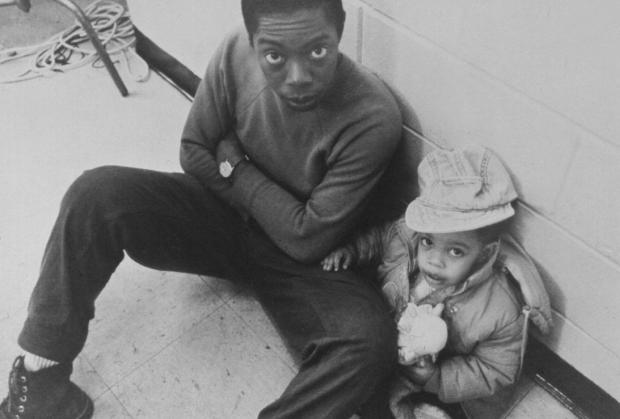
As a film student, Lane was apparently very sniffy about silents, but when a chum insisted that he catch a screening of The Gold Rush, he relented. Chaplin worked his magic, and Lane was hooked for life. The influence of Chaplin is powerfully strong in Sidewalk Stories, a silent black-and-white comedy shot on the streets of New York;Lane directs and stars in the film, which has more than a touch of The Kid about it. Lane plays a street artist, who sleeps rough in a derelict building in Greenwich Village (yes, you might say he was a tramp), but, through some convoluted circumstances finds himself in charge of a small child. No messing about: the Artist’s foldup easel looks uncannily like the window-repair kit Chaplin equips himself with in the earlier movie. It’s clear that Lane has an eye for the most devilish of details. Lane’s two-year-old daughter plays the Child, and although it seems strange to critique a toddler’s performance, she’s fantastic and of course, utterly adorable. Sandye Wilson, an elegant woman with a devastating smirk, plays the Artist’s bewildering and benevolent love interest. Lane’s character is a cheeky one, all right, and a dreamer too: a nonchalant riff on Chaplin’s Tramp, which retains the sweetness and the acrobatics of the original but with a pared-down ego. Lane’s Artist is a more of an everyman than a showstopping clown: a little guy in a zip-up denim shirt and cargo pants with neatly cropped hair. Perhaps it’s because the big city is just a wee bit more terrifying in the late 80s. The Manhattan of this movie is perniciously hostile: crushing Lane’s character, and maybe squashing his performance a little too.
Sidewalk Stories (1989)
No matter. Here’s why Sidewalk Stories is easily worth 97 minutes of your precious time. It’s funny, it’s touching, it’s very clever and it has a quite remarkable lightness of touch. There’s some virtuoso material here, including some fantastically choreographed fight scenes and (a first for a silent movie?) a fantasy slapstick sex nightmare. There’s not a single intertitle here either. Most impressive of all perhaps is a sustained tracking shot early on that takes us from one end of a street in the Village to another, from the panhandlers and street sleepers, to the Artist’s patch where he and his fellow dancers and magicians are busy making believe that they are anywhere but urban hell. There’s some comic business with a piece of string and two beds that is simultaneously hilarious and terribly sad. I also enjoyed the way that a laugh-out-loud, but silly, gag at the start of the movie with yuppies grappling over a yellow cab (it’s the 80s, I’m allowed to call them yuppies) was replayed later on with a more sinister meaning. I particularly liked the fact that the second time around the carfight takes place during a chase that’s straight out of Harold Lloyd’s Speedy – Lane was clearly in close touch with his New York silent forebears.
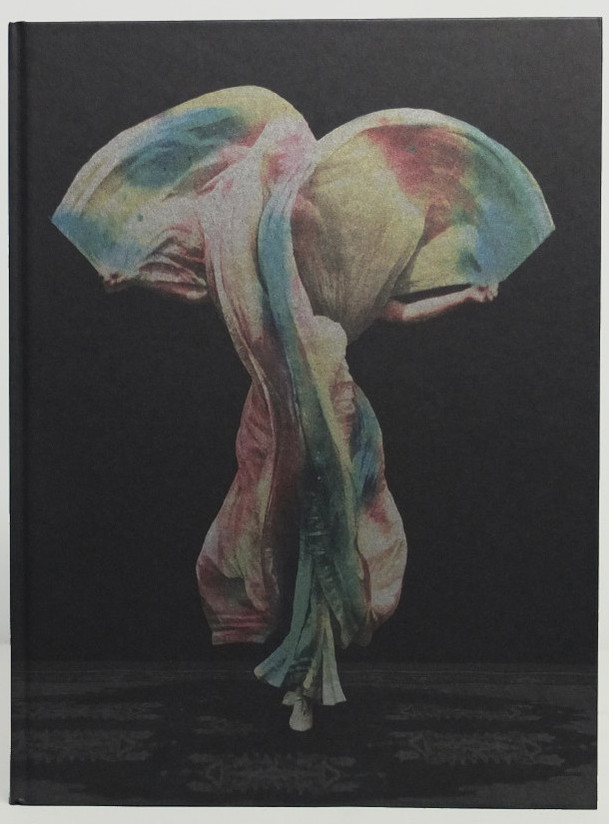
If a book absolutely, positively, had to be judged by its cover, then Birds of Paradise: Costume as Cinematic Spectacle would be just fine. This anthology of academic writing comes encased in black, and the cover features a shimmering Serpentine Dancer, her skirts twirling over her head and with her arms outstretched. We know this is a frame enlargement because the rainbow inks daubed on to the frame transform her rippling dress into the wings of a butterfly, or an exotic bird. She is framed by the darkness of the blank stage around her: a woman in a white dress, made into a spectacle by the twin arts of fashion and film. The cover is utterly appropriate and ravishingly gorgeous.
Before you even reach the title page, there are more dancers, swishing their skirts and pointing their toes, reproduced in silvered, coloured inks on matt-black paper. This is an academic book masquerading as a coffee-table tome. You could flick through it for hours (and I did) marvelling at these silver and full-colour illustrations, weighing the heavy paper in your fingers.
But at some point, one must stop flirting and dance with the one that brung you. That is to say, read the darned book. The good news is that that divine creation has been brought to us by the people behind the Fashion in Film Festival and as such it is comprises an intelligent and slightly idiosyncratic approach to its subject. This is not a simple skate through film-costume history. The several contributors are mostly academics and curators, in the fields of performance, design, fashion, literature and film, and their essays are arranged in three groups, relating to different eras.
This is a guest post for Silent London by Peter Baran. You can follow Peter on Twitter at @pb14.
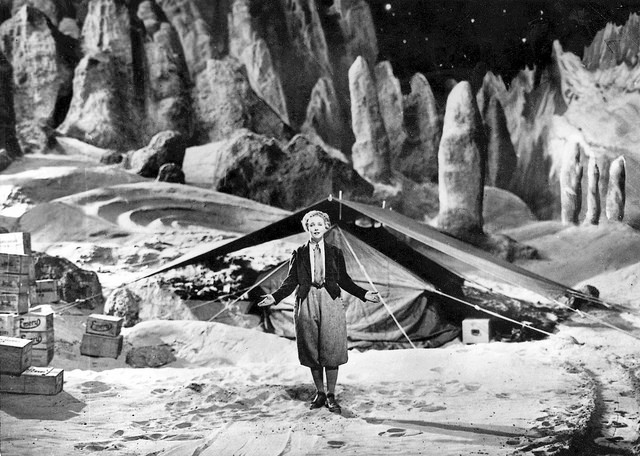
Frau Im Mond is one of the first silent movies I saw as an adult. And despite its audacious special effects I can honestly say Fritz Lang’s rocket opera was not my gateway drug to silent film. Instead I saw it to justify the décor of my recently redecorated flat. I wanted to hang an attractive film poster above my stairs; for quite some time it was going to be Metropolis, until I saw the poster for Frau Im Mond, and its iconic rocket. As a science-fiction fan, and a film buff, how could I resist this picture? However, it seemed like cheating to have a poster of a film I hadn’t seen hanging above my stairs. So that is why I saw Frau Im Mond six years ago, having bought the previous Masters Of Cinema DVD release.
Now it is back, re-released in dual format Blu-ray and DVD, and seven minutes of additional footage have been added to the film, which brings the running time up to a handsome two hours and 49 minutes. As with the recently reconstituted Metropolis, Lang takes his time but doesn’t waste a minute. It is just that for much of the film each minute could have been thirty seconds shorter, and the plotting gets in the way of what the film promises. While Frau Im Mond is a notable film in both Lang’s filmography and in the history of science-fiction cinema, it is also way too long and ponderous – considering its wonderful potential.
Written by Fritz Lang’s wife Thea Von Harbou, and based on her novel of the same name, Frau Im Mond is one part conspiracy thriller and one part science-fiction tale. And that almost equally splits the running time, with the first hour and 20 minutes being a convoluted runaround between a professor, venture capitalists, enemy agents, a fiancée and a sparky kid. The rocket from the poster – and the justification for this being the first “scientific” science-fiction film – finally appears at one hour 18 minutes and the film does pick up considerably at that point, if only to give us some effects and even better Aran jumpers.
The news certainly caught my attention. Masters of Cinema has upgraded its DVD release of Murnau’s Faust: a German Folktale (1926) to a shiny new dual-format edition. All the beauty of Faust, but in high-definition Blu-ray glory: temptation itself. The even better news is that this is a very beautiful disc indeed.
Faust has always been a feast for the eyes, from the cutting-edge 1920s special effects to the gorgeously, painterly compositions, and the Blu-ray transfer here more than does the film justice. Compared to the DVD, this is just far, far more filmic. There are rich blacks and sumptuous detail, making the most of crowd scenes and shadowy landscapes. On a biggish screen, you’ll notice a texture of soft grain, not sharp pixels. As was familiar practice in the 1920s, Murnau shot Faust with two cameras – one each for the domestic and export versions of the film. His favourite takes remained in the German print, and that is what has been restored here (the grandly gothic German intertitles remain, so you’ll have to turn the subtitles on). This is the best Faust you can get – screening this at home is a seriously impressive movie experience.
This is a guest post for Silent London by Juliet Jacques. Jacques is a freelance journalist who writes about gender, sexuality, film, football and literature. She writes for the Guardian, the New Statesman and the LRB and her new book Trans: a Memoir will be published by Verso in 2015.
Film historians often credit DW Griffith’s The Birth of a Nation(1915) with popularising the full-length feature film, if not inventing it – changing both the language of cinema and the way it was seen. Adapted from Thomas Dixon’s US Civil War novel The Clansman, it opened with “A Plea for the Art of the Motion Picture”, attempting to create new formal techniques that drew on literature and drama. Distancing it from the fairground sideshows at which Edison, Méliès and other pioneers showed their works, aiming to attract more middle-class viewers, Griffith’s epic screened in theatres with an interval and printed programme, and a three-hour score by Joseph Carl Breil, which combined original music, familiar melodies and classical compositions, notoriously Wagner’s Ride of the Valkyries during the ride of the Ku Klux Klan.
The Birth of a Nation was not the first full-length feature, historical epic or literary adaptation: Giovanni Pastrone’s 200-minute Cabiria, set in ancient Carthage and Sicily, inspired by Flaubert’s Salammbô and written by poet and novelist Gabriele d’Annunzio, was released a year earlier, and several Italian studios took such risks, by now assured of their audience. So 1914 – that seismic year for Western culture – marked a turning point for cinematic convention, departing from the collections of single or double-reel comedies, adventure films, travelogues and newsreels shown at music halls, shop fronts and penny gaffs during the early 1900s.
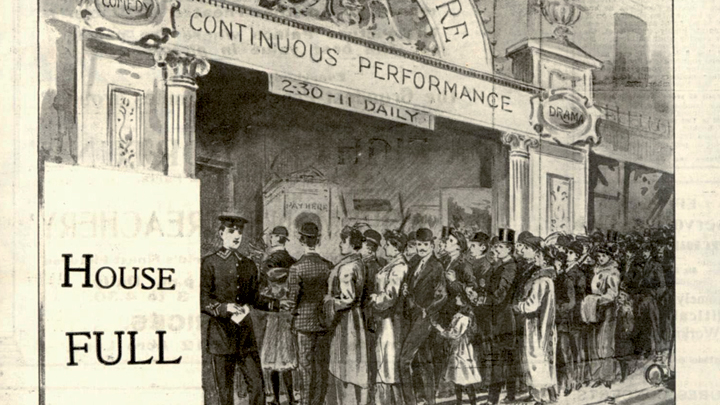
Marking the centenary of the First World War, A Night at the Cinema in 1914 attempts to recreate the atmosphere in one of Britain’s 3-4,000 “picture houses”, featuring 14 short films from the BFI archives, curated by Bryony Dixon, all in good condition, with an improvised score by pianist Stephen Horne that references music of the time, it invites 21st-century viewers to imagine when movies would have provided not just a social occasion, with rowdier audiences happy to talk not just between reels but also during them, but also the chance to catch up with the world, illustrating what had been covered by the newspapers.
Several newsreels open the collection. First, a “light” item about British pilots Gustav Hamel and Bentfield Hucks Looping the Loop at Hendon, in March. This lasts just a few moments, but shows how bracing aviation must have been, the rickety box-planes flying low, the pilots exposed. What seems most amazing now is that just months later, 11 years after the Wright brothers’ first flight, these were used in warfare. (Less surprising is that far more British pilots died in training than combat.)
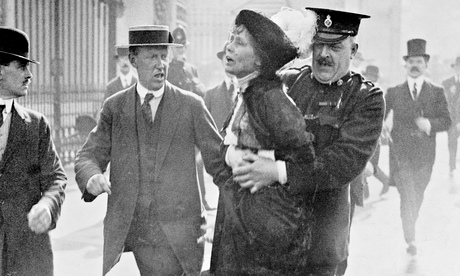
Emmeline Pankhurst arrested outside Buckingham Palace in 1914
One of the biggest pre-war political concerns features in Palace Pandemonium (May), which shows Emmeline Pankhurst marching to Buckingham Palace, held by police who barely hide their contempt, to petition George V for women’s suffrage. This reminds us how high-profile the campaign was, but Austrian Tragedy immediately shifts the agenda, chronicling the Austro-Hungarian royal family’s efforts to carry on after the death of Archduke Franz Ferdinand.
25 years after giving Un Chien Andalou a screaming chorus and a killer bass line to create Debaser, Black Francis of the Pixies has returned to silent cinema. While his latest endeavour is unlikely to rock your world in the same way that Doolittle did, there’s a little something here to entice fans of his jagged, surreal perspective. The Good Inn was written by Black Francis and Josh Frank, and its sublime illustrations are by Steven Appleby. A novel that occasionally borrows the form of a screenplay or a graphic novel, peppered with songs, intertitle cards and subtitles, this work is determined to be elusive. In the authors’ words, it’s “an illustrated novel, based on an in-the-works soundtrack, for a feature-length film that has yet to be made, about the first narrative pornographic movie ever made”. That all adds up to so much more than a mouthful, that it may well be a dog’s dinner.
With music, film history, cinema, and literature all vying for attention here, something had to give, and something has to shine. Hands-down, it’s the illustrations that carry the day here: Appleby’s diagrams, panoramas and visual gags elevate The Good Inn from messy indulgence to a book you may well want to treasure. As well as more conventional illustrations, Appbleby has provided annotated maps, visual gags, and charts to explain the passing of time, or the fallibility of memory. Without Appleby’s input, The Good Inn could be rather an ordeal.
This is a guest post for Silent London by Sabina Stent. You can read more of her reviews at silverembers.com
The name “Dr Caligari” may cause a shudder to those of a weaker disposition. The eponymous character of the 1920 classic Das Cabinets des Dr Caligari has long been a figure of terror – and with good reason. The film has been described not just as one of the first “horror” films, but one of the first examples of a movie generating a real psychological uneasiness in its audience. Caligari has been labelled in many different ways – German expressionism, horror story, psychological thriller and a classic of the silent era – but it was also Germany’s first postwar cinematic success, and it reflects the anguish of the people who had been through four terrible years.
Thanks to those classic expressionist touches, the sharp and angled sets, gothic imagery and expressionist undertones, Caligari was as visually frightening as its narrative. More recent audiences may have also been unsettle by the poor physical condition of prints of the film. Despite numerous attempts to finesse the quality of the film – first by the Filmmuseum München in 1980 and followed by the German Federal Film Archive (Bundesarchiv-Filmarchiv) in Koblenz (1984) and as part of the Lumière European MEDIA project in 1995 – imperfections were still evident: visible scratches, jumps and blank screens, blurred title cards, unstable images and bleached-out, near-featureless faces.
The Cabinet of Dr Caligari (1920)
Caligari’s story is told in partial flashback as Francis (Friedrich Fehér) tells the tale of the horrors that he and fiancée Jane (Lil Dagover) have endured at the hands of the Doctor. One day Francis and his friend Alan (Hans Heinrich von Twardowski) attend a local carnival where they watch the act of Dr Caligari (Werner Krauss) and the somnambulist Cesare (Conrad Veidt) “who has slept for 23 years but will tonight wake from his dream-like trance”. The only time Cesare speaks is to tell carnivalgoers their fortune. Cesare “knows the past and sees the future” and when Felix asks “how long will I live?” his serious, haunting response is: “To the break of dawn”. Yet the fear is not restricted to the carnival. At night Cesare is woken by Caligari to do his deathly bidding, and so begins a series of murders, abductions and mental unravelling.
Gloria Swanson, film star and fully fledged fashionista.
“To the feminine mind nothing appeals quite as strongly as clothing, hats, or shoes – in fact finery of any kind,” opined Moving Picture World in 1916. Gentlemen spectators apparently preferred films with fighting in them. On finishing this fascinating survey of how the fashion and film industries met and grew together in the early 20th century, I’m inclined to excuse MPW’s sweeping generalisation.
Clothing, and fashion, are at the heart of everything that Hollywood has ever done. All film is spectacle, early film unambiguously so – and nothing epitomises the excesses of La-La Land more than the view of preening, primped movie stars lining up on the red carpet draped in borrowed couture and jewels. Baffling then, to remember that the first film actors were required to supply their own costumes. Turning up well-dressed to an studio (as the supremely stylish teenage Gloria Swanson did at Essanay) could secure you a chance at stardom. Even when studios had appointed a seamstress, numbers were so short that they would frequently be called upon to play roles on screen. In fact, Hollywood wardrobe departments would be staffed by many a former actress. And because few people kept proper records of who did what in the early studios, it is the memories of stars such as Swanson and Lillian Gish that often provide the clearest picture of how the costumes were supplied, chosen and recycled in-house.
Lillian Gish wears a negligée designed by Henri Bendel in Way Down East (1920)
To begin with, Michelle Tolini Finamore’s scholarly illustrated book examines fashion trends that made for great movie subject matter, from the exploited women working in sweatshops that churned out shirtwaists for America’s increasingly well-dressed urban working-class, to the extravagant picture hats that caused havoc in Nickelodeons, to the risque Paris styles that marked a lady out as a vamp. The idea that US fashions were practical and democratic and French ones outlandish and revealing kicks off a major theme in this book – the battle for fashion supremacy between first New York then LA with Paris.
I watched my first silent films, not on my grandpa’s knee, nor at one of these grand screenings with live music that they have nowadays, but in a sixth-form college classroom while being guided through my film studies A-level. It’s not a very romantic story, but I loved what I saw, and while studying for my exams, and subsequently at university, I sought out, saw, and enjoyed many more silents – going from a teenage film fan to an early cinema buff-in-waiting. The film studies syllabus (WJEC, a few years ago now) that I took was great – introducing us to relatively obscure arty silents as well as a healthy appreciation of Hollywood industry mechanics and even a smattering of theory. It stood me in good stead for my English lit & lang degree and a master’s in film history. Plus, I doubt the 18-year-old me would ever have got to see Un Chien Andalou without it. If you want someone to take the blame for Silent London, you can point your finger squarely at a tertiary college in Ealing W5. (I chose the college, incidentally, primarily because it was so close to the famous film studios.)
The point is, I think that sixth form is a great time to introduce people to early and silent film. Teenagers who seek out noisy bands and edgy art want off-beat films to watch too. Silents fit the bill perfectly. There’s something off-kilter about silent movies when you first meet them, and something unexpected about a supposedly modern subject area taking you so far back into the past.
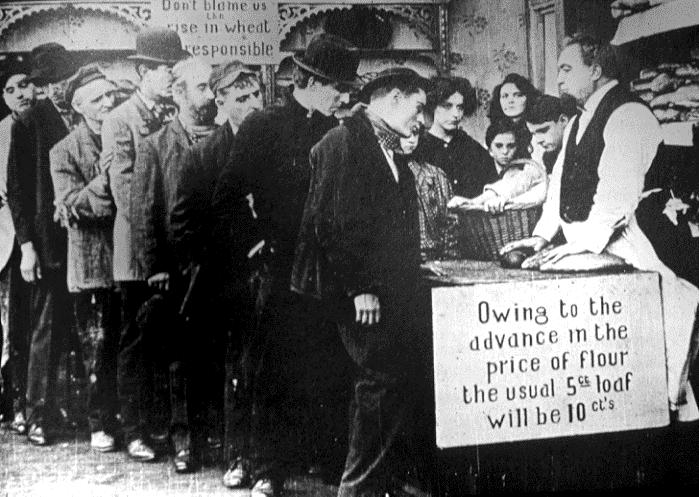
A Corner in Wheat (DW Griffith, 1909)
Cheering then, to see Keith Withall’s Studying Early and Silent Cinema land on my desk. It’s an expansion of a 2007 volume and clearly informed by two things: his years spent teaching film studies at FE and HE level, and a passion for attending the film festivals at Pordenone and Bologna. This is a useful work for anyone interested in silent cinema to use as a reference but a great introduction to the subject for students. It’s a read-this-now-watch-that thing, and I’m all for it. Not only that, but Withall blogs too, posting thoughtful, erudite essays at cinetext.wordpress.com
Withall’s expanded book is an enjoyable and wide-ranging introduction to the key concepts and landmarks in the early and silent film period. This guide tackles a breathtakingly vast amount of material in the clearest of terms, and always with one eye on the here-and-now. There are references not just to modern films and attitudes, but also practical consideration of the availability of viewing material. Case studies examine classic films in detail, while wider sweeps take in potted histories of alternative and smaller national cinemas. Throughout, Withall encourages students towards wider exploration of the subject area – and most importantly, towards further viewing.
Studying Early and Silent Cinema by Keith Withall will be on sale in May 2014, priced £16.99 in paperback (ISBN: 978-1-906733-69-8) and £50 in hardback (ISBN: 978-1-906733-70-4), published by Auteur
Clara Bow never had a role quite as good as Clara Bow. This mini comic is a tribute to the beauty and talent of the famous flapper, but also a testament to her tragic life and truncated career. The author, Jessica Martin, is an actress herself, best known for her work on Spitting Image and Doctor Who, so it follows that one of the strongest panels here dwells on the mechanics of screen performance. It’s a triptych of Bow’s eyes demonstrating the three stages of “it”: lovesick, passionate and innocent. But by and large, It Girl, which was inspired by a TV documentary on Bow, is concerned with the drama off-set: sex, drugs and mental instability.
Black-and-white panels flash back and forth across Bow’s life, looping in her childhood in Brooklyn, her Hollywood glory and her secluded decline. The gutsy rags-to-riches story is suited to the punchy graphic format. Bow’s beauty on screen was manifested not just in her slinky figure and doe eyes but her restless, vivacious movement and the comic-book style expresses this quality far better than a straight portrait or photograph. Bow’s appeal was famously elusive – the famous “It” of the comic’s title – if this graphic novelette leaves the reader craving the real thing that is nothing to be ashamed about.
It Girl plunges the reader straight into Bow’s psychological traumas, opening with a violent nightmare and a suicide attempt, then tumbling fast into a flashback to her childhood hardships. The pace never lets up, and across these 12 pages there is enough incident and emotional pain to flesh out a novel – or indeed a lifetime. It’s a whistlestop tour through a notoriously salacious biography, and as such it’s an experience that is as bewildering as it is bewitching.
Martin’s affection for her subject is tangible, though, and this is an invigorating introduction to Clara Bow. After this taster, it would be a hard heart that didn’t immediately want to reach for a DVD of It or Mantrap.
As with recent exhibitions of the photography, typography and graphic design work of Aleksandr Rodchenko (at the Hayward in 2008 and at Tate Modern in 2009), it is gratifying to see the Gallery for Russian Arts and Design, London, introducing a new generation to the stunning power and exuberance of Soviet film posters. This show reinforces an impression that disorientation and montage were methodically deployed across a number of design practices to arresting and persuasive effect. The respect for this work accorded by contemporary critics is acknowledged by the GRAD show’s inclusion of an advertisement for the 1926 Second Exhibition of Film Posters: people came to recognise the monograms of “named” designers; the dedication of artists to public art was officially celebrated and promoted.
The largest collection of Soviet film posters, to my knowledge, is held by the Russian State Library in Moscow, deposited as a consequence of copyright requirements. Unfortunately, in many instances, little is known about the commissioning process, nor the circumstances and extent of information supplied to designers at the time the posters were produced concerning the films advertised. To those of us familiar with the Moscow archive, the range of formats will come as no surprise – nor will the anonymity of some designers. For visitors acquainted with glossy, flat, reproductions of posters in such coffee-table compilations as Susan Pack’s Film Posters of the Russian Avant-Garde (Taschen, 1995), the raw texture of the lithographs on display will serve as a reminder of the technical constraints under which the work was produced. Photogravure and modern offset printing came to Russia only late in the 1920s. Offprints of the posters are here available as postcards or at A3 (£25) and a1 (£60). Posters, I recall, were a great hit at the British Council’s Yuri Gagarin installation.
The GRAD show, drawn from two private collections mostly of the monogrammed variety – the Stenberg Brothers feature prominently), alongside readily identifiable excerpts from films: Dziga Vertov’s Man with a Movie Camera (1929) and Victor Turin’s Turksib (1929) sit alongside Vsevolod Pudovkin’s Chess Fever (1924) and Storm over Asia (1928); an excerpt from Pudovkin’s The End of St Petersburg (1927) is accompanied by posters by Izrail Bograd and Semyon Semyonov-Menes for the same film (both featuring the monumental equestrian statue of Alexander III – as it appears in the film). An “Avrora” sailor’s hat-band, in a section of a Stenbergs’ hoarding, is sufficient to evoke Eisenstein’s October (1927).
The show confirms an appetite on the part of Soviet audiences for cinematic entertainments tragic, dramatic and comedic. The Stenbergs’ poster for Aleksandr Ivanovskii’s The Decembrists (1926) demonstrates the Soviet regime’s concern to establish precedents in Russian history for the October Revolution. There is also ample evidence of the export of American and European films to Russia in the post-Revolutionary period, likely to receive a welcome reception: for instance, Murnau’s Der letzte Mann (1924), significantly known in Russia as A Man and a Livery, is represented by Emil Jannings proudly standing foreground in his preposterously braided hotel commissionaire’s uniform, with, in the background, the shadowy, hunched figure he is destined to become once retired to the hotel’s basement washroom.
The show’s thin catalogue (overpriced at £25) includes short essays by co-curator Lutz Becker and co-editor Alexandra Chiriac. The former covers key aspects of art school training, film production and distribution; the latter pays obeisance to Walter Benjamin (the 1926-27) Moscow Diary and 1936 essay The Work of Art in the Age of its Technical Reproducibility) while, sadly, failing to counter Benjamin’s uninformed estimation of the talents of Igor Ilinskii, undeservedly reported as “an inscrupulous and inept imitator of Chaplin”. Russian audiences appreciated Ilinskii as one of their finest actors, on stage and screen. An appendix outlines the education, careers and varied output of the designers recognised.
I look forward to GRAD’s coming exhibitions, notably its 2014 summer show of Soviet textiles.
We’re an excitable bunch here at Silent London, which you have probably noticed by now. But a quiet announcement by Masters of Cinema recently caused even more whooping and merriment than usual. The classic movie imprint is releasing its gorgeous Lubitsch in Berlin box set, which had inexplicably fallen out of print. We’re big fans, big, big fans of this set, and so in a collective declaration of box set love, a group of us gathered together to review every movie in the box, one by one …
There are six films in the set, all made by the legendary Ernst Lubitsch in the earliest stages of his movie career, after he had been lured out of Max Reinhardt’s theatre company to the UFA studio. If these films are deemed less sophisticated than his later Hollywood work, then that is mostly because his subject matter is often more fanciful, his characters border on feral, and his sense of humour, at this time, in uninhibitedly mischievous. Or perhaps, because people are fools. The elusive “Lubitsch touch”, and his mastery of character, space and comedy is very much in evidence here – The Oyster Princess and Die Puppe in particular are perfectly pitched comic pantomimes. Three films in this box star the irrepressible German comic actress Ossi Oswalda – perpare to fall head over heels – a further two feature the wonderful Pola Negri and Emil Jannings makes an appearance too.
One of the films in this set, Anna Boleyn, was partially responsible for Lubitsch’s move west: it and Madame Du Barry (not in this set) found US distribution, and became unsettlingly successful on those shores. Lubitsch would bc the first established Hollywood talent to be snapped up by a Hollywood studio. Pola Negri would follow shortly after – they called it, sardonically, the “German Invasion”.
As well as the following six films, the set contains a feature-length documentary (Ernst Lubitsch in Berlin: From Schönhauser Allee to Hollywood) and some very sharply written essays. Don’t miss out.
The exclamatory title of this 40-minute adventure is a lesson hard won for its heroine. One might add, she hardly wants to be a woman either – at least not her fretful elders’ idea of how a young lady in her teens, and the century’s, should be. Delightfully, other people’s ideas hardly get a look in. I Don’t Want to be a Man is a taboo-thumping caper that plots its own course through conventional ideas about gender and romance. It was early days for Weimar Berlin when this film was made, but even in this short comedy, there is lechery, bisexuality, drunkenness and decadence in abundance. And when it comes to rebellious on-screen teens, Ossi Oswalda’s flirtatious, gender-bending minx feels decidedly modern.
Ossi is a smirking teenage nightmare, a spoilt brat who smokes and plays poker with men much older than her. Banished to her room, the flirting continues through her window as her suitors contort themselves on the pavement below. When he is called away overseas, her uncle hires a new, supposedly strict, young guardian to take her firmly in hand. That the appointed dragon is a handsome young man may seem to spell trouble, but Ossi’s next move takes the story to a whole new level of larkiness.
Outraged at being grounded, Ossi decides the only possible way to enjoy a night on the tiles is in drag, so she has herself fitted for top-hat-and-tails and sneaks out of the house. I won’t give away what happens in the nightclub, and the morning after, but suffice to say that lust and confusion bloom in equal measure.
A running gag here is that as a woman, Ossi can handle herself and manipulate the men who throng her, expertly. As a man she is clueless and not a little afraid. At the tailor’s, in feminine dress, she parcels her body out to the adoring assistants who clamour to measure her up: a left arm for one, the waist for another. In the club, she is near toppled over by the women who want to dance with her. Whether Lubitsch is saying that when it comes to sex women have the upper hand, or just poking fun at the whole business of romantic chivalry matters little. That Ossi finds herself a partner who likes her both in drag, and out of it, is the happy ending that even the most “retrosexual” audience could crave.
If it’s well-known that silent cinema is littered with heavily stylised classics, it’s perhaps also true that Die Puppe remains one of its most overlooked gems – a pre-Caligari classicof German artifice. Used here for comedic (rather than psychological) ends, the stylisation is no doubt employed in part to help make believable the film’s central premise: when a wealthy baron decides his nephew must marry, the local monks talk the nephew into marrying a lifelike doll so he can donate his dowry to their abbey. But what the nephew fails to realise is that the dollmaker’s puckish apprentice has broken the doll, and that his bride-to-be is in fact the dollmaker’s daughter herself, and not her mechanical counterpart …
If that all sounds rather silly … well, it is. But the nephew’s response to his uncle questioning the doll’s (literal) stiffness (“She’s from an old patrician family. They’re all very formal”) reminds us that this is as much social commentary as social comedy. The film is at its most pointed when representing the hypocrisy and greed of the monks, who gorge themselves on food and wine while claiming poverty (their response to the news of the 300,000 francs dowry: “Do you know how many pork knuckles you could eat for that!”).
The film was a vehicle for then-popular German actress Ossi Oswalda, who excels here in the dual role of the doll and the dollmaker’s daughter. But the film itself undoubtedly belongs to Lubitsch; he appears first onscreen, unpacking what is to become the scenery of the film’s opening scene. The film is subtitled “Four amusing acts from a toy chest”, and if the four acts never quite emerge in the print presented here, the rest of that description seems particularly accurate. Moving beyond stylisation-for-the-sake-of-it, Lubitsch seems to be delighting in the very medium of cinema and the possibilities inherent in the art form (lest the film’s exuberance make us forget, Die Puppe was made in 1919). Lubitsch is director as conjurer, and the film’s reflexive and playful edge exhibits all the purest joys of the silent era – a time in which cinematic conventions were yet to come along and ruin the experimental, stylised fun.
Alex Barrett is an independent filmmaker and critic. He is currently in development with his new film, London Symphony, a silent city symphony. You can follow the project’s progress on Facebook and Twitter.
Die Austernprinzessin (1919)
Reviewed by Ewan Munro
One of the wonderful things about silent cinema is that film techniques and technologies we nowadays take for granted were still evolving. This occasionally means we get stagy affairs with huge melodramatic emotions matched to over-the-top gestural acting and a sense of decorum a hundred years removed from our own sensibilities. Yet for every ten of those there’s a film like Die Austernprinzessin: constantly inventive, filled with laughs, and with a satirical sense that doesn’t feel hugely out of step with anything being made today. The director is Ernst Lubitsch, who at this point was still making his name. He even had a brand of sorts, the “Lubitsch touch”. Whatever that may be, he certainly does have a way with a film, no less in this early effort than in many of his “mature” works.
At the heart of The Oyster Princess is a pretty full-blooded critique of capitalism; there’s certainly no pulling punches here. The “oyster king”, Mr Quaker (Victor Janson), lives in a vast mansion attended by numerous servants and has a spoilt daughter, Ossi (Ossi Oswalda). Until the very end, all that either seems to care about is this privileged life they live. Quaker’s catchphrase, delivered at the end of each of the movie’s four acts, is “that doesn’t impress me”. Ossi, meanwhile, who kicks off the plot with her demand to marry a prince, susbequently pays only scant attention to either the man or the relationship. Hers is an entitled world of passing whims, and she soon decides that this prince she’s been given isn’t one she likes very much after all.
But this is a comedy of manners, and part of the joke is that Prince Nucki (Harry Liedtke) has fallen on hard times, and so has sent his valet Josef (Julius Falkenstein) to check out Mr Quaker’s offer. This somewhat inevitably leads to him being confused with the prince, and given the frivolous way the Quakers live, perhaps that’s little surprise. The opening shot shows Mr Quaker smoking an unreasonably large cigar, attended by a phalanx of obsequious black servants, while his every word is hung upon by an array of secretaries. This obscene overkill – Quaker doesn’t need so many women to transcribe his dictation, nor so many handservants, as most of them have nothing to do – quickly becomes a running joke. There are serried ranks of servants to help Ossi into and out of her bath, and serving a meal is like a military drill. This is obscenely gluttonous excess for its own sake – and for our amusement.
Although the technical limitations of the period mean the camera is still largely fixed, it’s hardly noticeable thanks to a lightness of touch in orchestrating the action. Characters move around incessantly. So vast is Quaker’s mansion that he, attended by his many servants, jogs from room to room. His daughter meanwhile is a whirligig of emotion, throwing everything around petulantly. At one point there’s even a dance sequence – “a foxtrot epidemic breaks out!” – allowing for various groupings around the mansion until eventually everyone, right down to the kitchen servants, is seen dancing.
It may not be surprising to devotees of Lubitsch’s work, but for one new to his cinema, what’s astonishing is that almost every moment in the film’s concise hour-long running time is filled with inventiveness and comic inspiration. Shots that just prosaically bridge a gap between two scenes are not for Lubitsch, and (as mentioned above) even moving between rooms is done with a humorous touch. The performances are also uniformly delightful, particularly Oswalda’s cheeky impishness and Janson’s amusingly affected stoicism.
Once again, this is another excellent Masters of Cinema release, with an exemplary transfer to DVD and a rather jaunty score perfectly matched to the action on screen. This isn’t just an excellent primer to Lubitsch’s cinema, or to silent screen comedy. It’s a marvel of a film and a joy to watch.
Of the silent genres which seem to have dissipated when sound came, the Sheikh & Sex desert romances can seem the most alien to us now. Not just for their broadly orientalist strokes, any silent film aficionado has to swallow to some degree the racial and jingoistic views of the time, but there is often a degree of exotic ethnography going on, from Valentino’s tea-towel headgear to the huge harems on display. In depicting a non-Christian world view, film companies could have their cake and eat it, tell highly sexualised stories without condoning them.
Sumurun, with all of its high melodrama, probably sits closer to Lubitsch’s sex comedies such as The Oyster Princess, but its source material and setting means that narratively at least there is a sense that the story is the most important thing. Whilst the film is invested in the capricious evil of its sheikh, and definitely leaning on the fetishisation of the harem and exotic dancing, Lubitsch does not seem to be moralising here. Instead he is using his setting as an alien world, building a blockbuster that throws all the spectacle it can muster on to the screen whilst trying to display humanity in all its characters.
This means that tonally, Sumurun is a bit of a mess. It lurches from slapstick to scenes of murder and ends with some high tragedy. This doesn’t really matter though, as the narrative thread is strong and like any blockbuster there is barely a moment where Lubitsch doesn’t put something funny, novel or just plain beautiful at the screen. Pola Negri is appropriately captivating as the travelling dancer who instigates the ruckus, but Jenny Hasselqvist’s Sumurun is suitably empathic in the title role as the seemingly doomed courtesan. The film, however, belongs to Lubitsch the actor, whose Hunchback both observes and drives the story but also holds the most significant emotional beats (and some of the broadest comedy). He does a lot of eyebrow acting, and is extremely watchable in the role. That said, by the time people are locked in trunks, and are being chased around the elaborate set like a Hanna-Barbera cartoon, the hand of Lubitsch the director is clearly more prominent.
Much like its source material, Sumurun is invested in entertaining a wide audience in the broadest way. It has a Shakespearean sweep in its tragedy, but is at its heart a comedy – and quite a silly one in places. That it works is due to Lubitsch taking rather broad archetypes, particularly his own, and breathing life into them, transforming them from comedy to tragedy. It feels apt that the last shot of the film is Lubitsch himself, in his final acting role, mournfully strumming a lute; he will go on to entertain behind the camera, but he gives himself a pretty meaty final role.
For the star of a story about a sexy tempter lady, Anne Boleyn (Henny Porten) doesn’t get to do a lot of tempting. The queens on either side of her have much more fun: her predecessor Catherine of Aragon (Hedwig Pauly-Winterstein) gets some spectacular eye rolls and glares in, and successor Jane Seymour (Aud Egede-Nissen) interestingly takes up the traditional “Anne Boleyn” role of the ambitious, flirtatious younger woman who lures away Henry VIII (Emil Jannings). Porten’s Anne is very Good and Virtuous and Tragic. Far from scheming to get Henry and the crown, she is pressured into the marriage by the king and her uncle Norfolk (Ludwig Hartau). The best shot of the film is of the two men exchanging glances over her head, then talking rapidly at her from both sides as she slips into a half-swoon between them.
The three leads are introduced with very successful contrasts: Anne’s energy as she runs across a courtyard to greet her fiancé Henry Norris (Paul Hartmann); Henry’s joie de vivre as he licks his fingers and drinks from a tankard bigger than his head; and Catherine’s ritual, stultified staging of monarchy in the court.
Lubitsch frames Anne in playful boxes throughout the film. The opening scene sees her in a rocking cabin on the sea from France, she kisses Norris over a half-door and meets Henry VIII when the train of her dress is caught in a door. The set traps her but the camera dangles the possibility of escape. After she is sentenced to death, she begins to stride toward the camera, nearly faces us head-on, but chickens out and ducks away down a side corridor.
As a little bonus, the new score has a few jokes for early modern music fans, as “Pastimes with good company” – a tune Henry VIII wrote himself – is heard at key moments: at the king’s introduction, sitting at a Round Table (do you see) with his knights, at a May fair and later in a minor key as things start to go wrong for Anne.
I suspect it’s a bit long and worthy for those who know Lubitsch for his comedies, but as a historical costume drama Anna Boleyn is a lot quicker and wittier than most contemporaneous films of that genre, and frankly most modern ones too.
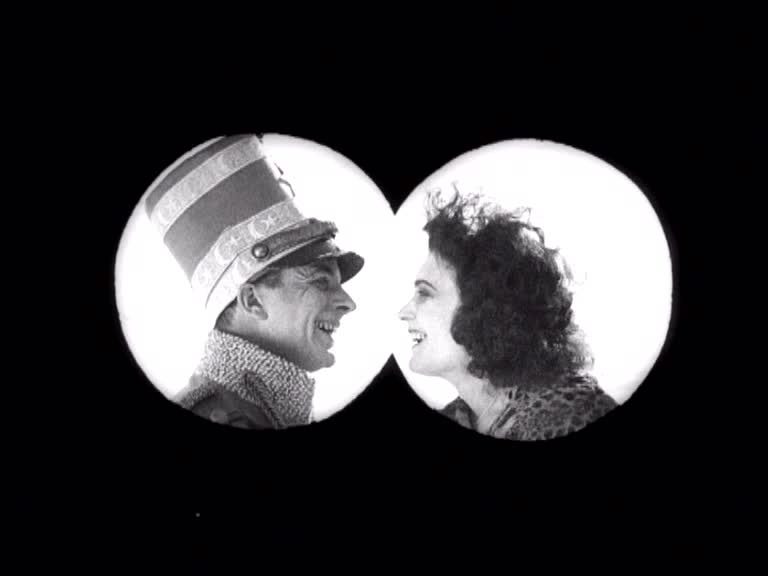
Ernst Lubitsch has referred to Die Bergkatze as his own personal favourite, and it’s easy to see why. This picture – which proudly proclaims itself as “A grotesque in four acts” – marks the peak of his silent era creativity. The film’s production design recalls The Cabinet of Dr Caligari with its spiral staircases and unusual angles, but filtered through the fantastic storybook style of Lubitsch’s Die Puppe, which he pushes to extremes here. We see the story unfold through a series of bizarre irises, from conventional circles to oblongs and squiggly outlines. Sometimes scenes are framed by an iris that suggests we’re viewing the action through a hole torn hastily in a sheet. It’s a suitably wild approach for the raucous tale Lubitsch wants to tell.
Die Bergkatze is the story of a soldier (Paul Heidemann) who finds himself caught between two women, one a captain’s eligible daughter (Edith Meller) and the other a gypsy girl – the “wildcat” of the title – who lives in the mountains with a gang of bandits. Her name is Rischka and she is played by Pola Negri, whose performance here almost matches the unrestrained exuberance of Ossi Oswalda in her collaborations with Lubitsch. Negri is lively and tough, manhandling and whipping the men around her into submission and stealing the leading man’s trousers within minutes of meeting him. While she takes steps towards a more feminine demeanour throughout the film, memorably trying on dresses and dousing herself in perfume, her more abrasive edges are never smoothed away – I loved the way she slapped away a proffered champagne glass before swigging straight from the bottle.
Lubitsch keeps undercutting convention in this manner. When we first see a crowd form to see off Heidemann’s Lieutenant Alexis, we might assume that it consists of people awed by his heroism in battle, but then we see that the throng is populated entirely by tearful women who want to thank “Alexis the Seducer” for the good times. Die Bergkatze is a gleefully entertaining romantic farce, with all of the wit and sauciness that characterises Lubitsch’s most distinctive comedies, but he also finds room for some unexpectedly touching interludes. A dream sequence that sees Rischka’s ghostly presence cavorting with Alexis is one of the loveliest scenes the director ever filmed.
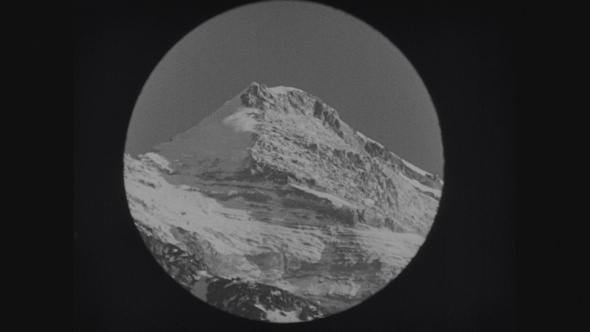
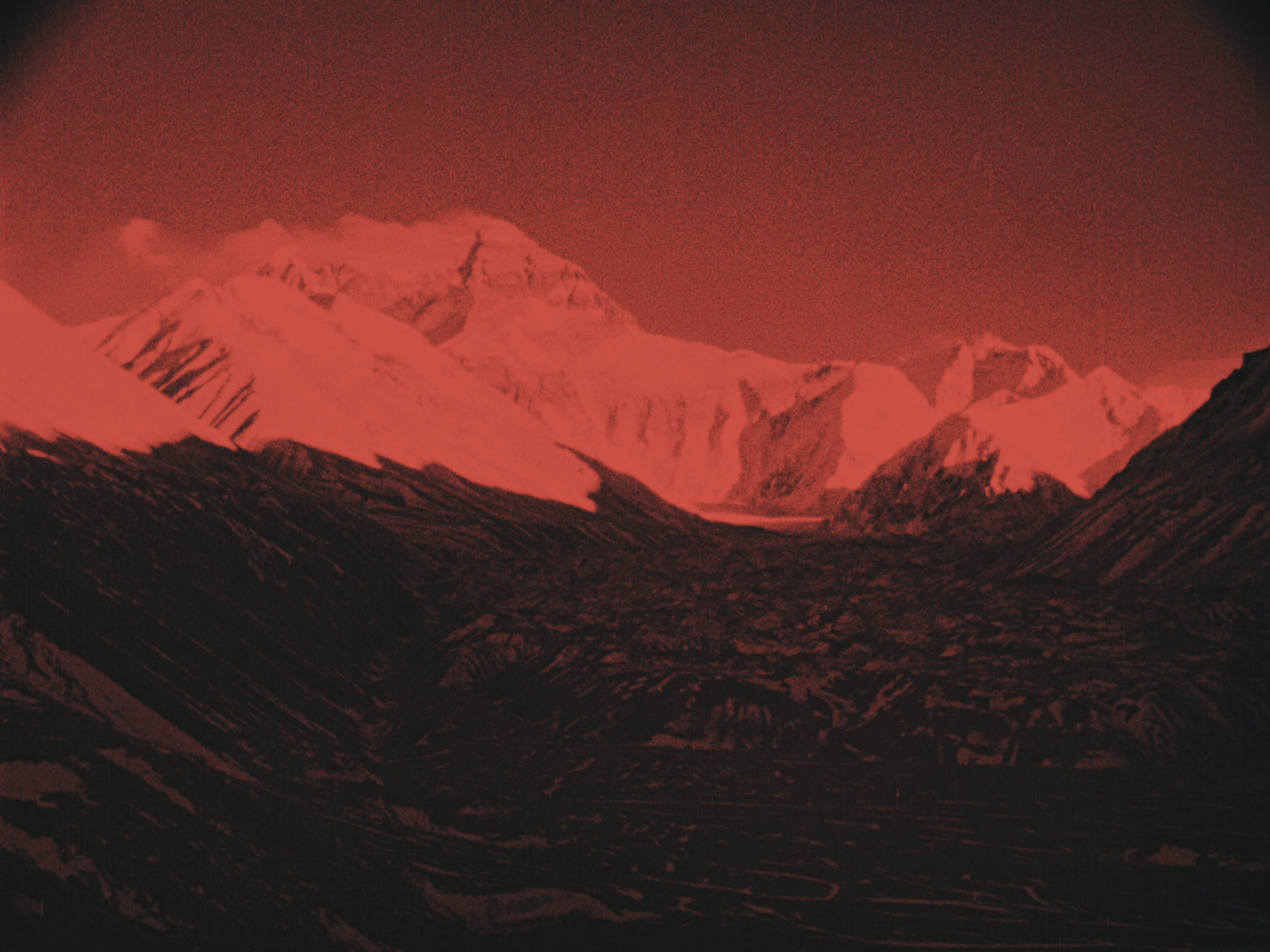
There has been plenty of chat on this blog, and elsewhere, about this fascinating, haunting documentary. Captain John Noel’s chilling film of the Mallory and Irvine’s doomed attempt to conquer the summit of Everest is a work of art, a testament to wild ambition, and a record of the prejudices and misconceptions of its era. For cinema audiences, the spectacle of the film – magnificent mountainscapes, drenched in red or blue tints – came first. Seen on the big screen, The Epic of Everest is utterly mesmerising.
So this home video release has to satisfy two camps. There will be those with deluxe home cinema setups who want to recreate the thrills of the cinema experience – and they will be happy with the high-definition transfer on the Blu-Ray disc here. The images are crisp and stable, with those beautifully rich tints adding real splendour to the scenery. But I suspect a more substantial group, knowing that The Epic will lose a little of its visual power on their TV screen, will want to go deeper into the film, will be looking for history rather than spectacle.
The Epic of Everest (1924)
Luckily the secound group is especially well-served by the presentation here. There are featurettes on the making and restoring of the film, as well as a thick booklet of essays, archive images and background information. You’ll remember that Simon Fisher Turner turned in another glacial score for The Epic – sleek, experimental themes comprising electronica and found sounds. There’s a documentary on his work here too, but just in case you’re about to slip out of the door in disgust – hold on.
The Epic of Everest (1924)
With this package, the BFI invites you to step back in time to 1924 and experience The Epic of Everest as its first audience did – well within reason. Those who buy the DVD version can download a PDF of the original programme from its premiere at the Scala, and – which may come as a surprise to a few people – you can watch the film with its original orchestral score here too. The score was recorded by the Cambridge University Chamber Orchestra and appears as an option alongside the new music, mixed in stereo. It’s less nuanced to 21st-century ears, perhaps, than the new music by Fisher Turner, but its lushness (it sounds almost like a ballet score) is totally immersive. There are some added musical snippets here too – all pieces that would have accompanied the first 1924 screening. If I had a pound coin for everyone who lamented to me that a new release of a silent had a modern score without a more “traditional” version as an audio option, I’d be able to buy a round of drinks for a full house at NFT2, so this is a welcome piece of news. Hats off to the BFI, and to Julie Brown who oversaw the reconstruction of the original music.
For more information, and to buy The Epic of Everest on DVD and Blu-Ray, please click here
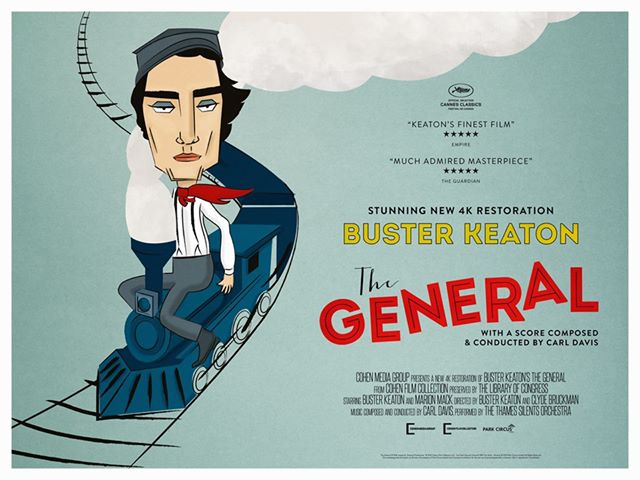
Buster Keaton’s The General (1927) goes on theatrical release this Friday – which should be cause for celebration and mass ticket-buying among all of you. However, if you are a regular reader of this blog, you have probably seen this classic, poll-bestriding Civil War caper before, very possibly in the dim and distant. What worries me, what keeps me up at night, is that if so, you may feel a bit “so-whattish” and “seen-it-all-beforeish” about Keaton’s masterpiece. That would be a tragedy, as The General is one of the funniest, most ingenious and gosh-darn exciting films you will ever see in your long and happy life. If familiarity has bred a touch of contempt, or just complacency, in your bosom, I would gladly bend your ear about the pin-sharp 4k transfer, and the booming rendition of Carl Davis’s nimble and turbo-charged score on this digital print. But that geeky stuff isn’t for everyone, so if that doesn’t tempt you, here are five more reasons to see The General … again.
The early, funny stuff
So we all know The General as a chase film, packed with stunts and crashing locomotives. Well, it actually starts in a very sedate fashion, as our hero Johnnie (Buster Keaton) goes to visit his girl Annabelle, who prompts him to enlist and fight for the South. Patience is a virtue – don’t be in a rush to get to the fast and furious business on the tracks. Johnnie’s pratfall as he leaves Annabelle’s house, the beautiful recruiting-office sequence and that wonderful selfie of Johnnie and his other beloved are all worth arriving at the cinema nice and early for. The scene-setting opening ends with one of the quietest, but most dangerous stunts in the whole movie, as Johnnie perches forlornly on the coupling rods of a locomotive that is picking up speed …
Annabelle Lee
The General‘s Southern belle is far more than a damsel in distress. To be frank, she’s a pain in the neck – watch her daintily selecting firewood and feel Johnnie’s pain. But to be fair, she takes more than her share of punishment too: kidnapped, soaked (twice), caught in a bear trap, stuffed into a sack and loaded as freight. Not only that, but consider this: to paraphrase Ginger Rogers, you try doing everything Buster Keaton does, but backwards and in a crinoline.
There is another reason to take note of Annabelle – she is played by a fascinating woman. Marion Mack knew more than most about the silent movie business. A former Mack Sennett Bathing Beauty, she later turned her hand to screenwriting, including a semi-autobiographical flick called Mary of the Movies, which she also acted in. In the the 30s, she even wrote a talkie short for Keaton. And when critical favour began to smile on The General in the 70s, she was on hand to speak at screenings and festivals, explaining what it was like to play one of Keaton’s not-so-straight women. We don’t have opportunities like that any more, so thank you Marion.
Yes, that is a real train
The one that falls through the burning Rock River Bridge? Yup. It’s not a model (you’re thinking of The Blacksmith). And if you thought it was CGI – shame on you. Famously, the destruction of the train in The General is the most expensive shot in silent movie history, and it’s a salient reminder that everything you see on screen here is real – including the danger that Keaton and Co frequently faced as they went about those wild stunts.
Those damn Yankees
Marion Mack isn’t the only thing here that gives us a flashback to Mack Sennett’s mid-teens romps. Those Yankee soldiers giving chase to Johnnie and Annabelle are enjoyably, hilariously inept. Hoot as a whole gaggle of them fail to fix the points our man has so thoroughly snookered, until their driver appears with a an axe and a shove; chortle as they topple like dominoes with every jolt of the engine. These buffoons are Keystone Kops in all but name. A guilty pleasure in a very sophisticated film.
War is hell
It’s not all larks and big kids playing with big train sets, of course. The General is a war movie, based on a true story – the hijacking of a train headed for Chattanooga, Tennessee. And it’s easy to forget that The General has a rather grim battle scene of its own, with swords and snipers and several deaths. Even the jokes fail to lighten the mood here. The flag gag, in which Johnnie grabs a confederate pennant from his falling comrade’s hand, and waves it in victory from a rocky outcrop, only to discover he has seriously misplaced his feet, is an unexpected splash of black humour. It’s a nifty moment that sharply undercuts any jingoistic vibes you may get from this story of a plucky underdog and his little engine that could.
Bonus reason
If you see The Generalon its extended run at BFI Southbank, it will accompanied by Keaton’s sublime early short One Week. If you were to ask me, right now, which of the two were the better film, I would have to say … “tough call”.
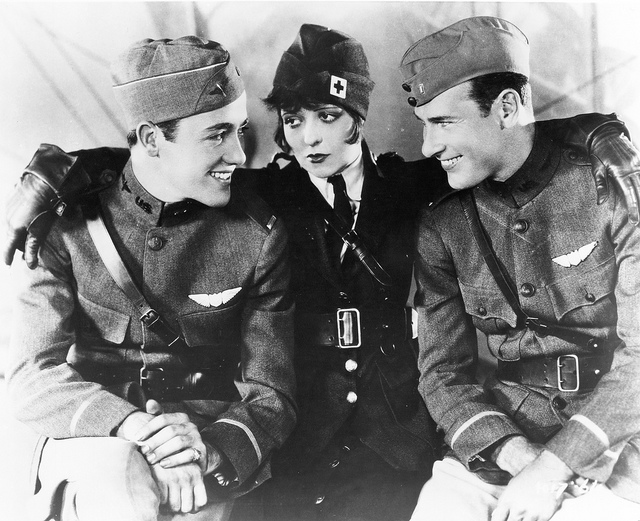
Richard Arlen, Clara Bow and Charles Rogers in Wings (1927)
This is a guest post for Silent London by Alex Barrett.
Long legendary as the first – and only – silent film to win an Academy Award for Best Picture (at the very first ceremony, back in 1927), Wings now comes to us in a stunning new restoration, courtesy of Eureka’s ever-dependable Masters of Cinema label. The film tells the story of Jack (Charles “Buddy” Rogers) and David (Richard Arlen), who compete for the affections of Sylvia (Jobyna Ralston), before becoming comrades in the airfields of World War I. Star power was added by the original “It girl”, Clara Bow, in the role of Jack’s neighbour, Mary – the pure-eyed girl next door with an undying love for our hero.
If this setup – minus the Mary strand – sounds familiar to silent film fans, it’s perhaps due to a striking similarity to the setup of Abel Gance’s J’accuse (1919), in which two rivals in love become comrades on the battlefields of World War I. However, if the overall plot of Wings at times resembles that of J’accuse, it does so without that film’s stringent anti-war message – and without its power.
Richard Arlen and Jobyna Ralston in Wings (1927)
In Wings, we are often told of the “horrors” of war in the title cards, but rarely do we see them. Even towards the end, when the body count begins to rise, it never feels as if we’re given a true sense of the barbarity of war. Compare, for instance, the lightness of the scenes detailing the cancellation of the soldier’s leave with the devastating impact of the equivalent scenes in Raymond Bernard’s Wooden Crosses, released just five years later. The closest Wings gets to touching upon this darkness is its final tragedy, but even there the film doesn’t quite hit home, despite the characters explicitly saying that the “war” is to blame. Wings was made with the assistance of a military in need of good PR, and perhaps it’s this that led to the film becoming a paean to the “young warriors of the sky” (as with J’accuse, real soldiers acted in the film, many of whom had seen service in the Great War). It’s a fine tribute to those who fought but, in being so, there remains a whiff of propaganda around the film’s portrayal of the chivalric life of these “knights of the air”.
Three discs, two formats, both existing versions of the movie, the Carl Davis score, snippets of previously unseen footage including a reel from the the lost talkie adaptation, trailers, essays and the comprehensive documentary Lon Chaney: Man of a Thousand Faces … yes, this is a pretty fabulous Phantom.
But first things first … the movie. Well sit comfortably, because this gets a little complicated. The Phantom of the Opera is a 1925 Hollywood adaptation of the Gaston Leroux novel, starring the unforgettably versatile Lon Chaney as the malignant spectre who stalks the vaults beneath the Paris Opera House, and falls catastrophically in love with one of the sopranos who appears on the stage above him. Rupert Julian’s The Phantom of the Opera was booed by the audience at its first test showing, so had many scenes reshot by Edward Sedgwick, failed yet again to impress at screenings and was so handed over to Maurice Pivar and Lois Weber, who reconfigured and edited it down – this version, finally, was a hit, with the punters if not the critics. When talkies arrived, Universal reissued the movie with a score and effects track, plus newly filmed dialogue sequences, in 1929. We have only the soundtrack for this version, but the existing later version of the movie, presented on this dual format disc, is probably the silent version of the sound re-release. You follow?
The Phantom of the Opera
Here’s what’s clear: Chaney is astounding in this film. His famous makeup skills are responsible for his hideously twisted face, with bulging eyes, no nose and leathery skin. His physical prowess is even more powerful, however. This Phantom is elegantly sinister, a ghost fit for a grand opera house. And even through those grotesque features, his heartsickness for the unattainable Christine, played rather flatly by Mary Philbin, is plain.
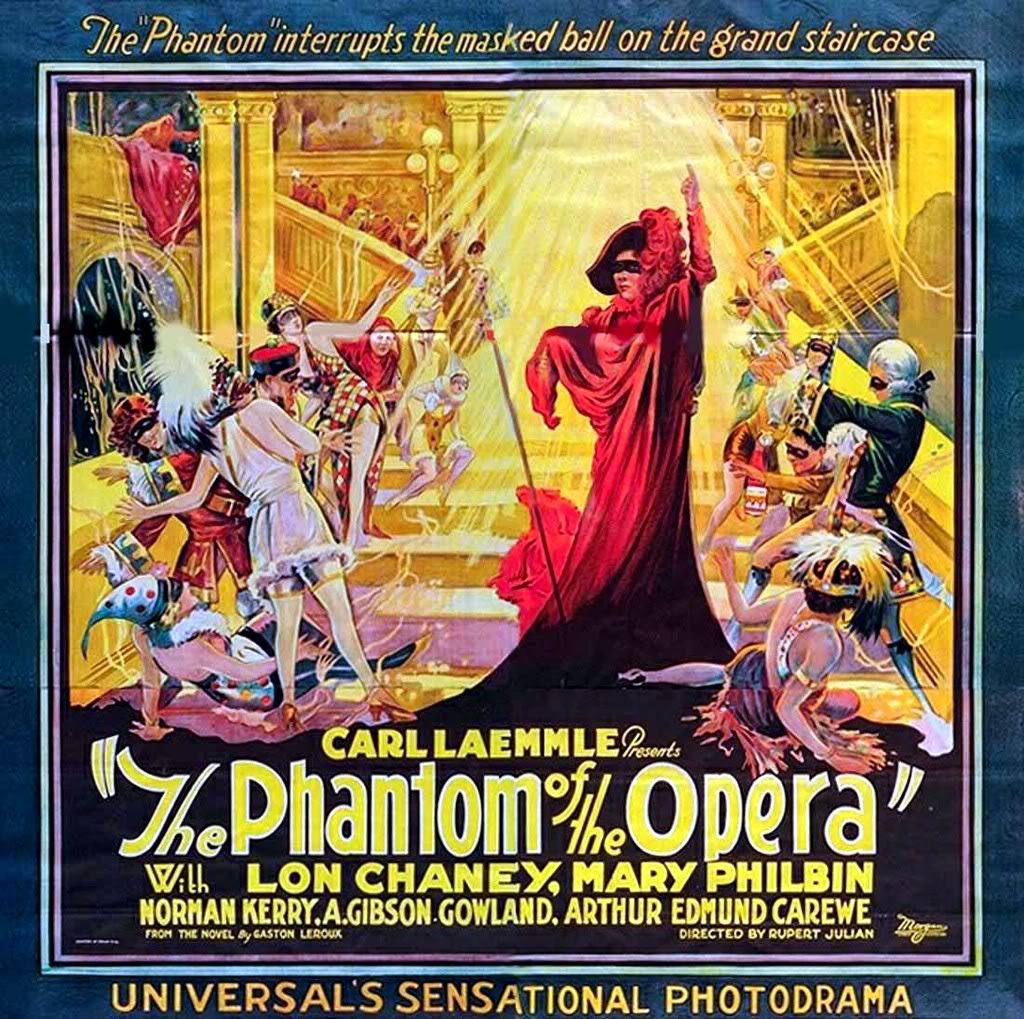
What supports Chaney’s performance is the glorious gothic beauty of the thing. The Phantom of the Opera is art directed splendidly, lending due grandeur to the set pieces, such as the chandelier falling on the Opera audience, and adding luscious detail to the glamorous settings. Tinting adds texture to the film: warmth to the brightly lit theatre, a lurid violet for the spooky cellars. The apogee of Phantom’s grand design is the Bal Masqué sequence – a burst of searing two-strip Technicolor, in which Chaney, dressed in a skull mask and rich red satin cloak, stalks into the party, scattering guests and disrupting the festivities to declare a hex.
This is high-camp Hollywood hokum to be sure, but hokum dressed up to the nines. And arguably the sheer gorgeousness of the film, as well as Chaney’s chill portrayal of the spectre, lend the entire endeavour an unexpected gravitas. And there is so much here that repays not just the care taken in the Photoplay restoration, and in the composition of Carl Davis’s thrilling score, but the high-def Blu-Ray treatment too. That spectacularly crashing chandelier; the creepy shadows in the vault; the heartbroken unmasked Phantom, lurking on the Opera House roof, scarlet cape fluttering in the blue tinted night ; the horror of the first moment that Christine sees her pursuer’s terrifying face; the brutality of the mob at the movie’s close.
The Phantom of the Opera
It should be no surprise that the success of The Phantom of the Opera spurred Universal on to create its famous string of horror movies in the 1930s. If you’re a horror fan yourself, you can’t miss this film which is both a fascinating predecessor to the genre, and also, courtesy of Chaney, a masterclass in acting for scary films. After all, what terrifies us most about the Phantom is not his unnatural powers, but that his very human vulnerabilities prompt him to use them.
The Phantom of the Opera Dual-format edition is available on 2 December from the BFI, rrp £22.99. Extras on the 3-disc set include 1925 and 1929 trailers, a reel from the lost talkie version, the mysterious “Man With a Lantern footage, the 1925 version of the film with a piano score by Ed Bussey, the Lon Chaney documentary, and a booklet of images and essays by Kevin Brownlow and Patrick Stanbury as well as a 1975 Monthly FIlm Bulletin review by Geoff Brown. Order a copy for £16.99 from MovieMail here.
I’m proud to be bringing people back to the cinema, in an age when people will happily watch Lawrence of Arabia on their mobile phones. Napoleon is pure cinema, and cinema was designed for sharing. There’s something about the way it was shot that makes it like no other. I can’t tell you how many people, having seen our restoration, have said: “That was the greatest experience I have ever had in a motion picture theatre.” Kevin Brownlow, How we made – Napoleon, theguardian.com
My eyes and ears are still adjusting back to normality. Yesterday’s screening of Abel Gance’s Napoléon at the Royal Festival bombarded the senses and befuddled the brain. It was not, as you may have been warned, a marathon. The five-hours-forty-minutes running time appears to go by in a flash, powered along by Carl Davis’s invigorating orchestral score. I would happily watch it all again tomorrow and the next day, and for as many times as it took to get to the bottom of its many mysteries.
Right then, six hours of Abel Gance's Napoleon with live orchestra, Here I Come.
Because despite the pleasures it offers, this is not an easily digestible film. Napoléon’s open-ended structure, which closes just as Bonaparte’s career takes flight, doesn’t help. It’s also a film of unexpected variety, and yes, unevenness, if only because its very best sequences are impossible to match. Immense but not immaculate, Napoléon is at times a masterpiece and at others a sketchbook of enthralling, intricate designs. The magic is that Gance’s ambition is every bit as exciting as his achievements. After just one, eagerly anticipated screening, I may be addicted.
I’m not going to attempt to write a review proper this morning, but I did want to give a flavour of the film, the event and the audience’s reaction to it.
Napoléon is a biopic that pairs the grandeur of its subject’s work and vision with its own cinematic innovations. You will have read about the triptychs that close the movie (more of which later) but perhaps you’ve also heard about the flash cuts, superimpositions, multiple exposures and the cameras thrown, whirled, mounted on horseback. The first act of the film, in this restoration by Kevin Brownlow, contains much of its experimentation and bravado. It follows Napoléon as an unhappy alienated schoolboy, and his disastrous return as a young man to his native Corsica. The snowball fight that opens the film, in which Bonaparte and nine chums strategise their way to a crucial victory over 40 of their peers, led by a particularly unscrupulous pair of urchin villains, is a beauty – staged as if were the culmination of a bloody war. Likewise the frenzy of a pillow fight in the dorm. Vladimir Roudenko as the young Bonaparte is marvellous too – showing far more pluck and passion than Albert Dieudonné in the adult role. There is pathos and humour here, as throughout the film, but Napoléon excels at bombast, exemplified by the sequence that closes the act: Bonaparte, lost at sea in a boat with a Tricolour sail, thrillingly cross-cut with uprisings at the Paris Convention.
So far, so much like what I expected from Napoléon, although more exhilarating that I hoped it could be. What I wasn’t prepared for was a sudden shift in tone, as the second act lingered on the battlefield – crowded, red-tinted frames of bloody combat. Memorable details: a drowning man’s hand thrashing the in the mud, a cannon-cart rolling over a fallen soldier’s ankle. This typifies the movie’s take on history: grim faces, skewiff hairdos, grit and squalor. The film punctuates Bonaparte’s moody middle-distance staring and eloquent intertitle speeches with a mode one might call grotesque realism – whether it’s the exposed flesh of dancers at a ball, the tattered foot bindings of the Italian army or Napoleon’s cardboard boots disintegrating in the gutter, this is visceral stuff. And a note on realism: Napoléon footnotes all bona fide incidents and quotations with a “(Historical)” label on the relevant title. Not quite as clunky as it sounds, several “based on a true story” films would benefit from a similar device. Who knew that a clerk ate Josephine’s accusatory dossier to save her from the guillotine? Or that Nelson wanted to sink Napoléon’s “suspicious” boat on his return from Corsica, decades before Trafalgar?
Napoléon (Abel Gance, 1927)
After the long dinner interval, and much inevitable analysis and debate, the third act proved the most controversial. While the sequences exploring the Reign of Terror, from the ructions in the Convention, to brutality of the authorities (including Gance himself as a rather glamorous Saint-Just) were universally admired, many audience members I spoke to were of the “Not tonight, Josephine” persuasion. The courtship between Bonaparte and Josephine is strange, truncated and slightly unsettling. An impressionistic montage of their previous meetings suggest Napoléon’s passion for his lady, but a queasy sequence in which he embraces a globe superimposed with her face shows that his motivations may not be entirely romantic, with Josephine just another territory to be conquered as he builds his empire. The shadow of this bizarre love story is Violine, the young girl infatuated with Napoléon, who insinuates her way into Josephine’s household, imitates her dress and keeps a shrine to the General above her bed. Hardly edifying, but I found these glimpses of the warrior’s homelife fascinating, and enjoyed the tension between these awkward scenes and the single-mindedness of his military strategies.
The morning after #Napoleon. Really, everything pales after seeing Brits weep openly during the finale last night.
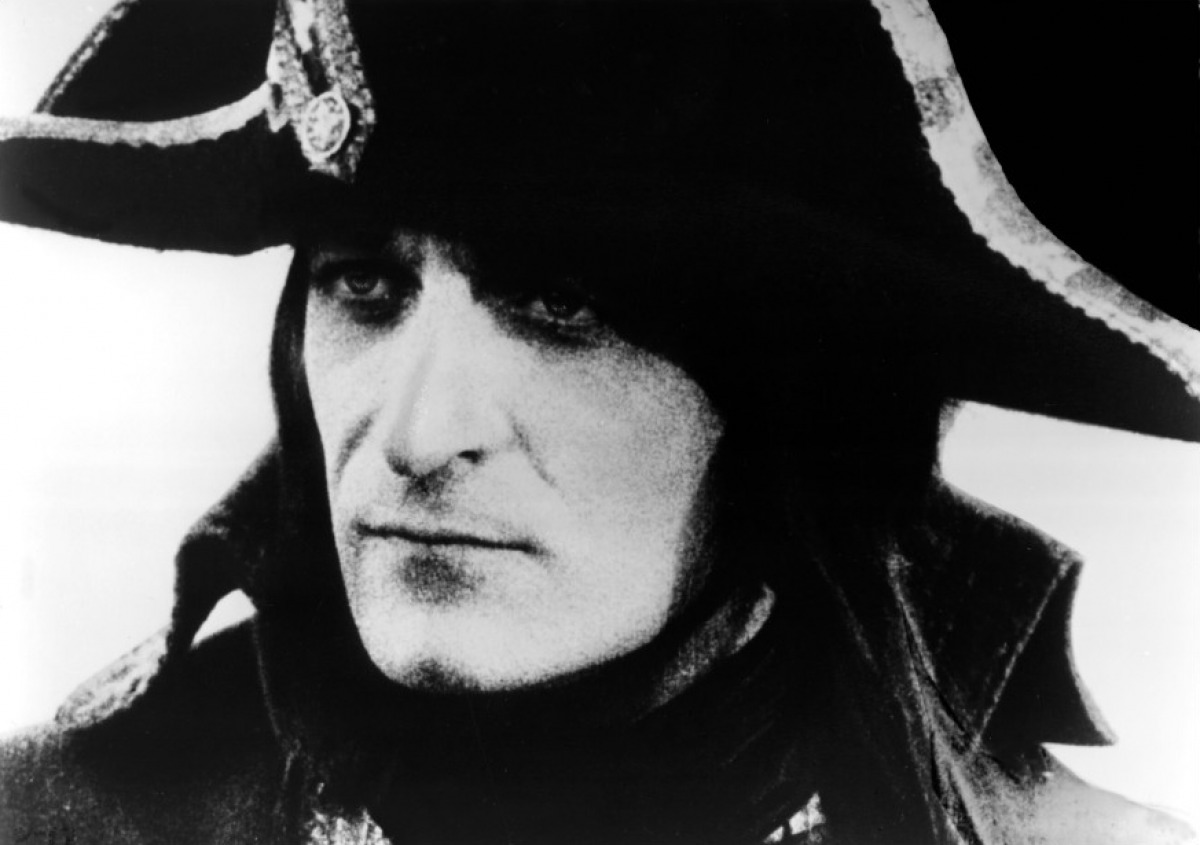
Seven hours after first taking our seats, we assembled for the finale. I freely admit that my lower lip had already wobbled as the titles rolled at the start of the film (“This is it! I’m watching Napoléon!”) but according to my sources, Napoléon was at its most most Napoléon in its last 20 minutes. Not long to wait. In fact, the final hour breezes by, as Napoléon sets out to conquer Italy (writing passionate love letters to the missus in his carriage even while he dispatches orders to his riders). The troops are dilapidated, and morale is as low as funds, but the mountain landscapes are incredible. So, as Napoléon rallies his men with more fine words, it’s just a matter of time before the screen grows, the orchestra soars and Gance’s Polyvision finale kicks in. The panorama shots, after five and a half hours of Academy Ratio, are enough to send anyone into a spin, but when Gance designs each frame individually, multiplying his montage techniques, using colour and superimposition and animation, the the effect is truly astonishing. And at the centre of it all, Dieudonné’s graven face, beneath that famous hat, surveying his own triumph. It’s a monument to patriotism of course, but in the RFH last night, our awe at the work of Gance, of Brownlow and of Davis, rekindled our devotion not to a country but to the cinematic arts. A magnificent monstrosity, Napoléon offers refined beauty, raw thrills and a thousand and one reasons to adore the cinema.
“There’s nothing that matches the experience of going along to see it. It’s incredible. Word has gotten round: this is fun, this is extraordinary.” Carl Davis, How we made – Napoleon, theguardian.com
















 Silent London