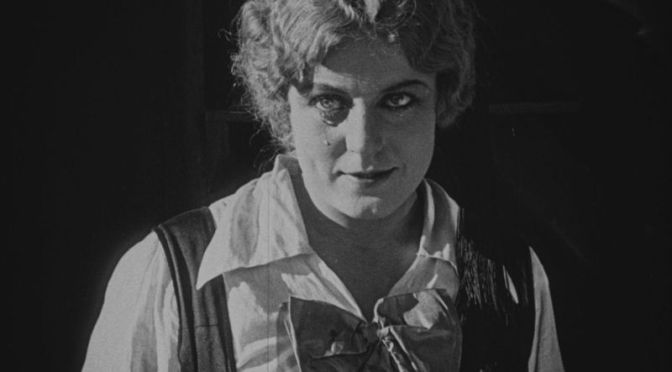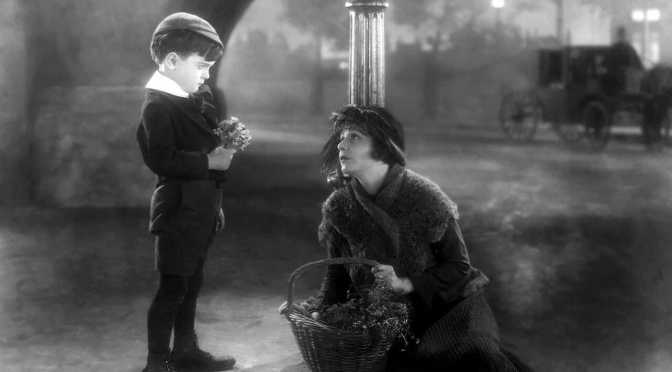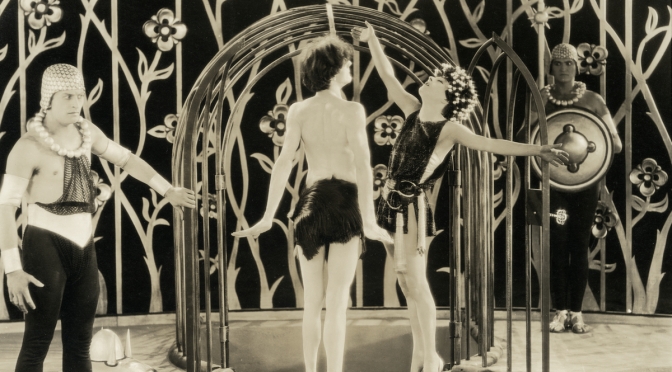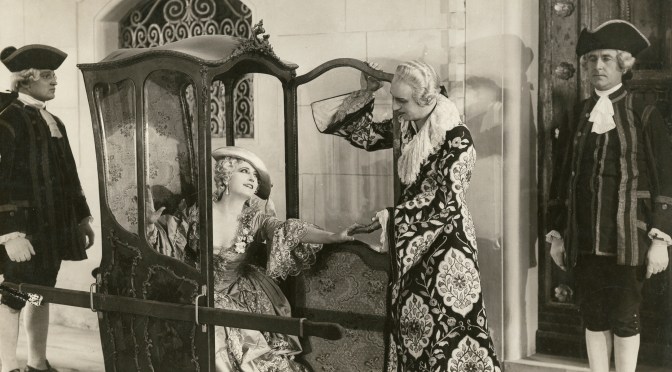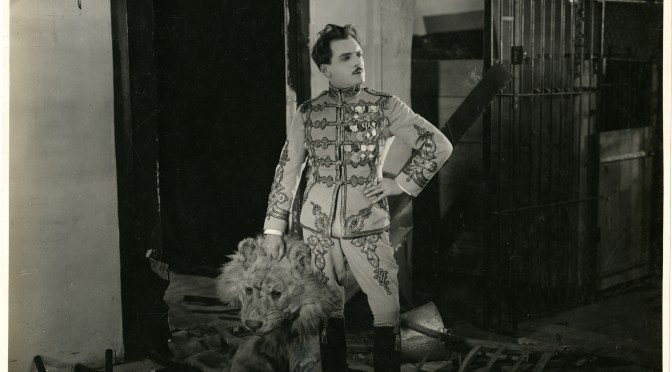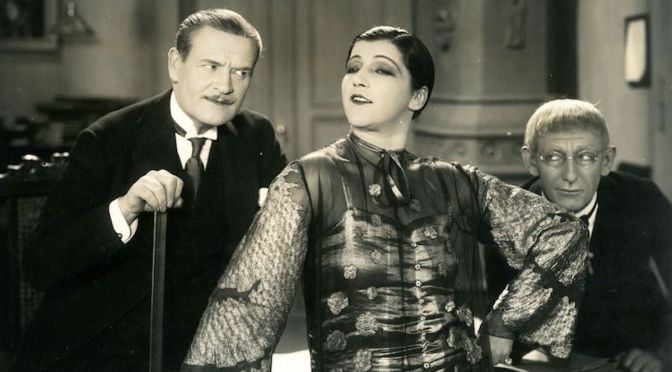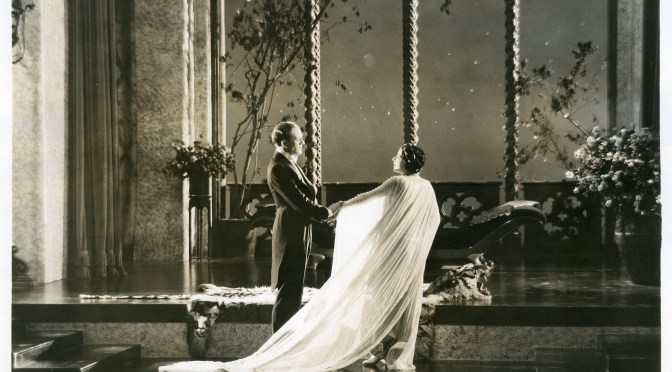
This evening belonged to Marie Prevost, much-maligned silent Hollywood comedienne and high empress of flirtatiousness. She appeared twice on the Verdi screen in front of a packed hall in two fashionable comedies, one about hair and another about lingerie: first in a fragment of the multi-authored flapper farce Bobbed Hair (Alan Crosland, 1925), and then full-length in the Al Christie comedy Up in Mabel’s Room (E. Mason Hopper, 1926).
Continue reading Le Giornate del Cinema Muto 2022: Pordenone Post No 6Category Archives: Festival
Le Giornate del Cinema Muto 2022: Pordenone Post No 5
We have already established that Norma Talmadge is fond of a dual-role, but 1920’s Yes or No? (R. William Neill) pushes the boat out by having two Talmadge sisters on the cast list. of this New York drama Natalie T plays Emma, the maid of dissatisfied society lady Margaret (Norma) and sister of dutiful tenement housewife Minnie (also Norma). The clue is in the title here, and each woman will be asked to choose between temptation and courage, extramarital adventure and (often thankless) fidelity. So it’s a similar structure to that great Norma T melodrama Secrets (1924, Frank Borzage): a character study building to a question that tests that character. However, here we have two women, two questions, two answers – and two sets of consequences.
Choose carefully, ladies. The film is judging you. Literally, if those beartrap illustrations behind certain title cards are to be believed. In fact the title cards were a real highlight of the film, elegantly and often wittily illustrated. True, they were also a little sanctimonious, regressive… but it’s 1920 what can I say? The important point is that Norma is really splendid in this one. She does well with these two sympathetic characterisations, and while she is not charismatic in the way of a Swanson or a Pickford, she is very watchable. I am very much excited for the Normas to come. And thanks are due to José Maria Serralde Ruiz, for playing such an old-fashioned dramas if it were brand new, and building the tension beautifully.
Continue reading Le Giornate del Cinema Muto 2022: Pordenone Post No 5Le Giornate del Cinema Muto 2022: Pordenone Post No 4
What’s your favourite Latvian nationalist historical fantasy war epic? From the silent era, I mean. Taking a little while to decide? Cool, I’ll share mine. It’s Lāčplēsis AKA The Bear Slayer (Aleksandrs Rusteiķis, 1930), newly restored by Riga’s Studio Locomotive.
To reassure the squeamish among you – there is no bear slaying in this film. The Bear Slayer is a strongman of Latvian legend, so burly he can kill a bear with his bare (sorry) hands, but he uses his might for right. This film starts with a hell of a bang, in full-on fantasy mode as an evil “Black Knight” (Osvalds Mednis) with an alarming bullet-shaped head and a supremely sinister gaze tries to bear down on a damsel in distress (Lilita Bērziņa) in a castle. She has an enchanted brooch that will save her, but the Knight gets his ghoulish, wizardy goblin pals to reverse that charm. They begin preparing the cauldron with the usual eye of newt etc and at the last minute, as they prepare to take the blood of an innocent dove, the Bear Slayer/Lāčplēsis (Voldemārs Dimze) throws his sword into the works and foils the dastardly scheme.
Continue reading Le Giornate del Cinema Muto 2022: Pordenone Post No 4Le Giornate del Cinema Muto 2022: Pordenone Post No 3
Holiday hats on everyone. The sun is out in Pordenone. And although it can be a struggle to choose the dark of the cinema over basking in the Italian heat, there are compensations. Even if, this afternoon, the heavens opened in the Verdi with a screening of Joris Ivens’ splashy art film Regen (1929), part of the strand celebrating 90 years of the Venice Film Festival.
Continue reading Le Giornate del Cinema Muto 2022: Pordenone Post No 3Le Giornate del Cinema Muto 2022: Pordenone Post No 2
There’s something about Nanook… A century after it was first released, you might not expect a film with such a complex history to be, as Jay Weissberg said, one of the most anticipated events of the festival. But it certainly was. A quick straw poll of Pordenone attendees confirmed that yes, most of us had first seen Nanook of the North in a film studies classroom or lecture hall, and that we had been told both that it was a box-office sensation, and that it was partly a dupe. But this centenarian film is more than just a notch on the documentary cinema timeline, and it has a beguiling beauty and humanity that commands respect.
Continue reading Le Giornate del Cinema Muto 2022: Pordenone Post No 2Le Giornate del Cinema Muto 2022: Pordenone Post No 1
Welcome home, to your home away from home, Pordenauts. It’s the 41st Giornate del Cinema Muto and the assembled crowd in the Teatro Verdi is bursting with questions. Questions like: do we know what is unknown in The Unknown? Would you like to sin with Elinor Glyn? How much Norma is Talmadge? Does a Pathé-Baby sleep through the night? How many men could a Manxman mank if a Manxman could mank men? And (I may actually have been asked this one in all seriousness) can you point to Ruritania on a map?
Time will provide answers. Meanwhile, let us savour eight days in the make-believe land of silent cinema, once upon a time and far, far away from the troubles we left behind with our morning newspapers.
Continue reading Le Giornate del Cinema Muto 2022: Pordenone Post No 1Pirmoji Banga 2022: keeping silent cinema weird in Vilnius
Greetings from Lithuania!
It has been a bit of a quiet summer here. The reason is that I have been working on a couple of research projects, and travelling too – mostly around the country talking about Pre-code cinema (I’m in Scotland this week, and Belfast next month – links below). But also to further-flung spots such as Vilnius, home of Pirmoji Banga. And if you don’t know what that is, you have come to the right blogpost…
Pirmoji Banga means ‘first wave’ and this is a festival of early film, in the extended sense. from the very beginnings to the first talkies, everything before the second world war, more or less. The festival is substantially devoted to silent cinema, which is presented with live music from international artists. And some of this year’s screenings benefited from a benshi too, which was particularly special. The screenings are all held at a smart arthouse cinema by the river, called Skalvijos Kino Centras. A cool place. Very silent film hipster. Check out the foyer display for the festival (and two people who definitely aren’t hipsters in the mirror):
Continue reading Pirmoji Banga 2022: keeping silent cinema weird in VilniusIl Cinema Ritrovato: a week in 1922
Three little words of Italian you need to learn if you attend Il Cinema Ritrovato: Cento Anni Fa. This must-see strand of the festival, curated by Bologna’s silent cinema supremos Mariann Lewinsky and Karl Wratschko, dials back the programming clock by a century. The name means simply: a hundred years ago.
So it was that this week, in between blasts of restorative Italian sunshine and shots of iced coffee, I spent a week in the 1922 cinematic universe: a world of gorgeous location photography, penetrating psychodrama, impeccable slapstick and to generalise, a healthy number of female-led films (including a handful of nasty women). It was clearly a good year for the movies, so much so that even though I skipped some of the Cento Anni Fa screenings as they were already familiar to me (or outside my days at the festival), that left plenty of room to explore some less well-trod pathways through the year, one massive restoration project and at least one cult classic that I had been saving up for a big-screen viewing. Here are some of those highlights.
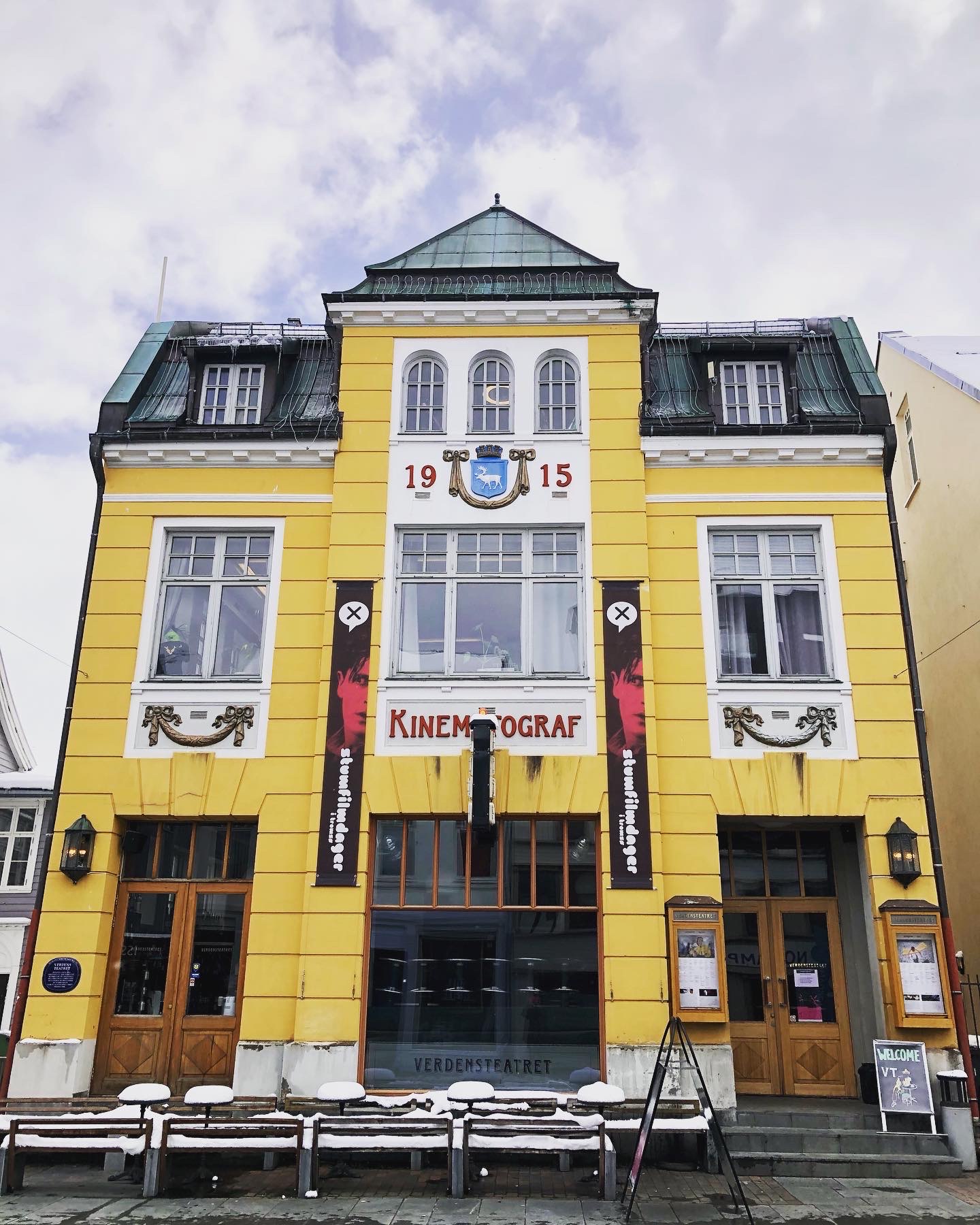
Continue reading Il Cinema Ritrovato: a week in 1922Tromsø Stumfilmdager 2022: An Arctic adventure in film and music
All silent film festivals are not the same. Tromsø Stumfilmdager in northern Norway is full of surprises. For one thing, it was the first time I have ever been offered, and gratefully accepted, earplugs before a silent movie screening.
But first of all, as we’re (mostly) Brits here, you’ll want to know about the weather. And boy was there are a lot of it. Tromsø is 69 degrees north, comfortably inside the Arctic Circle and yet in late April they often expect balmy temperatures of 5 Celsius or so, and clear skies. Not this year. As our pilot informed us en route, “winter has returned”, and we spent four days in the Arctic snow. A delightful Christmas-card novelty for us, but something of a drag for the locals who were looking forward to spring.
There was no escaping the weather on-screen either. The movies included the stories of a seasonal thaw, a woman driven insane by the desert winds, a serial killer operating under the cloak of city fog and a demon destroyed by sunlight. Ten points if you guess all of those titles correctly (although you could just check out the programme here).

Hippfest is back in Bo’Ness for 2022
Hippfest returns! You don’t know how happy it makes me to think about watching silent films with live music at the stunning Hippodrome in Bo’Ness.
The festival is held from Wednesday 16 to Sunday 20 March and the full toothsome lineup just dropped, as they say. Here are a few highlights, some of which have been postponed from the sadly cancelled 2020 edition. I am so ready.
- The Dodge Brothers accompany FW Murnau’s City Girl on Saturday night – this is the Scottish premiere of their brilliant score for this incredible, jaw-dropping Hollywood silent.
London Film Festival review: The Afterlight
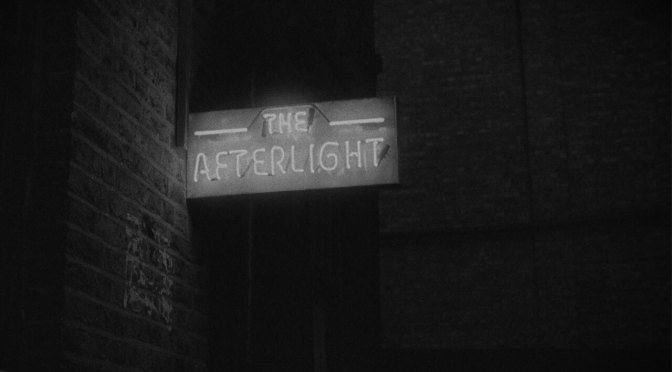
The Afterlight is the last-chance saloon for the lost souls of film history. It’s a conceptual experiment, one that stalks the shadows of world cinema, gathering the spectres of movie stardom as it stumbles all the way to obsolescence. This new film from Charlie Shackleton, which played the Experimenta strand of the London Film Festival, is cast entirely from the grave and destined to self-destruct. Composed of snippets of archive cinema, The Afterlight stars only actors whose obituaries have already been published and exists only in one 35mm print, which will deteriorate, just a little, with each screening, until even these echoes diminish.
Continue reading London Film Festival review: The AfterlightLondon Film Festival review: The Real Charlie Chaplin
It’s a bold, almost alarming title. At this distance, can it be possible to uncover The Real Charlie Chaplin? And if there is something hidden in the biography this most famous of filmmakers, one that can without trepidation be called an icon, might those of us who love his films really want to know?
Rest easy then, as this documentary by Peter Middleton and James Spinney (Notes on Blindness) has no disturbing revelations. That is, as long as you have already been reading those large gaps between the lines of his biography. Chaplin liked the company of young women – girls, in fact. He married teenagers. He sometimes (often?) treated them badly. It’s a been said before and it is stated again here without excuses or attacking the women such as Lita Grey who testified to his ill-treatment. This has been trumpeted in some quarters as a belated #MeToo reckoning for Chaplin. That would be very belated. In truth we have always known this, but some fans refuse to hear it.
Continue reading London Film Festival review: The Real Charlie ChaplinLondon Film Festival review: Around Japan With a Movie Camera
The eye wants to travel, and never more so than in these pandemic times. Which means that this presentation from the BFI’s blockbuster Japan season is actually more welcome on its delayed arrival.
In Around Japan With a Movie Camera, across an hour and a quarter, we are transported through space and time to Japan in the very early 20th century – the films span the period from 1901 to 1913. But you’ll want to devote a full ninety minutes to this one and click the “Watch introduction” button on the BFI Player. The films are more than ably introduced by the BFI’s own Bryony Dixon and Japanese film historian Mika Tomita, and the programme is hosted by Michelle ‘Bioscope Girl’ Facey. They also take time to introduce the band, as it were. The films are accompanied by Cyrus Gabrysch, Costas Fotopolous, Stephen Horne and Lillian Henley – their hands are sometimes visible thanks to the ingenuity of Gabrysch’s pandemic-era innovation, the “piano-cam”.
Continue reading London Film Festival review: Around Japan With a Movie CameraLe Giornate del Cinema Muto 2021: Pordenone Post No 8
At the start of this festival I missed a date with An Old Fashioned Boy, but you can bet your last Euro I wasn’t going to pass up a rendez-vous with Casanova. Tonight, the final night of this very precious Giornate, belonged to Ivan Mosjoukine, his magnicifent eyebrows and the show-stopping music of Günter Buchwald.
Continue reading Le Giornate del Cinema Muto 2021: Pordenone Post No 8Le Giornate del Cinema Muto 2021: Pordenone Post No 7

This is my tenth Giornate, which means I have graduated from newbie, all the way to novice, but also that I have been present for a quarter of the festival’s history. This is the 40th Pordenone Silent Film Festival – an annual celebration of silent cinema that began with a short retrospective of Max Linder films at Cinemazero in 1982, viewed by around eight people. Tonight in the Verdi, it seemed like every other seat was taken for a rendez-vous with Linder.
Continue reading Le Giornate del Cinema Muto 2021: Pordenone Post No 7Le Giornate del Cinema Muto 2021: Pordenone Post No 6
Pordenone 6
Unprecedented scenes in the Teatro Verdi tonight, as the audience of customarily meek silent film enthusiasts stamped their feet, booed and exclaimed “outrageous!” “Close the curtains!” and “Down with this sort of thing!” But more reports on the incident the papers are calling the 2021 Giornate riot later.
Continue reading Le Giornate del Cinema Muto 2021: Pordenone Post No 6Le Giornate del Cinema Muto 2021: Pordenone Post No 5
Anna Q Nilsson! Tom Moore! Dark deeds with gold mines, wedding regrets and stock certificates! A mysterious, abrupt finale! It can only be the welcome return this afternoon of the 1916 serial Who’s Guilty?, which we loved so much in 2016. This was a classic example, with Nilsson and Moore marrying in haste and repenting at leisure but Nilsson’s ex proving to be no better option. And that was before the mine gave up its gold. What a nostalgic treat.
Continue reading Le Giornate del Cinema Muto 2021: Pordenone Post No 5Le Giornate del Cinema Muto 2021: Pordenone Post No 4
“I don’t think I’ll be falling in love with Ellen Richter any time soon,” said a gentleman to me in the hotel lift this lunchtime. Everyone else, please form an orderly queue. We sampled riches of Richter today, in three hour(ish)-long installments of Die Frau Mit Millionen (The Woman Worth Millions, Willi Wolff, 1923) – a fine example of her work in the “Reise- und Abenteuerfilme” or travel-and-adventure films genre.
Continue reading Le Giornate del Cinema Muto 2021: Pordenone Post No 4Le Giornate del Cinema Muto 2021: Pordenone Post No 3
The lure of distant shores drew us into the Verdi this Monday morning, though initially it looked a little like false advertising. Ilka Schütze’s In Den Dschungeln Afrikas/In the Jungles of Africa (1921-24) was a stop-animation story of two dolls travelling via “balloon” not to another continent but only as far as their garden, or their dreams. If dolls can dream. I hope so, don’t you?
Continue reading Le Giornate del Cinema Muto 2021: Pordenone Post No 3Le Giornate del Cinema Muto 2021: Pordenone Post No 2
Here in Pordenone, life is an endless round of parties, each more glamorous than the last. Sorry, that’s not my lifestyle but that of Ellen Richter and co in Leben Um Leben (Richard Eichberg, 1916). This film is a sequel so abandon all hope of following the plot all ye who enter in. What I can tell you is that Weimar star Ellen Richter, subject of a retrospective here at the Giornate, plays a scheming Princess in this glitzy romp. There was a costume ball, a “jolly hunt”, some stolen pearls, a run on the “Volksbank” and non-stop shenanigans and all of it was entertaining but it didn’t quite add up to a whole film. Still there was a marvellous multi-tinted dance sequence, as if the star of the floor show was grooving under coloured electric lights, which was far more than set-dressing – it was an attraction all of its own, a very modern throwback.
Continue reading Le Giornate del Cinema Muto 2021: Pordenone Post No 2