Love film? Yeah I thought so. Next week, the BFI Film on FIlm Festival takes place at BFI Southbank – a very special event where everything shown will be projected on the good old analogue stuff. The full programme is here and it is amazing. The films are showing 8-11 June, and each one is bound to be a hot ticket.
Needless to say, the silent films in the programme will be shown with live music. And I have a special offer for Silent London readers, who can get two tickets for the price of one on a double-bill of beautiful, quintessentially British films scripted by Lydia Hayward and directed by Manning Haynes. These are two of the films that were adapted from the stories of British comic writer W.W. Jacobs – think Jerome K. Jerome or P.G. Wodehouse.
How are things? I know, right? I can’t be much help I am afraid, but I can share a discount for an evening of great cinema and live music.
Interested? Riverside Studios is screening the first true Hitchcock film (according to the man himself) The Lodger: A Story of the London Fog (1927) on Saturday 29 April at 6pm with a live score from silent film specialists Minima – and I can offer you a special discount code for tickets.
A Pordenone postscript on a subject very dear to my heart – Asta Nielsen.
While I was at the Giornate I was lucky enough to talk to scholar Julie K. Allen about her research into Asta Nielsen, including her English-language translation of the actress’s fascinating memoir, The Silent Muse, which was released by Boydell & Brewer earlier this year. It is a tremendous book. An engrossing read, which offers insights into Nielsen’s life and work and especially the world of Weimar Cinema.
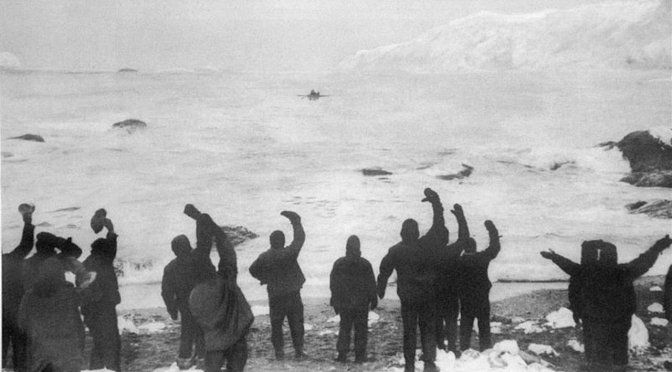
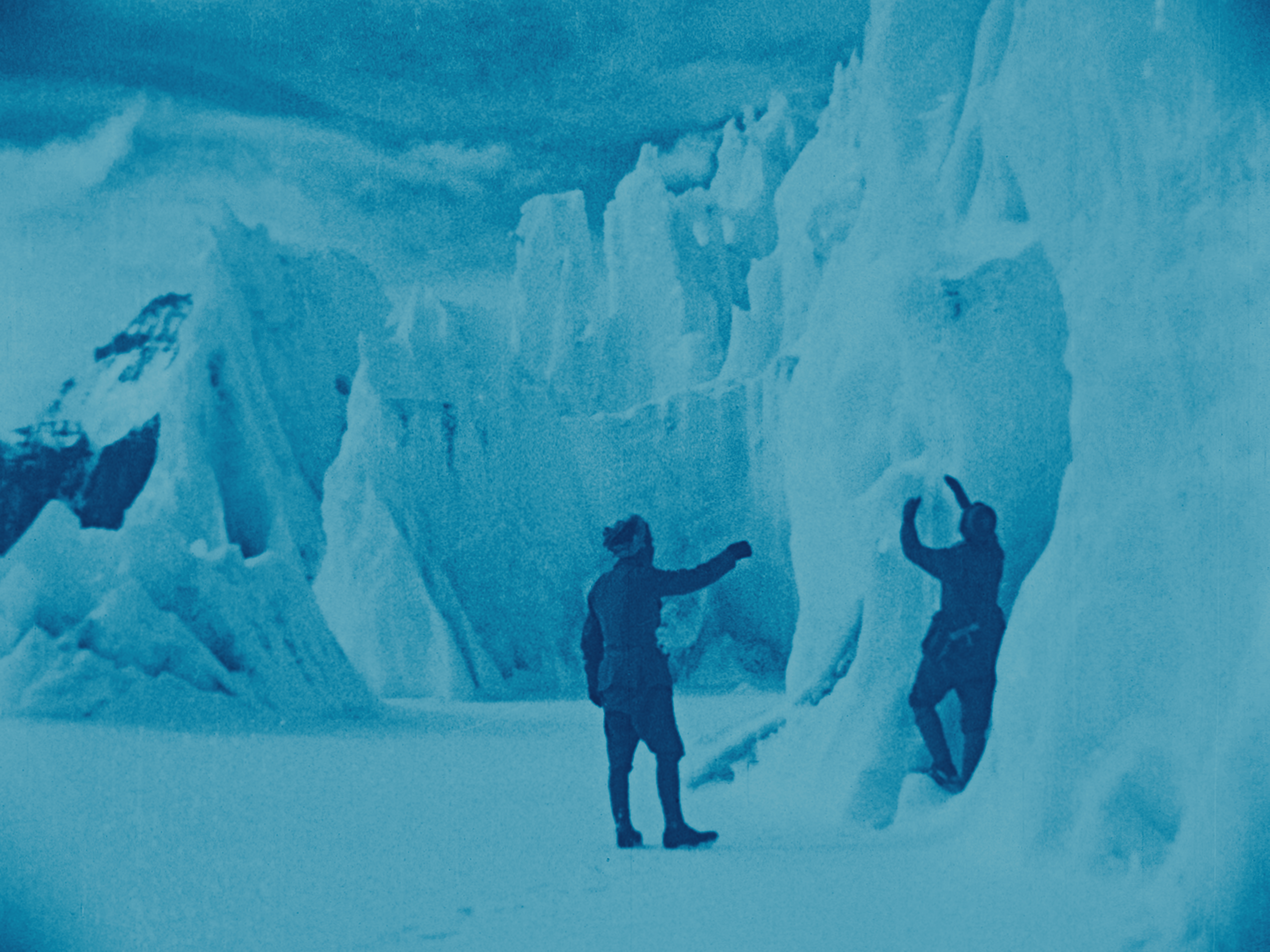
Wonderful news from a true friend of Silent London. Musician, broadcaster, writer and man of many talents Neil Brand has composed a new orchestral score for a truly staggering British silent film, South (1919) – the gripping document of Ernest Shackleton’s journey to the Antarctic, with stunning photography by Frank Hurley. It is the highlight of a BFI Southbank celebration of British explorers and the films that captured their endeavours. Here’s more about the season.
On 5 January 1922, the ‘heroic age’ of Antarctic exploration drew to a symbolic close with the death of Anglo-Irish explorer Sir Ernest Shackleton. Marking both this centenary, and that of Britain’s first attempt to reach the summit of Mount Everest, the BFI presents TO THE ENDS OF THE EARTH: EXPLORATION AND ENDURANCE ON FILM, a season at BFI Southbank throughout January, with associated film releases in cinemas and for home entertainment. There will be themed collections on BFI Player (available from 5 January) and in the BFI Mediatheque.
The Epic of Everest (1924)
And yes, there will be plenty of silent film in the season:
But before all that, there are plenty of films to be getting on with, and if you’d like to take advantage of a two-for-one ticket offer for the films showing at BFI Southbank in the India on Film season, step this way …
Simply quote INDIA241 when booking on line, in person or over the phone to claim the offer. Only valid for all films and events in the BFI’s India On Film season in 2017.
Please note that this ticket offer does NOT include the Archive Gala.
The first silent morsels that caught my eye in the season are a couple of talks on Saturday 20 May 2017:
The first of those talks concludes with a screening of Raja Harishchandra – a rarely seen film from 1913, and the earliest extant Indian movie. To find out a little more about the making of this film, and early Indian cinema in general, why not read a little feature I wrote for the Guardian in 2013, to mark the Centenary of Bollywood’?
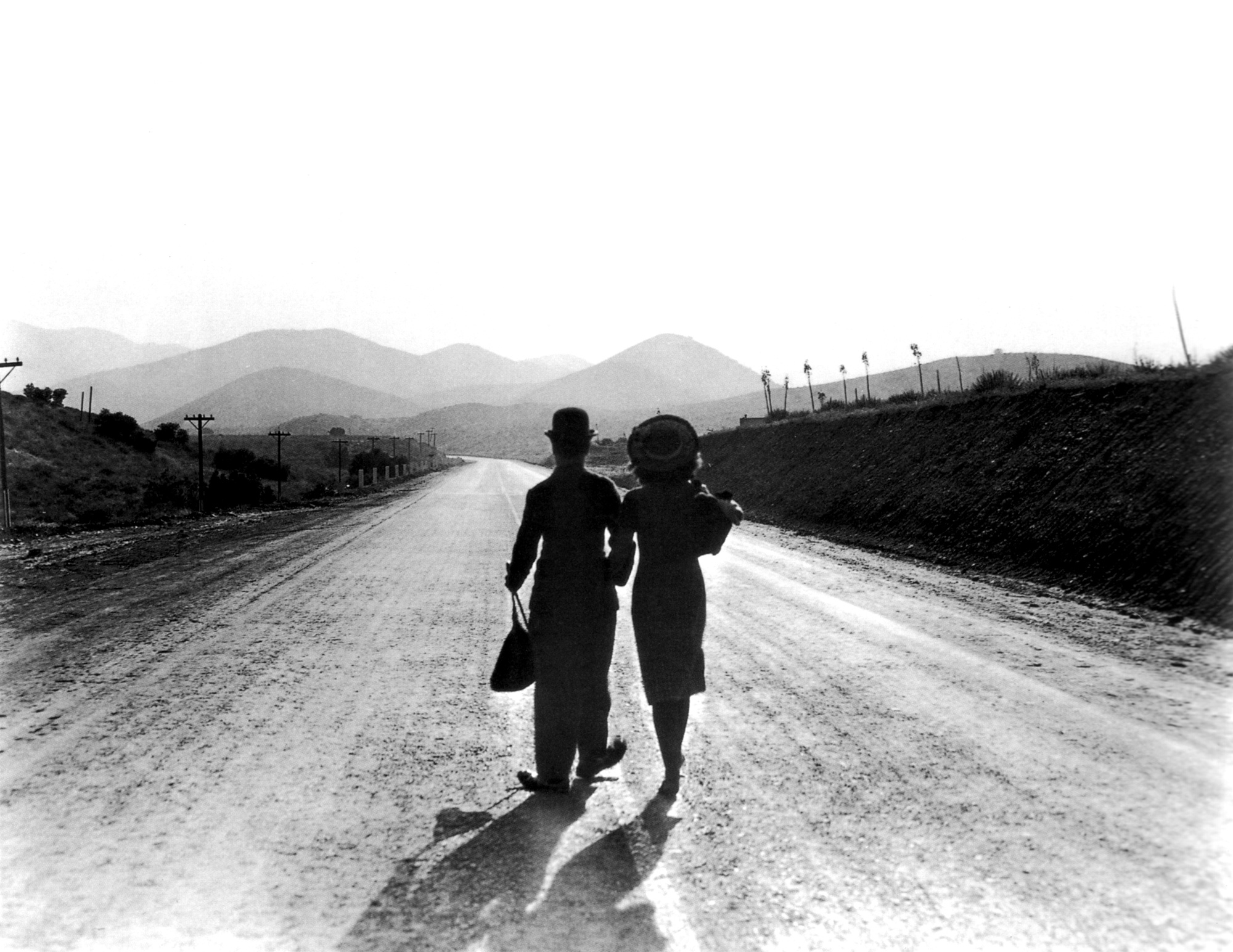
Charlie Chaplin and Paulette Goddard in Modern Times
This date should already be in your diaries. Charlie Chaplin’s wise and heartwarming not-so-silent silent film Modern Times screens at the Royal Festival Hall on the South Bank on 22 March, with the Philharmonia Orchestra conducted by Carl Davis. It’s a magnificent movie: a slyly hilarious portrait of Depression-era America, with a tremendous score written by Chaplin himself. There’s a lot to love about Modern Times – not least the final screen appearance of the Little Tramp and the debut of Chaplin’s song Smile.
If you’d like to see Modern Times, and who wouldn’t, you can take advantage of this special offer and get best available seats for just £10 if you quote FILM when booking online or by calling 0844 847 9910. Find out more and book online here.
File this one under Not Quite Silent Film – but that doesn’t mean it won’t be of interest to the esteemed readers of this blog. And if you scroll down, you’ll be able to get yourself a special deal on tickets too.
Pioneered by Whirlygig Cinema and film-score artists The Cabinet of Living Cinema, Making Tracks is an ongoing interactive event that provides a unique platform for new filmmakers to get their work seen. The premise is simple; Whirlygig seek out amazing films to showcase, strip them of their original soundtracks, and The Cabinet perform brand new live re-scores. It is a perfect way for filmmakers who have had problems with music copyright to get their work screened in public.
Put simply, Making Tracks is all about the magical combination of movies and live music, and even if the films themselves weren’t originally silent, they will be on the night. They can be, however, and you may remember that the award-winning short film Dogged featured at a Making Tracks night a few months back.
Here’s a lovely blog review of a Making Tracks night that puts it in context of the silent film revival and how lucky we are in London to have so many silent film and live music screenings.
With a live soundtrack you feel the vibrations, hear and see everything intensely, get a few shivers down your spine, and share your entrapment in the vision of the filmmaker with your fellow audience.
The Barbican is marking the weekend’s 100th anniversary of the Titanic disaster with a moving event that combines live music with archive footage. Gavin Bryars’ The Sinking of the Titanic was inspired by reports that the ship’s string ensemble continued to play the hymn Autumn as the vessel sank; it was written in 1969 and first recorded on Brian Eno’s label Obscure. It will be performed in the Barbican concert hall by the Gavin Bryars ensemble with multimedia artist Philip Jeck.
The archive footage projections have been designed by film-maker Bill Morrison, whose work, including Decasia and The Miners’ Hymns, you may already be familiar with, in collaboration with Laurie Olinder.
Tickets for the event start at £15, but readers of this blog can enjoy a 20% discount when booking online. See the promotional code below.
Throughout the 72 minute piece Bryars and the ensemble weave refrains from Autumn with layers of Jeck’s sample-based materials, creating, at times, clamouring waves of sound that suggest the great engines and massive bulk of the vessel and the ocean that swallowed it. The result is a heart-achingly intimate and direct work.
The Sinking of the Titanic also features projection design by the internationally renowned Bill Morrison, who has commissioned work for some of the most important composers of his time, such as Steve Reich and Henryk Gorecki . Collaborating alongside Morrison is Laurie Olinder, multimedia designer, founding member of New York’s Ridge Theater with previous work being screened at some of the world’s most prestigious arts venues, such as Carnegie Hall, the Lincoln Centre and the Brooklyn Academy of Music.
Silent London readers can claim a 20% discount on tickets for The Sinking of the Titanic. Just enter promo code 15412 when booking online, at barbican.org.uk. The Sinking of the Titanic plays at the Barbican on 15 April 2012 at 8pm.
Read more about the earliest films of the Titanic disaster and about events to commemorate the anniversary in our guest post by Greg Ward here.
A fortnight ago, I reviewed Bryony Dixon’s 100 Silent Films here on Silent London and I was very taken with it. It may have a simple format, but the choice of films is often surprising, so it’s as much a pleasure to read in one sitting as it is useful as a reference work. For those of you who want to buy a copy, perhaps to start ticking off films as you watch them, as some people have suggested to me on Twitter, the publishers are offering a discount to readers of this blog.
This illuminating guide provides a selection of one hundred key films of the silent period (1895-1930), featuring films from a variety of countries, genres and directors. You can order a copy of BFI Publishing’s 100 Silent Films by Bryony Dixon (RRP £12.99) for £8.50 on the Palgrave website here. Just quote the discount code WSILENT11.




 Silent London