Le Giornate del Cinema Muto 2012: Pordenone post No 5

Le Giornate del Cinema Muto

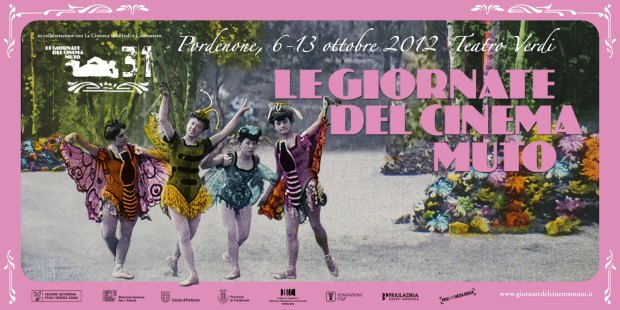
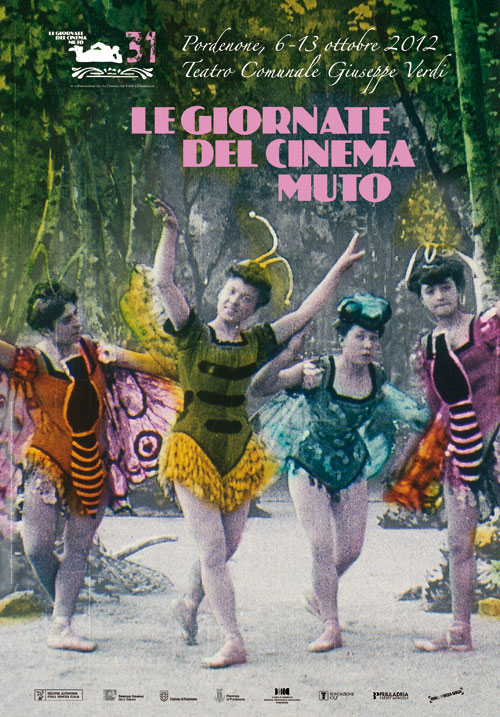
The fairies that adorn the Giornate posters are not fairies, but vengeful butterflies. In La Peine duTalion (1906), which concluded this afternoon’s gorgeous programme of early cinema, the dazzlingly costumed scamps take rather lighthearted revenge on a butterfly collector for all the times he trapped their friends and pinned them to a cork. Mystery solved!

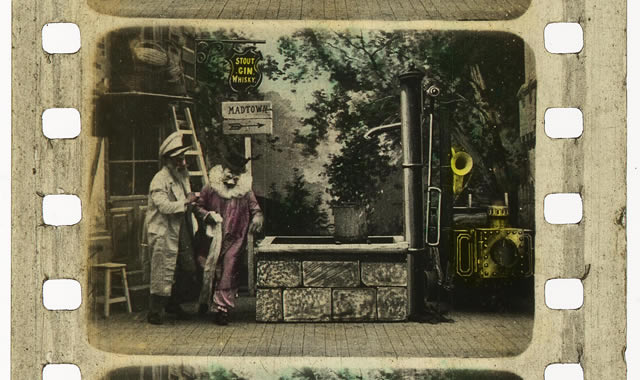
There were many more treats in that programme, including Méliès’ clown caper Automaboulisme et Autorité (1899), valiantly (I shall say no more) accompanied by Gabriel Thibaudeau and Frank Bockius, an extravagant serpentine dance (Danse de l’Eventail, 1897) and a loopily charming comedy about a girl so tall she can’t stand upright (Eugenie, Redresse-toi, 1911). The butterflies fluttered out of the Corrick Collection, along with the familiarly lurid delights of Dreams of a Rarebit Fiend (1906), a vividly coloured but sadly damaged L’Enfant Prodigue (1909), and a real crowd-pleaser: the cunning canine stars of Les Chiens Contrebandiers (1906).

Automaboulisme et Autorité (1899) Photograph: Cinématheque Française

A rare pleasure, the discovery of a precious Yevgenii Cherviakov film starring the luminous Anna Sten (in Buenos Aires) is a moment to be treasured. And although we only have a few reels of Moi Syn (My Son, 1928), transferred rather basically to DVD, it was enough to show us that the only director Dovzhenko admitted as an influence was a prodigiously talented film-maker. This is a poetic piece, with a devastating opening, as after a series of close-ups (which characterise the film), Sten turns to her husband and says, indicating the newborn in her arms: “This is not your son.” There is a fire, a lecture on childcare, and an infant funeral to follow but not in that order. Impressionistic, but frank, and subtly accompanied today by Neil Brand, Moi Syn is unforgettable even in its present state. I dearly hope the rest will be restored to us soon.

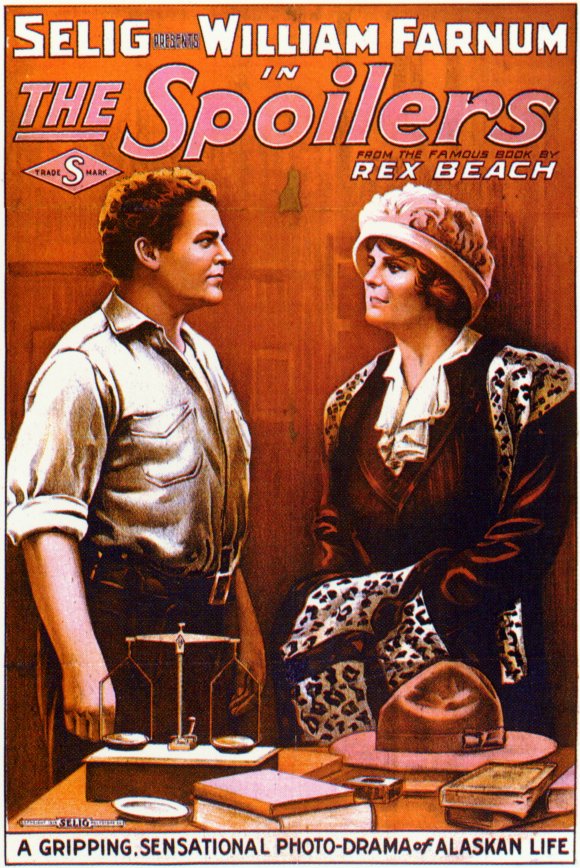
The Spoilers (1914)
The Spoilers (1914)

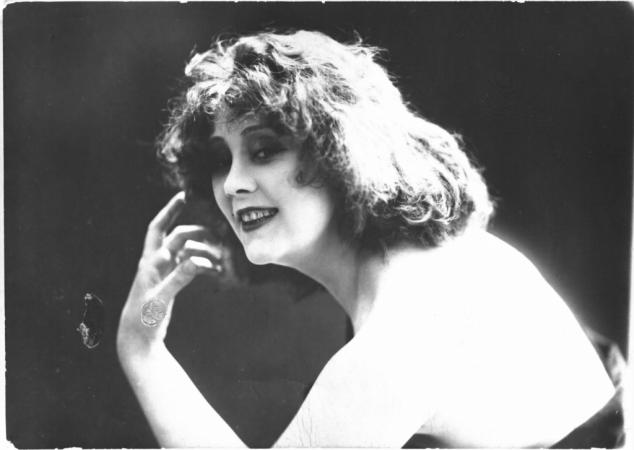
Another landmark film, but of a very different kind, Selip Polyscope’s trailblazing feature The Spoilers (1914) was a diverting two hours. A gold mine, and a community, in peril; a maverick and his gal to the rescue; the Bronco Kid; corrupt politicians … there was perhaps an excess of plot, even for the running time, but who cares? Kathlyn Williams as Cherry Malotte, a good-time girl made good, stole the show, particularly in her outrageous costumes.

Less enjoyable was Familientag im Hause Prellstein (1927), an UFA Jewish comedy, directed by the notorious Hans Steinhoff. This convoluted tale of debt, divorce and double-dealing fizzled out after its opening 20 minutes or so.

Still, reports from La Passion de Jeanne d’Arc (1928), screening in the cathedral with a new score by Touve Ratovondrahety, were excellent, and the day’s action in the Teatro Verdi concluded with Manning Haynes’ lovable coastal comedy The Head of the Family (1922).

What we didn’t learn today: Helen in The Spoilers was “wrapped in a woof of secrecy”. Whatever that is. Answers on a postcard or in the comments field below, please.

  • You can read Nathalie Morris’s excellent report from the festival for the BFI website here.
  • I have also written an article for the Guardian film website about Méliès’ Les Aventures de Robinson Crusoé – it’s here.
  • For full details of these and all other films in the festival, the Giornate catalogue is available as a PDF by following this link.
  • My previous reports from the festival are hereherehere and here.

Le Giornate del Cinema Muto 2012: Pordenone post No 4

Zvenyhora (1927)
Zvenyhora (1927)

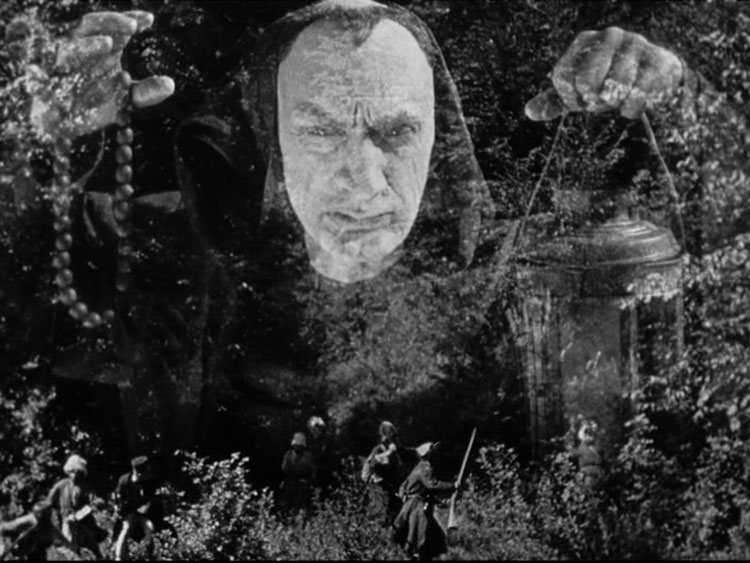
If it’s Tuesday then it must be Dovzhenko. My fourth day at the Giorante began a little later than the others, with a screening of Zvenyhora (1927), a bewildering film of great splendour, which the Ukrainian director described as his “most interesting picture”. This symbolic hymn to national pride, myth and destiny gave him the chance, he believed: “to expand the screen’s frame, get away from clichéd narrativity, and speak in the language of vast generalisations”. That either sounds like heaven or hell to you I am sure, and while I find the film impossible to summarise, I thought it was magnificently photographed, never dull and mostly incomprehensible. Like the other Dovzhenkos I have seen, I am sure it will linger in the mind. Mention must also go to John Sweeney’s thunderous, passionate accompaniment on what the festival programme so enticingly calls the “pianoforte”.

Annie Bos
Annie Bos

“Nelly and Adolf hurry to tell all to the insurer” – does that intertitle give you a suggestion of the, erm, lack of similar grandeur and high drama in De Bertha (1913)? This was a half-hour caper about insurance fraud, shipping and the new-fangled telegraph starring sweet-faced Annie Bos, known as the “Dutch Anna Nielsen”. It was a happy recent discovery for the EYE Film Institute and while it is a smartly told tale, with pretty tinting and a likeable leading lady, it was far too soapy and unexciting for me after the previous film. Pity.

A longish lunch called, before returning to the Teatro Verdi for a trio of star voyages from 1906: the French original, Voyage Autour d’une Etoile, an abridged reshoot of the same with different actors and sets, and an Italian remake, Un Viaggio in una Stella, all by the same director, with subtle differences. There was great inventiveness on display, plus masses of good humour and dancing, and I could have happily watched variations on this theme for hours – before splicing together a supercut of the best moments from each.

Die Weber (1927)
Die Weber (1927)

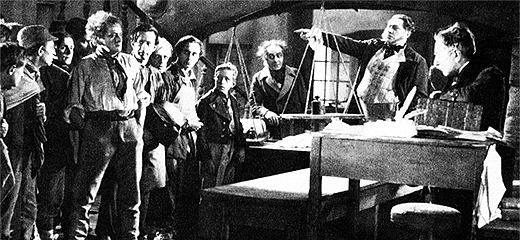
We were back on the hard stuff with Friedrich Zelnik’s 1926 Die Weber, AKA “the German Potemkin” – though this magnificent story of textile workers kicking back against their brutish boss (Paul Wegener) was more like a German Strike, and my, was it soul-stirring. Dynamic hand-drawn intertitles, a vigorous ensemble, and wonderful direction (a poignant sequence with a hungry boy and a rocking horse, frenetic mob scenes), made this an exhilarating hour and a half. Spectacular accompaniment from Günter Buchwald and Frank Bockius, including some rousing revolutionary singing, fair took our breath away.

Pola Negri in The Spanish Dancer (1923)

Having calmed our radical fervour with a quick drink over the road, we took our places for a double-bill that promised pure joy – and delivered. First, a rerun of Saturday night’s world premiere of the restored Méliès film Les Aventures de Robinson Crusoé (1902) with Paul McGann once again delivering the commentary (more on this anon). Then, a screening I was particularly looking forward to: Herbert Brenon’s 1923 romance The Spanish Dancer, starring Pola Negri, Adolphe Menjou, Wallace Beery, Kathlyn Williams and chums. What I didn’t know was that silent film musician Donald Sosin had spent many months planning an accompaniment for the movie, which would involve a group of musicians including Günter Buchwald on guitar. Sadly, Sosin is currently unwell and unable to attend the festival, so Buchwald, Stephen Horne and a few others, put together their own music, at late notice, but based on some of the plans that Sosin had made. It was fabulous. The film is classic Hollywood at its ludicrous best, with giant, gorgeous sets, sequined costumes and massive crowd scenes. Negri is wonderful, especially as this is a role that allows her to dance, and fall desperately in love – her two specialities – as a gypsy fortune teller whose beauty and kindness plunges the Spanish court into disarray. And the richness of the accompaniment, with gypsy guitar, percussion, and romantic strings, did it true justice – I hope Sosin would have been pleased. A memorable screening for sure, and do, “I beseech you”, catch The Spanish Dancer when it screens at the London film festival next weekend.

Favourite intertitles of the day: It’s a tie, between “I’ve accidentally killed myself” in Saved by the Pony Express (1911), starring Tom Mix, and “Damn that bunch of knitters” from Die Weber.

Best argument for vegetarianism of the day: Jäger in Die Weber opines something along the lines of: “What need have we to eat meat, when we could devour the manufacturers instead? They swim in grease up to their necks already.” Quite. And who could fail to agree when they had just seen Grandpa choking as he chewed on a stew made of the family dog?

For full details of these and all other films in the festival, the Giornate catalogue is available as a PDF by following this link.

My previous reports from the festival are herehere and here.

Le Giornate del Cinema Muto 2012: Pordenone post No 3

Monday at the Giornate closed with a brace of comic features featuring forgotten stars: Raymond Griffith’s civil war caper Hands Up! (1926) was preceded by Boris Barnet’s gentler Soviet comedy The Girl With The Hatbox (1927). Both were a pleasure, of course, but for me, the east was victorious in this particular battle.

Coming before both films was a modern silent, the slight but charming Le Petit Nuage (2012), a tale of impetuous romance in Paris made by Renée George, who was the lighting best boy on a little-seen confection of nostalgia called The Artist, released late last year. Anyone remember that one? Anyway, wonderful to see the ripple-effect work its magic, as the star of George’s film also has her own silent project in progress. Soon we’ll all be at it.

Affinities (1922)
Affinities (1922)

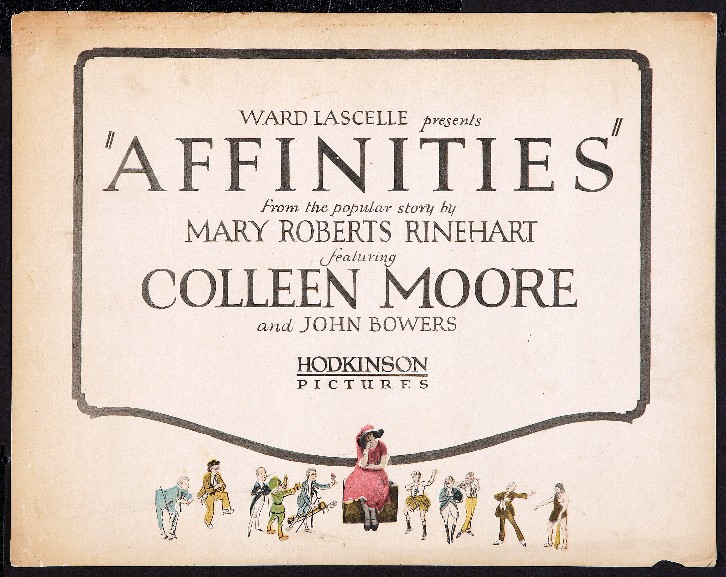
Working backwards through the schedule on a day when I will admit I was a little sidetracked, the programme of restored fragments produced by the Haghefilm/Selznick School fellowship 2012 won the hearts of the audience with its rare and strange beauty. The glimpses of Colleen Moore in 1922’s Affinities showed her at her winning best, although the film’s sexual politics seem terrifyingly retrogressive. There was two-strip Technicolor aplenty here: a documentary called Sports of Many Lands (1929) entranced with images of surfers on Waikiki’s deep blue ocean waves and race horses speeding down rich green furlongs. There were musical numbers, mysterious robots and dancing girls too. More, please.

There was a devil of a lot of Dickens on offer today, with the first session of the morning partnering a raucous but the most part feebly acted 1914 Martin Chuzzlewit, with the rare treat of our own Maurice Elvey’s slick, engaging modern dress Dombey and Son from 1917. Lucie Dutton says it best on Twitter (and there are more where these came from, Lucie is tweeting up a storm from the festival):

https://twitter.com/MissElvey/status/255233178325889024

https://twitter.com/MissElvey/status/255319947121668096

What to say of the diverse comedies collected in the Oh, Mother-in-Law! programme? Not nearly as offensive as it sounds, these shorts were often laugh-out-loud funny, with Louis Feuillade’s race film La Course des Belles-Mères (1907) and a wicked Italian number called Finalement Soli (1912) the standouts for me.

What we learned today: Defensive weapon, writing desk, modesty screen, rodent impersonator … the many and varied uses of a hatbox, as demonstrated by Anna Sten in The Girl With the … Hatbox.

Drink of the day: And every day if I get my wish: the feted Aperol Spritz.

For full details of these and all other films in the festival, the Giornate catalogue is available as a PDF by following this link.

My report from the first and second days of the festival are here and  here.

Le Giornate del Cinema Muto 2012: Pordenone post No 2

The Goose Woman (1925)

One would only expect to see the most ardent silent cinephiles here at the Giornate, but even within the geek elite assembled in Pordenone there are distinctions to be drawn. For instance, do you love silent cinema enough to be present and correct at a 9am screening of a rarely shown “experimental” Pudovkin film? On a Sunday?

Anna Sten in Earth in Chains (1927)

Well I was there, though my fellow festival-goers may wish mention my hotel’s proximity to the Teatro Verdi as a mitigating factor. And for my euros, Prostoi Sluchai/A Simple Case (1932) was worth the early start. A moral parable, slightly more convoluted than the title suggests, it condemns disloyalty to the Socialist cause, here represented by a shell-shocked husband committing adultery. The lyrical opening, some extreme montage to represent machine-gun fire in the battle scenes and an abstract sequence of decay and regrowth all stood out. Not an easy film to take in, perhaps, but one that repays the effort.

Sunday’s second Soviet film came much later in the schedule and was one of my highlights of the day. To kick off the strand of the programme that celebrates Anna Sten, the Hollywood star who never quite was, we were treated to the emotionally gruelling Earth in Chains (Fyodor Otsep, 1927). Sten is beautiful, just radiant, in this exceptionally ugly tale of exploitation. The film’s epic themes of injustice and oppression make it seem much longer than its 80-minute running time, which was, for once, a good thing.  Some heavy metaphorical inserts and a mawkish ending aside, this film consistently impressed and I am keenly anticipating more from Sten this week.

It was a more obvious pleasure to take in some Italian scenery this morning, while watching Idillio Infranto (1933), a short, poetic-realist tale of doomed romance and corruption in the Puglian hills (and more of the same in the big, bad city). The folksiness of the film was echoed by the recorded score for instruments and voices that was always highly strung and mostly excellent.

Idillio Infranto (1933)

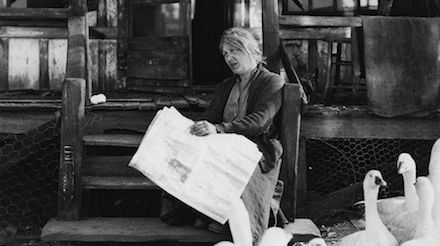
On a high from the Italian film, I returned from lunch hugely excited to see The Goose Woman (1925), which I missed at the London film festival last year. Louise Dresser plays an alcoholic former opera star who pretends to have witnessed a crime in order to get some attention from the newspapers. It’s a terribly sad story, inspired by a real murder case, and the film often awkwardly mixes comedy in the drama when perhaps it could have been played straight. It’s beautifully shot, with delicate lighting, emphasised by tints on the film. Dresser is fantastic in the lead role, though, and though this film also has a rather sugary finale, this Hollywood gem directed by Clarence Brown is a very happy rediscovery.

The most bizarre segment of the day was undoubtedly the morning’s programme of German animation. Yes there was a Lotte Reiniger film in there (Die Barcarole, 1924), and some similar cutout work from contemporary Toni Raboldt, but this was a diverse batch indeed. Many of the shorts were in actuality adverts or propaganda films, promoting goods from sausages to perfume, life insurance to war bonds. One of the strangest was a mixed-media, hand-tinted work by Walter Ruttman that employed the story of Adam and Eve to sell fresh flowers. It’s a love story, I suppose. Many of the films were funny, most intentionally so, and a few of them were wildly politically incorrect or just plain odd. A brantub of surprise packages.

Jackie Coogan as Oliver Twist

The evening entertainment was a double-shot of Oliver Twist: the pacey 1922 Hollywood version starring Jackie Coogan and Lon Chaney was accompanied, though I didn’t see it, by a shorter Hungarian version titled Twist Oliver (1919). For the night owls there was another of Manning Haynes’ precious WW Jacobs adaptations: Sam’s Boy (1922), but so far, I think I’m more of a lark

Silent cinema in-joke of the day: Yesterday it was Marion Davies mimicking her Hollywood pals, today the intertitle in Frank Lloyd’s Oliver Twist introducing a “Mr Brownlow” drew a very rowdy chuckle on the top balcony.

For full details of these and all other films in the festival, the Giornate catalogue is available as a PDF by following this link.

My report from the first day of the festival is here.

Le Giornate del Cinema Muto 2012: Pordenone post No 1

Image

Here in Pordenone the weather is warm and the days are long, which makes the Giornate del Cinema Muto, now in its 31st year, an Indian summer of film and music.

This is your correspondent’s first trip to the grand-daddy of international silent film festivals and although I have only been in town for a few hours, I am inclined to believe the hype. This town in northern Italy has definitely been bitten by the silent cinema bug. The billboards, shop windows and even pavements are adorned with hand-tinted fairies, in eye-popping shades of cerise, blue, orange and green. The customers sipping caffe espresso in the cafes bend their heads over the 190-odd page festival catalogue, revealing the loops of pastel ribbon around their necks that hold their precious pink passes.

With eight days of silent cinema programmed, taking in everything from Louis Feuillade to GW Pabst, Laurel and Hardy to Anna Sten, starting at nine in the morning and continuing late into the night, this is a film enthusiasts’ paradise. It’s a rich diet, too, and some of the sessions will test the spectators’ endurance as much as they dazzle the eyes, but therein lies the challenge: how to see everything that you want to see, discover some unexpected gems, sleep (but not in your seat at the Teatro Verdi) and eat three squarish meals a day? It’s tricky. And if one were fool enough to try to blog from the festival too, utterly impossible.

But God loves a trier, so here goes nothing.

This is the first in a selection of posts I hope to share from my trip to the Giornate. I want to give you a flavour of the festival, and keep you up to speed with the treasures on show here. Anything more comprehensive may just be a promise I can’t keep.

My first day here was mostly spent in queues, at airports and ticket offices in London and Venice. However, I did arrive in time for a programme of early Charles Dickens adaptations, most of which were familiar to me as they may be to you, but as in the case of The Death of Poor Joe (1900/1) discovered this year in the BFI archives, some are only recent acquaintances. Thanhouser’s The Old Curiosity Shop (1911) benefits from a particularly winsome, though terribly young, Little Nell in the form of “Thanhouser Kid” Marie Eline. The same company’s boisterous, and very funny, romp through Nicholas Nickleby, made in the following year, was another highlight of the afternoon. We were also treated to four episodes from The Pickwick Papers and Biograph’s The Cricket on the Hearth (1914). Rest assured, this won’t be the last we hear from Dickens.

ImageSaturday night’s opening gala was a double-bill of an old favourite and a lost-and-found treat. George Méliès is very much in vogue, and the full version of his The Adventures of Robinson Crusoe (1902) has been discovered, in all its hand-tinted splendour and restored by the Cinematheque Française. Made just a few months after The Trip to the Moon, Crusoe is, as the director and star himself said, more of a “cinematographic play” than a series of “fantastic tableaux”. Colour is used here to tell the story, rather than to dazzle, but the sets, particularly the shipwreck scene and a thunderstorm, are fantastic. The effect of seeing living actors, with their clothes and skin painted on, interacting with Méliès’ theatrical studio sets is as exhilaratingly hyper-real as anything James Cameron has thrown at us. Paul McGann delivered the director’s own commentary, which combined narrative exposition with an advertisement of the film’s strengths and special effects. Maud Nelissen’s score for a quartet added panache, pace and a smattering of sound effects

The gala centrepiece was King Vidor’s delightful The Patsy (1929) starring Marion Davies and Marie Dressler, with an orchestral score from Nelissen. The house was in fits, particularly during the famous sequence in which Davies impersonates Mae Murray, Lillian Gish and Pola Negri. An in-joke for this crowd perhaps, but it’s wonderful to see the silent stars still playing to the gallery in the 21st century.

Charlie’s London: a change of address

Charlie Chaplin in Easy Street (1917)

This is the final Charlie’s London post by Ayşe Behçet for Silent London. Charlie’s London is now moving to its own site!

Welcome to the last edition of Charlie’s London on Silent London. I had been thinking for a while about what would be the best goodbye post for a site I hold so very dear. Without Silent London, Charlie’s London would not have an audience and I would not have had the platform to express my love for one of the greatest artists/comedians/directors/humanitarians the world has seen.

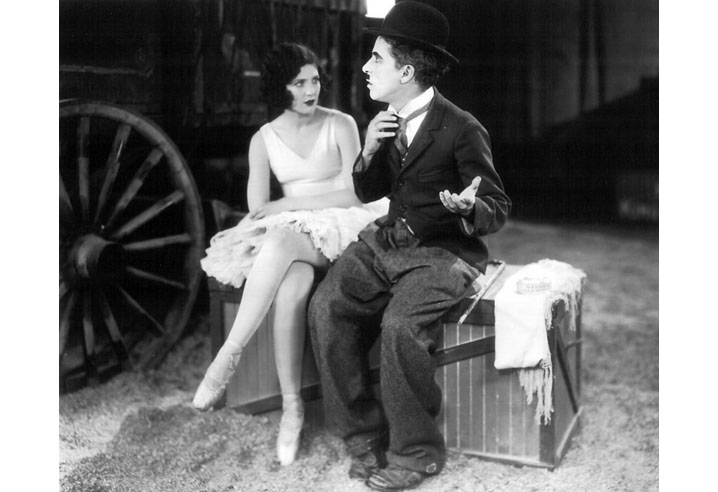
Chaplin means something different to everyone. To me he has somehow become part of my family history! From little William in that workhouse to seeing my very own godson fall in love with his films, I can honestly say Charlie never leaves me. Recently I was lucky enough to attend the Southbank showing of The Circus and as I sat in what really is Charlie’s London I felt very honoured and emotional. It was not just because it was a Chaplin film, but because my grandmother and I had watched this film many times when I was a child. I clearly remember her singing “swing little girl” to me on more than one occasion; I wish she had been able to sit in one of those deckchairs with me and enjoy it for herself.

Charlie Chaplin in The Circus (1928)

There has been so much written about Chaplin the film-maker, the genius of cinema. There has been even more on Chaplin the man. What has interested me throughout my time writing this blog is Charlie the Londoner. It is true that most of his london no longer exists, but his presence still lingers those streets, even if people do not realise it. Poverty is still a massive problem in inner-city areas around the world, and South London is no different. Chaplin saw all this. For him it was a different age, a different life, but not a different London. You can see this in every one of this films: Easy Street, The Kid, Modern Times and right up until Limelight, Chaplin never forgot his roots.

While writing this blog I have learned an awful lot about my own family history, and myself too. I have enjoyed many chats with my mother into the early hours that often resulted in tears of laughter. The stories of my great grandmother and her false teeth! My own Nanna listening to Chaplin’s 1943 address to his Lambeth, my own rainy saturday afternoons with One AM and Kid Auto Races. Every street corner we turned in our Chaplin journey I would hear something about my own roots: my great grandmother being in a workhouse, my Uncle Fred living just off Methley Street and my mother remembering the bustle of East Lane Market.

Continue reading Charlie’s London: a change of address

Win tickets for Aelita: Queen of Mars with Minima at Hackney Attic

Filmphonics presents Aelita: Queen of Mars

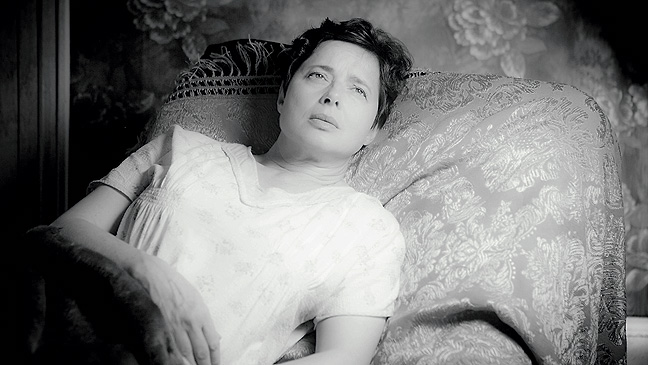
You like your silent film screenings with a touch of rock’n’roll? No problem. Filmphonics presents silent movies with live soundtracks in the quirky Hackney Attic venue at the top of the Hackney Picturehouse, and this month they’re showing an out-there Soviet sci-fi classic with a rock score.

Aelita: Queen of Mars (1924) is a futuristic fantasy, about a love affair between a Russian man and a member of Martian royalty. But there’s a twist, of course, and some outlandish headgear too. This is a unique and fascinating film, which you can read more about in this feature from The Quietus.

Aelita was an event. The novel, by Alexey Tolstoy, had been the first undisputed classic of Soviet science fiction. The release of the film was preceded by extensive ‘teaser’ campaigns in Pravda andKinogazeta (“What is the meaning of mysterious signals received by radio stations around the world? Find out on September 30!”). Alexander Exter, the film’s designer, was one of the few Russian futurists to have been on good terms with F.T. Marinetti and spent considerable time in Italy. She had taken part in the Salon des independents in Paris and socialised with Picasso and Braque. Special music had been commissioned to be performed by full orchestra in the cinema at screenings of the (silent) film. It was, perhaps, as film historian Ian Christie has argued “the key film of the New Economic Policy period.” Its release was so successful that many parents named their children ‘Aelita’ after the eponymous Martian princess. Years later, it would lend its name also to a Soviet-made analogue synth.

Minima’s score for the film is really excellent, making use of a cello as well as more traditional rock instruments to draw out the best of this wonderful film.

Aelita: Queen of Mars screens at Hackney Attic on Sunday 16 September at 7.30pm. Tickets start at £7 for members. Find out more here.
To win a pair of tickets to the Aelita: Queen of Mars screening simply email the answer to this simple question to silentlondontickets@gmail.com with Aelita in the subject header by noon on Wednesday 12 September 2012.

  • What is the name of the director of Aelita: Queen of Mars?

Good luck!

Silent films at the London film festival 2012

The Manxman (1928)
The Manxman (1928)

There are plenty of changes afoot at the BFI London film festival, with a new artistic director, more venues being used around the capital and a rejigged set of thematic categories across the programme. The Treasures strand has been beefed up, and that can only mean good news for silent film enthusiasts. So, without further preamble, here’s what you can look forward to this year:

The Manxman

This is the big one, the archive gala presentation. Hitchcock’s tragic coastal romance is one of his most beautiful films, and an accomplished, fascinating silent. Anny Ondra, Carl Brisson and Malcolm Keen take their places at the corners of an Isle of Man love triangle, and Hitchcock milks their doom-laden situation for every drop of suspense. This will of course be a presentation of the BFI’s new restoration of the film, and as he did last year with The First Born, Stephen Horne will be writing and performing a brand new score.

19 October, 8.30pm, Empire Leicester Square

Blancanieves (2012)

Rather dishearteningly described as ‘Tim Burton meets The Artist’, Pablo Berger’s modern silent plays three times during the festival, in the Cult strand. It’s a Gothic adaptation of Snow White, set in the world of bullfighting in 1920s Spain and it looks very intriguing. You can read more here and we’ll have a better idea what to expect when the reviews come in from its screenings at the San Sebastian and Toronto festivals later this month.

12 October, 6.30pm, Ritzy

15 October, 9pm, Renoir

18 October, 2pm, ICA

Continue reading Silent films at the London film festival 2012

Japanese silent films at the Cinema Museum, Zipangu Fest, 15 September 2012

Crossways (Jujiro, 1928)

This is a guest post for Silent London by Jasper Sharp – scroll down for a chance to win tickets to these events.

Taking place at the Cinema Museum between 14-16 September, the UK’s premiere celebration of cutting-edge Japanese film, Zipangu Fest, returns for its third year, with a number of choice items of interest to silent film fans.

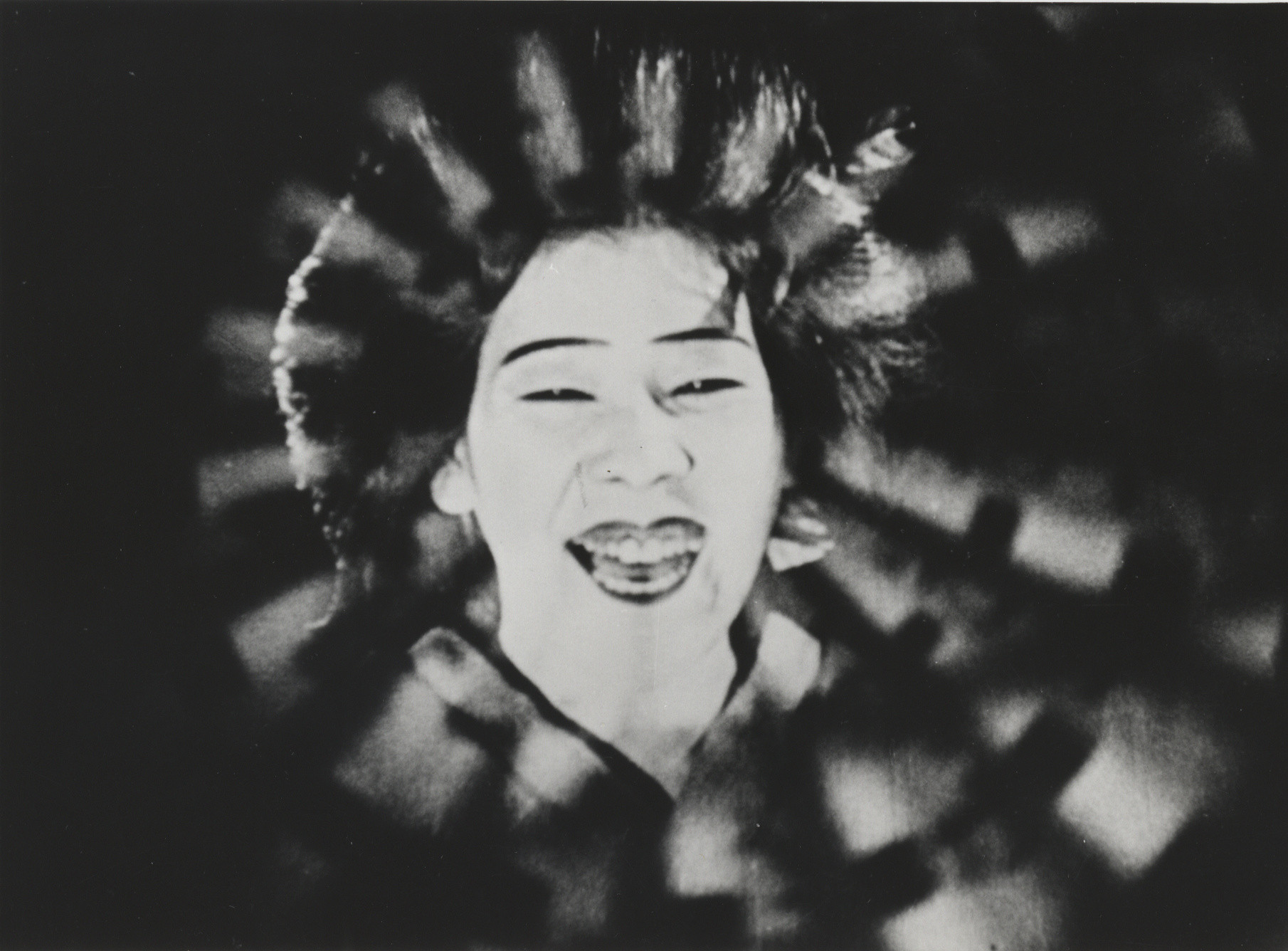
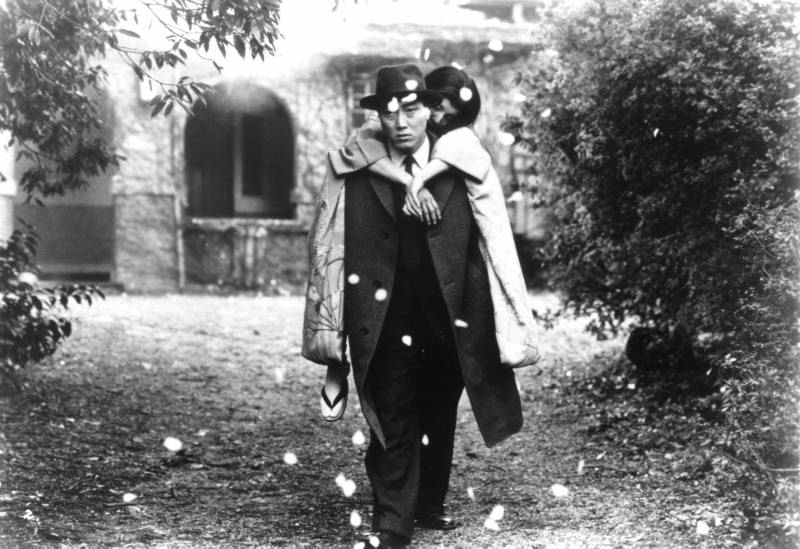
The centrepiece is the screening on Saturday evening of Kinugasa Teinosuke’s classic of the avant-garde, Crossways (Jujiro, 1928) from 35mm, with a new score performed live by Minima. One of the first Japanese films ever shown in the West, Crossways was Kinugasa’s follow up to his better-known Page of Madness (Kurutta ippeiji, 1926). Set in Tokyo’s Yoshiwara pleasure district, Crossways was described by its director as a “chambara [samurai action film] without swordfights” and was heavily influenced by German Expressionism.

This screening will be introduced by a visual presentation on the history of the film by Zipangu Fest director and author of the recent Historical Dictionary of Japan Cinema, Jasper Sharp. The evening kicks off at 7.30pm, and tickets are available from the Zipangu Fest website.

To Sleep So as to Dream (Yume miru you ni nemuritai)

Crossways will be preceded by another very rare screening for those with an interest in Japan’s early cinema, To Sleep So as to Dream (Yume miru you ni nemuritai), the 1986 debut from Kaizô Hayashi (Circus Boys, Zipang, and the ‘Yokohama Mike’ trilogy).

Two private detectives hunt for an actress trapped within a frame of an ancient ninja film in this magical double-handed homage to the movie worlds of the 1910s and 1950s. Predating Michel Hazanavicius’ recent faux-silent work The Artist by 25 years, To Sleep So as to Dream is chockfull of references to Japan’s rich cinematic heritage, featuring cameos from a host of veteran talent including the benshi (silent film narrators) Shunsui Matsui and Midori Sawato, and the baroque sets of Takeo Kimura, the Nikkatsu art designer fondly remembered for his flamboyant work with Seijun Suzuki in the 1960s. Playing for the most part without dialogue, it toys with the conventions of both the silent film and hardboiled detective genres, leading the viewer through a maze of colourful locales such as a carnival fairground and a deserted film set.

The essence of celluloid – Spirit Made Flesh

Both of these titles will be screened from film. Indeed, cinema purists might want to also note Zipangu Fest’s Sunday afternoon session, beginning at 4.30pm, Spirit Made Flesh: Works from 3 Experimental Filmmakers, featuring work by Shinkan Tamaki, Momoko Seto and Takashi Makino, all of which interrogate and explore the very essence of celluloid and analogue technologies. The screenings will be followed by a panel discussion “Is There Still a Need for Film in a Digitising World?” in what promises to be a lively and fascinating event.

Competition

Zipangu Fest is generously offering a pair of tickets to all three of these events. All you have to do is sign up to our mailing list, and tell us which of the films in our 2012 lineup interests you. On submission you will be signed up to our responsibly-managed mailing list, and three names will be selected at random for a prize. The first gets a pair of tickets to the Crossways event, the second to To Sleep so as To Dream, and the third to Spirit Made FleshClick here to enter.

Zipangu Fest was established in 2010 to shatter existing preconceptions about what ‘Japanese cinema’ is, and to celebrate one of the most vibrant and dynamic moving image cultures anywhere in the world. The third Zipangu Fest, hosted by the Cinema Museum in Kennington from 14-16 September, looks set to be our most ambitious and exciting yet.

Website: zipangufest.com
Facebook.com/zipangufest
Twitter: @zipangufest

Jasper Sharp is a writer and film curator.

Charlie’s London: Sydney Chaplin

Sydney Chaplin
Sydney Chaplin

This is a guest post by Ayşe Behçet for Silent London.

Today I am going to look at the importance of another figure in Charlie’s life, his brother Sydney, whom I feel should never be overlooked.

Until the groundbreaking biography by Dr Lisa K Stein (Syd Chaplin: a biography), Sydney’s story was only really told as a piece of the Charlie Chaplin jigsaw puzzle. She has completely changed this, showing Sydney as an individual who helped to create his brother’s career. Stein’s book allows us to see Sydney like never before. Her work is a testament to the extensive resources in the Chaplin archives in Bologna, as well as her own personal collection and enthusiasm for her subject. For me, it shows that the information is all very much still there for us to all see, it’s just a question of knowing where to look, having the guts to challenge what is already known, interpret it differently and give a new dimension to further Chaplin research.

Four years older than his famous brother, Sydney would look out for his younger brother for the rest of his life. Born in 16 March 1885 to the 19-year-old Hannah Hill, and originally known as Sidney John Hill, Syd become a Chaplin when he was a few months old upon the marriage between his mother and Charlie’s father. The bond these brothers or the rest of their lives was a powerful one. Their shared time in south London workhouses and poorhouses, while their mother suffered with mental illness, required great courage. These events would later shape the brothers’ outlook on their art and their lives – although in different ways. Sydney Chaplin junior, Charlie’s son by his second wife Lita Grey, would reportedly later joke that his father’s choice of name for him was very apt. Whereas Charlie lived and breathed his work until its completion, Sydney senior would adopt a much more laidback approach and enjoy the fruits of his labour. In my humble opinion, Sydney felt he worked hard so he could play hard, Charlie however felt he had to hold on to his tragedy, because it helped mould his comedy.

Continue reading Charlie’s London: Sydney Chaplin

Win tickets to watch the greatest silent films of all time at BFI Southbank

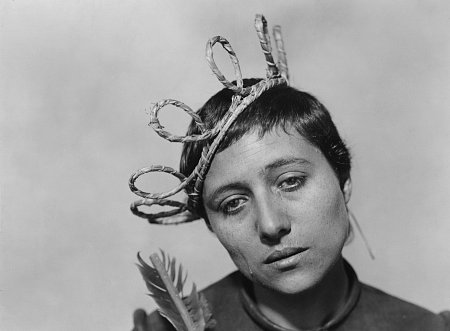
Sunrise: A Song of Two Humans, The Passion of Joan of Arc and Man With a Movie Camera

Sight & Sound’s decennial poll of the Greatest Films of All Time attracted a lot of attention earlier this summer, when the critics toppled Citizen Kane off the number one spot, using Vertigo as a battering ram. Of far more interest to us was the fact that three, yes, three silents made their way into the top 10, with Battleship Potemkin skulking just outside.

This is great news for silent fans in that airy-fairy way that we like to see our best-loved titles acknowledged – and these three films are undoubtedly classics. They are my favourite, Murnau’s sublime Sunrise: A Song of Two Humans, Dreyer’s unforgettably cathartic The Passion of Joan of Arc and Vertov’s exhilarating experiment Man With A Movie Camera. There is a more substantial reason to get excited though: all the films in the Sight & Sound top 10 will be shown at the BFI Southbank in September – and you’ll find these silents already on the calendar.

The news gets better. You can win a pair of tickets to any of these screenings and all you have to do is tell me how much you want to go. Complete one of these sentences in 15 words or fewer to win a pair of tickets to the screening of your choice – as well as a pair of tickets to the Call it a Classic? panel discussion at the beginning of the month. I’ll pick the best sentences with an independent judge and our decision will be final. So make your answer as wise, witty or profound as possible!

  • I want to see Sunrise: A Song of Two Humans because …
  • I want to see Man With a Movie Camera because …
  • I want to see The Passion of Joan of Arc because …

Email your answers to silentlondontickets@gmail.com with the name of your chosen film in the subject header by noon on Sunday 2 September 2012. For your information, the Passion and Movie Camera screenings will have live musical accompaniment. The Sunrise screening will have a musical score but not live music.

Orochi (1925) with benshi narration at Ciné Iluminé, 2 September 2012

Orochi (1925)
Orochi (1925)

The next screening from the silent film club at central London burlesque bar Volupté Lounge is not to be missed. This is not just because the film in question, a Japanese samurai adventure from 1925, is little seen, but because the method of presentation is a rare pleasure too. Orochi will be screened with live musical accompaniment in the form of a tsugaru-shamisen (a traditional Japanese stringed instrument) played by Hibiki Khikawa – and with benshi narration.

Benshi consists of a narration, lines of dialogue and an introduction to the film, delivered at the side of the screen. The benshi for this screening at the Ciné Illuminé will be delivered by actress Kyoko Morita. While early films were regularly screened with narration all over the world, benshi is a little bit special and is more or less unique to Japanese cinema: it’s a full performance and designed into the structure of the film,  to enhance as well as explain, and it derives from kabuki theatre traditions. It is in part due to the popularity of benshi narrators, some of whom became very famous, that silent cinema lasted well into the 1930s in Japan, providing space for directors such as Ozu, Naruse and Mizoguchi to make so many silent masterpieces.

Orochi (The Serpent) is a film that colours its tragedy with a political subtext and it was very controversial when it was first released. Director Buntarō Futagawa was known for his innovations, but only two of his films, this one and a short, survive to this day. Orochi is about a samurai railing against an unjust world, who is played by the silent film star Tsumasaburō Bandō. The swordfighting scenes play to the star’s natural abilities: they’re fast, frenzied and a step-change from the more sedate kabuki-influenced Japanese cinema of the time. However, it’s the message rather than the mayhem, that resonates here.
The story revolves around the protagonist, Heizaburo Kuritomi, an honorable but low-class samurai who is given an emotional depth, previously unseen in Jidaigeki films, as he battles with inner conflict and the injustices of society. This is especially evident in the closing sequence of the film where the protagnoist is dragged away by his enemies after his tremendous effort to protect his love. In the essay, “Bantsuma’s ‘New Breeze'”, Midori Sawato cites the ending of Orochi as one of the most ‘heroic and heartcrushing’ images she has seen. In the past, the heroes of the films were proud samurai of the upper classes who always triumphed over their evil opponents, upholding what was truly right in the world. However, Orochi was created in response to the national and military fanaticism that was prevailing at the time.

With its now famous opening lines:

‘Not all those who wear the name of villain, are truly evil men. Not all those who are respected as noble men, are worthy of the name. Many are those who wear a false mask of benevolence to hide their treachery and the wickedness of their true selves,’

the film evoked provocative ideologies and rebellious ideas during a time where liberal performers and writers were being repressed throughout Japan. Consequently, the film was severely censored with over 20% of its content being completely cut out and several scenes having to be re-shot. When the film was finally released, the hype around its creation resulted in crowds flocking to theaters all around the country. Bantsuma’s exhilarating new sword fighting style he displayed in the film may have attracted audiences but it cannot be denied that there were many who were also deeply touched by the profound message of the film.

Doors are at 5pm for a screening at 6.30pm. Tickets are £7 in advance or £9 on the door. You’ll find the Volupté Lounge at 9 Norwich Street, EC4A 1EJ. Call 0207 831 1622 or email reservations@volupte-lounge.com to book tickets. Don’t forget to check out the Facebook page or the Twitter feed for future screenings.

Charlie’s London: Chaplin’s women – part two

Charlie Chaplin and Edna Purviance

This is a guest post by Ayşe Behçet for Silent London.

Hi everyone. Welcome back to another edition of Charlie’s London.

As promised I will be looking at two more women who I believe shaped his life, both on screen and off. Last time I looked at Chaplin’s mother and Mabel Normand, this week I will look at Edna Purviance and Oona O’Neill. I have to confess, Normand never used to be a favourite of mine, even though I consider her contribution to be important and often overlooked. Now, I have to say, I’m really in her corner. People have often said that Chaplin and Normand hated each other. People have also often said Chaplin and Mary Pickford hated each other too, for me, these relationships are one and the same. Their relationships were creative ones: if they clashed, let’s call it artistic differences.

Normand not only directed Chaplin but also acted as his leading lady too: a role taken most often by Edna Purviance, who appeared in 33 of his pictures including extra parts in Monsieur Verdoux and Limelight. Purviance was first cast opposite Chaplin in 1915 after a chance meeting with one of his associates in a Tate’s Cafe in San Francisco – the director was looking for a new female lead for his Essanay comedy A Night Out. Even after her final film with Chaplin, A Woman Of Paris in 1923, Purviance stayed on the company payroll right up to her death in 1958.

Chaplin and Purviance were romantically linked for many years, and unfortunately this is how some film enthusiasts and historians seem to want to remember her. I completely disagree with this. Chaplin would never have another leading lady like Purviance – Paulette Goddard comes close, but they don’t have the same bond on screen.

Continue reading Charlie’s London: Chaplin’s women – part two

Silent films at the West London Trades Union Club, 2012 season

Hindle Wakes (1927)
Hindle Wakes (1927)

The West London Trades Union Club in Acton, London W3 is a welcoming place for those who enjoy a well-kept ale and a natter, and a haven for left-leaning cinephiles too. The venue’s Saturday afternoon film club is friendly, and pleasingly broad-minded: recent seasons have taken a look at the work of film-makers ranging from Joseph Losey to Paul Robeson as well as giving club members the chance to show their own favourite titles, week by week.

Last year I spent four hugely enjoyable, chatty Saturday afternoons in west London showing silent films chosen in collaboration with members of the club. The discussions afterwards were well-informed, not to say boisterous, and one topic we often returned to was: what are you going to show next year?

So, the silent film club is back, with some much-longed for comedy, another British film, some Weimar glamour and French impressionism. Here’s what’s coming up this autumn in Acton:

Buster Keaton in The General (1926)

Comedy double-bill: The General (1926) and The Circus (1928)

Two classic films from the two titans of silent comedy: Buster Keaton’s ingenious civil-war chase film The General and Chaplin’s poignant, hilarious The Circus. These two films offer an opportunity to marvel at the best of silent comedy, but also to compare and contrast the different styles of these two great film-makers. Buster Keaton’s deadpan mechanical inventiveness versus Chaplin’s sentimental appeal and graceful physicality – you decide.
8 September 2012, 4pm

Hindle Wakes (1927)

This adaptation of the much-loved northern melodrama was filmed by Maurice Elvey, a giant of British silent cinema, now sadly all but forgotten. Elvey was a trade unionist himself, and Hindle Wakes is the story of a clandestine romance between a factory worker and an industrialist’s son. It’s gorgeously filmed, with some fantastic “Wakes Week” sequences shot in Blackpool – and the heroine, played by Estelle Brody, is a refreshingly modern woman. Not to be missed.
20 October 2012, 4pm

Louise Brooks Pandora's Box (1929)
Louise Brooks in Pandora’s Box (1929)

Pandora’s Box (1929)

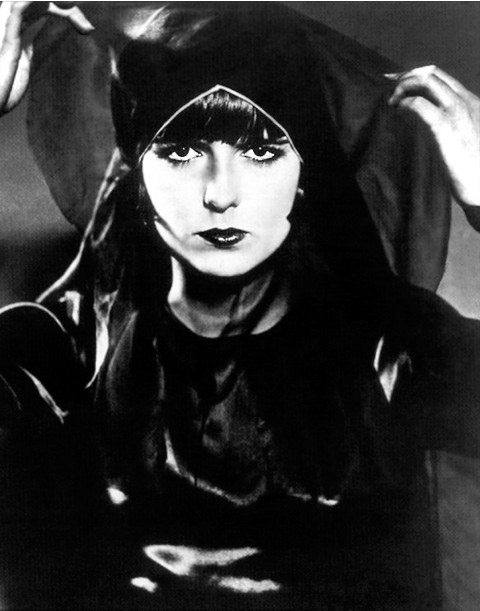
Another modern woman, and one of the most famous films of the silent era. Louise Brooks is truly iconic as the liberated, amoral Lulu breaking hearts in swinging Weimar Germany. Erotic, witty and ultimately tragic, Pandora’s Box is a classic that rewards repeated viewing and while coolly received at the time, has subsequently made an international star or its reckless leading lady – it now stands as the definitive portrait of a decadent society.
10 November 2012, 4pm

L’Argent (1928)

When Marcel Herbier announced his intention to adapt Zola’s L’Argent but to place it in the contemporary setting of the 1920s Paris stockmarket, many were horrified that he would take an acclaimed historical novel about ruthlessly greedy, over-reaching bankers out of its context. But Herbier’s passion, “to film at any cost, even (what a paradox) at great cost, a fierce denunciation of money”, proved as pertinent in pre-crash Europe as it does now, in the fallout of the global financial crisis. L’Argent is not just social commentary, it’s an ambitiously innovative film, a masterpiece of poetic impressionism.
15 December 2012, 4pm

Charlie Chaplin in The Circus (1928)

You don’t have to be a member of the club, or even of a trade union, to turn up and receive a warm welcome – and you will find the venue at 33 Acton High Street, London W3 6ND. It’s about five minutes walk from Acton Central train station, and on plenty of bus routes.

Win tickets to the premiere of Guy Maddin’s Keyhole at the BFI

UPDATE: Unfortunately I have just learned that Guy Maddin will no longer be able to attend the Keyhole premiere. The competition is still running, however.

No film director in the world takes more inspiration from early and silent cinema than Guy Maddin does. From his silent short The Heart of the World, to the dreamy textures of his features, such as The Saddest Music in the World and Brand Upon the Brain!, through to his hugely ambitious “lost films” project Spiritismes, Maddin has demonstrated a career-long passion for early cinema. His newest film Keyhole is also heavily influenced by classic Hollywood. AO Scott in the New York Times described it as “a dusty attic full of battered, evocative cultural references … a perfect gateway into the bizarre and fertile world of a unique film artist.”

Canadian director Guy Maddin (My Winnipeg, The Saddest Music in the World) is renowned for his exploration of surreal worlds and ghosts, which most recently has manifested itself in his ongoing Spiritismes project, launched at the Pompidou this March. His latest feature Keyhole, featuring deliciously unhinged performances from Isabella Rossellini, Jason Patric and Udo Kier, is a fabulous and bizarre personal-odyssey-cum-supernatural-thriller that exposes the hidden desires of the Pick family, their phantoms and the gang of thugs who inhabit the shadows of their crumbling home.

Isabella Rossellini in Guy Maddin's Keyhole
Isabella Rossellini in Guy Maddin’s Keyhole

Keyhole will premiere at the BFI Southbank on Monday 13th August, at a special screening that will be followed by a Q&A with the director in which he will talk not just about the new film, but about his latest silent project – one that is of particular interest to readers of Silent London.

Guy Maddin’s current project Spiritismes is a unique, live production/online project that brings back to life ‘unrealised, half-finished, lost or abandoned films’ by the great masters of the cinema: Cocteau, Vigo, Murnau … BFI’s special UK Premiere Fundraiser of Keyhole is being presented, courtesy of Soda Pictures, to enable Guy Maddin to ‘channel’ Hitchcock’s lost film The Mountain Eagle. All proceeds from the screening will be donated to the production and Maddin will be in attendance to talk about Keyhole, Hitchcock and Spiritismes.

So, buy a ticket for Monday’s event and you will be helping this acclaimed and distinctive director to recreate the lost Hitchcock film The Mountain Eagle.

To win a pair of tickets to the premiere of Keyhole at BFI Southbank, simply email the answer to this simple question to silentlondontickets@gmail.com with Keyhole in the subject header by noon on Friday 10 August 2012.

  • Name Guy Maddin’s hometown in Canada, referred to in the title of one of his most famous films.

Good luck!

Sight & Sound’s Greatest Films of All Time Poll – a silent resurgence

Sunrise (1927)
Sunrise (1927)

In 1952, Sight & Sound‘s critics picked seven silent films in their top 10 great Films Film of All Time selection. Today, they chose just three, but that’s one more than in 2002, 1992 and 1982. They’re much-loved films too: Sunrise: A Song of Two Humans, The Man With a Movie Camera and Dreyer’s towering The Passion of Joan of Arc. I am surprised that Battleship Potemkin fell out of the top 10, and would have expected The General or Greed, say, to nudge ahead of Movie Camera, but that’s a good, interesting spread of late silent cinema.

The Passion of Joan of Arc (1928)

When we see the top 100, I expect to see more silents overall – revivals and restorations of Metropolis, Napoléon and a general greater awareness and love for early cinema should see to that. And I would love to see some earlier films. I know I voted for one. But then, one more vote would have kept Potemkin in the top 10, and I didn’t nominate it, so perhaps I should keep quiet about my list…  The full poll details will shortly be online, so we can look forward  to lots more number-crunching. I can tell you that the top 10 silents voted for overall were: Sunrise, Man With a Movie Camera, The Passion of Joan of Arc, Battleship Potemkin, The General, Metropolis, City Lights, Sherlock Jr, Greed, Un Chien Andalou and Intolerance.

The Man with a Movie Camera (1929)

Yes, some people will tell you that the lead story here is the toppling of Citizen Kane by Hitchcock’s Vertigo – or the fact that there is nothing here more recent than Kubrick’s 2001: A Space Odyssey. That’s probably true, and you can read more about the list here, from the very wise Tim Robey. In fact, here’s the top 10 in full. What do you think?

  1. Vertigo (Hitchcock, 1958)
  2. Citizen Kane (Welles, 1941)
  3. Tokyo Story (Ozu, 1953)
  4. La Règle du jeu (Renoir, 1939)
  5. Sunrise: a Song for Two Humans (Murnau, 1927)
  6. 2001: A Space Odyssey (Kubrick, 1968)
  7. The Searchers (Ford, 1956)
  8. Man with a Movie Camera (Dziga Vertov, 1929)
  9. The Passion of Joan of Arc (Dreyer, 1927)
  10. 8 ½ (Fellini, 1963)

Win tickets to watch silent films at the BFI this summer

Don’t forget that the BFI’s Genius of Hitchcock retrospective begins in earnest this month. In fact, you can kick off the celebration with a Blackmail silent-and-sound double-bill tonight. For the other silents in the season, check the Silent London Calendar.

First off you won’t want to miss the theatrical release of The Lodger on 10 August – there’s a special screening at BFI Southbank featuring a Q&A with composer Nitin Sawhney too.

Next month, you’ll want to note some other Hitchcock dates in your diary to see the new restorations of his silent films. There’s a second chance to see The Pleasure Garden with Daniel Patrick Cohen’s marvellous score on 13 September. Downhill will screen with a live score from beatboxer Shlomo on 20 September and there’s a screening of Champagne with “boldly classical” music from Mira Calix on 27 September. There’s the restoration premiere of Easy Virtue on 28 September, too.

Plus, it has now been announced that The Manxman will be this year’s London film festival archive gala, screening at the Empire Leicester Square on 19 October with a new score from Stephen Horne. If you saw last year’s gala screening of The First Born, also with a score by Horne, you’ll know this isn’t be missed.

Back to August, the BFI is showing a fine roster of other silent films, including Greed, The Dumb Girl of Portici featuring Anna Pavlova, and Drifters, with a live score from sound artist Jason Singh. Search to find out more on the BFI website.

To win a pair of tickets to the any silent screening at the BFI this month, simply email the answer to this simple question to silentlondontickets@gmail.com with August in the subject header by noon on Friday 3 August 2012.

  • What is the name of Hitchcock’s lost silent feature film, starring Nita Naldi?

The Genius of Hitchcock season runs until October and showcases a complete retrospective of his films, from his early British silents, to his later Hollywood classics. Also included in the season is a dedicated microsite, The 39 Steps to Hitchcock, which is a step-by-step guide through one man’s genius, featuring exclusive film extracts, interviews with close collaborators (Kim Novak, Tippi Hedren and more) and a journey through his life and career through galleries curated by Hitchcock experts.

The Cabinet of Dr Caligari with Martyn Jacques: live review

Martyn Jacques and The Cabinet of Dr Caligari

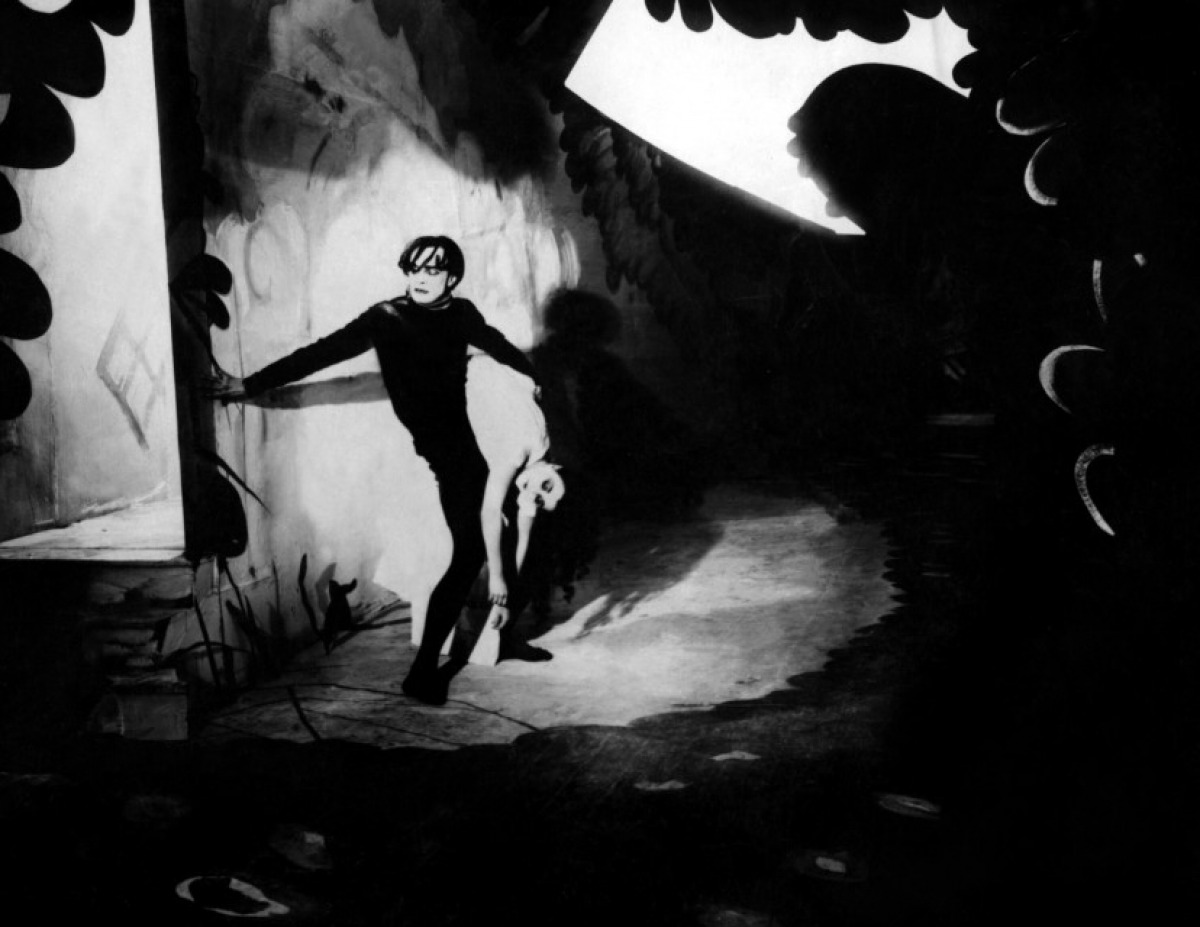
Familiarity with The Cabinet of Dr Caligari, the totem of German Expressionism, cannot dim its angular beauty, nor its power to baffle and tease. This luridly geometric film invites a wild accompaniment, one that will embrace its puzzles and schlocky plot twists, and so Caligari pops up time and again in repertory cinemas, with scores veering from rock to electronica to jazz and all points in between. Martyn Jacques of punk-cabaret adventurists The Tiger Lillies has answered the call, and his theatrical, seedy style couldn’t be more simpatico.

Jacques has set up a short residency in the West End’s Soho Theatre this summer, playing his Caligari score night after night in a basement cabaret bar that’s a few shades too salubrious for that sleazy Weimar vibe. The venue wins on atmosphere, then, but the downside of watching a film in a bar rather than a cinema becomes obvious the moment we clock that we’ll be a watching Caligari on DVD, projected a little wonkily at that.

The Cabinet of Dr Caligari (1920)

But we’re here for the Martyn Jacques show, and I’m happy to squint and imagine his folksy-sinister piano-accordion-vocal score accompanying the real deal. If Jacques’ music can shine tonight, it will worthy of a showing that will please the projection purists too. And Jacques’ music does shine. He says that he was inspired to write his score by his childhood piano teacher, who worked as a film accompanist in the silent era, and clearly he was an observant pupil. Jacques’ piano proves nicely responsive to the film, turning, pausing, and marching when the film does. His punchy accordion, too, can screech with the high-strung horror of it all, or rumble along as a creepy echo of the fairground’s barrel organ. The occasional foot stomp adds drama, and acknowledges the fact that this is a musical, hummable score – the audience are nodding their heads, tapping their toes, as we go.

What’s really distinctive about Jacques’s score, though, is his vocal, which can switch between a low grumble and a rising falsetto. It’s dramatic, percussive and at its best, when quietly threatening, a low non-verbal bass line for the piano melody. Mostly, though, Jacques is singing his own colourful lyrics: a musical narration for the film that goes out of its way to introduce the carnival’s bit-part characters and to explore the fears and motivations of the film’s leading players.

Those lyrics are the score’s fatal flaw: often what Jacques is singing differs from what’s on screen in some small but important detail. His lyrics can clash with the intertitles, making the viewing experience anything but immersive. At worst his words can pre-empt the next plot twist, which sadly dissolves the horror-movie tension. Occasionally, the lyrics and the film are in different worlds altogether. At these times, one suspects this score to be in reality a rehearsal for a project such as Jacques’s hit grotesque operetta Shockheaded Peter. I’m not sure that’s such a bad thing, a cabaret Caligari with puppets? I think it could be a another smash, in Jacques’ hands.

As I said earlier, this is Martyn Jacques’ show, and while his Chaplin-death-mask makeup and fruity lyrics may threaten to steal the limelight from the movie, his fluid score reveals a real sensitivity to the art of silent film accompaniment. Perhaps he has his eyes on other horizons, but I’d be more than happy to hear another silent score from such an exuberant talent.

The Cabinet of Dr Caligari screens at the Soho Theatre in London until 11 August 2012. To find out more and to buy tickets, visit the Soho Theatre website.

Charlie’s London: Chaplin’s women – part one

Charlie Chaplin and Paulette Goddard in Modern Times

This is a guest post by Ayşe Behçet for Silent London.

Welcome to another edition of Charlie’s  London! For this segment and the next I’m going to look at some of the women in Chaplin’s life, showing how influential, important and ultimately empowering some of these women’s roles really were.
A lot has been written about Chaplin’s private life; he was a dashing and charismatic individual whose appeal extended beyond stage and screen. Recently I was talking to a fellow Chaplin fan and friend in Bologna. We both agreed that there was something so beautiful about Charlie, it was no surprise that his private life become front-page news, whether the stories were true or not.  Putting the gossip aside, for me the women who shaped, moulded and even changed Chaplin were his mother Hannah, Mabel Normand, Edna Purviance and of course Oona O’Neill.

This subject will often be debated, with some enthusiasts and historians adding Hetty Kelly, Charlie’s first love, and even Paulette Goddard, his third wife and star of Modern Times and The Great Dictator, to that list. I hope with these two blogs I will explain why I have chosen this group. In this first instalment I will talk about Hannah Chaplin and Mabel Normand.

Hannah Chaplin
Hannah Chaplin

Hannah Hill, Chaplin’s mother, was arguably the most influential woman in his life. Her struggles in order to give Chaplin a decent upbringing, only to suffer such terrible mental health problems, no doubt haunted him for the rest of his days. I have spoken of Hannah before, and I am quite fond of her as a historical character, not only because she is the mother of my hero, but because I feel she is incredibly interesting. Historians have labelled Hannah as everything from a woman of ill repute to an undiscovered music hall genius whose renditions of the era’s classics would ignite her son’s thirst for the art.

The “fallen woman” analysis comes very much from psychologist Dr Stephen Weissman whose book Chaplin: A Life paints Hannah in a very unflattering light. His depiction of her affair with stage star Leo Dryden (the union that would produce Chaplin’s brother Wheeler) and his suggestion that syphilis was the cause of her madness (including references to her working as a prostitute) are seen as very controversial by other Chaplin enthusiasts and historians. David Robinson is quite rightly kinder to Hannah, noting the confirmed ancestral link to mental health dificulties within the Hill women as the roots of her tragic downfall, while also highlighting her faults such as her affair.

Continue reading Charlie’s London: Chaplin’s women – part one

The Great White Silence at the Exhibition Road Show, 28 July 2012

The Great White Silence (1924)

The Royal Borough of Kensington and Chelsea is contributing to Olympic mania by staging what it describes as “London’s most sophisticated street party”. It’s a festival really, featuring games, dance, science, debates, music, writers’ commissions and visual art installations, with a little nod to the Great Exhibition that took over Hyde Park in 1851. The Exhibition Road Show will take place on the street they’re calling “London‟s cultural and intellectual heartland”, just a short hop from the Olympic beach volleyball venue in Earl’s Court.

The Show runs from 28 July to 5 August, and on its opening night you can pop along to a free outdoor screening of Herbert Ponting’s elegant, unflinching Scott of the Antarctic documentary The Great White Silence – with its acclaimed live score by Simon Fisher Turner and his musicians.

Fisher Turner’s score for The Great White Silence premiered at the London Film Festival in 2010, and was described by The Guardian as “”skillfully judged, and the blend of real sounds – such as the gramophones that would have played on the ship, the Terra Nova, as well as a recording of the ship’s bell – and sparse musical scoring seemed to respect the idea of silence while making sound”.

The Great White Silence screens on the evening of Saturday 28 July 2012. For more details, see the Exhibition Road Show website.

A place for people who love silent film