Anson Dyer: Britain’s forgotten animation pioneer

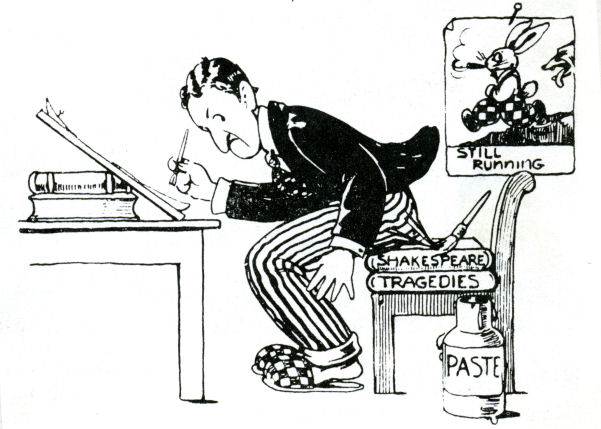
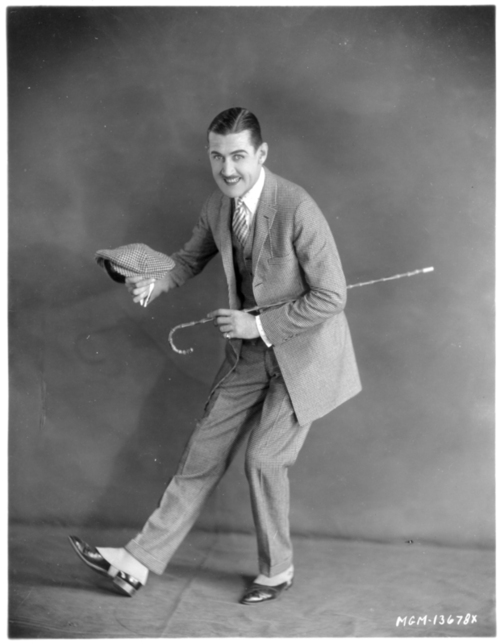
This caricature of Anson Dyer is probably a self-portrait (Source: ukanimation.blogspot.com)

This is a guest post for Silent London by Robyn Ludwig.

The animators whose films will be showcased at the British Animation Film Festival this Sunday owe a debt to Anson Dyer – though many may not even know it. 2012 marks the 50th anniversary of the death of Ernest John Anson Dyer (1876-1962), a masterful animator and pioneering director in the silent-era years of the British animation industry. Much less is known about Dyer and his early films, than of his peers in America and continental Europe. Yet film historian Geoff Brown notes: “For all the current lack of critical attention, Anson Dyer was a major figure in British animation for over 30 years, from the first world war to the aftermath of the second … [He] was promoted for a time as Britain’s equivalent of Walt Disney, with a prolific and popular output of children’s cartoons” (Brown, BFI Screenonline). Donald Crafton, in Before Mickey: The Animated Film (1898 – 1928), credits Dyer as helping British animators come “closer than anyone else in Europe to establishing a significant cartoon industry” (Crafton 252).

Dyer began his animation career in 1915, at the late age of 39, having spent 20 years as an ecclesiastical artist designing stained-glass church windows on commission. Yet most of his earliest films were secular in theme: propagandistic political satires in the “topical sketcher” tradition. When he joined Kine Komedy Kartoons in 1919, however, he began directing children’s material, including the Phillips Philm Phables series (also known as the Uncle Remus series). Later that same year, Dyer signed with Hepworth Picture Plays in Walton-on-Thames, and during this prolific period, he produced a number of Shakespearean parodies, and the family-friendly Kiddie-Graphs fairy tale series, including The Three Little Pigs (1922) and Little Red Riding Hood (1922).

Continue reading Anson Dyer: Britain’s forgotten animation pioneer

Sonic Cinema: Drifters (1929) with Jason Singh at the BFI

Drifters (1929)
Drifters (1929)

UPDATE:  This event has been rescheduled for 5 November 2012.

In November, the BFI will release a dual-format DVD/Blu-Ray edition of an intriguing double-bill: Sergei Eisenstein’s Battleship Potemkin (1925) and John Grierson’s Drifters (1929). It’s the second instalment of the BFI’s The Soviet Influence series, which has the stated aim of revealing the impact of 1920s Russian films on later British film-makers.

Drifters premiered at the Film Society on November 10, 1929, on the same bill as Battleship Potemkin, which was receiving its British premiere. Grierson had previously produced an English language version of Eisenstein’s film for its American screening and the influence of Eisenstein is clearly revealed in Drifters.

To tide us over until the home video release, we have a screening of Drifters, a film about herring fishing, and fishermen, directed by the father of the British documentary movement, John Grierson:

Like Potemkin, Drifters employs montage in an expressive manner, creating dramatic tension in the absence of any psychological characterisation. Both films also use ‘types’ (non-professional actors) instead of actors in order to create a more ‘authentic’ reality, and both films make use of extensive location shooting. Grierson, nevertheless, always stressed that he was keen to make a film with distinctively ‘British’ characteristics, which he saw as moderation and a sense of human importance. Drifters is, therefore, slower paced than Potemkin, and focuses on more mundane, less inherently dramatic events. (BFI Screenonline)

I am resisting making a “red herring” gag, but you should feel free to do so. This NFT1 screening of Drifters will be accompanied by a live score from Jason Singh, a recording of which will also be presented with the film on the disc. Singh is a “beatboxer, vocal sculptor and sound artist”, and his score combines both live and prerecorded vocals with all manner of processing and sampling. You can read more here, and watch a snippet of Singh in action below. I think you’ll agree it’s very atmospheric.


Anna Pavlova at the BFI: ballet and silent film

Dance and silent cinema have a natural affinity. Many of the earliest films were records of serpentine dances: mesmerising, rainbow-tinted swirls. And these days, when choreographer Matthew Bourne discusses his blockbuster productions with grand sets inspired by German Expressionism, he says: ”it’s almost like pure cinema. It’s like a silent film.”

It’s no surprise then that silent film-makers pointed their camera at the dance stage and the best ballerinas of the day. And the ballet world was fascinated by cinema too. This intriguing article by Henry K Miller relates the thwarted ambitions of Sergei Diaghilev, director of the Ballets Russes, to make a colour film of Tchaikovsky’s ballet The Sleeping Princess. A short season at the BFI this August celebrates one of the greatest ballerinas of all time, Anna Pavlova, who arranged for many of her dances to be filmed and appeared in a feature film too:

‘Next to seeing Pavlova in person, there is no better substitute than seeing her through the mechanism of the kinema.’ So noted a critic in The Guardian following the release of her American feature film, The Dumb Girl of Portici, in 1916. As a ballerina, Anna Pavlova (1881-1931) was as an inspiration; she was also an independent career woman and mega-star loved by the media and her audiences throughout the world. She was also the first major ballerina to truly investigate the medium of film during the 1910s and 1920s. Not only did she star in a Hollywood feature film, but also had a number of her solos filmed. At the end of her life, Pavlova travelled with two movie cameras to record her productions and travels. This season includes documentaries, recordings of dance and features indicating the range of ballets she performed and placing her screen career in context with contemporary recordings of dance.

The BFI will be showing that film, Lois Weber’s The Dumb Girl of Portici (1916), which features this beautiful sequence of Pavlova dancing with an “invisible” partner. The film will be screened with live piano accompaniment and an introduction by dance historian Jane Pritchard.

The Dumb Girl of Portici is an adaptation of the French opera of the same name. Watch out for the character Masaniello, who is played by Rupert Julian, the same man who directed The Phantom of the Opera in 1925, which opens with this gorgeous ballet scene:

You can see The Phantom of the Opera at the Volupté Lounge on 19 August with a live score by electronic duo Cipher.

In the BFI’s Pavlova season, there will also be a chance to see Evgeni Bauer’s The Dying Swan (1917), in which Vera Karalli, a Russian silent film actor and dancer with the Bolshoi ballet, performs the famous routine from Swan Lake. The film will be shown alongside an Omnibus documentary about Pavlova, and with a score by Joby Talbot.

Click here for more details of the BFI’s Anna Pavlova season.

Wonderful London: DVD review

Wonderful London
Wonderful London

This is a guest post for Silent London by Karolina Kendall-Bush

Sitting in the bowels of the BFI at Stephen Street watching the 20 or so Wonderful London travel films in silence, I often dreamed of the day when these mesmerising scenes of life in the 1920s might be restored and released on DVD with a score. Finally, ithat day has come. In autumn last year, those of us who could get tickets to a soldout performance at the BFI London film festival were lucky enough to see six of these films in all their glory, fully restored from the original coloured nitrate prints. Now the BFI has released those films, along with six “extras” (in good black-and-white prints) on DVD with music by John Sweeney and essays from Bryony Dixon, Iain Sinclair, Jude Rogers and Sukhdev Sandhu.

Wonderful London
Wonderful London

Although these films were simply shot commercial “fillers” to be shown before the main feature, they were remarkable in many ways. Most travel films of London in this period tended to flit between landmarks with a few explanatory intertiles. They were, dare I say it, ever-so-slightly dull.  Having devoted a lot of time to watching travelogues of London, I often groan as repeated shots of Buckingham Palace, Big Ben and Tower Bridge pass before my eyes. In this context, the Wonderful London films are quite treat. Paying as much attention to pet cemeteries and street performers as they do to London’s  best-known tourist destinations, they are, I think, antecedents to Norman Cohen’s The London Nobody Knows (1967) and even Patrick Keiller’s London (1994, below).

Each Wonderful London instalment goes on a thematic excursion. Barging through London charts the course of the Regent’s canal, Cosmopolitan London goes in search of the city’s diverse ethnic communities, London’s Sunday looks at what Londoners do on their day off, and so on. The conversational intertitles, which can veer between amusing and patronising, invite viewers to go on a journey through the city. In her essay, BFI silent film curator Bryony Dixon notes how these films exploited the popularity of St John Adcock’s 1922 magazine Wonderful London. In this publication, famous writers described various aspects of the capital for readers eager to discover London in all its complexity.

Continue reading Wonderful London: DVD review

Charlie’s London: from the archives to the airwaves

The Charlie Chaplin Archive, Bologna
Heaven for a Chaplin fan … the archive in Bologna

This is a guest post by Ayşe Behçet for Silent London.

Welcome back for another edition of Charlie’s London. This week I am going to be talking about my debut appearance on the Silent London Podcast, as well as my recent trip to the thoroughly mindblowing Il Cinema Ritrovato festival in Bologna, Italy

Being a Chaplin fan you are never short of on-screen comedy capers to keep you entertained, but when someone tells you you can visit the Charlie Chaplin Archive in Bologna, Italy should you be in the area, well you don’t really have to think twice. My partner Kieran and I took a 6am flight to Bologna so that I could visit the archive, but also so we could enjoy the Il Cinema Ritrovato festival too.

At the Cineteca in Bologna we registered for the archive and the festival. All around us everyone complained about the heat, but being half Turkish I didn’t really mind. No sooner had we sat down for a coffee, my phone began to ping, it was Jenny, a fellow festival-goer who had not only made the journey to Bologna but was also staying in the same hotel as us. Pretty soon we were all together, along with Mark, another friend and great supporter of Bristol Silents looking over the festival plan.

Ayse and Charlie
Ayse and Charlie

Initially I began to look over the schedule from Wednesday to Friday, because I was due to be in the archives Monday and Tuesday, but this turned out this was a pointless exercise. In the end, I was in the archive until Friday morning and in total saw only five films at the festival. The film that left the biggest impression on me was the new restoration of The Life and Death of Colonel Blimp. Mark had told me many times before that it was a film I would enjoy, not only because I have a soft spot for Technicolor but because I have spent a lot of time researching the first and second world wars. He wasn’t wrong! It was a feast of restored beauty,  history and irony.

My biggest adventure came on Monday when I finally got to visit the Chaplin archives. Everything has been digitised to make viewing incredibly easy. The staff are so helpful and friendly, even with the busy festival under way in the grounds. Before I knew it I was engrossed, flicking through pages and pages of useful and exciting documents all relevant to a massive piece of research I am undertaking. Kate Guyonvarch, Kevin Brownlow and of course David Robinson all were there to give me a helping hand: their support was priceless. Imagine, as I have done, having read someone’s work since you were 11 years old, only to find them standing behind you in an archive and clarifying a sentence in one of their books that you want to quote in your research! That what David Robinson did, and he refreshed my memory on something I had a mental block on. After many cups of lovely Italian coffee and long chats I had more than 40 pages to take back to England: the tip of the iceberg had been scratched.

Bologna is a long way from South London! Charlie’s London had very much gone continental. Here is where my biggest conundrum lay – you can’t just take a bus to these archives. I knew I had so much I wanted to look at, but I was meant to be at a film festival, what was a girl to do? Luckily enough I have a very supportive partner who smiled and told me to book more time in the archives. So, what started as two days ended up being the whole week, and it was worth it! I discovered so much more about my hero.

Continue reading Charlie’s London: from the archives to the airwaves

Giorgio Moroder presents Metropolis: DVD review

Moroder's Metropolis
Moroder’s Metropolis

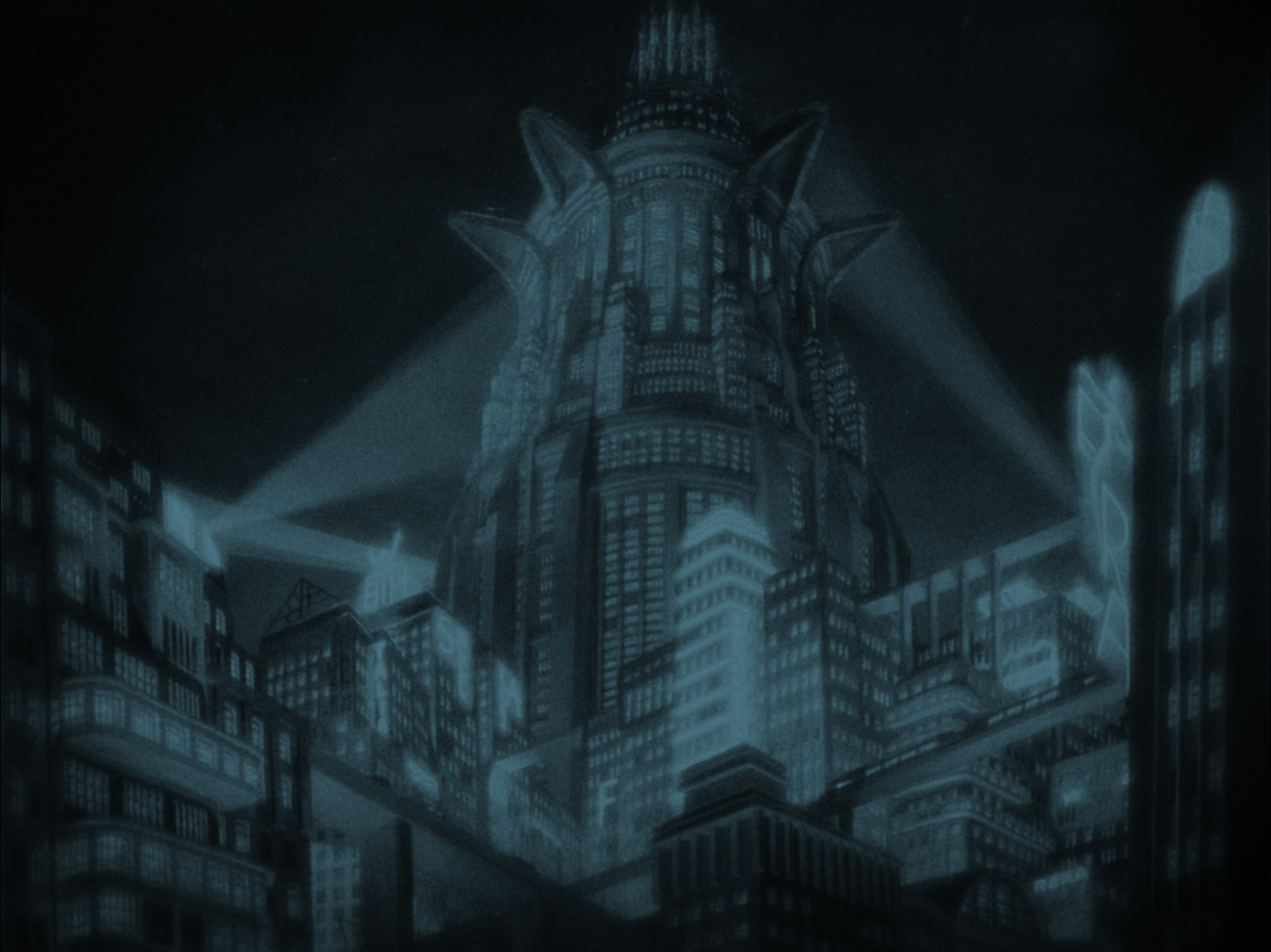
The mediator between the head and hands must be the heart, and so the popular affection for the 1984 revamp of Fritz Lang’s Metropolis has finally led to a 2012 DVD release. It’s 85 years since this film was made, but 28 years since it was made over by Giorgio Moroder – so will the original film or its renovations have dated more?

On the face of it, we really don’t need Moroder’s Metropolis on DVD. This may be the version that turned a generation of film fans into silent movie buffs, turning the fledgling early-80s silent film renaissance into a mainstream movie moment, but surely we’ve moved on since then? We’re still waiting for many silent classics to appear on DVD, but among those that are available there are some absolute beauties: masterpieces of restoration, with audio commentaries, informative notes and sensitive, sometimes even historically accurate, scores. In this country, many such DVDs and Blu-Rays have appeared on the Masters of Cinema imprint, part of the Eureka Entertainment group that has released Moroder’s Metropolis.

Moroder's Metropolis
Moroder’s Metropolis

Most salient of these releases is The Complete Metropolis, the almost-full restoration of Fritz Lang’s film: a product of skill, patience and the great fortune to find the missing footage in an archive in Buenos Aires. At a stroke, the movie was rehabilitated: no longer a grand mess, a gorgeous design pocked with plotholes. Simultaneously, Moroder’s idiosyncratic restoration was rendered obsolete.

But silent film fans don’t fear obsolescence. It’s our stock-in-trade. Nor are we averse to the first faltering steps towards new technologies. We embrace part-talkies, Pathécolor, Polyvision and undercranking. Moroder’s Metropolis should be viewed in this spirit. Would we restore a film this way again? No, but what will they think of our “state-of-the-art” digital restorations in 2040? Very little, perhaps, particularly if those digital copies become obsolete themselves, incompatible with new projection technology.

Continue reading Giorgio Moroder presents Metropolis: DVD review

An introduction to silent Hitchcock: Blackmail

Anny Ondra in Blackmail (1929)

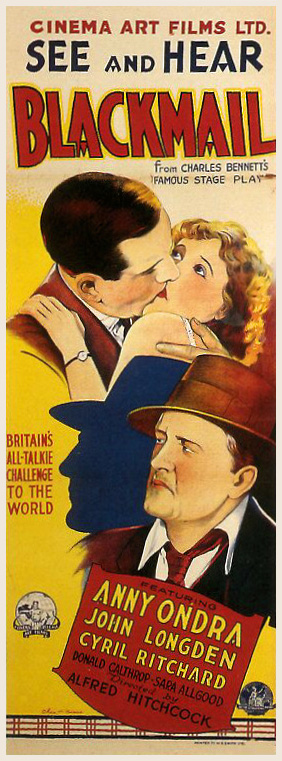
Blackmail, perhaps the greatest British silent film, was the work of a young director firing on all cylinders. As well as this masterful silent movie, Hitchcock made an acclaimed and pioneering talkie version, Britain’s first. It’s the silent Blackmail that concerns us, though, and it’s a fitting finale to Hitch’s silent years.

Blackmail (1929)
Blackmail (1929)

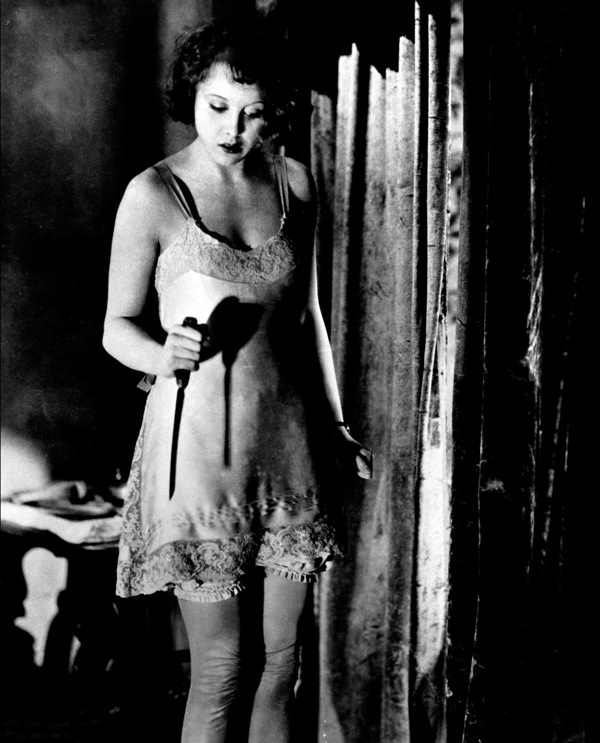
Anny Ondra is back, as Alice White, a young woman who rows with her dull policeman boyfriend in a Lyon’s Cornerhouse and wanders off with a dashing artist instead. When the dauber tries to take advantage of her in his studio, Alice defends herself, lethally, with a breadknife …

Here, as in The Lodger, Hitchcock’s London is superbly seedy. The opening scene of Blackmail shows the arrest of a shifty crim, holed up in bed in a tenement flat, and from the gossip who torments our heroine in her parents’s shop, to the blackmailer himself, everyone in the city seems to take an unnaturally keen interest in murder.

The way that Blackmail muddies a police procedural thriller with sex, moral compromise and guilt (and splashes of earthy humour) is a classic Hitchcock manoeuvre. Alfred was definitely hitting his stride here. However, one reason that Blackmail feels so much like the Hitchcock thrillers we know and love is that Charles Bennett, who wrote the play it is based on, went on to collaborate with Hitchcock on films from The 39 Steps to The Man Who Knew Too Much. Together, they created much that we think of as classic Hitchcock.

The question is, with a celebrated sound version available, why bother with the silent Blackmail? Of course, you don’t need to choose – they both have moments to recommend them. The finale at the British Museum (future shades of North by Northwest) is one of those great Hitchcock sequences that was conceived, and succeeds, visually. Sound adds nothing. Elsewhere, Hitchcock uses the freedom of a microphone-free set to set up some more experimental camera shots, where the sound film is a little more constrained. You won’t want to miss the famous “knife” sequence in the talkie Blackmail, but the silent version is unsettlingly creepy in its own way. I’d also like to champion Anny Ondra’s silent performance here – Joan Barry’s dubbed RP accent is just bizarre.

Synopsis: 

Grocer’s daughter Alice White kills a man in self-defence when he tries to sexually assault her. Her policeman boyfriend covers up for her, but she has been spotted leaving the scene by a petty criminal who tries to blackmail her.  (BFI Screenonline)

Hitchcock moment: Here’s the pivotal, and supremely Hitchcockian, murder scene. With Neil Brand’s score to boot.

Watch out for: That gruesome painting of a jester.

Links worth clicking:

Blackmail (both versions) screens this summer as part of the BFI’s Genius of Hitchcock season. More information here. There’s also a gala performance featuring Neil Brand’s live score at the British Museum on 6 July.

The Silent London podcast: comedy special

Charley Chase
Charley Chase … nice trews

Another podcast, and this time it’s all about the laughs in our comedy special. I’m joined in the studio by Phil Concannon of Philonfilm.net, Ayse Behçet, who writes the Charlie’s London series for Silent London, and podcast expert Pete Baran. Plus Chris Edwards of the wonderful Silent Volume blog also contributes a few well-chosen words on his favourite silent film: Exit Smiling, starring Beatrice Lillie.

We’ll be talking about our favourite silent comedies, and yours, and perhaps touching on a few films and film-makers you won’t expect. Plus we’ll be reviewing some recent silent film screenings, Ayse will be reporting back from the Cinema Ritrovato festival in Bologna and we’ll be taking a look at the calendar too.

There’s also a lot of business about trousers. And possibly the odd 90-year-old spoiler.

The Silent London podcast: comedy special

The Silent London Podcast is also on iTunes. Click here for more details.  The music is by kind permission of Neil Brand, and the podcast is presented in association with SOAS radio.

If you want to get in touch with us about anything you hear on the podcast, email silentlondonpodcast@gmail.com, tweet @silent_london or leave a message on the Facebook page: facebook.com/silentlondon.

An introduction to silent Hitchcock: The Manxman

The Manxman (1929)
The Manxman (1929)

Often referred to as Hitchcock’s final silent, because Blackmail was also shot as a sound film, The Manxman seems to be growing steadily in popularity, and with good reason. It’s a romance, yes, another Stannard adaptation of a hit novel by Hall Caine in fact, and I’m far fonder of it than Hitchcock professed himself to be.  “It was a very banal picture,” he told Truffaut. “It was not a Hitchcock movie.”

Well, that’s his opinion. The Manxman lays out a love triangle, with Anny Ondra (Kate), Carl Brisson (Pete) and Malcolm Keen (Philip) at each corner. Poor Brisson gets the fuzzy end of the lollipop again, when his best friend takes care of his girl while he is away at sea. The setting is a fishing village on the Isle of Man. Pete is a fisherman, but Philip, who wants to become a judge like his father and his father’s father, may have more to lose by the liaison than his friend does.

Anny Ondra in The Manxman (1929)

Anny Ondra is fantastic here: mesmerising and sensual. One moment a flirtatious femme fatale; the next a confused young woman. It’s a wonderful rehearsal for the performance she gives in Hitchcock’s next film, Blackmail. She’s gorgeous too, but perhaps not as gorgeous as the stunning coastal scenery. The landscape towers over, and frames the lovers, as if to say they’re trapped by their destiny, and by the place they come from, both. It’s not really the Isle of Man, by the way, but Cornwall.

While this isn’t Hitchcock’s final silent film, it’s worth taking a moment to enjoy, and appreciate his virtuoso work here. The Manxman remains a testament to Hitchcock’s achievements in silent film-making, and it’s no wonder that decades later he would still refer disdainfully to “photographs of people talking”.

Synopsis: 

In a small Isle of Man fishing community, two men, friends since childhood, find themselves in love with the same woman. Rejected by the girl’s father, Pete leaves to find his fortune in Africa, and Philip sees his chance with Kate.  (BFI Screenonline)

Hitchcock moment: Sometimes good news feels like bad news, especially when there’s a dark blot on the horizon.

Watch out for: Windows. And how much they can hide.

Links worth clicking:

The Manxman screens this summer as part of the BFI’s Genius of Hitchcock season. More information here.

UPDATE: The Manxman: London film festival review

The Cabinet of Dr Caligari with Martyn Jacques at the Soho Theatre, July & August 2012

Martyn Jacques and his accordion

Well I do enjoy posting news of silent film screenings, but 12 in a row takes some beating. Martyn Jacques, of punk-cabaret band The Tiger Lillies, will perform his own score to expressionist classic The Cabinet of Dr Caligari at the Soho Theatre this summer four days a week, three weeks on the trot. Jacques is known for his eccentric performances and his powerful falsetto voice – he will accompany himself and the film on piano and accordion.

It’s very lazy blogging to copy and paste Wikipedia. However, this is really all the introduction to Mr Jacques you’ll need I feel:

Martyn Jacques spent 7 years living above a brothel in Soho while training his characteristic falsetto voice. In his Tiger Lillies appearances, Jacques commonly sings about “sexual perversions, seedy underbellies, the gruesome, macabre and visceral”. Jacques has been described as enjoying when audience members walk out of his shows, noting “It’s always funny when people are offended by what I do … after all, I’m just an entertainer.”

The Cabinet of Dr Caligari (1920)

So this is clearly not going to be your common-or-garden silent film screening. However, Jacques is a devotee of silent cinema and this is a very personal project for him:

‘When I was fourteen my childhood desire to play the piano was finally satisfied. My first teacher was Florence De Jong. This was forty years ago and Florence was a very old lady. She had been a famous theatre organist accompanying silent films. She was so good she made gramophone recordings. I’ve always remembered her and this is my tribute to her and the profession. Silent films were for me the golden age of film. They had a magic and enigma you don’t get with talkies. Dr Calagari is a fine example. A freak show in the fairground…
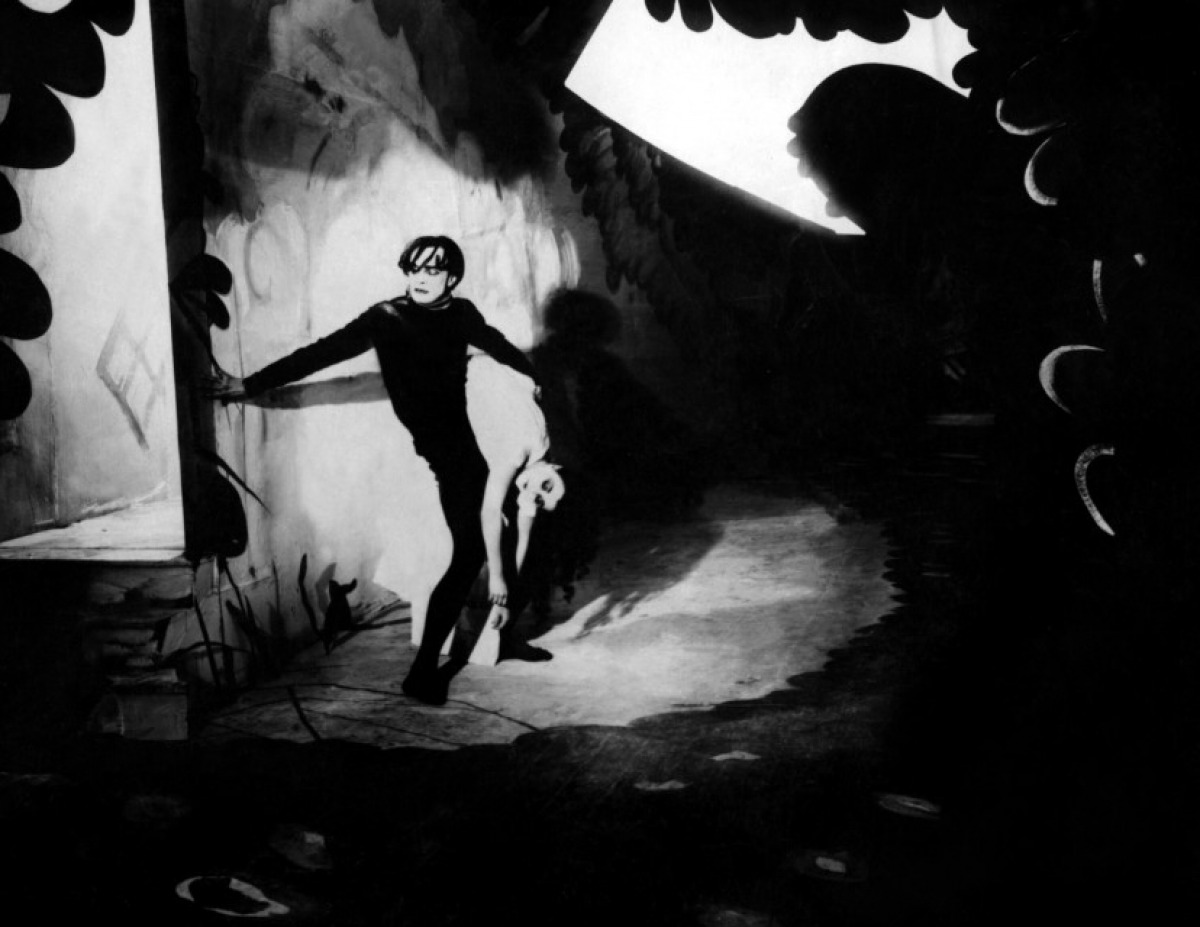
If you’re not familiar with The Cabinet of Dr Caligari, you have a treat ahead. It’s a nightmarish, audacious and superbly stylish horror film, featuring a carnival, a sinister medic, a bloodthirsty somnambulist and a string of murders, let alone some mindbending sets and unforgettable imagery. It sounds as if Jacques’ music could be the perfect fit.
The Cabinet of Dr Caligari screens at the Soho Theatre in London from 25 July to 11 August 2012. To find out more and to buy tickets, visit the Soho Theatre website.

Moroder’s Metropolis – the people have spoken

Metropolis, circa 1984

Ach, it’s no fun being a silent cinema purist sometimes. And while I wouldn’t necessarily describe myself that way very often, I was pretty sure I was in the fun-hating minority when the UK DVD release of Moroder’s Metropolis was first announced. Just to make sure, I ran a poll here on Silent London to find out what you guys think.

If you need to refresh your memory, Giorgio Moroder’s version came out in 1984 and looks very different to the latest restoration. Working with the most complete version of the film he could find at the time, Moroder added a rock soundtrack, washed some different scenes with bright tints and made the whole thing run faster by removing the intertitles and using the text for subtitles. It’s a strange beast, and perhaps needless to say, a cult favourite.

You ruddy love it. Well, some of you do. Quite a few of you like it, and while there’s a solid 20% with me, arms crossed and tutting in the outraged camp, you have convinced me to give Moroder’s Metropolis another go. What’s the worst that can happen? I first saw it many moons ago, on a worn-out VHS borrowed from the college library. Since then, I’ve seen the beautiful new restoration of the original film, and my appreciation for Metropolis has only grown. I hope I have lightened up a little, and I have even learned to play a Pat Benatar song on Guitar Hero.

So I’ll definitely be taking a look at the DVD when it is released on 23 July this year. Apparently it’s arriving in a smart “steelbook” edition, and interestingly, you’ll be able to stream it on demand from www.metropolismovie.co.uk too.

In 1984, Oscar-winning composer Giorgio Moroder (Top GunMidnight ExpressFlashdance) reintroduced Fritz Lang’s 1927 science fiction epic METROPOLIS to a new generation of moviegoers. He colourised scenes, added new subtitles, plus a throbbing rock soundtrack to Lang’s iconic imagery. Featuring songs from some of the biggest stars of the early MTV era: Freddie Mercury, Pat Benatar, Adam Ant, Bonnie Tyler, Loverboy, Jon Anderson and others, it became a dramatic vehicle for Moroder’s visionary music and a beautiful retro-futurist timepiece. Through faithfully maintaining Lang’s intriguing and timeless storyline, today, it is this version of METROPOLIS that first comes to mind for millions around the world.

 Yeah, that last sentence does still grate a little… watch this space.

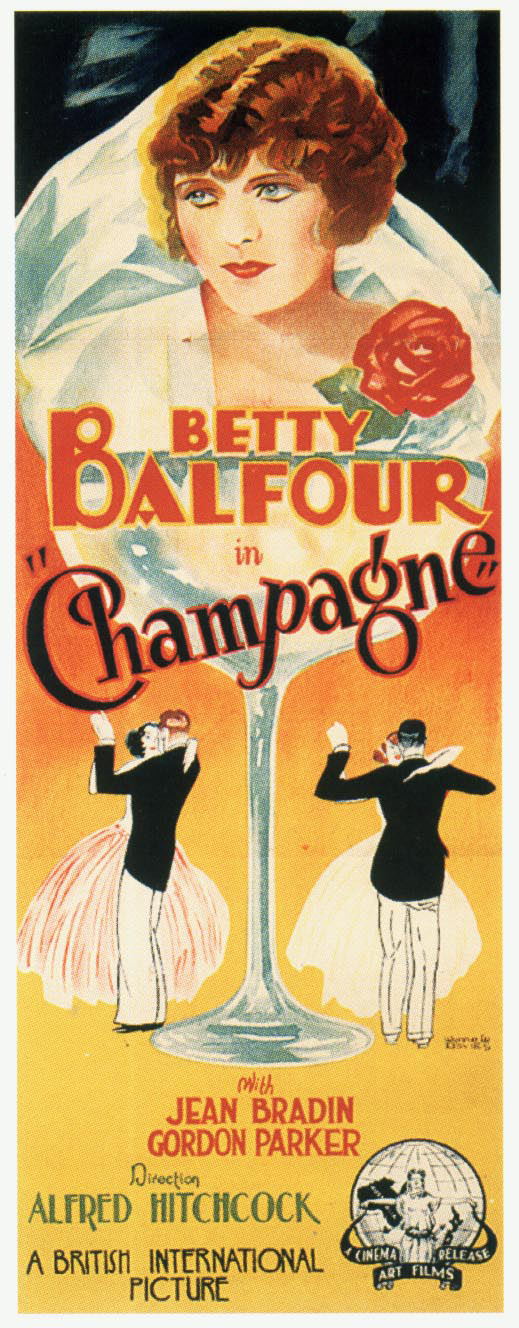
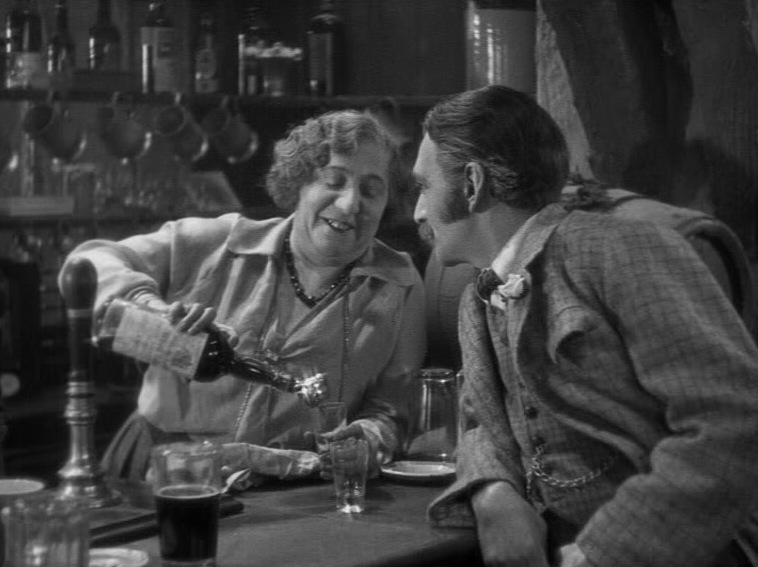
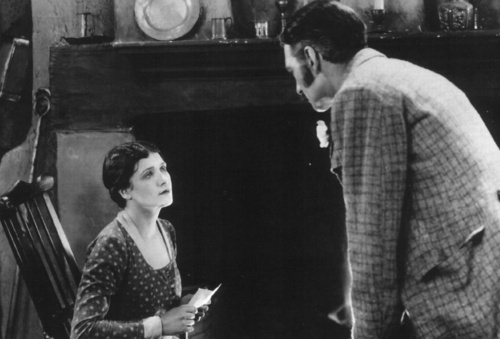
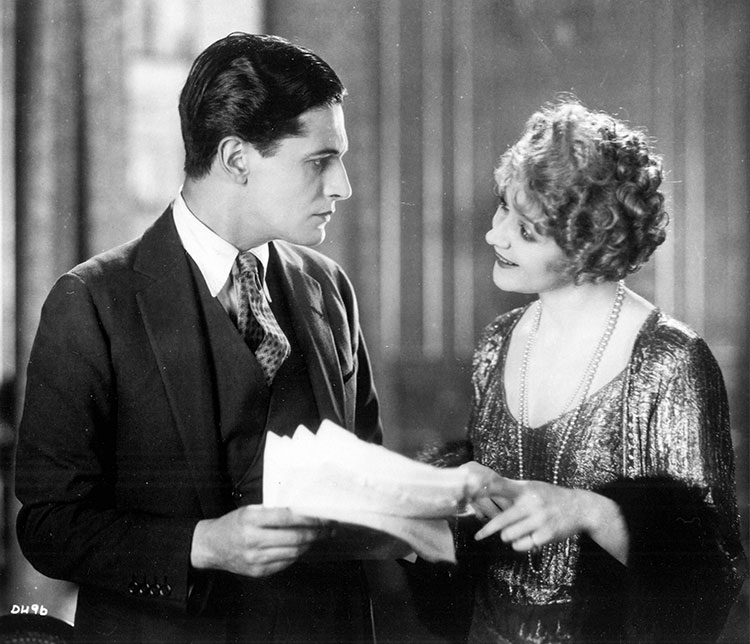
An introduction to silent Hitchcock: Champagne

Betty Balfour in Champagne (1928)

With The Farmer’s Wife Hitchcock proved that he could excel at comedy, but Champagne (1928) unhappily revealed that froth was far from safe territory for the director. The critics were hardly impressed, with Close-Up crowing about: “champagne that had been left out in the rain all night”. Looking back, Hitchcock tended to agree, saying: “That was probably the lowest ebb of my output.”

Champagne (1928)
Champagne (1928)

Hitchcock wasn’t happy at the time either, no fan of the source novel and uncertain how to proceed. What Champagne does have is a promising cast: Betty Balfour (the “British Mary Pickford”) takes the lead role and one of Hitchcock’s favourite character actors, Gordon Harker, plays her millionaire father. Balfour, who had made her name playing cockney sweetheart Squibs, does her best, but her likable screen persona fares much better in the second half of the film, when her character (The Girl) develops a touch more vulnerability and sweetness.

In the earlier stages of the film, The Girl is a spoiled, grandstanding heiress, but a combination of Balfour’s hard-to-repress charm and Hitchcock’s steely gaze means she’s very hard to hate. She invokes her father’s displeasure by commandeering a plane to catch up with her boyfriend’s cruise liner. For this, he wants to teach her a lesson. But Hitchcock gets in first, shooting Balfour triumphant in a ballgown after her dramatic entrance, but with her face covered in soot from the flight. I was rooting for her from that moment on. Further humiliations are in store, but it’s a blessed relief when she reaches the point of redemption.

That said, there are some hugely enjoyable glimpses of Hitchcock on top form here: including a cynical street robbery (shades of a similar scene in The Pleasure Garden, maybe even a nod to Graham Cutts), and some bold subjective camerawork.

Champagne is also of considerable interest as film that is utterly of its own time – a cocktail-swigging flapper, her father with his fortunes balanced precariously on Wall Street, her straitlaced fiance with his old-fashioned views – and a reflection of our own. Mira Calix, who will be scoring the film for its gala screening later this year, points out that Champagne attacks a continuing 21st-century obsesssion with celebrities who, just like The Girl, behave atrociously and are famous off the back of their parents’ success. It also, she hopes, will chime with supporters of the Occupy movement: a front-row seat to watch the 1%ers behaving badly and meeting their icky comeuppance.

A minor work, but not without its charms, Champagne maybe largely a waste of Balfour’s talents, but it’s a showcase for the director’s style and his mean streak both.

Synopsis: 

Disapproving of her love affair, a millionaire sets out to teach his irresponsible daughter a lesson by pretending to lose all his money.  (BFI Screenonline)

Hitchcock moment: Our heroine is attacked by a creep (7:25). Pure Hitchcock. But not entirely what it seems.

Watch out for: Those alarmingly close subjective shots, most notably some tricksy ones through the bottom of a champagne glass.

Links worth clicking:

Champagne screens in September with a new sccore from Mira Calix as part of the BFI’s Genius of Hitchcock season. More information here.

An introduction to silent Hitchcock: The Farmer’s Wife

The Farmer's Wife (1928)
The Farmer’s Wife (1928)

It is a truth universally acknowledged, that a single man in possession of a good fortune must be in want of a wife. And every schoolchild knows that statement is never more true than when the gent in question is a farmer.

Jameson Thomas, whom you you may not recognise under his bristly facial hair as the dashing lead in Piccadilly, plays Samuel Sweetland, a widowed farmer whose thoughts turn to matrimony. Samuel surveys the village women and sets about wooing potential Mrs Sweetlands, with hilariously disastrous results. Disastrous, but not in the usual vein of Hitchcock calamity. Samuel isn’t a perverted sex killer bumping women off in the dead of night. The Farmer’s Wife is a comedy, a broad one too, and the only injuries sustained are bruised egos and spoiled dinners.

LIllian Hall-Davis and Jameson Thomas in The Farmer's Wife
LIllian Hall-Davis and Jameson Thomas in The Farmer’s Wife

Comedies are meant to have happy endings of course, and when I tell you Samuel is assisted in his quest for a new spouse by his sweet-faced and good-hearted housekeeper Araminta (Lillian Hall-Davis) perhaps you’ll be reassured that all will end well.

So how well does Hitchcock, acclaimed for his urban thrillers, succeed in staging a rural comedy? With flying colours. It’s not all down to the director, of course, this is an Eliot Stannard adaptation of a very popular play, but Hitchcock shoots The Farmer’s Wife as if it were a thriller, which somehow emphasises the poignancy of all these lonely people and their missed connections. His brisk economic style also ensure that the horseplay mostly doesn’t outstay its welcome.

Not exactly what you may expect from Hitchcock, but the silents rarely are, and there’s a huge amount to enjoy here.

Synopsis: 

A middle-aged widowed landowner decides to marry again. With the aid of his faithful housekeeper he draws up a list of all the eligible women in the neighbourhood, each of whom in turn rejects him.  (BFI Screenonline)

Hitchcock moment: Never mind the jelly and ice-cream, nor the awkward trouser situation. This proposal looks like one of Hitchcock’s murder scenes and features a very bizarre intertitle

Watch out for: The empty chair by the fireside. And what Hitchcock does with it.

Links worth clicking:

The Farmer’s Wife screens this summer as part of the BFI’s Genius of Hitchcock season. More information here.

An introduction to silent Hitchcock: Downhill

Ivor Novello and Isabel Jeans in Downhill (1927)

Welcome back to our silent Hitchcock series. This week we’re looking at Downwhill (1927), hardly one of the director’s most acclaimed films, but one that offers rich, if distasteful, rewards for any Hitchcock aficionado. Dreamy Ivor Novello stars as Roddy, a sixth-former at a private school and thoroughly decent chap who takes the blame for a friend’s misbehaviour and suffers a degrading decline in his fortunes.

Going underground … Downhill (1927)

Downhill is clunky in places, and the thirtysomething Novello is one of cinema’s least convincing schoolboys, but the film’s strength lies in its brutal, single-minded nastiness. Cynical, misogynistic and determined to reveal the seediness beneath polite society, Downhill expresses the darkest of Hitchcock’s dark side – all without a single murder. It also gives us an insight into Novello’s psyche too; he co-wrote the play the film was based on, and one can only speculate whether he based it on any of his own experiences.

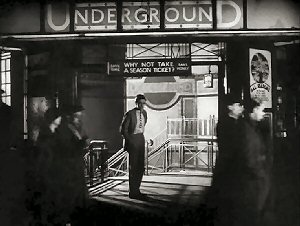
If you thought The Ring took a graphical idea and ran wild with it, then get a load of Downhill. Roddy’s progress through society, after his expulsion from school, is only going one way and that’s, er, down. You’ll find a lengthy shot of Novello slinking underground on Tube escalator – it’s widely mocked as the clumsiest example of Hitchcock warming to his theme.

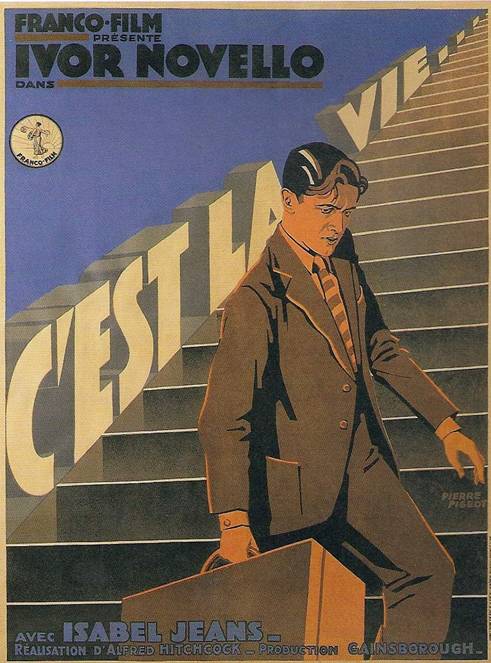
C'est la vie … Downhill's French title
C’est la vie … Downhill’s French title

There’s another, more interesting, pattern running through Downhill, though: the reveal. The most celebrated example is introduced by the intertitle “The world of make-believe”: a series of slowly retreating camera placements reframe a shot of Roddy in contradictory ways, forcing the audience to continually shift their interpretation. At first we think he’s a smartly dressed gent. Then a waiter. Then a thief. Finally, the camera pans right to uncover the true extent of Roddy’s social degradation – he’s on stage, an extra in a cheesy musical, bobbing like a chump.

Poor Roddy: such a noble young man, and so unfortunate to meet, and be mistreated by, some of the most grotesquely venal women ever committed to film. Hitchcock’s misogyny is often discussed in relation to his sound films and some possibly apocryphal pranks and fallings-out on set, but Downhill suggests the rot set in a lot earlier than that – in fact, it makes the likes of Vertigo seem positively sensitive. The Farmer’s Wife gets laughs out of silly and unattractive spinsters, but the women of Downhill are almost entirely self-interested monsters. There’s even a spot of casual transphobia (see the clip below).

Ultimately, these crudely drawn villainesses are not just a cause of politically correct 21st-century complaint: they contribute to the structural failure of the film. Downhill is all Roddy, all the time, and virtually everyone else on screen is a mere cipher, which is unsatisfactory all round.

Synopsis: A boy takes the blame for his best friend’s misdeed and is expelled from school. From that point on, his life proceeds on a downward spiral into poverty and degradation. (BFI Screenonline)

Hitchcock moment: Another painful reveal: here’s why sunlight and early-hours drinking dens don’t mix.

Watch out for: A foretaste of Vertigo. No, not that shot, but a splash of sickly green tinting.

Links worth clicking:

Downhill screens in London this summer as part of the BFI’s Genius of Hitchcock season.

The Women of Old Hollywood and Sunset Boulevard (1950)

When the tintypes first galloped westward in the 1910s, what was it like to be a woman working in the film industry? A special event at Conway Hall, part of the Looking In Looking Out festival of film and philosophy, hopes to find out. The evening will take a look at the earliest days of Hollywood, the era of Lois Weber, Frances Marion, June Mathis Mary Pickford, Mabel Normand and Clara Bow.

We’ll be asking questions such as: how much did women contribute to the formation of the cinema as we now know it? Were there more opportunities for women in the then-new industry or did broader social ideas about women’s roles hold them back? Do the films that women made during this period represent a specifically female or even feminist point of view? Have women been written out of cinema history? But we’ll also be celebrating the many fantastic achievements by women both well-known and obscure in silent-era Hollywood.

The LILO event will comprise, first, a panel discussion chaired by Bidisha and featuring Kira Cochrane, Jenny Hammerton and Muriel Zagha as well as um, me. This will be followed by a screening of Billy Wilder’s sublime Sunset Boulevard (1950), with its unforgettable lead performance by Gloria Swanson as the embittered silent film star Norma Desmond.

6.30pm Bidisha leads a high-kicking whirl through Hollywood history and a celebration of the brilliant women who co-founded Hollywood, with film experts, critics, Old Hollywood fans and film lovers Jenny HammertonMuriel ZaghaPamela Hutchinson and Kira Cochrane.

8pm Sunset Boulevard (1950) Gloria Swanson’s career-defining performance in Billy Wilder and Charles Brackett’s Oscar-winning tragic tale of a star in decline. As much a reflection on the idea of Hollywood itself, as it is on love and loss.

So please, come one, come all – this should be fun. The Women of Old Hollywood event takes place at Conway Hall, Red Lion Square, London on Tuesday 3 July 2012. Doors open at 6pm. Tickets cost £10 and are available here. You can read more on the Conway Hall website, or on Facebook. There’s a Twitter feed too. And if you want more, here’s a very smart feature from the clever chaps at Real|Reel Journal introducing the festival.

Blancanieves (2012): teaser trailer

I wrote about this silent Spanish adaptation of Snow White a few weeks ago, but now we have some footage to whet our appetites. Blancanieves is a new film by Pablo Berger (Torremolinos 73) and it’s a modern silent, set in the world of bullfighting in 1920s/30s Madrid.

Maribel Verdú plays the wicked stepmother, and Macarena García our heroine, the first Snow White I have ever seen face off with an angry bull. The dwarves are bullfighters too, as you’ll see in this Spanish teaser trailer.

According to this article from El Pais, Berger was inspired by watching Eric Von Stroheim’s Greed and the film contains some references to Carl Th Dreyer and Abel Gance also. The lush music you can hear, at least some of it is composed by Alfonso Vilallonga, and yes, they do plan some live orchestral screenings of the film before its theatrical release.

Speaking of which, we only have a Spanish release date for the film so far: 28 September 2012, bang on schedule for a debut at the San Sebastian film festival.

So what do you think? I reckon this could be quite special…

Charlie’s London: No 3 Pownall Terrace

Charlie Chaplin
‘Humour and courage saved Lambeth’ … Charlie Chaplin

This is a guest post by Ayşe Behçet for Silent London.

Where can I start? First I want to talk to you about an exciting Charlie’s London adventure I am having in the next two weeks! From the 23rd to 30th June 2012 Il Cinema Ritrovato festival in Bologna, Italy will be showing some amazing silent film gems including a night of Chaplin’s Mutual films accompanied by new scores by Neil Brand, written especially for the festival. And I will be there! I squealed like a child after too much sweet consumption when I heard this, I can assure you.

For me this trip will be a very personal and important journey, one that I hope will enrich my knowledge of Chaplin. I will have the fantastic opportunity of visiting the Chaplin Archives there, a first for me and a very daunting and happy prospect too. Hopefully while I am there I can find some items of interest for all you lovely Charlie’s London readers.

In today’s instalment I want to talk to you about one of Charlie’s homes that I missed out a few episodes back and promised I would return to: No 3 Pownall Terrace, Kennington Road. Why is this house so important to the Chaplin story? It seems to be the one mentioned the most in all his works and definitely the one that seems to have had the most impact on him.  Chaplin recounts in My Autobiography walking the “rickety stairs” to the rooms he shared with his mother and Sydney; how the rooms always smelt of slop and wet clothes; how from the windows he could see the glamour of the wealthy music hall acts, their finery and jewels. Their room was less than 12ft square and if poor Hannah’s mental health was failing then the room would suffer too, becoming cluttered with messy cups and plates. Often Chaplin would come home from school, empty the slop bucket and run along to his friend Wally, a son of a friend of his mother from her theatrical days. Wally seems to have made a happy playmate for Charlie while Sydney was away at sea, a period that seems to have added to his mother’s worries.

Continue reading Charlie’s London: No 3 Pownall Terrace

An introduction to silent Hitchcock: Easy Virtue

Easy Virtue (1927)
Easy Virtue (1927)

One of our very finest film directors tackles a drama by one of our very finest playwrights, and the result is … mixed. Easy Virtue is a very free adaptation of a Noel Coward play, with a script by Eliot Stannard. While it’s not an entirely successful movie, there is plenty of space here for the young Hitchcock to show us what he’s made of, with some rightly acclaimed sequences that are both smart and witty.

Indeed, at first glance Easy Virtue seems to be solid Hitchcock territory. Both the narrative setup and the moral message of the film both are concerned with the transferral of guilt, after all. The judge in our heroine Larita’s divorce case maligns her by convicting her of “misconduct” – and the world believes him. There’s some nice point-of-view business with the judge’s monocle (more circles!) to emphasise the flaw in his judicial vision, and a flashback to show us the truth of the matter, as opposed to the spectacle staged in the courtroom. Larita (Isabel Jeans) flees to the Mediterranean to escape the press attention and the slur on her virtue, but when she falls in love with a nice young Englishman and they return to stay with her new-in-laws, the divorce ruling becomes a classic Hitchcock bomb-under-the-table. Sooner or later, it’s going to blow up in her face …

Easy Virtue (1927)
Easy Virtue (1927)

Trouble is, this adaptation removes many of the shades of grey that Coward used to paint the stage Larita with. Hitchcock’s heroine is as sweet and innocent as the day is long, which makes her far less interesting and some of her more dramatic moments unconvincing. By and large the most successful section of the film is the first half, which deals with Larita’s trial and her romance with John (Robin Irvine), and all of which is new material for the film, not present in Coward’s play.

There’s wit, and a touch of glamour here, but little passion, and too much timidity. Had Hitchcock and his team not been held back by fear of the censor, or social acceptability, you feel they could have made much of the messy, complicated, terribly British problems that Larita faces. Her eventual gestures of defiance would have more power and this would be a far more exciting film. It’s all about sex, lies and suspicion, after all.

Easy Virtue (1927)
Easy Virtue (1927)

That said, Easy Virtue is more than worth a viewing. There’s a Hitchcock cameo here, lots of twists on his trademark business with voyeurism and an unexpectedly brutal meet-cute on the tennis court. My favourite thing here is how the length of the lovers’ journey back from France is measured by a dog. It’ll make sense when you see it, believe me.

Synopsis: Despite her totally innocent role in the events that led to it, divorce turns Larita Filton into a social outcast – and despite the love and support of her new husband she is constantly threatened by malicious gossip. (BFI Screenonline)

Hitchcock moment: John gets an answer from Larita, off-screen – but the telephone operator is listening in.

Watch out for: The final intertitle, which Hitchcock described as the worst he ever wrote.

Links worth clicking:

Easy Virtue screens in London this summer as part of the BFI’s Genius of Hitchcock season.

Nosferatu: A Symphony of Horror at the East End film festival, 7 July 2012

Nosferatu (1922)
Nosferatu (1922)

The outdoor silent film screenings at the East End film festival are always a highlight of the year. Held in the centre of Spitalfields market, the screenings are accompanied by live music from Minima – guaranteed to send a shiver down the spine. But this year Minima, and the festival, have come up with something that promises to be extra-special.

This summer’s screening is of Nosferatu, the landmark vampire horror by FW Murnau, which is 90 years old this year. It’s a movie Minima have accompanied many times before, but not like this:

East End Film Festival presents the World Premiere of A Symphony of Horror, a unique collaboration between soundscapers Minima, Paul Ayres’ Queldryk Choral Ensemble and Hackney-based spatial artist Lucy Jones to create a re-imagined film score and performance on the 90th anniversary of the classic 1922 film.

Enter the fully immersive eerie and unsettling world of Nosferatu where the very walls of Spitalfields Market will be alive with creeping shadows and silhouettes, and reverberating with the soaring tones of the Queldryk Choral Ensemble, featuring 60 choristers, accompanied by the festival’s favourite soundtrackers, Minima.

Silent film screenings with live music have always spearheaded the immersive, live cinema trend, but this event goes a step further, combining an atmospheric location with projections and a spooky soundtrack turned up to eleven.

Admission is free, and the film won’t start until the sun goes down, but you’ll want turn up early to get a good seat and bring your own cushions/blankets/cagoules. For more information, visit the East End film festival website.

For more on Nosferatu, check out Sight & Sound contributing editor Mark Sinker discussing the film on the first Silent London podcast.

The Queen’s diamond jubilee – in 1897

The union flag bunting has been hung, the coronation chicken sandwiches have been cut and the roads have mostly been closed. Like it or not, it will be hard to escape the Queen’s diamond jubilee celebrations this weekend. So why all the fuss? Well, monarchs rarely reach the 60-year mark, so this is probably the only diamond jubilee we’ll see – in person that is. It has happened before, when august Queen Victoria marked her 60-year anniversary in 1897. Luckily for us, the newsreel cameras were rolling that day and the BFI has released this fascinating clip of her elaborate jubilee procession. The Queen herself makes an appearance at 1:40, but my personal highlight is 1:23, when a rather wayward horse threatens, briefly, to derail the whole shebang.

This is by no means the only clip to survive, however, and if you want to see more, you can visit the Bedford Park festival in Chiswick, west London on 21 June 2012, for an audiovsual feast of material related to Queen Victoria’s diamond jubilee – presented by Luke McKernan and Neil Brand:

A 90-minute show combining archive film from the BFI, photographs, live commentary with actors, and piano accompaniment, recreating the London procession on 22 June 1897 to mark the 60th year of Queen Victoria’s reign. Presented by film historian Luke McKernan, with actors Neil Brand and Liz Fost reading eyewitness accounts of Mark Twain, Rudyard Kipling, and Queen Victoria herself.

Click here to book tickets.

A place for people who love silent film