This year’s British Silent Film Festival has an extraordinarily full schedule of films, talks and gala screenings. Whether you favour Soviet gem The Ghost That Never Returns with the full-throttle rockin’ blues of the Dodge Brothers (featuring Mark Kermode), Miles Mander’s sophisticated drama The First Born with Stephen Horne‘s elegant, haunting score, or some much-loved but little-seen favourites from the archives, there should be something to tempt you. And the whole thing takes place in the beautiful city of Cambridge this year (just 45 minutes from the Big Smoke by train).
BUT, very excitingly, the British Silent Film Festival has been kind enough to give away some tickets for free! To you beautiful Silent Londoners. To win a pair of tickets to a screening of your choice, just send the answer to this super-easy question to me, at silentlondontickets@gmail.com.
What is the name of the French silent film-maker whose life was dramatised in Martin Scorsese’s Oscar-winning film Hugo (2911)?
The winner will be chosen at random from the correct answers at 1pm on Wednesday 18 April 2012, when the competition closes – and then notified by email. Good luck, and see you in Cambridge!
This is a guest post by Ayşe Behçet for Silent London.
Thanks again for returning to Charlie’s London with me. First, I want to wish Sir Charles Spencer Chaplin a very happy 123rd birthday! It really is a coincidence that my latest blogpost falls on the anniversary of his birthday, but hopefully it’s a very good blessing.
Today I’m going to be looking at some of the houses in and around Lambeth that Chaplin lived in, and some of those in the same area that my family have called home, too. Unfortunately I can’t say I have ever lived in a house that he graced, but who knows what may happen in the future?
Family was very important to Chaplin, just as it is to me. He entrusted much of his business to Sydney Chaplin, his half-brother who acted wisely on Charlie’s behalf. He was also incredibly close to his mother Hannah, whom he idolised. Contrary to popular belief, he even had a relationship with his father – when he was around. Chaplin spoke fondly of his first meeting with his father during that period in his autobiography.
“The prospect of living with Father was exciting. I had seen him only twice in my life, on stage, and once passing a house in Kennington Road, as he was coming down the path with a lady. I had paused and watched him, knowing instinctively he was my father. He beckoned me to him and asked my name. Sensing the drama of the situation, I had feigned innocence and said ‘Charlie Chaplin’. Then he glanced knowingly at the lady, felt his pocket and gave me half a crown, and without further ado I ran straight home and told Mother that I had met my father.” (Charlie Chaplin, My Autobiography, quote reprinted courtesy of the archives of Roy Export Company Establishment)
Family continued to be important to Chaplin throughout his life, and as you may have realised, I too am very devoted to my own family. The fond memories I have of my own grandmother will never leave me. This is why this personal journey, walking the streets of South London reminiscing, has been a wonderful and emotional experience for me. My grandmother Florence Boakes died on 12 May 1997, and from that time on, it became very painful for me to watch the great silent films, such as Chaplin’s, that we had enjoyed together. If the films were on television or I came across one of our old videos, it was too painful to watch without her there. I had bought her a Chaplin tile on a stand when I went to Hastings for a school trip, and that had to be kept out of sight too.
Ayşe and Kieran
So what brought me back to Chaplin? In short, my husband-to-be Kieran, and our first date almost 12 years later. We had agreed to meet in a Starbucks in Charing Cross and he was early, which is nothing new. When I arrived I was nervous as we had only met a handful of times before. As he was reading a book, that the topic of conversation we used to break the ice.
“It’s about Buster Keaton, I’m a big silent film fan,” he confessed. I smiled as he showed me the front cover and I handed it back to him.
“I grew up watching Chaplin, I was a Chaplin fan,” I answered. He smiled back.
“Silent films never leave you, you’re still a Chaplin fan.”
Of course, he was right. Our next date involved a bottle of wine, some very good food and The Kid, which at first I was worried about watching. For the first time in years I watched the Tramp and I smiled – then I realised my love affair with Chaplin was very much back on. In January 2011 I found myself watching The Gold Rush with Carl Davis conducting the London Philharmonia orchestra, a wonderful Christmas present from Kieran. And this year he took me to the Slapstick festival – anyone who knows me knows how that has changed my life!
Mum was really happy I’d found Chaplin again, so when I decided to start writing this blog the three of us spent a day wandering around, taking pictures of all the sights involved.
We walked from Waterloo towards the Imperial War Museum and down Lambeth Road, cutting down George Road to find West Square. Children were playing in a communal garden; it really is the most beautiful little piece of London. Mum told me my great uncle Fred had a friend who lived in West Square and they would also play around there as children. In his autobiography, Chaplin remembers the family’s time in West Square as being “moderately comfortable; we lived in three tastefully furnished rooms”. The square itself was built in 1791 and you can see it was considered a plush place to live.
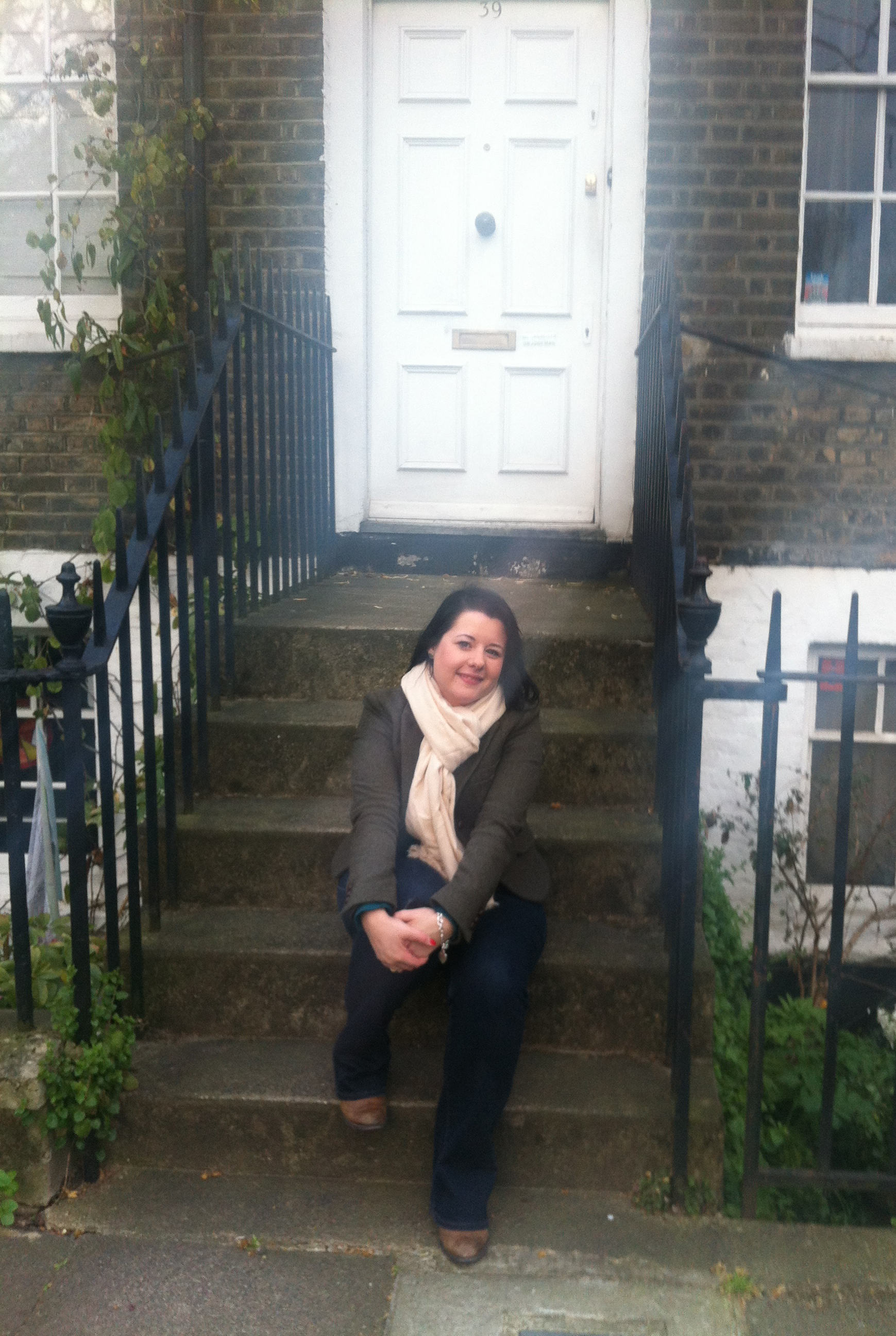
Ayşe at 39 West Square, where the Chaplins had ‘three tastefully furnished rooms’
Coming back towards the Imperial War Museum, cutting down Kennington Road, we found ourselves at 287 Kennington Road. This was the home Charlie and Syd shared with their father in 1898. Their mother Hannah was unable to support the family and was institutionalised in Cane Hill Asylum, so Charles Chaplin Senior had care of the two boys instead, along with his very reluctant mistress Louise. What a relief it must have been when their mother finally sent for them. Outside 287 Kennington Road now is a plaque, privately paid for and dedicated to Charlie, reminding passersby that he once lived here. Apparently, the door number is in itself under dispute and even the plaque unfortunately is incorrect. It says that Charlie died in 1978 when he actually died on Christmas Day 1977.
We decided to head back towards the Walworth Road. Getting off the tube at Elephant and Castle we walked to the Walworth Road and of course we couldn’t resist stopping for some pie and mash. I had double of everything and claimed it all as research! Crossing the road we headed down towards Methley Street, another residence for the young Chaplin. No 39 Methley Street was Chaplin’s home between 1898 and 1899. It might look nice now but back then it was a desperate residence with the surrounding area consisting of pickle factories and slaughterhouses.
Looking around this area it is easy to see where Chaplin’s inspirations for films such as The Kid actually came from. To this day, Lambeth is littered with old Victorian streets and houses only recently made fashionable and picturesque. There is a plaque on Methley Street dedicated to Charlie, this time with correct dates, also acknowledging that he was a Water Rat. A Water Rat was a name given to a member of an acting guild who, if in times of hardship could go to the Grand Order of the Water Rats and seek refuge and help. Stan Laurel was a Water Rat too. It is when they were living at Methley Street Hannah began to sew again and for a while they seem to have been quite happy, until her health took a turn for the worse again and she had to send her sewing machine and various garments to the pawnshop to make the rent. Without her sewing machine she could not work, which plunged the little family into further chaos. Charlie would later use a pawnbroker as the backdrop of one of his 1916 films The Pawnshop.
We headed home at this point, and yes, you’ll notice that I haven’t covered the famous Pownall Terrace, the most famous of Charlie’s homes in Lambeth. There is a reason for this, and all will be revealed in a future instalment!
Thanks for reading everyone, and I hope you’ll join me again for next instalment of Charlie’s London in two weeks’ time.
The Barbican is marking the weekend’s 100th anniversary of the Titanic disaster with a moving event that combines live music with archive footage. Gavin Bryars’ The Sinking of the Titanic was inspired by reports that the ship’s string ensemble continued to play the hymn Autumn as the vessel sank; it was written in 1969 and first recorded on Brian Eno’s label Obscure. It will be performed in the Barbican concert hall by the Gavin Bryars ensemble with multimedia artist Philip Jeck.
The archive footage projections have been designed by film-maker Bill Morrison, whose work, including Decasia and The Miners’ Hymns, you may already be familiar with, in collaboration with Laurie Olinder.
Tickets for the event start at £15, but readers of this blog can enjoy a 20% discount when booking online. See the promotional code below.
Throughout the 72 minute piece Bryars and the ensemble weave refrains from Autumn with layers of Jeck’s sample-based materials, creating, at times, clamouring waves of sound that suggest the great engines and massive bulk of the vessel and the ocean that swallowed it. The result is a heart-achingly intimate and direct work.
The Sinking of the Titanic also features projection design by the internationally renowned Bill Morrison, who has commissioned work for some of the most important composers of his time, such as Steve Reich and Henryk Gorecki . Collaborating alongside Morrison is Laurie Olinder, multimedia designer, founding member of New York’s Ridge Theater with previous work being screened at some of the world’s most prestigious arts venues, such as Carnegie Hall, the Lincoln Centre and the Brooklyn Academy of Music.
Silent London readers can claim a 20% discount on tickets for The Sinking of the Titanic. Just enter promo code 15412 when booking online, at barbican.org.uk. The Sinking of the Titanic plays at the Barbican on 15 April 2012 at 8pm.
Read more about the earliest films of the Titanic disaster and about events to commemorate the anniversary in our guest post by Greg Ward here.
The coming of sound was always going to be a shock. But bear with me, dear readers, you’ll soon become accustomed to this new-fangled technology. Silent London has branched into the world of podcasting and and the first edition is ready for you to download and listen to now.
Episode one features Ewan Munro and Pete Baran chatting to me in the studio about Carl Theodor Dreyer’s silent films, the forthcoming British Silent Film Festival, their favourite recent DVD and Blu-Ray releases and a lot more. Sight and Sound contributing editor Mark Sinker also takes the time to tell us about his favourite silent movie, Nosferatu. You’ll information about pretty much everything we discuss on the podcast somewhere on this site, but you may also want to click here, to see the BFI YouTube channel. The music is by kind permission of Neil Brand, and the podcast is presented in association with SOAS radio.
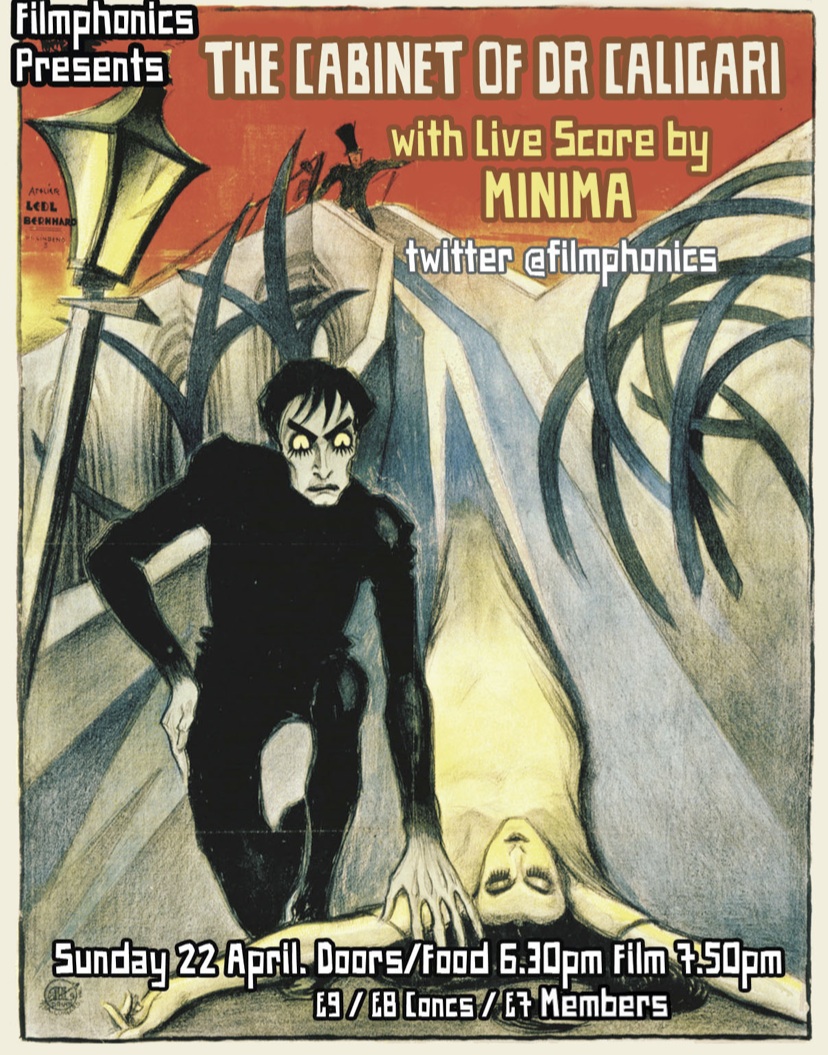
Glad tidings from east London. The capital’s newest cinema, the Hackney Picturehouse on Mare Street, also boasts the capital’s newest silent film screening venue. Hackney Attic hosts all kinds of live music and cinema events, scheduled by an outfit called Filmphonics. They have already dipped their toe into the silent waters with a sold-out screening of The Adventures of Prince Achmed, complete with belly dancers. Now Filmphonics are officially launching a series of monthly screenings with an event that is sure to be popular – a screening of the nightmarishly creepy The Cabinet of Dr Caligari, with live accompaniment from rock band Minima. if you’ve never seen Minima accompany a silent film, you’ve been missing out. They’re a rock band, albeit one with a cheeky cello, who specialise in the kind of spine-chilling soundscapes perfect for a film this creepy and strange.
The Cabinet of Dr Caligari screens at Hackney Attic on Sunday 22 April 2012. Doors open at 6.30p and the films begins at 7.50pm. Tickets for the screening cost £9, but less for concessions and members. Alternatively you can buy a dinner ticket, which includes the movie, a meal and a glass of wine for £20. That’s a pretty unbeatable night out, I’d say. Tickets are available online here.
Every so often a groovy film festival sweeps into town and shakes up the schedules a bit, introducing us to some silent movies that were hitherto a mystery to us. This month, the Argentine Film Festival arrives, complete with critical hits such as Las Acacias, but also with a programme of silents and live music at the Ritzy Cinema in Brixton.
I’ll admit, I’m not au fait with Argentine silent cinema. A little reading around tells me that only a handful of films made in the silent era in Argentina are still with us today, and that the films the Ritzy is showing have never been seen in the UK before. So this event should be a surprise to most of us.
These four short films, including the newsreel Film Revista Valle (1926), My Sorrel Horse (Mi alazán tostao -1923), The Return to the Bulin (La vuelta al bulín -1926) and Creole Mosaic (Mosaico criollo -1929) – one of the oldest preserved sound films – form part of the first collection of silent films to be recovered by the Pablo C. Ducrós Hicken Film Museum in Buenos Aires, and have never before been screened in the UK.
Together, they offer an intriguing vignette of life in 1920s Argentina, a country that was very much under Europe’s influence – as could be seen in the leisure pursuits of its upper classes – yet retained its own distinct character, not least through the tango.
The news reels featuring fox-hunts, visits from foreign dignitaries and elegant river cruises present a glamorous world which does much to explain how Buenos Aires acquired its title as the “Paris of South America”. At the same time the comic scenes from the tango underworld in The Return to the Bulin and the lawlessness in the country drama My Sorrel Horse are more reminiscent of North American genre films. Creole Mosaic sees one of the first attempts to include sound in films, using a synchronised gramophone record along with the actual screening. More of a musical review than a movie, it presented audiences with the voices and figures of popular radio artists.
It wasn’t easy to be a film-maker in Argentina in the 1920s. Money was tight, equipment was scarce and directors often found them selves multitasking, working on both sides of the camera, and editing films not on a Moviola but with a pair of scissors. Jose Ferreyra, who directed The Return to the Bulin, managed these challenges better than most. His films were made on the fly, often taking tango lyrics as the inspiration for the story. Sadly, Ferreyra’s films were not very well received, but those directed by one of his actors, Italian-born Nelo Cosimi, picked up better reviews. Cosimi didn’t restrict himself to tango themes, but looked farther afield for his subjects. My Sorrel Horse is one of his first films, and shows the influence of Hollywood cinema of the time.
The Argentine silent film programme screens at 5.05pm on Sunday 22 April 2012 in Screen 3 at the Ritzy Cinema, and will be followed by “a musical tour of Argentine tango history” in the bar afterwards. Tickets are available on this link.
A few weeks ago, I posted about a competition held by the City of Birmingham Symphony Orchestra. The task set was to create a short animation, featuring a city landmark, to be accompanied by one of the pieces of silent film music recently unearthed in the archives of Birmingham Library. Now the winner, whose film will be screened at a gala event on 20 April, alongside some Charlie Chaplin classics and accompany by the CBSO, has been announced.
Gareth Hirst’s short film Street Act explores the dark and violent side of slapstick comedy, and the action takes on Birmingham’s Corporation Street. The movie uses the Indian War Dance music from the archive, to great effect – you can listen to eight more extracts here. If you want to find out more about Hirst, his animation work and his prize-winning film, you can read more on his blog. You’ll see that he put an awful lot of work into the film, including a heck of a lot of research. I understand he is a keen silent movie fan and a regular visitor to the Slapstick Festival in Bristol. Congratulations, Gareth!
Tickets for the Charlie Chaplin gala at the Symphony Hall Birmingham on 20 April 2012 are available here.
UPDATE: I have just been informed that the screening of People on Sunday on 20 April 2012 will now have live piano accompaniment. That’s another reason to attend!
Just a year ago, Silent London was very pleased to report the news that a classic film club had been established in Ealing, west London – and they kicked off proceedings with two very fine silent films. The wonderful news is that the club is still going strong, and they are showing two more excellent silents this month. Up with this sort of thing.
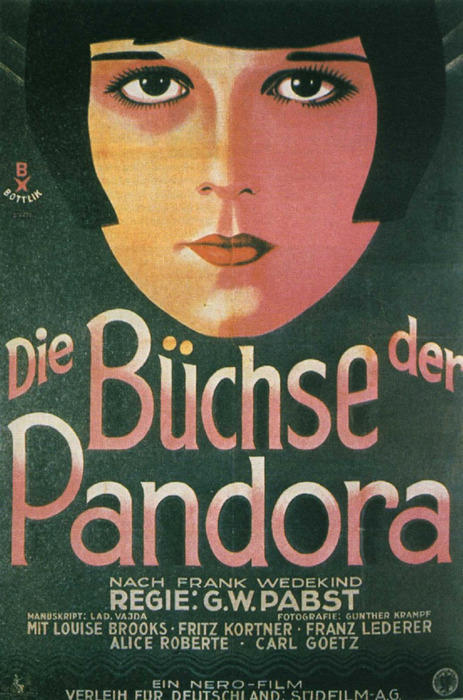
Pandora’s Box, (1929), directed by G. W. Pabst, on Friday 13th April at 7.30 pm
A masterpiece of German Expressionism, of cinematic eroticism which depicts the rise and inevitable fall of an amoral but naive young woman, who inspires lust and violence in those around her. The film remains as indelibly strange as ever, capable of reducing some critics to awed silence.
People on Sunday, (1930), directors Robert & Curt Siodmak, Edgar G. Ulmer, on Friday 20th April at 7.30 pm
This effervescent, sunlit silent, about a handful of city dwellers (a charming cast of non-professionals) enjoying a weekend outing, offers a rare glimpse of Weimar-era Berlin. People on Sunday was both an experiment and a mainstream hit that would influence generations of film artists around the world.
The Classic Film Club takes place at Ealing Town Hall, New Broadway, Ealing W5 2BY. The nearest rail and underground station is Ealing Broadway. Tickets £7 (concs £6) Membership £10 for 12 months. One day membership £1.
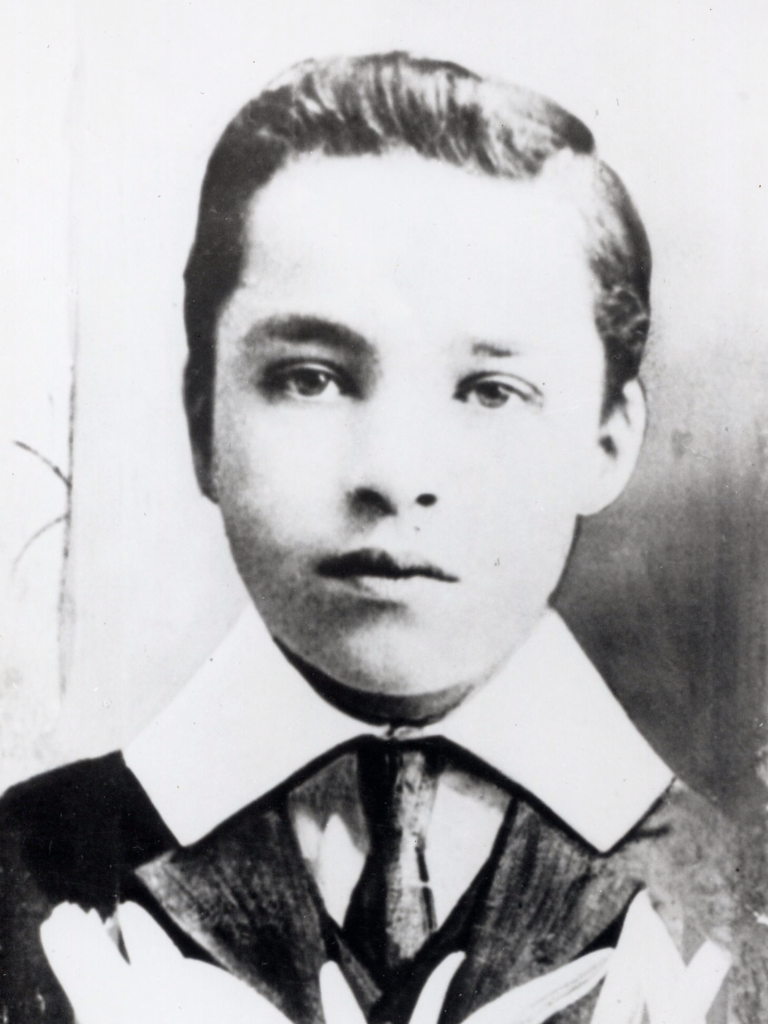
A young Charlie Chaplin, photograph from the archives of Roy Export Company Establishment
This is a guest post for Silent London by Ayşe Behçet.
Thanks for returning for part three of Charlie’s London; this edition will look at the tradition of the English music hall, the same stages that would form the backdrop to Charlie’s early years. Unfortunately, these such wonderful places do not really exist any more, except for seasonal events or moments of fleeting fashionable curiosity. Happily, those of us who love silent cinema have a greater appreciation for them.
Last week, I looked at the Walworth Road, Charlie’s supposed birthplace. This week looks at the music hall tradition, where both of Chaplin’s parents worked. And I’ll be throwing some family stories into the mix that will hopefully make you all chuckle along the way.
Charles Spencer Chaplin Senior was a butcher’s son who found his niche on the music hall stage with a certain degree of success and credibility. His specialist skills were as a vocalist and actor, talents that no doubt his famous son would inherit. However, Charlie Junior appears to credit his mother Hannah Chaplin as a larger theatrical and musical influence over his life. Hannah Harriet Pedlingham Hill was a smaller star who went by the stage name Lilly Harley. In the late 19th century, the Lambeth and Kennington area was a hotbed for music hall entertainers, including fresh-faced talents looking for their first taste of the stage, just like Hannah and Charles.
Music hall was already a tradition rooted in the working class history of London. Initially established in back rooms of public houses they provided entertainment from songs and plays to recitals and dance troupes. In a future instalment I will be talking about the Coal Hole public house in the Strand as a future place of work for Sydney Chaplin – that pub too had a back room known as a song and supper room. Offering light entertainment and a meal for a set price, song and supper rooms offered a bargain night out for most.
Doing the Lambeth Walk …
In fact, the very first musical hall was established in little old Lambeth. 143 Westminster Bridge road in fact! The theatre was called the Canterbury and designed and built by Charles Morton in 1852. Charlies seem to feature a lot in this little walk around don’t they? Other, large-scale theatres followed, including the South London Music Hall in 1860, and the London Pavilion, which appeared in 1859 and then gave its name to a grander west end establishment in 1885.
Chaplin’s parents separated when he was just three years old, yet throughout his young life he did occasionally have contact with his father who had turned to drink many years before. In his autobiography Charlie blames the music hall culture for his father’s aggressive alcoholism, which would cut his life short at the age of just 37. Drink and song were always hand-in-hand partners in the music halls. My great grandmother used to enjoy both, and the stories live on in family tales to this day.
My Nanny Harris as we called her was, as my grandmother would say, “a blinking nightmare”. She was born in a workhouse, and had two of her children in one, but she was without a doubt the comic of our family. My grandmother would die every Sunday at the sight of her climbing the steps to her Peabody flat in Southwark Street looking like a scene from Chaplin’s film One AM. My grandmother was an amazingly proud person who took care of her home and who looked after her two girls with all the love in the world and never drank. However, my Nanny Harris would sit at the dinner table slightly inebriated and slyly place her false teeth into the gravy boat, waiting for some poor unsuspecting Sunday guest to tip them innocently on to their food. These scenes almost sound like something out of one of Chaplin’s early Keystone comedies, with a poor woman who is really a man in drag unfortunately being the brunt of all the jokes.
Anyone who has seen the Richard Attenborough film Chaplin or more importantly read David Robinson’s definitive biography will know the sad yet almost heroic story of his mother’s ill-fated performance on an Aldershot stage. She lost her nerve and her voice, and her small son Charlie took fearlessly to the stage in an attempt to calm the crowd. After much cheering and coins being thrown in support (Charlie paused and apologised to the crowd while he picked up the coins, leading to further cheers) he felt the rush of performing, admitting he felt completely at home on stage.
Music seems to be a very big part of the working-class community, it definitely can be found in my mother, grandmother’s and my childhood. Four generations of my family play the piano by ear, me included. I remember sitting with my nan, her on the piano and me sat next to her singing The Band Played On. The conversation would turn to Chaplin more times than not as she sat there, her fingers hitting away at the keys. We’d usually end up singing Champagne Charlie in his honour. Looking back on it now it’s hard to believe it was such a long time ago, life always seemed simpler sat on her knee on a cold winter’s afternoon. We’d watch a Chaplin film, usually followed by a bit of Laurel and Hardy, but we always returned to our favourite, good old Charlie! As Nanny would say: “The London boy done good”.
Thanks for reading, everyone! See you all next time, on 16 April.
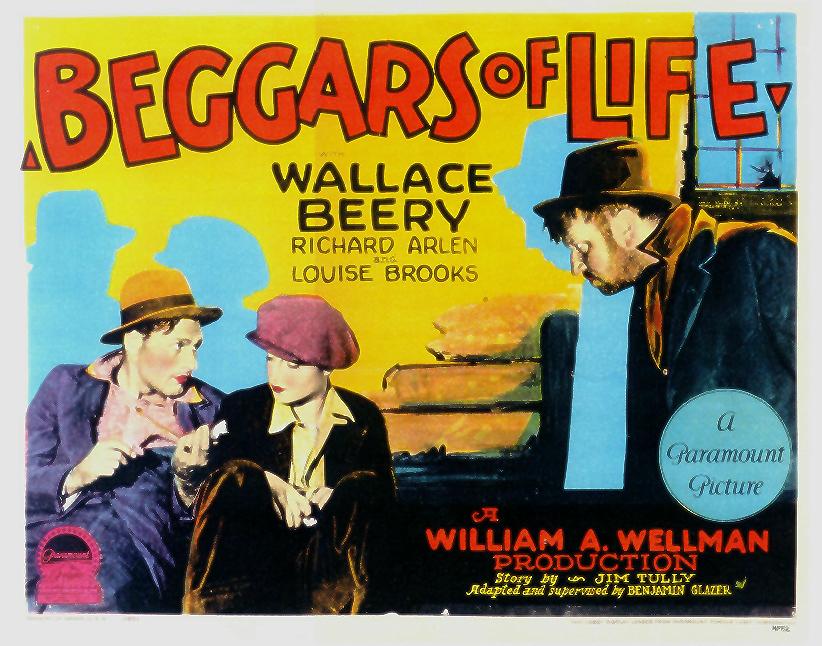
If you were at the British Silent Film Festival last year, you won’t need telling twice to book for Beggars of Life. The gorgeous Louise Brooks, leery Wallace Beery, a hulking great train, ‘Wild Bill’ Wellman at the helm and a soundtrack by the coolest skiffle band in town.
This show is a fine example of how invigorating the combination of a great silent movie and live music can be. The Dodge Brothers, an Americana-drenched quartet featuring none other than bequiffed film critic Mark Kermode on bass and harmonica, will accompany rail-riding rom-com Beggars of Life at the Barbican next month. And their numbers will be swelled by Neil Brand on the piano. Here’s a taster of one of the quieter moments from their score.
And here’s a review of their BSFF performance at the BFI Southbank last year, from the Ithankyou blog. Bryony Dixon herself says: “Never has a film and a band been more perfectly matched”. And if you want more Dodge Brothers action, don’t forget that they’re playing this year’s BSFF too, accompanying Abram Room’s The Ghost That Never Returns.
Beggars of Life screens at the Barbican on 29 April 2012 at 4pm. Tickets start from £7.50 and they’re available here. Please note this screening is rated 12A
You may have read somewhere or other that 2012 is the year of silent cinema. Well, wouldn’t that be nice? Far more certain to be an influence on your multiplex visits this year are a beautiful princess, a wicked stepmother and a poisoned apple. But silent cinema should still get a look-in.
The first of 2012’s adaptations of Snow White, with Julia Roberts as the vain queen and Lily Collins as her red-lipped, fair-skinned stepdaughter will be released in time for the Easter holidays on 2 April. Mirror Mirror is a family film, but it’s a modern twist on the fairytale, which gives Miss White a few more exciting tasks than whistling while she works. Judging by the trailer, she spends most of her time swordfighting with her bandit-dwarf chums and giving Prince Charming a spot of sass.
Released later in the summer, on 1 June, Snow White and the Huntsman is a darker, more violent version of the fairy tale, with Kristen Stewart as the heroine and Charlize Theron as the queen. There are buckets of CG effects in this one and the whole thing has a gritty Twilight-meets-Lord of the Rings vibe, although some of Theron’s scenes look uncannily like a certain perfume ad. This film tweaks the plot even further than Mirror Mirror, with Snow White as a chainmail-clad warrior on a mission to kill the queen. Chris “Thor” Hemsworth plays the hunky huntsman.
There’s even a TV Snow White in the States. Once Upon a Time is made by American broadcaster ABC and stars Ginnifer Goodwin as the long-lost daughter of Prince Charming and Snow White, trying to rescue a town of fairy-tale characters from a curse.
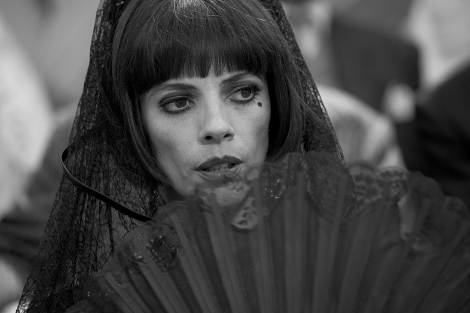
Maribel Verdú in Blancanieves
But enough of the talkies. The Snow White movie I’m really excited about this year hasn’t had a fraction of the publicity of those other flicks. In fact, it hasn’t got a UK release date yet, but it will debut on 28 September 2012 in its home country. Blancanieves is a Spanish film, directed by Pablo Berger, and it’s a Gothic horror-cum-melodrama, which retells the Snow White story in 1930s Madrid. From what I can gather, young Carmen has been tormented from childhood by her vile stepmother, so she escapes to the woods where she joins a troupe of dwarf bullfighters. Maribel Verdú plays the older woman, and Macarena García the younger. Did I forget to mention that it is a silent film? And black-and-white to boot. Splendid.
Berger’s previous feature film, which appeared nine years ago, Torremolinos 73, was a very different beast: a comedy about a man who wants to make arty films but gets into pornography instead. That at least proves he’s no stranger to taking a commercial risk. I really like the suitably Gothic approach he is taking to one of the Brothers Grimm’s nastiest tales, and this gallery of production stills on Facebook suggests that Blancanieves will be a truly gorgeous film. If you need another reason to get your hopes up, back in 2009 the Blancanieves script won a special award at Sundance to help fund the finished film.
There’s something else a little special about Blancanieves, though. The score for the movie is by Oscar-winning composer Alberto Iglesias, who has written for films including Tinker Tailor Soldier Spy and The Constant Gardener, as well as several of Almodóvar’s works. The wonderful news is that, according to the stories I have read, Blancanieves will complete a tour of cinemas with live orchestral accompaniment before its theatrical release. We’re still waiting for The Artist to do the same, though such a jaunt is in the works, we hear.
It’s facetious to draw comparisons at this stage with that other European monochrome silent, but I’m tickled pink to see this outsider muscling into what has been pitched as a battle between two blockbusters. There is always room for a silent film or two to cleanse our palates of all that too-familiar fare.
So which is the fairest of them all? Only time will tell, but I clearly already have a favourite – and a fairytale ending in mind. The other question is, how will Blancanieves compare to the whimsical 1916 Snow White, starring Marguerite Clark:
Read more about Blancanieves here. Thanks to the wonderful Nobody Knows Anybody blog for first alerting me to the film.
Walthamstow is at the very heart of the British film industry, or at least it used to be. Between 1910 and 1930, 400 movies were made in London’s E17 postcode at four studios, including a very grand establishment on Wood Street that was built by the Broad West Film Company in 1914. Nowadays, the suburb is more associated with a 90s boyband than film pioneers, but that doesn’t mean that the locals have turned their back on the area’s cinematic heritage. This summer, for example, the BFI will be showcasing the silent work of a little-known local film-maker called Alfred Hitchcock.
Check out this picture of the Wood Street Studio in the silent era. And do read this interview by Kevin Brownlow with Tilly Day, a woman who worked there as a Continuity Girl at the time. Her memories of a sharing a scene with Kenneth McLaglen, being frightened by the horses on location shoots in Epping Forest and watching Walter West directing silent films are all fascinating.
Broad West Film Company's Wood Street studio
The Wood Street Pop-up Picture Palace will celebrate the days when Walthamstow was in the movie business in grand style on Friday night, with a special event that includes live music and the chance to dress up like a vintage film star. There’ll also be a screening of a new silent film, which incorporates animation and live action, and was filmed with help from the children of Woodside Primary School. I haven’t seen the movie myself, but the artists involved in the project are Elizabeth Hobbs, who makes animated films, and Emily Tracy, who produces beautiful light sculptures and collaborative art projects.
The Picture Palace's home in Wood Street Indoor Market
I popped down to the project’s offices at the new Wood Street Indoor Market on the weekend, but sadly they were closed. However I did spot a few sketches of the old Wood Street Studio that certainly intrigued me. Do get along to the special event on Friday 30 March, if you can. It’s free and promises to be very interesting and a lot of fun.
To read more about the indoor market, and other cultural events in E17, visit the very hip and happening Walthamstow Scene website.
Just a quick note to let you gorgeous people know that this month’s issue of the esteemed New Empress magazine is a silent special. If you don’t already know New Empress, it’s a small magazine with big ideas, appearing quarterly and covering everything from new releases to the furthest recesses of film history. There’s a website too, which has lots to explore, but no New Empress magazine content is reproduced online. You can read the site’s early cinema features content here and also regular reviews of silent film screenings among the In Review pages.
Over to New Empress to reveal more about this extra-special silent issue:
After the ruckus The Artist caused during the awards season we thought it only fitting to deliver a tantalizing array of features and flashbacks on the silent era, consequently our next issue is a Silent Film Special.
Inside this issue you will find articles on Who Invented Cinema, Reservoir Dogs in Phenakistoscope, The Bluffer’s Guide to Silent Film, Silent Hitchcock: The Voiceless Origins of a Visual Master, The Silent Stories of a host of early film icons and a special column from silent film expert Matthew Sweet.
Just like the early world of cinema, however, we’re all about variety and thus on our “Talkie Takeover” pages you’ll find a smattering of articles on talking pictures. Check out our piece on Hollywood Versus Videogames, educate yourself with our unique history of film studio logos and rediscover the B-Movie master with horror speicalist Nigel Floyd’s review of Corman’s World: Exploit’s of a Hollywood Rebel.
In the interests of full disclosure, I should confess that the author of that Hitchcock feature is yours truly. It should also go without saying that I’m very keen to read Matthew Sweet’s column, and intrigued to the point of pain by the thought of the Reservoir Dogs Phenakistoscope.
You can order New Empress online or subscribe here. The mag is also stocked in the BFI Filmstore, the Prince Charles Cinema and the Cornerhouse in Manchester. The silent special is out now – enjoy!
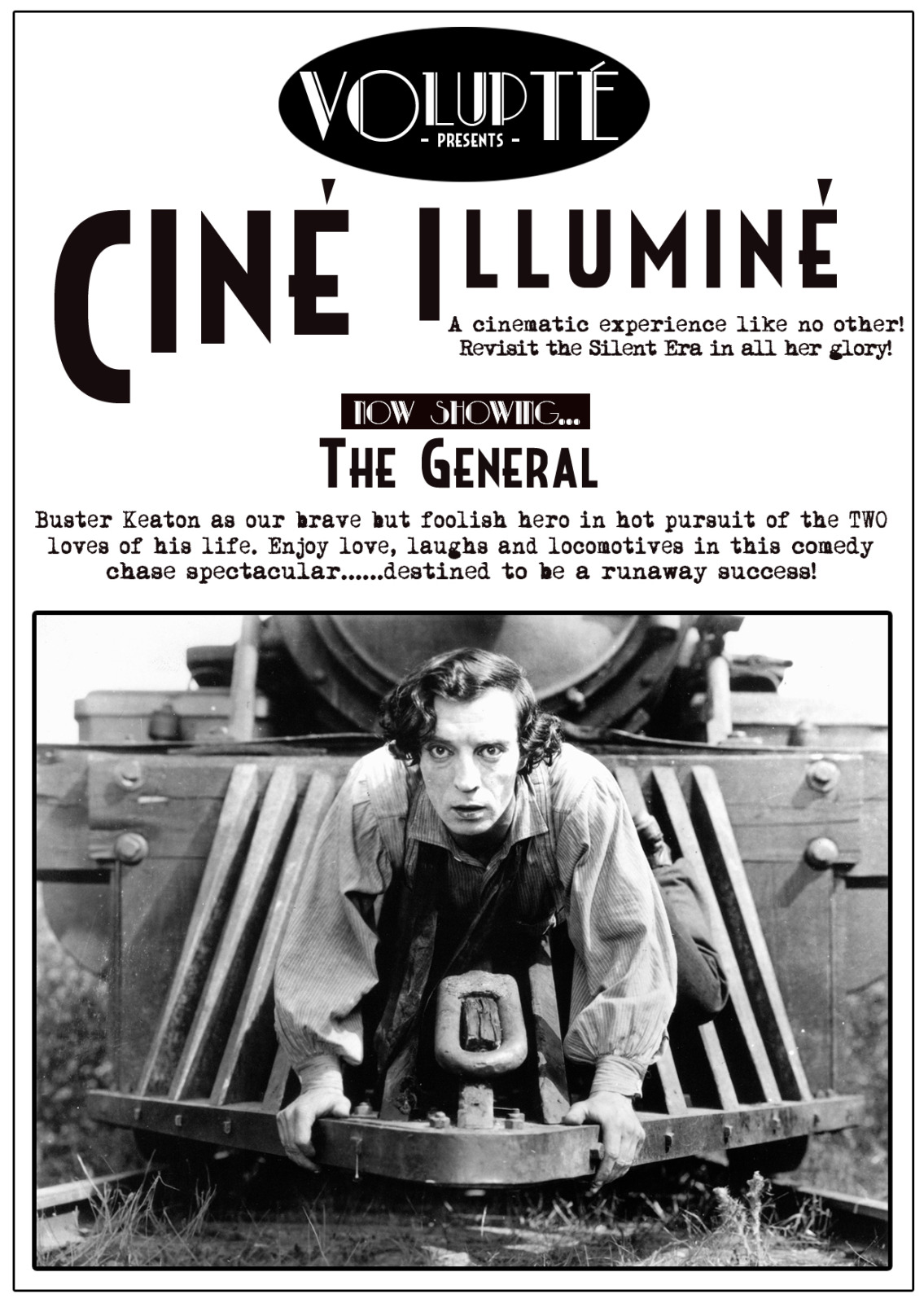
There’s nothing like a little prohibition-era pizzazz to to jazz up a silent movie screening. And the Volupté Lounge in central London is all about glamour. It’s a “burlesque cabaret bar” that calls itself the “the most decadent little supper club in town”, and if that doesn’t get you hot under the collar, check out its plans for silent cinema screenings. Phew!
On the first Sunday of every month, the club will show a silent movie in its underground cinema, the Ciné Illuminé, with live piano accompaniment from Luke Meredith. The series begins on Sunday 1 April 2012 with screening of the Buster Keaton’s must-see masterpiece The General. It sounds as if these shows will definitely be worth dressing up for too, promising usherettes, vintage cocktails and a “Bon Bon bar” for your sweet tooth.
Doors are at 6pm for a screening at 8pm. Tickets are £7 in advance or £9 on the door. You’ll find the Volupté Lounge at 9 Norwich Street, EC4A 1EJ. Call 0207 831 1622 or email reservations@volupte-lounge.com to book tickets. Don’t forget to check out the Facebook page for future screenings.
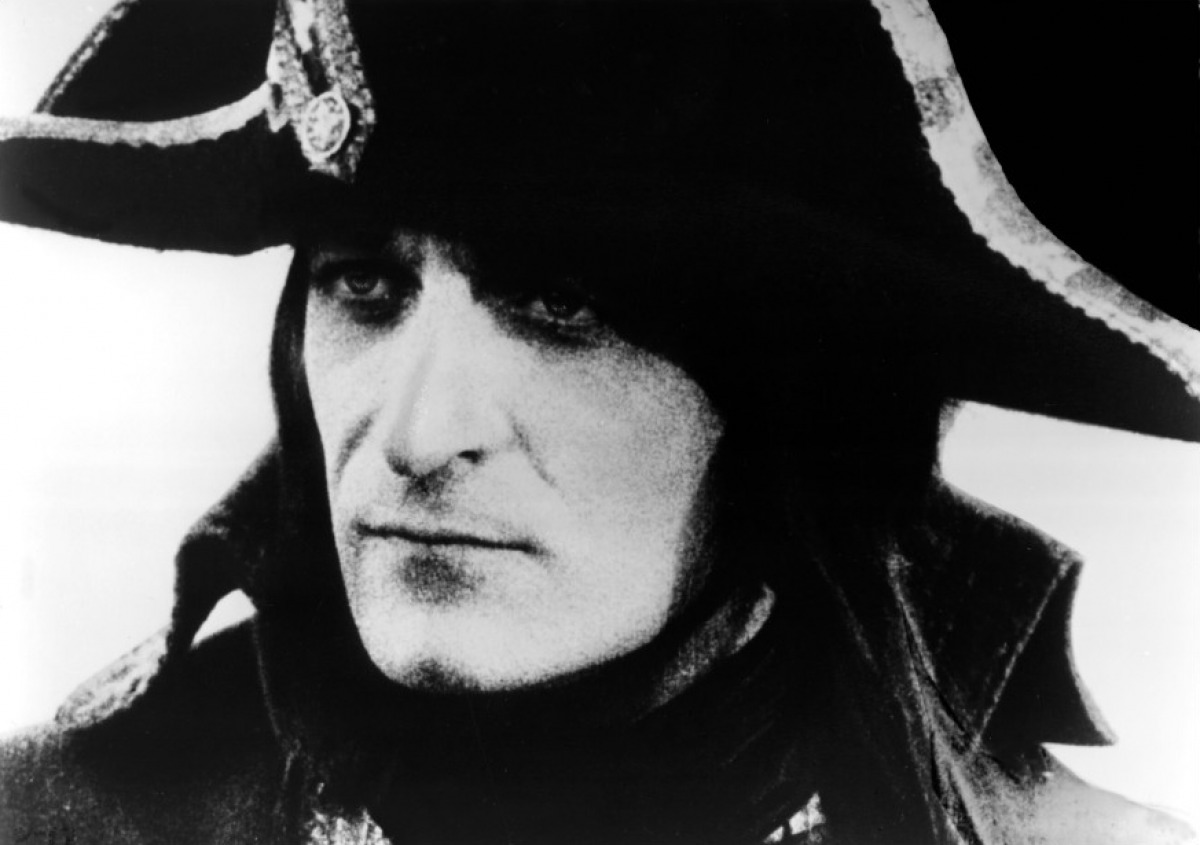
This weekend, something momentous is happing in California. Kevin Brownlow’s mammoth restoration of Abel Gance’s legendary epic film Napoléon is screening at the Paramount Theatre in Oakland, accompanied by the Oakland East Bay Symphony Orchestra playing the US premiere of Carl Davis’s wonderful score. Wow. That’s five-and-a-half hours of majestic, groundbreaking silent cinema with fantastic live music, and it’s not an opportunity that comes along very often. If you want to be there, you need to know that there will be two screenings this weekend, and two the next: tickets are available here, starting from around $50 and going up to $550 for a premium seat including a gourmet dinner and reception with Brownlow and Davis.
Unfortunately, it’s not a cheap proposition for us Silent Londoners if you throw in the cost of flights, hotels and taking leave from work. While a few friends of the blog are making the trip west for Napoléon, most of us will be sitting at home, trying not to let the jealousy get the better of us.
But there’s no need to succumb to the green-eyed monster. Napoléon last played in London in 2004 and although Brownlow is adding new footage all the time (the original film ran at around nine hours) so the California screenings will technically be an advance on those shows, it’s only a matter of time before Gance’s masterpiece makes its way back to us. What I’m hearing, from reputable sources, is November 2013, at the Royal Festival Hall.
However, if that still seems like a long way away, and you’re suffering from FOMO (otherwise known as the Fear Of Missing Out), here is a five-point guide to help you pass the time, and overcome the Napoléon blues.
The story of how Abel Gance struggled to make his masterpiece, how it was shredded and how Kevin Brownlow pieced Napoléon back together starting with the 9.5mm snippets he bought as a schoolboy is worthy of a film adaptation itself. You can read all about it in Brownlow’s book, which is available to buy here with a sampler CD of Davis’s score. Napoléon has been all over the American media recently too, in the runup to the Oakland shows, so there’s plenty more to devour. You can read Martin Scorsese in Vanity Fair, or this neat MUBI post, which tells the story of the film via its many posters. The Wall Street Journal and New York Times both printed heavyweight features about the film, Gance and Brownlow’s restoration. If your French is up to the task, the San Francisco Silent Film Festival blog has posted some original articles from the French press about the making of the movie. I also enjoyed this Smithsonian blog that pushes The Artist to one side to say that this restoration is the silent film event of the year. And who can argue with that?
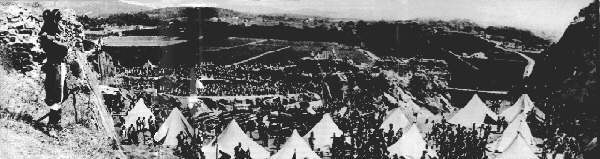
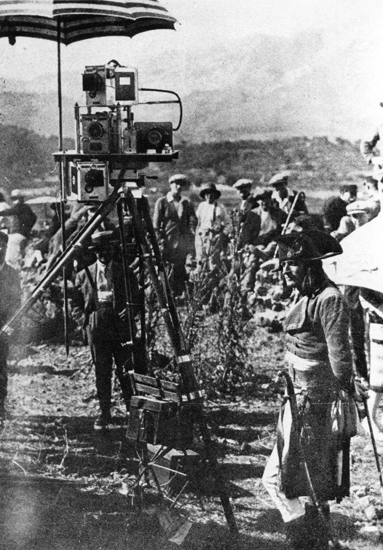
A Napoléon triptychThree movie cameras stacked on top of each other on the set of Napoléon to film in ‘Polyvision’.
3 See the bigger picture
Of Gance’s many extraordinary technical and artisitic innovations in Napoléon, the most famous must surely be the film’s climactic triptychs: a way of creating an early form of widescreen that required three cameras on set and three projectors in the cinema. This Polyvision effect is also one of the reasons why the film is so rarely shown. Intrigued? On 29 April, more or less fresh from the Oakland screenings, Kevin Brownlow is speaking at the Widescreen Weekend festival in Bradford, and it’s a fair bet that he will mention Napoléon. The subject of his lecture is: ‘From Biograph to Fox Grandeur. Early Experiments in Large Format Presentations’. It strikes me that if you want to learn more about Polyvision from the man who knows more than most, that’s the place to be. If you’re lucky, he may even screen a clip or two.
4 Gen up on Gance
Of course, Napoléon wasn’t Gance’s only film. It wasn’t even his only great film. If you have the technology to play Region 1 discs, Gance’s anti-war film J’Accuse (1919) and his impressionistic railway melodrama La Roue (1923) are both available on very nice DVDs, courtesy of Flicker Alley. At around four-and-a-half hours long each, they are ambitious by any standard, although they can only hint at the scope of Napoléon, and they’re well worth devoting a clear afternoon and a coffee pot to. If you’re shopping around for import DVDs, you may well find the four-hour cut of Napoléon, with Carmine Coppola’s score. It’s not quite the real deal, of course, but still fascinating.
La Roue (1923)
5 Clear out your attics
Brownlow’s restoration of Napoléon is magnificent, but it’s still not complete. Wouldn’t it be wonderful if there was more waiting to be discovered? And unearthing the final reels of a film this important is surely every silent cinema geek’s number one fantasy. Apart from the ones that involve a close encounter with Buster Keaton/Louise Brooks (delete as applicable), that is.
Photograph of Charlie Chaplin from the archives of Roy Export Company Establishment.
This is a guest post for Silent London by Ayşe Behçet.
Hello again everyone! First, thank you for coming back for part two of my personal guide to Charlie Chaplin’s London. The journey is hopefully going to be interesting and fun with many unknown treasures along the way.
When I was thinking about the best way to write this blog I pondered the structure for quite a while. Should I group places together by theme? Should I piece them together by their visual representations within Chaplin’s films? Finally I realised the best way was the start at the very beginning. Ironically this was never how Chaplin made his movies; he would often think of a scenario and work on the beginning and end at a later time. Yet Chaplin’s background in London helped to set the scene for some of his best visual work.
The plaque marks the spot?
Charles Spencer Chaplin was born in Lambeth, South London on 16 April 1889, supposedly in Walworth, an area not far from East Street Market. Walworth and Lambeth officially lie within the borough of Southwark. The Walworth Road is a rather long stretch: all the way from Westminster to just beyond Camberwell. Charlie often described open-top tram journeys towards Westminster and even though he referred to his home as Walworth and Lambeth its position just beyond the north of Lambeth was also close to Waterloo. I was born at one end of the Walworth Road, the end closest to London Bridge, but I’m still from Southwark/Lambeth.
Are you confused? I don’t blame you! I believe this is why Charlie always referred to Lambeth as his birthplace – it’s easier! Phonetically, us Londoners are a very strange bunch, immigration had helped create a shift in the dialect over the years and certain words do not spell as they sound, and we also speak rather fast. For instance, if Charlie had commented that he was born in Southwark no doubt a journalist somewhere would have heard “Suffolk”, can you imagine where the myths would have ended up then?
East Street Market has been officially open since 1880, but there has been trading in this part of London since the 16th century.
Today the East Street Market still stands on the same site and at the entrance a blue plaque is posted on a wall above a clothes shop to mark the suppose birthplace of Charles Chaplin. In fact, no one really knows if this is true. There has been a lot of speculation about his origins, especially with the recent release of the MI5 file stating no birth certificate exists. Well apart from the fact that this was common in Victorian England. I would like to throw something else into the mix. Has anyone here actually dealt with Southwark Town Hall? I rest my case!
East Street AKA East Lane
Now, in the most recent edition of his book My Autobiography Chaplin states that he was born in East Lane, Lambeth at 8 o’clock in the evening. Here is another sign his origins show through even when he may not have meant them to! In his introduction, the eminent Chaplin historian and biographer David Robinson says that only south Londoners refer to East Street as East Lane, and I for one can vouch for that. My grandmother always called it this and people living in the area still do to this day.
As a child I frequently visited the Walworth Road, the treat was pie and mash in Arments and Sarsaparilla in Baldwins. In winter the Sarsaparilla was warmed with slices of orange and apple and served from barrels. When Charlie was a boy, Arments was located on the Walworth road itself, but it was relocated in 1914 to its current position just behind it. Baldwins has always been in the same spot; maybe as a child Charlie too drank warm Sarsaparilla there? Not far from where Arments was originally situated is a fishmonger’s, which has been there since the Victorian era. My mother would always buy fish there on a Friday and remembered always buying my grandmother bloaters that she would proceed to smoke. Charlie also fondly recollects his mother buying penny bloaters on a Friday while they lived at 3 Pownall Terrace, Lambeth, most probably at the same shop.
Along this journey I aim to find out as much as I can about not only my film hero but also about myself and my heritage. I have always been a proud South Londoner and knowing I walk in Charlie’s footsteps is an immense honour!
Thank you so much for reading. The next instalment will appear on 2 April.
More than 100 years ago, film-makers Mitchell and Kenyon advertised their services to the public with the line: “See yourselves as others see you.” A new film, shot last summer in London, offers us the opportunity to see ourselves, now, as Mitchell and Kenyon might have seen us. Londoners is a 21st-century “actuality”, comprising film shot on the streets of the capital, outside Arsenal’s Emirates Stadium, in Hyde Park and at the Notting Hill Carnival. The twist is that the footage was filmed on a 1915 vintage camera, an old-school hand-cranked machine.
Director Joseph Ernst discovered the camera in a warehouse filled with old film-making equipment, and taking the Mitchell and Kenyon films as his inspiration, set out to record London circa 2011, but at 18 frames per second. As he told Wired.com, the people he photographed with the vintage camera were just as happy to be filmed as the customers of his Edwardian predecessors, and just as astonished by the technology. “Modern society finds no comfort in the digital camera. We shy away from them. We complain if someone points it in our direction. But if you bring out some spectacular relic from the past, people forget all that. They’re surprised that such a thing still exists and that it actually still works.”
And you can see that amazement in the film, which I was lucky enough to be granted a preview of. Londoners who might well be expected to be unmoved by the sight of a cameraphone, camcorder or iPad pointing in their direction, smile, point and nudge their neighbours when they see Ernst’s vintage machine. A Hell’s Angel dances an old-timey jig, a football fan guffaws and a wag at Speaker’s Corner mimics the cameraman’s movements – the the hand-cranking motion we all recognise from games of Charades. A group of photographers on Millennium Bridge snap the camera from all angles with their hi-tech DSLRs. The dancers at Carnival put on a display too, one that would probably have made the Edwardians blush.
But perhaps the Edwardians weren’t as stuffy as we think. There’s a uncanny, out-of-time quality to Londoners, with its faded, flickery footage of people who dress, stand and gesture just like us, but walk, thanks to the lower frame rate, with a hint of the jerky stiffness we associate with people from days gone by. It’s a reminder, if we needed one, that people don’t change very much at all over the years. Yes, the people in Londoners are more casually dressed, less formal, and overwhelmingly more racially mixed than in those Mitchell and Kenyon films, but they’re just as likely to hurry past or pose for a close-up, to smile or leer at the camera. The faces are the same. In a scene of commuters hurrying down the steps to a tube station, we’re drawn to a man who’s taking the descent a little slower, clutching on to the handrail, struggling to contain the tremors that are running through his body. It seems as if only the film-maker notices, as the crowd streams past him unaware, that the rush-hour journey is not the same for everyone.
In fact, even when the film is joyous, as when primary school children are bouncing in front of the lens, Londoners strikes a mournful tone. The music, which is taken from a gorgeous Bat For Lashes track, sets the mood. But there’s more to this movie. At a time when we’re losing our grip on real film, and apps from Hisptamatic to Silent Film Director offer us to the chance to remodel our snaps and home videos as relics from another time, Londoners’ deliberately archaic, lo-fi construction offers a more powerful blast of nostalgia. In another hundred years, the technology this documentary uses will seem irredeemably quaint, but so too will its subjects’ clothes, their junk food and even their risqué dance moves. But a project such as this compresses the years and shrinks the distance between us and our forebears. Mitchell and Kenyon would feel right at home, and I hope we see something just like it in 2112.
You can find out more about Londoners, and see out-takes from the film, on the Facebook page at facebook.com/LondonersDoc
This is a guest post for Silent London by Greg Ward, author of Blogtanic.
Working on Blogtanic, my Titanic centenary blog – I was looking for stories about chairs on the Titanic, but let’s not go into that – I stumbled across this intriguing snippet of movie history, in the New York Evening World of April 27, 1912.
The Titanic cinema riot
At this point, it’s still less than two weeks since the Titanic went down. Three theatres in Bayonne, New Jersey, 10 miles from downtown Manhattan, announce that they’re going to show moving pictures of the sinking. Knowing that no such footage exists, the local police chief declares he will only allow them to show genuine images. And so the audiences riot. “Having been led to believe they were to see something sensational [they] uttered loud protests. Seats were torn loose …”
Only in New Jersey did the police take it upon themselves to censor such shows. All over the world, moving picture houses were presenting fake “newsreel” images of the Titanic. Typically they’d include actual film of the Titanic’s Captain Smith, shot the previous year but captioned as though it had been taken on the fatal voyage, cobbled together with close-ups of other liners and scenes of icebergs bobbing in the ocean.
Advert in the Tacoma Times
Cinema-goers placed a heavy premium on genuine footage – even though there was none of the disaster itself. In this advert, from Tacoma, Washington, a theatre promises to pay out $5,000 if its pictures aren’t genuine.
Dorothy Gibson
Meanwhile, the same week as the New Jersey riots, and in the same state, director Etienne Arnaud had already started shooting the first-ever Titanic feature film, Saved From The Titanic. A mere ten days earlier, 22-year-old bona-fide movie star Dorothy Gibson had escaped on the first lifeboat to leave the sinking ship. Now, working to her own script, she re-enacted her ordeal wearing the self-same clothes, and then segued into a fictional story about finding love with a sailor. Two scenes were even filmed in colour, using the Kinemacolor process, and it was released on 14 May.
By the time the German feature film In Nacht Und Eis was released that August, four months after the tragedy, the public appetite for sensational images seems to have been sated. Trade papers solemnly reported that Titanic films “don’t attract audiences any more”.
Tell that to James Cameron.
Blogtanic.wordpress.com is written by Greg Ward, the author of the new Rough Guide to the Titanic. Read more about the BFI’s film screenings to commemorate the Titanic centenary on Blogtanic here.
Miles Mander and Madeleine Carroll in The First Born (1928)
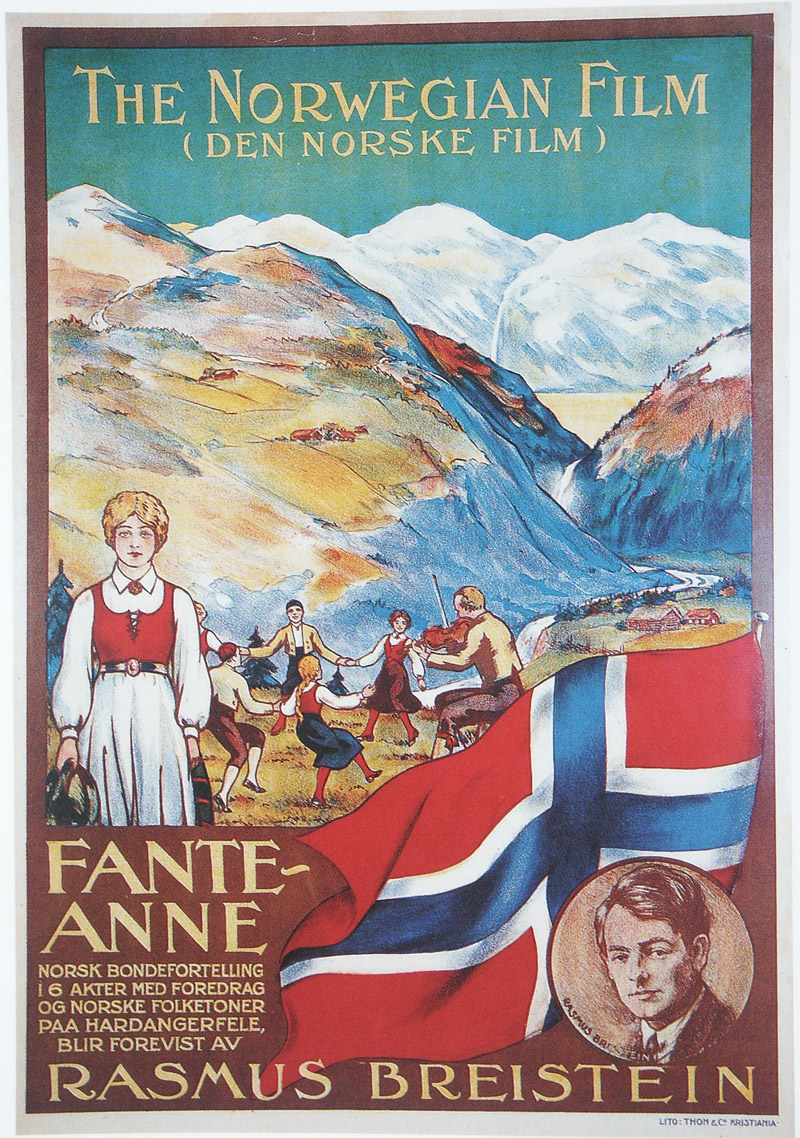
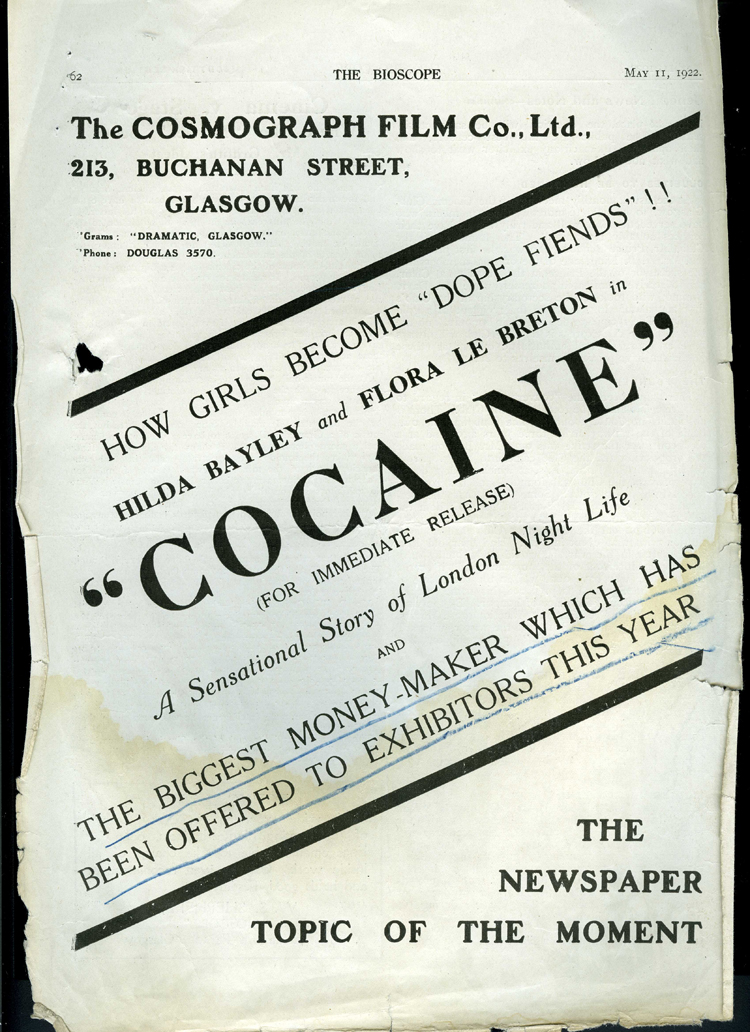
I’m very pleased to say that more details of the programme for next month’s British Silent Film Festival have just been released. The festival takes place in Cambridge this year, from 19-22 April. Delegate passes for the weekend are now available to buy here, and the full schedule is available to browse here. Screenings will include Graham Cutts’s Cocaine, to accompany the ‘What the Silent Censor Saw’ programme, The First Born, with Stephen Horne’s ensemble score, Norwegian drama Fante-Anne (Gipsy Anne) with a new score by Halldor Krogh, Soviet documentary Turksib with accompaniment from Bronnt Industries, folk films from the ‘Here’s a Health to the Barley Mow’ collection and new restorations from the Imperial War Museum. There will be some British silent cinema highlights from 15-year history of the festival, a Grand Guignol strand of macabre movies and Ian Christie will deliver the Rachael Low lecture.
All this plus the Dodge Brothers will be scoring The Ghost That Never Returns live, there’ll be an outdoor screening on the Sunday night, golfing tales from PG Wodehouse, some classic Cambridge comedies and a couple of WW Jacobs adaptations in the form of The Boatswain’s Mate and A Will and a Way. The full announcement is pasted below.
Fante-Anne (1920)
The British Silent Film Festival will be celebrating its 15th Anniversary in Cambridge at the Arts Picture House. The four-day programme will be packed with rarely-seen films from the BFI and other international archives featuring a wide range of fascinating subjects such as: P.G. Wodehouse’s golfing tales including The Long Holeand The Clicking of Cuthbert; rarities based on the charming coastal stories of W.W. Jacobs including The Boatswain’s Mate and A Will and a Way; a celebration of thecentenary of the British Board of Film Classification with a look at ‘What the Silent Censor Saw’ with the rarely screened and risqué film Cocaine. We’ll be tracing the origins of Cambridge’s brand of ‘university humour’ before the Footlights with a selection of burlesque films from the 1920s and featuring A Couple of Down and Outs, the ‘silent Warhorse’ made in 1923 which tells the tale of a WWI soldier who goes on the run with his warhorse to save it from the ‘knacker’s yard’. We are also delighted to be screening the 1920 classic Fante-Anne (Gipsy Anne), directed bythe greatNorwegian director Rasmus Breistein; accompanied by a new musical score by composer and music producer Halldor Krogh.
Trade ad for the scandalous Cocaine (Graham Cutts, 1922)
We’ll also be featuring some 15th anniversary highlights including the legendary Grand Guignol programme of macabre stories with a twist in the tale and we’ll be including a selection of the best of British silent feature films screened over the past fourteen years. The Imperial War Museum will be presenting their latest silent restorations from their fabulous collection and we are very pleased to announce that Ian Christie will deliver the Annual Rachael Low Lecture.
This year’s ‘hot tickets’ will be the wildly popular Dodge Brothers performing their distinctive brand of Americana to The Ghost That Never Returns at the West Road Concert Hall; Here’s a Health to the Barley Mow with live folk accompaniment to silent films of English folk traditions and the Bronnt Industries playing to the stunning Soviet film Turksib. Regular Festival collaborator Stephen Horne will be performing his fabulous new ensemble music score to The First Born, a dizzying tale of sex, death and British politics.
Screenings will take place at the Arts Picturehouse, Emmanuel College and the West Road Concert Hall. The Festival will draw to a close with an outdoor highlights screening on Magdalene Street in the evening of Sunday 22 April.
‘You didn’t really direct Mary. She was a very sure person in her own category’ – Howard Hawks
This is a guest post for Silent London to mark International Women’s Day by Kelly Robinson, curator of the Birds Eye View Sound and Silents programme.
Birds Eye View’s Mary Pickford Revived event is part of WOW – Women of the World Festival 2012 at the Southbank Centre. Amarilly of Clothes-Line Alley with The New York Hat and Female of the Species screen at the Southbank Centre on 9 March at 8pm (find out more). Sparrows screens at Hackney Picturehouse on 11 March at 4pm (find out more).
“My success has been due to the fact that women like the pictures in which I appear” – Mary Pickford
In any serious study of early cinema, prominent men such as the “Father of Film” DW Griffith and silent clown Charles Chaplin are always first to feature. Happily though, recent literature has sought to readdress this critical gender imbalance by also highlighting the contribution of similarly extraordinary pioneers – including Mary Pickford.
Pickford was certainly a creative force on a par with Chaplin, and the two had a lot in common. Like Chaplin, she also performed in the theatre from a young age to support her family. At 13, a precocious Pickford harangued theatre impresario David Belasco to hire her, apparently telling him: “I’m the father of my family.” Like many other theatre actors, she was initially disdainful of cinema but was drawn in by the financial rewards. She enquired at the bustling Biograph studios for work, and it was here that she met Griffith, the director of two of the beautiful shorts that feature as part of the Southbank programme.
The films in this programme span a period of just seven years but this was a time of rapid change. Indeed, in the months that separate Griffith’s The New York Hat and Female of the Species we can see striking developments in film form and style. The volume of films Biograph churned out was phenomenal and between 1909 and 1910 Pickford appeared in 80 films for Griffith.
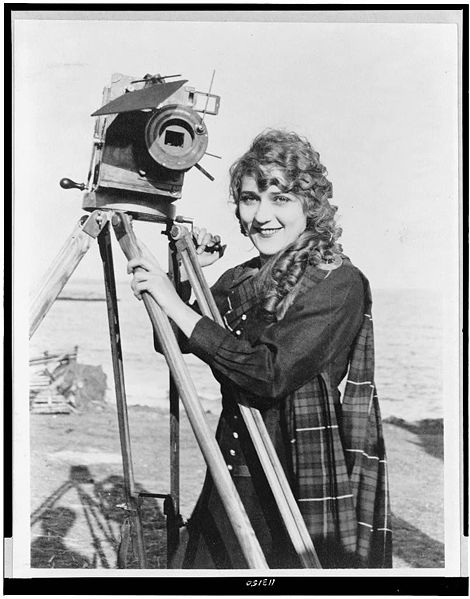
Mary Pickford, America’s Sweetheart (Courtesy Birds Eye View)
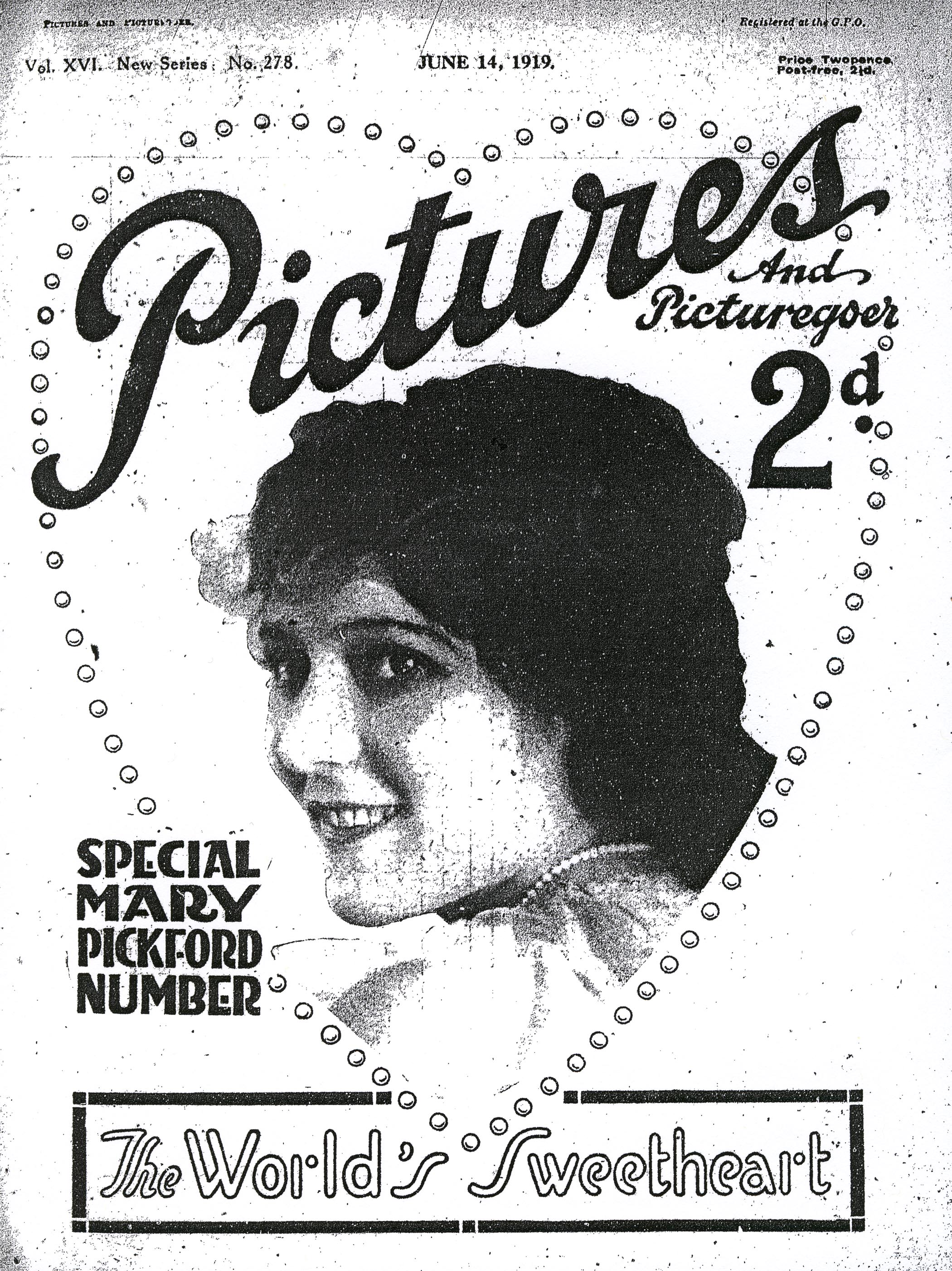
Pickford said: “I got what no one else wanted and I took anything that came my way because I decided that if I could get into as many pictures as possible I’d become known, and there would be a demand for my work.” Indeed she quickly became a favourite with audiences, although they didn’t yet know her name; she was referred to as the ‘”girl with the curls”. Once she had established the extent of her fame, she asked for a rise from Griffith and her name on the screen.







 Silent London