“Just a little note” is so often code for “here comes some shameless self-promotion”. So, here goes.
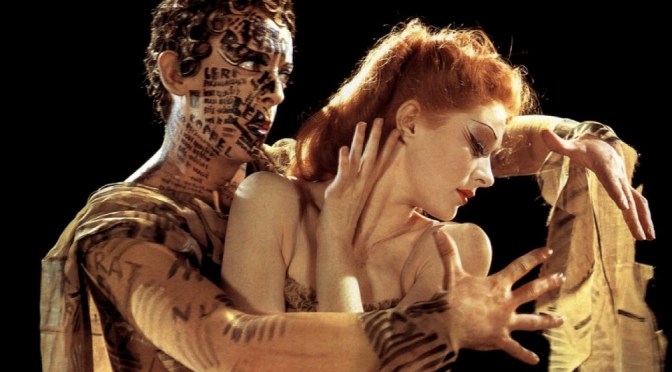
Just a little note to say that today is publication day for my second BFI Film Classic. As I posted earlier in the year it is on The Red Shoes (Michael Powell and Emeric Pressburger, 1948), a film with several connections to silent cinema and to the Roaring Twenties – but strictly speaking, off-topic for this website. Still, I hope that if you love the film, you like the book.
The BFI has just launched its Cinema Unbound epic celebration of Powell and Pressburger and The Red Shoes will be re-released on 8 December. So I will be speaking at lots of screenings of the film across the country. To find out where I will be and when, follow me on Twitter/X or Blue Sky or check back here every so often.
The book is available from all good bookshops, and the publisher’s page is here. I am delighted to have had some press mentions already, but all reviews on Amazon and Goodreads are very, very gratefully received. Thanks so much for reading!
“My memory goes back to the very first films. My ambition goes far ahead of today.”
Michael Powell, on the ballet sequence of The Red Shoes
Let me just tap this microphone a couple of times. Cough once. Thumbs up. We’re good to go? I have a little announcement to make and it is a wee bit off-topic.
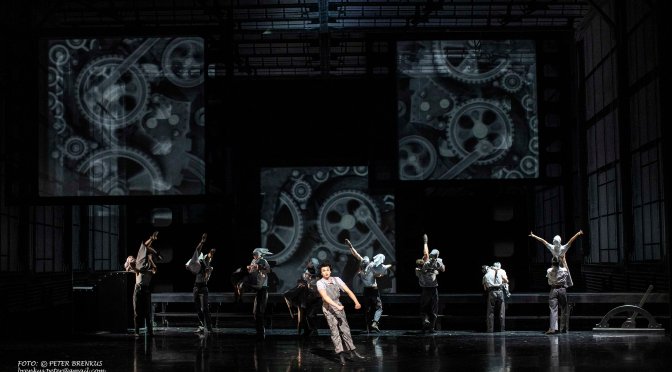
The thought of a telling a story without words never fazed Charlie Chaplin, creator of some of the most indelible silent films ever made. But can his own complex life story be related in just over two hours, in dance? I went to Bratislava to find out. Yes, really.
Tulák Chaplin (the name means “Chaplin, the Tramp” in Slovakian) is a bio-ballet for the slapstick star-director, which premiered at the Slovak National Theatre last March – that’s in beautiful Bratislava, Slovakia. It’s part of the celebrations for the 130th anniversary of Chaplin’s birth. The choreography is by the Brazilian Daniel De Andrade, whom you may know from his work with the Northern Ballet, and the score is by the estimable Carl Davis, whose work you certainly do know if you are a regular reader of this blog – he has written some of the most iconic orchestral scores for silent film, not least of which is his epic composition for Napoléon. The two collaborated once before on a commission for the same theatre – that time it was a portrait of Nijinsky, another great physical artist of the 20th century. Continue reading Tulák Chaplin review: a ballet tribute to the Little Tramp→
Dance and silent cinema have a natural affinity. Many of the earliest films were records of serpentine dances: mesmerising, rainbow-tinted swirls. And these days, when choreographer Matthew Bourne discusses his blockbuster productions with grand sets inspired by German Expressionism, he says: ”it’s almost like pure cinema. It’s like a silent film.”
It’s no surprise then that silent film-makers pointed their camera at the dance stage and the best ballerinas of the day. And the ballet world was fascinated by cinema too. This intriguing article by Henry K Miller relates the thwarted ambitions of Sergei Diaghilev, director of the Ballets Russes, to make a colour film of Tchaikovsky’s ballet The Sleeping Princess. A short season at the BFI this August celebrates one of the greatest ballerinas of all time, Anna Pavlova, who arranged for many of her dances to be filmed and appeared in a feature film too:
‘Next to seeing Pavlova in person, there is no better substitute than seeing her through the mechanism of the kinema.’ So noted a critic in The Guardian following the release of her American feature film, The Dumb Girl of Portici, in 1916. As a ballerina, Anna Pavlova (1881-1931) was as an inspiration; she was also an independent career woman and mega-star loved by the media and her audiences throughout the world. She was also the first major ballerina to truly investigate the medium of film during the 1910s and 1920s. Not only did she star in a Hollywood feature film, but also had a number of her solos filmed. At the end of her life, Pavlova travelled with two movie cameras to record her productions and travels. This season includes documentaries, recordings of dance and features indicating the range of ballets she performed and placing her screen career in context with contemporary recordings of dance.
The BFI will be showing that film, Lois Weber’s The Dumb Girl of Portici (1916), which features this beautiful sequence of Pavlova dancing with an “invisible” partner. The film will be screened with live piano accompaniment and an introduction by dance historian Jane Pritchard.
The Dumb Girl of Portici is an adaptation of the French opera of the same name. Watch out for the character Masaniello, who is played by Rupert Julian, the same man who directed The Phantom of the Opera in 1925, which opens with this gorgeous ballet scene:
In the BFI’s Pavlova season, there will also be a chance to see Evgeni Bauer’s The Dying Swan (1917), in which Vera Karalli, a Russian silent film actor and dancer with the Bolshoi ballet, performs the famous routine from Swan Lake. The film will be shown alongside an Omnibus documentary about Pavlova, and with a score by Joby Talbot.
Click here for more details of the BFI’s Anna Pavlova season.


 Silent London