Tag Archives: GW Pabst

The 11 best silent movie dance sequences

Silents by numbersThis is a guest post for Silent London by Alison Strauss, director of the Hippodrome Festival of Silent Cinema, Bo’ness. The Silents by Numbers strand celebrates some very personal top 10s by silent film enthusiasts and experts.
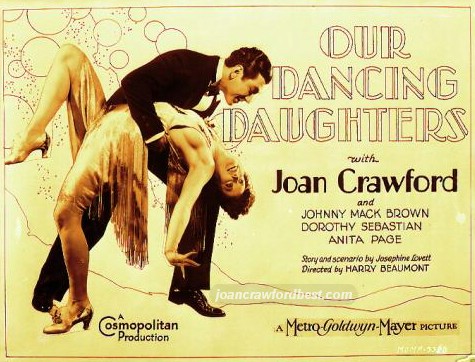
Our Dancing Daughters (1928)

Our Dancing Daughters (1928, Harry Beaumont)

The moment when fun-loving flapper Joan Crawford launches herself on to the dance floor and sets the party alight with a high-tempo Charleston, ripping her skirt to a more liberating length as she goes.

Danse Serpentine (1896, Auguste and Louis Lumiere)

The 45-second kaleidoscopic record of a vaudeville dance – created by pioneering dancer Loie Fuller – in which an anonymous performer elegantly whirls her arms in the long-flowing fabric of her costume to mesmerising effect, thanks to the immaculate hand-tinting work of the Lumiere Brothers’ army of finely skilled women behind the scenes.

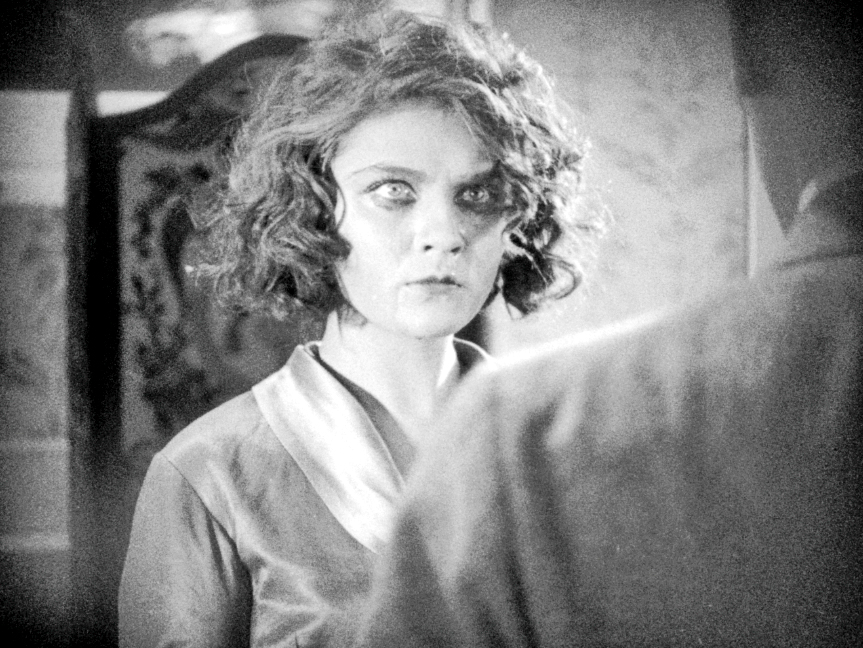
Pandora’s Box (1929, Georg Wilhelm Pabst)

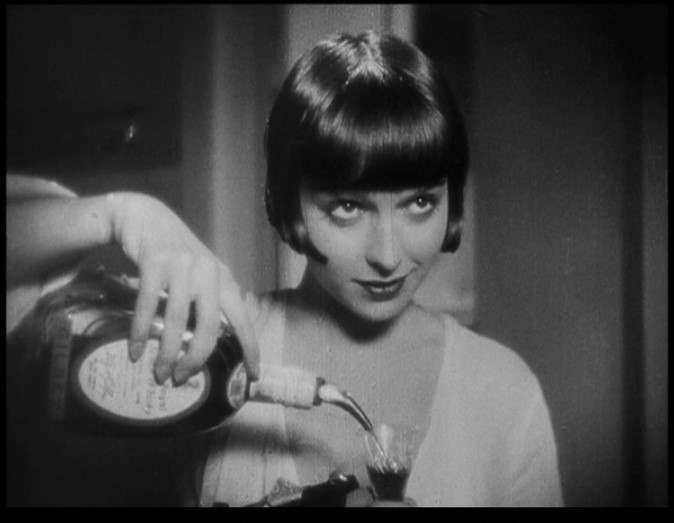
Trained dancer and former Ziegfeld Follies girl, Louise Brooks is electrifying as Lulu, especially when, with all eyes on her, she takes to the floor at her own wedding with yet another admirer – a female guest – and the pair dance in a sexually charged vertical embrace.

The Four Horsemen of the Apocalypse (1921, Rex Ingram)

Another raunchy tango, this time with Rudolph Valentino in a sequence that launched him as a legend.  The woman in Julio’s arms submits to his overpowering masculinity in this iconic routine that set the standard for all subsequent movie tangos.

(Watch from 14 mins, 50 seconds)

That’s My Wife (1929, Lloyd French)

Stan Laurel is persuaded by Oliver Hardy to masquerade as his wife in order to secure the bequest of a rich uncle.  In one of the funniest sequences Stan, looking lovely in an evening gown, dances the two-step with Ollie in an effort to shimmy a stolen necklace down through his undergarments!
Continue reading The 11 best silent movie dance sequences

Le Giornate del Cinema Muto 2012: Pordenone post No 7

Anna Sten in Provokator (1927)

The choices we make in life define us, and this morning I got up bright and early for Viktor Turin’s Provokator (1927), but gave early Selig feature The Ne’er-do-Well (1916) a miss. Did I do right to choose Anna Sten’s anguished student and her revolutionary chums over Kathlyn Williams and the adventures of the rich and beautiful? I don’t know. Provokator, which marks Sten’s cinema debut, was occasionally stirring, but mostly on the pedestrian side, though a raid on the revolutionaries’ den was rather fine, boosted by terrific accompaniment from Gabriel Thibaudeau and Frank Bockius.

Walter Summers
Walter Summers

Where I may have erred is in choosing such a downbeat opener on a day that was to close with GW Pabst’s heartbreaking social critique Die Freudlose Gasse (1925). However, I am getting ahead of myself. My afternoon was perked up considerably by the patriotic hubbub around Walter Summers’ lovely postwar tearjerker A Couple of Down-and-Outs (1923), introduced by the producer’s grandson Sidney Samuelson, who was seeing the film for the first time. What could be a very harrowing tale is handled with care, as Rex Davis’s Danny finds unlikely allies when he rescues his war horse from a foreign abattoir: manipulative, but charming with it.

The audience groaned in unison at the start of the next screening, as another tranche of German animated shorts kicked off with a toothpaste advert featuring the “tooth devil” cracking open a poor vulnerable gnasher with his drill. It was, as before, a diverting and diverse hour. In the name of commerce, all kinds of unlikely objects have been animated: detergent, rolling pins, matchboxes, kettles and even, in a sweet but fussy stop-motion ad for aspirin, a silent-film star and director (Im Filmatelier, 1927). Günter Buchwald at the piano followed with apparent ease the rapid changes of subject-matter, media and mood – as when a promo film for a department store dwelt proffered a new suit as a suicide-prevention measure (Der Hartnäckige Selbstmörder, 1925).

Asta Nielsen in Die Freudlose Gasse (1925)

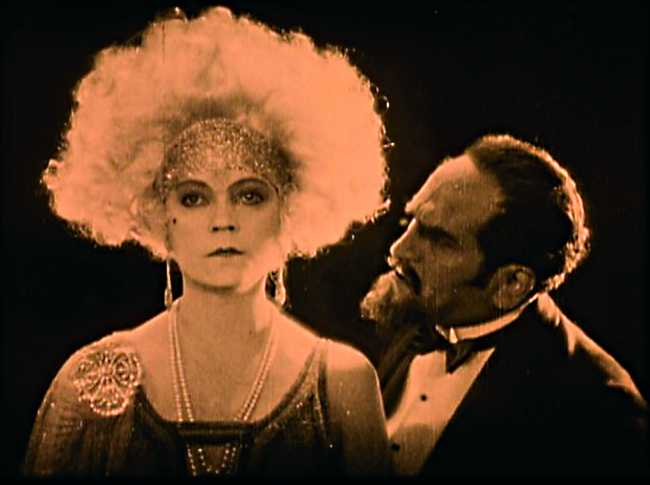
I have a date with Greta Garbo in A Woman of Affairs (1928) on Saturday, but I spent Friday night with both Garbo and Asta Nielsen in the elegant but emotionally gruelling Die Freudlose Gasse (1925), giving a beautiful face to the seedy economic exploitation of women in 1920s Vienna. Both the lead stars are fantastic, and supported by a cast of wonderful character actors including Valeska Gert as a pixie-faced madam. Pabst’s direction veers between sober restraint and wild bouts of inventive, unchained camera excitement. This new print is not quite complete, but mostly crisp, with deep tinting, most especially effective in a fire scene towards the end.

Accidentally profound statement of the day: “The joyless street is long,” exclaimed I, when I read in the catalogue that Die Freudlose Gasse clocks in at 151 minutes long in its present state. It ran for closer to three hours at the Berlin film festival, apparently, but that was based on a projection speed of 16fps, as opposed to the Giornate’s 19fps. Phew.

  • For full details of these and all other films in the festival, the Giornate catalogue is available as a PDF by following this link.
  • My previous reports from the festival are here.

Pandora’s Box at BFI Southbank, 4 & 5 September 2011

Louise Brooks Pandora's Box (1929)
Louise Brooks in Pandora's Box (1929)

The Passport to Cinema strand returns to BFI Southbank in September and October, under the banner of Making the Modern. And the strand begins with a timeless silent cinema favourite, Pandora’s Box, starring Louise Brooks.

So, Pandora’s Box is the oldest film in the season, but its nonchalant treatment of sexuality, violent plot and chic Berlin architecture make it about as modern as modern can get. Perhaps that is why the film’s popularity has grown over the decades, from a disappointing start at the box office, to universal acclaim as a cool classic.

Judging by the running time given in the BFI programme, this might not be the new restoration of the film shown at the London Film Festival, but sex appeal like this really deserves to be seen on the big screen, nonetheless. So get your dancing shoes on, folks.

Pandora’s Box screens in NFT1 on Sunday 4 September at 3.20pm and in NFT2 on Monday 5 September at 6.10pm, with an introduction by Dr Nathalie Morris of the BFI and the Women and Silent British Cinema project. There will be live piano accompaniment at both screenings (by John Sweeney on the Sunday and Stephen Horne on the Monday), and tickets will be on sale in August.

Free silent films at the National Portrait Gallery Glamour of the Gods Exhibition, 17 and 31 July 2011

Pandora's Box (1929)

There’s very little that Silent London enjoys more than a touch of Hollywood glamour, and evidently the National Portrait Gallery agrees. Their new exhibition, which opens on Thursday 7 July, is entitled Glamour of the Gods: Hollywood Portraits and features photographs taken from The John Kobal Collection. To accompany the show, which includes stunning pictures of Greta Garbo, Jean Harlow, Clark Gable and other beautiful megastars, the Gallery has programmed a series of events, including free film screenings on Sunday afternoons.

Fittingly, two of the films come from Hollywood’s most glamorous decade, the 1920s. First, Buster Keaton’s cattle-herding adventure Go  West (1925) will be screened on 17 July. You may have seen this film featured on Paul Merton’s Birth of Hollywood documentary recently. This is the film that apparently offers a glimpse of Roscoe Arbuckle in drag, long after he was officially exiled from the movies.

Second, one of the silent era’s slinkiest actresses, Louise Brooks, stars in the notoriously decadent Pandora’s Box (1929) on 31 July. Brooks’s effortless sex appeal in this film really set the template for Hollywood glamour for decades to come, so you can’t afford to miss it.

Go West screens in the Ondaatje Wing Theatre of the National Portrait Gallery at 3pm on 17 July 2011. Pandora’s Box screens in the Ondaatje Wing Theatre of the National Portrait Gallery at 3pm on 31 July 2011. Entrance to both films is free. Entrance to the Glamour of the Gods Exhibition is £6, less for concessions or free for members. You can book tickets online here. Glamour of the Gods runs from 7 July to 23 October 2011.

Hat-tip to @soshanau on Twitter for telling me about this one.

Pandora’s Box at the Prince Charles Cinema, 26 May 2011

Pandora's Box (1929)

If you haven’t seen Pandora’s Box (1929) before, I’m actually a little jealous of you. This film and its notorious leading lady are so irrepressibly gorgeous that your first viewing really should be a big-screen experience – and this is the perfect opportunity.

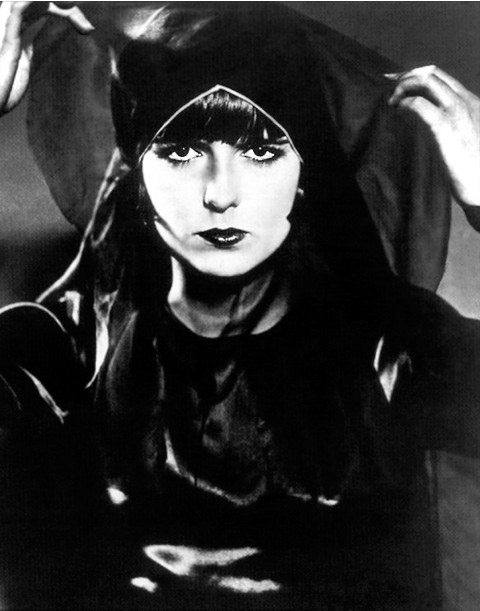
By the end of the 1920s Louise Brooks had had her fill of Hollywood, and Hollywood had pretty much had its fill of her. Lucky, then, that she caught the eye of German director GW Pabst and moved to swinging Weimar Berlin to take the lead role in Pandora’s Box. Brooks plays Lulu, a hedonistic dancer who pursues her own pleasure at the expense of bourgeois morality, or pretty much anyone’s morality, come to mention it. The role has come to define Brooks and rightly so. Who hasn’t, when watching Brooks shake her iconic bob, thought: “That girl could get away with murder”? Pandora’s Box puts that theory to the test like no other movie, and Brooks’s sensual performance radiates here – even as events take a series of sinister turns and the film transforms from a backstage comedy, to a thriller, to something approaching horror.

Keep an eye out for your chance to win a pair of free tickets to Pandora’s Box next week, here on Silent London

Pandora’s Box screens at the Prince Charles Cinema on Thursday 26 May at 8.30pm. Live piano accompaniment will be provided by the marvellous John Sweeney. Tickets cost £10 or £6 for members and they’re available here.