It may seem that the Giornate is in its own bubble, a hundred years or more removed from the real world, wrapped up in the fashions and the fads of the past. But we’re still looking out at the world every day, and no matter how the text on screen tries to guide us, we bring our 21st-century interpretation to everything that passes in front of our eyes. Sometimes the challenge is to wind back the clock, to see the past as our ancestors did when they were living through it. Sometimes we have no choice but to view images of the world as it was while burdened with the knowledge of our shared history, and of our violent present.
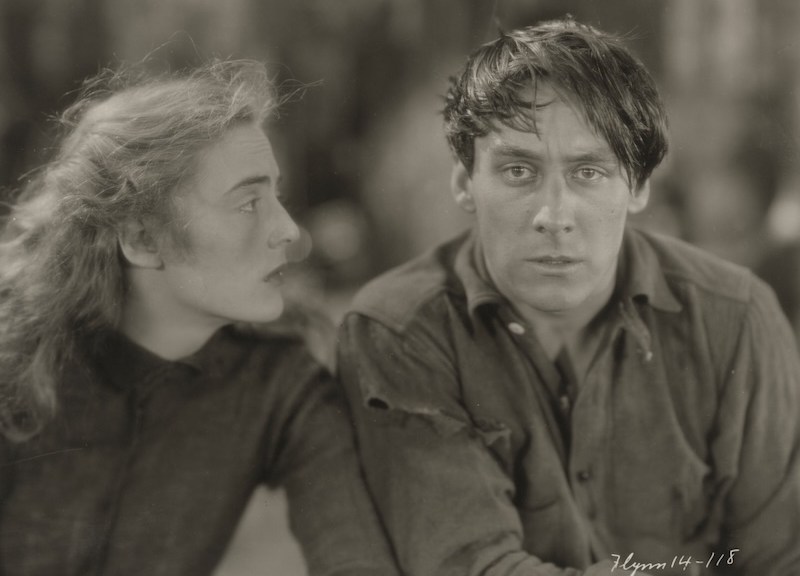
Last night I dreamt I went to East Lynne again… Ellen Wood is directing my subconscious now. I love this mini melodrama strand and I really enjoyed today’s instalment, which was the lavish 1925 Fox adaptation, East Lynne (Emmett Flynn), scripted by Lenore Coffee and starring Edmund Lowe as Carlyle and Alma Rubens as Lady Isabel – a very handsome pair and just right for this ill-starred pair.
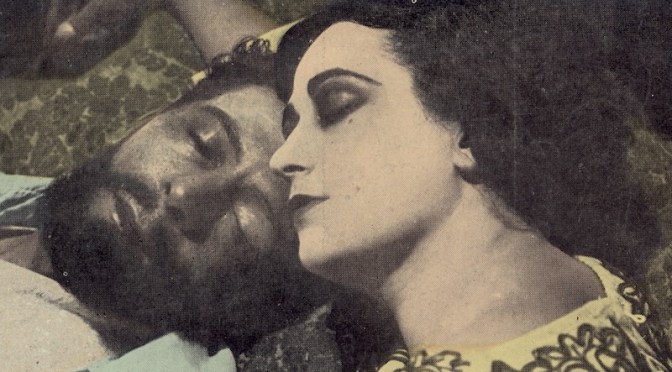
Monday finished with a zinger. I mean a Zingari. Italia Almirante Manzini wowed the Verdi as Wilejka, a heavy-lidded beauty with great hair, but in this case as a heavy-lidded beautiful Gypsy shepherdess with great hair. In Zingari (Mario Almirante, 1920) Wilejka falls in love with a man, Abaldo (Amleto Novelli, no less) that her father, the leader of the camp, forbids her to marry. There is many a consultation of the cards, a fireside dance, a storm, a threatening villain, a crushing pang of jealousy, an assassination and naturally, a barn on fire before this will all end happily ever after.
Is it still a pathetic fallacy even if the weather is true but the drama is not? As I set out to begin my day with some major melodrama, there was heavy weather in the skies above Pordenone also. We shook off the rain in the Verdi foyer, while we prepared to dampen our faces with tears during the first of this year’s adaptations of East Lynne.
The Giornate dawned with grey skies but good times, a respite from Storm Amy and all the rest of the week’s turbulence, a day of pretty views and outbreaks of mild escapism. Many of us were just grateful to be get here, let alone arrive on time, after the transport situation was especially complex this year. It was an especially mellow start to the festival for me. Blame it on the 3am alarm call, the cold medication or just the pleasurable daze of seeing so many familiar faces all at once. Will I sneeze or snooze my way through the first day of films? Who knows? And will my ears ever “unpop” from the plane? Join me now to find out.
Where would we be without Iris Barry? Where would all the films be, more to the point? Iris Barry was a pioneering film critic and film preservationist whose life is every bit as interesting as the plots of the movies that she championed and saved.
I am pleased to say that I have presented a BBC Radio 4 documentary on this wonderful woman, titled Iris Barry, First Lady of Film. The documentary will be broadcast on Tuesday 23 September at 4pm in the Artworks strand. Please do listen in to hear the story of the woman who wrote about cinema for the Spectator and the Daily Mail (who sacked her for dissing Elinor Glyn), co-founded the Film Society, and went on to start the world’s first film archive at MoMA in New York.
The documentary is the brainchild of producer James King and consultant Igor Toronyi-Lalic. It features contributions from Richard Brody, Bryony Dixon, Robert Sitton and Henry K Miller. Don’t miss it!
Silent London will always be free to all readers. If you enjoy checking in with the site, including reports from silent film festivals, features and reviews, please consider shouting me a coffee on my Ko-Fi page.
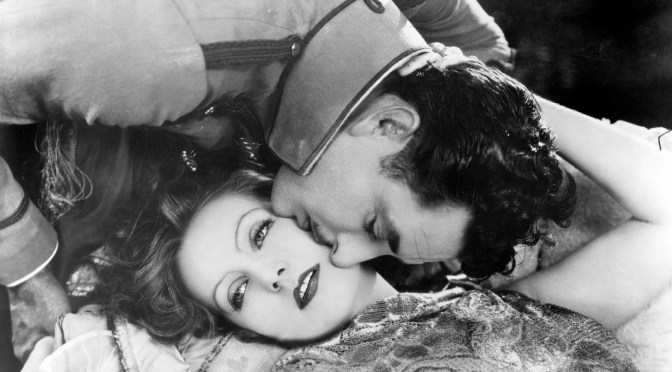
Is it a little hot in here… or is it just me? Outside the weather is turning autumnal, inside here I am contemplating the sizzling lineup for HippFest’s Taste of Silents season, which opens next month. Complete with Greta Garbo and John Gilbert sharing a cigarette, and much more, in Flesh and the Devil (Clarence Brown, 1926).
Stephen Horne will accompany Flesh and the Devil on piano and flute at the beautiful Hippodrome Cinema in Bo’ness, Falkirk on 20 September. This event will open the programme, which has been curated by the Hippodrome Silent Film Festival’s Young Programmers: an educational programme to support future cinema programmers and film exhibitors.
In case there could be anyone reading this site who doesn’t know, Luke McKernan is a media historian, formerly Lead Curator, News and Moving Image at the British Library. Also a formidably erudite and trailblazing blogger on moving image culture, especially silent cinema, but not exclusively. This collection of essays from across his many sites, gives a rich flavour of his expertise in analysis, archival curation and nostalgia.
In this book, Luke McKernan comments on the moving image in all its multiple forms. Let Me Dream Again – beautiful title – is crammed with insights into history, technology, and humanity. Because these essays, on a staggering variety of topics, began their lives as blogposts, they have the freshness of a live response to a moment in time – whether McKernan is reading 21st-century online comments on a silent film from 1903, or channel-hopping during the 2016 Olympics. He proves an excellent guide to the many ways that the storytelling impulse survives, and adapts to each new medium, from magic lantern slides to Artificial Intelligence.
As so often, I am going to have to ask a certain purist contingent to do their breathing exercises and locate the nearest fainting couch. Everyone else, buckle up!
I have not one but two cases of pop silents to report. And as ever, I remain optimistic for both. First up is one that may be familiar to many already. The Pet Shop Boys, one of the truly great pop bands of the 80s and 90s, wrote an electronic-orchestral score for Battleship Potemkin (Sergei Eisenstein, 1925) several years back. There was a special outdoor screening in Trafalgar Square, where the band performed the score with the Dresdner Sinfoniker, orchestrated by Torsten Rasch, back in 2004. I missed that occasion, but I heard that it was pretty epic, despite the rain. Talk about Eastern Bloc sailors and West End, um, squares.
You may or may not know this, but when I started Silent London I was working at the Guardian newspaper. So, it was at this time, when I was reading and writing about the silent era, and sitting in the Guardian office (rarely at the same time, I hasten to add) that I first became just a little obsessed with C.A. Lejeune.
Caroline Alice Lejeune, pioneering press film critic, media celebrity, Manchester icon and one half of the Sunday Ladies, with the Sunday Times’s Dilys Powell, is a pet subject of mine. I find her writing to be witty and wise and gentle, and her story, of falling in and out of love with the cinema, to be absorbing and not a little moving. It is also fascinating to me how she first got her job as the first real film critic on the Manchester Guardian, and moved to the Observer for another three decades. So I have been doing a little research. Well a lot in fact.
On Sunday I had the very great pleasure of introducing a double-bill of Anna May Wong silents: the UK premieres of new restorations of Song (Richard Eichberg, 1928, restored by Filmmuseum Düsseldorf) and Pavement Butterfly (Richard Eichberg, 1929, restored by DFF) at Cinema Rediscovered in Bristol. Beautiful films, a beautiful audience and simply gorgeous musical accompaniment by Stephen Horne. Wish you could have been there – maybe you were?
“Is this really what you want to learn from the past?”
– Breaking Plates (Karen Pearlman, 2025)
Let the train take the strain they say, and so I did, curating my own idiosyncratic, mostly silent, tour of female film history this week – and all by rail. Please rest assured that no leading ladies were lashed to the tracks in the making of this movie. Nor is this post sponsored by Eurostar. I should be so lucky.
This cute preamble has simply delayed me telling you that I took the choo-choo to Brussels, birthplace of such 20th-century film icons as Audrey Hepburn, Agnès Varda (foreshadowing) and Chantal Akerman. So my first stop, naturally, was a pilgrimage to one of the most famous addresses in cinema history, 23 Quai de Commerce, 1080 Bruxelles, to pay homage to Akerman, Delphine Seyrig, and Jeanne Dielman herself by posing outside the door of the heroine’s apartment building wielding a potato peeler. Important feminist film praxis, and in the estimable company of Maggie Hennefeld to boot. All joking aside, there is a frisson to be felt standing on this spot, where Akerman filmed the exteriors for her 1975 masterpiece, and it is in a very pleasant corner of the city. Do visit, with or without kitchen implements. Don’t miss the Marguerite Duras quotes that pave the nearby park, and the gorgeous, watercolour-style mural of Dielman at her kitchen table by Spanish muralist Alba Fabre Sacristan. I recommend checking out her portfolio on Instagram: the subject matter of the majority of her work throws a different light on this apparently demure picture of a middle-aged woman in her housecoat.
This is a long overdue post, but perhaps I was simply enjoying the research too much. Picking up an occasional series on this site, here are some short reviews of new books on silent film that have passed across my desk recently. Yes, I am a lucky duck.
Silent to Sound: British Cinema in Transition, by Geoff Brown
If a story is worth telling, and this one certainly is, then it is worth telling with style. In this case, Geoff Brown relates the story of the arrival of sound in the British film business with an eye for the eccentricities and absurdities that make it not just a pivotal moment in the medium, but a good yarn, and one that is revelatory about the national industry. Geoff Brown, journalist and researcher, has been studying the arrival of sound in Britain for years now as part of an AHRC-funded project and the result is this deeply enjoyable and admirably detailed book about a long and strange process, which when told with Brown’s light touch and quick humour is as diverting as it is informative. The serious point is that Brown’s emphasis, where he has access, is always on the films themselves. And that, along with the quotations from the critical discourse that I particularly cherish, is what really gives this book its colour.
Bonjour mes amis. Aimez-vous les films de Charlie Chaplin ? Are you wearing your pearls? Supping on truffle soup? Tooting your toy saxophone? Bien, alors nous pouvons commencer.
I may live in the 21st century on the south coast of England, but here on my desk it often looks like I am somewhere else entirely. Weimar-era Berlin, to be precise. It is the epicentre of some truly great silent filmmaking, such as the works I often share on this blog, it is the setting and source for the first film book I wrote (Pandora’s Box, as you asked), and it is here that we find the origins of much of the Golden Age of Hollywood cinema that I write about elsewhere.
It also sometimes looks this way when I am reading the news, but that, perhaps, is another matter.
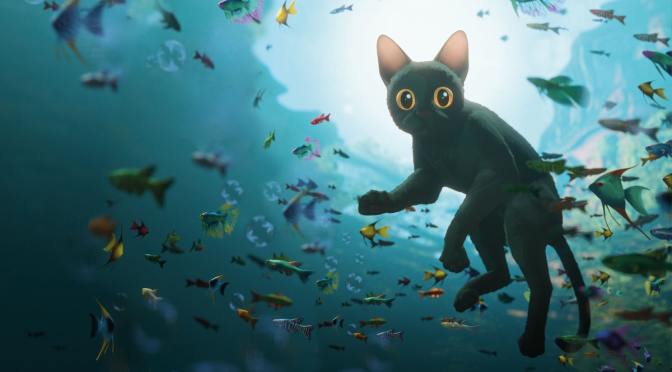
Last night, the fantasy adventure Flow (Gints Zilbalodis, 2024) won the Academy Award for Best Animated Feature. This dialogue-free drama follows a cat, forced to travel far from home in unfamiliar company when an ecological disaster submerges the earth in flood waters.
Just when I thought I was out, they pull me back in!
At the start of the film it appears that the cat lives with a besotted artist who pays tribute to the feline with sculptures of diverse sizes. But even this ailurophile human has abandoned the home, and their pet. As the waters rise and rise, our formerly cosseted hero must learn to survive and make common cause with a ragtag crew comprising a capybara, a secretary bird, a dog and a ring-tailed lemur. Against the odds, the animals have to save themselves from a manmade catastrophe.
Thank you for bearing wth me during a few several technical glitches related to this year’s poll. Relax, enjoy your glass of wine-flavoured carbonated beverage, and welcome to our glittering award ceremony. I have counted the votes, and I am ready to announce the winners of the Silent London Poll of 2024!
Congratulations to all the people mentioned below – as ever, these categories were bursting at the seams with excellent, worthy nominations and a great reminder of how exciting the global silent film scene is. Thank you for all your votes, and your comments, especially.
Without further ado, let me open this giant stack of golden envelopes. Here are your winners.
1. Best orchestral silent film screening of 2024
Your winner: The Winning of Barbara Worth (Henry King, 1926), with a score composed by Neil Brand, arranged by George Morton, conducted by Ben Palmer, performed live by the Orchestra da Camera di Pordneone, at Giornate del Cinema Muto, Pordenone
I said:“t’s a big, big movie, with the youthful star trio of Ronald Colman (on $1,750 a week), Vilma Banky (on $1,000 a week) and Gary Cooper (on $50 a week!) in a desert love triangle, and a tremendously terrifying climax, as the townsfolk run for their lives when the river bursts its manmade bounds. Plus we were to enjoy the world premiere of a wondrous new score composed by Neil Brand, arranged by George Morton, conducted by Ben Palmer, and performed live tonight by the Orchestra da Camera di Pordenone. If you know the film you will know that it is celebrated for its scale, but also that this is a Frances Marion script, with a touch of melodrama (Vilma overhearing Ronald’s confession that he won’t propose to her, but not the reason why), her pet subject of adopted children, and her love of a grand theme – here the pioneers’ battle for mastery over the elements, and capitalism’s battle for mastery over the populace. You’ll also know that between the big action scenes there are several more sedate moments, discussions of policy and payroll. As, quite frankly, we have come to expect, Brand’s score was buoyant and nimble, keeping the film on its toes, teasing out the romance and flooding (yes, I went there) the auditorium with sound during those blockbuster setpieces, starting with a sandstorm in the first reel and the deluge in the last. Timed to a T, so that image and sound met in perfect harmony, and just a joy to listen to – for what it’s worth, I think it’s a winner. Geddit?”
Lillian Gish in The Wind (1928)
2. Best silent film screening with a solo musician or small ensemble of 2024
Robert Eggers has remade Nosferatu. Finally, after long promising to do so. His new take on the FW Murnau classic from 1922 is in UK cinemas on 1 January 2025.
To be completely honest with you, I haven’t seen it yet, but I have some very good, and some slightly more mixed reports.
I hope the new Nosferatu lives up to its influences, though I know those are big shadows to fill.
However, if you are looking for a new horror movie that does something fruitful with the silent movie aesthetic, I can recommend Magnus von Horn’s child-killer drama The Girl with the Needle. Owing to its subject matter, it is not for the weak-hearted, but it is beautiful, and does contain a pertinent glimpse of Asta Nielsen. It is out on 10 January 2025 from Mubi.
Silent London will always be free to all readers. If you enjoy checking in with the site, including reports from silent film festivals, features and reviews, please consider shouting me a coffee on my Ko-Fi page.
Season’s greetings Silent Londoners. It has been a whirlwind of a year. How much do you remember?
Personally, I watched silent movies on three different continents this year, so I have some great cinema memories from 2024. Pordenone and Bologna, San Francisco, Istanbul, Locarno… and back home, Hippfest, Bristol, Sherlock Holmes at Alexandra Palace, Dorothy Arzner and more at the Southbank, non-stop action at the Kennington Bioscope. We celebrated some major anniversaries. Plus there was a lot of love for Anna May Wong, and Sessue Hayakawa.








 Silent London