The Silent London Calendar
A silent encore: What to watch when you have watched The Artist
Warning: this blogpost contains spoilers! Close this tab on your browser. Go to the cinema and watch The Artist. Then we can talk…
The Oscars are looming now, and The Artist is still the frontrunner for the biggest awards, which is one of the most exciting triumph-of-the-underdog stories Hollywood has produced in years. So the chances are, lots of people who would never have thought to watch a silent movie have now done so, and fingers crossed, they’re hungry for more. If you’re one of those people, read on. The Artist gives nostalgia, and film geekery, a good name, and whether you think it matches up to the films it pays tribute to or not, it’s the perfect prelude to a movie marathon. But where to begin, especially if you’re new to silent cinema?
Win tickets to watch Faust at the Royal Festival Hall
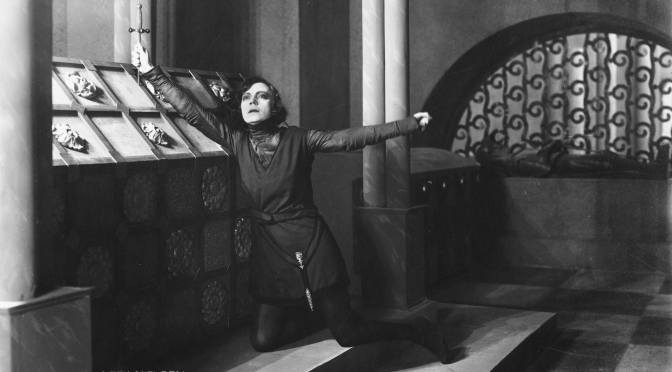
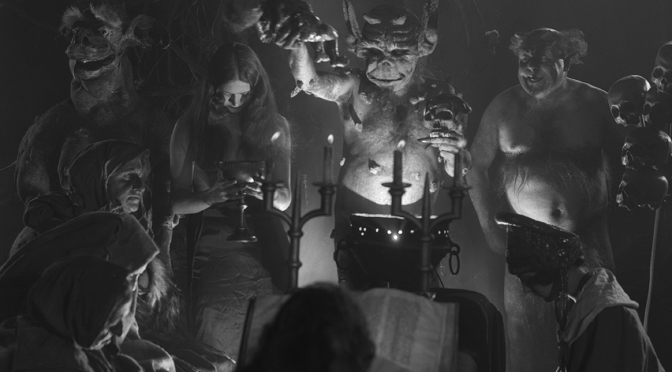
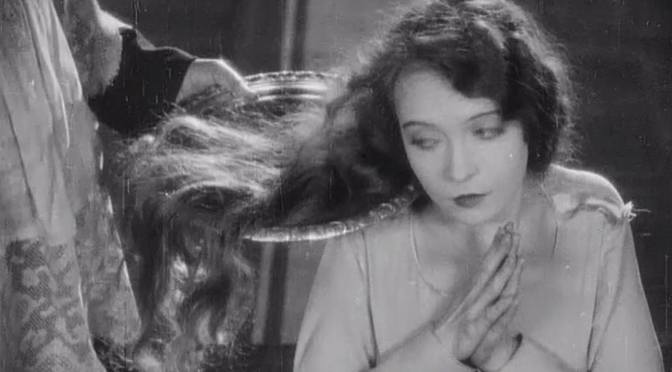
It’s already one of the most exciting silent film events of the year – and could be the perfect way to celebrate (fingers and toes crossed) a silent film winning the Best Picture Oscar on Sunday night. FW Murnau’s classic Faust (1926), screens at the Royal Festival Hall on Monday 27 February, with a new score by Aphrodite Raickopoulou, performed by the Philharmonia Orchestra and accompanied by improvisation from acclaimed pianist Gabriela Montero. Hugh Grant will introduce the film and the orchestra will be conducted by Benjamin Wallfisch. Read more here.
If you want to win one of ten pairs of tickets to watch this wonderful film with its fantastic new score, just answer this simple question:
- We all know that FW Murnau directed Faust. But what do his initials FW stand for?
Email your answer to silentlondontickets@gmail.com with FAUST in the subject line, by noon on Friday, 24 February 2012. The winners will be picked at random from the correct entries and emailed with the good news. Best of luck!
A stroll down Flicker Alley – photos
Cecil Court is a tiny turning off Charing Cross Road in the West End of London. Nowadays it is packed with bookshops, boutiques and ‘psychic advisers’, but back in the beginning of the 20th century it was “the heart of what was new in the British film industry, attracting young companies who clustered together to learn from one another” (Simon Brown, Film Studies, 2007). Following last year’s summer film festival, these ‘blue plaques’ have been posted in the shop windows of Cecil Court, as a reminder of the time when it was known as ‘Flicker Alley’. Read more here.
Storify: Silent movies for a nine-year-old boy
I am something of an evangelist for Twitter, where, in turn, I am something of an evangelist for silent cinema. On Tuesday night, a Twitter user called @Drangula approached me with a request. Would I repost his plea for film recommendations? “Wiz pleasure!”
@Drangula knows a nine-year-old boy who loved The Artist and wanted to watch more silent films. What would be suitable? Considering this request came through at around 9pm GMT on Valentine’s Day, I was overwhelmed by how many people responded and by the quality of their suggestions too. It’s a great question, which prompted some great answers. Thanks to all the people who took part.
I have attempted to collate all the responses using Storify, so these random acts of cinematic kindness could be saved for posterity. I’m sure you’ll agree that this was a Good Thing, and I really hope the young lad enjoys the films, and his mother overcomes her aversion to Chaplin.
Win tickets for The Passion of Carl Dreyer season at BFI Southbank
The announcement of March’s Carl Dreyer retrospective at BFI Southbank is some of the best news I’ve had in ages. In fact I was so thrilled, I previewed the silent films in the season here. More importantly, I hopped on to the Carl Dreyer website and made a film about it. It’s easy to make your own Dreyer movie – just type in your name, write three intertitles for the King of Illyria and his messenger and voila.
The reason I’m telling you this is that the BFI has kindly offered readers of this blog the chance to win one of three pairs of tickets to a screening of your choice in the Dreyer season. I’m going to give the tickets to the three people who make the best Dreyer movie – so follow this link, make a film and email the results to silentlondontickets@gmail.com. The three best entries will win a pair of tickets and I will post them on the blog too. Enjoy, channel your inner Scandinavian and good luck!
The competition closes on 28 February 2012. The judges’ decision is, of course, final.
The Artist triumphs at the Baftas. Wow.
We are living in strange, glorious times. The Artist, Michel Hazanavicus’s silent billet-doux to Hollywoodland, has officially “swept the board” at the Baftas. Best director, best actor, best original screenplay and best picture all fell to a modern silent film, for the first time, it should go without saying, in Bafta history. The Artist also picked up much-deserved prizes for cinematography, costume and score. It has all made for an unexpectedly emotional night here at Silent London towers.
Why? The Artist isn’t the only modern silent to have been made in recent years. It isn’t even the best. But when you are as passionate about a particular corner of film history as I am, and as the readers of this blog are, it does the heart good to see it in the spotlight, with a trophy in each hand. The air has been punched, a stray tear has been wiped and now a glass of vin blanc has been poured, and raised in honour to the lovely M Hazanavicius. The Artist is a lovely film, and most quibbles I, and other early cinema enthusiasts, have with it, are impossible to untangle from its privileged position as a standard-bearer for the silent era. At some point we have to give it credit for getting into that position in the first place. So congratulations to The Artist – for earning both popularity and critical acclaim and being so damn charming with it.
Martin Scorsese’s Hugo won a brace of awards too: best production design and best sound (ho ho). So I’ll raise another couple of toasts: to cinema pioneer Georges Méliès, and to Martin Scorsese, a masterful director and the world’s greatest living advocate for film preservation. That’s part of the reason he won the biggest award of the night – the Bafta fellowship.
Roll on the Oscars at the end of the month. The silents are coming!
The Silent Passion of Carl Dreyer, BFI Southbank, March 2012
Today, Carl Theodor Dreyer is best known for one lost-and-found silent masterpiece, and five subsequent sound films shot many years apart – but the little-mentioned fact is that the 1920s were his most productive decade. The BFI’s forthcoming retrospective, The Passion of Carl Dreyer, offers a chance to to shift the balance. In March, you’ll be able to see all nine of the Danish director’s silent features on the big screen, from 1919′s daring The President to the timeless The Passion of Joan of Arc (1928). A closer look at Dreyer’s silents is always rewarding, both for their continuity with the themes of religion and female suffering found in his later films such as Ordet and Day of Wrath, and for the revelation that this serious Scandinavian was also a master of comedy.
Dreyer had been working as a journalist when he was first hired by the Nordisk company in 1913 to write intertitles and to edit and write screenplays. This was a boomtime for Danish cinema: in the teens, Nordisk was not just making hundreds of films a year but exporting them widely too. From writing intertitles, he discovered the strength of distilled, almost elliptical speech – he later talked about how he whittled down the dialogue in Vampyr (1930) until it was almost a silent film, and it was all the more powerful, all the more eerie, for his labours. Dreyer worked on the screenplays of several literary adaptations at this time, which also cemented his opinion that great films should have literary sources – and all his features did.
It was as he grew more confident in his work at the studio, and was working as an editor, that Dreyer developed his signature film-making style too – before he had even stepped on set as a director. As David Bordwell has written, Nordisk’s films at this time were predominantly shot in the “tableau” style, with the actors blocked in sophisticated patterns on a deep stage. When Dreyer got behind a camera he ditched that approach in favour of an edit-heavy style more popular with American film-makers such as DW Griffith. This distinctive, modern, method is apparent in his very first feature, just as it is in the barrage of close-ups that comprise his final silent film, The Passion of Joan of Arc.
The purpose of this post is to offer a quick introduction to Dreyer’s silents, which are for the most part much less widely seen than his sound films – and really do draw a different picture of the director. I assume that most of you are familiar with The Passion of Joan of Arc – if you haven’t seen it, you must take this opportunity to do so – but I also highly recommend many of the others, especially The Parson’s Widow and The Master of the House.
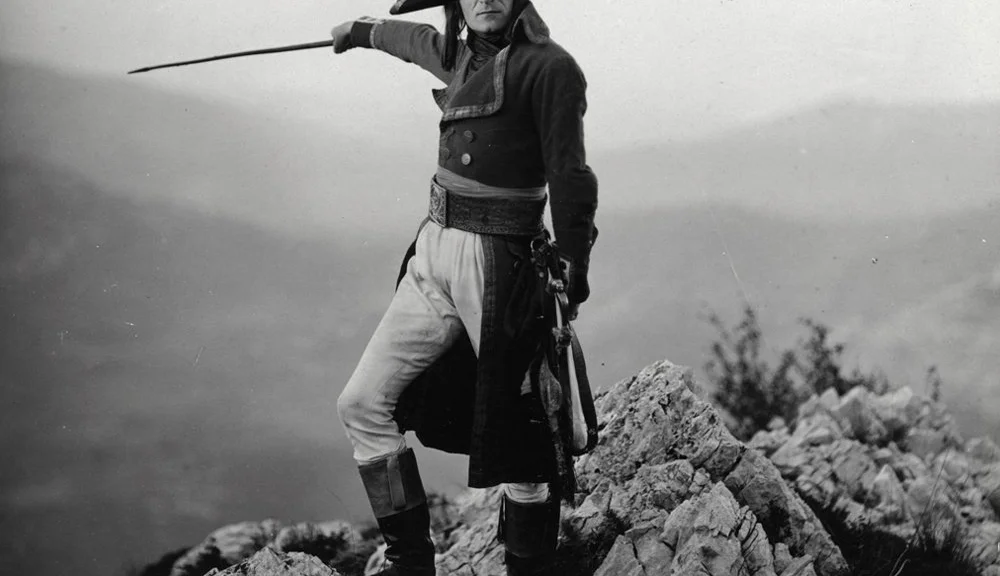
The Cinematic Race to the South Pole, BFI Southbank, March 2012
Spring 2012 marks a couple of grisly, yet hugely significant centenaries. The Titanic sank on 15 April 1912 (more of which in forthcoming posts) and on 29 March 1912 or thereabouts, Robert Falcon Scott succumbed to cold and starvation and died a few miles from the South Pole.
The story of Scott and his crew’s tragic expedition has been told many times, but nowhere more movingly than in The Great White Silence (1924), Herbert Ponting’s silent documentary that was rereleased theatrically last year.
To commemorate the centenary, the BFI has scheduled three special screenings of documentary material relation to Antarctic exploration, each pegged to an individual explorer. You’ll probably be familiar with The Great White Silence by now, but if you haven’t seen it yet (or bought it on DVD/Blu-Ray), this is a fantastic opportunity to see it on the big screen. The Ernest Shackleton film South is a marvellous companion to The Great White Silence, with fantastic photography from Frank Hurley. It was also recently restored by the BFI and released on DVD. The footage of Roald Amundsen’s rather more successful voyage is less widely seen and promises to be fascinating.
Race to the South Pole: Amundsen and the Others
Our first programme focuses on Roald Amundsen and the little-seen film Roald Amundsens Sydpolsferd (1910-12), restored by the Norwegian Film Institute and here playing in context with a selection of surviving fragments from films of the expeditions of William Speirs Bruce in 1902-4 (The Scottish Antarctic Expedition), Shackleton in 1908-9 (Departure of the British Antarctic Expedition from Lyttelton, NZ 1st Jan 1908), the Japanese Shirase in 1911 (Nihon Nankyoku Tanken), and a work in progress to recreate cinematographer Frank Hurley’s original lecture on the Mawson Australian Antarctic Expedition 1910-12.
With introduction by Bryony Dixon and live piano accompaniment.
Race to the South Pole: Amundsen and the Others screens at NFT3 at 6.20pm on 14 March 2012. Tickets are available from the BFI website.
Race to the North Pole: Scott
Memorial Service at St. Paul’s Cathedral to the Antarctic Heroes (Pathé Animated Gazette, UK 1913, 1min) + Captain Scott and Dr Wilson with ‘Nobby’ the Pony (Gaumont Graphic, UK 1912, 1min) + Cardiff: The Ship ‘Terra Nova’ Leaving Harbour Towards the South Pole (Pathé Animated Gazette, UK 1912, 1min) + The Great White Silence (UK 1924, dir Herbert Ponting, 106min. Digital)
To commemorate the centenary of the death of Scott and his companions we present Herbert Ponting’s moving tribute The Great White Silence (1924), together with newsreels of the time showing how contemporary audiences followed the momentous news from the planet’s last unexplored continent.
Introduced by Bryony Dixon
Race to the South Pole: Scott screens at NFT3 at 6.30pm on 21 March 2012. Tickets are available from the BFI website.
Race to the South Pole: Shackleton
South – Sir Ernest Shackleton’s Glorious Epic of the Antarctic (UK 1919, dir Frank Hurley, 72min) + El Homenaje del Uruguay a los Restos de Sir Ernest Shackleton (Uruguay 1922, dir Henry Maurice, 10min, Spanish intertitles) + Southward on the ‘Quest’ (UK 1922, extract, c5min).
Of all the heroic age Antarctic explorers, Shackleton seems to have the most enduring popular appeal. Almost nothing of the film from the Nimrod expedition which inspired Scott and Amundsen seems to survive, but we do have Frank Hurley’s extraordinary document South (1919) which we will be showing with rare footage of Shackleton’s last expedition and the huge crowds gathered for his lying in state in Montevideo, Uruguay.
Introduced by Bryony Dixon. Live piano accompaniment.
Race to the South Pole: Shackleton screens at NFT3 at 8.40pm on 22 March 2012. Tickets are available from the BFI website.
Hippodrome Festival of Silent Cinema, Bo’ness, 16-18 March 2012
The Hippodrome in Bo’ness is Scotland’s oldest purpose-built picture palace – and it’s a real beauty. This year, the cinema is celebrating its 100th birthday in grand style, with the return of the Hippodrome Festival of Silent Cinema.
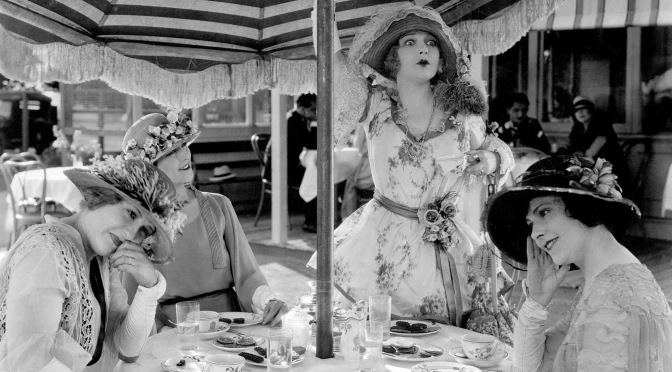
The centenary event builds on the success of last year’s festival, and tips its boater to a certain modern silent hit too. The opening night gala will be a screening of Show People, starring Marion Davies as a Hollywood wannabe whose dream comes true – shades of Peppy Miller, of course. It’s a real treat of a film, and it’s packed with cameos from silent Hollywood stars too: you’ll be able to spot Charlie Chaplin, Douglas Fairbanks, John Gilbert, William S Hart and Mae Murray, among many others. William Haines is Davies’s co-star and King Vidor directs. Neil Brand will be playing the piano. If you’re attending the gala, don’t forget the dress code: the theme is Hollywood film star, the more glamorous the better.
Other events at the festival include:
- The fantastic new restoration of British drama The First Born, starring and directed by Miles Mander, with a brand new score by Stephen Horne, performed by Horne and his band.
- A Jeely Jar Special family screening of Harold Lloyd’s Safety Last! Bring along a clean jam jar (and matching lid) for a 2-for-1 ticket deal on the Saturday morning. Piano accompaniment by Neil Brand.
- Two comedy shows: Another Fine Mess with Laurel and Hardy and The Keystone Connection, curated by David Wyatt, with Stephen Horne on the piano. You knew, of course, that Keystone Studios was founded in 1912, the same year that the Hippodrome was built.
- The Lost Art of the Film Explainer will revive the live film narrator tradition with renowned storyteller Andy Cannon and cellist Wendy Weatherby.
- Ozu’s poignant comedy I Was Born, But … with musical accompaniment by Forrester Pyke.
- Flashback thriller A Cottage on Dartmoor, directed by Anthony Asquith.
- Music and stunt workshops.
- The closing night gala will be the two-strip Technicolor restoration of The Black Pirate, featuring a swashbuckling lead performance by Douglas Fairbanks, with musical accompaniment by pianist Jane Gardner and percussionist Hazel Morrison.
Tickets are available from the Steeple Box Office, High Street, Falkirk FK1 1NW, the Hippodrome Box Office, by phone on 01324 506850, and online at www.falkirkcommunitytrust.org/silentcinemafest, where you can also read the full schedule for the festival.
One of the great strengths, at least as far as this blog is concerned, of the BFI’s ongoing Dickens on Screen programme, is that the silent films on offer have been spread out across the season, rather than all lumped into the first month. Witness: the impressive range of silents screening in January and February.
More silents appear in March, including another programme of pre-1914 shorts and a rare sighting of a Danish film, AW Sandberg’s Our Mutual Friend (1921). The Nordisk films is one of four Dickens adaptations by Sandberg, which were all well received in Denmark at least. Our Mutual Friend, or Vor Faelles Ven, is the least seen of the quartet, and indeed the restoration work on this print has been going on for quite some time. Now, 90 years after it was released, we can see it as it should be seen.
Our Mutual Friend screens at NFT3, BFI Southbank at 6.20pm on 6 March 2012 and at 8.45pm on 9 March 2012 with live piano accompaniment. Buy tickets here.
The shorts programme kicks off with Thomas Bentley, who went on to direct several Dickens films, in front of the camera taking on a number of roles in Leaves from the Books of Charles Dickens (1912). American comedian John Bunny starred in three films based on The Pickwick Papers – but the two shown here are the only ones to survive. Two versions of A Christmas Carol finish the programme, with Seymour Hicks playing the miser in 1913 version and Charles Rock being visited by spectres in 1914.
Pre-1914 Short Films (Programme two) screens at 9.30pm on 9 March at NFT3, BFI Southbank (with introduction by Michael Eaton) and at 6.20pm on 23 March 2012 in NFT2, BFI Southbank. Both screenings will feature live piano accompaniment. Buy tickets here.