All posts by PH

Pamela Hutchinson is a freelance writer, critic, historian and curator.

Victory for Napoléon: cinema and DVD/Blu-ray release at last
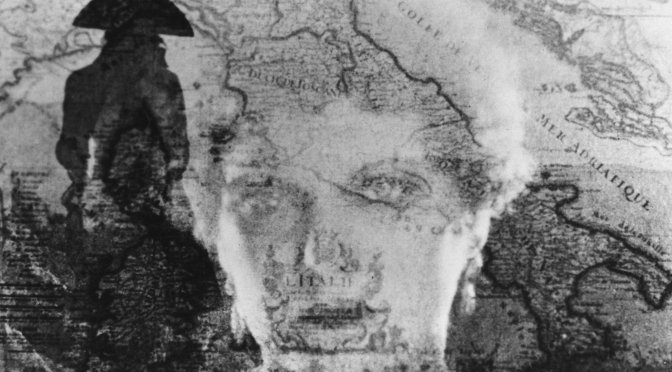
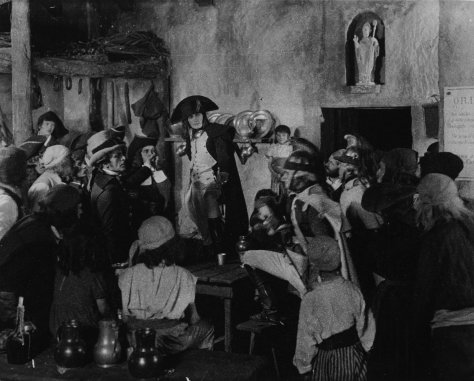
Hold on to your three-cornered hats. This may well be the news you have been waiting for since … ooh 1980 or thereabouts. BFI and the Photoplay have announced jointly that Napoléon, Abel Gance’s silent masterpiece, is coming to a screen near you – whether that is a concert hall, cinema, TV or computer. We all have three-screen TVs right?

So you can see Napoléon (1927) with the Philharmonia orchestra at the Royal Festival Hall this autumn – and many of us know what a treat that can be – but it will also be available to buy on DVD/Blu-ray, to stream on the BFIplayer and theatrically released in cinemas too. And make no mistake, this is the Kevin Brownlow restoration with Carl Davis’s epic score – the definitive five-and-a-half hour version of Napoléon that you really need in your life.

And while the live and cinema screenings will be magical experiences, I am getting a little thrill from the idea of being able to rewind sequences from the film and look at them again, and more closely. The snowball fight, for example! As that occurs at the the beginning of the movie, it could take me some time to get right to the end …
Napoléon (1927) Photograph: BFI

I won’t say too much more now, as we will no doubt be talking about Napoléon all year, which I am hugely looking forward to. But I do want to share some details about the restoration, and the people who made it possible. For example, we have been told that the digital process of restoration has cleaned up some damage in the 35mm print and allowed for greater capacity to recapture the tinting and toning of the original film.

This project has been achieved thanks to major work undertaken by the experts of the BFI National Archive and Photoplay Productions working with Dragon DI post-production in Wales, and to the generosity of Carl Davis and Jean Boht, who have made possible the recording of the score by the Philharmonia. The original restoration of the 35mm film elements in 2000 was funded by the generous support of the Eric Anker-Petersen charity, with the support of many archives around the world but especially the Cinémathèque Française and the Centre Nationale de la Cinématographie in Paris.

The film has been entirely re-graded and received extensive digital clean-up throughout, all of which offers significant improvements in overall picture quality. This is the most complete version of the film available, compiled by Academy Award™-winning film-maker, archivist and historian Kevin Brownlow who spent over 50 years tracking down surviving prints from archives around the world since he first saw a 9.5mm version as a schoolboy in 1954. Brownlow and his colleagues at Photoplay, initially the late David Gill, and then Patrick Stanbury, worked with the BFI National Archive on a series of restorations. The film version has been screened only 4 times in the UK since the year 2000 at memorable events with full orchestra performing the original score by composer Carl Davis.

Continue reading Victory for Napoléon: cinema and DVD/Blu-ray release at last

Slapstick at speed: the 2016 festival on fast-forward

After two whistlestop days at Bristol’s Slapstick Festival I am on the train back to London already, but the laughter is still ringing in my ears. Through the fug of good company, great films and fabulous music I can still pick out some details … just about. Here are the five best moments that I will treasure from this year.

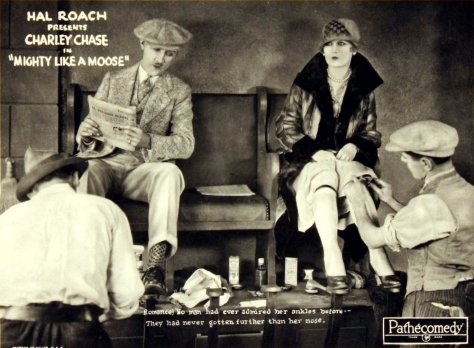
Mighty Like a Moose (1926)

Charley v Charley

Friday night’s silent comedy gala had plenty to recommend it, of course, but when it comes to slapstick there was one standout moment for me. The fight sequence in Mighty Like a Moose (1926), in which Charley Chase battles himself, with costume changes of course, is a special pleasure. Can I place a standing order to see this every Friday night from now on please?

Chicago-1
Chicago (1927)

The many faces of Phyllis Haver

Cecil B DeMille’s Chicago (1927) is seedy, brutal, and hilarious. Like all the best nights out. The most deliciously cynical sequence must be Roxie Hart’s trial, though. As Hart’s lawyer sells her virtues (as it were) to the jury, Phyllis Haver moves through a cycle of poses that are as funny as they are strangely convincing. This devious minx flicks her features from “brave” to “sweet” to “shrinking” to “noble” faster than a flapper can roll her stockings.

The Awful Truth (1937)

Cary doffs his hat to Buster

If Bristol had done no more than to bring us Pauline Kael’s “slapstick prince charming” himself, we would still love this city. Watching Cary Grant in screwball masterpiece The Awful Truth (1937) at Slapstick this year was an absolute hoot. But the moment in this fizzy film when Grant is perched on the handlebars of a motorbike, Sherlock Jr-style, and touches his collapsed opera hat to his forehead in imitation of the great Buster Keaton? Priceless.

Continue reading Slapstick at speed: the 2016 festival on fast-forward

British Silent Film Festival Symposium 2016: let’s all go down the Strand

Is there a more pleasant sounding word than “symposium”? I think not, even if like me you are just old enough to remember the mid-90s punk pop band of the same name.

So it is with a satisfied, cat-like smile, that I share the news of a symposium, coming to these parts in April. it’s the British Silent Film Festival Symposium, if you hadn’t guessed, and it will take place at King’s College London, on 28 and 29 April. Two days? Yes, one day (the 29th, a Friday) will be given over to papers, the afternoon and evening of the previous day will be devoted to screenings of British silent films. Like, ooh I don’t know, The Somme (1927), perhaps? Surely not. Well, you didn’t hear it from me …

Betty Balfour as Tiny Toes in Love, Life and Laughter (1923)
Betty Balfour demonstrates the dress code for the BSFF Symposium. Photograph: British Film Institute

But of course, the BSFF Symposium is a partner to the BSFF itself, so whatever is shown, and discussed, at the event will relate to “the opportunity to re-assess film-making in Britain between 1895 and 1930”, and offer a chance to “consider the achievements and the key debates brought to light by the festival, and to discuss the new directions that future research may take”.

If you are a little highbrow you’ll be especially pleased to know that the likelihood of biscuits is: good to high. If you are really clever, you’ll want to also know how to propose a paper for this delightful symposium. Hold on for the details of the call for papers, courtesy of Dr Lawrence Napper, the supremo of this symposium:

200-word proposals for 15 minute papers are invited on any aspect of film-making and film-going in Britain from 1895-1930. We encourage submissions from early career researchers and independent scholars, and this year especially welcome papers which respond to the themes of the most recent festival, and the current AHRB project on ‘British Silent Cinema and the Transition to Sound’.

Proposals should be sent to Lawrence.1.Napper@kcl.ac.uk  by 29 March 2016. See you there!

Jane Shore (1915)
Jane hoped to sneak out to the BSFF Symposium undetected …

Shaking up the silent canon: is The General the greatest silent film?

I like silent movies even more than I like chocolate. And I do really like chocolate. So when I saw Richard Osman, best known as the co-host of Pointless, holding the World Cup of Chocolate on Twitter a few years back, I pondered whether I could do the same for silent movies. It’s a simple idea – a knockout tournament in which voters pick their favourites, based loosely on the rules of the football World Cup. I don’t have as many followers as Osman (by a very long chalk) and I had no desire to spam people’s feeds with retweets, so I shelved it.

Then Twitter introduced a nifty poll feature – multiple choice questions you could share on the social network, which stayed active for exactly 24 hours. And that meant that this year Osman’s chocolate bar tournament was bigger and more successful than before. So shamelessly, I pilfered his idea. Thanks Richard Osman!

Moroder's Metropolis
Moroder’s Metropolis
I hoped that the followers of Silent London’s Twitter account would get into it, and boy oh boy they did. To start the draw, I arranged the top 32 films from this list on silentera.com into eight groups of four and set the whole thing live. The Silent Era list, it seemed to me, was fairly uncontroversial – almost too uncontroversial – a consensus view of the established classics. And I assumed that the silent movie hipsters you find online would challenge that. But I was wrong, mostly.

In the end, Osman’s Twitter followers voted for the traddest choc bar imaginable – the dependable Cadbury’s Dairy Milk. And the Silent Londoners voted for … well the number one film on the Silent Era list, The General (1926). I have nothing against The General – it’s an unassailable classic – but I was expecting a giant-killing. The General is probably the Dairy Milk of silent cinema. Not only that, but positions number two and three on the SE list, Metropolis (1927) and Sunrise (1927) were right there in the semi-finals – with Murnau’s film making it through to the final with Buster Keaton.

So perhaps you guys aren’t as iconoclastic as I thought (those of you on Twitter that is), or perhaps from this distance the silent film canon is settled. Maybe a century later we can look at these movies and dispassionately rank them, quality sifting surely to the top. The General, and the majesty of Buster Keaton, aside, there were a few surprises in my World Cup results,* which suggest there is still plenty to play for.

Continue reading Shaking up the silent canon: is The General the greatest silent film?

London in colour: talking about Colour in Film

Not that silent film history is complicated, but put it this way: it’s not black and white. Joshing aside, one of the most exciting themes to emerge in recent cinema scholarship is the exploration of film colour – from the earliest hand-painted frames to today’s teal-and-orange “realism”. And it’s arguably more exciting to learn about the colour pioneers and their various attempts to make films appear lifelike – or better than that – than later developments.

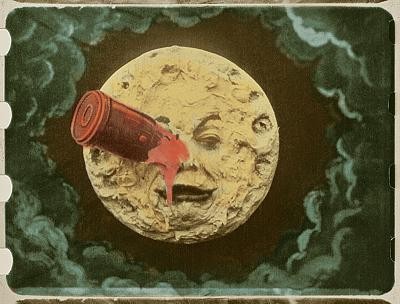
Le Voyage Dans la Lune (1902)

So I thought you’d like to hear about a two-day event in March that puts tinting in the frame – Colour in Film, which takes place in London, at the BFI Southbank and Friends House on Euston Road. The keynote speakers are Sarah Street, who will give a paper on British Cinema in Colour: Creativity, Culture and the Negotiation of Innovation and Barbara Flueckiger, tackling the subject of Bridging the Gap between Analogue Film History and Digital Technology. Other contributions will come from Ulrich Rüdel, Kieron Webb, and more names that will be familiar to you.
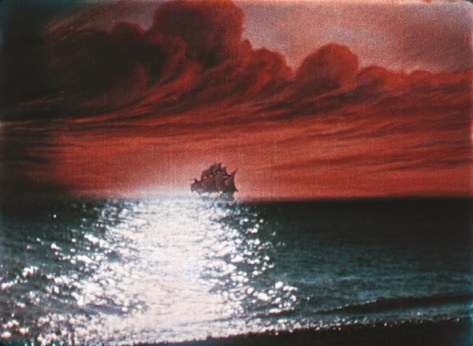
The Glorious Adventure (1922)

Continue reading London in colour: talking about Colour in Film

The Silent London poll of 2015: the winners!

The votes are in! Thanks to everyone who contributed their thoughts to this year’s poll – we had a wide range of responses, and votes cast from around the world. Looking back on the 2015 reveals that it was a very strong year for silent film, which meant that many of these decisions were very close-run things. Congratulations to everyone who won a category – and those who just missed out too.

protesting-suffragettes-early-1900s1
Make More Noise!

The best DVD/Blu-ray of 2015

There have been some corking discs and box sets released this year, so there were several contenders for this prize. But out in front by some distance, was the BFI’s brilliant suffragette compilation with music by Lillian Henley: Make More Noise! Don’t mind if we do.

Make More Noise!
Make More Noise!

The best theatrical release of 2015

Not so many titles up for contention here, and some confusion as to what represents a bona fide theatrical release. Good to see some love for films that were popular on the festival circuit such as Synthetic Sin and The Battle of the Century, even if they weren’t exactly what we were looking for here. However, among several nods to Steamboat Bill Jr and Man With a Movie Camera, your winner was … well why not: Make More Noise! again. Congratulations to Bryony and Margaret Deriaz, who curated this fabulous selection of films.

The Tribe (Plemya, 2014)

The best modern silent of 2015

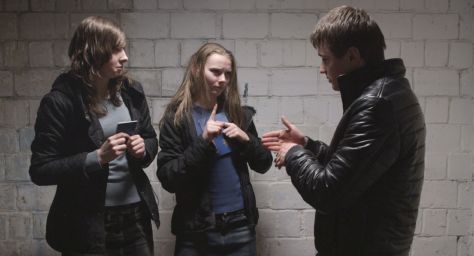
My personal favourite new film of 2015 won this category hands-down. While Miroslav Slaboshpitsky’s deaf-school drama The Tribe technically has plenty of dialogue, the fact that said dialogue is entirely in Ukrainain sign language makes this a silent film for most. And an astonishingly powerful one too. Not for the faint-hearted, but a fantastically exciting film nonetheless.

The Phantom of the Opera

The best orchestral film screening of 2015

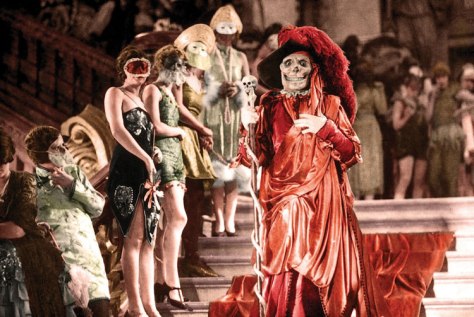
Well you saw some excellent shows in 2015, didn’t you? There were many great nominations for this category, and the title very nearly went to a London screening … but not quite. The winner was the triumphant conclusion to this year’s Pordenone silent film festival: The Phantom of the Opera with Carl Davis’s excellent score played by Orchestra San Marco and conducted by Marc Fitzgerald. I can confirm that this was a blinding performance, but also that the Teatro Verdi lighting stayed firmly in place throughout the show.

Continue reading The Silent London poll of 2015: the winners!

Silent London Poll of 2015: shout about your year in silents

Festive greetings, Silent Londoners! It’s the time of year when choirs sing, reindeer run, and magazines and newspapers start launching their best-of-the-year lists. But I don’t care what they think – I want to know how 2015 was for you, silent cinema wise.

Synthetic Sin (1929)

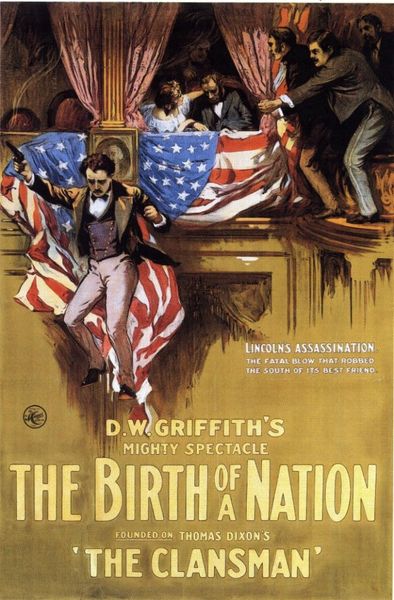
For me, it’s been a very interesting year, with a couple of very special modern silent-type films in the cinema, the return of the British Silent Film Festival to its full strength and some great screenings in the capital and beyond. I’ve enjoyed some intriguing silent rediscoveries this year, and returned to a few classics too, notably the centenarian landmark The Birth of a Nation.

Continue reading Silent London Poll of 2015: shout about your year in silents

News: Slapstick, Hippodrome, Neil Brand, Nanook and more

It’s a busy time! Here’s a roundup of the silent movie news I really want to share with you.

Bristol fashion

The Slapstick festival, our favourite reason to visit Bristol, is back in 2016, running from 20-24 January with a fantastic lineup of events topped by a special gala screening of Chaplin’s The Kid. But there’s so much more to the programme than that. I am looking forward to Kevin Brownlow’s favourite silent comedy westerns, Lucy Porter on the genius of Anita Loos, David Robinson’s lecture on the inside story of The Kid and a musical screening of Cecil B DeMille’s jazz-age drama Chicago (1927), as well as tributes to Buster Keaton, Harold Lloyd, Ben Turpin and more. Read more and book here and don’t forget to support the Kickstarter campaign if you can.


Neil Brand – and friends

Brand new

It would take a smarter woman than me to keep up with Neil Brand these days – he pops up everywhere from the BBC to the Royal Albert Hall to the good old BFI. The best way to keep tabs on his activities and make sure you don’t miss a show, is his website neilbrand.com, which has just been thoroughly revamped. There’a google calendar of his upcoming events (very useful) and links to buy his DVDs, albums and books. Plus, there is an INCREDIBLY USEFUL page, titled So you want to programme a silent film? which is a clear, and authoritative guide to how to put on a silent film screening – from rights to music to marketing. If you are contemplating putting on a show – read this first. There is also a link through to Brand’s Originals site, which has some fascinating material about film music and musicians in the silent era. I hear that these pages will be getting their own makeover shortly.

Continue reading News: Slapstick, Hippodrome, Neil Brand, Nanook and more

Silent London’s epic fifth birthday tweetalong

The Birth of a Nation (1915)

It’s our birthday! Silent London is five years old today. Definitely school age and time to grow up, right? Thanks to all of you who have followed the blog, commented, contributed, pushed a like or retweet button or generally been fabulous over the years!

I wanted to find a suitably epic way to celebrate the fact that I haven’t give up or been shunted off the internet by blogger-hating meanies but until yesterday I was drawing a blank.

The Birth of a Nation (1915)

Then, the postman delivered a copy of the BFI’s latest Blu-ray to my door. It’s a biggie. It’s The Birth of a Nation. Love it, hate it, puzzle over it, misunderstand it, do what you will, you can’t ignore it. And yet sometimes it seems to be a film more talked about than, y’know, actually watched. So let’s watch it together, tonight, a hundred years after it was first seen, on the meaningless anniversary of a silent movie blog.

The Birth of a Nation (1915)

Continue reading Silent London’s epic fifth birthday tweetalong

Bonus silent movie emoji quiz: win a pair of tickets to Seventh Heaven

Janet Gaynor and Charles Farrell in Seventh Heaven (1927)

Silents-wise, this screening is surely the highlight of the BFI Love season: Frank Borzage’s gorgeously romantic Seventh Heaven (1927), with a brand new score by KT Tunstall, Mara Carlyle and Max de Wardener.

Seventh Heaven is a classic from the golden years of Hollywood silent cinema, with unforgettable performances by Janet Gaynor and Charles Farrell as star-crossed lovers in a gritty, but somehow still beautiful Paris. Back in 1927 Mordaunt Hall was moved to laughter and tears by this film, saying: “It is obvious that this subject was admirably suited to the screen, but it should also be said that Frank Borzage in directing this production has given to it all that he could put through the medium of the camera.” 

It’s true. There is more emotion in 10 minutes of this weepie than most entire films, so this live music event should be unforgettably immersive. Here’s what the BFI has to say about the event:

Sonic Cinema has teamed up with the formidable talents of British musical powerhouses KT Tunstall, Mara Carlyle and composer Max de Wardener to present a brand new BFI-commissioned score to Borzage’s classic. Perhaps the most sublimely lyrical of all the silent-era romances, this tale of transformational love sees Charles Farrell’s sewage worker and Janet Gaynor’s street waif rise above poverty and war to be together. Martin Scorsese’s observation that Borzage’s films unfold in ‘lover’s time’ was never more apt, and the tender emotions Borzage captures build to an unforgettable, transcendental climax.

Continue reading Bonus silent movie emoji quiz: win a pair of tickets to Seventh Heaven

The silent film listings are back

Clara Bow Stepping Through Calendar

The Silent London Calendar is no more, sadly, but in its place is Silent Film Calendar – a bigger and better version, with listings for events all around the UK, and overseas festivals as well. It’s nothing to do with me I have to admit, but I am very happy to be able to tell you all about it.

From now on this will be the place for you to keep up to date with what is happening near you – and you can’t miss it cos I’ve added a link to the site at the top of Silent London. The entries for each event are very informative and give a link to the correct place to buy tickets. Plus, you can search by month and region, eg if you look for what is happening in Wales this month, you’ll find a very enticing screening of The Phantom of the Opera at Caerphilly Castle. That’s tomorrow, so hurry.

If you know about a silent film screening that the Calendar hasn’t listed yet, you can get in touch with them on silentfilmcalendar@gmail.com

Quiz: emoji silent movies, part seven

The Cheat (1915)
What ever you do … don’t cheat!

Don’t cry because it’s over, smile because it happened. Welcome to the seventh and FINAL part of our silent-movie emoji quiz, the most popular silent-cinema picture puzzle in my postcode.

What do you reckon to our final five? Easy? Even the last one?

Well, if you think you have worked out all 35 titles, send them in to silentlondontickets@gmail.com, and you could be crowned the winner of this hotly contested competition. And who knows if there might not be a prize in it for you too?

Silent film emoji quiz, part seven

Make More Noise! Suffragettes in Silent Film DVD review: watch the world change in front of your eyes

Make More Noise!
Make More Noise!

Make more noise! More than a silent film? More noise than an Edwardian lady? No, more noise than the patriarchy.

Make More Noise! is the title of boisterous new compilation from the BFI, an anthology of films related to the British campaign for women’s suffrage. It contains newsreels of protests and personal appearances by the leaders of the movement, as well as short fiction and actuality films that reveal the changing role of women in British society. In the second category, you’ll spot Tilly films, and footage of women working in munitions factories and field hospitals. It’s a fascinating mix, beautifully programmed by Bryony Dixon and Margaret Deriaz and superbly scored by Lillian Henley.

This anthology pretty much had me at hello – the combination of early cinema and feminism is right up my street. But I’d like to think that Make More Noise! holds an appeal for people who aren’t pre-sold on the content that way. If you enjoyed Sarah Gavron’s very moving Suffragette, this programme gives you a more complete picture of the world of the characters in that movie – these are the films they would have seen at the cinema, the ideas they would have discussed at the dinner table, and just possibly, a glimpse of their future.

protesting-suffragettes-early-1900s1
Milling the Militants (1913)

Continue reading Make More Noise! Suffragettes in Silent Film DVD review: watch the world change in front of your eyes

Quiz: emoji silent movies, part six

Mabel Normand in Won in a Cupboard (1914) National Film Preservation Foundation

The emoji quiz is nearly over, but don’t be sad. Get your thinking cap on instead, and riddle five more emoji-puzzles to be in with a chance of being the winner!

I’ll post five more puzzles tomorrow and then, if you have cracked all 35 or almost all of them, send me the titles to silentlondontickets@gmail.com. You might become the official silent film emoji champion, which is surely a title to be coveted.

Silent film emoji quiz, part six

Quiz: emoji silent movies, part five

Gloria Swanson in Manhandled (1924)

Your morning commute will fly by if you spend it puzzling out these five silent film titles expressed using emojis. Won’t it? Welcome to part five of the quiz.

If you have all of them right so far, you’ll have 20 answers and when you’ve dealt with these, you will have 25. Wait until you have cracked all 35 puzzles and then send me the movie titles, in order, to silentlondontickets@gmail.com to win internet fame and adulation! Or something.

Silent film emoji quiz, part five

Nosferatu: back on Blu-ray

Nosferatu (1922)
Nosferatu (1922)

Name: Nosferatu.

Age: 93 years young.

Remind me which one that is? Oh come on. Nosferatu is a classic – FW Murnau’s free-floating Dracula adaptation is one of scariest films of all time, and one of the most beautiful too.

Is that the one with hunchbacked shadow lurching up the stairs? Bingo.

Surely it’s not still hanging around? Nosferatu is back baby, and now it’s on Blu-ray too, courtesy of a new release from the BFI.

Oh, Nosferatu on Blu-ray? I got that already. Really?

Well, no. I saw that Masters of Cinema brought it out two years ago but I hadn’t got around to buying it yet. Ah I thought so. Well you could buy this version instead.

Nosferatu (1922)
Nosferatu (1922)

I might. Both releases are Blu-ray updates of each label’s previous DVD release of the film.

I’m all about Blu-ray. What’s the difference between the two packages though? The extras are different, and the score. MoC used the original theatrical score, and the BFI has used a more modern, but also orchestral, score by James Bernard. And yes, both are available in stereo and 5.1.

Continue reading Nosferatu: back on Blu-ray

Quiz: emoji silent movies, part four

Buster ... and Buster
Buster … and Buster

Part four! That means we are at the halfway point. Still confident? Then proceed …

I’ve come up with 35 silent movie titles expressed as emojis and I am posting five of them every day for a week. If you have worked them out, or you think you have, send your answers to silentlondontickets@gmail.com and you might just find your efforts are rewarded!

Silent film emoji quiz, part four

Quiz: emoji silent movies, part three

Mary Pickford in Rebecca of Sunnybrook Farm (1917)

Welcome to part three of our emoji picture quiz. How are you getting on so far?

I am posting five emoji chains every day for seven days, making 35 puzzles in total. If you can work out all 35 silent movie titles, or you think you can, send your answers to silentlondontickets@gmail.com and fame (and possibly a pressie) could be yours!

Emoji silent film quiz, part three