This is a guest post for Silent London by Neil Brand.
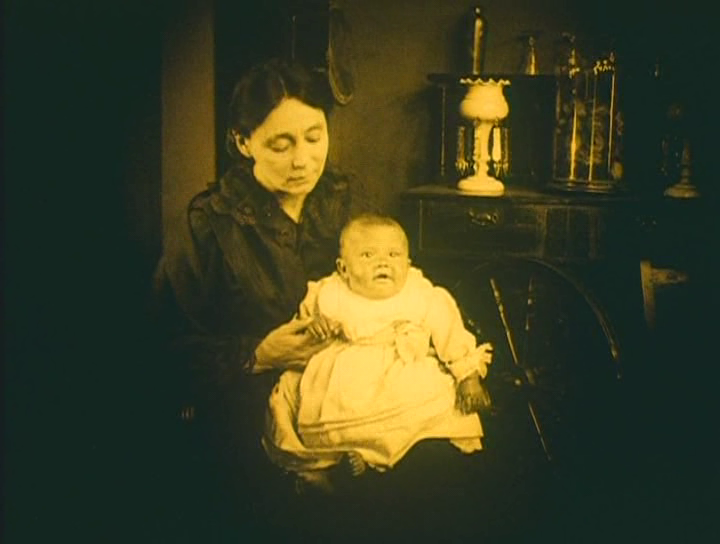
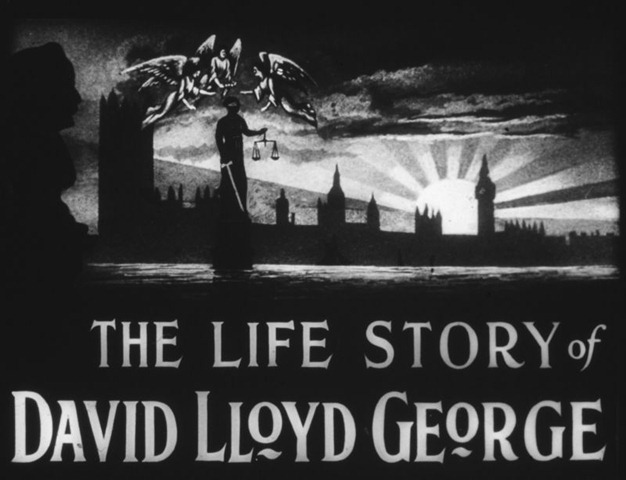
In late 1918 a film was in preparation that was to rewrite the history books – a British picture, running almost as long as Griffith’s The Birth of a Nation, bringing to life the political career of the country’s prime minister, the full ferocity of the war and the experience of ordinary people caught up in these momentous events. It was called The Life Story of David Lloyd George. Nothing as ambitious had been tried before and it was ready for launch immediately after Armistice Day. There was even a deal in place with Carl Laemmle to splash it across the American continent.
Then late one afternoon in January 1919, a lawyer arrived at the offices of Ideal Film Company, the film’s producers, handed over £20,000 in £1,000 notes and drove away with the only negative and positive copies of the film. It was never seen again by its makers, its writer, the respected historian Sir Sidney Low, or its director Maurice Elvey. No audience saw it at the time and the film became a lost treasure.
But you can see it at the Barbican on 17 February, 2013.
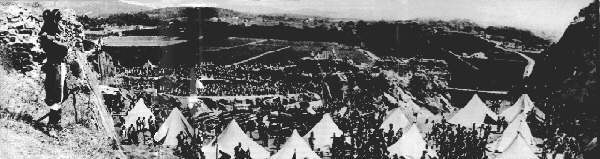
The Life Story of David Lloyd George (1918)
The story behind these extraordinary events is still murky, but what we do know is this. Towards the end of 1918, as the film was nearing completion, the owners of Ideal Film, the Rowson brothers, issued a writ for libel against John Bull magazine, edited by the virulent xenophobe Horatio Bottomley, which had accused them of being German sympathisers (largely on account of their original name, Rosenbaum). At the same time, word came down from Lloyd George himself that he was unhappy with the film going ahead, this despite the fact that the producers had secured his involvement before shooting began. These two events are almost certainly linked, but the outcome is still shocking to this day.
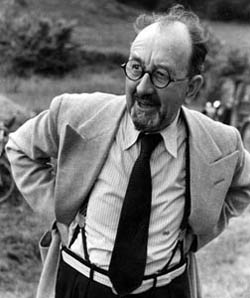
Maurice Elvey
The £20,000 paid to Ideal represented the out-of-pocket costs of the film not appearing – the greater costs, to Elvey, to lead actor Norman Page, whose Lloyd George is a phenomenal performance of nuance and understatement, even to the future of the British film industry, are incalculable. As Kevin Brownlow wrote on seeing the film in 1996, “… had the Life Story of David Lloyd George been released, Elvey might even have been hailed ‘The Griffith of Britain’ … certainly the film would have been placed beside the best work from America and the continent and it would not have been entirely overshadowed.”
So how did Brownlow come to see it? In 1994 the Welsh Film Archive in Aberystwyth took delivery of 16 cans of film found on the farm of Lord Tenby, grandson of Lloyd George. These turned out to contain 137 unedited rolls of nitrate film, which, after two years of painstaking restoration and reconstruction work, finally hit a screen before an audience in North Wales in April 1996 – I was the pianist on that occasion, unable to believe my luck.
For Lloyd George is a phenomenal film, a history that plays out like a biopic, a time-capsule that, at its best, still holds a modern audience with extraordinary power. Like the best biopics it hops nimbly between the big picture and the small, creating a fascinating portrait of Lloyd George within an entirely convincing political and domestic world. It has massive scenes, including a riot at Birmingham Town Hall with nearly a thousand extras; and quiet, contemplative scenes informed by Page’s charismatic dignity. Best of all, it still has the power to move, as much as it would have done with those audiences of 1919 who were destined never to see it. I urge you to see this “lost” masterpiece on its only London showing, and be prepared to have your preconceptions about British cinema, the first world war and silent cinema acting overturned.
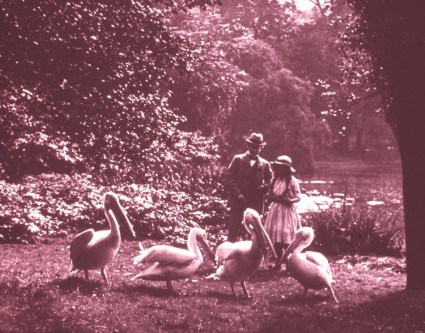
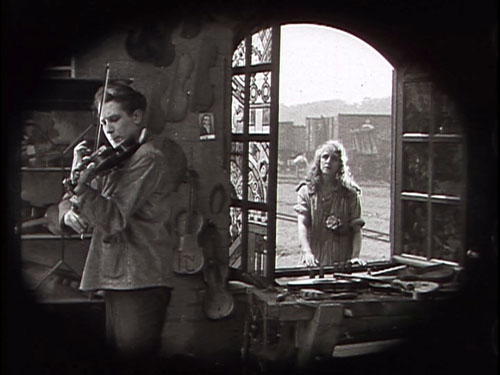
Norman Page and Alma Reville in The Life Story of David Lloyd George (1918)
The National Library of Wales holds more information on this extraordinary film and its story, if not the solution to the mystery of the film’s disappearance. Here’s my take on it – the film turned up among Lloyd George’s own possessions and, as was common knowledge at the time, £20,000 was about the going rate for a baronetcy …
Update: the Flowers of London interactive goes live on 7th February, otherwise known as tomorrow.
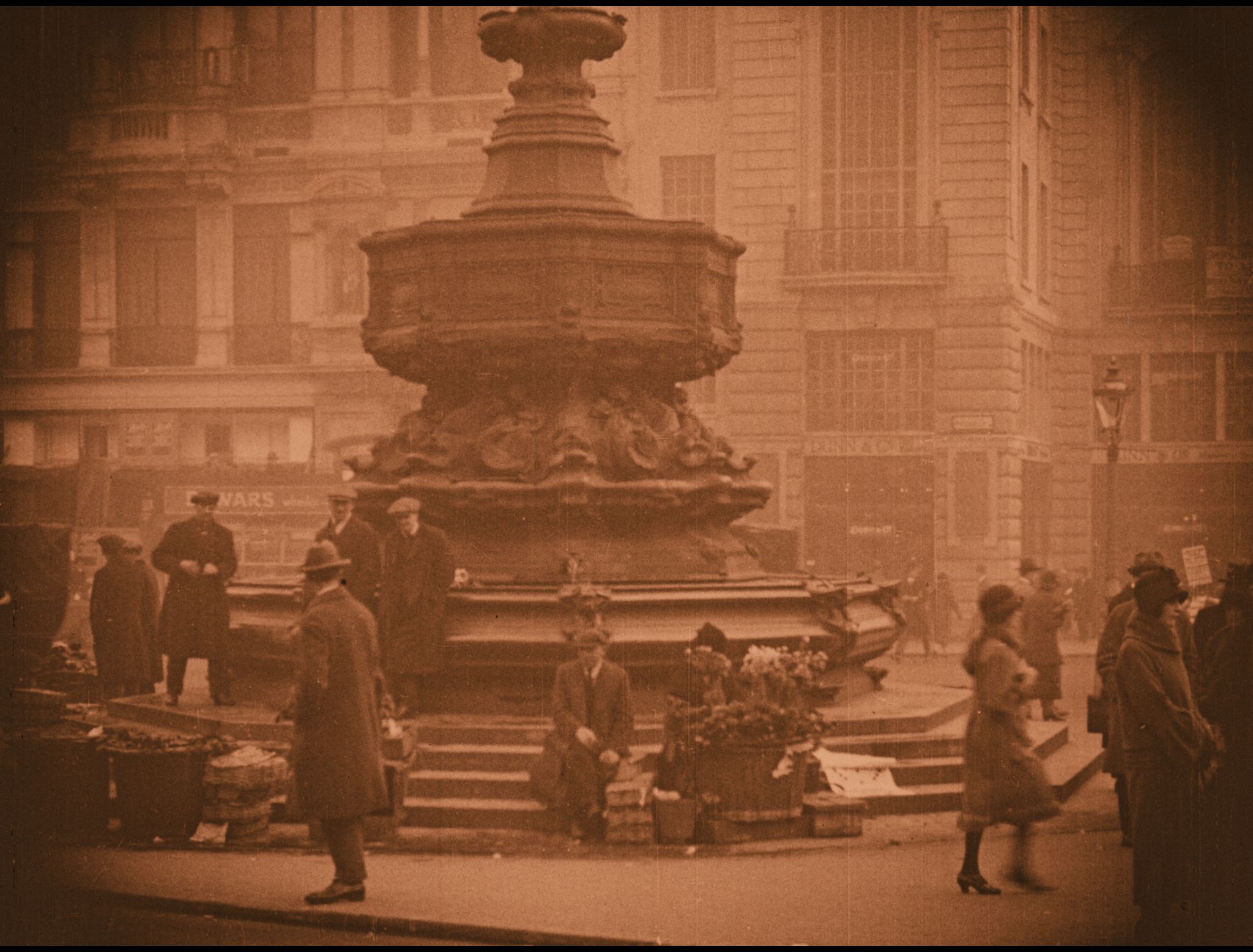
A dangerous opportunity for silent movie fans this: time to put one’s money where one’s mouth resides and customise a film soundtrack of your very own. Arts website The Space, together with the BFI and The New Radiophonic Workshop, has built an interactive online player that allows users to mix different audio elements to accompany a film. The title they have chosen is Flowers of London (1924), from the Wonderful London series of 1920s travelogues.
Flowers of London will be published on The Space on February 7. Part of a series of silent shorts, Flowers of London is a poignant evocation of London – the city’s dirty streets contrasting with images of flowers, a symbol of hope throughout the film. The New Radiophonic Workshop, led by composer Matthew Herbert, brought in sound-effects experts alongside award-winning writer Laura Wade to add new dimensions to the film. Viewers have complete control of their listening experience and can choose their own combination of sound-effects, music and narrative … audiences can customise their own experience by deciding which soundtrack or combination of soundtracks the film should have, choosing to hear the New Radiophonic Workshop’s full mix or to use the player to select from the seven different combinations.
Flowers of London
It’s not the first time that The Space has got involved with silent film: you may remember its live stream of the Champagne restoration last year, and the site currently hosts a collection of silent titles, including some very precious Shakespeare adaptations. The Flowers of London interactive is being touted as part of the site’s coverage of the art of silent film scoring in particular. You can watch a video in which Daniel Patrick Cohen discusses his score for The Pleasure Garden – and we’re promised similar insights from Simon Fisher Turner on his score for The Great White Silence.
Flowers of London
The Flowers of London interactive goes live on 7 February so I haven’t had a chance to play with it yet. If you have a go, do let me know what you think in the comments below – particularly whether it enhances your enjoyment or understanding of the film. With sound-effects, voiceover and samples, you’re unlikely to make what we would think of as a “traditional” silent film score. Whatever that means.
Flowers of London
I must also share you with this intriguing snippet from the press release. Matthew Herbert, director of The New Radiophonic Workshop, “is constantly exploring alternative ways to listen and think about how we create and listen to sound and music … He has made records out of 3,500 people biting an apple at the same time, the sewers beneath London, the Houses of Parliament and most recently, the entire life cycle of a pig.” But has it got a good beat?
Before you go, enjoy this clip from another of the Wonderful London films, currently available on DVD. Avnd don’t forget that a second batch of Wonderful London shorts screens at the BFI Southbank on 15 February with musical accompaniment from Stephen Horne and an introduction by Bryony Dixon.
Visit The Space from 7 February onwards to mix your own soundtrack to Flowers of London.
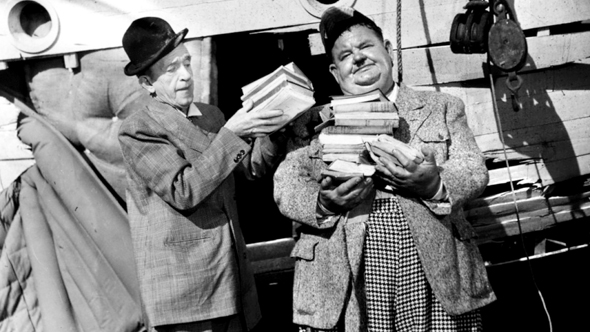
There are so many silent film myths and so little time to wearily dismiss them all. But next time someone blathers on about the coming of sound causing all the silent stars to disappear in a puff of smoke, never to darken the doors of Hollywood again, point them in the direction of Laurel and Hardy. Case closed.
And once you’ve sung the praises of the little clever British one and big daft American one, you’ll be in the mood for seeing some of their films. Happily BFI Southbank is screening the full version of their last feature, the rarely seen Atoll K (1951) on 30 January. You can read more here from Uli Ruedel about why this is such a special opportunity:
Shot in Europe by the comics with genuine enthusiasm, but in poor health and under chaotic production circumstances, the film has been much maligned by some fans and writers, who would rather see it erased from history than enjoy it for what it is.
The film’s longest version – with its extra two reels including “some of the funniest sight gag sequences” (Everson) – has practically been unseen for decades, let alone in its original technical quality.
Curators, comedy historians and conservation scholars at BFI have now previewed and confirmed that the archive’s 35mm print, preserved from unique nitrate master materials in glorious black and white, does conform to the length of this longest existing (and likely never theatrically released) extended English-language version.
Running a delightful 98 minutes, it’s only a couple of minutes short of the 100 minutes worth of footage used in all the different national versions altogether. And with a splendid visual and sound quality, it allows for a fresh appreciation of the French-Italian ‘European super-production’, its sight gags and satire, even its mostly post-synched, faux American English soundtrack – the only dub incorporating the Boys’ distinctive voices in the original, on-set performances.
The hardcore nothing-but-silent fans among you will be pleased to note that Atoll K will also be accompanied by some dialogue-free treats – including a surprise change to the programme.
First up is Grand Hotel (aka Laurel and Hardy Visit Tynemouth, UK 1932, Dir JG Ratcliffe, 10min, silent). In this newsreel footage, the duo “are rapturously received when they visit Tynemouth in 1932, and Stan clowns for the camera with his dad”. But there’s more: “programme will now include previously unseen silent amateur footage of Stan and Ollie opening a Gymkhana at Eastwood Park, Giffnock, during their visit to Scotland in June 1947.” That’s another nice er, bit of BFI archive film programming you’ve gotten yourself into.
Two more thing to know if you’re a Laurel and Hardy fan:
The Laurel and Hardy rarities programme screens in NFT1 at BFI Southbank on Wednesday 30 January at 6pm, introduced by Glenn Mitchell, author of The Laurel and Hardy Encyclopedia, and Archive curators Vic Pratt and William Fowler. You can buy tickets here.
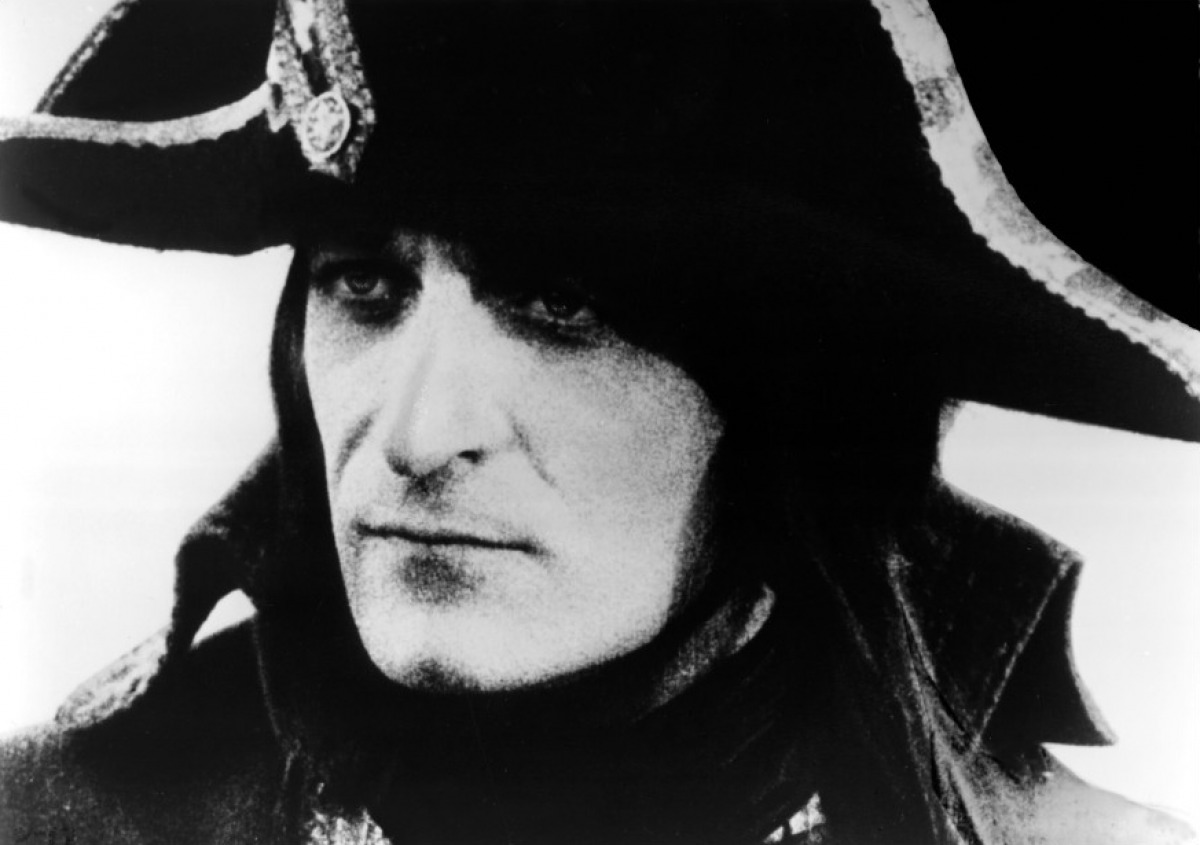
Controversially, I have been known to say that London is the centre of the silent film universe. You may think I’m biased – and you would be right. But this November, I will be feeling pretty smug. The most audacious of all silents, Kevin Brownlow’s restoration of Abel Gance’s epic Napoléon, will screen at the Royal Festival Hall in London – accompanied by the Philharmonia orchestra, conducted by Carl Davis as they play his masterful score.
It couldn’t be more convenient for me. I’ll hop on the tube for 25 minutes, grab a coffee and spend all day absorbed in a cinematic masterpiece. But I’ve already heard whispers from fellow silent film fans in the States, in Canada, in continental Europe and yes, even places-in-Britain-that-are-not-London, that they may want to sample the Napoléonexperience too. It’s a dream come true – a world of silent cinema aficionados in this fair city, under one roof.
This video, advertising last year’s California screenings of Napoléon, should help you to understand why it’s worth the airfare.
You’re tempted, aren’t you? Therefore, in the spirit of welcome, for those of you who haven’t been to the Big Smoke before, or at least not since Napoléon last played here in 2004, here’s my 10-point guide to making the most of your trip, Silent London-style.
1. Location
The nearest station to the Royal Festival Hall is called Waterloo. No, really. You couldn’t make it up. Embankment station is also pretty handy, and there are several bus routes that pass by too. The RFH is part of the Southbank Centre, a large arts complex on the south bank of the River Thames, an area imaginatively known as the “Southbank”. Waterloo is a good station to aim for: the Northern, Jubilee, Bakerloo and Waterloo & City lines all pass through, as well as several mainlines from the suburbs and the south-west of England, if you’re not staying in town.
If you are travelling from the continent, bear in mind that it’s no longer the place where the Eurostar arrives though – that’s Kings Cross St Pancras (take the Victoria line southbound and change on to the Bakerloo line at Oxford Circus).
The Southbank is really quite a groovy part of London, so if you’re around for a few more days, you may want to explore further – stroll along the front, and visit the amazing Tate Modern, Shakespeare’s Globe, the National Theatre or the Hayward Gallery. There’s lots of sleek but brutal concrete, gangs of youthful tousle-haired skateboarders and pop-up artisanal food markets to admire also. And those daft living-statue things. They give me the creeps.
Of course, the BFI Southbank, formerly known as the National Film Theatre, is another neighbour. Pop in here to watch a film, visit the library, browse the museum displays, shop in the filmstore (DVDs, books, magazines, T-shirts) or just lounge in one of the trendy cafés with a cappuccino. If you’re wearing the film-buff uniform of black polo neck and chunky glasses while carrying a copy of Film as Art, you’ll fit right in.
The best thing about the Southbank for many film fans is that it’s a stone’s throw from where a little-known film-maker called Charlie Chaplin grew up. Feel the vibe, take a detour into Lambeth, commune with his spirit, and if you are feeling flush, take a trip to the London Film Museum further down the river where you can browse their permanent exhibition on the Great Londoner.
2. Tickets
Happily, seats for Napoléon start at a very affordable £11, but they do go up to £60 for a “premium experience”, which may tempt you to push the boat out. Tickets are available here, and you’ll be able to pick and choose where you want to sit. For more information, especially if you have not been to the RFH before, try the very useful website TheatreMonkey, which will explain where the best (and worst) bargains are to be had.
Your hotel room probably won’t look like this …
3. Practicalities
You’ll probably need somewhere to stay: Napoléon begins at 1.30pm and doesn’t finish until 9.30pm, which means you can probably get a late train home, but you’ll more than likely be a bit dazed and in need of a liedown. London is one of the most expensive cities in the world, which means that hotels are not cheap, I’m afraid. So, if your budget doesn’t stretch to the Ritz or the Savoy, check out one of the economical chains such as Travelodge, Premier Inn or Holiday Inn; book in advance and look for a location that is handy for public transport rather than dead central. If you’re watching the pennies, commuting in as a tourist from Zone 3 or 4 of the tube network really doesn’t take very long and needn’t be stressful in off-peak hours. Cast your eyes eastwards, where hotels that sprang up in time for the London 2012 Olympics may be looking to fill up their empty rooms. Alternatively try the YHA, or Couchsurfing. You know about lastminute.com too, right?
You’ll want to eat before Napoléon, during Napoléon, or after Napoléon. Possibly all three. There is a 100-minute interval for a reason and a person can’t live on coffee and cinematography alone. Not a problem though. There are cafés and bars in the Southbank Centre, and quite-posh restaurant called Canteen too (book ahead). There’s also a pizza place opposite and all kinds of food from sandwiches to noodles to burgers available nearby on the Southbank. The RFH itself is licensed too, if you want to accompany your viewing of a French cinema classic with un petit vin rouge.
Some of the nearby bars will open late, if you want to party like it’s 1927 after the movie, and the tubes run until around 1am, with nightbuses and black cabs to scoop up the wilder ones among you.
4. Crime
We’ve all read Oliver Twist and learned that London is crammed with grubby-faced urchins with their eyes on your pocket watch. Sort of. Pickpocketing and other crime does happen, but not really as often as you may think. Keep hold of your valuables in crowds, think twice before walking home somewhere quiet late at night, and don’t jump into an unlicensed minicab. Just like you’d do at home.
5. Conversation
English innit. Just like what the Queen talks. But if you want to mingle with ease among the British silent film crew, just drop in a few references to “Porders”, the carrier-bag rustlers in NFT2, your intimate friendship with Kevin Brownlow, the LFF archive gala, that time you got lost on the way to the Cinema Museum/inside the Barbican, the latest issue of Sight & Sound, where you think next year’s BSFF should be held and, of course, your devotion to a certain marvellous silent cinema website, whose name briefly escapes me.
Seriously, this should be a very social occasion, and hopefully between this site, the Bristol Silents site, Nitrateville and the wider world of Twitter and Facebook, we should be able to make quite a party of it and meet lots of new and old faces. Don’t be a stranger.
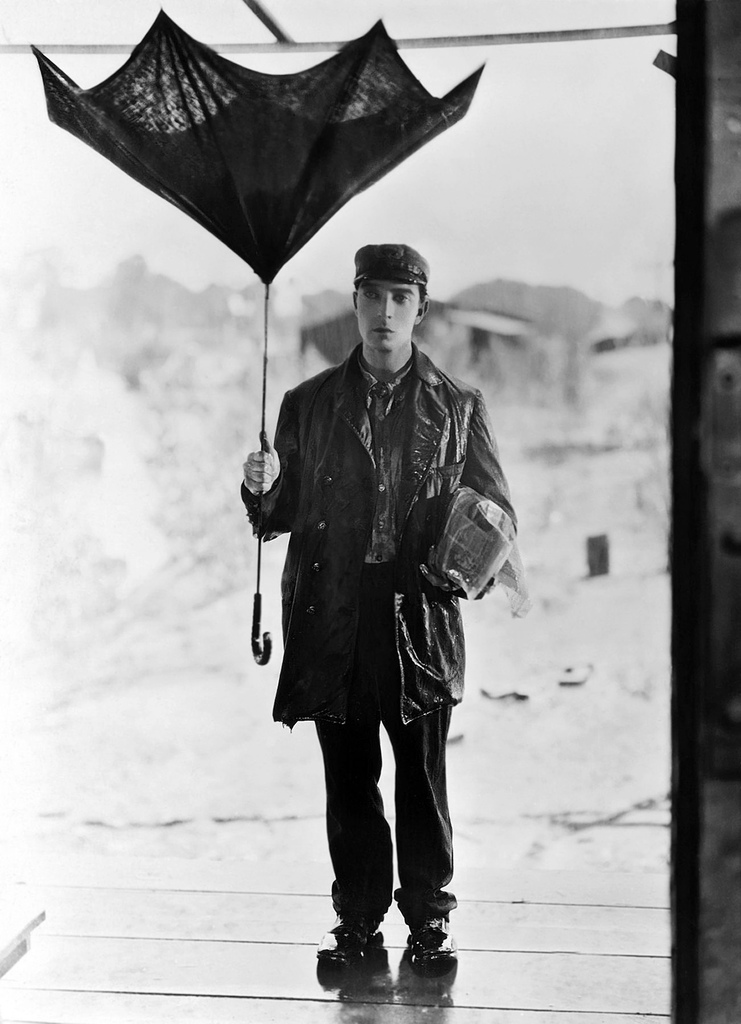
Buster Keaton prepares for the London weather
6. Weather
Obviously, this is another popular topic of conversation. If you’ve not been to the UK before, you need to know that London in November will be cold. Not properly cold, not Norway cold, but definitely nippy. Bring your coat and your umbrella too, because the English skies love to rain. Unfortunately, however, you have been lied to by the movies and there is very little chance of you being caught in a “right old pea-souper”. That’s a good thing, really, as the views down the Thames from the Southbank are gorgeous.
7. Being a tourist
Apparently there is more to do in London than just watching old movies. News to me. If you’re staying for a few days, and you have exhausted all the possibilities here, then you’ll want to look further afield for entertainment. An official tourism website such as this one should keep you busy with palaces, museums, West End shows, abbeys and graveyards, but for something a little more quirky, cultural or off the beaten track, try the dispatches from Londonist or the listings from Time Out. The Vintage Guide to London may well be your cup of char too.
And to get you in the mood for the big show in November, anyone based closer to London should book now for Modern Times in March and The Thief of Bagdad in June – both Photoplay presentations with Carl Davis and the Philharmonia, just like Napoléon, and showing at RFH too.
9. Souvenirs
Your loved ones will no doubt be delighted that you went all the way to London just before Christmas and brought back lots of Region 2 DVDs from the BFI shop for their stockings. I can just imagine their happy faces now. On the off-chance that that isn’t true, London has lots more to offer shops-wise. Covent Garden, Camden Market, Marylebone High Street and the gift shop at any of the big museums should sort you out and keep your rellies happy. The London Transport Museum gift shop in Covent Garden is particularly good for retro souvenirs of Laaaahndan Town. Alternatively, you can buy some Edinburgh shortbread at the airport. No one will know the difference.
The Hackney Attic at London’s newest Picturehouse cinema is becoming to make name for itself as a silent film venue, with recent screenings ranging from Piccadilly to Aelita: Queen of Mars. Heartening news, then, that this trend continues with another Filmphonics presentation of a silent classic this month: Buster Keaton’s groundbreaking comedy The General, on 20 January 2013.
Surely The General needs no introduction from me: the funniest war film you’ll ever see, an astonishing technical achievement and did I mention it was hilarious too? If you need a taster though, you could do worse than this sampler from film critic AO Scott:
There’s more good news: this screening of The General will be accompanied live by the marvellous Costas Fotopoulos on piano.
Costas has now been working for many years as an improvising silent film pianist at BFI Southbank and he has also accompanied silent films at the Barbican Centre, the Prince Charles Cinema, Riverside Studios, Chelsea Arts Club among other venues, as well as scoring many silents in the London Film Festival.
The even better news is that you could get your hands on a free pair of tickets to this screening. Free. To win a pair of tickets to see The General at Hackney Attic, just send the answer to this question to silentlondontickets@gmail.com by noon on Wednesday 16 January. The winner will be chosen at random from the correct entries.
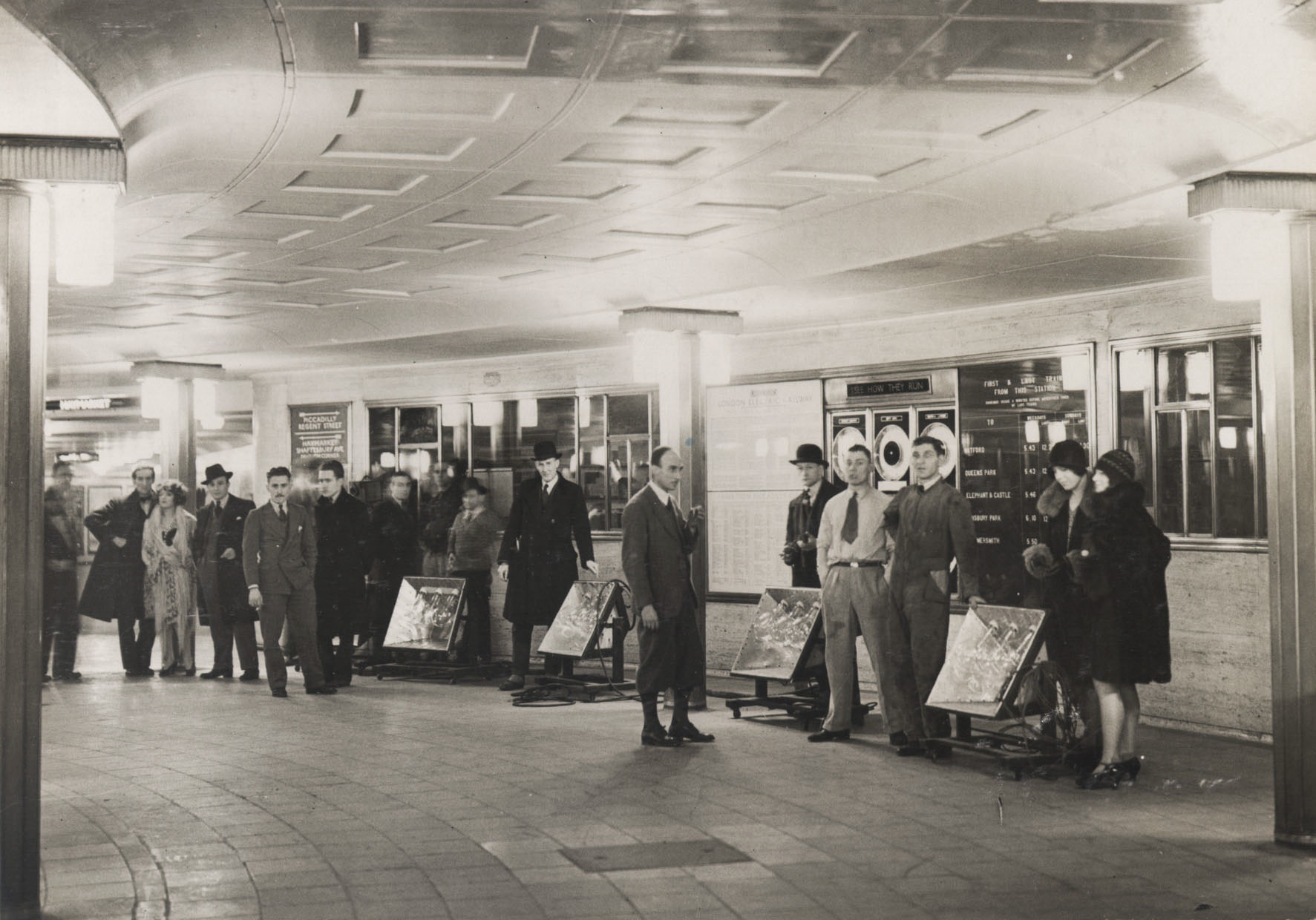
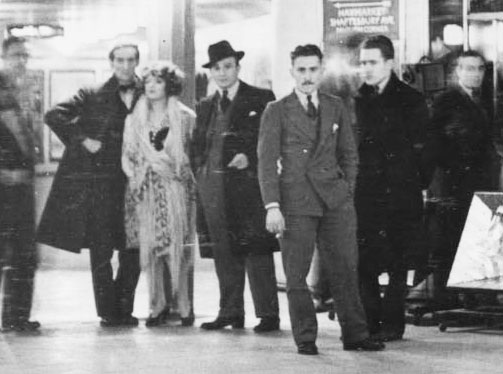
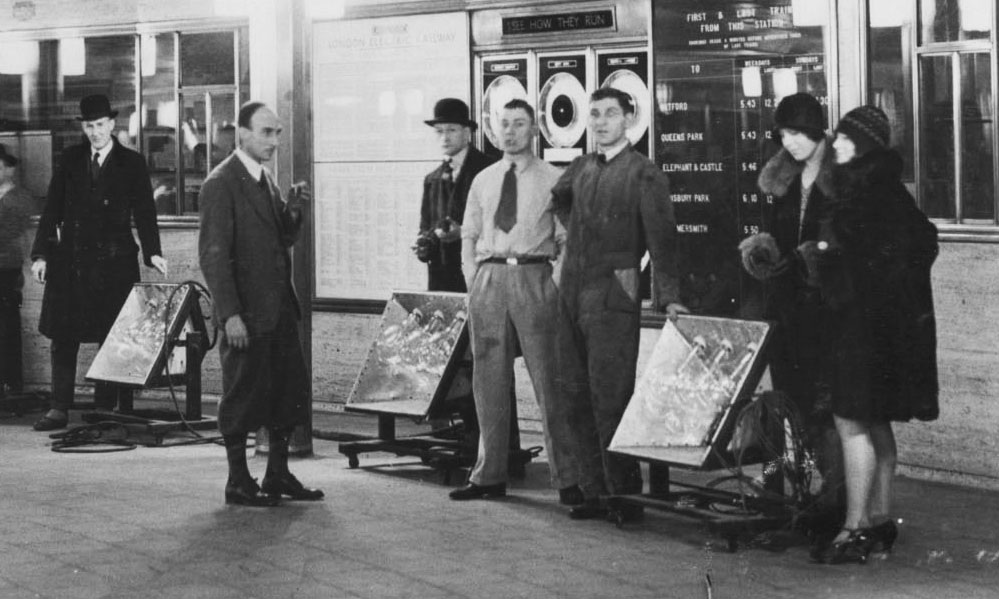
Here’s a mystery – and a topical one too. To tie in with the 150th anniversary of the Tube, the BFI restoration of Anthony Asquith’s 1928 thriller Underground gets a theatrical release this week. What do you mean, you didn’t know? This happy news led Simon Murphy from the London Transport Museum to send me this intriguing photograph of what seems to be a film cast and crew at Piccadilly Circus station.
Simon writes:
The location is Piccadilly Circus and the date is 1929 or so I think, but could be later. I used to think it was 1928 and linked to the Asquith film Underground somehow, but the station was only just being built when Underground was shot in April-May 1928 and didn’t open to the public until December. I recognise Anthony Asquith, to the right of the guy with the pencil moustache, and the woman on the left looks familiar but I can’t place her …
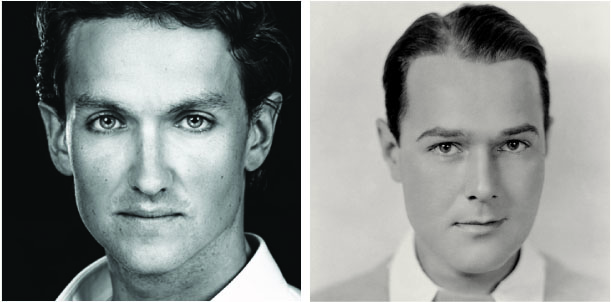
So we’re asking for your help. Do you recognise any famous (or not-so famous) faces from British film history? Could they be filming a short, or some publicity material for another title? Perhaps these closeups will help:
It’s enough to rekindle your faith in democracy. This year’s Silent London Poll was our biggest ever – with more than 1,500 votes cast and, I suspect, some hard lobbying on behalf of your favourite shows.
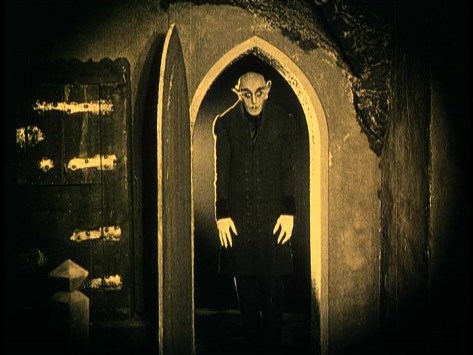
The Nosferatu event gathered a massive 42% of the vote (and there were votes cast for some of Minima’s other performances this year) but an honourable second place goes to the stunning screening of Faust at the Royal Festival Hall with its romantic orchestral score by Aphrodite Raickopoulou.
Thanks for your votes and for sharing the poll – it all adds evidence to the impression that it has been a great year for silent film in the country. Happy new year!
Here at Silent London we would like to wish all our readers a very happy Christmas and a prosperous new year. We hope your stockings are full of cinematic treats – and that your family indulge you when you want to press play on your Die Nibelungen DVD after lunch. We’d also like to take a moment to consider 2012, a truly landmark year for silent cinema.
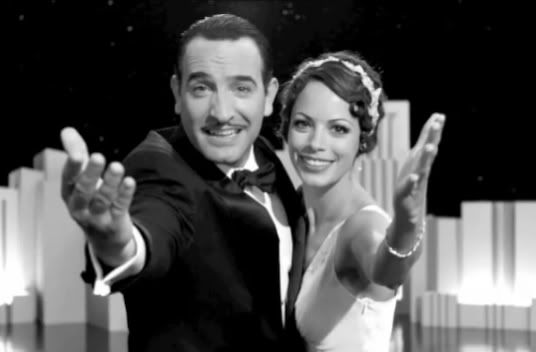
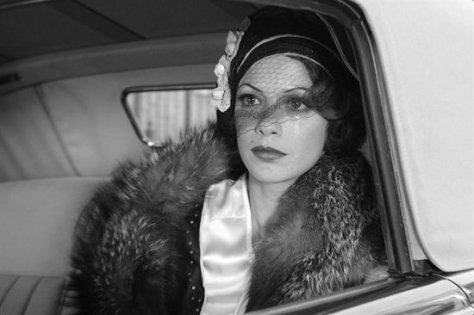
Berenice Béjo in The Artist (2011)
The Artist, its retro charm, and its unstoppable award-gathering, dominated the first half of the year. Martin Scorsese’s adorable Hugo did almost as much to popularise the silent era – while Miguel Gomes brought a hint of Murnau to the arthouses with his Tabu. Pablo Berger’s sumptuous Blancanieves stunned the critics at festival after festival, too and with any luck will get a UK release next year. The fact that it has been nominated as Spain’s official entry for the foreign-language Oscar should surely help.
On the west coast of the States, Napoléon fever struck in spring, with popular screenings of Abel Gance’s epic, the first in that country for many years. Will we see the triptychs back in London in 2013? Maybe.
It’s cold, it’s dark, I’m increasingly tempted by a glass of port before bed: it must be December. And that means it’s time to gather your votes in the annual Silent London Poll. As before, we’re trying to find your favourite silent film and live music show. The only rule is that you must have seen it this year, in the UK.
To get the ballots rolling, I have consulted with some avid silent cinema fans and together we have drawn up a very long shortlist. All you need to do is to vote for the show you enjoyed the most this year, or suggest an alternative. Then tell all your friends to vote too.
The winner will be announced here on this very site, before the year is out.
I have written before on this blog about Cecil Court, a small street in London that used to be known as Flicker Alley. It’s a turning off Charing Cross Road, crammed with bookshops – and in the windows of those shops you will find circular blue labels commemorating the pioneering film businesses that established themselves here in the earliest days of the cinema.
On 13 December this year, a more permanent memorial will be unveiled, a bona fide Westminster Council blue plaque at No 27 Cecil Court, to mark the street’s importance to the British film industry. And to celebrate the plaque, there will be an afternoon of festivities. First, at 2.30pm, a screening of early films at No 5, with piano accompaniment by John Sweeney, then Christmas carols and refreshments at 4.45pm. Later in the evening, Poet Laureate Carol Ann Duffy will be signing books in Goldsboro Books at No 23.
This blogpost has lots more information about the street, including an audio interview with two Cecil Court shopkeepers Etan Ilfeld and Tim Bryars.
You have probably noticed that Sight & Sound magazine features a regular column called Primal Screen, devoted to “The world of silent cinema”. This is undoubtedly a Good Thing, although it doesn’t appear online, which in some ways, is a Bad Thing. With absolutely no respect for this position, when I was asked to write the Primal Screen column in the January 2013 edition of Sight & Sound, I devoted my wordcount to the relationship between early cinema and the web.
Hyperlinks don’t work on the printed page, or even on the digital version of the magazine, so I thought I would help out by posting some of the links to the sites I mention in the piece here, on Silent London. In fact, Silent London is one of the sites I mention, but you already have that one bookmarked, right?
Here goes:
I can’t possibly list all of the silent cinema Tumblr and Pinterest sites out there, but I am particularly fond of Silent Intertitles, and, well Fuck Yeah Buster Keaton is an excellent example of a fan site.
Nitrateville is a fabulous forum full of wise people whose enthusiasm for silent film knows no bounds.
You all know The Bioscope I am sure, which has closed down but is still addictively browsable.
Do buy the magazine, there’s lots of silent cinema in it this month, from Neil Brand on Beggars of Life, to Nick Pinkerton on Fritz Lang, and even myself popping up again to talk about the Battleship Potemkin/Drifters box set.
Excellent news for fans of British silent cinema (that’s you). Anthony Asquith’s Underground (1928) will be released in cinemas next year. It’s a romantic and thrilling film about a love triangle that sparks jealousy, madness and terrible violence. Asquith’s direction is confident – and richly expressive.
Underground (1928)
Underground is also a fascinating portrait of 1920s London, including a public transport system that has only subtly changed in the intervening 80-odd years. Indeed this theatrical release is intended to celebrate 150 years of the Tube. The film stars Brian Aherne, Elissa Landi, Cyril McLaglen, and Norah Baring in the roles the opening intertitle describes as “ordinary workaday people whose names are just Nell, Bill, Kate and Bert”. It’s no ordinary film though, Asquith uses subjective techniques inspired by European cinema to convey his character’s emotional turmoils and to make Underground both atmospheric and suspenseful. If you’ve seen his final silent film A Cottage on Dartmoor, you’ll know just what to expect.
What is particularly special about this release is that the film has been beautifully restored by the BFI and will be accompanied by a live orchestral recording of Neil Brand’s superb score – played by the BBC Symphony Orchestra. You can read more about the film here on the BFI website, or read Silent London’s interview with composer Neil Brand here. Ahead of last year’s Barbican screening of Underground, Brand wrote this fascinating piece for the Telegraph about “Silent cinema and the secrets of London”.
Underground is released on 11 January 2013, screening at the BFI Southbank and selected cinemas nationwide. A special preview screening at BFI Southbank on 10 January 2013 will be followed by a panel discussion hosted by Francine Stock, with Bryony Dixon, Ben Thompson, Simon Murphy and Neil Brand.
Us silent-film bloggers have guilty pleasures too, you know. My weaknesses are a spot of Hollywood scandal – and a good musical. A new West End show, opening at the Arts Theatre in February, promises a touch of both. The Tailor-Made Man tells the tale of William Haines, the openly gay silent film actor who defied studio pressure to marry and put an end to rumours about his love life. He stayed with his long-term boyfriend Jimmy Shields instead, and when the studios turned their back on him, he switched careers and became a popular Hollywood interior designer – working for the stars who had been his colleagues along.
THE TAILOR-MADE MAN is the true story of William Haines, the silent screen star who was fired by Louis B Mayer of MGM Studios because he was gay and refused to marry and give up his lifelong partner Jimmy Shields. The new musical will receive its world premiere at the Arts Theatre in London opening on Thursday 21 February 2013, following previews from 13 February, for a limited eight-week season ending on 6 April. It will star Faye Tozer as Marion Davies and Dylan Turner as William Haines.
In 1930, William “Billy” Haines was one of MGM’s most idolised male stars, second only to John Gilbert. On screen he was tailor-made to get the girl in the last reel. On the back lot he cruised every bit player and stagehand in sight. Billy lived openly with his lover and former stand-in Jimmy Shields. This was tolerated by the studio until rumours started to seep out into the wider world. Louis B Mayer ordered him to marry the sultry silent screen vamp Pola Negri. Billy refused and so Louis B Mayer fired him. Billy’s defiance of the studio led to his second and even more successful career as an interior designer to the stars. THE TAILOR-MADE MAN is a powerful story about Hollywood and its system and hypocrisy, but above all it is the story of Billy and Jimmy’s turbulent, passionate love affair that survived and lasted over 50 years.
So there will be silent film scandal and glamour aplenty on the West End stage next year, but the question that concerns me is, will The Tailor-Made Man be any good? Mack and Mabel or Sunset Boulevard? Dylan Turner, who will play Haines, has a string of solid West End musical credits behind him, and Faye Tozer, who will play his loyal pal and co-star Marion Davies, does too. You might also remember her from Steps. Ahem. No word yet on who will play Shields, Mayer or Negri.
Faye Tozer is … Marion Davies
The musical has been adapted by the well-regarded playwright Amy Rosenthal from Claudio Macor’s play of the same name. He’ll also be directing the show. The songs are by Adam Meggido and Duncan Walsh Atkins who worked together on the improvised musical Showstoppers. I had a dig through the archives to find some reviews of Macor’s work – and I found some positive notices about his other work, but just this, from the Independent in 1993 about the play version of The Tailor-Made Man. I’m afraid it’s not pretty.
The story of Hollywood’s first openly gay movie star, William Haines, Macor’s script is badly hampered by the writer / director’s ambivalence towards both his hero and that dirty rotten town.
Macor shows Haines cavorting arrogantly from sailor to sailor in public parks while his companion, Jimmy, waits long-sufferingly at home. He reveals how Haines was built up by the studio system only to be knocked down once his lifestyle became an embarrassment. But Macor also shows himself half in love with the glamour of the era and Haines’ unpalatable egotism.
This uncertainty of tone is compounded by a cramping set and a series of performances which almost look like parodies. Simon Tweed’s Haines can’t put a charming spin on Haines’ callous treatment of Jimmy. Marion Davies and Carole Lombard become goggling bimbettes, Louis B Mayer a muttering administrator. At least these escape the risible hatchet-job that Macor and actress Rebecca Forrow wreak on Pola Negri.
At the end, Macor uses Haines’ and Jimmy’s later, happy professional and personal relationship as interior decorators to the stars, to make a plea for Haines as a gay hero for today. But most of his scrappy production is at odds with the claim: it’s only in Hollywood that a happy ending makes everything right.
At the Cannes film festival in May 2011, one of the world’s finest movies was reborn – for the first time in nearly 100 years, we were able to see Georges Méliès’ masterpiece A Trip to the Moon (1902) in vibrant, psychedelic colour. And yet, there were those who considered the new restoration of the film to be a travesty. The hand-coloured print had been rescued from nitrate decay, cleaned and mended frame by frame – so far, so uncontroversial – and then a soundtrack had been commissioned. And we all know how contentious modern silent film scores can be.
Groovy electronic duo Air had been lauded for their movie soundtracks in the past – their music for Sofia Coppola’s The Virgin Suicides in 1999 was a big hit –with a debut album called Moon Safari the French band seemed an apt choice. But the loudest reactions at Cannes – and at other festival screenings throughout the year – were those of horror. Air’s squelchy, organic electronica and mystifying animal noises were not, it seemed, music to the ears of the cinephile crowd. “It’s a disgrace!” commented one audience member at the Pordenone showing. “Oh no!” cried another at the London film festival.
Which is why, when I finally saw the restoration of A Trip to the Moon at the Ciné Lumière in London, I was surprised by how much I enjoyed the music, which is presented here on the DVD release of the restored film. It’s often bizarre, and puzzling, but so is the film, and it powers through at a clattering pace that brings a real sense of blockbuster excitement back to this science-fiction landmark. Given the controversy, there’s an argument to be made for offering an alternative piano score on the disc – but there’s also a case to be made for sticking to one’s artistic guns. It’s ridiculous to speculate on what Méliès would have thought of the soundtrack. He may well have been more mystified that with his own narration missing, no alternative commentary was written. But given the film-maker’s love of cheeky humour and absurd theatricals I think he would have enjoyed it, just a little.
Georges Méliès’ Voyage Dans la Lune (1902)
And the music remains a side issue with a film of this visual brilliance – enhanced by those deftly applied inks, which add both warm, natural skin-tones to the chorus line and lurid primary colours to the lunar landscapes and aliens on the attack. A Trip to the Moon follows the adventures of a group of bearded, chattering astronomers from their lab to the moon’s surface and back to earth again. It’s endearing dappy, from the first simple sketch of their flight, to the gory moment the rocket gouges the eye of the man in the moon, to the scientists’ battle with the selenites – umbrellas at the ready. This is live-action film, but transformed by Méliès’s ingenious in-camera editing and those gorgeous paints to be something more like a cartoon. It’s gorgeous, it’s ludicrous and it’s heaps of fun. The new restoration is a revelation, and here on DVD, it looks brilliant. I wanted to watch it again and again. So I did.
But for all its wonders, A Trip to the Moon is only a quarter of an hour long. It’s very rare to see such a short film as the sole attraction on a DVD, we’re more used to compilations of early cinema. Happily, however, there’s more to this disc than the headline act. Alongside image galleries, you’ll find a fantastic documentary by Lobster Films’ Serge Bromberg and Éric Lange called The Extraordinary Voyage. It’s an hour long, packed with talking heads from the French cinema – and well worth a watch, particularly if you are new to Méliès’ work. The documentary introduces the film-maker, his techniques and personal history, discusses the film and particularly its restoration in depth. There are also re-enactments of Méliès at work in his Paris studio, with Tom Hanks, yes, Tom Hanks playing the director. There’s also a slightly odd interlude when Hanks proposes Méliès as a pioneer not just in film-making but in space travel too.
That may be a stretch, but I remember that when I left the Ciné Lumière last year my mind was boggling that we had managed to put a man on the moon more than 40 years before we had managed to restored A Trip to the Moon back to its full-colour best.
A Trip to the Moon with accompanying documentary The Extraordinary Voyage is released on DVD in the UK from Monday 26 November 2012 by Park Circus. Buy on Amazon here.
This is a guest post for Silent London by Alex Barrett.
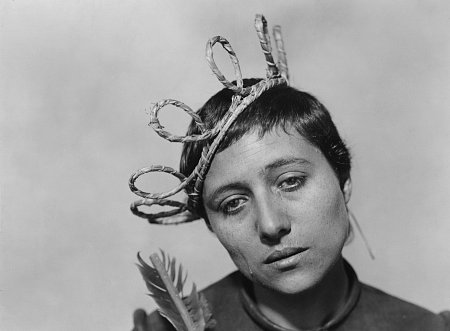
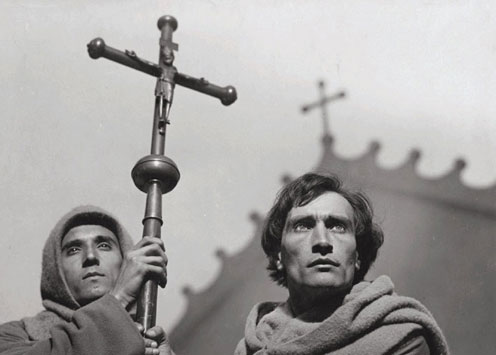
When Sight & Sound unveiled the results of their once-a-decade poll of The Greatest Films of All Time earlier this year, I was both relieved and disappointed to see Carl Th Dreyer’s 1928 masterpiece The Passion of Joan of Arc riding high at number nine: relieved that the film was there at all (it has been literally in and out of the top 10 every decade since the poll was first conducted in 1952), but disappointed that it wasn’t higher. Why? Because, quite simply, it is more deserving of the top spot than any other film.
Rightly famous for its unbridled use of close-ups, The Passion of Joan of Arc is the nearest cinema has ever come to capturing and rendering the human soul on-screen. But lest you worry that that makes it little more than a relic of pious Christianity, the emphasis here is very much on human. As the opening titles state, the film is concerned with a “simple and human” Joan, one who should be seen not as a warrior, but as “a young woman who died for her country”. Dreyer’s choice of religious subjects has led to great misunderstanding of his oeuvre and, in no uncertain terms, his interest throughout his career remained grounded in a thorough examination of human (and often female) suffering.
Here, the suffering woman is Joan of Arc, The Maid of Orléans, a young peasant girl who led an army into battle in the hope of driving the English out of 15th-century France. Believing herself to be working under the auspices of three different Saints, Joan was eventually captured, tried and burnt at the stake at the age of 19. It is her trial and execution – her Passion – that Dreyer retells, basing his film upon the transcripts of the actual trial.
Avoiding the spectacle of many historically set films, Dreyer opted instead to keep his camera focused on the faces of Joan and her assailants. Condensing, as he does, the events of Joan’s lengthy trial and execution into a single day, Dreyer approaches a unity of time, place and action – and yet, for all his painstaking historical research, the film’s fractured use of cinematic grammar elevates the action beyond the physical world and into a metaphysical realm. The sparseness of the film’s sets eliminate depth, while the constant close-ups and broken eye-lines render the space unimportant (and, to an extent, unintelligible). Joan and her suffering are all that matter, all we must understand. The historical context and politics are secondary; first and foremost is a scared, tormented young girl. Dreyer may have denied that his film belonged to the avant-garde, but this is not conventional film-making: every aspect, from the architecture to the camera movements, from the rhythm to the compositions, conspires to contribute to Joan’s assault. Even now, after more than 80 years, Dreyer’s film is as fresh and as powerful as the year it was made: this is form and content synthesising at the highest level. And, while it would be a crime not to comment on the uniformly superb performances, to do so would be to undermine the purity of the film’s perfection. Falconetti does not play Joan. She is Joan. And Joan, for now and for evermore, is Falconetti.
The Passion of Joan of Arc (1928)
With this all said, then, it seems like something of a crime that the film has never been released on DVD in the UK (until now). When Masters of Cinema announced that it would be releasing this new restoration of the film on Blu-Ray and DVD, expectation and anticipation began to flutter. But there was also some concern about the fact that the new release would not feature Richard Einhorn’s beloved score,Voices of Light, found on the Criterion Collection’s Region 1 DVD. So, how do the two scores offered by Masters of Cinema compare?
Thankfully, Mie Yanashita’s piano score turns out to be something of a marvel. Echoing the rich simplicity of the film itself, Yanashita focuses on the film’s tenderness, allowing moments such as the shedding of Joan’s first tear a new beauty. Listening to this music with the breathtaking 20fps restoration was like seeing the film again for the very first time (a feeling no doubt cultivated by the insertion of the original Danish intertitles and their new English translation). There is a startling splendour to the restoration, and while the 24fps version may feel more familiar, moments there slipped over take on new resonances here, while the slower pacing allows a fuller savouring of the images in all their glorious detail. As the film progresses and the tension mounts, Yanashita isn’t afraid to pick up the drama, yet still manages to avoid the occasional heavy-handedness that marred Utley and Gregory’s recent score. While it’s perhaps true that Yanashita’s score never reaches the dizzying heights of Einhorn’s, it’s a moving and graceful accompaniment nonetheless.
Unfortunately, the same can’t be said for Loren Connors’ tedious and barbaric soundtrack to the 24fps version, which somehow manages to do the impossible and actually take the life out of the film. Perhaps it will appeal to some, but I found it insensitive and intrusive, and for me it detracted from the viewing experience far more than it added to it. I would certainly urge first-time viewers of the film to steer well clear.
Carl Th Dreyer
It should be noted, of course, that Dreyer expressed a preference for the film to be viewed silent, and Masters of Cinema has loyally made this the default option for playback, so in some respects the choice of soundtracks is irrelevant. However, being given the choice of two scores (or three if you count the silence) and two playback speeds makes this a very special package indeed.
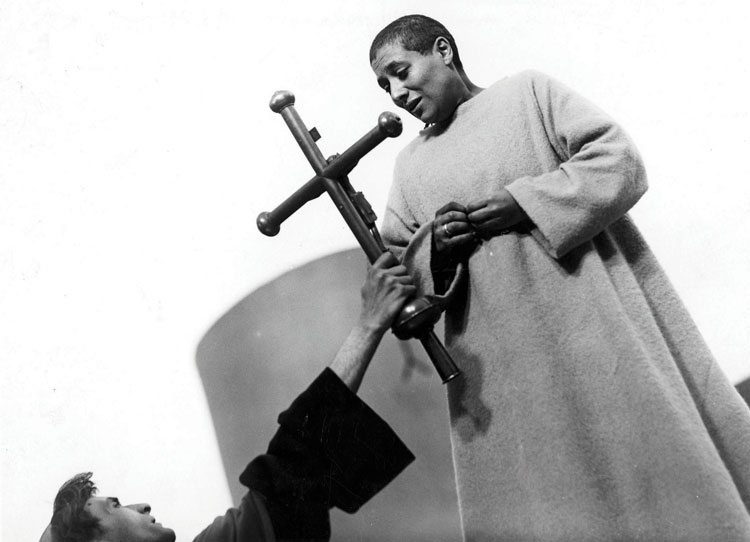
Completing the package is another, alternative version of the film: the complete ‘Lo Duca’ cut. When the original camera negative was thought lost to a lab fire, Dreyer reassembled the film using alternative takes … only for this new version to be lost to a second fire. However, in the 1950s the French film historian Joseph-Marie Lo Duca stumbled across a print of Dreyer’s second version. After recutting the film, Lo Duca put his version into circulation, despite Dreyer’s disapproval. Generally considered a bastardisation of Dreyer’s original vision, the Lo Duca version of the film has been relegated to the status of curiosity ever since the miraculous discovery of Dreyer’s first version in the closet of a Norwegian mental hospital in the 1980s. Yet, for those with a passion for Joan, it’s a fascinating alternative version – an imperfect version of a perfect film. The first thing that struck me about it was the fact that the actual experience of watching it is nowhere near as horrendous as one would expect, given the interference. Additions such as an opening voiceover detailing the historical background may go against the very fabric of Dreyer’s intentions, but his genius still shines through. What’s more, a comparison of the Lo Duca and original versions teaches us much about Dreyer’s film-making choices.
The Passion of Joan of Arc (1928)
Such a comparison is made easier by the excellent essay Two Passions – One Film? by the preeminent Dreyer scholar Casper Tybjerg, found in the accompanying 100-page booklet. Alongside Tybjerg’s essay are pieces by Chris Marker, André Bazin, Antonin Artaud, Luis Buñuel, HD, and Dreyer himself. But the bulk of the booklet is formed by a chapter from Jean and Dale D Drum’s Dreyer biography My Only Great Passion, which, in detailing the film’s production, puts lie to the idea of Dreyer as a cruel despotic director who tortured Falconetti’s performance out of her (written with approval and assistance from Dreyer, My Only Great Passion remains the definitive Dreyer biography).
Although the excellent booklet goes a long way towards making up for it, it’s a shame that no audio commentary was included in the package (especially given Tybjerg’s excellent commentary on the Criterion DVD). However, while Tybjerg’s commentary and Einhorn’s Voices of Light mean you shouldn’t throw away your Criterion disc just yet, it’s undeniable that the new restoration and the choice of versions take the Masters of Cinema release to the next level. This is an essential purchase in every conceivable way.
This is a guest post for Silent London by Robyn Ludwig.
The British Animation Showcase at the 2012 London International Animation Festival screens this Thursday evening. Yet 113 years before these contemporary animators would bring their cartoon characters to life and to audiences, St. Albans-born Arthur Melbourne-Cooper (1874–1961) began making primitive stop-motion films, arguably the first and oldest surviving animations.
Trained by his father in photography, Melbourne-Cooper began his career in 1892 as an assistant to Birt Acres, another cinematic forerunner who has been credited as the first person to take 35mm film in Britain. Melbourne-Cooper was a cameraman on a number of Acres’ newsreels and trick films, until 1899, when he directed his first stop-motion animated short, Matches: An Appeal.
The film is a highly inventive advertorial piece, both a fundraising appeal and an advertisement for Bryant & May matchsticks. Using matches jointed by wire and captured frame by frame, Matches: An Appeal features a sprite little stick figure writing a propagandistic message on a wall, asking the audience to donate one guinea to send a free box of matches to a British soldier fighting overseas.
But with the original 35mm reel long lost, the release date of the film remains a contentious issue. Melbourne-Cooper, along with his descendants, insisted that the film dated to the beginning of the Second Anglo-Boer War, ahead of J. Stuart Blackton’s vanguard animation The Enchanted Drawing of 1900. Researchers, however, have argued that Matches was released in 1915, as an appeal for the First World War. Film historian Denis Gifford adds to the confusion by suggesting: “Recent research sets it as produced in the Great War of 1914. This may, however, be a reissue as the setting of this film is identical with Animated Matches (1908).”
Debate over provenance also surrounds Animated Matches Playing Cricket (1899) and Dolly’s Toys (1901). The latter is a live-action and stop-motion puppet animation, credited variously to lightening sketch artist and trick filmmaker Walter R Booth (1869-1938) or to stage hypnotist and filmmaker George Albert Smith (186-1959). Again Gifford seems uncertain, noting that “the plot is so similar to many later films made by Arthur Cooper that it could be his first production” or conversely, that “it could be another of … Booth’s regular trick films made at… Animatographe Studio”.
Less controversy over authorship surrounds Melbourne-Cooper’s Dreams of Toyland (1908) though the film is often listed as A Dream of Toyland (1907). In Dreams, a little boy falls asleep and his toys come to life, a surreal but spasmodically animated fantasy with a confounding array of playthings. The film, undeniably, replicates the motif from Dolly’s Toys, only this time with a male protagonist, and Melbourne-Cooper would repeatedly revisit these storylines, themes, characters and techniques in such films as The Enchanted Toymaker (1904), The Fairy Godmother (1906), In the Land of Nod (1908), The Toymaker’s Dream (1910) and Road Hogs in Toyland (1911).
Clearly Melbourne-Cooper was a prolific animator, in the nascent years of cinema to the outbreak of war in 1914, producing dozens of short films combining stop-motion and live-action. Regrettably he has become a dubious footnote in silent animation history, and has been consigned to an obscurity shared with Walter Booth, George Smith, Anson Dyer and other British animators of the era.
Animated Matches Playing Cricket, Matches: An Appeal, Dreams of Toyland and Road Hogs in Toyland can be viewed online at the East Anglian Film Archive.
References
Gifford, Denis. British Animated Films, 1895-1985: A Filmography. Jefferson: McFarland & Co. Inc., 1988.
Robyn Ludwig holds a Master of Film and Literature from the University of York, U.K., and a Bachelor of Arts in English Literature from the University of British Columbia, Canada. Her current research interest is animation from the silent film era. In addition, she has been an administrator in the charitable arts and culture sector for the past ten years, a fundraising consultant for film festivals, and a television critic for the Vancouver Observer.
Who needs to wait for Peter Jackson’s The Hobbit? Fritz Lang’s five-hour, two-part Die Nibelungen (1924) is the king of all fantasy epics. Burning palaces, bloody fight scenes, dragons, cloaks of invisibility – this beast has it all, and it’s breathtakingly beautiful as well.
Available for the first time ever on home video, Die Nibelungen still has the power to take your breath away, so we can only imagine how imposing this magnificent saga was for audiences in the 1920s. The first part is called Siegfried and follows our eponymous hero’s outlandish adventures. Early on, he slays a dragon, then bathes in its blood, rendering himself impervious to harm (about from a small patch on his back that was covered by a falling leaf and failed to absorb the blood). Thus super-charged, Siegfried sets about becoming a king of kings, rich beyond compare having won the Nibelungen’s wealth, but doomed, equally, because the treasure is cursed, you see … The second part, called Kriemhild’s Revenge, features his (spoiler) widow seeking vengeance for her husband’s death.
Visually, Die Nibelungen is consistently mind-blowing. The camera is largely static, but the vast, intricately decorated sets, shot from extreme perspectives and filled with massive crowds in extravagant costumes will throw you into a trance. These films are never dull to look at, and sometimes, as when the light falls in elegant slivers through the forest on to Siegried and his horse, or the northern lights dance above Queen Brunhild’s castle, they are simply exquisite. If you’ve seen Metropolis, that will give you some idea of the boldness, and magnitude of Lang’s vision here. This is a strangely modernised, stylised update of the story’s Wagnerian sources, and because it is all shot on sets rather than location (even the forests), Die Nibelungen looks like a fantastical stage play magicked into three-dimensions. And the special effects are meticulously realised, from the mechanical dragon to a “wipe” superimposition that turns the treasure-bearing dwarfs to silently screaming stone. The only time you’ll lose concentration is when you’ll start wondering: “How did they do they that?”
What you see on these discs is the end result of a restoration process bringing together several different camera negatives, fixing damage and replacing missing title cards. This release also replicates the golden tinting thought to have characterised the films’ original release, which soaks lushly into Carl Hoffmann’s high-contrast Expressionist photography (there’s a detailed note on the tinting in the booklet that accompanies the discs). The Blu-Ray HD transfer is excellent, so you’ll want to watch this on the best, biggest screen you can get your hands in and let yourself be swept away by all its glory. Turn up the sound too: frequent Lang-collaborator Gottfried Huppertz’s original orchestral score is available here in stereo or 5.1 mixes and nothing less bombastic or densely textured would do.
That said, it’s an awful lot to swallow in one sitting, and the acting here is of the chest-clutching, hair-pulling grand style. Paul Richter as Siegfried is a notable offender. And the scene in the first film in which Siegfried uses his magic to help his ally “subdue” his wife in the bedroom is unpleasant to modern eyes for an entirely different reason. The illuminated Gothic intertitles are very grand, but the English subtitles are sometimes hard to read because they have been translated so literally: “Invincible be he who is the dragon-slayer!” The second feature also suffers from having a less well-structured, eventful plot than the first, too, relying on endless fight scenes between the noble Burgundians and feral Huns rather than Siegfried‘s gorgeous flights of fancy. Don’t despair though: its flaming finale, and Rudolf Klein-Rogge’s grotesque Attila, are well worth putting in the hours for.
Die Nibelungen (1924)
These are two big, big films, with lots to impart to us about Lang’s film-making style, about German nationalism and myth-making in the 1920s (they are dedicated “to the German people”), and more besides. So it’s valuable that this release comes with one of Masters of Cinema’s characteristically thorough booklets, containing essays from Lotte Eisner and Tom Gunning, some words from the director and a note from British film legend Michael Powell, as well a Geoffrey O’Brien poem, all of which will help you to explore and appreciate Die Nibelungen‘s strengths. There’s also a German-language (with subtitles) documentary, The Heritage of Die Nibelungen, which will bring home to you just how ambitious these films are, and also, what a gruelling experience it was for the actors.
Die Nibelungen will demand your time and attention both – but it is terrifically enjoyable, exciting stuff. This is a hugely welcome and well-considered release of an important epic.
This is a guest post for Silent London by Chris Edwards, who writes the Silent Volume blog.
Being a silent film fan can marginalise you. Recently, I went to a screening of Alfred Hitchcock’s Dial M for Murder. Afterward, the cinephiles were discussing Hitch films they’d seen. “What do you think of the Hitchcock 9?” I asked them. “The Lodger’s pretty good.”
Crickets.
It’s better among fellow fans. We all skirt the periphery together. We talk about the great silent classics, arguing their places in the canon; we discuss the latest restoration, the newest score, the anticipated Criterion release date, or what a crime it is that there isn’t one. We hear about an obscure gem, and then can’t wait to see it.
But it is possible to be marginalised even by silent film aficionados. I have felt it. Because, while I love all silent film, I hold a particular affection for the very earliest stuff: films made from the late-19th century to about 1913 or so. Films that many silent films fans have no use for.
Well, that’s harsh. And it’s not quite what I mean. Many silent film fans do love these old curios; it’s just that few of us love them for their artistic merit.
Rarely do we hear anyone discuss a director from this period as an artist, or the works themselves as having any profundity. Brief, stiff, and broadly acted, these ancient movies are valued primarily as museum pieces. They’re notches on a scale of development from proto-film experiments through to “modern” film as we have come to recognise it. They’re assessed in terms of what they lack. And I’m telling you, we’re missing out.
Why do I think that? Because some of these films have left me with ideas to ponder. Not just ideas about the history of film or the paucity of technique early filmmakers possessed, but real ideas. Rarely do they convey these concepts literally. Rather, they express them through their unique mashing up of the abstract and the verisimilar – the theatrical and the cinematic, the fake and the real – whatever you want to call it. They say things in their own way.
I don’t have space to describe too many examples. But I will tell you about some of the features of these films which intrigue me. Though they’re often dismissed as weaknesses, these features can also, in the hands of an artist, become the means by which early films convey meaning.
One feature is flatness. Much as a stage can only push back so far, these films, too, exist mostly in a middle distance. Vistas are, for the most part, backdrops, and not very convincing ones. Almost all shots are medium shots. This flatness is coupled with a strong sense of boundaries—top and bottom, and especially stage-right and -left. This is your space, viewer.
(Vintage gamers will see a natural comparison here to early video games. Much as films evolved from theatre, video games have evolved from board games and pinball. The games of the late 1970s to early 1980s retained the primacy of the board or static plane. There was much action in games such Pac-Man, Yars’ Revenge, Berzerk, and Asteroids, but your avatar typically stayed in that box.)
Yes, the result feels old-fashioned. But flatness and boundaries aren’t simply limitations. They can create very interesting effects. When you’re conscious of a scene as a flat plane with defined boundaries, and the actors are somewhat depersonalised by medium shots, you start looking at set, action, and boundaries as a unified object. As you would look at a painting.
I was struck by this last year while watching A Christmas Accident (1912): a holiday parable about two families (one poor and giving, the other wealthy and miserly) sharing a duplex. I blogged about it:
Director Bannister Merwin pays close attention to the two halves of his frame … he splits the lower façade of the house exactly in two, dividing the centre of the frame with a porch pillar standing between the two front doors. The rear of the house has almost-identical doors as well, with a tall railing spindle marking the midpoint between them. Gilton [the miser] almost never crosses the midpoint … We’re not to see the halves of the house as parts of a literal object, but rather, as the world of sin and the world of righteousness; compartmentalised, but close.
The pillar and spindle were not only part of the scene, but part of the frame, separating the characters visually to make Merwin’s point. In this way, A Christmas Accident resembles a medieval painting more than a modern film.
You can do a lot with a good set. And you’ll typically do more if you don’t have the luxury of multiple camera angles, close-ups and complex tricks.
Georges Méliès’ Voyage Dans la Lune (1902)
In terms of technical excellence and versatility, Georges Méliès’ sets have probably never been equalled. They’re seamless collections of pieces, each sliding into frame, perfectly timed, layer upon layer. They embed Méliès’ often-frantic actors in a fantastical world, pulsing with action. This world bears no more resemblance to reality than a comic strip does, mind you. But that’s a good thing.
Early directors’ near-indifference to aesthetic consistency is what I love most about them. I adore scenes of time-pressed people consulting clocks with painted-on hands; struggling to lift two-dimensional vases, and on and on. On stage, this kind of thing is a practical necessity, but in a film, it’s a choice.
It’s also a declaration of faith in us, as viewers. We’re people capable of merging these disparate levels of reality into one. Anyway, what’s so “real” about the environments we wander through every day – or the ones we see in most modern, live-action movies? Art and trickery is everywhere. These early films were just blunter about showing it.
The most powerful example of this I’ve seen occurs in His Majesty, the Scarecrow of Oz (1914). His Majesty is not a well-respected film; in part, I think, because it was made in an era when true cinematography was beginning to develop. But it is nevertheless a remarkable thing. Particularly for this scene:
[Mombi the witch] captures Gloria [niece of the King of Oz] and ties her to pillar. With an incantation she summons three other witches … and combines their powers with her own to create a cauldron-full of magic potion. Then … Mombi ladles the stuff over Gloria’s blouse. Mombi now cups her empty hand just below Gloria’s breasts. A heart (a stuffed heart in the shape of a real one) appears in her hand, and ices over. The now-frozen heart disappears, and Gloria’s capacity for love goes with it.
Wikipedia describes Mombi “pulling out her heart,” but that’s wrong. Nothing is pulled from Gloria’s chest.
Filmed in close-up, this scene represents a total dismissal of the boundary between literal and abstract – they co-exist in one cinematic reality, with limitless story-telling potential. I wish more films were like this. The closest modern comparison I can think of would be Who Framed Roger Rabbit (1988), but even in that case, the human actors acknowledge the physical differences between themselves and the Toons. In His Majesty, the differences are forgotten.
Look at these old, old films, and you can see the potential of the medium. Every hesitant movement of the camera inward, every subtle gesture chosen by an actor, pointed the way forward. But if you see these movies only as first steps to something truly great, you’ll be missing a lot. I say some of them are truly great on their own – in their era, in ours, and in the future.
A folk romance that stumbles into melodrama, an adaptation of a blockbusting novel that is now all-but forgotten, The Manxman may seem to be far more of its time than ours. But the London film festival’s archive gala screening of this neglected Hitchcock film was having none of that. The red carpet was rolled out in Leicester Square and the crowds in the Empire cinema foyer were stocking up on nachos and popcorn before taking their seat. OK, so some of assembled throng were clutching tickets for Dredd or Madagascar 3, but Screen One was devoted to a lush, heartbreaking night of silent cinema.
And the venue was oddly appropriate. Back in its music-hall days, the Empire was the first London venue to run a paid-for programme of films. It’s a long journey from the Lumiéres’ actualities to the gorgeousness of The Manxman – arguably they have more in common with the 3D thrills on offer in the neighbouring screens – but it’s a happy connection to make.
The Manxman was Hitchcock’s final “pure” silent – he was to shoot his next film Blackmail in both silent and sound versions – and the romance of the film’s story is augmented by the thought that the director was leaving his beloved silent cinema days behind him. Perhaps that is why the film is so unashamedly picturesque. The Cornish coast that doubles for the story’s Manx setting is imposing, but gorgeous. Hungarian star Anny Ondra is filmed as a tiny silhouette in front of sun-punctured cloud, skipping down vertiginous cliffs or strolling with her lover in dappled woods – and the film begins and ends with a view of fishing boats in the harbour. These images, like the film itself, combine prettiness with an air of intangible, elemental danger, and it’s this that makes The Manxman such a gripping watch.
Because this movie can be tough too: when a crisis arrives, a disconcerting cut from a body falling into water to a pen plunging into an inkwell is as violent as Hitchcock at his familiarly cold-hearted best. On this screen, and with the benefit of the BFI’s new gleaming restoration, it looked spectacular.
The Manxman (1929)
Ondra plays Kate, the daughter of the local pub landlord (a brilliantly grim-faced turn by Randle Ayrton). Best pals daft-but-dishy Pete, a fisherman (Carl Brisson), and Philip, an ambitious lawyer (Malcolm Keen), are each in love with Kate, but the latter is playing his cards close to his chest. In an excruciatingly twisted balcony scene, Pete coaxes Kate into an engagement, a promise to wait for him while he goes overseas to make his fortune. At first Kate doesn’t take him seriously, and it’s not clear which of the men – the one proposing or the faithful chum who is (literally) supporting him – is causing her to simper and pout. However it was extracted, it’s a rash promise to make, and as we’ll see, it will have terrible implications. Needless to say, while the cat is away, Kate strays, but what happens next is horrific, and not so easy to predict.
We have heard a few silent film scores recently (in this Hitchcock season no less) that have seemed to smooth out, or trample over the nuances of each scene. Not so here. Stephen Horne‘s rich score for The Manxman is alert to each turn of conversation, each double-meaning, furtive glance or blush. It’s a piece that is always a pleasure to listen to, but unafraid to sacrifice its melody to the drama when needed. This is crucial for The Manxman, where the plot hinges on whispered revelations, changes of heart and emotionally gruesome details – Kate’s face when her fiancé appoints his friend best man at their wedding, or she cuts her hand on their cake. The tempo slackens forebodingly when mid-speech, Phil is distracted by the sight of Pete and Kate together and the music follows the lead of Hitchcock’s stormy lighting effects, colouring each scene with shades of what is yet to happen. While the strings and piano offer folk melodies, there’s often a rumbling bass drum warning of impending disaster and even, at one crucial point, a very assertive oboe. The flute solo when Pete visits Phil towards the end of the film is particularly poignant; the ensemble together replicating the texture of nagging voices in the final scene especially cruel.
No one will argue that The Manxman is Hitchcock’s finest hour, the acting from the two male leads is often very weak, and the storyline offers only emotional trauma rather than his familiar bloody shocks. Despite those reservations, it is a sharply beautiful film and Anny Ondra’s sleepy-eyed romantic fool gives us a great Hitchcock Blonde before icy Grace Kelly was even born. The joy for us now is that Horne’s score gives The Manxman its best possible chance to shine, not just following but enhancing our pleasure in watching Hitchcock toy with this doomed love triangle.
Stephen Horne’s score for The Manxman was performed by Stephen Horne (piano/accordion/flute), Jennifer Bennett (fiddle/viola), Joby Burgess (percussion), Janey Miller (oboe/oboe d’Amore) and Ruth Wall (lever harp/wire harp).
The Pathology Museum at St Bartholomew’s Hospital is a fascinating place – and one of London’s best-kept secrets. Access to the collections is currently by appointment only, but if you want to peruse the specimen jars of an evening, while enjoying a glass of wine and learning a little something, you should look out for their lecture and seminar events. Topics covered so far range from the history of tattoos to Marilyn Monroe – and this November, silent cinema.
The Phantom of the Opera (1925)
I will be speaking at the Museum on 21 November, about the history of silent cinema generally, and also, inspired by the surroundings, some of the more bizarre bodies on silent film. There will be drinks, freshly made popcorn, film clips and an opportunity to ask questions after the talk.
Do come along, admission costs just £6 a person and we’re hoping that this will be the first of many silent cinema events at the museum.
Cut! takes place at the Pathology Museum, Robin Brook Centre, West Smithfield, London EC1A 7BE on 21 November 2012. Doors will open at 6.30pm for a 7pm start. To book a ticket and find out more, follow this link. The museum’s Time Out listing is here.