Walthamstow wants a cinema. In fact, Walthamstow has a cinema, but it is in a terrible state of disrepair at the moment, and its owners want to use it as a church. So the campaign fights on, but meanwhile the cinephiles of E17 are starved for local entertainment. Which is where Screen 17, a local ‘microplex’ cinema comes in.
Based in a Regency villa in the heart of Walthamstow Village, Screen 17 is a new, but very welcome, addition to the local arts scene. They’ve been showing children’s films on Saturday mornings and movies for grownups on Thursday evenings for a few weeks now, but they wanted to offer something a little different – to give people a chance to try another flavour of cinema. So Screen 17 is showing a silent movie with live music in October, and the film they have chosen is the beautiful Sunrise: A Song of Two Humans (1927).
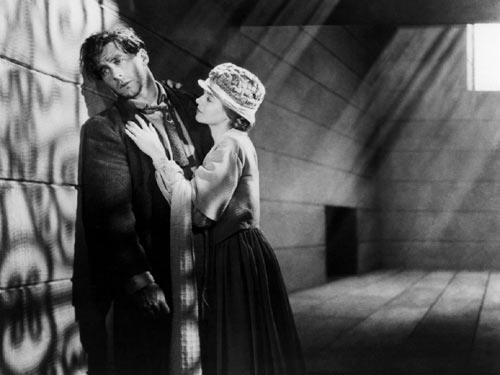
I’m not exaggerating when I say that Sunrise, directed by FW Murnau, is one of the greatest films of all time, and a masterpiece of late silent cinema. The story concerns a pair of newlyweds from the country, and a vamp from the city who tries to come between them. It’s beautifully photographed, with stunning fluid camerawork, and touching lead performances from Janet Gaynor and George O’Brien. It’s by turns comic, romantic and as in this scene, thrillingly melodramatic:
I’m really excited about this. If you hadn’t guessed, I’m a proud Walthamstow resident, and it’s wonderful to see a silent film shown in my local area. The guys who run Screen 17 are also behind the popular Vintage Cabaraoke evening, so they know how to put on a great night’s entertainment too. There will be a live improvised piano accompaniment for the film, just like in the good old days, and DJ Roxy ‘Moonshine’ Robinson will be spinning some 78s as well. If you want to dress up in your best 20s gear for the occasion – go ahead!
Sunrise: A Song of Two Humans screens at Screen 17 on 20 October 2011. Doors open at 7.30pm and the film begins at 8.30pm. There will be a licensed bar, hotdogs and popcorn. Over 18s only. Tickets cost £8 and are available on the door or on We Got Tickets. For more details, visit the Screen 17 website.
This is a silent film screening, a concert, an experiment and lunch, all rolled into one. Not So Silent Movies will happen on the first Sunday of every month at the Kings Place arts centre in Kings Cross. It’s the brainchild of composer and cellist Philip Sheppard and puts a range of leading musicians to the ultimate test of their improvisational skills – accompanying silent films. The films will be a complete surprise to the musicians, who will have had no opportunity to watch the movies in advance, or heaven forfend, rehearse. This is what Sheppard says about the project:
‘I love throwing caution to the wind and creating a spontaneous composition, and I have absolute confidence that these musicians can pull it off. There’ll be as much slap-stick on stage as on screen; we get such a buzz from taking the risk with no safety net – it’s the adrenalin that makes it work, and when it’s over you can’t repeat it – it’s a one off!’
The choice of films will be a surprise for the audience too, of course. But a little bird tells me we can expect plenty of Buster Keaton (from the shorts to the features), some Harold Lloyd, maybe even some Chaplins in the future. Sheppard is huge fan of silent comedy and keen to show a broad range of films. He has something very special planned for Christmas, too, hopefully involving a special guest. But he’s keen to hear suggestions from Silent London readers. So if you want to nominate some silent comedies that you would like to see with a spontaneous score, comment below.
The roster of musicians involved is very impressive, and changes from month to month. Here are the line-ups for the first three Sundays.
Sunday 2 October:
Special guests Guy Pratt bass (Pink Floyd & Roxy Music) Geoff Dugmore drums
House band Philip Sheppard cello Elspeth Hanson violin (Bond) Pip Eastop horn (London Sinfonietta) Mark Neary pedal steel guitar
Sunday 6 November: Special guest Dame Evelyn Glennie OBE percussion
Sunday 4 December: Roger Eno piano
Robin Millar CBE guitarist/star producer Steve Mackey bass player, Pulp
Not So Silent Movies takes place on the first Sunday of every month in Hall Two of Kings Place. Tickets cost £9.50-£12.50, or £29.50 with Sunday lunch and a bloody mary at the Rotunda restaurant included. Find out more here.
Which silent comedies would you like to see shown at Not So Silent Movies? Please leave your comments below.
Miles Mander and Madeleine Carroll in The First Born (1928)
The London Film Festival‘s archive gala is rapidly becoming a highlight of London’s silent film calendar. This year continues the theme, presenting Miles Mander’s edgy melodrama The First Born in the Queen Elizabeth Hall on the Southbank, with a new score by Stephen Horne. I spoke to Horne about his composition, and to Bryony Dixon of the BFI about the film, and wrote this short piece for the Guardian film blog.
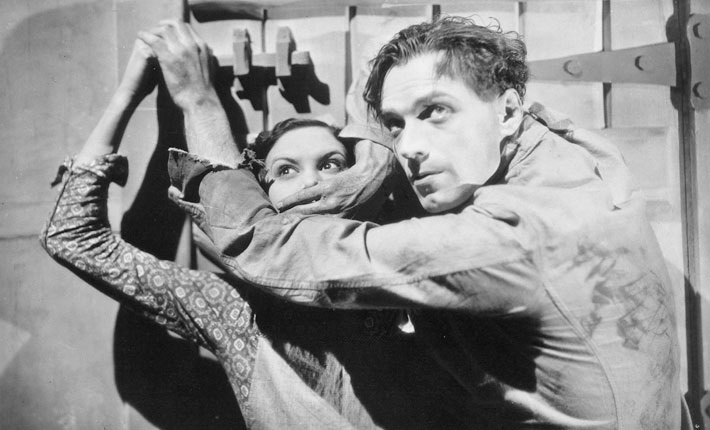
There’s nothing like seeing a film with a live orchestra – it’s far more exciting than surround sound. That’s why at Silent London we’re so excited about the world premiere of Neil Brand’s score for Anthony Asquith’s Underground (1928), which will be performed by the BBC Symphony Orchestra on 5 October.
Undergound is set in London, among what Asquith called “everyday” people, but that doesn’t mean that this is an unsophisticated film. Far from it. The director’s appreciation of European and Russian cinema (he was a co-founder of the London Film Society) is betrayed by his use of Expressionist shadows, subjective camerawork and montage editing. This is 1920s London, but not like you may have seen before.
Underground tells the story of four young working people making their way in 1920s London. The parallels with life in the metropolis today are poignant and it is fascinating to see location footage of the Underground network, old London pubs, department stores and of course the climactic chase through the Lots Road Power Station in Chelsea … Asquith had a remarkable ability to portray the lighter and darker aspects of life through staging and cinematography. He was aided by the superb and unusually good-looking cast of Brian Aherne and Elissa Landi as the nice young couple, with Norah Baring and Cyril McLaglen as the unluckier, troubled duo.
The print of Underground that will be shown at the Barbican is the product of many hours of restoration work by the BFI, using new, cutting-edge techniques. The BBC Symphony Orchestra will be conducted by Timothy Brock.
To be in with a chance of winning a pair of tickets to watch Underground at the Barbican Concert Hall, just answer this simple question:
Cyril McLaglen, who plays Bert in Underground, had an older brother who was also a film actor. What was his name?
Email your answer to silentlondontickets@gmail.com by noon on Monday 26 September. The winner will be picked at random from the correct entries and emailed with the good news. Best of luck!
It’s always cause for celebration when there is a silent film shown on UK TV, and, to accompany Mark Cousins’s epic documentary series The Story of Film, Film 4 has treated us to two in quick succession. We saw Orphans of the Storm (1921) a couple of weeks ago and now we can look forward to Battleship Potemkin (1925).
If we tune into The Story of Film for episode Three on More4 tonight, we are promised some glimpses of German expressionism, Soviet montage, French impressionism and surrealism, plus “the glories of Chinese and Japanese films and the moving story of one of the great, now largely forgotten, movie stars, Ruan Lingyu“. How could you pick one film out of that lot? Well, you couldn’t. But clearly Cousins is clearly a huge Eisenstein fan, and you can’t argue with Potemkin’s stature as a landmark in film history.
I really hope the version of Potemkin they’re showing is the recent restored re-release with the original orchestral score, but you can find out for yourself when it is shown just after midnight on Monday 19 September and at 11am on Thursday 22 September.
However, if you really want to see Battleship Potemkin at its best, head down to the Prince Charles Cinema or the Peckham Free Film Festival on Sunday to see this masterpiece on the big screen. You can always watch it on TV as well, after all. The Odessa Steps never get old. Enjoy, comrades!
There are few things more joyous than watching a Buster Keaton classic with live music, but this event might be one of them. It’s a fundraiser for the Sing for Joy Bloomsbury choir, incorporating a concert by the group themselves and a screening of Sherlock Jr, with piano accompaniment by the marvellous John Sweeney.
Sing for Joy is made up of singers who have Parkinson’s disease or other neurological conditions, and their friends and carers. Singing as a group isn’t just fun, it boosts confidence and helps with the speaking and breathing exercises that people with Parkinson’s do to keep tremors under control. You can find out more about the choir, and their director Carol Grimes, here.
If you’re not familiar with Sherlock Jr, it’s one of Keaton’s most inventive and charming films. Keaton plays a projectionist who fantasises about being a detective hero in a movie. When he falls asleep in the projectionist’s booth one night, he dreams that he walks through the cinema screen and into the heart of the action. You may have seen some clips of it if you watched The Story of Film on Saturday night.
The Sing for Joy Sherlock Jr event will take place in the hall of The Church of Our Most Holy Redeemer (full disabled access) 24 Exmouth Market, EC1R 4QE (nearest tube Farringdon) on 13 October 2011. Tickets cost £18, which includes a buffet dinner. They are availale from Mike Blackstaffe on 07584 471 104 or tickets@blackstaffe.demon.co.uk. Doors open at 7pm, which is when dinner will be served. The programme begins at 7.45pm and there will be a licensed bar.
As previously reported with breathless excitement on this very site, composer and Scissor Sister John Garden has written an electronic score for The Lost World (1925). This is marvellously enjoyable silent film pioneered the use of stop-motion special effects, and brought us the unforgettable images of a brontosaurus running riot around the streets of London.
Now, Garden is taking The Lost World on tour. He’s going to Brighton, Manchester, Southampton, Exeter and performing two dates in London: one at the Barbican Centre, and one, among the real-life dinosaur (skeletons) at the Natural History Museum.
Here are the dates in full – check with the venues for exact times and ticket prices:
If you want a sample of the film, and Garden’s score, check this out:
The Lost World tour is brought to us by the excellent people at Bristol Silents. If you haven’t done so already, bookmark their shiny new blog right now.
Wurlitzer organs were once a familiar sight in British cinemas but that was a very long time ago. Happily, there are some places, such as the Musical Museum in Brentford, which maintain these fantastic instruments and put on concerts and film screenings to show them to their best advantage.
The next event on the Musical Museum’s “silent” schedule is a Sunday afternoon compilation of Laurel and Hardy films. There will be two silent shorts before the interval: Flying Elephants (1928) and Putting Pants on Philip (1927). Donald Mackenzie will accompany both films on the museum’s Regal Wurlitzer, and after the break he will give a short performance before a screening of the sound film The Music Box (1932).
The Laurel and Hardy screening takes place on Sunday 25 September at 3pm, at the Brentford Musical Museum, near Kew Bridge Station. Tickets cost £10 and you can find out more details on the museum’s website here.
Stand by for 15 days of non-stop film-film-film in the capital – the London Film Festival approaches. High-profile events such as this are renowned for attracting the best new films, but increasingly they offer a space for freshly restored classics as well. Happily, this year, silent films fall into both of those categories.
The headline news is that Michel Hazanavicius’s hotly-tipped The Artist (2011) is coming to London. This modern silent, a love letter to 1920s Hollywood, has consistently charmed critics since it was first shown at Cannes and the Weinsteins are opening it in America at Thanksgiving, leading inevitably to what the magazines call “Oscar buzz”. There is still no news of the UK release date, so these two London gala screenings, while pricey, are certainly precious. I can’t wait to see it, myself.
Miles Mander and Madeleine Carroll in The First Born (1928)
The next big thing, as it were, is the London Film Festival Archive Gala, which this year will be the BFI’s brand-new restoration of Miles Mander’s The First Born (1928), as I revealed on Wednesday. This stunning film will be accompanied by the premiere of a new score written by the incomparable Stephen Horne when it screens at the Queen Elizabeth Hall on the Southbank. Do not miss.
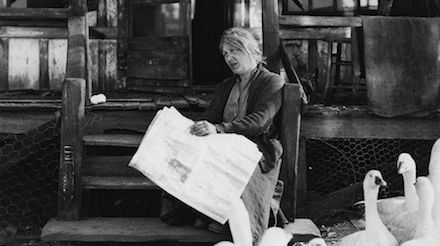
The Goose Woman (1925)
Stephen Horne will also provide musical accompaniment for two of the other silent film screenings at the festival – in the Treasures from the Archives strand. First up is The Goose Woman (1925), a Hollywood film directed by Clarence Brown (Flesh and the Devil, Anna Christie). This film is a recent rediscovery, which been restored by Kevin Brownlow and Robert Gitt, who will introduce the screening. The Goose Woman stars Louise Dresser as a former opera singer who tries to regain some of her fame by claiming to have witnessed a murder. Unfortunately, her false testimony frames her son, played by Jack Pickford. This movie was a great success at this year’s San Francisco Silent Film Festival, so it’s very exciting to finally be able to see it in the UK. The screening at BFI Southbank will be prefaced by a couple of early Vitaphone shorts – yes, sound films.
Shoes (1916)
Next, a double-bill of restorations from foreign archives – The Nail in the Boot (1931), from the Gosfilmofun in Moscow, is a piece of Soviet silent propaganda, that was nonetheless attacked at the time for prioritising form over content. When a soldier fails in an assignment because of an injury caused by a broken shoe, a military inquiry is held to find out whether he is a traitor to the cause. The film is partnered an American film, Shoes (1916), directed by Lois Weber. This movie, which was been restored from separate prints by the EYE institute in the Netherlands, focuses on inner-city poverty – as experienced by a young shopworker who wants some new shoes, which of course she can’t afford. This programme screens at NFT1 in BFI Southbank.
Le Voyage Dans la Lune (1902)
A late addition to the programme, the restoration of Méliès’s hand-tinted, full-colour Voyage Dans La Lune (1902) will screen twice at the festival, accompanying Roberto Rossellini’s The Machine That Kills Bad People (1952), “a satirical fantasy … about a photographer who discovers that his camera has magic powers: as he develops snapshots in his studio, their subjects expire in another part of the town, inspiring the cameraman to devise a scheme to kill the wicked, the greedy and the corrupt.” Click here for more information and tickets to the screenings, which will be held at BFI Southbank.
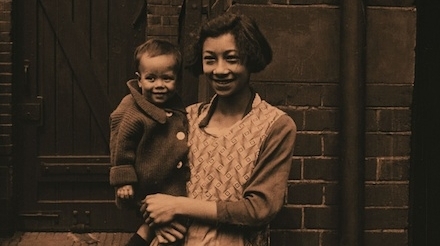
Cosmopolitan London (1924)
The final silent Treasure from the Archive is a collection of tinted and toned documentary travelogues, showing London in the 1920s. Wonderful London incorporates footage from all across the city, and the screening will be introduced by Bryony Dixon, with piano accompaniment by Neil Brand. Talk about silent London … you can watch these six films in two screenings at BFI Southbank.
I must add a special mention also, to a short film playing as part of a collection called Just Because You’re Paranoid, It Doesn’t Mean They’re Not After You at BFI Southbank. Henry Miller’s A Short Film About Shopping (2011) is described as “a silent study” in which a “a dentist’s mundane routine is radically altered by a trip to the shops. You can watch the trailer here.
The 55th London Film Festival runs from 12-27 October 2011. Everything you need to know about booking tickets for the London Film Festival is explained here.
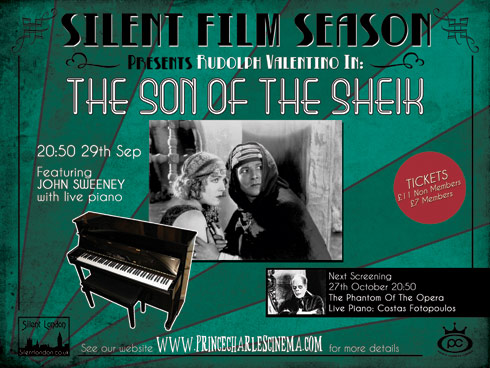
There are film stars and then there is Rudolph Valentino. Nicknamed the “Latin Lover”, few screen actors have ever inspired so much devotion – and lust – in their audience. When he died, aged just 31, there was a national outcry from his distraught female fans. Now here’s your chance to see what all the fuss is about.
The Son of the Sheik (1926) is an unashamed star vehicle for Valentino, more or less a remake of his earlier film The Sheik, but with more comedy and action scenes. Ostensibly a sequel, The Son of the Sheik stars Valentino as Ahmed, the adult son of the first film’s hero. As before, Ahmed falls for a beautiful dancing girl, Yasmin (Vilma Bánky), but is convinced by a love rival that she has been unfaithful to him. What happens next is rather difficult to explain, and certainly controversial. If you don’t mind a few spoilers, and want to read all about it, I recommend this very thorough and lively review on the Silent Volume blog.
The Son of the Sheik screens at the Prince Charles Cinema in the West End on 29 September at 8.50pm. Live piano accompaniment will be provided by John Sweeney. Click here for tickets.
“Will you come with me to a talkie to-night?” From the moment we first see that intertitle in A Cottage on Dartmoor – we know we’re in for a fright or two. Anthony Asquith’s classic silent film is the story of a violent love triangle told in a sinister flashback by an escaped convict. The menacing tone is interspersed with some adventurous visual flourishes, a very English sense of humour and an unforgettable glimpse of an audience’s reaction to an early sound film. Bryony Dixon has said in her recent book 100 Silent Films that: “of all the British silent films now resurfacing A Cottage on Dartmoor is the most significant rediscovery”. You really don’t want to miss this one.
A Cottage on Dartmoor screens at the Barbican Cinema at 4pm on Sunday, with live musical accompaniment from Stephen Horne. To win a pair of tickets to this screening, just answer this simple question:
What is the name of the first film that Anthony Asquith directed?
Send your answer to silentlondontickets@gmail.com by noon on Friday 9 September. The winner will be picked at random from the correct entries and emailed with the good news. Best of luck!
Miles Mander and Madeleine Carroll in The First Born (1928)
The full lineup for the 55th London Film Festival has now been announced and I am pleased to say that this year’s Archive Gala film will be Miles Mander’s The First Born (1928) with a new score by Stephen Horne. The film will be screened with its new score at the Queen Elizabeth Hall in the Southbank Centre on 20 October 2011.
I’ll be writing more about the film in coming weeks, but for now I can tell you that The First Born is a sophisticated drama, adapted by Mander from his own novel and play, about a philandering politician and his wife. Mander plays the politician, Sir Hugh Boycott, and Madeleine Carroll is his unhappy wife. The couple are unable to have a child, which puts a further strain on their marriage and so Boycott’s wife attempts to dupe him into believing that someone else’s baby is his own…
The First Born … deals with difficult subjects – the double standards of the upper classes, jealousy and secrecy, miscegenation, and the tension between conformity and a more modern morality. Sewn into the plot are also references to the world of politics, of which Mander had much experience, as the younger brother of Sir Geoffrey Mander, the eminent Liberal radical … The treatment is unusually ‘adult’ and made with skill and a degree of invention. The most striking example is a point of view shot with handheld camera as Boycott stalks through the marital bedroom to tease and torment his wife as she is in the bath. The film is masterly in its construction and continuity.
Dixon goes on to speculate whether the influence of Alma Reville, who co-wrote the film, might be due credit for some of the film’s Hitchcockian flourishes. In October, we will be able to judge for ourselves.
And of course, the other big news for silent film fans is that Michel Hazanavicius’s modern silent The Artist will be screening at the festival as well. Wonderful news.
The West London Trade Union Club on Acton high street may be a small venue, but it has won a commendation from Camra for its real ale and it has a dedicated film club too, recently hosting seasons devoted to Joseph Losey and Paul Robeson. What more could you want? Well, the W3 cineastes who meet once a month to watch movies on a 6ft screen and discuss them over a ale or two have now chosen to put together a silent film season.
The club has selected four great silent films, which will be shown at 4pm on Saturday afternoons and followed by a group discussion. I will be around too, to stir the conversation, stick up for my favourite era of cinema history and sample the beer. The four films, and dates are:
17 September: Strike (Eisenstein, 1925)
8 October: Faust (Murnau, 1926)
12 November: Piccadilly (Dupont, 1929)
10 December: Storm Over Asia (Pudovkin, 1928)
So there’s plenty to get stuck into there. A British favourite set in our own fair city, a couple of Soviet classics and even something scary for an early Halloween.
You don’t have to be a member of the club, or even of a trade union, to turn up and receive a warm welcome – and you will find the venue at 33 Acton High Street, London W3 6ND. It’s about five minutes walk from Acton Central train station, and on plenty of bus routes.
Mark Cousins’s epic 15-part documentary The Story of Film: an Odyssey begins this Saturday, at 9.15pm on More4. This promises to be an excellent series, with Cousins roaming far and wide to put together a history of cinematic innovations and achievements. The early episodes obviously hold the most interest for us, and people who have seen the first instalment tell me it’s a must-see. Episode one explores the birth of the medium, from the development of techniques such as close-ups to the first movie stars and the early picture palaces. Episode two takes us into 1920s Hollywood and the golden era of comedy, with Keaton and Chaplin.
Filmed in the buildings where the first movies were made, it shows that ideas and passion have always driven film, more than money and marketing.
The series’s scope is wider than just American films, though, and if you had any doubt as to whether Cousins’s heart is in the right place, check out his new tattoo:
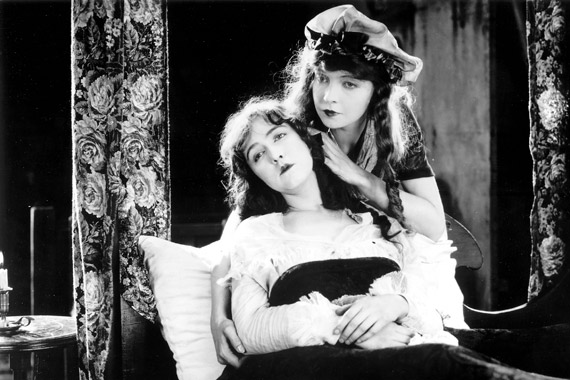
I know what you’re thinking – it would be great if Channel 4 could schedule some silent films to accompany these early episodes. What’s the point of telling people about Chaplin, Griffith, Dreyer and Eisenstein if we can’t watch the movies themselves? Well, there is a glimmer of hope. In the week following the first episode, Film4 will be showing Griffith’s French Revolution epic Orphans of the Storm (1921), starring Lillian and Dorothy Gish. The film will be screened at 00.50am on Tuesday 6 September (set your video) and again at 11am on Thursday 8 September.
A little update, courtesy of a helpful commenter below – Film4 will also be showing Battleship Potemkin later in the month – 19th and 22nd September to be precise. More of this please, Film4!
Meanwhile, if you’re enjoying what Mark Cousins has to say about silent cinema, and you live in or near London, watch this space for news of screenings with live music in the capital.
The Story of Film: an Odyssey screens on Saturday nights on More4 and is repeated throughout the week.
I tip my hat to @LondonMovieLoon on Twitter for alerting me to the screening of Orphans of the Storm. Much appreciated.
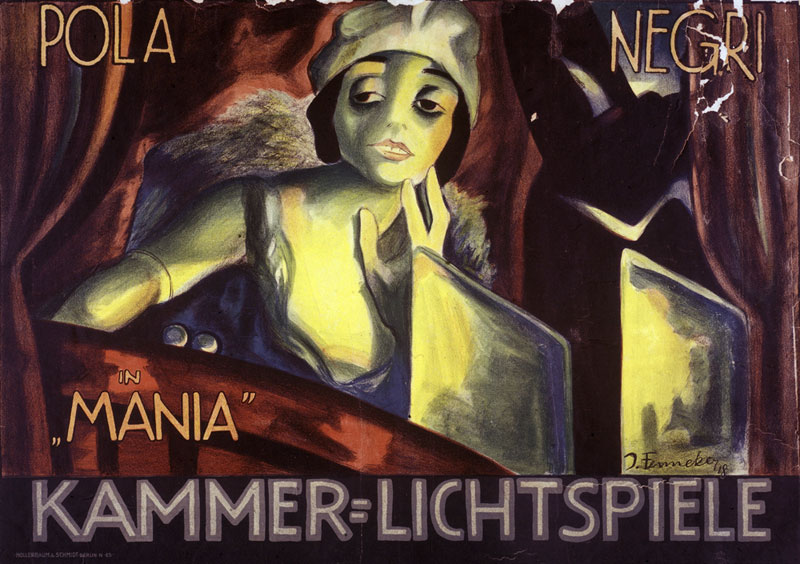
Mania: History of a Cigarette Factory Worker (1918)
Pola Negri was the first European star to be brought over to Hollywood, and her native Poland is understandably very proud of her. So much so that, to celebrate Poland’s presidency of the EU, the Polish Film Archive will be screening a new restoration of one of her “lost” films, with a specially commissioned orchestral score, at venues across Europe this year.
Mania: the History of a Cigarette Factory Worker is a “movie-poem” about a young woman caught between two suitors and with a terrible decision to make. The film was shot at Ufa in Berlin in 1918, and directed by Eugene Illés with sets designed by the master of Expressionism, Paul Leni. It comes to London on 13 October 2011, with a performance at the Barbican Arts Centre at 7pm. You can buy tickets here. And you can find out more about the film and its restoration here.
Meanwhile, I’ll be attending the “re-premiere” of Mania in Warsaw on Sunday – and reporting back with all the details soon. Watch this space.
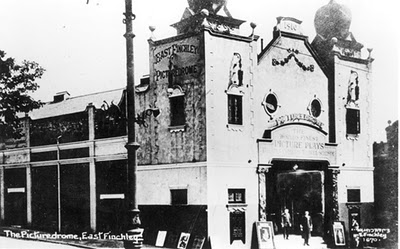
It’s always a pleasure to visit one of Britain’s oldest and most beautiful cinemas – and what a treat also to see some early films on the big screen. As part of the Phoenix Cinema’s ongoing Century of Cinema celebrations, film historian Gerry Turvey will present a selection of films from the BFI’s archives celebrating Barnet’s pioneering film-makers. There will be work from Birt Acres and RW Paul among others – and what’s more, it’s all free.
From the Archives: Made in Barnet screens at the Phoenix Cinema, East Finchley at 2pm on 18 September 2011. Tickets are free but booking is essential, so call the box office on 020 8444 6789. For more information, visit the website.
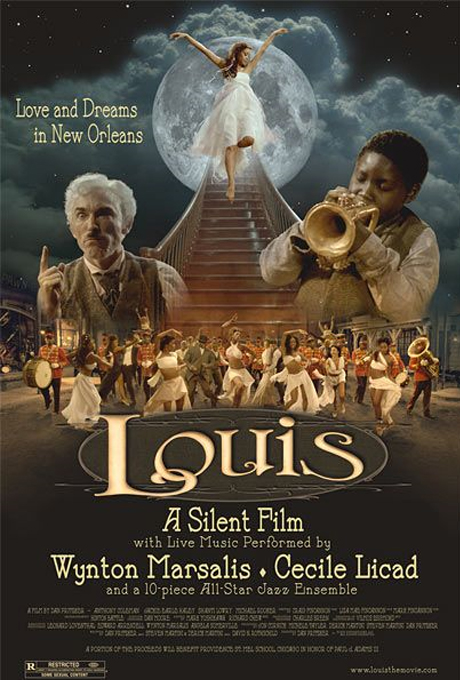
Louis (2010) is definitely helping to put modern silents on the map, but you won’t be seeing it in your local Odeon any time soon, because it is only to be shown with its live musical accompaniment, a score composed by Wynton Marsalis and performed by a hand-picked band of musicians. This is a film all about jazz in fact, set in New Orleans in 1907 – it’s a fictionalised account of the early years of Louis Armstrong, with a few nods to the cinema of the time.
Louis is a companion piece to a sound film, Bolden, which is coming out next year, about the ‘Cornet King’ Buddy Bolden. Both films have been directed and co-written by Dan Pritzker, a billionaire musician turned film-maker, who has certainly hired some big names to help realise his vision – not just Marsalis, but an Oscar-winning director of photography too.
Shot by Academy Award-winning cinematographer Vilmos Zsigmond as a modern re-imagining of early silent film, “Louis” is an homage to Louis Armstrong, Charlie Chaplin, beautiful women and the birth of American music. The grand Storyville bordellos, alleys and cemeteries of 1907 New Orleans provide a backdrop of lust, blood and magic for 6 year old Louis (Anthony Coleman) as he navigates the colourful intricacies of life in the city. Young Louis’s dreams of playing the trumpet are interrupted by a chance meeting with a beautiful and vulnerable girl named Grace (Lowry) and her baby, Jasmine. Haley, in a performance reminiscent of the great comic stars of the silent screen, plays the evil Judge Perry who is determined not to let Jasmine’s true heritage derail his candidacy for governor.
When Roger Ebert saw a preview of Louis in Chicago, he praised its “energy and wit,” saying: “It’s not a social documentary, and its recreation of New Orleans is certainly on the upbeat side, but then Louis Armstrong was on the upbeat side … What he’d especially approve of might be Marsalis – who took his performances as an inspiration – and the jazz band.”
I have taken a peek at the trailer, and at first glance Louis’s moody colour palette doesn’t look quite like any silent film I’ve seen before – but the Chaplinalike villain, speeded-up chase sequences and some neat physical comedy all recall the silent era. Some of the slick superimpositions and swooping camera movements feel comfortable, too, despite their 21st-century sheen. That said, the raunchy dancing in some scenes is more reminiscent of a Christina Aguilera video than anything I’ve seen in a silent film.
We will be able to judge properly soon, though, as Louis comes to London as part of the London Jazz Festival, with two screenings at the Barbican Arts Centre. This is an exciting opportunity to see a new silent film on the big screen and hear some leading jazz musicians play. Whether the music or the film will shine the brightest remains to be seen.
Louis screens at the Barbican on 13 November 2011 at 3pm and 8pm. Tickets cost between £10 and £25 and are available here. It’s worth pointing out that this film is not suitable for children – it was rated R in the US for sexual content and nudity.
The American trailer for The Artist, Michel Hazanavicius’s love letter to silent cinema, is here. It’s beautiful, and almost note for note the same as the French trailer we saw in the spring. The only differences are that the US version doesn’t name any of the actors until the final card, and I swear they have beefed up the sound of tap shoes clicking across the floor in the dancing sequences. It’s not synched sound, and there’s definitely some of it in the French version, but there’s more now. It’s still utterly gorgeous though – I’m not sure what delights me more, Jean Dujardin’s Hollywood smile, Uggy the performing dog or Bérénice Bejo’s wardrobe.
The Artist is released in France on 12 October 2011 and in the US on 23 November 2011. No word on a UK release date yet.
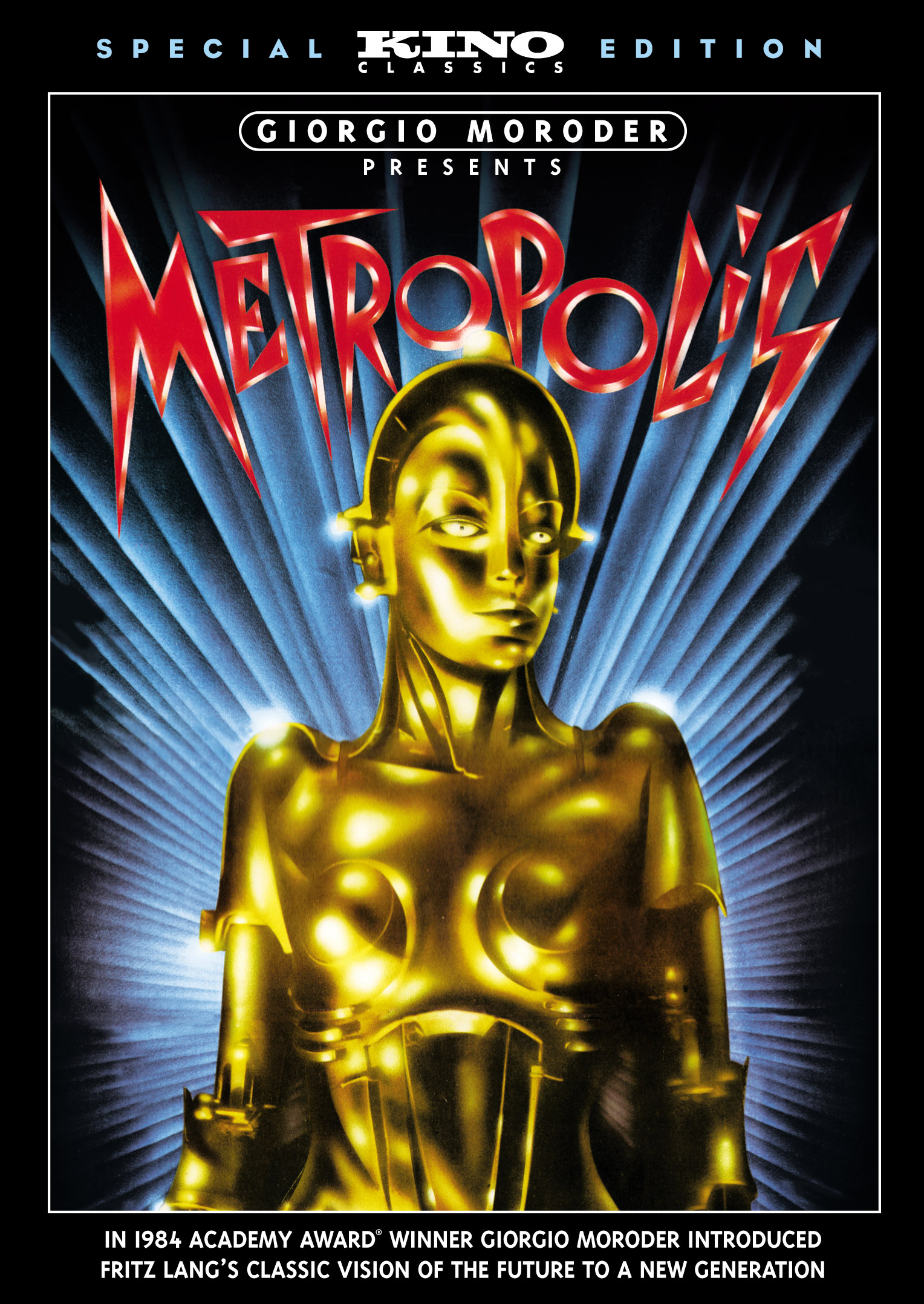
UPDATE APRIL 2012: Eureka Entertainment has announced a UK DVD release of Moroder’s Metropolis for 23 July 2012
For some people, the Complete Metropolis will never be enough. They want more. To be precise, they want Pat Benatar. And those people are about to be very, very happy.
Inexplicably to many of us, Kino Video is following up its recent release of Fritz Lang’s restored, almost-full-length masterpiece with a DVD/Blu-Ray issue of the version that musician Giorgio Moroder made in 1984. If you don’t know this cut, believe me, it’s not for the purists. For a start, it’s only 80 minutes long. Moroder ran the film up to 24fps, sped it up some more by removing the initertitles and replacing them with subtitles, tinted the film and added a contemporary rock soundtrack. Yes, Freddie Mercury, Bonnie Tyler, the aforementioned Benatar and Adam Ant are all there – if the 80s revival is real, this should be a smash hit.
But there’s more, there’s going to be a theatrical release too. Kino is planning a limited release for the Moroder Metropolis, starting with midnight screenings at the Landmark Sunshine cinema in New York City, on 14 and 15 October 2011 and visiting other US cities over the following two months. The US DVD/Blu-Ray release should make its appearance on 15 November.
The thing is, the Moroder Metropolis is more than just a cult favourite. For a great number of people, it was their first introduction to the world of silent cinema – or at least the first silent film they really enjoyed. And heck, lots of people like the music too. It may not be an authentic silent film experience, but the other versions of Metropolis kicking around when it was made were hardly the real deal either. The film had been heavily cut on its release – so much so that Lang himself refused to watch it – and was languishing in an archive unloved for years. There was still a lot of footage missing, and as now, the intended frame speed was a mystery. So you could argue that Moroder did the film more good than harm, and that we wouldn’t have the subsequent loving restorations without the work he did to make Metropolis popular.
We know that London is home to hundreds of fans of what we call “cult cinema”, the weird and wonderful stuff that is at the heart of the Scala Forever programme, or on show at film clubs all over the city. So I’m assuming we will see some screenings of the Moroder Metropolis in our neck of the woods. It seems like a natural next step doesn’t it? Particuarly if the demand is there.
Would you like to see the Moroder Metropolis on the big screen here in London? Are you keen enough to book a ticket to New York? Or is this travesty a crime against cinema that is best forgotten? Let me know what you think.






 Silent London