Category Archives: Review

Silent reading: Summer 2025 book reviews

Let Me Dream Again: Essays on the Moving Image, by Luke McKernan

Sticking Place Books, September 2025,

In case there could be anyone reading this site who doesn’t know, Luke McKernan is a media historian, formerly Lead Curator, News and Moving Image at the British Library. Also a formidably erudite and trailblazing blogger on moving image culture, especially silent cinema, but not exclusively. This collection of essays from across his many sites, gives a rich flavour of his expertise in analysis, archival curation and nostalgia.

In this book, Luke McKernan comments on the moving image in all its multiple forms. Let Me Dream Again – beautiful title – is crammed with insights into history, technology, and humanity. Because these essays, on a staggering variety of topics, began their lives as blogposts, they have the freshness of a live response to a moment in time – whether McKernan is reading 21st-century online comments on a silent film from 1903, or channel-hopping during the 2016 Olympics. He proves an excellent guide to the many ways that the storytelling impulse survives, and adapts to each new medium, from magic lantern slides to Artificial Intelligence.

Continue reading Silent reading: Summer 2025 book reviews
Silent reading: Spring 2025 book reviews

This is a long overdue post, but perhaps I was simply enjoying the research too much. Picking up an occasional series on this site, here are some short reviews of new books on silent film that have passed across my desk recently. Yes, I am a lucky duck.

Silent to Sound: British Cinema in Transition, by Geoff Brown

John Libbey, 2024, $45.00

If a story is worth telling, and this one certainly is, then it is worth telling with style. In this case, Geoff Brown relates the story of the arrival of sound in the British film business with an eye for the eccentricities and absurdities that make it not just a pivotal moment in the medium, but a good yarn, and one that is revelatory about the national industry. Geoff Brown, journalist and researcher, has been studying the arrival of sound in Britain for years now as part of an AHRC-funded project and the result is this deeply enjoyable and admirably detailed book about a long and strange process, which when told with Brown’s light touch and quick humour is as diverting as it is informative. The serious point is that Brown’s emphasis, where he has access, is always on the films themselves. And that, along with the quotations from the critical discourse that I particularly cherish, is what really gives this book its colour.

Continue reading Silent reading: Spring 2025 book reviews

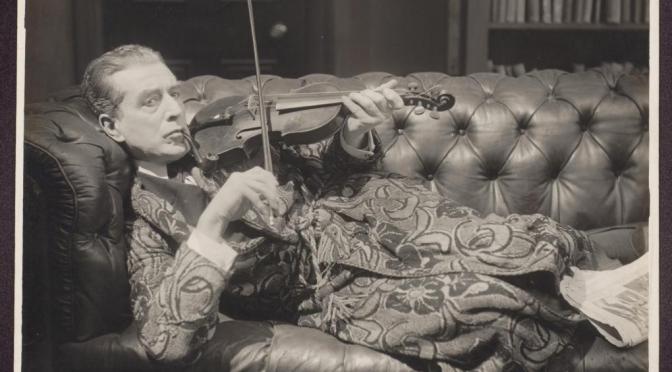
Silent Sherlock at the London Film Festival: the game is afoot

Stand outside Alexandra Palace on a clear evening with a full moon, as I did last night, and you can take in the whole city. London may be as silent as it gets from this vantage point, but the landscape is loud in its own way. The glittering towers that dominate the skyline were all built in the last 50, probably 20 years. The red lights dotted in among them are all cranes, standing by to change the shape of the city once again. Scan the horizon, and you’ll be reassured perhaps to see the dome of St Paul’s – a symbol of continuity, a connection between modern times and the age of Christopher Wren, going back to 1710.

Swivel on your heel, and pivot to 1873 or thereabouts, when Ally Pally itself, the “People’s Palace” first opened. I had a date to keep at the theatre, recently restored to what the owners call a state of “arrested decay” and reopened to the public. We were there to travel back to a fuzzy combination of the 1880s and the 1920s, to revel in the BFI London Film Festival’s latest archive presentation: Silent Sherlock.

Continue reading Silent Sherlock at the London Film Festival: the game is afoot

Hippfest 2024: seduced by silents

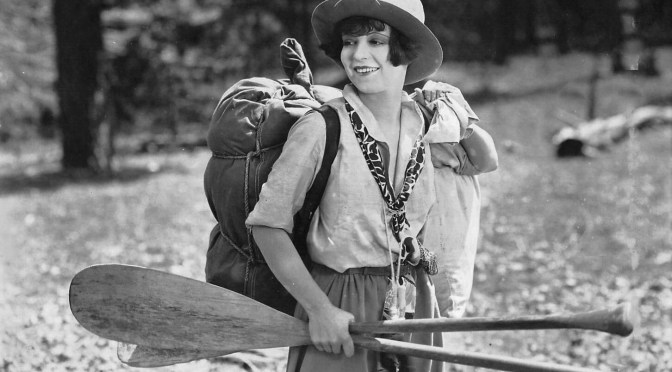
The fashionable set is always the first to name a trend. So if you know you know, but if you don’t know you need to know that 2024 is the year of Coquette Core, a prettified aesthetic that can be boiled down to: put a bow on it. That’s technically a beribboned bow with a lower-case b, not a Clara Capital-B-Bow, but the difference is only nominal. At this year’s Hippodrome Silent Film Festival we celebrated the age of the flapper, with all things frilly, feminine and flirtatious.

If you wanted to keep up with the new womenswear trends in the 1920s and 1930s, the cinemagazine Eve’s Film Review would have been your bible, and one of my favourite events at this year’s Hippfest was Jenny Hammerton’s presentation on these witty and inventive female-interest dispatches. Here, every cinemagoer could truly learn how to be “a modern”, and more specifically, how to save your stockings from mud-spatters, advice that all of us in Bo’ness could truly use.

Continue reading Hippfest 2024: seduced by silents

Velvet Curtains and Gilded Frames: a refreshing take on the history of film, theatre and art

Velvet Curtains and Gilded Frames: The Art of Early European Cinema, Vito Adriaensens, Edniburgh University Press 2023

This is a guest post by Alex Barrett for Silent London. Alex Barrett is an award-winning independent filmmaker based in London.

All too often over the years, the term “theatrical” has been thrown at films as an insult, as if showing an influence from the stage is something to be deplored. Such a notion stems, perhaps, from the idea that if cinema is to be considered a true art form, it must distinguish itself through uniqueness, shedding any influence from the other arts.

The notion of medium-specificity is discussed early on in Vito Adriaensens’ refreshing take on film history, which argues for a different tack: in this engaging study of early European film, Adriaensens seeks to show how heavily the roots of Euro cinema were, in fact, entangled in other art forms and how, by associating itself with the established arts, the fledgling medium sought to legitimise itself in the eyes of its audience.

Continue reading Velvet Curtains and Gilded Frames: a refreshing take on the history of film, theatre and art

Danish and German Silent Cinema review: the rich entanglements of transnational filmmaking

Danish and German Silent Cinema: Towards a Common Film Culture, Edited by: Lars-Martin Sørensen and Casper Tybjerg, Edinburgh University Press, 2023

This is a guest post by Alex Barrett for Silent London. Alex Barrett is an award-winning independent filmmaker based in London.

At its simplest, the history of silent film in Denmark and Germany can be seen as a story of two halves, divided by World War I: first, there was the rise of the Danish Nordisk Film Company, a major player in production and distribution throughout Europe whose success was ultimately stymied by the war; and then there was Germany’s UFA, a government-funded consolidation of private film companies ready to capitalise on the creative boom born from the county’s post-war malaise.

Continue reading Danish and German Silent Cinema review: the rich entanglements of transnational filmmaking

The Story of Victorian Film by Bryony Dixon: experiments that changed the world

A quick note to tell you about a book you will want to read. The Story of Victorian Film by Bryony Dixon is published by BFI Bloomsbury on 7 September and it is available to pre-order now. I was lucky enough to read an advance copy earlier this year, and I can tell you that it this book is an absolute delight. It’s an excellent introduction to the concept of 19th-century British cinema, but there is plenty here to intrigue people who are already familiar with the topic.

Continue reading The Story of Victorian Film by Bryony Dixon: experiments that changed the world

Echoes of the North: Four Chapters in Time review: a stirringly evocative tour of times past

It’s time to make a full confession. The title of this blog is a terrible deflection from the truth. I am, indeed, a northerner. Please forgive the vagueness. I am from Merseyside, but my family have lived in various places upwards from the middle of England, going back generations. So our accents may wander, but our vowels are consistently flatter than a Yorkshireman’s cap.

All of which means that Echoes of the North: Four Chapters in Time, a new archival film from the Yorkshire Silent Film Festival, is sweeter to me than a barm cake stuffed with hot chips and a mug of strong tea. The film is a stirring collage of silent film footage of northern England, bolstered with a charismatic brass-band score composed by Neil Brand (a southerner, but don’t hold it against him). The score is played expertly by the legendary Brighouse and Rastrick Band, conducted by Ben Palmer. Echoes of the North is produced by YSFF’s Jonny Best and edited by Andy Burns from more than 100 pieces of film. Best of all, it is free to watch on YouTube.

Continue reading Echoes of the North: Four Chapters in Time review: a stirringly evocative tour of times past

Amaryllis (2022): diary of a teenage skater girl

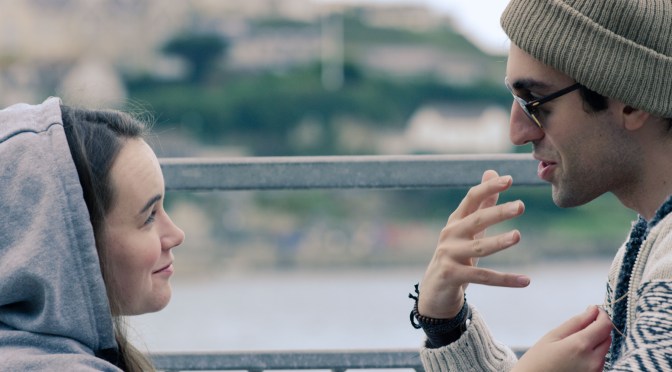
Amaryllis is a refreshing new modern silent film. It’s the first silent movie I have ever seen that is set in Digbeth, for one. But this female-led crime drama feels very modern and very traditional all at once. The occasionally playful take on a gritty urban milieu is entirely in spirits of say, Chaplin’s Easy Street, though this is a drama not a comedy and too streetsmart to be sentimental. On the other foot the young female heroine who glides around Birmingham on a skateboard and doodles ferociously in her journal feels very much like a character of the here and now.

Continue reading Amaryllis (2022): diary of a teenage skater girl

London Film Festival review: The Afterlight

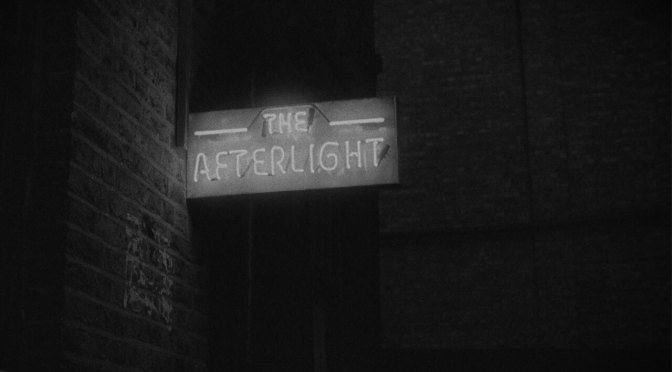
The Afterlight is the last-chance saloon for the lost souls of film history. It’s a conceptual experiment, one that stalks the shadows of world cinema, gathering the spectres of movie stardom as it stumbles all the way to obsolescence. This new film from Charlie Shackleton, which played the Experimenta strand of the London Film Festival, is cast entirely from the grave and destined to self-destruct. Composed of snippets of archive cinema, The Afterlight stars only actors whose obituaries have already been published and exists only in one 35mm print, which will deteriorate, just a little, with each screening, until even these echoes diminish.

Continue reading London Film Festival review: The Afterlight

London Film Festival review: The Real Charlie Chaplin

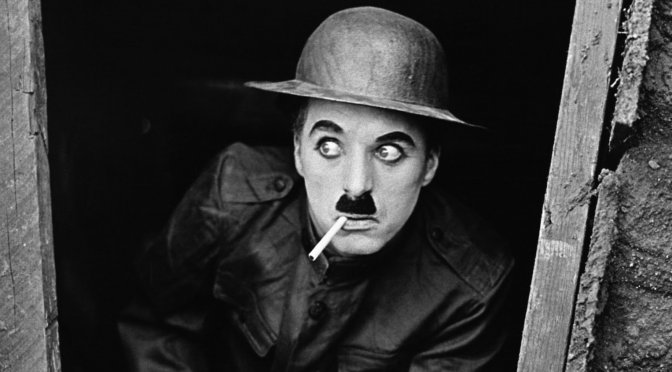
It’s a bold, almost alarming title. At this distance, can it be possible to uncover The Real Charlie Chaplin? And if there is something hidden in the biography this most famous of filmmakers, one that can without trepidation be called an icon, might those of us who love his films really want to know?

Rest easy then, as this documentary by Peter Middleton and James Spinney (Notes on Blindness) has no disturbing revelations. That is, as long as you have already been reading those large gaps between the lines of his biography. Chaplin liked the company of young women – girls, in fact. He married teenagers. He sometimes (often?) treated them badly. It’s a been said before and it is stated again here without excuses or attacking the women such as Lita Grey who testified to his ill-treatment. This has been trumpeted in some quarters as a belated #MeToo reckoning for Chaplin. That would be very belated. In truth we have always known this, but some fans refuse to hear it.

Continue reading London Film Festival review: The Real Charlie Chaplin

London Film Festival review: Around Japan With a Movie Camera

The eye wants to travel, and never more so than in these pandemic times. Which means that this presentation from the BFI’s blockbuster Japan season is actually more welcome on its delayed arrival.

In Around Japan With a Movie Camera, across an hour and a quarter, we are transported through space and time to Japan in the very early 20th century – the films span the period from 1901 to 1913. But you’ll want to devote a full ninety minutes to this one and click the “Watch introduction” button on the BFI Player. The films are more than ably introduced by the BFI’s own Bryony Dixon and Japanese film historian Mika Tomita, and the programme is hosted by Michelle ‘Bioscope Girl’ Facey. They also take time to introduce the band, as it were. The films are accompanied by Cyrus Gabrysch, Costas Fotopolous, Stephen Horne and Lillian Henley – their hands are sometimes visible thanks to the ingenuity of Gabrysch’s pandemic-era innovation, the “piano-cam”.

Continue reading London Film Festival review: Around Japan With a Movie Camera

Away (2020): A game of silence

I couldn’t let 2020 go by without talking to you about Away, a truly remarkable animated feature, and a modern silent too. This deceptively simple quest film has zero dialogue, and was all, every frame, the work of one man, Latvian filmmaker animator Gints Zilbalodis. He wrote, directed, scored and yes animated this award-winning film over the course of three and a half years.  

He admits that that he concocted the screenplay on the fly, but that it soon came to feel that that film’s story was a metaphor for his struggles to complete the film. That’s why I say deceptively simple: beneath Away’s bright, almost cute surface there’s something deeper at work.

Continue reading Away (2020): A game of silence

LFF Review: The Cheaters (Paulette McDonagh, 1929)

This is a guest post for Silent London by writer/director Alex Barrett. You can watch The Cheaters as part of the London Film Festival until 1pm on Wednesday 14 October.

Following on from the excellent livestreams they’ve been presenting on their YouTube channel throughout the lockdown period, the fine folks at the Kennington Bioscope have partnered with the London Film Festival to showcase The Cheaters (1930) in the aptly named Treasures strand. A rare silent film from Australia, it is the only surviving feature made by the McDonagh sisters – writer/director Paulette, actress Isabel (aka Marie Lorraine) and art director Phyllis.

Continue reading LFF Review: The Cheaters (Paulette McDonagh, 1929)

New York, New York: Spike Lee’s quarantine city symphony

A few days ago, Spike Lee premiered his latest movie. Not Da Five Bloods, coming to Netflix next month, without stopping at Cannes, but a three-minute movie he unveiled on Instagram called New York, New York. Lee calls his film “a love letter to [the city’s] people. Plain and simple”. But it’s not as plain and simple as all that.

Although, the film is only three and a half minutes long, I’m calling it a city symphony, and here’s why. For one thing, the movie is cut to music, Frank Sinatra singing the familiar song ‘New York, New York’ – and Lee’s montage is always on point.

Continue reading New York, New York: Spike Lee’s quarantine city symphony

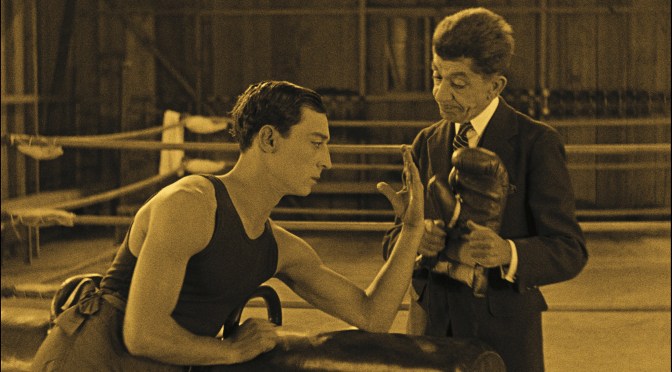
Buster Keaton: 3 Films review: discs the doctors would order

How are you doing? You can be honest here, you’re among pals. It’s a bit difficult out there these days isn’t it? Whether you’re out on the front line (thank you, THANK YOU), out-of-work, homeworking or home-schooling, life is stressful at the moment. Apparently we’re all either filling our time or switching off at night by streaming more than ever. Why not? There are some great resources out there for watching silents online (and more from me on this anon), but streaming is not the only fruit.

If you still have some pennies to spare in the age of lockdown, don’t forget that physical media is your best friend. Silents on Blu-ray (or DVD) won’t disappear at the whim of the rights-holder, or glitch or go lo-res every time your bandwidth gets overloaded by your flatmate’s Zoom cocktails or your kids’ homework chats. Not only that, but the best discs coming out these days are packed with commentaries and extras that celebrate the film and will expand your knowledge in the most entertaining way. Continue reading Buster Keaton: 3 Films review: discs the doctors would order

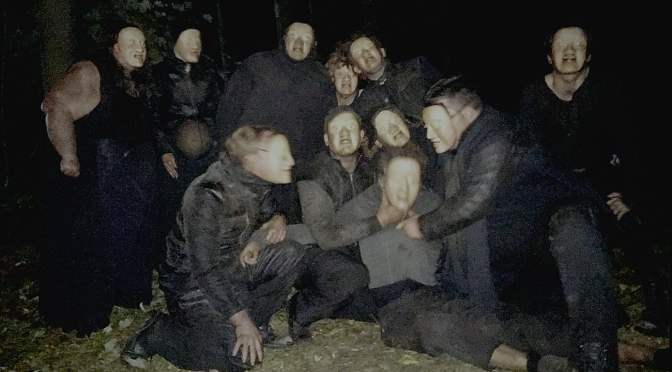
The Fall: Jonathan Glazer’s impossible monsters

This post is humbly submitted to the Shadowplay Project Fear Blogathon. Happy Halloween!

“Fantasy abandoned by reason produces impossible monsters: united with her (reason), she (fantasy) is the mother of the arts and the origin of their marvels.”

That’s the motto attached to Francisco Goya’s etching The Sleep of Reason Produces Monsters, which is also one of the inspirations for an utterly disturbing new dialogue-free film. Jonathan Glazer’s The Fall (2019) screened on BBC2 on 10pm on Sunday, unannounced in the listings, and at a selection of cinemas across the country. It’s a scant seven minutes of unnamed horror – a mob, a victim, an escape attempt – soundtracked by an eerie score from Mica Levi.

Talking to the Guardian’s Catherine Shoard, Glazer named his other inspirations as Goya’s Disasters of War pictures, some lines by Bertolt Brecht (“In the dark times / Will there also be singing? Yes, there will also be singing / About the dark times.”) and a snapshot of Eric and Donald Trump Jr hunting big game. It’s no coincidence, surely, that Glazer is currently working on a feature-length film set in the Auschwitz concentration camp, based on Martin Amis’s The Zone of Interest. Continue reading The Fall: Jonathan Glazer’s impossible monsters

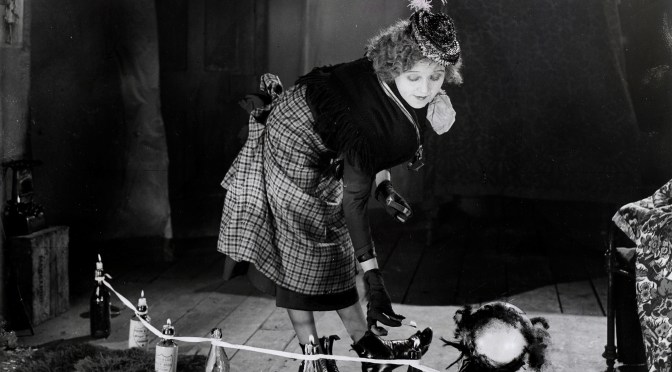
LFF review: Love, Life and Laughter (1923)

This is a guest post for Silent London by Dr Rebecca Harrison. Harrison is a film critic and a lecturer in the Theatre, Film and Television Studies department at the University of Glasgow. She is the author of From Steam to Screen: Cinema, the Railways and Modernity (IB Tauris, 2018).


Known as ‘The Queen of Happiness’ during her reign as Britain’s foremost star of the screen, Betty Balfour very nearly meets her unhappy match in Love, Life and Laughter, the 1923 feature that until recently the BFI had feared lost. Directed by George Pearson, the picture was found in the Netherlands in 2015 (thanks to a cinema that failed to return the film to the distributor), and the newly restored version appeared in October as the Archive Special Presentation at the 2019 London Film Festival. While the audience had to make do with digital projection rather than a print, we were treated to a improvised live score by composer and accompanist Meg Morley – not to mention 70 minutes of Balfour’s luminescent presence on screen. Continue reading LFF review: Love, Life and Laughter (1923)

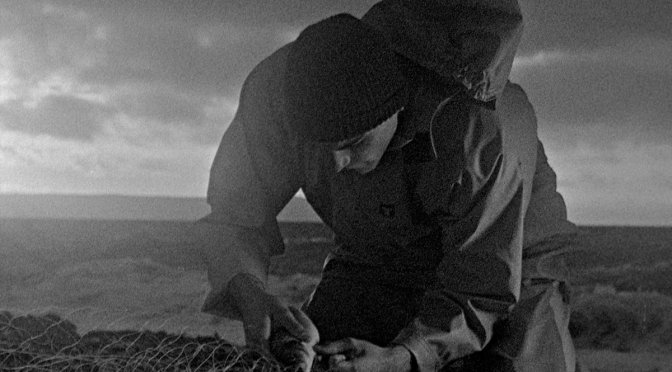
Bait review: Silent landscapes, angry voices

It’s a great week for new British cinema. I don’t get to type that very often. But this week, as the heatwave cools, you can spend your cinema money on two fascinating and brilliant new movies by young British filmmakers: Joanna Hogg’s finely polished dissection of a troubled romance, The Souvenir, and Mark Jenkin’s Bait. I highly recommend both*, but it’s Bait I want to talk to you about today.

Bait is Jenkin’s debut feature and it continues the themes and techniques he has explored in his short work. He’s a Cornish filmmaker, and in shorts such as Bronco’s House (2015), he has tackled subjects very close to his own home, the dissolution of the local way of life due to housing shortages exacerbated by unchecked tourism and the loss of traditional crafts and livelihoods. Those themes surface again in Bait, a portrait of a belligerent, bereaved young man called Martin (Edward Rowe) who lives in Newlyn, once a busy fishing port. Martin’s family home has been bought by a middle-class London family who have decked it out with tacky nautical accessories and use it only for holidays and Airbnb income, and his job as a fisherman has also dwindled to a shadow of itself. He no longer has his own boat, and relies on what he can catch from hand-cast nets instead. His brother has a boat, but adding insult to injury, uses it for pleasure cruises rather than the family business. It’s important, not to say simply refreshing, to see British filmmakers bringing regional issues to light in this way. Too many commercial films portray the British countryside as a moneyed idyll or a folksy home for cute eccentrics. Bait doesn’t do that. Continue reading Bait review: Silent landscapes, angry voices

Arctic review: the silent survival film

Contains spoilers

Silent movies are action movies. Instead of Hitchcock’s “pictures of people talking”, the images in silent films are of people doing, being: walking, fighting, dancing, poking the fire, stirring their tea, knitting a scarf. Sometimes the reverse is true. Action movies can be silent, or at least, so unreliant on dialogue as to function like a silent film.

Which brings us to Arctic, and a subgenre I am going to call the ‘silent survival film’. I named it myself, because I made it up myself. Arctic, like All is Lost or The Red Turtle, recently reviewed on this site, offers the spectacle of a lone survivor, one man among the voiceless elements, fighting for his own life. We see the hero of the silent survival film act, and more importantly plan, in silence. The suspense is not just about whether he or she will survive, but how they will make the attempt. The silence, or rather the absence of dialogue, increases the tension, and the fascination.

You could add films such as A Quiet Place and the excellent The Naked Island to this list. The circumstances are different, but the families in each of these films work together, in mostly silence, to get by. We watch them as we do the characters in a silent movie, without verbal cues as to what they will do next, we scrutinise their expressions, their eyelines, the objects they pick up. The intuitive family bond is expressed, rather than hidden, by their mutual silence. Continue reading Arctic review: the silent survival film