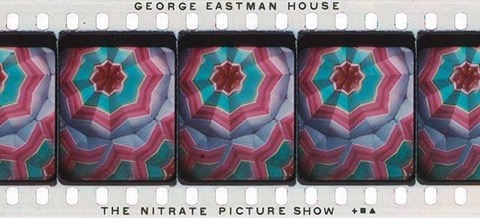
Its allure drew film curators, historians and cinephiles from around the world to the George Eastman House in Rochester, New York, last weekend, for the inaugural Nitrate Picture Show.
Nitrate, as a film base, was first developed in Rochester, by Eastman Kodak in 1889. It is a high-quality, but highly flammable, film stock which produces its own oxygen supply as it burns. A single spark from a torn frame during projection can set off a raging fire. Audience deaths from projection booth fires were not uncommon during the first few decades of cinema and nitrate’s ability to self-combust has caused several studio vault fires, including the tragic 1937 fire in which almost all of the Fox Film Corporation’s silent film holdings were lost.
Nitrate was discontinued in 1951 and strict regulations now govern its storage,transportation and projection. Only a few venues in the world are equipped to project it, including our venue, the Dryden Theatre.
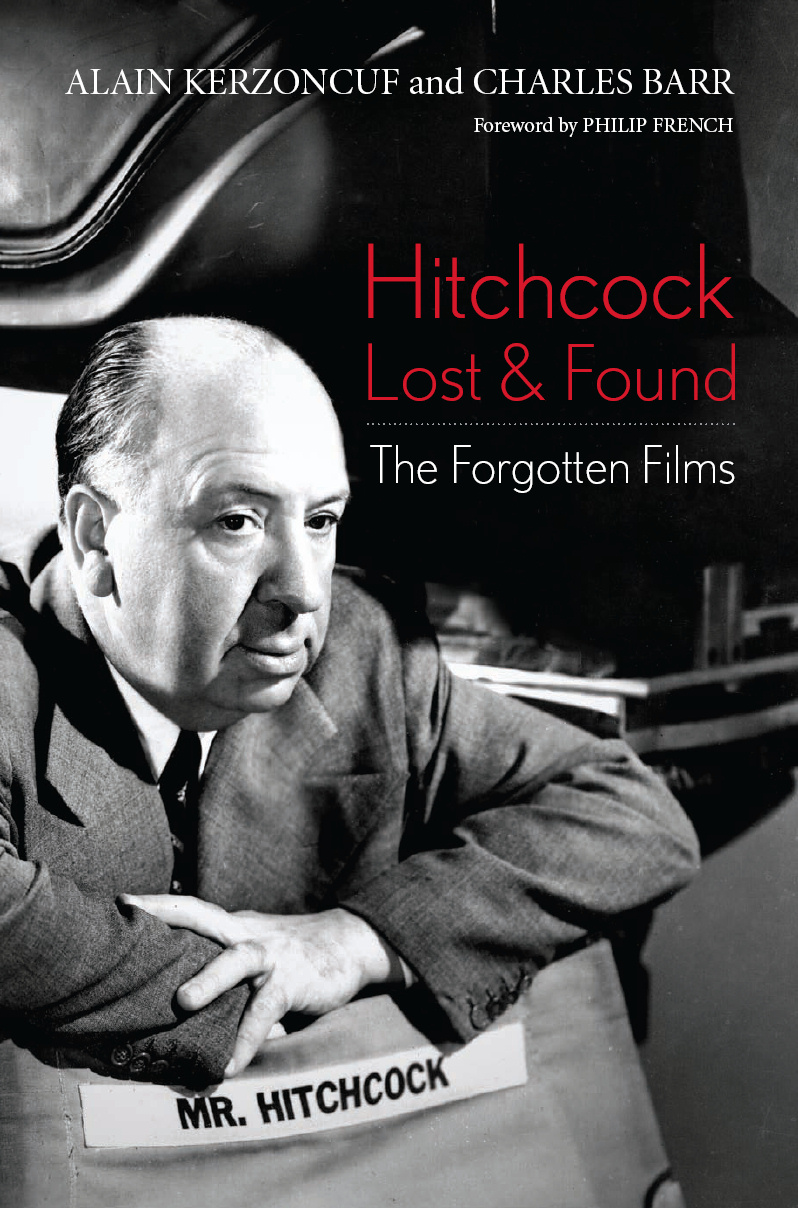
Alfred Hitchcock may be the only British director of the silent era we don’t automatically label “underappreciated”, or “little-studied”. From Leytonstone to Los Angeles his fame is global, his influence inescapable. After the films themselves, and the TV series, the books, the biopics, the magazine articles and yet more books, there isn’t a cinephile alive who can’t pronounce with some authority on the Master of Suspense.
One subject that all Hitchcock “experts” can expand upon is the MacGuffin device – the pursuit of an elusive object that drives the narrative of a film forward, allowing the business proper to take place along the way. One way of looking at this new book by scholars Alain Kerzoncuf and Charles Barr would be that it is a magnificent MacGuffin hunt. Hitchcock Lost & Found: the Forgotten Films goes after the grey patches on Hitchcock’s CV, the abandoned, incomplete or a loosely connected works that linger largely unwatched and unappreciated.
As well as missing films, this book tracks down the films that Hitchcock scripted, or art-directed, or otherwise assisted on, or one where he jumped into the director’s chair halfway through shooting. The discovery of a few reels of The White Shadow (Graham Cutts, 1923) in 2011 proves that a film doesn’t to be Hitchcock through-and-through to raise the heart rate. And it’s surely not too much to hope that on the trail of these MacGuffins, a hardy Hitchophile could learn a thing or two about Psycho, Rear Window and the man who made them? Not to mention that impressive string of surviving silents running from The Pleasure Garden to Blackmail or Hitchcock’s famously “lost” film, The Mountain Eagle?
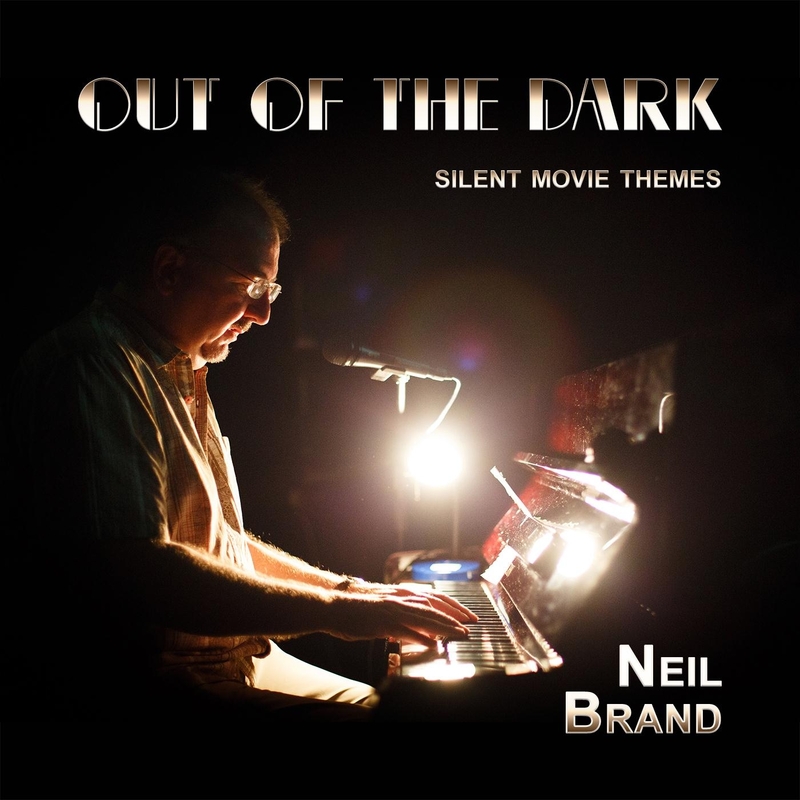
Out of the Dark: Silent Movie Themes, by Neil Brand.
If you attend the occasional silent movie screening, like I do, you’ll have experienced a particular bittersweet feeling. As much as you enjoyed the show, you fear you could never quite recreate the magic. You know the film is out there waiting for you to watch again (somehow), but nine times out of 10, the improvised music that accompanied it lives only in the corner of your memory.
The genius of improvisation is that the melodies, or that special combination of them, are conjured out of thin air, and disappear just as fast. Unless … someone, say Neil Brand, were to sit down at the piano and record some of those tunes for posterity.
So that is exactly what Brand has done – he has released an album of some of his favourite tunes to accompany classic silent films (from Pandora’s Box to Safety Last!). It’s a pleasure to listen to, and an enjoyably infuriating silent movie quiz too: the sleeve notes will tell you which film each track belongs to: can you guess without looking, and for an extra 10 points, can you pinpoint the scenes that inspired each excerpt?
Over to Brand’s notes to explain further:
In this album I have tried, for the first time, to give my improvised silent movie accompaniments a little life of their own away from the films, as piano pieces. They carry the essence of my musical thoughts on what these films are about, but you can listen to them without knowing the films, and let the pieces create your own pictures in your head.
Those sleeve notes also include a short intro by Brand to each film. So if you like what you hear, and you haven’t yet encountered the movie in question … well you couldn’t really ask for a better introduction.
Pandora’s Box (1929)
I’ve had a listen to the album, and it really is wonderful. What I didn’t expect, was to feel the same shivers down my spine that I would experience when watching Louise Brooks dance, or Murnau’s camera swooping through the morning mist. This is the most evocative of music – I felt that I was in the film as much as viewing it, whirling through the streets of Berlin (People on Sunday), Charlestoning with Clara Bow (It), marching in step with John Gilbert (The Big Parade) and dangling precariously with Harold Lloyd (Safety Last!).
This is a guest post for Silent London by Rosie Taylor. An event producer and freelance film researcher and historian, Rosie is festival curator for Afrika Eye Festival, and assistant curator and head of digital media at the Slapstick Festival.
I’ve been eagerly awaiting the arrival of The Dawn of Technicolor since I first saw James Layton and David Pierce’s presentation in Pordenone in October 2014. And the immediate thing that struck me when I first lay eyes on this book is its sheer size. It is second in size only to an enormous old and out-of-print book I have on Paul Cézanne – I’m going to struggle to fit it on my bookshelves!
The reason for its size is immediately obvious from looking at the cover, which boasts a closeup of a strip of “35mm nitrate Technicolor cemented print” from Fig Leaves (1926). As you turn the pages you are not overwhelmed by images (as I was originally expecting, which slightly disappointed me at first), but instead the book is carefully laced with a variety of photographs, film strips, diagrams, and images of archival texts and diaries, giving a beautifully textured visual history, which complements the reading nicely. The quality of the illustrations “reproduced almost entirely from original artefacts”, is excellent, so if like me you enjoy having a good look at everything, it’s exciting.
However, as much as one likes to take a gander at the impressive pictures, a bit of reading is also important. And, if I am honest, I did find the size of the book a little daunting at first. However, once I started reading, I discovered that the language is very accessible, and though it is essentially a factual history, it is passionately written without being too personal. It takes you through the complex and multifaceted aspects of the company’s development, giving a great sense of the personal and professional aspirations, challenges, set-backs, and triumphs – all to the point that I was rooting for the Technicolor team!
Love is private, intimate. Speak its name aloud and the spell is broken. Share it and the magic is shattered. Except, except … in the 20th century popular culture crashed into the space between lovers, the gap between two pairs of moist lips, the air that thrummed to their heartbeats. Pop music ran away with love, spinning out each precious moment of desire or sorrow for three minutes of passion and repetitive heartbeats. But the movies, arguably, got straight to the dirty bits first. In the dark of a cinema, that is to say a tent or a grubby room, crammed next to a sweetheart or a maybe-sweetheart in the dark, we could watch actors (imagine!) play-act the the motions of love: smooches in train carriages, swoons on the hearth. Illicit affairs, happy marriages, flings, crushes … all the joy and misery of human existence on the screen. And in the cheap seats (they were all cheap), a fumble, a fondle, a kiss or maybe more. And did I mention it was dark? A private act in a public place – disapproval be damned.
Kim Longinotto knows exactly what goes on in the dusky darkness of the Odeon. Her new collage film Love is All (2014) is a super-cut of romance: sexy, sedate or seditious. It’s a full-tilt rush for the hormones, soundtracked by the grizzled, tender love songs of Sheffield music legend Richard Hawley. Not strictly a silent film, this, but one in which the few fragments of dialogue are incidental, another instrument in the orchestra. Hawley sings what is on our lovers’ minds – what they actually have to to say is rather beside the point.
Shaun the Sheep the Movie (2015)Animals fare far better in silents than talkies. The absence of dialogue puts them on an equal footing with their human co-stars, and what’s more, they’re cuter. The only place left in these synchronised days where feathered and furred characters can expect top billing is in animated movies – digitally rendered and belting out showtunes. While we have become accustomed to talking animals in children’s animations, ever since Mickey Mouse started to squeak, Aardman’s Shaun the Sheep is a gent from the old school, having stubbornly refused to articulate anything more complicated than a bleat for 20 years.
And now Shaun the Sheep, who like the most illustrious slapstick comedians, is both black-and-white and silent, has been given his very own feature film. And no bankable Hollywood name has been roped in to voice his inner monologue. While the advance publicity has not been playing up the silent angle, this is a dialogue-free delight, a champion of visual gags, physical comedy and unutterable joy. Following on from the 2007 series of short animations made for CBBC, Shaun and his fellows dwell in an almost wordless world, baa-ing and snorting and belching their feelings, just like their harrumphing two-legged companions. As in the shorts, the written word often appears as an incomprehensible squiggle – perfect for young children who would be challenged or bored by too many letters.
Shaun the Sheep the Movie (2015)But Shaun the Sheep has an adult audience too, who appreciated his seven-minute TV escapades not just as kid-friendly fun, but as throwbacks to the silent comedy greats. Aardman’s previous films have cheekily plundered the classics for plots and sly in-jokes – restaging The Great Escape in a hen coop for its feature debut, Chicken Run (2000). Shaun the Sheep the Movie is no exception. There’s barely a frame, or a foley effect here that isn’t a wink to Jacques Tati. And amid nods to Inception, Taxi Driver and The Terminator, there is a Hannibal Lecter-impersonating cat who wins the movie-reference game hands down. C’mon, you’d feel cheated without a mention of The Silence of the Lambs, wouldn’t you? There’s a tip of the titfer to classic British animation too. Shaun’s longing for a break from the farm’s daily grind of tedium and indignity accidentally results in a barnyard mutiny and more than a shade of Animal Farm.
This is a guest post for Silent London by Peter Baran. You can follow Peter on Twitter at @pb14.
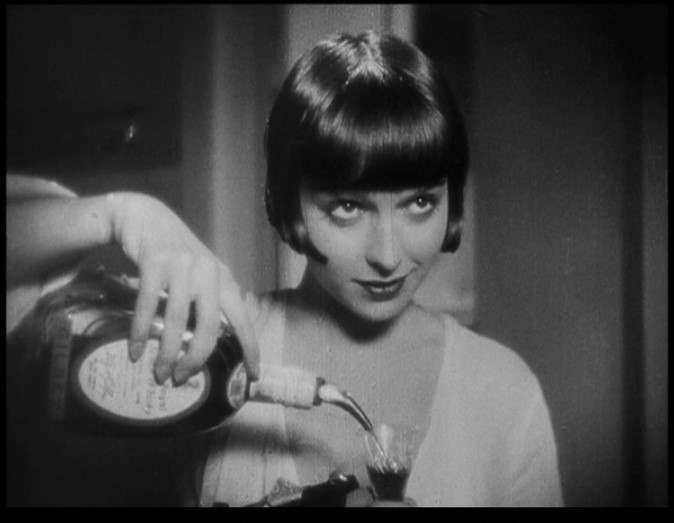
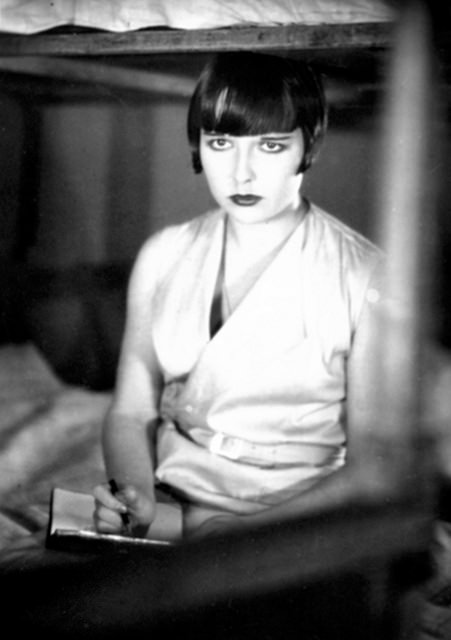
Louise Brooks and GW Pabst, an irresistible combination? Certainly Pandora’s Box (1929) caught lightning in a bottle, creating one of the most iconic female roles in all of silent cinema. In Pandora’s Box, Pabst and Brooks tease eroticism out of a certain ingenue naivety, whereas in her previous US films (A Girl In Every Port and Beggars of Life in particular) Brooks had offerede a slightly more world-weary sensuality. So it is no surprise that Pabst saw Brooks as the perfect person to play Thymian, the sheltered girl who will drop through the cracks of life via a workhouse for fallen women and prostitution.
This new Blu-Ray transfer of Diary of a Lost Girl (Tagebuch einer verlorenen, 1929) by Eureka’s Masters of Cinema label is a crisp and beautiful version of what is clearly an exploitation movie. As in Pandora’s Box, Pabst’s walks the tightrope of commenting on eroticism and sensuality; too often he falls off the tightrope into titillation. The film is set up for us to rue the difficult circumstances that lead to Thymian’s journey from a fine middle-class household down into poverty and eventually to selling her body. Except everything is still a bit clean. The reformatory is horrid, but only in comparison to her comfortable home – and its horridness is more due to a Miss Hanniganesque management rather than something inherent in the system. And there isn’t really too much criticism of Thymian’s shaming (AKA rape), and pregnancy. You get the sense that the original author (the film is based on a popular Margarete Böhme novel) and the film-makers are just following through the logical conclusion of these incidents. Instead, we end up with a somewhat warped fairytale, a slow-burn Snow White where the dwarves run a brothel full of happy hookers, or Cinderella with calisthenics.
Diary of a Lost Girl (1929)
There is a sensuality and rawness in Pandora’s Box, coming from Lulu’s naivity, which Thymian doesn’t share at all. At least by the time the film has put her through her paces as part of the reformatory’s physical education routine, she has no sense of wild abandon. It is a wholly more sinister erotic thrill, underlined (perhaps a bit too heavily) by the matron whipping her gong and clearly getting far too much pleasure out of the whole affair. This part of the film could be subtitled Reform School Girls do gym:
Spies are cool. Spy films are really cool. Spione, Fritz Lang’s epic high-octane espionage thriller from 1928, is exceedingly cool. This a sexy, dreamlike movie, heavy on the action and light on logic, which both anticipates and outpaces such noir favourites as The Big Sleep (1946). In fact, if you watch all two-and-a-half hours of this film without getting regular memory jolts of Hawks, Welles, Hitchcock and the whole pantheon of Lang’s future colleagues, I’d be hugely surprised.
But let’s not get ahead of ourselves. This is German Lang, not Hollywood Lang – and Spione is all the richer, and stranger, for it. Spione mashes up pulp fiction and lurid newspaper headlines with early film serials and adds in a twist of the fantastic and a dash of technolust. It’s a powerful brew.
Spione (1928)
“Throughout the world, strange events transpire …” runs the opening intertitle and that’s all the backstory you’ll get, folks. In a nameless country, a mysterious kingpin dispatches mercenaries and thugs to steal documents and sabotage treaty negotiations. The disruptive villain, Haghi, is played by Rudolf Klein-Rogge, fresh from a similar role in Dr Mabuse, Der Spieler (1922), as a dangerously fascinating, if chilly, creature. It’s typical of this grand, sprawling movie that he’s not just a criminal mastermind but a banker too (boo-hiss) and a clown (say what?). Just go with it. And there’s no doubt whose side we want to be on, though, despite the best counter-espionage efforts of our upright-but-anonymous leading man Willy Fritsch, who goes by the digits No 326. The link between the two men is Sonja, a lethally blonde femme fatale, an employee of Haghi’s who falls for Mr 326: a seductive, dishevelled performance by Gerda Maurus.
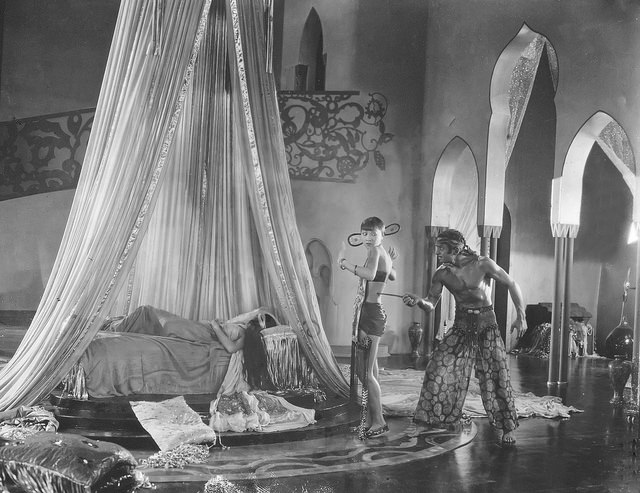
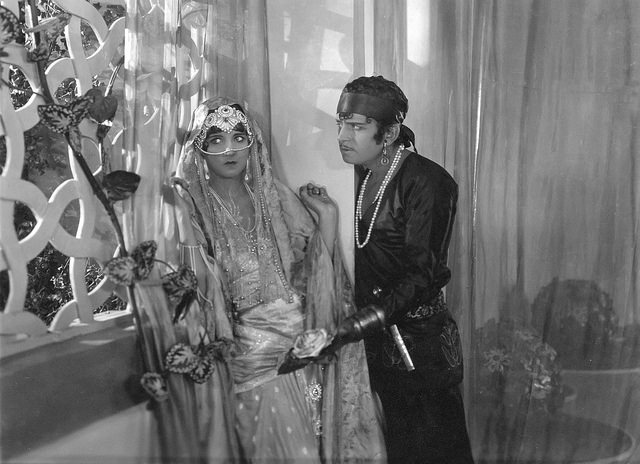
Just in time for Christmas, Masters of Cinema is rereleasing some more of its silent back catalogue, in gorgeous new dual-format DVD/Blu-ray editions. This is a Good Thing no doubt, and if there is one title especially suited for the pantomime season it’s The Thief of Bagdad (1924) – a middle eastern romp starring Douglas Fairbanks as Ahmed, a light-fingered adventurer, beautifully photographed and bulging with the last word in 1920s special effects.
Forget the effects for a minute though, forget Raoul Walsh behind the camera, Anna May Wong slinking around the corners, and William Cameron Menzies’s towering sets, and settle in for the Douglas Fairbanks show. This is Fairbanks at his very best: fortysomething, athletic, beaming, stripped to the waist and bouncing in and out of giant pots, swashbuckling and soaring through the air and under the sea. If you want to understand why Fairbanks was the King of Hollywood, this is a key text. He burns up the screen here, forcing you to smile, to chuckle, to gasp in awe at his latest trickery or feat of physical prowess, daring you to remain unmoved. It would take a heart of stone not to relent – it’s his ambition as producer that lends this film its grand scale, and his radiant personality that wins the audience’s affection as well as its awe.
The Thief of Bagdad (1924)
But you will have to possess a mind as gymnastic as Fairbanks’ buff body not to be troubled by the fact that this movie is pure orientalist claptrap. It can be done – Fairbanks on a magic carpet with his princess Julanne Johnston by his side is a sight beauteous enough to tempt you into a little light doublethinking duty. Just like Ahmed, you’ll have to earn your happiness here. It’s not a nasty film, but it is an ignorant one. If it weren’t for the gloss of that stunning production design and the stardust sprinkled by its leading man, that would be all we had to write about. As it is, we can take heart from the fact that the guff that underpins this movie is mostly well-intentioned but misguided romanticism. Rather this, you could argue, than yet another flick where the only middle eastern characters are bloodthirsty terrorists.
The chances are, you will recognise the name on the spine of this book. Farran Smith Nehme is one of the smartest, most elegant writers on classic and silent film that you can find. She blogs at her own site called Self-Styled Siren, and writes for publications from Film Comment to the New York Post. The chances are that you will recognise some of the characters in Missing Reels, Smith Nehme’s debut novel, also.
Farran Smith Nehme
There are a few names dropped here that will chime – from Kevin Brownlow to Jean Harlow to Mordaunt Hall, in fact this novel is peppered with more classic film references than you might think feasible. But it’s the personalities here that will resonate. Ceinwen, our heroine, is a young woman living in a scuzzy New York flatshare in the late 1980s, working in a vintage dress shop and spending all her free time at the movies watching the classics. She’s a bit of a mess, but she’s all right by me. Her job is awful, and low-paid – she is sustained only by cigarettes, hairdye and the pleasure she gets from sashaying around town in a genuine 1930s ensemble. By chance (don’t roll your eyes), Ceinwen discovers that her grumpy downstairs neighbour once starred in a silent movie, a lost curio directed by a precocious talent. That’s all it takes to get Ceinwen hooked on the hard stuff, and before you know it, our vintage vixen is a deeply embedded within the silent film nerd community.
Now, I’m not a nerd, and you’re not a nerd (though you may be a geek), but some of those silent movie fans out there are a little nerdy don’t you think? Not that there is anything wrong with that. Missing Reels is a paean to nerds and nerdery – I felt my silent movie obsession toughening up with every page I turned. Ceinwen’s hunt for those abandoned reels takes her, and her stuffy English academic boyfriend, through film fairs, archives, private collections and secret stashes. She meets people who love silent cinema and people who fetishise and hoard it – but mostly, people who respect it. I love the sequence when she settles down to watch her first Roscoe Arbuckle two-reelers at a Mack Sennett fanclub screening.
“this was the best silent-movie audience she’d ever encountered. No restlessness … No talking. Every laugh was related to something on screen. They picked up every gesture, no matter how small. The first glimpse of Fatty – Roscoe got a round of applause, Mabel Normand’s face got an audible sigh, Buster Keaton got a shout of recognition … And Arbuckle was a marvel, holding his own even with Keaton, supple and flexible in the way he moved.”
The silent-movie bug can be contagious that way. When you’re with people who love silent cinema, those old movies seem to be even more precious.
I saw a lot of myself in Ceinwen – I suspect there is rather a lot of Smith Nehme in there too – and I have met a few Freds, Harrys and even Andrews too, her mostly lovable, mostly eccentric guides through the silent cinema maze. How could you not adore Harry, a cinephile maths professor who encourages Ceinwen’s flickering interest, and who patiently drops this sassy line on a firefighter dead set on destroying a cache of nitrate: “Think of it more like, the Mona Lisa happens to be really flammable”? In fact, Ceinwen joins their ranks – going from film fan to silent “nut” in a few hundred pages. This is really a book about passion, misdirected, perverted or beautifully nourishing – it’s Fever Pitch for the Pordenone crowd. You could write a book like this about stamp collecting I suppose, but it wouldn’t have the same glamour for me.
Missing Reels
I must confess, the hilarious scene in which Ceinwen attempts to keep her end up in an awkward post-sex conversation with that no-good British boyfriend of hers, while simultaneously reading a movie monograph, was almost too close to my bones. Smith Nehme knows better than most what it is to be immersed in this world, and Missing Reels is a portrait of a woman following her heart and blowing her cool at the same time. That’s what makes it funny, and poignant too.
Now I asked you not to roll your eyes earlier, because we have seen a few hunt-for-a-lost-movie novels before. But that doesn’t stop us getting excited when it happens in real life does it? And the Murnauesque Gothic romance that Ceinwen makes it her mission to uncover really does sound like a beauty. Part of this novel’s charm is that we’d all like to discover a lost film. And more than that, we’d all like to represent for silent cinema, to combat the prejudices that the elderly star of that film, the snippy neighbour, has clearly taken to heart: “Ooooh folks, here’s this little clip from the dark ages, before everybody figured out how it was really done. Don’t worry, it’s not too long, we don’t want to bore anybody.” That’s Ceinwen’s real mission.
Now it’s my turn to blow my cool. I love this book: it’s witty and sharp and feminine and fabulous. If you know how to pronounce Borzage, if the mere mention of a nitrate copy of Flaming Youth sets your heart a-flutter and if you’ve ever worn a scarf in your hair and hoped you looked like Clara Bow, then this is the novel for you.
Missing Reels is out now in the US, published by The Overlook Press, priced $26.95. It will be published in the UK by Duckworth in spring 2015.
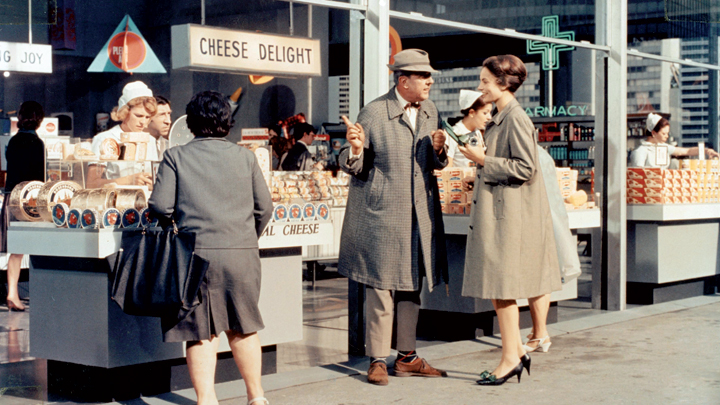
For Jacques Tati, diegetic sound is about as useful as headlights on a broom. He’d rather not illuminate anything with such a crude tool. Playtime, his masterpiece, is a work of brow-furrowing complexity in its design and structure, but a model of narrative clarity.
Amid the Babel of un-synched language spouted by its multiple characters, Tati tells us a story of a man, M Hulot, trying to negotiate a city, Paris, that doesn’t exist. Only Hulot (Tati, of course), and an American tourist, Barbara (Barbara Dennek) seem to notice that the steel and glass skyscrapers of the soaring sixties have hidden the real city, obscuring its landmarks and dividing its citizens. Tati goes to a business meeting, is diverted to a furniture show, meets an old friend who invites him home for a drink, attends the opening of a restaurant, meets a girl and loses her, all in the space of 24-odd hours.
Each twist in Hulot’s meander is a prompted by a mistake or misapprehension. His attempt to refuse to enter the restaurant shatters the door and he stumbles inside unwillingly. If I tried to explain to you why a German door salesman then ushers him further into the dining room I would expend many, many words to explain a labyrinthine incident earlier in the film that is played out in at least three languages, none of which needed subtitles at all.
Playtime (1967)
Trust me, it was a wonderful moment. I felt that door salesman’s anger, his hostility, his sarcasm, his deep shame and his ingratiating warmth so deeply, because they were so strongly expressed, not because I translated “Dumbkopf!” in my head. The only skills you need to understand this film are patience and observation, which transparently makes my German GCSE barely worth the paper it is written on.
The Goddess | Why Be Good? | On With The Dance | The Battles of Coronel and Falkland Islands | Damn the War! | Experimental cinema | The Tribe
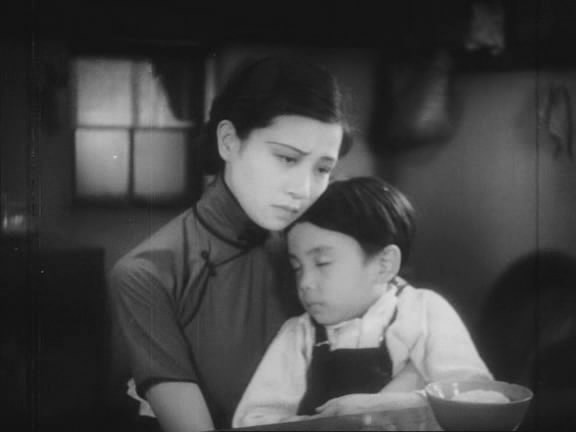
Silent film screenings aren’t like other movie screenings. For one, there’s no shuffling out, or chatting during the credits. In fact, there is a distinct order to proceedings: the final card indicates “The End”; the music stops; there is a brief hush; and then, applause. But at the screening of Chinese classic The Goddess (1934) during this year’s London Film Festival, one member of the audience broke ranks. While everyone else in the Queen Elizabeth Hall caught their breath, in that precious pause between the lush orchestral music and the thunder of appreciation, a gentleman behind me forgot himself, and punctured the silence. “Wow,” he gasped. And who can blame him?
The Goddess (Shen Nu) was, is, a masterpiece, a terrible tale told with great humanity and capped by a staggeringly powerful performance from tragic star Ruan Lingyu. She plays a prostitute, a “goddess” in Chinese slang of the time, who does what she does because she has another mouth to feed at home, her cherished infant son. The scenes in which we see Ruan at work, soliciting, are obliquely shot (shadows, feet, meet at sharp angles), but still somehow bold. Perhaps that is because we are shown her as a mother, a neighbour first, and the reality of her job is a touch too tough to comprehend. And at the beginning of the film, it’s clear that she keeps her work separate from her home life. But one day a venal gambler (Zhizhi Zhang) moves in to her house, and lays his hands on her earnings. And then the gossips begin gossiping and it becomes horribly obvious that the Goddess’s plans to give her son a better life are in jeopardy. Ruan’s beauty is almost more than the film can handle at times, but her performance is deftly nuanced and terribly soulful. The joy on her face when she sees her son succeed at school, her horror when she realises the trap she has fallen into: I am haunted by both of them.
While I know I am not the first to acclaim The Goddess, audience opinion was divided on the new score written by Chinese composer Zou Ye. It was undoubtedly beautiful, in fact for some it was too lyrical, but it drifted away from the film at times, missing the cues and shifts in tone that it should have been more alert to. When Ruan skips home with a brand new toy for her son, happy to be free at last, the music expresses her joy and liberation wonderfully. But that same tune continued over the heart-in-stomach lurch when she spots a hat on the table, and the whip pan that reveals the Gambler standing triumphant in her new flat.
Nothing to quibble about with the restoration though: the film looks gorgeous, clean and bright. I want, need, to see it again.
Why Be Good? (1929)
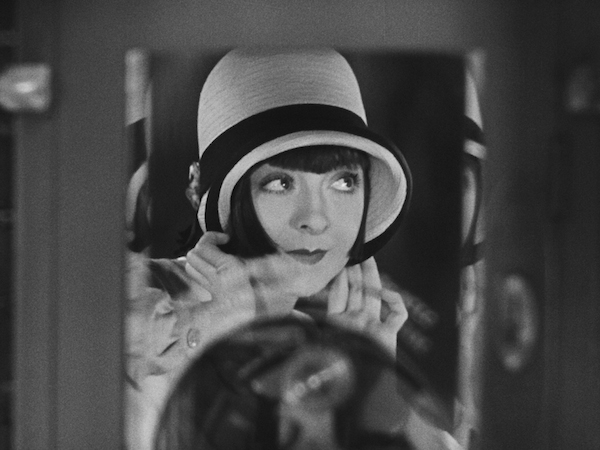
And I would happily snap up a ticket to see Why Be Good?(1929) once more, especially as Colleen Moore’s life story, and this film, offer such a fine balance to the tragedy of Ruan Lingyu and The Goddess. Moore was quite the perkiest creation ever to appear on screen (her character’s name in this confection is aptly, if bazarrely, Pert Kelly). With her sharp bob and expert comic charm, she was the flappiest of flappers and a huge silent star. And while her career may not have prospered in the sound era, her finances did. She is a happy example of a silent star who invested wisely and lived comfortably until a ripe old age, hanging around long enough to appear in Kevin Brownlow’s Hollywood TV series for example.
Sadly, however, the films she left for safekeeping in the studio archive were not so well cared for, so the chances to see her work are few and far between. Why Be Good? is a happy recent discovery and restoration courtesy of the Vitaphone Project and the Bologna labs. All of the Vitaphone discs for Why Be Good? were salvaged, so this silent film has continual sound: music mostly. I confess I was a little wary of the prospect of a running soundtrack of jazz tunes, but I was wrong to worry. The songs are carefully chosen and as well as some mundane sound effects (clattering dance steps, bells and whistles), there are some nifty sound-design jokes, including a comic scene in which two drunken sots “sing” and pound on a car horn.
As to the movie itself, Why Be Good? is a far more likeable rendition of Synthetic Sin, which showed at Pordenone this month. Colleen is a dance-loving shop assistant, who likes to ham it up as a fast-living flapper when really she’s a good girl through and through. When she falls for the boss’s son (a rather deramy Neil Hamilton) he can sense this instantly, but once their respective fathers start meddling the scene is set for hilarious and heartbreaking misunderstandings. Featherlight fun, with a feminist twist (no, really) and Moore is as sweet and smart as the jazz age scene-setting is seductive. Apparently Jean Harlow is in there among the extras. I well believe it, everything in this film looked too gorgeous for words.
Speaking of which, Why Be Good? was preceded by a delightful colour short called On With the Dance (1927) in which Josephine Baker herself and many lesser-known, un-named chorus girls take to the stage. Baker’s dance is labelled the Plantation – after the club, and no doubt the other thing too. She’s wonderful, but it’s a little uncomfortable to watch her dancing in dungarees and rags. Anyway, a real treasure from the archive this, and the following scenes of chorus lines spinning through dances ranging from the sublime to the ridiculous are notable for their splendid colour and kooky camera angles. The closeup of a bewildered punter, his sweating face superimposed with a kaleidoscope of high-kicking legs, was hilarious. Very The Pleasure Garden … And of course, this sort of thing is always better with John Sweeney on the keyboard, so we were very much in luck.
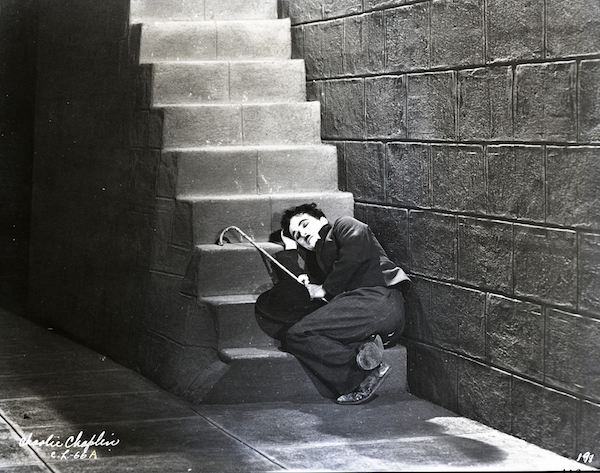
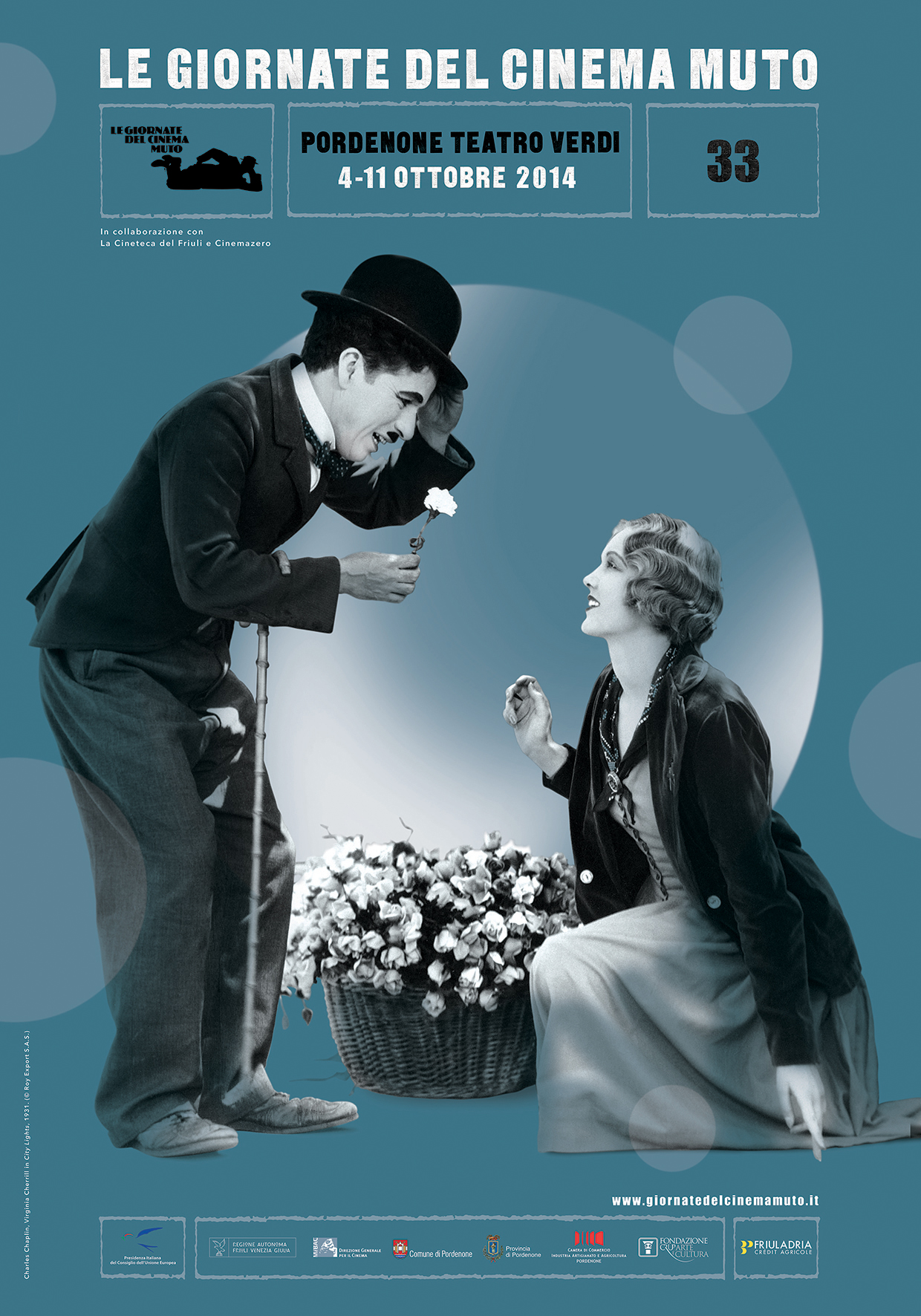
By now, I think we agree that the global capital of silent cinema is Pordenone, and Charlie Chaplin is its patron saint. It was surely fitting that our last glimpse of the Giornate, on the capacious screen of the Teatro Verdi, was the little feller himself, in extreme close-up, at high risk of having his heart broken, smiling to the end. City Lights, our gala screening tonight, is not my favourite Chaplin feature but that doesn’t mean it didn’t have power enough to sweeten the end-of-the-festival blues. Rumours that certain of the delegates are likely to be found curled up in Piazza XX Septembre like the Tramp himself come Sunday’s dawning were unsubstantiated as we went to press …
The Last Edition (1925)
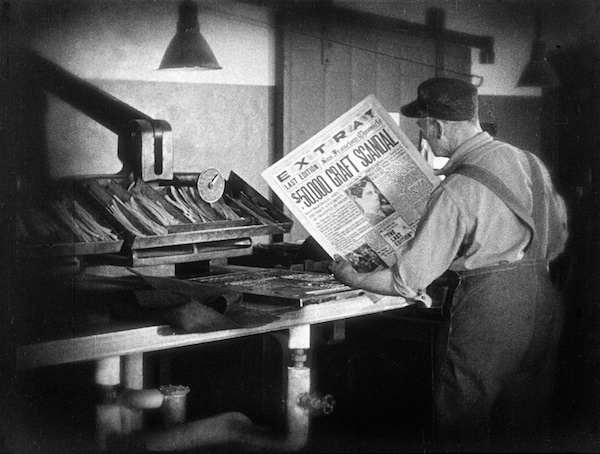
Speaking of which! I can’t wait a moment longer to to tell you about my most hotly anticipated movie of the Giornate. We all have our foibles, and as a newspaper journalist of increasingly long years, I do like a flick about the inkies. The Last Edition (Emory Johnson, 1925), freshly restored by EYE and the San Francisco Silent Film Festival, promised much joy for the unbridled newspaper geek. Shot on location at the offices of the San Francisco Chronicle, and with its full collaboration, this hotheaded movie is actually a rather clear portrait of the newspaper production process – from commissioning desk to printing press. Mostly the printing press. I was a bit bemused by the moment when the printer turns the masthead and headline upside-down on a plate that has already been made, just by turning a handle. Huh? But I loved the “rush the extra” sequence (“We’ve got eighteen minutes to change the story. C’mon boys!”), which follows the process of swapping in new copy at the last minute from the reporter filing to the copy desk, the typesetters and on to print. I’ve been there myself, with slightly different technology, but the same adrenaline, many a time. Although, needless to say, there were no female journalists in The Last Edition. All stonking if rather rough and ready and a fantastic picture of San Francisco in the 1920s too. I have no earthly idea why they needed to jazz up all this fascinating typesetting material with a plot involving gangsters, corruption and a massive fire at the newspaper office, but I may be slightly biased.
I should mention that The Last Edition was preceded by a 1912 Thanhouser short The Star of the Side Show, about a young “midget”, who refuses to marry the neighbours’ boy, also short-statured, so gets signed up for the carnival instead. It is described in the catalogue as “a prototype for Tod Browning’s Freaks, only more endearing”. That about sums it up. A tricky film to love but another fabulously expressive performance from Marie Eline, the Thanhouser Kid in the lead role. No, in case you’re wondering, she was just a little girl …
You know it’s Pordenone when you’re still having a conversation about melodrama, cliché and the difference between parody and sendup as you turn the key in the lock of your door at midnight. Or maybe that’s just me and the people I choose to hang out with. Still, I think it’s telling, because the penultimate day of the Giornate had plenty for us to chew on, get lost in and provoke the temper too.
But first, let me lay the scene: a medium-sized town in northern Italy, it’s Friday, spitting with rain. Interior: a bell rings, it’s nine am in the auditorium and it is clear that quite a few people in attendance have that Friday feeling. You know, the one was manifests itself in a splitting headache and grey circles under the eyes? But if there is one thing that we have learned this week, it is that Yakov Pratazanov is worth getting out of bed for.
Chiny I Liudi (1929)
And Chiny I Liudi (Ranks and People, 1929), a portmanteau film comprising adaptations of three Chekhov short stories, was another great “serious comedy”, leading me to kick myself that I missed last night’s Don Diego I Pelageya (1928). Each story deals with the problems of living in a rigorously stratified society: a clerk fears he has offended a high-up and apologises to death; an officer is caught between asserting his authority and sycophancy to a general; a poor woman marries a heartless rich man, but has her head turned when she experiences high society. It was all beautifully done, as witty as it was tenderly heartbreaking. A false perspective frame of the clerk approaching his senior’s desk, and a high-angled shot pretty Anna admiring herself in her finery were particularly memorable. I’m more keen than ever to see tomorrow morning’s sound-era Pratazanov. Another 9am Soviet film, just how I like it.
Knocked for six by the German dubbed/scored version of Potemkin. From gruff mutterings to blood curdling screams on the Odessa steps #GCM33
Russian cinema, but not as we know it, before the midday break without a curio from Germany: Panzerkreuzer Potemkin (1930). This is the “talkie” adaptation of Eisenstein’s classic, of course, featuring the Meisel score (in his own arrangement) and a lot of dubbed dialogue. All the intertitles apart from act breaks have been removed from the body of the film and historical explanations tacked on either end, read out in a thumping German voiceover. So it runs shorter than the original, but for me slightly less smoothly, which I freely admit may simply be due to my familiarity with the rhythms of the silent original. It seems strange to hear the men mutter their complaints rather than seeming to rise instinctively to a collective understanding of their circumstances. And because the film was conceived without so much dialogue, a lot of what we hear in this version is simply redundant. There’s an interesting, unintentional effect whenever dialogue runs over a montage cut, actually, as when an officer shakes a sailor awake or another sailor throws that fateful plate. But anyway, it would be very hard to kill the majesty of this movie – the images speak so eloquently that even if Stephen Horne were to reprise his kazoo routine from yesterday, the audience would still be moved. And of course, for a native German speaker, this may be the Potemkin they have always imagined. See what you think (please excuse the “Verdi tidemark”):
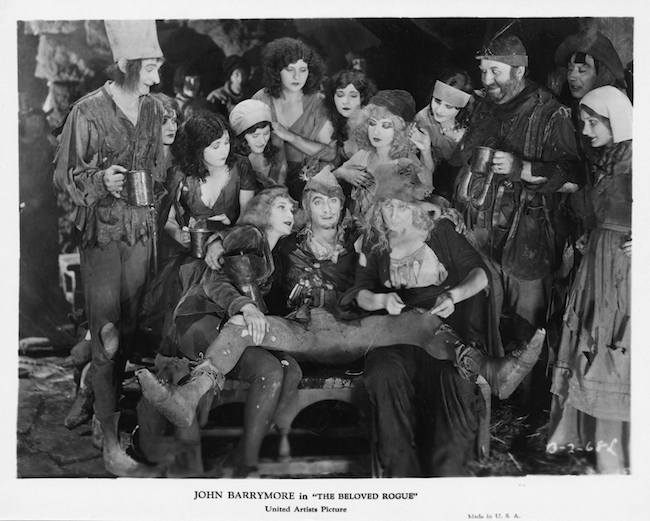
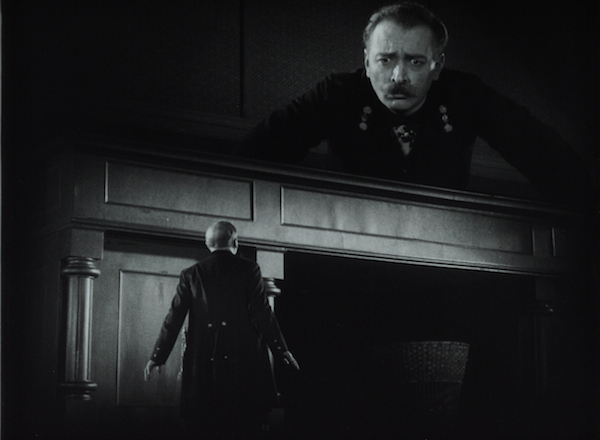
Today was a tale of two Fairbankses, both of them Douglas Sr, and of two Barrymores, both of them John, whom I think we can all agree was a bit of a beloved rogue. In the film of the same title, which came first today, he plays a gadabout poet in a 15th-century Paris so smothered in snow that it looks like a Christmas card. And this is Barrymore a la Fairbanks, just to confuse you, leaping from rooftop to rooftop with a goblet of wine in his hand and a jaunty feather in his cap. You just know that he is going to save France (despite the best efforts of feeble-minded King Louis XI, played creepily by Conrad Veidt with a finger up his nose), win the heart of a fair lady (Marceline Day as a poetry-loving aristo), complete some audacious stunts and compose lots of jaunty (terrible) verse on the spot. There is also a completely gratuitous loincloth scene, for the keener Barrymore fans among us. The Beloved Rogue (Alan Crosland, 1927) is total bunkum, but much more fun than, say When a Man Loves. The only way to enjoy this sort of thing is to commit totally to it, and we were helped along by sparkling accompaniment from not one musician but four: a harmonious grouping of Donald Sosin, Elizabeth-Jane Baldry, Frank Bockius and Romano Todesco.
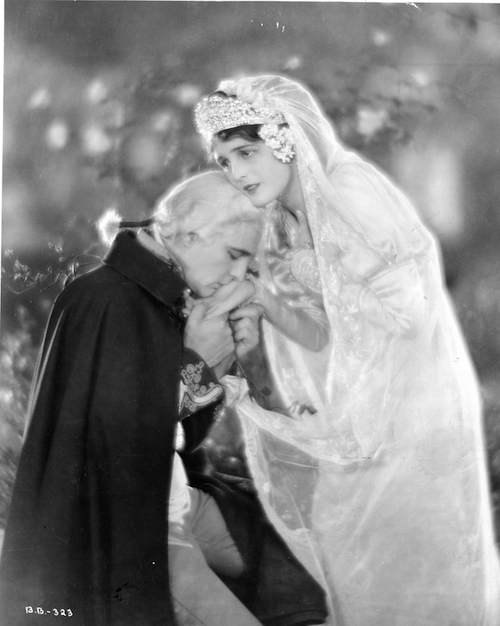
Beau Brummel (1924)
But John won’t win my heart that way: I crave romance, and splendour, and something beautiful to soothe my fevered brow. Beau Brummel (Harry Beaumont, 1924) will do the trick nicely thank you. It’s gentler, and more tender than the other JB films we’ve seen this week, even if equally as preposterous. Barrymore is the foppish captain deemed too lowly to marry his lady-love (an excellent, if teenaged, Mary Astor), who therefore plots to take obscure revenge on “society” by insinuating himself into the Prince Regent’s inner circle and fighting the system from within, yeah. But dear me, he does it in style. Skinny britches, umpteen rows of frogging, diamond buttons on his frock coat and a powdered wig – and still all you can concentrate on are those flashing eyes and his wicked comic timing. Preening in front of the mirror, practising his poses, or repeating the same lines to another pretty woman until he almost believes them himself … ah he’s a belov-able rogue here too all right. And in the end, it’s very touching, if both overdone and overlong. Stephen Horne was there for the duration (the Giornate showed the fullest print possible, of course), with a light touch on piano, flute and accordion bringing out the best of the comedy and plucking on our collective heartstrings. Good for the soul.
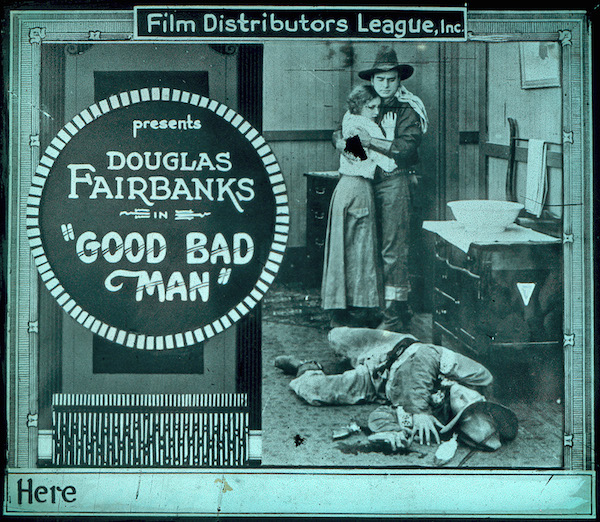
The Good Bad Man (1916)
Douglas Fairbanks is just as reliable a star as JB, if a simpler proposition all round. We were lucky enough to see The Good Bad Man (Allan Dwan, 1916) today, a western that went about its business as swift and straight as an arrow. Fairbanks is a Robin Hood cowboy, stealing from the rich-ish and giving to illegitimate children. Is there a dark secret in his past? Will he discover it, have his vengeance and live to make eyes at Bessie Love another day? I thought he just might – but was I right, kids? Kudos to London-based musician David Gray who accompanied the movie with verve and accuracy – he has been partaking in the Giornate’s musical masterclasses all week and this show marked his graduation.
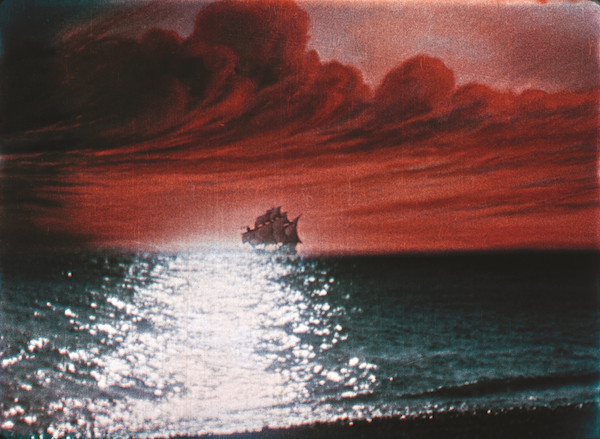
Our second sighting of Dougie was far more epic. The evening show brought another eye-popping collection of two-strip Technicolor treats, including a bizarre set of out-takes from The Gaucho (1927): a reel of attempts to shoot Mary Pickford as a vision of the Virgin Mary on a rockface. Shimmering loveliness its very self until an assistant hovers into view with a clapperboard. Fairbanks showed his face, and his biceps for the main feature, the unstoppable force that is The Black Pirate (Albert Parker, 1926): as gruesome as it is gorgeous and grand, this is a hard film to take against. If only because that dagger-down-the-main-sail makes you catch your breath each time. And in case you were wondering, John Sweeney can even make a sea shanty sound elegant. Classy stuff.
Almost time to turn in, and Whoozit (Harold L Muller, 1914) was our first bedtime story. Now, if a whole Charley Bowers movie makes very little sense at all, then I think it’s fair to say a single rediscovered reel will be a puzzler indeed. Great larks though: oysters with eyes humping across the bathroom floor, a teddy bear growing a beard, magic spectacles and an ogre sharpening a giant razor. Deeply enjoyable, brilliantly surreal.
One last thing before we go. The return of Sidney Drew, paired up here with Clara Kimball Young, to prove that the silent movies were spoofing silent movies long before pesky 21st-century scamps thought to do so. I thought Goodness Gracious; Or Movies as They Shouldn’t Be (1928) was ragged, but good clean fun, with hapless Gwendoline careering through loopy scenarios while chomping on her chicklit and waiting for her “brave youth” Cornelius to rescue her from another poorly framed misadventure. Undercranked and overegged and mad as a box of oysters. But a wiser soul than I caught up with me and raised a valid question: if this is the parody what is the original? Especially bearing in mind that this was made in 1928. Hmmm …
Corpse of the day: Bessie Love’s dear old pa in The Good Bad Man, God love him. Flat out on his front porch and breathing like a freshly landed fish.
Absurd romantic metaphor of the day: Home is where the hearth is for John Barrymore and Marceline Day in The Beloved Rogue – “Your eyes have swept my heart clean and kindled a fire there that will outlast me.”
Tiny things I love about Pordenone No 36: When the logo appears before a film and a group of dedicated colleagues cheer their own archive. Adore it.
My blog from the first day of the Giornate is here.
My blog from the second day of the Giornate is here.
My blog from the third day of the Giornate is here.
My blog from the fourth day of the Giornate is here.
My blog from the fifth day of the Giornate is here.
My blog from the sixth day of the Giornate is here.
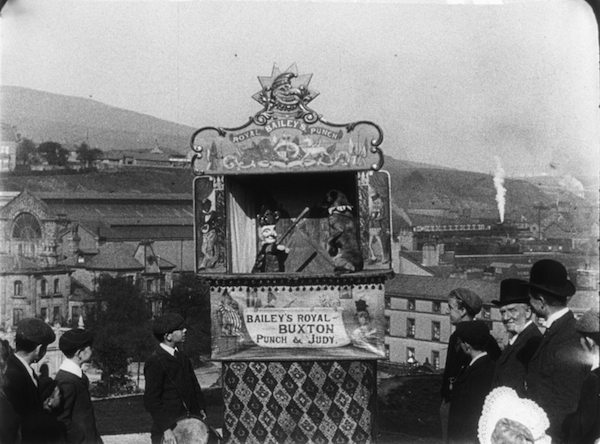
Bailey’s Royal Punch & Judy show in Halifax (1901)
Two Barrymores today, two appearances from Little Tich and too much, as usual, to recount here. But like the hard-working Cupid in La Rose Bleue (Léonce Perret, 1911), I’m going to give it my best shot. So if you’re sitting comfortably …
Today's highlight easily @professorvaness' brill Edwardian Entertainment program. Color fireworks, M&K, palmistry, clowns, fairs etc #GCM33
In a move designed to cure, or provoke, homesickness in weary British bloggers, this morning we were treated to 90 minutes of Edwardian Entertainment courtesy of Bryony Dixon and Vanessa Toulmin. Accompanying the 40-odd shorts and fragments on piano, percussion voice and everything in between were Stephen Horne and Frank Bockius on stellar form (Horne’s witty use of a kazoo, yes kazoo, in a telephone sketch was priceless). This was a peek at England in its Sunday best and some more outlandish costumes. It was all fun, fun, fun with trips to the seaside, the Punch and Judy show, fireworks, the cinematograph, barrel jumping, the fun fair, the panto and many wonderful processions showcasing our forefathers and mothers’ considerable talent in the fields of costume design and formation dancing – and not just Morris troupes and maypoles. It’s enough to make one crave a stick of rock and a trip to the illuminations. Certainly my northwestern heart leapt at a panorama of Blackpool. And who could resist the sight of a row of Mutoscopes on Morecambe beach with the sign “Look at this and get a laugh”. The perfect solution for those of us who want to watch the flicks all day without depriving ourselves of vitamin D.
If you really want sunshine at this time of year, a trip to Greece is in order, and Oi Peripeteiai Tou Villar (The Adventures of Villar, 1924), the oldest film ever restored by the Greek Film Archive, was a sketchy comic caper, doubling as a sun-dappled tour of Athens. Larky nonsense, but great shots of the Acropolis etc. And now I can say I have seen a Greek silent movie, which is sure to wow the folks down at the Rose and Crown on my return.
The Toll of the Sea (1922)
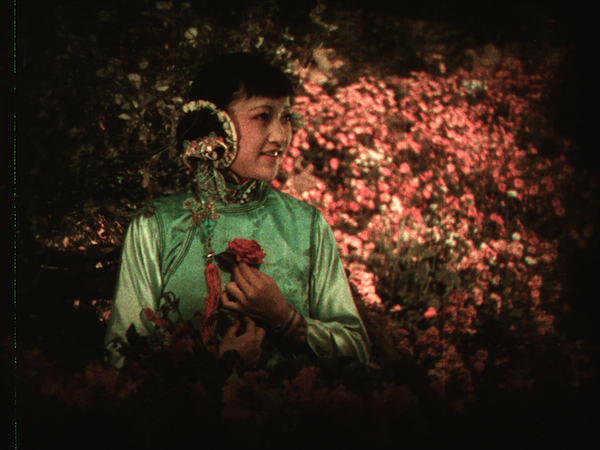
But if you want something really gorgeous … the second Dawn of Technicolor compilation had many diverting treats inside, culminating in The Toll of the Sea (1922). This was an exceedingly picturesque melodrama, a reboot of Madame Butterfly in which Anna May Wong plays a young Chinese woman in love with an American. But the bond of love and “marriage” is held more sacred by her than him … Oh and it all ends in sadness and sacrifice and another word beginning with S. Not before Wong’s sumptuous wardrobe and elegant garden (complete with peacock!) have been given the full Technicolor treatment, though. The sweetest of sorrow and the sugariest of eye candy.
We have passed the halfway point of the Giornate now, but some would argue we have taken the long route round. Because Wednesday night was epic, you’d have to agree. Tonight we witnessed all five hours of Fritz Lang’s towering, geometric monument to mythic nationalism, Die Nibelungen (1924). And arguably, grandeur was the order of the day: from a spot of early morning swashbuckling to mist-covered mountains and a trip to the opera.
Waking to grey skies and a slick of drizzle on the pavements can only mean one thing here in balmy Pordenone. To merrie Englande! To Ye Olde London Towne, in truth, for The Glorious Adventure (J Stuart Blackton, 1922) – and I have a feeling that the cleansing flames that purged in the spider cave in Tuesday night’s Pansidong are about to smite these half-timbered streets. Do I spy Nell Gwyn and Samuel Pepys in yon King Charles II’s court, as well as carriages and banquets and taverns and bodices aplenty? Of course I do, but while this film’s only concession to realism may have been to cast a real-life aristo (Lady Diana Manners) in the lead role of Lady Beatrice Fair, it’s really far better than it sounds. Of course, the reason that The Glorious Adventure is on the schedule, and the reason it is notable, is that it was shot in Prizma Color – it’s a full-colour silent, of sorts. And while the colour work does have its flaws (mostly “fringing” on movement) the skin tones are realistic, and despite the limited spectrum the shades of dresses, fruit and foliage are mostly rich and clearly defined.
The Glorious Adventure (1922)
It’s a touch hokey in plot, with an earl hiding his true identity from his childhood sweetheart due to “an excess of chivalry” and such like. But the fight scenes are strong, particularly a clash of swords in The White Horse early on, and Victor McLaglen makes a memorable villain as heavy Bulfinch – more memorable than the real villain Roderick (Cecil Humphreys) for sure. And when the fire comes, the Great Fire of London that is, it’s really quite something: with pools of molten lead around St Paul’s Cathedral, and silhouetted timbers framing the rich reds and yellows that signal destruction. Sarah Street points out in her notes for the film in the Giornate catalogue that the fringing may actually enhance the effect of the flames – the perfect marriage of content and form. A veritable British triumph then, so can we have the Italian weather back now?
Midweek #GCM33. What with a late night Chinese 'spirit' film and early morning Prizmacolor feature I have now upgraded to 'doppio' espresso.
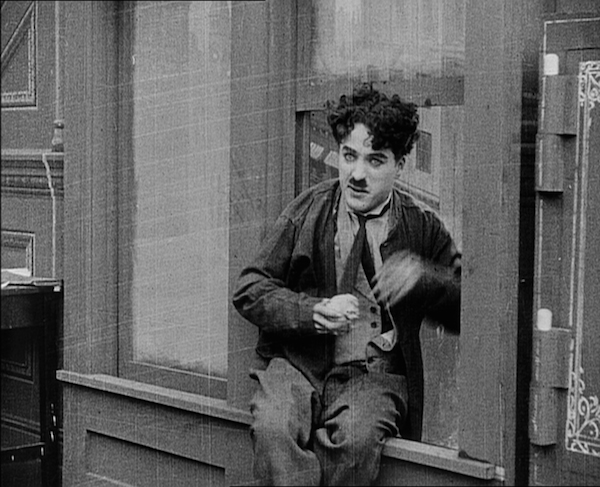
Charlie Chaplin is in the house. Naturally, this being his centenary year and all. Naturally, also, he is speaking Japanese. Because all the characters in Charlie Chaplin films speak Japanese – to a Japanese-speaking audience that is. And also to us lucky types in Pordenone tonight who saw a programme of Chaplin shorts with the accompaniment of Benshi Ichiro Kataoka along with Gunter Büchwald and Frank Bockius. Clearly they had all been in cahoots and the riotous combination of voice and music was expertly judged. A little Benshi can go a long way with me, but that’s how it’s meant to be I think: exuberance squared. The Japanese movie fragment that preceded the Chaplins, Kenka Yasubei (Hot-Tempered Yasubei, 1928) was an inspired choice – all the brawling and boozing of three or four Keystones packed into a frenetic half hour.
Pansidong (1927)
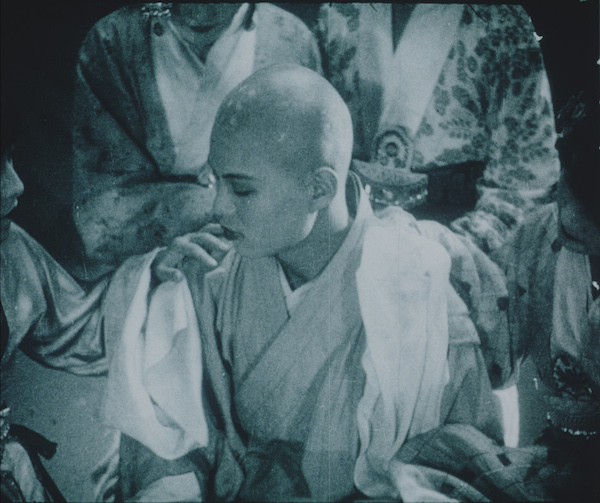
There was yet more exuberance to come at the end of the evening with Pansidong (The Spider Cave, Darwin Dan, 1927). This Chinese silent, once thought lost but recently rediscovered in Oslo, was introduced charmingly by the director’s grandson, who was seeing it for the first time tonight. I hope he enjoyed as much as I did: it was a silken concoction laced with surprises in which a glamorous girl gang of “spider-women” entrap a monk in their cave, among the spirits. There’s magic, and swordfighting, and some very witty subtitles. Mie Yanashita accompanied tightly on the piano and percussion, including a clattering cymbal that made many of us jump – right on the nose of that wedding-night moment.
Keller-Dorian: Film Gaufré: Sonia Delaunay (1925)
But it’s not time for bed quite yet. Here’s what else happened today. The short version: lots. I’m going to begin with something really quite beautiful. Several things in fact.
The mountain footage in 'Colored Views from the Entire World' with musical accompaniment by Stephen Horne was particularly magical. #GCM33
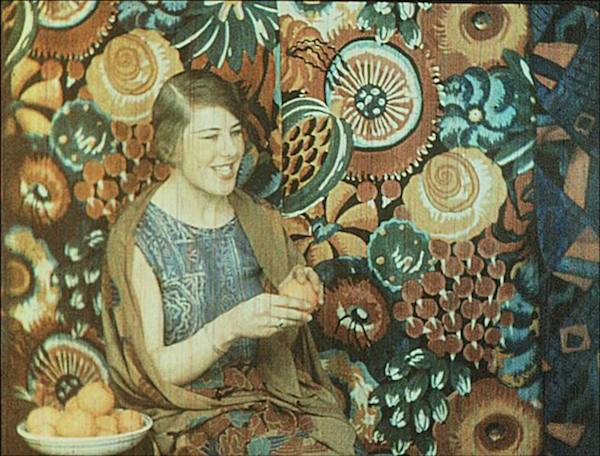
The leopard-skin trim on a Paul Poiret evening coat, scarlet fireworks in a sea-green night sky, vicious yellow flames engulfing a city tenement, a bowl of fresh oranges amid Sonia Delaunay’s sumptuous Orphist designs, gold sequins twinkling on a chorus line and a freshly dyed sugar-pink frock: the first shorts programme in the Dawn of Technicolor strand was a many-splendoured thing. Many different colour processes were on display from Kelley Colour to hand colouring to Natural Color to … far too many to name here. But this was as entertaining as it was instructional, and all beautifully and kaleidoscopically accompanied by Stephen Horne on piano, flute, accordion, and xylophone … at least. Married in Hollywood, the parting shot, was a Multicolor finale from a lost black-and-white sound feature. It must have been an impressive technical achievement, but it was also incredibly cheesy. Quattro formaggi.
Colleen Moore, first among flappers, is so universally adored among the silent cinema crowd that she can get away with anything. Case in point: today’s screening of the irrepressible Synthetic Sin (1929), in which La Moore plays an aspiring actress whose talents lie further towards comedy than tragedy. So much so that she interrupts a dance show to perform a wigglesome, gigglesome routine of her own … in blackface. She wins the crowd in the movie, and perhaps a little more guardedly she repeated the trick in Teatro Verdi today. You can’t edit the past, and you can’t deny the crowd-pulling power of Colleen Moore.
Synthetic Sin was a winner today, a restoration courtesy of the Vitaphone project; this film has been primped back to its best, and even comes with a snippet of its original sound-on-disc score. That blackface moment wasn’t only thing that was “of its time” about the movie, but Moore’s personality, and charm, and sheer comic talent brook no obstacles. An early scene in which she mimics “Paderewski playing Rachmaninoff’s Prelude” was far funnier than such a skit had any right to be. A thunderous round of applause ensued, from a live audience 85 years too late to catch the real thing.
The Tailor from Torzhok (1925)
But Moore only arrived four screenings into the day. We’re calling this a Manic Monday, with three heavyweight movies in the morning alone: two Barrymores (Ethel and Lionel) and a treat from the Russian Laughter strand: Zakroischchik iz Torzhka (The Tailor from Torzhok, Yakov Protazanov, 1925).
Yes, the name of the Russian Laughter strand has raised some sniggers in the hotel corridors and café terraces of Pordenone already, but we don’t listen to haters here at Silent London. And we’re right, as usual, because The Tailor from Torzhok was a hoot. This is Soviet cinema’s first feature-length comedy, and it’s definitely western-style in its reliance on physical stunts and romance. It was intended to promote the state lottery, but enjoyably not a single likable character gives two figs for the lotto – the government bond is sold on, rejected, crumpled and, ahem, fixed to the wall with nasal mucus. Ick. Great comic work from Igor Illiinsky in the lead role, whether pratfalling or winningly rubbing shoulders with his pretty miss.
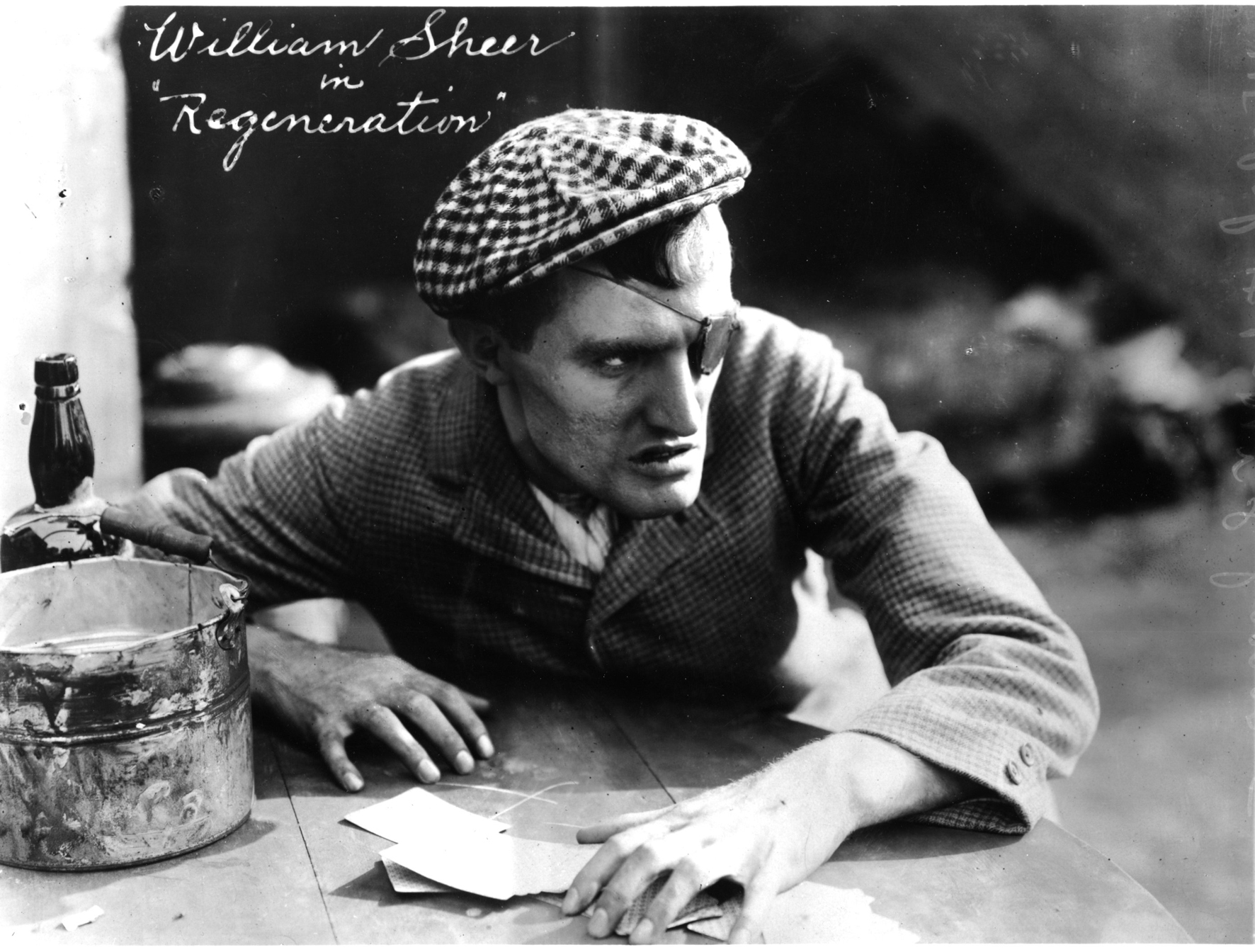
How much excitement can one person handle on a Sunday morning? For myself, the opportunity to see – finally – Raoul Walsh’s classic crime drama Regeneration (1915) and on 35mm no less, with music by John Sweeney, was more than reason enough to get out of bed. That it was preceded by a film packed with vice and violence (and fabulous clothes), made this a far-from gentle Sunday morning. But the biggest surprise of the day was to come later in the afternoon. Call that a cliffhanger, if you will.
To the vice and violence first, with Hans Steinhoff’s Das Frauenhaus von Rio (1927), a German crime saga adapted from a novel by Norbert Jacques. That the film is set mostly in Hamburg rather than Rio, and barely in the “Frauenhaus” (a particular kind of lady, a particular kind of house, if you get my meaning) at all, is hardly false advertising. Concerned with what was called the white slave trade in those days, and also that silent-movie staple, international jewel theft, Frauenhaus was florid, schlocky and tremendously good fun – and very niftily directed. French actress Suzy Vernon made a winning heroine, although Ernst Deutsch as a puckish chancer and Vivian Gibson as a tigress of a villain stole the show.
Regeneration (1915)
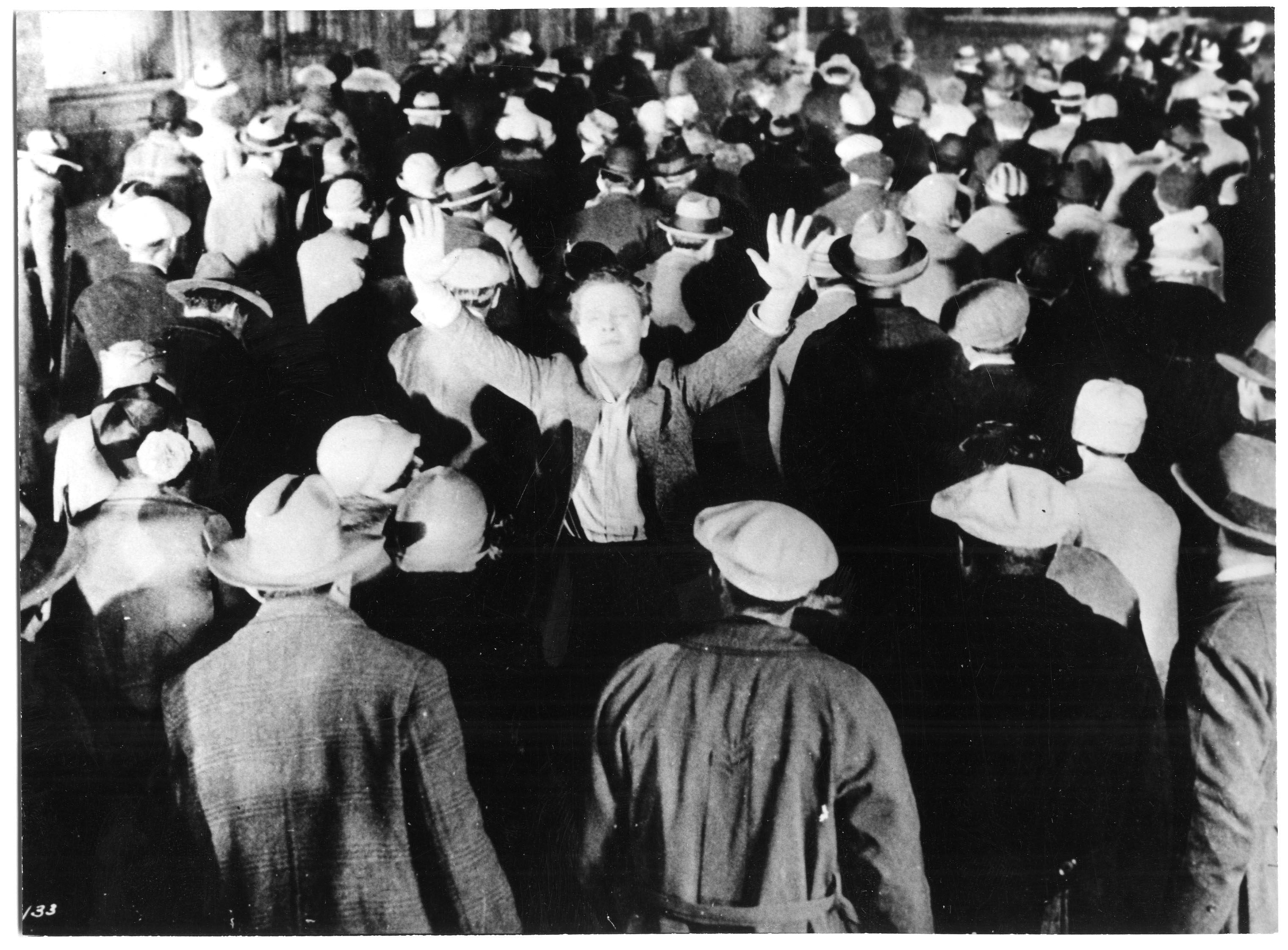
But Regeneration was the main event of the morning, and it did not disappoint. This story of a tenement toughie reformed by a guilt-stricken socialite soars past your cynicism, because it is so exquisitely, tenderly photographed. It’s realism, but editorialised. And those performances! Rockliffe Fellowes has the best name in showbiz, hands down, and is reminiscent of a young Brando here as the angsty hero. Anna Q Nillsson (yes, a “waxwork” from Sunset Boulevard) puts in a heartfelt turn as his goodhearted ladyfriend. And oh, the photography, those truncated tracking shots and oh, the ensemble cast of characterful and possibly threatening faces. Everything Scorsese ever did is here, and it’s compelling, enthralling to watch.
This season the colour to be seen in is a mid-blue, almost teal, with accents of lime green. The autumn collection also features motifs of a certain scruffy character with a square ’tache, and a charming floral detail. Hemlines are low, and hats are definitely “in” … Milan fashion week was so last month sweetie, I am reporting to you direct from the catwalks of Pordenone, instead, where the 33rd Giornate del Cinema Muto has begun, in fine style.
The stars of this year’s Giornate are yet to be decided, but the wise money goes on the Barrymores, an acting dynasty of stage and screen and recipients of their own retrospective at the festival this year. So starstruck are we all by the (virtual) presence of John, Ethel, Lionel et al that for Pordenone’s opening night, that we attempted an almighty feat – travelling through time and space (and the march of feminism) to New York, February 1927. But more of that adventure anon. Here’s how the first day unravelled.
The Feudists (1913) – Sidney Drew, far left
In anticipation of the Gala, the first session of the Giornate was devoted to The Drews, that is mostly Sidney Drew (uncle of John, Ethel and Lionel Barrymore), but often accompanied by his lady wife, in a series of mostly slight domestic comedies (and one roughly sketched drama about an elderly painter, his pretty niece and his young apprentice). Antiquated and inconsequential they might be, but don’t say that like it’s a bad thing. Of the films here directed by Drew himself, some parlayed familiar gags, as in Her Anniversaries (1917), a wordy skit in which a husband fails to remember the “special” days when his wife chooses to celebrate their relationship. But there were some enjoyably bizarre elements. Drew’s flexible features were stretched in A Case of Eugenics (1915) when his babyish husband outdoes the brattish, oversized child his wife is “sitting” for infantile antics.
In the strangest of the lot, Boobley’s Baby (1915), Drew is a harassed commuter, sick of giving up his trolley seat for parents of small children – so he totes around a doll, which unfortunately causes him problems with the ladies. The whole endeavour was just the right side of distasteful – for the most part. Kudos as ever, to expert accompanist and Barrymore/Drew expert Dr Philip Carli for some smart, witty playing for this selection – I particularly enjoyed the rock’n’roll diversion during a badly damaged segment of Boobley’s Baby.
As the night drew in, we snuggled up with a love letter to film archivism, film archivists and Pordenone itself. The Soviet silent animated cartoon Pochta or Post (1929) was shown at the Giornate last year and delightful it was too. This year, a two-part documentary, Searching for “Pochta”, explored the search for its sound 1930 remake, long thought lost. Richly detailed, and not afraid to scurry down rabbit-holes, but accessible and witty, this was a tribute to the stuff that film discoveries are really made of: diligence, chance, persistence and collaboration. You can order those however you think fit.










 Silent London