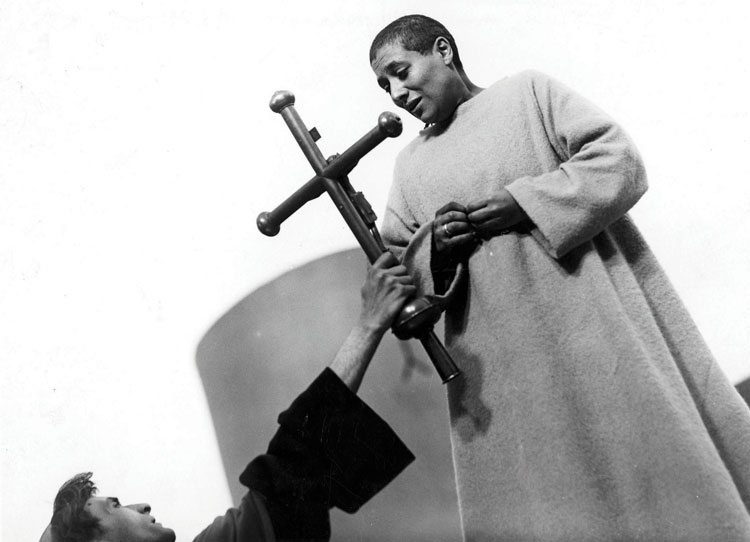
Scalarama is a far-reaching kind of film festival – one that covers the whole country, and virtually any manifestation of cinema you can think of. It’s dedicated to the spirit of the old Scala screenings in King’s Cross, London in the 80s and now in its third year, has a diverse and fascinating programme, fuelled by the passion of movie fans championing their own, often obscure, favourites. I am delighted to report that silent cinema is very much part of the month-long festival, with several screenings of Dreyer’s masterpiece, The Passion of Joan of Arc lined up, from Leicester to Canterbury. And it’s the gorgeous new Eureka print they’re screening too.
The Scalarama organisers asked me to share some thoughts about why I love silents, and why you (yes, you) should go to see The Passion of Joan of Arc, for the first in their series of podcasts supporting the festival. So listen up. I have listed the screenings below – Visit the Scalarama website for more details and links.
There is no beating about the bush here. The 57th London Film Festival’s approach to silent cinema is definitely quality over quantity. Here’s what you can look forward to this year.
The Epic of Everest (1924)
The Epic of Everest (1924)
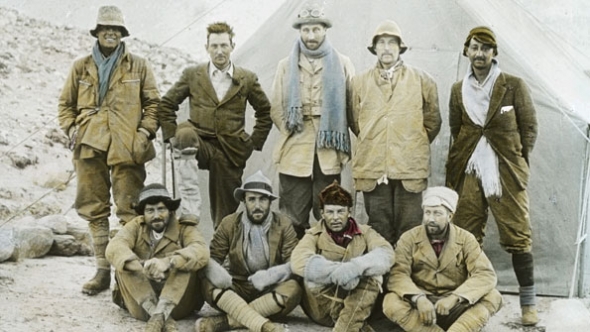
This year’s Archive Gala, also going on nationwide release, is this unforgettable expedition film of Mallory and Irvine’s doomed attempt to climb Mount Everest in 1924. Gorgeous photography, a heart-stopping story and another great, surprising score from Simon Fisher Turner. Read our full review here. The gala screening will feature the score played live, which is sure to be fantastic.
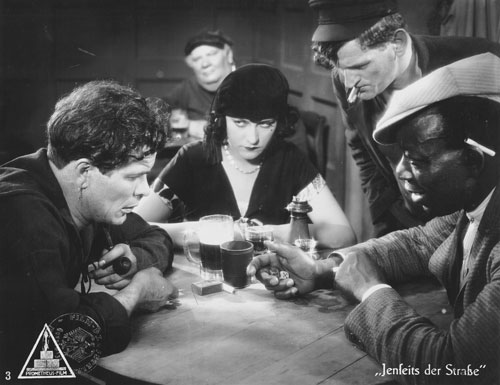
I saw this last year at Pordenone, and I loved it. Harbour Drift/Jenseits des Strasse is a moody, romantic melodrama, directed by Leo Mittler – the kind of film that gives even the grubbiest events a touch of magic. The screening at the London Film Festival will also be accompanied by Stephen Horne, making it a must-see. Here’s what I had to say about it in 2012.
My highlight was a lyrical German film that came between them, called Jenseits der Strasse or Harbor Drift (Leo Mittler, 1929). A beggar nabs a pearl necklace from a puddle, and promises to share the profits on its sale with a new-found drifter pal, all the while a prostitute plans to take it, and sell it herself … Impressionistic, oddly noirish, tragic and ultimately dark-hearted, this is a real find. The film has been championed for a few years now by Stephen Horne, who accompanied it beautifully on piano, flute, accordion and zither. The recent discovery of the film’s previously missing reel makes this gem ripe for restoration, and a wider audience.
No pressure guys. The East End Film Festival‘s “sonic cinema” screenings have won the, ahem, coveted Silent London poll first prize not once, but twice. And this year, the festival is going off-piste with an evening called A City Without a Voice. The free screening will feature a modern silent film from Argentina, a live “gothic pop” score – and an “immersive” contemporary dance performance. If the prospect of all that doesn’t get your senses tingling, then quite frankly you may as well stay at home and watch Millionaire.
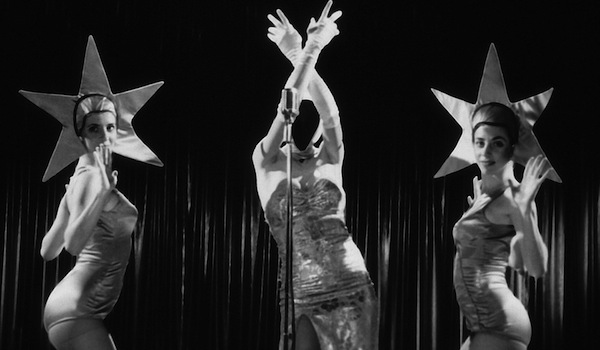
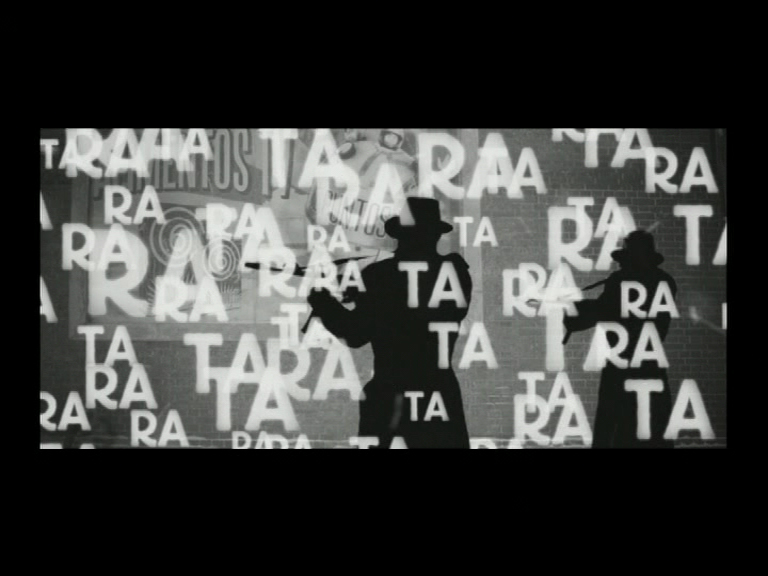
First, the film: La Antena (2007) is a visually delirious modern almost-silent film, a fantasy about a city in reduced to silence after the residents’ voices have been stolen by an evil capitalist villain. The intertitles dance across the screen, becoming almost physical objects, and the film’s imagery is explosively ineventive, combining silhouettes, surrealism and a heavy debt to the cinema of Fritz Lang. You can read more about this fantastic film in a post that the fashion and film historian Amber Jane Butchart wrote for Silent London.
La Antena
As for the music, Esben and the Witch, who will provide the score, are a three-piece from Brighton, named for a Danish fairytale. The NME described them as “gothic but not goth”, and many of the songs on their new album are inspired by literature: from Vladimir Nabokov to Robert Frost. Here’s a taster of their music:
Over to the festival themselves to set the scene for the screening:
La Antena is screening as EEFF 2013′s free outdoor screening, soundtracked by a specially commissioned score by Esben and the Witch. Setting the scene for Esben and the Witch’s atmospheric performance, the London premiere of contemporary dance piece The Intention, performed by East London dance company Neon Dance, will be led by world-renowned choreographer Adrienne Hart. Inspired by ‘The Invention of Morel’, a novel by Adolfo Bioy Casares, ‘The Intention’ explores a world of disjointed presences; where the playback of a recording of events takes on a greater reality than the continued existence of its subjects.
A City Without A Voice is set to be a festival highlight and there are limited seats available, so bring your cushion and grab a front row seat for this unmissable event.
A City Without a Voice takes place at 8.30pm on Saturday 6 July 2013 in Old Spitalfields Market as part of the East End Film Festival. Arrive early to get a good seat and wrap up warm. Read more and book tickets here.
The Fashion in Film Festival is a movable feast, but one we can always rely on for some wonderful silent film screenings. This year’s event has just begun, and the focus of the festival is the French director Marcel L’Herbier, who worked in both the silent and sound eras, creating captivating, elegant and strange films of staggering beauty. This is what the festival has to say about his silent films:
During the silent period, L’Herbier’s ambition for the cinema was to create a Gesamtkunstwerk, a cinéma totalwhich would synthesise all the arts and draw together architects, artists, set designers, couturiers and costume designers. Among the many major cultural figures he collaborated with were the artists Fernand Léger, Sonia and Robert Delaunay, the composers Darius Milhaud and Arthur Honegger, the architect Robert Mallet-Stevens, designers Alberto Cavalcanti and Claude Autant-Lara, and couturiers Paul Poiret, Lucien Lelong (L’Herbier’s cousin) and Louiseboulanger. Paired with his multi-disciplinary collaborative approach, it was L’Herbier’s desire to legitimise and ennoble cinema as the ‘seventh art’ that helped establish him as a seminal figure within Paris’s vibrant cultural milieu of the inter-war years.
Using art, fashion and design as the prisms through which to examine L’Herbier’s diverse body of work, Fashion in Film’s season highlights his lifelong interest in cinematic style and aesthetics. As the costume designer Jacques Manuel once observed, costume for L’Herbier was so often a way of ‘feeding’ the ‘mechanical eye’ with evocative surfaces and textures, a way of testing the formal elements of cinema itself such as movement, rhythm, light and shadow.
To feed your own eyes, and for a direct lesson in the importance of costume design to L’Herbier’s total vision of cinematic photogénie, watch the festival’s slinky trailer here.
A true multi-disciplinarian, L’Herbier arrived at film-making after considering literature and music as possible careers, and more prosaically, having worked in a uniform factory during the first world war. When Feuillade’s leading lady Musidora took L’Herbier to see Cecil B DeMille’s melodrama The Cheat, he realised the potential of cinema, and starting out in the army’s cinematographic unit, began to learn the art of film-making. However unlikely a start this may seem, even his very first film, a propaganda piece called Rose-France, was ambitiously experimental.
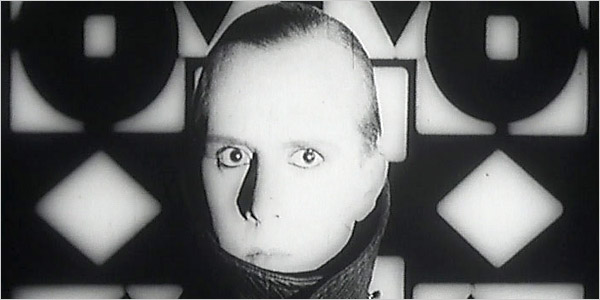
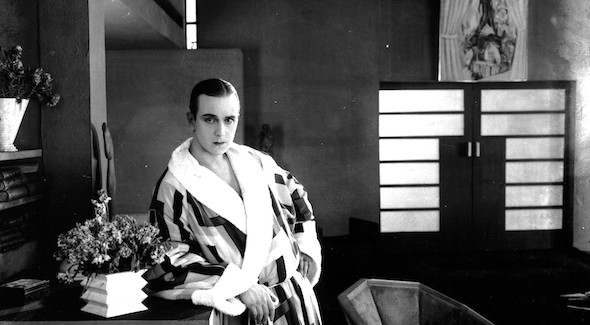
L’Inhumaine
At first, L’Herbier worked for Gaumont, but his artistic dreams soon clashed with the realities of their budgets, and in 1923 he formed his own company, Cinégraphic. You may be familiar with L’Herbier’s silents already, particularly Zola adaptation L’Argent, which is available on DVD from Masters of Cinema. The Fashion in Film Festival is showing L’Argent, as well as sci-fi opera L’Inhumaine (The Inhuman Woman) and doppelganger drama Le Vertige (The Living Image). You can read the full programme of events here. Not showing at the festival, but recently released on Blu-Ray by Flicker Alley in the US, is the Pirandello adaptation Feu Mathias Pascal.
As you know, this year the British Silent Film Festival has taken a year off – but luckily for us, it’s the kind of year off where two all-day events still go ahead. Just to keep things ticking over, as it were. So last weekend there was a symposium on British silent cinema, held at King’s College London and organised by Dr Lawrence Napper. The following day the Cinema Museum hosted an all-dayer of screenings, themed on the tantalising idea of “sensation-seeking”.
I attended both events and while it didn’t feel like the festival was running, it was a real treat to be immersed in British silent film in this way. Let’s hope the festival returns back to full strength next year.
The papers at the symposium were limited to 20 minutes apiece, but covered a wide range of topics, from Edwardian theatre to state censorship to international co-productions to saucy novels. One hardly knows where to begin.
There were two papers with a theatrical bent: Ken Reeves’s dip into musical comedy theatre and its links to silent film concluded with some ideas for “crossover” events that would mix theatre, film and audience participation to spread the love about early British cinema. Audience participation? Reader, I sang. Very badly. Theatre historian David Mayer’s unforgettable presentation played and replayed the same baffling scrap of film as he uncovered the truth behind its creation. The scene of a waterfall bursting its bank and bringing down a bridge (and a couch and four) was, it turned out, not shot on location but on stage at the London Hippodrome in 1902, where a collapsible stage could be dropped and filled with water to create watery scenes. There was more – involving elephants on a slide. Elephants. Read more here.
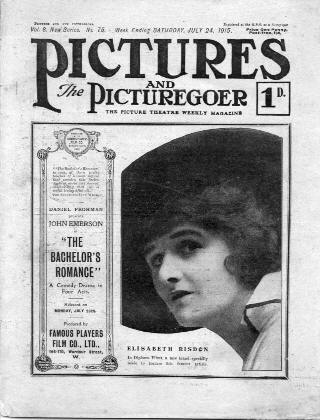
Elisabeth Risdon on the cover of The Picturegoer July 1915
Lucie Dutton, sometimes of this parish, also talked about the stage, presenting a history of film director Maurice Elvey‘s early career – in theatre in London and New York, before moving into the pictures with his star Elisabeth Risdon. She was followed by John Reed from the National Screen and Sound Archive in Wales, who took us through the production, loss, rediscovery and restoration of Elvey’s landmark film, The Life Story of David Lloyd George. Intriguingly, Reed pointed out a few instances in which Elvey could be seen in the film, waving a handkerchief and appearing to direct the action. Could this be because in these scenes the prime minister was played not by Norman Page but by Lloyd George himself? It’s an enticing thought.
Another famous British director was under the spotlight – one even more renowned than Elvey. Charles Barr presented on what we do know, and what we don’t, about the first film that Hitchcock ever shouted action on: Always Tell Your Wife. It’s an adaptation of a stage comedy starring theatre veterans Seymour Hicks and Ellaline Terriss and it seems the director fell out with his inflexible actors and therefore a “fat youth” from the props room was elevated to the job. You may struggle to see bold Hitchcockian strokes in what we have left of the film (which screened at the Cinema Museum on the Saturday), but we do have the director’s handwriting, unmistakably, in an insert shot of a telegram.
Jackeydawra Melford (trom thebioscope.net)
Far less well known than Hitchcock, but fascinating to hear about, was showman-turned-film director Mark Melford. His name, just like most of his films, may be lost to time, but Stephen Morgan attempted to flesh out his story, taking his cue from a Bioscope blogpost of 2007 that posed the pertinent question: “Who needs films to write film history anyway?” We did see a clip from the recently rediscovered romp The Herncrake Witch, directed by and starring Melford (amended, see comments) as well as being based on one of his own comic operas and also featuring his daughter (Jackeydawra, named thus due to her parents’ love of Jackdaws. True story). The story of the Melfords was hugely entertaining, but Morgan concluded by making the hugely important point that the study of lost films and forgotten film-makers is vital to a full understanding of the silent film era as a whole.
And of course, one never knows when a lost film will suddenly become an un-lost film. It happened to The Herncrake Witch and The Life Story of David Lloyd George after all. And it wasn’t so long ago that a treasure trove of Mitchell & Kenyon works was unearthed, giving us an invaluable glimpse of (mostly working-class) Edwardian Britain. In one of the day’s most diverting 20-minute segments, Tony Fletcher played a selection of Mitchell & Kenyon’s fiction films, while explaining a little more about them. The films were comedies, often chases and knockabout stuff, all with a backdrop of industrial northern England – factory gates, brick kilns and terraced streets. I particularly liked the mischievous snow comedy and the animated intertitles in a short called (I think) Driving Lucy.
The Battles of the Coronel and Falkand Islands (1927)
More comedy, but this time of the you-couldn’t-make-it-up school: Alex Rock put recent Leveson revelations in the shade with a paper on the Metropolitan Police’s tangled relationship with the film industry. Its rather heavy-handed Press Bureau, founded in 1919, was popularly known as the Suppress Bureau. You can guess why. Rock’s paper traced the development of an official documentary film, supported by the Met, called Scotland Yard, and the squashing of another, based on the memoirs of a former detective.
The correspondence of public servants baffled, outraged or simply dismissive of the “movies” is unexpectedly entertaining, and never more so than in Jo Pugh’s paper on the official military response to Walter Summers’ The Battles of the Coronel and Falkland Islands. I could barely keep up with the information he was imparting, partly because I was giggling so much. Really. The good news is that we should hear more from Jo’s research and more about the film too as a little bird tells me a full restoration (possibly in time for next year’s Great War centenary) is in process.
This is a guest post for Silent London by Kelly Robinson.
Sumurun screens with a live score by Amira Kheir at BFI Southbank as part of Birds Eye View Film Festival on Thursday 4 April at 6.10pm. Read more here.
Sumurun is the product of an intensely creative time in the German film industry when an extraordinary range of artistic and entrepreneurial talent emerged: creating ambitious films that challenged American productions for the international market.
Paul Davidson, the director of the German production firm Projektions-AG Union(PAGU), was a film producer unafraid of financial risk-taking and he invested large amounts of capital early on in the industry. In 1918 the company was merged with several other firms under the umbrella of Ufa, with Davidson becoming an executive on its board. Much of Ufa’s success was the result of the absorption of PAGU’s talent, which included directors such as Ernst Lubitsch and Paul Wegener and stars such as Pola Negri and Ossi Oswalda. Indeed because of its established reputation it still produced under the PAGU brand and retained a considerable degree of independence.
With financial support from the German bank, Ufa began a policy of big-budget films aimed at the international market. In 1918, Davidson suggested Lubitsch try making one of these Großfilmes, epic productions indebted to the Italian spectacle films, such as Giovanni Pastrone’s Cabiria (1914) – films which in their budgets and enormous sets were an attempt to compete with Hollywood. Lubitsch assembled a regular production team around him for a series of these ambitious films, including his co-writer Hanns Kräly, the set designer Kurt Richter, and cameraman Theodor Sparkuhl. Famous actors such as Pola Negri added star allure to these films and became a big draw for audiences’ world-wide. Sumurun is one of several extraordinary films that resulted from these collaborations during the late 1910s and early 1920s.
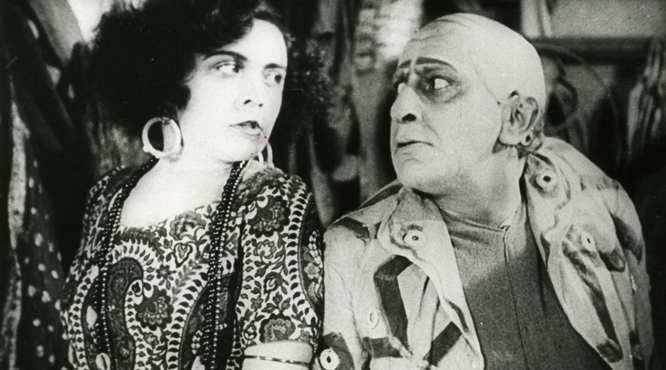
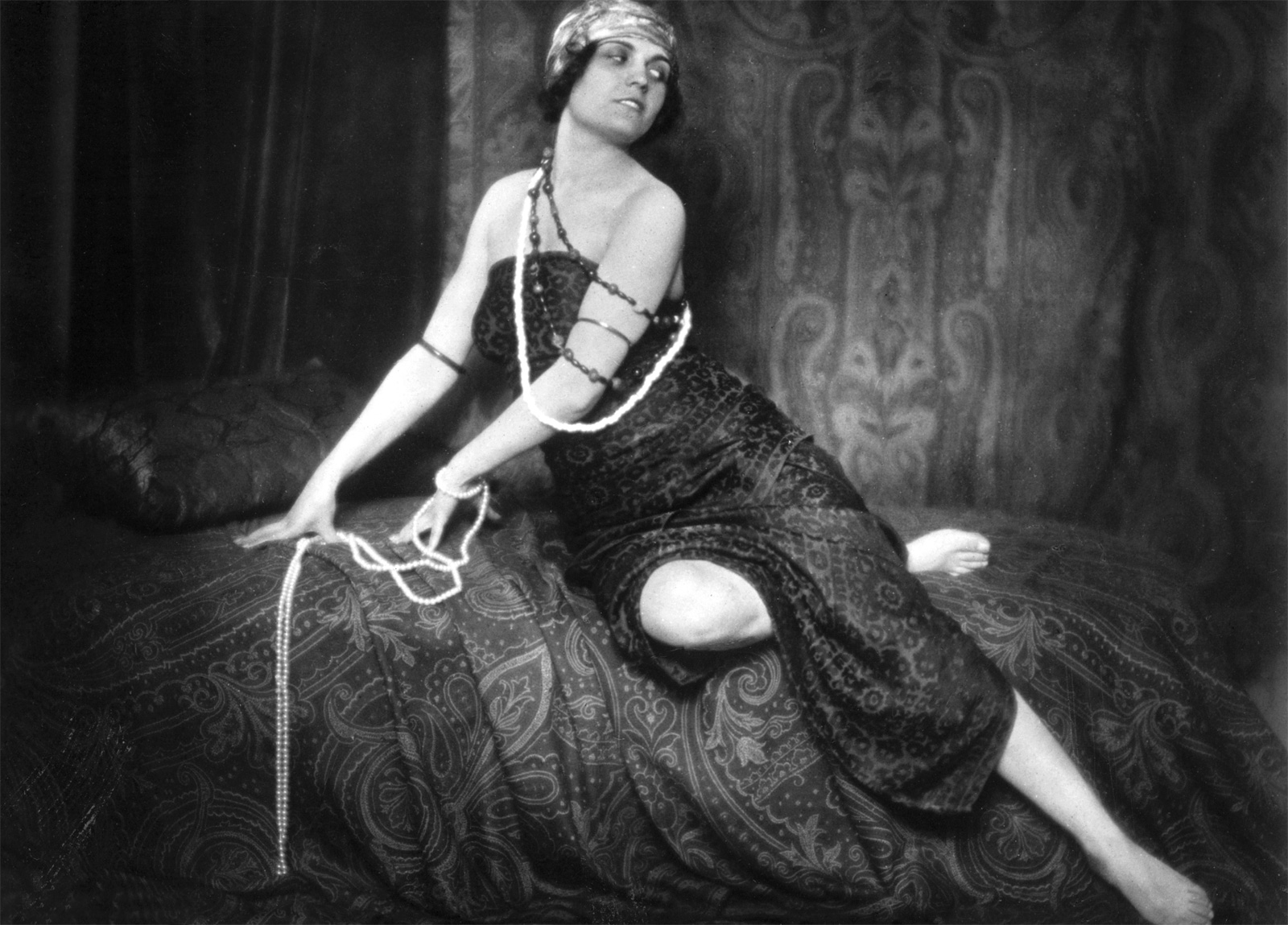
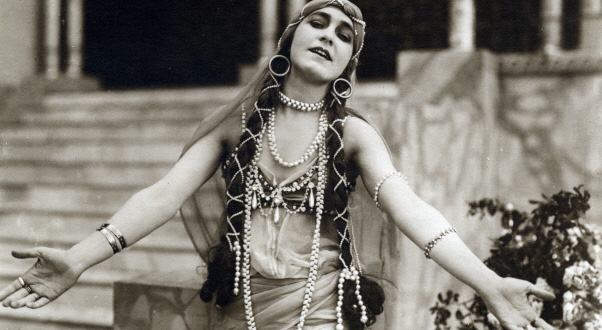
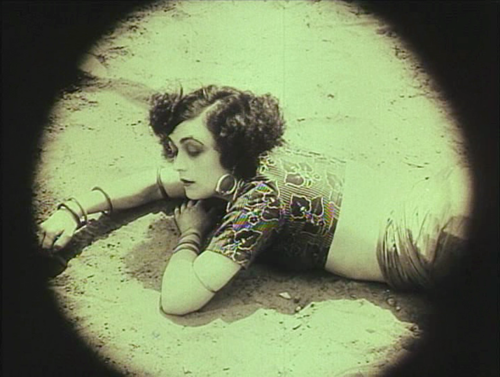
Pola Negri
Pola Negri was born Barbara Appollonia Chalupiec in Yanowa, near Lipno in Poland. She took as her professional name the last name of Ada Negri, an Italian poet she admired and the diminutive form of Apollonia as a first name. She had danced at the Imperial Theatre in St Petersburg and had acted on stage and screen in Poland before being invited by Max Reinhardt to Germany to star in Sumurun (a story derived from The Arabian Nights) after she had appeared in a Polish theatrical version. It was here that Negri met Lubitsch, who was a Reinhardt player and comedy short director at the time, and who was playing the role of the hunchback opposite her in the German theatrical version (a role he would recreate in the film). They became good friends and he made her the star of several of the large-scale costume pictures for Ufa. Lubitsch told her: “We’re going to make a picture of Sumurun. Reinhardt’s letting us have the sets and costumes. We’ll use most of the actors from the stage productions. We’ll hardly even have to rehearse. It’ll cost practically nothing.” (Pola Negri, Memoirs of a Star). Production started in September 1920. It was substantially cut and released by First International in the US in October 1921 with the new title One Arabian Night. Negri remembered its production as: “a very easy and happy chore. Except for a few Lubitsch innovations, it was essentially a photographed stage play.” (Memoirs of a Star)
This kind of dismissive assessment has plagued One Arabian Night, with even relatively recent biographies of Lubitsch granting the film scant attention. However it is an important film, both as an example of Germany’s aesthetic advancements and also in the context of Negri’s and Lubitsch’s career. For instance it was this film that impressed Mary Pickford so much that she brought Lubitsch to the US for Rosita (1923). The film’s critical neglect is most likely a result of viewing the bowdlerised US print, which is missing thirty minutes. Thankfully now we can see the fully restored version.
Sumurun (1920)
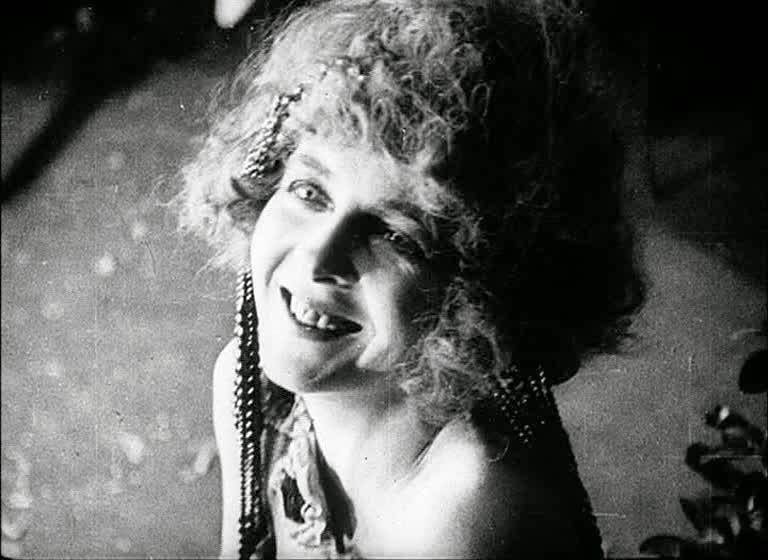
Many historians agree that German films improved when Hollywood films began to be seen in Germany from 1921, and yet, interesting approaches to cinematography preceding the American influence are evident in films such Sumurun. For instance, in the opening of the film where the light streaming through blinds in the caravan causes chiaroscuro patterns. Cameraman Sparkuhl also has a tendency to hold closeups from a high angle, which adds variety to some of the scenes. Indeed, most of the closeups of Pola Negri, particularly the scenes of her dancing in Sumurun, are shot in this manner. This may have been a way of singling Negri out from the rest of the characters; similar to the technique of filming stars that was developing in Hollywood.
German film’s reputation for elaborate set design is evident in Sumurun. There is a rhythm both in the set design and also in the movement of figures within that design. Lotte Eisner has noted how the American musical would pattern itself on the “delicate arabesques” in this film (The Haunted Screen). Contemporary reviews often observed how Lubitsch’s films were on a par with the best American productions. Variety reviewing the film in 1921 commented: “The production is colorful throughout, the atmosphere of the East being perfect in detail.” These films were incredibly successful in Germany and abroad. Their settings, such as Sumurun’s Persia, and subject matter, offered audiences an escape from everyday reality. Negri observed that “one of the reasons [for the success of Sumurun] was certainly because its intensely romantic oriental fatalism was precisely the kind of escapism a war-weary people craved for” (Memoirs of a Star).
Pola Negri in Sumurun
Negri and Lubitsch were among the first international celebrities to be brought to the US – later director-star duos included Mauritz Stiller and Greta Garbo. Negri arrived under contract with Paramount in 1922 to a storm of publicity. The press went wild over an affair with Charles Chaplin and supposed spats between her and Gloria Swanson, whose top star status at Paramount she challenged. Her vampish screen persona was conflated with anecdotes about her private life. The press spread rumours about her many lovers and delighted in reporting quirky acts such as her walking a tiger on a leash down Hollywood Boulevard.
Negri had became known abroad for playing roles where women exploited their sexuality for economic and political gain (see also Carmen and Madame Dubarry). Her swaggering sexuality is parodied sublimely by Marion Davies in The Patsy (1926). Diane Negra has observed the transformation that her persona undertook in the move from Germany to Hollywood. In the Hollywood films her femme fatale image was tempered and the films frequently ended happily. The American films also deemphasised the ethnic and class dimensions found in earlier films. Her US films were not as successful as the European ones and Negra argues that this was the result of her ethnic sexuality. Her Italian surname, Polish ethnicity and connections to German film industry meant she could not (or would not) be fully assimilated. In public and private she appeared to resist being Americanised. “As the unassimilatable woman, both in ethnic and sexual terms, she stood for a type that was in fact far more transgressive than the thoroughly American, upper-middle-class flapper who, for all her supposed flouting of social conventions, was nearly always safely married off in the end.” (‘Immigrant Stardom in Imperial America: Pola Negri and the Problem of Typology’, Diane Negra).
Birds Eye View is one of Silent London’s favourite film festivals – a celebration of female film-makers with an exceptionally strong and musically adventurous silent cinema strand. Last year, even though the festival was on haitus, the Sound & Silents programme brought us a selection of newly scored Mary Pickford films. This year, in keeping with the overall theme of the festival, the screenings have an Arabian flavour.
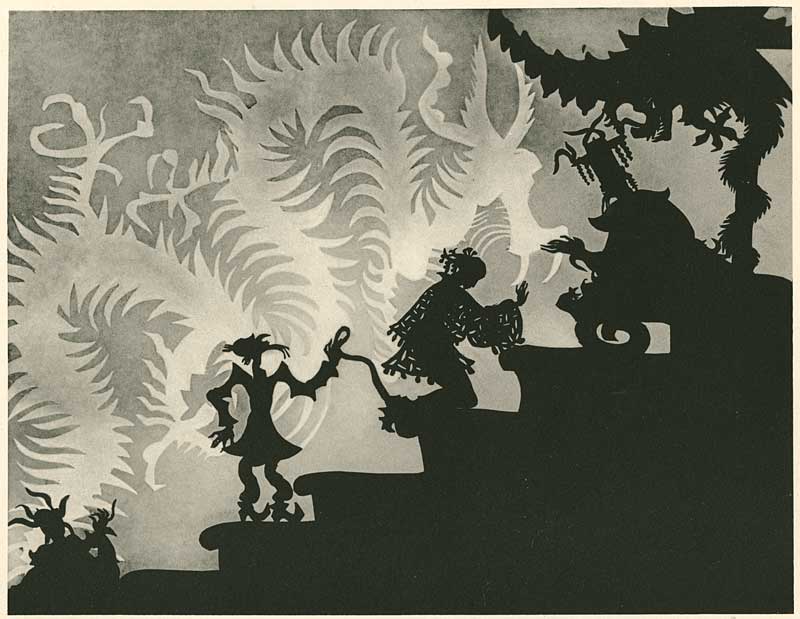
The two films in the Sound & Silents segment are, to be frank, German – but the first, Lotte Reiniger’s trailblazing cutwork animation The Adventures of Prince Achmed (1926) is based on a story from 1,001 Arabian Nights, as also, perhaps more loosely, is the second, Ernst Lubitsch’s boisterous harem farce Sumurun (1920). Achmed, widely acknowledged as the first animated feature film, and still as elegantly beautiful today as in the 1920s, probably needs no introduction from me.
Sumurun (1920)
The latter film is a slightly guilty pleasure of mine – a rather well-made romp, enlivened by the sinuous presence of the young Pola Negri, and the more demure charms of Swedish ballerina Jenny Hasselqvist. Lubitsch himself appears as a leery clown with hunchback, but his real star turn is behind the camera, crafting a fast-paced and vivacious comedy out of unpromising material. Sumurun had been a stage hit for Max Reinhardt’s company in Berlin, and Negri had starred in both that production as well as one back in her hometown of Warsaw – perhaps it’s therefore no surprise that this film is so slick, with such larger-than-life performances, including Paul Wegener as a bully-boy sheik. I will concede, of course, that it is rarely, if ever, politically correct.
Sound & Silents is as much admired for its musical commissions as its programming, and it’s intriguing that these German Arabian pastiches will be accompanied by scored from musicians whose roots lie in both Western Europe and the Middle East – British-Lebanese Bushra El-Turk and Sudanese-Italian Amira Kheir.
Multi-award-winning contemporary classical composer Bushra El-Turk creates a new work for a chamber ensemblecombining classical Western and traditional Middle Eastern instrumentation, accompanying The Adventures of Prince Achmed, the world’s first feature-length animation. Currently on attachment to the London Symphony Orchestra’s Panufnik Programme, British-Lebanese El-Turk’s acclaimed work has also been performed by the BBC Symphony Orchestra and London Sinfonietta.
Singer, musician and songwriter Amira Kheir blends contemporary jazz with East African music for a multi-instrumental 5-piece band, scoring landmark fantasy-drama Sumurun (One Arabian Night). Kheir has recently won acclaim for her ‘beautiful and fearless’ (Songlines) first album and her BBC Radio 3 and London Jazz Festival debuts.
If my email inbox is anything to go by, several of you have been wondering when we would hear details of the 16th British Silent Film Festival. After last year’s trip to Cambridge, many of you will have been anticipating the festival’s return to London, for one thing…
Well. There’s bad news – but happily there’s far more good news.
The BSFF is taking a break this year – but there will still be a BSFF, of sorts. And yes, some of the events will be in London, but festivalgoers will also be packing their buckets and spades for a trip to The Suffolk coast – and the historic Aldeburgh Cinema.
The centrepiece of the events, according to my insider sources, will be the screening of Hobson’s Choice (Percy Nash, 1920), starring Arthur Pitt, Joan Ritz and Joe Nightingale – a very, very rarely seen film and a magnificent adaptation of the play by Harold Brighouse. You’ll also have a chance to see the full surviving fragment of Graham Cutts’s Cocaine (1922) and the only surviving reel of Monkey’s Paw(Manning Haynes, 1923). Speaking of Haynes – you’ll be able to feast on his delightful WW Jacobs comedies down in Suffolk – a treat for any British silent film fanatic. If you linger by the seaside, you’ll also catch the Dodge Brothers accompanying the Louise Brooks film Beggars of Life (1928), which is well worth sticking around for.
There will be no British Silent Film Festival this year while the team regroup – however, we are organising three fantastic one off events , with three enthusiastic new hosts:
19th April One day British Silent Symposium courtesy of Lawrence Napper at King’s College, University of London –incorporating the Rachael Low lecture. A ‘Call for Papers’ will be coming soon.
20th April – All day event at the Cinema Museum – a programme of sensational London related film – The Yellow Claw, full surviving fragments of Cocaine, Monkey’s Paw, and rare shorts from other collections. Also the 21st century premiere of the 1920Hobson’s Choice a genuinely good silent adaptation of the Harold Brighouse classic made famous by David Lean.
4th May – join us by the sea as the BSFF are guests of the glorious Aldeburgh Cinema for an all-dayer, with a coastal theme, including the ‘east coast’ films of Manning Haynes and Lydia Hayward based on the W W Jacobs stories, a programme of Lifeboat films and others. The fabulous Dodge Brothers will be playing ‘Beggars of Life’on the 5th for those who want to make a weekend of it!
A slide advertising Stage Struck (1925) From Starts-Thursday.com
Scotland’s only silent film festival seems to go from strength to strength. The newly released lineup for the third Hippodrome Festival of Silent Cinema looks more varied and ambitious than previous years – and well worth a journey north of the border for us southern softies. It’s bigger than before, too – running from Wednesday to Sunday.
Friday night’s gala screening is Allan Dwan’s part-Technicolor comedy Stage Struck(1925), starring Gloria Swanson – with Neil Brand on the piano. Other notable highlights include the Dodge Brothers’ spirited accompaniment to the rarely seen Soviet film The Ghost That Never Returns; Japanese favourite Crossways with a score by electronic rockers Minima; and Lubitsch’s irrepressible comedy The Oyster Princess, with music from Günter Buchwald.
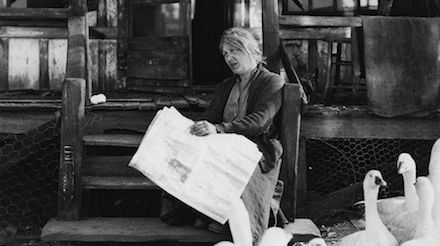
Elsewhere in the week, you’ll find Charlie Chaplin, Buster Keaton, Laurel & Hardy, Baby Peggy, the rediscovered Hollywood film The Goose Woman, early Scottish cinema, the Film Explainer, Berlin: Symphony of a Great City and an often-overlooked gem called The Artist …
Watch a video of last year’s highlights here:
And read the full programme for the Falkirk festival here:
GALA EVENTS
Crossways (Jujiro, 1928)
Stage Struck – Neil Brand accompanies the glamorous Friday Night Gala starring Gloria Swanson, familiar to audiences today as bitter and forgotten silent movie queen Norma Desmond in Sunset Blvd. Includes ‘champagne’ reception.
The Ghost That Never Returns – In their Scottish debut, The Dodge Brothers make joyous music inspired by Woody Guthrie for this little-known Soviet gem.
Jujiro (Crossways) – Leading UK contemporary electronic ensemble Minima perform their new score for one of the first Japanese films ever shown in the West.
The Oyster Princess – Virtuoso Günter A. Buchwald makes his Hippodrome debutwitha glorious comedy directed by Ernst Lubitsch (The Shop Around the Corner).
The Goose Woman (1925)
NEW COMMISSIONS
The Goose Woman – After 2012 Festival success with The Black Pirate, Jane Gardner returns to perform her new score for this film based on a still unsolved real-life murder, with Hazel Morrison and Su-a Lee on percussion, cello, musical saw.
The Film Explainer Returns –Andy Cannon, Frank McLaughlin and Stewart Hardy bring archive films to life with their blend of storytelling and trad folk music.
New Found Sound – The third year ofhugely talented Falkirk Council secondary school pupils composing and performing their own scores under the mentorship of Tom Butler of the Royal Conservatoire of Scotland.
Scottish Screen Archive Shorts – Continuing the relationship with the national film archive, Mike Nolan and Forrester Pyke accompany shorts before selected features.
The Artist (2011)
BIG NOISES in the SILENT ERA
Baby Peggy, the Elephant in the Room – UK premiere of this fascinating new documentary telling the moving and inspiring story of the oldest surviving silent film star whose acting career started at 18 months and stopped abruptly at age 4.
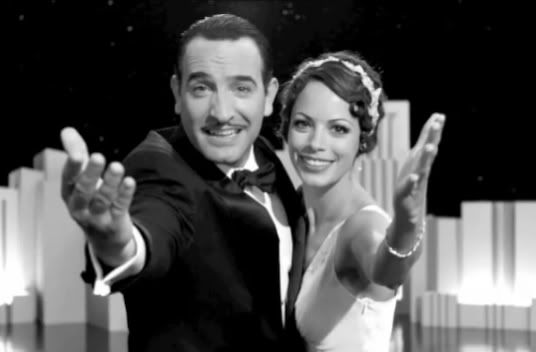
The Artist – Oscar-winning performances in the modern silent movie sensation.
‘Bright, Steady and Free from Flickr’: Early Cinema in Bo’ness and Beyond – Prof John Caughie of the University of Glasgow uncovers new research into this fast-changing chapter in the history of Scotland’s early cinema
A Chance to Dance – Learn the Charleston and other early jazz steps from the Roaring Twenties in this public dance workshop for everyone aged 16 and over.
Buster Keaton’s One Week (1920)
SILENT OVERTURES FOR FAMILIES, CHILDREN & YOUNG PEOPLE
Chaplin & Keaton Double Bill – Bring a clean jam jar to get 2-for1 tickets to see Neil Brand accompanying Chapin’s The Immigrant and Keaton’s One Week.
Another Fine Mess with Laurel & Hardy – The boys’ triple bill of Putting Pants on Philip, Their Purple Moment and Double Whoopeewith Günter A. Buchwald.
Make Movie Music! – The Glasgow Improvisers Orchestra return with a fun-filled session for primary schools using the classic Berlin, Symphony of a City.
#HippFest @ Fusion – Using his incredible vocal talent,human beatboxer Jason Singh creates soundtracks with Fusion, a popular night for Bo’ness young people.
Watch a trailer for the 2013 festival here:
The Hippodrome Festival of Silent Cinema runs from 13-17 March. Tickets go on sale at 10am today. Call 01324 506850, or visit the Steeple Box Office, High Street, Falkirk FK1 1NW.To read more and to book online, visit www.hippfest.co.uk. If you book before 25 February – you’ll get a 10% discount on your tickets!
The Hackney Attic at London’s newest Picturehouse cinema is becoming to make name for itself as a silent film venue, with recent screenings ranging from Piccadilly to Aelita: Queen of Mars. Heartening news, then, that this trend continues with another Filmphonics presentation of a silent classic this month: Buster Keaton’s groundbreaking comedy The General, on 20 January 2013.
Surely The General needs no introduction from me: the funniest war film you’ll ever see, an astonishing technical achievement and did I mention it was hilarious too? If you need a taster though, you could do worse than this sampler from film critic AO Scott:
There’s more good news: this screening of The General will be accompanied live by the marvellous Costas Fotopoulos on piano.
Costas has now been working for many years as an improvising silent film pianist at BFI Southbank and he has also accompanied silent films at the Barbican Centre, the Prince Charles Cinema, Riverside Studios, Chelsea Arts Club among other venues, as well as scoring many silents in the London Film Festival.
The even better news is that you could get your hands on a free pair of tickets to this screening. Free. To win a pair of tickets to see The General at Hackney Attic, just send the answer to this question to silentlondontickets@gmail.com by noon on Wednesday 16 January. The winner will be chosen at random from the correct entries.
A folk romance that stumbles into melodrama, an adaptation of a blockbusting novel that is now all-but forgotten, The Manxman may seem to be far more of its time than ours. But the London film festival’s archive gala screening of this neglected Hitchcock film was having none of that. The red carpet was rolled out in Leicester Square and the crowds in the Empire cinema foyer were stocking up on nachos and popcorn before taking their seat. OK, so some of assembled throng were clutching tickets for Dredd or Madagascar 3, but Screen One was devoted to a lush, heartbreaking night of silent cinema.
And the venue was oddly appropriate. Back in its music-hall days, the Empire was the first London venue to run a paid-for programme of films. It’s a long journey from the Lumiéres’ actualities to the gorgeousness of The Manxman – arguably they have more in common with the 3D thrills on offer in the neighbouring screens – but it’s a happy connection to make.
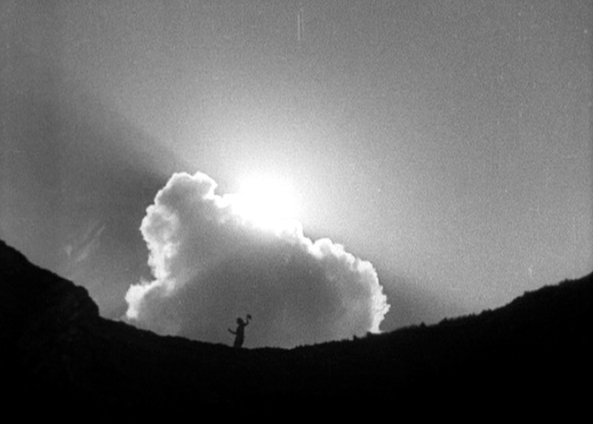
The Manxman was Hitchcock’s final “pure” silent – he was to shoot his next film Blackmail in both silent and sound versions – and the romance of the film’s story is augmented by the thought that the director was leaving his beloved silent cinema days behind him. Perhaps that is why the film is so unashamedly picturesque. The Cornish coast that doubles for the story’s Manx setting is imposing, but gorgeous. Hungarian star Anny Ondra is filmed as a tiny silhouette in front of sun-punctured cloud, skipping down vertiginous cliffs or strolling with her lover in dappled woods – and the film begins and ends with a view of fishing boats in the harbour. These images, like the film itself, combine prettiness with an air of intangible, elemental danger, and it’s this that makes The Manxman such a gripping watch.
Because this movie can be tough too: when a crisis arrives, a disconcerting cut from a body falling into water to a pen plunging into an inkwell is as violent as Hitchcock at his familiarly cold-hearted best. On this screen, and with the benefit of the BFI’s new gleaming restoration, it looked spectacular.
The Manxman (1929)
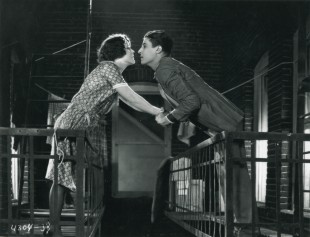
Ondra plays Kate, the daughter of the local pub landlord (a brilliantly grim-faced turn by Randle Ayrton). Best pals daft-but-dishy Pete, a fisherman (Carl Brisson), and Philip, an ambitious lawyer (Malcolm Keen), are each in love with Kate, but the latter is playing his cards close to his chest. In an excruciatingly twisted balcony scene, Pete coaxes Kate into an engagement, a promise to wait for him while he goes overseas to make his fortune. At first Kate doesn’t take him seriously, and it’s not clear which of the men – the one proposing or the faithful chum who is (literally) supporting him – is causing her to simper and pout. However it was extracted, it’s a rash promise to make, and as we’ll see, it will have terrible implications. Needless to say, while the cat is away, Kate strays, but what happens next is horrific, and not so easy to predict.
We have heard a few silent film scores recently (in this Hitchcock season no less) that have seemed to smooth out, or trample over the nuances of each scene. Not so here. Stephen Horne‘s rich score for The Manxman is alert to each turn of conversation, each double-meaning, furtive glance or blush. It’s a piece that is always a pleasure to listen to, but unafraid to sacrifice its melody to the drama when needed. This is crucial for The Manxman, where the plot hinges on whispered revelations, changes of heart and emotionally gruesome details – Kate’s face when her fiancé appoints his friend best man at their wedding, or she cuts her hand on their cake. The tempo slackens forebodingly when mid-speech, Phil is distracted by the sight of Pete and Kate together and the music follows the lead of Hitchcock’s stormy lighting effects, colouring each scene with shades of what is yet to happen. While the strings and piano offer folk melodies, there’s often a rumbling bass drum warning of impending disaster and even, at one crucial point, a very assertive oboe. The flute solo when Pete visits Phil towards the end of the film is particularly poignant; the ensemble together replicating the texture of nagging voices in the final scene especially cruel.
No one will argue that The Manxman is Hitchcock’s finest hour, the acting from the two male leads is often very weak, and the storyline offers only emotional trauma rather than his familiar bloody shocks. Despite those reservations, it is a sharply beautiful film and Anny Ondra’s sleepy-eyed romantic fool gives us a great Hitchcock Blonde before icy Grace Kelly was even born. The joy for us now is that Horne’s score gives The Manxman its best possible chance to shine, not just following but enhancing our pleasure in watching Hitchcock toy with this doomed love triangle.
Stephen Horne’s score for The Manxman was performed by Stephen Horne (piano/accordion/flute), Jennifer Bennett (fiddle/viola), Joby Burgess (percussion), Janey Miller (oboe/oboe d’Amore) and Ruth Wall (lever harp/wire harp).
The UK Jewish film festival features screenings across the country from 1-18 November, but we’re especially lucky in London as we will be able to see Edward Sloman’s 1925 silent classic His People, with a new improvised score. The film is set in Manhattan and film historian Tom Gunning praised it, saying that: “few silent films give so thorough a picture of Jewish home life in the American ghetto”.
This is an exciting chance to see the work of a director whose work Kevin Bownlow described as: “remarkable … with a very American smoothness of narrative”. Unfortunately, very many of Sloman’s pictures are now lost, but His People was his biggest commercial success, taking millions at the box office on its original release. It also stars Rudolph Schildkraut, one of the director’s favourite actors: “Whatever you planned with Schildkraut always came off – sometimes even better than you’d dreamed it. Rudolph Schildkraut was one of the great actors of his era,” he told Brownlow in The Parade’s Gone By.
A rare opportunity to see one of the most evocative films of the 1920s with a new, live score. The sights and smells of New York’s bustling immigrant Jewish Lower East Side have seldom been captured better than in this sparkling tale of a generational clash of cultures. The two sons of a Jewish migrant family opt for different paths in life and love, but as the story progresses, assumptions about good and bad are soon firmly challenged.
A classic morality tale with a bold, contemporary cinematic feel, accompanied by an improvised live soundtrack from Sophie Solomon, (violinist and artistic director of the Jewish Music Institute), Quentin Collins (trumpet), Ian Watson (accordion) and Grant Windsor (piano).
To win a pair of tickets to see His People at the Barbican, just send the answer to this question to silentlondontickets@gmail.com by noon on Friday 9 November. The winner will be chosen at random from the correct entries.
His People director Edward Sloman was born in Britain – but in which city?
You may feel weary at the prospect of another love-letter to the silent era. You may feel fatigued by the thought of another Snow White movie. Wait, though – nothing should deter you from seeking out this intriguing, gorgeous film. Director Pablo Berger describes his Blancanieves as a “homage to European silent cinema”, but happily, it has the confidence to wear its influences lightly and transform them into something new, magical and utterly distinctive.
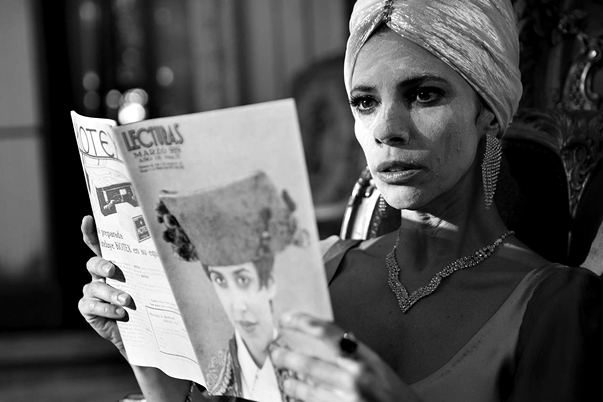
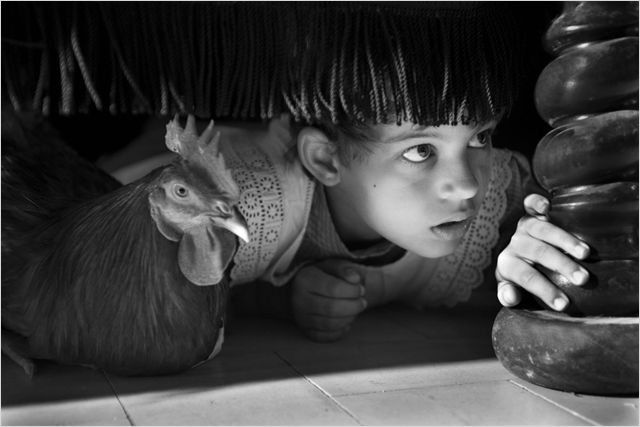
Blancanieves is a sharp, heady cocktail of fairytales, Spanish iconography and silent cinema: a black-and-white film with gorgeous musical accompaniment that tells the story of Carmen, whose matador father remarries after her flamenco dancer mother dies in childbirth. But if you’re expecting a straight 1920s-set adaptation of Snow White, you will be wrongfooted right to the bittersweet end. When we finally encounter the dwarves, we find they’re bullfighters, they’re not all sweet, and there aren’t quite seven of them. A celebrity magazine takes the place of a magic mirror, the wicked stepmother indulges in S&M with her chauffeur and the young heroine’s best friend is a neckerchief-wearing rooster called Pépé.
Maribel Verdú in Blancanieves (2012)
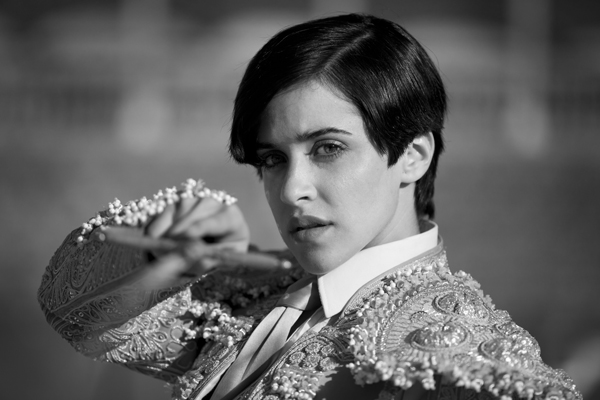
Carmen is no fairytale princess either, but in both her younger (Sofía Oria) and older (Macarena Garciá) incarnations, she is a serious, lonely young woman on a tragic path – both actresses share intense, dark eyes, which Berger makes the utmost of. Maribel Verdú turns in a wickedly funny pantomime performance as her scheming stepmother – although it often feels as if she is in a different, more histrionic, film to everyone else – and Daniel Giménez Cacho is heartbreaking as the destroyed father. Plaudits must also go to the rooster, or rather his handler. There may never have been a cuter cockerel in the cinema.
So why is Blancanieves a silent film? Perhaps it’s because in this version the girl’s parents are both wordless performers, in old-fashioned artforms. Her grandmother teaches her to dance, and her first encounter with bullfighting is via the flickering images of a praxinoscope. Berger also says he was inspired by a screening of Greed with Carl Davis’s orchestral score, and by silent film-makers including Sjöstrom, Herbier, Murnau and our own Anthony Asquith. Whatever the cause, it’s an artistic choice that pays dividends.
Sofía Oria in Blancanieves (2012)
This is no pastiche, although I will admit I could have lived without the Instagram-style rough edge to the Academy frame, a bafflingly naff decision considering the film’s visual achivements: sumptuous photography, and impressionistic editing. There’s so much here that recalls the silent era – a clatter of flashcuts, the rustic faces in the crowd, superimpositions, irises and a restrained number of intertitles – but it feels modern too, with lovely soft light washing over the interiors and nimble, intimate handheld camerawork. There’s nothing in Blancanieves’ exquisite cinematography that could not have been achieved in the 1920s, but its strength is that it never feels anachronistic or nostalgic. And those sumptuous images tell the story too, as when Carmen’s first-communion dress is plunged into a tub of black dye, or she sees Pépé’s face hovering on her dinner plate.
With such riches at his disposal, I almost wish Berger had made a more serious film than this twisted fairytale, which occasionally veers into camp. Blancanieves is a strange piece of work, but a precious one, however, so even if it lacks ambition, its integrity and beauty are to be treasured.
Blancanieves screens as part of the London film festival at the ICA on 18 October. You can book tickets here.
There are plenty of changes afoot at the BFI London film festival, with a new artistic director, more venues being used around the capital and a rejigged set of thematic categories across the programme. The Treasures strand has been beefed up, and that can only mean good news for silent film enthusiasts. So, without further preamble, here’s what you can look forward to this year:
The Manxman
This is the big one, the archive gala presentation. Hitchcock’s tragic coastal romance is one of his most beautiful films, and an accomplished, fascinating silent. Anny Ondra, Carl Brisson and Malcolm Keen take their places at the corners of an Isle of Man love triangle, and Hitchcock milks their doom-laden situation for every drop of suspense. This will of course be a presentation of the BFI’s new restoration of the film, and as he did last year with The First Born, Stephen Horne will be writing and performing a brand new score.
Rather dishearteningly described as ‘Tim Burton meets The Artist’, Pablo Berger’s modern silent plays three times during the festival, in the Cult strand. It’s a Gothic adaptation of Snow White, set in the world of bullfighting in 1920s Spain and it looks very intriguing. You can read more here and we’ll have a better idea what to expect when the reviews come in from its screenings at the San Sebastian and Toronto festivals later this month.
This is a guest post for Silent London by Jasper Sharp – scroll down for a chance to win tickets to these events.
Taking place at the Cinema Museum between 14-16 September, the UK’s premiere celebration of cutting-edge Japanese film, Zipangu Fest, returns for its third year, with a number of choice items of interest to silent film fans.
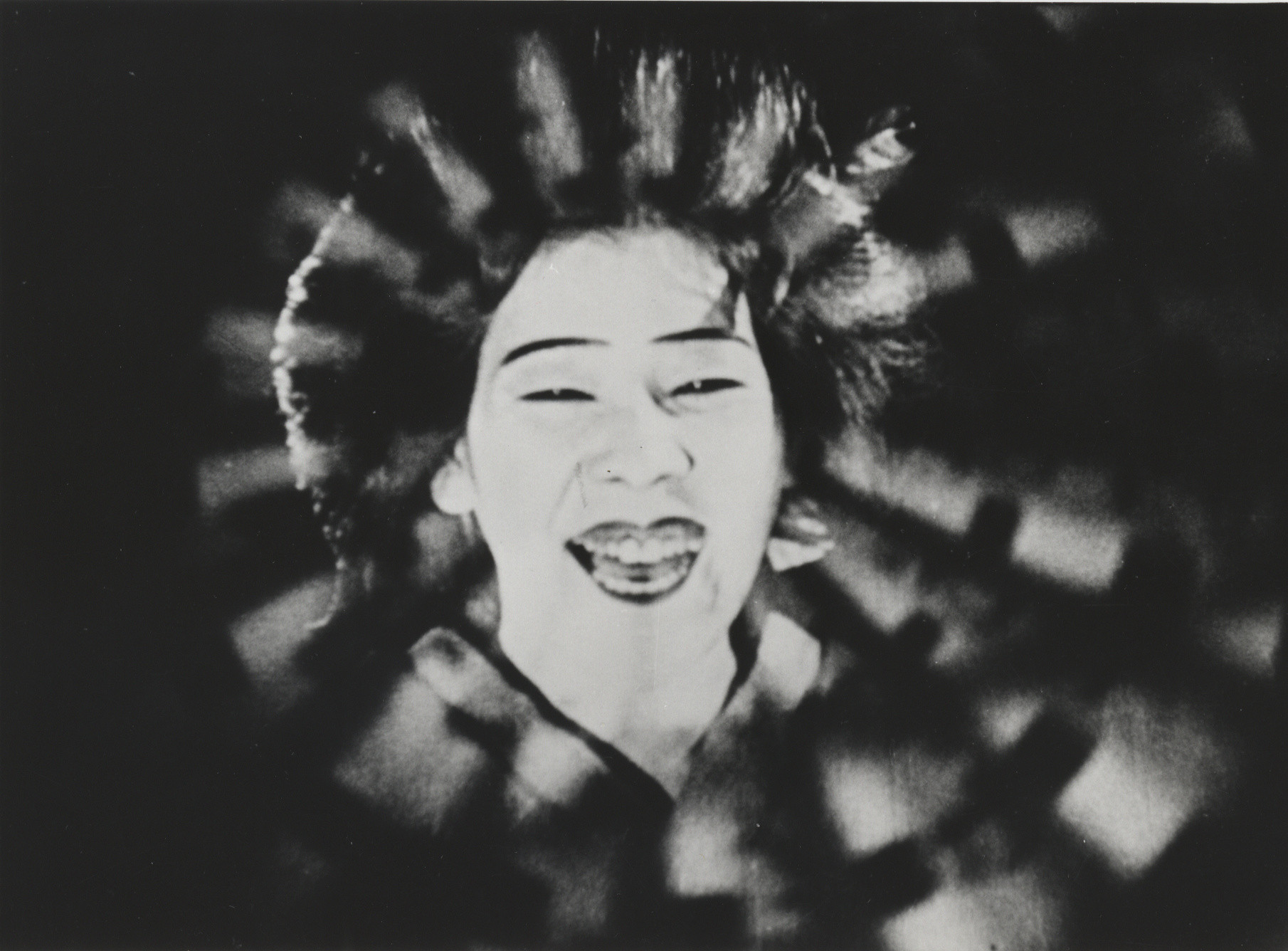
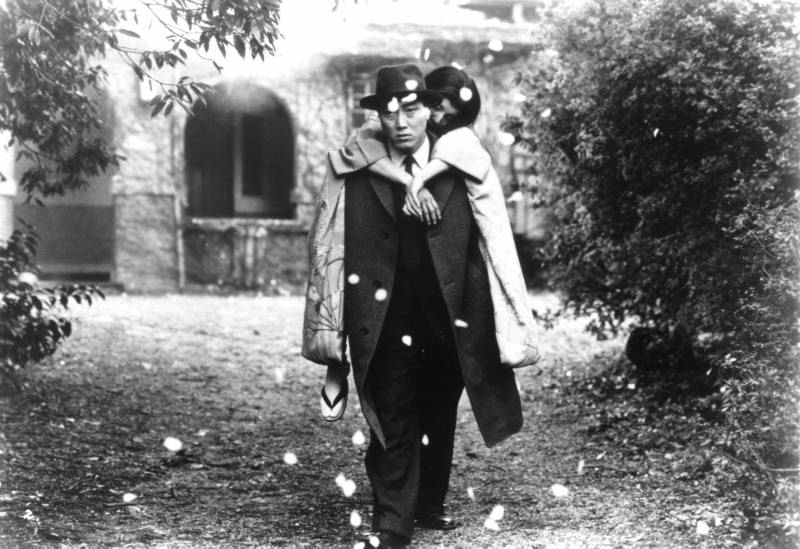
The centrepiece is the screening on Saturday evening of Kinugasa Teinosuke’s classic of the avant-garde, Crossways (Jujiro, 1928) from 35mm, with a new score performed live by Minima. One of the first Japanese films ever shown in the West, Crossways was Kinugasa’s follow up to his better-known Page of Madness (Kurutta ippeiji, 1926). Set in Tokyo’s Yoshiwara pleasure district, Crossways was described by its director as a “chambara [samurai action film] without swordfights” and was heavily influenced by German Expressionism.
This screening will be introduced by a visual presentation on the history of the film by Zipangu Fest director and author of the recent Historical Dictionary of Japan Cinema, Jasper Sharp. The evening kicks off at 7.30pm, and tickets are available from the Zipangu Fest website.
To Sleep So as to Dream (Yume miru you ni nemuritai)
Crossways will be preceded by another very rare screening for those with an interest in Japan’s early cinema, To Sleep So as to Dream (Yume miru you ni nemuritai), the 1986 debut from Kaizô Hayashi (Circus Boys, Zipang, and the ‘Yokohama Mike’ trilogy).
Two private detectives hunt for an actress trapped within a frame of an ancient ninja film in this magical double-handed homage to the movie worlds of the 1910s and 1950s. Predating Michel Hazanavicius’ recent faux-silent work The Artist by 25 years, To Sleep So as to Dream is chockfull of references to Japan’s rich cinematic heritage, featuring cameos from a host of veteran talent including the benshi (silent film narrators) Shunsui Matsui and Midori Sawato, and the baroque sets of Takeo Kimura, the Nikkatsu art designer fondly remembered for his flamboyant work with Seijun Suzuki in the 1960s. Playing for the most part without dialogue, it toys with the conventions of both the silent film and hardboiled detective genres, leading the viewer through a maze of colourful locales such as a carnival fairground and a deserted film set.
The essence of celluloid – Spirit Made Flesh
Both of these titles will be screened from film. Indeed, cinema purists might want to also note Zipangu Fest’s Sunday afternoon session, beginning at 4.30pm, Spirit Made Flesh: Works from 3 Experimental Filmmakers, featuring work by Shinkan Tamaki, Momoko Seto and Takashi Makino, all of which interrogate and explore the very essence of celluloid and analogue technologies. The screenings will be followed by a panel discussion “Is There Still a Need for Film in a Digitising World?” in what promises to be a lively and fascinating event.
Competition
Zipangu Fest is generously offering a pair of tickets to all three of these events. All you have to do is sign up to our mailing list, and tell us which of the films in our 2012 lineup interests you. On submission you will be signed up to our responsibly-managed mailing list, and three names will be selected at random for a prize. The first gets a pair of tickets to the Crossways event, the second to To Sleep so as To Dream, and the third to Spirit Made Flesh. Click here to enter.
Zipangu Fest was established in 2010 to shatter existing preconceptions about what ‘Japanese cinema’ is, and to celebrate one of the most vibrant and dynamic moving image cultures anywhere in the world. The third Zipangu Fest, hosted by the Cinema Museum in Kennington from 14-16 September, looks set to be our most ambitious and exciting yet.
The Royal Borough of Kensington and Chelsea is contributing to Olympic mania by staging what it describes as “London’s most sophisticated street party”. It’s a festival really, featuring games, dance, science, debates, music, writers’ commissions and visual art installations, with a little nod to the Great Exhibition that took over Hyde Park in 1851. The Exhibition Road Show will take place on the street they’re calling “London‟s cultural and intellectual heartland”, just a short hop from the Olympic beach volleyball venue in Earl’s Court.
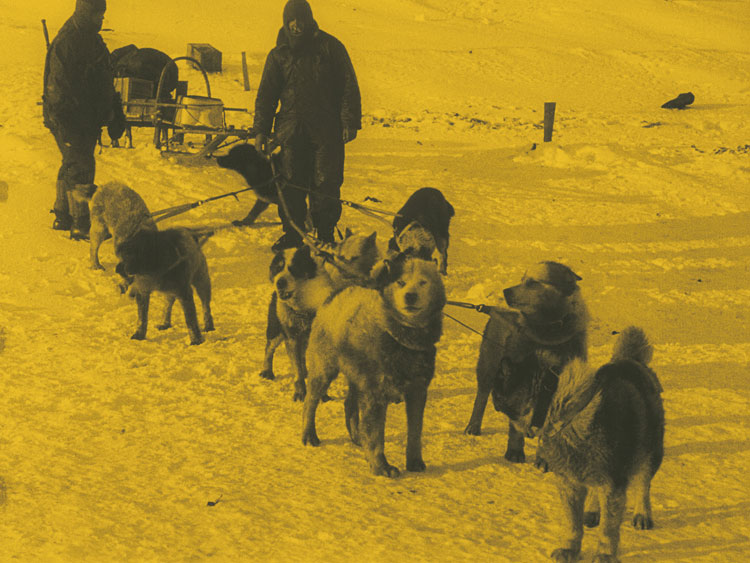
The Show runs from 28 July to 5 August, and on its opening night you can pop along to a free outdoor screening of Herbert Ponting’s elegant, unflinching Scott of the Antarctic documentary The Great White Silence – with its acclaimed live score by Simon Fisher Turner and his musicians.
Fisher Turner’s score for The Great White Silence premiered at the London Film Festival in 2010, and was described by The Guardian as “”skillfully judged, and the blend of real sounds – such as the gramophones that would have played on the ship, the Terra Nova, as well as a recording of the ship’s bell – and sparse musical scoring seemed to respect the idea of silence while making sound”.
The outdoor silent film screenings at the East End film festival are always a highlight of the year. Held in the centre of Spitalfields market, the screenings are accompanied by live music from Minima – guaranteed to send a shiver down the spine. But this year Minima, and the festival, have come up with something that promises to be extra-special.
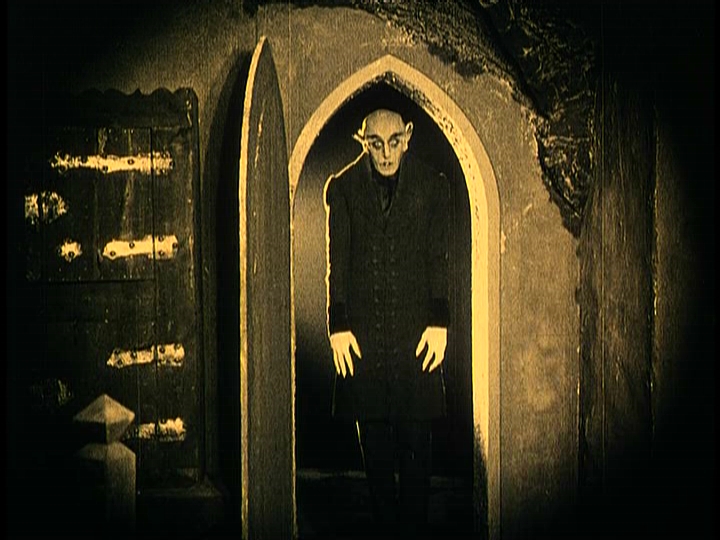
This summer’s screening is of Nosferatu, the landmark vampire horror by FW Murnau, which is 90 years old this year. It’s a movie Minima have accompanied many times before, but not like this:
East End Film Festival presents the World Premiere of A Symphony of Horror, a unique collaboration between soundscapers Minima, Paul Ayres’ Queldryk Choral Ensemble and Hackney-based spatial artist Lucy Jones to create a re-imagined film score and performance on the 90th anniversary of the classic 1922 film.
Enter the fully immersive eerie and unsettling world of Nosferatu where the very walls of Spitalfields Market will be alive with creeping shadows and silhouettes, and reverberating with the soaring tones of the Queldryk Choral Ensemble, featuring 60 choristers, accompanied by the festival’s favourite soundtrackers, Minima.
Silent film screenings with live music have always spearheaded the immersive, live cinema trend, but this event goes a step further, combining an atmospheric location with projections and a spooky soundtrack turned up to eleven.
Admission is free, and the film won’t start until the sun goes down, but you’ll want turn up early to get a good seat and bring your own cushions/blankets/cagoules. For more information, visit the East End film festival website.
For more on Nosferatu, check out Sight & Sound contributing editor Mark Sinker discussing the film on the first Silent London podcast.
Miles Mander and Madeleine Carroll in The First Born (1928)
I’m very pleased to say that more details of the programme for next month’s British Silent Film Festival have just been released. The festival takes place in Cambridge this year, from 19-22 April. Delegate passes for the weekend are now available to buy here, and the full schedule is available to browse here. Screenings will include Graham Cutts’s Cocaine, to accompany the ‘What the Silent Censor Saw’ programme, The First Born, with Stephen Horne’s ensemble score, Norwegian drama Fante-Anne (Gipsy Anne) with a new score by Halldor Krogh, Soviet documentary Turksib with accompaniment from Bronnt Industries, folk films from the ‘Here’s a Health to the Barley Mow’ collection and new restorations from the Imperial War Museum. There will be some British silent cinema highlights from 15-year history of the festival, a Grand Guignol strand of macabre movies and Ian Christie will deliver the Rachael Low lecture.
All this plus the Dodge Brothers will be scoring The Ghost That Never Returns live, there’ll be an outdoor screening on the Sunday night, golfing tales from PG Wodehouse, some classic Cambridge comedies and a couple of WW Jacobs adaptations in the form of The Boatswain’s Mate and A Will and a Way. The full announcement is pasted below.
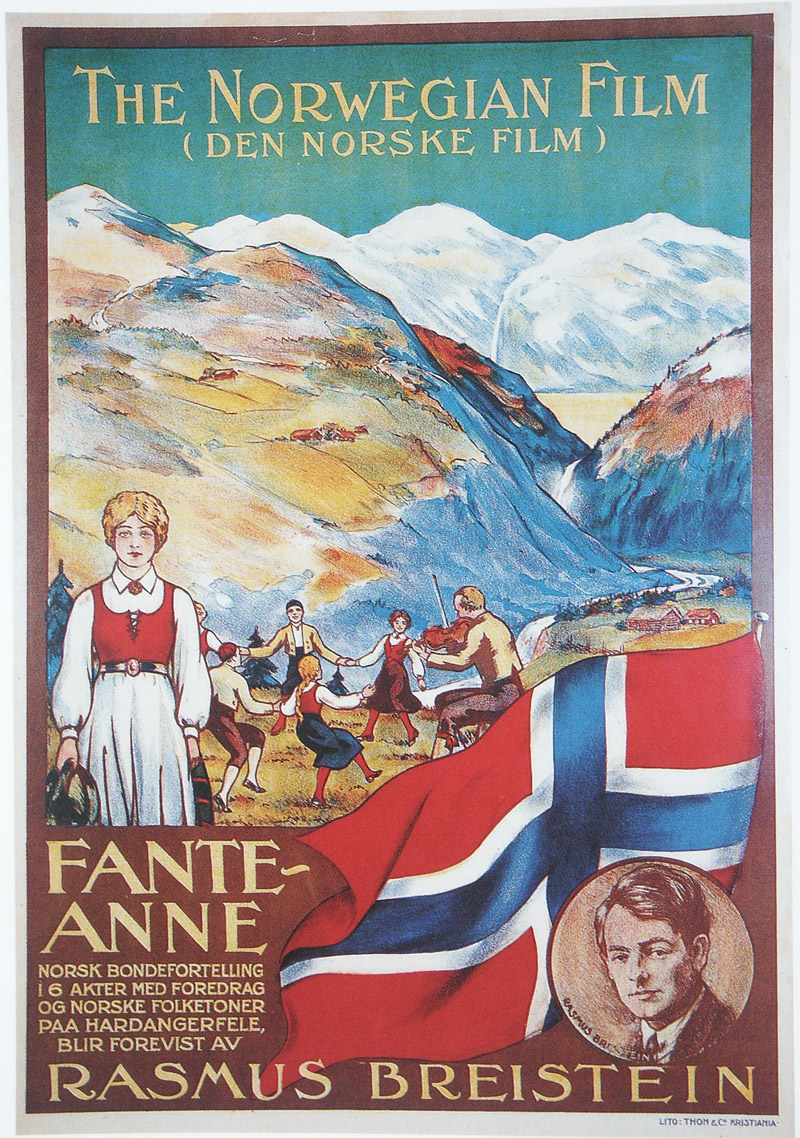
Fante-Anne (1920)
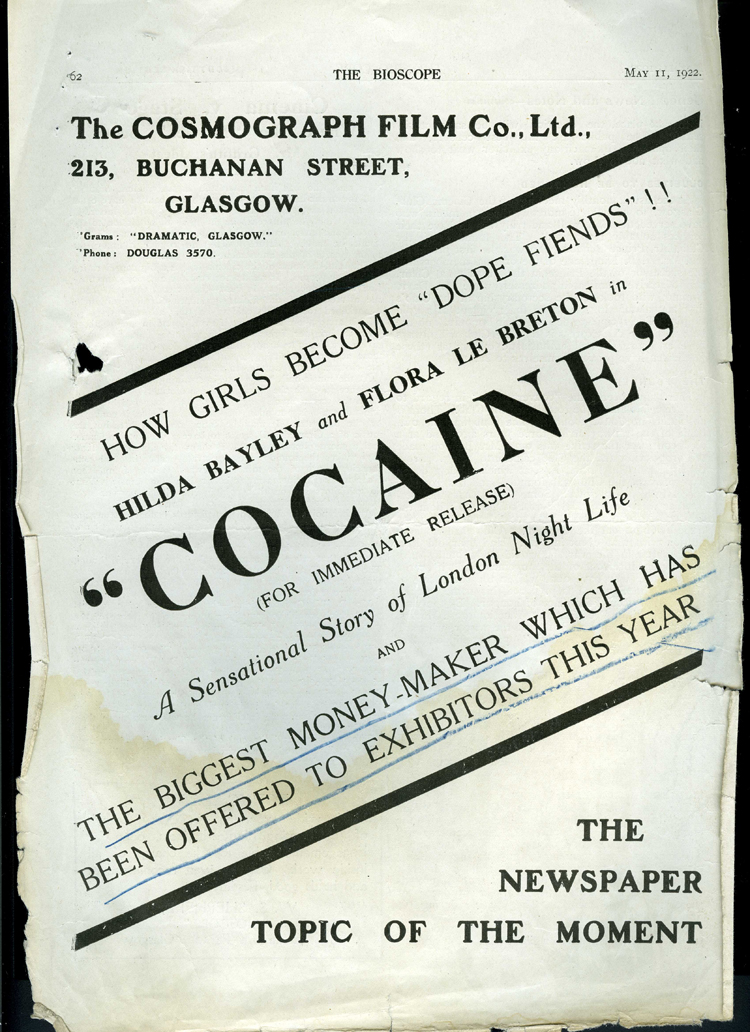
The British Silent Film Festival will be celebrating its 15th Anniversary in Cambridge at the Arts Picture House. The four-day programme will be packed with rarely-seen films from the BFI and other international archives featuring a wide range of fascinating subjects such as: P.G. Wodehouse’s golfing tales including The Long Holeand The Clicking of Cuthbert; rarities based on the charming coastal stories of W.W. Jacobs including The Boatswain’s Mate and A Will and a Way; a celebration of thecentenary of the British Board of Film Classification with a look at ‘What the Silent Censor Saw’ with the rarely screened and risqué film Cocaine. We’ll be tracing the origins of Cambridge’s brand of ‘university humour’ before the Footlights with a selection of burlesque films from the 1920s and featuring A Couple of Down and Outs, the ‘silent Warhorse’ made in 1923 which tells the tale of a WWI soldier who goes on the run with his warhorse to save it from the ‘knacker’s yard’. We are also delighted to be screening the 1920 classic Fante-Anne (Gipsy Anne), directed bythe greatNorwegian director Rasmus Breistein; accompanied by a new musical score by composer and music producer Halldor Krogh.
Trade ad for the scandalous Cocaine (Graham Cutts, 1922)
We’ll also be featuring some 15th anniversary highlights including the legendary Grand Guignol programme of macabre stories with a twist in the tale and we’ll be including a selection of the best of British silent feature films screened over the past fourteen years. The Imperial War Museum will be presenting their latest silent restorations from their fabulous collection and we are very pleased to announce that Ian Christie will deliver the Annual Rachael Low Lecture.
This year’s ‘hot tickets’ will be the wildly popular Dodge Brothers performing their distinctive brand of Americana to The Ghost That Never Returns at the West Road Concert Hall; Here’s a Health to the Barley Mow with live folk accompaniment to silent films of English folk traditions and the Bronnt Industries playing to the stunning Soviet film Turksib. Regular Festival collaborator Stephen Horne will be performing his fabulous new ensemble music score to The First Born, a dizzying tale of sex, death and British politics.
Screenings will take place at the Arts Picturehouse, Emmanuel College and the West Road Concert Hall. The Festival will draw to a close with an outdoor highlights screening on Magdalene Street in the evening of Sunday 22 April.
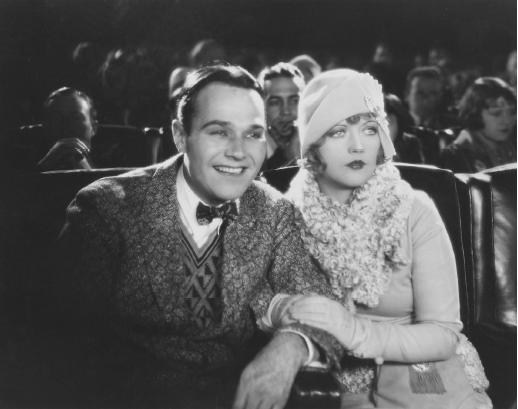
William Haines and Marion Davies in Show People (1928)
The Hippodrome in Bo’ness is Scotland’s oldest purpose-built picture palace – and it’s a real beauty. This year, the cinema is celebrating its 100th birthday in grand style, with the return of the Hippodrome Festival of Silent Cinema.
The centenary event builds on the success of last year’s festival, and tips its boater to a certain modern silent hit too. The opening night gala will be a screening of Show People, starring Marion Davies as a Hollywood wannabe whose dream comes true – shades of Peppy Miller, of course. It’s a real treat of a film, and it’s packed with cameos from silent Hollywood stars too: you’ll be able to spot Charlie Chaplin, Douglas Fairbanks, John Gilbert, William S Hart and Mae Murray, among many others. William Haines is Davies’s co-star and King Vidor directs. Neil Brand will be playing the piano. If you’re attending the gala, don’t forget the dress code: the theme is Hollywood film star, the more glamorous the better.
Other events at the festival include:
The fantastic new restoration of British drama The First Born, starring and directed by Miles Mander, with a brand new score by Stephen Horne, performed by Horne and his band.
A Jeely Jar Special family screening of Harold Lloyd’s Safety Last! Bring along a clean jam jar (and matching lid) for a 2-for-1 ticket deal on the Saturday morning. Piano accompaniment by Neil Brand.
Two comedy shows: Another Fine Mess with Laurel and Hardy and The Keystone Connection, curated by David Wyatt, with Stephen Horne on the piano. You knew, of course, that Keystone Studios was founded in 1912, the same year that the Hippodrome was built.
The Lost Art of the Film Explainer will revive the live film narrator tradition with renowned storyteller Andy Cannon and cellist Wendy Weatherby.
Ozu’s poignant comedy I Was Born, But … with musical accompaniment by Forrester Pyke.
Flashback thriller A Cottage on Dartmoor, directed by Anthony Asquith.
Music and stunt workshops.
The closing night gala will be the two-strip Technicolor restoration of The Black Pirate, featuring a swashbuckling lead performance by Douglas Fairbanks, with musical accompaniment by pianist Jane Gardner and percussionist Hazel Morrison.
Tickets are available from the Steeple Box Office, High Street, Falkirk FK1 1NW, the Hippodrome Box Office, by phone on 01324 506850, and online at www.falkirkcommunitytrust.org/silentcinemafest, where you can also read the full schedule for the festival.
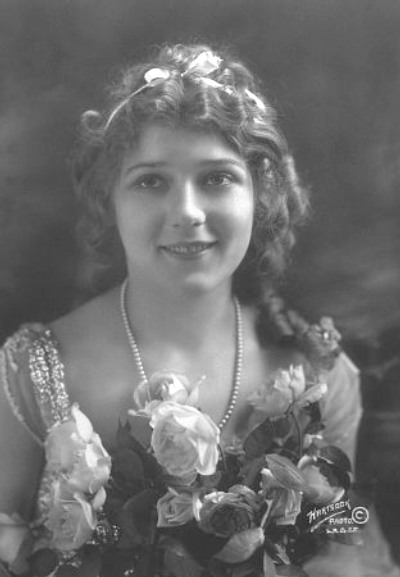
Mary Pickford is one of the most fascinating figures in Hollywood history. She was “America’s sweetheart” with long blonde curls and a fairytale marriage to handsome Douglas Fairbanks. But she was also the co-founder of United Artists and producer, star and director in all but name on some of her most successful pictures. More than just a pretty face indeed. Pickford knew exactly how the movies worked, and having grown up in terrible poverty as a child in Toronto, she knew what life was all about too, which you can see clearly in her finest screen performances.
Therefore, it’s a pleasure to learn that this year’s Birds Eye View Sound and Silents commissions will celebrate Mary Pickford with a triple-bill of her films at the Purcell Room in the Southbank Centre. The New York Hat (1912), The Female of the Species (1912) and Amarilly of Clothes-Line Alley (1918) will be screened, accompanied by new scores by three very different musical talents:
Bouncing off Pickford’s on-screen radiance are three contemporary female artists. Anna Meredith is an in-demand composer/performer of acoustic and electronia, Welsh-born Roshi absorbs Iranian influences in her experimental folk. And multi-instrumentalist Tanya Auclair merges British, Rwandan and Canadian roots.
The New York Hat and The Female of the Species are both short films directed by DW Griffith, featuring Pickford in wildly different roles; the first of them was written by a young Anita Loos. Another legendary Hollywood screenwriter, Frances Marion, wrote the scenario for Amarilly, which is closer to feature-length and features Pickford as a young woman from a poor family who meets an upper-class sculptor but falls foul of his snobbish and cruel aunt.
The Mary Pickford Revived event is part of the Women of the World Festival and takes place at 8pm on 9 March 2012 at the Purcell Room in the Southbank Centre. Tickets cost £15 and are available here.
Also as part of the Sound and Silents programme, the magnificently gothic and strangely comic Sparrows (1926), one of Pickford’s greatest films, will be shown at Hackney Picturehouse on 11 March, with a live score by Aristazabal Hawkes from the Guillemots. You may remember that the score was commissioned by BEV last year and was due to be performed at the BFI Southbank, but the performance was cancelled. Sounds like a must-see to me. You can buy tickets here.
To find out more about the Birds Eye View Film Festival, which returns next year, visit the website.





 Silent London