It’s our birthday! Silent London is five years old today. Definitely school age and time to grow up, right? Thanks to all of you who have followed the blog, commented, contributed, pushed a like or retweet button or generally been fabulous over the years!
I wanted to find a suitably epic way to celebrate the fact that I haven’t give up or been shunted off the internet by blogger-hating meanies but until yesterday I was drawing a blank.
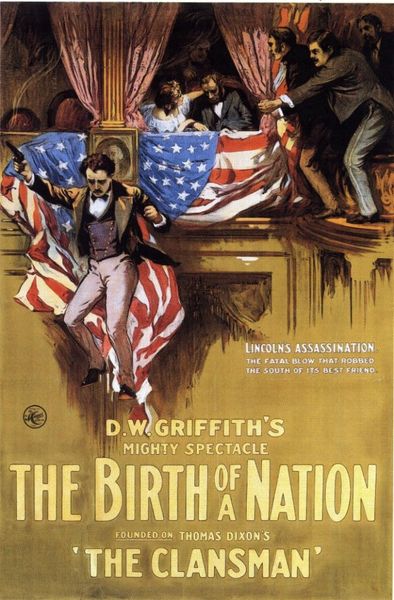
The Birth of a Nation (1915)
Then, the postman delivered a copy of the BFI’s latest Blu-ray to my door. It’s a biggie. It’s The Birth of a Nation. Love it, hate it, puzzle over it, misunderstand it, do what you will, you can’t ignore it. And yet sometimes it seems to be a film more talked about than, y’know, actually watched. So let’s watch it together, tonight, a hundred years after it was first seen, on the meaningless anniversary of a silent movie blog.
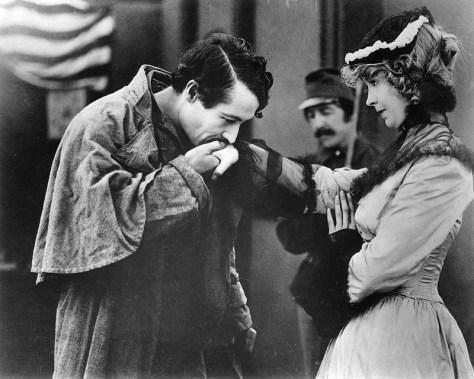
Janet Gaynor and Charles Farrell in Seventh Heaven (1927)
Silents-wise, this screening is surely the highlight of the BFI Love season: Frank Borzage’s gorgeously romantic Seventh Heaven (1927), with a brand new score by KT Tunstall, Mara Carlyle and Max de Wardener.
Seventh Heaven is a classic from the golden years of Hollywood silent cinema, with unforgettable performances by Janet Gaynor and Charles Farrell as star-crossed lovers in a gritty, but somehow still beautiful Paris. Back in 1927 Mordaunt Hall was moved to laughter and tears by this film, saying: “It is obvious that this subject was admirably suited to the screen, but it should also be said that Frank Borzage in directing this production has given to it all that he could put through the medium of the camera.”
It’s true. There is more emotion in 10 minutes of this weepie than most entire films, so this live music event should be unforgettably immersive. Here’s what the BFI has to say about the event:
Sonic Cinema has teamed up with the formidable talents of British musical powerhouses KT Tunstall, Mara Carlyle and composer Max de Wardener to present a brand new BFI-commissioned score to Borzage’s classic. Perhaps the most sublimely lyrical of all the silent-era romances, this tale of transformational love sees Charles Farrell’s sewage worker and Janet Gaynor’s street waif rise above poverty and war to be together. Martin Scorsese’s observation that Borzage’s films unfold in ‘lover’s time’ was never more apt, and the tender emotions Borzage captures build to an unforgettable, transcendental climax.
Seventh Heaven screens on 10 December 2015 in NFT1 at the BFI Southbank at 7.30pm. You can buy tickets here.
After a week of hard puzzling, it’s only fair to put you out of your suspense. Here are the answers to our silent movie emoji quiz. But first, a reminder of the puzzles …
The Silent London Calendar is no more, sadly, but in its place is Silent Film Calendar – a bigger and better version, with listings for events all around the UK, and overseas festivals as well. It’s nothing to do with me I have to admit, but I am very happy to be able to tell you all about it.
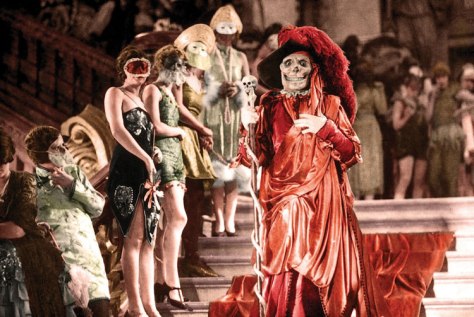
From now on this will be the place for you to keep up to date with what is happening near you – and you can’t miss it cos I’ve added a link to the site at the top of Silent London. The entries for each event are very informative and give a link to the correct place to buy tickets. Plus, you can search by month and region, eg if you look for what is happening in Wales this month, you’ll find a very enticing screening of The Phantom of the Opera at Caerphilly Castle. That’s tomorrow, so hurry.
If you know about a silent film screening that the Calendar hasn’t listed yet, you can get in touch with them on silentfilmcalendar@gmail.com
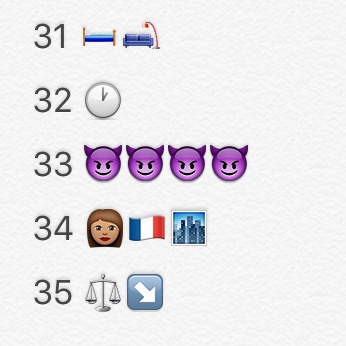
Don’t cry because it’s over, smile because it happened. Welcome to the seventh and FINAL part of our silent-movie emoji quiz, the most popular silent-cinema picture puzzle in my postcode.
What do you reckon to our final five? Easy? Even the last one?
Well, if you think you have worked out all 35 titles, send them in to silentlondontickets@gmail.com, and you could be crowned the winner of this hotly contested competition. And who knows if there might not be a prize in it for you too?
Make more noise! More than a silent film? More noise than an Edwardian lady? No, more noise than the patriarchy.
Make More Noise! is the title of boisterous new compilation from the BFI, an anthology of films related to the British campaign for women’s suffrage. It contains newsreels of protests and personal appearances by the leaders of the movement, as well as short fiction and actuality films that reveal the changing role of women in British society. In the second category, you’ll spot Tilly films, and footage of women working in munitions factories and field hospitals. It’s a fascinating mix, beautifully programmed by Bryony Dixon and Margaret Deriaz and superbly scored by Lillian Henley.
This anthology pretty much had me at hello – the combination of early cinema and feminism is right up my street. But I’d like to think that Make More Noise! holds an appeal for people who aren’t pre-sold on the content that way. If you enjoyed Sarah Gavron’s very moving Suffragette, this programme gives you a more complete picture of the world of the characters in that movie – these are the films they would have seen at the cinema, the ideas they would have discussed at the dinner table, and just possibly, a glimpse of their future.
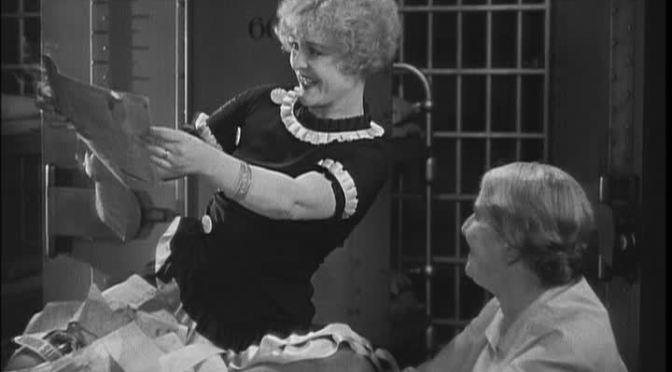
Mabel Normand in Won in a Cupboard (1914) National Film Preservation Foundation
The emoji quiz is nearly over, but don’t be sad. Get your thinking cap on instead, and riddle five more emoji-puzzles to be in with a chance of being the winner!
I’ll post five more puzzles tomorrow and then, if you have cracked all 35 or almost all of them, send me the titles to silentlondontickets@gmail.com. You might become the official silent film emoji champion, which is surely a title to be coveted.
Your morning commute will fly by if you spend it puzzling out these five silent film titles expressed using emojis. Won’t it? Welcome to part five of the quiz.
If you have all of them right so far, you’ll have 20 answers and when you’ve dealt with these, you will have 25. Wait until you have cracked all 35 puzzles and then send me the movie titles, in order, to silentlondontickets@gmail.com to win internet fame and adulation! Or something.
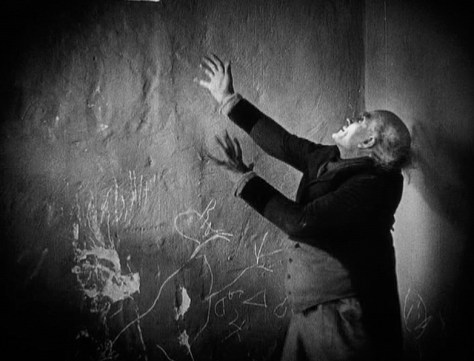
Remind me which one that is? Oh come on. Nosferatu is a classic – FW Murnau’s free-floating Dracula adaptation is one of scariest films of all time, and one of the most beautiful too.
Is that the one with hunchbacked shadow lurching up the stairs? Bingo.
Surely it’s not still hanging around?Nosferatu is back baby, and now it’s on Blu-ray too, courtesy of a new release from the BFI.
Oh, Nosferatu on Blu-ray? I got that already. Really?
Well, no. I saw that Masters of Cinema brought it out two years ago but I hadn’t got around to buying it yet. Ah I thought so. Well you could buy this version instead.
Nosferatu (1922)
I might. Both releases are Blu-ray updates of each label’s previous DVD release of the film.
I’m all about Blu-ray. What’s the difference between the two packages though? The extras are different, and the score. MoC used the original theatrical score, and the BFI has used a more modern, but also orchestral, score by James Bernard. And yes, both are available in stereo and 5.1.
Part four! That means we are at the halfway point. Still confident? Then proceed …
I’ve come up with 35 silent movie titles expressed as emojis and I am posting five of them every day for a week. If you have worked them out, or you think you have, send your answers to silentlondontickets@gmail.com and you might just find your efforts are rewarded!
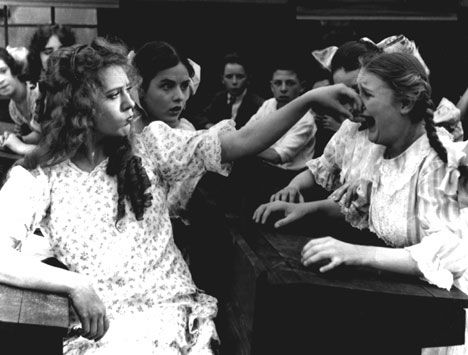
Mary Pickford in Rebecca of Sunnybrook Farm (1917)
Welcome to part three of our emoji picture quiz. How are you getting on so far?
I am posting five emoji chains every day for seven days, making 35 puzzles in total. If you can work out all 35 silent movie titles, or you think you can, send your answers to silentlondontickets@gmail.com and fame (and possibly a pressie) could be yours!
It’s part two of our emoji picture quiz! I’ll post five picture puzzles every day for seven days, making 35 brainteasers in total. If you can work out all 35 silent movie titles, or you think you can, send your answers to silentlondontickets@gmail.com and glory (and possibly a prize) will be yours!
This is fairly self-explanatory – a bit of fun every day for the next week, inspired by my friend Scott Jordan Harris. Can you guess the name of these silent movies, rendered into picture code emoji-style? I’ll post five every day for seven days, and if you can guess all 35, or you think you can, send your answers to silentlondontickets@gmail.com and internet glory will be yours. I will see if I can rustle up a prize!
Say what you see – some of them are definitely trickier than others …
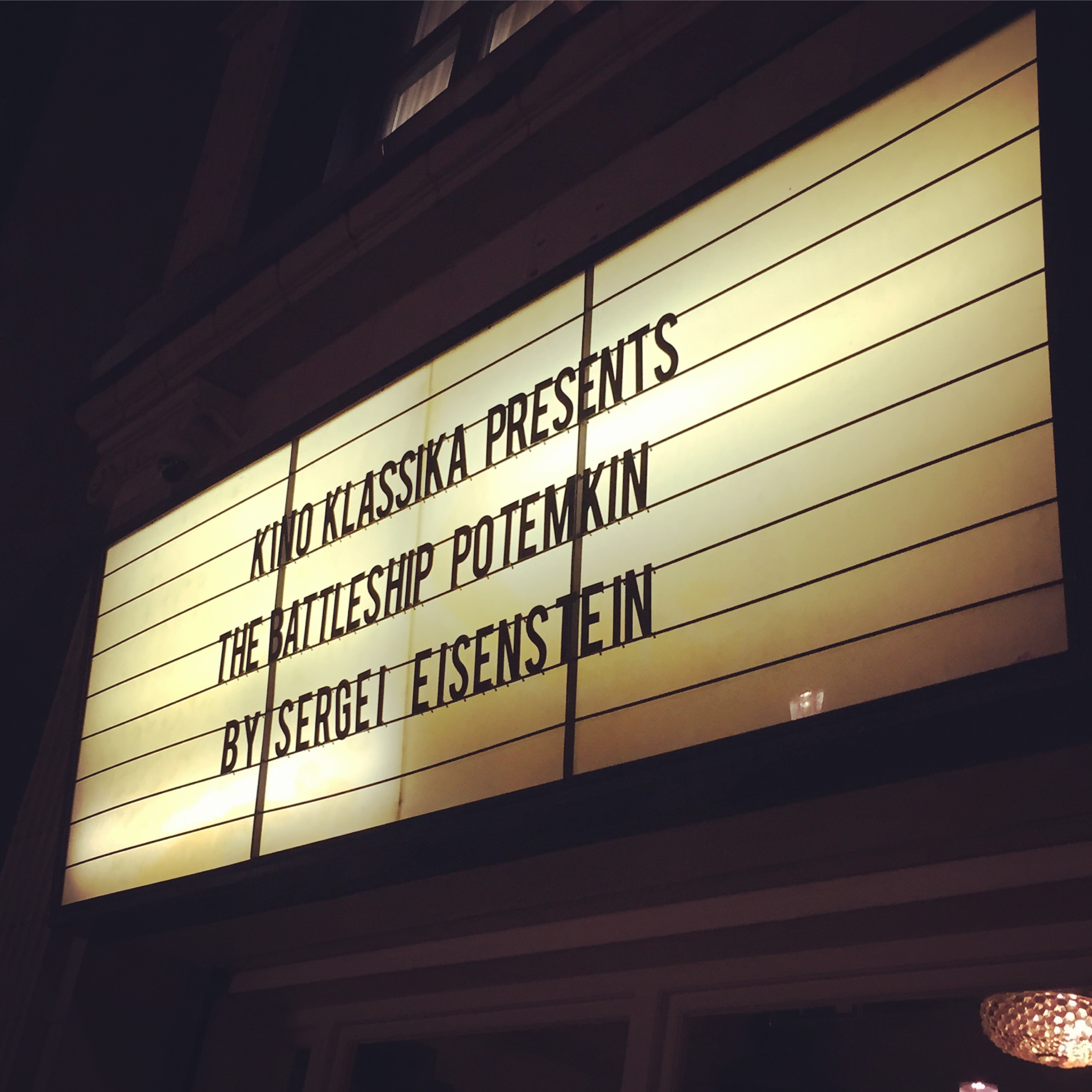
Battleship Potemkin at the Electric Cinema, Notting Hill
Last night I went to a silent film screening that was the very definition of upscale. It was strictly by-invitation-only I am afraid, but well worth reporting back from.
I spent the evening at the beautiful Electric Cinema in Notting Hill, courtesy of the Kino Klassika Foundation. It was a very glamorous affair and I won’t deny that there were canapés and saucers of champagne to kick off proceedings, and very nice too, but the centrepiece of the night was a screening of Eisenstein’s Battleship Potemkin, accompanied by Stephen Horne and Jeffrey Davenport. During the film, eloquently introduced by Ian Christie, the glasses were set down and the audience, as far as I could tell, were rapt, transported by the movie.
Battleship Potemkin at the Electric Cinema, Notting Hill
In fact it was wonderful to talk to the guests at the screening, some of whom had never seen the film in full before, others who had very evocative memories of watching Potemkin at home or school as children in the former Soviet Union. This week, the film was screening as art, rather then propaganda.
And that’s the point really. The Kino Klassika Foundation threw this shindig because it has big plans for Sergei Eisenstein, including an exhibition of the director’s drawings at GRAD, called Unexpected Eisenstein, a book, and app and a series of film screenings around the country. We’ll be hearing more from Kino Klassika in the coming year, as the Eisenstein in England project is unveiled. Meanwhile, you can visit the charity’s website to find out more, or perhap even make a donation.
Here at Silent London we are big, BIG, fans of the Slapstick Festival in Bristol. It is a friendly, wide-ranging event, run by beautiful people, in a great city – and it always tickles our funnybone.
If you’ve ever been lucky enugh to attend you’ll know that it is a pretty special special festival, which doesn’t cut corners. Top-quality prints are shown accompanied by first-rate musicians and introduced by people who are experts or celebrities – or sometimes both.
And that’s not easy in these tricky times, so this year the Slapstickers are asking for a little help, from you. The Slapstick festival crew have launched a Kickstarter appeal to cover some of their costs, and they would love it if you could support them. The money will go to very good causes including more live music and affordable tickets for kiddies. As it’s a Kickstarter your assistance will be rewarded by some fabulous gifts, from kazoos to custard pies to the chance to meet a VIP – even Morph himself!
The Kid (1921)As for the more tradtional way of showing your support, tickets are now on sale for the festival gala, which will feature Chaplin’s wonderful The Kid among other treats.
This is a guest blog for Silent London by Maria Wyke, professor of Latin at University College London.
Few people realise how important and innovative a role early cinema played in shaping modern knowledge of ancient Greece and Rome. In the vaults of film archives scattered across the world, a large number of entertaining, provoking and often quite beautiful films survive that are set in the classical world. Through their enticing use of gesture and look, exotic sets and extravagant costumes, colour, music and movement, these films still offer their spectators the opportunity to enter into the history or myth of antiquity, and to experience a distant past where life is lived differently or to an extreme.
Antiquity is also one of early cinema’s most important means for bringing the past into the present, making it accessible to mass audiences across national boundaries, offering it up as a past that binds audiences to each other, and utilising it to legitimate cinema as a new and global art form. Yet early cinema’s use of the ancient world is little known or understood.
For a few years now, I have been involved in a research project with Pantelis Michelakis of the University of Bristol. Both of us are classicists, with my specialism being Rome and his Greece. Together, and with the help of film archivists, and historians of film and of cultural studies, we have been trying to understand this close relationship between cinema and Classics (we published an edited collection on the subject in 2013 with CUP, The Ancient World in Silent Cinema).
We see film screenings as an integral (and very enjoyable) part of our project – an opportunity for audiences to participate and help open up new routes for our research. So on 21st November 2015, at the fabulous Cinema Museum in East London, and as part of the Being Human Festival of humanities research, Pantelis and I will be screening a number of early “antiquity” films. If it interests you, do register for your ticket here and come along.
Though your Sins be as Scarlet (USA, 1911)
From 2 to 3.45 we will be showing 35mm films from the Joye collection in the National Film Archive and from 4.15 to 6pm films from archives in Paris, such as the Cinémathèque Française. What films exactly? Well, we are in final negotiations about that.
This year’s London film festival did not make life easy for cinemutophiles. Many of the silent films in the 2015 programme were scheduled slap-bang against each other, or almost, necessitating a frantic cab ride across to town. All very glamorous in its own way, and nice to be spoiled for choice, but frustrating for those who aren’t lucky enough to have seen some of these films in other festivals, or want to cram as much as possible into a trip to London. That said, the LFF pulled off a coup to make those Londoners who wished they were at Pordenone instead feel smug for once. The two festivals always clash, but if you stayed home this year, you’d have had the chance to see the restoration of Laurel and Hardy’s The Battle of the Century, a day before your counterparts in Pordenone. Ta-da.
As you might have noticed, your humble correspondent was indeed in Pordenone, but when I got home, I managed to squeeze in a few trips to the London film festival. Rude not to, after all. And if the programme seems a little light on silents at first, as is always the way, things pop up where you might not expect to find them. Festival opener Suffragette (Sarah Gavron, 2015) closed with a fragment of archive footage; and I spotted Gloria Swanson in one of the festival most-talked about movies, Todd Haynes’s magnificent Carol (2015).
Sherlock Holmes (1916). Cinémathèque française, Paris
Love makes gluttons of us all. So if you enjoyed Love Is All, Kim Longinotto’s romantic sweep through the film archives at the cinema, you may be toying with picking up the DVD also. Then again, there are so many great clips from brilliant films, both popular and obscure, in Love is All that it might have prompted you to buy several other DVDs instead.
Love is All sprawls across the history of cinema, picking up clips from classic films and home movie so the and editing them together into a gorgeous mess of love and romance. It contains flirtations, seductions, marriages and babies; young love, forbidden love, gay love and straight. It leans quite heavily on silent cinema, possibly because those films work particularly well in this treatment, possibly because they are just the most romantic. Who knows? And the whole thing is set to a gruffly melancholic soundtrack of songs by Richard Hawley. So it’s really rather eye-catching, but could be a head-scratcher too. What does it all mean?
Love is All (2014)
This DVD release from the BFI does attempt to reveal the mysteries of this swooping documentary, with a package of extras including explanatory essays and statements from the film-makers, plus a bundle of complete short silent films from the archive. There is also a recorded Q&A with Longinotto in which she happily admits that she had never heard of Hindle Wakes or Anna May Wong before including them in Love is All. Yes, really.
I reported on one Buster Keaton restoration project in the summer – and now there is another one. This one comes to us courtesy of the fabulous Lobster Films in Paris, and proves that there is more than one way to skin a cat.
This project has both a narrower and a wider focus – the aim is to complete restorations of Buster’s short films only, but the list runs to 32 and includes those that he made with Roscoe Arbuckle, such as his movie debut, The Butcher’s Boy (1917). And Lobster will be taking elements from archives and collections around the world, to get the best possible result. Not only that, the team will be commissioning new scores for all the films that they work on.
Here’s an extract from the polished version of The Playhouse (1920), to show you what is planned:
I’ll let the amazing Serge Bromberg explain further, and persuade you to kick in some coins:
Can you ever have too much Buster Keaton? I will let you decide that for yourself, but just think that if you do cough up, wherever he is, old Buster might look down on you and smile. Almost.
The Phantom of the Opera (1925). Photoplay Productions
At the end of life death is a departure; but at life’s beginning a departure is a death – Victor Hugo, Les Misérables
Back home, when they ask me what I saw at the Pordenone Silent Film Festival, I will have to confess that yes, indeed, I did see a woman tied to the train tracks this year. All their suspicions will be confirmed, although you and I will know that the scene in question was part of Kinokariera Zvonaria (A Bell-Ringer’s Film Career, 1927), a Russian spoof of the movie business. But if they don’t know that women being tied to the train tracks isn’t really a silent cinema staple, then they may not be familiar with Soviet comedy. Which I would say is a shame, although my favourite of this strand this year remains Dva Druga, Model I Poodruga. This breezy two-reeler was a sweet thing, with a reluctant star being caught in the snare of a travelling film company, whose motto was the less-than-inspiring: “Don’t waste film. Be economical.” A shocking waste of film that closes the movie elicited groans from the audience in Cinemazero – talk about singing to the choir.
KINOKARIERA ZVORNAIA (URSS 1927). Gosfilmofond of Russia, Moscow
The feature-length comedy on Saturday morning was less successful for me – mostly because it was quite hard to follow. In Serotsa I Dollary (Hearts and Dollars, 1924), mistaken identities complicated the central gag of a well-to-do American girl making her way in Russia. Familiar “types” from Soviet comedy abounded, but I couldn’t quite key in to this one, sadly.
We saw more westerners adrift in eastern parts with a film only recently made available again: Tod Browning’s opium-trade drama Drifting (1923). Priscilla Dean plays Cassie, the “poppy princess”, a opium dealer fallen on hard times in China, no doubt partly because her companion Molly has been getting high on the supply. Wallace Beery is her accomplice-cum-rival. Matt Moore is the American captain sent to China to put an end to the drugs trade, and as so often is the case, Anna May Wong is criminally underused as a local girl setting her cap at him. Set down on paper this looks like fiery stuff, and it is in parts, but the original story (in which Cassie has an even older career on the side) has been toned down, and the presentation of what remains is rather coy. There is an unexpected role for a cute tot, a small boy who belongs to an unseen missionary family, and it’s all very smartly shot and brightly tinted. Not everyone was as keen as I was on this one, but hey, we all get to be an outlier sometimes. Drifting was elevated hugely also by a superb accompaniment by Stephen Horne, who brilliantly caught the atmosphere of revolt threatened by the locals banging “sinister and solemn” drums in the background.
Wolf Song (1929) Library of Congress Packard Campus for Audio Visual Conservation, Culpeper, VA
We travelled way out west again after lunch, for another assignation with Victor Fleming. After a tantalising trailer for the lost film The Way of All Flesh, starring Emil Jannings, we were spoiled with a screening of Wolf Song (1929). This movie, a red-blooded western romance between trapper Sam (Gary Cooper) and a young Mexican woman called Lola (Lupe Vélez) was powerful stuff. Sam is torn between the lure of the mountain trail and his love for Lola, between the call of the “wolf song” and marital bliss. But what bliss! This is the kind of movie that reminds you that all silent cinema is effectively pre-code. The affair between the two leads is passionate, and there is enough steamy eye contact, questionable imagery and plimming bosoms to mist up your spectacles before you swoon at the sheer beauty of it. Cooper and Vélez are simply gorgeous leads, and if you haven’t heard about Cooper’s nude bathing scene in this film, well that would explain why you weren’t at the Giornate today. Seriously, though, this is the sort of film that reveals exactly why Hollywood was called a dream factory – it’s a collective fantasy, played out 10ft tall.Continue reading Le Giornate del Cinema Muto 2015: Pordenone post No 8→