Culturethèque met French duo Air during their trip to the Institut Français on 12 December 2011 for an exclusive screening of Georges Méliès’ A Trip to the Moon (1902), in its restored colour version. Watch this interview with the band about Air’s contribution to A Trip to the Moon and about their new album, released on 6 February.
The First Born on tour in 2012

The BFI’s sparkling restoration of Miles Mander’s The First Born, with its new, elegant score by Stephen Horne, was the clear highlight of last year’s London Film Festival. The wonderful news is that it is about to hit the road this year, and you’ll be able to see the film, in most cases with Horne’s music played live, at various lcoations across the UK. It’s a gripping, sophisticated drama and a gem of British silent cinema – so don’t miss it. Here’s what the BFI have to say about it:
A philandering politician, the double standards of the upper classes, jealousy, miscegenation and a generation torn between centuries of tradition and a more modern morality… the plot of The First Born feels not unlike a lost episode of Downton Abbey. However, the film was expertly co-scripted by Alma Reville (Mrs Alfred Hitchcock) and it’s hard not to see her influence in raising it beyond old-school melodrama to be a tour de force of late silent British cinema. Sir Hugo Boycott (Miles Mander) and his young bride (a pre-blonde Madeleine Carroll) have a passionate relationship, but it founders when she fails to produce an heir. This is a surprisingly ‘adult’ film and made with both elegance and invention.
I reviewed the film at the London Film Festival here, and spoke to BFI silent film curator Bryony Dixon and composer Stephen Horne for the Guardian too. You can see an extract from the film, below:
Here are the tour dates for The First Born, hot off the press:
25 January 2012
BFI Southbank
9 March 2012
Broadway Nottingham
(NB: solo performance by Stephen Horne)
17 March 2012
Hippodrome Bo’ness
25 April 2012
Pictureville Bradford
(NB: this screening will not feature Stephen Horne’s score)
May 2012 TBC
Filmhouse Edinburgh
DCA Dundee
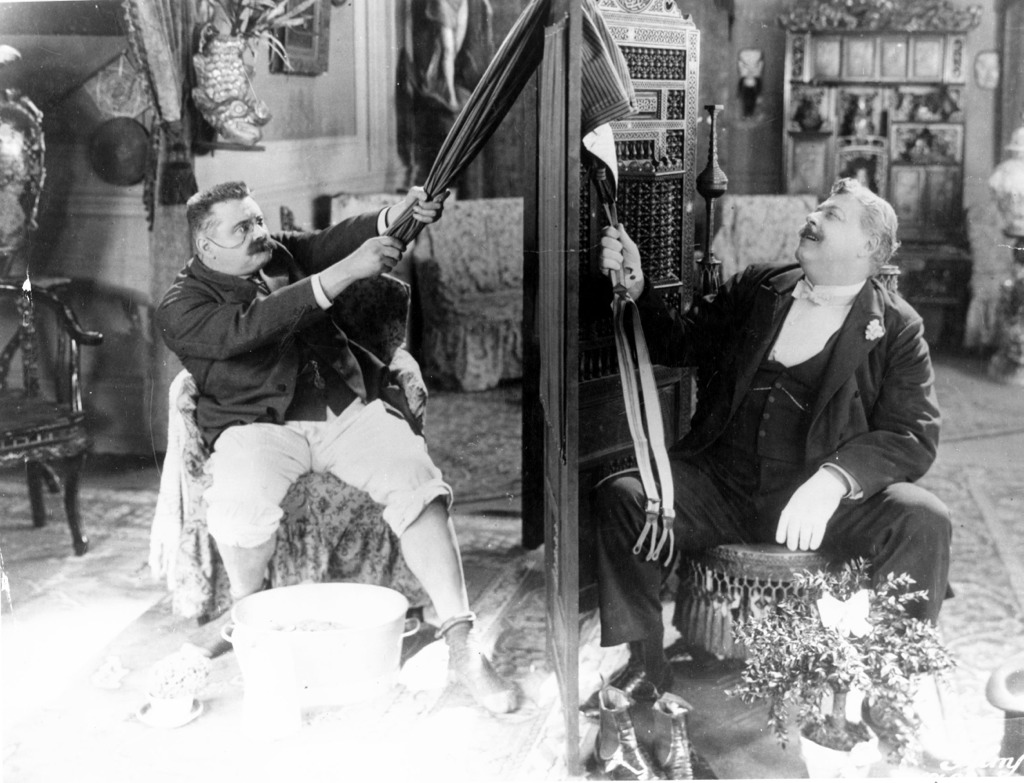
An Italian Straw Hat, Barbican, 19 February 2012

The Barbican silent film and live music season continues in fine style with this sophisticated, satirical French comedy. René Clair’s film is a period piece, set in 1895, the year the Lumière brothers first unveiled their cinématographe, but was released just as the talkies were changing cinema for good – or ill. With few intertitles and plenty of visual humour, An Italian Straw Hat is classic of silent cinema, which Pauline Kael described as “so expertly timed and so elegantly directed that farce becomes ballet”. Contemporary reviews praised its:
“Delightful social irony and hilarious situations welded into divertingly sustained comedy. Amusing characterisations which are ironic criticisms. Witty situations and deft development. “
Albert Préjean stars as a hapless bridegroom whose journey to his own wedding is interrupted when his horse chews up a woman’s hat. She demands a replacement, which is easier said than done, and the groom is soon tangled up in a series of comic misunderstandings. An Italian Straw Hat is more than farce though, it uses the absurd premise as a route into a sly attack on bourgeois narrow-mindedness. The Silents Are Golden website sums it up this way:
The plea for intelligence, for rising above petty worries like lost gloves, for refusing to be constrained by petty convention, make An Italian Straw Hat a crusader in human propaganda. The sublimely naturalistic sets, the superb uniformity of the acting, and the flawless action continuity are the measure of René Clair’s technical proficiency.
If you’ve seen René Clair’s short silents, such as Entr’acte and Paris Qui Dort, or his later work including the Sous les Toits de Paris and A Nous la Liberté your appetite will already be whetted. Stop reading this blog, and book yourself a ticket.
An Italian Straw Hat screens at the Barbican on 19 February 2012 at 4pm. Piano accompaniment will be provided by Andrew Youdell. Tickets begin at £7.50 and you can buy them here.
The British Silent Film Festival comes to Cambridge, 19-22 April 2012

Save the date: the 15th British Silent Film Festival will take place 19-22 April 2012 at a new venue, the Cambridge Arts Picturehouse. The change of location has influenced the programme too, which will feature some examples of undergraduate humour among a mix that includes adaptations of stories by WW Jacobs and PG Wodehouse as well a tribute to the BBFC. There’ll be a by-now customary performance by the Dodge Brothers too, skiffling along to Abram Room’s The Ghost That Never Returns.
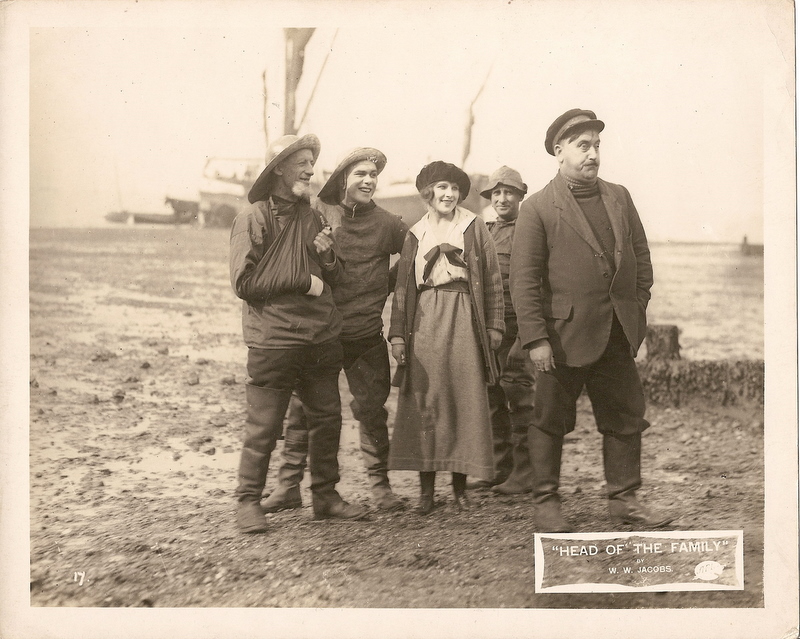
The programme will include rarely seen silent films from the BFI and other archives around the world on a wide range of fascinating subjects such as: P.G. Wodehouse’s golfing tales including The Clicking of Cuthbert; rarities based on the charming coastal stories of W.W. Jacobs including The Boatswain’s Mate, A Will and a Way and brand new print of Head of the Family; a celebration of the centenary of the British Board of Film Classification with a look at ‘What the Silent Censor Saw’ and the origins of ‘university humour’ before the Footlights. This year’s ‘hot ticket’ will be the wildly popular Dodge Brothers performing their distinctive brand of Americana to The Ghost That Never Returns.
Salomé (1923) at the Purcell Room, 9 February 2012

A rare screening of a much-gossiped-about silent film, made by one of Hollywood’s most controversial stars, presented in a unique way. Well, that tickles our fancy just fine.
Alla Nazimova was born in what is now Ukraine in 1879. She made her stage debut in Moscow as a teenager and swiftly became a big star. She then moved to New York to work on Broadway, winning plaudits with roles in plays by Chekhov and Ibsen and made her first movie, War Brides, in 1916.
Nazimova is best remembered for her colourful life in Hollywood: her several affairs with women, the rumoured wild parties at her mansion and her position of influence in the industry, helping many a young actress to get a start, including Anna May Wong, Patsy Ruth Miller, Natacha Rambova and Jean Acker. The last two were married to Rudolph Valentino, but were also romantically linked to Nazimova.
Her most famous film, Salomé, was also fodder for the rumour-mill. An adaptation of Oscar Wilde’s play, it was said that the cast comprised only gay and bisexual actors, in homage to the author. It’s impossible to say whether this was really true, but the idea has certainly stuck. Nazimova takes the title role, Charles Bryant directs and the whole thing is just over an hour of extravagant Aubrey Beardsley-inspired design, sexy costumes and decadence. Salomé slumped at the box office, bankrupting Nazimova’s production company, but continues to intrigue audiences, becoming something of an art nouveau cult sensation.
This February, Salomé will be screened at the Purcell Room in the Southbank Centre, with live music composed by Charlie Barber, which is inspired by ” the evocative sounds and intricate rhythms of traditional Arabic ensembles”. Instead of sitting in front of the screen, the musicians will perform on two towers on either side of it, which sounds like a fantastic idea.
This clip shows the famous “Dance of the seven veils” from Salomé, with a taster of Charlie Barber’s score:
Salomé screens at the Purcell Room, Southbank Centre on Thursday 9 February 2012 at 7.45pm. Tickets begin at £12 and are available here.
• We’ll see more of Nazimova when the silent Rudolph Valentino biopic Silent Life is released later this year. Nazimova is played by Galina Jovovich.
Dogged at Making Tracks, London Short Film Festival, 14 January 2012

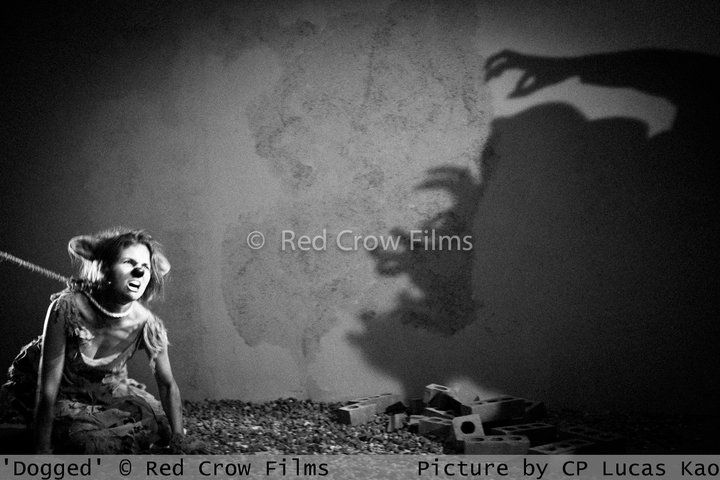
Modern silent films. They’re the hottest thing since 3D, but far more popular in this neck of the woods. One film we’ve had our eye on for a while is the fantasy short Dogged (2011), written and directed by Jo Shaw and starring Lucy Goldie in all nine roles. The sinister premise of the film is summarised thus on IMDB: “In a world where bogeymen roam freely, devouring people randomly and the only creatures they fear are dogs, old dog does her best to defend the family home.” I think this dog is a very different breed to Uggie.
Dogged was described as “intriguing and insightful” by the judges at the Aesthetica film festival in York, who awarded it the prize for Best Experimental Film (read more here), but now, happily, you have the chance to see it in London and make your own mind up. Dogged is playing as part of the Making Tracks night programmed by Whirlygig Cinema at the London Short Film Festival. This event is especially notable because all the soundtracks for the short films being screened will be played live, by The Cabinet of Living Cinema. It’s a treatment that should particularly suit Shaw’s spooky silent film.
Want to know more about Dogged? There’s a trailer, which you can see on the IMDB page here and a regularly updated Facebook page.
Making Tracks is at Rich Mix, Bethnal Green on 14 January at 7.30pm. Tickets are £8 on the door or book them in advance for £6 at the Rich Mix website.
Charles Dickens on silent film: part two, BFI Southbank, February 2012

Charles Dickens’s 200th birthday party continues in formidable style with the second part of the BFI’s Dickens on Screen season. Happily, the silents were not confined to the first run of screenings and February brings much to get excited about. First off is the famous 1922 adaptation of Oliver Twist. Frank Lloyd directs, while The Kid star Jackie Coogan plays the young orphan and Lon Chaney contorts his features into a suitably grotesque Fagin. With Coogan’s winsome pluck and Chaney’s gift for playing a villain, this was always going to be a classic Twist. It’s a spirited romp through the novel and a particular treat as this is one of the famous “lost” films of the silent era, which was found and restored in the 1970s, with some input from Coogan himself. To learn more, read Silent Volume’s appreciative review here or watch this clip, featuring one of the novel’s most melodramatic flourishes. Why not do both?
Oliver Twist screens at 6pm on Friday 3 February and at 8.45pm on Wednesday 8 February 2012 at NFT2, BFI Southbank. Both screenings will feature live piano accompaniment. Tickets are available from the BFI website.

The final silent Dickens film and the next screening in the season is The Only Way, a lavish and rather free adaptation of The Tale of Two Cities. This is a British production and John Martin Harvey reprises his stage role as Sydney Carton, despite his advancing years. His wife Madge Stuart plays Mimi his maid. Don’t remember Mimi from the novel? That’s cinematic licence for you. The famous director and producer Herbert Wilcox is at the helm and The Only Way was a smash hit, taking more than twice its £24,000 budget at the box office.
The Only Way screens at 3.50pm on Saturday 11 February and 8.40pm on Monday 27 February 2012 at BFI Southbank. Tickets are available from the BFI website.
• Don’t forget that there will be an exhibition to accompany the Dickens on Screen season in the Mezzanine at BFI Southbank from 12 January to 25 March. Also, during February, BFI members can watch The Pickwick Papers, an Anglo-American co-production from 1913, free online. The 15-minute fim stars the comedian John Bunny.
Faust at the Royal Festival Hall, 27 February 2012

This is wonderful news. Next year, at the Royal Festival Hall, the Philharmonia Orchestra will accompany a screening of FW Murnau’s masterpiece Faust (1926). The orchestra will be playing a brand new orchestral score, written by composer Aphrodite Raickopoulou, and unusually, there will also be live improvisation from the renowned classical pianist Gabriela Montero. The film will be introduced by the world-famous actor and scourge of the tabloids Hugh Grant.
If you’re not familiar with Faust, then allow me to introduce it to you. Murnau’s film is an adaptation of the Faust legend, in which a doctor sells his soul to Mephistopheles in return for a cure for the plague epidemic that has struck his town. The doctor is played by Gösta Ekman, and Mephistopheles by the always wonderful Emil Jannings, in an outstanding performance that is by turns charming and grotesque. As in so many of Murnau’s films, the real story is an epic struggle between love and hate, and the visuals are as epic as the themes. Faust may be shot in monochrome, but it is kaleidoscopically beautiful. Special effects sequences such as the summoning of Mephistopheles and the cloak ride are still impressive – and the clouds of black smoke that represent the plague visiting the town are as haunting as they were technically difficult to pull off. Ekman’s transformation from an old man to his younger self is fantastic as well.
But Faust is more than the sum of its technical achievements. It’s a hugely moving film, with a melodramatic finale, and as unforgettably brilliant as Murnau’s other much-loved classics, Nosferatu and Sunrise. This new score has been a real labour of love for Raickopoulou, who was moved to tears after watching the film for the first time. She told me: “Being a dreamer has its great risks but true passion and true love will always prevail.” A sentiment very much in tune with the spirit of the movie, I’m sure you’ll agree.
This project has benefited from the advice of Patrick Stanbury from Photoplay Productions – and you’ll be pleased to know that the Royal Festival Hall will be showing a 35mm print of the domestic version of the film.
Faust screens at the Royal Festival Hall on Monday, 27 February 2012 at 7.30pm. Tickets begin at £10 and you can book them here, on the Southbank Centre website.
The Silent London 2011 poll: we have a winner

Thanks to all who nominated their favourite silent film and live music shows of the year – and to those who voted in the final poll. We had five worthy nominees on the short list, but I can reveal that the winner is … Lola Perrin’s score for the Victor Sjostrom’s The Wind, first performed this year at the BFI Southbank as part of the Birds Eye View Sound and Silents programme. Congratulations, Lola!
If you missed it (and I did, sadly), you can see Lola Perrin perform her live piano score to The Wind again at the Duke of York’s Picturehouse in Brighton in March. Visit Lola Perrin’s website to find out more.
Merry Christmas from Silent London

Season’s greetings to all our dear readers – may your stockings be filled with treats and all your nights be silent. There’s plenty to look forward to in the new year, but until then, eat, drink, be merry – and why not enjoy a few festive movies too? I’ll see you in 2012!
The Silent London 2011 poll: vote now
Charley Chase films at the Barbican, 22 January 2012

You’re all over Buster Keaton, Charlie Chaplin and Harold Lloyd. Roscoe Arbuckle, Laurel and Hardy too. But there’s more to silent comedy than those big, big names, and this January, the Barbican offers a chance to get to know another fantastic funnyman from the early days of cinema, the dapper, charming Charley Chase – a comic as hilarious as his moustache is thin and elegant.
Charles Parrott started out in vaudeville, like so many silent comedians, but he went to work for Mack Sennett at Keystone in the early teens. While there, he appeared in a few films with Mr Chaplin and moved into directing as well. He directed several more films at Hal Roach’s studios, and after Harold Lloyd deaprted those premises he began starring in his own short films, under the name Charley Chase.
Chase’s silent movies were generally two-reelers, and the most famous of them were directed by Leo McCarey – three of which will be showing at the Barbican. Chase’s speciality is the comedy of embarrassment – character-driven farce as much as pure slapstick. In His Wooden Wedding, Chase is tricked, by a love rival, into believing his bride has a wooden leg. Mighty Like a Moose features a married couple who both undergo extreme makeovers courtesy of a plastic surgeon and then subsequently fail to recognise each other. Oliver Hardy takes a small role in Crazy Like a Fox, in which Chase pretends to be mad in order to avoid an arranged marriage. In each case, of course, mortifying complications ensue.
Crazy Like a Fox (1926), His Wooden Wedding (1925) and Mighty Like a Moose (1926) screen at the Barbican on 22 January at 3pm. Piano accompaniment will be provided by John Sweeney. Tickets start at £7.50 and are available from the Barbican website here.
- There will also be a chance to see some Charley Chase classics at the Slapstick Festival in Bristol next month – so check that out too.
Slapstick Festival, Bristol, 26-29 January 2012
I hate to admit it, but there are good reasons to leave London sometimes. Bristol, for example, can lay a good claim to being the capital of silent cinema in this country, thanks mostly to the year-round efforts of the marvellous people at Bristol Silents. Indeed, come January there is nowhere finer for the discerning silent comedy fan to be. The annual Slapstick Festival is a four-day, multi-venue extravaganza of comedy, mostly of the silent era, presented by comedians and experts – and accompanied by live music.
The 2012 Slapstick Festival will take place from 26-29 January 2012, and the full lineup has just been announced. Yes, there will be some more recent comedy courtesy of gala screenings featuring Dad’s Army, Monty Python and the French film-maker Pierre Étaix. But Slapstick Festival is noted for its passionate endorsement of silent comedy, and it’s here in spades.

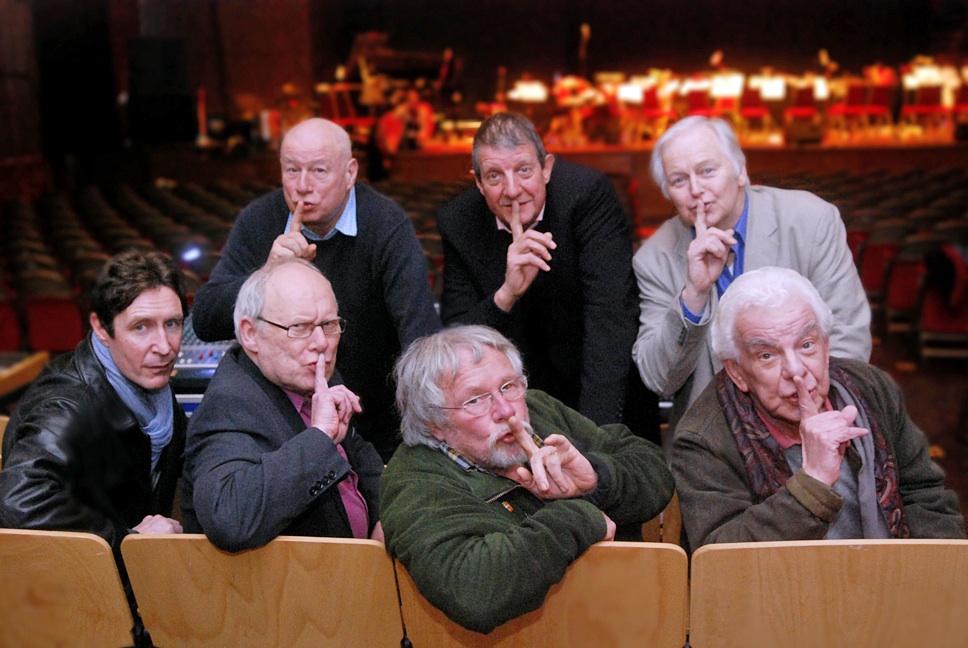
Kevin Brownlow will be talking about Buster Keaton and showing footage from his documentary A Hard Act to Follow, while Griff Rhys-Jones will introduce a night of silent comedy including a screening of The General at Colston Hall with music from Günter Buchwald and performed by The European Silent Screen Virtuosi and Bristol Ensemble. On the last day of the festival, Bill Oddie, Tim Brooke-Taylor, Ian Lavender and Barry Cryer will also introduce their favourite Buster Keaton shorts.

Historian David Robinson will give an illustrated lecture, with clips, on Charlie Chaplin and also discuss his work with fan and comedian Sanjeev Bhaskar; Barry Cryer will present a Harold Lloyd double-bill and Graeme Garden will make a case for the debonair Charley Chase. David Wyatt will give two presentations: one talking about lesser-known silent comics such as Max Davidson and Larry Semon and the other on the spoofs and parodies rife in silent-era comedy.
Slapstick Festival events will take place in Colston Hall, the Watershed Cinema and the Arnolfini Arts Centre, Bristol from 26-29 January 2012. See the Slapstick Festival website for more details and to book tickets.
- And don’t forget, the Slapstick Festival has its own real ale, brewed locally, especially for the event. The launch of the Slapstick Beer takes place at the Victoria Pub, Clifton on Friday 9 December at 7.30pm. Details on Facebook.
The Silent London 2011 Poll: nominations please

It’s not over yet, but 2011 has been a stonking year for silent film with live music in the UK. We’ve had orchestras, skiffle bands, sitars, string quartets and even piano accompaniment, alongside some wonderful films. As is now traditional (almost) I want to celebrate this by asking you for your highlights of the year.
What were the standout silent film and live music shows for you in 2011? The Passion of Joan of Arc with Adrian Utley and Will Gregory’s rock score, or Voices of Light? The BBC Symphony Orchestra playing Neil Brand’s wonderful score for Underground? Stephen Horne’s London Film Festival Archive Gala performance of The First Born? Perhaps you preferred the Dodge Brother’s skiffle soundtrack for Beggars of Life or The Ghost That Never Returns. Maybe you were lucky enough to catch a live performance of Simon Fisher Turner’s experimental music for The Great White Silence, or one of many shows from last year’s winners, Minima. And let’s not forget John Garden’s tour of The Lost World or the Elysian Quartet’s reconstructed score for The Old and the New. There are, of course, far too many to mention here – you may have heard an organ score in a cathedral or museum that you liked, or a piano accompaniment in the BFI that was particularly memorable.
What I’d like to do is to collect your nominations for your favourite show in the UK this year and then I’ll be running a poll on the website in a fortnight’s time. It’s kind of like The X Factor, but not much. So, please, nominate your favourite shows in the comments below, or get in touch on Facebook or Twitter. I can’t wait to find out what you’ve chosen!
Nominations close at noon on Sunday 18 December and the poll should go live on Monday morning.
Charles Dickens on silent film at BFI Southbank, January 2012

2012 marks the bicentenary of Charles Dickens’s birth and a festival of events has been organised to celebrate – including the reopening of the Charles Dickens museum and an exhibition at the Museum of London. The lion’s share of the audiovisual strand of Dickens 2012 begins with a three-month season of screen adaptations at BFI Southbank, which will then tour both nationwide and internationally.
The Dickens on Screen season has been curated by Adrian Wootton and Michael Eaton and the first tranche features some heavyweight adaptations such as David Lean’s masterful Great Expectations (1946) and a wealth of 1930s films, including George Cukor’s 1935 David Copperfield, starring WC Fields, Lionel Barrymore and Maureen O’Sullivan and Thomas Bentley’s 1934 The Old Curiosity Shop.
It’s the early films that interest us the most, though, and two programmes with live piano accompaniment offer opportunities to watch Dickens adaptations made between 1901 and 1913, some of which are very rarely seen.
Pre-1914 Short Films commemorates a period of film history in which literary adaptations were rife – even if they were mostly no longer than a couple of reels. It is often claimed that Dickens’s use of parallel action inspired DW Griffith’s experiments with cross-cutting – and there are two Griffith films here, only one of which (The Cricket on the Hearth, 1909) is a straight Dickens adaptation. There are two lively versions of A Christmas Carol, one British (directed by RW Paul, 1901, pictured above) and one American (by Thomas Edison in 1910 and posted below).
The Vitagraph company is well represented, as would be expected, with J Stuart Blackton’s Oliver Twist (1909), starring a teenage Edith Storey as the winsome orphan and William Humphrey as Fagin. Humphrey appears again in Vitagraph’s A Tale of Two Cities (1911), which runs to an epic 30 minutes and makes great use of crowd scenes and bona fide stars such Maurice Costello, Florence Turner and briefly, Norma Talmadge.
There are two Thanhouser films in the programme: The Old Curiosity Shop from 1911 and a 20-minute version of Nicholas Nickleby (1912) with Harry Benham in the lead role, a fragment of which can be seen below. It’s not the only Nickleby on offer, though. You can also see a three-minute film called Dotheboys Hall from 1903, directed by the English comic Alf Collins and featuring some knockabout corporal punishment.
Pre-1914 Short Films screens at BFI Southbank on Tuesday 3 January 2012 at 8.30pm and Saturday 7 January 2012 at 3.50pm. The first screening features an introduction by screenwriter Michael Eaton and both screenings will have live piano accompaniment.

David Copperfield (1913) is a British adaptation, one of the first feature films made in this country and shot in the actual locations named in the novel. This is one of director Thomas Bentley’s six silent Dickens adaptations, but the only one to survive, and it is noted for both its elegant composition and naturalistic performances. Bentley himself started out at a stage comedian and was celebrated for his impressions of Dickens characters. The film stars Alma Taylor, one of British silent cinema’s most popular actresses thanks, at first, to her “Tilly the Tomboy” films, as Dora. The Eric Desmond credited as the young David is really Reginald Sheffield, father of Johnny Sheffield who played Tarzan’s Boy in the Johnny Weissmuller films.
David Copperfield screens with a three-part adaptation of the same novel, made by the Thanhouser Company in 1911-12. You can watch the films on Sunday 8 January 2012 at 3.30pm and on Tuesday 10 January 2012 at 6pm at BFI Southbank. There will be live piano accompaniment.
That’s not all, dear reader. There will be an introductory talk called Dickens on Screen on Tuesday 3 January 2012, at 6.20pm, given by Michael Eaton and Adrian Wootton, just before the first programme of shorts, and there are also several more silent Dickens adaptations to be seen in the BFI Mediatheque. Plus, we are promised, later in the season, Frank Lloyd’s 1922 Oliver Twist, starring Jackie Coogan and Lon Chaney.
Tickets are on sale via the BFI website.
The Artist (2011): the UK trailer
After a triumphant run at international film festivals, modern silent movie The Artist is finally coming to the UK – and here is the toe-tapping trailer. The film is set in Hollywood at the end of the silent era and stars Jean Dujardin and Bérénice Bejo as an established and an aspiring star. James Cromwell, John Goodman, Penelope Ann Miller also appear and Michel Hazanavicius directs. It’s a charming film, inspired by classic Hollywood movies – the kind of thing that gives nostalgia a good name. You can read the Silent London review of The Artist here.
The Artist opens in the West End on 30 December, then in selected cinemas 6 January and nationwide from 13 January.
Hugo (2011): review

We’ll never know for certain whether the Lumière brothers’ cinematograph audience really were so terrified by a moving image of a train entering a station that they screamed and ran for the door. It’s an enjoyable urban legend though, and one that appeals to our idea of cinema as an immersive, perfect illusion. Martin Scorsese stages the moment twice in Hugo (2011) and by doing so makes a fair case for the story’s veracity. After all, this is a 3D film, and the savvy 21st-century viewers of this film may well have been flinching and ducking at stereoscopic images of barking dogs and speeding trains – and even the terrified patrons of the Grand Cafe – bursting from the screen.
There is more to Hugo than such cheap shocks, though. Scorsese mostly uses his 3D technology not to reach forward but to create a deep stage, as Georges Méliès so often did, pulling the scenery away from the centre of the frame to reveal more fantastical images within. Hugo‘s astounding, wordless opening sequence plunges from the Paris skyline into a train station clock, where a small boy, our hero, is gazing out at the city – we then follow him through staircases, ladders, corridors and across the concourse in one breathless swoop. It’s at this point that I knew I would want to watch Hugo again – it’s a giddily beautiful shot, and would persuade the hardest heart that there is a place for the intelligent use of 3D in cinema.

Inevitably, the pace drops after that, and the first half of Hugo is really rather a sedate, downhearted affair – particularly for a children’s film. Hugo (played sweetly by Asa Butterfield) is orphan. When his father (Jude Law) dies in a museum fire, and he is adopted by his drunkard uncle (Ray Winstone with a very slippery accent) – whose job it is to wind the clocks at the train station. When the uncle staggers out one day, never to return, Hugo decides to stay in the station winding the clocks and hiding from the station inspector (Sacha Baron Cohen) so as to avoid the authorities. He steals food, and also scraps of clockwork to fix a melancholic automaton his father salvaged from the museum where he worked – sentimentally, Hugo believes that when the robot is working again, it will write him a message from his father. It’s a fond, foolish hope, made more metaphorically adorable still when we realise that the machine won’t work without a key: a heart-shaped key. However, the film is saved from treacly sentiment by the appearance of a young friend for Hugo, the bookish, restless Isabelle (Chloe Moretz) and an enemy too: Ben Kingsley’s curmudgeonly toymaker, Papa Georges.
So much plot – and so many adorable flirtatious sub-plots among the station’s café-owners and stallholders – just to get us to the moment, about halfway through, when the automaton works, and we find out who Papa Georges really is. Now, the pulse of the film finally starts to race as the children voraciously explore the history of silent cinema, and the magical trick films made by Papa Georges in particular. Of course, Papa Georges is Georges Méliès (subtly played by Kingsley), and that’s no spoiler for readers of this blog. Scorsese’s recreation of Méliès’s studio is among Hugo’s most enjoyable sequences – the sugary colours, the pyrotechnics and lo-fi effects could be quaint, but these scenes are rendered with such love and attention to detail, it’s impossible not to feel a sharp cinephile thrill. For once, however, I am tempted to complain that this adaptation shouldn’t have been so faithful to its source. Brian Selznick’s pencil-illustrated The Invention of Hugo Cabret is a really gorgeous book, but its thin narrative feels even flimsier on the big screen, and spends a good hour pushing Scorsese away from the subject matter that is closest to his heart – and ours.

That said, Hugo has plenty to indulge a silent film aficionado – or to educate a young film buff. Harold Lloyd himself, dangling from the department store clock, and Hugo’s own, less jolly, homage; glimpses of Méliès at work and plenty of his films; the aforementioned Lumière moments; passing references to zoetropes and hand-tinting; even a clip reel of silent highlights. There’s also Baron Cohen’s broad slapstick, a nice sense of early 20th-century history and so many gorgeous movie posters in the background that you’ll want to leap up and freeze the projector. Hugo‘s biggest surprise is that the 3D enhances all this retromania. Whether or not we remember that the Lumières were aiming for 3D effect with that very first train movie, or that they subsequently reshot it with a stereoscopic camera, Hugo‘s look has a freshness and novelty that suits its subject matter. A switch of focus, a camera rushing along the station platform, a series of stepped cuts all look different in 3D – it’s as if we’re seeing these tricks for the very first time.
Hugo (3D) is released in the UK on 2 December 2011. And if you want to see some of Méliès’s films on the big screen – the Cine Lumière has two screenings planned for the weeks following the release.
Georges Méliès at the Ciné Lumière 4, 12 & 14 December 2011

Between Lobster films’s eye-popping restoration of the hand-tinted Le Voyage Dans la Lune (1902) and Martin Scorsese’s forthcoming Hugo, 2011 is a good year for remembering Georges Méliès – not to mention the 150th anniversary of his birth. To mark this auspicious time, the Ciné Lumière at the Institut Francais is celebrating the early French film-maker with three special events in December.
The first show, Classic Medley Méliès, is a Sunday afternoon matinee – a 90-minute screening of shorts to introduce the director and some of his best-loved films, restored by Lobster films:
This programme is a unique opportunity to watch what can only be described as a treasure trove of lost gems which were uncovered and lovingly restored by Lobster films. Explore the sublime realm of Méliès’ cinema through The Man with a Rubber Head, The Magic Lantern or the colour version of The Devilish Tenant and discover his favourite themes: the moon, space, illusion and the comedy-burlesque.
Six scholars, members of the Astronomers’ Club, set off on an expedition to the moon. They travel in a bullet-shaped rocket fired into space by a giant canon. After arriving on the moon safe and sound, they meet its inhabitants, the Selenites, escape their king and return to earth in their rocket which, after falling into the ocean, is fished out by a sailor. Applause, decorations, and a triumphant parade for the six heroes of the first outer-space adventure in the history of cinema.
Accompanying the films will be an original score of electronic soundscapes which revive and celebrate the sense of magic, mystery and occasional menace that play at the heart of Méliès’ films. Experience silent cinema as never before
Air’s Le Voyage Dans la Lune album

It was hands-down the most controversial silent film score of the year, but French duo Air have expanded their music for Georges Méliès’s Le Voyage Dans la Lune (1902) into an album. The record, named after the film, will be released on 7 February 2012 and features additional vocals by Victoria Legrand, the French half of Beach House, and lyrics written by New York keyboard trio Au Revoir Simone. The full tracklisting is as follows, and you can see already how scenes from the film are expressed in the music:
01 Astronomic Club
02 Seven Stars
03 Retour sur terre
04 Parade
05 Moon Fever
06 Sonic Armada
07 Who Am I Know?
08 Décollage
09 Cosmic Trip
10 Homme lune
11 Lava
Air’s score was composed specifically to accompany the restoration of the hand-tinted, full-colour version of Méliès’s film, and limited-edition copies of the album will feature the film in full with its new music.
The news of the album’s release was posted on the music website Pitchfork yesterday, where they also shared this short modern silent, scored by Air, that was created as part of a promotional series for the jeweller Cartier.
Battleship Potemkin flash mob, 26 November 2011
Are you a silent film fan? Do you live in London? Are you a little bit eccentric? If you answered yes to all three of those questions you probably want to know about this interactive art performance taking place at the ICA next Saturday:
In flash-mob-performance-art-meets-iconic-cinematic-history, the Odessa Steps scene from Battleship Potemkin will be re-created on the Duke of York steps, adjacent to the ICA, in three separate performances of 60 people. It might be slightly irreverent, it might end up nothing like Eisenstein’s visionary comment on the social and political state of Russia, but it will be a lot of fun, and a chance to pay tribute to one of the greatest moments in early 20th century cinema. Members of the public can book a slot to play a role in the reconstruction and filming of the scene. Each slot will be fast-paced and full of improvisation, complete with costumes and props. An eclectic mix of artists and personalities from the art world including Norman Rosenthal, Johnny Woo, Andrew Logan, Sue Tilley and Christopher Biggins will be taking on the major roles.
Christopher Biggins? That’s what it says here. Anyway, finally, you will have the chance to experience the thrill that Brain de Palma and Kevin Costner felt when filming The Untouchables. The re-enactments will be recorded for posterity too. Artists Jane and Louise Wilson will record the performances using the 8mm apps on their iPhones, and the resulting footage will be posted online.
Tickets for one of the sessions cost just £5. I’m assuming, and hoping, that this will all be totally safe and no babies (or adults) are liable to get hurt during proceedings. Still, you might prefer to play a cossack than a peasant, if you’re worried.
Re-enacting Eisenstein takes place on the afternoon of 26 November 2011. To book, and for more information, visit the ICA website.