So we already know that the Archive Gala will be the Irish-set thriller The Informer. And we already know that it is on the same day as Robin Hood. So that’s your first now-traditional schedule clash.* It’s also something of a shame that the Archive Gala will be at BFi Southbank, not the festival’s specially built 780-seat pop-up cinema in Victoria Embankment Gardens, where all the other galas will be held, although I assume that is to do with finding space for the band. Designers of these new-fangled cinemas always forget the orchestra pit.
However, here’s what the rest of the 60th London Film Festival has got planned for you, silents-wise. Erm, not quite as much as I would have hoped …
In a very welcome turn of events, the BFI releases two archive DVDs this week, both with plenty to offer the early film enthusiast. The first is the dual-format edition of Play On!, an anthology of silent Shakespeare films with newly recorded music, of which more elsewhere. The second is Around China With a Movie Camera, a disc full of surprises.
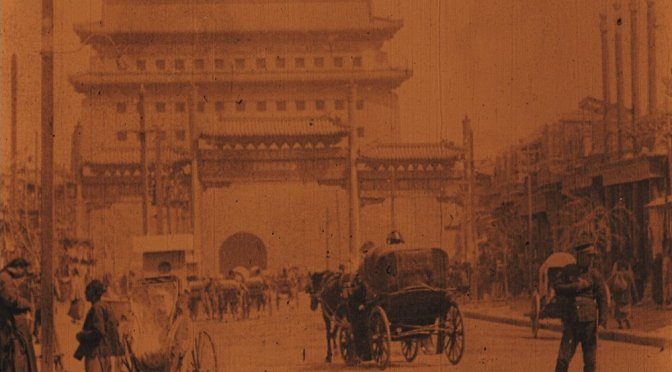
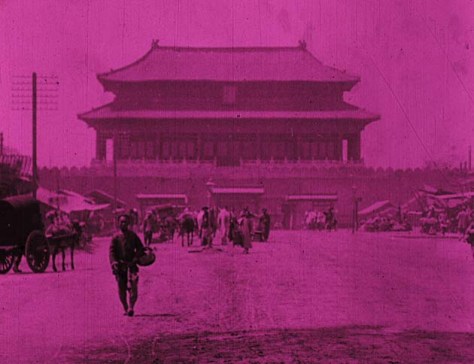
Around China With A Movie Camera is a compilation of archive film shot between 1900 and 1948, with shimmering, groovy music composed by Ruth Chan. I’ve never been to China, so I don’t bring any geographical expertise to this disc, but these are among the most bewitching early films I’ve ever seen. There are travelogues in the mix, but also newsreels, home movies, actualities, documentaries and footage shot by missionaries. Each frame is brimful of life and activity – the familiar and the unfamiliar mingled together. We begin in Beijing in 1910, with footage shot by an unknown cameraman on behalf of Charles Urban. The streets are thronged with people: workers, families, traders, drawing carts, alpacas, horses or rickshaws, carrying water or bundles of straw. The film is vividly tinted and between the blazing sunlight and the dusty road, the heat of the day burns up the screen. The locals smoke pipes, and shave each other’s heads.
A cut, and we see the same streets in 1925, the same crowds and rickshaws and market stalls. More industry here, if not quite high technology. Then, cut again, and it’s 1933. On and on, until we have travelled the country, and sped forward to 1948 and back again.
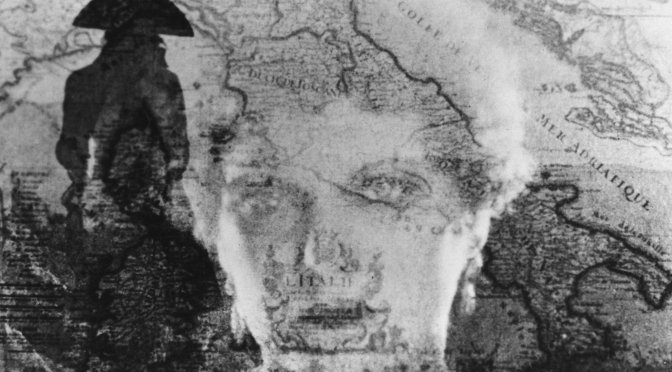
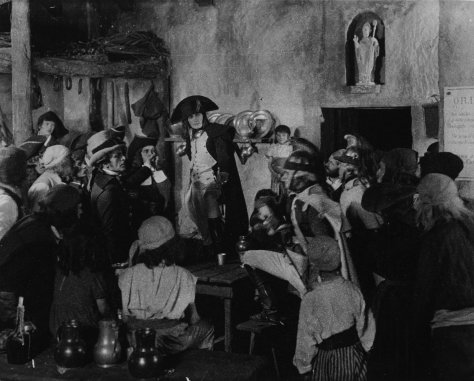
Hold on to your three-cornered hats. This may well be the news you have been waiting for since … ooh 1980 or thereabouts. BFI and the Photoplay have announced jointly that Napoléon, Abel Gance’s silent masterpiece, is coming to a screen near you – whether that is a concert hall, cinema, TV or computer. We all have three-screen TVs right?
So you can see Napoléon (1927) with the Philharmonia orchestra at the Royal Festival Hall this autumn – and many of us know what a treat that can be – but it will also be available to buy on DVD/Blu-ray, to stream on the BFIplayer and theatrically released in cinemas too. And make no mistake, this is the Kevin Brownlow restoration with Carl Davis’s epic score – the definitive five-and-a-half hour version of Napoléon that you really need in your life.
And while the live and cinema screenings will be magical experiences, I am getting a little thrill from the idea of being able to rewind sequences from the film and look at them again, and more closely. The snowball fight, for example! As that occurs at the the beginning of the movie, it could take me some time to get right to the end …
Napoléon (1927) Photograph: BFI
I won’t say too much more now, as we will no doubt be talking about Napoléon all year, which I am hugely looking forward to. But I do want to share some details about the restoration, and the people who made it possible. For example, we have been told that the digital process of restoration has cleaned up some damage in the 35mm print and allowed for greater capacity to recapture the tinting and toning of the original film.
This project has been achieved thanks to major work undertaken by the experts of the BFI National Archive and Photoplay Productions working with Dragon DI post-production in Wales, and to the generosity of Carl Davis and Jean Boht, who have made possible the recording of the score by the Philharmonia. The original restoration of the 35mm film elements in 2000 was funded by the generous support of the Eric Anker-Petersen charity, with the support of many archives around the world but especially the Cinémathèque Française and the Centre Nationale de la Cinématographie in Paris.
The film has been entirely re-graded and received extensive digital clean-up throughout, all of which offers significant improvements in overall picture quality. This is the most complete version of the film available, compiled by Academy Award™-winning film-maker, archivist and historian Kevin Brownlow who spent over 50 years tracking down surviving prints from archives around the world since he first saw a 9.5mm version as a schoolboy in 1954. Brownlow and his colleagues at Photoplay, initially the late David Gill, and then Patrick Stanbury, worked with the BFI National Archive on a series of restorations. The film version has been screened only 4 times in the UK since the year 2000 at memorable events with full orchestra performing the original score by composer Carl Davis.
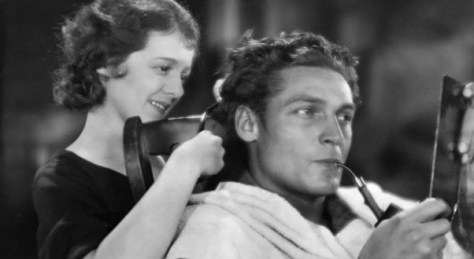
Janet Gaynor and Charles Farrell in Seventh Heaven (1927)
Silents-wise, this screening is surely the highlight of the BFI Love season: Frank Borzage’s gorgeously romantic Seventh Heaven (1927), with a brand new score by KT Tunstall, Mara Carlyle and Max de Wardener.
Seventh Heaven is a classic from the golden years of Hollywood silent cinema, with unforgettable performances by Janet Gaynor and Charles Farrell as star-crossed lovers in a gritty, but somehow still beautiful Paris. Back in 1927 Mordaunt Hall was moved to laughter and tears by this film, saying: “It is obvious that this subject was admirably suited to the screen, but it should also be said that Frank Borzage in directing this production has given to it all that he could put through the medium of the camera.”
It’s true. There is more emotion in 10 minutes of this weepie than most entire films, so this live music event should be unforgettably immersive. Here’s what the BFI has to say about the event:
Sonic Cinema has teamed up with the formidable talents of British musical powerhouses KT Tunstall, Mara Carlyle and composer Max de Wardener to present a brand new BFI-commissioned score to Borzage’s classic. Perhaps the most sublimely lyrical of all the silent-era romances, this tale of transformational love sees Charles Farrell’s sewage worker and Janet Gaynor’s street waif rise above poverty and war to be together. Martin Scorsese’s observation that Borzage’s films unfold in ‘lover’s time’ was never more apt, and the tender emotions Borzage captures build to an unforgettable, transcendental climax.
Seventh Heaven screens on 10 December 2015 in NFT1 at the BFI Southbank at 7.30pm. You can buy tickets here.
Make more noise! More than a silent film? More noise than an Edwardian lady? No, more noise than the patriarchy.
Make More Noise! is the title of boisterous new compilation from the BFI, an anthology of films related to the British campaign for women’s suffrage. It contains newsreels of protests and personal appearances by the leaders of the movement, as well as short fiction and actuality films that reveal the changing role of women in British society. In the second category, you’ll spot Tilly films, and footage of women working in munitions factories and field hospitals. It’s a fascinating mix, beautifully programmed by Bryony Dixon and Margaret Deriaz and superbly scored by Lillian Henley.
This anthology pretty much had me at hello – the combination of early cinema and feminism is right up my street. But I’d like to think that Make More Noise! holds an appeal for people who aren’t pre-sold on the content that way. If you enjoyed Sarah Gavron’s very moving Suffragette, this programme gives you a more complete picture of the world of the characters in that movie – these are the films they would have seen at the cinema, the ideas they would have discussed at the dinner table, and just possibly, a glimpse of their future.
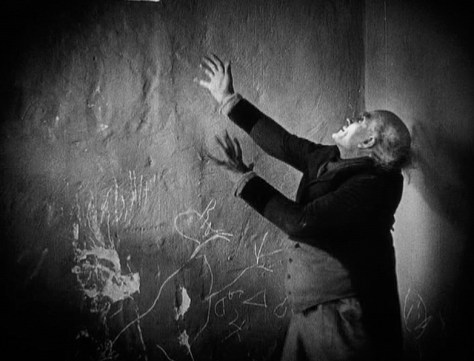
Remind me which one that is? Oh come on. Nosferatu is a classic – FW Murnau’s free-floating Dracula adaptation is one of scariest films of all time, and one of the most beautiful too.
Is that the one with hunchbacked shadow lurching up the stairs? Bingo.
Surely it’s not still hanging around?Nosferatu is back baby, and now it’s on Blu-ray too, courtesy of a new release from the BFI.
Oh, Nosferatu on Blu-ray? I got that already. Really?
Well, no. I saw that Masters of Cinema brought it out two years ago but I hadn’t got around to buying it yet. Ah I thought so. Well you could buy this version instead.
Nosferatu (1922)
I might. Both releases are Blu-ray updates of each label’s previous DVD release of the film.
I’m all about Blu-ray. What’s the difference between the two packages though? The extras are different, and the score. MoC used the original theatrical score, and the BFI has used a more modern, but also orchestral, score by James Bernard. And yes, both are available in stereo and 5.1.
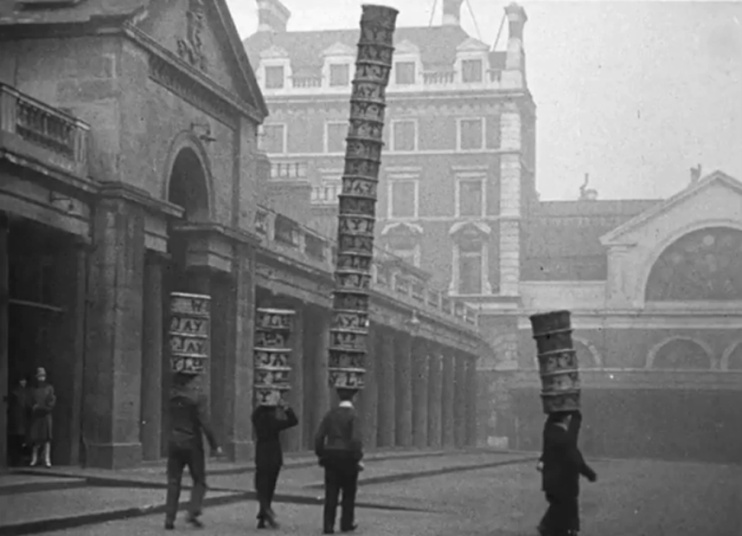
Attention amateur historians and nostalgic souls. The BFI has launched its Britain on Film project on the BFIPlayer, comprising around 2,5000 pieces of archive footage. It’s an incredibly easy way to lose an entire afternoon, or more of your life. But fascinating too. Simply type in a location, a decade or a subject, and the BFIplayer will throw some digitised (and contextualised) film right back at you.
So what of “Silent London”? At this link, you can find all the footage labelled “London” from 1890-1930 in the Britain on Film archive. That comes to 232 films, ranging in length from a few seconds up, but still more than a mouthful, even for someone as greedy as me.
But I did have a poke around, and I do already have a few favourites. Here are ten to try:
London teems with cycles and cyclists. And though the sight of a pedal bike overtaking a double-decker always makes me chew my nails, this has got to be a good thing. While most of us are too sedentary, and too reliant on fossil fuels, cycling looks like a miracle cure for the whole human race. Heck, I have even been to a silent movie screening powered by stationary bikes hooked up to a generator. There may be something magical about these contraptions.
Which brings me to On Yer Bike, the BFI’s new archive compilation DVD of cycling throughout the years. Despite the exertions of Bradley Wiggins and co on their sleek carbon frames, cycling is decidedly retro. You couldn’t reach for a more solidly Edwardian image than a lady in a shirtwaist perched on a bone-shaker or a moustachioed gent atop a penny-farthing. And who doesn’t associate biking with their childhood? The pride when you lose your stabilisers; the terror when your parent lets go of the back of your tiny bike for the first time; a gleaming new cycle on your 11th birthday; or roaming around the local lanes with your best friends and a bag of sweaty sandwiches?
Just a quick note to let you know about a season coming up at BFI Southbank, which promises to contain a few silent treasures. London on Film: The Changing Face of London runs from 1 July to 9 October 2015. I’m taken by the idea of a film programme devoted to our favourite city, and hoping that the BFI will make the most of the opportunity to show some great silent dramas, and actuality footage.
Here’s the official blurb:
The BFI present a three month season which celebrates London’s stories through a century of extraordinary film making from archive clips to more modern cinematic adventure. the programme will include over 200 films, from classic features to home movies, shot in London over the last 120 years. For Londoners this season will show the city they know and love, as they may never have known it before.
Already slated are screenings of Anthony Asquith’s Underground and A Night in Victorian and Edwardian London with Bryony Dixon. At the latter event, the BFI’s silent film supremo will introduce archive clips of the capital dated 1881 (!) to 1910. The evening will also include a screening of Joseph Ernst’s captivating short film inspired by Mitchell & Kenyon, Londoners.
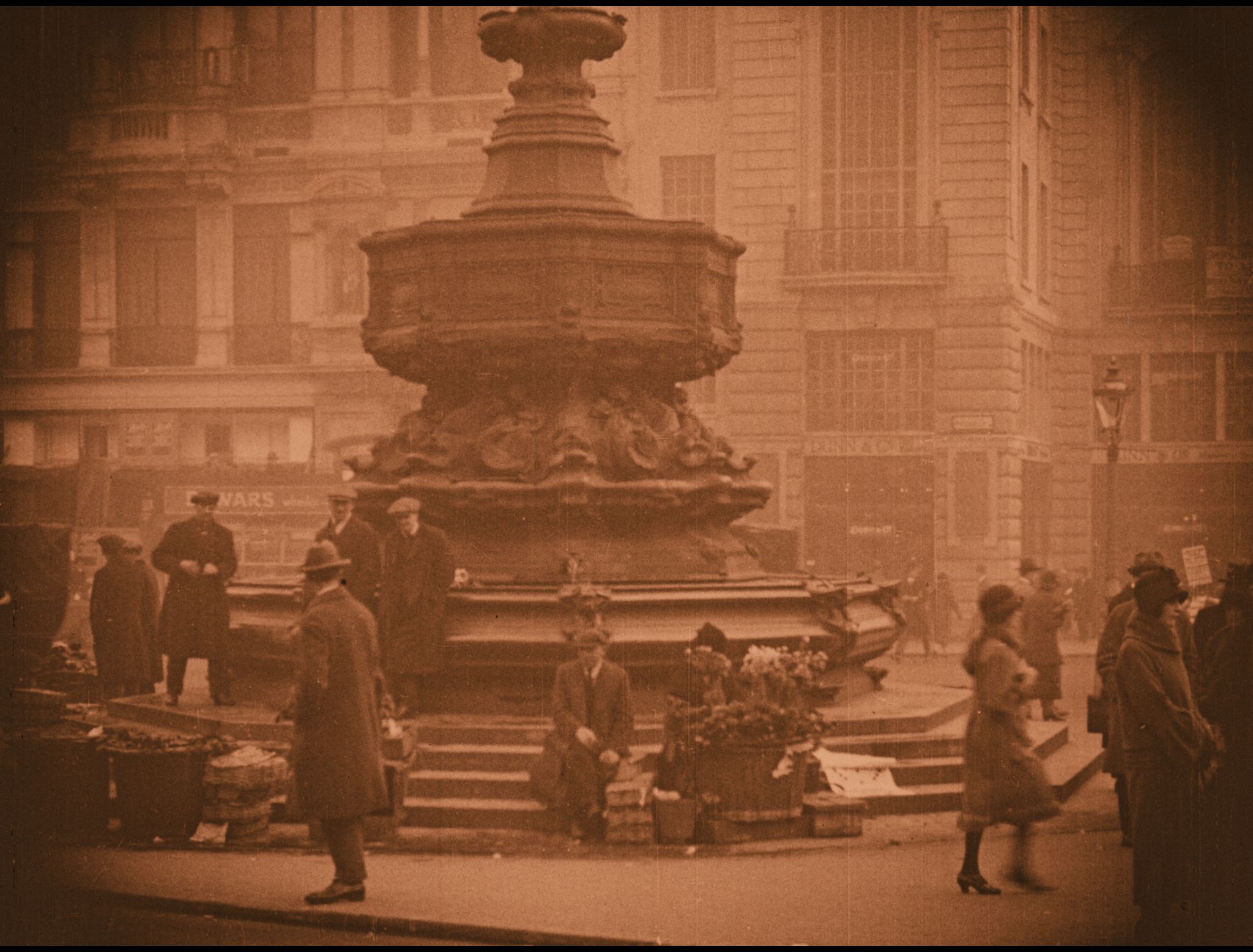
Cosmopolitan London (1924)
UPDATE: Over on Facebook, BFI head curator Robin Baker tells us we can expect films including: “Passmore family films from 1902 (part of London Home Movie Night), The Right to Live (1921), London Old and New (1924), Cosmopolitan London (1924), The Fugitive Futurist (1924), The Marriage of Miss Rose Carmel to Mr Solly Gerschcowit (1925) and Piccadilly (1929)”. Plus, the sound version of High Treason (1929)
This is not just a box set, more a lifestyle choice. Anyone who wants to spend a couple of hours laughing and crying with Chaplin can watch one of the features. But this new collection of the short films that Chaplin made at the Mutual Company in 1916 and 1917 offers a longer-lasting relationship with London’s favourite silent son.
Even at first glance, the BFI’s latest Chaplin release is a tempting treasure. The Mutual period includes some of Chaplin’s best and funniest shorts for one thing – the drunken ballet of One AM, the social bite of The Immigrant and Easy Street, the glorious mayhem of The Adventurer and The Cure. For the first time in the UK, all 12 Mutual films are presented on Blu-ray – and they have been newly, and immaculately restored too. These discs are a pleasure to watch. It beggars belief that these films are approaching their centenaries, because everything on screen is beautifully clear and impressively filmic, with rich detail and velvety blacks. Comedy this timeless defies age, and now the image of that comedy is every bit as immortal. I don’t have the recent Flicker Alley release to compare, but the word is that this improves on the quality of that set.
The Battles of Coronel and Falkland Islands (1927)
Name:The Battles of Coronel and Falkland Islands (1927).
Age: 87 years old. The clue’s in the number in brackets.
Appearance: Shiny and new.
Sorry, that doesn’t make sense – I thought you said it was 87 years old.The Battles of Coronel and Falkland Islands may be knocking on a bit, but it has been lovingly restored by the BFI and from what we gather, it’s looking pretty damn sharp. Just take a look at these stills.
Great, where can I see this beautiful old thing? At the Queen Elizabeth Hall on 16 October 2014 – it’s being shown at the London Film Festival as the Archive Gala. It will then be released in cinemas nationwide, and simultaneously on the BFIPlayer …
Blimey. And then it will be coming out on a BFI DVD.
Wonderful news, I’ll tell all my friends. Really?
No. I’ve never heard of it. Fair enough. You could have said that in the first place.
I was shy. Don’t worry, the BFI calls it a “virtually unknown film” on its website.
Phew. But you should have heard of the director, Walter Summers.
Rings a bell … He’s a Brit. Or he was, rather. And he was quite prolific, working in both the silent and sound eras. “I didn’t wait for inspiration,” he once said. “I was a workman, I worked on the story until it was finished. I had a time limit you see. We made picture after picture after picture.”
This is a really fascinating idea, and a hugely entertaining hour and a half of anyone’s time. The BFI has compiled a typical “mixed” cinema programme from a century ago, and is releasing it theatrically this summer. It’s called, of course, A Night at the Cinema in 1914, and it comes out in August. Yes, you may be seated in an air-conditioned room with comfy seats and Dolby 5.1 sound, but you’ll be able to watch a variety bill of drama, actuality, comedy, serials and travelogues – just like your own great-grandparents in the Hippodromes of yore.
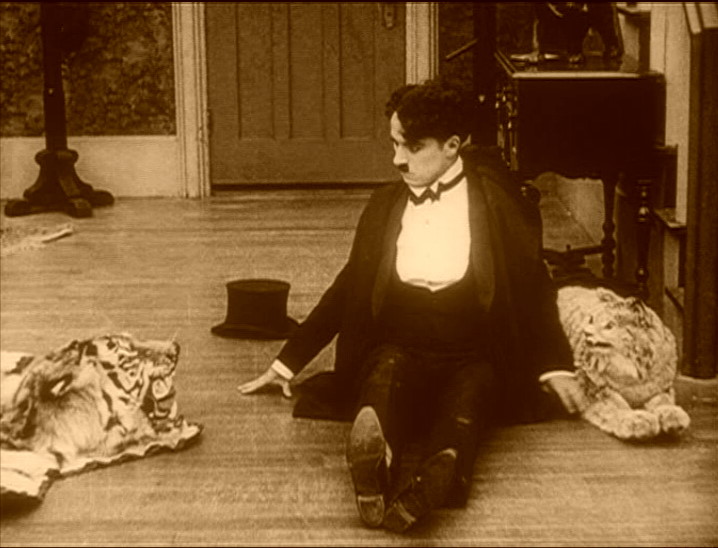
Charlie Chaplin in A Film Johnnie (1914)
Some of the titles in the bill will be familiar to you, but there are a few surprises too – and the cumulative experience of watching 15 films in one sitting is wholly refreshing. There’s Chaplin, Florence Turner and Pimple larking about, but also newsreel footage from the front, and from suffragette demonstrations in London, and Ernest Shackleton’s preparations for his Antarctic voyage. Of course, there’s a segment from The Perils of Pauline, and an opportunity for a singalong too. Music is provided by an expert – Stephen Horne has recorded an improvised score for the whole shebang.
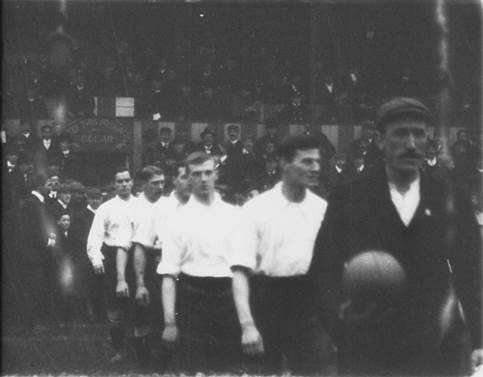
Ready for the game tonight? Warm up with this treat from the BFI archives. England play Ireland at Manchester City’s Hyde Road ground on 14 October 1905. The film is only three minutes long, but don’t worry, I can reveal that England won the game 4-0!
Betty Balfour as Tip Toes in Love, Life and Laughter (1923). Photograph: British Film Institute
Betty Balfour as Tip Toes in Love, Life and Laughter (1923). Photograph: British Film Institute
Love, Life and Laughter (1923). Photograph: British Film Institute
Love, Life and Laughter (1923). Photograph: British Film Institute
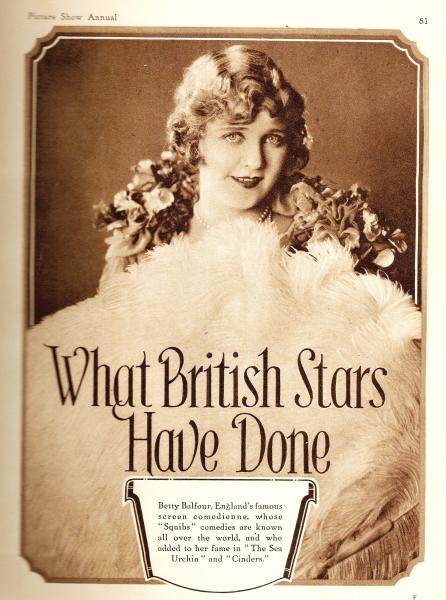
Genuinely exciting news for silent film fans. A long-thought-lost film starring the wonderful Betty Balfour, and directed by the somewhat elusive George Pearson, has been returned to us. The film is Love, Life and Laughter (1923): Betty “Queen of Happiness” Balfour stars in a typically winning role as Tip Toes, an impoverished chorus girl who dreams of fame on the music-hall stage. She befriends a young aspiring writer, also down on his luck, and they decide on a plan – to meet two years later back at their tenement building to see if either of them have achieved their fondest wishes.
Love, Life and Laughter was found in a cinema in Hattem, in the Netherlands. The cinema was due to be rebuilt and so the anonymous film cans stored there were taken to EYE, the the Dutch Film Museum, in the hope that they might contain footage of local historical interest.
The BFI’s curator of silent film, Bryony Dixon, welcomes the discovery with open arms, saying:
Contemporary reviewers and audiences considered Love, Life and Laughter to be one of the finest creations of British cinema, it will be thrilling to find out if they’re right! We hope to be able to acquire some material from our colleagues at EYE soon so that British audiences can have a chance to see this exciting discovery.
We know that the copy EYE has acquired of Love, Life and Laughter has Dutch intertitles and has the original tints and tones intact – and we do have reason to believe that it is a very special picture. Contemporary reviews praised the film, with the Telegraph saying it was “destined in all probability to take its place among the screen classics”. In the Manchester Guardian, CA Lejeune’s gives nicely rounded sense of the film, and its importance:
Love, Life and Laughter is the latest Pearson film, and legend has it that the latest Pearson film is aways the best. It is certainly the most ambitious, spectacular at times in the De Mille ballroom manner, lit and photographed with a beauty to dream of. Devotees have called it George Pearson’s masterpiece, and so it is – of bluff. He lights common things uncommonly, and legend makes them symbolic; he catches a series of farcical situations, and legend makes them comic; legend turns sentimentality into sentiment, and confusion into mystery.
This fantasy of a chorus girl and a young poet is clever, but chiefly clever in simulating cleverness, in tickling the intellectual vanity of its audience with a goose feather, coloured peacock by imagination. It will succeed. And its success will be the result not of innate quality but of the great Welsh-Pearson legend – and, when all is said and done, nothing else matters.
That rather guarded review takes on a new aspect when we remember that the “great Welsh-Pearson legend” has now been forgotten, and their films have almost entirely vanished – which has the affect of rather enhancing the title’s allure. Until its rediscovery, Love, Life and Laughter sat on the BFI’s 75 Most Wanted list of much-missed British films.
A 1923 programme for the film offers this romantic and tantalising description:
“The Story is but a simple exposition of the oldest, yet ever youngest desire of the human heart, the achievement of an earnest ambition. The incidents tell in picture form of the striving of a boy and girl, against the odds of the world. The portrayal of this struggle towards a final goal of the desired happiness is unconventional in treatment. The Boy and Girl laugh and weep, succeed and fail, move onward and forward to an inevitable destiny, and to a climax which should live long in the memory.”
One of the many attractive elements to this news is that the film’s subject matter – of two starry-eyed types struggling to achieve their artistic ambitions – resonates against the life stories of the director and star both. Poignantly, in light of the fact that this film has been missing for so long, both Balfour and Pearson were highly acclaimed in the silent era and subsequently forgotten by most. It’s discoveries such as this, in fact, that make us appreciate anew how terrible the odds of survival for silent cinema are – with 75% of silents by the wayside, for each one we treasure there are three more we may never see.
Just like last year, the British Silent Film Festival hits London town, but not in its traditional form. Very much as was the the case last year, actually, the festival proceeds in a slightly cut-down version, comprising a symposium at Kings College London on Friday 2 May 2014 and a full day of screenings at the Cinema Museum on the next day.
There’s a loose theme to those screenings at the Cinema Museum – runaway women or some such. I like. More to point: Betty Balfour fans – fill your boots. And if you want to submit a proposal for a paper to the symposium, you have until 31 March – so hurry up, clever clogses.
Here are the full details for each day:
The British Silent Film Festival Symposium 2014 will take place on 2nd May 2014 at King’s College, London.
Following the success of last year’s symposium, this one-day event again seeks to draw together scholars and enthusiasts of early British cinema, and operate as a forum for the presentation of new research, scholarship and archival work into film culture in Britain and its Empire before 1930. Possible areas may include but will not be confined to: Cinema in the context of wider theatrical, literary and popular culture; Empire and cinema; Cinema and the First World War.
An early evening screening of The Wonderful Story (Graham Cutts, 1922) will be included in the day’s events.
Proposals (around 200 words in length) are invited for 20 minute papers on any aspect of new research into film-making and cinema-going in Britain and its Empire before 1930. Please submit them to Lawrence.1.Napper@kcl.ac.uk by 31st March.
Put-upon ladies take on the world in this programme of rarely seen silents from the BFI National Archive.
A double bill from talented Hungarian director Geza von Bolvary, stars Britain’s favourite actress Betty Balfour as the stand-in princess in The Vagabond Queen (1929) and besotted bottle-washer in Bright Eyes (1929). Also yearning to break free, an oppressed wife hangs her hopes on a typewriter in J.M. Barrie’s The Twelve Pound Look (1920) and a programme of shorts continues the theme.
PROGRAMME
10.00-11.30 The Twelve Pound Look
11.30-12.00 Break
12.00-13.30 The Vagabond Queen
13.30-14.30 Lunch
14.30-16.00 Shorts programme
16.30-18.00 Champagner/Bright Eyes
Doors open at 09.00 for a 10.00 start.
Refreshments will be available in our licensed café/bar.
TICKETS & PRICING
£25 for the full day, £15 for a half day, £8 for one session. Sorry, no concessions.
Advance tickets may be purchased from WeGotTickets, or direct from the Museum by calling 020 7840 2200 in office hours.
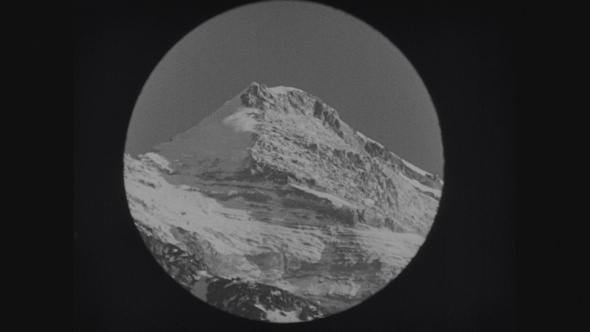
There has been plenty of chat on this blog, and elsewhere, about this fascinating, haunting documentary. Captain John Noel’s chilling film of the Mallory and Irvine’s doomed attempt to conquer the summit of Everest is a work of art, a testament to wild ambition, and a record of the prejudices and misconceptions of its era. For cinema audiences, the spectacle of the film – magnificent mountainscapes, drenched in red or blue tints – came first. Seen on the big screen, The Epic of Everest is utterly mesmerising.
So this home video release has to satisfy two camps. There will be those with deluxe home cinema setups who want to recreate the thrills of the cinema experience – and they will be happy with the high-definition transfer on the Blu-Ray disc here. The images are crisp and stable, with those beautifully rich tints adding real splendour to the scenery. But I suspect a more substantial group, knowing that The Epic will lose a little of its visual power on their TV screen, will want to go deeper into the film, will be looking for history rather than spectacle.
The Epic of Everest (1924)
Luckily the secound group is especially well-served by the presentation here. There are featurettes on the making and restoring of the film, as well as a thick booklet of essays, archive images and background information. You’ll remember that Simon Fisher Turner turned in another glacial score for The Epic – sleek, experimental themes comprising electronica and found sounds. There’s a documentary on his work here too, but just in case you’re about to slip out of the door in disgust – hold on.
The Epic of Everest (1924)
With this package, the BFI invites you to step back in time to 1924 and experience The Epic of Everest as its first audience did – well within reason. Those who buy the DVD version can download a PDF of the original programme from its premiere at the Scala, and – which may come as a surprise to a few people – you can watch the film with its original orchestral score here too. The score was recorded by the Cambridge University Chamber Orchestra and appears as an option alongside the new music, mixed in stereo. It’s less nuanced to 21st-century ears, perhaps, than the new music by Fisher Turner, but its lushness (it sounds almost like a ballet score) is totally immersive. There are some added musical snippets here too – all pieces that would have accompanied the first 1924 screening. If I had a pound coin for everyone who lamented to me that a new release of a silent had a modern score without a more “traditional” version as an audio option, I’d be able to buy a round of drinks for a full house at NFT2, so this is a welcome piece of news. Hats off to the BFI, and to Julie Brown who oversaw the reconstruction of the original music.
For more information, and to buy The Epic of Everest on DVD and Blu-Ray, please click here
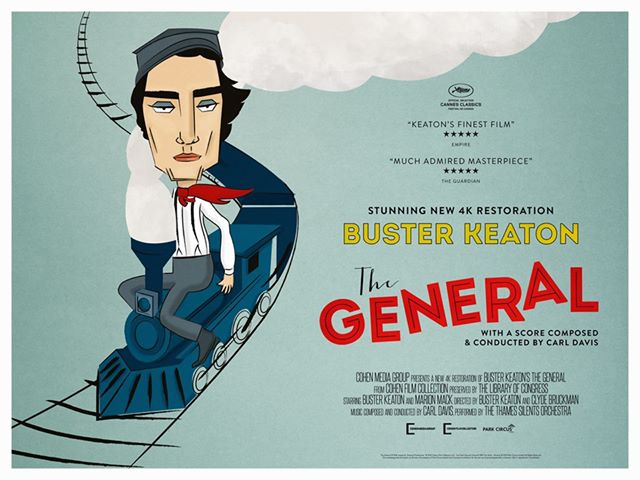
Buster Keaton’s The General (1927) goes on theatrical release this Friday – which should be cause for celebration and mass ticket-buying among all of you. However, if you are a regular reader of this blog, you have probably seen this classic, poll-bestriding Civil War caper before, very possibly in the dim and distant. What worries me, what keeps me up at night, is that if so, you may feel a bit “so-whattish” and “seen-it-all-beforeish” about Keaton’s masterpiece. That would be a tragedy, as The General is one of the funniest, most ingenious and gosh-darn exciting films you will ever see in your long and happy life. If familiarity has bred a touch of contempt, or just complacency, in your bosom, I would gladly bend your ear about the pin-sharp 4k transfer, and the booming rendition of Carl Davis’s nimble and turbo-charged score on this digital print. But that geeky stuff isn’t for everyone, so if that doesn’t tempt you, here are five more reasons to see The General … again.
The early, funny stuff
So we all know The General as a chase film, packed with stunts and crashing locomotives. Well, it actually starts in a very sedate fashion, as our hero Johnnie (Buster Keaton) goes to visit his girl Annabelle, who prompts him to enlist and fight for the South. Patience is a virtue – don’t be in a rush to get to the fast and furious business on the tracks. Johnnie’s pratfall as he leaves Annabelle’s house, the beautiful recruiting-office sequence and that wonderful selfie of Johnnie and his other beloved are all worth arriving at the cinema nice and early for. The scene-setting opening ends with one of the quietest, but most dangerous stunts in the whole movie, as Johnnie perches forlornly on the coupling rods of a locomotive that is picking up speed …
Annabelle Lee
The General‘s Southern belle is far more than a damsel in distress. To be frank, she’s a pain in the neck – watch her daintily selecting firewood and feel Johnnie’s pain. But to be fair, she takes more than her share of punishment too: kidnapped, soaked (twice), caught in a bear trap, stuffed into a sack and loaded as freight. Not only that, but consider this: to paraphrase Ginger Rogers, you try doing everything Buster Keaton does, but backwards and in a crinoline.
There is another reason to take note of Annabelle – she is played by a fascinating woman. Marion Mack knew more than most about the silent movie business. A former Mack Sennett Bathing Beauty, she later turned her hand to screenwriting, including a semi-autobiographical flick called Mary of the Movies, which she also acted in. In the the 30s, she even wrote a talkie short for Keaton. And when critical favour began to smile on The General in the 70s, she was on hand to speak at screenings and festivals, explaining what it was like to play one of Keaton’s not-so-straight women. We don’t have opportunities like that any more, so thank you Marion.
Yes, that is a real train
The one that falls through the burning Rock River Bridge? Yup. It’s not a model (you’re thinking of The Blacksmith). And if you thought it was CGI – shame on you. Famously, the destruction of the train in The General is the most expensive shot in silent movie history, and it’s a salient reminder that everything you see on screen here is real – including the danger that Keaton and Co frequently faced as they went about those wild stunts.
Those damn Yankees
Marion Mack isn’t the only thing here that gives us a flashback to Mack Sennett’s mid-teens romps. Those Yankee soldiers giving chase to Johnnie and Annabelle are enjoyably, hilariously inept. Hoot as a whole gaggle of them fail to fix the points our man has so thoroughly snookered, until their driver appears with a an axe and a shove; chortle as they topple like dominoes with every jolt of the engine. These buffoons are Keystone Kops in all but name. A guilty pleasure in a very sophisticated film.
War is hell
It’s not all larks and big kids playing with big train sets, of course. The General is a war movie, based on a true story – the hijacking of a train headed for Chattanooga, Tennessee. And it’s easy to forget that The General has a rather grim battle scene of its own, with swords and snipers and several deaths. Even the jokes fail to lighten the mood here. The flag gag, in which Johnnie grabs a confederate pennant from his falling comrade’s hand, and waves it in victory from a rocky outcrop, only to discover he has seriously misplaced his feet, is an unexpected splash of black humour. It’s a nifty moment that sharply undercuts any jingoistic vibes you may get from this story of a plucky underdog and his little engine that could.
Bonus reason
If you see The Generalon its extended run at BFI Southbank, it will accompanied by Keaton’s sublime early short One Week. If you were to ask me, right now, which of the two were the better film, I would have to say … “tough call”.
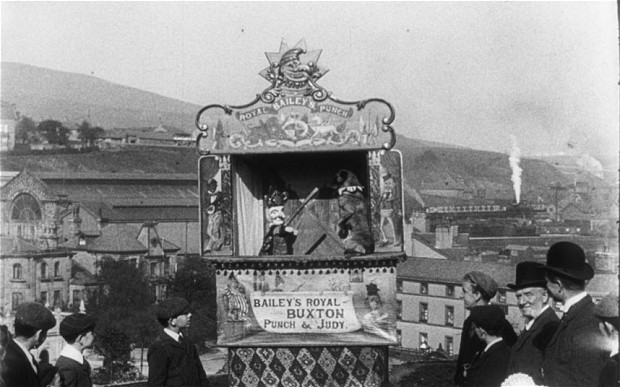
A still from Mitchell and Kenyon’s Punch & Judy Show in Halifax (1901). Copyright: BFI National Archive
So, last week, I found myself watching some early films in the BFI Southbank. Same old, same old, you might think. But these early films were being shown on massive MTV Cribs-style tellies in the BFI foyer. And while many of them were from the Mitchell and Kenyon archive we know and love, they were unseen treasures, having been gazed upon only by archivists during the past century.
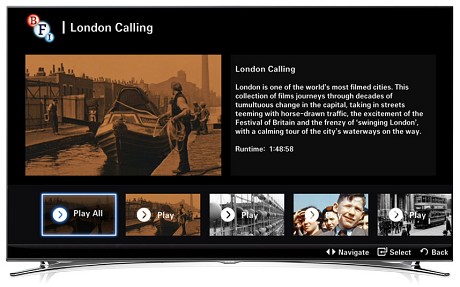
This unexpected alliance of Edwardian content and 21st-century technology has come about via the BFI’s new app, developed as part of the Film Forever project. It’s an app for Samsung Smart TV and Smart Hubs, and it allows viewers access to a treasure chest of film-related content, including a free Film of the Week (kicking off with A Zed and Two Noughts), interviews with film-makers, documentaries, and a whole heap of archival delights, including the M&K films. There will also be footage of events and interviews from the London Film Festival appearing when that all kicks off in October.
The archive goodies are separated into a variety of strands: London Calling and Cabinet of Curiosities, among them. There are silents across most of the ranges – many you’ll be familiar with, such as Daisy Doodad’s Dial or Wonderful London. It’s the Mitchell & Kenyon films that stand out though – they’re in a rather lovely collection called Edwardian Summer. There’s an hour and a half of footage here, a good hour of which is unseen. Robin Baker, the head of the BFI archive, calls these films: “Cinematic gold – you couldn’t get much more important.” What’s so vital about these short films, he explained, is that the “humanise the past”. They certainly captivated the crowd at the BFI.
You can see Blackpool in May 1904, with formally dressed holidaymakers parading on the pier or riding trams. There’s a Punch and Judy show, captured in Halifax in 1901 – your eye may be caught by the frisky puppy getting rather too close to the puppets, but don’t miss the plume of smoke that reveals a train station in the rolling hills behind the main event. A man in drag falls off a donkey (twice) in Hipperholme, West Yorkshire in 1901; Preston celebrates its Whit Fair in 1906. Delightfully, footage of the Chester Regatta delivers shots of boats gliding elegantly down the River Dee in the long hot summer of 1901. Watch a little further and you’ll discover a few courting couples doing what courting couples do in those very boats.
BFI’s Samsung Smart TV app
There’s silent London on show too – elsewhere in the package you can watch street scenes of Hoxton approximately 80 years before it became cool , for example.
I think it’s all gorgeous – I would like to sit down and watch all of the M&K treats in full, and there are some non-silent delights both sublime and ridiculous available too, including a Dufaycolor screen test featuring Audrey Hepburn and a public information film from the 70s starring Keith Chegwin. So this is wonderful news for those of you have, or are thinking of buying, a Samsung Smart TV, Hub or Blu-Ray player. It’s also good news for the rest of us. We may have to be a little patient, but as more of the BFI’s wonderful archive is digitised we can look forward to their films being made available in more ways. BFI apps for everyone please: not just on smart TVs, but on smartphones and tablets, perhaps?
Underground, surely one of the greatest “Silent London” films, has been turning our heads for some time now: at festivals, at the Barbican with the BBC Symphony Orchestra in 2011, and this year selling out screenings on its theatrical outing. This home video release is Underground’s latest, glossiest incarnation, and by rights should bring the film to the widest possible audience.
If you don’t know it (why?), the first thing you need to know about Anthony Asquith’s film is that it is an exercise in contrasts. Underground spins high drama out of a love story in a humble setting, pivoting from flirtation to daggers-drawn aggression. A hybrid romcom-thriller sounds like commercial gold, the elusive “perfect date movie”. Well, I wouldn’t necessarily argue with that assessment, but Underground is no popcorn flick: it’s passionate, arty, and unafraid to trip up the audience with a sudden, disconcerting shift in tone.
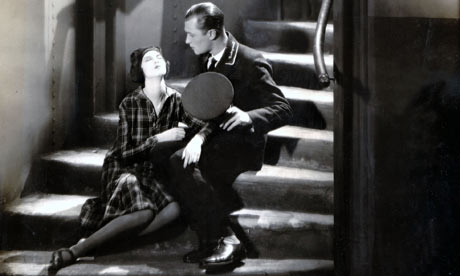
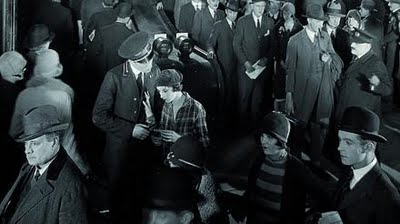
Getting down to brass tacks, this is a tale of love, jealousy, madness and missed connections. Pals Bill (Brian Aherne) and Bert (Cyril McLaglen) meet sweet Nell (Elissa Landi) on the tube one morning. Nell only has eyes for Bill, but nevertheless incurs the wrath of Kate (Norah Baring), a dangerously unhinged woman who carries a lonely torch for Bert. The narrative, and the tension, escalate as a chance meeting on the tube results in a violent confrontation at the now disused Lots Road power station. Asquith’s second film as director, the first he received a full credit for, is an astonishingly distinctive and inventive work. Everywhere there are bravura touches that mark him out as a great of British silent cinema: the shadows of tentative lovers embrace even while they pull awkwardly apart; a pub brawl is edited montage-style, a kaleidoscope of splintered violence.
So, the story of Underground may be simple, but its treatment is unexpectedly dark, stylised and violent – the good news is that this Blu-Ray does Asquith’s expressionist experiments proud. The slanting shadows of the tube tunnels and the boarding house are deep and black; the white-knuckle action of the final chase remains sharply defined.
You’ll want to turn this disc up loud too. If you haven’t heard Neil Brand’s orchestral score for Underground yet, you’ve been missing out. This full-bodied, stirring music is a masterclass in silent film music. It’s lush and classic, certainly, but unafraid to cling to the twists and jolts on the track: alert to the film’s many mood swings. Try watching any sequence in Underground with and without Brand’s score (I recommend that furtive shadow-kiss, or Kate’s mad scene) and you’ll notice how the music inhabits every corner of the film, animating it without smothering it. Should you tire of the music, there is an alternative option, one I found fascinating but initially, at least, harder to warm to. Recordist Chris Watson has created a soundtrack for Underground that uses noises rather than music. That fantasy kiss is here accompanied by the sound of trains rushing through tunnels; the birds sing when Bill and Nell picnic in the park, although the young boy’s harmonica is eerily silent. It’s finely crafted, and as artful as any musical score could hope to be. However, shoot me, but I miss the romance of the symphony orchestra in full flow.
Underground (1928)
This is a dual-format release, with plenty of room for extras (though some of them you will only find on the DVD disc). There is a brief but illuminating featurette on the restoration of the film (the short answer is that it wasn’t easy and that a French print in a Belgian archive filled in many of the gaps in the decomposing British reels) and a generous booklet featuring essays from Brand, Bryony Dixon, Christian Wolmar, Simon Murphy and Michael Brooke as well as snippets from the archive. The archive film extras are the real treat though: including glimpses of Asquith as a young boy with his notable father in tow. I was particularly taken by Under Night Streets, a 1958 documentary about the Underground network’s night workers, with its jaunty cockney narration explaining the whys and wherefores of the work done by men “hard at it, down in the hole” while the city sleeps above them.
As a souvenir of 1920s London, this is hard to beat. And it’s a damn fine treatment for a great British film. But I am greedy. This release will sit neatly on my shelf next to the BFI’s DVD of Asquith’s final silent A Cottage on Dartmoor with Stephen Horne’s brilliant score. Two out of three ain’t bad, but how about Shooting Stars to complete the set?
Underground is released on a Dual-Format DVD/Blu-Ray set by the BFI, RRP £19.99 on 17 June 2013. To pre-order, click here.









 Silent London