This is a long overdue post, but perhaps I was simply enjoying the research too much. Picking up an occasional series on this site, here are some short reviews of new books on silent film that have passed across my desk recently. Yes, I am a lucky duck.
Silent to Sound: British Cinema in Transition, by Geoff Brown
If a story is worth telling, and this one certainly is, then it is worth telling with style. In this case, Geoff Brown relates the story of the arrival of sound in the British film business with an eye for the eccentricities and absurdities that make it not just a pivotal moment in the medium, but a good yarn, and one that is revelatory about the national industry. Geoff Brown, journalist and researcher, has been studying the arrival of sound in Britain for years now as part of an AHRC-funded project and the result is this deeply enjoyable and admirably detailed book about a long and strange process, which when told with Brown’s light touch and quick humour is as diverting as it is informative. The serious point is that Brown’s emphasis, where he has access, is always on the films themselves. And that, along with the quotations from the critical discourse that I particularly cherish, is what really gives this book its colour.
This is an extended and adapted version of a contribution I made at the 2024 Domitor conference in Vienna. I spoke as part of a roundtable on Curating Early Cinema Today, chaired by Maggie Hennefeld. Full details of the roundtable are at the end of this post.
————-
Media history is doomed to repeat itself, first as travesty, then as art. I’m kidding, but only a little. Here are some thoughts on why early cinema is trending in the 21st century, why I am writing this blog, and perhaps, why you are reading it.
Since the digital transformation of the film industry at the turn of the 21st century brought with it a new surge of creativity and of anxiety, through the rise of audiovisual social media, from YouTube to TikTok and to the dawn of AI, we are living in an age of constant new-media excitement, and panic. These mew forms of communication belong to youth; to older eyes they appear baffling, and probably dangerous. In this state of anxiety and attraction, we have much in common with the spectators of early cinema in the years following the turn of the previous century. Our new platforms, expressly suited for exhibiting the “cinema of attractions”, have created their own stars, and genres. And just like our ancestors sharing in global astonishment at Charlie Chaplin, Asta Nielsen, or Max Linder, we experience anew the enhanced possibilities of mass communication, best expressed by the world-shrinking concept that is “going viral”.
Caroline Golum’s excellent article ‘Cinema Year Zero: Tik Tok and the Grammar of Silent Film’ (Mubi Notebook, 25 February 2021) aligns the fixed-camera, stop-and-start-editing and subject matter of TikTok with the mechanic and style of early cinema. I think her analysis is sharp, and I highly recommend the piece. It strikes me, though, that the best way to describe TikTok, or any new-media platform, from Medium to BlueSky, is to be alert to its specificities as much as to its similarities with other media.
Therefore we should say that while TikTok has much in common with early filmmaking, it is defined by its Chinese ownership, by the portrait-phone aspect-ratio, the placement of screen furniture, the captioning and comments functions, the use of memes and lip-sync comedy, the proliferation of shared music clips and the technique of stitching, an extension of the repost or quote function on other platforms. That it has become a natural home for both infuencers and brand promotion, so has a prominent place in the history of advertising media in particular. We can say that very much unlike early film it is tailored to a single spectator, handheld close to the eyes like a book, not aloft like a projection, and that the scrolling process, with its minimal interaction for maximum content, has more in common with the disaffected channel-hopping of the over-stimulated TV viewer than with cinema exhibition. That the algorithm that fuels the For You Page is similar to social feeds on eg Facebook, but has its own, sometimes, mysterious and ruthless methods[1]. That TikTok is TikTok, and also a collation of concepts from other media. Just as early film has its roots in optical toys, photography and the magic lantern, among other “pre-cinema” objects, and is also its own, glorious invention.
TikTok’s likeness to early film may not persist. Already it is facilitating longer videos, live streams and more complex editing. Time is ticking. And as is already apparent, these new-media platforms tend to drift from sanctuaries for short-form content to incentivising longer formats with advertising revenue. The most talked-about video on YouTube right now is a four-hour vlog about the ill-fated Star Wars hotel (currently on eight million views). At first populated by singular entrepreneurs and creative amateurs, the platforms tend to become colonised by companies who capitalise on the new media and align it with corporate structures. The new platform’s heyday is fleeting, the audience adjusts or moves on, and the cycle begins again.
Asta Nielsen in Hamlet (Svend Gade, Heinz Schall, 1921)
Which brings us here. In 2010, after the first social media revolution had taken place, I founded this website, a blog called Silent London. Its stated purpose was to collate listings for silent film screenings in London, its broader intent was to share the love of silent cinema, though this, it soon became apparent, was pushing at an open door. The modus operandi was not to copy out texts from history books, but to acknowledge that there is an audience for silent cinema right now, who may be new to the subject, whose reason for viewing is not research or scholarship, and may not be motivated by a film’s place within the canon, nor its relationship to canonical filmmakers. They enjoy early and silent cinema for its own sake. Silent cinema is, among many other things, an evening’s entertainment. Its importance does not only reside in its centrality to film studies textbooks.
The readers of Silent London, I have learned over the past decade and a half, encompass scholars, archivists, filmmakers and other practitioners in related fields. But primarily, this blog speaks to cinephiles: moving-image hedonists, who enjoy silent cinema as part of a varied filmic diet. Which is not to say that silent film screenings are not special. The collective frisson of silent cinema spectatorship, an audience’s imaginative leap towards the screen, the dynamic energy and emotional emphasis of live accompaniment – Silent London readers revel in these pleasures. While we respect the work of the archivists and scholars who facilitate these screenings, Silent London exists within the space of contemporary film culture. And so, increasingly, does silent cinema itself. More and more, we recognise the aesthetics and technique of early and silent film bleeding from the archive into freshly minted contemporary cinema. The connections between films of all eras crackle in our minds and in the imaginations of the filmmakers we love.
So I try to erase the time distance. I write about early films not because they are old, but because they are so young. I don’t talk about old movies, but young cinema, those films that were made when the medium was new and its possibilities had not been fully mapped out. Young films do not yet have histories, but are bursting with faith in the future of the medium[2]. They have this in common with the best of contemporary cinema.
I take this approach when writing elsewhere on early and silent film, and as a critic I am also witness to the prevalence of silent cinema aesthetics in new films. Increasingly this phenomenon is my pet subject, especially in my monthly column for Sight and Sound (The Long Take), and on the tab on this site labelled “At the Talkies”. Related but not quite the same: for a while, Pete Baran and I hosted The Sound Barrier, a podcast devoted to finding connections between new releases and the silent archive – it was vastly enjoyable to record.
Tabu (Miguel Gomes, 2012)
Visual storytelling abounds in cinema, but sometimes the references are more specific, the commitment to ditching dialogue firmer. You can take any one of a number of examples, from the Oscar-winning faux-silent The Artist (Michel Hazanavicius, 2011) to dialogue-free animations The Red Turtle (Michaël Dudok de Wit, 2016) and Robot Dreams (Pablo Berger, 2023), the elevated pastiches of Guy Maddin and the hands-on archival adventures of Bill Morrison, who takes silent cinema’s materiality as his central subject, to the traces of silent cinema style in the arthouse films of say, Miguel Gomes (Tabu, 2012, Grand Tour, 2024) and Alice Rohrwacher (Le Chimera, especially). Next week at Il Cinema Ritrovato in Bologna, Rohrwacher will be in dialogue with Juho Kuosmanen on the subject of The Future of Cinema (Silent) – and naturally, I have a ticket for that conversation. The best film of last year, Jonathan Glazer’s The Zone of Interest, was essentially a silent film and a sound film, playing at the same time. The director has said as much himself, and that he has harboured aspirations to make a full silent film. The Fall (2019), covered on this site, was one short-form venture into the form. Or something like it.
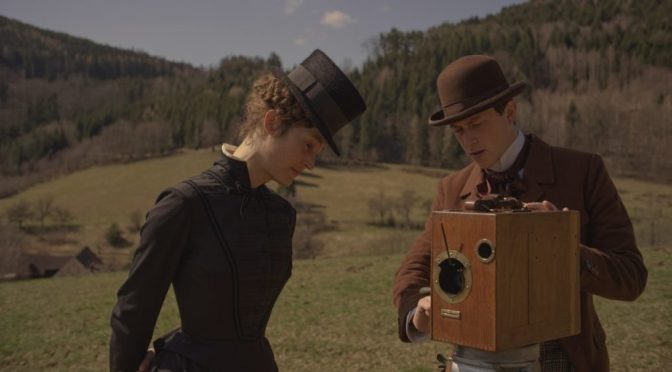
But is it really a silent film, quiz the sceptics? This question is mostly beside the point. The postmodern magpie impulse leads us away from purism and into remix culture. We recently welcomed the re-emergence of Musidora via the revival of Irma Vep on TV with Alicia Vikander, following Olivier Assayas’s 1996 film of the same name starring Maggie Cheung[3]. I would love to your draw your oversubscribed attention to the mischievous appearance of Louis Le Prince as a supporting character in Marie Kreutzer’s Corsage (2022, pictured above) – improbably wielding a reel of celluloid and giving the young Empress Sissi an opportunity to express herself in a medium of self-portraiture far removed from the formality of a court painting in oils. The mechanics of an early film apparatus in the service of the imperial selfie. Young cinema references live again in gleefully anachronistic contexts.
Irma Vep (Olivier Assayas, 1996)
As has been remarked before, this is happening alongside an explosion in the availability of early and silent film on DVD and Blu-ray, even on streaming platforms, and the growth in archive cinema festivals. These things are clearly related. We might trace this “silent film revival” back to the centenary of cinema celebrations in 1995, which reminded us all over again of cinema’s youth, the compelling beauty and strangeness of early film – the century looping back on itself like a reel.
So there are intellectual and practical reasons for the persistence of silent cinema style. But I would argue that there is also an emotional pull, drawing us back to the first decades of filmmaking. This is counter intuitive. When Billy Wilder made Sunset Boulevard (1950), and Stanley Donen made Singin’ in the Rain (1952), the memories of the silent era, and the fraught transition to sound, were still relatively fresh, barely a generation away. The filmmakers were excavating their own youth, their own back catalogues. Conversely, no one living today feels genuine nostalgia for the early film period. We don’t remember that far back.
However, I think there is a connection. We yearn for the new media excitement of ten or twenty years ago or more – the same sense of a moment captured in time emerges when we look at both. Whether the form in question is MySpace or Vine or YouTube vlogs, Facebook pokes, gifs, hashtags or Boomerangs. Ah, the days of landscape-oriented video. Or that particular format, the music video, corralled into an immersive exhibition practice called MTV and genuinely ubiquitous, now still as glamorous and sometimes expansively produced, but streamed singly online, or relegated to a “background screen” in a bar or hotel foyer. Who remembers renting a VHS, home-taping a movie off-air, or covertly watching a “video nasty”[4]? Laser discs, even. Or simply broadcast TV, in a choice of three or four channels. We have always been watching, and experiencing newness and loss.
Decasia (Bill Morrison, 2002)
Remember how we discovered, studied and adapted to the new forms, found ways to use them for our own amusement, our own conversations? We have become adept at learning to love and then learning to move on, from new media. The Artist, just like Sunset Boulevard, takes the loneliness of standing still while the world turns to a new novelty, as its central theme. Decasia, with its once carefully crafted images engulfed by decay, expresses this bereavement without saying a word. Sometimes, rarely, we find a form and stick to it, in defiance of fashion. Why is this blog still a blog, and a WordPress-hosted blog at that, when my peers have migrated to Substack, or pivoted to video? I must be old-fashioned, I guess, or simply nostalgic. Hands up if you remember when this site began, perversely on Tumblr? Or when Twitter – a platform that persists even now, but under a new name, with dangerous new rules, and diminished engagement – was integral to its growth?
When we look at early film we recall the ephemerality of once-new media: so many young cinemas, and one powerful pang. The joy of novelty and movement, experimentation and awkwardness, of discovery and reorientation and then the inevitable shock of absence. We understand the connection between our modern screen culture, and the early film period – but more importantly we feel it too. New media forms demand and swallow our attention, but their content is easily lost, and their existences short. This emotional link, as well as the artistic expressions that it provokes, is a rebuke to the idea of linear history. This is fine, because cinema time is always instantaneous. And cinema will always find a way to stay young. For a multitude of reasons, we are living in the silent film revival, and I find myself racing to document it.
Early cinema is trending in the 21st century, but how are we going to make the most of it?
Why “early cinema” in the twenty-first century? Over the past several decades, there has been a global revival of silent film culture—from international festivals and archival research collectives to popular podcasts, blogs, and social media fandoms. Passionate communities of students, scholars, archivists, curators, artists, and musicians have rallied around the resurrection of movies made over a century ago. But what is the specific appeal of “early” cinema—as an aesthetic form, experimental impulse, and historiographic gambit—toward bringing silent film culture into contact with the possibilities and crises of the present? New media pose irresistible parallels with early film exhibition practices, epitomized by the recurrence of viral temporal loops and attraction-based spectacles. Yet there are logistical challenges to curating early films (which are often very short) as opposed to feature-length works. Beyond material considerations, how do the uneven politics of visibility and representation in early filmmaking (its radicality and racism, for example) speak to feminist, queer, decolonial, anti-racist, and other social justice movements today? Digitization has made the early film archive widely accessible—but unmanageably plentiful. Its contents encompass 4k nitrate scans, physical media collections, curated streaming databases, and the unmoderated recesses of YouTube and TikTok. How best to give method to early cinema’s madness by concocting playful, new conceptual categories for thematic and speculative curating? Most importantly, who are the audiences for early cinema today (beyond the usual suspects) and how can we (early film evangelists) work together to identify, curate, and contextualize an evocative range of programming and syllabi that will bring new publics into the fold?
Silent London will always be free to all readers. If you enjoy checking in with the site, including reports from silent film festivals, features and reviews, please consider shouting me a coffee on my Ko-Fi page.
[1] For a commentary on the capitalist realities behind the apparently hobbyist jollity of TikTok comedians, see Maggie Hennefeld, Death by Laughter: Female Hysteria and Early Cinema (Columbia UP, 2024)
[3] This excellent film was my gateway into a lifetime of silent film fascination
[4] Film such as Prano Bailey-Bond’s Censor (2021) appeal to this nostalgic itch, just as clearly as The Artist appeals to those who admire the aesthetics of silent Hollywood.
True confession: in 2019, I fell in love with some flipbooks. It was at the Castro Theatre in San Francisco, where so many good things happen, and the flipbooks in question were animated and projected on the big screen. I saw them many hundreds of times their real size, but perhaps that reflected their significance.
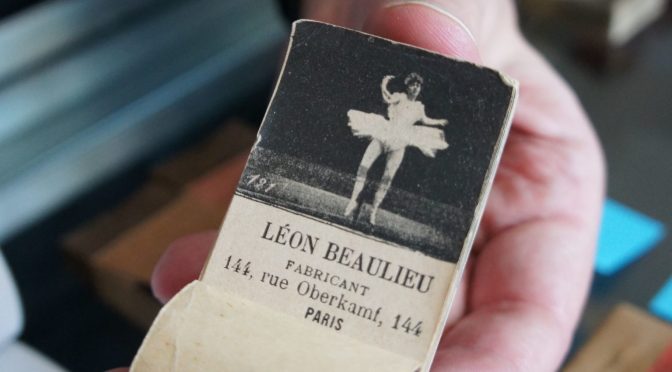
“My favorite restoration of the festival didn’t involve film at all, but some miniature ephemera, which were perhaps imperfect as moving images, but seductively tactile, and fragile, as artifacts. Festival president and film restorer Robert Byrne and French scholar Thierry Lecointe have been studying a collection of paper-and-card flip books from the late 1890s, produced by a man named Léon Beaulieu. Containing just a few brief seconds from a film, these are the unforeseen missing link between early cinema and modern GIFs. It seems that Parisian Beaulieu had a checkered life, finding himself frequently in trouble with the law, and these flip books may well be bootlegs of sorts, reproducing scenes from early films from the Gaumont and Edison companies, and some by Georges Méliès. Some of the films captured here in a few brief images are lost in any other form, and the process of identifying them all involved meticulous study of background décor and objects.”
The digitised, animated flipbooks I was watching were one outcome of an international film-history detective story. I 2013 Paris-based film scholar Thierry Lecointe began investigating a flipbook attributed to one Léon Beaulieu that might, just possibly, have been made from a few frames of a long-thought-lost Georges Méliès film…
Pordenone is about halfway between Athens and London, right? So at some point on Monday I was probably there, just 37,000ft above it. Travelling cramped my style somewhat at the start of this week, but I don’t give up on silent cinema. Not ever.
It might seem perverse that I was at a open-air cinema in Athens watching Ammonite when I could have been trying to force my hotel wi-fi into rendering a masterwork of Chinese cinema on my laptop,. However, I’ll tell you this: there is a magic lantern scene in Ammonite, while made me smile, ruefully, and remember the fantastic first programme of the day, which of course was …
Day Two The Brilliant Biograph! The name contains its own review. Many of you will have seem many of these films before, or at least heard me bang the drum for them, but still, it’s worth reminding ourselves what marvels they really are.
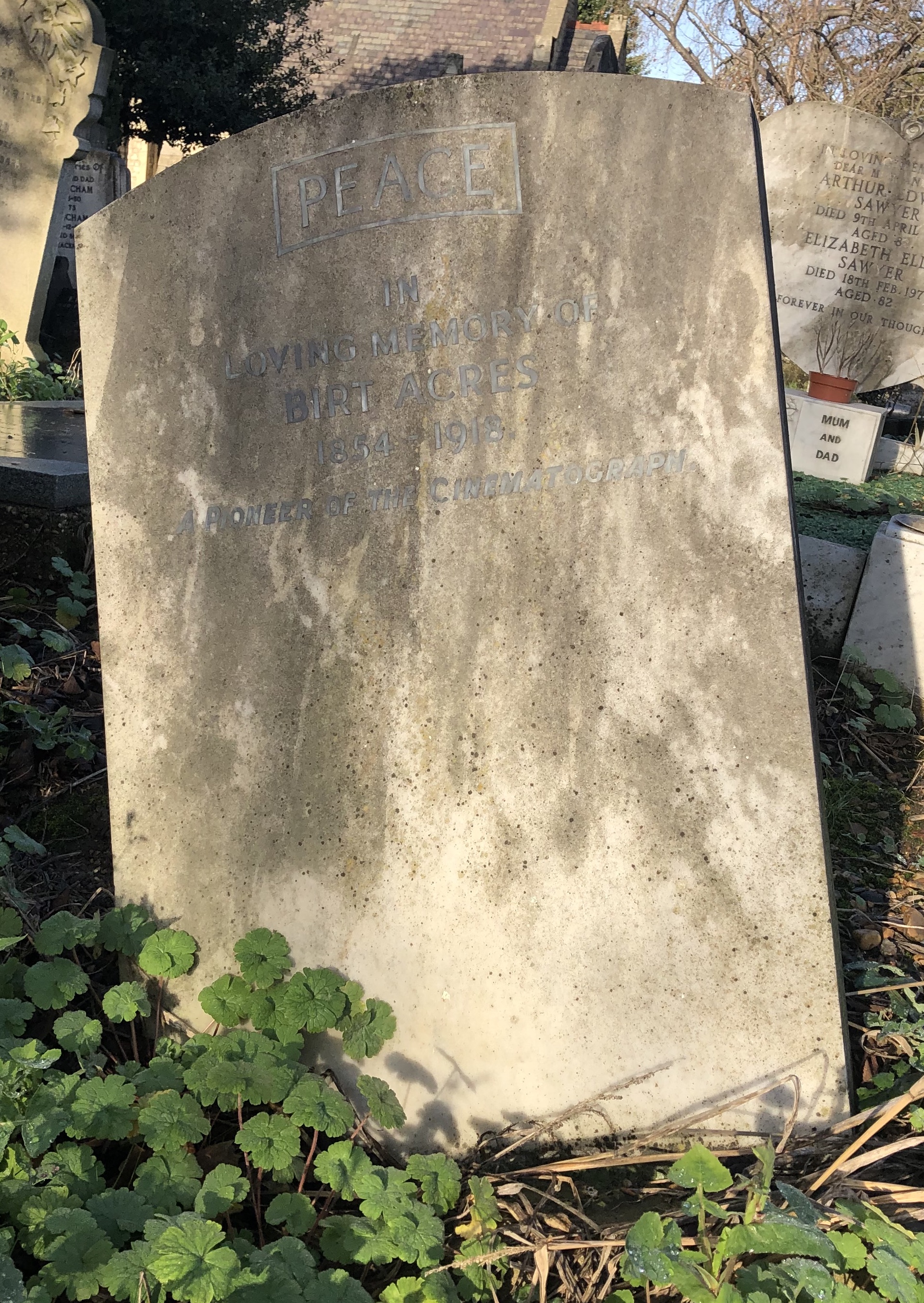
Birt Acres was born on 23 July 1854 in Richmond, Virginia. He died on 27 December 1918, 100 years ago today, in Whitechapel, London. He was buried in a cemetery in Walthamstow, further out of the city, and just a few minutes away from where I live.
Birt Acres’s grave in Walthamstow, east London
The other day I took a stroll to Queens Road Cemetery, London E17 to take a look at Birt Acres’s grave. It may be hard to make out the lettering in this pictures, but beneath the caption “Peace”, it reads:
In
loving memory of
Birt Acres
1854-1918
A pioneer of the cinematograph
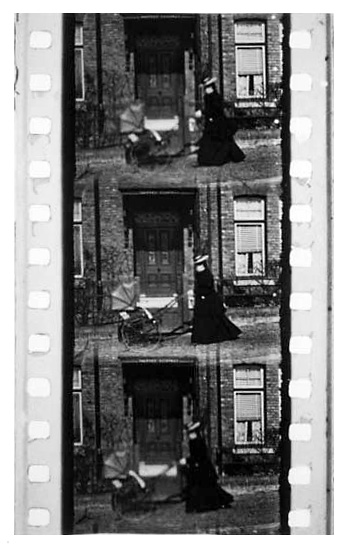
Acres was a pioneer all right – a massively important figure in the history of early British cinema. In 1894, when he was working as a photographer in Barnet, RW Paul sought his expertise on a project of his: the development of a motion picture camera. According to Paul, he rejected Acres’ design suggestions, but they continued to collaborate and Acres patented the new device, so it’s likely his contribution was actually significant. Together, in 1895, they filmed the “first successful motion picture film made in Britain”, outside Acres’s house, Clovelly Cottage in Barnet.
Frames from Incident at Clovelly Cottage, 1895. Filmed at Clovelly Cottage, 19 Park Road, Chipping Barnet
It was auteur day at Pordenone, with works by three silent master-directors scattered nonchalantly through the programme: Ozu, Murnau and Dreyer. But auteurism is anachronistic to silent cinema and anathema to many early film aficionados, so fittingly some of my favourite screenings today fell far from the canon.
UN DUEL APRÈS LE BAL (FR 1902) Credit: Gosfilmofond of Russia, Moscow
One of the best things I saw all week was Valentine Robert’s presentation of Tableaux Vivants in the early cinema strand. This was something very special indeed – like a video essay, but more expansive. The idea was simple: popular paintings were projected on screen before early films that mimicked their compositions. The effect was spectacular though, and very illuminating about narrative and visual culture in the early film period. As this presentation made clear, many narrative films at this time were also adaptations of images associated with historical, literary and biblical narratives, rather than the story themselves. Or both, at least. Erotic films too, as you might imagine, took their cues from paintings and sculptures. The care and detail in this presentation was very impressive and all served the argument beautifully. All this as well as Stephen Horne’s gorgeous accompaniment for a long, and very varied presentation, comprising 30-plus films and many more art works.
The double-bill of German films this afternoon featured some very familiar names. First there was Der Golem. No, not the 1920 one, but the 1915 original, long thought almost entirely lost. The bad news is that it is still lost, but some more fragments have been discovered and spliced together with titles to form something that is not really a film, but rather a suggestion of one. In this kinda prequel Paul Wegener’s clay man comes to life brilliantly and with just the most tender and slender of movements. Other scenes reinforce the sense that James Whale’s Frankenstein would be nothing without this silent-era antecedent. Utterly fascinating.
This is a guest post for Silent London by the Lumière Sisters, a collective of writers who hang out over at the Chiseler.
Celluloid preserves the dead better than any embalming fluid. Like amber preserved holograms, they flit in and out of its parameters, reciting their own epitaphs in pantomime; revenant moths trapped in perpetual motion. Film is bona fide illumination – as opposed to religion’s metaphorical kind – representing the supremacy of alchemy and necromancy over sackcloth and ashes. The inmates, emboldened under the spell of Klieg lights, were not only running the asylum, but re-shaping the world in its image, and the blunt instruments of church and state proved impotent against the anarchy of this freshly liberated ghetto.
The censors were on to something, even if they could never fully articulate what precise blasphemies were being committed. God, as a vague and unseen deity died the precise moment cinema was born, and was replaced by a new celestial order. Saints and prophets made poor film characters, always carrying the feeling of having stepped out of a stained glass window, flat, Day-Glo icons uncomfortable in motion in three-dimensional space. Movies rejoiced in dirt and rags, texture and imperfection, so that the most lacklustre clown easily outperformed all the mock messiahs. At 45 minutes, Fernand Zecca’s The Life and Passion of Christ (1903) is one of the earliest feature films, but compared to the same filmmaker’s less ambitious, more playful shorts, it’s a beautiful snooze. Another execution climaxes his Story of a Crime (1901), in which we get to see, by brutal jump cut, a guillotine decapitation before our very eyes. This, as Maxim Gorky prophesied, is what the public wants.
Sherlock, Jr (1924)
Or maybe “the public” could suddenly define itself in ways heretofore unthinkable – the telescope, once a divining rod for mapping heaven, became the ontological instrument of a terrestrial-based voyeur. And cinema blessed mere mortals with evidence of something greater than mere “being”: empirical evidence of a shape-shifting, perception-based self, free of original sin and free to indulge in all that remained. For one glorious second, or two, the audience was regent and the watchword was Chaos.
Was this the perfect Pordenone day? Very likely. Sunshine, coffee and great films in abundance. Plus, not one but two appearances from Ivan Mosjoukine. Giornate excellence achieved.
First things flipping first. Best. Who’s Guilty?. Ever. Anna and Tom are in love, a bit. Anna considers marriage but doesn’t come close. And the backdrop is a factory, which soon becomes embroiled in a workers’ dispute. Yes there is a strike! Much broader, bolder drama here, with nice location shooting and some sharply composed long shots. if Eisenstein had made potboilers. Maybe. And before the morning’s main event, a now-obligatory trip to an ersatz pre-revolutionary Russia with Ivan Mosjoukine in Der Adjutant des Zaren, a charming Japanese animation about a boy grown from a peach who became gentle and strong – but mostly badass enough to slay a shedload of ogres.
This morning also featured a quartet of City Symphonies to delight the eyes. I especially liked a very elegantly shot look at the reconstruction of Tokyo in 1929 (I know!), Fukko Teito Shinfoni and a zoom up Chicago’s main drag in Halsted Street (1934). A tour of Belgrade was pretty enough but lacked direction and so outstayed its welcome. I am very fond of these films though, and look forward to more. Continue reading Le Giornate del Cinema Muto 2016: Pordenone post No 6→
Surprises can be fun, but maybe, when you’re stumping up for film festival tickets say, it’s good to get what you really wanted. The silent movies on offer at this year’s London Film Festival may not contain any unexpected treasures, but they do comprise some of the year’s most anticipated restorations, so let’s fill our boots. Our only reservation is that a few of these silent screenings do clash, so choose your tickets carefully.
Variety (1925)
Variety (1925)
Well don’t I feel a little less sick about missing this new restoration of EA Dupont’s romantic drama at Bologna? Emil Jannings, Lya De Putti, that woozy unleashed camera … you know this is going to be a treat. Variety is a highlight of Weimar cinema, and deserves to be seen at its shimmering best. It’s screening just once at the festival, in NFT1, so make sure you’re there. The word from those who have seen the new 2k resto already is: the print is gorgeous, but there is less enthusiasm for the new score, from the Tiger Lillies. No such worries for us cockney sparrows, who will have the pleasure of Stephen Horne’s assured accompaniment.
Stan and Ollie in The Battle of the Century (1927)
The Battle of the Century (1927)
You might have heard a whisper about this one. The rediscovered second reel of Laurel and Hardy’s The Battle of the Century makes the film almost entirely complete – and essential viewing for fans of Stan and Ollie. Enjoy it at the London Film Festival with three more L&H shorts for company and musical accompaniment from messrs John Sweeney or Stephen Horne, depending on which of the two screenings you attend. Bear in mind, if you’re not heading to Pordenone, that the first screening is a full 24 hours before it plays at the Giornate – could this be a world premiere of the restoration?
Benedict Cumberbatch is all very well (very well indeed if you ask me), but if any actor could lay claim to the “definitive” Holmes, it was William Gillette. And for many a long year, the film that committed his stage performance of the gentleman detective to celluloid was thought to have vanished in the night. An elementary mistake, Dr Watson – the film was rediscovered at the end of last yearand has been prepped for a Blu-ray release and a handful of festival screenings, including this one, in NFT1 on Sunday 18 October. There’s live music from Neil Brand, Günter Bichwald and Jeff Davenport and an irresistible accompanying short, A Canine Sherlock Holmes (1912).
Bailey’s Royal Punch & Judy show in Halifax (1901)
Two Barrymores today, two appearances from Little Tich and too much, as usual, to recount here. But like the hard-working Cupid in La Rose Bleue (Léonce Perret, 1911), I’m going to give it my best shot. So if you’re sitting comfortably …
Today's highlight easily @professorvaness' brill Edwardian Entertainment program. Color fireworks, M&K, palmistry, clowns, fairs etc #GCM33
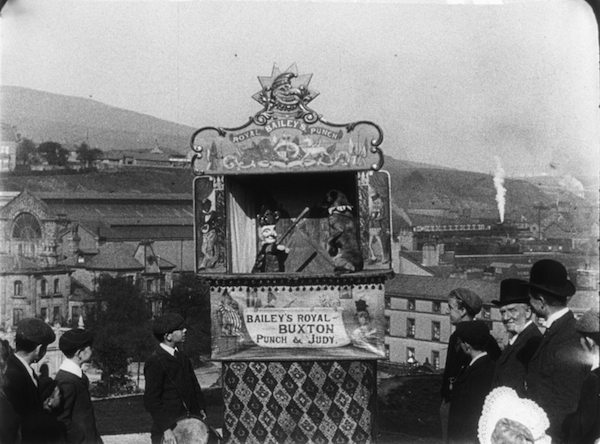
In a move designed to cure, or provoke, homesickness in weary British bloggers, this morning we were treated to 90 minutes of Edwardian Entertainment courtesy of Bryony Dixon and Vanessa Toulmin. Accompanying the 40-odd shorts and fragments on piano, percussion voice and everything in between were Stephen Horne and Frank Bockius on stellar form (Horne’s witty use of a kazoo, yes kazoo, in a telephone sketch was priceless). This was a peek at England in its Sunday best and some more outlandish costumes. It was all fun, fun, fun with trips to the seaside, the Punch and Judy show, fireworks, the cinematograph, barrel jumping, the fun fair, the panto and many wonderful processions showcasing our forefathers and mothers’ considerable talent in the fields of costume design and formation dancing – and not just Morris troupes and maypoles. It’s enough to make one crave a stick of rock and a trip to the illuminations. Certainly my northwestern heart leapt at a panorama of Blackpool. And who could resist the sight of a row of Mutoscopes on Morecambe beach with the sign “Look at this and get a laugh”. The perfect solution for those of us who want to watch the flicks all day without depriving ourselves of vitamin D.
If you really want sunshine at this time of year, a trip to Greece is in order, and Oi Peripeteiai Tou Villar (The Adventures of Villar, 1924), the oldest film ever restored by the Greek Film Archive, was a sketchy comic caper, doubling as a sun-dappled tour of Athens. Larky nonsense, but great shots of the Acropolis etc. And now I can say I have seen a Greek silent movie, which is sure to wow the folks down at the Rose and Crown on my return.
The Toll of the Sea (1922)
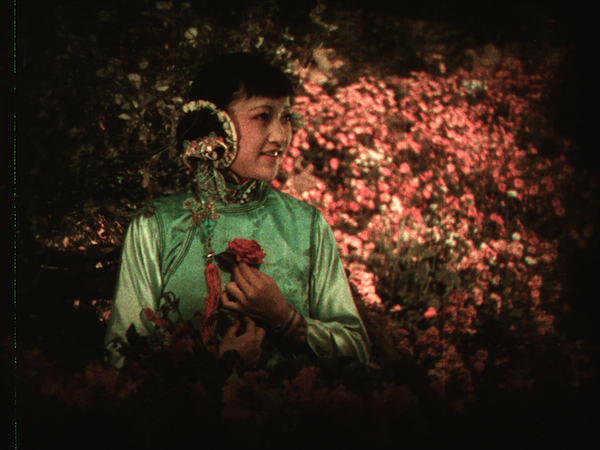
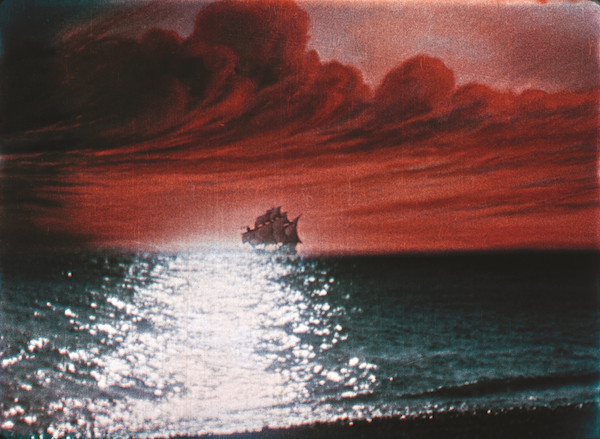
But if you want something really gorgeous … the second Dawn of Technicolor compilation had many diverting treats inside, culminating in The Toll of the Sea (1922). This was an exceedingly picturesque melodrama, a reboot of Madame Butterfly in which Anna May Wong plays a young Chinese woman in love with an American. But the bond of love and “marriage” is held more sacred by her than him … Oh and it all ends in sadness and sacrifice and another word beginning with S. Not before Wong’s sumptuous wardrobe and elegant garden (complete with peacock!) have been given the full Technicolor treatment, though. The sweetest of sorrow and the sugariest of eye candy.
We have passed the halfway point of the Giornate now, but some would argue we have taken the long route round. Because Wednesday night was epic, you’d have to agree. Tonight we witnessed all five hours of Fritz Lang’s towering, geometric monument to mythic nationalism, Die Nibelungen (1924). And arguably, grandeur was the order of the day: from a spot of early morning swashbuckling to mist-covered mountains and a trip to the opera.
Waking to grey skies and a slick of drizzle on the pavements can only mean one thing here in balmy Pordenone. To merrie Englande! To Ye Olde London Towne, in truth, for The Glorious Adventure (J Stuart Blackton, 1922) – and I have a feeling that the cleansing flames that purged in the spider cave in Tuesday night’s Pansidong are about to smite these half-timbered streets. Do I spy Nell Gwyn and Samuel Pepys in yon King Charles II’s court, as well as carriages and banquets and taverns and bodices aplenty? Of course I do, but while this film’s only concession to realism may have been to cast a real-life aristo (Lady Diana Manners) in the lead role of Lady Beatrice Fair, it’s really far better than it sounds. Of course, the reason that The Glorious Adventure is on the schedule, and the reason it is notable, is that it was shot in Prizma Color – it’s a full-colour silent, of sorts. And while the colour work does have its flaws (mostly “fringing” on movement) the skin tones are realistic, and despite the limited spectrum the shades of dresses, fruit and foliage are mostly rich and clearly defined.
The Glorious Adventure (1922)
It’s a touch hokey in plot, with an earl hiding his true identity from his childhood sweetheart due to “an excess of chivalry” and such like. But the fight scenes are strong, particularly a clash of swords in The White Horse early on, and Victor McLaglen makes a memorable villain as heavy Bulfinch – more memorable than the real villain Roderick (Cecil Humphreys) for sure. And when the fire comes, the Great Fire of London that is, it’s really quite something: with pools of molten lead around St Paul’s Cathedral, and silhouetted timbers framing the rich reds and yellows that signal destruction. Sarah Street points out in her notes for the film in the Giornate catalogue that the fringing may actually enhance the effect of the flames – the perfect marriage of content and form. A veritable British triumph then, so can we have the Italian weather back now?
Midweek #GCM33. What with a late night Chinese 'spirit' film and early morning Prizmacolor feature I have now upgraded to 'doppio' espresso.
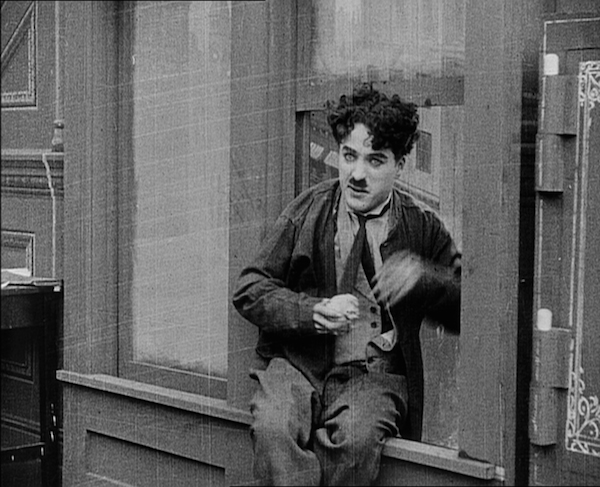
Charlie Chaplin is in the house. Naturally, this being his centenary year and all. Naturally, also, he is speaking Japanese. Because all the characters in Charlie Chaplin films speak Japanese – to a Japanese-speaking audience that is. And also to us lucky types in Pordenone tonight who saw a programme of Chaplin shorts with the accompaniment of Benshi Ichiro Kataoka along with Gunter Büchwald and Frank Bockius. Clearly they had all been in cahoots and the riotous combination of voice and music was expertly judged. A little Benshi can go a long way with me, but that’s how it’s meant to be I think: exuberance squared. The Japanese movie fragment that preceded the Chaplins, Kenka Yasubei (Hot-Tempered Yasubei, 1928) was an inspired choice – all the brawling and boozing of three or four Keystones packed into a frenetic half hour.
Pansidong (1927)
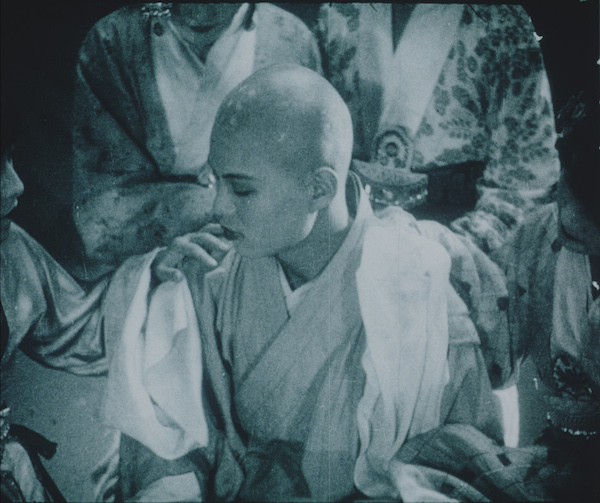
There was yet more exuberance to come at the end of the evening with Pansidong (The Spider Cave, Darwin Dan, 1927). This Chinese silent, once thought lost but recently rediscovered in Oslo, was introduced charmingly by the director’s grandson, who was seeing it for the first time tonight. I hope he enjoyed as much as I did: it was a silken concoction laced with surprises in which a glamorous girl gang of “spider-women” entrap a monk in their cave, among the spirits. There’s magic, and swordfighting, and some very witty subtitles. Mie Yanashita accompanied tightly on the piano and percussion, including a clattering cymbal that made many of us jump – right on the nose of that wedding-night moment.
Keller-Dorian: Film Gaufré: Sonia Delaunay (1925)
But it’s not time for bed quite yet. Here’s what else happened today. The short version: lots. I’m going to begin with something really quite beautiful. Several things in fact.
The mountain footage in 'Colored Views from the Entire World' with musical accompaniment by Stephen Horne was particularly magical. #GCM33
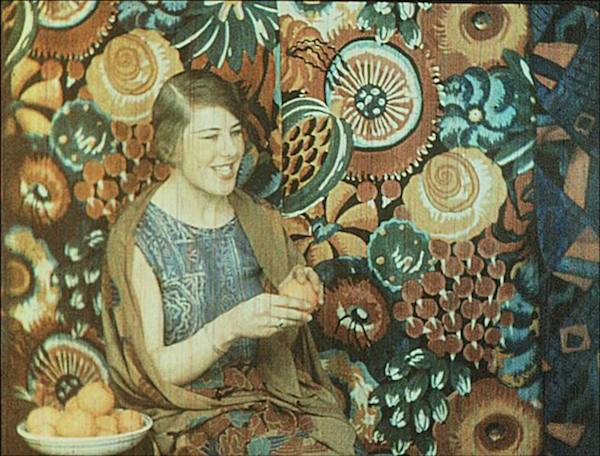
The leopard-skin trim on a Paul Poiret evening coat, scarlet fireworks in a sea-green night sky, vicious yellow flames engulfing a city tenement, a bowl of fresh oranges amid Sonia Delaunay’s sumptuous Orphist designs, gold sequins twinkling on a chorus line and a freshly dyed sugar-pink frock: the first shorts programme in the Dawn of Technicolor strand was a many-splendoured thing. Many different colour processes were on display from Kelley Colour to hand colouring to Natural Color to … far too many to name here. But this was as entertaining as it was instructional, and all beautifully and kaleidoscopically accompanied by Stephen Horne on piano, flute, accordion, and xylophone … at least. Married in Hollywood, the parting shot, was a Multicolor finale from a lost black-and-white sound feature. It must have been an impressive technical achievement, but it was also incredibly cheesy. Quattro formaggi.
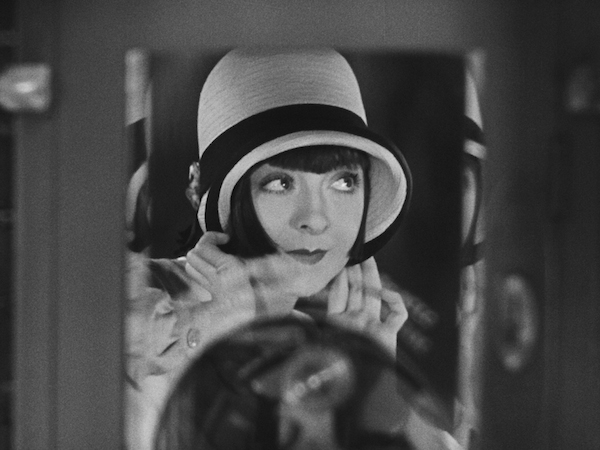
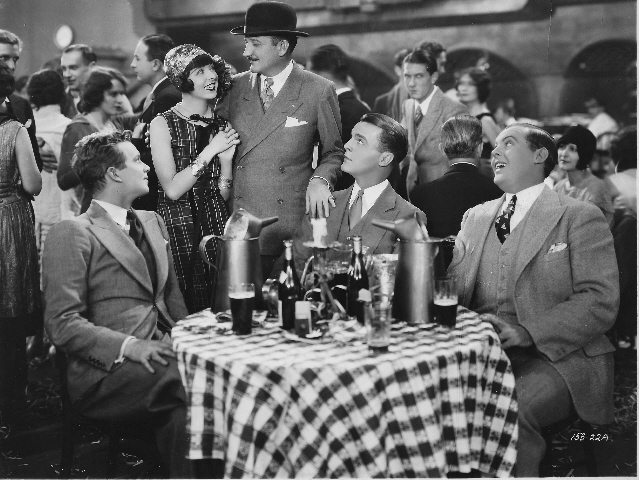
Colleen Moore, first among flappers, is so universally adored among the silent cinema crowd that she can get away with anything. Case in point: today’s screening of the irrepressible Synthetic Sin (1929), in which La Moore plays an aspiring actress whose talents lie further towards comedy than tragedy. So much so that she interrupts a dance show to perform a wigglesome, gigglesome routine of her own … in blackface. She wins the crowd in the movie, and perhaps a little more guardedly she repeated the trick in Teatro Verdi today. You can’t edit the past, and you can’t deny the crowd-pulling power of Colleen Moore.
Synthetic Sin was a winner today, a restoration courtesy of the Vitaphone project; this film has been primped back to its best, and even comes with a snippet of its original sound-on-disc score. That blackface moment wasn’t only thing that was “of its time” about the movie, but Moore’s personality, and charm, and sheer comic talent brook no obstacles. An early scene in which she mimics “Paderewski playing Rachmaninoff’s Prelude” was far funnier than such a skit had any right to be. A thunderous round of applause ensued, from a live audience 85 years too late to catch the real thing.
The Tailor from Torzhok (1925)
But Moore only arrived four screenings into the day. We’re calling this a Manic Monday, with three heavyweight movies in the morning alone: two Barrymores (Ethel and Lionel) and a treat from the Russian Laughter strand: Zakroischchik iz Torzhka (The Tailor from Torzhok, Yakov Protazanov, 1925).
Yes, the name of the Russian Laughter strand has raised some sniggers in the hotel corridors and café terraces of Pordenone already, but we don’t listen to haters here at Silent London. And we’re right, as usual, because The Tailor from Torzhok was a hoot. This is Soviet cinema’s first feature-length comedy, and it’s definitely western-style in its reliance on physical stunts and romance. It was intended to promote the state lottery, but enjoyably not a single likable character gives two figs for the lotto – the government bond is sold on, rejected, crumpled and, ahem, fixed to the wall with nasal mucus. Ick. Great comic work from Igor Illiinsky in the lead role, whether pratfalling or winningly rubbing shoulders with his pretty miss.
The launch of the London Film Festival programme is a cascade of A-list stars, esteemed auteurs, Oscar contenders, Hollywood blockbusters and world premieres. But enough of all that. Did someone mention Colleen Moore? Here’s our rundown of the silent cinema offering at the BFI London Film Festival this year.
The Battles of Coronel and Falkland Islands (1927)
The Battles of Coronel and Falkland Islands (1927)
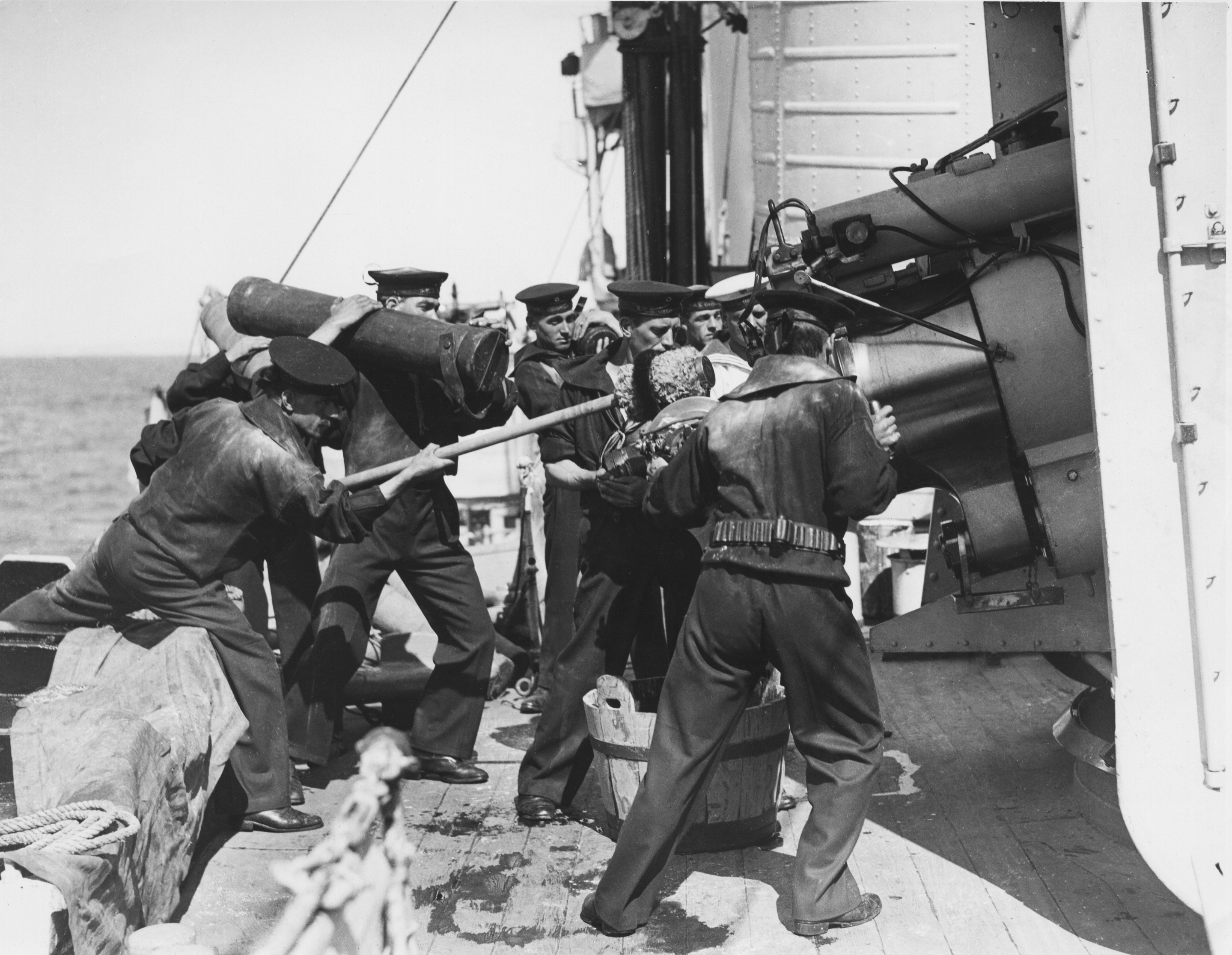
“Virtually unknown” it may be, but this fantastic British war film was a real genre game-changer. Walter Summers directs the noble tale of “a victory and a defeat almost as glorious as a victory”, which was a hit with audiences and critics both on its release. Unjustly neglected for years, TBOCAFI has been rescued from osbcurity via a gleaming new restoration and a modern brass score, which will be performed by members of the Royal Marine band at the LFF Archive Gala screening.
Screens: 7pm, 16 October 2014, at the Queen Elizabeth Hall. Buy tickets here.
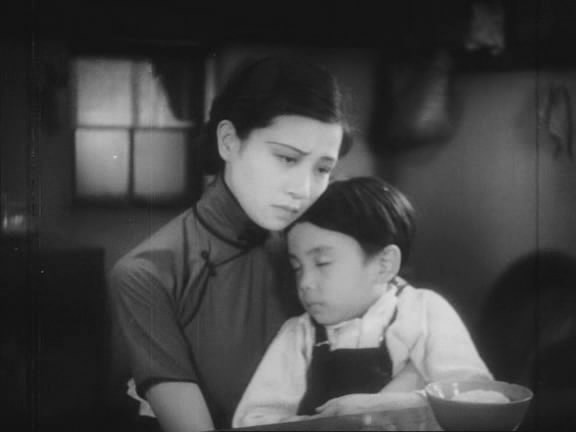
This sumptuous Chinese melodram stars Ruan Lingyu as “goddess” or sex worker, trying to care for her child, who is pushed into taking violent revenge on her pimp. Described on these pages by John Sweeney as: “Unsentimental and quite without melodrama, this is a great film.” The festival screening will be accompanied by the English Chamber orchestra, playing a new score by Chinese composer Zou Ye.
Screens: 7.30pm, 14 October 2014, at the Queen Elizabeth Hall. Buy tickets here.
The story of the Thanhouser Film Studio follows a rise-and-fall pattern familiar to all aficionados of early cinema: innovation, success, expansion, loss, obscurity. But there is a gratifying twist in the Thanhouser tale that marks it out among its fellows.
Edwin and Gertrude founded the studio in 1909 in New Rochelle, New York as an independent outfit. They were successful for many years and made more than 1,000 films, shown all over the world, including some truly fantastic early literary adaptations. The biggest star on their books was probably the wonderful Florence LaBadie, heroine of the serial Million Dollar Mystery. You may also be familiar with the precociously winsome Marie Eline, AKA “The Thanhouser Kid”. Sadly, after many profitable years, in 1917, the downturn in the movie industry forced Edwin Thanhouser to close the company for good.
The Thanhouser Studio in 1914
The story would end there, with Thanhouser another footnote in film history, were it not for the tireless efforts of Edwin and Gertrude’s grandson. Ned Thanhouser has spent the past three decades hunting down the movies that his grandparents made, as well as preserving and exhibiting them all over the world. Two-hundred-odd films later, Thanhouser is a name to conjure with, and the world is lot wiser about early American film-making. Just last year, a screening of Thanhouser films played to an appreciative crowd in London at the BFI Southbank.
But Ned has been working on another film project: a documentary about the family business.
This 50-minute documentary reconstructs the relatively unknown story of the studio and its founders, technicians, and stars as they entered the nascent motion picture industry to compete with Thomas Edison and the companies aligned with his Motion Pictures Patents Corporation (MPPC). Ned Thanhouser, grandson of studio founders Edwin and Gertrude Thanhouser, narrates this compelling tale, recounting a saga of bold entrepreneurship, financial successes, cinematic innovations, tragic events, launching of Hollywood careers, and the transition of the movie industry from the East Coast to the West and Hollywood. It will be of interest to scholars, archivists, early film historians, and everyone who loves the intriguing stories about the people who pioneered independent movie-making in America.
The Thanhouser Studio and the Birth of American Cinema had a little help over the finishing line from an Indiegogo crowdfunding campaign and it will be released next year. Excitingly for those of us Pordenone-bound in October, the film will have its premiere at this year’s Giornate del Cinema Muto. I’ll be there, will you?
Read more about studio, and the documentary on the Thanhouser site.
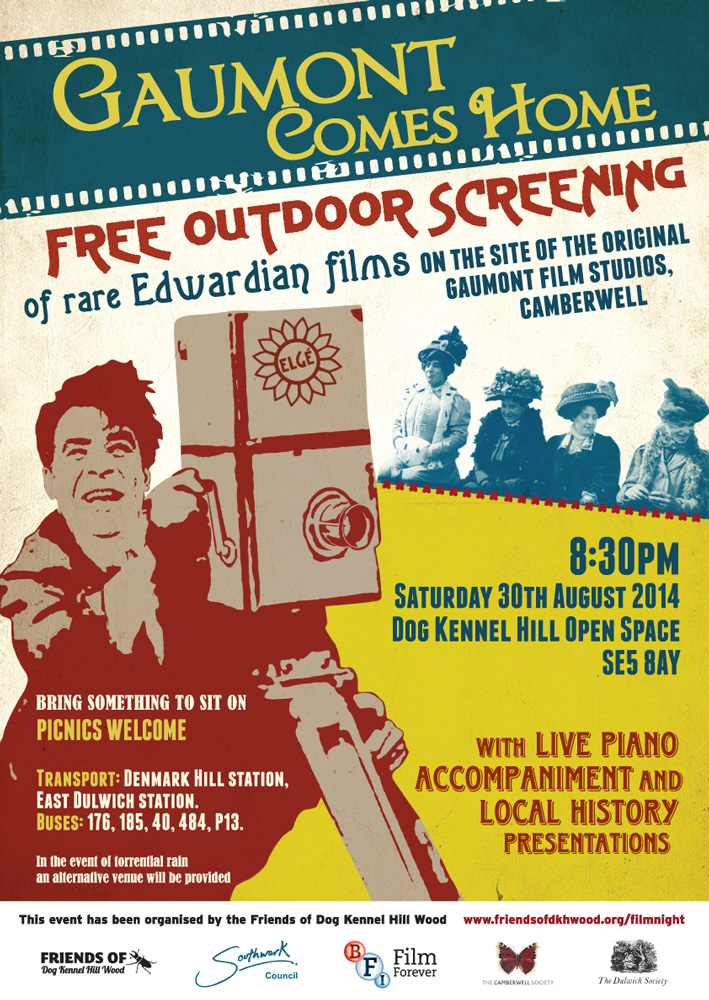
This is a guest post for Silent London by Tony Fletcher, film historian at the Cinema Museum, about director-actor Alf Collins. Some of Collins’ Gaumont films will be shown on 30 August at a special open-air screening on the site of the original studio in Camberwell, with musical accompaniment by Neil Brand.
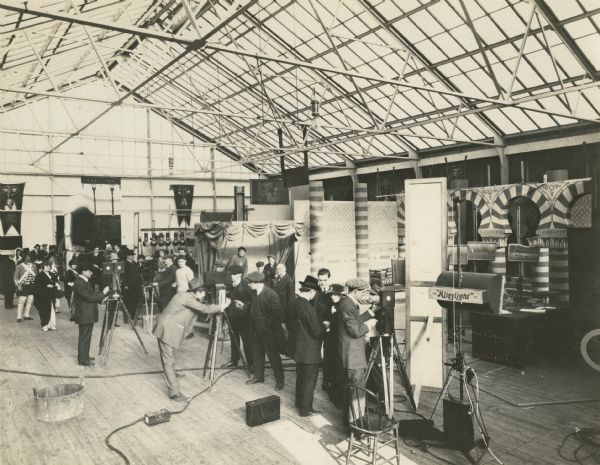
Alfred Bromhead started the English agency for Gaumont in Britain in 1898. He distributed the films produced by the French arm of the company, which was run by Leon Gaumont, and he also attempted to produce a few films in Britain in 1899. He opened a small outdoor studio on a four-acre cricket field in Loughborough Junction in south-east London. The open-air stage measured 30ft x 15ft However, this venture was short-lived and lasted for only one summer.
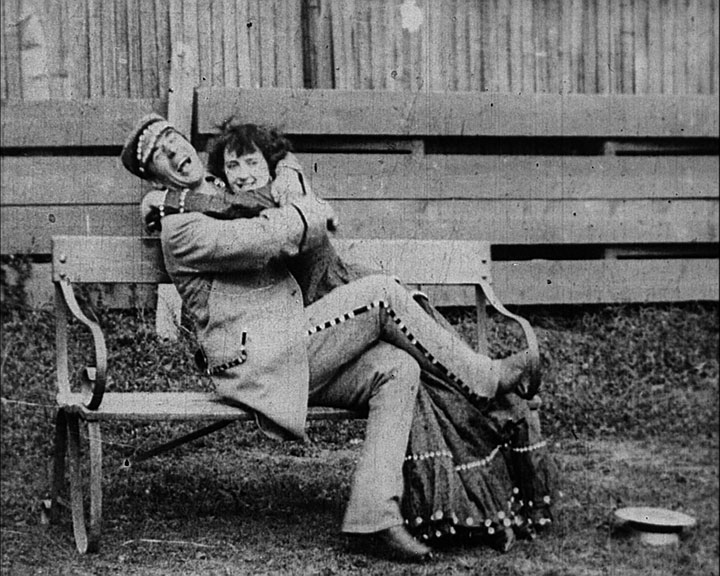
Alf and Maude Collins in Coster outfits in When Extremes Meet, 1905
In 1902, Bromhead decided to make another attempt at producing films. Alfred Collins came on board as stage manager, and Gaumont continued producing short films over the next seven to eight years. These were often shot in the streets of south-east London – pioneering chase comedies and dramas. Alf Collins had already had some film experience working with Robert Paul, as well as at the British Biograph Company. He had started performing at the Surrey Theatre under George Conquest, later joining the William Terris Company at the Lyceum Theatre. He also performed in Drury Lane Pantos playing The Copper in the Harlequinade. His full-time job between 1902 and 1932 was as the stage manager for the Kate Carney Company, which gave him opportunities to make films when they were appearing in London and the provinces.
During 1904, Bromhead moved studios from Loughborough Junction to a 14-acre site at Freeman’s cricket field, Champion Hill. Thomas Freeman was a local builder and decorator living at 127 Grove Lane. In 1891, he had acquired a site at the rear of Champion Hill House and Oakfield House (roughly where Sainsbury’s superstore and Dulwich Hamlet FC are now situated). Freeman built three wood and iron cricket pavilions which were hired out during the summer to the Champion Hill Cricket and Lawn Tennis Club and during the winter to Dulwich Hamlet FC. These appear in some of the films. Bromhead constructed an open-air stage to film interior shots as no artificial lights were available.
I watched my first silent films, not on my grandpa’s knee, nor at one of these grand screenings with live music that they have nowadays, but in a sixth-form college classroom while being guided through my film studies A-level. It’s not a very romantic story, but I loved what I saw, and while studying for my exams, and subsequently at university, I sought out, saw, and enjoyed many more silents – going from a teenage film fan to an early cinema buff-in-waiting. The film studies syllabus (WJEC, a few years ago now) that I took was great – introducing us to relatively obscure arty silents as well as a healthy appreciation of Hollywood industry mechanics and even a smattering of theory. It stood me in good stead for my English lit & lang degree and a master’s in film history. Plus, I doubt the 18-year-old me would ever have got to see Un Chien Andalou without it. If you want someone to take the blame for Silent London, you can point your finger squarely at a tertiary college in Ealing W5. (I chose the college, incidentally, primarily because it was so close to the famous film studios.)
The point is, I think that sixth form is a great time to introduce people to early and silent film. Teenagers who seek out noisy bands and edgy art want off-beat films to watch too. Silents fit the bill perfectly. There’s something off-kilter about silent movies when you first meet them, and something unexpected about a supposedly modern subject area taking you so far back into the past.
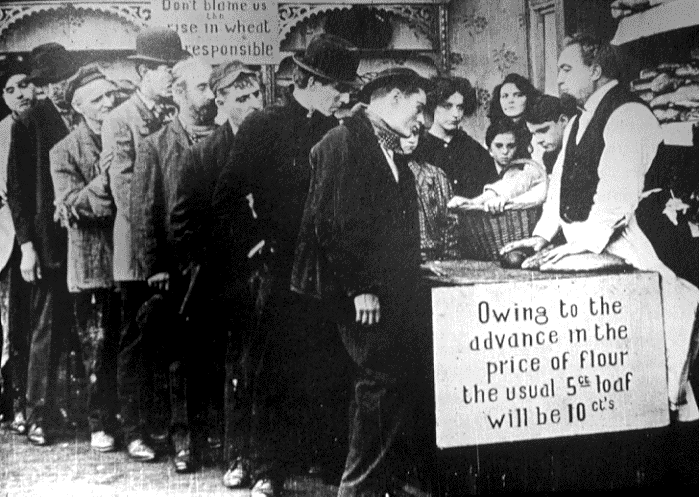
A Corner in Wheat (DW Griffith, 1909)
Cheering then, to see Keith Withall’s Studying Early and Silent Cinema land on my desk. It’s an expansion of a 2007 volume and clearly informed by two things: his years spent teaching film studies at FE and HE level, and a passion for attending the film festivals at Pordenone and Bologna. This is a useful work for anyone interested in silent cinema to use as a reference but a great introduction to the subject for students. It’s a read-this-now-watch-that thing, and I’m all for it. Not only that, but Withall blogs too, posting thoughtful, erudite essays at cinetext.wordpress.com
Withall’s expanded book is an enjoyable and wide-ranging introduction to the key concepts and landmarks in the early and silent film period. This guide tackles a breathtakingly vast amount of material in the clearest of terms, and always with one eye on the here-and-now. There are references not just to modern films and attitudes, but also practical consideration of the availability of viewing material. Case studies examine classic films in detail, while wider sweeps take in potted histories of alternative and smaller national cinemas. Throughout, Withall encourages students towards wider exploration of the subject area – and most importantly, towards further viewing.
Studying Early and Silent Cinema by Keith Withall will be on sale in May 2014, priced £16.99 in paperback (ISBN: 978-1-906733-69-8) and £50 in hardback (ISBN: 978-1-906733-70-4), published by Auteur
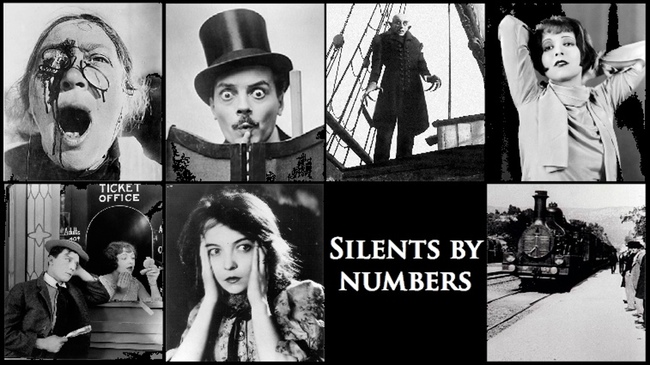
This is a guest post for Silent London by Paul Joyce, who blogs about silent and classic cinema at Ithankyouarthur.blogspot.co.uk. The Silents by Numbers strand celebrates some very personal top 10s by silent film enthusiasts and experts.
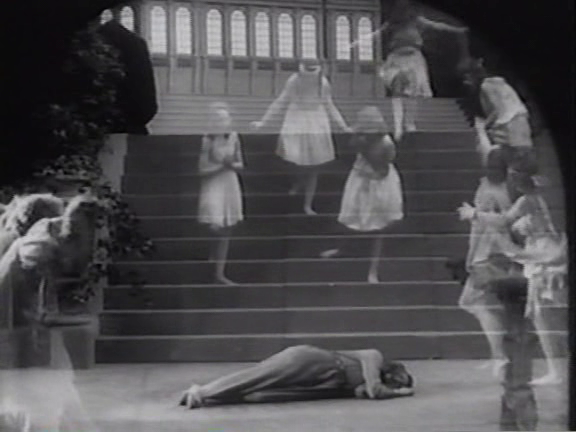
Cinematic dreams are a staple of the silent era more than any other, possibly because much of what was on screen had only previously been experienced in dreams for contemporary audiences. Now our dreams are founded on over a century of cinema and we’re so much harder to impress but … we can still dream on. Here’s a top ten of silent dreams with a couple of runners up as a bonus.
The Astronomer’s Dream (1898)
A madly inventive three minutes from George Méliès in which an old astronomer is bothered by a hungry moon as the object of his observation makes a rude appearance in order to eat his telescope.
Dream of a Rarebit Fiend (1906)
A feast of special effects in Edwin S Porter’s cautionary tale on the matter of over-indulging in beer and cheese. Jack Brawn plays the titular fiend who suffers all manner of indignities once he staggers home to his bed, whereupon his sleep is interrupted by rarebit imps and his bed flies him high into the night sky … Proof that the whole cheese-and-dreams rumour is actually true.
Atlantis (1913)
Atlantis (1913)
In August Blom’s classic – the first Danish feature film – Olaf Fønss’ doctor dreams of walking through the sunken city of Atlantis with his dead friend, as the passenger ship he is on begins to sink. It’s either a premonition or recognition that his true feelings have been submerged … JG Ballard was obviously later inspired to write The Drowned World.
Poor Little Rich Girl (1917)
Poor Little Rich Girl (1917)
After being accidentally overdosed with sleeping draught by careless servants, Mary Pickford’s character falls into a deep and dangerous sleep … As she hovers on the edge of oblivion the story runs parallel between the doctor trying to save her and her dreams in which those she knows are transformed in her Oz-like reverie. Sirector Maurice Tourneur excels as “the hopes of dreamland lure the little soul from the Shadows of Death to the Joys of Life”.
When the Clouds Roll By (1919)
When the Clouds Roll By (1919)
Douglas Fairbanks is harassed by vengeful vegetables after being force-fed too many in an effort to drive him to suicide (yep, it’s a comedy). Directed by Victor Fleming, who later returned to dreams with Dorothy and that Wizard. Continue reading The top 10 silent film dream sequences→
This is a guest post for Silent London by Kelly Robinson, and the first in a new series of posts bringing you very personal top 10s from silent cinema experts and enthusiasts.
From a programming point of view, it’s always good to have a few shorts up your sleeve: either to accompany a feature or to make up a shorts programme, which are always a good way to introduce new audiences to silent film. I’m trying to write short screenplays at the moment and I’m inspired by these film-makers, several of whom spent the majority of their careers working on shorts.
How to be an American Citizen (Alice Guy-Blaché, 1912)
Made in the US by Solax, film pioneer Alice Guy-Blaché’s production company, this is such a brilliant darkly anarchic comedy. View the version on the Retour de Flamme (06) disc by Lobster Films for one of the most inspired accompaniments to a silent film.
Ménilmontant (Dimitri Kirsanoff, 1926)
Breathtakingly stylish (talk about Eisenstein’s “kino fist”!) but also heartbreakingly moving, this is avant-garde cinema of the 1920s at its most profound. The scene on the bench is as poignant as anything by Chaplin or more recent master Krzysztof Kieslowski. Unforgettable.
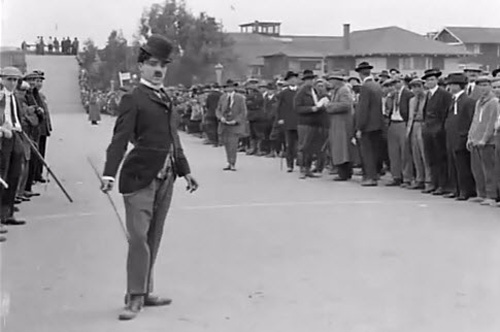
Charlie Chaplin in Kid Auto Races (1914)
Kid Auto Races (Henry Lehrman, 1914)
Chaplin’s Keystone films are sometimes written off as unsophisticated fare, preceding a more nuanced approach to style and content at later studios. However, Chaplin’s performance here is pure clown, and shows why contemporary audiences immediately wanted more, more, more of “The Little Fellow”.
Leave ’em Laughing (1928)
Leave ’em Laughing (Clyde Bruckman, 1928)
I just have to think about the final sequence of the Laurel and Hardy classic and I start chuckling madly to myself.
Daisy Doodad’s Dial (Florence Turner, 1914)
“The Vitagraph Girl” pulls a face at being one of the first screen stars.
That’s all, folks. I don’t know about the other festival delegates, but I am utterly and completely scherben*. it has been a fantastic festival: eight days to wallow in the full diversity of what we call silent cinema. I have learned a lot, met some wonderful people and enjoyed many, many movies.
The final day began with rain, a sleepy trek to the Cinemazero and some really quite startling footage, completely unsuited to the tender hour. I am not talking about Felix the Cat, who entertained a select crowd with his adventures as a wildlife documentarian in Felix the Cat in Jungle Bungles (1928). I am talking about the new documentary feature by David Cairns and Paul Duane, Natan. This award-winning doc tells the truth, or attempts to, about Bernard Natan and his incredible life.
















 Silent London