Tag Archives: Henry King

Le Giornate del Cinema Muto 2024: Pordenone Post No 8

A confession. I was conspiring over breakfast, and reader, this was a two-cappuccino problem. The upshot? I was a little late in getting started with the screenings today. But I certainly knew that I was going to be up late, with the gala… and the end-of-festival celebrations!

My sunny morning stroll to Cinemazero was rewarded with a simply terrific film from Uzbekistan. In Her Right (Grigorii Cherniak, 1930), a group of workers from the collective farm are sent to the factory to boost the workforce there, and to learn those valuable Soviet methods. One woman from the village defies her husband and sheds her burqa to join them. It’s a life-changing experience and not only does she gain independence through work, but she inspires others to do the same, through a filmed speech, that the workers clamour to watch, even after he enraged husband slashes the screen. Even with her “throat” cut, in a silent film, she continues to speak her truth.  So you have noted already that this is once again pro-Soviet, anti-Islam propaganda in intent, but this is also a remarkable film in style and action. Our Hollywood friends would applaud the excellent, and indeed poignant, action sequence in which our heroine runs to jump on the train to the factory, is repeatedly shoved away by male guards and then, when it seems she has finally found a helping female hand, her husband leaps – for a second we think he has dragged her form the moving train, but no, he only has her coat in his hands. Nail-biting stuff. And the scene in which they watch the film is also very strong. Günter Buchwald at the keys for this one, keeping the energy at exactly the right pace.

Continue reading Le Giornate del Cinema Muto 2024: Pordenone Post No 8
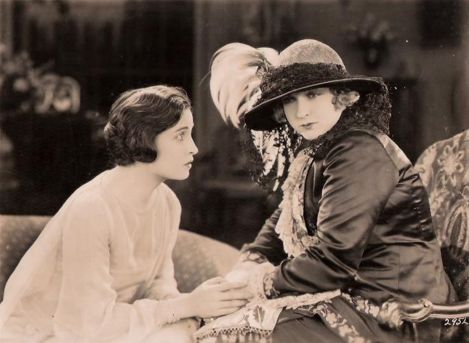
The White Sister (1923): Lillian Gish’s leap of faith

This is a guest post for Silent London by James Patterson.

In a 1909 Los Angeles Times review of F. Marion Crawford’s novel The White Sister, the critic noted that Crawford (1854-1909) was “a greater favourite” in Europe “than any other American”. (1) The book is about a young woman who upon learning her fiancé is killed on a foreign mission, enters a convent to become a hospital nun. According to the LA Times, the novel has a happy ending. Spoiler alert: The 1923 film version with Lillian Gish (1893-993) and Ronald Colman (1891-1958) does not end happily.

The White Sister was a popular stage play in the U.S. with actress Viola Allen (1867-1948), who starred in the first film version in 1915. The Pittsburgh Post-Gazette said the film “is one of the important and pretentious attractions that has been achieved since the invention of motion pictures, for it not only presents a legitimate star in the play in which she was successful but also shows a distinct advance in the art of animated photography.” Publicity for the film boasted: “It was the most beautiful story ever written about a man’s devotion and a woman’s self-sacrifice.” Sadly, the 1915 version of The White Sister, an Essanay production, is among the thousands of lost silent films.

Continue reading The White Sister (1923): Lillian Gish’s leap of faith

Il Cinema Ritrovato 2023: women who worry and men who don’t

Someone just asked me if I were back from Bologna yet. Oops. I have been back home for over a week now, but I haven’t written anything about the festival. So here I am, to tell you what rocked my world at Il Cinema Ritrovato. This year I enjoyed a truly excellent programme, and some even more excellent company. Here are some of my highlights, of the silent variety.

Continue reading Il Cinema Ritrovato 2023: women who worry and men who don’t

Ritrovato Roundtable: Il Cinema Ritrovato 2019 podcast

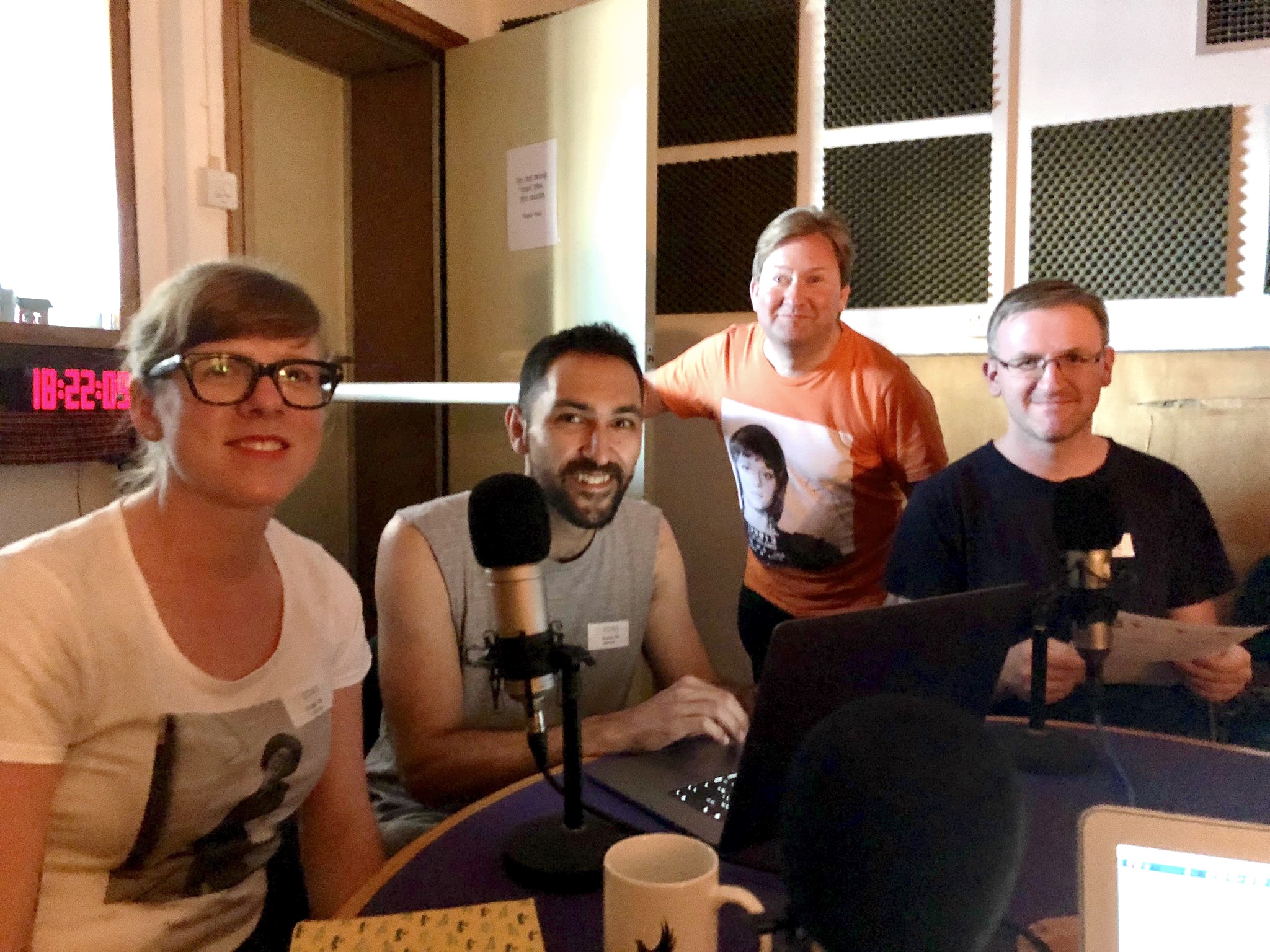
The Bologna suntans are fading but the Il Cinema Ritrovato memories are still vivid. So Peter Baran and I were delighted to be joined on our latest podcast by academic and film programmer Eloise Ross, as well as filmmaker Ian Mantgani and writer Philip Concannon from the Badlands Collective. We’re chatting about our highlights, discoveries and duds from the Il Cinema Ritrovato festival – a feast of archive, vintage and restored cinema, spanning silent and sound films.

Eloise Ross, Ian Mantgani, Peter Baran and Philip Concannon in the podcast studio.

Maximum effort!

The Silent London Podcast is also available on iTunes and Stitcher. If you like what you hear, please subscribe and leave a rating or review too. The podcast is presented in association with SOAS radio by Peter Baran and Pamela Hutchinson.

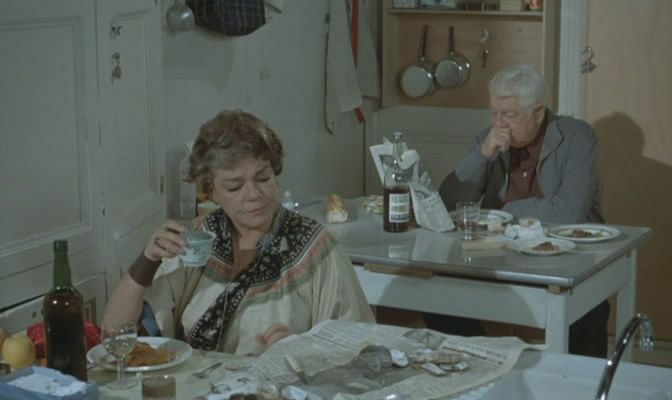
Le Chat (1971)


Ritrovato Roundtable: Il Cinema Ritrovato 2019 podcast

If you want to get in touch with us about anything you hear on the podcast then you can post a comment below, or tweet @silentlondon.

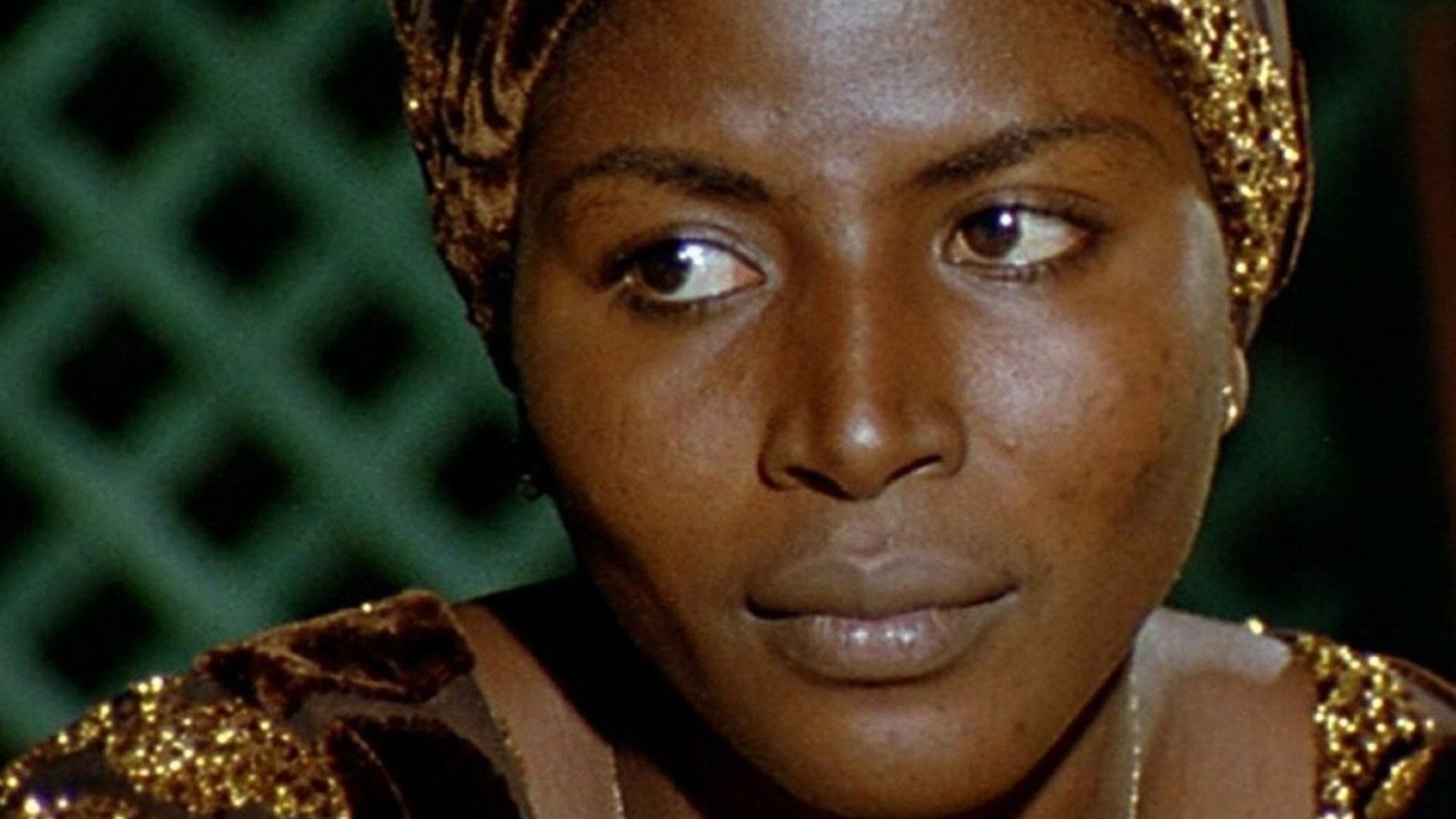
Baara (1978)
Baara (1978)


Silents in the Piazza: Il Cinema Ritrovato 2019

Buongiorno! I have just returned from a week in Bologna and while sadly I have no tan to show off, I did see a lot of silent films while I was there. What else is there to do in Italy?

As you may know, I was at Il Cinema Ritrovato last week – the international festival of archive cinema par excellence. You can read my tips for doing Ritrovato right here, but this post is all about the silent gems I saw while I was there.

First: a disclaimer. I approach Ritrovato like an omnivore, tasting a little of everything, talkies and all, so this is not an exhaustive report of the silent offering, just the ones that I especially enjoyed.

The Circus (1928)
The Circus (1928)

1928 and all that

Let’s deal with the giants first: Buster Keaton’s freshly restored The Cameraman (1928) and Charlie Chaplin’s The Circus (1928) won a flock of new converts at grand open-air screenings in the Piazza Maggiore. Especially the latter, which I think is one of the very finest of all the silent comedy features. Watch out for the Criterion edition later this year, with a booklet essay by your humble scribe. Continue reading Silents in the Piazza: Il Cinema Ritrovato 2019

Stephen Horne interview: ‘Silent films are constantly surprising’

Stella Dallas (1925)

Anyone who wants to learn more about silent film music will enjoy this. Chandler Bennett recorded this interview with Stephen Horne for KALX Berkeley 90.7FM, the student radio station at Berkeley, University of California earlier this year. It was recorded for the KALX show Film Close-ups – if you like what you hear, bookmark the site as it streams the station’s output online.

In the interview, Chandler asks Stephen about how he started out playing for silent films, and Stephen reveals that The Passion of Joan of Arc was the intimidating first film he ever accompanied. They also discuss the differences between composition and improvisation, and in more detail, the music that Stephen has played and written for Stella Dallas, The Manxman, Prix de Beauté and The First Born. Thanks to Chandler and Stephen for allowing me to post this fascinating conversation here on Silent London.

Listen to the interview here.