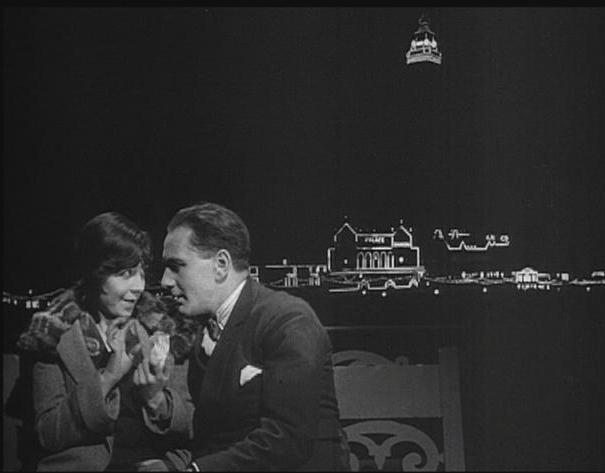
A weekend away … Estelle Brody and John Stuart in Hindle Wakes (1927)
According to the website of the Phoenix independent cinema in Leicester, the British Silent Film Festival is moving back northwards this year! The BSFF began in the East Midlands town back in 1998 and has subsequently been based at the Barbican and the Cinema Museum in London, in Cambridge and Nottingham. It will return to the Phoenix in Leicester from 10-13 September 2015, so mark it in your diaries now.
Here’s what the Phoenix has to say about the event.
Formed in 1998, the Festival fulfils an important role – presenting a wealth of treasures from the silent period to audiences who would not otherwise have access to their own film heritage and to the wealth of international silent cinema.
The Festival is curated, organised and presented by Laraine Porter, Bryony Dixon and Neil Brand and a team of UK experts and advisors in this field.
Open to all, the films are presented with live music from the world’s leading professional silent film accompanists (and we hope, local guest musicians) in a variety of entertaining and accessible ways.
Hat-tip to Jenny Stewart for the news – more details to follow as soon as they arrive.
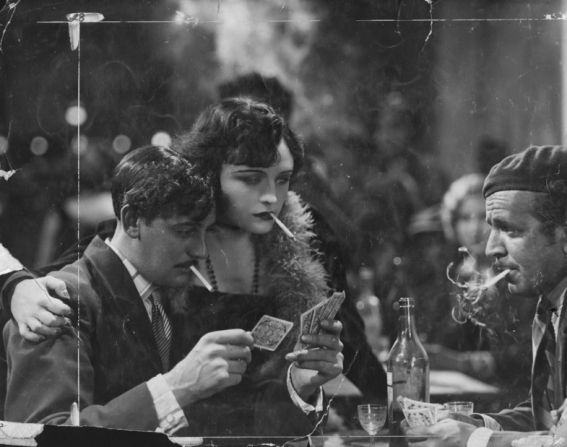
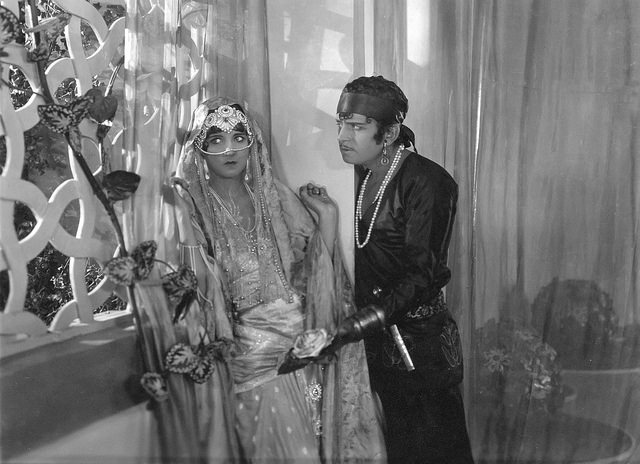
Pola Negri in The Woman he Scorned (1929)
Meanwhile, back in the capital, the popular British Silent Film Festival Symposium will take place again this year at King’s College London. The one day event will be held on 24 April, and proposals for presentations should be sent to Lawrence Napper at King’s by 20 March 2015 – email Lawrence.1.Napper@kcl.ac.uk.
Drawing on the success of our previous events, we again seek to draw together scholars and enthusiasts of early British cinema. This one-day symposium is intended as a forum for the presentation of new research, scholarship and archival work into film culture in Britain and its Empire before 1930.
As such we would like to invite presentations from people working in all aspects of this field, including cinema in the wider context of theatrical, literary and popular cultures; cinema and World War I; cinema and technology, exhibition, reception and critique.
In the light of a recent AHRC award investigating the transition between silent and sound cinema in the UK (1927-1933), we would be particularly interested to include papers on this topic.
Excitingly, the day will be topped off with a screening of one of my very favourite British silent films: Paul Czinner’s The Woman he Scorned (1929), starring the wonderful Pola Negri.
Love is private, intimate. Speak its name aloud and the spell is broken. Share it and the magic is shattered. Except, except … in the 20th century popular culture crashed into the space between lovers, the gap between two pairs of moist lips, the air that thrummed to their heartbeats. Pop music ran away with love, spinning out each precious moment of desire or sorrow for three minutes of passion and repetitive heartbeats. But the movies, arguably, got straight to the dirty bits first. In the dark of a cinema, that is to say a tent or a grubby room, crammed next to a sweetheart or a maybe-sweetheart in the dark, we could watch actors (imagine!) play-act the the motions of love: smooches in train carriages, swoons on the hearth. Illicit affairs, happy marriages, flings, crushes … all the joy and misery of human existence on the screen. And in the cheap seats (they were all cheap), a fumble, a fondle, a kiss or maybe more. And did I mention it was dark? A private act in a public place – disapproval be damned.
Kim Longinotto knows exactly what goes on in the dusky darkness of the Odeon. Her new collage film Love is All (2014) is a super-cut of romance: sexy, sedate or seditious. It’s a full-tilt rush for the hormones, soundtracked by the grizzled, tender love songs of Sheffield music legend Richard Hawley. Not strictly a silent film, this, but one in which the few fragments of dialogue are incidental, another instrument in the orchestra. Hawley sings what is on our lovers’ minds – what they actually have to to say is rather beside the point.
Elusive films, we are always told, can turn up anywhere. And if you’ve read the Primal Screen column in this month’s issue of Sight & Sound, you’ll know the truth of that. Oliver Gaycken, an early cinema scholar at the University of Maryland, stumbled across (most of) a missing Charles Urban film, Cheese Mites (1903) on YouTube. He describes it as “a landmark of early cinema, one of the first film ever made for general audiences about a scientific topic.”
The uploader, not knowing anything about the 35mm nitrate strip he had picked up from an antiques shop, had found an ingenious lo-fi method of digitising the film, and posted it on the video site under a name of his own devising. Gaycken was sent a link by chance and recognised it immediately. Anyway, you can buy the magazine to read the full story, or indeed pre-order Gaycken’s book Devices of Curiosity: Early Cinema and Popular Science, forthcoming from Oxford University Press.
You can see Cheese Mites, properly restored and digitised, on the BFIplayer, or indeed on the institute’s own YouTube page. One thing that will strike you, as you watch those microscopic critters wriggling under the professor’s magnifying glass, is that Cheese Mites is more than a little bit repulsive. The tweedy professor (F Martin Duncan), turns his magnifying glass from his newspaper to his lunch, and uncovers a microscopic crowd of wriggly creepy-crawlies. In the still missing last scene, he chucks his cheese away in horror. You won’t see your humble cheddar-and-pickle sarnie in the same way again. And so, to celebrate this unlikely discovery, here are 10 totally gross moments in silent cinema. Hold on to your stomachs … this is not for the squeamish.
Un Chien Andalou (1929)
The eye-slashing in Un Chien Andalou
Yes, I now that Bunuel and Dali cut to a calf’s eye for the breathtaking “out, vile jelly” opening to this surreal classic. But come on, weren’t you fooled the first time you saw it? And there’s nothing particularly wholesome about a dead calf wearing mascara anyway. See also: the rocket crash-landing in the man in the moon’s eye in George Méliès’ Voyage Dans La Lune (1902) – so much more gory in full colour.
The maggots in Battleship Potemkin
Similarly, the first time one watches Eisenstein’s bombastic Potemkin, one might expect the maggots in the Men and Maggots title card to be metaphorical rather than literal. And certainly one wouldn’t expect to see them in a gruesome close-up, squirming under the doctor’s glasses. “This meat could crawl overboard on its own!” Upsettingly, the resulting stew is only the second most disgusting casserole in this list.
Alice Guy-Blaché’s modern surgery
George Mélies made a version of this a few years later, often titled Une Indigestion, but Guy-Blaché’s earlier film Chirurgie Fin de Siecle (1900) is more widely available. And it’s not one to watch the night before an operation. In this clinic, a sign pleads “On est prie de ne pas crier/Please do not cry”, and the doctors set about the patient with saws, cheerily hacking off limbs, and then slopping them into a bucket, all the while arguing ferociously with each other. They then reattach arms and legs from a bucket of “exchange pieces” (using glue) before re-animating their victim, I mean patient, with bellows.
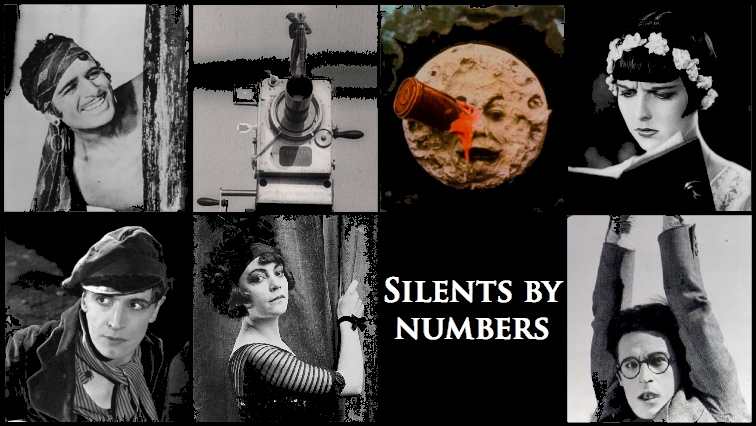
This is a guest post for Silent London by Isabel Stevens, production editor of Sight & Sound. The Silents by Numbers strand celebrates some very personal top 10s by silent film enthusiasts and experts.
This slideshow requires JavaScript.
Just as films in the nascent years of cinema were characterised by their visual innovation, so too were their posters. Designers enjoyed far more freedom than most of their successors working in the sound era, who toiled in large publicity departments and had to comply with strict restrictions on the size and prominence of stars’ images and their names.
Designs for silent movie posters were also created using many different techniques – from hand-painting unique posters for local theatres to mass-produced lithographs or linocuts. The Stenberg brothers, whose designs alone could fill a list of 10 ground-breaking silent movie posters, even invented a special projector that paused a film frame so faces could be traced, the resulting image appearing somewhere between a painting and a photograph.
The designs collected here are for both masterpieces and little-known films alike, but all preference mood and visual daring, never just relying on tantalising narrative tit-bits to sell a movie. Many of them contain echoes of art movements of the time – Cubism, Art Deco, Constructivism, the Bauhaus and Expressionism – and were created in the 1920s, that decade of wild avant-garde experimentation.
The Green Spider, Vladimir Egorov, 1916 (Credit: The Silent Film Poster: Russia 1910-1930)
The Green Spider, Vladimir Egorov, 1916
Here is the original spiderwoman, accessorised delightfully with eight-legged earrings. It’s a surreal vision that proves that Russian film poster design in the 1910s could be just as imaginative and strange as that of the Soviet era. Little is known about this tale of lust, apart from that it was considered a cult movie at the time of its release and played in theatres in seedy parts of St Petersburg. The poster is the work of Moscow theatre designer Vladimir Egorov, sketched one presumes under the influence of the many arachnoids that featured in the drawings of Symbolist artists such as Odilon Redon and Alfred Kubin.
Safety Last!, Curt Peters,1923
Safety Last!, Curt Peters, 1923
Swedish film poster design was particularly adventurous in the 1920s, as exemplified by this vibrant design featuring stunt-mad comedian Harold Lloyd swinging into the frame and promising vertiginous laughs and spectacle galore. With his clothes billowing in the wind, his hair standing on end and a smile on his lips, he’s enjoying the ride as much as you will.
London is the best city in the world for silent cinema. OK, so maybe I should admit to a little bias, but really, between the BFI Southbank, the Barbican, the London Film Festival, the Phoenix cinema in Finchley, and the capital’s many film societies, rep cinemas, arthouse cinemas, orchestras, concert halls and festivals (including the many visits of the British Silent Film Festival, the Fashion in Film Festival and the recently departed Birds Eye View Film Festival) we are sitting pretty for silents. Whether it’s a symptom or a cause I don’t know, but we also have many of the world’s best silent film accompanists based right here in the Big Smoke.
It’s in this context that in the summer of 2013, two of London’s fabulous silent film musicians, John Sweeney and Cyrus Gabrysch, set up a “silent speakeasy” called the Kennington Bioscope: “a silent cinematic event dedicated to the rediscovery of forgotten masterpieces”. Since then, they have been creating silent cinema magic in South London on a regular basis. The Bioscope is cinephilia at its best – if you’ve been, you’ll know what I mean. If you haven’t been, you are missing out, and I am about to make you jealous. I can’t let another Bioscope go by without telling you all how amazing it is.
The KB (as I have never yet heard one person call it) is held once every three weeks at the Cinema Museum – a volunteer-staffed Aladdin’s Cave of cinematic memorabilia and ephemera. There are more than a few reasons why you voted this place as your favourite silent film venue of 2014. It’s a wee bit like a time machine, whisking you back to a more sedate era of cinemagoing. There’s always an interval, ushers may well be wearing natty uniforms, someone will undoubtedly strike a gong to prompt patrons to take their seats, and the adverts before the screening will remind those assembled of the proper etiquette required. Tickets, which cost just £3, are made of cardboard and ripped off a reel. Most important of all, the projection booth is staffed by an expert projectionist, showing films of all shapes and sizes as often as possible.
This is a guest post for Silent London by Peter Baran. You can follow Peter on Twitter at @pb14.
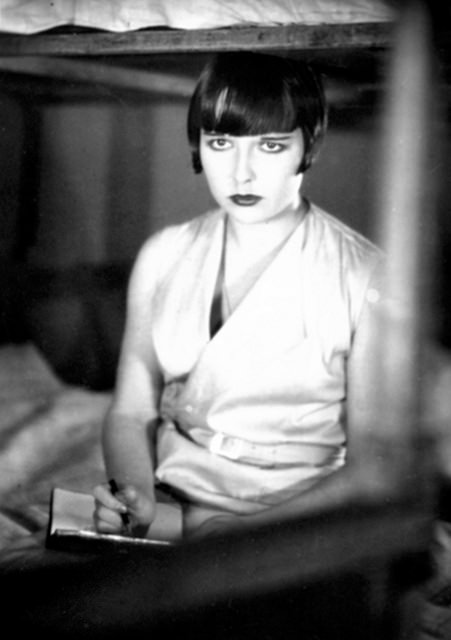
Louise Brooks and GW Pabst, an irresistible combination? Certainly Pandora’s Box (1929) caught lightning in a bottle, creating one of the most iconic female roles in all of silent cinema. In Pandora’s Box, Pabst and Brooks tease eroticism out of a certain ingenue naivety, whereas in her previous US films (A Girl In Every Port and Beggars of Life in particular) Brooks had offerede a slightly more world-weary sensuality. So it is no surprise that Pabst saw Brooks as the perfect person to play Thymian, the sheltered girl who will drop through the cracks of life via a workhouse for fallen women and prostitution.
This new Blu-Ray transfer of Diary of a Lost Girl (Tagebuch einer verlorenen, 1929) by Eureka’s Masters of Cinema label is a crisp and beautiful version of what is clearly an exploitation movie. As in Pandora’s Box, Pabst’s walks the tightrope of commenting on eroticism and sensuality; too often he falls off the tightrope into titillation. The film is set up for us to rue the difficult circumstances that lead to Thymian’s journey from a fine middle-class household down into poverty and eventually to selling her body. Except everything is still a bit clean. The reformatory is horrid, but only in comparison to her comfortable home – and its horridness is more due to a Miss Hanniganesque management rather than something inherent in the system. And there isn’t really too much criticism of Thymian’s shaming (AKA rape), and pregnancy. You get the sense that the original author (the film is based on a popular Margarete Böhme novel) and the film-makers are just following through the logical conclusion of these incidents. Instead, we end up with a somewhat warped fairytale, a slow-burn Snow White where the dwarves run a brothel full of happy hookers, or Cinderella with calisthenics.
Diary of a Lost Girl (1929)
There is a sensuality and rawness in Pandora’s Box, coming from Lulu’s naivity, which Thymian doesn’t share at all. At least by the time the film has put her through her paces as part of the reformatory’s physical education routine, she has no sense of wild abandon. It is a wholly more sinister erotic thrill, underlined (perhaps a bit too heavily) by the matron whipping her gong and clearly getting far too much pleasure out of the whole affair. This part of the film could be subtitled Reform School Girls do gym:
It’s the Silent London Poll of 2014 results – part two. Merry Christmas!
Yesterday I revealed what the poll results said about you – today we learn what the poll had to say about the films and performances that impressed you the most this year. You’re a discerning bunch, I already knew that, so I threw away the short lists and gave you free choice in all categories. The result is a picture that is tricky to summarise but fascinating all the same.
Disagree with these choices? May I direct you towards the comments section below?
Best DVD/Blu-ray release of 2014
So many to pick from – but there was a clear winner. Das Cabinet des Dr Caligari landed on DVD and Blu-ray (from Masters of Cinema) in its sparkling new restoration, on a beautifully presented disc. This was the release that many of us had awaited for this landmark movie. We reviewed the disc in the summer.
Runners-up: The BFI’s release of The Epic of Everest, wartime blockbuster Wings (Master of Cinema) and the tantalising, US-only Warner Archive release of Why Be Good? starring Colleen Moore.
Best theatrical re-release of 2014
Another runaway success for Caligari and his cabinet here. Congratulations to all concerned!
Runners-up: Two strong showings in the list: the BFI’s restoration and rescore of The Battles of Coronel and Falkland Islands and the re-release of The General. What a great year in the cinema.
Best orchestral film screening of 2014
The Battles of Coronel and Falkland Islands (1927)
Obviously, there’s a huge amount of variation in the responses when it comes to live shows. But clearly, you are seeing some fantastic live screenings around the world, and that is to be celebrated in itself!
We do have a winner though: the London Film Festival screening of The Battles of Coronel and Falkland Islands received the most nominations. This was truly a fantastic night, with the Royal Marines belting out Simon Dobson’s fantastic score. Great atmosphere too, with so many representatives of the Navy in attendance. I have never seen to many shiny brass buttons in one room.
Runner-up: The LFF came second too, with a clutch of nods for its spellbinding screening of The Goddess with the English Chamber Orchestra. Another very happy memory for me, that one.
A wholly gratuitous, but festive, picture of Louise Brooks
Last month, I asked you beautiful people to fill in the Silent London survey – it was a little longer and more involved than usual, but with more free choice options, so thanks all for your time, care and patience.
The results are now in, and I now know a little more about you, your silent movie watching habits and what most impressed and entertained you this year. First I want you to meet the readers. Hello you, this is you:
Where you are
Most of you are in London understandably, around 39%. But the rest of you are more likely to be found in the rest of the world (36%) than the UK (25%) Global reach!
What you watch, how and where
Most of you, 40%, watch silents once or twice a month. Hats off to the seven percent of you who watch ’em more often than once or twice a week! The rest of you more or less evenly were divided between occasional viewers and the impressive group of you sitting down to a silent film once or twice a week.
UPDATE July 2015 : Cartoon Carnival is now looking for completion funds. Support the film here.
Well, this looks like an interesting investment. Andrew Smith, one of the brains behind the critically acclaimed Gerry Anderson documentary Filmed in Supermarionation, wants to make a new documentary about a less well-known era of animation – the silent years. He has turned to Kickstarter to fund his film, so if you like his idea, you can back Cartoon Carnival yourself. For those who pledge £1 or more, Smith is promising “a virtual hug”. Some of the other rewards are even more enticing!
To many, the history of American animated cartoons begins with the story of Walt Disney and Mickey Mouse. Before the mouse, however, Disney was simply one of many who attempted to make their name in animated cartoons. From the earliest experiments with moving drawings, to the technical and artistic triumphs that arrived just prior to the introduction to synchronized sound, men like Winsor McCay, John R. Bray, and Max Fleischer pushed to make each cartoon better than the last. To our mind, their names deserve to be as venerated as their counterparts in the live-action film industry.
Beyond their historic significance, it it worth stressing that many of the animated films produced during the silent period are wildly entertaining and often down right weird and wonderful. In the days before film censorship or the misconception that cartoons were only for children, anything went. The result is a valuable canon of films which firmly reflects American society of the time.
Spies are cool. Spy films are really cool. Spione, Fritz Lang’s epic high-octane espionage thriller from 1928, is exceedingly cool. This a sexy, dreamlike movie, heavy on the action and light on logic, which both anticipates and outpaces such noir favourites as The Big Sleep (1946). In fact, if you watch all two-and-a-half hours of this film without getting regular memory jolts of Hawks, Welles, Hitchcock and the whole pantheon of Lang’s future colleagues, I’d be hugely surprised.
But let’s not get ahead of ourselves. This is German Lang, not Hollywood Lang – and Spione is all the richer, and stranger, for it. Spione mashes up pulp fiction and lurid newspaper headlines with early film serials and adds in a twist of the fantastic and a dash of technolust. It’s a powerful brew.
Spione (1928)
“Throughout the world, strange events transpire …” runs the opening intertitle and that’s all the backstory you’ll get, folks. In a nameless country, a mysterious kingpin dispatches mercenaries and thugs to steal documents and sabotage treaty negotiations. The disruptive villain, Haghi, is played by Rudolf Klein-Rogge, fresh from a similar role in Dr Mabuse, Der Spieler (1922), as a dangerously fascinating, if chilly, creature. It’s typical of this grand, sprawling movie that he’s not just a criminal mastermind but a banker too (boo-hiss) and a clown (say what?). Just go with it. And there’s no doubt whose side we want to be on, though, despite the best counter-espionage efforts of our upright-but-anonymous leading man Willy Fritsch, who goes by the digits No 326. The link between the two men is Sonja, a lethally blonde femme fatale, an employee of Haghi’s who falls for Mr 326: a seductive, dishevelled performance by Gerda Maurus.
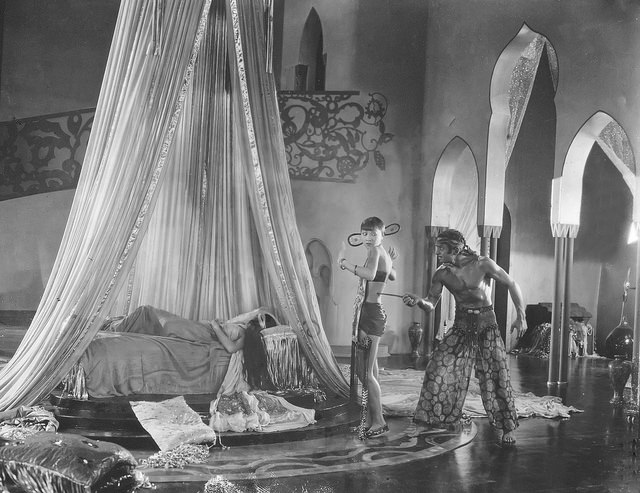
Just in time for Christmas, Masters of Cinema is rereleasing some more of its silent back catalogue, in gorgeous new dual-format DVD/Blu-ray editions. This is a Good Thing no doubt, and if there is one title especially suited for the pantomime season it’s The Thief of Bagdad (1924) – a middle eastern romp starring Douglas Fairbanks as Ahmed, a light-fingered adventurer, beautifully photographed and bulging with the last word in 1920s special effects.
Forget the effects for a minute though, forget Raoul Walsh behind the camera, Anna May Wong slinking around the corners, and William Cameron Menzies’s towering sets, and settle in for the Douglas Fairbanks show. This is Fairbanks at his very best: fortysomething, athletic, beaming, stripped to the waist and bouncing in and out of giant pots, swashbuckling and soaring through the air and under the sea. If you want to understand why Fairbanks was the King of Hollywood, this is a key text. He burns up the screen here, forcing you to smile, to chuckle, to gasp in awe at his latest trickery or feat of physical prowess, daring you to remain unmoved. It would take a heart of stone not to relent – it’s his ambition as producer that lends this film its grand scale, and his radiant personality that wins the audience’s affection as well as its awe.
The Thief of Bagdad (1924)
But you will have to possess a mind as gymnastic as Fairbanks’ buff body not to be troubled by the fact that this movie is pure orientalist claptrap. It can be done – Fairbanks on a magic carpet with his princess Julanne Johnston by his side is a sight beauteous enough to tempt you into a little light doublethinking duty. Just like Ahmed, you’ll have to earn your happiness here. It’s not a nasty film, but it is an ignorant one. If it weren’t for the gloss of that stunning production design and the stardust sprinkled by its leading man, that would be all we had to write about. As it is, we can take heart from the fact that the guff that underpins this movie is mostly well-intentioned but misguided romanticism. Rather this, you could argue, than yet another flick where the only middle eastern characters are bloodthirsty terrorists.
The chances are, you will recognise the name on the spine of this book. Farran Smith Nehme is one of the smartest, most elegant writers on classic and silent film that you can find. She blogs at her own site called Self-Styled Siren, and writes for publications from Film Comment to the New York Post. The chances are that you will recognise some of the characters in Missing Reels, Smith Nehme’s debut novel, also.
Farran Smith Nehme
There are a few names dropped here that will chime – from Kevin Brownlow to Jean Harlow to Mordaunt Hall, in fact this novel is peppered with more classic film references than you might think feasible. But it’s the personalities here that will resonate. Ceinwen, our heroine, is a young woman living in a scuzzy New York flatshare in the late 1980s, working in a vintage dress shop and spending all her free time at the movies watching the classics. She’s a bit of a mess, but she’s all right by me. Her job is awful, and low-paid – she is sustained only by cigarettes, hairdye and the pleasure she gets from sashaying around town in a genuine 1930s ensemble. By chance (don’t roll your eyes), Ceinwen discovers that her grumpy downstairs neighbour once starred in a silent movie, a lost curio directed by a precocious talent. That’s all it takes to get Ceinwen hooked on the hard stuff, and before you know it, our vintage vixen is a deeply embedded within the silent film nerd community.
Now, I’m not a nerd, and you’re not a nerd (though you may be a geek), but some of those silent movie fans out there are a little nerdy don’t you think? Not that there is anything wrong with that. Missing Reels is a paean to nerds and nerdery – I felt my silent movie obsession toughening up with every page I turned. Ceinwen’s hunt for those abandoned reels takes her, and her stuffy English academic boyfriend, through film fairs, archives, private collections and secret stashes. She meets people who love silent cinema and people who fetishise and hoard it – but mostly, people who respect it. I love the sequence when she settles down to watch her first Roscoe Arbuckle two-reelers at a Mack Sennett fanclub screening.
“this was the best silent-movie audience she’d ever encountered. No restlessness … No talking. Every laugh was related to something on screen. They picked up every gesture, no matter how small. The first glimpse of Fatty – Roscoe got a round of applause, Mabel Normand’s face got an audible sigh, Buster Keaton got a shout of recognition … And Arbuckle was a marvel, holding his own even with Keaton, supple and flexible in the way he moved.”
The silent-movie bug can be contagious that way. When you’re with people who love silent cinema, those old movies seem to be even more precious.
I saw a lot of myself in Ceinwen – I suspect there is rather a lot of Smith Nehme in there too – and I have met a few Freds, Harrys and even Andrews too, her mostly lovable, mostly eccentric guides through the silent cinema maze. How could you not adore Harry, a cinephile maths professor who encourages Ceinwen’s flickering interest, and who patiently drops this sassy line on a firefighter dead set on destroying a cache of nitrate: “Think of it more like, the Mona Lisa happens to be really flammable”? In fact, Ceinwen joins their ranks – going from film fan to silent “nut” in a few hundred pages. This is really a book about passion, misdirected, perverted or beautifully nourishing – it’s Fever Pitch for the Pordenone crowd. You could write a book like this about stamp collecting I suppose, but it wouldn’t have the same glamour for me.
Missing Reels
I must confess, the hilarious scene in which Ceinwen attempts to keep her end up in an awkward post-sex conversation with that no-good British boyfriend of hers, while simultaneously reading a movie monograph, was almost too close to my bones. Smith Nehme knows better than most what it is to be immersed in this world, and Missing Reels is a portrait of a woman following her heart and blowing her cool at the same time. That’s what makes it funny, and poignant too.
Now I asked you not to roll your eyes earlier, because we have seen a few hunt-for-a-lost-movie novels before. But that doesn’t stop us getting excited when it happens in real life does it? And the Murnauesque Gothic romance that Ceinwen makes it her mission to uncover really does sound like a beauty. Part of this novel’s charm is that we’d all like to discover a lost film. And more than that, we’d all like to represent for silent cinema, to combat the prejudices that the elderly star of that film, the snippy neighbour, has clearly taken to heart: “Ooooh folks, here’s this little clip from the dark ages, before everybody figured out how it was really done. Don’t worry, it’s not too long, we don’t want to bore anybody.” That’s Ceinwen’s real mission.
Now it’s my turn to blow my cool. I love this book: it’s witty and sharp and feminine and fabulous. If you know how to pronounce Borzage, if the mere mention of a nitrate copy of Flaming Youth sets your heart a-flutter and if you’ve ever worn a scarf in your hair and hoped you looked like Clara Bow, then this is the novel for you.
Missing Reels is out now in the US, published by The Overlook Press, priced $26.95. It will be published in the UK by Duckworth in spring 2015.
The Battles of Coronel and Falkland Islands (1927)
If you missed the London Film Festival gala screening of The Battles of Coronel and Falkland Islands last month, and it isn’t showing at a cinema near you, and you can’t wait for the home video release in February 2015 … well all is not lost. Walter Summers’ naval epic is avilable on the BFIplayer, in the comfort of your own computer, and you can rent it for just £10, or £8.50 for BFI members.
But what is more, from 11.02am on Tuesday 11 November 2014, for 24 hours, streaming The Battles of Coronel and Falkland Islands is totally, delightfully free.
There are several more British silent films on the BFIplayer, as you might expect, in glistening high-definition. Here’s a quick Silent London top 10, in no particular order:
Vote now – Marion is standing by to collate your responses.
Hello dear readers. Unfortunately we took a break in 2013, but this year we want to resume normal service and bring back the Silent London Poll. It’s an expanded survey this year – you can vote for your favourite screening in several categories, your favourite venue and festival, and even your silent hero of 2014.
It won’t take you long to fill in, and we’ll be publishing the results on the site at the end of the year, so please have a little think about your highlights of the year, and share your favourites with everyone else!
The poll closes on 18 December 2014. Thanks for taking part!
The Goddess | Why Be Good? | On With The Dance | The Battles of Coronel and Falkland Islands | Damn the War! | Experimental cinema | The Tribe
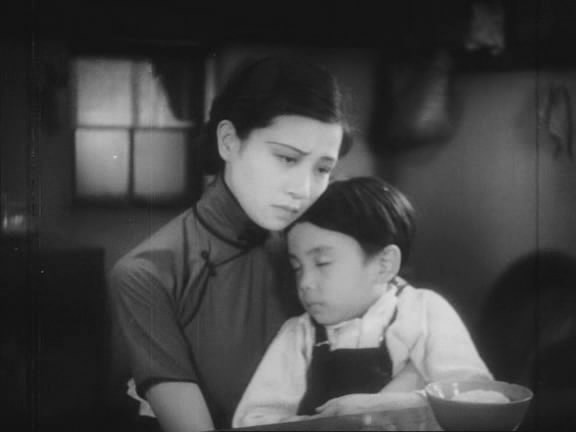
Silent film screenings aren’t like other movie screenings. For one, there’s no shuffling out, or chatting during the credits. In fact, there is a distinct order to proceedings: the final card indicates “The End”; the music stops; there is a brief hush; and then, applause. But at the screening of Chinese classic The Goddess (1934) during this year’s London Film Festival, one member of the audience broke ranks. While everyone else in the Queen Elizabeth Hall caught their breath, in that precious pause between the lush orchestral music and the thunder of appreciation, a gentleman behind me forgot himself, and punctured the silence. “Wow,” he gasped. And who can blame him?
The Goddess (Shen Nu) was, is, a masterpiece, a terrible tale told with great humanity and capped by a staggeringly powerful performance from tragic star Ruan Lingyu. She plays a prostitute, a “goddess” in Chinese slang of the time, who does what she does because she has another mouth to feed at home, her cherished infant son. The scenes in which we see Ruan at work, soliciting, are obliquely shot (shadows, feet, meet at sharp angles), but still somehow bold. Perhaps that is because we are shown her as a mother, a neighbour first, and the reality of her job is a touch too tough to comprehend. And at the beginning of the film, it’s clear that she keeps her work separate from her home life. But one day a venal gambler (Zhizhi Zhang) moves in to her house, and lays his hands on her earnings. And then the gossips begin gossiping and it becomes horribly obvious that the Goddess’s plans to give her son a better life are in jeopardy. Ruan’s beauty is almost more than the film can handle at times, but her performance is deftly nuanced and terribly soulful. The joy on her face when she sees her son succeed at school, her horror when she realises the trap she has fallen into: I am haunted by both of them.
While I know I am not the first to acclaim The Goddess, audience opinion was divided on the new score written by Chinese composer Zou Ye. It was undoubtedly beautiful, in fact for some it was too lyrical, but it drifted away from the film at times, missing the cues and shifts in tone that it should have been more alert to. When Ruan skips home with a brand new toy for her son, happy to be free at last, the music expresses her joy and liberation wonderfully. But that same tune continued over the heart-in-stomach lurch when she spots a hat on the table, and the whip pan that reveals the Gambler standing triumphant in her new flat.
Nothing to quibble about with the restoration though: the film looks gorgeous, clean and bright. I want, need, to see it again.
Why Be Good? (1929)
And I would happily snap up a ticket to see Why Be Good?(1929) once more, especially as Colleen Moore’s life story, and this film, offer such a fine balance to the tragedy of Ruan Lingyu and The Goddess. Moore was quite the perkiest creation ever to appear on screen (her character’s name in this confection is aptly, if bazarrely, Pert Kelly). With her sharp bob and expert comic charm, she was the flappiest of flappers and a huge silent star. And while her career may not have prospered in the sound era, her finances did. She is a happy example of a silent star who invested wisely and lived comfortably until a ripe old age, hanging around long enough to appear in Kevin Brownlow’s Hollywood TV series for example.
Sadly, however, the films she left for safekeeping in the studio archive were not so well cared for, so the chances to see her work are few and far between. Why Be Good? is a happy recent discovery and restoration courtesy of the Vitaphone Project and the Bologna labs. All of the Vitaphone discs for Why Be Good? were salvaged, so this silent film has continual sound: music mostly. I confess I was a little wary of the prospect of a running soundtrack of jazz tunes, but I was wrong to worry. The songs are carefully chosen and as well as some mundane sound effects (clattering dance steps, bells and whistles), there are some nifty sound-design jokes, including a comic scene in which two drunken sots “sing” and pound on a car horn.
As to the movie itself, Why Be Good? is a far more likeable rendition of Synthetic Sin, which showed at Pordenone this month. Colleen is a dance-loving shop assistant, who likes to ham it up as a fast-living flapper when really she’s a good girl through and through. When she falls for the boss’s son (a rather deramy Neil Hamilton) he can sense this instantly, but once their respective fathers start meddling the scene is set for hilarious and heartbreaking misunderstandings. Featherlight fun, with a feminist twist (no, really) and Moore is as sweet and smart as the jazz age scene-setting is seductive. Apparently Jean Harlow is in there among the extras. I well believe it, everything in this film looked too gorgeous for words.
Speaking of which, Why Be Good? was preceded by a delightful colour short called On With the Dance (1927) in which Josephine Baker herself and many lesser-known, un-named chorus girls take to the stage. Baker’s dance is labelled the Plantation – after the club, and no doubt the other thing too. She’s wonderful, but it’s a little uncomfortable to watch her dancing in dungarees and rags. Anyway, a real treasure from the archive this, and the following scenes of chorus lines spinning through dances ranging from the sublime to the ridiculous are notable for their splendid colour and kooky camera angles. The closeup of a bewildered punter, his sweating face superimposed with a kaleidoscope of high-kicking legs, was hilarious. Very The Pleasure Garden … And of course, this sort of thing is always better with John Sweeney on the keyboard, so we were very much in luck.
The cinema interior – mid-restoration (flickr.com/regentstcinema)
When you become a silent movie blogger no one tells you that you will need a hard hat. Nor that you will occasionally be handed a free glass of fizz. But those of those things happened on Wednesday afternoon when I travelled “up west” to the University of Westminster to see the venue where the first public motion picture screening in the UK took place.
On 21 February, 1896, the Lumière Brothers demonstrated their cinematograph to a paying public (admission: one shilling) in the theatre of the Polytechnic Institution on Regent Street in London. The theatre had been used for lots of things before the Lumières arrived, including very popular magic lantern shows. Subsequently, it was made into a bona fide cinema, in use until 1980. And the Polytechnic changed too, eventually becoming the University of Westminster, but notably in 1970, as the Polytechnic of Central London, it was one of the first institutions to offer an undergraduate degree in Film Studies.
As for the Lumière brothers and their cinematograph, that is another story …
Now, the University of Westminster is restoring the theatre to some of its former glories: reinstating and repairing the 1926 art deco cinema fittings, and the organ, which was a later addition. There will also be a cafe-bar in the foyer, the capacity to project DCPs as well as film (should that be the other way around?) and all manner of schools programmes and tie-ins with neighbouring bodies.
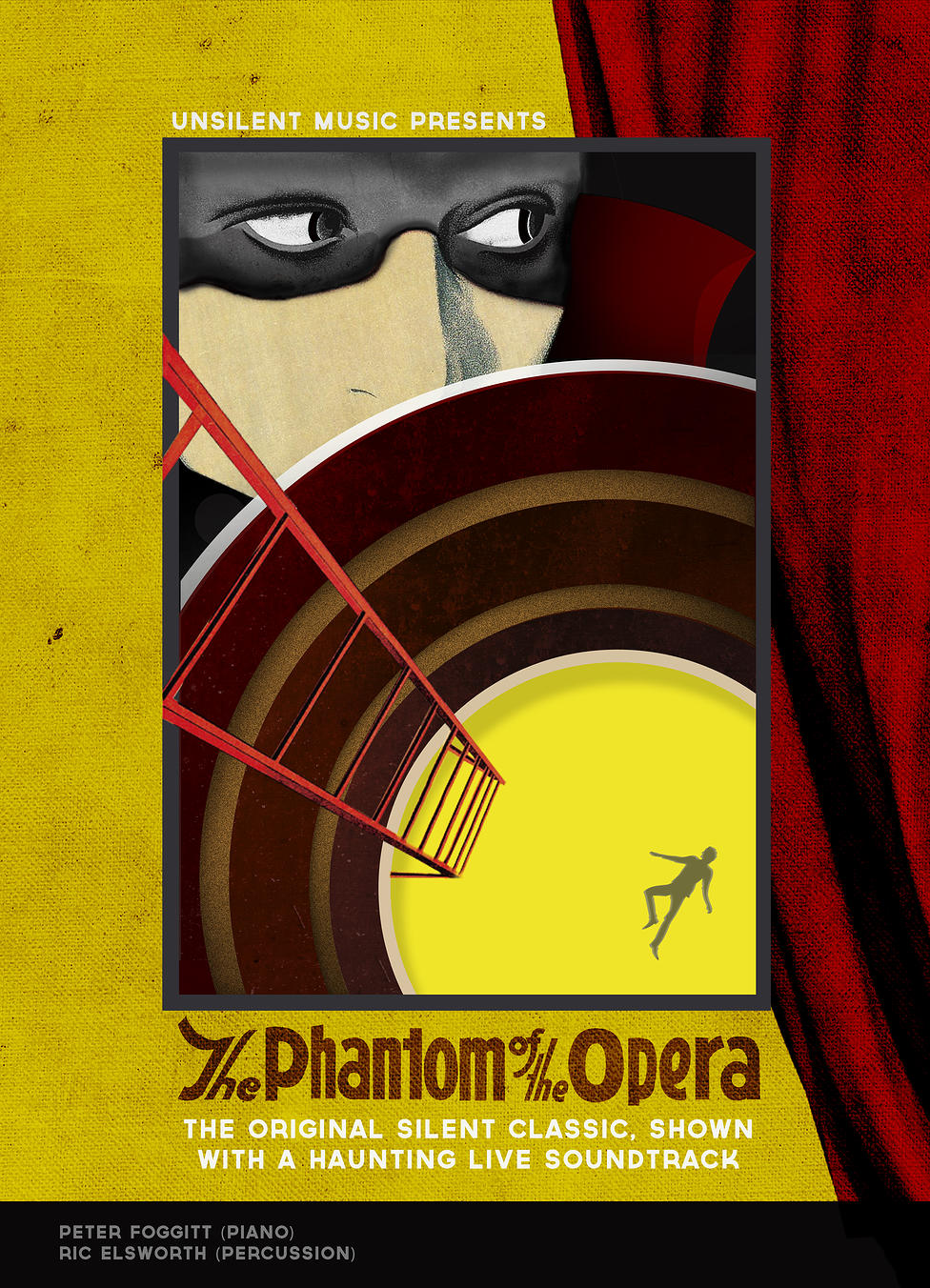
Unsilent Movies has been touring silent film and live music events for a couple of years now. This month, they are bringing their score for The Phantom of the Opera (1925) to venues across the UK. Percussionist Ric Elsworth tells you a little more about the project in this short video:
And here are those tour dates:
26th October – Leicester Phoenix Cinema
28th October – Shrewsbury Theatre Severn
29th October – Newcastle Tyneside Cinema
30th October – Oxford Ultimate Picture Palace
31st October – London St. James Studio
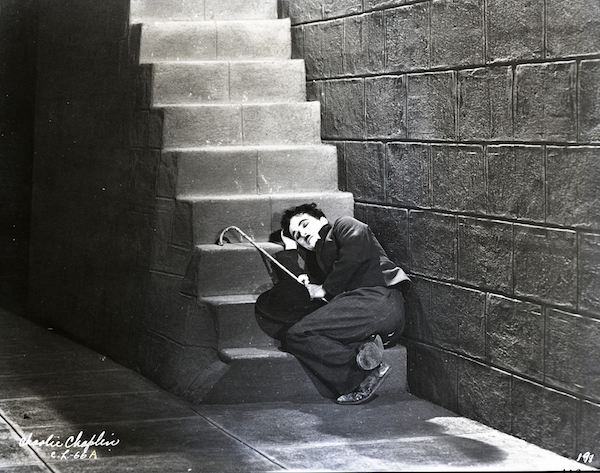
By now, I think we agree that the global capital of silent cinema is Pordenone, and Charlie Chaplin is its patron saint. It was surely fitting that our last glimpse of the Giornate, on the capacious screen of the Teatro Verdi, was the little feller himself, in extreme close-up, at high risk of having his heart broken, smiling to the end. City Lights, our gala screening tonight, is not my favourite Chaplin feature but that doesn’t mean it didn’t have power enough to sweeten the end-of-the-festival blues. Rumours that certain of the delegates are likely to be found curled up in Piazza XX Septembre like the Tramp himself come Sunday’s dawning were unsubstantiated as we went to press …
The Last Edition (1925)
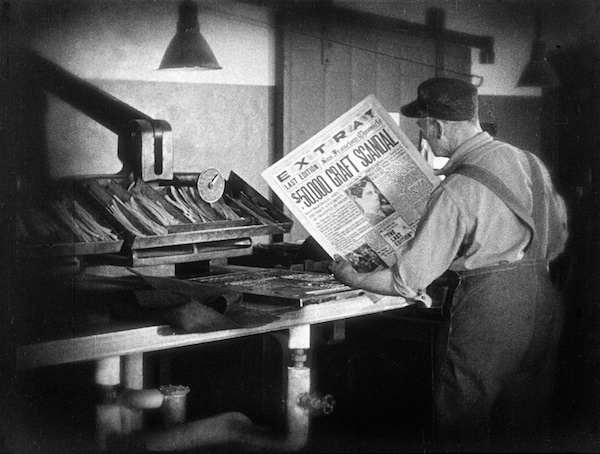
Speaking of which! I can’t wait a moment longer to to tell you about my most hotly anticipated movie of the Giornate. We all have our foibles, and as a newspaper journalist of increasingly long years, I do like a flick about the inkies. The Last Edition (Emory Johnson, 1925), freshly restored by EYE and the San Francisco Silent Film Festival, promised much joy for the unbridled newspaper geek. Shot on location at the offices of the San Francisco Chronicle, and with its full collaboration, this hotheaded movie is actually a rather clear portrait of the newspaper production process – from commissioning desk to printing press. Mostly the printing press. I was a bit bemused by the moment when the printer turns the masthead and headline upside-down on a plate that has already been made, just by turning a handle. Huh? But I loved the “rush the extra” sequence (“We’ve got eighteen minutes to change the story. C’mon boys!”), which follows the process of swapping in new copy at the last minute from the reporter filing to the copy desk, the typesetters and on to print. I’ve been there myself, with slightly different technology, but the same adrenaline, many a time. Although, needless to say, there were no female journalists in The Last Edition. All stonking if rather rough and ready and a fantastic picture of San Francisco in the 1920s too. I have no earthly idea why they needed to jazz up all this fascinating typesetting material with a plot involving gangsters, corruption and a massive fire at the newspaper office, but I may be slightly biased.
I should mention that The Last Edition was preceded by a 1912 Thanhouser short The Star of the Side Show, about a young “midget”, who refuses to marry the neighbours’ boy, also short-statured, so gets signed up for the carnival instead. It is described in the catalogue as “a prototype for Tod Browning’s Freaks, only more endearing”. That about sums it up. A tricky film to love but another fabulously expressive performance from Marie Eline, the Thanhouser Kid in the lead role. No, in case you’re wondering, she was just a little girl …
You know it’s Pordenone when you’re still having a conversation about melodrama, cliché and the difference between parody and sendup as you turn the key in the lock of your door at midnight. Or maybe that’s just me and the people I choose to hang out with. Still, I think it’s telling, because the penultimate day of the Giornate had plenty for us to chew on, get lost in and provoke the temper too.
But first, let me lay the scene: a medium-sized town in northern Italy, it’s Friday, spitting with rain. Interior: a bell rings, it’s nine am in the auditorium and it is clear that quite a few people in attendance have that Friday feeling. You know, the one was manifests itself in a splitting headache and grey circles under the eyes? But if there is one thing that we have learned this week, it is that Yakov Pratazanov is worth getting out of bed for.
Chiny I Liudi (1929)
And Chiny I Liudi (Ranks and People, 1929), a portmanteau film comprising adaptations of three Chekhov short stories, was another great “serious comedy”, leading me to kick myself that I missed last night’s Don Diego I Pelageya (1928). Each story deals with the problems of living in a rigorously stratified society: a clerk fears he has offended a high-up and apologises to death; an officer is caught between asserting his authority and sycophancy to a general; a poor woman marries a heartless rich man, but has her head turned when she experiences high society. It was all beautifully done, as witty as it was tenderly heartbreaking. A false perspective frame of the clerk approaching his senior’s desk, and a high-angled shot pretty Anna admiring herself in her finery were particularly memorable. I’m more keen than ever to see tomorrow morning’s sound-era Pratazanov. Another 9am Soviet film, just how I like it.
Knocked for six by the German dubbed/scored version of Potemkin. From gruff mutterings to blood curdling screams on the Odessa steps #GCM33
Russian cinema, but not as we know it, before the midday break without a curio from Germany: Panzerkreuzer Potemkin (1930). This is the “talkie” adaptation of Eisenstein’s classic, of course, featuring the Meisel score (in his own arrangement) and a lot of dubbed dialogue. All the intertitles apart from act breaks have been removed from the body of the film and historical explanations tacked on either end, read out in a thumping German voiceover. So it runs shorter than the original, but for me slightly less smoothly, which I freely admit may simply be due to my familiarity with the rhythms of the silent original. It seems strange to hear the men mutter their complaints rather than seeming to rise instinctively to a collective understanding of their circumstances. And because the film was conceived without so much dialogue, a lot of what we hear in this version is simply redundant. There’s an interesting, unintentional effect whenever dialogue runs over a montage cut, actually, as when an officer shakes a sailor awake or another sailor throws that fateful plate. But anyway, it would be very hard to kill the majesty of this movie – the images speak so eloquently that even if Stephen Horne were to reprise his kazoo routine from yesterday, the audience would still be moved. And of course, for a native German speaker, this may be the Potemkin they have always imagined. See what you think (please excuse the “Verdi tidemark”):
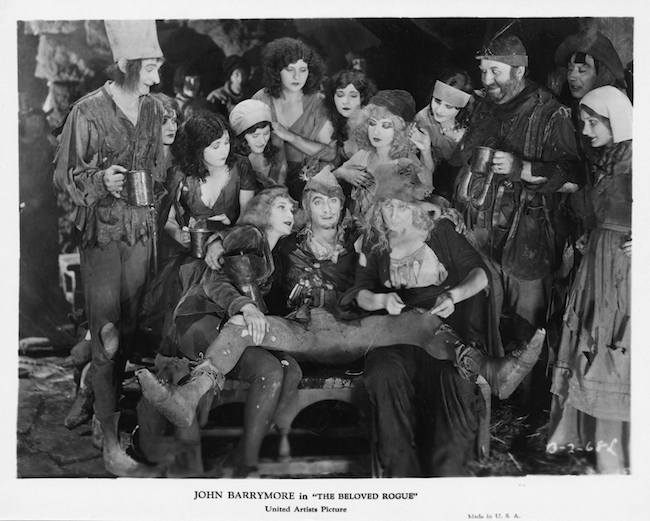
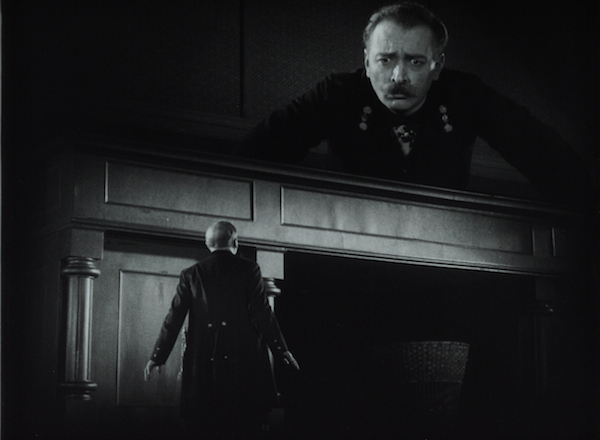
Today was a tale of two Fairbankses, both of them Douglas Sr, and of two Barrymores, both of them John, whom I think we can all agree was a bit of a beloved rogue. In the film of the same title, which came first today, he plays a gadabout poet in a 15th-century Paris so smothered in snow that it looks like a Christmas card. And this is Barrymore a la Fairbanks, just to confuse you, leaping from rooftop to rooftop with a goblet of wine in his hand and a jaunty feather in his cap. You just know that he is going to save France (despite the best efforts of feeble-minded King Louis XI, played creepily by Conrad Veidt with a finger up his nose), win the heart of a fair lady (Marceline Day as a poetry-loving aristo), complete some audacious stunts and compose lots of jaunty (terrible) verse on the spot. There is also a completely gratuitous loincloth scene, for the keener Barrymore fans among us. The Beloved Rogue (Alan Crosland, 1927) is total bunkum, but much more fun than, say When a Man Loves. The only way to enjoy this sort of thing is to commit totally to it, and we were helped along by sparkling accompaniment from not one musician but four: a harmonious grouping of Donald Sosin, Elizabeth-Jane Baldry, Frank Bockius and Romano Todesco.
Beau Brummel (1924)
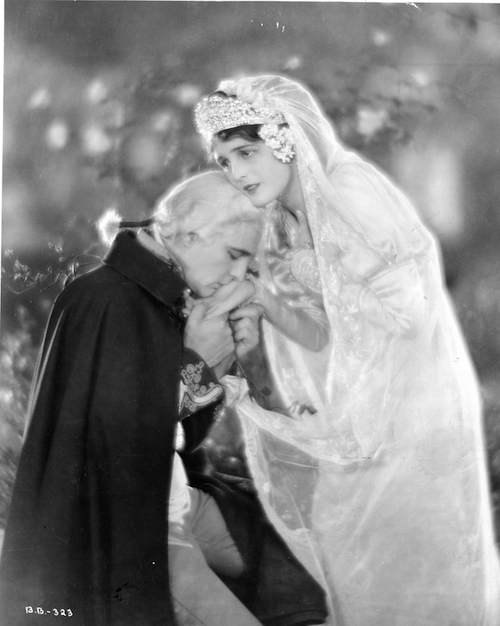
But John won’t win my heart that way: I crave romance, and splendour, and something beautiful to soothe my fevered brow. Beau Brummel (Harry Beaumont, 1924) will do the trick nicely thank you. It’s gentler, and more tender than the other JB films we’ve seen this week, even if equally as preposterous. Barrymore is the foppish captain deemed too lowly to marry his lady-love (an excellent, if teenaged, Mary Astor), who therefore plots to take obscure revenge on “society” by insinuating himself into the Prince Regent’s inner circle and fighting the system from within, yeah. But dear me, he does it in style. Skinny britches, umpteen rows of frogging, diamond buttons on his frock coat and a powdered wig – and still all you can concentrate on are those flashing eyes and his wicked comic timing. Preening in front of the mirror, practising his poses, or repeating the same lines to another pretty woman until he almost believes them himself … ah he’s a belov-able rogue here too all right. And in the end, it’s very touching, if both overdone and overlong. Stephen Horne was there for the duration (the Giornate showed the fullest print possible, of course), with a light touch on piano, flute and accordion bringing out the best of the comedy and plucking on our collective heartstrings. Good for the soul.
The Good Bad Man (1916)
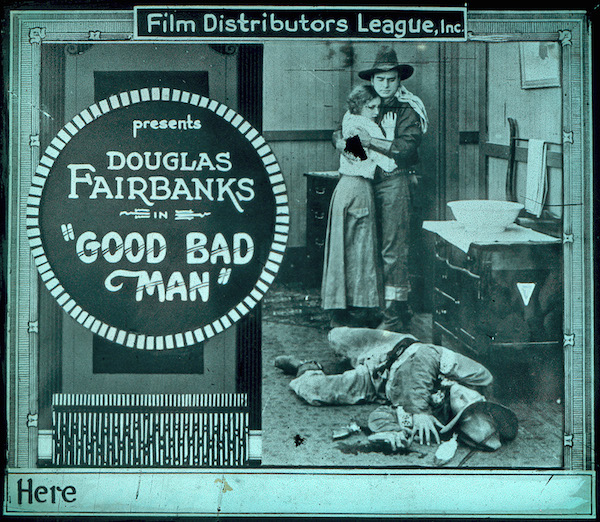
Douglas Fairbanks is just as reliable a star as JB, if a simpler proposition all round. We were lucky enough to see The Good Bad Man (Allan Dwan, 1916) today, a western that went about its business as swift and straight as an arrow. Fairbanks is a Robin Hood cowboy, stealing from the rich-ish and giving to illegitimate children. Is there a dark secret in his past? Will he discover it, have his vengeance and live to make eyes at Bessie Love another day? I thought he just might – but was I right, kids? Kudos to London-based musician David Gray who accompanied the movie with verve and accuracy – he has been partaking in the Giornate’s musical masterclasses all week and this show marked his graduation.
Our second sighting of Dougie was far more epic. The evening show brought another eye-popping collection of two-strip Technicolor treats, including a bizarre set of out-takes from The Gaucho (1927): a reel of attempts to shoot Mary Pickford as a vision of the Virgin Mary on a rockface. Shimmering loveliness its very self until an assistant hovers into view with a clapperboard. Fairbanks showed his face, and his biceps for the main feature, the unstoppable force that is The Black Pirate (Albert Parker, 1926): as gruesome as it is gorgeous and grand, this is a hard film to take against. If only because that dagger-down-the-main-sail makes you catch your breath each time. And in case you were wondering, John Sweeney can even make a sea shanty sound elegant. Classy stuff.
Almost time to turn in, and Whoozit (Harold L Muller, 1914) was our first bedtime story. Now, if a whole Charley Bowers movie makes very little sense at all, then I think it’s fair to say a single rediscovered reel will be a puzzler indeed. Great larks though: oysters with eyes humping across the bathroom floor, a teddy bear growing a beard, magic spectacles and an ogre sharpening a giant razor. Deeply enjoyable, brilliantly surreal.
One last thing before we go. The return of Sidney Drew, paired up here with Clara Kimball Young, to prove that the silent movies were spoofing silent movies long before pesky 21st-century scamps thought to do so. I thought Goodness Gracious; Or Movies as They Shouldn’t Be (1928) was ragged, but good clean fun, with hapless Gwendoline careering through loopy scenarios while chomping on her chicklit and waiting for her “brave youth” Cornelius to rescue her from another poorly framed misadventure. Undercranked and overegged and mad as a box of oysters. But a wiser soul than I caught up with me and raised a valid question: if this is the parody what is the original? Especially bearing in mind that this was made in 1928. Hmmm …
Corpse of the day: Bessie Love’s dear old pa in The Good Bad Man, God love him. Flat out on his front porch and breathing like a freshly landed fish.
Absurd romantic metaphor of the day: Home is where the hearth is for John Barrymore and Marceline Day in The Beloved Rogue – “Your eyes have swept my heart clean and kindled a fire there that will outlast me.”
Tiny things I love about Pordenone No 36: When the logo appears before a film and a group of dedicated colleagues cheer their own archive. Adore it.
My blog from the first day of the Giornate is here.
My blog from the second day of the Giornate is here.
My blog from the third day of the Giornate is here.
My blog from the fourth day of the Giornate is here.
My blog from the fifth day of the Giornate is here.
My blog from the sixth day of the Giornate is here.
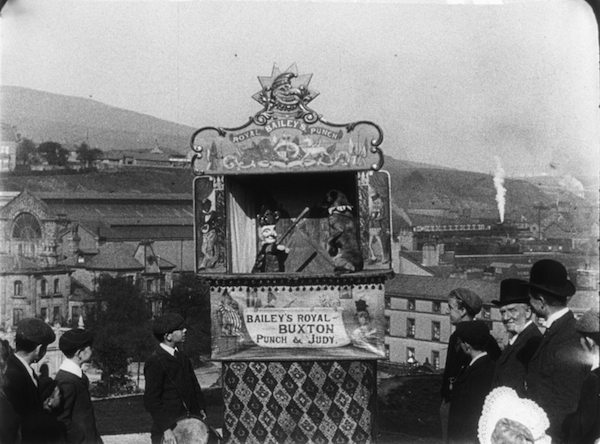
Bailey’s Royal Punch & Judy show in Halifax (1901)
Two Barrymores today, two appearances from Little Tich and too much, as usual, to recount here. But like the hard-working Cupid in La Rose Bleue (Léonce Perret, 1911), I’m going to give it my best shot. So if you’re sitting comfortably …
Today's highlight easily @professorvaness' brill Edwardian Entertainment program. Color fireworks, M&K, palmistry, clowns, fairs etc #GCM33
In a move designed to cure, or provoke, homesickness in weary British bloggers, this morning we were treated to 90 minutes of Edwardian Entertainment courtesy of Bryony Dixon and Vanessa Toulmin. Accompanying the 40-odd shorts and fragments on piano, percussion voice and everything in between were Stephen Horne and Frank Bockius on stellar form (Horne’s witty use of a kazoo, yes kazoo, in a telephone sketch was priceless). This was a peek at England in its Sunday best and some more outlandish costumes. It was all fun, fun, fun with trips to the seaside, the Punch and Judy show, fireworks, the cinematograph, barrel jumping, the fun fair, the panto and many wonderful processions showcasing our forefathers and mothers’ considerable talent in the fields of costume design and formation dancing – and not just Morris troupes and maypoles. It’s enough to make one crave a stick of rock and a trip to the illuminations. Certainly my northwestern heart leapt at a panorama of Blackpool. And who could resist the sight of a row of Mutoscopes on Morecambe beach with the sign “Look at this and get a laugh”. The perfect solution for those of us who want to watch the flicks all day without depriving ourselves of vitamin D.
If you really want sunshine at this time of year, a trip to Greece is in order, and Oi Peripeteiai Tou Villar (The Adventures of Villar, 1924), the oldest film ever restored by the Greek Film Archive, was a sketchy comic caper, doubling as a sun-dappled tour of Athens. Larky nonsense, but great shots of the Acropolis etc. And now I can say I have seen a Greek silent movie, which is sure to wow the folks down at the Rose and Crown on my return.
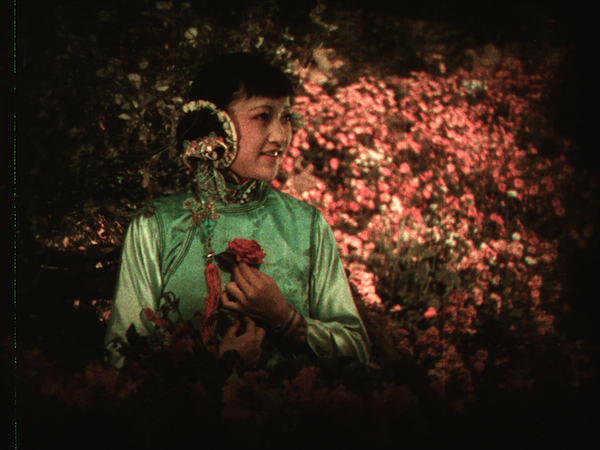
The Toll of the Sea (1922)
But if you want something really gorgeous … the second Dawn of Technicolor compilation had many diverting treats inside, culminating in The Toll of the Sea (1922). This was an exceedingly picturesque melodrama, a reboot of Madame Butterfly in which Anna May Wong plays a young Chinese woman in love with an American. But the bond of love and “marriage” is held more sacred by her than him … Oh and it all ends in sadness and sacrifice and another word beginning with S. Not before Wong’s sumptuous wardrobe and elegant garden (complete with peacock!) have been given the full Technicolor treatment, though. The sweetest of sorrow and the sugariest of eye candy.














 Silent London