Category Archives: Review

The Pioneers of African-American Cinema review: an ambitious and excellent release

Christmas is a time for happy endings. And box sets too, to be honest. Last year I posted about an ambitious new project from Kino Lorber – a box set of early work by African-American film pioneers. Films that were funded, produced, written, directed by and starring people of colour. These were films we have had precious few chances to see, or less than that, and they were going to be restored, and where appropriate, rescored. Not easy.

The first happy ending is that Kino pulled it off – and if you supported the project on Kickstarter, you may well have received a parcel this summer containing a shiny set of discs and a thick booklet of essays by Paul D Miller (DJ Spooky), Charles Musser, Jacqueline Najuma Stewart, Rhea L Combs and Mary N Elliott.

For those who didn’t have the cash to pledge at the time, or who can’t play imported discs, the BFI has stepped in to create another happy ending. This Christmas, the BFI has released its own matching version of the box set for the UK– and this isn’t so much a review as a recommendation.

This collection, The Pioneers of African-American Cinema, comprises five discs, with more than 20 hours of material, ranging from 1915-1946, with archive interviews from much later. There are feature-length musicals, war movies, evangelical films, anthropological footage shot by writer Zora Neale Hurston, amateur actualities by an Oklahoma Reverend, several works by Oscar Micheaux, and much more on these discs.

Watching these films is revelatory. In fact, just browsing the list of titles is an education. These films represent an obscured history of African-American filmmaking, an alternative film industry that existed largely separate to but alongside Hollywood, and a survey of African-American culture in the first half of the century. Many of these films directly address social issues, or comment slyly on Hollywood whitewashing. And many of them deal directly with faith and religion, from full-on cinematic sermons to the posturing preachers that so often appear in Micheaux’s films. As James Bell writes in his comprehensive review of the set in this month’s Sight & Sound: “Its significance for expanding a wider understanding of American cinema history can hardly be overstated.”

Continue reading The Pioneers of African-American Cinema review: an ambitious and excellent release
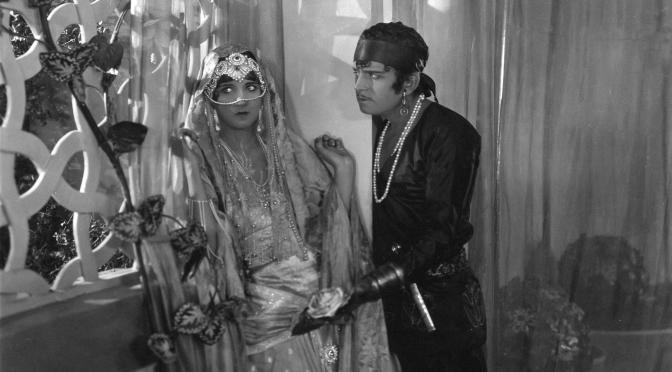
Le Giornate del Cinema Muto 2016: Pordenone post No 8

The parade’s gone by for another year. The projector is empty, the Verdi is empty, even the Posta is empty. Yet again I can say watched a ridiculous number of films, but still missed many I wished I had seen. The Giornate was full to the brim with silent spectacles this year. And while it may be too early to speculate about Key Trends of the Weissberg Era, we can say the festival is in safe, and loving, hands. It was a vibrant schedule, crammed with exciting films. I had an especially good Giornate. How about you?

Today was always going to be bittersweet, but I offset that sharp tang of sadness with some great films and some enjoyably ludicrous ones, too. If we are going to remember this year as the year of big, beautiful movies (and I am at least), I enjoyed a fitting final day.

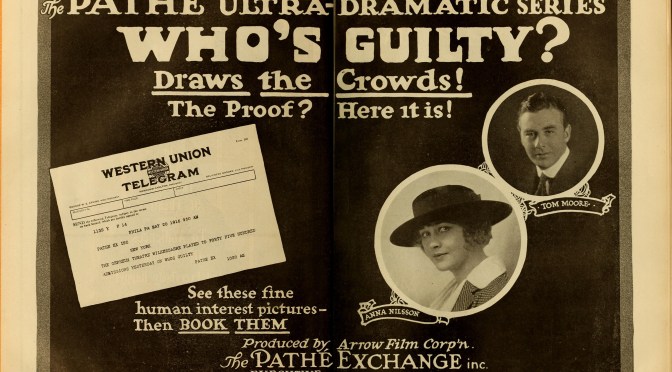
First question of the day: Who’s Guilty? Me, because I missed the final instalment in this diverting series, but I did arrive at Cinemazero in time for some Al Christie funnies. My eye was caught by a cross-dressing romp called Grandpa’s Girl (1924), but that wasn’t what I had stepped out for this morning.

I was Born, But … (1932)

I had a date with cinematic greatness, in the form of Ozu’s I was Born, But … (1932), the most sensitive and character-led of comedy dramas, shown in the Canon Revisited strand. Wonderful to see this projected, with Maud Nelissen’s ambitious and sensitive accompaniment. As a smart companion said: it’s a film about children but it’s really about all of us, at any age, at any time, in any place. This film is funny and wise and always beautiful: even when the camera is focused on the scruffy and mundane stuff of our scruffy and mundane lives, there is harmony and freshness. And oh, just make sure you never miss the chance to watch (and rewatch) this one. Promise? And the perky Momataro cartoon beforehand was a treat too.

Continue reading Le Giornate del Cinema Muto 2016: Pordenone post No 8

Le Giornate del Cinema Muto 2016: Pordenone post No 7

Most people come to Pordenone in October for the silent films. Many come for the networking. Others for the music. Or the gelato, or the Aperol Spritz. But when those attractions pall, they say, you can also hop on a train and go to Venice. The idea horrifies me. Sure you could see St Mark’s Square, and meet a handsome gondolier. But think of the early cinema you would miss.
Still, even if you don’t take such a hard line as I do, Friday presented an innovative solution. Why leave town at all, when Venice can come to the Teatro Verdi? In honour of 120 years of cinema in Venice, a short programme of Lumière shorts offered us a leisurely drift down the canals. Then Max Reinhardt’s Eine Venezianische Nacht (1913) offered Commedia characters and whimsical comedy, as a nerd spends the night in the floating city and becomes infatuated with an ethereal bride, although sadly the narrative did not flow as smoothly as the canals. I really enjoyed the dream sequences, especially a neat setup whereby the local characters danced around the scholar’s bed, thanks to the magic of double exposure. But in this case the music, from a Trieste ensemble, didn’t seem to help.

blue-jeans-viola-dana-john-collins-1917-2

And we deserved a little light sightseeing, after an emotional day, which began with a melodramatic double-bill. First, our customary voyage to the dark side of human nature in a Who’s Guilty? short featuring Anna Q as a jealous wife. Very little mystery in this one, but there was a novelty for the audience, as the Giornate’s two masterclass students took to the piano to share accompaniment duties. Jonathan Best and Meg Morley both did the drama proud, and we are very lucky to have both of these talented musicians playing in the UK.

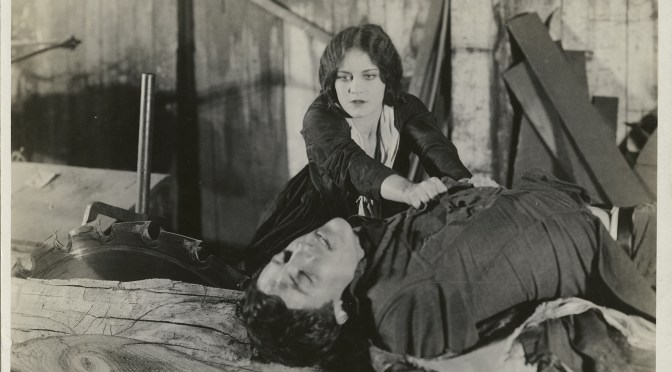
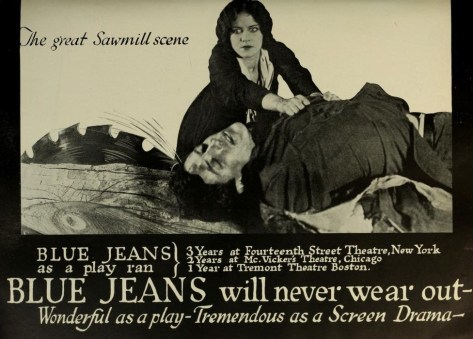
Then one of my most highly anticipated screenings of the festival: the well-known stage drama Blue Jeans (1917), rendered for the screen by John H Collins and starring the wondrous Viola Dana as a tomboyish orphan caught up in a complex small-town intrigue. There was a lot of plot and back story to pack into the 84-minute running time. It is really the kind of film where you might draw a diagram on your ticket stub in the café afterwards to make head or tail of the marriages and feuds etc. Disturbing to some of us also, that in the local elections, our hero stood for the Conservatives and the villain for the Liberals – but of course the baddie won that battle. Anyhoo, this one is well worth seeking out, if only for the famous climax at the saw mill when said hero narrowly escapes a haircut. Viola Dana to the rescue! And Donald Sosin’s music was just right, with a recording of Joanna Seaton singing a song inspired by the play adding another layer of nuanced dramatic Americana to the screening.

The rest of the morning was a delightful patchwork, the kind the Giornate excels in. A programme of French comic shorts directed by Emile Cohl, accompanied by Stephen Horne in suitably bonkers fashion on a plethora of instruments, included some wild animation, and surreal live-action comedy. Hugely inventive and almost impossible to describe in this space, but do take the chance to see these charming oddities when you can. Hopefully with Mr Horne and his bag of tricks.

THE DOVE (US 1927) United Artists/Photofest
The Dove (1927), Directed by Roland West, Shown from left: Gilbert Roland, Norma Talmadge United Artists/Photofest

The final slot of the morning was crowned with two curios from the William Cameron Menzies strand. An early sound film, The Wizard’s Apprentice (1930) was a trick-photographed forerunner to the more famous Walt Disney version with matchstick brooms sloshing tiny tin buckets. And the four reels remaining of The Dove (1927) were hot-blooded comedy drama, with the gorgeous duo of Norma Talmadge and Gilbert Roland offset by the leering machinations of Noah Beery as the self-aggrandising local Caballero. Before both of those, we met our friend Momotaro the peach boy from yesterday, this time on an underwater adventure to assassinate a shark. Brilliant fun.

EROTIKON (SE 1920) © AB Svensk Filmindustri

The evening’s show promised great things. Erotikon? Erotic con more like. Yes, this Mauritz Stiller comedy could happily have been about 20% funnier, and no, there were not erotic thrills to be had on screen. Not by 2016 standards, at least. The main disappointment for me was realising that I had actually seen it years ago and what I thought was a me-premiere was in fact a retread. But it is a fine film, after all. A professor of entomology and his flirty wife seem to be headed for the skids because of her “infidelity”, but perhaps missus is not as bad as she has been painted? Maybe she is in love? Maybe the doddery professor has moved his fancy piece into their homestead under her nose and on false pretences? This Swedish sex comedy is lightly sparkled like the local prosecco and and was pleasingly open-ended. I was silently screaming at the end “C’MON, what is the real deal with that niece?” at the end. A grownup comedy, if not a totally hilarious one, and we were delighted to have John Sweeney’s witty accompaniment for this tale of crossed wires and mistaken glances.

Continue reading Le Giornate del Cinema Muto 2016: Pordenone post No 7

Le Giornate del Cinema Muto 2016: Pordenone post No 6

Was this the perfect Pordenone day? Very likely. Sunshine, coffee and great films in abundance. Plus, not one but two appearances from Ivan Mosjoukine. Giornate excellence achieved.

First things flipping first. Best. Who’s Guilty?. Ever. Anna and Tom are in love, a bit. Anna considers marriage but doesn’t come close. And the backdrop is a factory, which soon becomes embroiled in a workers’ dispute. Yes there is a strike! Much broader, bolder drama here, with nice location shooting and some sharply composed long shots. if Eisenstein had made potboilers. Maybe. And before the morning’s main event, a now-obligatory trip to an ersatz pre-revolutionary Russia with Ivan Mosjoukine in Der Adjutant des Zaren, a charming Japanese animation about a boy grown from a peach who became gentle and strong – but mostly badass enough to slay a shedload of ogres.

This morning also featured a quartet of City Symphonies to delight the eyes. I especially liked a very elegantly shot look at the reconstruction of Tokyo in 1929 (I know!), Fukko Teito Shinfoni and a zoom up Chicago’s main drag in Halsted Street (1934). A tour of Belgrade was pretty enough but lacked direction and so outstayed its welcome. I am very fond of these films though, and look forward to more. Continue reading Le Giornate del Cinema Muto 2016: Pordenone post No 6

Le Giornate del Cinema Muto 2016: Pordenone post No 5

“It’s Christie Cristo day,” quoth a witty fellow Pordenaut today. And that was true – we were expecting more Al Christie comedies and Henri Fescourt’s lavish Monte-Cristo (1929) too. It also neatly encompasses the range of material one can expect from 14-odd hours in the Verdi. Slapstick comedy to prestige literary adaptations – plus today we had drama, poetry, newsreels, satire, political advertising and more … But it’s all that obscure niche they call silent cinema, right?

MONTE-CRISTO (FR 1929) ZZ Productions, Paris
Then again, my day began, and ended, with the Napoleonic era. Tonight’s epic screening, a marathon treat we have come to expect on a Wednesday in Pordenone, was the aforementioned adaptation of The Count of Monte-Cristo, running at almost four hours, and as lavish as you please. It was, as Lenny Borger promised, “the full Monte”. Comparisons were inevitable with last year’s Les Misérables event – this film was less picturesque, less self-consciously serious, but just as vivid and awe-inspiring, with greater pace and suspense. The restoration was nicely done, but Monte-Cristo was not the living oil-painting we saw in 2015 – this was dynamic monochrome, boosted with a few tints, with a handful of showy camera movements, deep and pointed shadows, wicked interior lighting effects and some truly monumental sets. A feast for the eyes, but in a more classically cinematic way.

Continue reading Le Giornate del Cinema Muto 2016: Pordenone post No 5

Le Giornate del Cinema Muto 2016: Pordenone post No 4

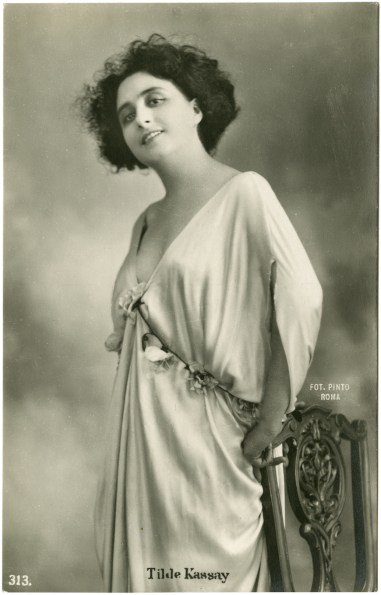
Did anyone ever tell you to beware of loose women in tight corsets? Tuesday at the Giornate was a tale of two Nanas: Jean Renoir’s acclaimed 1926 adaptation of the Emile Zola novel played in the afternoon, but in the morning we saw a recently rediscovered Italian version, starring noted diva Tilde Kassay. The Verdi audience are accustomed to beautiful temptresses by this point, so we were well judged to decided who wore it best…

First, here’s what I didn’t see. One British-Soviet curio, Three Live Ghosts, which I saw last year in Leicester and wrote about here. I also ducked out of The Guns of Loos, having seen it on the same occasion, and then a few weeks back at the BFI too. I wimped out of the morning’s western marathon too, after a couple of films. Early westerns don’t always thrill me, but in this case I had some work to do instead. And it seems that I missed out on a very impressive rattlesnake. Ah well, snakes and ladders. I have a less impressive reason for missing the last film of the day,  but I stand by it: good wine, good company, great gossip.

Portrait of Tilde Kassay. Collezione Jay WeissbergHowever, nothing can tear me away from my Who’s Guilty? morning treats, which have me more hooked than any soap opera. Yet again Anna Q Nilsson got married in haste (to the always-appealing, imp-faced Tom Moore, the son of the newspaper editor investigating her senator father’s corrupt affairs) and repented in haste too, as a lawsuit for abduction revealed a harsh truth about her childhood that led her straight to the brink. The brink of the lake that is. Thanks A Trial of Souls (1916) for that early morning anguish. Continue reading Le Giornate del Cinema Muto 2016: Pordenone post No 4
Le Giornate del Cinema Muto 2016: Pordenone post No 3

On a blissfully sunny Monday in the town we’d really rather you didn’t call “Porders” we saw films which taught us that money makes the world go round, and films that transported us to the far side of the globe. Come take a trip …

The Who’s Guilty? strand continues to entertain – we’re all hooked. Although I was worried that Anna Q Nilsson kept getting married and kept suffering as a result and would never learn. A case in point was today’s first film, the second reel of Sowing the Wind (1916). However, things took a turn for the modern in Beyond Recall (1916) as an extravagantly costumed Anna Q took a job (really!) in the District Attorney’s office and did her very best to save the life of Tom Moore, wrongly accused on circumstantial evidence of murdering his girlfriend. The DA ignored her arguments, so unfortunate Moore was sent to the chair, grimly illustrating some still-relevant troubles with sexism in the workplace and the fate of poor people in the justice system. Anna Q can’t catch a break.

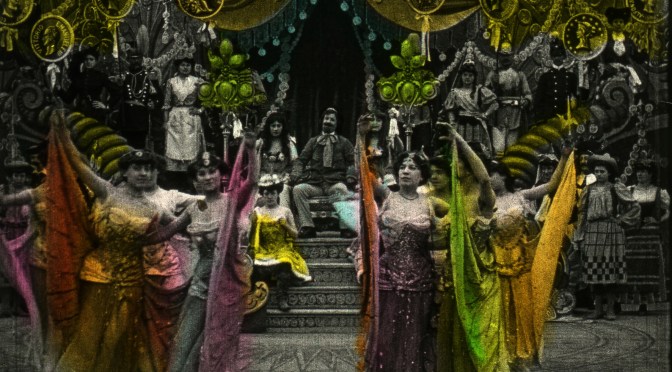
LE ROI DES DOLLARS (FR 1905) Collection EYE Filmmuseum, Amsterdam
Continue reading Le Giornate del Cinema Muto 2016: Pordenone post No 3

Le Giornate del Cinema Muto 2016: Pordenone post No 2

Ever fallen in love with a film you shouldn’t have fallen in love with? I did, tonight, I must confess. I am utterly besotted with a Polish silent that isn’t a silent at all, really, but a musical of sorts that has long since parted company with its Vitaphone discs. What remains of Janko the Musician (Janko Muzykant, 1930) is a very poignant film, with easy charm and visual lyricism.

Young Janko is a peasant boy in rural Poland, and although he is a gifted musician, he hasn’t the funds to develop his talent, or even practise it. His homemade rustic violin is ingenious, but far from sufficient. In fact, for a young man of his class, artistic endeavour is so far off-limits that he is criminalised for his love of music, which destroys his poor mother and nearly breaks him. Even when it seems that he has used his talent to transcend these social divides, his past catches up with him.

poland_08_janko

Janko is played by two strikingly handsome actors, Stefan Rogulski and Witold Conti, and the supporting cast, notably his two partners in demi-crime in the second half of the film are excellent. Without the sound discs, it is still very easy to follow the film, as the dialogue was always intended to be carried by the intertitles, but we are left with longish sequences when Janko plays, or others sing. To fill these silences, we had a very sympathetic live (improvised?) score from Günter Buchwald, Frank Bockius and Romano Tadesco, which left the Verdi every bit as spellbound as the crowds who gathered to hear Janko play. The first third of the film is especially successful, and the first two-thirds very good indeed. If it felt slower in that last third it is because we have left Janko’s natural habitat and his essential conflicts behind. This film is at its best in the countryside, and wherever people gather, not in high-class drawing rooms and court offices. It was also 35 minutes longer that advertised, so I guess it was actually slow, but I didn’t hear anyone complaining about that. Continue reading Le Giornate del Cinema Muto 2016: Pordenone post No 2

Le Giornate del Cinema Muto 2016: Pordenone post No 1

You don’t have to be a Giornate regular to know that everything old is new again … but it helps. So, as the Pordenone Silent Film Festival celebrates its 35th birthday, we welcome a new era, with Jay Weissberg taking over as director. A change of course or more of the same? There is only one way to find out …

À Propos de Nice (1929)
À Propos de Nice (1930)

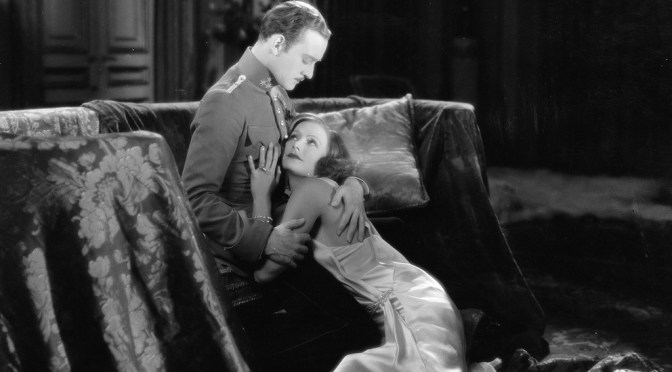
Greta Garbo is immortal, and an opening night gala featuring a lush Carl Davis score for a classic Hollywood silent feels like a timeless choice also. Tonight’s screening of the shamelessly romantic The Mysterious Lady (1928) ticked all the boxes for a wandering Cinemutophile yearning for a home from home in northern Italy. It is a beautiful film, just the right side of presposterous, with Greta Garbo as a Russian super-spy seducing Austrian officer Conrad Nagel and falling in love in the process. How inconvenient, especially for her lecherous boss, Boris, played by Gustav von Seyffertitz. The score, conducted by the maestro himself, was a Hollywood number through and through – thrilling to the too-perfect romance between the leads and unabashedly ramping up the intrigue. Touching too, that one of my all-time favourite silent films, A Propos de Nice (1930), played before the main feature in a gesture of sympathy and solidarity with the the people of the French Riviera, who suffered a terrible attack earlier in the year. It looked sublime on the Verdi screen, needless to say, and especially so with John Sweeney’s sparkling accompaniment

Continue reading Le Giornate del Cinema Muto 2016: Pordenone post No 1

Early Murnau review: a set for the silent cinephile to linger over

The concept of “Early Murnau” is a little bittersweet. The German director had such a short career that the films in this new collection from Masters of Cinema take us up to just six years before he died. And while his most famous film was made during the period (1921-25) covered by this box set, that work, Nosferatu, is not included. The set ends just one year before his hypnotic Faust was made, and two before his Hollywood masterpiece Sunrise.

This is technically middle Murnau, then, or “the Murnau you may have missed if you only knew Nosferatu and the surviving Hollywood work”. All the same, this is a gorgeous collection of distinctive, spectacular films, well worth adding to your shelf. All of the films in the set have been made available on DVD from Masters of Cinema previously, but here together, on Blu-ray, they represent a far better bargain.

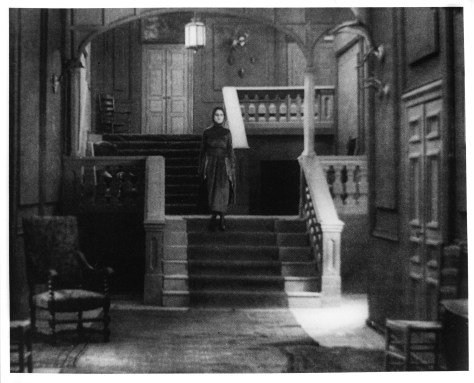
Schloss Vogelöd (1921)

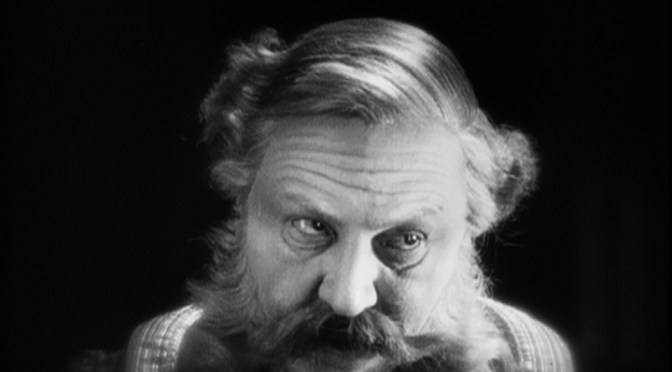
The journey through Murnau’s lesser-sung German work begins in 1921 with Schloss Vogelöd, a country-house mystery rendered mysterious and dreamlike at the director’s touch, and climaxes with the bracing and inventive Molière adaptation Tartuffe (1925), which introduces an especially noxious virtue-signalling hypocrite and hangs him out to dry. In between we delve into the romantic and financial misery of a poetically minded clerk in Phantom (1922), and the related entanglements of an aristocrat in Die Finanzen de Grossherzogs (1924). Indisputably, the highlight of the collection is the low-key masterpiece Die Letzte Mann (1924) starring Emil Jannings as the hotel doorman whose life hits a downward spiral when he is demoted to a toilet attendant.

As the many extra features and essays included with the set attest, Murnau’s oeuvre is hugely varied, swinging from genre to genre and rarely settling in one place for long. Stylistically, though, he is mistakably himself at all times. You can see the walls of the city bend down to oppress the heroes of both Phantom and Die Letzte Mann, for example. And you may already have noticed that the films above share a set of preoccupations with money and social position, with impossible aspirations and with toxic pride.

Continue reading Early Murnau review: a set for the silent cinephile to linger over

The Red Turtle review: the silence of an enchanted island


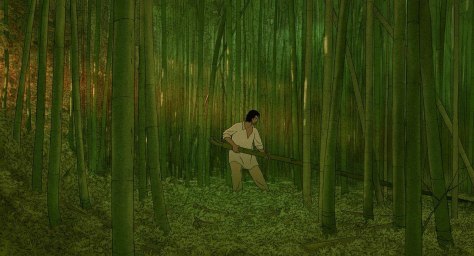
Shipwrecked and bewildered, a lone man washes up on an island that has lush, forest vegetation, fresh water, fruit, and everything a person needs to survive, except human company. His attempts to escape his isolation by raft are repeatedly scuppered by a mysterious, and gorgeous sea creature, with which he forms a lasting, and surprising relationship.

The Red Turtle, an animated feature film that was widely admired at Cannes, plays the London Film Festival next month. You may have heard of if because it represents a first in the world of animation – a Studio Ghibli co-production, being a collaboration between the well-known Japanese outfit and Dutchman Michaël Dudok de Wit. It is also that beast rarer than a giant red sea turtle: a new, and very accomplished feature-length film without dialogue.

The Red Turtle (2016)

The silence, washed over with a sophisticated sound mix of animal noises and ferocious waves, is supplemented by a gorgeous, rousing score that helps to elevate the castaway’s solitary struggles to edge-of-the-seat, blockbuster events. And it is in the first third that the film is its most successful, as the hero adjusts to his surroundings, carves himself an awkward niche in the island ecosystem, and valiantly attempts to sail away into the sunset and towards civilisation. One early sequence, in which he slips through a crevice and must use all his strength and courage to swim to safety, cranks the tension to its utmost. In these first scenes, we are privileged to share his fears and frustration, his dreams and his sickness, so that each time he tries to make a break for it, alone on his wobbly raft, the interference of the red turtle is a cold shock. This portion of the film is closest to a horror movie, the most obvious analogue being Jaws, with a silent, invisible terror lurking beneath the waves. Sometimes he screams, but of course there is no one to hear him. It is a masterful feat of sustained silent film narrative, engrossing and terrifying.

Continue reading The Red Turtle review: the silence of an enchanted island

Have You Seen my Movie? review: a good reason to go to the cinema

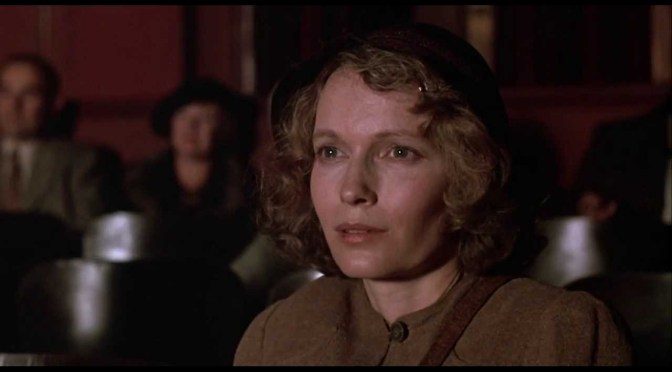
Cinema has always found itself delicious. Showing at the London Film Festival next month is a movie made out of movies in which people watch movies at the movies. There are movies within the movies within this movie, and it will leave you with an intense craving for popcorn – as well as celluloid.

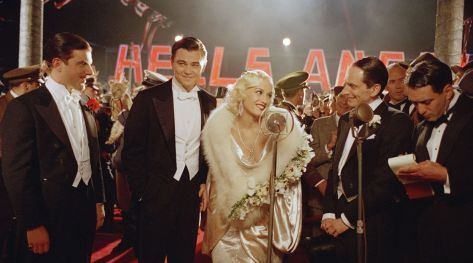
Paul Anton Smith was one of Christian Marclay’s assistants on his tick-tock supercut The Clock. For his debut feature, he has dipped back into the archives to create Have You Seen my Movie? (2016) – a less ambitious film, but with a more romantic theme. Have You Seen my Movie?, which screens in the Experimenta strand, stitches together sequences from feature films in which characters watch films, mostly at the cinema, but occasionally in screening rooms or edit suites and in one very enjoyable sequence, at the drive-in. The movie is roughly chronological not by era, but by the stages of movie-going: beginning in the ticket queue, taking us through the whole feature presentation and ending only when the cinema has closed and the last customer has been booted out.

The Aviator (2004)
The Aviator (2004)

Continue reading Have You Seen my Movie? review: a good reason to go to the cinema

Fedora: Billy Wilder’s recurring Hollywood nightmare

William Holden is drawn into the dysfunctional, secluded household of a fading Hollywood star, seduced and horrified by what he finds. In his familar crisp voice-over, he tells a sad story of Hollywood brutality. This beautiful screen siren, her heyday far behind her, has a terrible secret, but despite her advanced age, she remains fascinating, almost irresistible…

No, it’s not Sunset Boulevard, but Billy Wilder’s penultimate movie Fedora, which is released on Blu-ray and DVD by Masters of Cinema on Monday 26 September. Made in 1978, Fedora belongs to a different era than 1950’s Sunset Boulevard. “The kids with beards have taken over,” as Holden’s character laments, referring to those cinematic titans who were once movie brats: Coppola, Spielberg, Lucas, Scorsese. And Fedora is not a silent movie star either. She belongs especially to the 1930s and 1940s, when she made woman’s pictures, a genre that has gone out of date in 1978. But still, her career was suspiciously long.

28227602986_f29b647470_k

It’s said that Wilder may have modelled Fedora on Pola Negri – she is Polish, aristocratic and melodramatic, and she was one of the women approached to play Norma Desmond way back then, too. Negri also retired to live quietly with a lady companion, after a couple of brief comebacks in the 1940s and 1960s. But Negri’s latter years were spent in San Antonio, Texas, devoted to Catholicism. Fedora skulks in an island villa in Corfu, and her end is much less pleasant. Wilder refused to pin this character down though. “I have known Garbo, Swanson, Dietrich, Lombard, and Monroe,” he said. “Fedora is a fictitious combination of them all.”In the opening sequence, in fact, Fedora looks like a much earlier screen goddess, Musidora, as she sprints in a fluttering black cloak towards her fate.

Continue reading Fedora: Billy Wilder’s recurring Hollywood nightmare

The Gag Man review: a brutal insight into the silent comedy business

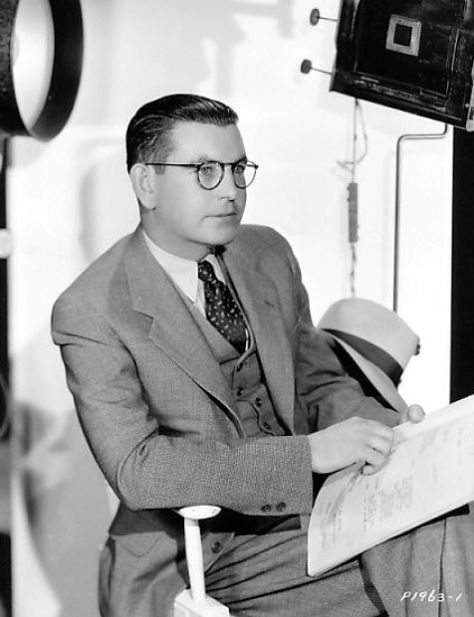
The consensus view on Clyde Bruckman was summed up by Tom Dardis, biographer of Harold Lloyd and Buster Keaton: “he was not very funny, and he drank too much”. Matthew Dessem’s The Gag Man, an entertaining and revelatory study of the writer-director, does little to erase that image, but does examine how he came to “direct” some of silent cinema’s greatest comedies, and tells one heck of a Hollywood yarn.

Bruckman was a journalist who entered the film industry as an intertitle writer, before becoming a “gagster”. The “gag men” would conceive visual jokes for silent comedies, working in groups, throwing ideas around, so it’s tricky to say who did what. However, Bruckman is credited with the brilliant concept for  Buster Keaton’s The Playhouse (1921). The star had a broken ankle, which limited his usual acrobatic display. Bruckman sketched out an idea for creating laughs out of camera trickery instead of physical exertion. Thanks to deadly timing on behalf of cameraman and star, the multiple exposures work perfectly, including a triumphant sequence in which nine Keatons dance together.

ClydeBruckman
Clyde Bruckman

Continue reading The Gag Man review: a brutal insight into the silent comedy business

Around China With a Movie Camera review: bewitching scenes from another world

In a very welcome turn of events, the BFI releases two archive DVDs this week, both with plenty to offer the early film enthusiast. The first is the dual-format edition of Play On!, an anthology of silent Shakespeare films with newly recorded music, of which more elsewhere. The second is Around China With a Movie Camera, a disc full of surprises.

CPmc8jZWgAEMMy1

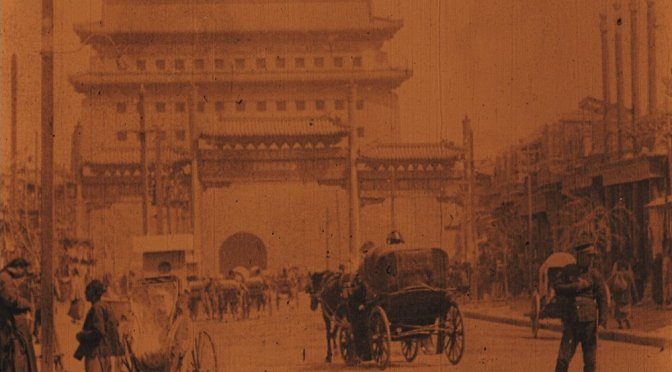
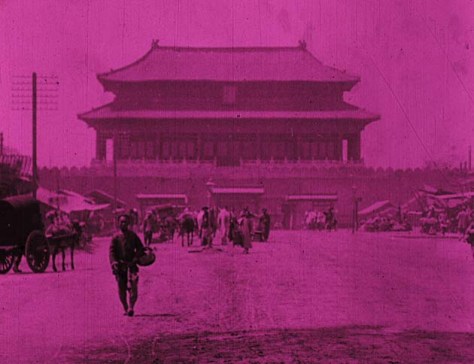
Around China With A Movie Camera is a compilation of archive film shot between 1900 and 1948, with shimmering, groovy music composed by Ruth Chan. I’ve never been to China, so I don’t bring any geographical expertise to this disc, but these are among the most bewitching early films I’ve ever seen. There are travelogues in the mix, but also newsreels, home movies, actualities, documentaries and footage shot by missionaries. Each frame is brimful of life and activity – the familiar and the unfamiliar mingled together. We begin in Beijing in 1910, with footage shot by an unknown cameraman on behalf of Charles Urban. The streets are thronged with people: workers, families, traders, drawing carts, alpacas, horses or rickshaws, carrying water or bundles of straw. The film is vividly tinted and between the blazing sunlight and the dusty road, the heat of the day burns up the screen. The locals smoke pipes, and shave each other’s heads.

beijing-china-travelogue-zeitgeist

A cut, and we see the same streets in 1925, the same crowds and rickshaws and market stalls. More industry here, if not quite high technology. Then, cut again, and it’s 1933. On and on, until we have travelled the country, and sped forward to 1948 and back again.

Continue reading Around China With a Movie Camera review: bewitching scenes from another world

Nitrate Picture Show 2016 review: intoxicating celluloid

This is a guest post for Silent London by Amran Vance, who runs the London Silent Film Meetup group and is part of the team behind the wonderful Kennington Bioscope.

When I wrote about the inaugural Nitrate Picture Show at the George Eastman Museum, Rochester, New York, last year I ended with the slightly pessimistic hope that we would get to see a silent film on nitrate next time around. My fear was that shrinkage issues with such old prints might prevent that from happening. I am delighted to report that my cynicism was misplaced as this year’s festival ended on a sensational high, an American silent film from 1928! But more about that later.

As with last year, the festival organisers kept the 2016 programme under wraps until the morning of the first day of the festival. I know this approach is controversial. Potential attendees have complained to me that they are reluctant to incur the not inconsiderable expense in traveling to upstate New York when they have no idea what films will be screened. I have a lot of sympathy with that view but there is something undeniably exciting about opening the brochure on the first day and seeing what treats lie ahead of us. There is also merit in the organisers’ position that it is the physical condition and pictorial beauty of the prints that governs their selection, with the quality and reputation of the works coming next. Personally, I favour a middle ground, perhaps naming three or four films in advance and keeping the rest secret.

The Dryden Theatre at the George Eastman Museum, our venue for the festival

I suspect that few, if any,who made the journey to Rochester were disappointed with the films presented to us. I was initially sorry to see that no silents were listed but was keeping my fingers crossed that the final screening of the festival, our Blind Date with Nitrate, might possibly fulfill that wish. And so it did.

The festival kicked off with a selection of short films – my favourites were a colorful Julius Pischewer animation Cent Ans de Chemins de fer Suisses celebrating 100 years of the Swiss railway system and a delightful 1934 Universal animation Jolly Little Elves featuring doughnut-loving kindly elves.


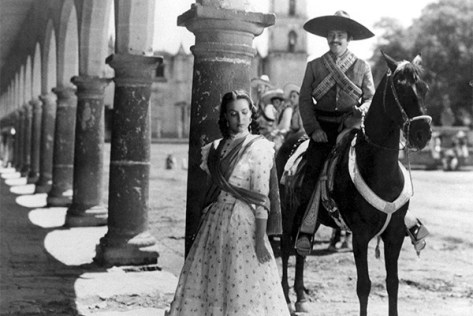
These were followed by one of the highlights of the festival and a film I had not seen before, Enamorada (1946) a tempestuous romantic drama set against the background of the Mexican revolution. Featuring the masterful framing of the legendary cinematographer, Gabriel Figueroa, the film looked gorgeous, especially the exterior shots of the Mexican town in which the story is set. María Félix, probably Mexico’s most famous actress, was beguiling as the feisty female lead and Figueroa makes masterful use of light and shade, given added depth and texture by the nitrate print.

Enamorada (1946)
Enamorada (1946)


Our final film on the first day was the classic noir, Laura, which we were told was a pre-release version that included footage that was cut for its theatrical distribution. Nobody I spoke to could spot the additional material, however, and although the print was good there were only moments when the benefit of nitrate showed through.

Continue reading Nitrate Picture Show 2016 review: intoxicating celluloid

L’Inhumaine (Marcel L’Herbier, 1924) Blu-ray review: the high art of cinema

L'Inhumaine, Fernand Léger, 1924
L’Inhumaine poster designed by Fernand Léger, 1924

In the silent era, films were far more ephemeral than they are today. The fragile nitrate was unspooled for a few shows in each cinema that rented them, and then sent away, re-used, melted, left to crumble and decay or burst, suddenly, into flames. It was a time before retrospectives and archives and museums of the moving image. Now we see films in very different way. In the digital world, although the films seem to have lost their physical presence, becoming data streamed or downloaded on to screens of all sizes, they have the illusion of permanence. Central to this is the arthouse home video market, which packages films like books, as objects to be cherished, or maybe hoarded. A shelf full of gleaming Criterion Blu-rays is as imposing as a line of leather-bound novels – talismans of high culture and prized possessions. We don’t just watch films now, we expect to own them: explore them rewind and freeze and read around them.

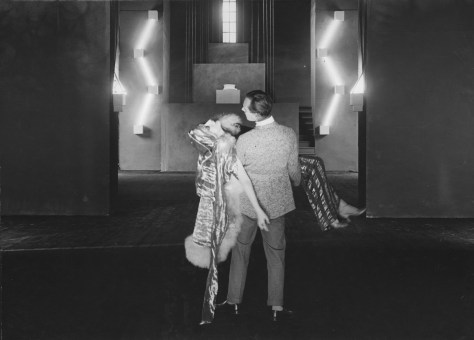
Marcel L’Herbier’s Art Deco science-fiction drama L’Inhumaine is as much an art object as a film, and as such, it is the perfect Blu-ray movie. This glittering feature was designed to be admired from all angeles, its intricate and self-consciously beautiful design is the 1920s equivalent of 4K high-definition. I dare you to watch it without your finger itching for the pause button.

007-l-inhumaine-theredlist

The inhuman woman of the title is a lady who knows a thing or two about being admired from all angles. Claire (played by soprano Georgette Leblanc) is an opera singer who lives in a stunning modernist home, which she opens to a select group of guests, a fawning salon of important men who jostle for her attentions. Everything about Claire’s world is both chilly and extravagant. The dinners she hosts are served at a dining table surrounded by an indoor moat. A drift of swans putter around the guest, more of Claire’s captives, but the only ones present who are indifferent to her beauty. When Claire hears that one of her admirers, Einar (Jaque Catelain) has killed himself after she rejected him, she experiences a slow awakening of her passions, and a more literal resurrection of her body, via a poisonous snake and an electric re-animation machine.

Continue reading L’Inhumaine (Marcel L’Herbier, 1924) Blu-ray review: the high art of cinema

Synthetic Sin (1929): Colleen Moore and the joyful noise of the Jazz Age

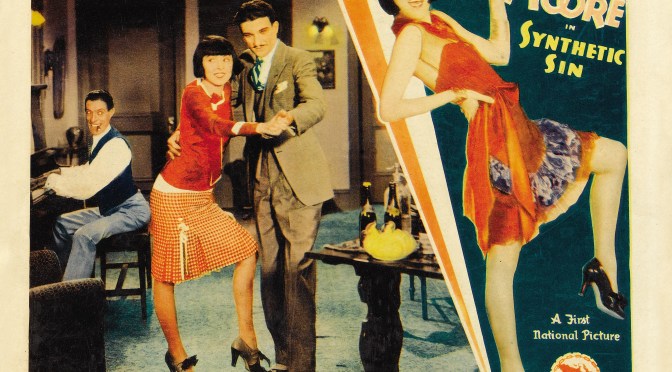
Synthetic Sin (1929) is an artefact from a time long gone. That is to say that this film is delightful, glamorous, witty … And they really don’t make them like this any more. It’s typical of this movie that the title is a roaring twenties in-joke, a bit of jazz-age wordplay on “Synthetic Gin”. That’s not a phrase you hear too often these days, but this prohibition-era film sloshes with bathtub hooch. In fact, this is the kind of wisecracking romp where a gal can say to a fella: “Let’s you and I make hey-hey while there’s moonshine!”

When the twenties roared, there was mischief to be made. In the inner cities, in real life, gangsters took advantage of the prohibition laws to make plenty of illicit cash hawking illegitimate booze. But in the movies, and in the anxious imagination of Middle Americans, the flappers, a new breed of confident young women with bobbed hair and short hemlines, were wreaking just as much havoc.

Synthetic Sin has all the hallmarks of a classic flapper film, even though its heroine, aspiring actress Betty Fairfax, is really quite an innocent. Betty is played by Colleen Moore, an impish natural comedienne who was the first of Hollywood’s bright young starlets to bob her hair and embody the newest, freshest way to negotiate the path between girlhood and womanhood. If any writer encapsulated the spirit of the Jazz Age, it was F Scott Fitzgerald, and he doffed his fedora to our star. “I was the spark that lit up Flaming Youth,” he said. “Colleen Moore was the torch.” And if you love Louise Brooks, Clara Bow or Jean Harlow, then you need to know Moore.

Colleen Moore

Preternaturally youthful and vivacious, Moore defined the flapper, the modern, sexually liberated young woman, in terms that high-school girls could love and emulate. After Moore’s mother cut her hair into her trademark fringed bob (“whack, off came the long curls. I felt as I’d been emancipated”), teenage girls across the US rushed to the salon. She was unthreateningly friendly and funny, but a beauty too. Moore has a cute charisma that works instantly on the audience, like a fast-acting drug. She is both irresistible and unforgettable – and she was a huge star in the 1920s. But the sad fact is that many of her films have now been lost, which means that most people don’t know her work at all. Synthetic Sin itself was only recently rediscovered and restored. So this film is a very precious chance to see Hollywood’s foremost flapper in action.

“Moore created comic heroines who are as engaging in their failures to be glamorous as they are in their often accidental triumphs in love and career,” wrote Molly Haskell. That’s Synthetic Sin in a nutshell.

Here Moore plays a young girl desperate to grow old too quickly, to become a “woman of the world” with the necessary life experience to be a serious dramatic actress. All flappers want to push the boundaries imposed by their old-fashioned parents, so Betty runs away from her comfortable home to a fleapit hotel in the big city, in the name of art, and of love. The audience is in on the joke from the beginning: Betty is wonderful just as she is. Her improvised show at the family piano early in the film is Grade A comedy, and the steps she takes to widen her horizons bring her into dangerous territory: grubby, sleazy, violent. A place where this flapper might just encounter a gangster or two.

Continue reading Synthetic Sin (1929): Colleen Moore and the joyful noise of the Jazz Age

The New York Hat (1912): what women want 

This is a very slightly fleshed-out transcript of an introduction I gave to The New York Hat at the Kennington Bioscope as part of an evening dedicated to women in silent film.

It’s quite old, and very short, but The New York Hat (DW Griffith, 1912) is one of my favourite films, and I’d really like to explain why. As with Shoes (Lois Weber, 1916), this film looks at the lives of women and their finances through the lens of  consumerism, but the ramifications run deeper than the shop window.

The first reason that I love The New York Hat is that it is an early woman’s picture and I mean that in a fully feminist sense. Today we talk a lot about the Bechdel Test, which is basically a test to ascertain whether the women in a film are fully realised characters and not just appendages to the blokes. To pass the Bechdel Test, two named female characters have to have a conversation with each other about something that isn’t a man. Sounds simple. In the field, films that pass this test are rarer than hen’s teeth. It’s really hard to map the Bechdel test back on to silent films in the first place, and so many modern films fail it that you have to assume that older ones will struggle.

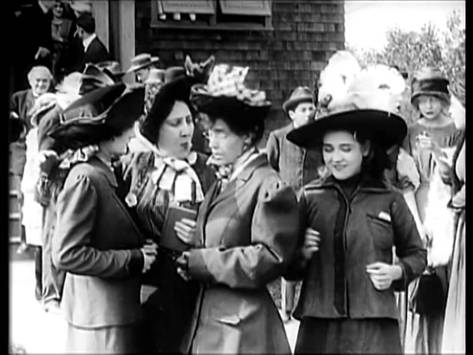
However, The New York Hat passes not just the letter but the spirit of the Bechdel test with flying colours, because its narrative is driven entirely by what women want, by what women understand about the world and the values that women have. We have the mother who wants the best for her daughter, the “bits of finery” that she craves, and the daughter who wants to grow up. Then we have some more women, the gossips, who create a conflict for her.

We have two male characters: the father is a no-good man who doesn’t really understand or care about women, and the minister who is a very good man, but also fails to understand women and their world.

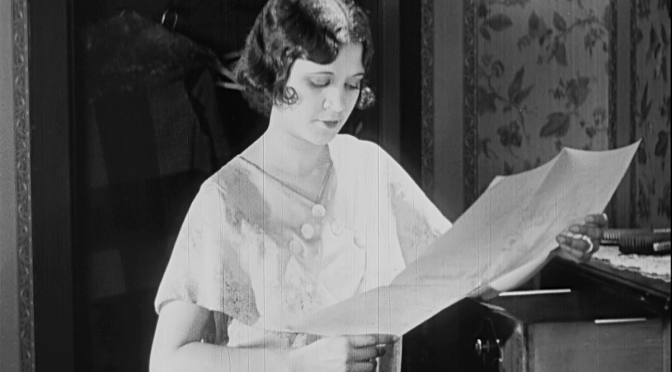
The New York Hat (1912)
The second reason that I love The New York Hat is that even though it was made in 1912, it is like a glimpse at the future, at Hollywood in the height of the 20s. If you are interested in the history of silent cinema then this film is going to give you a real kick because everyone is in it. If The New York Hat were a pop band it would be a rock supergroup. The scenario for The New York hat was written by Anita Loos, who would go on to have a fabulous Hollywood career, writing films and intertitles and also the hilarious novel Gentlemen Prefer Blondes. The New York Hat is pure Loos – it’s very sharp on the way that women interact with each other and it also contains two of her favourite hobbies: fashion and gossip. When the lead character wears her new hat, the gap between the impression she thinks she is making and the one she really is, is a bitterly dark example of Loos’s vicious humour. It’s also a very poignant moment – and those mixed emotions are part of the magic of this enduring film.

Continue reading The New York Hat (1912): what women want 

Toute la Mémoire du Monde 2016: a weekend in the city of cinema

When I first began to fall in love with the movies, I watched French New Wave double-bills at my local arthouse cinema. I saw the kids in Quatre Cents Coups and Bande à Part dashing across Paris and thought nothing could be more cinematic, more evocative of youth and passion and adventures in the city of light. Nearly two decades later and I, too, am sprinting down Parisian streets, and all in the name of le septième art.

At Toute la Mémoire du Monde, a sprawling festival of restored cinema hosted by the Cinémathèque Française, there are always far more films playing than you could hope to see, at screens across the city. So occasionally you have to forgo that customary pause and sigh of happiness at a film’s heartbreaking conclusion, grab your bag and leg it like Léaud to catch the Métro.

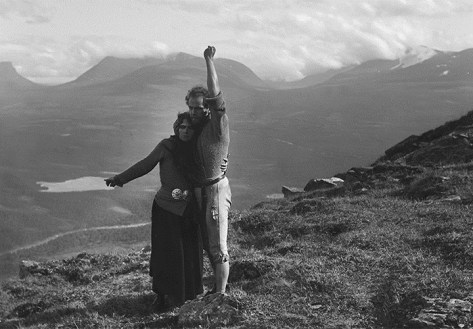
The Outlaw and his Wife (Victor Sjöström, 1918)

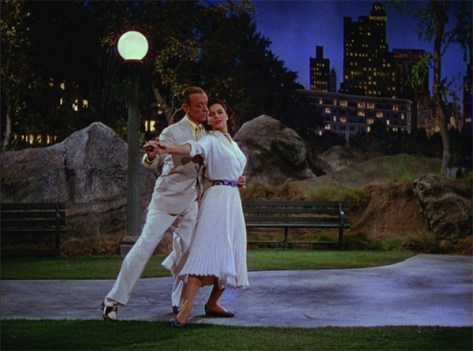
On my first day at the festival, as Marlene Dietrich ditched her heels and trudged across the desert to prove her devotion to Gary Cooper in the plush new Les Fauvettes rep cinema, I set out on my own speed-march back to the Cinémathèque to catch Fred Astaire getting his shoes shined. Then, of course, as I wandered back to my hotel across the Seine with ‘That’s Entertainment’ ringing in my ears, I had all the more to reflect upon.

I’m trying to explain why this festival offers a rush of blood through the veins, and that I felt ever so slightly light-headed all weekend. Doubtless, the effort of translating French intertitles in my head also gave my brain as much of a workout as my poor old feet. This is a French-language festival – all the sound films are “version originale” with French subs, and for silents, the only intertitles you can guarantee will be French ones. But the good news is that even though I am far from fluent in French, I understood about 80% of  the captions just fine. So if you are wondering whether the language barrier would come between you and this festival, well bonne chance!

The Band Wagon (1953)

It’s difficult not to feel close to the cinema in Paris, the city where the projection of moving images first began. The Cinémathèque, and the other screens I visited, are a long way from the upscale Boulevard des Capucines where the Lumières first unspooled their magic. But catching a programme of French shorts from the 1900s and teens gave me a little historical thrill. Not least when Oscar (Oscar au Bain, Léonce Perret 1913) whisked his ladylove around the capital in a taxi. And even the later films I saw, from The River of No Return (Otto Preminger, 1954) to Robocop (Paul Verhoeven, 1987), all owe their existence to those first flickers, it’s true.

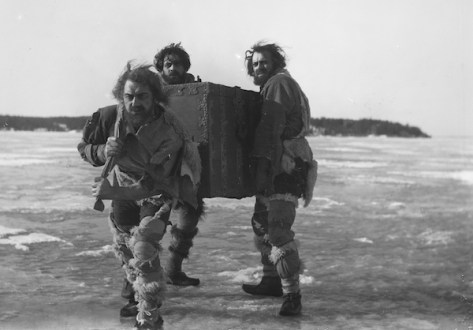
Herr Arnes Pengar (1919)
Herr Arnes Penningar, 1919

It’s in the nature of an archive festival to be eclectic, but had I been strictly silent all weekend, it’s a fair bet that I would have seen mostly Swedish films from the teens and early twenties by Mauritz Stiller and Victor Sjöström, courtesy of the L’école suédoise strand. I stretched my wings a little further than that, but still made time to see haunting, brilliant films by both directors: Stiller’s Herr Arnes Penningar (1919) as well as Sjöström’s Berg-Ejvind och hans hustru/The Outlaw and His Wife (1918) and Körkarlen/The Phantom Carriage, (1921). All three heart-wrenching experiences of the best kind – pitching the viewer into a world that is physically tough and spiritually fraught. Continue reading Toute la Mémoire du Monde 2016: a weekend in the city of cinema