Category Archives: Review

The British Silent Film Weekend 2013 – reporting back

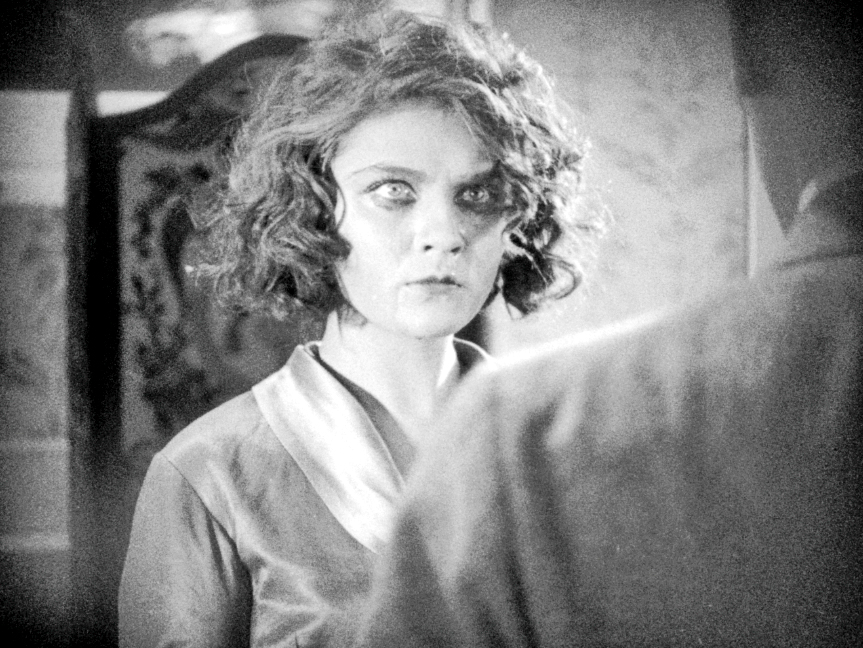
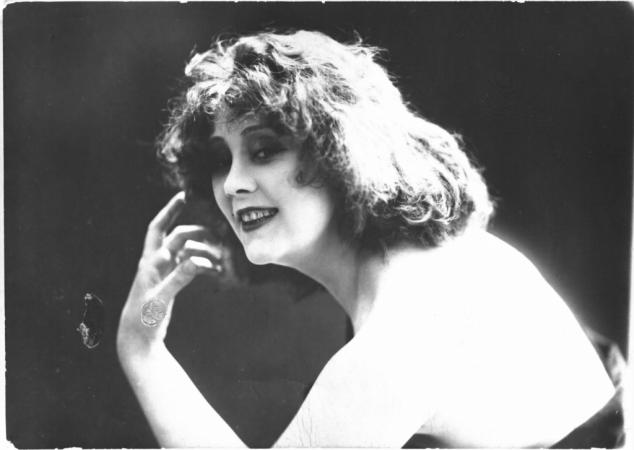
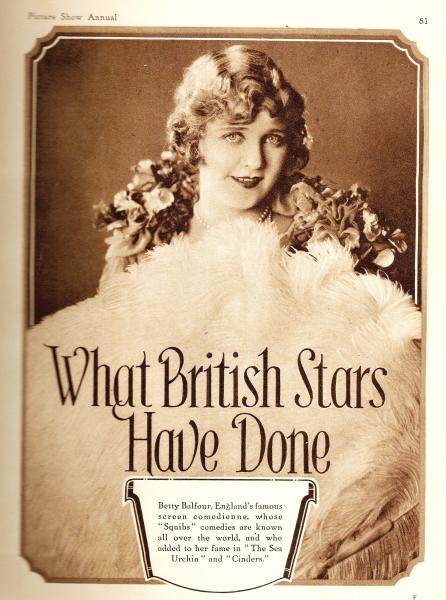
Betty Balfour
Betty Balfour

As you know, this year the British Silent Film Festival has taken a year off – but luckily for us, it’s the kind of year off where two all-day events still go ahead. Just to keep things ticking over, as it were. So last weekend there was a symposium on British silent cinema, held at King’s College London and organised by Dr Lawrence Napper. The following day the Cinema Museum hosted an all-dayer of screenings, themed on the tantalising idea of “sensation-seeking”.

I attended both events and while it didn’t feel like the festival was running, it was a real treat to be immersed in British silent film in this way. Let’s hope the festival returns back to full strength next year.

The papers at the symposium were limited to 20 minutes apiece, but covered a wide range of topics, from Edwardian theatre to state censorship to international co-productions to saucy novels. One hardly knows where to begin.

There were two papers with a theatrical bent: Ken Reeves’s dip into musical comedy theatre and its links to silent film concluded with some ideas for “crossover” events that would mix theatre, film and audience participation to spread the love about early British cinema. Audience participation? Reader, I sang. Very badly. Theatre historian David Mayer’s unforgettable presentation played and replayed the same baffling scrap of film as he uncovered the truth behind its creation. The scene of a waterfall bursting its bank and bringing down a bridge (and a couch and four) was, it turned out, not shot on location but on stage at the London Hippodrome in 1902, where a collapsible stage could be dropped and filled with water to create watery scenes. There was more – involving elephants on a slide. Elephants. Read more here.
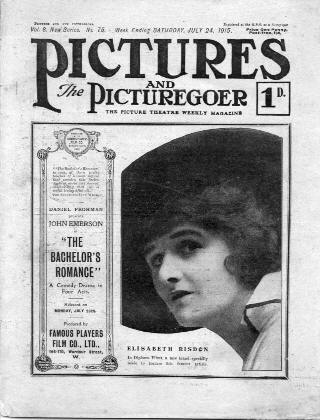
Elisabeth Risdon on the cover of The Picturegoer July 1915

Lucie Dutton, sometimes of this parish, also talked about the stage, presenting a history of film director Maurice Elvey‘s early career – in theatre in London and New York, before moving into the pictures with his star Elisabeth Risdon. She was followed by John Reed from the National Screen and Sound Archive in Wales, who took us through the production, loss, rediscovery and restoration of Elvey’s landmark film, The Life Story of David Lloyd George. Intriguingly, Reed pointed out a few instances in which Elvey could be seen in the film, waving a handkerchief and appearing to direct the action. Could this be because in these scenes the prime minister was played not by Norman Page but by Lloyd George himself? It’s an enticing thought.

Another famous British director was under the spotlight – one even more renowned than Elvey. Charles Barr presented on what we do know, and what we don’t, about the first film that Hitchcock ever shouted action on: Always Tell Your Wife. It’s an adaptation of a stage comedy starring theatre veterans Seymour Hicks and Ellaline Terriss and it seems the director fell out with his inflexible actors and therefore a “fat youth” from the props room was elevated to the job. You may struggle to see bold Hitchcockian strokes in what we have left of the film (which screened at the Cinema Museum on the Saturday), but we do have the director’s handwriting, unmistakably, in an insert shot of a telegram.
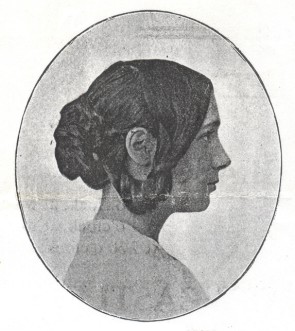
Jackeydawra Melford (trom thebioscope.net)

Far less well known than Hitchcock, but fascinating to hear about, was showman-turned-film director Mark Melford. His name, just like most of his films, may be lost to time, but Stephen Morgan attempted to flesh out his story, taking his cue from a Bioscope blogpost of 2007 that posed the pertinent question: “Who needs films to write film history anyway?” We did see a clip from the recently rediscovered romp The Herncrake Witch, directed by and starring Melford (amended, see comments) as well as being based on one of his own comic operas and also featuring his daughter (Jackeydawra, named thus due to her parents’ love of Jackdaws. True story). The story of the Melfords was hugely entertaining, but Morgan concluded by making the hugely important point that the study of lost films and forgotten film-makers is vital to a full understanding of the silent film era as a whole.

And of course, one never knows when a lost film will suddenly become an un-lost film. It happened to The Herncrake Witch and The Life Story of David Lloyd George after all. And it wasn’t so long ago that a treasure trove of Mitchell & Kenyon works was unearthed, giving us an invaluable glimpse of (mostly working-class) Edwardian Britain. In one of the day’s most diverting 20-minute segments, Tony Fletcher played a selection of Mitchell & Kenyon’s fiction films, while explaining a little more about them. The films were comedies, often chases and knockabout stuff, all with a backdrop of industrial northern England – factory gates, brick kilns and terraced streets. I particularly liked the mischievous snow comedy and the animated intertitles in a short called (I think) Driving Lucy.
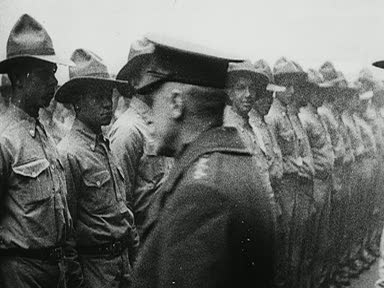
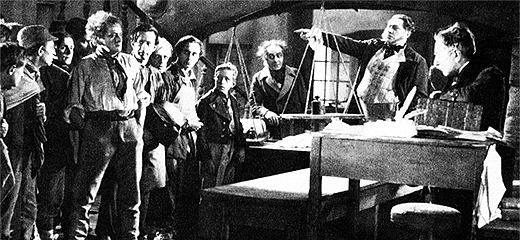
The Battles of the Coronel and Falkand Islands (1927)

More comedy, but this time of the you-couldn’t-make-it-up school: Alex Rock put recent Leveson revelations in the shade with a paper on the Metropolitan Police’s tangled relationship with the film industry. Its rather heavy-handed Press Bureau, founded in 1919, was popularly known as the Suppress Bureau. You can guess why. Rock’s paper traced the development of an official documentary film, supported by the Met, called Scotland Yard, and the squashing of another, based on the memoirs of a former detective.

The correspondence of public servants baffled, outraged or simply dismissive of the “movies” is unexpectedly entertaining, and never more so than in Jo Pugh’s paper on the official military response to Walter Summers’ The Battles of the Coronel and Falkland Islands. I could barely keep up with the information he was imparting, partly because I was giggling so much. Really. The good news is that we should hear more from Jo’s research and more about the film too as a little bird tells me a full restoration (possibly in time for next year’s Great War centenary) is in process.

Continue reading The British Silent Film Weekend 2013 – reporting back
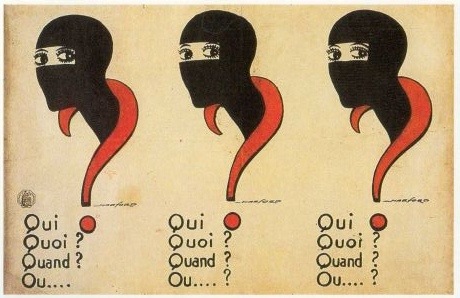
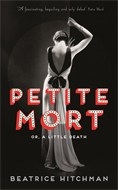
Petite Mort by Beatrice Hitchman – book review

20130309-132540.jpg

It’s a commonplace that the cinema struggles to translate the scope and nuances of great literature. Conversely, fiction often fails to capture the joys and texture of the film experience. There are exceptions to both rules, of course, and Beatrice Hitchman’s Paris-set debut aspires to the latter form of bilinguality; to commute the strange pleasures of early cinema to the printed page.

The simplest but least effective way to go about this involves a lot of research and an evangelist’s joy in sharing knowledge. These pages are littered with Max Linder postcards, asides on the intricacy of in-camera editing and the (re)invention of the Latham Loop – but there’s more to Petite Mort than that. The geek in me delighted in this scene-setting, notably the flies swarming around the studio, but Petite Mort is most cinematic when it dispenses with the history lessons.

Hitchman’s classy prose reveals not just a film lover’s appreciation for the pictorial, but a photographic appreciation for the texture of light: “slanted light”, or “light that moves like treacle”. Naturally enough, Hitchman’s silences are also tangible. In one scene, a painful pause between two lovers transmutes a cinematic trope of romance into something far more disturbing: “The silence runs down from their joined hands and over them and spreads out over the carpet, blending with the sunset, which is unexpectedly fiery and distinct. They sit like statuary of a king and a queen, saying nothing to each other. Eventually the silence fills the whole house.”

20130309-132732.jpg
Beatrice Hitchman

Petite Mort takes place in two distinct golden ages of French cinema. And these reels are clipped, cut up and spliced together in a way that immediately betrays the author’s experience as a film editor. In 1967 a journalist called Juliette investigates the rediscovery of a film from 1913; while in the earlier part of the century, country girl Adèle moves to Paris, finds work at Pathé and becomes romantically and fatally involved with a rich married couple. Juliette’s curiosity is aroused by the fact that the rediscovered print is still missing a section – a trick “doppelgänger” shot that made the film, Petite Mort, famous and may, she intuits, contain the secret of the murder trial that made its star, Adèle, notorious.

imageAnd Adèle has a doppelgänger of her own, her sister Camille, introduced as “a bright-eyed, sly duplicate of myself”. Doubles and duplicity abounds – from the multiple plotlines to that bold double entendre of a title and Adèle’s bisexual affairs. While Petite Mort builds to a whodunnit revelation, it’s these flashy patterns that catch the eye – just as that complicated ‘doppelgänger’ special effect is advertised as the highlight of the lost film. This diversionary tactic is perfectly in keeping with the novel’s cinematic contexts – both of them. Early film has been characterised by Tom Gunning as a transition between the “cinema of attractions” (trick films such as those by Méliès, or the absinthe fairies and ghosts conjured by Adèle’s lover André) and the “cinema of narrative integration” (bluntly, Griffith’s developments in storytelling across the Atlantic). However, as Vicki Callahan argued in Sight & Sound last year, the epic serials of Louis Feuillade (Fantômas and Les Vampires) from this era blur the distinctions between the two modes, following a “principle of uncertainty … a use of cinema that questions our understanding of the real”. Those early serials and their knotted narratives are evoked by Petite Mort in the two-timing, amateur-sleuthing plot, but also in the slippery, fused identities of our heroines. Callahan traces this tricksy approach to narrative cinema to the French New Wave and beyond (citing Rivette’s Céline et Julie vont en bateau (1974) and Assayas’ Les Vampires remix Irma Vep (1996)).

That Petite Mort incorporates a history of French film audacity into its sexy plot is a trick shot of its own. It’s an elegantly written, richly satisfyingly novel, and in its own distinctive way, utterly cinematic too.

Petite Mort by Beatrice Hitchman is published by Serpent’s Tail, RRP £12.99 as a hardback or ebook. Find out more.

Slapstick Festival 2013: reporting back
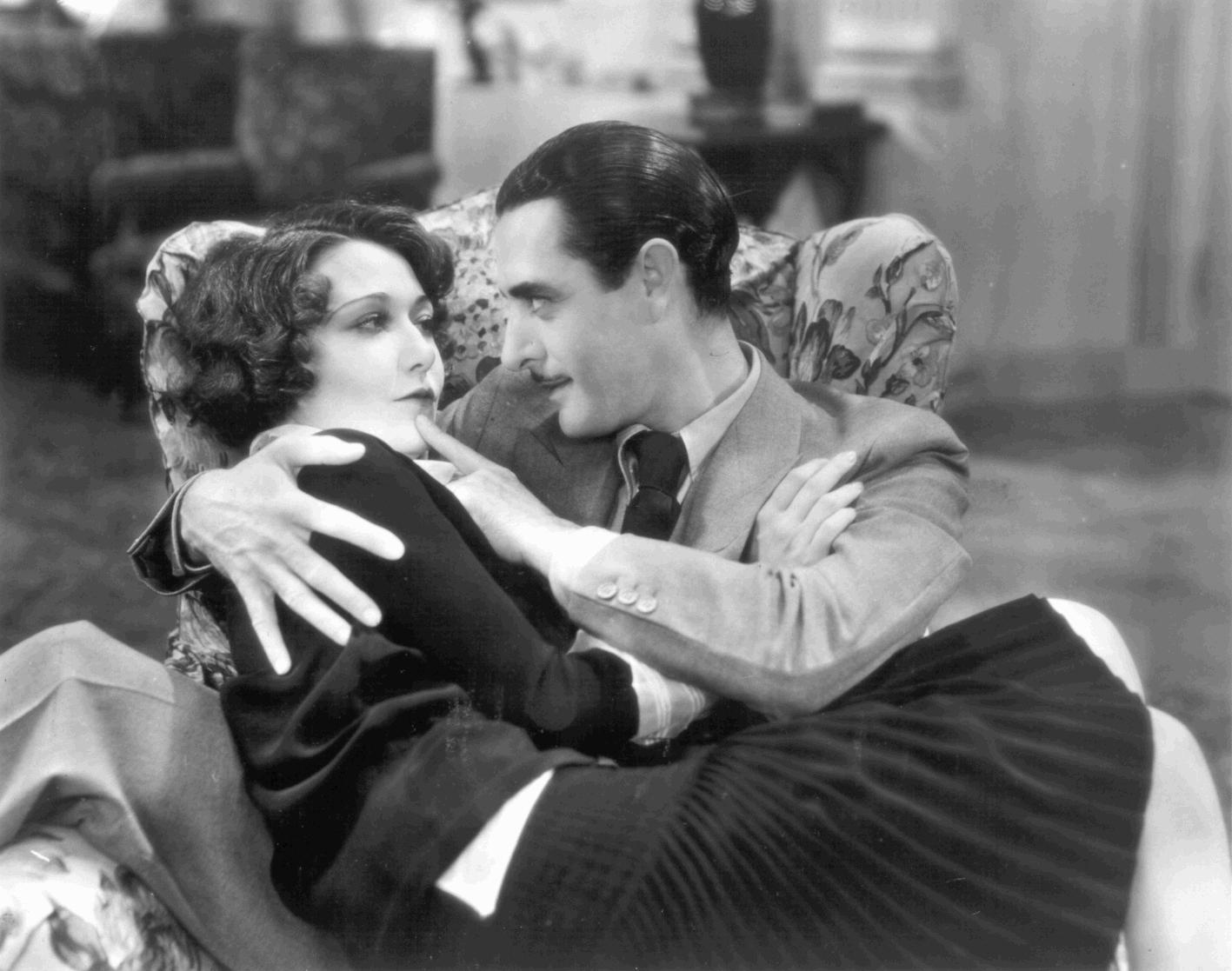
Harold Lloyd's The Kid Brother
Harold Lloyd’s The Kid Brother

This is a guest post for Silent London by Ayşe Behçet.

Hi everyone! You may know me from my days of writing the Charlie’s London guest posts for Silent London. What you may not know is my silent film journey started in January 2012 when I was lucky enough to attend a party at the Slapstick Festival in Bristol. It was there I met Pamela, the editor of Silent London. A few months later Charlie’s London was born, and I have been blogging here, and on my own site ever since.

Ayşe at Slapstick
Ayşe at Slapstick

So when I had the opportunity to return to Slapstick this year I jumped at the chance. For me it was a sort of homecoming and a chance to reflect on the year’s events. My partner and I volunteered at the festival this year and we still managed to see most of the programme, which was fantastic.

Thursday night’s only event was a fascinating insight into the work of Aardman Animations, famously the force behind Wallace and Gromit and Morph. Both Nick Park and Peter Lord were present, offering the chance to see the genesis of some of their greatest works. Park and Lord have long been staunch supporters of Bristol Silents and Slapstick and were both around for the duration of the festival: two great guys who always had time to chat with fellow enthusiasts and fans.

Friday unfortunately was very busy for me until the evening, meaning I missed Boris Barnet’s The Girl with the Hatbox, starring Anna Sten and introduced by Chaplin biographer David Robinson. However, I was lucky enough to see the film while in Pordenone last year:  I can tell you all it is a masterpiece whose time in the limelight is long overdue. Sten’s performance is funny and heartfelt: thankfully her talent is now being recognised.

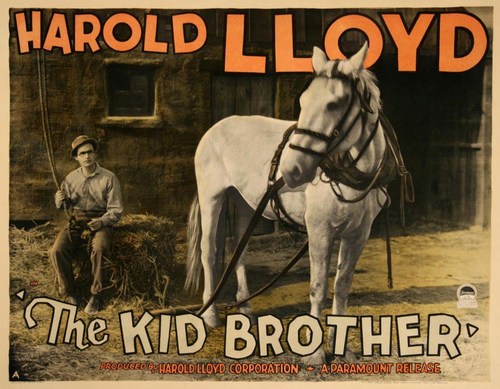
Now, my main love of the silent era is our very own homegrown hero Sir Charles Chaplin. So the absence of Chaplin at this year’s festival did make me yearn for the twirling cane and moustache. However, the other two of the “Big Three” were present in all their glory.  Saturday night saw Harold Lloyd take centre stage as the gala’s main feature with an introduction by “national treasure” Victoria Wood (that’s what festival director Chris Daniels called her: she reluctantly accepts the title, believing the only national treasure is Joanna Lumley). Harold Lloyd’s The Kid Brother and Keaton’s The Goat brought the house down and reminded us all that we do not need CGI to have a good cinematic time. For me the highlight of the night was George Méliès’  A Trip to the Moon: conserved and restored to all its full-colour cinematic glory, with a beautiful narration by Slapstick advocate Paul McGann.

Kevin Brownlow and Christopher Stevens discuss Harold Lloyd at the Slapstick Festival

On exiting I heard an audience member comment  “Lloyd gets a little left behind when it comes to Keaton and Chaplin”. I am not sure if this is true – but after Kevin Brownlow’s fascinating “The Third Genius” presentation on Friday afternoon I most definitely felt I knew the man behind the comedy a little bit more than I did before.  Brownlow always has such wonderful insights, having met Lloyd, Chaplin and Keaton various times. Last year I was lucky enough to be in the audience for a similar presentation on Buster Keaton. It goes without saying that men such as Kevin Brownlow and David Robinson help us all to get a little closer to an era long gone.

Colleen Moore
Colleen Moore

Saturday morning saw another presentation by Brownlow: this time on Colleen Moore – to introduce a screening of Orchids and Ermine. I think that Moore has developed quite a following: a lot of masculine swooning seemed to issue from the theatre on the crowd’s exit, and I cannot say I blame them! She was gorgeous.

Saturday night’s main feature was a selection of personal Keaton favourites by Dad’s Army legend Ian Lavender. The Electric House and College were strokes of genius made at a time when Keaton’s private life was beginning to ruin the one thing he loved so dear, his art. Lavender really struck a chord with me. He showed me a true fan’s passion for Keaton and how it can be so infectious. I often have people say to me: “I don’t know anything about Charlie Chaplin, but your passion makes me want to.” That’s the effect Lavender had on me.

Sunday saw the return of the Goodies and a fantastic reprisal of I’m Sorry I Haven’t a Clue at the Bristol Old Vic plus a chance to see the brilliant June Whitfield on stage too – receiving her Slapstick/Aardman Comedy Legend award. Yet for me the highlight was Sunday night, my only Chaplin of the entire festival. OK it was not exactly a feature, a short or even a gala. It was about 30 seconds of a cameo in the 1928 Marion Davies film Show People presented by comedian Lucy Porter. Now before you wonder, no I did not swoon. I was in fact incredibly well-behaved and blogged about it instead!

So there you have it everyone: a rundown of my highlights of the 2013 Slapstick festival. I hope you have enjoyed it and thank you for all your support in making Charlie’s London what it is. You can find us on Facebook, Eblogger, Tumblr and Twitter.

Bye for now, and here’s to 2014, the centenary of The Little Tramp …

Ayşe Behçet

PS If you’re Bristol-based, bookmark the Bristol Silent calendar for silent film screenings and club nights. And visit the Slapstick website for news of next year’s festival – and the Slapstick tour

A Trip to the Moon – DVD review

Le Voyage Dans la Lune (1902)

At the Cannes film festival in May 2011, one of the world’s finest movies was reborn – for the first time in nearly 100 years, we were able to see Georges Méliès’ masterpiece A Trip to the Moon (1902) in vibrant, psychedelic colour. And yet, there were those who considered the new restoration of the film to be a travesty. The hand-coloured print had been rescued from nitrate decay, cleaned and mended frame by frame – so far, so uncontroversial – and then a soundtrack had been commissioned. And we all know how contentious modern silent film scores can be.

Groovy electronic duo Air had been lauded for their movie soundtracks in the past – their music for Sofia Coppola’s The Virgin Suicides in 1999 was a big hit –with a debut album called Moon Safari the French band seemed an apt choice.  But the loudest reactions at Cannes – and at other festival screenings throughout the year – were those of horror. Air’s squelchy, organic electronica and mystifying animal noises were not, it seemed, music to the ears of the cinephile crowd. “It’s a disgrace!” commented one audience member at the Pordenone showing. “Oh no!” cried another at the London film festival.

Which is why, when I finally saw the restoration of A Trip to the Moon at the Ciné Lumière in London, I was surprised by how much I enjoyed the music, which is presented here on the DVD release of the restored film. It’s often bizarre, and puzzling, but so is the film, and it powers through at a clattering pace that brings a real sense of blockbuster excitement back to this science-fiction landmark. Given the controversy, there’s an argument to be made for offering an alternative piano score on the disc – but there’s also a case to be made for sticking to one’s artistic guns. It’s ridiculous to speculate on what Méliès would have thought of the soundtrack. He may well have been more mystified that with his own narration missing, no alternative commentary was written. But given the film-maker’s love of cheeky humour and absurd theatricals I think he would have enjoyed it, just a little.

Georges Méliès' Voyage Dans la Lune (1902)
Georges Méliès’ Voyage Dans la Lune (1902)

And the music remains a side issue with a film of this visual brilliance – enhanced by those deftly applied inks, which add both warm, natural skin-tones to the chorus line and lurid primary colours to the lunar landscapes and aliens on the attack. A Trip to the Moon follows the adventures of a group of bearded, chattering astronomers from their lab to the moon’s surface and back to earth again. It’s endearing dappy, from the first simple sketch of their flight, to the gory moment the rocket gouges the eye of the man in the moon, to the scientists’ battle with the selenites – umbrellas at the ready. This is live-action film, but transformed by Méliès’s ingenious in-camera editing and those gorgeous paints to be something more like a cartoon. It’s gorgeous, it’s ludicrous and it’s heaps of fun. The new restoration is a revelation, and here on DVD, it looks brilliant. I wanted to watch it again and again. So I did.

But for all its wonders, A Trip to the Moon is only a quarter of an hour long. It’s very rare to see such a short film as the sole attraction on a DVD, we’re more used to compilations of early cinema. Happily, however, there’s more to this disc than the headline act. Alongside image galleries, you’ll find a fantastic documentary by Lobster Films’ Serge Bromberg and Éric Lange called The Extraordinary Voyage. It’s an hour long, packed with talking heads from the French cinema – and well worth a watch, particularly if you are new to Méliès’ work.  The documentary introduces the film-maker, his techniques and personal history, discusses the film and particularly its restoration in depth. There are also re-enactments of Méliès at work in his Paris studio, with Tom Hanks, yes, Tom Hanks playing the director. There’s also a slightly odd interlude when Hanks proposes Méliès as a pioneer not just in film-making but in space travel too.

That may be a stretch, but I remember that when I left the Ciné Lumière last year my mind was boggling that we had managed to put a man on the moon more than 40 years before we had managed to restored A Trip to the Moon back to its full-colour best.

A Trip to the Moon with accompanying documentary The Extraordinary Voyage is released on DVD in the UK from Monday 26 November 2012 by Park Circus. Buy on Amazon here.


The Passion of Joan of Arc: DVD & Blu-Ray review

The Passion of Joan of Arc (1928)

This is a guest post for Silent London by Alex Barrett.

When Sight & Sound unveiled the results of their once-a-decade poll of The Greatest Films of All Time earlier this year, I was both relieved and disappointed to see Carl Th Dreyer’s 1928 masterpiece The Passion of Joan of Arc riding high at number nine: relieved that the film was there at all (it has been literally in and out of the top 10 every decade since the poll was first conducted in 1952), but disappointed that it wasn’t higher. Why? Because, quite simply, it is more deserving of the top spot than any other film.

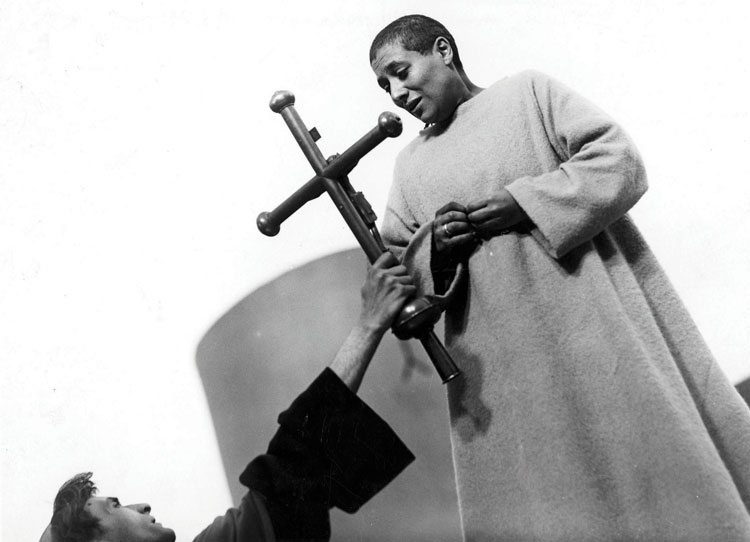
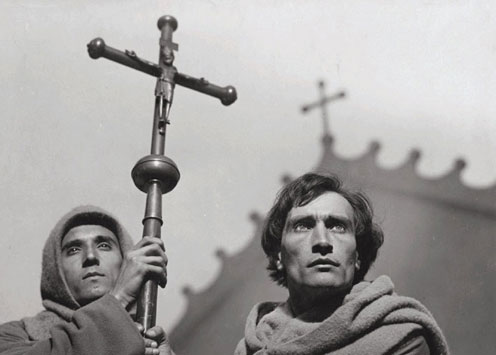
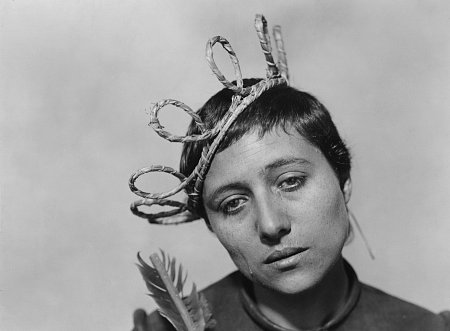
Rightly famous for its unbridled use of close-ups, The Passion of Joan of Arc is the nearest cinema has ever come to capturing and rendering the human soul on-screen. But lest you worry that that makes it little more than a relic of pious Christianity, the emphasis here is very much on human. As the opening titles state, the film is concerned with a “simple and human” Joan, one who should be seen not as a warrior, but as “a young woman who died for her country”. Dreyer’s choice of religious subjects has led to great misunderstanding of his oeuvre and, in no uncertain terms, his interest throughout his career remained grounded in a thorough examination of human (and often female) suffering.

Here, the suffering woman is Joan of Arc, The Maid of Orléans, a young peasant girl who led an army into battle in the hope of driving the English out of 15th-century France. Believing herself to be working under the auspices of three different Saints, Joan was eventually captured, tried and burnt at the stake at the age of 19. It is her trial and execution – her Passion – that Dreyer retells, basing his film upon the transcripts of the actual trial.

Avoiding the spectacle of many historically set films, Dreyer opted instead to keep his camera focused on the faces of Joan and her assailants. Condensing, as he does, the events of Joan’s lengthy trial and execution into a single day, Dreyer approaches a unity of time, place and action – and yet, for all his painstaking historical research, the film’s fractured use of cinematic grammar elevates the action beyond the physical world and into a metaphysical realm. The sparseness of the film’s sets eliminate depth, while the constant close-ups and broken eye-lines render the space unimportant (and, to an extent, unintelligible). Joan and her suffering are all that matter, all we must understand. The historical context and politics are secondary; first and foremost is a scared, tormented young girl. Dreyer may have denied that his film belonged to the avant-garde, but this is not conventional film-making: every aspect, from the architecture to the camera movements, from the rhythm to the compositions, conspires to contribute to Joan’s assault. Even now, after more than 80 years, Dreyer’s film is as fresh and as powerful as the year it was made: this is form and content synthesising at the highest level. And, while it would be a crime not to comment on the uniformly superb performances, to do so would be to undermine the purity of the film’s perfection. Falconetti does not play Joan. She is Joan. And Joan, for now and for evermore, is Falconetti.

The Passion of Joan of Arc (1928)

With this all said, then, it seems like something of a crime that the film has never been released on DVD in the UK (until now). When Masters of Cinema announced that it would be releasing this new restoration of the film on Blu-Ray and DVD, expectation and anticipation began to flutter. But there was also some concern about the fact that the new release would not feature Richard Einhorn’s beloved score, Voices of Light, found on the Criterion Collection’s Region 1 DVD. So, how do the two scores offered by Masters of Cinema compare?

Thankfully, Mie Yanashita’s piano score turns out to be something of a marvel. Echoing the rich simplicity of the film itself, Yanashita focuses on the film’s tenderness, allowing moments such as the shedding of Joan’s first tear a new beauty. Listening to this music with the breathtaking 20fps restoration was like seeing the film again for the very first time (a feeling no doubt cultivated by the insertion of the original Danish intertitles and their new English translation). There is a startling splendour to the restoration, and while the 24fps version may feel more familiar, moments there slipped over take on new resonances here, while the slower pacing allows a fuller savouring of the images in all their glorious detail. As the film progresses and the tension mounts, Yanashita isn’t afraid to pick up the drama, yet still manages to avoid the occasional heavy-handedness that marred Utley and Gregory’s recent score. While it’s perhaps true that Yanashita’s score never reaches the dizzying heights of Einhorn’s, it’s a moving and graceful accompaniment nonetheless.

Unfortunately, the same can’t be said for Loren Connors’ tedious and barbaric soundtrack to the 24fps version, which somehow manages to do the impossible and actually take the life out of the film. Perhaps it will appeal to some, but I found it insensitive and intrusive, and for me it detracted from the viewing experience far more than it added to it. I would certainly urge first-time viewers of the film to steer well clear.

Carl Th Dreyer
Carl Th Dreyer

It should be noted, of course, that Dreyer expressed a preference for the film to be viewed silent, and Masters of Cinema has loyally made this the default option for playback, so in some respects the choice of soundtracks is irrelevant. However, being given the choice of two scores (or three if you count the silence) and two playback speeds makes this a very special package indeed.

Completing the package is another, alternative version of the film: the complete ‘Lo Duca’ cut. When the original camera negative was thought lost to a lab fire, Dreyer reassembled the film using alternative takes … only for this new version to be lost to a second fire. However, in the 1950s the French film historian Joseph-Marie Lo Duca stumbled across a print of Dreyer’s second version. After recutting the film, Lo Duca put his version into circulation, despite Dreyer’s disapproval. Generally considered a bastardisation of Dreyer’s original vision, the Lo Duca version of the film has been relegated to the status of curiosity ever since the miraculous discovery of Dreyer’s first version in the closet of a Norwegian mental hospital in the 1980s. Yet, for those with a passion for Joan, it’s a fascinating alternative version – an imperfect version of a perfect film. The first thing that struck me about it was the fact that the actual experience of watching it is nowhere near as horrendous as one would expect, given the interference. Additions such as an opening voiceover detailing the historical background may go against the very fabric of Dreyer’s intentions, but his genius still shines through. What’s more, a comparison of the Lo Duca and original versions teaches us much about Dreyer’s film-making choices.

The Passion of Joan of Arc (1928)

Such a comparison is made easier by the excellent essay Two Passions – One Film? by the preeminent Dreyer scholar Casper Tybjerg, found in the accompanying 100-page booklet. Alongside Tybjerg’s essay are pieces by Chris Marker, André Bazin, Antonin Artaud, Luis Buñuel, HD, and Dreyer himself. But the bulk of the booklet is formed by a chapter from Jean and Dale D Drum’s Dreyer biography My Only Great Passion, which, in detailing the film’s production, puts lie to the idea of Dreyer as a cruel despotic director who tortured Falconetti’s performance out of her (written with approval and assistance from Dreyer, My Only Great Passion remains the definitive Dreyer biography).

Although the excellent booklet goes a long way towards making up for it, it’s a shame that no audio commentary was included in the package (especially given Tybjerg’s excellent commentary on the Criterion DVD). However, while Tybjerg’s commentary and Einhorn’s Voices of Light mean you shouldn’t throw away your Criterion disc just yet, it’s undeniable that the new restoration and the choice of versions take the Masters of Cinema release to the next level. This is an essential purchase in every conceivable way.

Passion of Joan of Arc packshotThe Passion of Joan of Arc is released on DVD, Blu-Ray and limited Edition dual format steelbook on 26 November. Available to pre-order from:  Amazon (DVD) http://amzn.to/R1U4SX (Blu-ray) http://amzn.to/NDYteZ  (Ltd Edition SteelBook) http://amzn.to/OHIAjm; HMV (DVD) http://bit.ly/OdW78h  (Blu-ray)  http://bit.ly/OHI3y0  (Ltd Edition SteelBook) http://bit.ly/S9qhd0; Play (DVD) http://bit.ly/PCEE62  (Blu-ray) http://bit.ly/R1Ulp1 (Ltd Edition SteelBook) http://bit.ly/PJUUR4; The Hut (DVD) http://bit.ly/SDY6Oj  (Blu-ray) http://bit.ly/UghO8T  (Ltd Edition SteelBook) http://bit.ly/OHK8dj

Alex Barrett is an independent filmmaker and critic. His Dreyer-influenced debut feature, Life Just Is, is released this December, both in cinemas and on DVD.

Die Nibelungen (1924): DVD & Blu-Ray review

Die Nibelungen (1924)

Who needs to wait for Peter Jackson’s The Hobbit? Fritz Lang’s five-hour, two-part Die Nibelungen (1924) is the king of all fantasy epics. Burning palaces, bloody fight scenes, dragons, cloaks of invisibility – this beast has it all, and it’s breathtakingly beautiful as well.

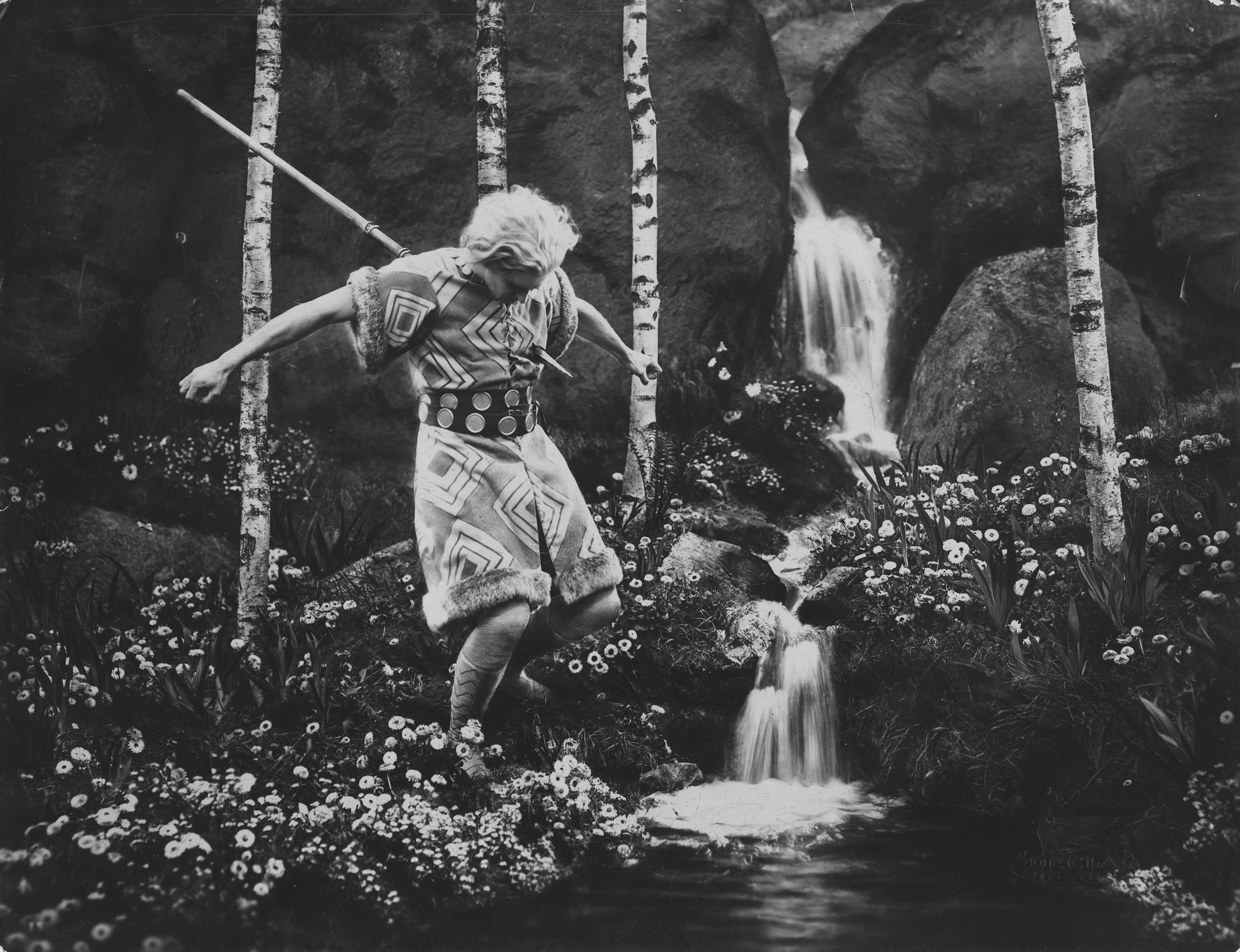
Available for the first time ever on home video, Die Nibelungen still has the power to take your breath away, so we can only imagine how imposing this magnificent saga was for audiences in the 1920s. The first part is called Siegfried and follows our eponymous hero’s outlandish adventures. Early on, he slays a dragon, then bathes in its blood, rendering himself impervious to harm (about from a small patch on his back that was covered by a falling leaf and failed to absorb the blood). Thus super-charged, Siegfried sets about becoming a king of kings, rich beyond compare having won the Nibelungen’s wealth, but doomed, equally, because the treasure is cursed, you see … The second part, called Kriemhild’s Revenge, features his (spoiler) widow seeking vengeance for her husband’s death.

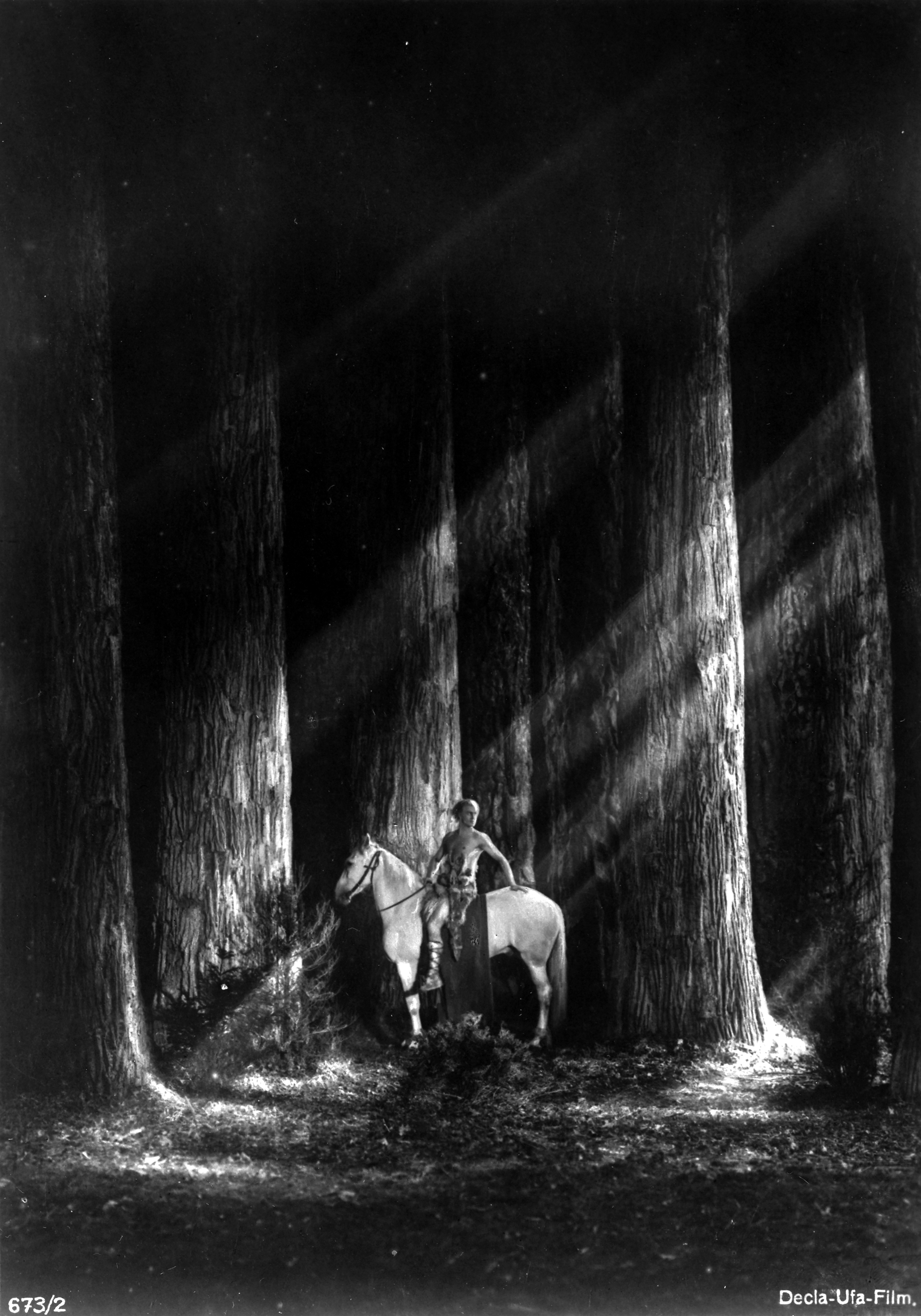
Visually, Die Nibelungen is consistently mind-blowing. The camera is largely static, but the vast, intricately decorated sets, shot from extreme perspectives and filled with massive crowds in extravagant costumes will throw you into a trance. These films are never dull to look at, and sometimes, as when the light falls in elegant slivers through the forest on to Siegried and his horse, or the northern lights dance above Queen Brunhild’s castle, they are simply exquisite. If you’ve seen Metropolis, that will give you some idea of the boldness, and magnitude of Lang’s vision here. This is a strangely modernised, stylised update of the story’s Wagnerian sources, and because it is all shot on sets rather than location (even the forests), Die Nibelungen looks like a fantastical stage play magicked into three-dimensions. And the special effects are meticulously realised, from the mechanical dragon to a “wipe” superimposition that turns the treasure-bearing dwarfs to silently screaming stone. The only time you’ll lose concentration is when you’ll start wondering: “How did they do they that?”

What you see on these discs is the end result of a restoration process bringing together several different camera negatives, fixing damage and replacing missing title cards. This release also replicates the golden tinting thought to have characterised the films’ original release, which soaks lushly into Carl Hoffmann’s high-contrast Expressionist photography (there’s a detailed note on the tinting in the booklet that accompanies the discs). The Blu-Ray HD transfer is excellent, so you’ll want to watch this on the best, biggest screen you can get your hands in and let yourself be swept away by all its glory. Turn up the sound too: frequent Lang-collaborator Gottfried Huppertz’s original orchestral score is available here in stereo or 5.1 mixes and nothing less bombastic or densely textured would do.

That said, it’s an awful lot to swallow in one sitting, and the acting here is of the chest-clutching, hair-pulling grand style. Paul Richter as Siegfried is a notable offender. And the scene in the first film in which Siegfried uses his magic to help his ally “subdue” his wife in the bedroom is unpleasant to modern eyes for an entirely different reason. The illuminated Gothic intertitles are very grand, but the English subtitles are sometimes hard to read because they have been translated so literally: “Invincible be he who is the dragon-slayer!” The second feature also suffers from having a less well-structured, eventful plot than the first, too, relying on endless fight scenes between the noble Burgundians and feral Huns rather than Siegfried‘s gorgeous flights of fancy. Don’t despair though: its flaming finale, and Rudolf Klein-Rogge’s grotesque Attila, are well worth putting in the hours for.

Die Nibelungen (1924)

These are two big, big films, with lots to impart to us about Lang’s film-making style, about German nationalism and myth-making in the 1920s (they are dedicated “to the German people”), and more besides. So it’s valuable that this release comes with one of Masters of Cinema’s characteristically thorough booklets, containing essays from Lotte Eisner and Tom Gunning, some words from the director and a note from British film legend Michael Powell, as well a Geoffrey O’Brien poem, all of which will help you to explore and appreciate Die Nibelungen‘s strengths. There’s also a German-language (with subtitles) documentary, The Heritage of Die Nibelungen, which will bring home to you just how ambitious these films are, and also, what a gruelling experience it was for the actors.

Die Nibelungen will demand your time and attention both – but it is terrifically enjoyable, exciting stuff. This is a hugely welcome and well-considered release of an important epic.

120_DIE NIBELUNGEN_DVD_packshot_300dpiDie Nibelungen is released on DVD and Blu-Ray in the UK on 29 October 2012. It’s available to pre-order from all these places: Amazon (Blu-ray) http://amzn.to/OBRaWG  (DVD) http://amzn.to/V7bo9T; HMV (Blu-ray) http://bit.ly/V7bJt4  (DVD) http://bit.ly/Oaal9X; The Hut (Blu-ray) http://tidd.ly/3c624f16  (DVD) http://tidd.ly/8272fa65; Play (Blu-ray) http://tidd.ly/2e952f6  (DVD) http://tidd.ly/88bde1b8

The Manxman: London film festival review

The Manxman (1929)
The Manxman (1929)

A folk romance that stumbles into melodrama, an adaptation of a blockbusting novel that is now all-but forgotten, The Manxman may seem to be far more of its time than ours. But the London film festival’s archive gala screening of this neglected Hitchcock film was having none of that. The red carpet was rolled out in Leicester Square and the crowds in the Empire cinema foyer were stocking up on nachos and popcorn before taking their seat. OK, so some of assembled throng were clutching tickets for Dredd or Madagascar 3, but Screen One was devoted to a lush, heartbreaking night of silent cinema.

And the venue was oddly appropriate. Back in its music-hall days, the Empire was the first London venue to run a paid-for programme of films. It’s a long journey from the Lumiéres’ actualities to the gorgeousness of The Manxman – arguably they have more in common with the 3D thrills on offer in the neighbouring screens – but it’s a happy connection to make.

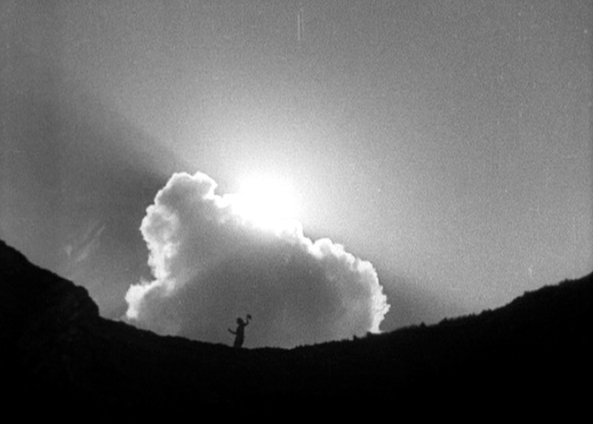
The Manxman was Hitchcock’s final “pure” silent – he was to shoot his next film Blackmail in both silent and sound versions – and the romance of the film’s story is augmented by the thought that the director was leaving his beloved silent cinema days behind him. Perhaps that is why the film is so unashamedly picturesque. The Cornish coast that doubles for the story’s Manx setting is imposing, but gorgeous. Hungarian star Anny Ondra is filmed as a tiny silhouette in front of sun-punctured cloud, skipping down vertiginous cliffs or strolling with her lover in dappled woods – and the film begins and ends with a view of fishing boats  in the harbour. These images, like the film itself, combine prettiness with an air of intangible, elemental danger, and it’s this that makes The Manxman such a gripping watch.

Because this movie can be tough too: when a crisis arrives, a disconcerting cut from a body falling into water to a pen plunging into an inkwell is as violent as Hitchcock at his familiarly cold-hearted best. On this screen, and with the benefit of the BFI’s new gleaming restoration, it looked spectacular.

The Manxman (1929)
The Manxman (1929)

Ondra plays Kate, the daughter of the local pub landlord (a brilliantly grim-faced turn by Randle Ayrton). Best pals daft-but-dishy Pete, a fisherman (Carl Brisson), and Philip, an ambitious lawyer (Malcolm Keen), are each in love with Kate, but the latter is playing his cards close to his chest. In an excruciatingly twisted balcony scene, Pete coaxes Kate into an engagement, a promise to wait for him while he goes overseas to make his fortune. At first Kate doesn’t take him seriously, and it’s not clear which of the men – the one proposing or the faithful chum who is (literally) supporting him – is causing her to simper and pout. However it was extracted, it’s a rash promise to make, and as we’ll see, it will have terrible implications. Needless to say, while the cat is away, Kate strays, but what happens next is horrific, and not so easy to predict.

We have heard a few silent film scores recently (in this Hitchcock season no less) that have seemed to smooth out, or trample over the nuances of each  scene. Not so here. Stephen Horne‘s rich score for The Manxman is alert to each turn of conversation, each double-meaning, furtive glance or blush. It’s a piece that is always a pleasure to listen to, but unafraid to sacrifice its melody to the drama when needed. This is crucial for The Manxman, where the plot hinges on whispered revelations, changes of heart and emotionally gruesome details – Kate’s face when her fiancé appoints his friend best man at their wedding, or she cuts her hand on their cake. The tempo slackens forebodingly when mid-speech, Phil is distracted by the sight of Pete and Kate together and the music follows the lead of Hitchcock’s stormy lighting effects, colouring each scene with shades of what is yet to happen. While the strings and piano offer folk melodies, there’s often a rumbling bass drum warning of impending disaster and even, at one crucial point, a very assertive oboe. The flute solo when Pete visits Phil towards the end of the film is particularly poignant; the ensemble together replicating the texture of nagging voices in the final scene especially cruel.

No one will argue that The Manxman is Hitchcock’s finest hour, the acting from the two male leads is often very weak, and the storyline offers only emotional trauma rather than his familiar bloody shocks. Despite those reservations, it is a sharply beautiful film and Anny Ondra’s sleepy-eyed romantic fool gives us a great Hitchcock Blonde before icy Grace Kelly was even born. The joy for us now is that Horne’s score gives The Manxman its best possible chance to shine, not just following but enhancing our pleasure in watching Hitchcock toy with this doomed love triangle.

Stephen Horne’s score for The Manxman was performed by Stephen Horne (piano/accordion/flute), Jennifer Bennett (fiddle/viola), Joby Burgess (percussion), Janey Miller (oboe/oboe d’Amore) and Ruth Wall (lever harp/wire harp).

Blancanieves (2012): London film festival review

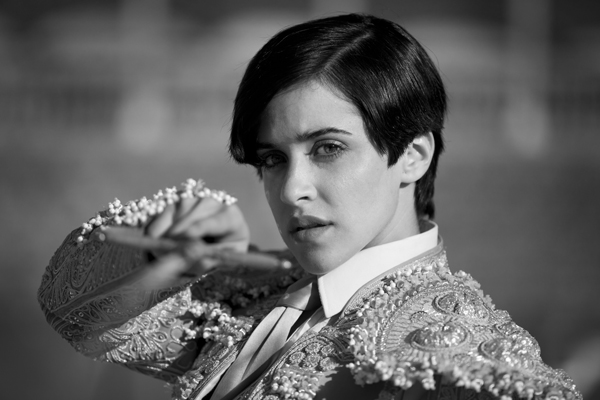
Macarena García in Blancanieves (2012)

You may feel weary at the prospect of another love-letter to the silent era. You may feel fatigued by the thought of another Snow White movie. Wait, though – nothing should deter you from seeking out this intriguing, gorgeous film. Director Pablo Berger describes his Blancanieves as a “homage to European silent cinema”, but happily, it has the confidence to wear its influences lightly and transform them into something new, magical and utterly distinctive.

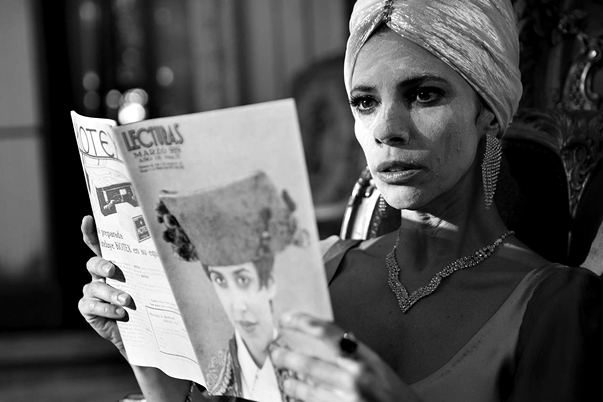
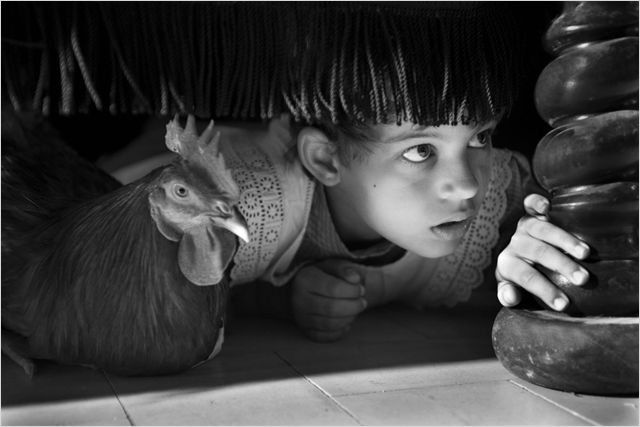
Blancanieves is a sharp, heady cocktail of fairytales, Spanish iconography and silent cinema: a black-and-white film with gorgeous musical accompaniment that tells the story of Carmen, whose matador father remarries after her flamenco dancer mother dies in childbirth. But if you’re expecting a straight 1920s-set adaptation of Snow White, you will be wrongfooted right to the bittersweet end. When we finally encounter the dwarves, we find they’re bullfighters, they’re not all sweet, and there aren’t quite seven of them. A celebrity magazine takes the place of a magic mirror, the wicked stepmother indulges in S&M with her chauffeur and the young heroine’s best friend is a neckerchief-wearing rooster called Pépé.

Maribel Verdú in Blancanieves (2012)

Carmen is no fairytale princess either, but in both her younger (Sofía Oria) and older (Macarena Garciá) incarnations, she is a serious, lonely young woman on a tragic path – both actresses share intense, dark eyes, which Berger makes the utmost of. Maribel Verdú turns in a wickedly funny pantomime performance as her scheming stepmother – although it often feels as if she is in a different, more histrionic, film to everyone else – and Daniel Giménez Cacho is heartbreaking as the destroyed father. Plaudits must also go to the rooster, or rather his handler. There may never have been a cuter cockerel in the cinema.

So why is Blancanieves a silent film? Perhaps it’s because in this version the girl’s parents are both wordless performers, in old-fashioned artforms. Her grandmother teaches her to dance, and her first encounter with bullfighting is via the flickering images of a praxinoscope. Berger also says he was inspired by a screening of Greed with Carl Davis’s orchestral score, and by silent film-makers including Sjöstrom, Herbier, Murnau and our own Anthony Asquith. Whatever the cause, it’s an artistic choice that pays dividends.

Sofía Oria in Blancanieves (2012)

This is no pastiche, although I will admit I could have lived without the Instagram-style rough edge to the Academy frame, a bafflingly naff decision considering the film’s visual achivements: sumptuous photography, and impressionistic editing. There’s so much here that recalls the silent era – a clatter of flashcuts, the rustic faces in the crowd, superimpositions, irises and a restrained number of intertitles – but it feels modern too, with lovely soft light washing over the interiors and nimble, intimate handheld camerawork. There’s nothing in Blancanieves’ exquisite cinematography that could not have been achieved in the 1920s, but its strength is that it never feels anachronistic or nostalgic. And those sumptuous images tell the story too, as when Carmen’s first-communion dress is plunged into a tub of black dye, or she sees Pépé’s face hovering on her dinner plate.

With such riches at his disposal, I almost wish Berger had made a more serious film than this twisted fairytale, which occasionally veers into camp. Blancanieves is a strange piece of work, but a precious one, however, so even if it lacks ambition, its integrity and beauty are to be treasured.

Blancanieves screens as part of the London film festival at the ICA on 18 October. You can book tickets here

Le Giornate del Cinema Muto 2012: Pordenone post No 8

A Woman of Affairs (1928) Photograph: Photoplay productions

I couldn’t possibly imagine a more heartwarming finale to my first Pordenone trip than Saturday night’s midnight show of The Boatswain’s Mate (Horace Manning Haynes, 1924), with our own Neil Brand on the piano. This vigorously witty, quintessentially British comedy is a neat three-hander starring Florence Turner, Johnny Butt and Victor McLaglen, as a pub landlady, her buffoonish admirer and an out-of-work soldier. I loved it when it showed at the British silent film festival in Cambridge, and the Giornate crowd lapped it up too. The humour of the film comes not just from three strong comic performances, but from the pen of Lydia Hayward, who as with the other films in this strand, adapted the scenario from a WW Jacobs short story. Here though, her pithy intertitles are augmented with cute line drawings that underline – or comically undercut – the text. A 25-minute, 88-year-old gem of British cinema.

But I am getting ahead of myself. The final day of the Giornate began in the unfamiliar, but very comfortable, surroundings of Cinemazero, while Carl Davis rehearsed the FVG Mitteleuropa Orchestra in the Teatro Verdi for that evening’s gala screening. We assembled for a double-bill of late Thanhouser features, with all the tightly plotted melodrama that entails. A Modern Monte Cristo (1917), transplanted the classic tale’s theme of long-simmering revenge to California, as a shipping magnate frames his love rival for a crime and lives to regret it. Fifty-six minutes of storms, shipwrecks and Machiavellian machinations later, the assembled audience were thoroughly awake and heartily entertained. The wronged hero (played by Vincent Serrano) bore a passing resemblance to George Clooney I felt, and the heroine was played vivaciously by Gladys Dore as an adult and long-time Thanhouser actor Helen Badgley as a child.

Badgley returned, this time as a boy, alongside Jeanne Eagels in the second film of the morning, Fires of Youth (1917), which appeared to be an early pilot for the reality TV show Undercover Boss. Misunderstood foundry owner Pemberton (Frederick Warde) disguises himself in order to live and work among his staff, to regain the spirit of his long-forgotten childhood. As a bonus, he learns to appreciate his workers – and give them the payrises and safe working conditions they have long petitioned for. Or at least I think that’s what happened. Due to a mixup, the intertitles were unexpectedly in French and so no translation was available. A sweetly moralistic, but energetically played film, although this substitute print was abruptly abridged towards the end. Special mention here must go to Bruno, an “aspirant” from the Pordenone accompaniment masterclasses, who played beautifully and sensitively for both films – even more of an achievement considering the surprise switch.

Anna Sten
Anna Sten

Stephen Horne provided the music for the next screening, one of the most hotly anticipated British films in the Giornate: Herbert Wilcox’s highly enjoyable The Only Way (1926), an adaptation of a long-running play that was itself a free-ranging take on Dickens’s A Tale of Two Cities. Theatrical giant John Martin-Harvey made a fine Sydney Carton: understated in the drunk scenes and powerfully charismatic in the courtroom. It’s a shame that he was so much older than his opposite number Charles Darnay, which rendered the crucial mistaken identity aspect of this grand story rather ludicrous.

A return to Teatro Verdi – for what? A sound film? Rest easy, this was the silent (but with recorded musical soundtrack) Italian release of Anna Sten’s German film Stürme der Leidenschaft (Storms of Passion, Robert Siodmak, 1931). Tempestuous it was indeed, with Emil Jannings as a released convict, Sten as his wandering wife and Siodmak rehearsing his noir moves in a precociously hot-headed drama. Sten sang, quite well in fact, but with her highlighted hair, slinky satin wardrobe and sultry pout, she came across best as a silent hybrid of Marlene Dietrich and Claudette Colbert. Steamy stuff: the perfect prep for watching Greta Garbo and John Gilbert circle each other lustily later that night.

A Woman of Affairs (1928) Photograph: Photoplay productions

Before the gala’s main feature came many speeches, thank yous and prize-givings, culminating in the unadulterated joy of Pierre Étaix and Jean-Claude Carriere’s 1961 short Rupture. All by itself, this virtuoso comedy proved Étaix to be, in festival director David Robinson’s words: “the last of cinema’s great silent clowns”. If you don’t;know Étaix’s work, read more here, and take any opportunity you can to see his wonderful films.

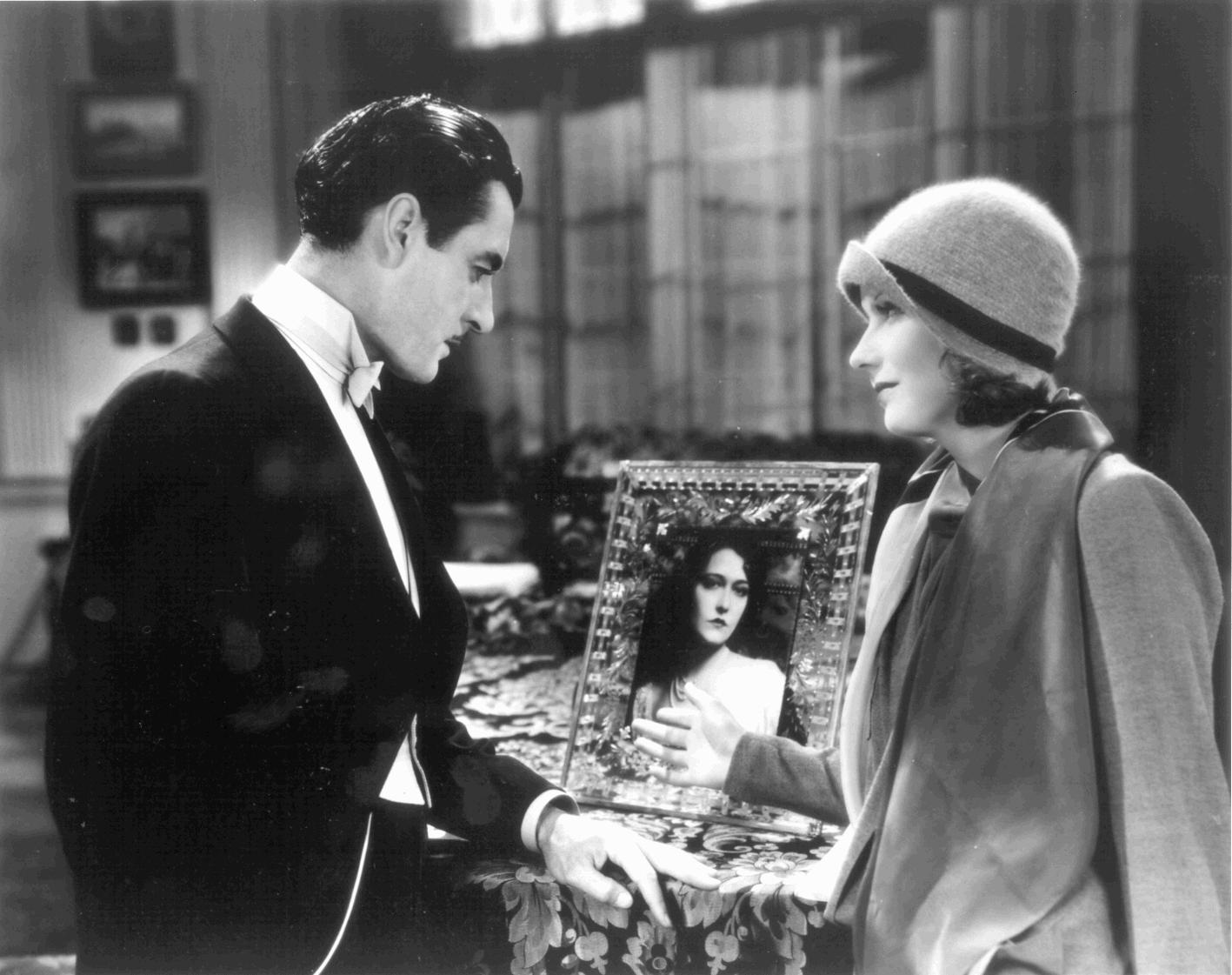
Finally, Garbo and Gilbert took to the stage, introduced in a short film clip by one of the film’s other stars, Douglas Fairbanks Jr and accompanied by Carl Davis’s hearty score. Doomed romance, barely repressed sexual passion, treachery, sublimated homosexuality, alcoholism and reckless driving: A Woman of Affairs (1928) had it all. Garbo here is elegant, seductive and a million miles away from the grubbiness (and greasy kohl) of Die Freudlose Gasse; Gilbert is dapper and heartbroken; Fairbanks Jr handsome and unhinged.

Yes, it’s a little over-the-top, and there was more than one dramatic tracking shot too many, but this was silent Hollywood at its starry, crowd-pleasing, beautiful peak. If you didn’t swoon just a little, you weren’t, I would contend, paying proper attention. Not my favourite film of the festival, but well worth the applause.

So that’s it for the 31st Giornate del Cinema Muto – it’s been utterly intoxicating, a feast of cinema and cinema appreciation. Will I return next year? Just you try to stop me.

Unsolicited advice of the day: Would you take makeup tips from Emil Jannings? Both he and John Gilbert admonished their lady-friends (Anna Sten and Dorothy Sebastian) for daubing on too much “lip rouge”.  Hmmm…

Giornate stats

  • Eight days in Pordenone.
  • 47 hours, 37 minutes and 12 seconds of silent cinema watched.
  • 18 cups of caffé espresso.
  • Eight blog posts.
  • Four Aperol spritzes.
  • One frico.
  • For full details of these and all other films in the festival, the Giornate catalogue is available as a PDF by following this link.
  • My previous reports from the festival are here.

Le Giornate del Cinema Muto 2012: Pordenone post No 7

Anna Sten in Provokator (1927)

The choices we make in life define us, and this morning I got up bright and early for Viktor Turin’s Provokator (1927), but gave early Selig feature The Ne’er-do-Well (1916) a miss. Did I do right to choose Anna Sten’s anguished student and her revolutionary chums over Kathlyn Williams and the adventures of the rich and beautiful? I don’t know. Provokator, which marks Sten’s cinema debut, was occasionally stirring, but mostly on the pedestrian side, though a raid on the revolutionaries’ den was rather fine, boosted by terrific accompaniment from Gabriel Thibaudeau and Frank Bockius.

Walter Summers
Walter Summers

Where I may have erred is in choosing such a downbeat opener on a day that was to close with GW Pabst’s heartbreaking social critique Die Freudlose Gasse (1925). However, I am getting ahead of myself. My afternoon was perked up considerably by the patriotic hubbub around Walter Summers’ lovely postwar tearjerker A Couple of Down-and-Outs (1923), introduced by the producer’s grandson Sidney Samuelson, who was seeing the film for the first time. What could be a very harrowing tale is handled with care, as Rex Davis’s Danny finds unlikely allies when he rescues his war horse from a foreign abattoir: manipulative, but charming with it.

The audience groaned in unison at the start of the next screening, as another tranche of German animated shorts kicked off with a toothpaste advert featuring the “tooth devil” cracking open a poor vulnerable gnasher with his drill. It was, as before, a diverting and diverse hour. In the name of commerce, all kinds of unlikely objects have been animated: detergent, rolling pins, matchboxes, kettles and even, in a sweet but fussy stop-motion ad for aspirin, a silent-film star and director (Im Filmatelier, 1927). Günter Buchwald at the piano followed with apparent ease the rapid changes of subject-matter, media and mood – as when a promo film for a department store dwelt proffered a new suit as a suicide-prevention measure (Der Hartnäckige Selbstmörder, 1925).

Asta Nielsen in Die Freudlose Gasse (1925)

I have a date with Greta Garbo in A Woman of Affairs (1928) on Saturday, but I spent Friday night with both Garbo and Asta Nielsen in the elegant but emotionally gruelling Die Freudlose Gasse (1925), giving a beautiful face to the seedy economic exploitation of women in 1920s Vienna. Both the lead stars are fantastic, and supported by a cast of wonderful character actors including Valeska Gert as a pixie-faced madam. Pabst’s direction veers between sober restraint and wild bouts of inventive, unchained camera excitement. This new print is not quite complete, but mostly crisp, with deep tinting, most especially effective in a fire scene towards the end.

Accidentally profound statement of the day: “The joyless street is long,” exclaimed I, when I read in the catalogue that Die Freudlose Gasse clocks in at 151 minutes long in its present state. It ran for closer to three hours at the Berlin film festival, apparently, but that was based on a projection speed of 16fps, as opposed to the Giornate’s 19fps. Phew.

  • For full details of these and all other films in the festival, the Giornate catalogue is available as a PDF by following this link.
  • My previous reports from the festival are here.

Le Giornate del Cinema Muto 2012: Pordenone post No 6

Jenseits der Strasse (1929)

An exceptionally strong and varied day at the Giornate: Soviet montage, German arthouse, a British drama, Dickens in Danish, early sound films and a big, fat two-strip Technicolor feature in the evening.

Anna Sten took centre-stage on Thursday morning in two very different films set in pre-revolutionary Russia. In The White Eagle (Yakov Protazanov, 1928) she plays a governess, working for a governor who orders soldiers to fire on a crowd of protesting workers. Sten is horrified, and while her boss has largely ineffectual pangs of remorse, she decides to take matters, and a pearl-handled revolver, into her own hands. Protazanov called the film a “low tide” but it’s actually very stirring and although it’s not Sten’s finest performance, by all accounts she had a strong working relationship with the director. It’s an engrossing film, which compares chains of command to chains of oppression and explores guilt and revenge in interesting ways. For example, the way the governor’s peers avoid him as soon as they learn he may be the target of a terrorist attack, while the Bolsheviks refuse to single out one victim for their vengeance.

The White Eagle is largely extant, but exists only in an incomplete print. We have even less of Merchants of Glory (Leonid Obolenskii, 1929), which is a shame, because it’s a strange, invigorating number, loosely based on a play by Marcel Pagnol and Pierre Nivoix. Henri Bachelet is a military hero, who died a noble death and is lionised by his family and community, so much so that his father is urged to transform his popular sympathy into political clout by running for office – and his wife marries a rich factory owner and sidesteps into a life of luxury. Only his quiet cousin (Sten) remains unchanged by Bachelet’s posthumous fame, and through her eyes we see injustices such as the way that wounded soldiers are treated by the regime they fought for. Wouldn’t the political bigwigs be surprised to learn that Bachelet was a communist sympathiser?

In the telling of this tale, Obolenskii gives us a sumptuous ball, battle scenes and even dance numbers. The finale, in which Bachelet, who has unexpectedly been found alive and well, defaces his own portrait and is attacked by his father’s friends, must have been magnificent, but is sadly almost all missing and relayed by still frames for the most part in this print.

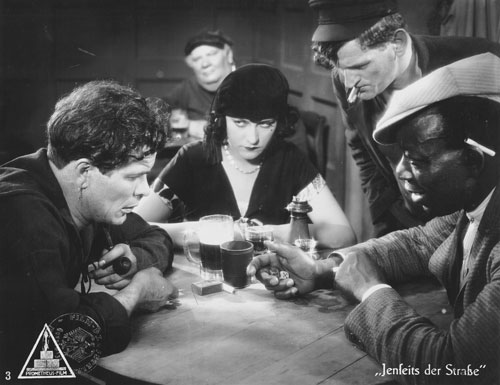
The two Stens made for a strong morning, but my highlight was a lyrical German film that came between them, called Jenseits der Strasse or Harbor Drift (Leo Mittler, 1929). A beggar nabs a pearl necklace from a puddle, and promises to share the profits on its sale with a new-found drifter pal, all the while a prostitute plans to take it, and sell it herself … Impressionistic, oddly noirish, tragic and ultimately dark-hearted, this is a real find. The film has been championed for a few years now by Stephen Horne, who accompanied it beautifully on piano, flute, accordion and zither. The recent discovery of the film’s previously missing reel makes this gem ripe for restoration, and a wider audience.

Sarah Bernhardt in Hamlet Photograph: Cinémathèque Française/Gaumont Pathé Archives, Paris

After lunch there was a chance to see The Unwanted (1924), a new find from the hand of Walter Summers. I had seen it in London, so skipped it, but was pleased that the film’s strengths (the Venetian opening, mountain scenes and burst of battle towards the end), played well on the big screen at the Teatro Verdi.

Lille Dorrit (1924), was a sumptuous Danish adaption though necessarily a simplification of Dickens’ weighty classic. A winsome Amy Dorrit (Karina Bell), a sprightly Maggy (Karen Caspersen) and an eccentric, avuncular “father of Marshalsea” (Frederik Jensen) combined with gorgeous sets – and benefited here too from a crisp, bright print. Dickens fatigue has not yet set in here and with beauties such as this one, it will be kept at bay a fair while longer.

The Viking (1928)
The Viking (1928)

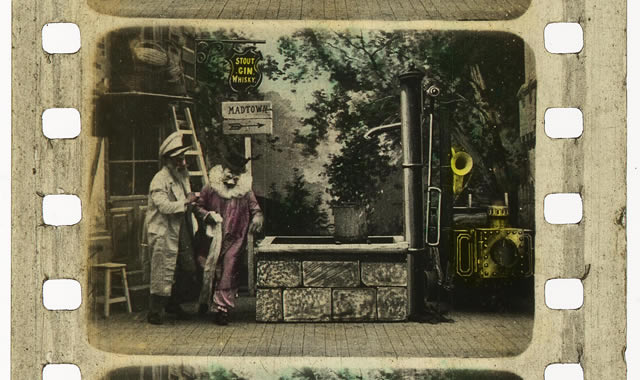
The evening’s fare was a story of the sublime and the ridiculous. The Phono-Cinéma–Théatre programme of aearly sound films from the 1900 Paris Exposition, recently discovered in a French archive and beautifully restored, was a hotly anticipated treat. Hand-coloured short films of famous performers from Cléo de Mérode to Little Tich to Sarah Bernhardt delighted the auditorium. In fact, Bernhardt performing the duel scene from Hamlet may well be the highlight of the festival for me – a film I have heard about for years, but never expected to see. You can read more about the night on the excellent Illuminations blog here. Special mention must go to John Sweeney for the accompaniment, taken from the original scores and working both in tandem with the wax cylinder soundtracks or instead of them. The dance shorts were a standout in this regard, including splendid Mérode’s Javanese and Slavic routines.

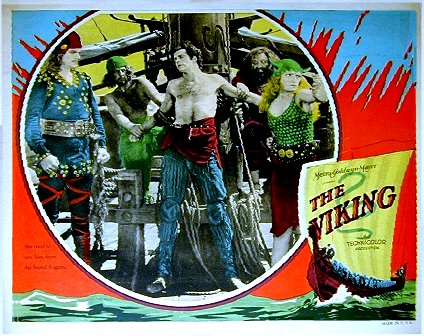
What to say about The Viking (1928)? Kitsch, unintentionally hilarious, and resplendent in the reds and greens of two-strip Technicolor, this was the very definition of a guilty pleasure. I’d like to say I was laughing with it, rather than at it, but it would be a fib.

  • For full details of these and all other films in the festival, the Giornate catalogue is available as a PDF by following this link.
  • My previous reports from the festival are hereherehere and here.

Le Giornate del Cinema Muto 2012: Pordenone post No 5

Le Giornate del Cinema Muto

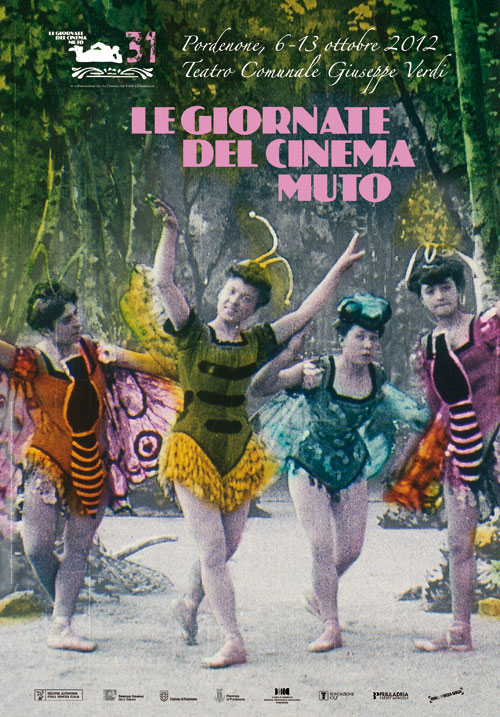
The fairies that adorn the Giornate posters are not fairies, but vengeful butterflies. In La Peine duTalion (1906), which concluded this afternoon’s gorgeous programme of early cinema, the dazzlingly costumed scamps take rather lighthearted revenge on a butterfly collector for all the times he trapped their friends and pinned them to a cork. Mystery solved!

There were many more treats in that programme, including Méliès’ clown caper Automaboulisme et Autorité (1899), valiantly (I shall say no more) accompanied by Gabriel Thibaudeau and Frank Bockius, an extravagant serpentine dance (Danse de l’Eventail, 1897) and a loopily charming comedy about a girl so tall she can’t stand upright (Eugenie, Redresse-toi, 1911). The butterflies fluttered out of the Corrick Collection, along with the familiarly lurid delights of Dreams of a Rarebit Fiend (1906), a vividly coloured but sadly damaged L’Enfant Prodigue (1909), and a real crowd-pleaser: the cunning canine stars of Les Chiens Contrebandiers (1906).

Automaboulisme et Autorité (1899) Photograph: Cinématheque Française

A rare pleasure, the discovery of a precious Yevgenii Cherviakov film starring the luminous Anna Sten (in Buenos Aires) is a moment to be treasured. And although we only have a few reels of Moi Syn (My Son, 1928), transferred rather basically to DVD, it was enough to show us that the only director Dovzhenko admitted as an influence was a prodigiously talented film-maker. This is a poetic piece, with a devastating opening, as after a series of close-ups (which characterise the film), Sten turns to her husband and says, indicating the newborn in her arms: “This is not your son.” There is a fire, a lecture on childcare, and an infant funeral to follow but not in that order. Impressionistic, but frank, and subtly accompanied today by Neil Brand, Moi Syn is unforgettable even in its present state. I dearly hope the rest will be restored to us soon.

The Spoilers (1914)
The Spoilers (1914)

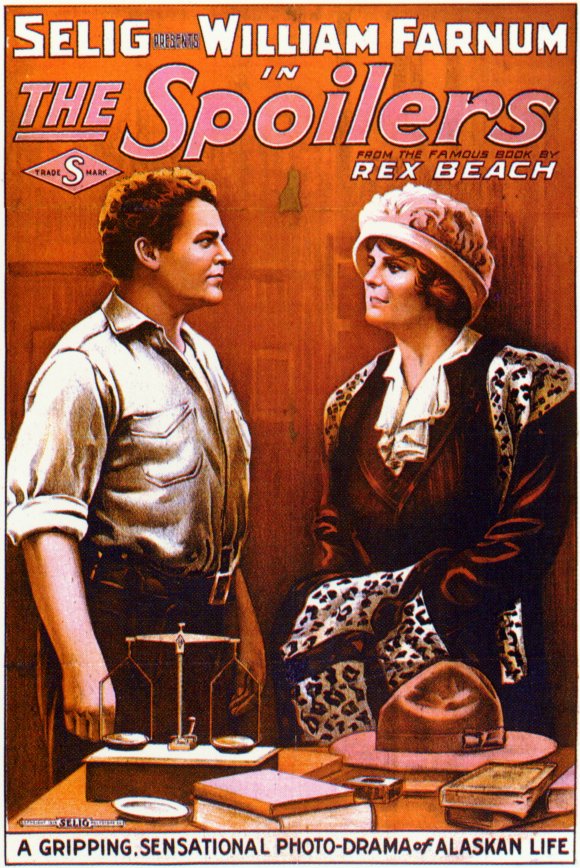
Another landmark film, but of a very different kind, Selip Polyscope’s trailblazing feature The Spoilers (1914) was a diverting two hours. A gold mine, and a community, in peril; a maverick and his gal to the rescue; the Bronco Kid; corrupt politicians … there was perhaps an excess of plot, even for the running time, but who cares? Kathlyn Williams as Cherry Malotte, a good-time girl made good, stole the show, particularly in her outrageous costumes.

Less enjoyable was Familientag im Hause Prellstein (1927), an UFA Jewish comedy, directed by the notorious Hans Steinhoff. This convoluted tale of debt, divorce and double-dealing fizzled out after its opening 20 minutes or so.

Still, reports from La Passion de Jeanne d’Arc (1928), screening in the cathedral with a new score by Touve Ratovondrahety, were excellent, and the day’s action in the Teatro Verdi concluded with Manning Haynes’ lovable coastal comedy The Head of the Family (1922).

What we didn’t learn today: Helen in The Spoilers was “wrapped in a woof of secrecy”. Whatever that is. Answers on a postcard or in the comments field below, please.

  • You can read Nathalie Morris’s excellent report from the festival for the BFI website here.
  • I have also written an article for the Guardian film website about Méliès’ Les Aventures de Robinson Crusoé – it’s here.
  • For full details of these and all other films in the festival, the Giornate catalogue is available as a PDF by following this link.
  • My previous reports from the festival are hereherehere and here.

Le Giornate del Cinema Muto 2012: Pordenone post No 4

Zvenyhora (1927)
Zvenyhora (1927)

If it’s Tuesday then it must be Dovzhenko. My fourth day at the Giorante began a little later than the others, with a screening of Zvenyhora (1927), a bewildering film of great splendour, which the Ukrainian director described as his “most interesting picture”. This symbolic hymn to national pride, myth and destiny gave him the chance, he believed: “to expand the screen’s frame, get away from clichéd narrativity, and speak in the language of vast generalisations”. That either sounds like heaven or hell to you I am sure, and while I find the film impossible to summarise, I thought it was magnificently photographed, never dull and mostly incomprehensible. Like the other Dovzhenkos I have seen, I am sure it will linger in the mind. Mention must also go to John Sweeney’s thunderous, passionate accompaniment on what the festival programme so enticingly calls the “pianoforte”.

Annie Bos
Annie Bos

“Nelly and Adolf hurry to tell all to the insurer” – does that intertitle give you a suggestion of the, erm, lack of similar grandeur and high drama in De Bertha (1913)? This was a half-hour caper about insurance fraud, shipping and the new-fangled telegraph starring sweet-faced Annie Bos, known as the “Dutch Anna Nielsen”. It was a happy recent discovery for the EYE Film Institute and while it is a smartly told tale, with pretty tinting and a likeable leading lady, it was far too soapy and unexciting for me after the previous film. Pity.

A longish lunch called, before returning to the Teatro Verdi for a trio of star voyages from 1906: the French original, Voyage Autour d’une Etoile, an abridged reshoot of the same with different actors and sets, and an Italian remake, Un Viaggio in una Stella, all by the same director, with subtle differences. There was great inventiveness on display, plus masses of good humour and dancing, and I could have happily watched variations on this theme for hours – before splicing together a supercut of the best moments from each.

Die Weber (1927)
Die Weber (1927)

We were back on the hard stuff with Friedrich Zelnik’s 1926 Die Weber, AKA “the German Potemkin” – though this magnificent story of textile workers kicking back against their brutish boss (Paul Wegener) was more like a German Strike, and my, was it soul-stirring. Dynamic hand-drawn intertitles, a vigorous ensemble, and wonderful direction (a poignant sequence with a hungry boy and a rocking horse, frenetic mob scenes), made this an exhilarating hour and a half. Spectacular accompaniment from Günter Buchwald and Frank Bockius, including some rousing revolutionary singing, fair took our breath away.
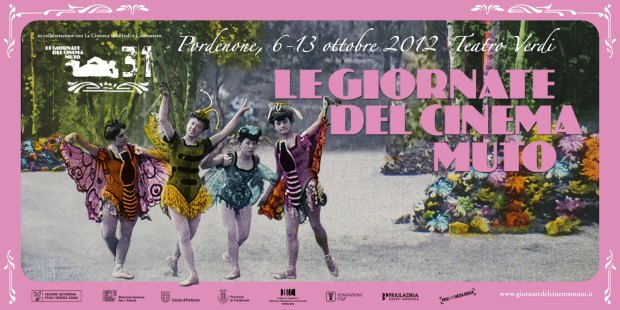
Pola Negri in The Spanish Dancer (1923)

Having calmed our radical fervour with a quick drink over the road, we took our places for a double-bill that promised pure joy – and delivered. First, a rerun of Saturday night’s world premiere of the restored Méliès film Les Aventures de Robinson Crusoé (1902) with Paul McGann once again delivering the commentary (more on this anon). Then, a screening I was particularly looking forward to: Herbert Brenon’s 1923 romance The Spanish Dancer, starring Pola Negri, Adolphe Menjou, Wallace Beery, Kathlyn Williams and chums. What I didn’t know was that silent film musician Donald Sosin had spent many months planning an accompaniment for the movie, which would involve a group of musicians including Günter Buchwald on guitar. Sadly, Sosin is currently unwell and unable to attend the festival, so Buchwald, Stephen Horne and a few others, put together their own music, at late notice, but based on some of the plans that Sosin had made. It was fabulous. The film is classic Hollywood at its ludicrous best, with giant, gorgeous sets, sequined costumes and massive crowd scenes. Negri is wonderful, especially as this is a role that allows her to dance, and fall desperately in love – her two specialities – as a gypsy fortune teller whose beauty and kindness plunges the Spanish court into disarray. And the richness of the accompaniment, with gypsy guitar, percussion, and romantic strings, did it true justice – I hope Sosin would have been pleased. A memorable screening for sure, and do, “I beseech you”, catch The Spanish Dancer when it screens at the London film festival next weekend.
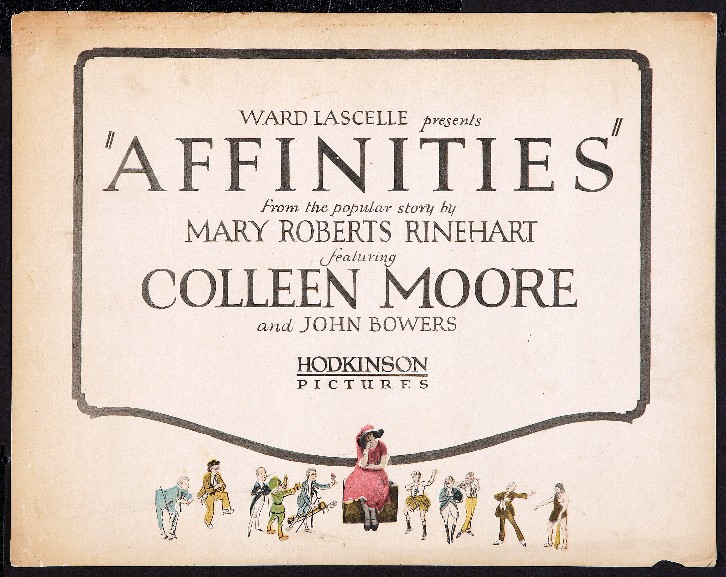
Favourite intertitles of the day: It’s a tie, between “I’ve accidentally killed myself” in Saved by the Pony Express (1911), starring Tom Mix, and “Damn that bunch of knitters” from Die Weber.

Best argument for vegetarianism of the day: Jäger in Die Weber opines something along the lines of: “What need have we to eat meat, when we could devour the manufacturers instead? They swim in grease up to their necks already.” Quite. And who could fail to agree when they had just seen Grandpa choking as he chewed on a stew made of the family dog?

For full details of these and all other films in the festival, the Giornate catalogue is available as a PDF by following this link.

My previous reports from the festival are herehere and here.

Le Giornate del Cinema Muto 2012: Pordenone post No 3

Monday at the Giornate closed with a brace of comic features featuring forgotten stars: Raymond Griffith’s civil war caper Hands Up! (1926) was preceded by Boris Barnet’s gentler Soviet comedy The Girl With The Hatbox (1927). Both were a pleasure, of course, but for me, the east was victorious in this particular battle.

Coming before both films was a modern silent, the slight but charming Le Petit Nuage (2012), a tale of impetuous romance in Paris made by Renée George, who was the lighting best boy on a little-seen confection of nostalgia called The Artist, released late last year. Anyone remember that one? Anyway, wonderful to see the ripple-effect work its magic, as the star of George’s film also has her own silent project in progress. Soon we’ll all be at it.

Affinities (1922)
Affinities (1922)

Working backwards through the schedule on a day when I will admit I was a little sidetracked, the programme of restored fragments produced by the Haghefilm/Selznick School fellowship 2012 won the hearts of the audience with its rare and strange beauty. The glimpses of Colleen Moore in 1922’s Affinities showed her at her winning best, although the film’s sexual politics seem terrifyingly retrogressive. There was two-strip Technicolor aplenty here: a documentary called Sports of Many Lands (1929) entranced with images of surfers on Waikiki’s deep blue ocean waves and race horses speeding down rich green furlongs. There were musical numbers, mysterious robots and dancing girls too. More, please.

There was a devil of a lot of Dickens on offer today, with the first session of the morning partnering a raucous but the most part feebly acted 1914 Martin Chuzzlewit, with the rare treat of our own Maurice Elvey’s slick, engaging modern dress Dombey and Son from 1917. Lucie Dutton says it best on Twitter (and there are more where these came from, Lucie is tweeting up a storm from the festival):

https://twitter.com/MissElvey/status/255233178325889024

https://twitter.com/MissElvey/status/255319947121668096

What to say of the diverse comedies collected in the Oh, Mother-in-Law! programme? Not nearly as offensive as it sounds, these shorts were often laugh-out-loud funny, with Louis Feuillade’s race film La Course des Belles-Mères (1907) and a wicked Italian number called Finalement Soli (1912) the standouts for me.

What we learned today: Defensive weapon, writing desk, modesty screen, rodent impersonator … the many and varied uses of a hatbox, as demonstrated by Anna Sten in The Girl With the … Hatbox.

Drink of the day: And every day if I get my wish: the feted Aperol Spritz.

For full details of these and all other films in the festival, the Giornate catalogue is available as a PDF by following this link.

My report from the first and second days of the festival are here and  here.

Le Giornate del Cinema Muto 2012: Pordenone post No 2

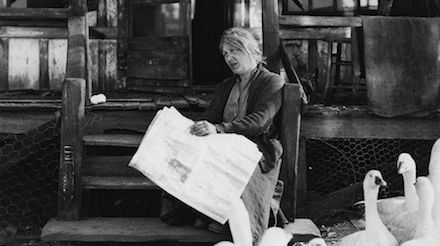
The Goose Woman (1925)

One would only expect to see the most ardent silent cinephiles here at the Giornate, but even within the geek elite assembled in Pordenone there are distinctions to be drawn. For instance, do you love silent cinema enough to be present and correct at a 9am screening of a rarely shown “experimental” Pudovkin film? On a Sunday?

Anna Sten in Earth in Chains (1927)

Well I was there, though my fellow festival-goers may wish mention my hotel’s proximity to the Teatro Verdi as a mitigating factor. And for my euros, Prostoi Sluchai/A Simple Case (1932) was worth the early start. A moral parable, slightly more convoluted than the title suggests, it condemns disloyalty to the Socialist cause, here represented by a shell-shocked husband committing adultery. The lyrical opening, some extreme montage to represent machine-gun fire in the battle scenes and an abstract sequence of decay and regrowth all stood out. Not an easy film to take in, perhaps, but one that repays the effort.

Sunday’s second Soviet film came much later in the schedule and was one of my highlights of the day. To kick off the strand of the programme that celebrates Anna Sten, the Hollywood star who never quite was, we were treated to the emotionally gruelling Earth in Chains (Fyodor Otsep, 1927). Sten is beautiful, just radiant, in this exceptionally ugly tale of exploitation. The film’s epic themes of injustice and oppression make it seem much longer than its 80-minute running time, which was, for once, a good thing.  Some heavy metaphorical inserts and a mawkish ending aside, this film consistently impressed and I am keenly anticipating more from Sten this week.

It was a more obvious pleasure to take in some Italian scenery this morning, while watching Idillio Infranto (1933), a short, poetic-realist tale of doomed romance and corruption in the Puglian hills (and more of the same in the big, bad city). The folksiness of the film was echoed by the recorded score for instruments and voices that was always highly strung and mostly excellent.

Idillio Infranto (1933)

On a high from the Italian film, I returned from lunch hugely excited to see The Goose Woman (1925), which I missed at the London film festival last year. Louise Dresser plays an alcoholic former opera star who pretends to have witnessed a crime in order to get some attention from the newspapers. It’s a terribly sad story, inspired by a real murder case, and the film often awkwardly mixes comedy in the drama when perhaps it could have been played straight. It’s beautifully shot, with delicate lighting, emphasised by tints on the film. Dresser is fantastic in the lead role, though, and though this film also has a rather sugary finale, this Hollywood gem directed by Clarence Brown is a very happy rediscovery.

The most bizarre segment of the day was undoubtedly the morning’s programme of German animation. Yes there was a Lotte Reiniger film in there (Die Barcarole, 1924), and some similar cutout work from contemporary Toni Raboldt, but this was a diverse batch indeed. Many of the shorts were in actuality adverts or propaganda films, promoting goods from sausages to perfume, life insurance to war bonds. One of the strangest was a mixed-media, hand-tinted work by Walter Ruttman that employed the story of Adam and Eve to sell fresh flowers. It’s a love story, I suppose. Many of the films were funny, most intentionally so, and a few of them were wildly politically incorrect or just plain odd. A brantub of surprise packages.

Jackie Coogan as Oliver Twist

The evening entertainment was a double-shot of Oliver Twist: the pacey 1922 Hollywood version starring Jackie Coogan and Lon Chaney was accompanied, though I didn’t see it, by a shorter Hungarian version titled Twist Oliver (1919). For the night owls there was another of Manning Haynes’ precious WW Jacobs adaptations: Sam’s Boy (1922), but so far, I think I’m more of a lark

Silent cinema in-joke of the day: Yesterday it was Marion Davies mimicking her Hollywood pals, today the intertitle in Frank Lloyd’s Oliver Twist introducing a “Mr Brownlow” drew a very rowdy chuckle on the top balcony.

For full details of these and all other films in the festival, the Giornate catalogue is available as a PDF by following this link.

My report from the first day of the festival is here.

Le Giornate del Cinema Muto 2012: Pordenone post No 1

Image

Here in Pordenone the weather is warm and the days are long, which makes the Giornate del Cinema Muto, now in its 31st year, an Indian summer of film and music.

This is your correspondent’s first trip to the grand-daddy of international silent film festivals and although I have only been in town for a few hours, I am inclined to believe the hype. This town in northern Italy has definitely been bitten by the silent cinema bug. The billboards, shop windows and even pavements are adorned with hand-tinted fairies, in eye-popping shades of cerise, blue, orange and green. The customers sipping caffe espresso in the cafes bend their heads over the 190-odd page festival catalogue, revealing the loops of pastel ribbon around their necks that hold their precious pink passes.

With eight days of silent cinema programmed, taking in everything from Louis Feuillade to GW Pabst, Laurel and Hardy to Anna Sten, starting at nine in the morning and continuing late into the night, this is a film enthusiasts’ paradise. It’s a rich diet, too, and some of the sessions will test the spectators’ endurance as much as they dazzle the eyes, but therein lies the challenge: how to see everything that you want to see, discover some unexpected gems, sleep (but not in your seat at the Teatro Verdi) and eat three squarish meals a day? It’s tricky. And if one were fool enough to try to blog from the festival too, utterly impossible.

But God loves a trier, so here goes nothing.

This is the first in a selection of posts I hope to share from my trip to the Giornate. I want to give you a flavour of the festival, and keep you up to speed with the treasures on show here. Anything more comprehensive may just be a promise I can’t keep.

My first day here was mostly spent in queues, at airports and ticket offices in London and Venice. However, I did arrive in time for a programme of early Charles Dickens adaptations, most of which were familiar to me as they may be to you, but as in the case of The Death of Poor Joe (1900/1) discovered this year in the BFI archives, some are only recent acquaintances. Thanhouser’s The Old Curiosity Shop (1911) benefits from a particularly winsome, though terribly young, Little Nell in the form of “Thanhouser Kid” Marie Eline. The same company’s boisterous, and very funny, romp through Nicholas Nickleby, made in the following year, was another highlight of the afternoon. We were also treated to four episodes from The Pickwick Papers and Biograph’s The Cricket on the Hearth (1914). Rest assured, this won’t be the last we hear from Dickens.

ImageSaturday night’s opening gala was a double-bill of an old favourite and a lost-and-found treat. George Méliès is very much in vogue, and the full version of his The Adventures of Robinson Crusoe (1902) has been discovered, in all its hand-tinted splendour and restored by the Cinematheque Française. Made just a few months after The Trip to the Moon, Crusoe is, as the director and star himself said, more of a “cinematographic play” than a series of “fantastic tableaux”. Colour is used here to tell the story, rather than to dazzle, but the sets, particularly the shipwreck scene and a thunderstorm, are fantastic. The effect of seeing living actors, with their clothes and skin painted on, interacting with Méliès’ theatrical studio sets is as exhilaratingly hyper-real as anything James Cameron has thrown at us. Paul McGann delivered the director’s own commentary, which combined narrative exposition with an advertisement of the film’s strengths and special effects. Maud Nelissen’s score for a quartet added panache, pace and a smattering of sound effects

The gala centrepiece was King Vidor’s delightful The Patsy (1929) starring Marion Davies and Marie Dressler, with an orchestral score from Nelissen. The house was in fits, particularly during the famous sequence in which Davies impersonates Mae Murray, Lillian Gish and Pola Negri. An in-joke for this crowd perhaps, but it’s wonderful to see the silent stars still playing to the gallery in the 21st century.

The Cabinet of Dr Caligari with Martyn Jacques: live review

Martyn Jacques and The Cabinet of Dr Caligari

Familiarity with The Cabinet of Dr Caligari, the totem of German Expressionism, cannot dim its angular beauty, nor its power to baffle and tease. This luridly geometric film invites a wild accompaniment, one that will embrace its puzzles and schlocky plot twists, and so Caligari pops up time and again in repertory cinemas, with scores veering from rock to electronica to jazz and all points in between. Martyn Jacques of punk-cabaret adventurists The Tiger Lillies has answered the call, and his theatrical, seedy style couldn’t be more simpatico.

Jacques has set up a short residency in the West End’s Soho Theatre this summer, playing his Caligari score night after night in a basement cabaret bar that’s a few shades too salubrious for that sleazy Weimar vibe. The venue wins on atmosphere, then, but the downside of watching a film in a bar rather than a cinema becomes obvious the moment we clock that we’ll be a watching Caligari on DVD, projected a little wonkily at that.

The Cabinet of Dr Caligari (1920)

But we’re here for the Martyn Jacques show, and I’m happy to squint and imagine his folksy-sinister piano-accordion-vocal score accompanying the real deal. If Jacques’ music can shine tonight, it will worthy of a showing that will please the projection purists too. And Jacques’ music does shine. He says that he was inspired to write his score by his childhood piano teacher, who worked as a film accompanist in the silent era, and clearly he was an observant pupil. Jacques’ piano proves nicely responsive to the film, turning, pausing, and marching when the film does. His punchy accordion, too, can screech with the high-strung horror of it all, or rumble along as a creepy echo of the fairground’s barrel organ. The occasional foot stomp adds drama, and acknowledges the fact that this is a musical, hummable score – the audience are nodding their heads, tapping their toes, as we go.

What’s really distinctive about Jacques’s score, though, is his vocal, which can switch between a low grumble and a rising falsetto. It’s dramatic, percussive and at its best, when quietly threatening, a low non-verbal bass line for the piano melody. Mostly, though, Jacques is singing his own colourful lyrics: a musical narration for the film that goes out of its way to introduce the carnival’s bit-part characters and to explore the fears and motivations of the film’s leading players.

Those lyrics are the score’s fatal flaw: often what Jacques is singing differs from what’s on screen in some small but important detail. His lyrics can clash with the intertitles, making the viewing experience anything but immersive. At worst his words can pre-empt the next plot twist, which sadly dissolves the horror-movie tension. Occasionally, the lyrics and the film are in different worlds altogether. At these times, one suspects this score to be in reality a rehearsal for a project such as Jacques’s hit grotesque operetta Shockheaded Peter. I’m not sure that’s such a bad thing, a cabaret Caligari with puppets? I think it could be a another smash, in Jacques’ hands.

As I said earlier, this is Martyn Jacques’ show, and while his Chaplin-death-mask makeup and fruity lyrics may threaten to steal the limelight from the movie, his fluid score reveals a real sensitivity to the art of silent film accompaniment. Perhaps he has his eyes on other horizons, but I’d be more than happy to hear another silent score from such an exuberant talent.

The Cabinet of Dr Caligari screens at the Soho Theatre in London until 11 August 2012. To find out more and to buy tickets, visit the Soho Theatre website.

Wonderful London: DVD review

Wonderful London
Wonderful London

This is a guest post for Silent London by Karolina Kendall-Bush

Sitting in the bowels of the BFI at Stephen Street watching the 20 or so Wonderful London travel films in silence, I often dreamed of the day when these mesmerising scenes of life in the 1920s might be restored and released on DVD with a score. Finally, ithat day has come. In autumn last year, those of us who could get tickets to a soldout performance at the BFI London film festival were lucky enough to see six of these films in all their glory, fully restored from the original coloured nitrate prints. Now the BFI has released those films, along with six “extras” (in good black-and-white prints) on DVD with music by John Sweeney and essays from Bryony Dixon, Iain Sinclair, Jude Rogers and Sukhdev Sandhu.

Wonderful London
Wonderful London

Although these films were simply shot commercial “fillers” to be shown before the main feature, they were remarkable in many ways. Most travel films of London in this period tended to flit between landmarks with a few explanatory intertiles. They were, dare I say it, ever-so-slightly dull.  Having devoted a lot of time to watching travelogues of London, I often groan as repeated shots of Buckingham Palace, Big Ben and Tower Bridge pass before my eyes. In this context, the Wonderful London films are quite treat. Paying as much attention to pet cemeteries and street performers as they do to London’s  best-known tourist destinations, they are, I think, antecedents to Norman Cohen’s The London Nobody Knows (1967) and even Patrick Keiller’s London (1994, below).

Each Wonderful London instalment goes on a thematic excursion. Barging through London charts the course of the Regent’s canal, Cosmopolitan London goes in search of the city’s diverse ethnic communities, London’s Sunday looks at what Londoners do on their day off, and so on. The conversational intertitles, which can veer between amusing and patronising, invite viewers to go on a journey through the city. In her essay, BFI silent film curator Bryony Dixon notes how these films exploited the popularity of St John Adcock’s 1922 magazine Wonderful London. In this publication, famous writers described various aspects of the capital for readers eager to discover London in all its complexity.

Continue reading Wonderful London: DVD review

Giorgio Moroder presents Metropolis: DVD review

Moroder's Metropolis
Moroder’s Metropolis

The mediator between the head and hands must be the heart, and so the popular affection for the 1984 revamp of Fritz Lang’s Metropolis has finally led to a 2012 DVD release. It’s 85 years since this film was made, but 28 years since it was made over by Giorgio Moroder – so will the original film or its renovations have dated more?

On the face of it, we really don’t need Moroder’s Metropolis on DVD. This may be the version that turned a generation of film fans into silent movie buffs, turning the fledgling early-80s silent film renaissance into a mainstream movie moment, but surely we’ve moved on since then? We’re still waiting for many silent classics to appear on DVD, but among those that are available there are some absolute beauties: masterpieces of restoration, with audio commentaries, informative notes and sensitive, sometimes even historically accurate, scores. In this country, many such DVDs and Blu-Rays have appeared on the Masters of Cinema imprint, part of the Eureka Entertainment group that has released Moroder’s Metropolis.

Moroder's Metropolis
Moroder’s Metropolis

Most salient of these releases is The Complete Metropolis, the almost-full restoration of Fritz Lang’s film: a product of skill, patience and the great fortune to find the missing footage in an archive in Buenos Aires. At a stroke, the movie was rehabilitated: no longer a grand mess, a gorgeous design pocked with plotholes. Simultaneously, Moroder’s idiosyncratic restoration was rendered obsolete.

But silent film fans don’t fear obsolescence. It’s our stock-in-trade. Nor are we averse to the first faltering steps towards new technologies. We embrace part-talkies, Pathécolor, Polyvision and undercranking. Moroder’s Metropolis should be viewed in this spirit. Would we restore a film this way again? No, but what will they think of our “state-of-the-art” digital restorations in 2040? Very little, perhaps, particularly if those digital copies become obsolete themselves, incompatible with new projection technology.

Continue reading Giorgio Moroder presents Metropolis: DVD review

The British silent film festival 2012 – reviewed by you on Twitter

  1. Share
    Hello Twitter! Yes we are now tweeting for #BSFF15, starting this Thurs in (currently very) sunny Cambridge as the Good Dr M Kermode says
    Mon, Apr 16 2012 07:28:35
  2. Share
    Saturday’s #BSFF dilemma: Livingstone or Mist in the Valley. Any thoughts?
    Wed, Apr 18 2012 10:19:02
  3. Share
    @britishpictures Mist in the Valley because it has GH Mulcaster who played Dr Scudamore in Will Hay’s last film My Learned Friend. #BSFF
    Wed, Apr 18 2012 10:35:47
  4. Share
    So today is the start of the British Silent Film Festival in Cambridge. Do drop in if you’re passing. #BSFF
    Thu, Apr 19 2012 01:24:06
  5. Share
    #bornonthisday 1890 Herbert Wilcox. Director/producer. His version of Tale of Two Cities, The Only Way, is at the #BSFF today.
    Thu, Apr 19 2012 02:15:18
  6. Share
    Bright and early and off to Cambridge for the British Silent Film Festival – I’ll be tweeting using the #BSFF15 tag I reckon