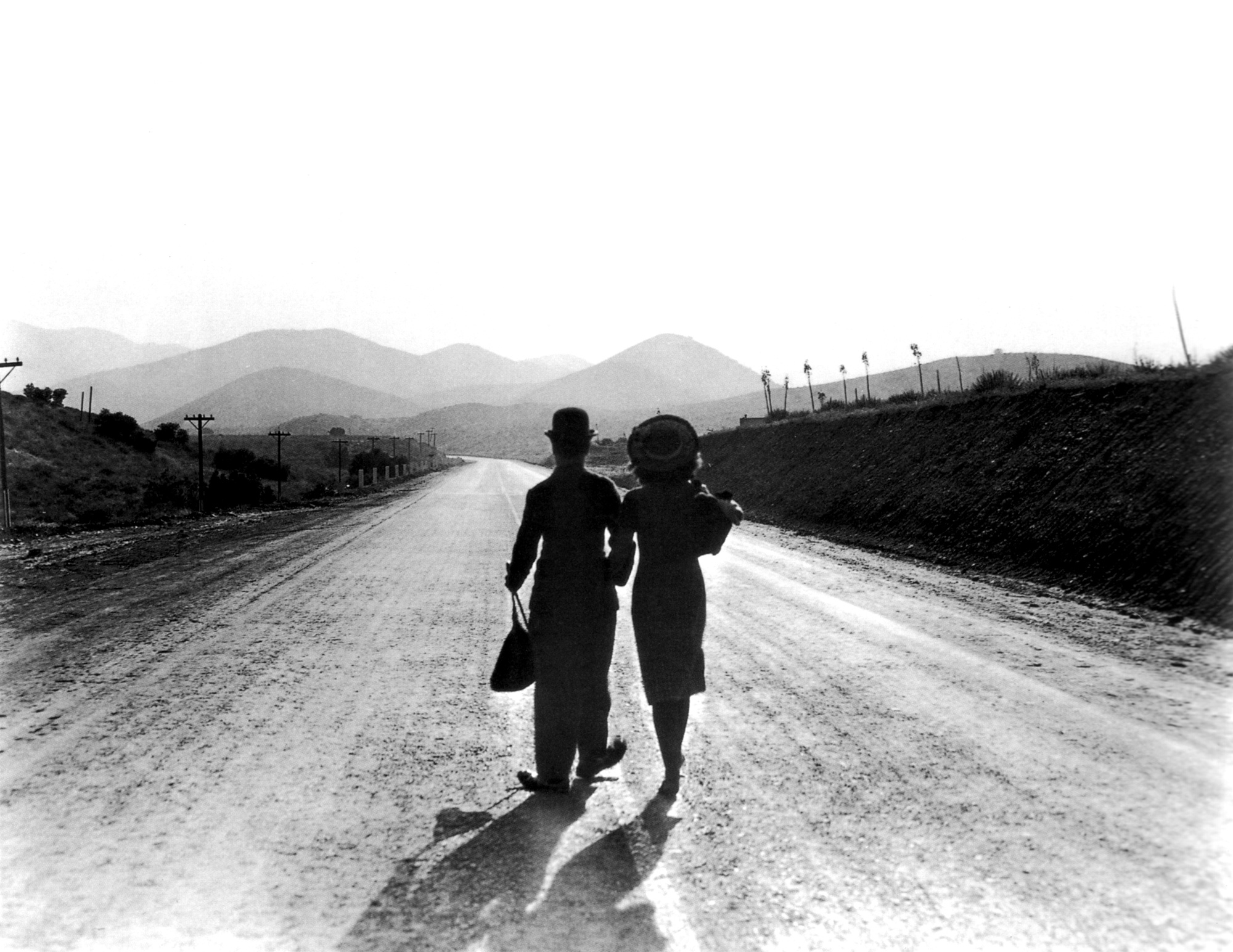
Charlie Chaplin and Paulette Goddard in Modern Times
This date should already be in your diaries. Charlie Chaplin’s wise and heartwarming not-so-silent silent film Modern Times screens at the Royal Festival Hall on the South Bank on 22 March, with the Philharmonia Orchestra conducted by Carl Davis. It’s a magnificent movie: a slyly hilarious portrait of Depression-era America, with a tremendous score written by Chaplin himself. There’s a lot to love about Modern Times – not least the final screen appearance of the Little Tramp and the debut of Chaplin’s song Smile.
If you’d like to see Modern Times, and who wouldn’t, you can take advantage of this special offer and get best available seats for just £10 if you quote FILM when booking online or by calling 0844 847 9910. Find out more and book online here.
Birds Eye View is one of Silent London’s favourite film festivals – a celebration of female film-makers with an exceptionally strong and musically adventurous silent cinema strand. Last year, even though the festival was on haitus, the Sound & Silents programme brought us a selection of newly scored Mary Pickford films. This year, in keeping with the overall theme of the festival, the screenings have an Arabian flavour.
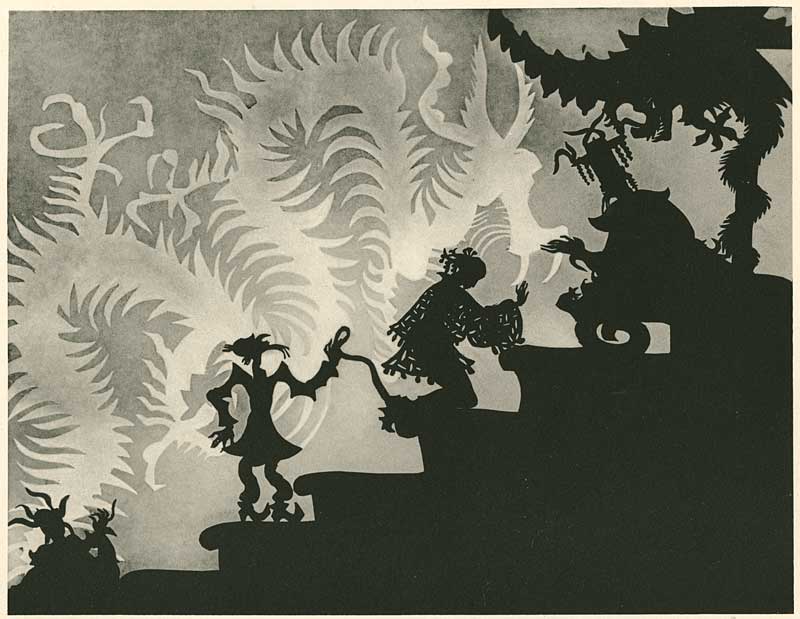
The two films in the Sound & Silents segment are, to be frank, German – but the first, Lotte Reiniger’s trailblazing cutwork animation The Adventures of Prince Achmed (1926) is based on a story from 1,001 Arabian Nights, as also, perhaps more loosely, is the second, Ernst Lubitsch’s boisterous harem farce Sumurun (1920). Achmed, widely acknowledged as the first animated feature film, and still as elegantly beautiful today as in the 1920s, probably needs no introduction from me.
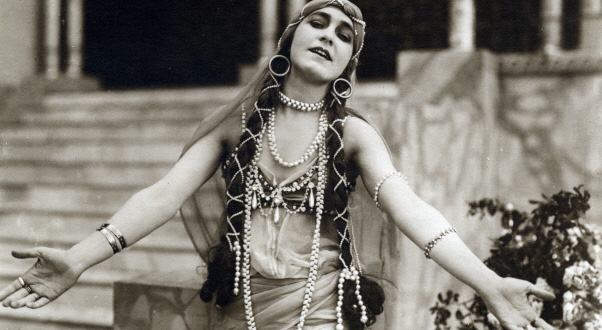
Sumurun (1920)
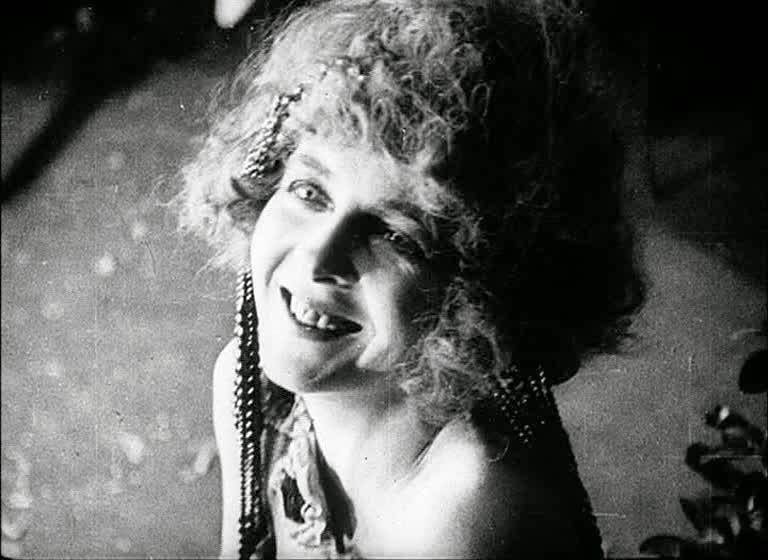
The latter film is a slightly guilty pleasure of mine – a rather well-made romp, enlivened by the sinuous presence of the young Pola Negri, and the more demure charms of Swedish ballerina Jenny Hasselqvist. Lubitsch himself appears as a leery clown with hunchback, but his real star turn is behind the camera, crafting a fast-paced and vivacious comedy out of unpromising material. Sumurun had been a stage hit for Max Reinhardt’s company in Berlin, and Negri had starred in both that production as well as one back in her hometown of Warsaw – perhaps it’s therefore no surprise that this film is so slick, with such larger-than-life performances, including Paul Wegener as a bully-boy sheik. I will concede, of course, that it is rarely, if ever, politically correct.
Sound & Silents is as much admired for its musical commissions as its programming, and it’s intriguing that these German Arabian pastiches will be accompanied by scored from musicians whose roots lie in both Western Europe and the Middle East – British-Lebanese Bushra El-Turk and Sudanese-Italian Amira Kheir.
Multi-award-winning contemporary classical composer Bushra El-Turk creates a new work for a chamber ensemblecombining classical Western and traditional Middle Eastern instrumentation, accompanying The Adventures of Prince Achmed, the world’s first feature-length animation. Currently on attachment to the London Symphony Orchestra’s Panufnik Programme, British-Lebanese El-Turk’s acclaimed work has also been performed by the BBC Symphony Orchestra and London Sinfonietta.
Singer, musician and songwriter Amira Kheir blends contemporary jazz with East African music for a multi-instrumental 5-piece band, scoring landmark fantasy-drama Sumurun (One Arabian Night). Kheir has recently won acclaim for her ‘beautiful and fearless’ (Songlines) first album and her BBC Radio 3 and London Jazz Festival debuts.
If my email inbox is anything to go by, several of you have been wondering when we would hear details of the 16th British Silent Film Festival. After last year’s trip to Cambridge, many of you will have been anticipating the festival’s return to London, for one thing…
Well. There’s bad news – but happily there’s far more good news.
The BSFF is taking a break this year – but there will still be a BSFF, of sorts. And yes, some of the events will be in London, but festivalgoers will also be packing their buckets and spades for a trip to The Suffolk coast – and the historic Aldeburgh Cinema.
The centrepiece of the events, according to my insider sources, will be the screening of Hobson’s Choice (Percy Nash, 1920), starring Arthur Pitt, Joan Ritz and Joe Nightingale – a very, very rarely seen film and a magnificent adaptation of the play by Harold Brighouse. You’ll also have a chance to see the full surviving fragment of Graham Cutts’s Cocaine (1922) and the only surviving reel of Monkey’s Paw(Manning Haynes, 1923). Speaking of Haynes – you’ll be able to feast on his delightful WW Jacobs comedies down in Suffolk – a treat for any British silent film fanatic. If you linger by the seaside, you’ll also catch the Dodge Brothers accompanying the Louise Brooks film Beggars of Life (1928), which is well worth sticking around for.
There will be no British Silent Film Festival this year while the team regroup – however, we are organising three fantastic one off events , with three enthusiastic new hosts:
19th April One day British Silent Symposium courtesy of Lawrence Napper at King’s College, University of London –incorporating the Rachael Low lecture. A ‘Call for Papers’ will be coming soon.
20th April – All day event at the Cinema Museum – a programme of sensational London related film – The Yellow Claw, full surviving fragments of Cocaine, Monkey’s Paw, and rare shorts from other collections. Also the 21st century premiere of the 1920Hobson’s Choice a genuinely good silent adaptation of the Harold Brighouse classic made famous by David Lean.
4th May – join us by the sea as the BSFF are guests of the glorious Aldeburgh Cinema for an all-dayer, with a coastal theme, including the ‘east coast’ films of Manning Haynes and Lydia Hayward based on the W W Jacobs stories, a programme of Lifeboat films and others. The fabulous Dodge Brothers will be playing ‘Beggars of Life’on the 5th for those who want to make a weekend of it!
A slide advertising Stage Struck (1925) From Starts-Thursday.com
Scotland’s only silent film festival seems to go from strength to strength. The newly released lineup for the third Hippodrome Festival of Silent Cinema looks more varied and ambitious than previous years – and well worth a journey north of the border for us southern softies. It’s bigger than before, too – running from Wednesday to Sunday.
Friday night’s gala screening is Allan Dwan’s part-Technicolor comedy Stage Struck(1925), starring Gloria Swanson – with Neil Brand on the piano. Other notable highlights include the Dodge Brothers’ spirited accompaniment to the rarely seen Soviet film The Ghost That Never Returns; Japanese favourite Crossways with a score by electronic rockers Minima; and Lubitsch’s irrepressible comedy The Oyster Princess, with music from Günter Buchwald.
Elsewhere in the week, you’ll find Charlie Chaplin, Buster Keaton, Laurel & Hardy, Baby Peggy, the rediscovered Hollywood film The Goose Woman, early Scottish cinema, the Film Explainer, Berlin: Symphony of a Great City and an often-overlooked gem called The Artist …
Watch a video of last year’s highlights here:
And read the full programme for the Falkirk festival here:
GALA EVENTS
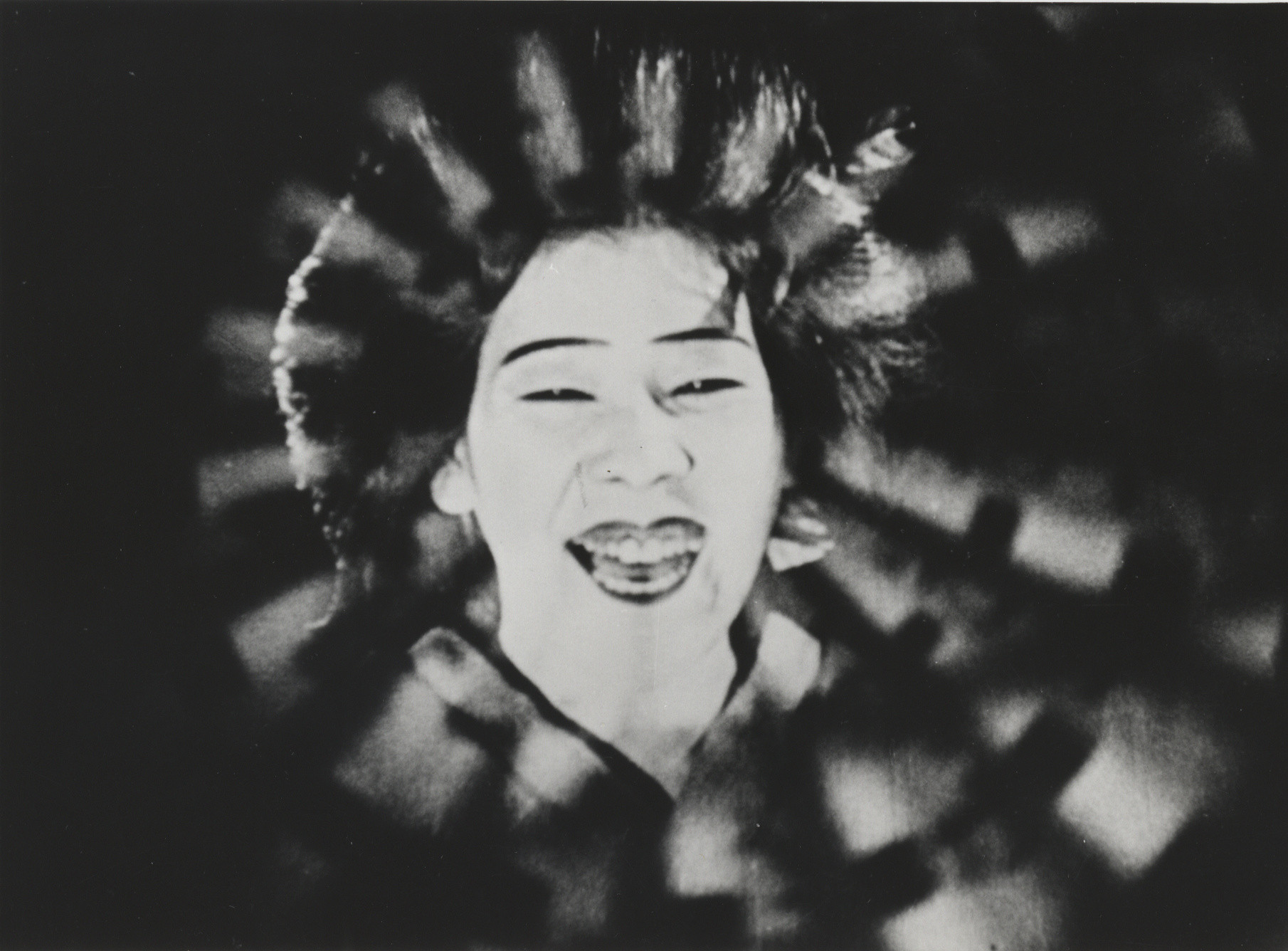
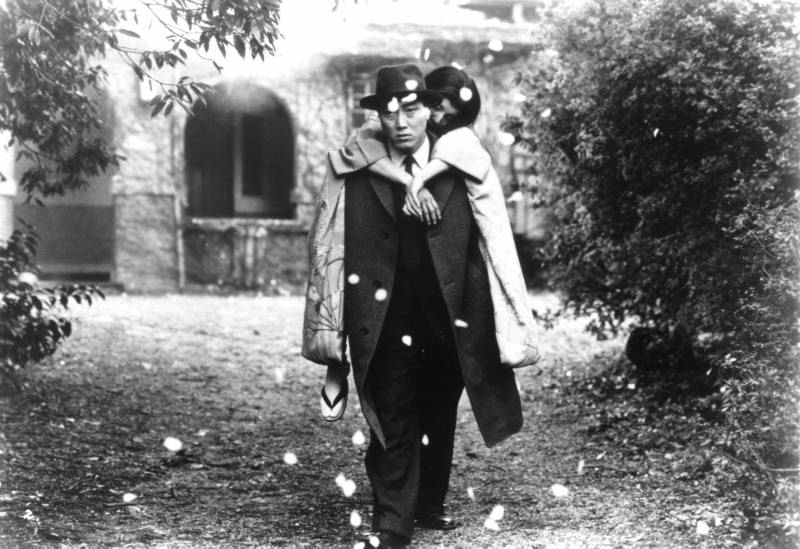
Crossways (Jujiro, 1928)
Stage Struck – Neil Brand accompanies the glamorous Friday Night Gala starring Gloria Swanson, familiar to audiences today as bitter and forgotten silent movie queen Norma Desmond in Sunset Blvd. Includes ‘champagne’ reception.
The Ghost That Never Returns – In their Scottish debut, The Dodge Brothers make joyous music inspired by Woody Guthrie for this little-known Soviet gem.
Jujiro (Crossways) – Leading UK contemporary electronic ensemble Minima perform their new score for one of the first Japanese films ever shown in the West.
The Oyster Princess – Virtuoso Günter A. Buchwald makes his Hippodrome debutwitha glorious comedy directed by Ernst Lubitsch (The Shop Around the Corner).
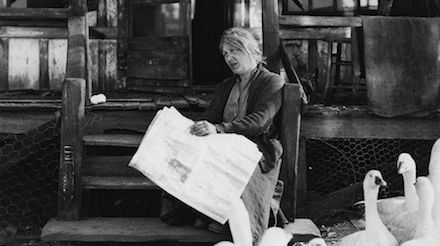
The Goose Woman (1925)
NEW COMMISSIONS
The Goose Woman – After 2012 Festival success with The Black Pirate, Jane Gardner returns to perform her new score for this film based on a still unsolved real-life murder, with Hazel Morrison and Su-a Lee on percussion, cello, musical saw.
The Film Explainer Returns –Andy Cannon, Frank McLaughlin and Stewart Hardy bring archive films to life with their blend of storytelling and trad folk music.
New Found Sound – The third year ofhugely talented Falkirk Council secondary school pupils composing and performing their own scores under the mentorship of Tom Butler of the Royal Conservatoire of Scotland.
Scottish Screen Archive Shorts – Continuing the relationship with the national film archive, Mike Nolan and Forrester Pyke accompany shorts before selected features.
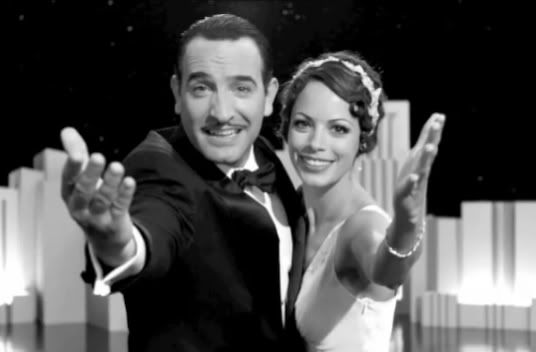
The Artist (2011)
BIG NOISES in the SILENT ERA
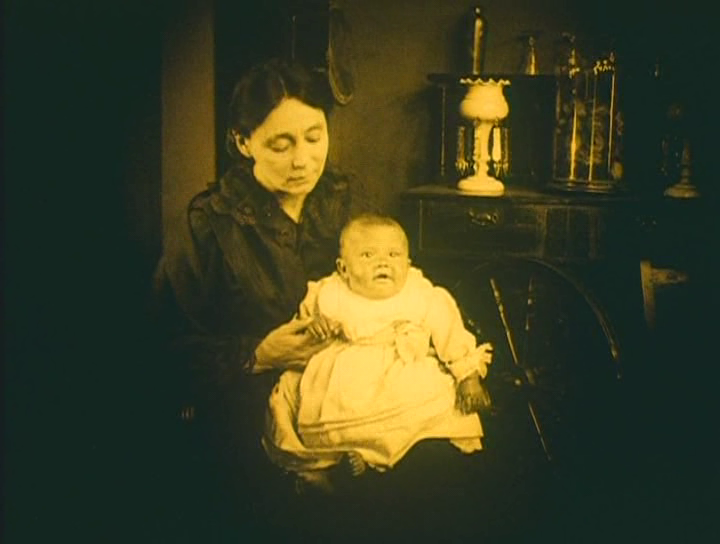
Baby Peggy, the Elephant in the Room – UK premiere of this fascinating new documentary telling the moving and inspiring story of the oldest surviving silent film star whose acting career started at 18 months and stopped abruptly at age 4.
The Artist – Oscar-winning performances in the modern silent movie sensation.
‘Bright, Steady and Free from Flickr’: Early Cinema in Bo’ness and Beyond – Prof John Caughie of the University of Glasgow uncovers new research into this fast-changing chapter in the history of Scotland’s early cinema
A Chance to Dance – Learn the Charleston and other early jazz steps from the Roaring Twenties in this public dance workshop for everyone aged 16 and over.
Buster Keaton’s One Week (1920)
SILENT OVERTURES FOR FAMILIES, CHILDREN & YOUNG PEOPLE
Chaplin & Keaton Double Bill – Bring a clean jam jar to get 2-for1 tickets to see Neil Brand accompanying Chapin’s The Immigrant and Keaton’s One Week.
Another Fine Mess with Laurel & Hardy – The boys’ triple bill of Putting Pants on Philip, Their Purple Moment and Double Whoopeewith Günter A. Buchwald.
Make Movie Music! – The Glasgow Improvisers Orchestra return with a fun-filled session for primary schools using the classic Berlin, Symphony of a City.
#HippFest @ Fusion – Using his incredible vocal talent,human beatboxer Jason Singh creates soundtracks with Fusion, a popular night for Bo’ness young people.
Watch a trailer for the 2013 festival here:
The Hippodrome Festival of Silent Cinema runs from 13-17 March. Tickets go on sale at 10am today. Call 01324 506850, or visit the Steeple Box Office, High Street, Falkirk FK1 1NW.To read more and to book online, visit www.hippfest.co.uk. If you book before 25 February – you’ll get a 10% discount on your tickets!
This is a guest post for Silent London by Neil Brand.
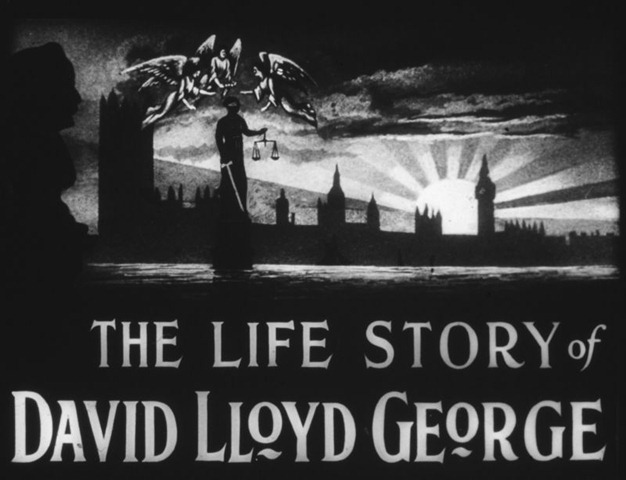
In late 1918 a film was in preparation that was to rewrite the history books – a British picture, running almost as long as Griffith’s The Birth of a Nation, bringing to life the political career of the country’s prime minister, the full ferocity of the war and the experience of ordinary people caught up in these momentous events. It was called The Life Story of David Lloyd George. Nothing as ambitious had been tried before and it was ready for launch immediately after Armistice Day. There was even a deal in place with Carl Laemmle to splash it across the American continent.
Then late one afternoon in January 1919, a lawyer arrived at the offices of Ideal Film Company, the film’s producers, handed over £20,000 in £1,000 notes and drove away with the only negative and positive copies of the film. It was never seen again by its makers, its writer, the respected historian Sir Sidney Low, or its director Maurice Elvey. No audience saw it at the time and the film became a lost treasure.
But you can see it at the Barbican on 17 February, 2013.
The Life Story of David Lloyd George (1918)
The story behind these extraordinary events is still murky, but what we do know is this. Towards the end of 1918, as the film was nearing completion, the owners of Ideal Film, the Rowson brothers, issued a writ for libel against John Bull magazine, edited by the virulent xenophobe Horatio Bottomley, which had accused them of being German sympathisers (largely on account of their original name, Rosenbaum). At the same time, word came down from Lloyd George himself that he was unhappy with the film going ahead, this despite the fact that the producers had secured his involvement before shooting began. These two events are almost certainly linked, but the outcome is still shocking to this day.
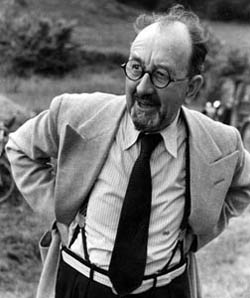
Maurice Elvey
The £20,000 paid to Ideal represented the out-of-pocket costs of the film not appearing – the greater costs, to Elvey, to lead actor Norman Page, whose Lloyd George is a phenomenal performance of nuance and understatement, even to the future of the British film industry, are incalculable. As Kevin Brownlow wrote on seeing the film in 1996, “… had the Life Story of David Lloyd George been released, Elvey might even have been hailed ‘The Griffith of Britain’ … certainly the film would have been placed beside the best work from America and the continent and it would not have been entirely overshadowed.”
So how did Brownlow come to see it? In 1994 the Welsh Film Archive in Aberystwyth took delivery of 16 cans of film found on the farm of Lord Tenby, grandson of Lloyd George. These turned out to contain 137 unedited rolls of nitrate film, which, after two years of painstaking restoration and reconstruction work, finally hit a screen before an audience in North Wales in April 1996 – I was the pianist on that occasion, unable to believe my luck.
For Lloyd George is a phenomenal film, a history that plays out like a biopic, a time-capsule that, at its best, still holds a modern audience with extraordinary power. Like the best biopics it hops nimbly between the big picture and the small, creating a fascinating portrait of Lloyd George within an entirely convincing political and domestic world. It has massive scenes, including a riot at Birmingham Town Hall with nearly a thousand extras; and quiet, contemplative scenes informed by Page’s charismatic dignity. Best of all, it still has the power to move, as much as it would have done with those audiences of 1919 who were destined never to see it. I urge you to see this “lost” masterpiece on its only London showing, and be prepared to have your preconceptions about British cinema, the first world war and silent cinema acting overturned.
Norman Page and Alma Reville in The Life Story of David Lloyd George (1918)
The National Library of Wales holds more information on this extraordinary film and its story, if not the solution to the mystery of the film’s disappearance. Here’s my take on it – the film turned up among Lloyd George’s own possessions and, as was common knowledge at the time, £20,000 was about the going rate for a baronetcy …
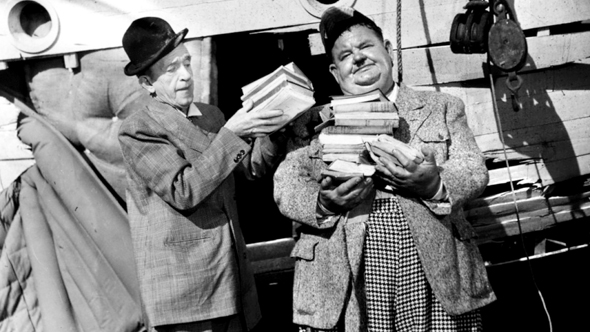
There are so many silent film myths and so little time to wearily dismiss them all. But next time someone blathers on about the coming of sound causing all the silent stars to disappear in a puff of smoke, never to darken the doors of Hollywood again, point them in the direction of Laurel and Hardy. Case closed.
And once you’ve sung the praises of the little clever British one and big daft American one, you’ll be in the mood for seeing some of their films. Happily BFI Southbank is screening the full version of their last feature, the rarely seen Atoll K (1951) on 30 January. You can read more here from Uli Ruedel about why this is such a special opportunity:
Shot in Europe by the comics with genuine enthusiasm, but in poor health and under chaotic production circumstances, the film has been much maligned by some fans and writers, who would rather see it erased from history than enjoy it for what it is.
The film’s longest version – with its extra two reels including “some of the funniest sight gag sequences” (Everson) – has practically been unseen for decades, let alone in its original technical quality.
Curators, comedy historians and conservation scholars at BFI have now previewed and confirmed that the archive’s 35mm print, preserved from unique nitrate master materials in glorious black and white, does conform to the length of this longest existing (and likely never theatrically released) extended English-language version.
Running a delightful 98 minutes, it’s only a couple of minutes short of the 100 minutes worth of footage used in all the different national versions altogether. And with a splendid visual and sound quality, it allows for a fresh appreciation of the French-Italian ‘European super-production’, its sight gags and satire, even its mostly post-synched, faux American English soundtrack – the only dub incorporating the Boys’ distinctive voices in the original, on-set performances.
The hardcore nothing-but-silent fans among you will be pleased to note that Atoll K will also be accompanied by some dialogue-free treats – including a surprise change to the programme.
First up is Grand Hotel (aka Laurel and Hardy Visit Tynemouth, UK 1932, Dir JG Ratcliffe, 10min, silent). In this newsreel footage, the duo “are rapturously received when they visit Tynemouth in 1932, and Stan clowns for the camera with his dad”. But there’s more: “programme will now include previously unseen silent amateur footage of Stan and Ollie opening a Gymkhana at Eastwood Park, Giffnock, during their visit to Scotland in June 1947.” That’s another nice er, bit of BFI archive film programming you’ve gotten yourself into.
Two more thing to know if you’re a Laurel and Hardy fan:
The Laurel and Hardy rarities programme screens in NFT1 at BFI Southbank on Wednesday 30 January at 6pm, introduced by Glenn Mitchell, author of The Laurel and Hardy Encyclopedia, and Archive curators Vic Pratt and William Fowler. You can buy tickets here.
The Hackney Attic at London’s newest Picturehouse cinema is becoming to make name for itself as a silent film venue, with recent screenings ranging from Piccadilly to Aelita: Queen of Mars. Heartening news, then, that this trend continues with another Filmphonics presentation of a silent classic this month: Buster Keaton’s groundbreaking comedy The General, on 20 January 2013.
Surely The General needs no introduction from me: the funniest war film you’ll ever see, an astonishing technical achievement and did I mention it was hilarious too? If you need a taster though, you could do worse than this sampler from film critic AO Scott:
There’s more good news: this screening of The General will be accompanied live by the marvellous Costas Fotopoulos on piano.
Costas has now been working for many years as an improvising silent film pianist at BFI Southbank and he has also accompanied silent films at the Barbican Centre, the Prince Charles Cinema, Riverside Studios, Chelsea Arts Club among other venues, as well as scoring many silents in the London Film Festival.
The even better news is that you could get your hands on a free pair of tickets to this screening. Free. To win a pair of tickets to see The General at Hackney Attic, just send the answer to this question to silentlondontickets@gmail.com by noon on Wednesday 16 January. The winner will be chosen at random from the correct entries.
I have written before on this blog about Cecil Court, a small street in London that used to be known as Flicker Alley. It’s a turning off Charing Cross Road, crammed with bookshops – and in the windows of those shops you will find circular blue labels commemorating the pioneering film businesses that established themselves here in the earliest days of the cinema.
On 13 December this year, a more permanent memorial will be unveiled, a bona fide Westminster Council blue plaque at No 27 Cecil Court, to mark the street’s importance to the British film industry. And to celebrate the plaque, there will be an afternoon of festivities. First, at 2.30pm, a screening of early films at No 5, with piano accompaniment by John Sweeney, then Christmas carols and refreshments at 4.45pm. Later in the evening, Poet Laureate Carol Ann Duffy will be signing books in Goldsboro Books at No 23.
This blogpost has lots more information about the street, including an audio interview with two Cecil Court shopkeepers Etan Ilfeld and Tim Bryars.
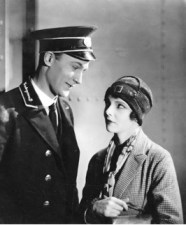
Excellent news for fans of British silent cinema (that’s you). Anthony Asquith’s Underground (1928) will be released in cinemas next year. It’s a romantic and thrilling film about a love triangle that sparks jealousy, madness and terrible violence. Asquith’s direction is confident – and richly expressive.
Underground (1928)
Underground is also a fascinating portrait of 1920s London, including a public transport system that has only subtly changed in the intervening 80-odd years. Indeed this theatrical release is intended to celebrate 150 years of the Tube. The film stars Brian Aherne, Elissa Landi, Cyril McLaglen, and Norah Baring in the roles the opening intertitle describes as “ordinary workaday people whose names are just Nell, Bill, Kate and Bert”. It’s no ordinary film though, Asquith uses subjective techniques inspired by European cinema to convey his character’s emotional turmoils and to make Underground both atmospheric and suspenseful. If you’ve seen his final silent film A Cottage on Dartmoor, you’ll know just what to expect.
What is particularly special about this release is that the film has been beautifully restored by the BFI and will be accompanied by a live orchestral recording of Neil Brand’s superb score – played by the BBC Symphony Orchestra. You can read more about the film here on the BFI website, or read Silent London’s interview with composer Neil Brand here. Ahead of last year’s Barbican screening of Underground, Brand wrote this fascinating piece for the Telegraph about “Silent cinema and the secrets of London”.
Underground is released on 11 January 2013, screening at the BFI Southbank and selected cinemas nationwide. A special preview screening at BFI Southbank on 10 January 2013 will be followed by a panel discussion hosted by Francine Stock, with Bryony Dixon, Ben Thompson, Simon Murphy and Neil Brand.
A folk romance that stumbles into melodrama, an adaptation of a blockbusting novel that is now all-but forgotten, The Manxman may seem to be far more of its time than ours. But the London film festival’s archive gala screening of this neglected Hitchcock film was having none of that. The red carpet was rolled out in Leicester Square and the crowds in the Empire cinema foyer were stocking up on nachos and popcorn before taking their seat. OK, so some of assembled throng were clutching tickets for Dredd or Madagascar 3, but Screen One was devoted to a lush, heartbreaking night of silent cinema.
And the venue was oddly appropriate. Back in its music-hall days, the Empire was the first London venue to run a paid-for programme of films. It’s a long journey from the Lumiéres’ actualities to the gorgeousness of The Manxman – arguably they have more in common with the 3D thrills on offer in the neighbouring screens – but it’s a happy connection to make.
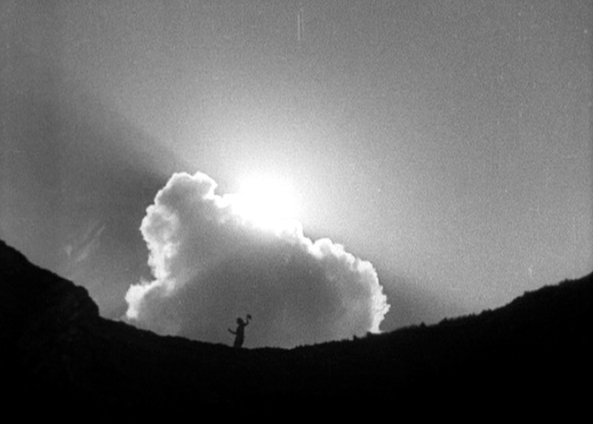
The Manxman was Hitchcock’s final “pure” silent – he was to shoot his next film Blackmail in both silent and sound versions – and the romance of the film’s story is augmented by the thought that the director was leaving his beloved silent cinema days behind him. Perhaps that is why the film is so unashamedly picturesque. The Cornish coast that doubles for the story’s Manx setting is imposing, but gorgeous. Hungarian star Anny Ondra is filmed as a tiny silhouette in front of sun-punctured cloud, skipping down vertiginous cliffs or strolling with her lover in dappled woods – and the film begins and ends with a view of fishing boats in the harbour. These images, like the film itself, combine prettiness with an air of intangible, elemental danger, and it’s this that makes The Manxman such a gripping watch.
Because this movie can be tough too: when a crisis arrives, a disconcerting cut from a body falling into water to a pen plunging into an inkwell is as violent as Hitchcock at his familiarly cold-hearted best. On this screen, and with the benefit of the BFI’s new gleaming restoration, it looked spectacular.
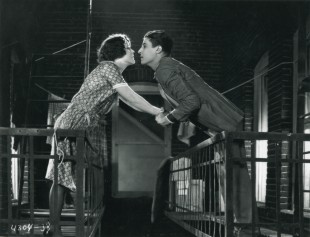
The Manxman (1929)
Ondra plays Kate, the daughter of the local pub landlord (a brilliantly grim-faced turn by Randle Ayrton). Best pals daft-but-dishy Pete, a fisherman (Carl Brisson), and Philip, an ambitious lawyer (Malcolm Keen), are each in love with Kate, but the latter is playing his cards close to his chest. In an excruciatingly twisted balcony scene, Pete coaxes Kate into an engagement, a promise to wait for him while he goes overseas to make his fortune. At first Kate doesn’t take him seriously, and it’s not clear which of the men – the one proposing or the faithful chum who is (literally) supporting him – is causing her to simper and pout. However it was extracted, it’s a rash promise to make, and as we’ll see, it will have terrible implications. Needless to say, while the cat is away, Kate strays, but what happens next is horrific, and not so easy to predict.
We have heard a few silent film scores recently (in this Hitchcock season no less) that have seemed to smooth out, or trample over the nuances of each scene. Not so here. Stephen Horne‘s rich score for The Manxman is alert to each turn of conversation, each double-meaning, furtive glance or blush. It’s a piece that is always a pleasure to listen to, but unafraid to sacrifice its melody to the drama when needed. This is crucial for The Manxman, where the plot hinges on whispered revelations, changes of heart and emotionally gruesome details – Kate’s face when her fiancé appoints his friend best man at their wedding, or she cuts her hand on their cake. The tempo slackens forebodingly when mid-speech, Phil is distracted by the sight of Pete and Kate together and the music follows the lead of Hitchcock’s stormy lighting effects, colouring each scene with shades of what is yet to happen. While the strings and piano offer folk melodies, there’s often a rumbling bass drum warning of impending disaster and even, at one crucial point, a very assertive oboe. The flute solo when Pete visits Phil towards the end of the film is particularly poignant; the ensemble together replicating the texture of nagging voices in the final scene especially cruel.
No one will argue that The Manxman is Hitchcock’s finest hour, the acting from the two male leads is often very weak, and the storyline offers only emotional trauma rather than his familiar bloody shocks. Despite those reservations, it is a sharply beautiful film and Anny Ondra’s sleepy-eyed romantic fool gives us a great Hitchcock Blonde before icy Grace Kelly was even born. The joy for us now is that Horne’s score gives The Manxman its best possible chance to shine, not just following but enhancing our pleasure in watching Hitchcock toy with this doomed love triangle.
Stephen Horne’s score for The Manxman was performed by Stephen Horne (piano/accordion/flute), Jennifer Bennett (fiddle/viola), Joby Burgess (percussion), Janey Miller (oboe/oboe d’Amore) and Ruth Wall (lever harp/wire harp).
The UK Jewish film festival features screenings across the country from 1-18 November, but we’re especially lucky in London as we will be able to see Edward Sloman’s 1925 silent classic His People, with a new improvised score. The film is set in Manhattan and film historian Tom Gunning praised it, saying that: “few silent films give so thorough a picture of Jewish home life in the American ghetto”.
This is an exciting chance to see the work of a director whose work Kevin Bownlow described as: “remarkable … with a very American smoothness of narrative”. Unfortunately, very many of Sloman’s pictures are now lost, but His People was his biggest commercial success, taking millions at the box office on its original release. It also stars Rudolph Schildkraut, one of the director’s favourite actors: “Whatever you planned with Schildkraut always came off – sometimes even better than you’d dreamed it. Rudolph Schildkraut was one of the great actors of his era,” he told Brownlow in The Parade’s Gone By.
A rare opportunity to see one of the most evocative films of the 1920s with a new, live score. The sights and smells of New York’s bustling immigrant Jewish Lower East Side have seldom been captured better than in this sparkling tale of a generational clash of cultures. The two sons of a Jewish migrant family opt for different paths in life and love, but as the story progresses, assumptions about good and bad are soon firmly challenged.
A classic morality tale with a bold, contemporary cinematic feel, accompanied by an improvised live soundtrack from Sophie Solomon, (violinist and artistic director of the Jewish Music Institute), Quentin Collins (trumpet), Ian Watson (accordion) and Grant Windsor (piano).
To win a pair of tickets to see His People at the Barbican, just send the answer to this question to silentlondontickets@gmail.com by noon on Friday 9 November. The winner will be chosen at random from the correct entries.
His People director Edward Sloman was born in Britain – but in which city?
You may feel weary at the prospect of another love-letter to the silent era. You may feel fatigued by the thought of another Snow White movie. Wait, though – nothing should deter you from seeking out this intriguing, gorgeous film. Director Pablo Berger describes his Blancanieves as a “homage to European silent cinema”, but happily, it has the confidence to wear its influences lightly and transform them into something new, magical and utterly distinctive.
Blancanieves is a sharp, heady cocktail of fairytales, Spanish iconography and silent cinema: a black-and-white film with gorgeous musical accompaniment that tells the story of Carmen, whose matador father remarries after her flamenco dancer mother dies in childbirth. But if you’re expecting a straight 1920s-set adaptation of Snow White, you will be wrongfooted right to the bittersweet end. When we finally encounter the dwarves, we find they’re bullfighters, they’re not all sweet, and there aren’t quite seven of them. A celebrity magazine takes the place of a magic mirror, the wicked stepmother indulges in S&M with her chauffeur and the young heroine’s best friend is a neckerchief-wearing rooster called Pépé.
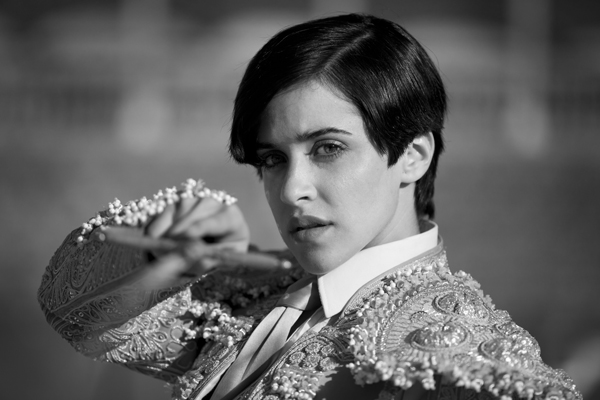
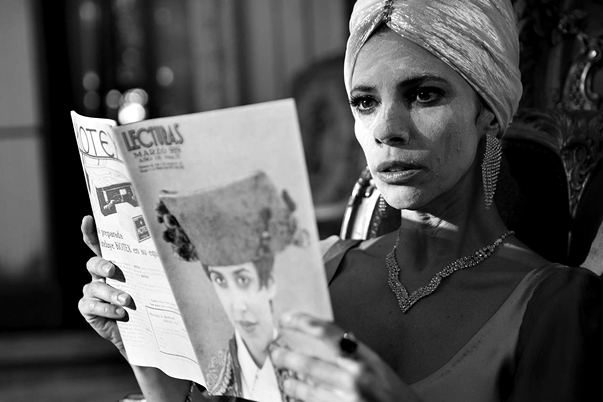
Maribel Verdú in Blancanieves (2012)
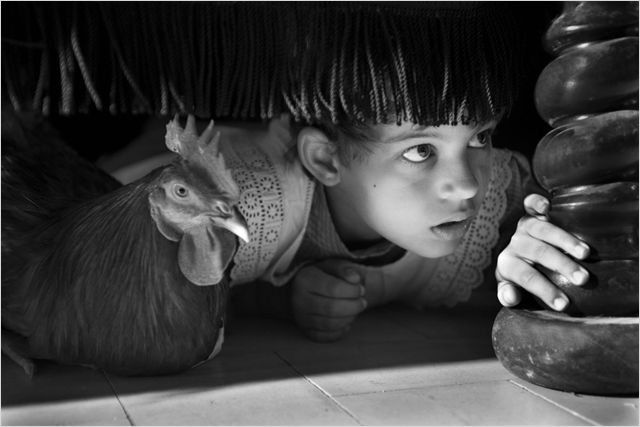
Carmen is no fairytale princess either, but in both her younger (Sofía Oria) and older (Macarena Garciá) incarnations, she is a serious, lonely young woman on a tragic path – both actresses share intense, dark eyes, which Berger makes the utmost of. Maribel Verdú turns in a wickedly funny pantomime performance as her scheming stepmother – although it often feels as if she is in a different, more histrionic, film to everyone else – and Daniel Giménez Cacho is heartbreaking as the destroyed father. Plaudits must also go to the rooster, or rather his handler. There may never have been a cuter cockerel in the cinema.
So why is Blancanieves a silent film? Perhaps it’s because in this version the girl’s parents are both wordless performers, in old-fashioned artforms. Her grandmother teaches her to dance, and her first encounter with bullfighting is via the flickering images of a praxinoscope. Berger also says he was inspired by a screening of Greed with Carl Davis’s orchestral score, and by silent film-makers including Sjöstrom, Herbier, Murnau and our own Anthony Asquith. Whatever the cause, it’s an artistic choice that pays dividends.
Sofía Oria in Blancanieves (2012)
This is no pastiche, although I will admit I could have lived without the Instagram-style rough edge to the Academy frame, a bafflingly naff decision considering the film’s visual achivements: sumptuous photography, and impressionistic editing. There’s so much here that recalls the silent era – a clatter of flashcuts, the rustic faces in the crowd, superimpositions, irises and a restrained number of intertitles – but it feels modern too, with lovely soft light washing over the interiors and nimble, intimate handheld camerawork. There’s nothing in Blancanieves’ exquisite cinematography that could not have been achieved in the 1920s, but its strength is that it never feels anachronistic or nostalgic. And those sumptuous images tell the story too, as when Carmen’s first-communion dress is plunged into a tub of black dye, or she sees Pépé’s face hovering on her dinner plate.
With such riches at his disposal, I almost wish Berger had made a more serious film than this twisted fairytale, which occasionally veers into camp. Blancanieves is a strange piece of work, but a precious one, however, so even if it lacks ambition, its integrity and beauty are to be treasured.
Blancanieves screens as part of the London film festival at the ICA on 18 October. You can book tickets here.
There are plenty of changes afoot at the BFI London film festival, with a new artistic director, more venues being used around the capital and a rejigged set of thematic categories across the programme. The Treasures strand has been beefed up, and that can only mean good news for silent film enthusiasts. So, without further preamble, here’s what you can look forward to this year:
The Manxman
This is the big one, the archive gala presentation. Hitchcock’s tragic coastal romance is one of his most beautiful films, and an accomplished, fascinating silent. Anny Ondra, Carl Brisson and Malcolm Keen take their places at the corners of an Isle of Man love triangle, and Hitchcock milks their doom-laden situation for every drop of suspense. This will of course be a presentation of the BFI’s new restoration of the film, and as he did last year with The First Born, Stephen Horne will be writing and performing a brand new score.
Rather dishearteningly described as ‘Tim Burton meets The Artist’, Pablo Berger’s modern silent plays three times during the festival, in the Cult strand. It’s a Gothic adaptation of Snow White, set in the world of bullfighting in 1920s Spain and it looks very intriguing. You can read more here and we’ll have a better idea what to expect when the reviews come in from its screenings at the San Sebastian and Toronto festivals later this month.
This is a guest post for Silent London by Jasper Sharp – scroll down for a chance to win tickets to these events.
Taking place at the Cinema Museum between 14-16 September, the UK’s premiere celebration of cutting-edge Japanese film, Zipangu Fest, returns for its third year, with a number of choice items of interest to silent film fans.
The centrepiece is the screening on Saturday evening of Kinugasa Teinosuke’s classic of the avant-garde, Crossways (Jujiro, 1928) from 35mm, with a new score performed live by Minima. One of the first Japanese films ever shown in the West, Crossways was Kinugasa’s follow up to his better-known Page of Madness (Kurutta ippeiji, 1926). Set in Tokyo’s Yoshiwara pleasure district, Crossways was described by its director as a “chambara [samurai action film] without swordfights” and was heavily influenced by German Expressionism.
This screening will be introduced by a visual presentation on the history of the film by Zipangu Fest director and author of the recent Historical Dictionary of Japan Cinema, Jasper Sharp. The evening kicks off at 7.30pm, and tickets are available from the Zipangu Fest website.
To Sleep So as to Dream (Yume miru you ni nemuritai)
Crossways will be preceded by another very rare screening for those with an interest in Japan’s early cinema, To Sleep So as to Dream (Yume miru you ni nemuritai), the 1986 debut from Kaizô Hayashi (Circus Boys, Zipang, and the ‘Yokohama Mike’ trilogy).
Two private detectives hunt for an actress trapped within a frame of an ancient ninja film in this magical double-handed homage to the movie worlds of the 1910s and 1950s. Predating Michel Hazanavicius’ recent faux-silent work The Artist by 25 years, To Sleep So as to Dream is chockfull of references to Japan’s rich cinematic heritage, featuring cameos from a host of veteran talent including the benshi (silent film narrators) Shunsui Matsui and Midori Sawato, and the baroque sets of Takeo Kimura, the Nikkatsu art designer fondly remembered for his flamboyant work with Seijun Suzuki in the 1960s. Playing for the most part without dialogue, it toys with the conventions of both the silent film and hardboiled detective genres, leading the viewer through a maze of colourful locales such as a carnival fairground and a deserted film set.
The essence of celluloid – Spirit Made Flesh
Both of these titles will be screened from film. Indeed, cinema purists might want to also note Zipangu Fest’s Sunday afternoon session, beginning at 4.30pm, Spirit Made Flesh: Works from 3 Experimental Filmmakers, featuring work by Shinkan Tamaki, Momoko Seto and Takashi Makino, all of which interrogate and explore the very essence of celluloid and analogue technologies. The screenings will be followed by a panel discussion “Is There Still a Need for Film in a Digitising World?” in what promises to be a lively and fascinating event.
Competition
Zipangu Fest is generously offering a pair of tickets to all three of these events. All you have to do is sign up to our mailing list, and tell us which of the films in our 2012 lineup interests you. On submission you will be signed up to our responsibly-managed mailing list, and three names will be selected at random for a prize. The first gets a pair of tickets to the Crossways event, the second to To Sleep so as To Dream, and the third to Spirit Made Flesh. Click here to enter.
Zipangu Fest was established in 2010 to shatter existing preconceptions about what ‘Japanese cinema’ is, and to celebrate one of the most vibrant and dynamic moving image cultures anywhere in the world. The third Zipangu Fest, hosted by the Cinema Museum in Kennington from 14-16 September, looks set to be our most ambitious and exciting yet.
The next screening from the silent film club at central London burlesque bar Volupté Lounge is not to be missed. This is not just because the film in question, a Japanese samurai adventure from 1925, is little seen, but because the method of presentation is a rare pleasure too. Orochi will be screened with live musical accompaniment in the form of a tsugaru-shamisen (a traditional Japanese stringed instrument) played by Hibiki Khikawa – and with benshi narration.
Benshi consists of a narration, lines of dialogue and an introduction to the film, delivered at the side of the screen. The benshi for this screening at the Ciné Illuminé will be delivered by actress Kyoko Morita. While early films were regularly screened with narration all over the world, benshi is a little bit special and is more or less unique to Japanese cinema: it’s a full performance and designed into the structure of the film, to enhance as well as explain, and it derives from kabuki theatre traditions. It is in part due to the popularity of benshi narrators, some of whom became very famous, that silent cinema lasted well into the 1930s in Japan, providing space for directors such as Ozu, Naruse and Mizoguchi to make so many silent masterpieces.
Orochi (The Serpent) is a film that colours its tragedy with a political subtext and it was very controversial when it was first released. Director Buntarō Futagawa was known for his innovations, but only two of his films, this one and a short, survive to this day. Orochi is about a samurai railing against an unjust world, who is played by the silent film star Tsumasaburō Bandō. The swordfighting scenes play to the star’s natural abilities: they’re fast, frenzied and a step-change from the more sedate kabuki-influenced Japanese cinema of the time. However, it’s the message rather than the mayhem, that resonates here.
The story revolves around the protagonist, Heizaburo Kuritomi, an honorable but low-class samurai who is given an emotional depth, previously unseen in Jidaigeki films, as he battles with inner conflict and the injustices of society. This is especially evident in the closing sequence of the film where the protagnoist is dragged away by his enemies after his tremendous effort to protect his love. In the essay, “Bantsuma’s ‘New Breeze'”, Midori Sawato cites the ending of Orochi as one of the most ‘heroic and heartcrushing’ images she has seen. In the past, the heroes of the films were proud samurai of the upper classes who always triumphed over their evil opponents, upholding what was truly right in the world. However, Orochi was created in response to the national and military fanaticism that was prevailing at the time.
With its now famous opening lines:
‘Not all those who wear the name of villain, are truly evil men. Not all those who are respected as noble men, are worthy of the name. Many are those who wear a false mask of benevolence to hide their treachery and the wickedness of their true selves,’
the film evoked provocative ideologies and rebellious ideas during a time where liberal performers and writers were being repressed throughout Japan. Consequently, the film was severely censored with over 20% of its content being completely cut out and several scenes having to be re-shot. When the film was finally released, the hype around its creation resulted in crowds flocking to theaters all around the country. Bantsuma’s exhilarating new sword fighting style he displayed in the film may have attracted audiences but it cannot be denied that there were many who were also deeply touched by the profound message of the film.
Doors are at 5pm for a screening at 6.30pm. Tickets are £7 in advance or £9 on the door. You’ll find the Volupté Lounge at 9 Norwich Street, EC4A 1EJ. Call 0207 831 1622 or email reservations@volupte-lounge.com to book tickets. Don’t forget to check out the Facebook page or the Twitter feed for future screenings.
The West London Trades Union Club in Acton, London W3 is a welcoming place for those who enjoy a well-kept ale and a natter, and a haven for left-leaning cinephiles too. The venue’s Saturday afternoon film club is friendly, and pleasingly broad-minded: recent seasons have taken a look at the work of film-makers ranging from Joseph Losey to Paul Robeson as well as giving club members the chance to show their own favourite titles, week by week.
Last year I spent four hugely enjoyable, chatty Saturday afternoons in west London showing silent films chosen in collaboration with members of the club. The discussions afterwards were well-informed, not to say boisterous, and one topic we often returned to was: what are you going to show next year?
So, the silent film club is back, with some much-longed for comedy, another British film, some Weimar glamour and French impressionism. Here’s what’s coming up this autumn in Acton:
Comedy double-bill: The General (1926) and The Circus (1928)
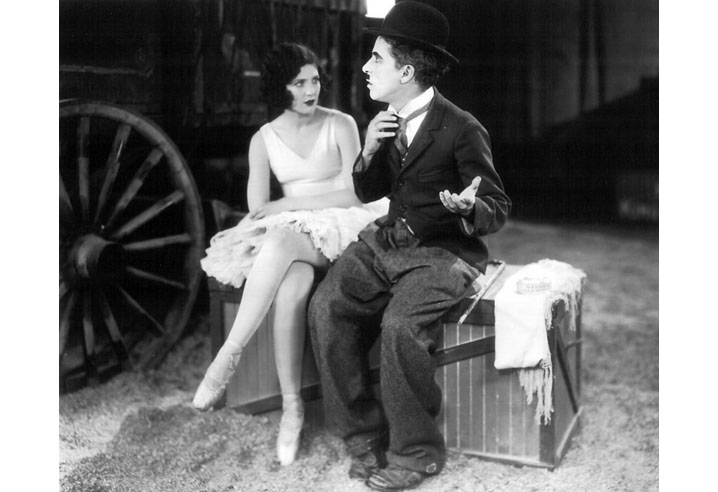
Two classic films from the two titans of silent comedy: Buster Keaton’s ingenious civil-war chase film The General and Chaplin’s poignant, hilarious The Circus. These two films offer an opportunity to marvel at the best of silent comedy, but also to compare and contrast the different styles of these two great film-makers. Buster Keaton’s deadpan mechanical inventiveness versus Chaplin’s sentimental appeal and graceful physicality – you decide. 8 September 2012, 4pm
Hindle Wakes (1927)
This adaptation of the much-loved northern melodrama was filmed by Maurice Elvey, a giant of British silent cinema, now sadly all but forgotten. Elvey was a trade unionist himself, and Hindle Wakes is the story of a clandestine romance between a factory worker and an industrialist’s son. It’s gorgeously filmed, with some fantastic “Wakes Week” sequences shot in Blackpool – and the heroine, played by Estelle Brody, is a refreshingly modern woman. Not to be missed. 20 October 2012, 4pm
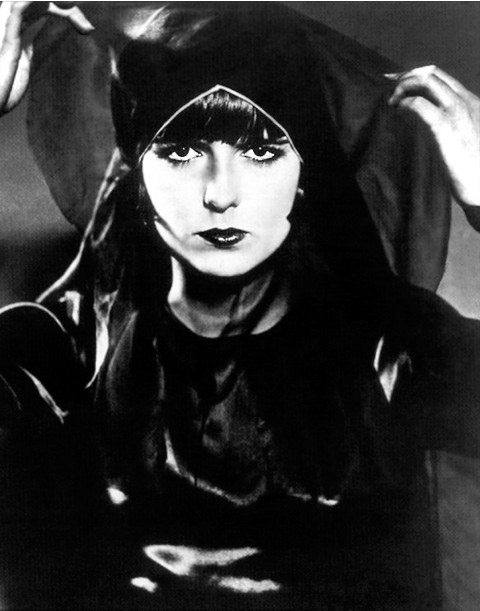
Louise Brooks in Pandora’s Box (1929)
Pandora’s Box (1929)
Another modern woman, and one of the most famous films of the silent era. Louise Brooks is truly iconic as the liberated, amoral Lulu breaking hearts in swinging Weimar Germany. Erotic, witty and ultimately tragic, Pandora’s Box is a classic that rewards repeated viewing and while coolly received at the time, has subsequently made an international star or its reckless leading lady – it now stands as the definitive portrait of a decadent society. 10 November 2012, 4pm
L’Argent (1928)
When Marcel Herbier announced his intention to adapt Zola’s L’Argent but to place it in the contemporary setting of the 1920s Paris stockmarket, many were horrified that he would take an acclaimed historical novel about ruthlessly greedy, over-reaching bankers out of its context. But Herbier’s passion, “to film at any cost, even (what a paradox) at great cost, a fierce denunciation of money”, proved as pertinent in pre-crash Europe as it does now, in the fallout of the global financial crisis. L’Argent is not just social commentary, it’s an ambitiously innovative film, a masterpiece of poetic impressionism. 15 December 2012, 4pm
Charlie Chaplin in The Circus (1928)
You don’t have to be a member of the club, or even of a trade union, to turn up and receive a warm welcome – and you will find the venue at 33 Acton High Street, London W3 6ND. It’s about five minutes walk from Acton Central train station, and on plenty of bus routes.
The Royal Borough of Kensington and Chelsea is contributing to Olympic mania by staging what it describes as “London’s most sophisticated street party”. It’s a festival really, featuring games, dance, science, debates, music, writers’ commissions and visual art installations, with a little nod to the Great Exhibition that took over Hyde Park in 1851. The Exhibition Road Show will take place on the street they’re calling “London‟s cultural and intellectual heartland”, just a short hop from the Olympic beach volleyball venue in Earl’s Court.
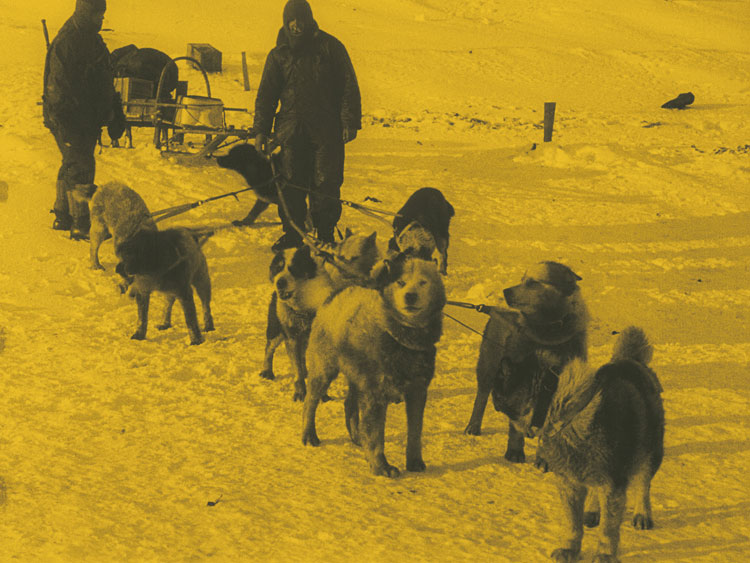
The Show runs from 28 July to 5 August, and on its opening night you can pop along to a free outdoor screening of Herbert Ponting’s elegant, unflinching Scott of the Antarctic documentary The Great White Silence – with its acclaimed live score by Simon Fisher Turner and his musicians.
Fisher Turner’s score for The Great White Silence premiered at the London Film Festival in 2010, and was described by The Guardian as “”skillfully judged, and the blend of real sounds – such as the gramophones that would have played on the ship, the Terra Nova, as well as a recording of the ship’s bell – and sparse musical scoring seemed to respect the idea of silence while making sound”.
UPDATE: This event has been rescheduled for 5 November 2012.
In November, the BFI will release a dual-format DVD/Blu-Ray edition of an intriguing double-bill: Sergei Eisenstein’s Battleship Potemkin (1925) and John Grierson’s Drifters (1929). It’s the second instalment of the BFI’s The Soviet Influence series, which has the stated aim of revealing the impact of 1920s Russian films on later British film-makers.
Drifters premiered at the Film Society on November 10, 1929, on the same bill as Battleship Potemkin, which was receiving its British premiere. Grierson had previously produced an English language version of Eisenstein’s film for its American screening and the influence of Eisenstein is clearly revealed in Drifters.
To tide us over until the home video release, we have a screening of Drifters, a film about herring fishing, and fishermen, directed by the father of the British documentary movement, John Grierson:
Like Potemkin, Drifters employs montage in an expressive manner, creating dramatic tension in the absence of any psychological characterisation. Both films also use ‘types’ (non-professional actors) instead of actors in order to create a more ‘authentic’ reality, and both films make use of extensive location shooting. Grierson, nevertheless, always stressed that he was keen to make a film with distinctively ‘British’ characteristics, which he saw as moderation and a sense of human importance. Drifters is, therefore, slower paced than Potemkin, and focuses on more mundane, less inherently dramatic events. (BFI Screenonline)
I am resisting making a “red herring” gag, but you should feel free to do so. This NFT1 screening of Drifters will be accompanied by a live score from Jason Singh, a recording of which will also be presented with the film on the disc. Singh is a “beatboxer, vocal sculptor and sound artist”, and his score combines both live and prerecorded vocals with all manner of processing and sampling. You can read more here, and watch a snippet of Singh in action below. I think you’ll agree it’s very atmospheric.
Dance and silent cinema have a natural affinity. Many of the earliest films were records of serpentine dances: mesmerising, rainbow-tinted swirls. And these days, when choreographer Matthew Bourne discusses his blockbuster productions with grand sets inspired by German Expressionism, he says: ”it’s almost like pure cinema. It’s like a silent film.”
It’s no surprise then that silent film-makers pointed their camera at the dance stage and the best ballerinas of the day. And the ballet world was fascinated by cinema too. This intriguing article by Henry K Miller relates the thwarted ambitions of Sergei Diaghilev, director of the Ballets Russes, to make a colour film of Tchaikovsky’s ballet The Sleeping Princess. A short season at the BFI this August celebrates one of the greatest ballerinas of all time, Anna Pavlova, who arranged for many of her dances to be filmed and appeared in a feature film too:
‘Next to seeing Pavlova in person, there is no better substitute than seeing her through the mechanism of the kinema.’ So noted a critic in The Guardian following the release of her American feature film, The Dumb Girl of Portici, in 1916. As a ballerina, Anna Pavlova (1881-1931) was as an inspiration; she was also an independent career woman and mega-star loved by the media and her audiences throughout the world. She was also the first major ballerina to truly investigate the medium of film during the 1910s and 1920s. Not only did she star in a Hollywood feature film, but also had a number of her solos filmed. At the end of her life, Pavlova travelled with two movie cameras to record her productions and travels. This season includes documentaries, recordings of dance and features indicating the range of ballets she performed and placing her screen career in context with contemporary recordings of dance.
The BFI will be showing that film, Lois Weber’s The Dumb Girl of Portici (1916), which features this beautiful sequence of Pavlova dancing with an “invisible” partner. The film will be screened with live piano accompaniment and an introduction by dance historian Jane Pritchard.
The Dumb Girl of Portici is an adaptation of the French opera of the same name. Watch out for the character Masaniello, who is played by Rupert Julian, the same man who directed The Phantom of the Opera in 1925, which opens with this gorgeous ballet scene:
In the BFI’s Pavlova season, there will also be a chance to see Evgeni Bauer’s The Dying Swan (1917), in which Vera Karalli, a Russian silent film actor and dancer with the Bolshoi ballet, performs the famous routine from Swan Lake. The film will be shown alongside an Omnibus documentary about Pavlova, and with a score by Joby Talbot.
Click here for more details of the BFI’s Anna Pavlova season.
Well I do enjoy posting news of silent film screenings, but 12 in a row takes some beating. Martyn Jacques, of punk-cabaret band The Tiger Lillies, will perform his own score to expressionist classic The Cabinet of Dr Caligari at the Soho Theatre this summer four days a week, three weeks on the trot. Jacques is known for his eccentric performances and his powerful falsetto voice – he will accompany himself and the film on piano and accordion.
It’s very lazy blogging to copy and paste Wikipedia. However, this is really all the introduction to Mr Jacques you’ll need I feel:
Martyn Jacques spent 7 years living above a brothel in Soho while training his characteristic falsetto voice. In his Tiger Lillies appearances, Jacques commonly sings about “sexual perversions, seedy underbellies, the gruesome, macabre and visceral”. Jacques has been described as enjoying when audience members walk out of his shows, noting “It’s always funny when people are offended by what I do … after all, I’m just an entertainer.”
So this is clearly not going to be your common-or-garden silent film screening. However, Jacques is a devotee of silent cinema and this is a very personal project for him:
‘When I was fourteen my childhood desire to play the piano was finally satisfied. My first teacher was Florence De Jong. This was forty years ago and Florence was a very old lady. She had been a famous theatre organist accompanying silent films. She was so good she made gramophone recordings. I’ve always remembered her and this is my tribute to her and the profession. Silent films were for me the golden age of film. They had a magic and enigma you don’t get with talkies. Dr Calagari is a fine example. A freak show in the fairground…
If you’re not familiar with The Cabinet of Dr Caligari, you have a treat ahead. It’s a nightmarish, audacious and superbly stylish horror film, featuring a carnival, a sinister medic, a bloodthirsty somnambulist and a string of murders, let alone some mindbending sets and unforgettable imagery. It sounds as if Jacques’ music could be the perfect fit.
The Cabinet of Dr Caligari screens at the Soho Theatre in London from 25 July to 11 August 2012. To find out more and to buy tickets, visit the Soho Theatre website.









 Silent London