This is a guest post for Silent London by Sabina Stent. You can read more of her reviews at silverembers.com
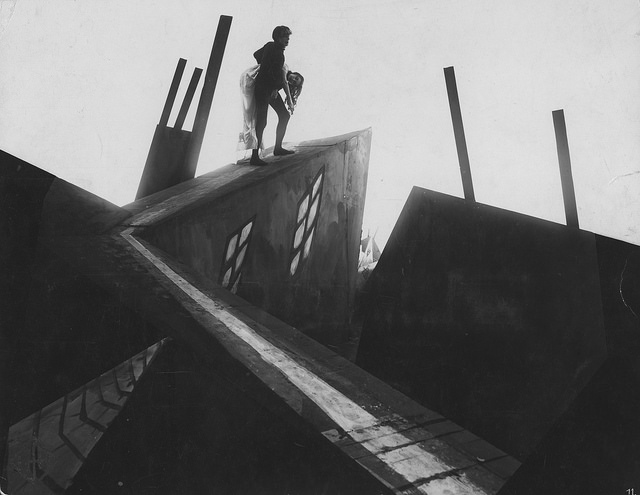
The name “Dr Caligari” may cause a shudder to those of a weaker disposition. The eponymous character of the 1920 classic Das Cabinets des Dr Caligari has long been a figure of terror – and with good reason. The film has been described not just as one of the first “horror” films, but one of the first examples of a movie generating a real psychological uneasiness in its audience. Caligari has been labelled in many different ways – German expressionism, horror story, psychological thriller and a classic of the silent era – but it was also Germany’s first postwar cinematic success, and it reflects the anguish of the people who had been through four terrible years.
Thanks to those classic expressionist touches, the sharp and angled sets, gothic imagery and expressionist undertones, Caligari was as visually frightening as its narrative. More recent audiences may have also been unsettle by the poor physical condition of prints of the film. Despite numerous attempts to finesse the quality of the film – first by the Filmmuseum München in 1980 and followed by the German Federal Film Archive (Bundesarchiv-Filmarchiv) in Koblenz (1984) and as part of the Lumière European MEDIA project in 1995 – imperfections were still evident: visible scratches, jumps and blank screens, blurred title cards, unstable images and bleached-out, near-featureless faces.
The Cabinet of Dr Caligari (1920)
Caligari’s story is told in partial flashback as Francis (Friedrich Fehér) tells the tale of the horrors that he and fiancée Jane (Lil Dagover) have endured at the hands of the Doctor. One day Francis and his friend Alan (Hans Heinrich von Twardowski) attend a local carnival where they watch the act of Dr Caligari (Werner Krauss) and the somnambulist Cesare (Conrad Veidt) “who has slept for 23 years but will tonight wake from his dream-like trance”. The only time Cesare speaks is to tell carnivalgoers their fortune. Cesare “knows the past and sees the future” and when Felix asks “how long will I live?” his serious, haunting response is: “To the break of dawn”. Yet the fear is not restricted to the carnival. At night Cesare is woken by Caligari to do his deathly bidding, and so begins a series of murders, abductions and mental unravelling.
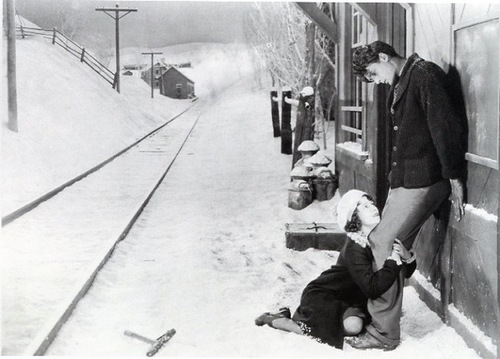
On Saturday night at Glastonbury 2014, the mud, the terrible noodles and the hangovers will all be worth it. For the first time ever, a silent film will play the country’s leading rock festival. Neil Brand and the Dodge Brothers will perform their rousing score for William’s Wellman’s rail-riding rollercoaster Beggars of Life in the Pilton Palais cinema tent, at 6pm on 28 June. We’ll be there – will you?
This is a guest post for Silent London by Kelly Robinson. If you haven’t seen The Wind, be warned that this article discusses the ending of the film.
Ethereal, delicate, poetic, otherworldly are just some of the somewhat elusive adjectives used to describe Lillian Gish since the early years of her stardom. Effusive admirer Vachel Lindsay said “Lillian Gish could be given wings and a wand if she only had directors and scenario writers who believed in fairies.” However, in reality Gish had her feet firmly on the ground. She had a career spanning eight decades, was a spokeswoman for cinema’s history with high artistic ambitions for herself and for the medium. King Vidor, who directed her in La Boheme (1926) commented: “The movies have never known a more dedicated artist than Lillian Gish.”
In his autobiography A Tree is a Tree Vidor said that Gish was incredibly assertive and had her own thoughts about the filmmaking process. Indeed, she knew a great deal about cinematography and in particular lighting. She had learned her trade during the more collaborative process of the silent era, where she had received extensive tutelage from DW Griffith in a production context where actors frequently worked without scripts and where they were encouraged to collaborate on characterisation and staging. She may only have had had a small acting role in Griffith’s Intolerance (1916), however she designed and furnished sets, helped with lighting and cutting, wrote intertitles and advertising copy.
This is a guest post for Silent London by Kelly Robinson
Cecil B DeMille is perhaps predominantly remembered for his big-budgeted biblical epics of the 1940s and 50s. For instance, the captivatingly lurid Samson and Delilah and The Ten Commandments are both still television staples. However, DeMille had a career that spanned several decades and he made more than 50 films in the silent era alone. Many of these early titles were similarly lavish and sensationalist, whilst also seeking to exploit contemporary social concerns.
Jesse L Lasky, Vice President of Famous Players-Lasky (Paramount), encouraged “modern stuff with plenty of clothes, rich sets, and action”. Savvy to the growing female audience, Lasky contracted screenwriter Jeanie Macpherson to portray women “in the sort of role that the feminists in the country are now interested in … the kind of girl that dominates … who jumps in and does a man’s work.” The result was several delightful, enormously successful, marital comedies, starting with Old Wives for New and followed by Don’t Change Your Husband. Why Change Your Wife? completes the “does what it says on the tin” trilogy. With their focus on female glamour and desire, these films offer more permutations of the “New Woman”, which Birds Eye View has explored in previous Sound & Silents strands.
Why Change Your Wife? (1920)
Considering his somewhat indomitable, patriarchal image, it is perhaps surprising to find a large number of women amongst Demille’s regular collaborators. Anne Bauchens edited his films, from Carmen (1915) all the way through to The Ten Commandments (1959), his last film. In his unpublished autobiography he wrote that it was an essential clause in every contract that she be his editor. In the Los Angeles Herald Examiner he is quoted as saying that: “‘though a gentle person, professionally she is as firm as a stone wall … We argue over virtually every picture.”
Just like last year, the British Silent Film Festival hits London town, but not in its traditional form. Very much as was the the case last year, actually, the festival proceeds in a slightly cut-down version, comprising a symposium at Kings College London on Friday 2 May 2014 and a full day of screenings at the Cinema Museum on the next day.
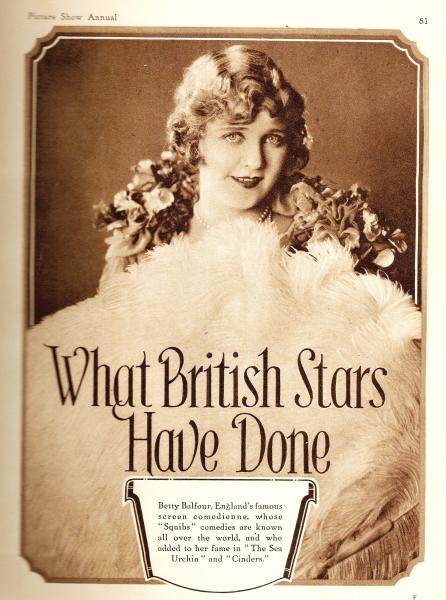
There’s a loose theme to those screenings at the Cinema Museum – runaway women or some such. I like. More to point: Betty Balfour fans – fill your boots. And if you want to submit a proposal for a paper to the symposium, you have until 31 March – so hurry up, clever clogses.
Here are the full details for each day:
The British Silent Film Festival Symposium 2014 will take place on 2nd May 2014 at King’s College, London.
Following the success of last year’s symposium, this one-day event again seeks to draw together scholars and enthusiasts of early British cinema, and operate as a forum for the presentation of new research, scholarship and archival work into film culture in Britain and its Empire before 1930. Possible areas may include but will not be confined to: Cinema in the context of wider theatrical, literary and popular culture; Empire and cinema; Cinema and the First World War.
An early evening screening of The Wonderful Story (Graham Cutts, 1922) will be included in the day’s events.
Proposals (around 200 words in length) are invited for 20 minute papers on any aspect of new research into film-making and cinema-going in Britain and its Empire before 1930. Please submit them to Lawrence.1.Napper@kcl.ac.uk by 31st March.
Put-upon ladies take on the world in this programme of rarely seen silents from the BFI National Archive.
A double bill from talented Hungarian director Geza von Bolvary, stars Britain’s favourite actress Betty Balfour as the stand-in princess in The Vagabond Queen (1929) and besotted bottle-washer in Bright Eyes (1929). Also yearning to break free, an oppressed wife hangs her hopes on a typewriter in J.M. Barrie’s The Twelve Pound Look (1920) and a programme of shorts continues the theme.
PROGRAMME
10.00-11.30 The Twelve Pound Look
11.30-12.00 Break
12.00-13.30 The Vagabond Queen
13.30-14.30 Lunch
14.30-16.00 Shorts programme
16.30-18.00 Champagner/Bright Eyes
Doors open at 09.00 for a 10.00 start.
Refreshments will be available in our licensed café/bar.
TICKETS & PRICING
£25 for the full day, £15 for a half day, £8 for one session. Sorry, no concessions.
Advance tickets may be purchased from WeGotTickets, or direct from the Museum by calling 020 7840 2200 in office hours.
I’ve just returned from the Hippodrome Festival of Silent Cinema in Bo’ness, Falkirk. It’s a fantastic event – I really enjoyed myself and only wish I could stay longer. To give you a flavour of the weekend, if you missed out this time, here’s a mini-podcast and a selection of social media updates too. Surely there is no cooler hashtag for a #silentfilm event than #hippfest?
Hats off to Alison Strauss and her team and Falkirk Community Trust to – Hippfest is a triumph.
In my screening programme Nobody Ordered Wolves, I am always seeking startling work that will match the shock of entering the unusual spaces I seek out for the events. When I happened upon Kilburn’s Tin Tabernacle – an amazing tin church built in the Victorian period, its insides later converted by sea cadets to surreally resemble a ship’s – I knew I needed a film that would produce the same “shock of the old”. As luck would have it, there remained a work about the sea that held the same surprise that entering a ship run aground in North London did for me. The film is Finis Terrae and it was produced by neglected master director Jean Epstein.
As a child, Jean Epstein (1897–1953) was, “afraid to go to the cinema”:
I had heard perfectly reasonable adults speak strongly about horrific details of the conflagration at the charity bazaar where, it seemed, a bishop was burned alive. In my premature logic, I told myself that if a bishop can die at the cinema, all the more reasonable that I would, since I was surely not so well protected by the will of God; I would cry and stamp my feet and enter into mad crises of despair when I would see my parents prepare to go to the cinema: I was never sure they’d return alive.
This piece of magical thinking maps out Epstein’s later career in the cinema. Filmmaking was a matter of mortal stakes for the Polish-French director, writer and poet, and was carried out with an evangelical, religious fervour. Despite crowning achievements and innovations in a variety of fields – encompassing silent and sound work, commercial biopics and avant-garde shorts, high cinema theory and thoroughgoing technical experimentation – Epstein’s ability to capture the life of the sea is unparalleled.
Whatever childhood qualms he held were brushed aside after making the acquaintance of the Lumière Brothers themselves. Abandoning his studies as a doctor, Epstein jumped at the chance to co-direct a film biography of Louis Pasteur. He then produced a string of studio works in the 1920s, before founding his own film company where he directed some startling narrative works, from melodrama (Coeur Fidele, 1923) to horror (The Fall of the House of Usher, 1928). In parallel, Epstein was bravely and idiosyncratically theorising the world of the cinema. Although the subjects in his writings are diverse (even choosing from the sadly limited number available in translation), his consuming passion is how to make the focus of cinema what he terms “photogénie”. While even Epstein himself admitted “you fall flat on your face trying to define photogénie”, at its core, it is the specific extra quality that objects take on when they are filmed, and the new light that this casts on them. Epstein describes this process in typically lyrical fashion:
One of cinema’s greatest power is its animism. On screen there is no still life. Objects have attitudes. Trees gesture. Mountains … signify. Each element of staging becomes a character.
For Epstein, this idea held equal weight in theory and practice: his version of The Fall of the House of Usher focuses on the desperate, haunted attempt by Roderick Usher to capture the image of his sister in a portrait that he is obsessively paints of her. This provides a ripe metaphor for Epstein’s own artistic battle, as he tries to use the aesthetic means of film to reflect the world back to the viewer. Epstein was known for his use of many formal techniques (superimpositions, slow-motion, extreme close up) but his aim was never to create an alienating surrealism, but instead cast a cinematic spell that would reveal an object as it truly is.
Yet, after producing … Usher, his most formally lavish film, he separated himself from the Paris cinema milieu and departed for remotest Brittany.
I had the feeling that it was impossible to further capture the real using the unreal. Finis Terrae was my attempt to get past this dead end.
Although Epstein had long been fascinated by the sea, it was a grotesque fascination: half disgust and half attraction. Citing Edgar Allen Poe’s story The Imp of the Perverse, he described his consuming fear of the ocean, though a fear ‘that obliges us to do what we are afraid to do.’ Epstein made five films about the sea across two decades, starting with Finis Terrae in 1929. All but one is set on the Breton coast; like the rhythms of the tide that he placed so centrally in these films, his mind and travel plans kept pulling him back to the region.
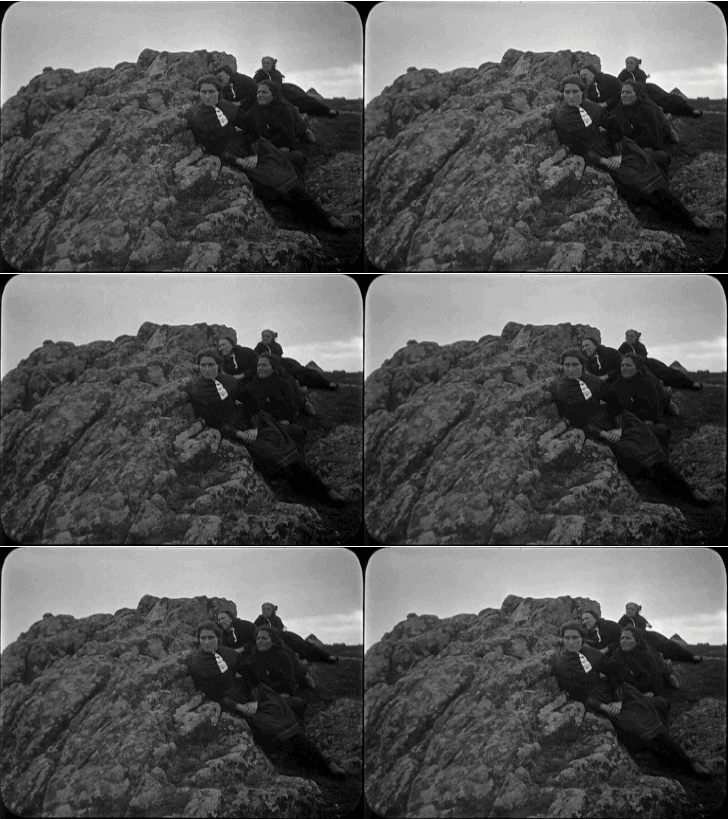
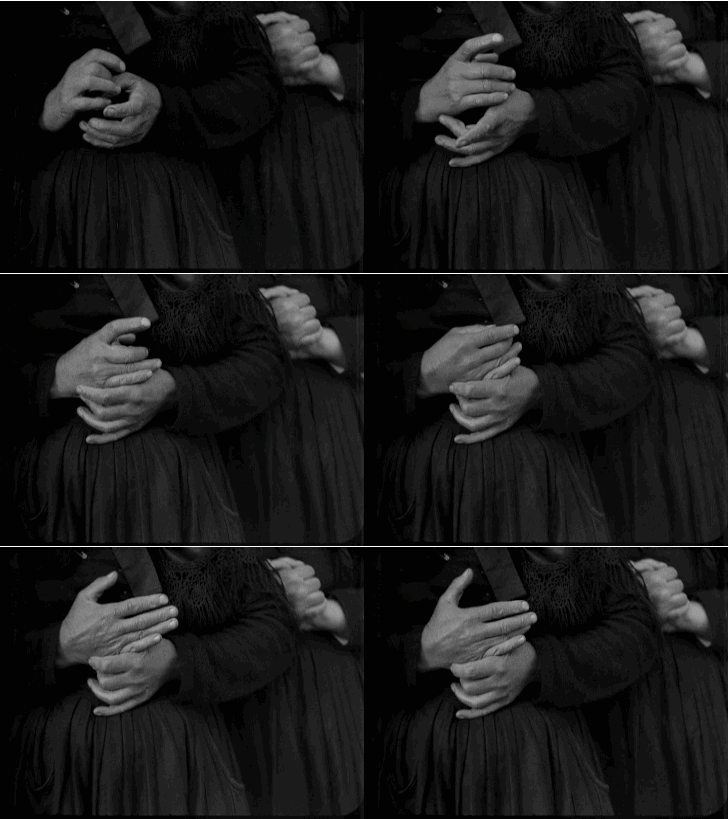
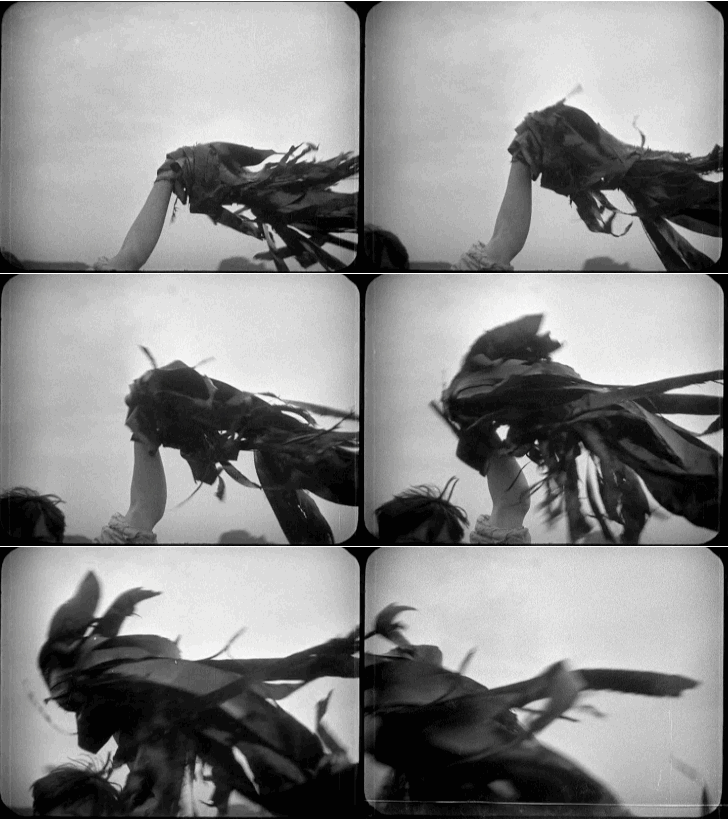
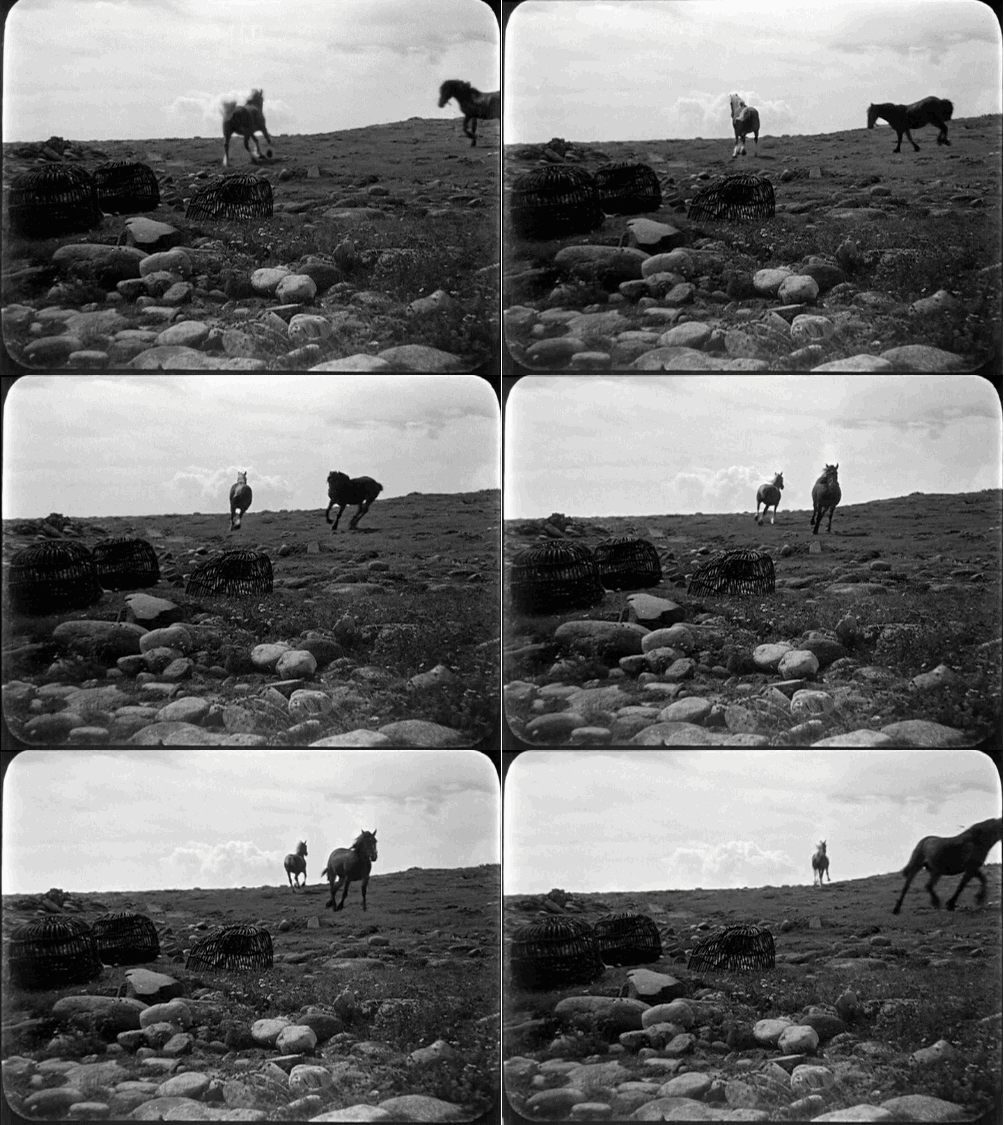
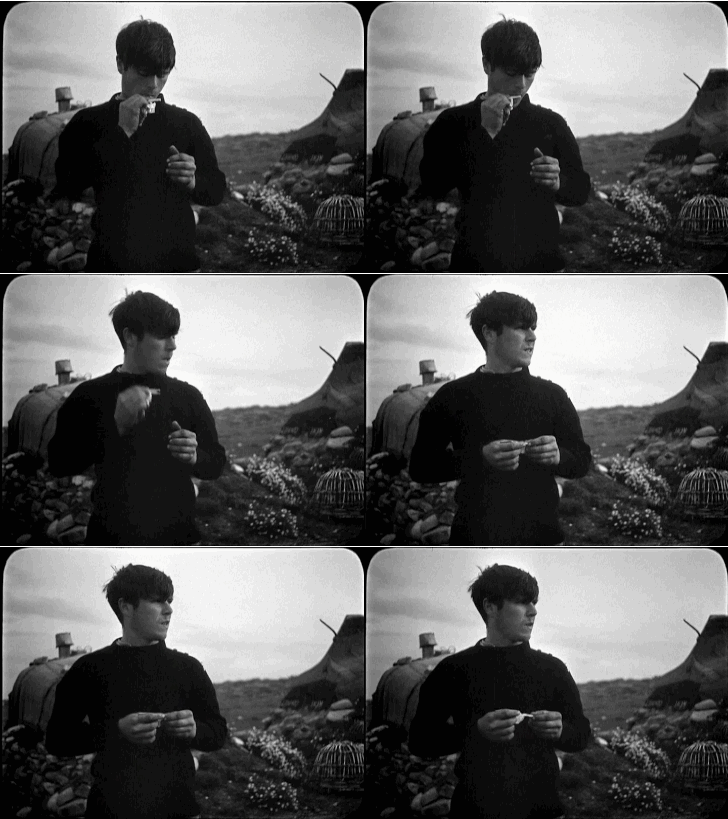
In Finis Terrae, the untouched quality of the Breton coastline allowed him to showcase seemingly simple elements to spectacular degree: the folding of a pair of arms, the fluttering of ribbons in a girl’s hair and, most persistently, the moods of the sea against the unchanging rocks. The space of Brittany gave him licence to completely renew his aesthetics, finding in the coastline the kind of natural photogénie that he had struggle to produce through artificial means in his earlier work:
Leaving the Ouessant archipelago, I felt I was taking with me not a film, but a fact and once this fact had been transported to Paris, something of the material and spiritual reality of the island life would henceforth be missing. An occult business.
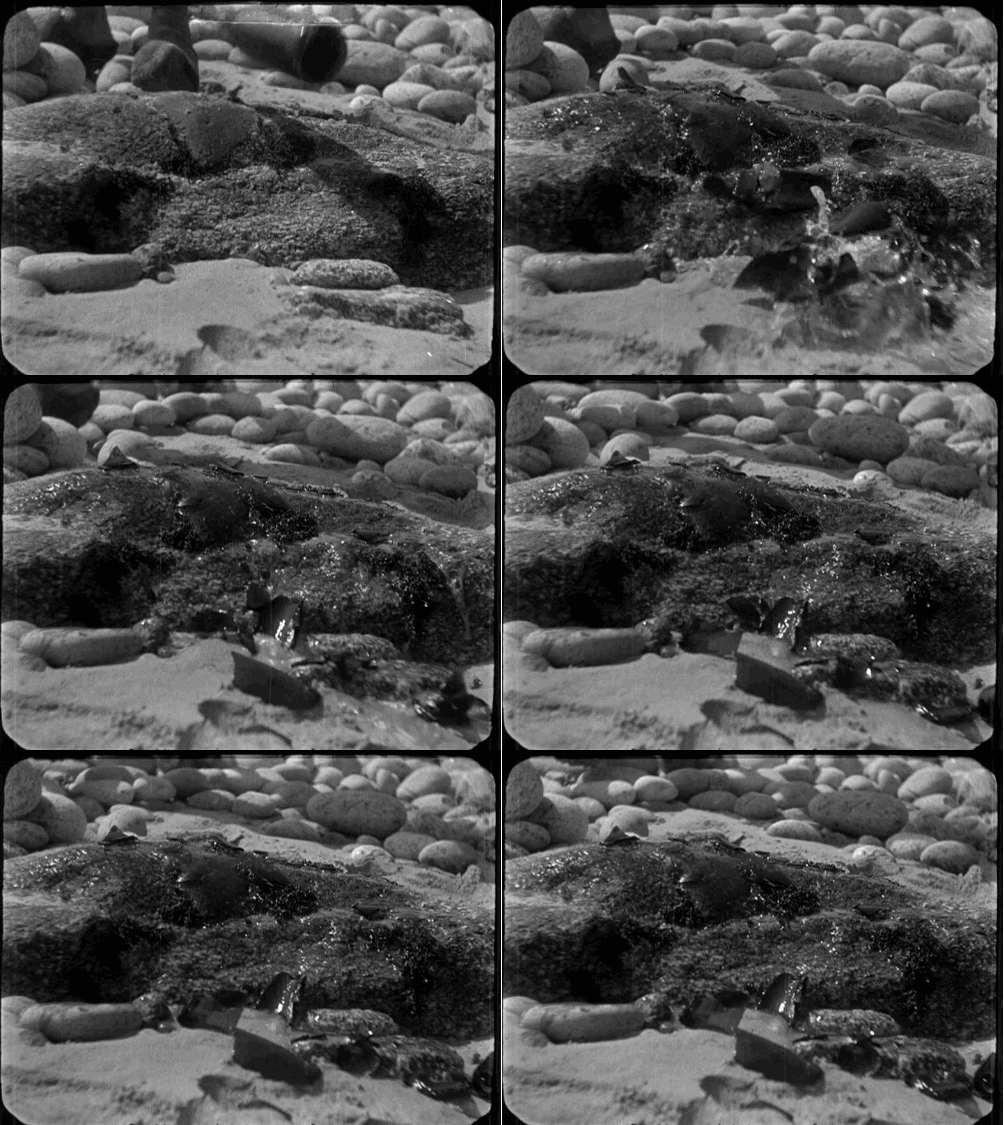
Epstein believed that cinema held the unique power to show us the fundamental objective truth that is usually shattered by subjectivity; he delighted in the French term for a camera lens, le objectif. Appropriately then, Finis Terrae’s plot was “torn from the headlines”, though markedly more sedate headlines than the cinema usually draws on. In the film, a seaweed gatherer on a remote coastal island accidentally cuts himself on a bottle, and the wound quickly becomes infected. Initially he is derided by the other seamen for his malingering, but soon they realise the mortal stakes and attempt the difficult sea crossing to the mainland.
As Epstein hoped, his mode of framing life in Ouessant acts as an “eye-freshener”: one comes away from the film brimming with cinema’s potential. Although Epstein exposes much that is exotic and novel in his docudrama, the film never patronises the Breton lifestyle. One thinks of Murnau and Flaherty’s Tabu: A Tale of the South Seas(1931), which, despite its beauty and “documentary” approach, has an outsider’s touch throughout, seeking to fillet the lives of the islanders for their “otherness”. Whether or not one can claim objectivity, Epstein was not simply another Paris intellectual seeking authenticity in the “naïve” life of the natives. Brittany represents a space of the uncanny for Epstein, where the smallest mistake can have life-threatening consequences:
In this place and people is resumed the mystery of men dedicated to land that is but rock, to sea that is but foam, to a hard and perilous trade suffering a meagre self-sufficiency.
Instead of “the other”, Epstein shows life in Brittany as a legitimate alternative to the alienation of modern life. He also had other reasons for seeking alternate lifestyles: as was uncovered when his full archives were made available, Epstein was gay and, under a pseudonym had written a pioneering treatise on Masculine Homosexual Ethics. With this information, the companionship between the younger seaweed gatherers takes on a new cast. Brittany at that time was heavily dominated by the Catholic church, but fishermen – unable to attend mass on a regular basis – were relatively exempt from their sway. In the male-only world of the archipelagos, a beautiful and separate world could flourish. The narrative trajectory of Finis Terrae can easily be read as a parable of two male lovers who come to realise their value to each other.
Epstein’s other works of the sea are equally compelling, but it is with this first work that he made his definitive statement about the power of the ocean. Coastal life is constantly in flux; for a filmmaker who believed that “still life is an abominable on screen … a sin against the very nature of cinema”, it allowed him the perfect location to capture the ecstatic essence of film.
This article is heavily indebted to Jean Epstein: Critical Essays and New Translations (Amsterdam University Press), which is available as a Creative Commons licenced free e-book here. Many thanks also to Bathysphere Productions for generously sharing a viewing copy of James June Schneider’s beautiful documentary Jean Epstein: Young Oceans of Cinema, which will be included in the upcoming (and much needed) box set of Jean Epstein’s works from Potemkine, due to be released in May 2014 to coincide with a retrospective of his works at the Cinemateque Française.
Scotland’s only silent film festival returns to the glorious Hippodrome cinema in Bo’ness with another impressively wide-ranging programme. There are some real treasures to be unearthed here: rare screenings of little-seen but highly valued films, and innovative ways to share the magic of silent cinema with younger audiences. Gala screenings include the Dodge Brothers‘ Scottish debut, accompanying the Hollywood classic Beggars of Life, starring Louise Brooks; Jacques Feyder’s heartstopping Visages d’Enfants closes the festival, with music from Stephen Horne; Frank Borzage’s wartime weepy Lucky Star plays on the Friday night, with Neil Brand on the piano; and Jane Gardner will perform a specially commissioned new score for Ozu’s gangster drama Dragnet Girl. German group The Aljoscha Zimmermann Ensemble will provide a score for Murnau’s timeless The Last Laugh; Jason Singh will create his magical vocal soundscapes for Grierson’s landmark documentary Drifters, live at the Hippodrome.
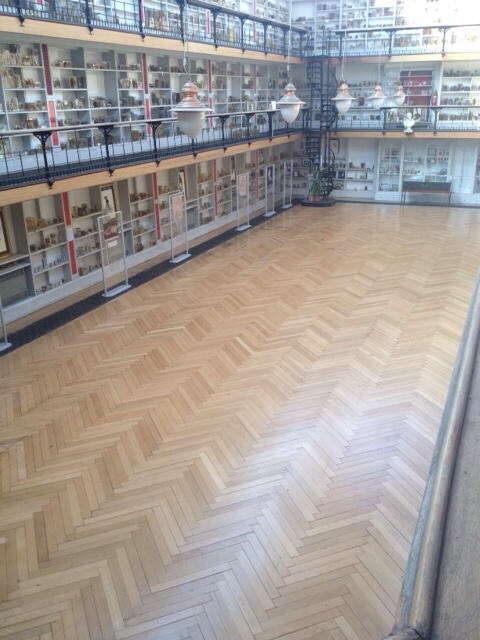
A drink, a snack and a temptingly toothsome silent movie? Perhaps with some live music too? And all in one of the coolest venues in London? I am super-excited to announce that Barts Pathology Museum (as promised, here on these very pages) is hosting a short silent film season in January. The films have been chosen because we think they are fabulous, and because they also have some relation to the research and study that goes on at Barts.
First, a recap. If you don’t know Barts Pathology Museum, that is because it is one of the capital’s best-kept secrets – a stunning Grade II listed 19th-century hall where quirky medical specimens are displayed. The hall has a glass roof, because once upon a time medical students would dissect cadavers there. You can read more about the history of the museum and its many fascinating artefacts on the museum blog, here. Entry to the museum is by appointment only, but the doors are open on selected evenings for a series of lectures and events on subjects ranging from film noir to taxidermy to dentistry. Your humble scribe was there last November, giving an illustrated talk on silent cinema.
The January screenings are supported by Hendrick’s Gin, and entry to each film includes a G&T and some delicious, freshly popped popcorn as well as the film. I will be there to introduce the screenings and the the first movie in the series features live musical accompaniment, too. Here’s what’s coming up in the new year.
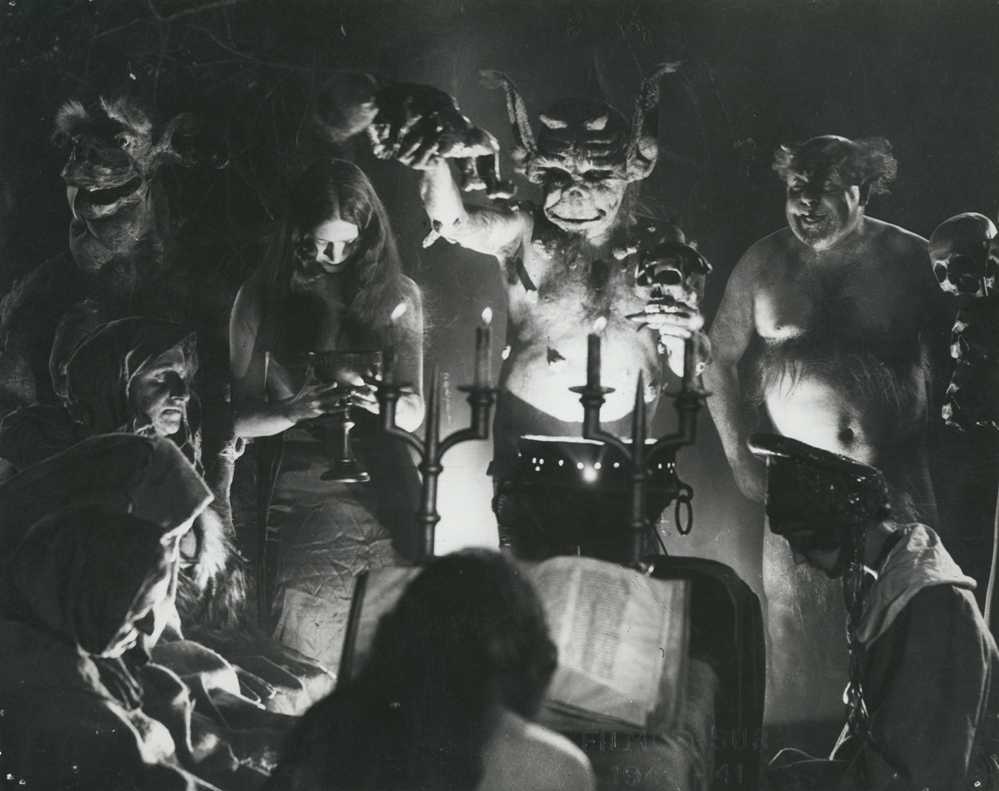
Next weekend is spookier than most at BFI Southbank – which is saying something, since the BFI Gothic season rolled into town. The Hauntology weekend takes over, with a screening of the majorly creepy drama-documentary Häxan on Friday 13 December, and on Saturday night, a collection of gothic treasures soundtracked by a group of seriously talented musicians – Sarah Angliss and the Spacedog ensemble. Here’s a little more about what you can expect from the shows – scroll down for a chance to win tickets to see Häxan.
The ensemble was put together by Sarah Angliss, a composer, automatist and theremin player, whose singularly unsettling music was recently heard at the National Theatre as a tense underscore to Lucy Prebble’s The Effect. Angliss’ music for Gothic film will be performed by her band: recent Ghost Box guests Spacedog. They’ll be joined byExotic Pylon’s Time Attendant (Paul Snowdon) who will be supplying a new work on simmering, tabletop electronics. There will also be some extemporisations from Bela Emerson, a soloist who works with cello and electronics. Fellow Ghost Box associate Jon Brooks, composer of the haunting Music for Thomas Carnacki (2011), will also be creating a studio piece for the event.
Sourced by Bryony Dixon, the BFI’s curator of silent film, many of the short films inspiring these musicians were made in the opening years of the twentieth century. The Legende du fantôme (1908) and early split screen experiment Skulls Take Over (1901) are on the bill, along with the silent cubist masterpiece The Fall of the House of Usher (US version, 1928) and more.
“There is undoubtedly something uncanny about the earliest of these films”, said Angliss. “Many are stencil-coloured in vibrant hues, adding to that sense of the familiar taking on a strange cast. They seem to demand music that suggests rather than points up the horror, a motif that discomforts as it soothes, or a sweet sound that is somehow sickly, as though heard in a fever.”
Brooks added “the visuals suggest aural textures reminiscent of painted glass, to strange derivatives of stringed instruments. Hopefully I’ve conjured some playfulness amongst the macabre too.”
Adding to the strangeness are Angliss’ automata, who will also be performing live. These include a polyphonic, robotic carillon (bell playing machine) and Hugo, the roboticised head of a ventriloquist’s dummy who is of the same vintage as some of the films. The event will be directed by Emma Kilbey. After the BFI Southbank performance there are plans to take Vault to Gothic revivalist buildings around the UK.
Sarah Angliss is grateful to PRS for Music for financially supporting her new work. Vault: Music for Silent Gothic Treasures is part of the BFI’s Hauntology Weekend, in association with The Wire magazine (Fri 13 Dec – Sat 14 Dec)
To book tickets for Vault: Music for Silent Gothic Treasures, click here http://bit.ly/bfivault. The screening takes places a 8:45pm NTF1, BFI Southbank, Saturday 14 December.
Häxan (1922)
On the Friday night, the Häxan screening will also be accompanied by live music: a specially commissioned score from Demdike Stare.
This 1922 documentary-horror masterpiece explores the effect of superstition on the collective medieval consciousness. Presented for the first time with a BFI-commissioned score by electronic artists Demdike Stare. The duo base their music on samples from old recordings, twisted into new sonic shapes. The blend of Demdike Stare’s resurrected aural phantoms and Christensen’s Satanic horror promises to be a singularly modern yet arcane live experience.
Häxan is a thrilling movie, and an amazing thing to experience on the big screen – an effect that will surely only be enhanced by those “aural phantoms”.
To book tickets for Häxan with Demdike Stare, in association with Wire Magazine, click here. The screening takes place at 7pm in NTF1, BFI Southbank, Friday 13 December. Tickets cost £15 full price – concessions are available.
Win! Win! Win!
To win a pair of tickets to Häxan with Demdike Stare, email the correct answer to this question to silentlondontickets@gmail.com with “Haxan” in the subject line by noon on Wednesday 11 December 2013.
Which American writer provided the voiceover for Häxan’s jazzy 1968 re-release?
The winner will be chosen at random and notified by email. Good luck!
Followers of Silent London intending to attend the London Symphony Orchestra’s live accompaniment to Michel Hazanavicius’ 2012 The Artist, in December this year, might care to know about Royal Albert Hall screenings of “the genuine article” in the 1920s.
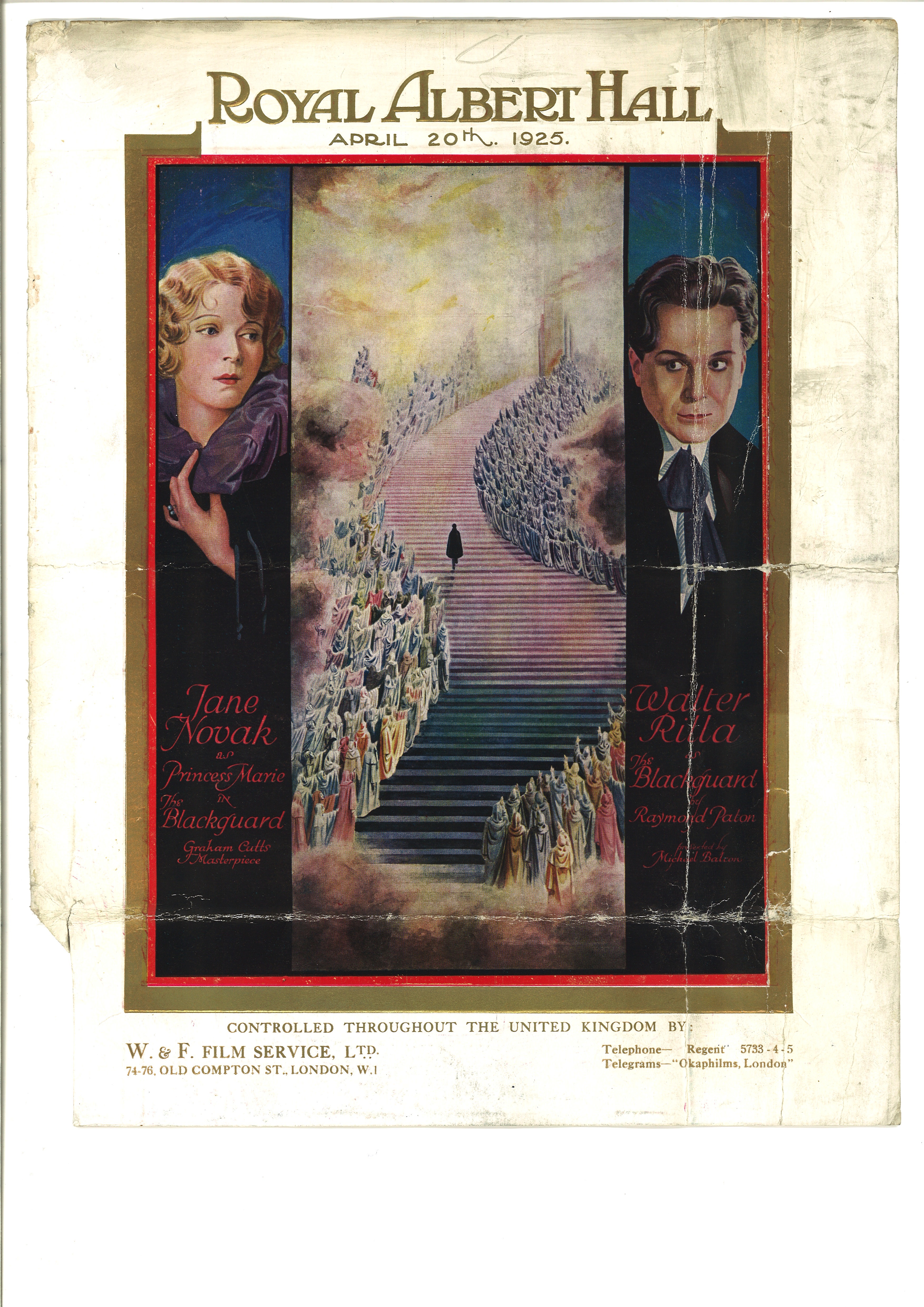
The end of the first world war was marked with a variety event, including films, at the hall. Subsequent presentations, running from October to December 1919, celebrated Allenby in Palestine and Lawrence in Arabia. Antarctic and Everest expeditions were commemorated in benefit screenings. In 1926, the RAF band contributed to a programme including a lecture by the aviator Alan Cobham, the film recording his arrival back in London after his flight to Australia, and an address from the prime minister of Australia: of course, the Imperial Institute was a close neighbour, perhaps influencing the selection of items recorded in the archive. European films screened included Murnau’s 1926 Faust and Turzhansky’s 1926 adaptation of Jules Verne’s Michel Strogoff. A lavish souvenir pamphlet (above) was published to accompany the trade show of Graham Cutts’ 1925 TheBlackguard, an adaptation of Raymond Paton’s novel, featuring a romance between a Russian princess and a violinist. A special attraction at the event was a dance performed by Serge Morosov “of the Imperial Russian School of Ballet”.
Faust (1926)
The novelist Naomi Mitchison, sister of JBS Haldane (a founding member of the Film Society) recalled in her memoirs the long run of Fritz Lang’s Die Nibelungen in the summer of 1924. The London Symphony Orchestra performed a Wagnerian prelude and a sub-Wagnerian score for the film (commented upon by Picturegoer critics as derivative), composed by G Huppertz.
The Sea Hawk (1924)
In addition to orchestral accompaniments, programmes give details of songs and soloists. Furthermore, for Frank Lloyd’s swashbuckler The Sea Hawk (1924), the prow of a ship was installed in front of the screen, while for Southern Love (Herbert Wilcox, 1924), balcony decorations and special effects were provided.
Indeed, a brief survey of Royal Albert Hall programmes confirms a more general observation to be drawn from the trade and general press: in the 1920s, performance and staging manifestly contributed much to the cinematic experience in London and to British audiences’ enjoyment of films, even outside regular cinema venues.
Amy Sergeant
The Artist screens at the Royal Albert Hall on 30 & 31 December 2013, with the London Symphony Orchestra and composer-pianist Ludovic Bource, conducted by Ernst Van Tiel. There is no official dress code for this event but anyone who wishes is encouraged to celebrate the elegance and style of Hollywood’s Golden Age of Glamour, and not just for the New Year’s Eve performances.
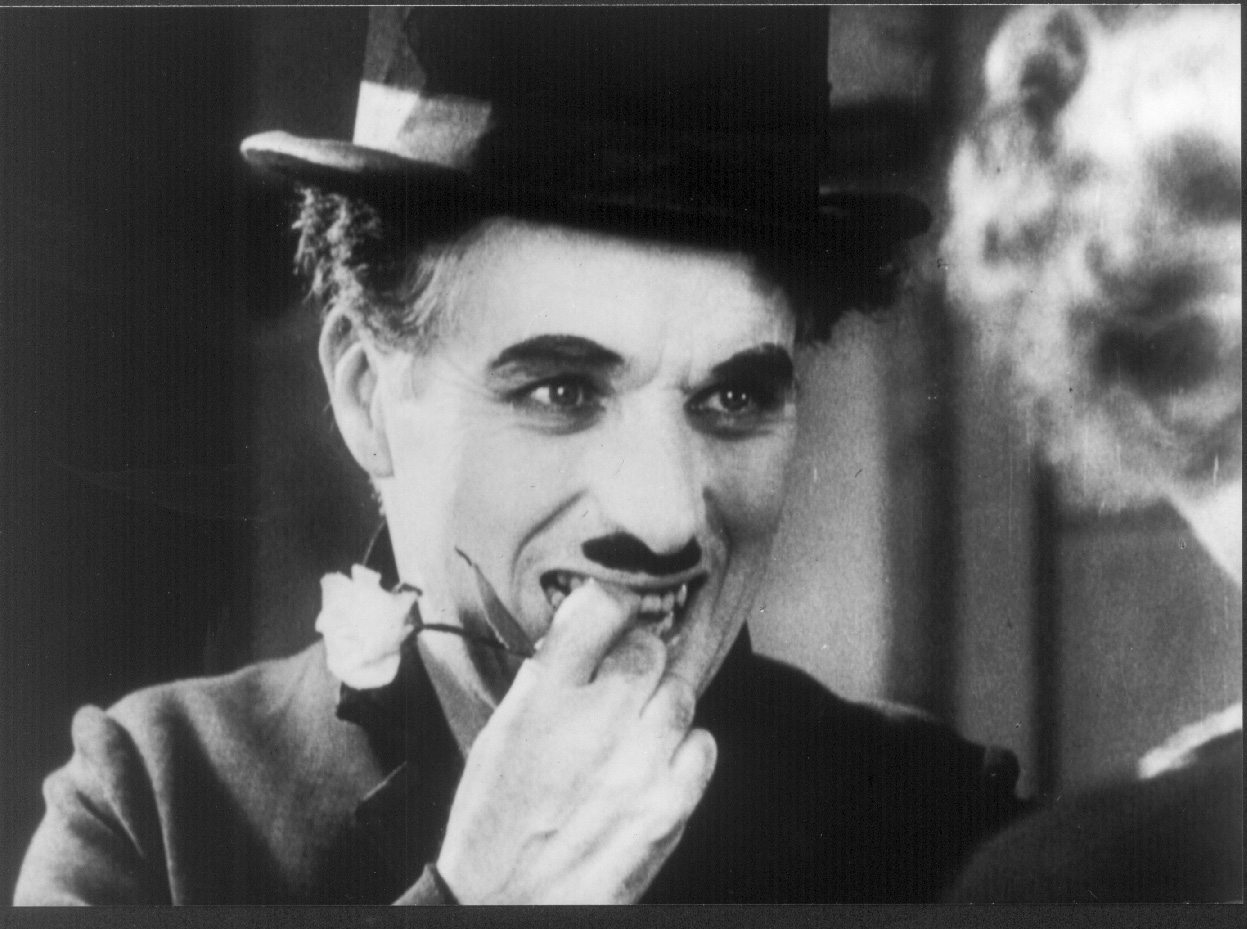
The funniest weekend of the year is back: Bristol’s own rib-tickling Slapstick Festival. This year marks not only the 10th year of the festival but, as you all very well know, the 100th anniversary of Chaplin’s iconic Little Tramp. The Slapstick Festival will be celebrating the tramp in fine style with an orchestral gala screening of the the wonderful City Lights (1931), recently voted into the Top 10 Silent Movies by the Guardian and Observer. The screening will be introduced by comedian Omid Djalili and music will be provided by the 39-piece Bristol Ensemble.
There’s a full weekend of funny films beyond the Chaplin too. Check the listings below for details. Notable screenings inlcude the Societ laugh-riot The Extraordinary Adventures of Mister West in the Land of the Bolsheviks (1924), the rarely shown Raymond Grifffith romp Hands Up! (1926) and a chance to see Constance Talmadge in Her Sister From Paris (1925). And don’t miss Harold’s Lloyd’s classic Safety Last! (1923) with Radio 4’s Colin Sell on the piano.
Max Davidson
More treasures are to be found in the talks and lecture events: David Robinson on the Tramp, Kevin Brownlow on Chaplin and the Great War, all three Goodies on Buster Keaton and Graeme Garden delving into the work of German Jewish comic Max Davidson.
There will be some modern work featured too: from Wallace & Gromit (naturally) to The Meaning of Life and Withnail & I. Yes, Tim Vine will be offering a tribute to Benny Hill too!
The 10th Slapstick Festival will be held at various venues across Bristol from 24-26 January 2014. Visit the website for more details, or read on for full listings and ticket information.
This is a guest post for Silent London by Neil Brand
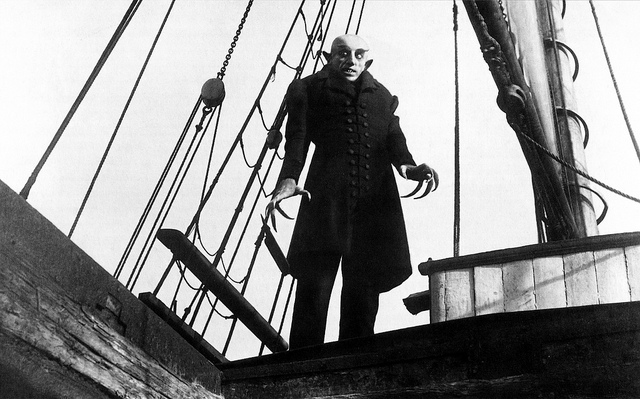
In 1925, Bram Stoker’s widow, Florence, won a plagiarism case against film producer Albin Grau over the latter’s 1922 chiller, Nosferatu. To be frank, Grau didn’t have a leg to stand on – he had applied for a licence to film Dracula, been refused by Florence and gone ahead with filming anyway, changing a few character names. This hardly distanced his film from Stoker’s Dracula, whose plot he had lifted lock, stock and barrel for Nosferatu and Florence successfully sued to get his company closed down and every copy of the film destroyed. Thanks to one vital copy, lodged at the time in the US where Stoker’s novel was already out of copyright, we still have the movie and every print now available descends from that one saved positive.
But I’m beginning to think that a skilful lawyer could actually have argued Florence down. Over a lifetime of playing this masterpiece I have noticed that in two vital areas scriptwriter Henrik Galeen and director FW Murnau actually created a new monster that Stoker would barely have recognised – firstly Van Helsing is a small-part character who is in no way responsible for Dracula’s destruction; secondly Nosferatu, minus Dracula’s brides, only has eyes for only one woman – Mina Harker. And it’s beauty that kills the beast.
Nosferatu (1922)
I’ll go further – Nosferatu/Orlok is not Dracula, but director FW Murnau himself – with the result that today’s vampires flitting through Twilight and The Diaries are the children, not of Stoker’s night, but of Galeen and Murnau’s. And the music they make is very different.
The magnificent central section of the film depicts the vampire heading towards Whitby/Wisborg on board ship, disposing of the crew one by one like some hideous onboard buffet while Harker/Hutter plods back home across the mountains. Waiting on the beach is Hutter’s wife, the strange, other-worldly Mina, staring out to sea and during her sleepwalking catatonia delivering the devastating line: ‘My lover is coming!’
Nosferatu (1922)
But which lover, the Count or the Husband? Let’s look at what has brought them all to this point – Orlok has seen Mina’s picture and is about to gorge himself on Hutter for the second night running. Mina, staying with friends who have rescued her from a perilous walltop sleepwalk, suddenly sits up in bed with a cry – across a single shot-cut (but miles of the Carpathian Mountains) Orlok freezes in mid-bite and turns to face the direction of her ‘voice’ – off camera right. In Witold, she slumps. In Transylvania, he moves away, his meal untouched. The next time we see him moving he is heading away from the castle and towards Mina, bearing his coffins. From then on it is as if she is already under his power – and, I would argue, he is under hers.
Nosferatu (1922)
It is impossible to play Orlok’s arrival in Whitby/Wisborg as anything but heroic – the beautiful shot of the ship sailing itself to the dock; the scuttling figure with the coffin stopping outside Mina’s house for a brief smile and his first head-and-shoulder close-up in the movie; then the final river trip, standing proudly in a supernaturally powered rowboat, which deposits him at his new property where he enters by melting through the locked doors. No wonder Herzog chose Wagner for that sequence in his Nosferatu 70 years later. Orlok is a conqueror claiming his kingdom, from which he will stare balefully at Mina’s window while his rats destroy the city. And we are now, however unwillingly, rooting for him.
Murnau, by all accounts promiscuously gay and self-conscious about his appearance, obviously loved his vampire with the outsider’s love of a soulmate gifted with powers he can only dream of. Every flesh-and-blood male character in the film is weak or deluded; Hutter himself can only sit feebly by while Mina takes the strong course in dealing with both infection and infector. But as she makes up her mind we see Orlok imprisoned in his palace imploring her attention with a look that can only be described as heart-breaking. When she acquiesces, he comes to the feast like Don Juan triumphant, the shadow of his bony fingers enclosing, not her neck but her heart, which he squeezes as she writhes beneath him. Herzog would provide the perfect closure for their nuptials, Orlok looking up from her throat at the dawning light, only to have her draw his head gently back to her neck with the gentlest of arm-movements.
FW Murnau
Audiences new to the film always laugh at the opening and the speeded-up actions, but it is a wonderful tonic to hear the silence descend as Murnau and his vampire exert their power. I have never been able to play triumph at the Nosferatu’s demise because we have been taught by Murnau to admire and pity him as well as fear him, and in the last thirty years Herzog, Coppola and Joss Whedon have all followed Murnau’s lead. Genius that he was, Murnau made the connection half a century before the rest of us did – we know Orlok because he is us.
Every silent film is an invitation to the musician to tell their version of the story and, yes, “Nosferatu, the Love Story” is a spin, one of many that could be applied to this great film. But here’s my point: treating it musically as a horrific love story opens vistas of new insight on this masterpiece that are vastly greater and more rewarding than the simple terrors of the night. And when the tension between horror, lust and desire is working, one can almost hear the new blood coursing through the vampire’s veins …
You may notice the widget on the righthand side of this page, ticking down the days until this blog dispatches itself to Italy, to report from Le Giornate del Cinema Muto in Pordenone. We have many reasons to get excited about the arrival of the world’s most prestigious silent film festival. There’s the debut of the lost-and-found Orson Welles short Too Much Johnson, the premiere of a new restoration of The Freshman with a score by Carl Davis, Italy’s first glimpse of Blancanieves, an Anny Ondra retrospective, a programme of Swedish silents, more treasures from the Corrick collection, Ukrainian classics, Mexican rarities, a strand devoted to Gerhard Lamprecht and much more.
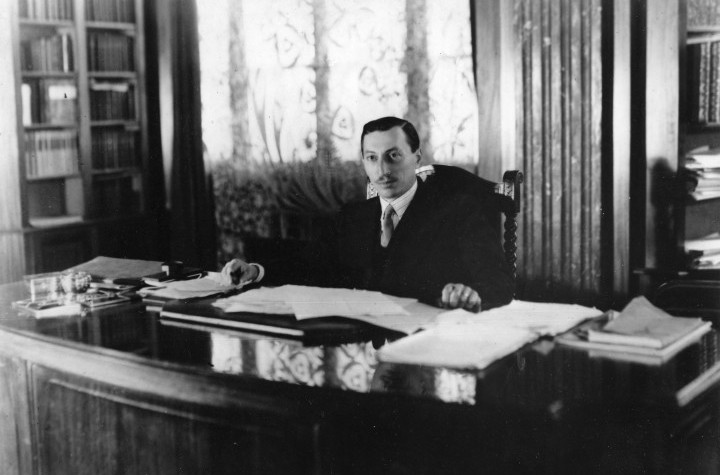
I had a smile on my face this morning, however, when I learned that a documentary co-directed by none other than a fellow classic/silent film blogger – the marvellous David Cairns of Shadowplay – will be showing at the Giornate. Natan takes a look at the controversial life of French film-maker Bernard Natan, and the various scandalous assaults on his name. Natan was a Jewish French-Romanian film produced, who was at one time the head of the Pathé studio. Financial troubles, antisemitism and allegations that he was a pornographer degraded his reputation in the industry. His story ends on an even darker note – he died in 1942, in Auschwitz.
Bernard Natan used to sign his films — literally, his producer credit was an animated signature inscribing itself on the screen. And then, as Natan’s reputation was destroyed and his company taken away from him, a lot of his films were shorn of their signatures. When the movies got re-released, it was considered embarrassing for their executive producer’s name to be seen. And during the Occupation, many Jewish filmmakers were quietly erased from title sequences.
Since then, Natan’s name has been restored to some of his films, and a few historians have attempted to restore his reputation. That’s the effort Paul and I hope to contribute to with our film, which should tell a dramatic and tragic story, shine a light upon some neglected corners of cinema history — but also help give Bernard Natan his good name back ~
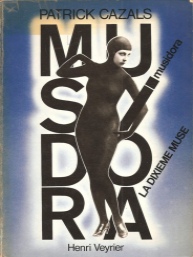
Musidora: la dixieme muse
The film has already shown at several festivals, including Edinburgh and Telluride – and it plays at Cambridge film festival this week. The Pordenone festival will also be screening a documentary about another French cinema legend: Musidora: la Dixieme Muse. The documentary, by writer and filmmaker Patrick Cazals, promises to trace the actress’s career right form the early days of Vampires and Judex, to her work in later life as a producer and director as well as at Henri Langlois’ Cinematheque, positioning her as a cornerstone of French cinema as much as a legend.
So that’s a nicely themed double-bill at Pordenone for us to savour, but French cinema pioneers are in vogue right now – you can’t have failed to miss the successful Kickstarter campaign for the Jodie Foster-narrated Alice Guy-Blaché documentary. It has been a massive campaign, conducted enthusiastically and cannily across social media. The line they have been using is that Guy-Blaché’s name is forgotten now because she has been written out of history by her male colleagues and successors. That may be true for many film fans, but just like Musidora, her name is already well-known in silent cinema circles – if Be Natural is to redeem her reputation, it must spread her fame to a far wider audience. While certainly impressive, Be Natural‘s 3,840 Kickstarter backers represent a drop in the ocean. The movie looks like it could be great though – and it’s the popularity of the documentary, rather than the worthiness of its intentions, that will return Guy-Blaché’s name to global renown.
Catch Natan at Cambridge if you can, or if you have already seen it or Musidora, do let me know your thoughts below. There’s a Variety review here. You can also like Natan on Facebook. I have to say, I am looking forward to all three of these films.
PS: I think Lady Gaga, for one, has been mugging up on her early French film – spot the Méliès refs and Musidora costumes in her latest video, Applause
It’s an unbelievable discovery, “stranger than fiction” as Paolo Cherchi Usai of the George Eastman House told me. Orson Welles’s 1938 silent movie Too Much Johnson, believed to be lost, destroyed in a fire, has finally turned up. Not only that, the film, which is admittedly just a work print, was discovered in a warehouse in Pordenone, home of the prestigious Giornate del Cinema Muto.
Rejoice, if you are going to Pordenone this year, because Too Much Johnson will have its premiere at the festival, on 9 October 2013, before screening at the George Eastman House (where the film was restored) in the US the following week. Cast your eyes on this lovely video preview of the film – and then click here to read a short piece I wrote for the Guardian about the film and its rediscovery. In it, Cherchi Usai tells me that the Welles film this lost-and-found work reminds him most of … is none other than Citizan Kane.
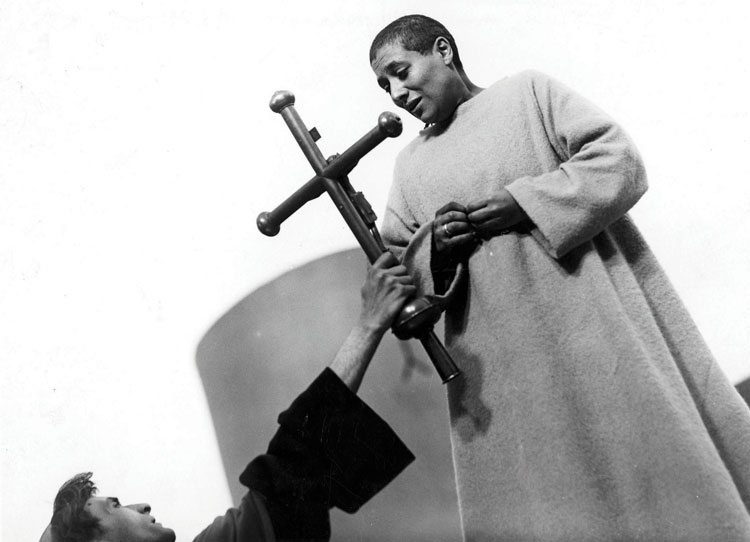
Scalarama is a far-reaching kind of film festival – one that covers the whole country, and virtually any manifestation of cinema you can think of. It’s dedicated to the spirit of the old Scala screenings in King’s Cross, London in the 80s and now in its third year, has a diverse and fascinating programme, fuelled by the passion of movie fans championing their own, often obscure, favourites. I am delighted to report that silent cinema is very much part of the month-long festival, with several screenings of Dreyer’s masterpiece, The Passion of Joan of Arc lined up, from Leicester to Canterbury. And it’s the gorgeous new Eureka print they’re screening too.
The Scalarama organisers asked me to share some thoughts about why I love silents, and why you (yes, you) should go to see The Passion of Joan of Arc, for the first in their series of podcasts supporting the festival. So listen up. I have listed the screenings below – Visit the Scalarama website for more details and links.
There is no beating about the bush here. The 57th London Film Festival’s approach to silent cinema is definitely quality over quantity. Here’s what you can look forward to this year.
The Epic of Everest (1924)
The Epic of Everest (1924)
This year’s Archive Gala, also going on nationwide release, is this unforgettable expedition film of Mallory and Irvine’s doomed attempt to climb Mount Everest in 1924. Gorgeous photography, a heart-stopping story and another great, surprising score from Simon Fisher Turner. Read our full review here. The gala screening will feature the score played live, which is sure to be fantastic.
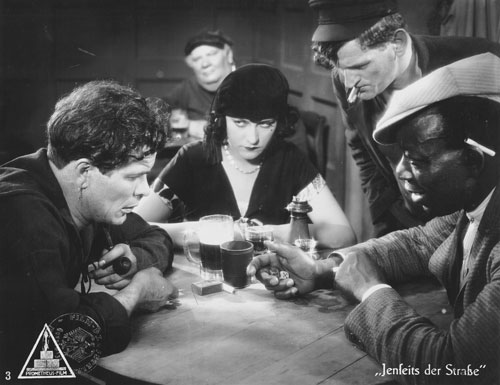
I saw this last year at Pordenone, and I loved it. Harbour Drift/Jenseits des Strasse is a moody, romantic melodrama, directed by Leo Mittler – the kind of film that gives even the grubbiest events a touch of magic. The screening at the London Film Festival will also be accompanied by Stephen Horne, making it a must-see. Here’s what I had to say about it in 2012.
My highlight was a lyrical German film that came between them, called Jenseits der Strasse or Harbor Drift (Leo Mittler, 1929). A beggar nabs a pearl necklace from a puddle, and promises to share the profits on its sale with a new-found drifter pal, all the while a prostitute plans to take it, and sell it herself … Impressionistic, oddly noirish, tragic and ultimately dark-hearted, this is a real find. The film has been championed for a few years now by Stephen Horne, who accompanied it beautifully on piano, flute, accordion and zither. The recent discovery of the film’s previously missing reel makes this gem ripe for restoration, and a wider audience.
We’re back! For the third year running, I will be presenting a series of screenings at the West London Trades Union Club in Acton, London W3. Silent film fans of west London, come one, come all. And if you’re new to silent movies, you should definitely pop us in your diary: the autumn/winter collection for 2013 contains some stone-cold classics.
The Trades club on Acton High Street offers well-kept, reasonably priced ale and friendly conversation between left-leaning movie fans too. We show films on Saturday afternoons at 4pm, with no entrance charge, a short introduction courtesy of your favourite London-based silent movie blogger* and generally a good free-for-all chinwag afterwards.
This year’s lineup includes a jaw-dropping tale of British exploration, a high-tension thriller, an Expressionist masterpiece and the divine Clara Bow. Interested?
The Great White Silence (1924)
You’ve seen films about Scott of the Antarctic before – but not like this one. Herbert Ponting took his camera (almost) every step of the way on Scott’s final, fatal expedition. It’s an intimate portrait of Scott’s team at work, and a staggering vision of the unspoiled Antarctic landscape. All this, plus a gleaming restoration from the BFI and an unforgettable score by Simon Fisher Turner, incorporating some surprising found sounds. And penguins. Watch this now as the perfect preparation for viewing the BFI’s new restoration of The Epic of Everest in October. 14 September, 4pm
A Cottage on Dartmoor (1929)
A Cottage on Dartmoor (1929)
Did you see Underground when it was released earlier this year? That is just one of Anthony Asquith’s two great silent thrillers. A Cottage on Dartmoor is darker, edgier, artier and altogether murkier than Underground – it’s all about jealousy, frustration and razor blades. There’s even a subplot about the coming of sound. Horrific. A Cottage on Dartmoor deserves to be seen on the big screen, and will be shown at the WLTUC with Stephen Horne’s fantastic score too. 26 October 2013, 4pm
Metropolis (1927)
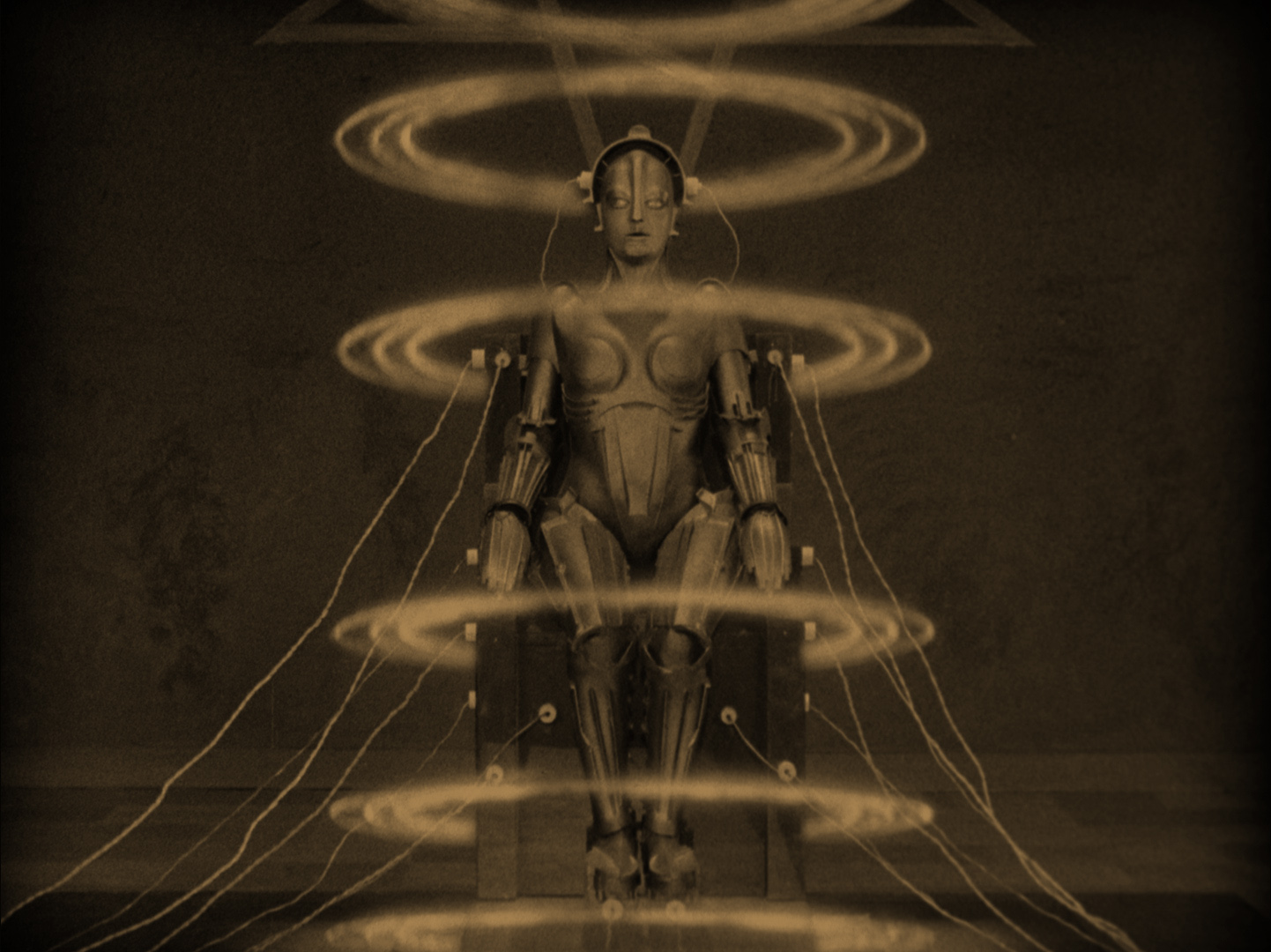
You may think you’ve seen Metropolis, but think again. If you haven’t seen the new version of Metropolis with rediscovered footage, you haven’t seen it at all. No WLTUC screening of Lang’s sci-fi masterpiece would be complete without a discussion of the labour politics at the heart of the film, it’s true. But equally, you can gaze upon the gothic futurist splendour of it all – and remind yourself where all those other, more recent, sic-fi movies stole all their best ideas. 16 November 2013, 4pm
It (1927)
Clara Bow in It (1927)
Clara Bow, Elinor Glyn declared, had ‘it’. And you don’t need me to explain what ‘it’ is do you? In the greatest flapper movie of them all, Bow plays a determined, perky working-class girl in pursuit of her dream guy. A delicious pre-Christmas treat, It will immerse you in the bustle and swing of 1920s New York, and remind you why Bow is still such a revered fashion icon. Watch out for a cameo by Glyn, and an early appearance by Gary Cooper, whom many say was the great love of Bow’s tragic life. 14 December 2013, 4pm
You don’t have to be a member of the club, or even of a trade union, to turn up and receive a warm welcome – and you will find the venue at 33 Acton High Street, London W3 6ND. It’s about five minutes walk from Acton Central train station, and on plenty of bus routes. Visit the club’s website here, or join the Facebook group.
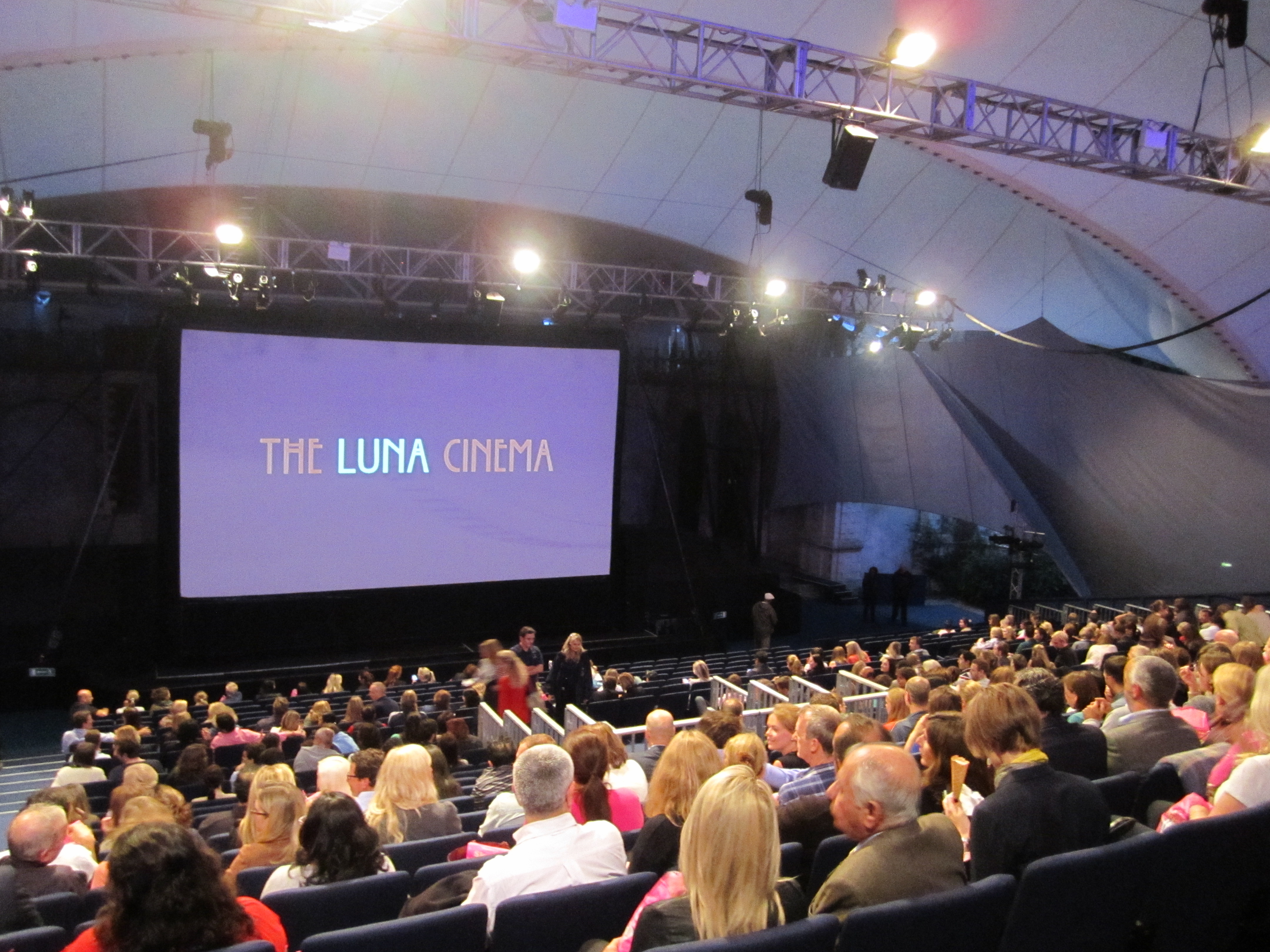
No I am not about to tell you to spend more of this glorious summer tucked away in a dark and musty cinema rather than out in the park. Holland Park’s Luna Cinema is hosting an evening of silent cinema at its open-air venue – which is what we call a win-win. It promises to be a great night, with classic films starring Charlie Chaplin and Laurel and Hardy on the big screen. You’ll be even more impressed when you hear that the musician and host for the evening is Neil Brand.
The Luna Cinema, the country’s leading producer of pop-up cinema, presents a night celebrating silent cinema to Opera Holland Park on the 11th August. The stunning summer theatre, in Holland Park, with its velvet seats, bars and beautiful canopy (in case of bad weather) will host the Luna’s giant screen for a very special night of classic silent films. We will have silent film expert Neil Brand hosting the evening and providing live musical accompaniment to an array of classic silent films including Charlie Chaplin’s most famous work, “The Immigrant” – it’s a rare opportunity to see this 1917 comedy showcasing Chaplin at his very best. Amongst other classic shorts we will also be screening “Liberty” – one of Laurel and Hardy’s most famous comedies and considered to be their greatest silent work before they moved to the “talkies”.
The Luna Cinema’s silent film night takes place at Opera Holland Park, London on Sunday 11 August. Tickets cost £9.50 – £19.50 and they are available through thelunacinema.com or by going straight to the Opera Holland Park box office (operahollandpark.com or 0300 999 1000).
A silent movie at a massive west end venue? You can’t miss this. The Odeon Leicester Square is celebrating its 75th anniversary next month with silent comedy and live music courtesy of Donald Mackenzie, who will be playing the cinema’s wonderful Compton organ.
The film playing will be Harold Lloyd’s brilliant, recently restored, film Safety Last, the story of a small-town boy who comes to the big city determined to reach the top. As kids get free admission to the screening, this would be a fantastic way to introduce your children to silent movies – especially if they have seen and enjoyed Hugo, which riffed on the famous “clock face” scene.
To set the scene for the morning, a jazz band – The Hendo Washboard Kings – will be playing the audience into their seats and at the Compton is Donald MacKenzie, the Odeon’s organist for the past 21 years.The Compton organ was custom built for the cinema in 1937 by the London firm of John Compton. The organ has 5 keyboards and its pipework is housed in two large rooms underneath the stage. These days its appearances are rare and this is an ideal opportunity to see it in action.
Safety Last screens at 10.30am on Saturday 3 August 2013. Admission is £10 at the door (tickets are not available in advance) and accompanied children under 16 will be admitted free of charge. Click here for venue information.