There’s nothing like a night out at a West End cinema. The bright lights, the excitement, the hustle and bustle of the Theatreland crowds … So don’t ruin your fun by watching a talkie. Check out the silent film programme at the Prince Charles Cinema, where they’re packing in the punters for a diverse range of silent movies, month ofter month. There’s always live music and a lively atmosphere – and the films aren’t bad either.
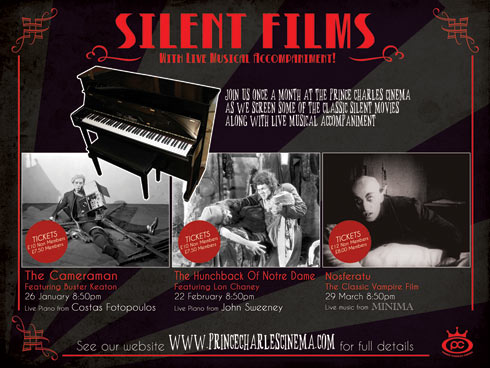
The Cameraman, Thursday 26 January 2012, 8.50pm
Hilarious, but rarely screen Buster Keaton comedy. After becoming infatuated with a pretty office worker for MGM Newsreels, Buster trades in his tintype operation for a movie camera and sets out to impress the girl (and MGM) with his work. Piano accompaniment by Costas Fotopoulos.
Tickets for each show are £10 or £7.50 for members. Book online here.
The Hunchback of Notre Dame, Wednesday 22 February 2012, 8.50pm
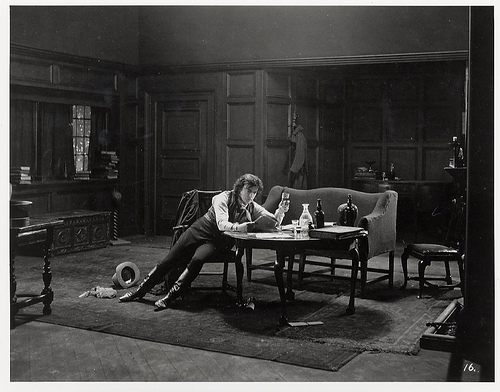
Don’t miss this chance to see Lon “Man of a Thousand Faces” Chaney on the big screen. In 15th-century Paris, the brother of the archdeacon plots with the gypsy king to foment a peasant revolt. Meanwhile, a freakish hunchback falls in love with the gypsy queen. Piano accompaniment by John Sweeney.
One of the silent era’s most influential masterpieces, Nosferatu‘s eerie, gothic feel – and a chilling performance from Max Shreck as the vampire – set the template for the horror films that followed. Hutter, a real estate agent, pays a visit to the mysterious Count Orlok, who seeks to relocate from his lair in the Carpathian Mountains and buy a residence in town. The Count becomes infatuated with Hutter’s young wife, and embarks on a journey to find her, while the town becomes infected with a strange plague.
Rock band Minima are a favourite on the silent film circuit, playing atmospheric, sophisticated guitar music to a wide repertoire of silent classics – and Nosferatu is one of their most acclaimed scores. Don’t miss this.
Just a quick post to let you know about the silent film offering at the rather wonderful Glasgow Film Festival, which runs from 16-26 February 2012. If you include the Glasgow Youth Film Festival and the Glasgow Short Film Festival, which precede it, it all adds up to three weeks of movies – some of which are silent. Here goes:
The Loves of the Pharoah, Friday 17 February, 3.30pm, GFT 2
Ernst Lubitsch was a master of sophisticated romantic comedies but The Loves of Pharaoh reveals that he was also a filmmaker to rival the scale and ambition of DW Griffith or Peter Jackson. The Loves of Pharaoh is notable for its spectacular production design, gorgeous costumes, beautiful chiaroscuro cinematography and crowd scenes involving thousands of extras in an age before the convenience of computer generated effects. Future Oscar-winner Emil Jannings is the Egyptian Pharaoh who rejects the beloved daughter of the king of Ethiopia in favour of his infatuation with slave girl Theonis. It is a recipe for conflict, heartbreak and epic drama. A stunning digital restoration heralds the return of a major silent production. Buy tickets.
Berlin: Symphony of a Great City, Saturday 18 February, 3pm, CCA theatre
Walter Ruttmann’s groundbreaking documentary captures the pulse of Berlin in a single day in the late 1920s. It is a moment of calm between the nightmare of the Depression and the horrors of the Nazi era. Inspired by Dziga Vertov (The Man with a Movie Camera), he compiles an impressionistic portrait of a bustling metropolis from the first light of dawn to the last gasp of the city’s neon-lit nightlife. Cameras hidden on vehicles and in suitcases capture an authentic picture of children hurrying to school, factories billowing smoke, rush-hour traffic and even the President Paul von Hindenburg. It is a wonderful time capsule made all the more poignant by the city’s virtual destruction in the Second World War. This special screening is accompanied by a live improvised performance from Scottish Jazz Trio AAB as musicians Tom and Phil Bancroft and Kevin Mckenzie rock the house with a unique fusion of bop, folk, house and indie rock. Buy tickets. Screening in combination with the ‘live’ film Glasgow: Symphony of a Great City.
Miles Mander and Madeleine Carroll in The First Born (1928)
The BFI’s sparkling restoration of Miles Mander’s The First Born, with its new, elegant score by Stephen Horne, was the clear highlight of last year’s London Film Festival. The wonderful news is that it is about to hit the road this year, and you’ll be able to see the film, in most cases with Horne’s music played live, at various lcoations across the UK. It’s a gripping, sophisticated drama and a gem of British silent cinema – so don’t miss it. Here’s what the BFI have to say about it:
A philandering politician, the double standards of the upper classes, jealousy, miscegenation and a generation torn between centuries of tradition and a more modern morality… the plot of The First Born feels not unlike a lost episode of Downton Abbey. However, the film was expertly co-scripted by Alma Reville (Mrs Alfred Hitchcock) and it’s hard not to see her influence in raising it beyond old-school melodrama to be a tour de force of late silent British cinema. Sir Hugo Boycott (Miles Mander) and his young bride (a pre-blonde Madeleine Carroll) have a passionate relationship, but it founders when she fails to produce an heir. This is a surprisingly ‘adult’ film and made with both elegance and invention.
I reviewed the film at the London Film Festival here, and spoke to BFI silent film curator Bryony Dixon and composer Stephen Horne for the Guardian too. You can see an extract from the film, below:
Here are the tour dates for The First Born, hot off the press:
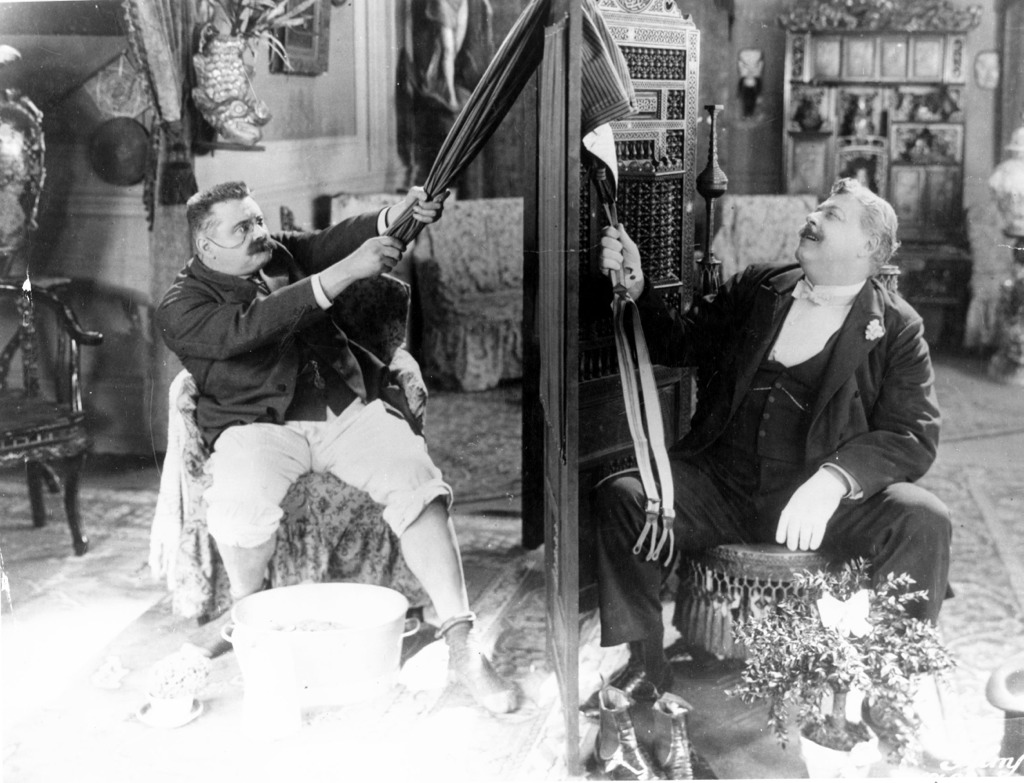
The Barbican silent film and live music season continues in fine style with this sophisticated, satirical French comedy. René Clair’s film is a period piece, set in 1895, the year the Lumière brothers first unveiled their cinématographe, but was released just as the talkies were changing cinema for good – or ill. With few intertitles and plenty of visual humour, An Italian Straw Hat is classic of silent cinema, which Pauline Kael described as “so expertly timed and so elegantly directed that farce becomes ballet”. Contemporary reviews praised its:
“Delightful social irony and hilarious situations welded into divertingly sustained comedy. Amusing characterisations which are ironic criticisms. Witty situations and deft development. “
Albert Préjean stars as a hapless bridegroom whose journey to his own wedding is interrupted when his horse chews up a woman’s hat. She demands a replacement, which is easier said than done, and the groom is soon tangled up in a series of comic misunderstandings. An Italian Straw Hat is more than farce though, it uses the absurd premise as a route into a sly attack on bourgeois narrow-mindedness. The Silents Are Golden website sums it up this way:
The plea for intelligence, for rising above petty worries like lost gloves, for refusing to be constrained by petty convention, make An Italian Straw Hat a crusader in human propaganda. The sublimely naturalistic sets, the superb uniformity of the acting, and the flawless action continuity are the measure of René Clair’s technical proficiency.
If you’ve seen René Clair’s short silents, such as Entr’acte and Paris Qui Dort, or his later work including the Sous les Toits de Paris and A Nous la Liberté your appetite will already be whetted. Stop reading this blog, and book yourself a ticket.
An Italian Straw Hat screens at the Barbican on 19 February 2012 at 4pm. Piano accompaniment will be provided by Andrew Youdell. Tickets begin at £7.50 and you can buy them here.
Save the date: the 15th British Silent Film Festival will take place 19-22 April 2012 at a new venue, the Cambridge Arts Picturehouse. The change of location has influenced the programme too, which will feature some examples of undergraduate humour among a mix that includes adaptations of stories by WW Jacobs and PG Wodehouse as well a tribute to the BBFC. There’ll be a by-now customary performance by the Dodge Brothers too, skiffling along to Abram Room’s The Ghost That Never Returns.
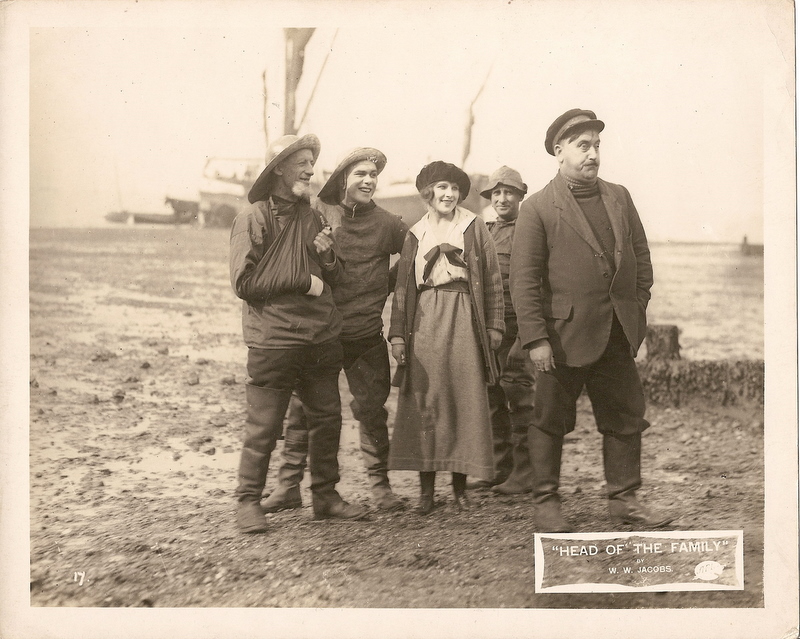
The programme will include rarely seen silent films from the BFI and other archives around the world on a wide range of fascinating subjects such as: P.G. Wodehouse’s golfing tales including The Clicking of Cuthbert; rarities based on the charming coastal stories of W.W. Jacobs including The Boatswain’s Mate, A Will and a Way and brand new print of Head of the Family; a celebration of thecentenary of the British Board of Film Classification with a look at ‘What the Silent Censor Saw’ and the origins of ‘university humour’ before the Footlights. This year’s ‘hot ticket’ will be the wildly popular Dodge Brothers performing their distinctive brand of Americana to The Ghost That Never Returns.
Tickets are not yet on sale, but watch this space for more updates, including the full schedule and how to book. Click here for a report from last year’s festival, on the Guardian film blog. Below, Dodge Brother and film writer Mark Kermode introduces The Ghost That Never Returns at last year’s New Forest Film Festival:
A rare screening of a much-gossiped-about silent film, made by one of Hollywood’s most controversial stars, presented in a unique way. Well, that tickles our fancy just fine.
Alla Nazimova was born in what is now Ukraine in 1879. She made her stage debut in Moscow as a teenager and swiftly became a big star. She then moved to New York to work on Broadway, winning plaudits with roles in plays by Chekhov and Ibsen and made her first movie, War Brides, in 1916.
Nazimova is best remembered for her colourful life in Hollywood: her several affairs with women, the rumoured wild parties at her mansion and her position of influence in the industry, helping many a young actress to get a start, including Anna May Wong, Patsy Ruth Miller, Natacha Rambova and Jean Acker. The last two were married to Rudolph Valentino, but were also romantically linked to Nazimova.
Her most famous film, Salomé, was also fodder for the rumour-mill. An adaptation of Oscar Wilde’s play, it was said that the cast comprised only gay and bisexual actors, in homage to the author. It’s impossible to say whether this was really true, but the idea has certainly stuck. Nazimova takes the title role, Charles Bryant directs and the whole thing is just over an hour of extravagant Aubrey Beardsley-inspired design, sexy costumes and decadence. Salomé slumped at the box office, bankrupting Nazimova’s production company, but continues to intrigue audiences, becoming something of an art nouveau cult sensation.
This February, Salomé will be screened at the Purcell Room in the Southbank Centre, with live music composed by Charlie Barber, which is inspired by ” the evocative sounds and intricate rhythms of traditional Arabic ensembles”. Instead of sitting in front of the screen, the musicians will perform on two towers on either side of it, which sounds like a fantastic idea.
This clip shows the famous “Dance of the seven veils” from Salomé, with a taster of Charlie Barber’s score:
Salomé screens at the Purcell Room, Southbank Centre on Thursday 9 February 2012 at 7.45pm. Tickets begin at £12 and are available here.
• We’ll see more of Nazimova when the silent Rudolph Valentino biopic Silent Lifeis released later this year. Nazimova is played by Galina Jovovich.
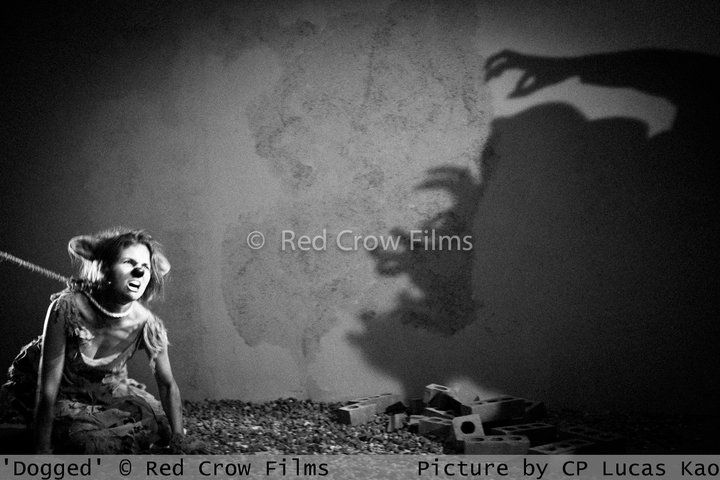
Modern silent films. They’re the hottest thing since 3D, but far more popular in this neck of the woods. One film we’ve had our eye on for a while is the fantasy short Dogged (2011), written and directed by Jo Shaw and starring Lucy Goldie in all nine roles. The sinister premise of the film is summarised thus on IMDB: “In a world where bogeymen roam freely, devouring people randomly and the only creatures they fear are dogs, old dog does her best to defend the family home.” I think this dog is a very different breed to Uggie.
Dogged was described as “intriguing and insightful” by the judges at the Aesthetica film festival in York, who awarded it the prize for Best Experimental Film (read more here), but now, happily, you have the chance to see it in London and make your own mind up. Dogged is playing as part of the Making Tracks night programmed by Whirlygig Cinema at the London Short Film Festival. This event is especially notable because all the soundtracks for the short films being screened will be played live, by The Cabinet of Living Cinema. It’s a treatment that should particularly suit Shaw’s spooky silent film.
Want to know more about Dogged? There’s a trailer, which you can see on the IMDB page here and a regularly updated Facebook page.
Making Tracks is at Rich Mix, Bethnal Green on 14 January at 7.30pm. Tickets are £8 on the door or book them in advance for £6 at the Rich Mix website.
Charles Dickens’s 200th birthday party continues in formidable style with the second part of the BFI’s Dickens on Screen season. Happily, the silents were not confined to the first run of screenings and February brings much to get excited about. First off is the famous 1922 adaptation of Oliver Twist. Frank Lloyd directs, while The Kid star Jackie Coogan plays the young orphan and Lon Chaney contorts his features into a suitably grotesque Fagin. With Coogan’s winsome pluck and Chaney’s gift for playing a villain, this was always going to be a classic Twist. It’s a spirited romp through the novel and a particular treat as this is one of the famous “lost” films of the silent era, which was found and restored in the 1970s, with some input from Coogan himself. To learn more, read Silent Volume’s appreciative review here or watch this clip, featuring one of the novel’s most melodramatic flourishes. Why not do both?
Oliver Twist screens at 6pm on Friday 3 February and at 8.45pm on Wednesday 8 February 2012 at NFT2, BFI Southbank. Both screenings will feature live piano accompaniment. Tickets are available from the BFI website.
The Only Way (1927)
The final silent Dickens film and the next screening in the season is The Only Way, a lavish and rather free adaptation of The Tale of Two Cities. This is a British production and John Martin Harvey reprises his stage role as Sydney Carton, despite his advancing years. His wife Madge Stuart plays Mimi his maid. Don’t remember Mimi from the novel? That’s cinematic licence for you. The famous director and producer Herbert Wilcox is at the helm and The Only Way was a smash hit, taking more than twice its £24,000 budget at the box office.
The Only Way screens at 3.50pm on Saturday 11 February and 8.40pm on Monday 27 February 2012 at BFI Southbank. Tickets are available from the BFI website.
• Don’t forget that there will be an exhibition to accompany the Dickens on Screen season in the Mezzanine at BFI Southbank from 12 January to 25 March. Also, during February, BFI members can watch The Pickwick Papers, an Anglo-American co-production from 1913, free online. The 15-minute fim stars the comedian John Bunny.
This is wonderful news. Next year, at the Royal Festival Hall, the Philharmonia Orchestra will accompany a screening of FW Murnau’s masterpiece Faust (1926). The orchestra will be playing a brand new orchestral score, written by composer Aphrodite Raickopoulou, and unusually, there will also be live improvisation from the renowned classical pianist Gabriela Montero. The film will be introduced by the world-famous actor and scourge of the tabloids Hugh Grant.
If you’re not familiar with Faust, then allow me to introduce it to you. Murnau’s film is an adaptation of the Faust legend, in which a doctor sells his soul to Mephistopheles in return for a cure for the plague epidemic that has struck his town. The doctor is played by Gösta Ekman, and Mephistopheles by the always wonderful Emil Jannings, in an outstanding performance that is by turns charming and grotesque. As in so many of Murnau’s films, the real story is an epic struggle between love and hate, and the visuals are as epic as the themes. Faust may be shot in monochrome, but it is kaleidoscopically beautiful. Special effects sequences such as the summoning of Mephistopheles and the cloak ride are still impressive – and the clouds of black smoke that represent the plague visiting the town are as haunting as they were technically difficult to pull off. Ekman’s transformation from an old man to his younger self is fantastic as well.
But Faust is more than the sum of its technical achievements. It’s a hugely moving film, with a melodramatic finale, and as unforgettably brilliant as Murnau’s other much-loved classics, Nosferatu and Sunrise. This new score has been a real labour of love for Raickopoulou, who was moved to tears after watching the film for the first time. She told me: “Being a dreamer has its great risks but true passion and true love will always prevail.” A sentiment very much in tune with the spirit of the movie, I’m sure you’ll agree.
This project has benefited from the advice of Patrick Stanbury from Photoplay Productions – and you’ll be pleased to know that the Royal Festival Hall will be showing a 35mm print of the domestic version of the film.
Faust screens at the Royal Festival Hall on Monday, 27 February 2012 at 7.30pm. Tickets begin at £10 and you can book them here, on the Southbank Centre website.
You’re all over Buster Keaton, Charlie Chaplin and Harold Lloyd. Roscoe Arbuckle, Laurel and Hardy too. But there’s more to silent comedy than those big, big names, and this January, the Barbican offers a chance to get to know another fantastic funnyman from the early days of cinema, the dapper, charming Charley Chase – a comic as hilarious as his moustache is thin and elegant.
Charles Parrott started out in vaudeville, like so many silent comedians, but he went to work for Mack Sennett at Keystone in the early teens. While there, he appeared in a few films with Mr Chaplin and moved into directing as well. He directed several more films at Hal Roach’s studios, and after Harold Lloyd deaprted those premises he began starring in his own short films, under the name Charley Chase.
Chase’s silent movies were generally two-reelers, and the most famous of them were directed by Leo McCarey – three of which will be showing at the Barbican. Chase’s speciality is the comedy of embarrassment – character-driven farce as much as pure slapstick. In His Wooden Wedding, Chase is tricked, by a love rival, into believing his bride has a wooden leg. Mighty Like a Moose features a married couple who both undergo extreme makeovers courtesy of a plastic surgeon and then subsequently fail to recognise each other. Oliver Hardy takes a small role in Crazy Like a Fox, in which Chase pretends to be mad in order to avoid an arranged marriage. In each case, of course, mortifying complications ensue.
Crazy Like a Fox (1926), His Wooden Wedding (1925) and Mighty Like a Moose (1926) screen at the Barbican on 22 January at 3pm. Piano accompaniment will be provided by John Sweeney. Tickets start at £7.50 and are available from the Barbican website here.
There will also be a chance to see some Charley Chase classics at the Slapstick Festival in Bristol next month – so check that out too.
I hate to admit it, but there are good reasons to leave London sometimes. Bristol, for example, can lay a good claim to being the capital of silent cinema in this country, thanks mostly to the year-round efforts of the marvellous people at Bristol Silents. Indeed, come January there is nowhere finer for the discerning silent comedy fan to be. The annual Slapstick Festival is a four-day, multi-venue extravaganza of comedy, mostly of the silent era, presented by comedians and experts – and accompanied by live music.
The 2012 Slapstick Festival will take place from 26-29 January 2012, and the full lineup has just been announced. Yes, there will be some more recent comedy courtesy of gala screenings featuring Dad’s Army, Monty Python and the French film-maker Pierre Étaix. But Slapstick Festival is noted for its passionate endorsement of silent comedy, and it’s here in spades.
Buster Keaton in The General (1926)
Kevin Brownlow will be talking about Buster Keaton and showing footage from his documentary A Hard Act to Follow, while Griff Rhys-Jones will introduce a night of silent comedy including a screening of The General at Colston Hall with music from Günter Buchwald and performed by The European Silent Screen Virtuosi and Bristol Ensemble. On the last day of the festival, Bill Oddie, Tim Brooke-Taylor, Ian Lavender and Barry Cryer will also introduce their favourite Buster Keaton shorts.
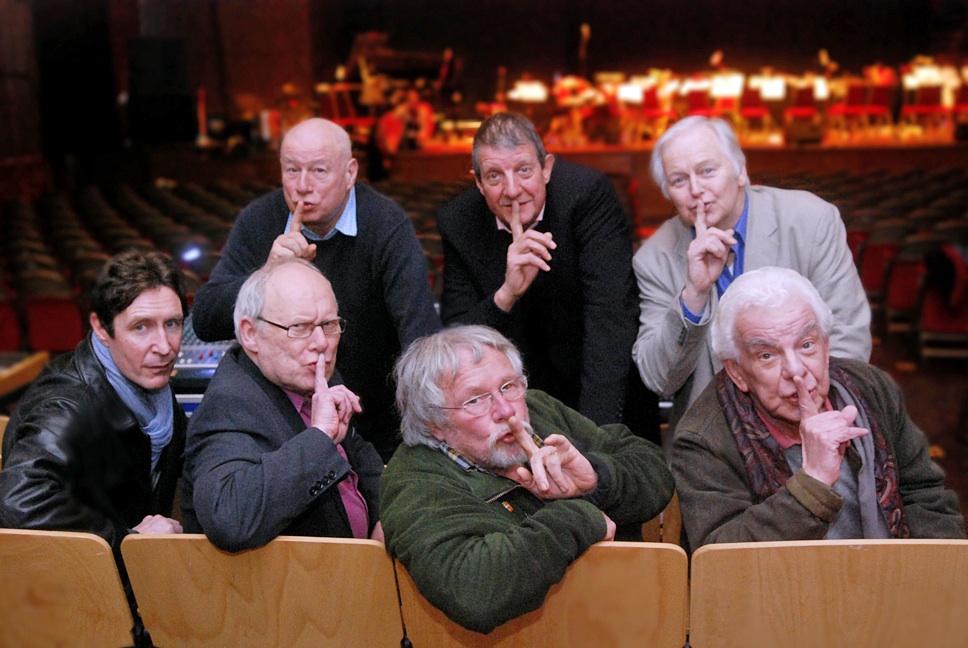
The Slapstick Festival team: Neil Innes, Chris Serle and Ian Lavender (back row); Paul McGann, Graeme Garden, Bill Oddie and Barry Cryer
Historian David Robinson will give an illustrated lecture, with clips, on Charlie Chaplin and also discuss his work with fan and comedian Sanjeev Bhaskar; Barry Cryer will present a Harold Lloyd double-bill and Graeme Garden will make a case for the debonair Charley Chase. David Wyatt will give two presentations: one talking about lesser-known silent comics such as Max Davidson and Larry Semon and the other on the spoofs and parodies rife in silent-era comedy.
Slapstick Festival events will take place in Colston Hall, the Watershed Cinema and the Arnolfini Arts Centre, Bristol from 26-29 January 2012. See the Slapstick Festival website for more details and to book tickets.
And don’t forget, the Slapstick Festival has its own real ale, brewed locally, especially for the event. The launch of the Slapstick Beer takes place at the Victoria Pub, Clifton on Friday 9 December at 7.30pm. Details on Facebook.
2012 marks the bicentenary of Charles Dickens’s birth and a festival of events has been organised to celebrate – including the reopening of the Charles Dickens museum and an exhibition at the Museum of London. The lion’s share of the audiovisual strand of Dickens 2012 begins with a three-month season of screen adaptations at BFI Southbank, which will then tour both nationwide and internationally.
The Dickens on Screen season has been curated by Adrian Wootton and Michael Eaton and the first tranche features some heavyweight adaptations such as David Lean’s masterful Great Expectations (1946) and a wealth of 1930s films, including George Cukor’s 1935 David Copperfield, starring WC Fields, Lionel Barrymore and Maureen O’Sullivan and Thomas Bentley’s 1934 The Old Curiosity Shop.
It’s the early films that interest us the most, though, and two programmes with live piano accompaniment offer opportunities to watch Dickens adaptations made between 1901 and 1913, some of which are very rarely seen.
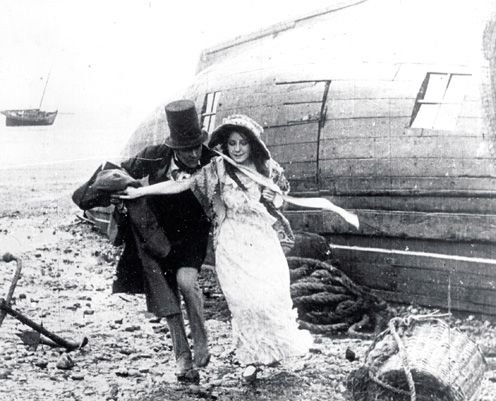
Pre-1914 Short Films commemorates a period of film history in which literary adaptations were rife – even if they were mostly no longer than a couple of reels. It is often claimed that Dickens’s use of parallel action inspired DW Griffith’s experiments with cross-cutting – and there are two Griffith films here, only one of which (The Cricket on the Hearth, 1909) is a straight Dickens adaptation. There are two lively versions of A Christmas Carol, one British (directed by RW Paul, 1901, pictured above) and one American (by Thomas Edison in 1910 and posted below).
The Vitagraph company is well represented, as would be expected, with J Stuart Blackton’s Oliver Twist (1909), starring a teenage Edith Storey as the winsome orphan and William Humphrey as Fagin. Humphrey appears again in Vitagraph’s A Tale of Two Cities (1911), which runs to an epic 30 minutes and makes great use of crowd scenes and bona fide stars such Maurice Costello, Florence Turner and briefly, Norma Talmadge.
There are two Thanhouser films in the programme: The Old Curiosity Shop from 1911 and a 20-minute version of Nicholas Nickleby (1912) with Harry Benham in the lead role, a fragment of which can be seen below. It’s not the only Nickleby on offer, though. You can also see a three-minute film called Dotheboys Hall from 1903, directed by the English comic Alf Collins and featuring some knockabout corporal punishment.
Pre-1914 Short Films screens at BFI Southbank on Tuesday 3 January 2012 at 8.30pm and Saturday 7 January 2012 at 3.50pm. The first screening features an introduction by screenwriter Michael Eaton and both screenings will have live piano accompaniment.
David Copperfield (1913)
David Copperfield (1913) is a British adaptation, one of the first feature films made in this country and shot in the actual locations named in the novel. This is one of director Thomas Bentley’s six silent Dickens adaptations, but the only one to survive, and it is noted for both its elegant composition and naturalistic performances. Bentley himself started out at a stage comedian and was celebrated for his impressions of Dickens characters. The film stars Alma Taylor, one of British silent cinema’s most popular actresses thanks, at first, to her “Tilly the Tomboy” films, as Dora. The Eric Desmond credited as the young David is really Reginald Sheffield, father of Johnny Sheffield who played Tarzan’s Boy in the Johnny Weissmuller films.
David Copperfield screens with a three-part adaptation of the same novel, made by the Thanhouser Company in 1911-12. You can watch the films on Sunday 8 January 2012 at 3.30pm and on Tuesday 10 January 2012 at 6pm at BFI Southbank. There will be live piano accompaniment.
That’s not all, dear reader. There will be an introductory talk called Dickens on Screen on Tuesday 3 January 2012, at 6.20pm, given by Michael Eaton and Adrian Wootton, just before the first programme of shorts, and there are also several more silent Dickens adaptations to be seen in the BFI Mediatheque. Plus, we are promised, later in the season, Frank Lloyd’s 1922 Oliver Twist, starring Jackie Coogan and Lon Chaney.
Between Lobster films’s eye-popping restoration of the hand-tinted Le Voyage Dans la Lune (1902) and Martin Scorsese’s forthcoming Hugo, 2011 is a good year for remembering Georges Méliès – not to mention the 150th anniversary of his birth. To mark this auspicious time, the Ciné Lumière at the Institut Francais is celebrating the early French film-maker with three special events in December.
The first show, Classic Medley Méliès, is a Sunday afternoon matinee – a 90-minute screening of shorts to introduce the director and some of his best-loved films, restored by Lobster films:
This programme is a unique opportunity to watch what can only be described as a treasure trove of lost gems which were uncovered and lovingly restored by Lobster films. Explore the sublime realm of Méliès’ cinema through The Man with a Rubber Head, The Magic Lantern or the colour version of The Devilish Tenant and discover his favourite themes: the moon, space, illusion and the comedy-burlesque.
Classic Medley Méliès screens at Ciné Lumière on Sunday 4 December 2011 at 2pm. To book tickets and to find out more, click here.
Le Voyage Dans la Lune (1902)
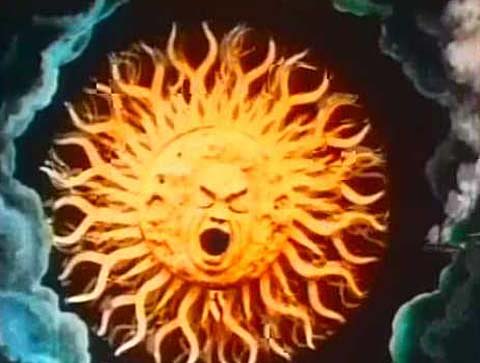
Secondly, Ciné Lumière is offering the exciting opportunity to see the new restoration of the hand-tinted full-colour Le Voyage Dans la Lune (1902) with its new soundtrack by the French group Air, who will also attend the screening.
Six scholars, members of the Astronomers’ Club, set off on an expedition to the moon. They travel in a bullet-shaped rocket fired into space by a giant canon. After arriving on the moon safe and sound, they meet its inhabitants, the Selenites, escape their king and return to earth in their rocket which, after falling into the ocean, is fished out by a sailor. Applause, decorations, and a triumphant parade for the six heroes of the first outer-space adventure in the history of cinema.
The screening of Le Voyage Dans la Lune is at 6pm on Monday 12 December. Entrance is free, but you must book, via the Institut Français’s newsletter, which you can sign up to here.
The third show is an evening event, a ciné-concert in which a selection of Méliès films will be accompanied by composer John Garden, who earlier this year toured a semi-improvised electronic score to The Lost World (1925):
Accompanying the films will be an original score of electronic soundscapes which revive and celebrate the sense of magic, mystery and occasional menace that play at the heart of Méliès’ films. Experience silent cinema as never before
Georges Méliès Revival screens at the Ciné Lumière on Wednesday 14 December 2011 at 7pm. To find out more and to book tickets, click here.
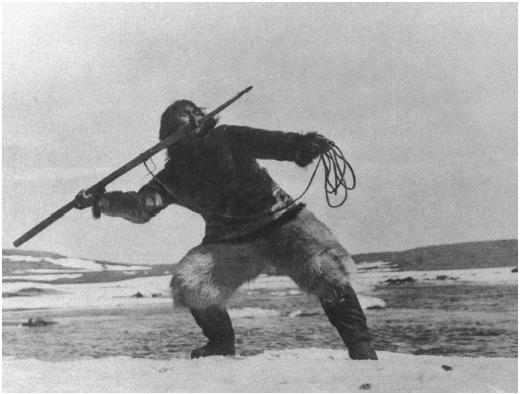
It’s always a pleasure to learn about a new film society in London, especially one that chooses its films with as much care and originality as the Screen Shadows group, whose inaugural season includes some notable silents. The F is for Fake season features, on 18 November, Robert J Flaherty’s hit documentary Nanook of the North (1922) in a special double-bill.
We have decided to pair Nanook of the North with The Girl Chewing Gum, a 1976 experimental work by John Smith. Although from different genres and eras, both films work very well together to say something about our current theme: fakery in film. As part of our commitment to encouraging new ways of thinking about film, as much as the screening of overlooked films or the screening of films in areas underserved by the usual channels of film exhibition, the session will be introduced by a guest speaker, AL Rees from the Royal College of Art.
Storm Over Asia (1928)
And on 2 December, as part of the same season, Screen Shadows will show Pudovkin’s monumental Storm Over Asia (1928), another film that raises interesting questions about authenticity:
The literally translated Russian title “The Heir to Genghis Khan” indicates the incitement to atavistic struggle that drives Pudovkin’s measured and resolute move beyond the film-mythologies of the Bolshevik revolution, in this historically charged epic based on a story of two unconnected thefts and one mistaken identity. How does a young Mongol fur-trader rebel and come to political consciousness? And just what does an Imperial British army garrison and trading outpost hope to gain by exploiting the falsehood that has come to define their captive? … How might implying a direct genealogical link between a twentieth-century Mongol fur trader and the twelfth-century Golden Horde inform a critique of imperialism in the Far-East, and what does this say about the cinema’s role in promulgating the myth of a culturally sensitive, ‘benevolent’ Soviet expansionism?
Nanook of the North screens at Oxford House, Bethnal Green E2 6HG on 18 November 2011 and Storm Over Asia on 2 December 2011. Entry is £7 or £5 (concessions and Tower Hamlets residents). The nearest tube station is Bethnal Green. For more details visit the Screen Shadows website.
A rarely seen gem from Czechoslovakian silent cinema, Battalion (1927) tells the story of a lawyer who becomes a champion of the Prague underclass. It was remade in 1937 as a sound film, but the 1920s version is considered superior: gritty and emotionally affecting.
A much loved novel and play in its day, Josef Hais Tynecky’sBattalion was based on the fortunes of a real-life reluctant hero who took on the legal system. Popular Czech singer Karel Hasler stars as the disillusioned lawyer who swaps his home for the ill-famed pub Battalion after finds his wife with a lover. Living among the poor and drop-outs of Prague he becomes their patron, and when one of them is shot during a police raid, he stands as a key witness in the trial. Raw and effective, director Premysl Prazsky imbues his 14th film with an intellectual and emotional depth exceptional for its time.
The film’s star Karel Hasler, was a very popular Czech musician, director and actor who appeared in several film. Tragically, he was arrested by the Gestapo in 1941 for “crimes” including singing patriotic songs, taken to a concentration camp, and tortured to death.
Battalion screens at the Barbican on 20 November 2011 at 4pm, with a live piano score from Jiří Hradil, a Czech rock musician who is also known for his silent film accompaniments. Tickets start at £7.50 and are available here, on the Barbican website.
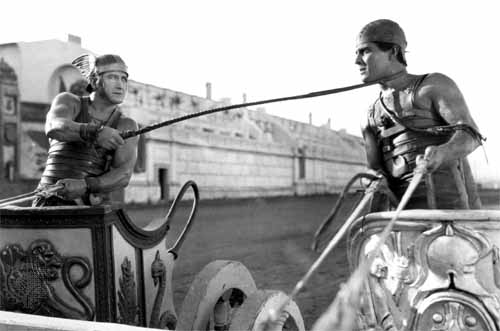
A blockbuster as massive as Ben Hur (1925) deserves a big screen, and a big score. The most expensive silent film ever made, so they say, Ben Hur stars Ramon Navarro in the title and has all the action, and epic vistas you may recall from the 1959 version with Charlton Heston. Yes, even down to the chariot race – filmed by 42 cameras, and with Hollywood’s finest in the crowd.
As I say, this epic film deserves an epic treatment, and next June, the Royal Festival Hall will show Ben Hur with Carl Davis’s score, performed by the Philharmonia Orchestra, and conducted by the man himself. You won’t want to miss this.
The 2012 Olympics are not just about sport. The London 2012 Festival will bring hundreds of cultural events to the capital as well. Music, dance, art and literature all get a look-in, but of course, the strand that really catches my eye is The Genius of Hitchcock. The sound films of Leytonstone’s favourite son will be shown at a complete retrospective at the BFI in August, September and October 2012. Before that, and more importantly, Hitchcock’s wonderful silent films – all nine that survive – are in the process of being restored by the BFI, and will be screened across London next summer, with live, specially commissioned scores. These special events will be must-sees for silent film fans, so I’ll be keeping you updated as the tickets go on sale.
The Lodger (1927)
The exciting news for readers outside London is that The Lodger will also receive a theatrical release – and the performances of The Ring and Champagne will be streamed live online too.
The first screenings have now been announced, and you can even start booking tickets. I will update this post as more details and dates are announced
28 & 29 June 2012: Hitchcock’s first film, The Pleasure Garden (1925) will be shown in the gorgeous, and apt, Wilton’s Music Hall in Limehouse, with a score written by rising star composer Daniel Patrick Cohen and performed by the Royal Academy of Music’s Manson Ensemble. Tickets cost £21.50 and you can book them on the BFI website.
6 July 2012: The wonderful silent version of Blackmail will be accompanied by Neil Brand’s magnificent orchestral score when it screens at one of its most celebrated locations – the British Museum. Tickets here.
13 July 2012: The Ring (1927) is a love triangle with rival boxers trying to win the heart of the same woman, and is one of the most recognisably Hitchcockian of his silents. It is screened here at the magnificent Hackney Empire in East London, with a jazz score by Soweto Kinch, performed by a five-piece band. Tickets start at £15 and you can buy them here.
21 July 2012: Probably Hitchcock’s most famous silent film, and his first suspense thriller, The Lodger (1926) will be shown at the Barbican Concert Hall. The score, composed by Nitin Sawhney, will be performed by the London Symphony Orchestra. Tickets are on sale now.
Watch this space, Hitchcock fans. And don’t forget, you can still donate to support the restoration of Hitchcock’s silent films:
What can I tell you about The Wolves? I’ve not seen it, but I hear very good things. It’s a Portuguese silent film, from 1923, shot on location and with non-professional actors. It was directed by Rino Lupo, who had previously worked elsewhere in Europe, most notably for Gaumont in Paris. He made one hit film in Portugal, Mulheres da Beira (1923), but it sounds as if The Wolves was a troubled production – Lupo was sacked by the studio after the film wrapped, for missing deadlines and for financial “disagreements”.
It’s an unusual film by all accounts, described as having a “paradoxical uniqueness”, and telling the story of a stranger’s damaging arrival in a rustic community, fresh out of jail. The title refers to the two lead characters: “wildly violent in their desires and impulses”. It’s a elemental film, we’re told, and that location photography is very important. “The sea and the mountains push heavily, encircling their psyches and ways of life.” Also, The Wolves features Portuguese cinema’s first scene of full nudity, if that is of any interest to you.
Having shunned the studio and the professional actor, and also the temptation to import a foreign, tried and tested formula that was common practice in Portugal and other peripheral film industries of the time, Lupo opened the way, some would say, to the specific irregularity of a cinema, that of Portugal, that only during the years of the dictatorship, and elsewhere recently, has walked the tracks of mainstream production.
The Wolves screens at the Barbican Cinema on 13 November at 4pm. This will be the film’s UK premiere, which will be accompanied by live music composed by Luis Soldado, conducted by Maestro Rui Pinheiro, and performed byGrupo de Música Contemporânea de Lisboa. The film will be introduced by Tiago Baptista, Rino Lupo’s biographer. For tickets, visit the Barbican website.
Disappointing news this week, as Birds Eye View announced that it will not be putting on a festival in 2012, due to a cut in its public funding. You can read more about the announcement here. This is a real shame for many reasons, not least the festival’s track record of commissioning cutting-edge scores for silent films from some wonderful musicians.
To tide us over while we wait for the festival’s no-doubt triumphant return in 2013, Birds Eye View will be staging some one-off events, including a touring programme of highlights from its fantastic Sound & Silents strand. You’ll see these popping up on the Silent London calendar, and on Facebook and Twitter as they are announced, but here are a couple for your diary straight away.
Blue Roses will perform her score for Dr Jekyll and Mr Hyde at the Arnolfini in Bristol on 18 February 2012. Tickets will be on sale soon.
Imogen Heap and the Holst Singers will present their soundtrack to The Seashell and the Clergyman at the Roundhouse in London on 26 February 2012 and at the Sage, Gateshead on 27 February 2012. Tickets for the London show are on sale now.
For more information, visit the Coming Soon section of the Birds Eye View website.
Two silent films, both with a lot to say, concluded the London Film Festival archive strand on Wednesday night. The double-bill of Soviet war film The Nail in the Boot (1931) and Lois Weber’s drama Shoes (1916) was not, we were assured, meant to be witty – rather it was a happy accident of programming. The films are from different times and continents, with contrasting styles. If they have anything in common beyond their titles, it is that they both issue moral warnings to the audience: look what can happen if you let your standards slip.
Expectations were raised for The Nail in the Boot when we were told that not only has it long been championed by our musician for the evening, Stephen Horne, but that he has won an award at the Bonn Sommerkino silent film festival for his accompaniment. And a spectacular soundtrack it was too, dynamic and inventive, incorporating accordion, flute and piano – often played in unconventional ways. Piano strings were plucked as missiles exploded in the battlefield; the accordion bellows hissed as soldiers were choked with gas. The same melody Horne plays on the accordion as the red soldiers celebrate a victory is repeated later on the flute after a terrible loss.
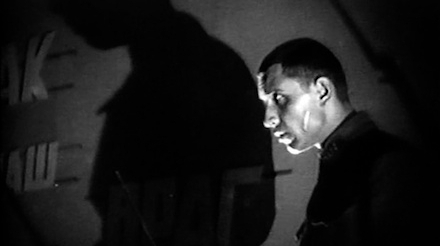
The film, by Georgian director Mikhail Kalatozov (The Cranes Are Flying, I am Cuba) is in three sections: a battle scene featuring an armoured train under aerial bombardment; a nervy sequence when one soldier is despatched from the train to call for help, but is hobbled by the eponymous nail injuring his foot; a trial scene, which tips into fantasy, as the soldier is accused of sabotage. The first two thirds are by far the most thrilling, and not just because the trial scene carries the weight of the film’s propagandist message. Kalatozov’s combat scenes are unforgettable: frenetic montage, extreme close-ups (even inside a gun barrel) and low angles make the viewer feel as if they too are being bombarded. I lost count of the number of times the camera appeared to be run over by enemy tanks, but I’m sure I flinched each time. Modern audiences will enjoy Kalatozov’s extravagant use of formalistic trickery for the same reason that the Soviet authorities suppressed it – it draws attention away from the film’s message and towards the skill of the film-maker. His triumph is that his abstract style makes the violence more tangible, not less.
Reeling from the battlefield, we were all urging the soldier on as he raced across open country. Faced with barbed wire, and a bare, bandaged foot, he nobly attempts to climb the fence. We wince. He tries again. Aah. So many curled toes and pained faces in one audience.
The Nail in the Boot has recently been restored by Gosfilmofond, and although we had no information as to the state of the print before work began, the film we saw was crisp, clean, with a wonderful quality of light and rich in detail. The latter was particularly noticeable in a lattice of shadows cast by a broom on our protagonist’s face.
Shoes (1916)
We had more clues about the restoration of Shoes (including a neat before-and-after comparison reel), which has been rescued from a blizzard of nitrate deterioration and bacterial damage by the EYE film institute in the Netherlands. Based on two tinted and toned nitrate prints with a few frames grabbed from a sarcastically dubbed 1930s version, the new Shoes is hugely improved, although it still retains unobtrusive marks at the edge of the frame in some scenes.
Lois Weber was one of the silent era’s very few female film directors and for that reason alone her work will always be of interest. Shoes is a simple enough tale of young shop worker, Eva (Mary MacLaren), who can’t afford a replacement pair of boots, and the moral dilemma she faces when opportunity presents itself, albeit in an unwelcome form. If it feels that Weber spends too long moralising in the title-cards, that may be because visually she expresses her heroine’s predicament so well. We were forewarned by as representative of EYE to play close attention to the end. After an hour spent walking inEva’s tattered, sodden shoes, a 21st-century audience may find less to condemn or lament in the choice she makes.
At one point a superimposed hand labelled “Poverty” appears to crush Eva as she sleeps, but Weber’s touch is not quite always so heavy. While the film is always elegantly composed, the kitchen-sink details of slum life, from watered-down milk and sugar sandwiches to empty shelves and broken furniture are everywhere – Shoes is relentlessly unglamorous. Even MacLaren’s lead performance is sullen, quietly anguished, rather than melodramatic. If I were her, I’d be seething too.









 Silent London