Fact-checking a story about Charlie Chaplin, Universal and Buster Keaton

Update: Mystery solved! The truth about Charlie Chaplin and Universal

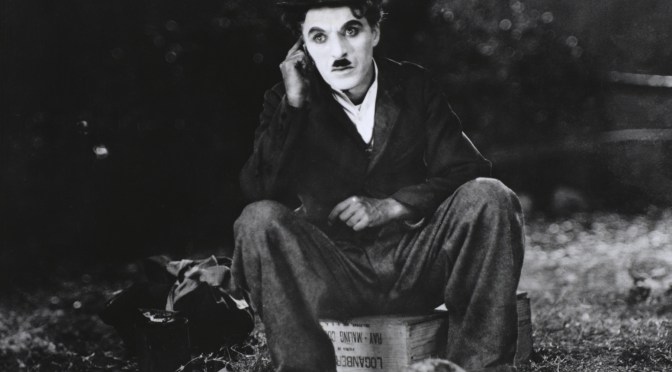
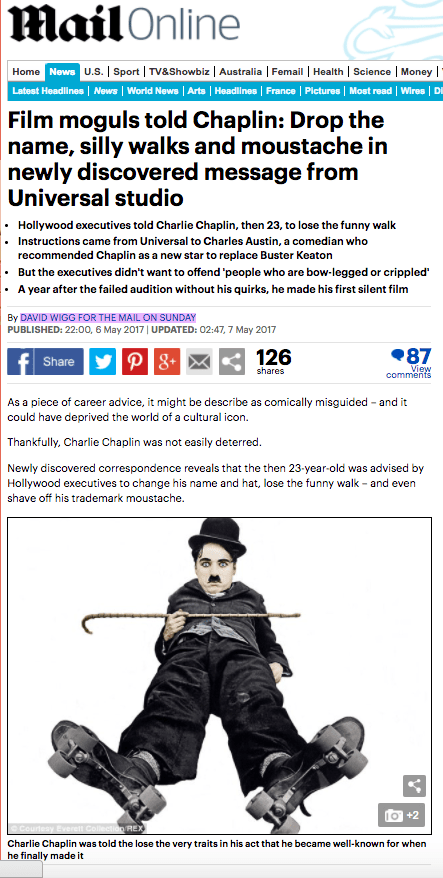
The Mail on Sunday ran a news story about Charlie Chaplin last weekend. I missed it at the time, but the story came to my attention when it was featured on Have I Got News For You (for non-Brits, that’s a satirical news quiz on the BBC). Panellist Paul Merton, who knows a thing or two about Chaplin, pulled quite a face when he heard it. You may too, when you read on.

The story, written by David Wigg, who seems to be an occasional correspondent for the Daily Mail and Mail on Sunday, mostly on showbiz stories, is about a set of correspondence from 1912. The papers were discovered in the archive of the Grand Order of Water Rats, and concern one of the society’s most famous members, Charlie Chaplin.

The story goes, and please put down your tea before continuing, that Charlie Austin of the Water Rats, well-connected in London theatre circles, had recommended Chaplin to the Universal film studio in America. The executives there wanted to replace Buster Keaton, as he had become far too demanding. A reply from Universal voices several concerns about Austin’s suggestion of Chaplin as a potential film star. He would, the letter says, have to change his appearance, his act and his name. The year, I remind you, is 1912.

The studio wrote: ‘The moustache must go and Chaplin will have to change name. Too easily confused with another comic Charlie Chase. Also Chaplin sounds Jewish.’

The memo added: ‘Please send in new ideas and new name in case tests are successful. Also, do not allow Chaplin to walk comically. This may look alright on English Music Hall stages but for mass audience we must try to avoid offending people who are bow- legged or cripples. DO NOT let him over-act. Try other hats and caps, possibly even beret.’

Hold up. Yes, I know.

In a further letter, Austin says that Chaplin “strongly objects” to changing his makeup and style (as if he has discussed the offer with the actor). Undeterred, Universal pays for Chaplin to travel to the US for a screen test in January 1913, but finds him to be unsuitable for screen work even though he apparently changed his “act” for the occasion:

Universal’s verdict was scathing: ‘Test unsatisfactory. Very bland style, no personality and too short. Please keep looking for comics. Keaton becoming impossible.’

It’s a classic story of the star who got away, like Dick Rowe turning down the Beatles, or that possibly apocryphal MGM screen test for Fred Astaire, which summarised: “Can’t act. Can’t sing. Slightly bald. Can dance a little.” It also paints an unattractive picture of Hollywood types as both absurdly politically correct (concerns about mocking “cripples”) and either anti-Semitic or at least worried about pandering to that prejudice. It’s fun to look back with hindsight at fools in days gone by who couldn’t appreciate the talent that is clear to us now.

But if you have any knowledge of the facts of Chaplin’s life or of early Hollywood, this story is pretty much bilge from beginning to end – with just a smear of truth to make it believable. It’s almost impossible to know where to start with this nonsense. But let’s begin with this:

Continue reading Fact-checking a story about Charlie Chaplin, Universal and Buster Keaton

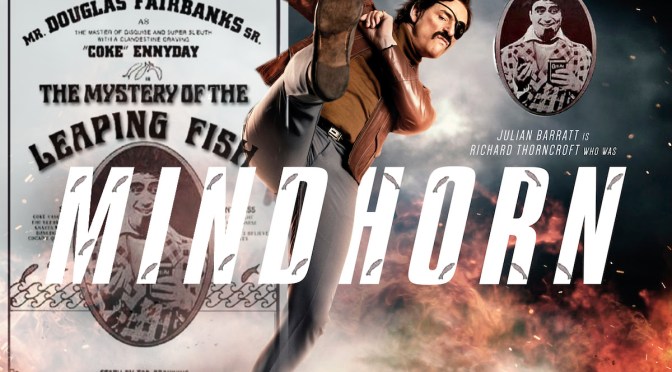
Sound Barrier: Mindhorn & The Mystery of the Leaping Fish (1916)

This episode of the Sound Barrier features two druggy and slightly dim detectives. We’re talking about Julian Barratt’s absurdly funny TV spoof Mindhorn and the cult favourite that is The Mystery of the Leaping Fish (1916), starring Douglas Fairbanks as sleuth Coke Ennyday. We talk about outrageous accents, preposterous plasticine, obscene graffiti and excessive amounts of cocaine.

Sound Barrier: Mindhorn & The Mystery of the Leaping Fish (1916)

In the studio, I am joined as ever by Peter Baran, and also by special guest Julian Coleman (you can follow him on Twitter here).

The Silent London Podcast is also available on iTunes and Stitcher. If you like what you hear, please subscribe and leave a rating or review too. The podcast is presented in association with SOAS radio by Peter Baran and Pamela Hutchinson.

If you want to get in touch with us about anything you hear on the podcast then you can post a comment below, or tweet @silentlondon.

The next episode of Sound Barrier will appear in a fortnight’s time. We’ll announce the films for the next podcast about a week before it launches, so you can watch what we’re watching.
Silent London in no way, not even with a wink, endorses the consumption of illegal narcotics. We prefer the consumption of Class-A silent movies.

The Lodger at Yorkshire Silent Film Festival: Neil Brand’s score completes a classic

This is a guest post for Silent London by Sheldon Hall, senior lecturer at Sheffield Hallam University, who writes and lectures on film and television


Of the nine silent features made by Alfred Hitchcock, it was his third, The Lodger, that most clearly set the pattern for the director’s future career. As it’s about the hunt for a serial killer, it’s also the one that most anticipates future trends in popular culture. The BFI Archive’s beautiful restoration, undertaken as part of its ‘Hitchcock Nine’ project, was first presented five years ago with musical accompaniment that remains a subject of debate. But in the year marking the ninetieth anniversary since the original release (produced in 1926, it sat on the shelf for six months after trade previews), the film has finally been given the presentation it deserves with the world premiere of Neil Brand’s new score.

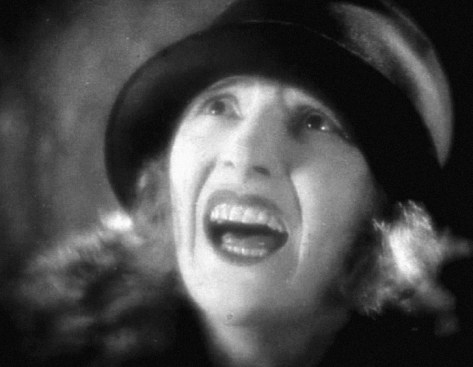
lodgerscream

This screening, in a pristine amber-and-blue-tinted 35mm print, launched the second annual Yorkshire Silent Film Festival on 5 May 2017 at the Grade II-listed Abbeydale Picture House in Sheffield. The cinema was built as a suburban picture palace in 1920 and officially closed in 1975; but it has been rescued from the threat of development and is now in the charge of a trust. The Abbeydale is the venue for a three-day weekend of screenings at the start of the month-long YSFF and attracted a healthy opening-night audience of over 200 to the re-seated stalls area, packing the house.

The Lodger (1927)
The Lodger (1927)

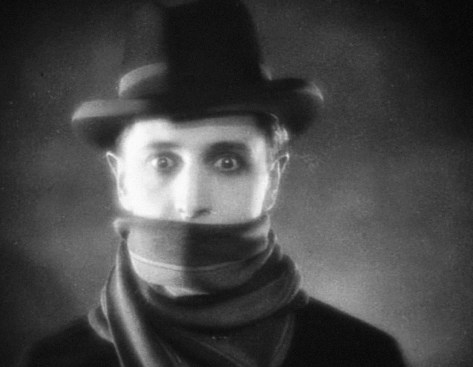
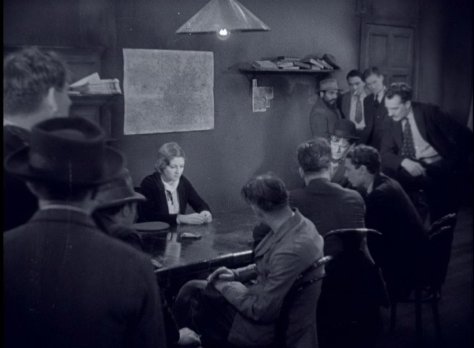
My own take on the film itself is somewhat perverse: I think the hero did it. (He did in the book by Marie Belloc Lowndes, based on Jack the Ripper.) Ivor Novello plays the mysterious lodger, who takes upstairs rooms in a family home during a wave of killings of blonde women. The murderer always leaves a note, signed “The Avenger” and marked by a triangle. In his lodgings, Novello keeps a map of the triangular area in which the bodies have been found and falls for his landlady’s blonde daughter, Daisy (June Tripp), whose suitor is a dullard police detective (Malcolm Keen) on the killer’s trail.

The Lodger (1927)

Continue reading The Lodger at Yorkshire Silent Film Festival: Neil Brand’s score completes a classic

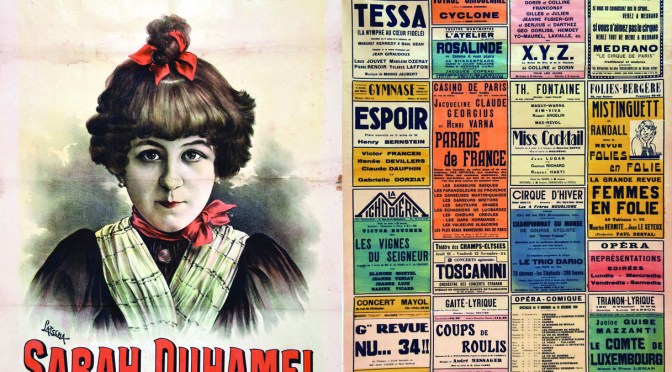
Sarah Duhamel, rebellious clown of French silent comedy

This is a guest post for Silent London by Jonathan Wakeham, the co-founder and programer of the LOCO London Comedy Film Festival, the 6th edition of which takes place at BFI Southbank 4-7 May 2017. Find out more at locofilmfestival.com.

We’re all familiar with the iconography of male silent comedy stars: Harold Lloyd’s glasses, Chaplin’s cane or Laurel and Hardy’s signature hats. They are brands as recognisable as Hitchcock’s silhouette, and they make the same promise: a guarantee of entertainment.

But there’s no equivalent female brand: no icon that’s known the world over. That’s not because there were no women silent comedy stars. Women such as Louise Fadenza, Mabel Normand, Marion Davies, Sybil Seeley and more were big names in their day. Florence Turner — “the Vitagraph girl” — was the biggest box-office draw of her era, and arguably the first true movie star.

But although they drew huge audiences there was, from the beginning, a doubtfulness about women becoming comedy stars. Part of this came from a tradition that defined comedy as inherently male; the French philosopher Henri Bergson declared in 1900 that “laughter has no greater foe than emotion … highly emotional souls in whom every event would be sentimentally prolonged and re-echoed, would neither know nor understand laughter”.

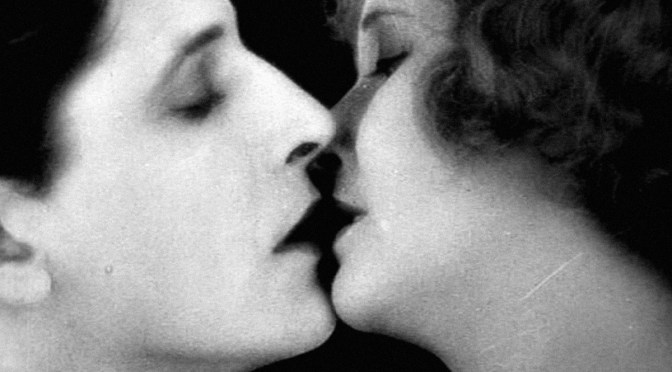
rosalie

Continue reading Sarah Duhamel, rebellious clown of French silent comedy

Sound Barrier: Lady Macbeth and The Wind (1928)

In this episode of the Sound Barrier, Silent London’s cinematic sommeliers pair Victor Sjostrom’s majestic The Wind (1928) with William Oldroyd’s astonishing debut feature Lady Macbeth, out in cinemas now. We highly recommend both films, which feature isolated women doing battle with the elements, and come laced with sex, violence and vengeance.

In the studio, I am joined as ever by Peter Baran, and also by special guest Ewan Munro, who reviews films at Filmcentric.

Sound Barrier: Lady Macbeth and The Wind (1928)

The Silent London Podcast is also available on iTunes and Stitcher. If you like what you hear, please subscribe and leave a rating or review too. The podcast is presented in association with SOAS radio by Peter Baran and Pamela Hutchinson.

Should you wish to, you can read my review of Lady Macbeth for Sight & Sound magazine here.

If you want to get in touch with us about anything you hear on the podcast then you can post a comment below, or tweet @silentlondon.

The next episode of Sound Barrier will appear in a fortnight’s time. We’ll announce the films for the next podcast about a week before it launches, so you can watch what we’re watching.

The Great Train Robbery’s parting shot

Jean-Luc Godard felt film-makers should be free to rearrange the beginning, middle and end of their scenarios. In 1903, Edwin S Porter left it to the projectionist. Scene 14 of his The Great Train Robbery, according to the sales catalogue, “can be used either to begin the subject or to end it, as the operator may choose”.

The Great Train Robbery is one of cinema’s earliest westerns, and something of a breakthrough in the development of narrative film editing. Porter’s ten-minute movie cuts between simultaneous action in different locations, more economically than in his previous work The Life of an American Fireman (1902), and the drama gains urgency from its use of location shooting, camera movement and frequent eruptions of violence. It is based loosely on Scott Marble’s 1896 play of the same name, and also, it has been suggested, a true story from 1900, when Butch Cassidy’s Hole in the Wall gang hijacked a train on the Union Pacific Railroad. The outlaws steal the mail and rob the passengers, exploding a safe and killing three men in the process. In real life, the Hole in the Wall Gang evaded capture that day, but in Porter’s film a posse of locals pursue the bandits on horseback, track them to a hideout in the woods and kill them in a shootout.

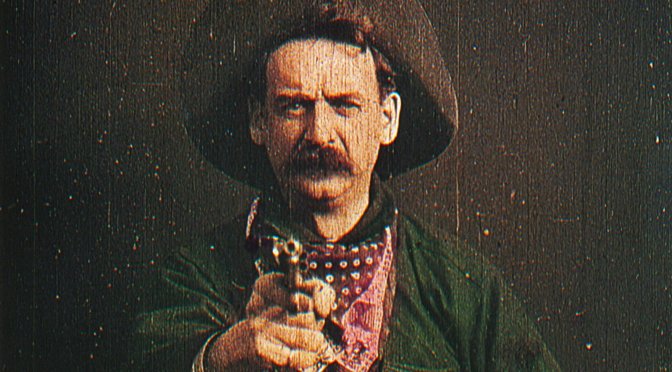
In scene 14, actor Justus D Barnes, who plays a member of the film’s bandit crew, faces the camera square-on, draws his revolver and fires six times in the direction of audience. With the gun’s chamber empty, he continues to squeeze the trigger, suggesting carelessness, desperation or an overzealous kill impulse. His impassive face suggests the last option is correct. The intended effect, according to the catalogue, which is what we have in lieu of a screenplay, is that Barnes is firing “point-blank at each individual in the audience”. It’s an especially violent act, both in real terms, and cinematic ones. The narrative momentum of the film is cast aside, then the fourth wall of the screen is broken by his gaze, only to be further ruptured by his bullets. Placed at the opening of the film, it might act as a trailer for the shoot-’em-up action to come. As a coda, it’s a warning to the audience that it’s a wild world out there, and the violence continues even after the case in the film’s title has been closed.
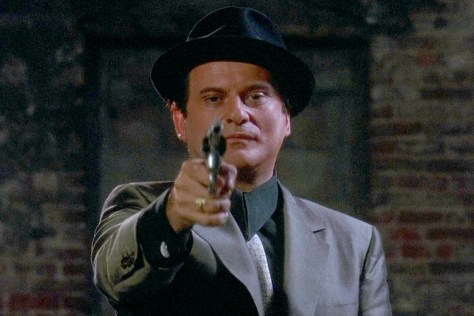
Joe Pesci in Goodfellas (1990)

That’s perhaps why the version of the film that has been handed down to us places Barnes at the end, a jolt of terror as disconcerting as a hand bursting from a grave. Martin Scorsese borrowed the shot for the ending of Goodfellas (1990), submerging a trigger-happy Joe Pesci into Ray Liotta’s farewell to “the life”. In that film, the bullets can be read as an assassination threat (Liotta’s Henry Hill has ratted out his fellow wise guys to the FBI) or a guilty conscience, troubling the protagonist with memories of past bloody deeds. But just as in Porter’s film, Scorsese is addressing the audience, not the internal logic of the film. With these gunshots, Goodfellas acknowledges its place in the history of the cinema’s glamorisation of violence, a process that comes full circle when Hill’s closing monologue states that gangsters were “treated like movie-stars with muscle”.

But what does Scene 14 do for The Great Train Robbery? Porter is serving his audience the thrill of screen violence two ways. The portrait of Barnes in character (perhaps a reference to a Wanted poster) is a remnant of the Cinema of Attractions, but within a narrative film. In order to contain all the action in the frame of a mostly fixed camera, The Great Train Robbery relies on long shots, often with the outlaws’ backs to the camera, so we can see their crimes as they commit them. Scene 14 adds spectacle to the storytelling, and character too. That sales catalogue bills it as a ”life-size picture”, but on even the scantiest Nickelodeon screen, it would be far bigger than that. It gives us a long cool look at one of the outlaws before he fires, and then reveals his face again and again as the smoke from each gunshot disperses.

great-train-robbery-broncho-billy

There’s another moment of spectacle in the film, a saloon scene in which the Wyoming locals perform a conventional group dance, and then a flashy “tenderfoot” routine, with “Broncho Billy” Anderson picking up his toes to avoid gunfire (there’s a nod to this Western turn in Goodfellas also, when Pesci’s character yells “I’m the Oklahoma Kid!” and shoots at Spider’s feet). The dance sequence serves as an introduction to the good guys who will chase the robbers down; a messenger interrupts the jig to share the news of the robbery.

If you compare these two pauses in the narrative pace of The Great Train Robbery, logic would dictate that Scene 14 should open the film, by way of announcing the gang. But in this early film, the trailblazer for so many movie westerns to come, narrative sense comes second to the thrill of action. The posse may have defeated the bandits, but as Barnes keeps firing the myth of the outlaw endures.
2016-02-14-endings

The Informer DVD/Blu review: twists and turns on the mean streets of Dublin

The Informer truly put the “international” into British International Pictures. This film, shot entirely in the Elstree studios in 1929, was adapted from an Irish novel, directed by a German, and starred a Swedish man and a Hungarian woman. As far as in-front-of-the-camera talent goes, this is exactly the kind of international collaboration that would perish with the coming of sound. Behind the scenes, British studios would only welcome in more European personnel through the 1930s, though sadly for the worst of reasons.
So The Informer is a movie on the cusp – geographically and historically. It’s fitting then that it was filmed in both silent and sound versions. The BFI restored the talkie Informer a while back, but in 2016, the silent version got the full makeover treatment, and was presented as the London Film Festival Archive Gala with a new score by Garth Knox.


informer-the-1929-011-after-restoration

And thank goodness it did, because, whether you have seen the stilted and shaky sound version or not, the silent Informer is a breath of fresh air. This is a truly accomplished late silent drama, with a graceful moving camera and fine performances, and all that emotion is heightened by slinky black shadows and high-angled shots that recall director Arthur Robison’s achievements in German Expressionism (you may have seen Warning Shadows, 1923). The story may be set in early 1920s Dublin, but this vampiric treatment suits it perfectly. Liam O’Flaherty pictured his moody thriller being made into a German film when it was still words on a page.

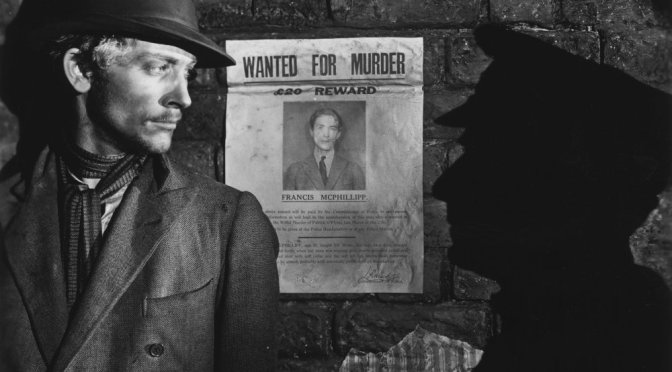
In this taut, cat-and-mouse thriller, Lars Hanson plays Gypo Nolan, one of a disintegrating band of Irish revolutionaries, who tips off the police to the whereabouts of his exiled comrade, Francis, played by Carl Harbord. Famed vamp star Lya de Putti plays the woman they both love. The story plays out in the mean streets of Dublin – there’s a claustrophobic sense of place as we feel that the characters are trapped in the city streets by their ideals as much as by their betrayals. But this city could also be any city where the people and the police are at odds. It could be Weimar Berlin, for example. And it’s uncannily like the crime-infested LA of 1940s film noir. Those shadows get everywhere.

Continue reading The Informer DVD/Blu review: twists and turns on the mean streets of Dublin

Hollywood E17: the studios beyond the fog zone

First things first – you’re all invited to a bank holiday Monday party! Some friends of mine, based in London’s most happening* postcode of E17 will be unveiling a plaque on 1 May 2017 to celebrate a slice of suburban London’s silent movie history. And you should be there!

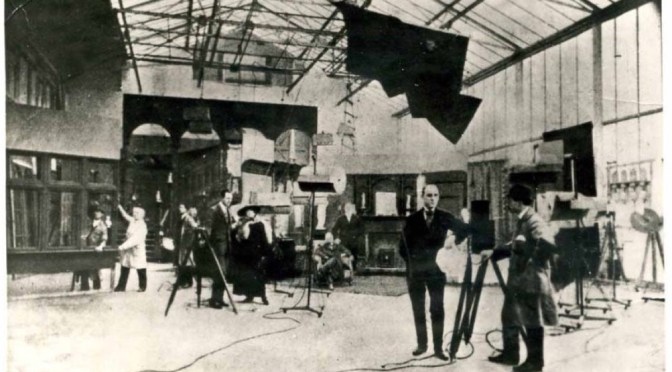
Walthamstow was home to several movie studios in the silent era – Precision, British & Colonial, Broadwest and I. B. Davidson all had their premises on these streets. Why? Because silent film producers loved to shoot in the suburbs, beyond the “fog zone” of central London, where the air was muggy, and apparently the movie-savvy punters would try to get their faces on camera. But they liked to stay close enough to Theatreland that their actors could get back to work after shooting finished.

And yes, Walthamstow has always been super cool.

So on 1 May, actor Paul McGann (who you may know is a bit of a silent film fan) will be unveiling a special blue plaque to mark the sites of the Precision studios, and he says: “I am proud to be associated with this event to give the deserved recognition to the silent film pioneers of the last century.” There will be more plaques to follow, marking the site of each studio.

Continue reading Hollywood E17: the studios beyond the fog zone

Two-for-one special offer on tickets to India on Film at BFI Southbank

The BFI’s mega India on Film season kicks off this month and continues all year. The season culminates (for us early cinephiles at least) in this year’s London Film Festival Archive Gala, which will be the sumptuous silent drama Shiraz (1928), at the Barbican on 14 October 2017, beautifully restored with a brand-new score by Anoushka Shankar.

But before all that, there are plenty of films to be getting on with, and if you’d like to take advantage of a two-for-one ticket offer for the films showing at BFI Southbank in the India on Film season, step this way …

Simply quote INDIA241 when booking on line, in person or over the phone to claim the offer. Only valid for all films and events in the BFI’s India On Film season in 2017.

Please note that this ticket offer does NOT include the Archive Gala.

The first silent morsels that caught my eye in the season are a couple of talks on Saturday 20 May 2017:

The first of those talks concludes with a screening of Raja Harishchandra – a rarely seen film from 1913, and the earliest extant Indian movie. To find out a little more about the making of this film, and early Indian cinema in general, why not read a little feature I wrote for the Guardian in 2013, to mark the Centenary of Bollywood’?

If you can’t make it to BFI Southbank this year, look out for screenings of Shiraz around the country after the Archive Gala, and check out the India on Film collection on BFI Player.


The Goddess (1934) DVD review: gossip is a fearful thing

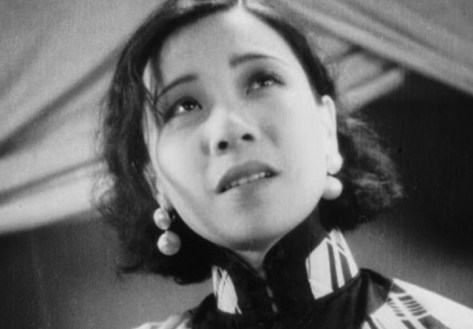
Ruan Lingyu appeared in her first film in 1927, aged 16. In 1935, she took her own life, just over a month before her 25th birthday. In that short time, she had appeared in many Chinese silent films and become one of the country’s best known actresses. Today she is celebrated for her delicately nuanced performances in those films that survive – she has been called the “Chinese Garbo”. However, if you’ve seen Stanley Kwan’s 1992 film Center Stage say, you will also know about the troubles Lingyu encountered, and the events leading up to her shocking suicide.

Lingyu’s private life shouldn’t concern us now, any more than in 1935, but when you watch The Goddess, a stunning Chinese silent film and one of the last she made, it is difficult not to make a link between the actress and the character she plays. Lingyu’s suicide note (which may have been forged) famously read “gossip is a fearful thing”, and her early death came after she had been monstered by the press over her love life. In The Goddess, Lingyu plays another woman devastated by malicious gossip. But it’s important not to take this comparison too far – the chatter of small-minded women is not the worst of her character’s problems.

the-goddess-1934
The Goddess (1934)

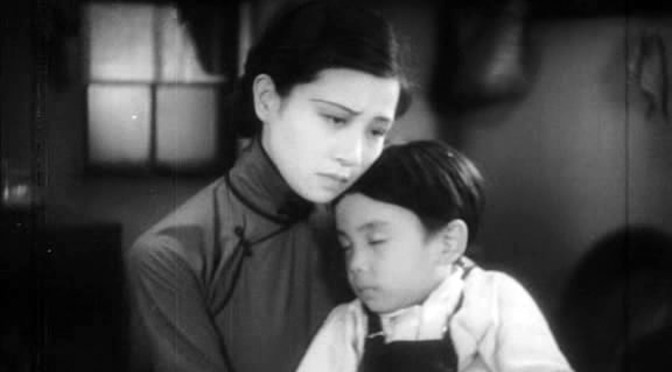
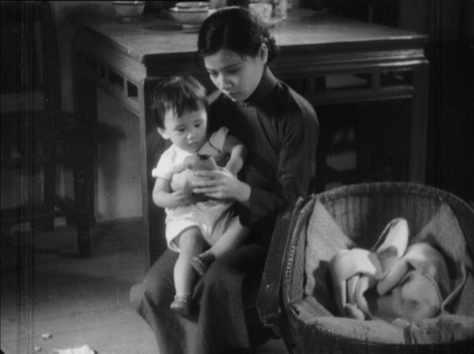
The first thing to know about this film, which is every bit as beautiful and tragic as its star, is that “goddess” was a Chinese slang term for a prostitute, perhaps a slightly ironic one. Lingyu’s character embodies the perceived contradictions in that name: she is a loving mother who supports her son by nightly sex work. The crib is in the centre of her home, and her garish cheong sams are hanging on the wall. The nameless heroine has the misfortune of running into the house of a sleazy gambler, “The Boss”, when fleeing the police one night. From that moment one, her decides to exploit her, taking her earnings on the threat of harming her son. When the “goddess” attempts to send her son to school, the other mothers soon catch on to the way she earns her money, and complain to the principal, which is when our heroine faces the worst crisis of all.

Prostitution was rife in China in the 1930s and The Goddess’s story would not have been unusual. Many women were forced by poverty or trafficking into a career that was both illegal and made them vulnerable to pimps and clients – some of whom might be beasts like the Boss. If they aspired to a better, safer, more respectable life, the taint of sex work could hamper their efforts – which this film illustrates. The Goddess doesn’t feel like a campaigning film, despite a rousing speech made by the school principal, and you may feel let down by the ending. But this is a humane and very moving film – who knows whether it may have changed a few attitudes in its time?

The Goddess (1934)
The Goddess (1934)

Continue reading The Goddess (1934) DVD review: gossip is a fearful thing

Sound Barrier: Neruda & The Beloved Rogue (1927)

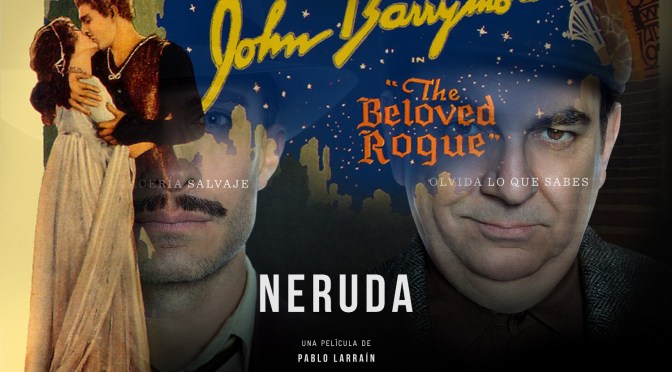
In episode two of the Sound Barrier podcast we wax poetic, with two films about poets – specifically poets in exile. The two films we will discuss – one new release and one silent classic – are Pablo Larrain’s Neruda and The Beloved Rogue (1927) starring John Barrymore. The two films may appear to be very different, but they have a lot in common, as we discover …

Continue reading Sound Barrier: Neruda & The Beloved Rogue (1927)

Letters from Baghdad review: an engrossing portrait of an intrepid woman

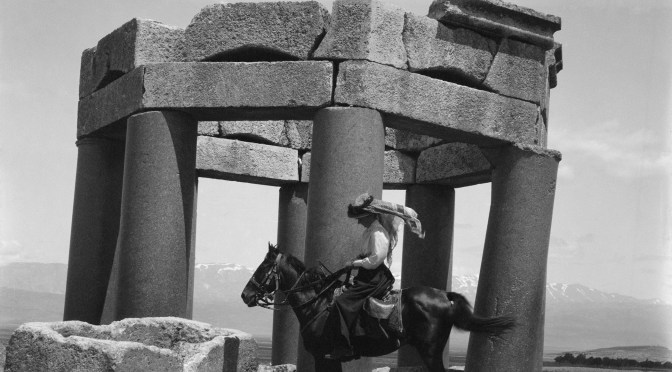
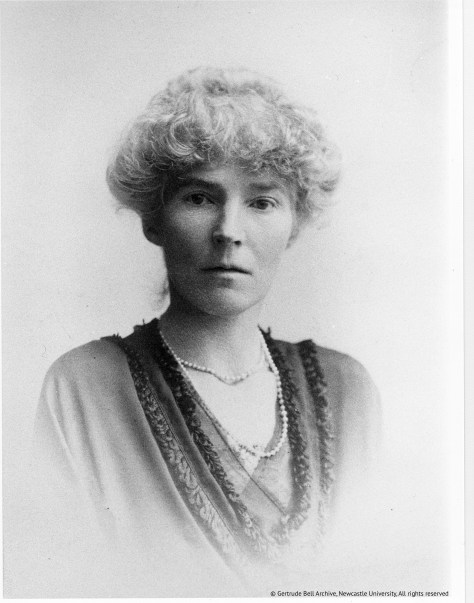
The publicity for compelling new documentary Letters From Baghdad quotes a description of Gertrude Bell as the “female Lawrence of Arabia”. To be strictly accurate, it was T. E. Lawrence, at 20 years her junior, who followed Bell rather than the other way around – first to Oxford, then to the Middle East and into government service. It hardly needs stating that these routes were rather less well-trodden for Bell than for Lawrence, although there is no need to diminish the achievements of either one. Bell’s story, as told in this engrossing semi-dramatised documentary, is that of a pioneer – a woman whose ambitions exceeded the expectations of her class and gender, who experienced bitter personal disappointment but achieved a notable and important career. Although her story has a sad ending, the work she did had far-reaching consequences, ones that are still felt today.

Bell was born in 1868, in County Durham, and raised in Yorkshire. After graduating from Lady Margaret Hall, Oxford with a first in history, she began to travel the world. Initially to Persia to visit an uncle who was a diplomat there, and then around the world indulging a passion for mountaineering. She learned several languages, including Arabic and returned to the Middle East in 1899, travelling right across the region and writing an influential book on Syria. She spent some time working as archaeologist in the Ottoman Empire and also in Mesopotamia, where she first met Lawrence.

gertrude-bell-1921
Gertrude Bell (1921)

It’s during the war that Bell’s story gets especially interesting, as the British intelligence service recognised her expertise and hired her to assist with their operations in the region. After the war she would continue in the Middle East until her death, later as part of the team drawing up borders of modern Iraq, and after that she was given responsibility for the safeguarding the area’s antiquities.

Continue reading Letters from Baghdad review: an engrossing portrait of an intrepid woman

‘Pandora’s Box with the lid off!’: Lulu’s misadventures in London

This is an extended version of a paper that I gave at the British Silent Film Festival Symposium at King’s College London on 7 April 2017. My book on Pandora’s Box (1929) is forthcoming from BFI Palgrave.

***

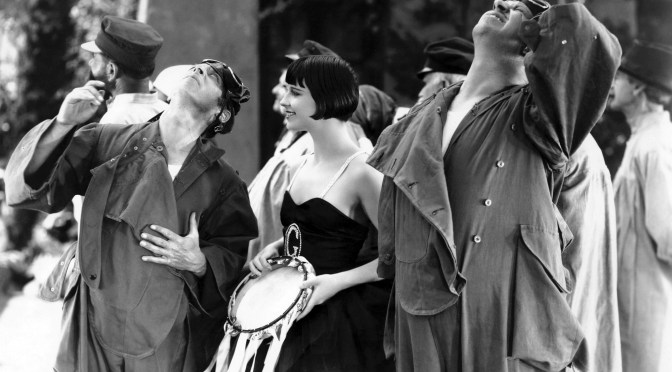
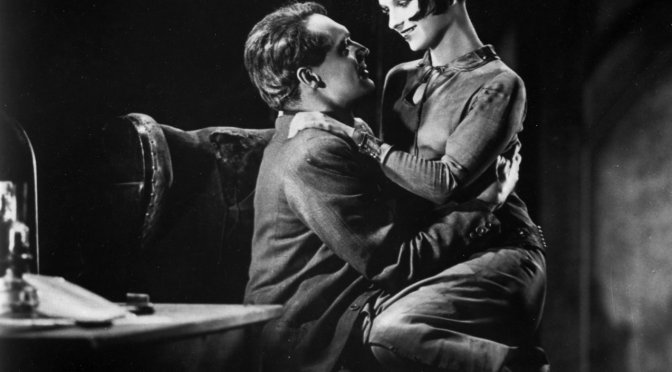
G. W. Pabst’s Die Büchse der Pandora (Pandora’s Box, 1929) is an adaptation of Frank Wedekind’s Lulu plays, but in many places a very loose one. Those German plays are about thirty years older than the film, a Weimar-era classic that marries traces of Expressionism with the late-1920s sobriety of the Neue Sachlichkeit movement. Pandora’s Box was filmed in Berlin, or at least in a former zeppelin hangar in Staaken, and its American star Louise Brooks identitfied its depiction of divergent sexualities and the sex trade with the city’s glamorous, permissive nightlife. Her evocative description of the city during the shoot, when she was staying at the famous Eden Hotel, begins: “Sex was the business of the town …”

“At the Eden Hotel, where I lived in Berlin, the café bar was lined with the higher-priced trollops. The economy girls walked the street outside. On the corner stood the girls in boots, advertising flagellation. Actors’ agents pimped for the ladies in luxury apartments in the Bavarian Quarter. Race-track touts at the Hoppegarten arranged orgies for groups of sportsmen. The nightclub, Eldorado, displayed an enticing line of homosexuals dressed as women. At the Maly, there was a choice of feminine or collar-and-tie lesbians. Collective lust roared unashamed at the theatre.”[i]

There is only one named location in the film, however, and it is in this place that the fictional narrative bumps into historical circumstance – so in this case, geography carries crucial meaning. The final act of Pandora’s Box the film, just like the final act of Wedekind’s play of the same name, takes place in London – in a slum district most likely in the east of the city. Jack the Ripper walks these streets, and our heroine Lulu, reduced to prostitution, encounters him with fatal consequences. This murder is her dramatic destiny, and to understand the film more fully, which was possibly the first cinema adaptation of the plays to feature London and the Ripper, we need to think about the British capital rather than the German one. To explore this topic I am going to examine three disappointing “misadventures” in London: the visits made by Frank Wedekind, Louise Brooks and the film itself.

Continue reading ‘Pandora’s Box with the lid off!’: Lulu’s misadventures in London

Sound Barrier: The Lost City of Z & The Lost World

Welcome to a new format for the Silent London podcast – Sound Barrier, in which myself and Peter Baran partner a new-release movie with a classic from the silent era and let them fight until we find a winner. In this instalment the two contenders in the ring are both movies inspired by the British explorer Percy Fawcett: James Gray’s The Lost City of Z (2017) and Harry O Hoyt’s The Lost World (1925).

We’ll be talking about dinosaurs, derring-do and disease – also singing the praises of Wallace Beery and Sienna Miller. Have a listen!

The Silent London Podcast is also available on iTunes. Click here for more details and to subscribe – if you like what you hear, please leave a rating or review too. The intro music is by kind permission of Neil Brand, and the podcast is presented in association with SOAS radio.

If you want to get in touch with us about anything you hear on the podcast then you can post a comment below, tweet @silentlondon or leave a message on the Facebook page: facebook.com/silentlondon.

Revolution: New Art for a New World review: where art and politics clash

Who among us can honestly say they haven’t got their history from the movies? Sometimes, at least. And while Hollywood epics are known to take liberties with the facts, some movies seem to be more immediate sources. Take Soviet history. If you are a silent film aficionado you will have seen how Soviet cinema is constantly re-presenting events from its own recent past. And even if you don’t mistake reconstruction for documentary fact, these films provide their own window on history. The government involvement is often painfully clear, but that in its turn provides its own commentary on the events as presented on screen. A new documentary about Soviet art history, Revolution: New Art or a New World, recounts a familiar anecdote about Eisenstein’s October (1928), a stirring re-enactment of the 1917 revolution. On the day of the premiere, Stalin himself entered Eisenstein’s editing room, and ordered that all scenes involving Trotsky be excised.

So the film, intended to create a certain impression of the workers’ struggle, and of Lenin’s leadership, loses a fragment of what truth remains inside the propaganda. But, of course, this story is almost well known enough to be a companion-text to the film. October becomes known as the story of the 1917 uprising, but without Trotsky, on Stalin’s orders. That said, I hadn’t realised quite how much exaggeration went into October’s depiction of the assault on the Winter Palace. Revolution put me right on that too.

Rodchenko Photographs. © Foxtrot Films

What I’m saying is that context is always important, and this documentary, released on DVD next week is especially welcome as a survey not of all Soviet history, but the art scene, and its relationship with the changing political regimes. For Lenin, art was the best form of propaganda, and he channeled plenty of funds into hiring artists to make monuments and sculptures of socialist heroes. Never mind that many of those artists had absorbed the revolutionary spirit of the times themselves and felt passionately that their work should not be beholden to religion or state. There is a great line here about the anarchism of Malevich’s work coinciding with Bolshevism, rather than there being an cause-and-effect at work between the two.

Continue reading Revolution: New Art for a New World review: where art and politics clash

In praise of La Maison du mystère and the silent serial

 This is a guest post for Silent London by John Sweeney. John Sweeney is one of London’s favourite accompanists, composing and playing for silent film and accompanying ballet and contemporary classes. He researched and compiled the music for the Phono Cinéma-Théatre project and is one of the brains behind the wonderful Kennington Bioscope at the Cinema Museum. His score for Lois Weber’s The Dumb Girl of Portici will accompany the film on its forthcoming DVD/Blu-ray release this year.

The Silent Serial is perhaps the least watched of all the great silent film genres. Yet they were hugely popular: from about 1910 most studios produced serials, or their close relative, series (serials keep a plot going over the course of all the episodes, series have self contained plots in each episode but a common cast of characters). Some of the most famous are The Perils of Pauline (1914) and The Exploits of Elaine (also 1914), both starring Pearl White as the heroine struggling against assorted villains, The Hazards of Helen (119 episodes!), and in France Louis Feuillade directed the wonderful Fantômas (1913), followed by Les Vampires, Judex, Tih Minh, Barrabas and Parisette.
Fantômas (1913)
Fantômas (1913)

Continue reading In praise of La Maison du mystère and the silent serial

Hippfest 2017: the Silent London Podcast

Thank you to the Hippodrome Silent Film Festival for another great week/end of music and movies in a very warm and sunny Bo’ness. I was there from Wednesday to Saturday and here’s my podcast report from the event, now in its seventh year.


From Nell Shipman’s The Grub Stake and Lorenza Mazzetti’s Together to Marion Davies and Marie Dressler in The Patsy, Ruan Lingyu in The Goddess and Aleksandra Khoklova in By the Law there was a special emphasis on the women of silent cinema at this year’s festival. But the programme as a whole was far too diverse to summarise here. I hope you enjoy hearing all about it – especially if you were lucky enough to be here.

Hippfest 2017: the Silent London Podcast

Big thanks to the Hippodrome cinema and to the festival, but also to the lovely people of Bo’ness, the Richmond Park Hotel, the Corbie Inn and my absolute favourite, the Ivy Tea Room.

Help Hippfest buy a piano here.

The Silent London Podcast is available on iTunes. Go there for more details and to subscribe – if you like what you hear, please leave a rating or review too. The intro music is by kind permission of Neil Brand, and the podcast is presented in association with SOAS radio. The other music you can hear on this podcast was written and performed by Maud Nelissen and the Sprockets for the Hippodrome Festival.

The Silent London Podcast: Toute la mémoire du monde 2017 part four

My final Silent Paris Podcast from the Toute la mémoire du monde festival of restored cinema covers three films: one silent classic, The Italian Straw Hat (1928), and two experimental American features from the 70s and 80s: The Notebook of (1971) and American Dreams (1984).

Continue reading The Silent London Podcast: Toute la mémoire du monde 2017 part four

The Silent London Podcast: Toute la mémoire du monde 2017 part three

Welcome to another edition of the Silent Paris Podcast. I am at the Toute la mémoire du monde festival of restored cinema all weekend and podcasting my reports from the screenings. Saturday was a game of two halves: two silent films and two British films noir. Listen to today’s podcast to find out what I made of them …

habit-of-happiness
The Habit of Happiness (1916)

Continue reading The Silent London Podcast: Toute la mémoire du monde 2017 part three

The Silent London Podcast: Toute la mémoire du monde 2017 part two

It’s the Silent Paris Podcast! I am at the Toute la mémoire du monde festival of restored cinema all weekend and podcasting my reports from the screenings. Today, I am talking about a day spent watching musicals and what they taught me about jazz, CinemaScope and silent comedy.

Please do enjoy this podcast, even though it seems to veer away from silent territory – there is a connection, I promise.

Continue reading The Silent London Podcast: Toute la mémoire du monde 2017 part two

A place for people who love silent film