
Michael Powell made films in the south of France. Before that one. His first job in the film industry was working at the Victorine studios of Rex Ingram, just outside Nice, in the mid-1920s. He was 19 and he took on pretty much any job he could on set, trying to learn the business from the ground up. It worked, didn’t it? He even appeared in front of the camera a few times, often playing a sappy creation called Cicero Simp in the Riviera Revels comic shorts.
Continue reading The Magician (1926): Rex Ingram, Michael Powell and the French Riviera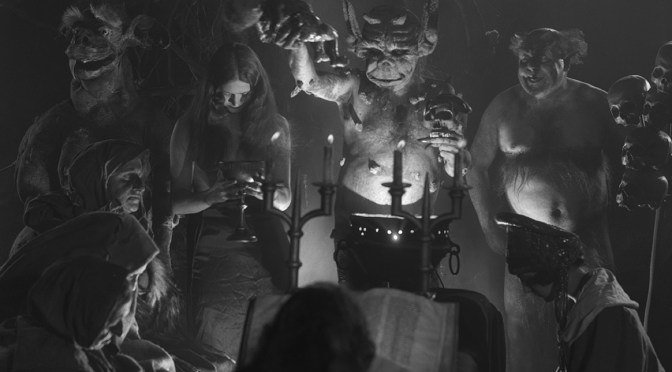
Phantom Pipes: Häxan at Regent Street Cinema
I am almost home from my festival jaunts, and it seems the weather has turned chilly since I left home. The nights are drawing in, the candles are flickering… it must be spooky season.
Why not kick off your annual creepathon with a screening of a silent classic: Benjamin Christensen’s 1922 demonic drama-documentary Häxan? My excellent friends at Evolution of Horror, who leave no stone in scary cinema unturned, are hosting a screening of Häxan with live organ accompaniment at one of London’s most historic film venues, the Regent Street Cinema.
There’s more. The screening, which takes place this Thursday, 19 October, will be followed by a panel discussion hosted by EOH’s own Mike Muncer, with peerless horror expert Kim Newman, terrifyingly knowledgeable actor James Swanton – and myself, the world’s most squeamish woman, and something of a silent film aficionado, it has been said.
The Evolution of Horror events are always good fun – I have been part of panels for Nosferatu and The Birds in the past, so I know what I am talking about. And to get a sense of EOH’s insightful yet irreverent style, you can explore their treasure trove of podcasts here. Just don’t have nightmares. Well not unless they look as stunning as the work of Johan Ankerstjerne. In which case, be my guest.
As they say here in France: je vous souhaite une bonne séance!
- Book tickets for Häxan here.
- And don’t miss the screening of The Phantom of the Opera on 29 October either.
- Visit the Evolution of Horror website here.
- Check out my calendar here – I have two Powell and Pressburger events this week, and more to come.

Booking now: Neil Brand’s An Evening with Laurel and Hardy
Excuse me while I push at an open door. Who here would like to see one of the world’s finest silent film experts and accompanists host a show dedicated to the comic brilliance of Laurel and Hardy? Ah, that’s all of you. Well good news, friends, as Neil Brand is taking his An Evening with Laurel and Hardy show on the road across Britain. And I mean across Britain.
Brand, his piano, and his encyclopaedic knowledge of Stan and Ollie, will set you up for a side-splitting dive into Hollywood’s golden age of slapstick. You may just learn something, but laughs are guaranteed.
“Join Neil Brand, composer, writer, broadcaster, musician who is a world expert on silent film & silent comedy with his all-new show about the immortal comedy duo. Fully illustrated with stills, clips & Neil’s superlative piano accompaniment, this show promises gales of laughter throughout. “
Check out the tour dates here. There is bound to be a show somewere near you, so treat yourself. And keep up to date with more of Brand’s work here.

Le Giornate del Cinema Muto 2023: Pordenone Post No 8
The final day of the Giornate, for indeed this was the final day of the Giornate, was a lot like the Ryder Cup. Confused? Well bear with me as I unpack this extremely rare sporting analogy. It was a case of Europe vs the United States, with the home continent playing the first half of the day and Hollywood taking over just as the sun was about to set.
Continue reading Le Giornate del Cinema Muto 2023: Pordenone Post No 8
Le Giornate del Cinema Muto 2023: Pordenone Post No 7
You don’t have to be superstitious to notice when the date is Friday the 13th, and conduct yourself cautiously as a result. And of course I am not superstitious – unless you count the fact that I am convinced I willed this evening’s gala into existence by the power of my mind. But that’s a story for later on…
Continue reading Le Giornate del Cinema Muto 2023: Pordenone Post No 7
Le Giornate del Cinema Muto 2023: Pordenone Post No 6
Good vibes only at the Giornate on this sunny Thursday. All of us who made it to the extra-early morning serial knew that we had got out of bed on the right side as soon as we realised that this episode of Le P’tit Parigot might have been called La P’tite Parisienne. Yes, it was young Bouboule’s time to shine, as she raced to the rescue of Biscot in a very fetching Delaunay pinafore, and explained her actions in a nifty flashback while the two of them filed through his prison bars. The episode took a turn for the torrid towards the end, but otherwise oh what a joy.
Continue reading Le Giornate del Cinema Muto 2023: Pordenone Post No 6
Le Giornate del Cinema Muto 2023: Pordenone Post No 5
Pordenone changes a person. I don’t just mean in the way that my bloodstream is now 80% espresso. It changes your aspirations. My dream now is to live in an apartment designed by Sonia Delaunay, watching Peter Elfelt’s dance films (they are playing before several of the screenings) all day. For loungewear, I would choose the louche shawl-collared robe sported by Jaque Catelain in Le Vertige, and if I ever left the flat, I would wear the stunning geometric coat and hat sported by Madame Gilberte in Le P’tit Parigot. I’d take the vintage Bugatti too, please.
Continue reading Le Giornate del Cinema Muto 2023: Pordenone Post No 5
Le Giornate del Cinema Muto 2023: Pordenone Post No 4
We’re at the halfway mark, and let me be abundantly clear: I’m not ready to go home yet. But should you be homesick, there was more than a taste of London in the Verdi today, with Walter Forde’s chase comedy Would You Believe It? (1929) for starters, and even Harry Piel or rather Harry Peel transported us to the Big Smoke for his Rivalen (1923). More of which anon.
More authentically, Jacques Haïk’s Se London!, filmed in the summer of 1927, gave us the view from the streets, whisking us from Hyde Park to Whitechapel in dashing style. I was lucky enough to write about this one for the catalogue, so I was cockahoop to see it on the big screen, with London’s own John Sweeney bringing out the spirit and style of this characterful travelogue. Especially, in the really beautifully photographed Tower Bridge sequence – a real highlight of this film.
Continue reading Le Giornate del Cinema Muto 2023: Pordenone Post No 4
Le Giornate del Cinema Muto 2023: Pordenone Post No 3
As Erich Von Stroheim never ever once said: I’ll keep this fairly brief. That’s partly because I was a little distracted today by matters literary, only some of which is relevant to this dispatch.
Continue reading Le Giornate del Cinema Muto 2023: Pordenone Post No 3
Le Giornate del Cinema Muto 2023: Pordenone Post No 2
Pordenone eh? It’s like Christmas for silent film fans. Quite literally tonight at the breathtaking conclusion of tonight’s headline film. The title was Hell’s Heroes, and we were watching the silent version of William Wyler’s 1929 sound adaptation of the story better known as Three Godfathers.
Continue reading Le Giornate del Cinema Muto 2023: Pordenone Post No 2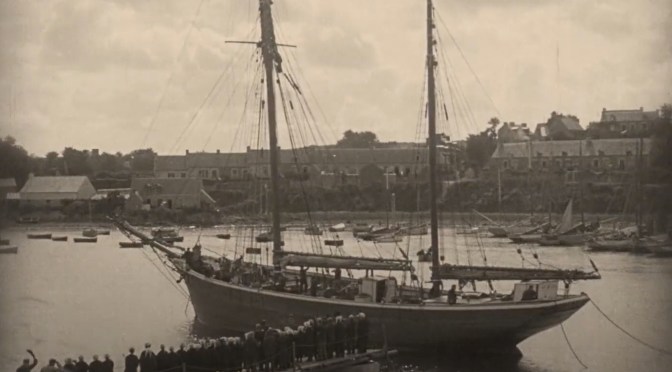
Le Giornate del Cinema Muto 2023: Pordenone Post No 1
Watch your step, Pordenauts. Leaving the Verdi after the first afternoon of screenings at this sun-soaked Giornate, I almost walked into the path of the Pordenone Pnthlon relay race. A timely reminder that this festival of silent cinema is a marathon not a sprint, so get set, but don’t tear off too fast, we have eight days ahead of us.
Continue reading Le Giornate del Cinema Muto 2023: Pordenone Post No 1
The White Sister (1923): Lillian Gish’s leap of faith
This is a guest post for Silent London by James Patterson.
In a 1909 Los Angeles Times review of F. Marion Crawford’s novel The White Sister, the critic noted that Crawford (1854-1909) was “a greater favourite” in Europe “than any other American”. (1) The book is about a young woman who upon learning her fiancé is killed on a foreign mission, enters a convent to become a hospital nun. According to the LA Times, the novel has a happy ending. Spoiler alert: The 1923 film version with Lillian Gish (1893-993) and Ronald Colman (1891-1958) does not end happily.
The White Sister was a popular stage play in the U.S. with actress Viola Allen (1867-1948), who starred in the first film version in 1915. The Pittsburgh Post-Gazette said the film “is one of the important and pretentious attractions that has been achieved since the invention of motion pictures, for it not only presents a legitimate star in the play in which she was successful but also shows a distinct advance in the art of animated photography.” Publicity for the film boasted: “It was the most beautiful story ever written about a man’s devotion and a woman’s self-sacrifice.” Sadly, the 1915 version of The White Sister, an Essanay production, is among the thousands of lost silent films.
Continue reading The White Sister (1923): Lillian Gish’s leap of faith
Happy dance
“Just a little note” is so often code for “here comes some shameless self-promotion”. So, here goes.
Just a little note to say that today is publication day for my second BFI Film Classic. As I posted earlier in the year it is on The Red Shoes (Michael Powell and Emeric Pressburger, 1948), a film with several connections to silent cinema and to the Roaring Twenties – but strictly speaking, off-topic for this website. Still, I hope that if you love the film, you like the book.

The BFI has just launched its Cinema Unbound epic celebration of Powell and Pressburger and The Red Shoes will be re-released on 8 December. So I will be speaking at lots of screenings of the film across the country. To find out where I will be and when, follow me on Twitter/X or Blue Sky or check back here every so often.
The book is available from all good bookshops, and the publisher’s page is here. I am delighted to have had some press mentions already, but all reviews on Amazon and Goodreads are very, very gratefully received. Thanks so much for reading!


The Signal Tower (Clarence Brown, 1924): the romance of the rails
I originally wrote this piece for Sight and Sound in 2019, after seeing The Signal Tower at the San Francisco Silent Film Festival. I am sharing it here because the festival is making the film available to stream for 24 hours to celebrate Silent Movie Day.
On a remote stretch of American railroad, a hard-working signal operator and his family are terrorised by a snarling villain. While his pretty young wife defends her virtue against the intruder’s threats, our hero engages in a thrilling race to the rescue to save a runaway train. It could easily be the plot of one of D.W. Griffith’s early short melodramas, but this is Clarence Brown’s The Signal Tower, a fully fledged feature film from 1924, adapted from a short story by Wadsworth Camp.
Continue reading The Signal Tower (Clarence Brown, 1924): the romance of the rails
Pordenone season
Fall vibes. It’s giving pumpkin spice lattes, mellow fruitfulness, Luke Danes in a flannel shirt and the scent of a freshly sharpened pencil. This autumnal atmosphere can only mean one thing. Pack your bags, gang, we’re going to Pordenone.
The Pordenone Silent Film Festival hasn’t begun yet, it runs 7-14 October, but today the programme was announced, so let’s take a look and enjoy some shivers of anticipation. Shivers? Best put a cardigan on, it’s October.
Continue reading Pordenone season
A Chaplin tribute to Carl Davis
We were shocked and saddened to learn of the death of Carl Davis last month. I am very sorry to relate that his wife, Jean Boht, also passed earlier this month. I am sure you will join me in sending condolences to the family.
On a happier note, I am able to share with you an occasion to celebrate Carl’s life and work – as well as his love of Charlie Chaplin – at the Garden Cinema, central London, on 15 October.
In a celebration of Carl’s life and work, Bar Shorts will screen three silent Charlie Chaplin Mutual Films with scores composed by Carl at The Garden Cinema in Covent Garden at 2pm on Sunday 15 October. These shorts are rarely seen and chart the trajectory of the young Chaplin as he made his way from the new kid on the block to iconic film star. The films were programmed for Bar Shorts by Carl just before he died. Curated by our friend the double BAFTA-nominated television and film writer and director Chris Shepherd and Dog&Rabbit Animation, the programme will be followed by a Q&A with Carl’s daughter Jessie.
This promises to be a beautiful way to remember Carl. The films screening will be:
Behind the Screen (1916) 25 Minutes
The Cure (1917) 25 Minutes
The Immigrant (1917) 25 Minutes

Watch Theda Bara in Cleopatra (1917): lost footage rediscovered
A major discovery screened Mostly Lost this year. Researcher James Fennell has identified a clip from some footage purchased on eBay as scenes from one of the most sought-after “lost films” of all time: Cleopatra (1917), starring iconic vamp Theda Bara. While the image of Theda Bara in her risqué pearl breastplate (now on display at the V&A as part of the Diva exhibition) is well known to all silent cinema fans, the film itself has long been missing.
Continue reading Watch Theda Bara in Cleopatra (1917): lost footage rediscovered
Brigitte Helm: the perils of hedonism
There is no face more closely associated with the grandeur of Weimar Cinema than that of Brigitte Helm. Her first appearance on film was in the iconic dual-role of the teacher and the robot in Fritz Lang’s Metropolis (1927). As the villainous clone, her frenzied dancing and her kohl-rimmed eyes in winking close-ups incarnated a particularly timely force of evil: the giddy whirl of decadent 1920s Berlin. This was a time, according to German politician Gustav Stresemann, in which the people of Germany, intoxicated by the possibilities of the post-war world, were dancing on a volcano. Danger was afoot. In Metropolis, Helm’s crooked finger lured the hapless citizens to the brink. And audiences followed.


Pirmoji Banga 2023: Come up and see Mae sometime
Life is short, people are busy, most of us have no time to waste. Pirmoji Banga, Vilnius’s hip festival of silent and early sound cinema, knows the importance of getting straight to the good stuff. How so? When the festival’s remit covers decades of film history?
In 2023, Pirmoji Banga, directed and curated by Aleksas Gilaitis, concentrated solely on the female contribution to beginning of film, which we all know by now is substantial. This year’s edition of Lithuanian festival Pirmoji Banga screened films starring Asta Nielsen, Mae West, Brigitte Helm and Louise Brooks, directed by Elvira Notari and Lotte Reiniger, and female-led stories such as The Nortull Gang, directed by Per Lindberg in 1923. Beautiful programming.
Continue reading Pirmoji Banga 2023: Come up and see Mae sometime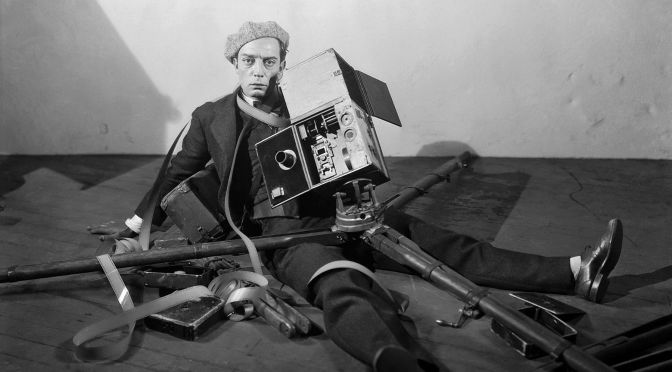
Buster goes to the seaside: Kent MOMI relaunches this week
I first visited Kent Museum of the Moving Image back in 2019. This museum in Deal has a fascinating, and extensive, collection of material relating to the moving image. I remember I was particularly struck by a beautifully detailed reconstruction of Googie Withers’ dressing table as well as a gorgeous set of magic lanterns, dioramas and other pre-cinema treasures. Now, the big news is that Kent MOMI is about to relaunch in grand style, this week.
Continue reading Buster goes to the seaside: Kent MOMI relaunches this week Silent London