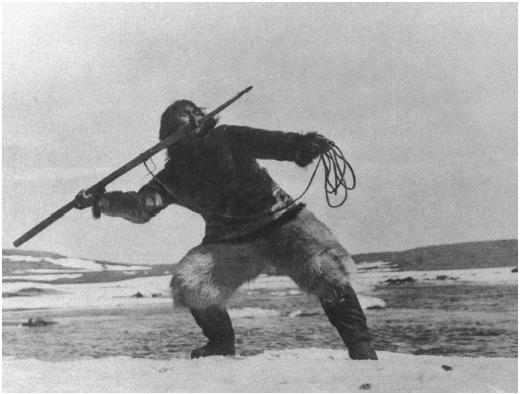
It’s always a pleasure to learn about a new film society in London, especially one that chooses its films with as much care and originality as the Screen Shadows group, whose inaugural season includes some notable silents. The F is for Fake season features, on 18 November, Robert J Flaherty’s hit documentary Nanook of the North (1922) in a special double-bill.
We have decided to pair Nanook of the North with The Girl Chewing Gum, a 1976 experimental work by John Smith. Although from different genres and eras, both films work very well together to say something about our current theme: fakery in film. As part of our commitment to encouraging new ways of thinking about film, as much as the screening of overlooked films or the screening of films in areas underserved by the usual channels of film exhibition, the session will be introduced by a guest speaker, AL Rees from the Royal College of Art.
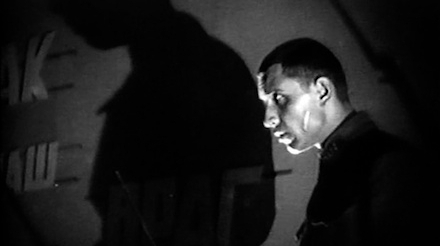
Storm Over Asia (1928)
And on 2 December, as part of the same season, Screen Shadows will show Pudovkin’s monumental Storm Over Asia (1928), another film that raises interesting questions about authenticity:
The literally translated Russian title “The Heir to Genghis Khan” indicates the incitement to atavistic struggle that drives Pudovkin’s measured and resolute move beyond the film-mythologies of the Bolshevik revolution, in this historically charged epic based on a story of two unconnected thefts and one mistaken identity. How does a young Mongol fur-trader rebel and come to political consciousness? And just what does an Imperial British army garrison and trading outpost hope to gain by exploiting the falsehood that has come to define their captive? … How might implying a direct genealogical link between a twentieth-century Mongol fur trader and the twelfth-century Golden Horde inform a critique of imperialism in the Far-East, and what does this say about the cinema’s role in promulgating the myth of a culturally sensitive, ‘benevolent’ Soviet expansionism?
Nanook of the North screens at Oxford House, Bethnal Green E2 6HG on 18 November 2011 and Storm Over Asia on 2 December 2011. Entry is £7 or £5 (concessions and Tower Hamlets residents). The nearest tube station is Bethnal Green. For more details visit the Screen Shadows website.
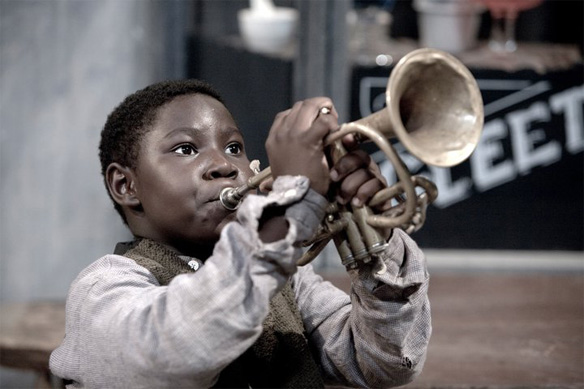
The difference between homage and pastiche is largely a question of respect. It perfectly possible to pastiche something you don’t care for very much, or don’t understand, whereas a homage aims to be a worthy tribute to the art that inspires it. Louis (2010) is a pastiche. It’s a glossy, fast-paced film, with a charming lead performance from the young actor who takes the title role – and it’s occasionally funny, too – but I didn’t feel the love.
Louis, a “modern re-imagining” of a silent movie, is ostensibly both a tribute to Louis Armstrong, whose early life is mythologised here, and to the films of Charlie Chaplin. These two aims get so terribly bungled that the film shifts its attention away from the young Louis and towards what should be a sub-plot, featuring a villain who looks, and moves, in imitation of Chaplin. The idea of having an actor (Jackie Earle Haley, who is really very good in the role) mimic the Tramp while playing such an unpleasant character is bizarre: he’s a corrupt local judge who is guilty of murder and extortion. We see him attempting to pay off the prostitute who has given birth to his child, and when that fails, trying to suffocate the newborn in question. Adorable.
Louis may be ludicrous, but it very nearly gets away with it. There’s an undeniable pleasure in clocking all the Chaplin references, Vilmos Zsigmond’s back-and-white photography is crisp and the speeded-up chase sequences are a hoot. Yes, the film is set in a deprived quarter of early 20th-century New Orleans, but Louis is designed as a retro fantasy and if it stuck to its comedy guns, it could have been a family-friendly caper. Sadly, however, Louis loses its way very early on.
What might have been a charming film about a young boy’s love for music gets lost when it wanders on to adult territory, specifically the brothel. The scenes inside the bordello are both sanitised and horribly puerile at the same time – the women perform raunchy, anachronistic dance routines in perfectly laundered white petticoats. It’s more like a pop video than a movie in these sequences, but they are enough to give the film its US ‘R’ rating. More problematically, the storyline involving a prostitute going back to work after having an illegitimate baby raises issues that Louis is not sophisticated enough to deal with.
And then there’s the music. The score, written by Wynton Marsalis and featuring many pieces by Armstrong himself and Louis Moreau Gottschalk, is played by a 10-piece band at a volume that goes way beyond “accompaniment” – meaning, at least, you can barely concentrate on the plot holes. There’s rich, squelchy brass in almost every scene, and the tempo rarely takes a breath. You do wonder whether the music was meant to accompany the film or vice versa.
Louis is filmed in widescreen, with looping, extended Steadicam sequences and crane shots – it’s not a perfect replica of a silent film, but it will remind you of one. I don’t mind that it’s “inauthentic” in the slightest. Modern silents should come in all forms, and the idea of a silent biopic of a musician with a live score is an inspired one. The problem with Louis is that it gets distracted from what it does best, and a Chaplin pastiche is no substitute for the real thing.
A rarely seen gem from Czechoslovakian silent cinema, Battalion (1927) tells the story of a lawyer who becomes a champion of the Prague underclass. It was remade in 1937 as a sound film, but the 1920s version is considered superior: gritty and emotionally affecting.
A much loved novel and play in its day, Josef Hais Tynecky’sBattalion was based on the fortunes of a real-life reluctant hero who took on the legal system. Popular Czech singer Karel Hasler stars as the disillusioned lawyer who swaps his home for the ill-famed pub Battalion after finds his wife with a lover. Living among the poor and drop-outs of Prague he becomes their patron, and when one of them is shot during a police raid, he stands as a key witness in the trial. Raw and effective, director Premysl Prazsky imbues his 14th film with an intellectual and emotional depth exceptional for its time.
The film’s star Karel Hasler, was a very popular Czech musician, director and actor who appeared in several film. Tragically, he was arrested by the Gestapo in 1941 for “crimes” including singing patriotic songs, taken to a concentration camp, and tortured to death.
Battalion screens at the Barbican on 20 November 2011 at 4pm, with a live piano score from Jiří Hradil, a Czech rock musician who is also known for his silent film accompaniments. Tickets start at £7.50 and are available here, on the Barbican website.
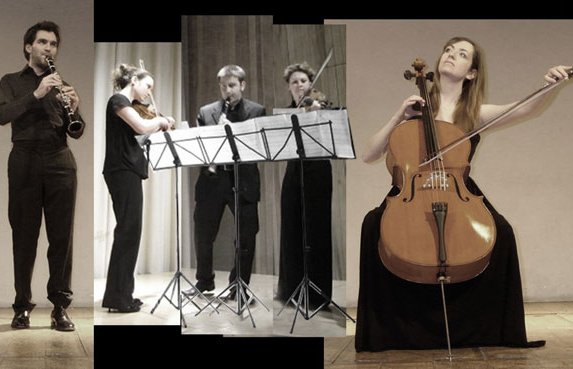
Ensemble Amorpha are a contemporary chamber music group that puts the emphasis on contemporary. Primarily, they play music by living composers, and in some of their upcoming shows they are championing the art of modern silent film-making as well.
Shorts Amorpha at the BFI Southbank is a programme of contemporary silent films, which will be shown not in a gallery, but on the big screen at NFT1. Ensemble Amorpha will play music by Dominic Murcott, Luke Styles, Christopher Mayo, Marc Yeats, Damon Lee, Alwyn Thomas Westbrooke, Philippe Kocher, Naomi Pinnock, Phil Vennables and Yoav Pasovsky to accompany films by Pavla Sceranková, Jan Pfeiffer, Sebastian Schmidt, Daniel Bisig, Gabriela Lang, Damon Lee, Nicolas Wiese and Zoe Payne. The music will be played on strings, woodwind, percussion and electronically too. This promises to be a fascinating and experimental evening – plenty here to inspire musicians and film-makers alike.
Shorts Amorpha screens at BFI Southbank on 1 December at 8.45pm. Tickets are available here, on the BFI website.
Later in the month, at Kings Place, the ensemble are putting on programme called Modern Silence. This will include scores for modern silent films by Alwyn Westbrooke and Damon Lee, as well as Luke Styles’s beautiful music for Rene Clair’s Entr’acte (1924). It’s great to see Kings Place continuing to support silent film, both here and with its Not So Silent Movies shows.
Modern Silence will be performed in Hall Two of Kings Place on 12 December at 8pm. Tickets start at £9.50 and are available here on the Kings Place website.
To find out more about Ensemble Amorpha and to listen to samples of their performances, visit their website.
The reviews are already in for German film-maker Uwe Boll’s latest venture, and it isn’t even ready to view yet. “Worst idea ever,” said Anne Thompson on Indiewire. Wretched and doomed,” tweeted Roger Ebert. Thompson’s Indiewire blogpost reports that a representative of the German distributor Kinostar has approached a “major studio” with a pitch for “one 90 minute 3D movie titled Chaplin 3D – Little Tramp’s Adventure.” The plan involves the conversion of several Chaplin films into 3D, which will then be compiled into one feature-length movie. Retro-fitted 3D is rarely a happy experience, so even if the idea of Chaplin drunkenly tumbling down steps and into your lap, or skating wobbily past your nose, appeals, this doesn’t bode well. When you consider Boll’s critical reputation, which is somewhere between “joke” and ”criminal” this project is beginning to look disastrous. Led, perhaps, by Ebert, the reaction to the story on Twitter yesterday was of near-universal revulsion.
The truth is, there is more to this Chaplin in 3D story than meets the eye. Or both eyes. Clarification and elaboration arrives courtesy of a revelatory post by film preservationist David Shepard on the Nitrateville forum:
Serge Bromberg and I are among the people involved in this project. The principals, a film company in Istanbul which has been operating successfully for more than 70 years, is run by people of integrity; their proprietary 3-D conversion process is far superior to any other I have seen. Even the folks at Association Chaplin were impressed.
L’Immagine Ritrovata in Bologna or Technicolor scanned our earliest generation nitrate negatives to 2K and have done the highest quality of frame-by-frame image restoration of which they are capable for THE IMMIGRANT, THE RINK and EASY STREET. The films will be presented in b&w, at 20 fps, with new large-orchestra scores by Robert Israel, but in 3-D.
Obviously, Chaplin’s films are about performance; they are not highly pictorial films like, for example, those of Maurice Tourneur; we think they will look and sound wonderful and that the 3-D conversion does them no violence. We hope they will be rolled out first as family concerts with live orchestral performance, moving later on to other platforms with the recorded scores.
Obviously the intended audience is not the readers of Nitrateville, although you will not be excluded from attending the shows to see them for yourselves. If this project is successful it will be expanded to other silent films that can also deliver excellent experiences to 21st century audiences. We hope it will promote some awareness of silent films to many people who now do not have them even on their radar. Think of it as a solution for one of the performance arts (along with opera and classical music) for which the present audience is rapidly aging out, and for which something innovative must be done to insure their survival.
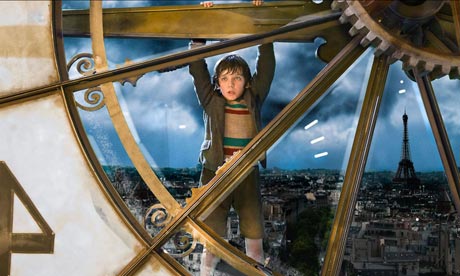
So, the precious films are in the hands of the experts, not a multiple Razzie-winner, and we can be fairly certain that they will look and sound great, due to the restoration and rescoring work. Those who share Mark Kermode’s aversion to 3D in all its forms will still have qualms, of course, but Martin Scorsese’s forthcoming Hugo (2011) may well be about to charm cinephiles into a newfound love of stereoscopy. Chaplin himself shot 3D test footage for The Circus (1928), though the fact that he dropped the idea may tell us as much as the fact that he attempted it. He was also known, of course, to retrospectively rework his films, such as when he added a voiceover and music to The Gold Rush in the 1940s.
It is a little saddening to think that the way to “promote some awareness of silent films to many people who now do not have them even on their radar” is to change them so radically. However, the recent re-release of Giorgio’s Moroder’s Metropolis has reminded us of the unusual paths many people take towards an appreciation of silent cinema. Could a three-dimensional rendering of Chaplin movies create a new generation of silent film fans, just as his colourised, intertitle-free Metropolis did in the 1980s?
As for Uwe Boll’s involvement? A red herring, or perhaps it’s something to do with the fact that he has worked with Geraldine Chaplin in the past (on 2005’s BloodRayne). Remember that Suzanne Lloyd has endorsed the 3D conversion of her grandfather Harold’s most famous scene from Safety Last.
I don’t need to tell you that the proof of the pudding is in the eating, and doubtless we all have opinions on whether this project is likely to succeed in pleasing either existing or potential silent film fans. The Tramp is not quite in the perilous position we feared, and for now I recommend keeping an open mind.
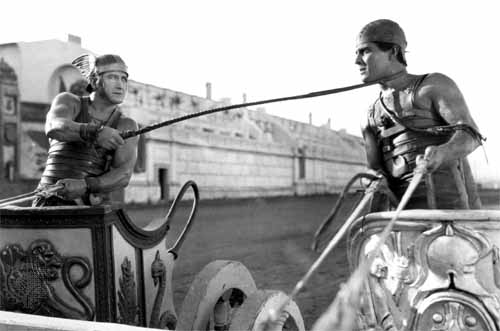
A blockbuster as massive as Ben Hur (1925) deserves a big screen, and a big score. The most expensive silent film ever made, so they say, Ben Hur stars Ramon Navarro in the title and has all the action, and epic vistas you may recall from the 1959 version with Charlton Heston. Yes, even down to the chariot race – filmed by 42 cameras, and with Hollywood’s finest in the crowd.
As I say, this epic film deserves an epic treatment, and next June, the Royal Festival Hall will show Ben Hur with Carl Davis’s score, performed by the Philharmonia Orchestra, and conducted by the man himself. You won’t want to miss this.
The 2012 Olympics are not just about sport. The London 2012 Festival will bring hundreds of cultural events to the capital as well. Music, dance, art and literature all get a look-in, but of course, the strand that really catches my eye is The Genius of Hitchcock. The sound films of Leytonstone’s favourite son will be shown at a complete retrospective at the BFI in August, September and October 2012. Before that, and more importantly, Hitchcock’s wonderful silent films – all nine that survive – are in the process of being restored by the BFI, and will be screened across London next summer, with live, specially commissioned scores. These special events will be must-sees for silent film fans, so I’ll be keeping you updated as the tickets go on sale.
The Lodger (1927)
The exciting news for readers outside London is that The Lodger will also receive a theatrical release – and the performances of The Ring and Champagne will be streamed live online too.
The first screenings have now been announced, and you can even start booking tickets. I will update this post as more details and dates are announced
28 & 29 June 2012: Hitchcock’s first film, The Pleasure Garden (1925) will be shown in the gorgeous, and apt, Wilton’s Music Hall in Limehouse, with a score written by rising star composer Daniel Patrick Cohen and performed by the Royal Academy of Music’s Manson Ensemble. Tickets cost £21.50 and you can book them on the BFI website.
6 July 2012: The wonderful silent version of Blackmail will be accompanied by Neil Brand’s magnificent orchestral score when it screens at one of its most celebrated locations – the British Museum. Tickets here.
13 July 2012: The Ring (1927) is a love triangle with rival boxers trying to win the heart of the same woman, and is one of the most recognisably Hitchcockian of his silents. It is screened here at the magnificent Hackney Empire in East London, with a jazz score by Soweto Kinch, performed by a five-piece band. Tickets start at £15 and you can buy them here.
21 July 2012: Probably Hitchcock’s most famous silent film, and his first suspense thriller, The Lodger (1926) will be shown at the Barbican Concert Hall. The score, composed by Nitin Sawhney, will be performed by the London Symphony Orchestra. Tickets are on sale now.
Watch this space, Hitchcock fans. And don’t forget, you can still donate to support the restoration of Hitchcock’s silent films:
What can I tell you about The Wolves? I’ve not seen it, but I hear very good things. It’s a Portuguese silent film, from 1923, shot on location and with non-professional actors. It was directed by Rino Lupo, who had previously worked elsewhere in Europe, most notably for Gaumont in Paris. He made one hit film in Portugal, Mulheres da Beira (1923), but it sounds as if The Wolves was a troubled production – Lupo was sacked by the studio after the film wrapped, for missing deadlines and for financial “disagreements”.
It’s an unusual film by all accounts, described as having a “paradoxical uniqueness”, and telling the story of a stranger’s damaging arrival in a rustic community, fresh out of jail. The title refers to the two lead characters: “wildly violent in their desires and impulses”. It’s a elemental film, we’re told, and that location photography is very important. “The sea and the mountains push heavily, encircling their psyches and ways of life.” Also, The Wolves features Portuguese cinema’s first scene of full nudity, if that is of any interest to you.
Having shunned the studio and the professional actor, and also the temptation to import a foreign, tried and tested formula that was common practice in Portugal and other peripheral film industries of the time, Lupo opened the way, some would say, to the specific irregularity of a cinema, that of Portugal, that only during the years of the dictatorship, and elsewhere recently, has walked the tracks of mainstream production.
The Wolves screens at the Barbican Cinema on 13 November at 4pm. This will be the film’s UK premiere, which will be accompanied by live music composed by Luis Soldado, conducted by Maestro Rui Pinheiro, and performed byGrupo de Música Contemporânea de Lisboa. The film will be introduced by Tiago Baptista, Rino Lupo’s biographer. For tickets, visit the Barbican website.
It’s the spookiest night of the year – and if you take a look at the Silent London calendar you’ll see that there are screenings of scary silents popping up all over town at the moment. There’s a gothic magic lantern show at the Last Tuesday Society tonight and The Phantom of the Opera at the brand new Hackney Picturehouse tomorrow. If you want any more inspiration for Halloween viewing, you might like to take a look at my pick of five quirky silent horror films for the Spectator Arts Blog.
This nifty little video is advertising a BFI project that some of you may want to try out – Screen Heritage UK. The idea is that you can search for archive film from your area, and locate the relevant footage, some of which will be available to view online.
Thanks to over £22.8 million in funding from the Department for Culture, Media and Sport (DCMS), this major collaboration between the BFI and regional film archives across the UK represents a historic moment for film archives, encompassing digital innovation and pioneering new methods of film archiving.
SHUK will also ensure everyone in Britain will be able to find out about their film heritage for free via a new cataloguing and online access drive – Search Your Film Archives. The national and regional film archives have created this resource to give the public online access to information about film archives across the UK.
I had a very quick root around, and found this footage of the Ripon Highland Games in Yorkshire in 1916, featuring bagpipers, wrestling on horseback and a rather incongruous Charlie Chaplin lookalike. I was also quite taken with a phantom ride taken from a tram in Glossop, Derbyshire in 1912. Fascinating glimpses of a world that bears only small resemblances to modern Britain.
Have a look for yourself, here, at the Screen Heritage UK search portal.
Disappointing news this week, as Birds Eye View announced that it will not be putting on a festival in 2012, due to a cut in its public funding. You can read more about the announcement here. This is a real shame for many reasons, not least the festival’s track record of commissioning cutting-edge scores for silent films from some wonderful musicians.
To tide us over while we wait for the festival’s no-doubt triumphant return in 2013, Birds Eye View will be staging some one-off events, including a touring programme of highlights from its fantastic Sound & Silents strand. You’ll see these popping up on the Silent London calendar, and on Facebook and Twitter as they are announced, but here are a couple for your diary straight away.
Blue Roses will perform her score for Dr Jekyll and Mr Hyde at the Arnolfini in Bristol on 18 February 2012. Tickets will be on sale soon.
Imogen Heap and the Holst Singers will present their soundtrack to The Seashell and the Clergyman at the Roundhouse in London on 26 February 2012 and at the Sage, Gateshead on 27 February 2012. Tickets for the London show are on sale now.
For more information, visit the Coming Soon section of the Birds Eye View website.
Two silent films, both with a lot to say, concluded the London Film Festival archive strand on Wednesday night. The double-bill of Soviet war film The Nail in the Boot (1931) and Lois Weber’s drama Shoes (1916) was not, we were assured, meant to be witty – rather it was a happy accident of programming. The films are from different times and continents, with contrasting styles. If they have anything in common beyond their titles, it is that they both issue moral warnings to the audience: look what can happen if you let your standards slip.
Expectations were raised for The Nail in the Boot when we were told that not only has it long been championed by our musician for the evening, Stephen Horne, but that he has won an award at the Bonn Sommerkino silent film festival for his accompaniment. And a spectacular soundtrack it was too, dynamic and inventive, incorporating accordion, flute and piano – often played in unconventional ways. Piano strings were plucked as missiles exploded in the battlefield; the accordion bellows hissed as soldiers were choked with gas. The same melody Horne plays on the accordion as the red soldiers celebrate a victory is repeated later on the flute after a terrible loss.
The film, by Georgian director Mikhail Kalatozov (The Cranes Are Flying, I am Cuba) is in three sections: a battle scene featuring an armoured train under aerial bombardment; a nervy sequence when one soldier is despatched from the train to call for help, but is hobbled by the eponymous nail injuring his foot; a trial scene, which tips into fantasy, as the soldier is accused of sabotage. The first two thirds are by far the most thrilling, and not just because the trial scene carries the weight of the film’s propagandist message. Kalatozov’s combat scenes are unforgettable: frenetic montage, extreme close-ups (even inside a gun barrel) and low angles make the viewer feel as if they too are being bombarded. I lost count of the number of times the camera appeared to be run over by enemy tanks, but I’m sure I flinched each time. Modern audiences will enjoy Kalatozov’s extravagant use of formalistic trickery for the same reason that the Soviet authorities suppressed it – it draws attention away from the film’s message and towards the skill of the film-maker. His triumph is that his abstract style makes the violence more tangible, not less.
Reeling from the battlefield, we were all urging the soldier on as he raced across open country. Faced with barbed wire, and a bare, bandaged foot, he nobly attempts to climb the fence. We wince. He tries again. Aah. So many curled toes and pained faces in one audience.
The Nail in the Boot has recently been restored by Gosfilmofond, and although we had no information as to the state of the print before work began, the film we saw was crisp, clean, with a wonderful quality of light and rich in detail. The latter was particularly noticeable in a lattice of shadows cast by a broom on our protagonist’s face.
Shoes (1916)
We had more clues about the restoration of Shoes (including a neat before-and-after comparison reel), which has been rescued from a blizzard of nitrate deterioration and bacterial damage by the EYE film institute in the Netherlands. Based on two tinted and toned nitrate prints with a few frames grabbed from a sarcastically dubbed 1930s version, the new Shoes is hugely improved, although it still retains unobtrusive marks at the edge of the frame in some scenes.
Lois Weber was one of the silent era’s very few female film directors and for that reason alone her work will always be of interest. Shoes is a simple enough tale of young shop worker, Eva (Mary MacLaren), who can’t afford a replacement pair of boots, and the moral dilemma she faces when opportunity presents itself, albeit in an unwelcome form. If it feels that Weber spends too long moralising in the title-cards, that may be because visually she expresses her heroine’s predicament so well. We were forewarned by as representative of EYE to play close attention to the end. After an hour spent walking inEva’s tattered, sodden shoes, a 21st-century audience may find less to condemn or lament in the choice she makes.
At one point a superimposed hand labelled “Poverty” appears to crush Eva as she sleeps, but Weber’s touch is not quite always so heavy. While the film is always elegantly composed, the kitchen-sink details of slum life, from watered-down milk and sugar sandwiches to empty shelves and broken furniture are everywhere – Shoes is relentlessly unglamorous. Even MacLaren’s lead performance is sullen, quietly anguished, rather than melodramatic. If I were her, I’d be seething too.
However many big-budget war films come and go, real footage of frontline combat is still shocking. How much more powerful would such images have been 95 years ago, when The Battle of the Somme (1916) was released, and watched by 50% of the British population? JB MacDowell and Geoffrey Malins’s documentary was intended to boost morale, but its scenes of wounded and dead soldiers, not to mention the contentious “over-the-top” sequence, make it a more complicated, thought-provoking and mournful piece of work. One of the “over-the-top” scenes was staged, but so much else is horribly real here – and the film was inscribed on UNESCO’s Memory of the World Register in 2005.
The Battle of the Somme‘s footage may be familiar to you as it has been mined for many a first world war documentary, but it is an entirely different experience to watch it all, in one sitting. This upcoming short UK tour offers a very special opportunity to do just that. Composer Laura Rossi’s orchestral score for the film will be performed at four special screenings of The Battle of the Somme in 2011 and 2012, by four different ensembles:
10 March 2012: Ealing Symphony Orchestra, Venue TBC, Ealing, London
For more details, and to listen to clips of the score, visit Laura Rossi’s website. To find out more about the film, read this post from The Bioscope. Also, the Times reviewed the premiere of the score, when it was performed in the Queen Elizabeth Hall with the film in 2006. The Battle of the Somme is also available on a DVD produced by the Imperial War Museum, with two scores, both Rossi’s and a recreation of a likely contemporary soundtrack, by Stephen Horne, based on cue sheets.
Miles Mander and Madeleine Carroll in The First Born (1928)
When you’re watching a silent film and the whole audience gasps in horror and surprise at the same time, you know it’s not a museum piece you’re looking at. The First Born was released in 1928, just as Britain was first being seduced by those new-fangled “talkies”, but it has more than enough tricks up its sleeve to tempt moviegoers in any decade.
Chosen as this year’s Archive Gala for the London Film Festival, The First Born is a disarmingly frank story of sex and love among the aristo set, shot with precocious flair. Actor Miles Mander directs, and also plays the lead: a scoundrel of a baronet named Hugo Boycott, whose marriage is inevitably in crisis. Hugo and Maddie’s relationship runs hot and cold. One day they’re falling into each other’s arms, the next they’re having one of their rows – and real shoe-flinging, bag-packing, door-slamming humdingers they are too. Maddie (Madeleine Carroll) blames the arguments on her own jealousy, which is to say her pain at Hugo’s philandering. But there is another reason for the couple’s unhappiness: their childlessness. Whether this is anything more than the baronet’s old-fashioned desire for an heir is open to question, but Maddie certainly believes a baby will solve her marital woes. Hugo’s behaviour is fairly abominable at every turn, but his wife’s decision to deceive him in order to save their marriage provides the drama’s fatal twist.
And this is a complex story, with the truth about the Boycotts’ marriage and the outward appearance of it constantly at odds – a conflict that comes to the fore horribly when Hugo runs for parliament and a distraught Maddie is forced to stump for him at a public meeting. We can’t hear what Maddie is saying, and there are no intertitles to help us, just her pained expression, and superimposed cheers of encouragement from the crowd: “Good old missus!” They think she’s a sweetheart, Hugo thinks she’s a monster. Fans of The Graduate (1967) will note the speed with which their faces fall in the cab journey home. It’s delicately done, but it’s a heartbreaking moment.
The First Born is a wonderfully well directed film, in fact, eliciting a tremendous, anguished central performance from Carroll, and a sizzling one from her irresistibly dashing “noble admirer”, David (John Loder). Both actors, like Mander himself, went on to further success – Carroll most notably in The 39 Steps (1935) and The Secret Agent (1936), and Loder in another Hitchcock film, Sabotage (1936). Mander’s only venal directorial sin is vanity: he gives himself far too many lip-curling closeups, and risks turning Boycott into a pantomime villain. Mander’s performance is enjoyable, but it is not a tenth as sophisticated as his co-star’s. His virtue on the other hand, is his audacious use of camera movement, dissolves and overhead angles to disorient and excite the narrative. There’s one prowling handheld tracking shot that plunges the audience straight into the psyche of a suspicious husband, running his hands over ruffled bedsheets. Elsewhere, a sequence of dissolving closeups of Carroll and her manicurist Phoebe shows the transferral of one idea between two minds: a folie à deux in the making. We’re in the latter stages of the silent era here – Mander had made short sound films before but this was his debut feature – and The First Born is the work of a confident director on top of his material and with creativity to spare.
That’s not to say that he was not ably assisted. The screenplay for The First Born was co-written by Alma Reville, a woman with many years’ experience in the film business, but yes, better known to us now as the wife of Alfred Hitchcock. It’s tempting to credit her with some of the film’s sophisticated touches – from its elegant structure, to its sparse use of intertitles and the sensitive portrayal of Maddie as far more than just a wronged wife. The First Born is never afraid of emotional complexity, from the ambiguities of Maddie’s friendship with David, and her betrayal by a close friend, to a brisk montage of painfully contradictory telegrams.
The quality of the film should stand for itself, and those who have seen it at festivals over the years have long championed The First Born as a lost British classic. Critics at the time of its release thought it was a bit “sordid”, but they said pretty much the same thing about Pandora’s Box (1929), so there’s no reason that a film this accomplished, and entertaining, shouldn’t be embraced by a wider audience in the 21st century. And that is why the BFI has showered so much love on it. We see it now in a more complete state than before – frames from a 16mm print found in the George Eastman House in New York have been spliced in where there were gaps in the BFI’s 35mm copy, reinstating an expression here, an exit there, to make the film a more smoothly satisfying experience. Cue marks, scratches and holes have been erased and the original, delicate tints restored. The film also now benefits from a fresh score – composed by Stephen Horne and performed live at the gala screening. It’s melodic, and elegant, but fantastically adept at ramping up the tension in the crucial moments. There’s a haunting theme, played on the oboe and underscored by percussion and piano, that seems to appear when Hugo’s own jealousy gets out of control; there’s a humorous use of the accordion when Maddie’s friend Nina raises a sardonic eyebrow; and a thunderous combination of piano keys and strings during an unexpected violent catastrophe.
The exquisite new score is the finishing touch in the rebirth of The First Born – a fascinating film, ripe for rediscovery.
This review is a guest post for Silent London by Ewan Munro of the Pubology blog.
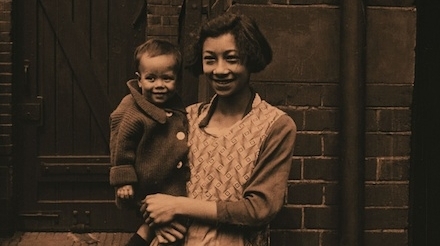
Among the many wonderful restorations in the Treasures from the Archives strand at the London Film Festival this year was a programme of silent short films, nine- to 12-minute long travelogues from a series made in the early 1920s by film producer Harry B Parkinson, and entitled Wonderful London. The BFI National Archive chose six of these films to restore and present at what turned out to be a packed-out screening (attributed by silent film curator Bryony Dixon to a resurgence of interest in historic London).
The subject of these quirky little screen-fillers is, of course, London. And while there are certainly occasional shots of the tourist London we’re all familiar with, perhaps more interesting is the time spent looking around the corners, into the back streets and out into the suburbs of the working-class city. Street markets and grimy housing, docks, shops, scenes of daily life, and even a few pubs all show up in these films. The East, the North, the West End and the City all show up, though the South is represented by only a few shots of streets around the site of the Globe.
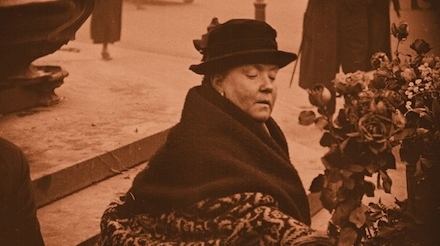
There’s Petticoat Lane market (still bustling today) and Club Row market (no longer), where live animals of all kinds are traded under the still-familiar railway arches down by Sclater Street (arches which now hold the lines leading to Shoreditch High Street station). There are grand West End theatres alongside street performers and Punch & Judy shows. There’s Ye Olde Cheshire Cheese pub, just off Fleet Street, one of the few views that hasn’t changed at all, even as we briefly spot the drays of long-defunct brewers such as Truman Hanbury Buxton and Mann Crossman’s. There are the flower sellers usually at work underneath Eros on Piccadilly Circus, but moved from this attractive spot due to London Underground construction works (little change there, though back then it was for the station’s grand booking hall). There are the canals around Mile End, Islington and Hackney (with a brief cutaway to show Broadway Market), mules working along their towpaths to pull the barges. This is just one example of perhaps the greatest change since these films were made: the extent to which the London shown is a city of industry and manufacturing, where the canals are still busy with freight and the docklands still bustling with ships.
Flowers of London (1924)
This “unofficial” view of London is matched by the narration, with the intertitles frequently offering humorous asides and boundless sarcasm, especially in the Barging Through London film (any given intertitle card makes reference to dizzying speeds, as the film cuts to, say, a barge moving languorously under a bridge alongside Regent’s Park, while befrocked and behatted tourists on the way to London Zoo stop to watch). A personal favourite is the introduction of Southwark Bridge, newly constructed at a cost of £3 million and “sometimes it gets VERY busy”, cutting to show a few hackney carriages trundling across while a handful of people walk along the outside.
The titles remain fairly light-hearted, but this only exposes some of the period’s unpleasant attitudes, communicated with an at times disarming frankness, especially in the Cosmopolitan London short. In what must be a staged scene, the film’s “white trash” are swiftly kicked out of a “negro club” on Whitcomb Street, while the film is unsparing in its negative judgment on the poverty and unfriendliness of the Chinese population of Limehouse. When the film returns pointedly to scenes on Horse Guards Parade, it expresses greater relief at their comforting Englishness than perhaps the modern audience can muster. Nevertheless, the scenes of Limehouse provide interest when compared to similar ones staged for the roughly contemporaneous Piccadilly (1929).
Through it all, piano accompaniment is sensitively provided by Neil Brand, an accomplished master of the art. The tone is largely jaunty as befits the films, though he sensibly opts for a quieter register at key points towards the end of the Cosmopolitan London short, and a briefly uncomfortable silence within the auditorium at one point further brings into focus the discomfort engendered by the film itself (not to mention highlighting the very rarity of silence at screenings of silent films).
The restoration has been handled magnificently, and Scott Starck from the restoration team speaks before the film, rattling off a quick account of the process, along with dizzying statistics on the number of frames that needed repair. Colour tinting has been retained as per the original films, and this is used to good effect to depict the passing of the day in London’s Sunday, or the colours of the flowers in Flowers of London. One can only hope that the success of this screening leads to further such archival restorations and that the Wonderful London series may one day be available in its entirety.
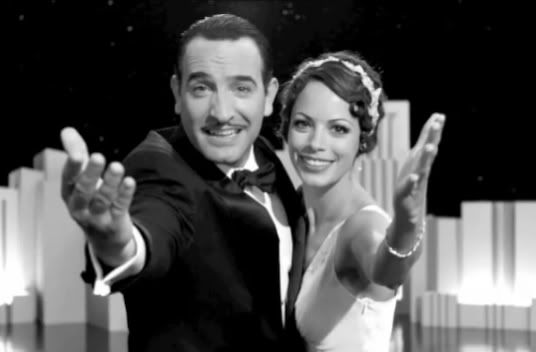
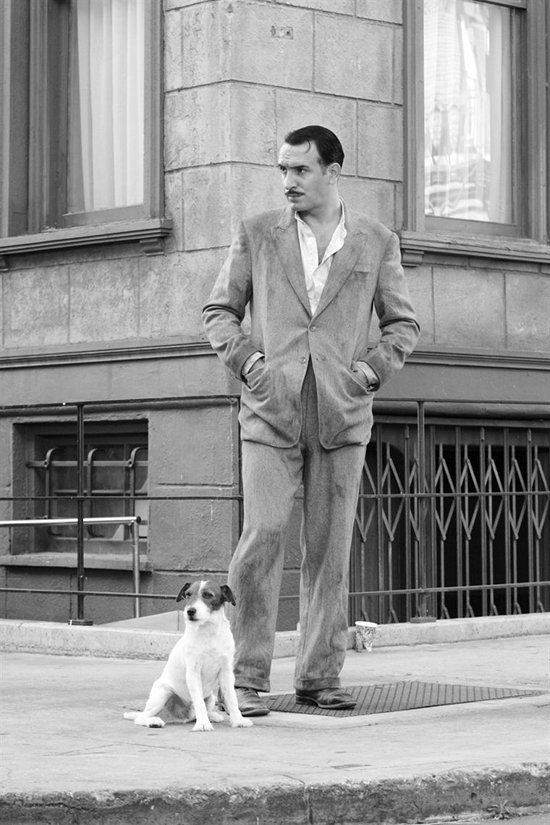
Could a silent, black-and-white film really become a box-office hit in 2011? At festival after festival around the world, critics have been raving about The Artist (2011), Michel Hazanavicius’s homage to late-1920s Hollywood. Leading man Jean Dujardin has picked up the Best Actor award at Cannes, and thanks in part to Harvey Weinstein’s support, the Oscar speculation has already begun. Surely this is madness, though – even the director himself says, “nobody watches silent movies any more”.
But The Artist is gorgeous enough to make anyone lose their reason: it’s lushly photographed in silvery monochrome, romantic and funny, too. Dujardin’s sparkling performance as silent star George Valentin comes across like a new Douglas Fairbanks – but incredibly, he’s more suave – and when he bumps into Bérénice Bejo’s flirtatious flapper Peppy Miller, the chemistry is irresistible. The Artist tells the story of their troubled love affair, and the way their career paths diverge when the “talkies” arrive. The scene is almost always stolen, however, by Uggy, Valentin’s dog, whose adorable tricks will charm the most silent-sceptical of audiences.
So far, so sugary, but here’s another layer to The Artist. This is a film all about cinema: about the highest achievements, and the follies, of the silent era and all the films that have come since. The silent-film references come thick and fast: from Clara Bow to Erich von Stroheim, from the Fantômas serials to Spione (1928) to The Last Command (1928). There are even a few frames from The Mark of Zorro (1920) in the mix. The talkies get a look-in too, of course. Valentin’s blonde co-star recalls Lina Lamont from Singin’ in the Rain (1952); his scenes with his wife riff on Citizen Kane (1941) and the score borrows liberally from Vertigo (1958). We’re so often watching a film within a film, or spotting a sly cinematic reference, that The Artist is almost a silent movie by stealth. Hazanavicius, like Dujardin, nearly always has one eyebrow raised about his own nostalgic project, sometimes to the detriment of the film. There’s a dramatic moment towards the end of The Artist that is almost entirely ruined by an intertitle gag, for example. It gets a laugh, but it’s a cheap one.
The Artist (2011)
These knowing moments are dangerous, because they threaten to break The Artist‘s enchanting spell and pull the audience out of what is for the most part a dreamily seductive experience. At its best, The Artist is a triumphantly modern silent film, which shows the influence of Fritz Lang, Josef von Sternberg and Frank Borzage but never looks like a relic. I loved the early sequences when Valentin and Miller first fall for each other: their backstage tapdance, and their repeated takes of the same scene (from cool, to sexy, to loving and finally collapsing into giggles) are pure silent cinema magic. When Miller is alone in Valentin’s dressing room, she snuggles up to his suit jacket, slips one arm into the sleeve and begins to canoodle with herself. It’s a wonderful piece of visual film-making, and says far more, with more charm, than dialogue ever could. Silent cinema fans will recognise the move from a scene in Borzage’s Seventh Heaven (1927), when Janet Gaynor shrugs her lover’s jacket on to her shoulders and wraps the sleeves around her. It has to be said, though, that The Artist‘s version is a lot sexier – it’s not 1927 any more.
The Artist isn’t always so cuddly. The lively, if anachronistic, score is not quite continuous; it’s brave enough to drop away for a moment’s pause, leaving the cinema in dead, unaccustomed, silence. That’s a bold move, and a self-conscious one, too. And as Valentin’s confidence takes a knock, expressionist shadows, spinning headlines, trick photography and one audacious nightmare sequence are all piled on to make us feel his pain. Sadly, it’s here that the film veers between homage and pastiche, and suffers just a little in the process. Does Hazanavicius want us to love silent cinema, or to laugh at it? Ultimately, The Artist doesn’t want to answer that question, it just wants to entertain, which it does, brilliantly.
I entered the cinema worrying about whether this film will be able to charm mass audiences or just film buffs and furrowing my brow over whether its potential success could spearhead a silent film revival. As the credits rolled I really didn’t care any more. The Artist is a joy and it doesn’t deserve to be weighed down with such responsibilities. If you’re watching it at the London Film Festival this week, you’re in for a treat.
For the rest of us, Launchingfilms.com currently lists the UK release date as 30 December 2011.
This review is a guest post for Silent London by Philip Concannon of the Phil on Film blog.
During his interesting (if incredibly long) introduction to The Goose Woman at its London Film Festival screening, Robert Gitt suggested that Louise Dresser would have won an Academy Award if the ceremony had existed in 1925. Having watched the film, few will disagree with his assessment. Dresser plays Mary Holmes – the eponymous goose woman – an alcoholic, embittered old crone living on a remote farm. Twenty years earlier, she was Marie de Nardi, a beautiful singer on the cusp of fame, but she gave up her career to have her son Gerald (Jack Pickford) and now she has nothing but her memories, her geese and a pile of broken booze bottles outside her window. Dresser’s performance as this unsympathetic protagonist is remarkable, expressing sadness, regret and bitterness through her subtle but forceful acting.
Clarence Brown’s film is adapted from a story by Rex Beach, which was itself based on the real-life “Pig Woman” case (heavily publicised by William Randolph Hearst’s press at the time). It’s the tale of a murder that Mary claims to have witnessed, milking the subsequent publicity and press attention for all it’s worth, and propelling herself back into the spotlight, but her fabricated account of what happened that night inadvertently frames her own son for the murder. This narrative is given an extra charge by the tensions that are already simmering between Mary and Gerald, with Mary blaming her son for her ruined career, and their relationship reaches its nadir when she hits him with a revelation about his parentage that’s so shocking the film can’t even articulate it. The Goose Woman is so coy about the nature of this secret that for some time I wasn’t sure what it was; all we see is Mary spitefully mouthing the truth as her son recoils in horror, and then he tearfully runs to his fiancée Hazel (Constance Bennett) who reacts with similar dismay.
Aside from that confusing plot niggle, The Goose Woman‘s story is handled with great skill and sophistication by Brown, who keeps the action down-to-earth and rooted in character, sustaining an impressive level of suspense (with welcome burst of humour) until the final scenes. He has a great eye for detail and there are some lovely, telling moments scattered throughout the movie, like the running gag involving Mary’s attempts to hide her whisky bottle, or her habit of judging every man she meets by rubbing his business card (if you don’t have embossed lettering, you’re not worth a damn, clearly). His visual style is simple but effective, and he puts together a terrific sequence during Gerald’s interrogation, cutting away to a dripping tap, nuts being cracked and coins jangling, as the suspect’s anxiety grows. This latter scene is also the kind of interlude that allows accompanist Stephen Horne to get creative on his piano and flute; as ever, his playing at this screening caught the tone and mood of the picture perfectly.
In the years following this film, Brown went on to direct a number of stars to some of their most celebrated performances (including Greta Garbo, who called him her favourite director) and it’s clear from The Goose Woman that he was very much an actors’ director. All of the performances here are a pleasure to watch, particularly the scene-stealing James O Barrows and Gustav von Seyffertitz as a detective and district attorney who have a competitive relationship in the movie’s background, and it’s nice to see Jack Pickford – so often in his sister’s shadow – given a rare chance to shine. However, The Goose Woman ultimately belongs to Louise Dresser, whose outstanding lead performance, like the film itself, deserves to be rediscovered and celebrated.
This review is a guest post for Silent London by Philip Concannon of the Phil on Film blog.
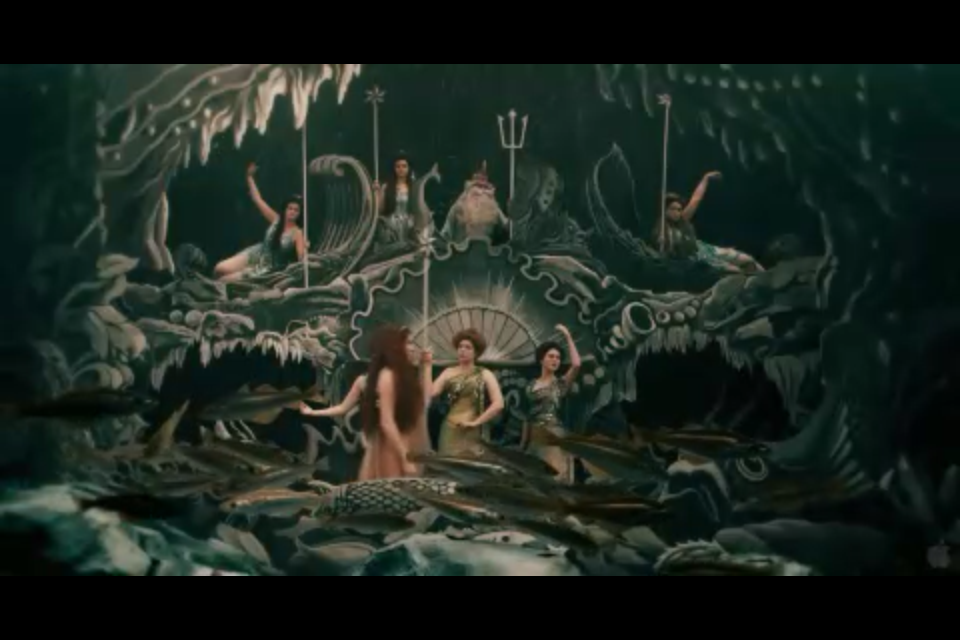
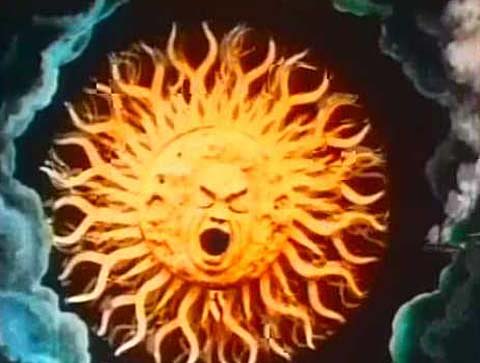
Even if you’ve never seen Georges Méliès’s film A Trip to the Moon (1902) you’ll be familiar with its most enduring image, that of the Man in the Moon grimacing as a rocket lands in his right eye. However, you probably recall that shot in black-and-white, as that’s how the film has been presented for so many years, but Méliès also made A Trip to the Moon in colour. Following the rediscovery of a severely damaged colour print in Barcelona in 1993 – and a painstaking, frame-by-frame restoration – we finally have the opportunity to enjoy the director’s original vision, which surely hasn’t looked as good as this since it premiered in 1902.
Méliès was cinema’s first magician, and he blesses his characters with the same gift for wizardry. In the opening scene, a group of bearded astronomers gather in a great hall, clutching telescopes that they quickly transform into stools so they can sit and listen to their leader’s lunar exploration plans. You might expect editing tricks such as this to appear rudimentary to the modern viewer, but there’s something delightful about the casual ease with which Méliès pulls them off, and the whole film contains moments to thrill and enchant. The lavish sets create a remarkable sense of depth and scale as the intrepid explorers stroll around on the moon’s surface, and there are some wondrously inventive touches, such as the stars coming to life and observing the explorers while they sleep, or the alien creatures who suddenly ambush them, prompting a frantic escape. Our heroes only have their umbrellas to defend themselves with (never visit the moon without one) but it proves to be enough, as one strike from that deadly weapon turns each alien into a puff of smoke, an effect that looks even better now that the smoke is green.
The restored version of A Trip to the Moon that screened this week at the London Film Festival is a beauty. The tinting respects Méliès’s original intentions and helps us pick out details in the background of his often busy compositions, with the celebratory scenes of the explorers’ departure and return being particularly well-served by this new presentation. Visually, A Trip to the Moon is a constant delight, but I have doubts about the score, which has been composed for the film by the French duo Air. One audience member amusingly cried “Oh no!” as the band’s credit was revealed, and while the score doesn’t quite deserve such a despairing reaction, it does feel like an odd fit for the movie. In some scenes, notably the preparations for launch, the music possesses a sense of rhythm that perfectly matches the action, but in other sequences their electric guitars and animal noises (!) jar discordantly with Méliès’s images.
That caveat aside, A Trip to the Moon is essential viewing. It is 14 minutes of pure imagination and it remains as surprising and charming as ever – 109 years on, Méliès the magician still knows how to cast his spell over an audience.
Murnau’s acclaimed Dracula adaptation, Nosferatu (1922) is still one of the most chilling horror movies ever made – and probably the most influential. So if you’re looking for a cool halloween night out, you can’t beat watching Max Schreck’s shadow creeping up those stairs with Minima’s heavy rock soundtrack. Luckily, then, there will be a few chances for you to catch the Nosferatu-Minima show this witching season. They’re playing two gigs in London, at Stoke Newington International Airport on 29 October 2011 and at the Prince Charles Cinema on 24 November. Check out the venues’ website for times and ticket prices, and if you live outside London, have a look at Minima’s website for performances of Nosferatu in Devon, Hertfordshire and Somerset.
And if you prefer a more traditional silent film accompaniment, Nosferatu is also playing at the Brentford Musical Museum, with a live organ score by Donald Mackenzie on 19 November 2011. Tickets cost £10. For more information and to book, visit the museum website.
A postcard from this year’s Giornate del Cinema Muto in Pordenone – by guest blogger Ellie Groom.
Hello Silent London readers! I’m Ellie from the Kine Artefacts blog. Last week I travelled to Pordenone for the 30th Giornate del Cinema Muto, and have been asked to provide a few highlights. More than 150 silent films were screened across eight days, so picking favourites was no easy feat, but here goes …
2011 was a year full of significant rediscoveries and restorations of seemingly lost classics. Serge Bromberg and Eric Lange of Lobster Films presented the digitally restored version of the hand-painted print of Méliès’s LeVoyage dans la Lune (1902). Famously, the restoration was over a decade in the making, and came complete with a controversial modern score by Air, which caused one disgruntled festivalgoer to exclaim, “It’s a disgrace!” Opinion is split on whether Lobster Films should have presented a more traditional soundtrack (and the film was screened again later in the week with Donald Sosin at the piano), but nothing could have detracted from the bold and beautiful colours of Méliès’s sci-fi wonderland.
The three surviving reels of Graham Cutts’s The White Shadow (1923) had film fans queuing all the way across the piazza, desperate to see the work of a young assistant director called Alfred Hitchcock. The shadow of Hitchcock loomed large over the screening, though the real star of the piece had to be American actress Betty Compson, who deftly hopped between the dual roles of twin sisters, one virtuous and the other flighty, in love with a man unaware that he has two paramours. Watching the film was a frustrating experience as it cut out at the most dramatic point. Someone, please, find those last three reels!
As is well known, next year silent film fans in the US will be able to see Abel Gance’s Napoléon (1927) in all its glory. However, Kevin Brownlow was on hand in Pordenone to give a stirring history of his plight to restore the epic biopic. Brownlow’s lecture was part of the Collegium: an education initiative whereby a dozen young film researchers are invited to Pordenone to partake in dialogues with eminent film historians and archivists. If, like me, you are interested in becoming a Pordenone Collegian then keep an eye on their website – applications will open in the new year. No formal experience is required, just enthusiasm for silent cinema.
While names such Hitchcock and Méliès will always draw a crowd, it should be noted that several other finds made their way to Italy, which may have been more obscure but were no less astonishing. RW Paul’s The Soldier’s Courtship is a delightful and invaluable rediscovery from 1896 – arguably making it one of the earliest instances of fiction on film. It was thrilling to see so many festival goers enraptured by less than a minute and a half of film depicting a simple story of a couple’s attempt to grab some privacy.
There was a strong emphasis on restoring the colours of silent film. As most Silent London readers will be aware, while silent films were shot on black and white film stock, large amounts of them were tinted, toned, stencilled and hand-painted. The festival screened several examples of digital restoration and the Desmet process of turning hand-coloured films into colour prints, as well as rare examples of prints that have been tinted using dye, just as the original distributors would have done. One particularly fascinating example was a tinted fragment from Der Rätsel von Bangalor (1918), which although just five minutes long was screened seven times, each time from a print restored using a different method – including one that had been submerged in food dye!
Lastly, the festival drew to a close in style, with Victor Sjöström’s The Wind (1928), accompanied by Carl Davis conducting his own score with the FVG Mitteleuropa Orchestra. This silent classic starring Lillian Gish was screened with Davis’s score in Pordenone in 1986, and so its triumphant return was a fitting finale for the festival’s 30th anniversary.
So, there you have it: a whistlestop tour of Pordenone 2011. I didn’t have time to highlight the other wonderful screenings such as New Babylon (1929) with Dmitri Shostakovich’s original score, the film of Ernest Shackleton’s Antarctic expedition, South (1919), accompanied by a commentary from the explorer’s diaries, read by Paul McGann, or Walt Disney’s Laugh-o-Grams (quick plug: I’ll be discussing those next week on my blog). Never mind … there’s always next year.