Sometimes the old songs are the best, right? Familiarity can breed contentment. And nowhere will you find more consensus on that than here in Pordenone. So today I was happy to rewatch a couple of silent films I love, spend a little time with one of my all-time favourite silent stars. And then see something entirely new to me!
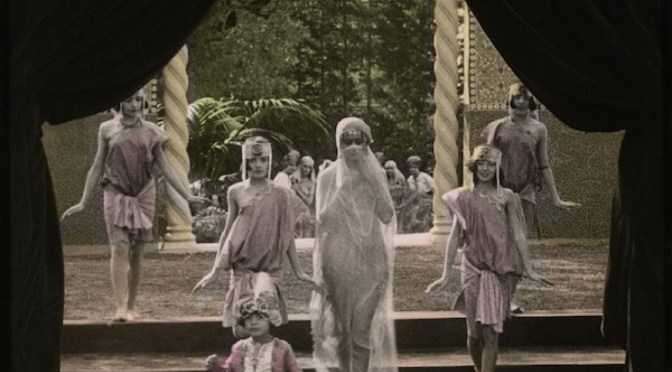
First, the old friends. This morning, we ventured back into the imaginations of Maurice Tourneur, and Ben Carré, with the 1918 adaptation of Maurice Maeterlinck’s The Blue Bird. Such a strange and beautiful, terrifying and wholesome journey into the shadow world of dreams, where bread and sugar and water have souls, the dogs and cats can talk, lost grandparents always have the table set for supper and babies wait impatiently to be born. If you have not seen this, you possibly can’t imagine quite how weirdly pretty it is. Variety’s critic wrote: “It is quite safe to assert that nothing quite like Director Tourneur’s work has ever been shown on the screen.” So hats off to Tourneur and Carré, and doubly so to Neil Brand and Elizabeth-Jane Baldry, who transported us to an enchanted realm with their music. I wrote about the film in more detail here, should you be interested.
This is an extended and adapted version of a contribution I made at the 2024 Domitor conference in Vienna. I spoke as part of a roundtable on Curating Early Cinema Today, chaired by Maggie Hennefeld. Full details of the roundtable are at the end of this post.
————-
Media history is doomed to repeat itself, first as travesty, then as art. I’m kidding, but only a little. Here are some thoughts on why early cinema is trending in the 21st century, why I am writing this blog, and perhaps, why you are reading it.
Since the digital transformation of the film industry at the turn of the 21st century brought with it a new surge of creativity and of anxiety, through the rise of audiovisual social media, from YouTube to TikTok and to the dawn of AI, we are living in an age of constant new-media excitement, and panic. These mew forms of communication belong to youth; to older eyes they appear baffling, and probably dangerous. In this state of anxiety and attraction, we have much in common with the spectators of early cinema in the years following the turn of the previous century. Our new platforms, expressly suited for exhibiting the “cinema of attractions”, have created their own stars, and genres. And just like our ancestors sharing in global astonishment at Charlie Chaplin, Asta Nielsen, or Max Linder, we experience anew the enhanced possibilities of mass communication, best expressed by the world-shrinking concept that is “going viral”.
Caroline Golum’s excellent article ‘Cinema Year Zero: Tik Tok and the Grammar of Silent Film’ (Mubi Notebook, 25 February 2021) aligns the fixed-camera, stop-and-start-editing and subject matter of TikTok with the mechanic and style of early cinema. I think her analysis is sharp, and I highly recommend the piece. It strikes me, though, that the best way to describe TikTok, or any new-media platform, from Medium to BlueSky, is to be alert to its specificities as much as to its similarities with other media.
Therefore we should say that while TikTok has much in common with early filmmaking, it is defined by its Chinese ownership, by the portrait-phone aspect-ratio, the placement of screen furniture, the captioning and comments functions, the use of memes and lip-sync comedy, the proliferation of shared music clips and the technique of stitching, an extension of the repost or quote function on other platforms. That it has become a natural home for both infuencers and brand promotion, so has a prominent place in the history of advertising media in particular. We can say that very much unlike early film it is tailored to a single spectator, handheld close to the eyes like a book, not aloft like a projection, and that the scrolling process, with its minimal interaction for maximum content, has more in common with the disaffected channel-hopping of the over-stimulated TV viewer than with cinema exhibition. That the algorithm that fuels the For You Page is similar to social feeds on eg Facebook, but has its own, sometimes, mysterious and ruthless methods[1]. That TikTok is TikTok, and also a collation of concepts from other media. Just as early film has its roots in optical toys, photography and the magic lantern, among other “pre-cinema” objects, and is also its own, glorious invention.
TikTok’s likeness to early film may not persist. Already it is facilitating longer videos, live streams and more complex editing. Time is ticking. And as is already apparent, these new-media platforms tend to drift from sanctuaries for short-form content to incentivising longer formats with advertising revenue. The most talked-about video on YouTube right now is a four-hour vlog about the ill-fated Star Wars hotel (currently on eight million views). At first populated by singular entrepreneurs and creative amateurs, the platforms tend to become colonised by companies who capitalise on the new media and align it with corporate structures. The new platform’s heyday is fleeting, the audience adjusts or moves on, and the cycle begins again.
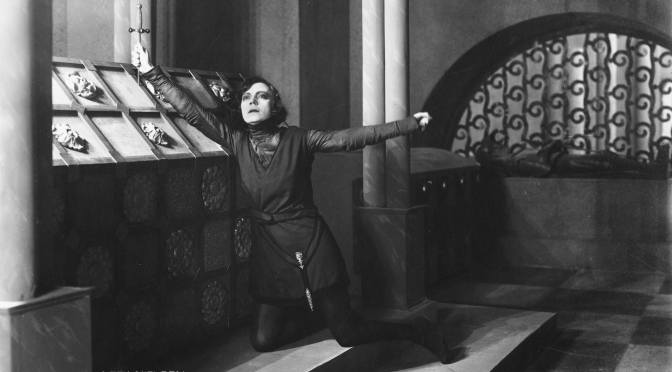
Asta Nielsen in Hamlet (Svend Gade, Heinz Schall, 1921)
Which brings us here. In 2010, after the first social media revolution had taken place, I founded this website, a blog called Silent London. Its stated purpose was to collate listings for silent film screenings in London, its broader intent was to share the love of silent cinema, though this, it soon became apparent, was pushing at an open door. The modus operandi was not to copy out texts from history books, but to acknowledge that there is an audience for silent cinema right now, who may be new to the subject, whose reason for viewing is not research or scholarship, and may not be motivated by a film’s place within the canon, nor its relationship to canonical filmmakers. They enjoy early and silent cinema for its own sake. Silent cinema is, among many other things, an evening’s entertainment. Its importance does not only reside in its centrality to film studies textbooks.
The readers of Silent London, I have learned over the past decade and a half, encompass scholars, archivists, filmmakers and other practitioners in related fields. But primarily, this blog speaks to cinephiles: moving-image hedonists, who enjoy silent cinema as part of a varied filmic diet. Which is not to say that silent film screenings are not special. The collective frisson of silent cinema spectatorship, an audience’s imaginative leap towards the screen, the dynamic energy and emotional emphasis of live accompaniment – Silent London readers revel in these pleasures. While we respect the work of the archivists and scholars who facilitate these screenings, Silent London exists within the space of contemporary film culture. And so, increasingly, does silent cinema itself. More and more, we recognise the aesthetics and technique of early and silent film bleeding from the archive into freshly minted contemporary cinema. The connections between films of all eras crackle in our minds and in the imaginations of the filmmakers we love.
So I try to erase the time distance. I write about early films not because they are old, but because they are so young. I don’t talk about old movies, but young cinema, those films that were made when the medium was new and its possibilities had not been fully mapped out. Young films do not yet have histories, but are bursting with faith in the future of the medium[2]. They have this in common with the best of contemporary cinema.
I take this approach when writing elsewhere on early and silent film, and as a critic I am also witness to the prevalence of silent cinema aesthetics in new films. Increasingly this phenomenon is my pet subject, especially in my monthly column for Sight and Sound (The Long Take), and on the tab on this site labelled “At the Talkies”. Related but not quite the same: for a while, Pete Baran and I hosted The Sound Barrier, a podcast devoted to finding connections between new releases and the silent archive – it was vastly enjoyable to record.
Tabu (Miguel Gomes, 2012)
Visual storytelling abounds in cinema, but sometimes the references are more specific, the commitment to ditching dialogue firmer. You can take any one of a number of examples, from the Oscar-winning faux-silent The Artist (Michel Hazanavicius, 2011) to dialogue-free animations The Red Turtle (Michaël Dudok de Wit, 2016) and Robot Dreams (Pablo Berger, 2023), the elevated pastiches of Guy Maddin and the hands-on archival adventures of Bill Morrison, who takes silent cinema’s materiality as his central subject, to the traces of silent cinema style in the arthouse films of say, Miguel Gomes (Tabu, 2012, Grand Tour, 2024) and Alice Rohrwacher (Le Chimera, especially). Next week at Il Cinema Ritrovato in Bologna, Rohrwacher will be in dialogue with Juho Kuosmanen on the subject of The Future of Cinema (Silent) – and naturally, I have a ticket for that conversation. The best film of last year, Jonathan Glazer’s The Zone of Interest, was essentially a silent film and a sound film, playing at the same time. The director has said as much himself, and that he has harboured aspirations to make a full silent film. The Fall (2019), covered on this site, was one short-form venture into the form. Or something like it.
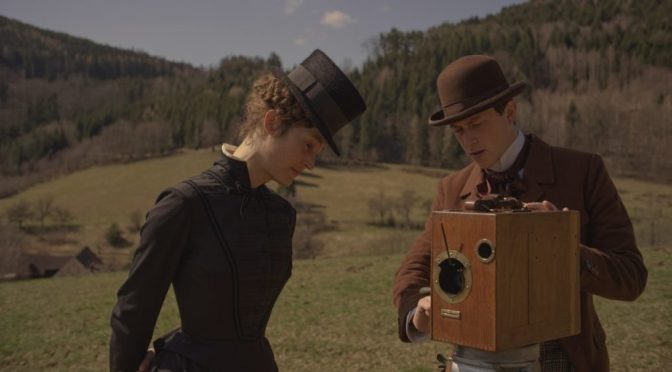
But is it really a silent film, quiz the sceptics? This question is mostly beside the point. The postmodern magpie impulse leads us away from purism and into remix culture. We recently welcomed the re-emergence of Musidora via the revival of Irma Vep on TV with Alicia Vikander, following Olivier Assayas’s 1996 film of the same name starring Maggie Cheung[3]. I would love to your draw your oversubscribed attention to the mischievous appearance of Louis Le Prince as a supporting character in Marie Kreutzer’s Corsage (2022, pictured above) – improbably wielding a reel of celluloid and giving the young Empress Sissi an opportunity to express herself in a medium of self-portraiture far removed from the formality of a court painting in oils. The mechanics of an early film apparatus in the service of the imperial selfie. Young cinema references live again in gleefully anachronistic contexts.
Irma Vep (Olivier Assayas, 1996)
As has been remarked before, this is happening alongside an explosion in the availability of early and silent film on DVD and Blu-ray, even on streaming platforms, and the growth in archive cinema festivals. These things are clearly related. We might trace this “silent film revival” back to the centenary of cinema celebrations in 1995, which reminded us all over again of cinema’s youth, the compelling beauty and strangeness of early film – the century looping back on itself like a reel.
So there are intellectual and practical reasons for the persistence of silent cinema style. But I would argue that there is also an emotional pull, drawing us back to the first decades of filmmaking. This is counter intuitive. When Billy Wilder made Sunset Boulevard (1950), and Stanley Donen made Singin’ in the Rain (1952), the memories of the silent era, and the fraught transition to sound, were still relatively fresh, barely a generation away. The filmmakers were excavating their own youth, their own back catalogues. Conversely, no one living today feels genuine nostalgia for the early film period. We don’t remember that far back.
However, I think there is a connection. We yearn for the new media excitement of ten or twenty years ago or more – the same sense of a moment captured in time emerges when we look at both. Whether the form in question is MySpace or Vine or YouTube vlogs, Facebook pokes, gifs, hashtags or Boomerangs. Ah, the days of landscape-oriented video. Or that particular format, the music video, corralled into an immersive exhibition practice called MTV and genuinely ubiquitous, now still as glamorous and sometimes expansively produced, but streamed singly online, or relegated to a “background screen” in a bar or hotel foyer. Who remembers renting a VHS, home-taping a movie off-air, or covertly watching a “video nasty”[4]? Laser discs, even. Or simply broadcast TV, in a choice of three or four channels. We have always been watching, and experiencing newness and loss.
Decasia (Bill Morrison, 2002)
Remember how we discovered, studied and adapted to the new forms, found ways to use them for our own amusement, our own conversations? We have become adept at learning to love and then learning to move on, from new media. The Artist, just like Sunset Boulevard, takes the loneliness of standing still while the world turns to a new novelty, as its central theme. Decasia, with its once carefully crafted images engulfed by decay, expresses this bereavement without saying a word. Sometimes, rarely, we find a form and stick to it, in defiance of fashion. Why is this blog still a blog, and a WordPress-hosted blog at that, when my peers have migrated to Substack, or pivoted to video? I must be old-fashioned, I guess, or simply nostalgic. Hands up if you remember when this site began, perversely on Tumblr? Or when Twitter – a platform that persists even now, but under a new name, with dangerous new rules, and diminished engagement – was integral to its growth?
When we look at early film we recall the ephemerality of once-new media: so many young cinemas, and one powerful pang. The joy of novelty and movement, experimentation and awkwardness, of discovery and reorientation and then the inevitable shock of absence. We understand the connection between our modern screen culture, and the early film period – but more importantly we feel it too. New media forms demand and swallow our attention, but their content is easily lost, and their existences short. This emotional link, as well as the artistic expressions that it provokes, is a rebuke to the idea of linear history. This is fine, because cinema time is always instantaneous. And cinema will always find a way to stay young. For a multitude of reasons, we are living in the silent film revival, and I find myself racing to document it.
Early cinema is trending in the 21st century, but how are we going to make the most of it?
Why “early cinema” in the twenty-first century? Over the past several decades, there has been a global revival of silent film culture—from international festivals and archival research collectives to popular podcasts, blogs, and social media fandoms. Passionate communities of students, scholars, archivists, curators, artists, and musicians have rallied around the resurrection of movies made over a century ago. But what is the specific appeal of “early” cinema—as an aesthetic form, experimental impulse, and historiographic gambit—toward bringing silent film culture into contact with the possibilities and crises of the present? New media pose irresistible parallels with early film exhibition practices, epitomized by the recurrence of viral temporal loops and attraction-based spectacles. Yet there are logistical challenges to curating early films (which are often very short) as opposed to feature-length works. Beyond material considerations, how do the uneven politics of visibility and representation in early filmmaking (its radicality and racism, for example) speak to feminist, queer, decolonial, anti-racist, and other social justice movements today? Digitization has made the early film archive widely accessible—but unmanageably plentiful. Its contents encompass 4k nitrate scans, physical media collections, curated streaming databases, and the unmoderated recesses of YouTube and TikTok. How best to give method to early cinema’s madness by concocting playful, new conceptual categories for thematic and speculative curating? Most importantly, who are the audiences for early cinema today (beyond the usual suspects) and how can we (early film evangelists) work together to identify, curate, and contextualize an evocative range of programming and syllabi that will bring new publics into the fold?
Silent London will always be free to all readers. If you enjoy checking in with the site, including reports from silent film festivals, features and reviews, please consider shouting me a coffee on my Ko-Fi page.
[1] For a commentary on the capitalist realities behind the apparently hobbyist jollity of TikTok comedians, see Maggie Hennefeld, Death by Laughter: Female Hysteria and Early Cinema (Columbia UP, 2024)
[3] This excellent film was my gateway into a lifetime of silent film fascination
[4] Film such as Prano Bailey-Bond’s Censor (2021) appeal to this nostalgic itch, just as clearly as The Artist appeals to those who admire the aesthetics of silent Hollywood.
At its simplest, the history of silent film in Denmark and Germany can be seen as a story of two halves, divided by World War I: first, there was the rise of the Danish Nordisk Film Company, a major player in production and distribution throughout Europe whose success was ultimately stymied by the war; and then there was Germany’s UFA, a government-funded consolidation of private film companies ready to capitalise on the creative boom born from the county’s post-war malaise.
Life is short, people are busy, most of us have no time to waste. Pirmoji Banga, Vilnius’s hip festival of silent and early sound cinema, knows the importance of getting straight to the good stuff. How so? When the festival’s remit covers decades of film history?
In 2023, Pirmoji Banga, directed and curated by Aleksas Gilaitis, concentrated solely on the female contribution to beginning of film, which we all know by now is substantial. This year’s edition of Lithuanian festival Pirmoji Banga screened films starring Asta Nielsen, Mae West, Brigitte Helm and Louise Brooks, directed by Elvira Notari and Lotte Reiniger, and female-led stories such as The Nortull Gang, directed by Per Lindberg in 1923. Beautiful programming.
Lots to enjoy at the BFI Film on Film festival this summer (8-10 June) but now the lineup is out we can confirm that there are silents to be savoured among the banquet. British silents in fact: The First Born (Miles Mander, 1928), and two Manning Haynes films: Sam’s Boy (1922) and The Boatswain’s Mate (1924). All three films with be screened on vintage prints with live piano accompaniment, naturally. And I am also intrigued by a programme of dialogue-free “visual documentaries” dating from 1947-71 with live musical accompaniment.
Remember I told you about the fabulous resource that is WeimarCinema.org? This comprehensive website is also a journal, and the Spring 2023 edition has just been published. Contents include a dossier by Oksana Bulgakova on the difficult reception of Eisenstein’s Battleship Potemkin in Berlin in 1926, as well as essays by Tom Gunning, So Mayer, Tatjana Hramova, Leonard Quaresima, Michael Cowan and Anton Kaes. Oh, and, um, me on Pabst. I especially enjoyed reading Mayer on Queer Weimar Cinema Across Borders, ahead of tomorrow’s Gender Rebels event in Bristol.
Well done everyone! The Silent London Poll of 2022 had a record-breaking number of votes, and the winners reflect a thriving, international silent film scene. Congratulations to all the people mentioned below, some of these categories were bursting with great nominations. Thank you for all your votes. And for making me blub a little when I was typing this up.
Without further ado, let me open this giant stack of golden envelopes. Here are your winners!
The Manxman (Alfred Hitchcock, 1929)
1. Best orchestral silent film screening of 2022
Your winner: The Manxman (Alfred Hitchcock, 1929), with a score composed by Stephen Horne, orchestrated and conducted by Ben Palmer and played by Orchestra San Marco di Pordenone, with soloists Louise Hayter and Jeff Moore, at Le Giornate del Cinema Muto, Pordenone.
I said: “Horne’s music is as deft as Hitch’s camera: always gorgeous, but sometimes delicate and other times thick with portents of doom… Needless to say, Hitch and Horne brought the Verdi to its feet once more.
Honorable mention: The Unknown (Tod Browning, 1927) with a score conducted and composed by José María Serralde Ruiz, performed by Orchestra San Marco di Pordenone, , at Le Giornate del Cinema Muto, Pordenone.
La Dixième symphonie (Abel Gance, 1918)
2. Best silent film screening with a solo musician or small ensemble of 2022
Season’s greetings Silent Londoners. It’s that time of year when we like to look back at the year, and especially at all the great silent movies we watched.
Who knows what normal is any more? But this year we had in-person film festivals, seasons, screenings and conferences a-plenty. We had new books and DVDs to enjoy. New websites too! And honestly, silent cinema seems to be more popular than ever.
A Pordenone postscript on a subject very dear to my heart – Asta Nielsen.
While I was at the Giornate I was lucky enough to talk to scholar Julie K. Allen about her research into Asta Nielsen, including her English-language translation of the actress’s fascinating memoir, The Silent Muse, which was released by Boydell & Brewer earlier this year. It is a tremendous book. An engrossing read, which offers insights into Nielsen’s life and work and especially the world of Weimar Cinema.
This is probably my final Asta Nielsen-related post for a while. I am delighted to be able to tell you that I was a guest on the Folger Shakespeare Library’s podcast, Shakespeare Unlimited, to talk about Nielsen and her Hamlet.
I had a long chat with Shakespeare Unlimited host Barbara Bagaev about the film, and its context in Nielsen’s career. You can access information about the podcast here and listen to my episode and read the transcript here. You can also find Shakespeare Unlimited wherever else you find your podcasts.
This irresistibly grotesque German silent is an adaptation of a play that was hugely popular in Germany and around the world, in the early 20th century, and has been subsequently adapted many times, loosely or otherwise, for the screen. The play is Erdgeist/Earth Spirit, the first part of Frank Wedekind’s Lulu cycle, which silent film viewers may be more familiar with in the form of GW Pabst’s Pandora’s Box of 1929, starring Louise Brooks. The later, iconic film has overshadowed this adaptation, which has been harder to see. And indeed, Brooks wrote rather scathingly about the film in Lulu in Hollywood: disparaging the film for its lack of lesbianism and incest (a questionable complaint for two reasons), and accusing Nielsen’s Lulu of performing “skippity-hops” and appearing to suffer from an attack of indigestion at the crucial moment. Nielsen’s Lulu was, she said, a “man-eater” who “devoured her sex victims”, whereas her own portrayal of the femme fatale was much more innocent…
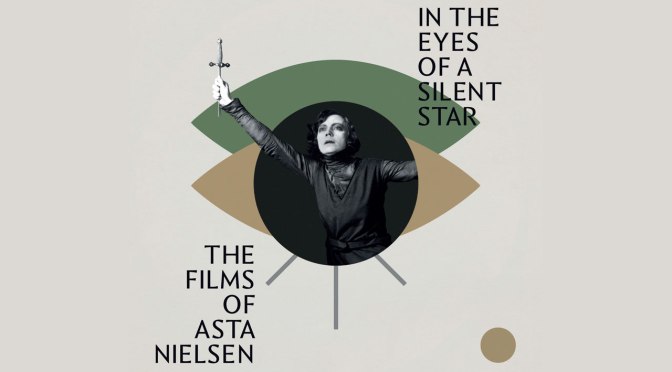
This blogpost is based on the introduction I gave to a screening of this film in the BFI Southbank season that I curated, In the Eyes of a Silent Star: The Films of Asta Nielsen. The season continues until 16 March, including a screening of this very special film.
We are referring to this film as The Decline. It is also known as Downfall. The original German title is Der Absturz, which is perhaps something more like The Crash. The Dutch title, and this film survives in a partial Dutch print, was “The Penalty of Sin”. The subtitle was A Drama From the Artist’s Life. The film was and written and directed by Ludwig Wolff and it was made in 1922, by Asta Nielsen’s own production company, Art Film, in Berlin – she described the existence of that company as “three glorious years”. So it is a star vehicle of sorts, but without the vanity that you might expect from such a project.
This blogpost is based on the introduction I gave to a screening of this film in the BFI Southbank season that I curated, In the Eyes of a Silent Star: The Films of Asta Nielsen. The season continues until 16 March and there are many great films yet to see.
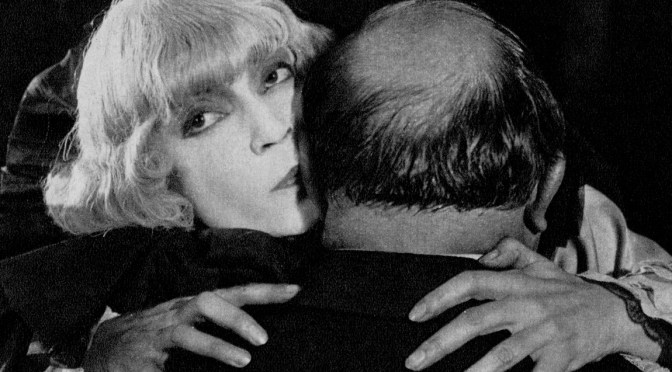
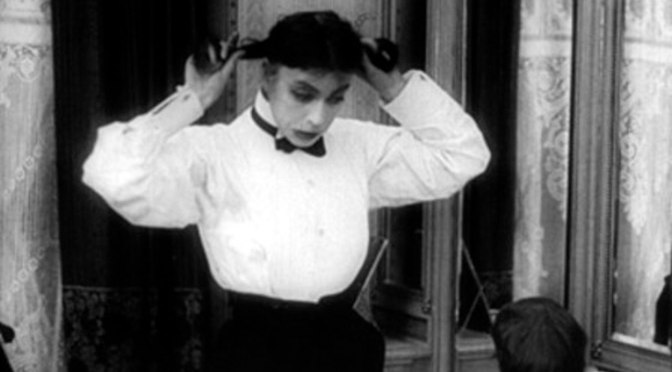
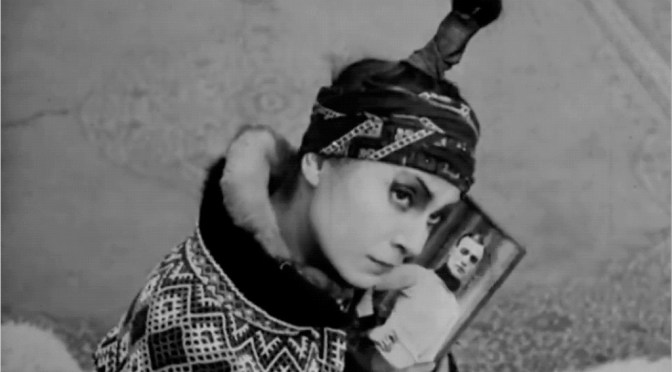
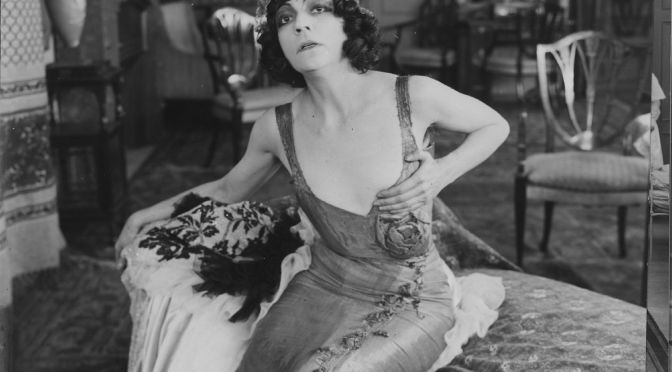
Asta Nielsen was one of the first truly international film stars, mobbed by crowds when she made personal appearances and beloved by audiences all over the world. Was she the first? You might call it a tie between her and the French comedian Max Linder, who made his name with a dapper, high-class comic character in a dress suit. When they burst on to the scene, Charlie Chaplin was four years away from making his debut. Although acclaimed as a tragedienne, the melancholic counterpart to Linder’s slapstick sensation, Nielsen proved often that she could do funny, too. And in tails as well.
In fact she had needed a little encouragement to play humorous scenes at drama school. “It all went wrong when I had to try my hand at comedy,” she wrote in her memoir. “Every type of humour was utterly foreign to me.” But in many ways the seriousness and commitment she brought to drama was her secret weapon as a comedienne. And as Robert C. Allen has written, perhaps the confidence boost of global stardom gave her the freedom to be silly.
This blogpost is based on the introduction I gave to a screening of this film in the BFI Southbank season that I curated, In the Eyes of a Silent Star: The Films of Asta Nielsen. The season continues until 16 March and there are many great films yet to see.
You have heard of the face that launched a thousand ships. In this film you will see the hips that launched a very famous face.
Asta Nielsen, a dissatisfied stage actress with little interest in film, had her interest piqued when her friend the set designer Urban Gad offered to write her a role and direct her in it. Nielsen felt that the cinema was silly stuff, cowboys and cream pies. But The Abyss (Afgrunden/The Woman Always Pays, Urban Gad, 1910) was an adult film, a serious story, about a love triangle between a young music teacher, Nielsen, a vicar’s son, played by actor and director Robert Dinesen, and a brutishly sexy circus performer, played by Poul Reumert. All three actors were making their debut in front of the camera, and Reumert and Nielsen would remain friends. In the self-titled autobiographical documentary that Nielsen made in 1968, she is shown in conversation with Reumert – the beginning and end of her career on film is with him.
Yes, more Asta Nielsen news! Just a quick update this time to let you know that I am giving an online lecture about Asta Nielsen on Monday 7 March in the evening – 6.30-8.30pm, UK time, via Zoom. The event is being held in collaboration with the London Drawing Group, as part of its Feminist Lecture Programme, which is full of fascinating subjects.
The lecture will give an introduction to and overview of the life and career of Asta Nielsen. It will be illustrated with imagery and clips and will be an extended version of the lecture that I gave at the opening of the season last month at BFI Southbank. It will be accessible all around the world, and if book but can’t be online at the right time, you can catchup via a recording later in the week.
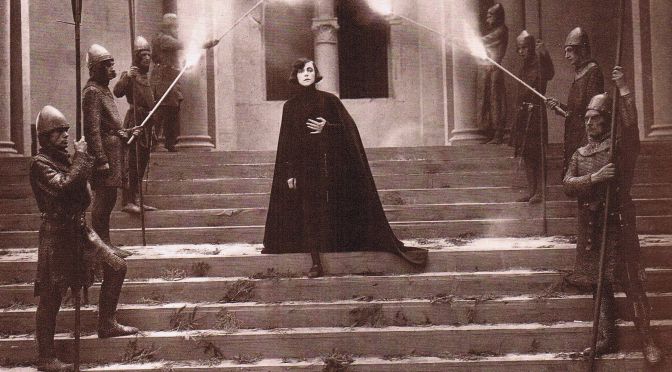
Hamlet is a woman! At least she is in this German feature film, Hamlet: A Drama of Vengeance (1921). And not just any woman, but the inimitable Danish diva Asta Nielsen.
From Sarah Siddons to Maxine Peake, many actresses have played the Prince of Denmark, and a fragment of Sarah Bernhardt’s stage interpretation of the role was even captured in a short film shown at the Paris Exposition in 1900. However, the distaff twist in this film was prompted, or at least justified, by Edward P Vining’s scholarly 1881 book The Mystery of Hamlet: An Attempt to Solve an Old Problem, which makes the case for Prince Hamlet being so feminine a character that his contradictory nature is best explained by imagining that underneath the black tunic he’s really a woman. The film also draws on Danish history and a German play from 1704 called Fratricide Punished. The gender-swap allows for an intriguing new take on Shakespeare’s text, recasting his hero/heroine’s relationships with Ophelia, Horatio and Gertrude in fresh moulds.
Hello, Silent Londoners. Soon I will have the results of the 2021 Poll to share with you, but a bout of January sickness has set me back a little. However, I did want to pop on here to tell you that the BFI Southbank season In The Eyes of a Silent Star: The Films of Asta Nielsen starts NEXT WEEK.
The season opens with a lecture and panel event on Thursday 3 February, The ABC of Asta Nielsen. At this event, I’ll be giving an illustrated lecture all about ‘Die Asta’, and then I will be joined by Erica Carter, So Mayer and Bryony Dixon to delve further into the stardom and significance of the woman known as the greatest actress of the silent era. Later that evening I will also be introducing The Abyss and The ABC of Love. Please explore the programme further and remember February represents just the first half of the season – there is more to come in March, including more guest speakers!
Last night, I appeared on BBC Radio 3’s Free Thinking to discuss Nielsen with Matthew Sweet, Erica Carter, Emma Smith and Lone Britt Christensen. It gets steamy pretty quickly.
Silent London will always be free to all readers. If you enjoy checking in with the site, including reports from silent film festivals, features and reviews, please consider shouting me a coffee on my Ko-Fi page.
Are we allowed to celebrate Christmas yet? I believe so. And I certainly didn’t want to delay sending my warmest greetings to you, wherever you are – and my thoughts go out especially to those of you who can’t be with the ones you love this winter.
Everything feels very uncertain right now, but I am taking a little comfort from the fact that despite adverse circumstances we have had almost a full calendar of screenings and events this year – and judging by the votes rolling into the Silent London Poll, many of you have been there, in-person or online, enjoying the best of silent cinema and live music.
Finally, the time has come for me to stop sitting on my hands. Those of you who are on Twitter may have seen a sneak preview of this, but I am delighted to say that I can finally announce … Astafest!
No time to blog today but there is NEWS to share. So here goes, welcome to Silent London’s News in Brief column.
• The virtual Pordenone lineup is live now! Laurel and Hardy, Brigitte Helm, Sessue Hayakawa, Ruan Lingyu! And all your favourite Pordenone musicians. Tickets for the whole shebang start at €9.90, and go on sale next week.
• Exciting news from Denmark, where an exhibition devoted to Asta Nielsen will run from the end of October to the middle of next August. More on this soon …
I will have more news to share soon. Exciting news!
• Silent London will always be free to all readers. If you enjoy checking in with the site, including reports from silent film festivals, features and reviews, please consider shouting me a coffee on my Ko-Fi page.
The choices we make in life define us, and this morning I got up bright and early for Viktor Turin’s Provokator (1927), but gave early Selig feature The Ne’er-do-Well (1916) a miss. Did I do right to choose Anna Sten’s anguished student and her revolutionary chums over Kathlyn Williams and the adventures of the rich and beautiful? I don’t know. Provokator, which marks Sten’s cinema debut, was occasionally stirring, but mostly on the pedestrian side, though a raid on the revolutionaries’ den was rather fine, boosted by terrific accompaniment from Gabriel Thibaudeau and Frank Bockius.
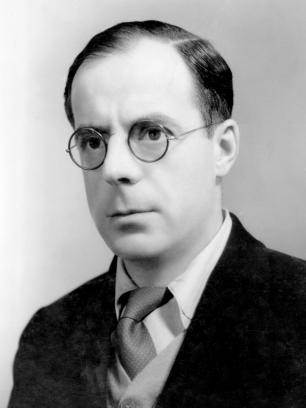
Walter Summers
Where I may have erred is in choosing such a downbeat opener on a day that was to close with GW Pabst’s heartbreaking social critique Die Freudlose Gasse (1925). However, I am getting ahead of myself. My afternoon was perked up considerably by the patriotic hubbub around Walter Summers’ lovely postwar tearjerker A Couple of Down-and-Outs (1923), introduced by the producer’s grandson Sidney Samuelson, who was seeing the film for the first time. What could be a very harrowing tale is handled with care, as Rex Davis’s Danny finds unlikely allies when he rescues his war horse from a foreign abattoir: manipulative, but charming with it.
The audience groaned in unison at the start of the next screening, as another tranche of German animated shorts kicked off with a toothpaste advert featuring the “tooth devil” cracking open a poor vulnerable gnasher with his drill. It was, as before, a diverting and diverse hour. In the name of commerce, all kinds of unlikely objects have been animated: detergent, rolling pins, matchboxes, kettles and even, in a sweet but fussy stop-motion ad for aspirin, a silent-film star and director (Im Filmatelier, 1927). Günter Buchwald at the piano followed with apparent ease the rapid changes of subject-matter, media and mood – as when a promo film for a department store dwelt proffered a new suit as a suicide-prevention measure (Der Hartnäckige Selbstmörder, 1925).
Asta Nielsen in Die Freudlose Gasse (1925)
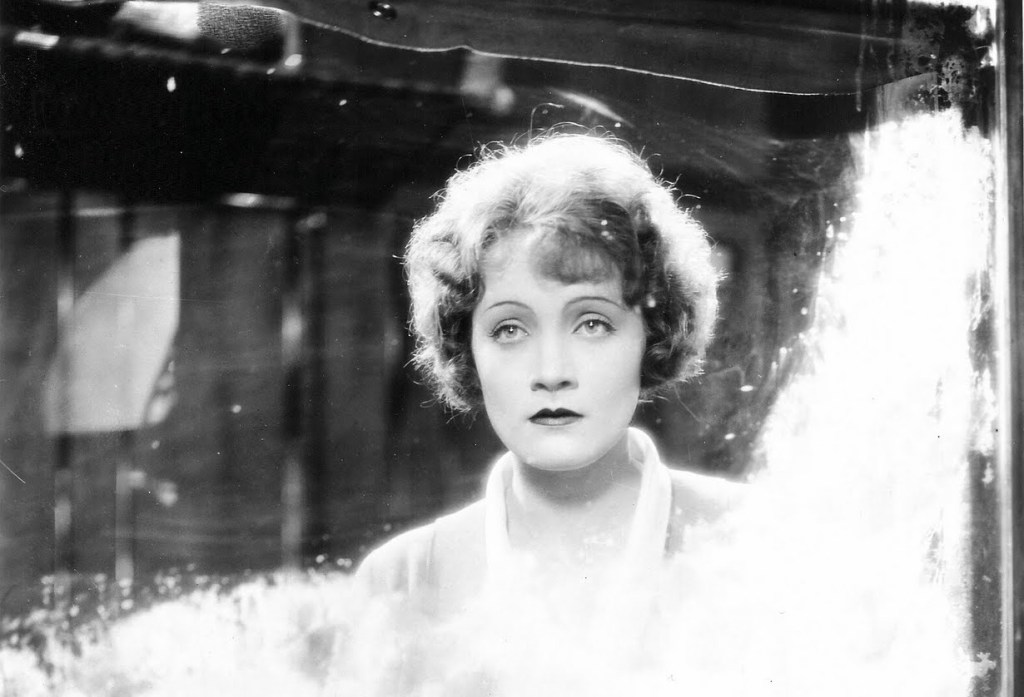
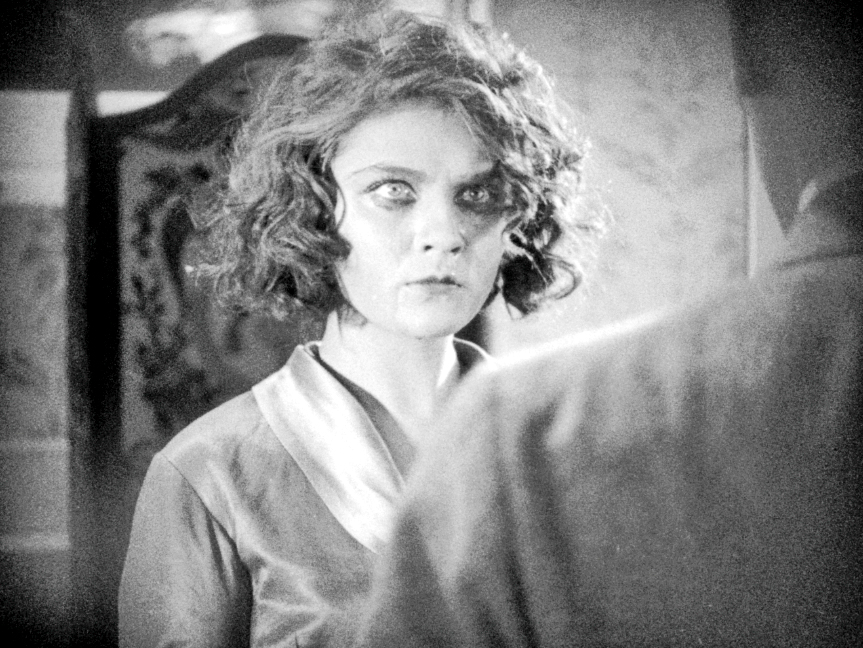
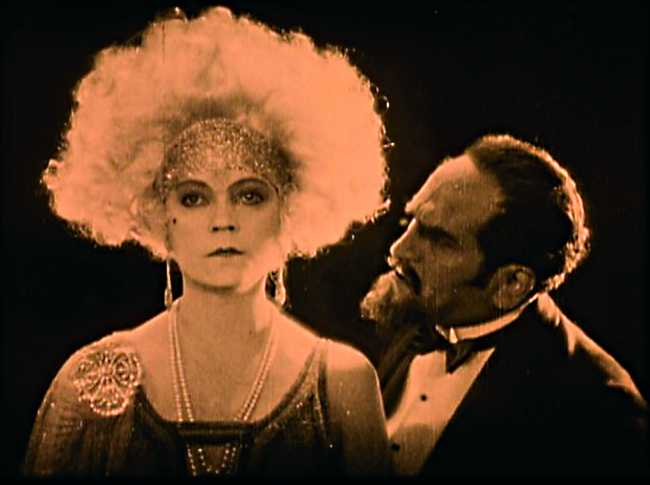
I have a date with Greta Garbo in A Woman of Affairs (1928) on Saturday, but I spent Friday night with both Garbo and Asta Nielsen in the elegant but emotionally gruelling Die Freudlose Gasse (1925), giving a beautiful face to the seedy economic exploitation of women in 1920s Vienna. Both the lead stars are fantastic, and supported by a cast of wonderful character actors including Valeska Gert as a pixie-faced madam. Pabst’s direction veers between sober restraint and wild bouts of inventive, unchained camera excitement. This new print is not quite complete, but mostly crisp, with deep tinting, most especially effective in a fire scene towards the end.
Accidentally profound statement of the day: “The joyless street is long,” exclaimed I, when I read in the catalogue that Die Freudlose Gasse clocks in at 151 minutes long in its present state. It ran for closer to three hours at the Berlin film festival, apparently, but that was based on a projection speed of 16fps, as opposed to the Giornate’s 19fps. Phew.
For full details of these and all other films in the festival, the Giornate catalogue is available as a PDF by following this link.












 Silent London