You may or may not know this, but when I started Silent London I was working at the Guardian newspaper. So, it was at this time, when I was reading and writing about the silent era, and sitting in the Guardian office (rarely at the same time, I hasten to add) that I first became just a little obsessed with C.A. Lejeune.
Caroline Alice Lejeune, pioneering press film critic, media celebrity, Manchester icon and one half of the Sunday Ladies, with the Sunday Times’s Dilys Powell, is a pet subject of mine. I find her writing to be witty and wise and gentle, and her story, of falling in and out of love with the cinema, to be absorbing and not a little moving. It is also fascinating to me how she first got her job as the first real film critic on the Manchester Guardian, and moved to the Observer for another three decades. So I have been doing a little research. Well a lot in fact.
This is a long overdue post, but perhaps I was simply enjoying the research too much. Picking up an occasional series on this site, here are some short reviews of new books on silent film that have passed across my desk recently. Yes, I am a lucky duck.
Silent to Sound: British Cinema in Transition, by Geoff Brown
If a story is worth telling, and this one certainly is, then it is worth telling with style. In this case, Geoff Brown relates the story of the arrival of sound in the British film business with an eye for the eccentricities and absurdities that make it not just a pivotal moment in the medium, but a good yarn, and one that is revelatory about the national industry. Geoff Brown, journalist and researcher, has been studying the arrival of sound in Britain for years now as part of an AHRC-funded project and the result is this deeply enjoyable and admirably detailed book about a long and strange process, which when told with Brown’s light touch and quick humour is as diverting as it is informative. The serious point is that Brown’s emphasis, where he has access, is always on the films themselves. And that, along with the quotations from the critical discourse that I particularly cherish, is what really gives this book its colour.
Pordenone changes a person. I don’t just mean in the way that my bloodstream is now 80% espresso. It changes your aspirations. My dream now is to live in an apartment designed by Sonia Delaunay, watching Peter Elfelt’s dance films (they are playing before several of the screenings) all day. For loungewear, I would choose the louche shawl-collared robe sported by Jaque Catelain in Le Vertige, and if I ever left the flat, I would wear the stunning geometric coat and hat sported by Madame Gilberte in Le P’tit Parigot. I’d take the vintage Bugatti too, please.
“Just a little note” is so often code for “here comes some shameless self-promotion”. So, here goes.
Just a little note to say that today is publication day for my second BFI Film Classic. As I posted earlier in the year it is on The Red Shoes (Michael Powell and Emeric Pressburger, 1948), a film with several connections to silent cinema and to the Roaring Twenties – but strictly speaking, off-topic for this website. Still, I hope that if you love the film, you like the book.
The BFI has just launched its Cinema Unbound epic celebration of Powell and Pressburger and The Red Shoes will be re-released on 8 December. So I will be speaking at lots of screenings of the film across the country. To find out where I will be and when, follow me on Twitter/X or Blue Sky or check back here every so often.
The book is available from all good bookshops, and the publisher’s page is here. I am delighted to have had some press mentions already, but all reviews on Amazon and Goodreads are very, very gratefully received. Thanks so much for reading!
A typical day in Kevin Jackson’s Constellation of Genius, his engrossing chronology of 1922, much in the air in 2022, a year on from his untimely death, will have more than one entry, most often for events in London and Paris. The section on 4 March, however, begins in Berlin, with the first private screening of F. W. Murnau’s Nosferatu, no. 1 on the IMDb’s list of the most popular films of the year, Jackson tells us, before hopping over to London for no. 6 on the same list: Alfred Hitchcock’s Number Thirteen. The latter, not the former, makes the book’s back-cover blurb: 1922 was “the year in which James Joyce’s Ulysses and T. S. Eliot’s The Waste Land were published, Alfred Hitchcock directed his first feature, the Ottoman Empire collapsed…” Number Thirteen has dropped down to no. 15 in IMDb’s list in the decade since Constellation of Genius was published, perhaps reflecting a generational shift akin to Jeanne Dielman’s victory over Vertigo, but still the question remains: what is it doing there? There, specifically, on 4 March, but also, in a wider sense, in a book about modernism.
Edited by Tony Kaes and Cynthia Walk, this capacious website is a comprehensive source for anyone studying, or refreshing their interest in, Weimar Cinema. There are guides to where to watch films online, other useful websites, and more traditional publications. They also publish “scholarly web-based essays that benefit from moving images and links”, so get in touch if you have something you’d like to write for them. I really liked this, by Paul Flaig, on “Chaplin’s cinematic promise”. They also welcome submissions of archival material, dossiers and updates to their listings.
British Cinema: A Very Short Introduction, by Charles Barr (Oxford University Press)
An entertaining and very informative tour of British film history, starting from the silent days of course, but taking a more productive route than a simple chronological tour. Yet, Barr covers everything from Rescued By Rover to Hitchock, Quota Quckies, Powell and Pressburger, Ealing, the British New Wave and Chariots of Fire right up to titles as recent as Last Night in Soho. I particularly enjoyed the way he paired films to discuss them, eg comparing such near-simultaneous yet wildly different releases as Downton Abbey and Sorry We Missed You. When you finish reading this valuable book you are sure to immediately turn the TV on to Talking Pictures, and I don’t blame you.
The British Silent Film Festival is great, but it only happens once a year, when we are lucky. So the annual British Silent Film Festival Symposium, taking place each spring at King’s College London, is a very Good Thing indeed. It’s a meeting of the clan, really, a gathering together of everyone who cares about British silent cinema in this town, and hopefully beyond. At the symposium, these likeminded souls can gather to watch films, debate them, listen to papers and eat biscuits.
This year’s event takes place over two days (6-7 April 2017) and builds on the format of previous years by incorporating screenings in between the papers. And biscuits. These screenings are of little-seen films, and the papers cover a wide range of topics all within the field of British cinema and cinemagoing during the silent era.
Here is what the organisers have to say:
The British Silent Film Festival affords scholars, archivists and enthusiasts the opportunity to re-asses film-making in Britain between 1895 and 1930. By bringing forgotten films out of the archive, and encouraging scholarly activity that can place those films in appropriate production and reception contexts, the festival has been the driving force behind a complete re-appraisal of what was previously an almost unknown cinema.
This two-day symposium is intended to complement the festival itself – an opportunity to consider the achievements and the key debates brought to light by the festival, and to discuss the new directions that future research may take. Highlights of the programme this year include screenings of A Lowland Cinderella (Sidney Morgan, 1921) starring Joan Morgan, in a romance set in Scotland but filmed on the English south coast, and two films not seen publically since their release – The Unsleeping Eye (Alexander Macdonald, 1928) and Empire adventure shot by a Scottish production company, and A Light Woman (Adrian Brunel, 1928) which was previously thought lost, but has now been discovered in a truncated home-market version.
Sometimes you can fight it. You can keep those thoughts at bay, and resist your deeper impulses, urging you to indulge that secret side of yourself that you usually keep hidden. On other days, what the heck, you just need to geek out.
Thank nerd heaven, then, for the British Silent Film Festival Symposium, now in its fourth year – and more specifically, thanks to Lawrence Napper of King’s College London who organises this impressive event.
For the first time, we had two days in which to sympose. First, a long afternoon (2pm-9pm) of screenings with a couple of presentations thrown in, then a full day of papers. I like this new arrangement, which gives you a bit of choice as to how deep your geekery will run. In case you really need to ask, I was there for both days …
Knocknagow (1918)
The three features on the Thursday all had much to recommend them. It’s a little unfair to single out my least favourite, because it was an ambitious ensemble drama, a literary adaptation made in Ireland at a time when that country barely had a film industry at all – and it had scenes missing. But do look out for a forthcoming restoration of Knocknagow (1918), which has a fascinating history and sumptuous landscapes. And we were lucky enough to have Neil Brand at the keys, so those landscapes became even more lush.
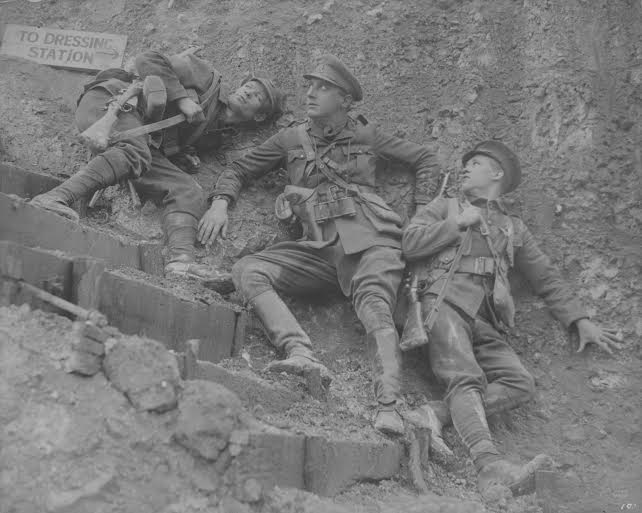
The most awe-inspiring film of the day was The Somme – not the very well-known documentary The Battle of the Somme (1916), but a 1927 feature, which nevertheless borrows some documentary tricks, and archive footage, to tell the story of the famous offensive of 1916, with painstaking detail and high drama. It is impossible not to be moved by the bravery and stoicism of the men involved, and the scene in which our lads first see a tank wreaking destruction on the trenches is nothing less than awe-inspiring. Slow tracking shots along the mighty beast’s riveted hide create an impression of looming, sinister dominance that Stanley Kubrick would salivate over. And Stephen Horne’s accompaniment was astonishingly good – and often unexpected. Do seek this out if you ever get a chance to see it, especially if you have a particular interest in world war one. And you can read a little more about the film in Lawrence Napper’s excellent book, excerpted here.
You heard it here first … but now the details of April’s British Silent Film Festival Symposium have been released. You can peruse the lineup of speakers and films (I’m picking favourites already, natch) and even more excitingly you can book your ticket now. The two days of papers and films comes in at a very reasonable £20 and I am confident that I can confirm a resounding YES to the “Will there be tea and biscuits?” question.
The Somme (1927) (Image: BFI)
Check out the lineup here:
Thursday 28 April 2016 Arthur and Paula Lucas Lecture Theatre
2pm – LAWRENCE NAPPER Welcome (no registration needed on this day)
2.10 – TONY FLETCHER ‘Sound Before Blackmail’ – a programme of early sound-on-disc films matched with their discs (30mins)
4.30 – DAVID ROBINSON ‘Leopoldo Fregoli, Superstar and Progenitor of Montage’ (40 mins)
5.10 – SCREENING MAISIE’S MARRIAGE (Walter Summers/ Alexander Butler, 1923) (95 mins)
6.45 BREAK (30 mins)
7.15 SCREENING THE SOMME (M.A. Wetherell, 1927) (109 mins)
9pm END
The Life Story of David Lloyd George (1918)
Friday 29 April 2016 Nash Lecture Theatre (K2.31)
1918 AND ALL THAT (9.30-11)
1. Ellen Cheshire – Charlie Chaplin in the British Press
2. Lucie Dutton – The Life Story of David Lloyd George: New Findings from the Archives
3. Gerry Turvey – Doing the Economics: A Post-War British Company Takes on the American Market
4. Charles Barr – British Silent Cinema: How Does Ireland Fit In?
K2.31
IN THE AUDITORIUM (11.30-1.00)
5. Stephen McBurney – Arrested Beginnings of Colour Cinema in Inverness
6. George Barker – On Smells in the Auditorium
7. Mara Arts – The Royal Family on the London Screens
8. Nyasha Sibanda – Directing The Kingsway Cinema (Birmingham), 1927
1920s BRITISH CINEMA (2.00-3.30)
9. Esther Harper – Women Jockeys: From Films to Fact?
10. Henry K Miller – In Northcliffe Jail: Iris Barry, Film Journalist
11. Rachel Moseley – ‘Picturing Cornwall’ in early Promotional and Amateur films
12. Amy Sargeant – Boarding House Blues K2.31
PRE-SOUND AND SOUND 4.00-6.00
13. Joe Evans – The Depiction of Sound in Animated Film from the Silent Era
14. Julie Brown – Listening at the ‘Silent’ Cinema
15. Geoff Brown – Al Jolson, The Singing Fool and the advance of the talkies in Britain)
16. Laraine Porter – ‘The Americanisation of England’
17. Rebecca Harrison – All Quiet on the Home Front: Child Evacuees and a Silent Cinema Revival in the Second World War
18. CLOSING REMARKS
Is there a more pleasant sounding word than “symposium”? I think not, even if like me you are just old enough to remember the mid-90s punk pop band of the same name.
So it is with a satisfied, cat-like smile, that I share the news of a symposium, coming to these parts in April. it’s the British Silent Film Festival Symposium, if you hadn’t guessed, and it will take place at King’s College London, on 28 and 29 April. Two days? Yes, one day (the 29th, a Friday) will be given over to papers, the afternoon and evening of the previous day will be devoted to screenings of British silent films. Like, ooh I don’t know, The Somme (1927), perhaps? Surely not. Well, you didn’t hear it from me …
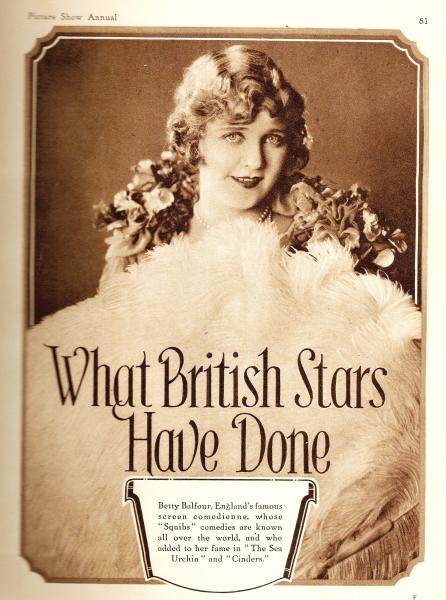
Betty Balfour demonstrates the dress code for the BSFF Symposium. Photograph: British Film Institute
But of course, the BSFF Symposium is a partner to the BSFF itself, so whatever is shown, and discussed, at the event will relate to “the opportunity to re-assess film-making in Britain between 1895 and 1930”, and offer a chance to “consider the achievements and the key debates brought to light by the festival, and to discuss the new directions that future research may take”.
If you are a little highbrow you’ll be especially pleased to know that the likelihood of biscuits is: good to high. If you are really clever, you’ll want to also know how to propose a paper for this delightful symposium. Hold on for the details of the call for papers, courtesy of Dr Lawrence Napper, the supremo of this symposium:
200-word proposals for 15 minute papers are invited on any aspect of film-making and film-going in Britain from 1895-1930. We encourage submissions from early career researchers and independent scholars, and this year especially welcome papers which respond to the themes of the most recent festival, and the current AHRB project on ‘British Silent Cinema and the Transition to Sound’.
Proposals should be sent to Lawrence.1.Napper@kcl.ac.uk by 29 March 2016. See you there!
Jane hoped to sneak out to the BSFF Symposium undetected …
There are two ways of looking at Sunday’s programme. You might glance at the listings and say: “it’s the last day of the festival, the films finish early, it’s all winding down.” But if you were there with us, watching these films, you’d know different. Sunday at the BSFF offered a big finish, with three feature films shown: one of which was a gem, and two of which were genuine masterpieces. And there was plenty more besides.
Shall I begin with a confession? Reader, I slept in. And those extra zeds were delicious, but I did regret missing Bryony Dixon’s presentation on Gallilopi, a curtain-raiser for the screening of Tell England (1931) that was to follow.
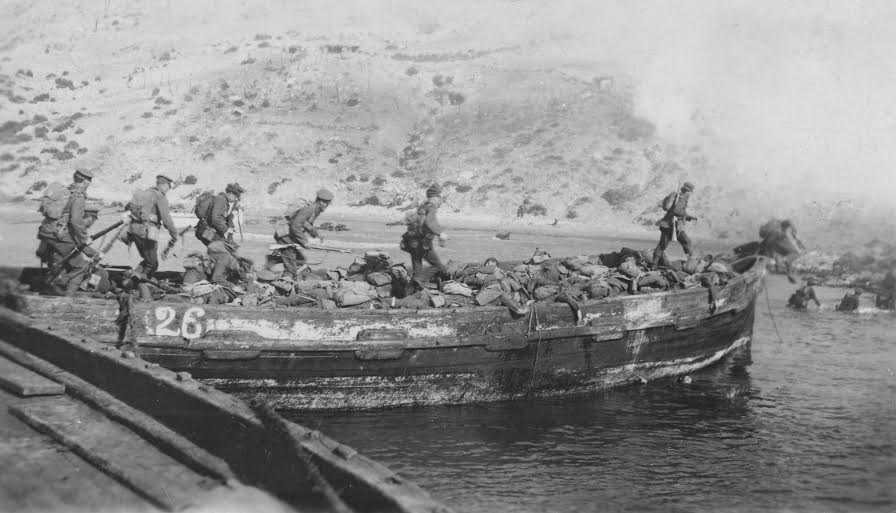
However, Tell England was a rousing start to the day – you couldn’t ask for better. We have been on a journey with these early sound films over the weekend – from the stumbling first steps of Dark Red Roses et al, via two beguiling movies on Saturday, to this, a real masterpiece. We were warned that the soundtrack was not of good quality, but really, it was not a problem. In fact, for every mishandled piece of dialogue here, there was a sound collage that did credit to co-directors Anthony Asquith and Geoffrey Barkas. And I suppose it does help that the actors offered a parade of perfectly clipped RP accents. Asquith and Barkas fold silent film-making techniques into their exploration of sound cinema – making this a bold and visually exciting war film. Tell England follows two young heroes (Tony Bruce and Carl Harbord) from their public school in divine middle England to the trenches of Gallipoli where the horrors of war and their duties as precociously promoted officers weigh heavy on their hearts. While the characters speak with traditional English restraint and understatement, the film whirls around them to show the physical violence of warfare (with mortar shells whirring and crashing on the soundtrack), and its psychological toll too, on the soldiers themselves and Fay Compton as a distraught mother almost driven mad by grief and fear. Not a documentary record of Gallilopi, although its vivid beach landing scenes are often cut up and used in factual programmes, but a fine dramatic film that would ideally be more widely available. So, insert a snide remark about the talkies catching on here.
After lunch, a commercial break, as the BFI’s Steve Foxon gave us a guided tour of screen advertising, from Edison’s short 1890s clip promoting Dewar’s whisky, to a bouncy Halas & Batchelor cartoon tribute to Kellogg’s Cornflakes in the1940s. All good fun, and the sort of presentation that provokes many more questions in the coffee break afterwards. Early screen advertising is both very different from and so similar to modern examples, with detergents cleaning whiter, and making easy work of tough jobs, as well as twee poetic tributes to the English countryside and even celebrity endorsements. And of course you can’t believe that anyone fell for these tricks. But we all do.
On Saturday, outside events threatened to intrude the sanctity of the festival – and we weren’t complaining. First, the morning’s historical presentations were timed around a break for an update on the Labour leadership decision. Is victor Jeremy Corbyn a silent movie fan? Here in “red” Leicester (that joke TM Peter Walsh) we assume he would be an Eisenstein man. And in the afternoon, we segued neatly from checking the football scores to taking our seats for The Great Game (1930), a rollicking good film, albeit a talkie, set in the world of soccer and strangely apt for the modern game. At night, we watched a film set during the Wars of the Roses, just a few feet from Richard III’s tomb. Perhaps it was all just meant to be …
Believing in fate is a double-edged sword, though. We started the day with a thoroughly intriguing film that danced with the dangers of destiny. The tale of a doomed ship, Windjammer (1930) was a haunting film that was shot as a silent documentary record of the final journey of sailing ship the Grace Harwar, but then had dramatic “talkie” scenes of life below-deck added to make it more palatable to the general public. Those fictional scenes added a plot, one that echoed the real-life tragedies that had taken place on board the Harwar on that long and difficult last voyage. The very handsome Tony Bruce plays a posh boy, Jack, who was travelling home after having his heart broken in Melbourne – and sad to say he meets a watery end. The scenes of the boat battling the waves are both beautiful and terrifying – the chat among the crew crude but naturalistic. More than a curio, but a curious beast all the same. And we were grateful to Laraine Porter’s exquisite introduction setting a complex film in its proper context.
More terror at sea in a very poignant presentation from Bryony Dixon on the films that tell the story of the sinking of the Lusitania in 1915. From newsreels of the aftermath of anti-German riots, to Winsor McCay’s stunning propaganda animation, this was an engrossing selection of films, rendered all the more powerful by the witness testimony Dixon read as the films played, and Stephen Horne’s sensitive accompaniment.
Get it together, people! We’re only on day two of the festival and it seems a collective mania has already descended. Call it camaraderie, call it cinephilia, call it cabin fever, but there was a feverish mood on Friday, for sure. I won’t criticise something that I admit I was part of but we should all know that somewhere the ghost of Ivan Mosjoukine is raising an immaculately painted eyebrow in our direction. He’s judging us, but silently, of course.
So the residents of Leicester may have heard wicked cackles emanating from the Phoenix art centre on Friday morning, because there were laughs a-plenty to be had, for the right and wrong reasons both. Forgive me for taking the films out of sequence, but I would like to introduce you to the second film first.
As I took my seat for Not For Sale (1924) I was whispering under my breath “Please be good, please be good …” And it was. This film is an out-and-out joy, with a classically British delicacy in its sentiment, humour and satirical bite. Those good vibes I was sending out were partly due to sisterly pride: the script is by Lydia Hayward, who wrote the H Manning Haynes adaptations of WW Jacobs stories that have so delighted previous iterations of this festival. I suppose I wanted a little more proof that she was crucial to their success. And Not For Sale, which is adapted from a novel by author and journalist Monica Ewer, provided it. This is a charming comedy, with an elegant structure, strongly written characters, sharp dialogue and yes, even a skein of feminism woven into its fabric. Toff Ian Hunter is slumming it in a Bloomsbury boarding-house run by the kind-hearted Anne (Mary Odette), and they fall in love … gradually. But when he offers a proposal, sadly he shows he has not left his old world and its shoddy values behind him. The central couple are adorable, but it’s the supporting characters (Anne’s lodgers, her rascally little brother and her theatrical sister) who make this a real ensemble treat. Plus, we had beautiful piano accompaniment from John Sweeney, so we were feeling incredibly spoiled. It boils down to this: the plot is preposterous but the characters, by and large are not, and so it has a grace and a truth often absent in romcoms …
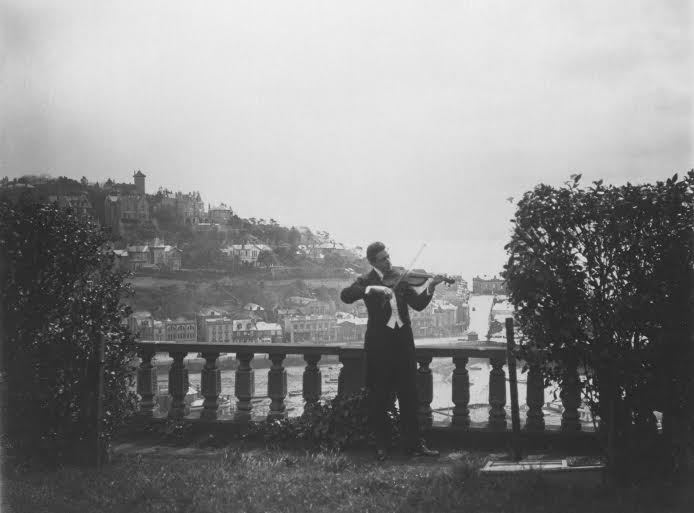
The Rocks of Valpre (1919)Or romantic dramas, such as today’s opening act The Rocks of Valpré (1919), a Maurice Elvey directed adaptation of an Ethel M Dell novel. The plot, the characters and even the location (Torbay doubles for coastal France) were all preposterous here. I couldn’t really understand anyone’s motivation: it was all rash promises, damaging misconceptions, wild coincidences and needless noble sacrifices. Nice to see Basil Gill again, here playing a younger man: one with a “European reputation” who “has an intimate knowledge of men” and who still gets the girl at the end of the story. Certainly it’s pretty, but not enough to distract me from the flaws I am afraid. I chuckled, and I sighed. Fair play to Elvey – this is the only existing film from his Stoll period, when I am reliably informed he was “churning them out” out a rapid pace and the problems in the film do mostly stem from the source novel. Still, it’s enough to make one throw one’s violin off the terrace and fall into a swoon, it really is.
Comfort zone be damned. Here I am in Leicester, an hour or so north of the Big Smoke and the first movies that the British Silent Film Festival chooses to show are all talkies … OK, OK I am not going to pretend that they are a novelty to any of us, but kicking off the festival with early British sound films seemed initially to be either a bold move or an acknowledgment that a few of the delegates would still be on the train/in the office at the start of play.
After a day of dialogue films I was desperate for a real silent movie, and Thursday’s finale was worth the wait by any stretch. But more of that anon. While “talkie Thursday” was occasionally grating, it was always fascinating.
Laraine Porter introduced the first two films of the day with a fun whistlestop tour of the British film industry’s transition to sound. She showed us possibly my favourite talkie of the day, Up the Poll (1929), a short political satire featuring Donald Calthrop as a newly elected MP bungling a victory speech that was essentially a string of very funny gags, with “canned laughter” and heckling off-screen. Up the Poll used a combination of synch and non-synch sound, and I’d be intrigued to know whether the balance was as it seemed, ie synch for Calthrop and non-synch for everything else. I assume so, which is usually a dangerous move …
The W Plan (1931)
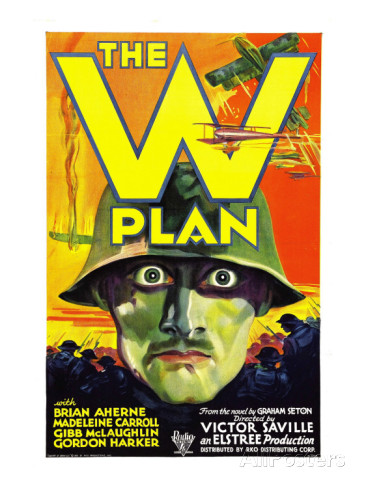
Porter also introduced our first feature, an ambitious war movie starring Brian Aherne and Madeleine Carroll called The W Plan (1930). At first it seemed that this one just wouldn’t catch fire, lots of awkward pauses and odd emphases, but boy did it start to blaze when Aherne was on the run in enemy territory. Punching German officers, hallucinating during a firing squad, leading a team of POWs to sabotage an enemy plan using a not-so elaborate code based on whist … Aherne was a dashing hero in a strange and exciting movie. Shame about Carroll – perhaps she will get another chance to show us what she can do.
Star of the day was Geoff Brown who introduced films with aplomb and gave fascinating talk on the rush to sound #bsff15
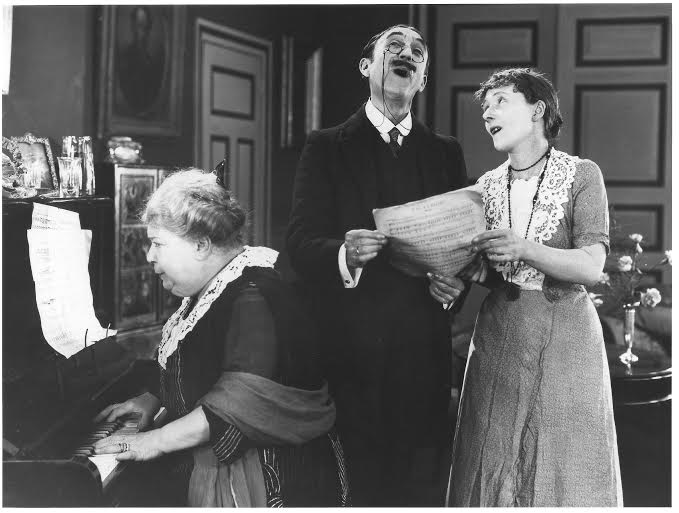
After lunch, Geoff Brown took to the stage with a massively entertaining, not to mention informative, presentation on, yes, the first British talkies made in 1929. Was Blackmail really the very first? You can guess that the answer is both yes and no, can’t you? Yes, it was first to be released, but it had far less synch dialogue than its main rival High Treason, so go figure. Hitchcock v Elvey: fight! More interesting than the lead question was Brown’s exploration of those first homegrown talkies, which were a rather rum bunch. We went in for melodrama and thrillers, as a nation, it seemed, where the US favoured musicals and such. So these films, many of which we saw clips from, were a heady brew. Miscegenation and damp rot featured in White Cargo; a murderous epileptic led To What Red Hell. It made one long for the simpler pastoral pleasures of Under the Greenwood Tree, or Elsa Lanchester larking about on the old joanna in Mr Smith Wakes Up!
Alfred Hitchcock may be the only British director of the silent era we don’t automatically label “underappreciated”, or “little-studied”. From Leytonstone to Los Angeles his fame is global, his influence inescapable. After the films themselves, and the TV series, the books, the biopics, the magazine articles and yet more books, there isn’t a cinephile alive who can’t pronounce with some authority on the Master of Suspense.
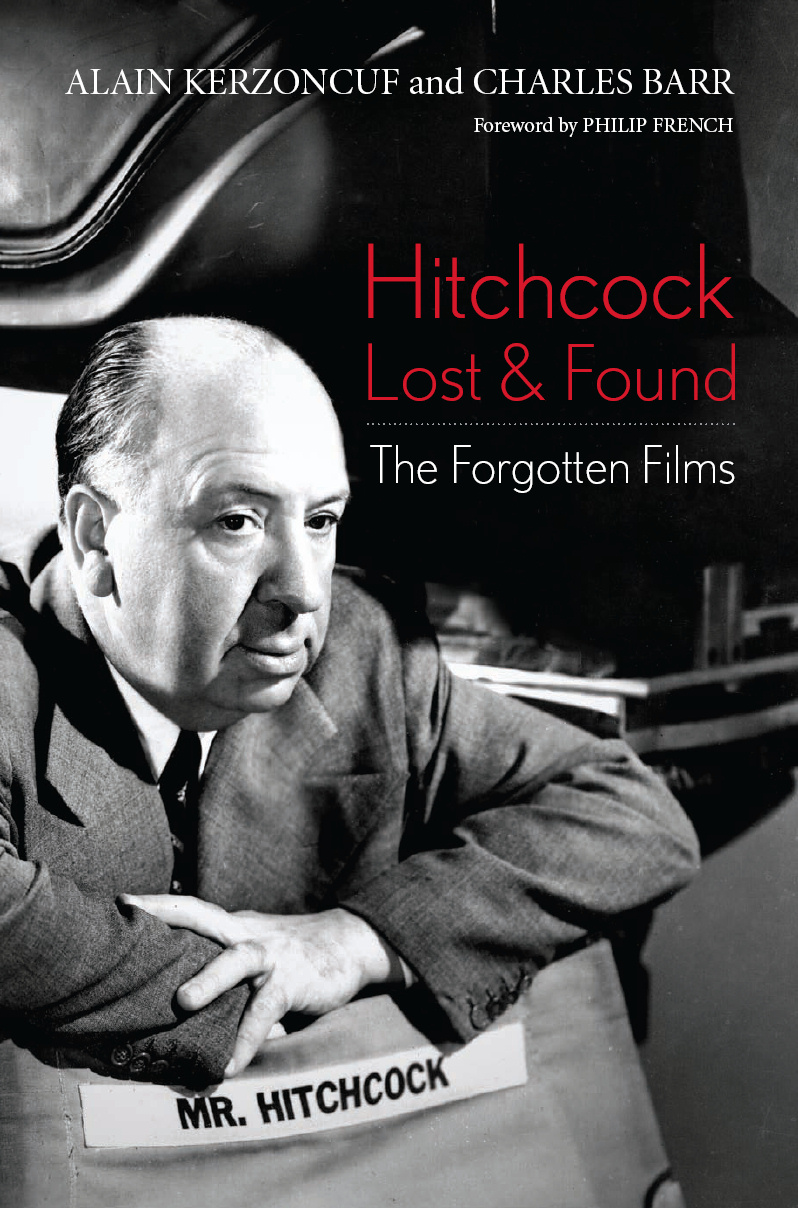
One subject that all Hitchcock “experts” can expand upon is the MacGuffin device – the pursuit of an elusive object that drives the narrative of a film forward, allowing the business proper to take place along the way. One way of looking at this new book by scholars Alain Kerzoncuf and Charles Barr would be that it is a magnificent MacGuffin hunt. Hitchcock Lost & Found: the Forgotten Films goes after the grey patches on Hitchcock’s CV, the abandoned, incomplete or a loosely connected works that linger largely unwatched and unappreciated.
As well as missing films, this book tracks down the films that Hitchcock scripted, or art-directed, or otherwise assisted on, or one where he jumped into the director’s chair halfway through shooting. The discovery of a few reels of The White Shadow (Graham Cutts, 1923) in 2011 proves that a film doesn’t to be Hitchcock through-and-through to raise the heart rate. And it’s surely not too much to hope that on the trail of these MacGuffins, a hardy Hitchophile could learn a thing or two about Psycho, Rear Window and the man who made them? Not to mention that impressive string of surviving silents running from The Pleasure Garden to Blackmail or Hitchcock’s famously “lost” film, The Mountain Eagle?
It’s remarkable what you can pick up in three minutes and 45 seconds. This short video by Gary Chapman, author of London’s Hollywood: the Gainsborough Studio in the Silent Years, is an excellent introduction to the British Famous Players-Lasky outpost.
This is the time and the place where Victor Saville and Michael Balcon began their ascent through the British movie industry, where Ivor Novello smouldered for Graham Cutts, and where Alfred met Alma, while making a film or two you may have heard of …
The Battles of Coronel and Falkland Islands (1927)
Name:The Battles of Coronel and Falkland Islands (1927).
Age: 87 years old. The clue’s in the number in brackets.
Appearance: Shiny and new.
Sorry, that doesn’t make sense – I thought you said it was 87 years old.The Battles of Coronel and Falkland Islands may be knocking on a bit, but it has been lovingly restored by the BFI and from what we gather, it’s looking pretty damn sharp. Just take a look at these stills.
Great, where can I see this beautiful old thing? At the Queen Elizabeth Hall on 16 October 2014 – it’s being shown at the London Film Festival as the Archive Gala. It will then be released in cinemas nationwide, and simultaneously on the BFIPlayer …
Blimey. And then it will be coming out on a BFI DVD.
Wonderful news, I’ll tell all my friends. Really?
No. I’ve never heard of it. Fair enough. You could have said that in the first place.
I was shy. Don’t worry, the BFI calls it a “virtually unknown film” on its website.
Phew. But you should have heard of the director, Walter Summers.
Rings a bell … He’s a Brit. Or he was, rather. And he was quite prolific, working in both the silent and sound eras. “I didn’t wait for inspiration,” he once said. “I was a workman, I worked on the story until it was finished. I had a time limit you see. We made picture after picture after picture.”
This is a guest post for Silent London by Kelly Robinson, and the first in a new series of posts bringing you very personal top 10s from silent cinema experts and enthusiasts.
From a programming point of view, it’s always good to have a few shorts up your sleeve: either to accompany a feature or to make up a shorts programme, which are always a good way to introduce new audiences to silent film. I’m trying to write short screenplays at the moment and I’m inspired by these film-makers, several of whom spent the majority of their careers working on shorts.
How to be an American Citizen (Alice Guy-Blaché, 1912)
Made in the US by Solax, film pioneer Alice Guy-Blaché’s production company, this is such a brilliant darkly anarchic comedy. View the version on the Retour de Flamme (06) disc by Lobster Films for one of the most inspired accompaniments to a silent film.
Ménilmontant (Dimitri Kirsanoff, 1926)
Breathtakingly stylish (talk about Eisenstein’s “kino fist”!) but also heartbreakingly moving, this is avant-garde cinema of the 1920s at its most profound. The scene on the bench is as poignant as anything by Chaplin or more recent master Krzysztof Kieslowski. Unforgettable.
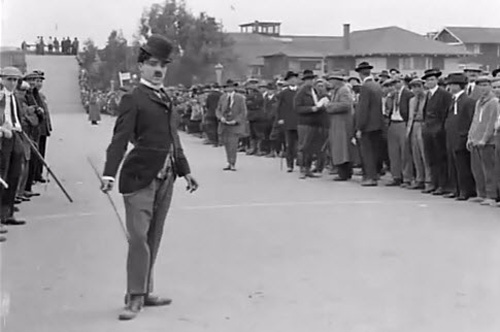
Charlie Chaplin in Kid Auto Races (1914)
Kid Auto Races (Henry Lehrman, 1914)
Chaplin’s Keystone films are sometimes written off as unsophisticated fare, preceding a more nuanced approach to style and content at later studios. However, Chaplin’s performance here is pure clown, and shows why contemporary audiences immediately wanted more, more, more of “The Little Fellow”.
Leave ’em Laughing (1928)
Leave ’em Laughing (Clyde Bruckman, 1928)
I just have to think about the final sequence of the Laurel and Hardy classic and I start chuckling madly to myself.
Daisy Doodad’s Dial (Florence Turner, 1914)
“The Vitagraph Girl” pulls a face at being one of the first screen stars.
The Battles of the Coronel and Falkand Islands (Walter Summers, 1927)
This is a guest post for Silent London by Jo Pugh, based on hitherto unpublished information about the military record of British film director Walter Summers.
“I did fairly well in the war – not that it would interest you very much.” – Walter Summers, interviewed by Garth Pedler in 1972
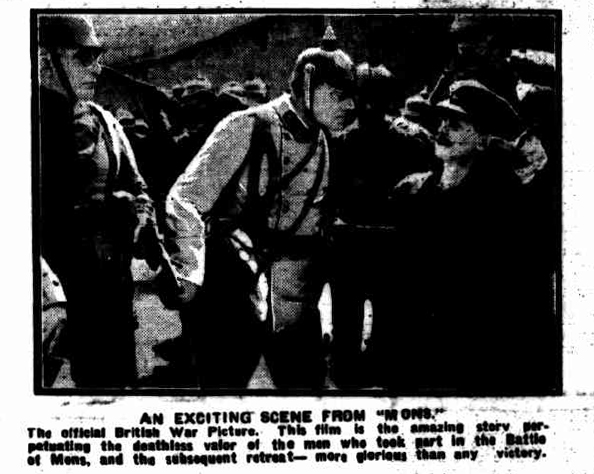
In 1924, Metro-Goldwyn-Mayer went to town on the international distribution of the British war film Mons, from the British director Walter Summers. Chronicling the 1914 defeat of the British Expeditionary Force in France (but a defeat as great as any victory – to paraphrase a classic Summers intertitle) Mons was promoted alongside Ben-Hur and its director “Captain Walter Summers, D.S.O., M.C.” praised for his wartime experience. One newspaper went further, asserting that Mons had “a genuineness and a reality that could only have been achieved by a director who had actually lived and fought during the immortal retreat.”[1]
Mons
History written by the victors is one thing, but history written by movie studio advertising executives may not meet the highest standards of evidence: Walter Summers did not fight at Mons, Walter Summers was not a Captain in the Great War, Walter Summers was not the recipient of a DSO. But the truth is not any less interesting. Walter Summers was a highly decorated war veteran but the precise details of his early life and military career have become a little mangled through a combination of hazy memory and the application of a bit of stardust. Surviving records allow us access to a little understood side of Summers and seem to place his film career in a slightly different light.
Walter Summers’ birth certificate
Walter George Thomas Summers was born on 2 September 1892 in the West Derby district of Liverpool. This date has become confused, probably because Summers seems so confused about it himself, writing conflicting ages on just about every official form going. His mother and father were both actors, his father (also Walter) a member of one of D’Oyly Carte’s touring companies who had a close association with Liverpool’s Royal Court Theatre. He died when Summers was quite young, leaving his mother, Mary Ann, to bring up Walter and his three sisters, Mary, Beatrice and Irene in Liverpool. In the 1911 census, Walter gives his occupation as “Theatrical Property Maker” – his association with the theatre began very early. On his application to become an officer, Arthur Lawrence, manager of the Royal Court Theatre, Liverpool, testifies as to Walter’s good character for the period 1903-6[2], in other words from the age of about 11 to 14. In their haste to join up in 1914, many young men lied about their age. Summers was a more seasoned 22 (though, characteristically, he wrote 21 on his form) and unlike many of his compatriots was not contemplating leaving England for the first time: he had already travelled to Australia and South Africa with Thomas Quinlan’s opera company, prior to his first film work with London Film Productions. This latter role probably culminated in work on George Loane Tucker’s version of The Prisoner of Zenda[3], in which a certain amount of armed European conflict is treated with all the seriousness of a works outing.
A thorougly Prussian baddie: Arthur Holmes-Gore as Duke Michael of Strelsau in The Prisoner of Zenda (1915). Holmes-Gore was killed at Gallipoli
London Film’s studio was a former skating rink at St Margaret’s, just over Richmond Bridge, which explains why Summers, the Liverpool boy, joined the army at Kingston. He joined up in October 1914, less than two months after the defeat at Mons. In retrospect, MGM’s claim that he fought at the battle is not very plausible: only members of the British Expeditionary Force, regular soldiers who had joined up before the war started, fought at Mons. Summers was a member of Kitchener’s volunteer army and would have been among the first significant wave of recruits to reach France. Even so, he didn’t leave England until the autumn of 1915, almost exactly a year after he had joined up. Joining as a private, Summers quite quickly rose to the rank of Sergeant in the 9th battalion of the East Surrey Regiment. This battalion is most closely associated with the playwright RC Sherriff, who used his experiences serving within it as the basis for his most famous play Journey’s End, subsequently directed on stage and then in 1930 on screen by James Whale, who had himself served in the Worcestershire Regiment. Summers and Sherriff knew each other but seemingly as comrades, not friends. Summers arrived in France a year before Sherriff and shortly after the battalion had suffered appalling losses at the battle of Loos. Subsequently, the 9th East Surrey fought at Ypres and the Somme. At the latter in July 1916, Summers was awarded the Distinguished Conduct Medal for his service at the Battle of Delville Wood. “A nightmare that men will dream again,” wrote the journalist Philip Gibbs, of the month-long conflict over the small piece of woodland believed to offer some tactical advantage. By the end of it, thousands had been killed and barely a tree was left standing.
Military Artist drawing of the Battle of Delville Wood, The Somme. July 1916. First published in “The Great War” Ed. H.W. Wilson, 1917
Summers won his Military Medal for leading a fighting squad of eight men from the battalion in a risky daylight raid on 25 January 1917 near Hulluch, in the Pas de Calais. One of six such squads, with orders to identify the unit opposite, “inflict losses” and obtain a sample of German bread, the small force ran across no man’s land under the cover of somewhat tardy smoke bombs and a smattering of “wild and erratic” machine gun fire.[4] With the element of surprise, the British killed a number of Germans (Summers shot at least one) before meeting “hostile resistance”. Summers’ group were among the last to withdraw from the German trenches. The force returned with three prisoners and the bread sample. By its own account it had suffered seven casualties and inflicted around 21. German records in contrast put their losses at eight.[5] Summers was personally commended for “the determined and fearless leading of his fighting squad”. Reading the description of the attack in the unit’s war diary, it is impossible not to be reminded of the raid depicted in Journey’s End. This is because it was indeed Sherriff’s inspiration for the attack that preoccupies his characters in the second half of the play.[6]
As you know, this year the British Silent Film Festival has taken a year off – but luckily for us, it’s the kind of year off where two all-day events still go ahead. Just to keep things ticking over, as it were. So last weekend there was a symposium on British silent cinema, held at King’s College London and organised by Dr Lawrence Napper. The following day the Cinema Museum hosted an all-dayer of screenings, themed on the tantalising idea of “sensation-seeking”.
I attended both events and while it didn’t feel like the festival was running, it was a real treat to be immersed in British silent film in this way. Let’s hope the festival returns back to full strength next year.
The papers at the symposium were limited to 20 minutes apiece, but covered a wide range of topics, from Edwardian theatre to state censorship to international co-productions to saucy novels. One hardly knows where to begin.
There were two papers with a theatrical bent: Ken Reeves’s dip into musical comedy theatre and its links to silent film concluded with some ideas for “crossover” events that would mix theatre, film and audience participation to spread the love about early British cinema. Audience participation? Reader, I sang. Very badly. Theatre historian David Mayer’s unforgettable presentation played and replayed the same baffling scrap of film as he uncovered the truth behind its creation. The scene of a waterfall bursting its bank and bringing down a bridge (and a couch and four) was, it turned out, not shot on location but on stage at the London Hippodrome in 1902, where a collapsible stage could be dropped and filled with water to create watery scenes. There was more – involving elephants on a slide. Elephants. Read more here.
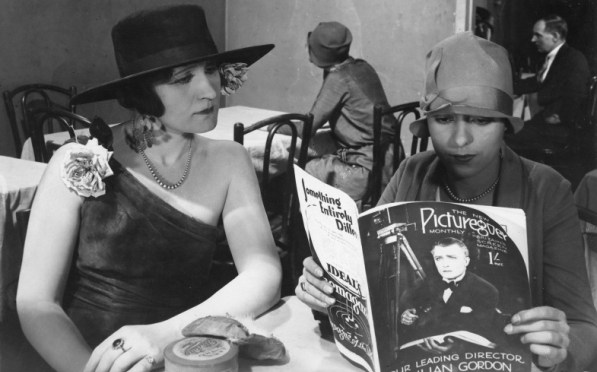
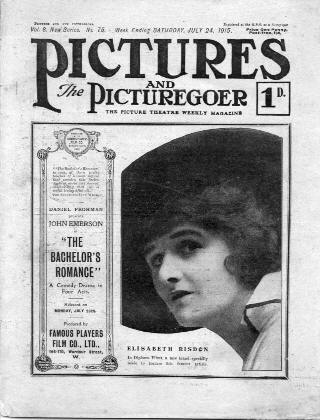
Elisabeth Risdon on the cover of The Picturegoer July 1915
Lucie Dutton, sometimes of this parish, also talked about the stage, presenting a history of film director Maurice Elvey‘s early career – in theatre in London and New York, before moving into the pictures with his star Elisabeth Risdon. She was followed by John Reed from the National Screen and Sound Archive in Wales, who took us through the production, loss, rediscovery and restoration of Elvey’s landmark film, The Life Story of David Lloyd George. Intriguingly, Reed pointed out a few instances in which Elvey could be seen in the film, waving a handkerchief and appearing to direct the action. Could this be because in these scenes the prime minister was played not by Norman Page but by Lloyd George himself? It’s an enticing thought.
Another famous British director was under the spotlight – one even more renowned than Elvey. Charles Barr presented on what we do know, and what we don’t, about the first film that Hitchcock ever shouted action on: Always Tell Your Wife. It’s an adaptation of a stage comedy starring theatre veterans Seymour Hicks and Ellaline Terriss and it seems the director fell out with his inflexible actors and therefore a “fat youth” from the props room was elevated to the job. You may struggle to see bold Hitchcockian strokes in what we have left of the film (which screened at the Cinema Museum on the Saturday), but we do have the director’s handwriting, unmistakably, in an insert shot of a telegram.
Jackeydawra Melford (trom thebioscope.net)
Far less well known than Hitchcock, but fascinating to hear about, was showman-turned-film director Mark Melford. His name, just like most of his films, may be lost to time, but Stephen Morgan attempted to flesh out his story, taking his cue from a Bioscope blogpost of 2007 that posed the pertinent question: “Who needs films to write film history anyway?” We did see a clip from the recently rediscovered romp The Herncrake Witch, directed by and starring Melford (amended, see comments) as well as being based on one of his own comic operas and also featuring his daughter (Jackeydawra, named thus due to her parents’ love of Jackdaws. True story). The story of the Melfords was hugely entertaining, but Morgan concluded by making the hugely important point that the study of lost films and forgotten film-makers is vital to a full understanding of the silent film era as a whole.
And of course, one never knows when a lost film will suddenly become an un-lost film. It happened to The Herncrake Witch and The Life Story of David Lloyd George after all. And it wasn’t so long ago that a treasure trove of Mitchell & Kenyon works was unearthed, giving us an invaluable glimpse of (mostly working-class) Edwardian Britain. In one of the day’s most diverting 20-minute segments, Tony Fletcher played a selection of Mitchell & Kenyon’s fiction films, while explaining a little more about them. The films were comedies, often chases and knockabout stuff, all with a backdrop of industrial northern England – factory gates, brick kilns and terraced streets. I particularly liked the mischievous snow comedy and the animated intertitles in a short called (I think) Driving Lucy.
The Battles of the Coronel and Falkand Islands (1927)
More comedy, but this time of the you-couldn’t-make-it-up school: Alex Rock put recent Leveson revelations in the shade with a paper on the Metropolitan Police’s tangled relationship with the film industry. Its rather heavy-handed Press Bureau, founded in 1919, was popularly known as the Suppress Bureau. You can guess why. Rock’s paper traced the development of an official documentary film, supported by the Met, called Scotland Yard, and the squashing of another, based on the memoirs of a former detective.
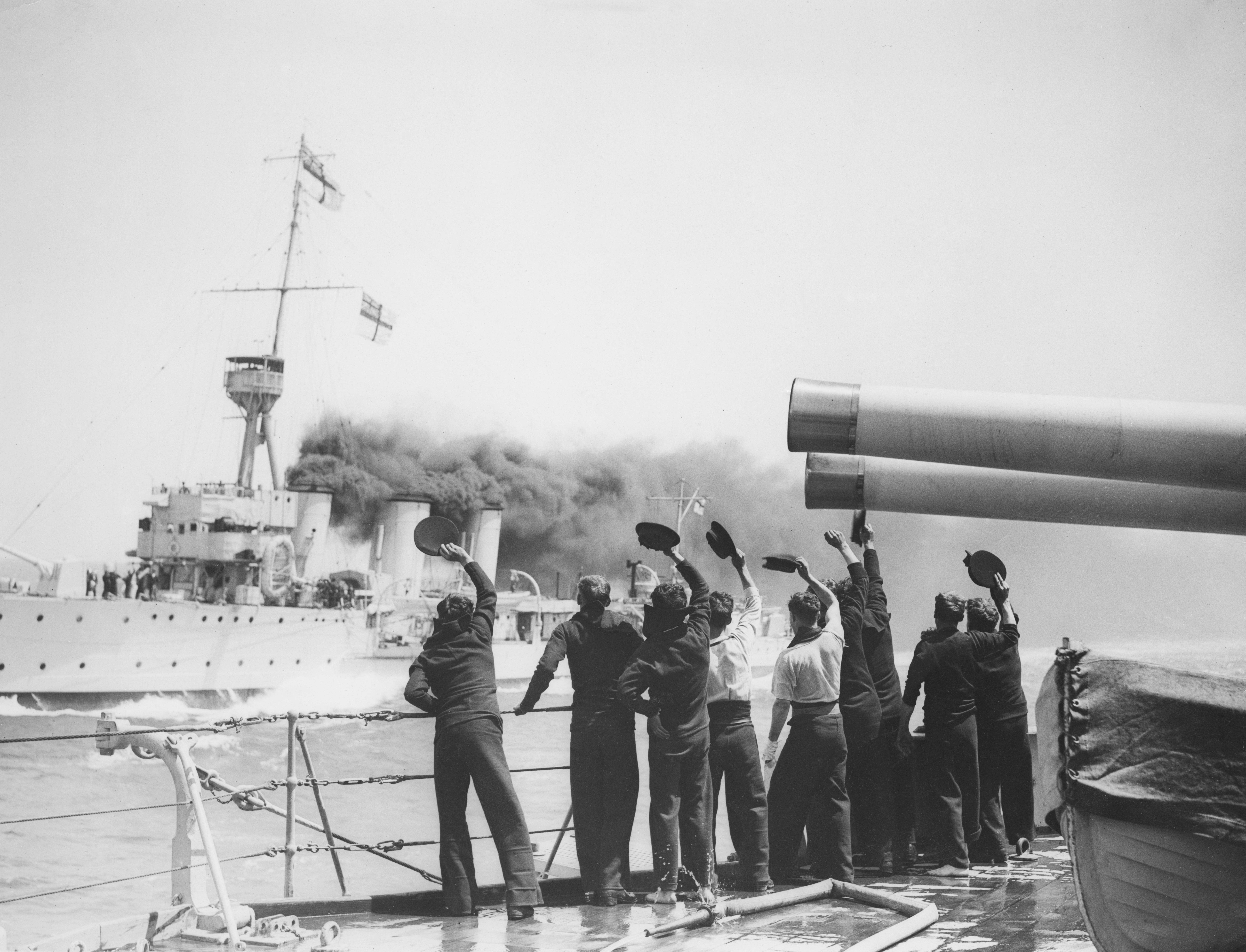
The correspondence of public servants baffled, outraged or simply dismissive of the “movies” is unexpectedly entertaining, and never more so than in Jo Pugh’s paper on the official military response to Walter Summers’ The Battles of the Coronel and Falkland Islands. I could barely keep up with the information he was imparting, partly because I was giggling so much. Really. The good news is that we should hear more from Jo’s research and more about the film too as a little bird tells me a full restoration (possibly in time for next year’s Great War centenary) is in process.











 Silent London