Happy holiday Silent Londoners! They say that if you remember 2025, then you weren’t watching enough silent movies. How much do you recall?
For myself I sure watched a lot of silent films, clocking up several festivals and individual screenings. Pordenone and Bologna, Zurich, Hippfest, Slapstick, Cinema Rediscovered, Women and the Silent Screen in Belgium, plus The Gold Rush centenary, Anna May Wong, Gosta Berlings Saga, Stella Dallas, Lillian Gish, Lois Weber, Film on Film and more at the Southbank. Did you catch Bonn, San Franciscso, the non-stop action at the Kennington Bioscope, or any of the many, many silent screenings all around the world? How about Sherlock Holmes?
I awoke with good intentions but encountered even better conversations. And thus, my film viewing on this, the final day of the 44th Giornate del Cinema Muto, began at midday, with Koko the Clown. Which is a wonderful way to begin. This cartoon, Ko-Ko at theCircus (Dave Fleischer, 1926), with our inky friend squaring off against a giant, had me in stitches – which is how I ended the day too. Apt, perhaps to start with animation when today was really all about the kiddywinks.
I have been a little slow to start up some mornings. But one thing you can guarantee that I will get out of bed for is Victor Sjöström. Victor Sjöström’s 1912 debut film no less, banned outright in Sweden, but available for us lucky degenerates on the capacious Verdi screen, with a truly wonderful accompaniment by Stephen Horne. Variously known as The Cruelty of the World, The Gardener or The Broken Spring Rose, this is a really special film and I do think the first title is the best one.
Feature films? What a concept. They don’t always seem to be the dominant form here at Pordenone. But this afternoon was an exception to that rule, with a triple-bill of four-to-six-reelers back to back. Welcome to a world of truly immersive narrative entertainment, It’s the future.
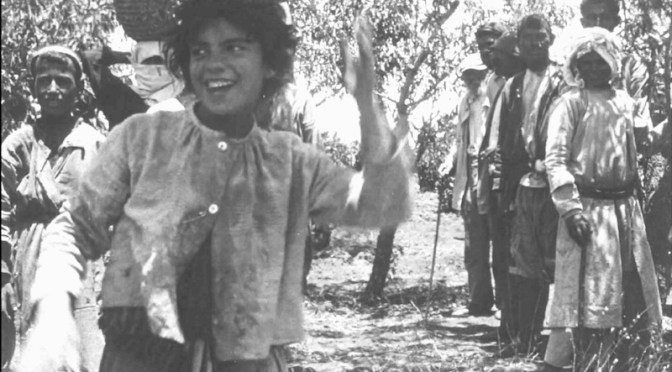
It may seem that the Giornate is in its own bubble, a hundred years or more removed from the real world, wrapped up in the fashions and the fads of the past. But we’re still looking out at the world every day, and no matter how the text on screen tries to guide us, we bring our 21st-century interpretation to everything that passes in front of our eyes. Sometimes the challenge is to wind back the clock, to see the past as our ancestors did when they were living through it. Sometimes we have no choice but to view images of the world as it was while burdened with the knowledge of our shared history, and of our violent present.
Last night I dreamt I went to East Lynne again… Ellen Wood is directing my subconscious now. I love this mini melodrama strand and I really enjoyed today’s instalment, which was the lavish 1925 Fox adaptation, East Lynne (Emmett Flynn), scripted by Lenore Coffee and starring Edmund Lowe as Carlyle and Alma Rubens as Lady Isabel – a very handsome pair and just right for this ill-starred pair.
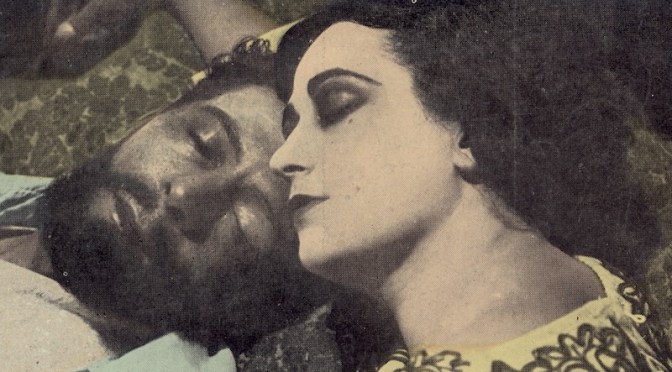
Monday finished with a zinger. I mean a Zingari. Italia Almirante Manzini wowed the Verdi as Wilejka, a heavy-lidded beauty with great hair, but in this case as a heavy-lidded beautiful Gypsy shepherdess with great hair. In Zingari (Mario Almirante, 1920) Wilejka falls in love with a man, Abaldo (Amleto Novelli, no less) that her father, the leader of the camp, forbids her to marry. There is many a consultation of the cards, a fireside dance, a storm, a threatening villain, a crushing pang of jealousy, an assassination and naturally, a barn on fire before this will all end happily ever after.
Is it still a pathetic fallacy even if the weather is true but the drama is not? As I set out to begin my day with some major melodrama, there was heavy weather in the skies above Pordenone also. We shook off the rain in the Verdi foyer, while we prepared to dampen our faces with tears during the first of this year’s adaptations of East Lynne.
The Giornate dawned with grey skies but good times, a respite from Storm Amy and all the rest of the week’s turbulence, a day of pretty views and outbreaks of mild escapism. Many of us were just grateful to be get here, let alone arrive on time, after the transport situation was especially complex this year. It was an especially mellow start to the festival for me. Blame it on the 3am alarm call, the cold medication or just the pleasurable daze of seeing so many familiar faces all at once. Will I sneeze or snooze my way through the first day of films? Who knows? And will my ears ever “unpop” from the plane? Join me now to find out.
Thank you for bearing wth me during a few several technical glitches related to this year’s poll. Relax, enjoy your glass of wine-flavoured carbonated beverage, and welcome to our glittering award ceremony. I have counted the votes, and I am ready to announce the winners of the Silent London Poll of 2024!
Congratulations to all the people mentioned below – as ever, these categories were bursting at the seams with excellent, worthy nominations and a great reminder of how exciting the global silent film scene is. Thank you for all your votes, and your comments, especially.
Without further ado, let me open this giant stack of golden envelopes. Here are your winners.
1. Best orchestral silent film screening of 2024
Your winner: The Winning of Barbara Worth (Henry King, 1926), with a score composed by Neil Brand, arranged by George Morton, conducted by Ben Palmer, performed live by the Orchestra da Camera di Pordneone, at Giornate del Cinema Muto, Pordenone
I said:“t’s a big, big movie, with the youthful star trio of Ronald Colman (on $1,750 a week), Vilma Banky (on $1,000 a week) and Gary Cooper (on $50 a week!) in a desert love triangle, and a tremendously terrifying climax, as the townsfolk run for their lives when the river bursts its manmade bounds. Plus we were to enjoy the world premiere of a wondrous new score composed by Neil Brand, arranged by George Morton, conducted by Ben Palmer, and performed live tonight by the Orchestra da Camera di Pordenone. If you know the film you will know that it is celebrated for its scale, but also that this is a Frances Marion script, with a touch of melodrama (Vilma overhearing Ronald’s confession that he won’t propose to her, but not the reason why), her pet subject of adopted children, and her love of a grand theme – here the pioneers’ battle for mastery over the elements, and capitalism’s battle for mastery over the populace. You’ll also know that between the big action scenes there are several more sedate moments, discussions of policy and payroll. As, quite frankly, we have come to expect, Brand’s score was buoyant and nimble, keeping the film on its toes, teasing out the romance and flooding (yes, I went there) the auditorium with sound during those blockbuster setpieces, starting with a sandstorm in the first reel and the deluge in the last. Timed to a T, so that image and sound met in perfect harmony, and just a joy to listen to – for what it’s worth, I think it’s a winner. Geddit?”
Lillian Gish in The Wind (1928)
2. Best silent film screening with a solo musician or small ensemble of 2024
Season’s greetings Silent Londoners. It has been a whirlwind of a year. How much do you remember?
Personally, I watched silent movies on three different continents this year, so I have some great cinema memories from 2024. Pordenone and Bologna, San Francisco, Istanbul, Locarno… and back home, Hippfest, Bristol, Sherlock Holmes at Alexandra Palace, Dorothy Arzner and more at the Southbank, non-stop action at the Kennington Bioscope. We celebrated some major anniversaries. Plus there was a lot of love for Anna May Wong, and Sessue Hayakawa.
A confession. I was conspiring over breakfast, and reader, this was a two-cappuccino problem. The upshot? I was a little late in getting started with the screenings today. But I certainly knew that I was going to be up late, with the gala… and the end-of-festival celebrations!
My sunny morning stroll to Cinemazero was rewarded with a simply terrific film from Uzbekistan. In Her Right (Grigorii Cherniak, 1930), a group of workers from the collective farm are sent to the factory to boost the workforce there, and to learn those valuable Soviet methods. One woman from the village defies her husband and sheds her burqa to join them. It’s a life-changing experience and not only does she gain independence through work, but she inspires others to do the same, through a filmed speech, that the workers clamour to watch, even after he enraged husband slashes the screen. Even with her “throat” cut, in a silent film, she continues to speak her truth. So you have noted already that this is once again pro-Soviet, anti-Islam propaganda in intent, but this is also a remarkable film in style and action. Our Hollywood friends would applaud the excellent, and indeed poignant, action sequence in which our heroine runs to jump on the train to the factory, is repeatedly shoved away by male guards and then, when it seems she has finally found a helping female hand, her husband leaps – for a second we think he has dragged her form the moving train, but no, he only has her coat in his hands. Nail-biting stuff. And the scene in which they watch the film is also very strong. Günter Buchwald at the keys for this one, keeping the energy at exactly the right pace.
Blood, sweat and tears on the screen today. And to cap it all off, prizes! That’s Friday in Pordenone, folks. Read all about it.
Your scribe is a little squeamish, I must confess, so this morning I had to resort to an old trick, and pop my glasses off during some of Arabi (Nadezhda Zubova, 1933), a drama about sheep farmers organising to form a collective and defeat the feudal powers that exploit their labour under the old system. That doesn’t make me squeamish, I’m all for it – it was the killing and skinning of lambs that turned my stomach. Still, I thought this was terrific, with some very sharp editing, especially in the opening sequence, and lovely low camerawork of the herd out in the field.
Wouldn’t you like to go Behind the Scenes with DW Griffith and Florence Lawrence? I sure would, that’s why I was bright and early at the Verdi this morning for the 1980 Biograph package. Behind the Scenes, per the catalogue is the “happy exception” among the 1908 output. Well it certainly had punch. A distraught mother must tear herself from her daughter’s sickbed to kick her heels and shake her hips on the vaudeville stage to earn a crust. But as the crowd roars out for an encore, her baby girl is slipping away from this life; Grandma rushes to the stage door… If “too late!” is the essence of the melodramatic narrative then this was a textbook case. We stayed to see Lawrence reappear as the titular character in The Red Girl, in which a collection of ethnic stereotypes conspire to rob a “girl miner” but Lawrence defies racist convention to lend a hand instead. Impressive to see Lawrence Harry Houdini her way free after being tied up and dangled over a precipice above the rushing river. Extra exciting with John Sweeney at the keys, of course.
Sometimes the old songs are the best, right? Familiarity can breed contentment. And nowhere will you find more consensus on that than here in Pordenone. So today I was happy to rewatch a couple of silent films I love, spend a little time with one of my all-time favourite silent stars. And then see something entirely new to me!
First, the old friends. This morning, we ventured back into the imaginations of Maurice Tourneur, and Ben Carré, with the 1918 adaptation of Maurice Maeterlinck’s The Blue Bird. Such a strange and beautiful, terrifying and wholesome journey into the shadow world of dreams, where bread and sugar and water have souls, the dogs and cats can talk, lost grandparents always have the table set for supper and babies wait impatiently to be born. If you have not seen this, you possibly can’t imagine quite how weirdly pretty it is. Variety’s critic wrote: “It is quite safe to assert that nothing quite like Director Tourneur’s work has ever been shown on the screen.” So hats off to Tourneur and Carré, and doubly so to Neil Brand and Elizabeth-Jane Baldry, who transported us to an enchanted realm with their music. I wrote about the film in more detail here, should you be interested.
And verily, on Tuesday, the fourth day of Le Giornate del Cinema Muto, the rains came down upon us. And things got quite soggy inside the theatre too, what with Mary Pickford nearly drowning in the hold of her own houseboat in Pride of the Clan, a parcel of wonderful underwater films in the early afternoon, and a wild ride to Neptune’s kingdom to close the day.
Before the rain began, I spent a couple of rapt hours in the Canon Revisited strand this morning. Carl Th Dreyer’s Leaves From Satan’s Book (1920) travels through the centuries with God’s Fallen Angel, who is doing his evil work among humans who prove reliably weak in the face of temptation. Surrendering one’s soul to sin is not to be advised, but surrendering oneself to cinematic greatness – that is a balm for the ills of the modern age. This is a film of deceptive subtlety, and slow-burning excitement. The camera stays still so long that when it moves, the moral universe tilts. The austerity of the first, biblical sequence gives way by degrees to a faster editing rhythm, and cutaways to sympathetic details, a flock of geese, a cat toying with a mouse, a baby in her crib. Soon we’re in action thriller territory as we finally wash up in Finland in 1918, via the Spanish Inquisition and the French Revolution. Dreyer, being Dreyer, the faces, not least of Helge Nissen as the shape-shifting Satanas, carry boundless weight. It’s a masterpiece, an early one, from a man who made much better films, even, but still. And yes I am smug about having watched it with John Sweeney’s soul-stirring accompaniment, which likewise knew when to hold back and when to rush forward through the ages.
I promise you, I really am in Pordenone, not in Paris. But honestly, the geography is becoming a little subjective. We seem unable to escape the Rive Gauche for long. This morning, a really quite exceptionally taut melodrama from Louiis Feuillade, with sets,of course, by Ben Carré, illustrated how the Latin Quarter exerts its own gravitational pull, morally, if not physically. In La Tare (1911), part of Feuillade’s “La Vie telle qu’elle est” (Life as It Is) series, Renée Carl gave a really beautiful performance as Anna, who works in the dance halls of the Latin Quarter, but given the chance, moves to the South of France and devotes herself to a new career caring for patients young and old in a nursing home. Ah, but cruel fate intervenes and a medical student who used to tap her for cash in the Paris days, takes it upon himself to inform the medical board that their “secular saint” is really a “girl of easy virtue”, sooner than you can say “Madonna-whore complex”. And so we are left with a tragic, yet ambiguous ending, following a rather harrowing scene in the unemployment office with a crowd of women, all of whom had remarkable faces (no, not Léontine, I don’t think, but maybe this is the kind of place where she might be found). A very special film, enhanced, naturally, by John Sweeney’s sensitive accompaniment.
“They’re eating the dogs. They’re eating the cats.” Proof, if proof were needed, that the American people saw through such anti-immigrant propaganda more than 100 years ago, comes in Dee-Dubya’s 1908 New York comedy Deceived Slumming Party – our first film of Sunday morning. Fraudulent tour guides promise show rich tourists the gritty realness of Chinatown and the Bowery, but the trick is, it’s all staged. Everyone in the opium den was upright and chatty before the tour group arrived, in fact, the barroom fights in the Bowery are choreographed by the bartender (DW Griffith himself) and the “meat grinder” in the Chinese restaurant kitchen, the one that the staff are “feeding” with cats and dogs and rats, is nothing but a sham.
Rich kids slumming it in Chinatown, you say? Hold that thought while we segue from comedy to melodrama, in the shape of Driven from Home (James Young, 1927), which yanked and yanked and yanked at the heartstrings with poor Virginia Lee Corbin disowned by her wealthy father after she married for love, although her devoted mother (Margaret Seddon) was on her deathbed and calling out to see her baby once more. Add to this a subway excavation accident, a scheming vamp housekeeper (Virginia Pearson), and you might not think there was room for an excursion to the Chinatown underworld but you would be wrong, as this film was playing in the Anna May Wong strand. So indeed here we witnessed a scant five minutes of Anna May Wong, as a Chinese restauranteur’s “legal wife and illegal accomplice” radiating more star power than the rest of the rest of the (perfectly good) cast could ever dream of. We understand this is a racist trope, yet it is quite nifty to think that on the evidence of this year’s Giornate, in any given situation, Anna May Wong can locate a secret door in seconds.
Grey skies clung to the Verdi this afternoon but you can’t put a dampener on a homecoming like this one. I’ve been to several festivals this year, but nothing really compares to the Giornate. And our hearts were warmed by festival director Jay Weissberg’s words of welcome, in which we pointed out how vital it is, these days more than ever, to cherish these events that bring people together in a shared endeavour.
Today was a day of varying shades and two colour schemes. We had a couple of stonking great classics. And also a slate of fragments, curios, oddities and ends – several of which had their merits, albeit in their own unconventional way. In fact, a certain aura of strangeness hung over the whole day, which you might attribute to the unseasonal weather, but I am partially putting down to the after-effects of watching Megalopolis last weekend.
Can YOU help put names to 14 unidentified films screening at this year’s Giornate del Cinema Muto? The festival is asking for your contribution to a very exciting project. Elif Rongen-Kaynakçi explains more.
The story goes that in the early days of the Giornate del Cinema Muto, a small group of film historians sat in a theatre, watched films arriving from different archives from around the world, and identified them by shouting out the names of the actors and actresses appearing on the screen. Whether true or somewhat apocryphal, this is still an appealing idea for film historians and archivists alike. Surely, there are still many unidentified films in the archives, and what better resource in the world than the combined brainpower of the Pordenone crowd would be able to identify them? Following on the trail of exciting, successful, and fun initiatives like the LostFilms.eu portal and various archival YouTube channels, a couple of try-out sessions held by Eye Filmmuseum, and hugely inspired by the “Mostly Lost” Workshops held at the Library of Congress Conservation Center in Virginia from 2012 to 2019, we are launching a film identification thread at this year’s Giornate.
This year 14 films, sourced from 6 archives, each individually numbered, will be screened as shorts before features scattered through the week. The catalogue notes about them have been written by the archivists concerned, providing as much information as possible about the material, its provenance, and any contextual information that might be helpful for identification. Still images are provided as memory aids where possible. We encourage you to make your suggestions in various ways; whether in discussions during lunch or dinner, but also on the white board at the festival hospitality office, here on this Silent London page, or the “Pordenone People” Facebook group. Please provide evidence when you can, whether to support your suggestions or to prove a theory wrong. Please explain why you think in a certain direction, or why you’d rule out some options. And don’t forget to share with us the sources you are using to support your theory.




 Silent London